Transcript: De-Risking Autonomy with Optionality
Executive Summary
In this episode The Road to Autonomy podcast, Don Burnette, Founder & CEO of Kodiak joined Grayson Brulte to discuss the company’s major milestones, including going public and successfully operating driverless trucks in the Permian Basin for over a year.
Don details the strategic partnership with Bosch to build a redundant, OEM-agnostic chassis and outlines Kodiak’s roadmap for launching driverless highway operations between Dallas and Atlanta. Burnette also shares insights on the shift toward physical AI and the critical importance of operational reliability over mere technological demonstrations.
Key The Road to Autonomy Episode Questions Answered
Why did Kodiak choose to operate in the Permian Basin before launching highway operations?
Don Burnette, Founder & CEO of Kodiak says that the Permian Basin provided a critical sandbox for testing both the technology and the operational model. By operating in an unstructured environment with a paying customer (Atlas Energy), Kodiak could validate its “asset-light” business model, refine its safety case, and learn how to integrate autonomous trucks into existing logistics workflows (such as dynamic routing) before tackling high-speed highway lanes.
How does the partnership with Bosch support Kodiak’s scalability?
The partnership allows Kodiak to develop a redundant, OEM-agnostic chassis system using Bosch’s automotive-grade components (steering, braking, power systems). This reduces reliance on any single truck manufacturer and enables Kodiak to offer a consistent autonomous platform that can be retrofitted onto multiple vehicle makes and models, which is crucial for customers running mixed fleets.
What is the “Physical AI” shift that Don Burnette describes?
Don Burnette, Founder & CEO sees the future of autonomy moving beyond just self-driving trucks toward a broader category of Physical AI. This involves taking massive data center algorithms and distilling them down to efficient, low-power systems that can operate at the edge (on the vehicle). He believes solving the challenges of data collection and low-power inference will allow this technology to expand into verticals beyond just trucking.
Key The Road to Autonomy Topics & Timestamps
[00:00] Don Burnette on taking Kodiak public
Don Burnette reflects on his return to the podcast as the CEO of a publicly traded company, noting that while his internal focus remains on product execution, the transition has brought a breath of fresh air through interactions with a new set of investors. He emphasizes that despite the administrative changes, the team has hit the ground running and continues to execute effectively.
[03:31] The importance of having a real product in market before the IPO
Don Burnette explains that a critical prerequisite for the IPO was having a tangible product generating real driverless revenue, as opposed to just safety driver testing revenue. This milestone provided growth metrics and proof of the technology’s viability to the investor community.
[04:48] Lessons from the Permian: Operations, safety cases, and the “asset-light” model
Kodiak maintains an “asset-light” model where partners like Atlas Energy own the vehicles, allowing Kodiak to focus on its core competency of AI software. Burnette notes that operating 24/7 for a customer has highlighted that the product pillar, specifically reliability and user experience is often more challenging than the technology or safety case pillars.
[12:24] Why Kodiak does not use HD maps
Don Burnette argues that HD maps are ill-suited for unstructured environments like the Permian Basin, where roads shift, landmarks are non-existent, and the environment is anything but fixed. Kodiak’s system relies on real-time perception rather than prior map data, which is essential for scaling into dynamic off-road and defense environments.
[14:46] Strategic foresight: Sensor pods and the OEM-agnostic approach
Don Burnette discusses the strategy of maintaining optionality by not locking into a specific OEM design too early, which allowed the company to iterate as hardware technology evolved. This approach prioritized capital efficiency and avoided the pitfalls of “selling the dream” without a practical path to immediate deployment.
[20:00] The Bosch Partnership: Building a redundant, scalable platform
Kodiak has partnered with Bosch to create a redundant chassis platform that includes steering, braking, and power systems. This partnership acts as a one-stop shop that enables Kodiak to build an OEM-agnostic solution that can be integrated at the factory level or via retrofits, unlocking massive scale across multiple vehicle makes.
[27:54] Preparing for driverless highway launch: Dallas to Atlanta
Kodiak plans to launch driverless highway operations in the second half of the year, leveraging the safety case experience gained in the Permian. Burnette highlights the Dallas to Atlanta route as a marquee lane because it solves the inefficiency of needing team drivers for runs that exceed single-driver hours of service.
[36:35] The future of physical AI, low power, and edge computing
Don Burnette views the future of the company through the lens of Physical AI, which involves distilling massive data center algorithms into efficient systems that run at the edge. He believes the key to success in this space is solving the challenges of data collection and low-power inference.
Subscribe to This Week in The Autonomy Economy™
Join institutional investors and industry leaders who read This Week in The Autonomy Economy every Sunday. Each edition delivers exclusive insight and commentary on the autonomy economy, helping you stay ahead of what’s next.
Full Episode Transcript
Grayson Brulte: Don, it’s always great to have you on the road to autonomy. Thanks for coming back. I think it is your fourth or fifth time on, and it’s the first time that you’re on as the CEO of a publicly traded company. First and foremost, congratulations for taking Kodiak Public. How does it feel?
Don Burnette: Well, it’s great to be here at Grayson. Thanks for having me on yet again. I have definitely lost count at this point, but it’s been a while. Since we’ve chatted, a lot has happened in, in that amount of time. It feels really good. Honestly, it’s, it’s been a, it’s been an exciting year for Kodiak. Uh, certainly a challenging one, but we made a tremendous amount of progress. I’m sure we’ll talk about some of that today. And, uh, yeah, we’ve hit the ground running. Had a couple quarters under, under our belt now, and we’re, we’re off to the races, so to speak.
Grayson Brulte: No, you’re off the races autonomously, Don. You gotta get the word autonomous in there.
Don Burnette: That’s right.
Grayson Brulte: How has your management style changed since you went public? Are you still the, are you still the Don of old managing the company the same way, or do you have to manage a little bit differently?
Don Burnette: Not much internally has changed you. You know, you always go in in cycles in terms of. How much time you spend in internally in the company, focusing on the product, on the execution, on the partnerships versus fundraising, investor relations and things like that. And so for me it’s, it’s, we’re just in a, a cycle where I get to spend a lot more time on execution, and that’s the time that I like to spend. So it’s, it’s been quite nice. Obviously some things change. You’re thinking about quarterly cycles. There’s more, uh, SEC filings. The constituency on the investment side is different. You have your analysts who, who are constantly reaching out to, to get more information, which. You know, for me it’s been a, a breath of fresh air, honestly. Uh, I’ve, I’ve really enjoyed the transition to the public markets as opposed to the private markets. You get a different set of investor groups that you get to talk to. It’s a new conversation. They nec they haven’t necessarily heard the same thing year, year after year after year, uh, going so, so it’s been, it’s been fun, I think, so far. And the team continues to execute. So can’t, I can’t, uh. You know, I can’t complain.
Grayson Brulte: And No, and you, you’ve been doing well. As you, as you know, this Wall Street’s judge quarter to quarter, but you’ve, since we first met, you have this long-term vision. How are you keeping that long-term vision intact from a strategy standpoint?
Don Burnette: Well, one of the important gating items, which I’ve talked about in the past to going public was to actually have a product in the market. I think that’s really important. And that, of course, when we launched our driverless service back in the fall of 2024, that checked the box to to say, okay, we actually have a product. We actually are gonna be generating revenue with the product. And that’s real driverless revenue. I don’t mean just safety driver testing revenue, which lots of companies have, and we’ve had for many, many years. I mean, an actual product. In the hands of a customer. And of course we’ve scaled that over the course of the year. And so that gives, that gives us something to talk about that gives us a product to discuss. It gives us, uh, growth metrics and, and I think gives the investor community, uh, and the public some, some kind of insight into whether or not the technology works, whether or not the technology’s going to grow, whether or not this is going to be going to be real. So that was one of the things that I think was really important for us. Before we made that decision and the timing, I think the timing was right and uh, and now we’re, now we’re really building.
Grayson Brulte: I mean, the timing was right. The model was right. If you look at the growth of the oil market, especially where you’re operating in the Permian, it’s been a year since you’ve been driver-out. And I want to highlight for the audience, Kodiak doesn’t own the trucks they’re owned on your partner. Atlas Energy’s balance sheet. Two things. One, why make the decision to have your your partner own, own the assets? And what have you learned over this last year of operating in the Permian? Which could be a hostile environment.
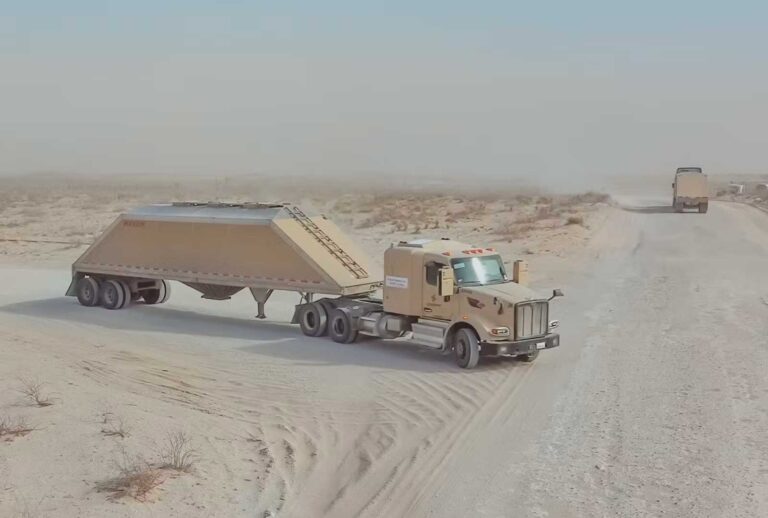
Don Burnette: We’ve learned. We’ve learned a ton. So just to unpack that, you asked a couple couple of questions there. First off, we’ve always wanted to have an asset like business model, right? We don’t wanna be owning the assets. I think that’s something that for us. Is the most logical choice and we, we don’t want to have to do more than our core competency. We wanna focus on our AI software. That’s always been our bread and butter. That’s the expertise of the company. We’re not a logistics company. We don’t necessarily have a lot of experience in running logistics. And so for us, we really want to let the, let our customers who have decades of experience running trucks. Handle the running of the trucks and we’re gonna supply the technology. We’re gonna supply the support, the updates, the monitoring, the systems that we really. Understand well and feel like can, can, can add a lot of value to, we want to effectively bring the same service that a driver brings to a company today, but through a, a virtual driver through the AI system, of course, to, to lower cost, increase efficiency, and most importantly of all, improve safety, uh, of the system on these roads. In terms of what we’ve learned, oh man, it’s been, it’s been quite the journey. For us, I think the, the first, first and foremost thing I would say is we’ve learned that there’s a lot to learn and, you know, if you, if you listened to me on my, on the earnings call, uh, the Q3 earnings call, I talked about the three pillars of autonomy and I really think about autonomy as. Technology being the first pillar, safety and safety case being the second pillar. And by the way, everybody focuses on the first one, right? All the conversation is generally around the technology, whether that’s hardware, software, but the safety case is often overlooked, and it’s a big challenging part of the problem. And then the third pillar is the product. Meaning if you have great technology and even if it’s safe. Can you actually deliver a product that’s usable and valuable to an end customer? Whether that’s a business, whether that’s a, whether that’s a consumer, and so. Really developing the product side of the coin has been an eye-opening experience for us. I know there’s a handful of other companies, certainly Waymo has been front and center in developing the experience over the last several years of a driverless vehicle. And I’m sure as you, you test these vehicles a lot, you see the differences between the actual user experience. I don’t mean the driving, I don’t mean the driver, I mean the. Getting in, calling it, I think you had some challenging experiences at CES maybe a few weeks ago, uh, with interacting with self-driving vehicles, and so that’s what I mean, and when you actually have a product you’ve sold to a customer, so they, they own the asset, they bought the asset, and they’re paying for the asset. Think about any product that you buy. You expect it to work, right? It’s gotta work and it doesn’t work. Sometimes it doesn’t work. Most of the time it needs to work all the time. And Atlas is a really challenging stress test of the technology because they’re already a 24 7 business. They’re operating these trucks seven days a week, 24 hours a day, day night, rain or shine. They almost never shut down their operation other than in very extreme weather circumstances. So we kind of jumped into the deep end on that. On that front. Most other autonomy companies are gonna take really gradual steps. Even a robo taxi company, as an example, if a given vehicle’s not working quite right, or the passenger experience wasn’t right, or they have an issue with the vehicle, it doesn’t have to pick up the next passenger. It can just drive away. It can go around the block, it can return home, they can diagnose it, and they can send it back out. Now that’s gonna hurt your margin. That’s gonna hurt your efficiency. But nobody in this industry talks about efficiency today. Nobody’s talking about numbers, right? They’re only talking about experience. We don’t get to do that. Our system has to work all the time, and that’s a huge challenge, right? And we can unpack some of those challenges, uh, as we go, but really jumping in the deep end of having to support a customer continuously every hour of every day. Especially for a small company like Kodiak has been by far the biggest challenge. It’s not about the technology, it’s not about the safety. Those, those we are, you know, feel we’re on very solid ground and have been for quite some time. It’s about the product, it’s about the positioning, it’s about the user interface, it’s about all of those types of things.
Grayson Brulte: And it’s about operations. On the Robotaxis side, a lot of the companies are struggling with operations and frankly, you can’t figure it out. If you look at your partner Atlas, they’ve got O operations down to a science. What have you learned from them as it comes to operations?
Don Burnette: Well, the primary, the primary challenges on the operational side for a self-driving vehicle is positioning because. These are dynamic environments. There’s no one size fits all, right? Yes, we have a handful of pickup locations, and those are relatively well understood from a high level. But when you get down to the day to day, the folks on the ground, the operations managers, the people who are actually responsible for churning through hundreds and hundreds and hundreds of trucks per day, and it’s a kind of a well-oiled machine. When you throw autonomous vehicles into the, into the loop, and they need to coexist with traditional, manually driven trucks and drivers who are on the clock, drivers who are inpatient operations managers, who, who need to get the product to the customer, customers who are demanding it, you know, yesterday. And things need to move very quickly. So if anything’s clunky, if, if, if there’s any stumbling, it becomes highlighted. And, uh, people notice. So really it’s the pickup and drop off. That has become a lot of the focus as we start to scale the business because when it’s one or two, you can, you can kind of gloss over it. You can use people, whether those are remote folks or people on the ground to kind of help. Grease, the skids, so to speak, keep things running, keep the trucks moving. But when you start to get to 10, 20, 50, a hundred trucks, that becomes much, much more difficult. Uh, so the user interface, the remote assistance, the remote piloting, using our assisted autonomy s solutions seamlessly with the way that they need to run their operations, that’s, that’s effectively what offering a product is all about. So the pickup and then the drop off. So in the oil, in the oil wells. Atlas does not own those sites. Those are owned by other operators, right? And so there’s more restrictions on what you can do, what we’re allowed to do. And so we have to learn to handle each one of those types of situations. Work with all those other companies, work with additional personnel. Again, the trucks are programmed to go to specific places, but that’s not where the operations manager wants them in that specific moment. They need to be able to quickly tell them to move left, right forward, back turnaround, whatever you, whatever it is, and minutes matter. So sometimes there’s a slowdown, sometimes there’s. A hiccup in the system and those are the types of bugs. Those are the types of inefficiencies that we’re constantly trying to squash and we’re constantly trying to work on with our customer atlas.
Grayson Brulte: That’s fascinating. So if I heard that correctly, Atlas is making the decisions of where the trucks go. Is that, is that correct?
Don Burnette: Absolutely. So their atlas is vehicles. Atlas has an interface we’ve integrated with our transportation management system. That’s an in-house system that they developed. They can command and coordinate the vehicles and tell them where to go, where they’re gonna pick up, where they’re gonna drop off, which customers of Atlas they’re going to serve on, on that day, on that route. And these routes are always changing. So typically they’re only running a route for a couple weeks at a time. So we’re constantly moving these routes around. They’re driving to different places. And so it’s, it’s a, it’s a challenging situation.
Grayson Brulte: Are you able to do this because Kodiak doesn’t rely on HD maps or technically, how are you able to to do that?
Don Burnette: Well, the, the HD maps, uh, conversation really comes in when you talk about what are you mapping, right? Traditionally speaking, the concept of HD maps was utilized early on when vehicles were driving in and around cities in and around. Metropolitan areas, even whether that’s a highway or freeway, you know, interstate environment. There’s a lot of structure in those environments. So I’ve, I’ve really started to talk about structured versus unstructured driving for autonomy. And this is spec. This is also relevant to our defense work as well, where things have to be necessarily unstructured and in the Permian, especially as you get out into the well sites. There’s no structure. There’s no buildings, there’s no lampposts. There’s nothing human built out there for miles and miles and miles. Now, occasionally it’ll come across a building. Occasionally it’ll come across the depo or drop site, but those are also always changing. They’re always being configured. They’re put up, they’re being put up, they’re being taken down, and everything else out there is just plants. There’s plants that are blowing in the wind. It’s, it’s a lot of dirt roads. It’s a lot of sand. The sand is shifting, and so. I think those types of environments, while you could probably show a, a proof. Or a demonstration that mapping based approaches can work. I don’t think they’re well suited to that type of environment because you’re not really mapping anything in the traditional sense. Like a map has to represent a a fixed environment, and this environment is anything but fixed. So, yes. Kodiak has not used high definition maps since day one. That’s just something that we’ve designed into our system, and I think it has really helped us expand into unstructured environments that are relevant for customers like Atlas, places like the Permian, but also defense work and, and other areas as well.
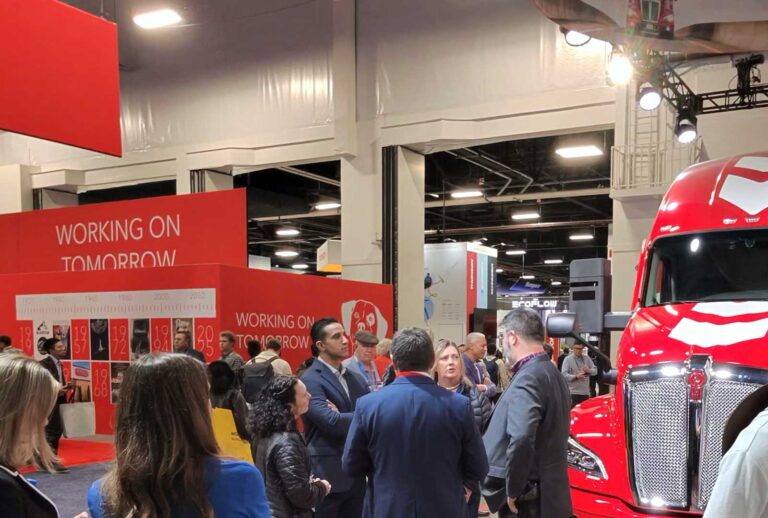
Grayson Brulte: You’ve made a lot of right decisions going back to the founding, and for the listeners and viewers, you can go back and listen to Don’s past episodes. We did one whole episode, just you and me on sensor pods and we did one on on the OEM agnostic platform that you have, and then at CES, by the way, your booth was really nice and the thing I noticed about it, the red of the Kodiak truck matched the red of the Bosch booth. So well, well done there, but you announced this deal with Bosch. That’s going to give you the ability to build a redundant platform that you’re jointly developing. That is OEM, agnostic. To scale. I said this to you privately, brunette was right. How did you make the, the, these, all these decisions with the, with the no HD maps, the sensor pods, platform agnostic, where you’ve seen, unfortunately, some of your competitors have stumbled. What was the foresight to make these strategic decisions going early, early on?
Don Burnette: Well, it’s it’s hard to necessarily pin pipe pinpoint where the, where the foresight comes from. I, you know, it’s, it’s, a lot of it is experience having been around multiple autonomy programs that relied on HD maps and had all the challenges that that comes with them. I, I wanted to find a way to, to move away from that paradigm, and I got a sense in 2018 that the world of AI was changing. It was still early, very early days there, but the, the thought was, and we discussed this in the very first week of the company, if we believe that these AI accelerated perception systems as we refer to them back then were going to become good enough. We didn’t have to rely on prior data, whether that’s a map or otherwise, and they could just perceive the environment in real time and understand the way humans do that, how to interact with that environment, how to proceed and drive safely through that environment, then we shouldn’t need that prior data and therefore let’s make the bet. And you have nothing to lose when you start a company, when you’re starting from scratch. You have nothing to lose. Let’s make the bet that that’s the, that’s the direction to go. And then from there, we also have been always guided by the principle of, uh, cost optimization, capital efficiency, proving that this can be developed, built by a smaller, hyper-focused team. On a significantly less budget than, than what we had seen in the past. And so when you start to think about what partnerships do you form over the years, you need to be really strategic. You can’t just throw everything at the wall. Uh, you can’t just say, okay, I’m gonna work with these OEMs and these tier ones and these partners. And you know, you pay a lot for that. You pay a lot of NRE, you pay a lot in resources. You pay a lot in development costs. If you don’t feel like you’re gonna get the value, and then it’s not just about value in total, it’s about value on what timeframe. And so along the way it was clear to me, and I think to others as well, that the selling the dream, selling the hype, selling the promise of this revolution that we all were claiming is coming at some time in the future. Undetermined is not gonna cut it forever. At some, you, you kind of get a grace period for some number of years, but I don’t know how many years that’s gonna be, and I don’t think anybody knows how many years that’s gonna be. Right. If we can’t build a profitable company in the first decade, maybe that’s okay, but we’re not gonna get two decades, right? You get six years, but maybe you don’t get 12 years. And so for me it’s always been about finding a path. At the appropriate scale. And that’s the other thing. I think people have been blinded by this notion of scale as this concept that one day we were gonna have, we’re gonna wake up on a Monday morning and there’s gonna be 10,000 or 20,000 autonomous vehicles. Whether those trucks or cars just like drop from the ceiling or drop from the sky and poof, they’re everywhere. It’s like, wow, we’ve reached scale. It doesn’t happen that way, right? You’re gonna start with one, you’re gonna start with five, you’re gonna start with 10, 50, a hundred, a thousand, et cetera. And there’s gonna be a continuous spectrum or incremented by some number of vehicles, right? Not fractional vehicles. In order to get to that scale, and you gotta get your first vehicle out there, that was really the insight. It’s like, we just need to get one vehicle. We need to get five vehicles. We need to get 10 vehicles because we’re gonna learn a ton from that. And you don’t need a massive. OEM program. Just to use one example, in order to get those first five 10 trucks, right? You need to have a path, but you need to be learning along the way because one of the worst things you can do is lock your design in early before you’ve learned everything. And the other thing to consider is that. Hardware technology is changing every single year, right? The hardware we wanna put in our trucks this year is way different than it was two years ago, and it probably will be different two years from now. So our strategy has always been find the efficient path with the right partners on the right timeline. That is right size for our deployment today. And into the future. So we need to be mindful of the long term. We need to have a plan of how to get to scale, but we also have to have a plan of how deliver, how to deliver sooner than later so that we can show that growth and, and prove that growth and start to generate revenue. And that’s kind of been the guiding principle behind all of these decisions. We’ve been talking about the importance of OEMs for many years. I fully agree that OEMs play an important role in the development of autonomous vehicles, particularly autonomous trucks. Nobody’s denying that, but here we are now turning the corner of 2026 and they’re still not here. Everybody’s talking about it. Everybody’s working on it, and there’s some really well-meaning people and companies that are actually trying very, very difficult, trying very hard, excuse me, to get this. Out the door in a safe and reliable and cost effective way. But it’s hard. It’s hard, and it’s not here yet. It will probably be here sometime in the future, but we wanna make sure we have a strategy to bridge the gap between that eventuality and what we can offer our customers today.
Grayson Brulte: If you use the Wall Street term on day one, you de-risked your business. ’cause we’ve seen over the last decade, autonomous trucking where certain OEMs. Have been a problem and have, have posed risks, and we’ve seen companies that are embracing the Kodiak model. To me, it was a ri I, I look at it as a risk mitigation tool from day one.
Don Burnette: Absolutely. We wanna maintain optionality. Uh, optionality is always power. You don’t wanna lock. Yourself into any one vendor, any one choice, or any one direction, if you can at all avoid it. Uh, and for us, taking the sort of tier one approach to developing the initial version of this technology was the only practical solution. And I’ve been talking about this for many years, and I think you’re starting to see others in the space take that approach as well. Maybe that’s what you were alluding to. And so, yeah, I think there’s some, there’s some vindication in that that Hey, Kodiak was was right. And what we’ve been working toward all along is likely going to be the path that others take as well. And by the way, now we’re years ahead because we started this a long time ago, but we actually have a platform that we can put out now. Excitingly at CES, we announced the partnership with Bosch. Bosch, as you know, and as, as our listeners will know, is the largest automotive supplier on the planet. and so it’s. It’s a really amazing opportunity for us to go and finally build a system that can get to that next scale, can do so reliably and can get there at at a reasonable cost. And you mentioned the redundancy platform, but it’s not just that, of course, Bosch. Bosch makes amazing automotive components like redundant steering, redundant braking, redundant power systems that OEMs already use today, but they also build sensors. They also build AV components. They build compute systems, and so for us, Bosch represents the potential for a one stop shop as opposed to a, you know, multiple tier one sourcing opportunity to build the system. But it’s not also something that is going to be all or nothing, right? It’s not like Bosch is building a package that Kodiak Willer will not put on our trucks in the future. We specifically. Strategically positioned this relationship such that we don’t have to wait for some, some of the longer term items to be available before we can take advantage of the shorter term items. They have sensors that we can use. They have steering systems that we can use. We have, they have other systems that we can use over time. And through the next generations of the Kodiak driver, we’ll be incorporating Bosch technology more and more into the system. And, and so we’ve, we’ve again, maintained optionality and flexibility as to how we move from our production system that we have on the assembly line today towards that lower cost, higher efficiency, more reliable solution that we’re developing over the next couple of generations.
Grayson Brulte: It hit the nail on my head. Optionality, and that’s, that’s what you’ve given. Will some of those Bosch components then go to Roush to start to get integrated into the Kodiak truck? Is that how that’s gonna work or how will that work?
Don Burnette: One of the great things about Bosch is that they’re already so well integrated with many of the OEMs today. So what we’re building with Bosch is a solution that can both be delivered to Roush as, uh, as a part of our retrofit system that we deliver to customers over the next several years, and at the same time also integrated at the factory with an OEM relationship. And so it’s kind of a best of the both worlds that Bosch offers. And this is something that really Bosch is uniquely able to. To bring to the market. And so that was one of the really thing, uh, exciting things about working with Bosch. And of course, uh, you know, it’s, it’s been a long, it’s been a long road to get to where we are today. Um, in terms of Kodiak’s experience with deploying and developing self-driving vehicles. And I think, one, I won’t speak for Bosch, but I think one of the things that was really attractive is that. Kodiak is uniquely positioned as a company that has deployed driverless systems, not just as a demo, not just as a test case, not just to say, Hey, it’s here and we’re running an occasional run like once a day. These are systems that are in the field, in the hands of customers, day in and day out, and we have those unique learnings that we can then work with them to, to rely on. We, we, we have those learnings that we can pull from that can help. In the design, engineering, and manufacturing of the systems for tomorrow.
Grayson Brulte: and and for the audience in your last SEC filing, you publicly disclosed the eight trucks. Operating with, with no human in, in the cabin. That’s impressive. And the, and the Bosch press release that was put out by Bosch, it said multiple OEMs, you unlock scale. So you keeping the, the, the OEM agnostic, but unlocking a massive amount of scale and, and just reading the press release to me says, okay, well we can got a deal with a Acme, OEM, Bob’s, OEM, Jane’s OEM. I said, holy shit. This thing basically has no limit to how big it can scale. Am I reading that, right?
Don Burnette: You’re, you’re absolutely reading that, right? Uh, there’s, there is really no limit to how this can scale. And that’s the, that’s the intention, right. If you’re gonna design a bespoke system for every single make and model of vehicle on the road, that’s a very inefficient way to bring technology to the market. And. We, I think it was 10 trucks that we announced, latest as at the end of Q3. So that’s a little bit dated at this point. We haven’t come out with our, our Q4 numbers, uh, just yet as of this recording. Uh, but of course we will, we will update, uh, we’ll update you as we, as soon as we can, but we’re, we’re growing, we’re expanding, and, and Bosch represents the future of the Kodiak driver and our ability to. Build a common platform that is available and available on mult multiple makes and models of vehicles. And that’s also something that the end customers are going to like as well, right? They wanna know that the components mo most trucking companies are multisource. They, they, they buy from multiple manufacturers and under the hood they want consistency. They want reliability, they want common parts so that maintenance is easier, right? So we’re, we’re trying to think about not just getting a truck on the road. That’s usually where people are focused. We’re trying to think down the line, how are customers gonna actually interact with this technology? How is it gonna affect their day-to-day business? And how can we make it as easy and seamless for them to adapt self-driving into their fleets?
Grayson Brulte: And we, it’s not a political statement, but we need self-driving. You see the, the statements coming from Secretary Duffy, secretary of Transportation, and. And, uh, the CEO JB Hunt. So there’s a clear driver shortage there. I’m curious, so they can do the redundant platform and goes back to the thing I love more than anything about your company. The sensor pods will Bosch also manufacture the sensor pods for you as part of this platform.
Don Burnette: We haven’t specifically detailed what. Bosch or others will, will manufacture as a part of this announcement. That’s something that we’ll definitely have forthcoming.
Grayson Brulte: You got a lot of things forthcoming, and you’ve said this in public statements second half of the year drive route over the highway on public roads. How are you preparing for that?
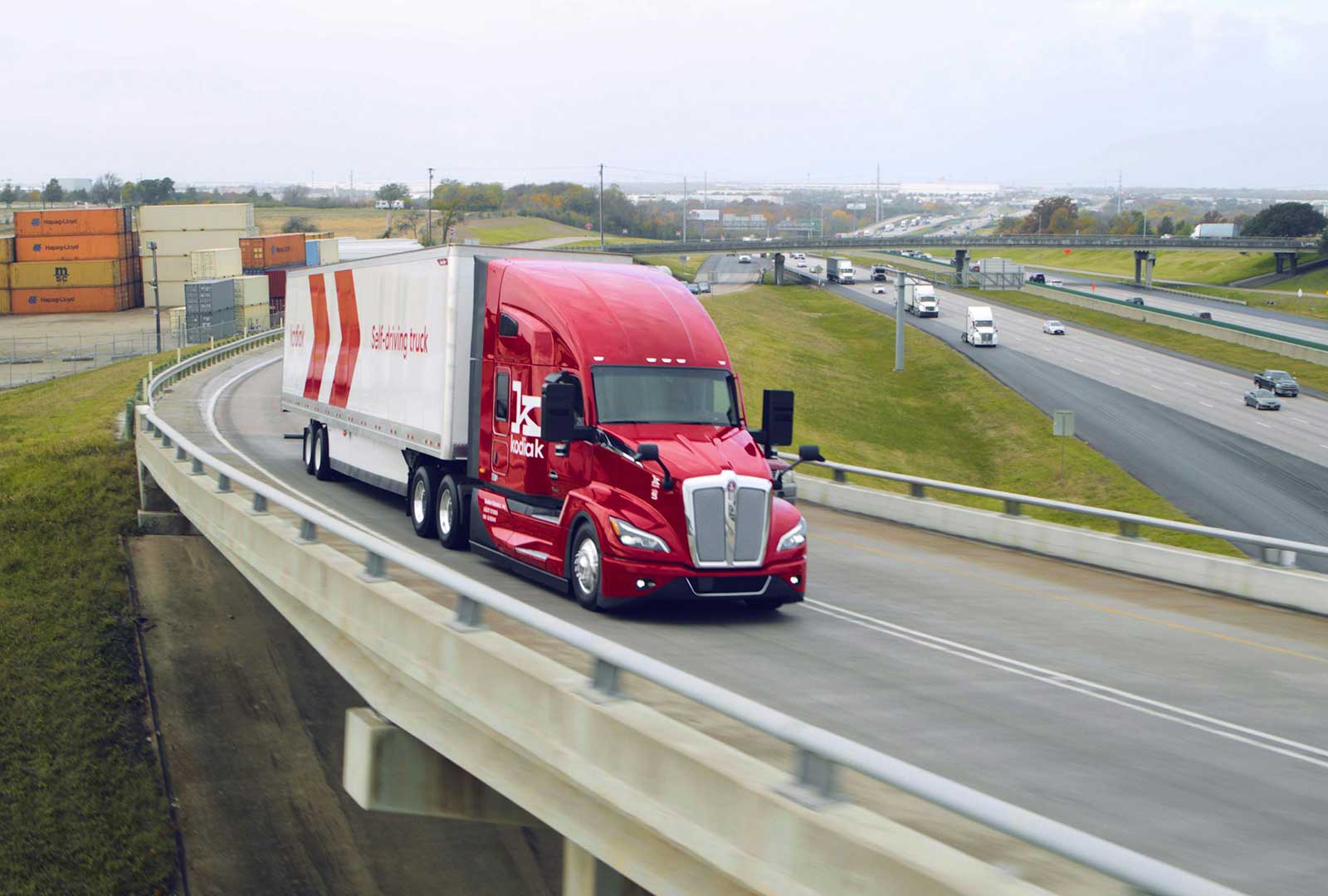
Don Burnette: Yeah, it’s a, it’s an exciting phase for the company. Obviously. That is the, that’s the holy grail. That’s the reason that most of us got into this space originally and. I know it’s been a decade now since I’ve been working on trucking, so obviously getting highway driverless launched is a core priority for the company. One of the, again, one of the things that we’re, we’re taking from our current deployment is not only the technology side of the coin where of course it is common technology across our fleet, and we have a single AI solution that operates in all three of our verticals. Whether that’s highway product, whether that’s industrial trucking, whether that’s defense, but then the experience on the safety case. We’ve gone through the safety case process. We’ve iterated on the safety case process, and every time we launch a new version of the software, uh, a new capability of the system, we go through and we update the safety case as we go, um, and make sure that the system is still safe for the given. Desired operational domain. And so we have a lot of experience there that we think is gonna help propel us to a driverless launch on, on highways. And then from there it doesn’t stop. And this is, this is also the thing that I think you need to remember. We don’t wanna just announce achieving driverless and then say, okay, we’ve got a truck, or We’ve got two trucks, or now we’re running. One, one route a day. We want to be able to quickly scale the solution, and so this is all about sequencing. The Permian and the opportunity with Atlas has been an amazing sandbox for all the things to come. Yes, you achieve driverless, but then what? What comes next? How do you interact with customers? How do you go through all those product learnings that we talked about earlier in the episode? We have those learnings, we have that experience, and we can take that experience to our over the road customers like JB Hunt, like Warner Enterprises like others, and immediately hit the ground running to accelerate the deployment into 2027. And so that’s really the idea beta behind how we decided to sequence our deployment. Generate revenue today. Get established with a customer. Start small, grow, you know, expand as we go, get to over the road and be ready to really hit the ground running and start to scale the fleet.
Grayson Brulte: What type of lane should we look for? Obviously the most common, most trafficked, or used to be most trafficked driver out lane over the road was Dallas to Houston. When you have a presence in Dallas, you’re next to in and out. So I hope at some point you haul in and out burgers. You got the facility right next to you, but what type of lane should we look for?
Don Burnette: You are gonna see similar lanes to what we drive today. So we’re active on Dallas to Houston, as, as you well know, we also go up to Oak. Oklahoma City. So we have Dallas to Oklahoma City and we also do Houston to Oklahoma City through Dallas. Um, but the real marquee lane for us is Dallas to Atlanta, and that’s a multiple hours of service lane that we’ve been running for many, many years now. And we feel like that’s the true unlock for self-driving technology because it specifically addresses a need that’s not met in the market today. You can’t move goods quickly through. The Dallas to Atlanta stop without either resting overnight or having team drivers. And so this is really going to unlock a capability that carriers do not have today. Instead of having to pay two drivers to take the load in a 15 hour stretch, you can pay. Only a virtual driver, right? You have to rely on node drivers, and there’s other complications that team driving brings to to the table. And so we’re really excited as we were kind of talking about the routes like Dallas to Atlanta.
Grayson Brulte: I’m curious, and this is more of a traditional trucking question, but have you noticed any patterns in the data of what type of freight go. Was on that lane. Are there any, is it, is it, is it water? Is it beer? Is it bread? Have you noticed any common denominators in the type of freight that’s moved there?
Don Burnette: Well, we move specific types of freight for specific customers, but broadly speaking, I mean there’s just. Everything, everything moves, uh, along along those corridors, particularly the, the cross country corridors. So you’ve got freight that’s coming into the east coast, moving to the west coast. You’ve got freight that’s coming into the west coast, moving to the east coast. Um, and, and I 10 and I 20 are not the only routes across the country, but they are a very, very popular routes. And so I think you’re gonna find pretty much every type of freight. We’ve also, we work with our England to, to move, to move refrigerated. Um. Goods I was actually talking to, I don’t know if you saw the Bosch, uh, keynote at CES, but they had a professional chef up on stage talking about how great the AI integration with some of their appliances, uh, specifically their cooktops. And, uh, during the keynote I was actually sitting next to him and his wife and they were talking about the importance of refrigerated carrying and, uh, how food spoilage is such a massive problem in America because. We grow a tremendous amount of food that doesn’t have time to make it to people’s tables, and so if we can accelerate shipping of food products. At low cost. And that’s the key because we can ship things, that’s not a problem. But it’s expensive to get it there fast before it spoils, and it doesn’t outweigh the value of what people are willing to pay for that food on the other end. That’s the challenge that we have. We can’t move it fast enough and cheap enough to get its people who actually need it. And so they were really excited as we were kind of talking about the future of autonomy and, and how it affects their lives. Uh, but there’s just a tremendous number of opportunities, uh, such as agricultural. Goods and, and refrigerated goods. , As we, as we expand.
Grayson Brulte: We need yummy tummies, and you have the Maha movement now where they’re trying to get more healthier foods and autonomous trucking still allows the ability to move it there. From a business model perspective, obviously in the Permian Atlas owns the asset. How is the model gonna work when you transition to over the road?
Don Burnette: That’s exactly the intention. We wanna be an asset like company. We want our customers to own and operate those vehicles. We wanna be the technology provider. We’re gonna play a support role. We’re gonna ensure that the technology is being used effectively, that it is efficient, that it is safe, that is reliable, that is maintained. Those are all the supporting roles that we play, but ultimately, we do not wanna be owning the assets and and running the service.
Grayson Brulte: Smart. Well as as your, let’s call it your customers. We’ll, we’ll own the asset. Will you still keep a small test fleet to constantly. Train and and enhance the Kodiak driver over time.
Don Burnette: Of course, so that that will never go away. We will maintain a, a test fleet, a development fleet, or even a concept fleet. I’ve heard multiple, multiple terms thrown out there. So that’s, that’s not gonna stop, right? We’re, we’re gonna have to continue to push the technology forward, expand it into new domains, open up new lanes, uh, open up new capabilities. Make the system better for our customers and our future customers, and so that that will, that will never stop, right? We’re always gonna keep pushing on the technology, pushing on the ai, and that will require a testing and development. And of course, we will maintain a fleet as we continue to test.
Grayson Brulte: When you pull the driver out, we’re gonna have you back. On to break it down, ’cause I want that to be a whole episode into itself. Kodiak goes driverless in two different terrains. Until then, Don, what is the future of Kodiak?
Don Burnette: Well, the, the future of Kodiak is incredibly exciting. You know, one thing that I’ve. Been focused a lot on over the last year is the advancements in AI specifically, and not just as it pertains to self-driving or self-driving trucks, but I’m really excited about all the opportunities within physical ai. And to me, self-driving is a specific application, and in particular, trucking is just a specific application. We used to think about that as the technology, like I’m developing self-driving trucks. The way the technology has evolved, it’s evolved in a much more general way. What we’re learning is that physical AI more generally requires certain applications, certain techniques of taking data center scale algorithms, you know, the, the types of algorithms that we’re all familiar with these days at hundreds of billions of parameters and distilling them down into small AI systems that run at the edge. And what that means is low power. And so when you combine the two challenges of physical ai, which I believe are data collection and low power inference. That’s really the future of any company working in this space, and that’s really the way I’m thinking about Kodiak AI in the future. It’s not just about the specific trucking application. We already have three verticals within self-driving and there’s more verticals to come. This technology is gonna be broadly applicable. To driving tasks, but beyond driving, I think there’s lots of opportunities within the physical world. Uh, and that’s really exciting because things are generalizing, algorithms are generalizing, capabilities are generalizing, that getting the data is still a challenge and miniaturization and low power operation is a challenge, and that’s where Kodiak’s technology really thrives.
Grayson Brulte: The market’s shifting towards low power. And the other thing as somebody who’s building something in AI is memory. The memory is getting really good going into these systems and when you have low power. With a great base of technology and memory, you can build something truly special. The future is bright. The future autonomous. The future is Kodiak. Don, as always, thank you so much for coming on the road to autonomy and we can’t wait to have you back.
Don Burnette: Always a pleasure. Thanks Grayson.
Now that you have read a The Road to Autonomy transcript, discover how our market intelligence and strategic advisory services can empower your next move.
The Future is Bright. The Future is Autonomous. Rep it.
For the architects building the autonomy economy. Our exclusive AUTNMY™ merch is designed for you.