


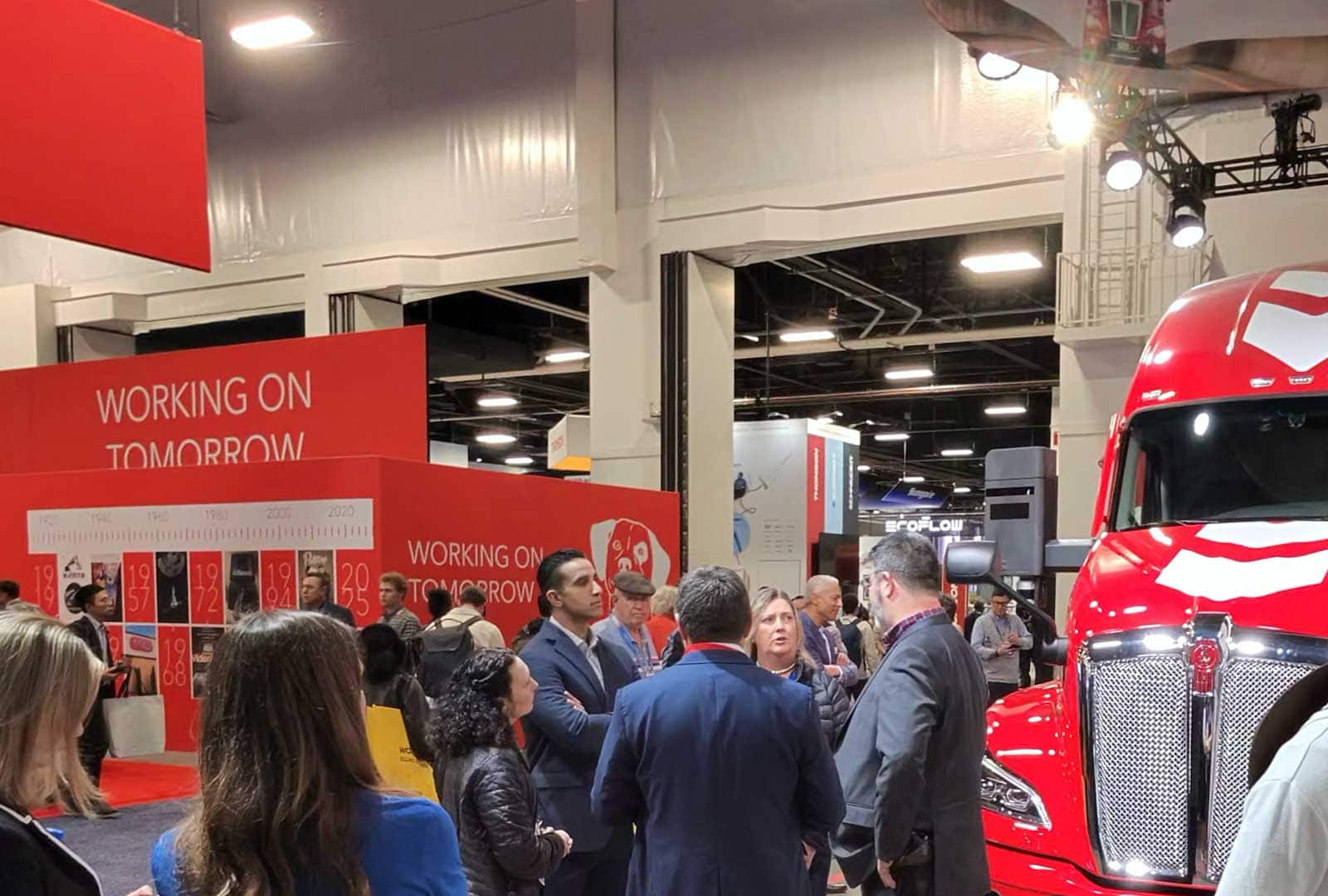
CES 2026: The Autonomy Narrative Just Changed
Executive Summary
In this episode of Autonomy Markets, Grayson Brulte and Walter Piecyk share their boots-on-the-ground takeaways from CES. The conversation highlights the stark contrast between Zoox’s operational difficulties on the Las Vegas Strip and the bullish outlook for the broader autonomy sector. Key discussions include Nvidia’s move to open-source its vision-language model, Waymo’s unveiling of the Zeekr platform, and a heated debate regarding the future of the Waymo-Uber partnership.
Key Autonomy Markets Episode Questions Answered
What specific operational issues did Zoox face at CES?
Zoox vehicles were observed breaking down consistently along the Las Vegas Strip, often blocking traffic and causing congestion. Users experienced long wait times (up to 45 minutes) and reported that the ride quality was “herky-jerky” and not smooth.
What was the significance of Nvidia’s announcement regarding their “Alpamayo” model?
Nvidia introduced “Alpamayo” as an open-source, reason-based vision language model under an Apache 2.0 license, allowing for commercial use without the restrictive hardware exclusivity clauses found in previous licenses. This move is seen as an attempt to democratize autonomy (like Android) while driving demand for Nvidia’s compute hardware.
What is the current status of the Waymo and Uber relationship?
There is a disagreement between the hosts; Grayson believes the relationship is effectively “over” as Waymo builds its own capabilities, while Walt argues it is still early days and that Waymo will eventually need Uber for demand generation as volumes increase.
Key Autonomy Markets Topics & Timestamps
[00:00] The “Clapper Hat” Introduction
Grayson debuts his new “clapper hat” from KPMG, jokingly using it to keep Walt in check as they recap their trip to CES.
[00:26] The Zoox Disaster
A critical look at Zoox’s performance on the Las Vegas Strip, where the hosts observed consistent vehicle breakdowns, traffic blockages at the Venetian, and a ride experience that was described as “herky-jerky” and unimproved over the last two years.
[06:00] Amazon’s Autonomy Dilemma
The conversation shifts to Amazon’s potential next steps for Zoox, with predictions ranging from a management shakeup or technology acquisition to potentially pulling the plug entirely due to the poor showing at CES.
[08:50] Nvidia’s “Alpamayo” & Open Source
Analysis of Nvidia’s announcement of the “Alpamayo” vision-language model; the hosts discuss whether the move to an Apache 2.0 license is a true democratization of autonomy or a strategic play to sell more GPUs.
[13:34] Mobileye’s Pragmatic Strategy
A discussion on Mobileye’s focus on the “pragmatic lane”—delivering cost-effective L2+ systems for standard-fit vehicles—and how this contrasts with the more expensive, compute-heavy approaches of competitors.
[16:00] Waymo Unveils the Zeekr (Ojai)
Grayson and Walt react to Waymo’s new Zeekr vehicle, criticizing its bulky, “ugly” sensor integration while noting that Waymo did not allow attendees to view the interior, unlike competitors.
[19:00] Lucid & Nuro Impress
Praise for the Lucid vehicle’s design and engineering quality, leading to speculation about a scalable future for an Uber-Lucid-Nuro partnership to challenge existing market leaders.
[25:00] The Waymo-Uber Relationship Debate
A heated debate ensues regarding the future of the Waymo-Uber partnership; Grayson argues the relationship is “over” as Waymo builds independence, while Walt maintains that Waymo will eventually need Uber for demand generation.
[27:00] Tensor’s “Parking Lot” Limitation
Skepticism surrounding Tensor (X Auto), highlighting the high cost of their vehicle and the fact that they are still restricted to parking lot demos in California rather than public roads.
[33:00] Foreign Autonomy Desk
Updates on the global market, including XPeng’s approval for vision-only robotaxi testing in China and Baidu’s permit to operate driverless vehicles in Dubai by 2026.
[34:47] Europe: Safety vs. Tourism
Grayson and Walt critique a Financial Times opinion piece that argued Europe doesn’t need robotaxis, debating whether the primary driver for autonomy in Europe will be tourism or the fundamental need for improved road safety.
Full Episode Transcript
Grayson Brulte: Walt, we’re back from CES, I took the red eye, and of course our listeners and viewers know you took the gentleman’s flight. And when I got back from CES, look what I got. I got the clapper hat. So now I’m gonna harass you with the clapper hat. Also, if you say something nice, I’m gonna clap for you. So thanks to Hugh. At KPMG for the hat. Really appreciate it. But now on onto autonomy, we saw a lot of interesting things, had a really good intimate meetings with folks, and people came up to you, asked you for selfies. You’re pretty famous, Walt. Then there was the, the chatter of CES was the Zoox debecale What’s that gonna lead to? Waymo, officially unveiled Ojai, which is the Zeekr. MobileEye made some news. So let’s break down CES to start off the show, what were your takeaways?
Walter Piecyk: First of all, to your point, you know, which is always the case with CES, it’s just meeting great people. We had obviously a lot of time to spend, um. Some quieter time, um, with some of the key leaders in the industry, both trucking and, and, uh, and the autonomy side of things, car side of things, OEMs, as well as tech stack, you know, chips, whatever. That’s why CES is perfect. It’s just a bunch of people, you know, coming together. And, and I, and again, I, to reiterate what Grayson said, um, thanks for everyone that, that kind of came up to us and gave us the feedback in person. Which obviously tends to be more humanized than, than sometimes some of the other feedback that we get. But the main takeaway, I think is just that we’re, I’m even more bullish on the future of autonomy and the opportunities that exist for multiple companies. This is still, this is not a one or two player race. There’s a lot of of great technology that’s get getting developed. A lot of people that are very smart have great backgrounds that are putting a lot of hard work. And bringing their technology to market and, and regardless of, of, you know, what’s in the market today, which we’re all very bullish about. I think the opportunity going forward, , you know, is pretty significant. There was a darker side though, Grayson, maybe you can outline some of the things that, that happened that were disappointing. You know, in terms of, of CES and, and at least one of the, the members of the autonomy community.
Grayson Brulte: It was a darker side, and it didn’t involve going to an establishment. It happened right there on the strip. And I’ll say this bluntly, and I have already said this privately to Amazon, it was a disaster for Zoox. Vehicles were breaking down consistently. I didn’t have one trip where I went from one end of the strip to the other where I didn’t see a vehicle broken down. And the night that we had our little shindig, and I have a video which I will share with us. A Zoox vehicle was blocking the entrance of the Venetian causing all sort sorts of traffic. So I don’t know. I got asked Walt what we experienced is this normal for zoo’s operations is there’s a lot of questions, lot of questions.
Walter Piecyk: I mean, we’ve both been in Zoox at their headquarters. Myself, I can’t remember. It was probably like 18 months ago now. Um, I actually went, I, I left my hotel, I walked to a location, which was a pickup spot. So, so just to be clear, like the ODD, I think those are the, the right acronyms. I’m sure I botched that in the past, which we’ve heard from our listeners about. The geo-fenced area, um, of the Zoox, you, it’s not like you just use the Zoox throughout that. You have to go to like one of, I think it was five or six pickup spots. So anyone that’s been to Vegas knows it’s not easy to get around. So I was walking over to this pickup spot. As I’m walking, I’m seeing the app doesn’t even open until 11:00 AM so I, you know, I time it, so I walk up there, 11:00 AM there’s like five other people who had walked there that was trying to test it. As a result, I have a 45 minute wait to get in one of these zoos. So I go in the Topgolf, grab something to bite, um, get in the, get in the zoos. And the ride hadn’t improved in two years. And, you know, you and I, as our listeners know, get in all of these cars. That’s the, you know, one of the best ways to get a sense of what’s going on. And it was just a very herky jerky ride. Like the, the, it was not smooth. During the, during the, um, of course, did you even try to get into one of these, um, Zoox racing?
Grayson Brulte: I tried multiple times and I was like, oh, since you told me the 45 minute wait, there was one post that went viral on x, an hour and a half wait. It’s the let me order one before I walk over there. You can’t even order one be before you walk over there. It was inconvenient for me, so no, and I, I did not try one.
Walter Piecyk: My other complaint, um, while we’re in the complaint section, granted, I like, I can’t play. You’re clapping, you’re using your clapper head for my complaints or was that an accidental clap? Um, I can’t play first person shooter games with my kids. Um, obviously some parents think no one should play first person shooter games with their kids, but in my case, I get, I get nah, nauseous. But by the way, side note. I saw an incredible Samsung 3D TV where for the first time ever I was in like a first person shooter and I did not get nauseous. That’s just a side note. When I got in the Zoox, like you, you have the side windows, but the front and back windows are effectively covered by some mesh, so you can’t see out the front of the window while this thing is driving, which is just not for me. Maybe everyone’s not like this. A positive riding experience on top of the fact. You know that it was, that it was herky jerky. So I think there’s just the experience itself, given how long this product has been around was, was disappointing, um, to say the least.
Grayson Brulte: I would say that’s the understatement and the Uber drivers I spoke to said that this is a common occurrence of, of how these vehicles do not operate in a, in a well manner, which raises the question. Amazon’s gotta make a change. This was not a good reflection. What do you think they’re gonna do?
Walter Piecyk: I mean, you know, for our life she top 20 predictions for 2026, I think. I specifically said they need a, a big shakeup there. And, and maybe whether that’s an acquisition of a technology company and as, and you know, in the process of doing that to kind of maintain their space, maybe there’s some, some benefit of having Lyft as part of the family. Who knows? But something has to change in Zoox cause this is not suitable for where Amazon, you know, a company of that stature should be in the market.
Grayson Brulte: So do you think it’s an acquisition? Is it a management change? I’ll just tell you point blank. They gotta do a technology overhaul.
Walter Piecyk: all of the above. Grayson, you know, we’re gonna be right if they do even one of these things, but it’s an all of the above and maybe the how they can justify it and say like, look, we’ll have this parallel path of continuing to develop this purpose driven. Boxcar and then at the same time, maybe buy one of the existing technology guys in the market as a way to kind of partner with OEMs and have a parallel path. You know, maybe that’s, maybe that’s the situation. I don’t know.
Grayson Brulte: Or could we see a situation where Amazon just pulls the plug and said it was a mistake?
Walter Piecyk: I mean, they certainly could do that. Apple had a autonomous car program, which they pulled. I think that was a mistake by them, given the size of this market opportunity. And the multiple products that you can sell. I mean, just to jump forward, , Geely, which is a Chinese auto manufacturer, was showing, you know, their car. This is similar to what they showed last year and how you can have this very comfortable seat 50 inch television. I mean, you know, this, this speaks to the bullishness that we have and what autonomy can enable. But, um, you would think that Amazon, for a variety of reasons that what, you know, their presence in media, their presence, you know, in, in terms of. Of AI and, and the investments that they’re making there, as well as just delivery. Right? And, and the crossover of, um, it makes sense for them to have real product Zoox. Sorry, just, isn’t it? And it just, you know, to be at CES and, and be known for the car that everyone was seeing breaking down around CES, I mean, you know, maybe they’ll provide stats to, to refute what we’re saying. But like I saw myself multiple times. It was just sitting there. Same thing, taxi drivers telling us. The performance of these things have been problematic. And like even when I was in the, in the Zoox itself, there’s no button to say, press it to like pull over on the side. Like if you’re in a Waymo, you can press a button and it will pull over wherever you’re going because it’s all in these point to point locations. So it’s just, I don’t know, that’s the dark side. Let’s get more positive and go back to the positive.
Grayson Brulte: before we get to the positive, I have to say it’s a poor reflection on the Amazon brand since Amazon’s innovating on so many other things. So hopefully Amazon can right the ship, but we do know. Or I’ll say we think that change is probably coming at Zoox.
Walter Piecyk: The big news, obviously of CES as always, is whenever Jensen of Nvidia speaks, then everyone listens. There’s a couple different things he talked about as it relates to autonomy. They introduced this, I guess you call it Alpamayo. Alpamayo. I forget how the pronunciation is, but it’s open source, but reason based vision language for those of our, you know, people that love to debate the LIDAR versus vision language model. , Looking at long tail autonomous driving edge cases. They also put in, I think, simulation tools in there. They tied it to the Halo Safety system. Um, I mean, it’s new, but is it really new? I mean, ne NVIDIA already released Open Reasoning, um, on I think early December where they had this Alpamayo R one thing out there was, um, and that was already framed as open source. Uh, we know we’ve talked about on this podcast before, how. We think that they’re trying to go open stack. There’s been my long thesis of, as you’re big companies, you need to be, um, vertically integrated. So, I mean, the only nuance, I guess, is that Nvidia is explicitly positioning it as a teacher model rather than running, um, like directly in the vi in the vehicle, it meant to be, you know, distilled into like these smaller stat runtime stacks. So for the bulls out there, if you look at how the stocks react, the stocks reacted. Like the concept is, oh, open source. Oh, Nvidia. Like, this is like the Android for autonomy. So this is like Uber’s dream because you’ve kind of democratized autonomy. ’cause Nvidia is just gonna enable all these, you know, different groups of people or just different companies, you know, and challenge and create the fragmentation that Uber needs and that the industry needs, um, to get autonomy to the next level. What are your thoughts on what this really means for the industry?
Grayson Brulte: What this really means is NVIDIA’s looking to vertically integrate automotive, but at the end of the day, they’re looking to sell more, more GPUs. Nvidia has open source models in the past for autonomous driving stacks. The major, major, major, major difference in this model. This model was put under an Apache 2.0 license. That you can use commercially. The kicker on this is on the previous model that they open source, you had to sign a legally binding contract where you can only use Nvidia GPUs and you were subject to audits by Nvidia, so it was a very restrictive NVIDIA license. This has an Apache two license, so you can do a lot more with it outside of the model weights and it’s getting traction. It’s been downloaded 15,702 times on hugging face, so I’ll give them a clap Nvidia for that. So there’s clearly tr traction there. Where this ultimately goes, I could see more restrictive terms coming back, but at the end of the day, Nvidia wants to sell more GPUs as Qualcomm ZF arm look to enter the autonomous driving space.
Walter Piecyk: So my question to a lot of the companies that were there that are using Nvidia is like, what does this mean for you? You know, if the market thinks that this is democratizing and Android is it, you know, creating competition. Theoretically is not great for, let’s say a Nuro that’s using their compute now. The answer is, is I think for many of these companies is like, look, and I think even though they didn’t say this like it was good for a lot of companies, everyone wants to like get on stage with Jensen and announce a product ’cause it’s that nice halo effect. Obviously the compute is great product. Not many, if any of these companies have bought more than the compute and some of the software that they’re already trying, trying to sell. Obviously Nvidia can go directly to the OEMs with this type of stuff and some of the OEMs are trying to develop this stuff on their own. But that’s like a Mobileye type approach. And I think there’s a lot of criticism in the industry saying that these companies that, that start with like, Hey, we’re gonna go level two ADAS with the OEMs directly is a very different thing than going to level four. Right? This is the criticism of I think, Tesla’s approach and you know where maybe MobileEye is and even Wayve. Who by the way, had like no presence at CES, not nothing to be seen of, of Wayve, um, given the importance of autonomy right now. So, I mean, I think that is the, kind of the pushback, the challenge that the industry is gonna have is like, you know, Nvidia, like Tesla, if they’re entering a market, everyone is, becomes an overhang, which is a positive obviously for Uber, when the reality is, I’m not sure. What are we supposed to believe that Mercedes-Benz is gonna all of a sudden become like the leader in autonomy or like GM is gonna come outta nowhere and partner with Nvidia and, and have Sterling Anderson, like have an OEM develop autonomy possible, and, and we’ll follow those things as they take place. But in the meantime, the companies that are in the market to let today are moving towards delivering cars this year, not in a couple of years.
Grayson Brulte: We had the announcement also from Ford where they’re developing new advanced autonomous driving systems. So the OEMs are, are coming back and there’s a lot of partners to dance and what role MobileEye plays, who knows what role Wayve plays, who knows? And at the end of the day, is Nvidia going to be. A customer or are they gonna be a competitor? And I think that’s something that we’re gonna have to continue to watch ’cause we don’t know yet.
Walter Piecyk: at the end of the day, I think they’re gonna be fine. Let’s say Nuro is wildly successful. So they sell a ton of, you know, a ton of product. They’re still gonna be using a bunch of the Nvidia compute in there, and that, that’s still gonna benefit from those companies. So maybe they’re just, I don’t know, whatever the reason is. Look, they, they also overshadow, MobileEye was trying to hype people up for the announcements that they had there. Um, and the basically the mobile and, and this overshadowed that, right? ’cause now you’re saying like, okay, MobileEye is effectively trying to help the OEMs enable level two. And now like NVIDIA’s gonna say, well, we’re gonna open source this and you know, this is gonna be the way to level two. But the, the Mobileye’s message boiled down to this that we’re gonna win in the pragmatic lane. Cheap consolidated L two plus that OEMs can standard fit robotaxis timelines are, are still alive. Um, and basically just get it in the cheap cars as opposed to just everything. So the two threats that they’re, that exist obviously is the OEMs like, you know, Sterling Anderson and GM that want do it inhouse. I don’t know whether they’re using Mobileye or not. And obviously Nvidia pushing, pushing a more complete stack. So, you know, they had an announcement with a big US car maker to put, put this in the driver system, the driver assist system in every version of the vehicle Again. Underscoring is not just for the high-end cars, but basically just everything standard fit, right? Try to move it this typical Mobileye style. But again, like, you know, we’ll see how many auto manufacturers actually adopt that and use that and generate revenue for that company.
Grayson Brulte: But why give these vague statements a major US automaker? Why not If the deal’s signed, why not publicly identify who that is? ’cause that can help us analyze that market.
Walter Piecyk: I don’t know. And look at the end of the day, like the, the dominant player in level two plus right now is Tesla. You know, I, you and I use it every day. It works great. You know, we believe that it can get to level four. Obviously there are those that believe that won’t happen. We’ll know, I think sooner enough. But this, this mobile, this MobileEye approach or the Wayve, um, approach or even the Nvidia approach are seemingly not taken seriously by the rest of the industry. A lot of people like say just it’s, this is a very different thing than, than perfecting level two versus getting to level four and Wayve is in that bucket and so is MobileEye and, and obviously so is, is Nvidia at this point
Grayson Brulte: We’re gonna see, we’ll, we’ll have data points on Wayve next year the Nissan Pro Pilot starts coming off the line.
Walter Piecyk: And when is that expected? And do you think that they’re gonna deliver on those timelines
Grayson Brulte: based on reporting from the Nikki out of Japan. Yes, I do believe they will. And that’ll be in 2027 in the pro pilots.
Walter Piecyk: based outta reports? So you’re relying on the to, to, you know, gauge your confidence level on whether Wayve can deliver and what are they delivering? Wayve, you know, level two or level four.
Grayson Brulte: It’ll be an L two system.
Walter Piecyk: Great. Well, so let’s move on to, to, to level four players. ’cause that’s what autonomy is all about. Um, and Waymo, obviously the, the, the, you know, existing leader in the market with several thousand cars. Um, you know, the, the criticism that we’ve had here on the Autonomy Markets podcast is the volume. And so they showed this Zeekr, this, this Geely. Chinese made car. They basically just rebranded. I have a video, I think I put it up on, on my Twitter account. They literally put a, a decal on it. So maybe this was like a very recent, um, brand name that they came with. Ojai, I think it’s, it’s, it’s pronounced OJAI. The, the car itself looked a little bit better. You still have these gigantic sensors. I believe it’s still a fit. I don’t know. It doesn’t seem like it’s coming off the manufacturing line. Um, you were on the trade show floor as well. What were your, what were your impressions of the Ojai
Grayson Brulte: Big, bulky, and ugly. That’s the, that’s the first thing that I looked at. If you look at it from the rear, you’ll notice if you want to call ’em the sensor pods, they’re all, they’re very bulky. It just, it, it’s not a good looking vehicle and it’s Chinese at the end of the day and where geopolitics are going, no matter sticker or no sticker, it’s still a Chinese vehicle and I don’t find it to be very, very attractive. I know there’s a lot of engineering that went into it, but still it’s not very attractive.
Walter Piecyk: I don’t care how it looks, Grayson. I mean, if it gets me somewhere and the ride is comfortable, unlike the Zoox, which has a similar boxy look, it has a front window that you can actually look at. If it was a little odd that Waymo didn’t allow us to look inside the car, because you know, a couple of booths over was the Geely, which I, I think I mentioned before. Opened up, they had these great comfortable seats and, and you know, it was, it showed the very comfortable interior. If you have the interior that Geely was showing, which makes this thing, then who cares how it looks on the, in outside? This is all about your comfort and safety on the inside.
Grayson Brulte: It’s a very valid point. It’s still ugly, but a very valid point from you.
Walter Piecyk: it was also great. Um, The Waymo had a great booth.
Grayson Brulte: The Hyundai looks good.
Walter Piecyk: Yeah, well we can switch that then. The Hyundai also looked good, so, but let’s weave the Hyundai into our lucid. Well, you know, let, we can talk about the Hyundai now. It looked good. It was the, you know, what the production model should look like. Again, it underscores, you know, what we’re hopeful with Waymo just to, you know, for our podcast listeners now on the Lightshed side of things, I’ve predicted that Waymo will hit 6,000 cars. Um, by the end of, of 2026. That’s the prediction that I’m on the, on the tape for now, as well as getting to production, but I think they’re gonna compete with Lucid and who can get to production faster because the Lucid car looked awesome, like better than anything out there. I mean, the quality of it. And by the way. They let us sit in the lucid car. Unlike, um, Waymo High Quality, they had representatives from, from, you know, from Uber Lucid, and, and, and obviously Nuro there. It sounds like they can get to production by the end of the year. So like here we are, you know, Waymo who’s been in the market, consider the dominant player and like maybe Lucid, lucid gets to a production level car before Waymo. Do you think that’s possible?
Grayson Brulte: Well, this is a clap moment to the Lucid Nuro team. Beautifully designed car. Uh, the, the integration was flawless. It was well thought out. And here’s something that, that a lot of folks don’t talk about. This is massively inside baseball. Lucid has one of the best engineering cultures out there, and what we saw with that product was a clear example of what Eric Bach and the engineering team were doing at Lucid. So well done, lucid, and depending on capacity and, and I don’t have the exact numbers capacity that they can do in the Arizona plant and they can also do with the Riyadh plant. There is a very clear path for Uber Lucid Nuro to scale this pretty significantly.
Walter Piecyk: I mean the, the prediction or the prediction, the commitment I guess is 20,000 over, what is it, five or six years. I suspect it’s gonna be faster than that based on some of the conversations. That we had lucid, you know, obviously a smaller player. I’ll also kind of acknowledge that look what you show on the trade floor, trade show floor isn’t necessarily what ends up getting made. Um, so we can’t get speak too much about like a trade show car. But look, it looked good. I think the price point is good. I think the roadmap to getting lower price lucid is good. In no’s case, I think they probably got line of sight on a second, OEM beyond. Uh, lucid. This is all good news for Uber, the Uber team in terms of pushing forward a technology and, and it just makes me think that like, look, I know what, how Uber has been fairly restrictive of their capital to this point, and it still makes sense for them to, to not kind of own the stack, but, you know, over time, as, you know, maybe like a, a lucid Nuro partnership succeeds and others like Wayve maybe fall by the wayside or, or just stick to, to level two. ADAS that it makes sense, I think for Uber to ultimately buy one of these things. We’re talking multiple years down the road. A lot of things can happen, but if like the Waymo relationship, you know, continues to sour with Uber, you know, Tesla obviously doesn’t do anything with Uber. Obviously there’s people out there. The things that Tesla will never do. Anything that, that basically, you know, the winners of the others, you know, could end up basically being owned by Uber. Thoughts.
Grayson Brulte: I’ll go on the the ticker here and make a prediction that Uber will reboot ATG at some point. Ti vertically integrate. That’s their advanced technologies group, and it will be. And through an acquisition. Because if you look at the market of relying on partnerships, so Uber had the VWI VW Mobile I partnership for Los Angeles. Well, VW canceled the ID buzz vehicle. So that vehicle is not gonna be available there. So they’re gonna have to backfill that, where if they own the asset gets interesting. So here’s something that I thought a lot about at CES and I thought about it on my flight home. Could you ever see a deal where the PIF orchestrates some sort of, uh, Nuro lucid merger and then that becomes a subdivision of Uber just for Robotaxis since there is common shareholders in the PIF.
Walter Piecyk: I mean, I think anything’s on the table, Grayson. I just don’t know. Timeline. I think you gotta let things play out a bit more. ’cause you know, there’s other players in the market. Main mobility. Obviously we spend time with Avride. , You know, we’re obviously very excited about what they, you know, what they can do. Rivian is obviously didn’t show up at this thing. , But obviously these loos are a lot cheaper than Rivian and Rivian iss trying to do this all in-house, which is questionable. But like there’s point is there’s other players out there and I think Uber would probably hold back. And the same thing with Nuro. Like if Nuro wants to maximize its value, it probably makes sense to get other OEMs. And by the way, Nuro still has the, what I think is a great. Product in that, um, road robot delivering food. It’s just they can’t seem to find a buyer for that. I think it’s still sitting out there. My, my, you know, as we, you know, we spent a little bit time with Serve Robotics and obviously great progress there. I mean, I think in, in hindsight, I think the challenge with the Nuro robot stuff, R one or whatever it was called is maybe the market needed to develop with sidewalk delivery first, which restaurants can handle a little bit better before. You know, there’s these street robots though. I think there will be a market for that intent. You know, ultimately, you know, if you hear what Uber has said on Uber, on the Uber Eats side, they might’ve just been too early. But I think it, you know, it’s so, it’s, it’s a little odd that that asset, you know, continues to sit out there and, and hasn’t found a new home.
Grayson Brulte: Yes and no. Don’t forget, at the end of the day, it’s a, it’s a BYD product that, that, that built it. So maybe there’s some implications there of why, of why it’s not moving. But I gotta give credit to the Nuro leadership. Team when they made that pivot, it’s working. It’s working well for them, and I do agree with you that the bot was probably a little bit early, but the company made a really great pivot to where they are today.
Walter Piecyk: So let’s just, I mean, now we’ve hit these things. I mean, what is the bigger picture here with Uber again, you know, we met a lot of great people at, at the Waymo booth. It was great that they staffed it, , you know, with kind of real people, I guess is the way to say it, not robots. , Same thing with the Lucid Nuro. I mean, I thi still think our concerns are valid in terms of what’s going on with that relationship and existing markets. No, definitely not dead. And I think there’s still opportunities for Waymo and Uber, you know, to continue to partner. And again, maybe there’s just gonna be this flow where like Waymo kind of does it on its own. And then ultimately when they get enough cars, they have to go back to Uber. In order to source that type of demand. You’ve definitely been more negative more recently on Uber than I have. What was your takeaway on, on kind of the latest between that Uber Waymo relationship?
Grayson Brulte: The relationship’s over I, I, I stand by it. The, the relationship’s over the demand. Generation’s not needed. The one thing that I believe Waymo still has to, to figure out either through a strategic partnership or spinning up a, a, a new division inside the company is the logistical aspect with all the depots. I still think Waymo has a lot of operational stuff that they’re gonna have to work through, either through building Waymo Logistics, LLC, or. Making a splash in the space. So that’s something that they really still need to figure out.
Walter Piecyk: I mean, I couldn’t disagree more. I don’t, you can’t just say the relationship is over. They’re in multiple markets together. Again, you could have management changes at specifically at Waymo as they try and get people that can figure out volumes. I think that’s a very aggressive statement to make. Will there be near term signal, like if Austin shifts on the service side, or maybe, you know, you have. It’s shifting to a Waymo One app. Sure. But to say it’s over, I think is like, we’re still early stages here, Grayson. And so I think there’s still an opportunity for these companies to figure out how to work together.
Grayson Brulte: I am sticking to my guns. I’m saying it’s over.
Walter Piecyk: Okay, well you can stick to your guns and still be wrong. Now let’s talk about another,
Grayson Brulte: No, I’m gonna clap when I stick to my guns.
Walter Piecyk: uh, um, anyway. Obviously love the people at both companies. Smart, you know, but just business is business and we’ll have to see how these things evolve. And there’s no question there’s some issues in, in these, these markets and frankly, it just means that, and we’re not doing it on this episode, but I, I did also meet a lot of great people on the fleet management side of things. There is money chasing that. It is still a fragmented market, but I, you know, there were more people out there than I first realized. I think the developments at some of the rental car companies. Are gonna be interesting to watch among, among others. That is a massively key component, um, to helping this industry. Uh, and we will do much better job going forward at covering that as, as we talk to more people. Let’s talk about like a company that’s kind of come out of the woodwork, tensor. I mean, those that are deep in the industry know this as X Auto. They, I guess, had like a hundred cars in China that, that came by. They had a huge booth. They had like a different, I think a better car than we saw before. Um, it must have cost a ton to make this thing. It was a beautiful thing. They have the steering wheel that goes in and out. They had presentations all day long. Um, what were your impressions of seeing that tensor car?
Grayson Brulte: The car was pretty, but the whole presentation to me, something just doesn’t add up because we do not have any public documentation around funding. We don’t have public documentation around the VIN fast relationship, and they can’t get out of the parking lot. They say it’s regulatory, but there’s a thing called test tracks that you can legally operate it. Something just doesn’t add up. I know I’m going down a little rabbit hole here, but something just does not add
Walter Piecyk: Well, let’s back up and so explain and translate to our listeners what you were referring to in California. If you want to go get in a tensor, you’ll drive around in their parking lot and not on the street. So for a company that’s apparently going, you know, whatever the product is ready to go production, you would think that they could have worked with the state of California to, to be able to take that thing on the street. What they would say is, you know, in the Middle East is where they’re more willing to allow these things to travel in the street. So I guess if you and I want to get on a long plane, we can, you know, we can try it out there. You are right though. There’s a lot of questions that remain unanswered. Um, about kind of funding and, and, and status of, of the thing. And, and it’s just weird for them to have this big coming out at the show with Booth and the presentations and still not have, I think, some of the basic story down. So, look, and, and for our listeners as, as a, you know, who are not the longer time listeners, but like Tensor as a reminder, we’re not going after the robo Taxii market. They’re like trying to sell this very expensive car to private users. And by the way, like. It has, it works in a limited ODD. This is not gonna be like your Tesla, which effectively should work everywhere. You know, when they get it there, it will be level four. It’ll get to the end of the ODD, and then this wheel, this, the steering wheel will pop out, and then you’ll have to take over a lot of extra expense for this kind of early stage privately owned car. So it looks like a great car. I just, I don’t know. There’s, I, I, there’s just a lot of unanswered questions with this company.
Grayson Brulte: outside of the company, the questions that we don’t have answers to yet are the, the legal liabilities. So who is to determine when the vehicle’s engaged or the human’s engaged and what happens if the human doesn’t engage when the vehicle tells you to engage? There’s a lot of insurance stuff to go through, regulatory stuff, liability. So there’s, there’s a lot of questions even out outside of the company that we’re gonna have to watch.
Walter Piecyk: Well, Grayson, those questions were answered to me. I had my inspector hat on. I don’t know where you, what you, were you on another side of the, of the conference hall at that point? The answer was, and they’re already working with insurance companies, that it will be insured by them in the ODD when they’re the driver, they will provide the insurance. But then when you ex, when you exit the ODD. You will have to get your own insurance. I’m like, look, I dunno it was Marsh or whoever, whoever this insurance guy is that you’re dealing with, you might wanna try and bundle those two things together. ’cause there will be obviously a monthly fee associated with this service. So, you know, there’s no reason to kind of split the insurance. So yeah, they’re gonna have to take on that insurance, uh, you know, when they’re the driver.
Grayson Brulte: , I have a clapper hat on today, but putting on my inspector hat in order to pull that off in a seamless fashion as you described. Ten’s gonna have to get an insurance license in all 50 states. Tesla’s actively working on getting insurance in all 50 states. I believe there are at 13 or 14 states, and he has to deal with the insurance commissioners in these state. That is a long, cumbersome process that is also very, very, very expensive to achieve.
Walter Piecyk: talking about getting an insurance license for a company whose cars are still operating in a parking lot. I mean, obviously like as they move forward, they will take care of the tear of these things. You know, you have a very skeptical, I think I’ve been rubbing off on you, grace, and this has been a very skeptical podcast for you. Thus far these things happen, you know, over time as you continue to develop the product. The bigger question though, is gray is like, who’s gonna spend the amount of money, what it’s gonna take to buy that car? ’cause that it looks like a very expensive car. You know, and the, the odd thing about this is like our thoughts of contract manufacturing. I think we both believe there’s an opportunity for that in this autonomy industry. When you think of contract manufacturing, you think of like low cost, right? Not the exact opposite, where there’s like this super expensive car, um, that’s getting made in, in Vietnam.
Grayson Brulte: So what I’ll do, I look at a hat, says Walt is a good teacher and I will wear it on here, here as a thank you for, for, for rubbing off of me. I’m, I’m skeptical, but I’m just curious and I wanna find the facts and that that’s really what it is at the end of the day. And basic, I’m gonna give you a random ballpark number based on what I saw. You’re probably in the loci 2 75 to four 50 for vehicle based on what we saw there on the floor.
Walter Piecyk: that, that makes even a rivian look cheap. Why don’t we go to the foreign autonomy desk? What do we got in on the foreign autonomy desk,
Grayson Brulte: So XPeng. Uh, the Chinese manufacturer of vehicles is preparing to deploy, and when I say deploy, they’re preparing to test their vision. Only robotaxis on public roads in China. The, this was approved by the Chinese government, so that’s something that we’re going to wanna watch there. And the China markets
Walter Piecyk: Grayson, this is an outrage. How, what? Vision only I was told with certainty by many people that the only prog, the only thing that we should think about in terms of autonomy has to have lidar because what’s gonna happen in the dark?
Grayson Brulte: we’re gonna clap in the dark. That’s what’s gonna happen in the dark. You don’t need lidar. It is being proven over and over and over again. There are multiple data points to look at that you do fundamentally do not need lidar. So vision only is scaling and staying in in China. This is, this is my belief. This is my belief that at some point China is going to pick a national winner, maybe two winners, and champion them and export them and, and export that technology to the world. And the leader right now in China in terms of exporting uh, autonomous technology is Baidu. They got a permit from the Dubai RTA to deploy drive route robo taxis in the Emirates with plans to scale up to a thousand robo taxis. And no surprise to you or me, they open up a maintenance service facility in the Emirate as well, so that it’s getting ready to ramp up and that will be commercially operating, no driver in Dubai by the end of Q1 2026.
Walter Piecyk: That’s great. Now we have something on the Light. She podcast. We have something called Disgrace of the Week. So we don’t do that here ’cause we’re trying to make this more positive despite Grayson’s, you know, skepticism this week. Um, but this comes out of the Financial Times, who I think wrote an opinion piece by someone arguing that Europe doesn’t need robo taxis because there’s. In general, less deaths per, you know, miles driven, I guess, there than there is in the US and, and China. They cited well-known safety, you know, Hawk Phil Koopman, which we’ve talked about I think before on this podcast. Um, I mean, to argue that like, okay, since there’s less deaths, we don’t wanna get down to no deaths or even fewer deaths or the safety issues of the Uber driver. Themselves or the grab of driver I guess in some of these markets is just absolutely ridiculous. Like this is, you know, for those of us that are, are autonomy bulls, that is an absolute disgrace by the financial times to make that argument in my view. What are your thoughts?
Grayson Brulte: It’s off base. It’s off base. It’s f it’s factually incorrect. And they made an argument about less traffic. I’m not kidding. That was in the, in the article there in, in black and white, or sorry, pink and pink and black. Since the FT has that salmon color. Autonomy is good for Europe and autonomy is coming to Europe and it’s going to be integrated into the transportation system in Europe, and it’s gonna do a lot of good. And, and one thing that the, the opinion piece failed to mention autonomy is gonna be good for the European economy because it’s, the tourists are gonna want to take it and it’s gonna be integrated and there’s a lot of individuals. For whatever reason, right or wrong, will not go on a public bus, sorry, Europeans. They will not go on a subway, sorry, Europeans. They will not use public transportation. Oh, again, I’m sorry. But they will go in a private vehicle and it’s going to be good for the European economies. And this, this hiding behind safety rhetoric has to stop Autonomy at the end of the day is, is an experience. It was gonna make our road safer, and these benchmarks that are being put out there by certain individuals are just fundamentally flawed.
Walter Piecyk: I think it was our ex-president that said, there you go again. Enough with the tourism like autonomy. It’s exciting, not because I’m riding a Disney ride Waymo, that the excitement of that lasts about two minutes when after you hop, hop in The Waymo, the autonomy opportunity is safety, reliability, right? And, you know, just saving lives and, and having a more comfortable experience. So I don’t give a, I don’t give a rat’s ass about, you know, tourism in Europe from autonomous cars. They need it. Because it’s obviously great for the economy and it’s great for safety, and it’s great for comfort
Grayson Brulte: Oh, I heard a little snap in there. You said great for the economy. Yes. What is a big part of the European economy is tourism. See? So we’re a little bit aligned
Walter Piecyk: No one’s gonna, no one’s gonna be a tourist to drive an autonomous vehicle. You can just, you know you’re gonna have an autonomous vehicle in your backyard, so you don’t need to go to Europe to test their autonomous vehicles. No chance. Sorry.
Grayson Brulte: Nope. cause you’re what? You’re No, uh, nope. I was gonna give you a clap there now. No clap for you. Yeah. Yes. People will go there. We have data from San Francisco. The impact that Waymo’s having from a tourism perspective. We haven’t put out numbers.
Walter Piecyk: For now. Right? But by the time they get autonomous vehicles in Europe, like that’s, that’s gonna be old hat, like the real, you know, multi-trillion global opportunity in autonomy is not tourism, it’s transportation.
Grayson Brulte: No, fundamentally disagree because you’re gonna build bespoke experiences that you can only build there. And you know what I mean by that? We don’t have to get into that today, but it’s gonna be bespoke experiences.
Walter Piecyk: Okay. Okay.
Grayson Brulte: now that we had our little back and forth and you didn’t get a clap, what do we need to look for in the autonomy markets next week?
Walter Piecyk: sleep. Sleep. I, I’ve been traveling for the last month around the globe. Next week we have to look forward to sleep, and maybe just maybe our friends at Tesla will actually start taking passengers without, you know, someone sitting in that passenger seat. Do you think that’s a possibility? Because it’s been nine days, you know, as of now, 10 days for our listeners tomorrow, and there’s been no update about taking the, the safety attendant out.
Grayson Brulte: Well, the way that this market’s evolving, there will be no sleep till Austin. The future is bright. The future is autonomous. The future is a growing autonomy market. Walt, until next week.
The future is bright. The future is autonomous. The future is The Road to Autonomy.
Subscribe to This Week in The Autonomy Economy™
Join institutional investors and industry leaders who read This Week in The Autonomy Economy every Sunday. Each edition delivers exclusive insight and commentary on the autonomy economy, helping you stay ahead of what's next.