


Forget the Waymo/Uber News, Focus on the Nuro and WeRide Partnerships
Executive Summary
Grayson Brulte and Walter Piecyk discuss the escalating tension between Waymo and Uber, analyzing recent policy clashes and the potential for a split. They also explore Nuro’s strategic push into Germany, Lyft’s FlexDrive servicing Waymo vehicles in Nashville, and the ongoing debate over the definition of driverless in the autonomous trucking industry.
Key Autonomy Markets Episode Questions Answered
What is the current status of the partnership between Waymo and Uber?
The relationship appears increasingly strained and headed for controversy. Recent Uber policy papers have taken technical shots across the bow at Waymo, leading to widespread speculation that the partnership may be heading for a divorce.
Why did Nuro open an office in Munich, Germany?
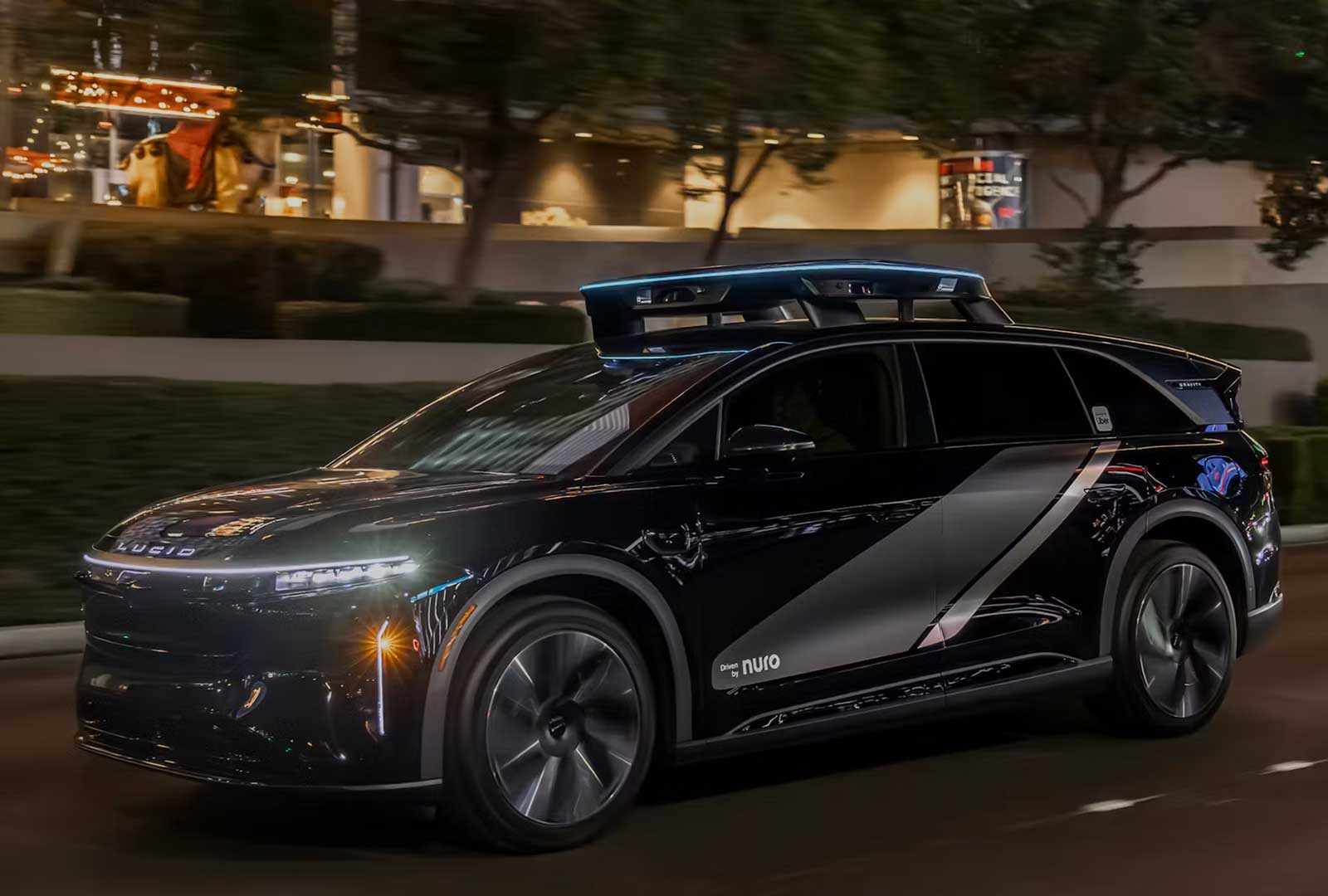
Nuro opened a Munich office focused on engineering operations and partner engagement. This has fueled speculation about potential new European OEM partnerships and an expansion into personally-owned autonomous vehicles and commercial logistics.
What defines a true driverless vehicle in the autonomous trucking sector?
A vehicle is only truly driverless or unsupervised if there is absolutely no human safety attendant behind the wheel. If a human is present in the driver’s seat, even if they aren’t touching the wheel, it is legally and technically considered an SAE Level 2 ADAS Supervised system as the human is in the loop and ultimately responsible.
Autonomy Markets Topics & Timestamps
[00:00] Waymo’s World Cup Expansion
Waymo announced a 1,400 square mile service area expansion across 11 cities, as the company prepares for the World Cup.
[03:59] Waymo’s Unforced Error
Grayson and Walt debate Waymo’s decision to add Chinese-made Geely (Zeekr) vehicles to their fleet. This move is strongly categorized as an unforced error in light of geopolitical issues.
[05:08] The Waymo/Uber Divorce Narrative Goes Mainstream
The ongoing tension between Waymo and Uber is gaining mainstream attention, with Grayson and Walt discussing a recent Uber policy paper that seemingly took technical shots at Waymo. This has fueled speculation that the partnership is headed for a divorce.
[14:51] Nuro Opens Munich Office
Nuro is expanding into Munich, Germany, with an office focused on engineering and partner engagement. This move sparks speculation about a potential OEM partnership with BMW and expansion into personally-owned autonomous vehicles and logistics.
[20:26] WeRide Eyes a Unified L2-to-L4 Platform
During their earnings call, WeRide discussed supporting training from Level 2 ADAS all the way to Level 4 robotaxis on a unified platform. This contrasts with competitors who claim the two levels require structurally different approaches.
[22:47] Volvo Autonomous Solutions Dallas-to-Houston Lane
Volvo Autonomous Solutions announced a Dallas-to-Houston route in partnership with DSV, utilizing Aurora’s technology. This deal validates Aurora’s business model of acting as a software provider rather than owning the trucks.
[23:49] What Defines Driverless
A debate unfolds over autonomous trucking terminology. The argument is made that a vehicle is only truly driverless if there is no human safety attendant present, as having a human behind the wheel technically renders it a supervised, SAE Level 2 system.
[31:39] Foreign Autonomy Desk
Grayson and Walt briefly discuss comments from the Xpeng CEO, who predicted that Level 5 autonomy capable of going anywhere a human can go, will emerge by 2030, a timeline the hosts view with skepticism.
[32:04] Next Week
Looking ahead, Walt prepares for fieldwork on the West Coast, while Grayson plans to monitor Google I/O for any new developments or announcements regarding Waymo.
Full Episode Transcript
Waymo’s World Cup Expansion
Grayson Brulte: Walter, the drumbeat of controversy between Uber and Waymo as it relates to their relationship has shifted into high gear here. While that relationship has shifted into high gear, Waymo announced a massive expansion in service area to gear up for the World Cup. Hopefully, the ticket prices come down, but that’s another topic for another podcast. And Nuro expanded to Germany without a partner. I put on the inspector hat and read the fine print in the press release, which we’ll get into. But let’s start with Waymo’s big expansion. Another week, another Waymo expansion. What do you make of it?
Walter Piecyk: I haven’t looked at what this implies in terms of the maps. I think what Ethan McKenna has talked about is a new product that more easily shows this, but I think you’re familiar with the Miami area. Can you give us some context on what an additional 1,400 square miles means? I know that’s not all in Miami. Obviously, you mentioned a couple of other markets there, but what does that mean?
Grayson Brulte: From a Miami perspective, it goes all the way up to Miami Gardens, and why is that important? That’s home of Joe Robbie Stadium, now known as the Hard Rock Stadium. Sorry, I grew up in the Marino Shula days, so I’ll always call it Joe Robbie. The interesting point on the ODD where it ends now is 4.5 miles away from Joe Robbie. Why is that important? June 15th, World Cup goes to the stadium. So I’m expecting to see an expansion there because in Waymo’s official blog release, they said the following about this: “Whether you’re heading to the pitch for kickoff in Miami,” well, the pitch is the stadium, so I’m going to go on the record and make a prediction here. By June 15th, you will be able to go from Brickell, Miami Beach, to Hard Rock and back. And if I am correct in that, we will be going to the World Cup filming a field report. So that’s what we know about Miami.
Walter Piecyk: Oh, that was very funny. You sounded very American there to say, “The pitch is the stadium.” That was great. Look, the other takeaway here is this really dates back to the end of 2024, I want to call it, when that initial white paper came out from Waymo talking about generalization and there was even discussions of a system that did not require LIDAR, which we’ve talked about before. But this, again, is how AI has changed things, and I think a lot of this is enabled by the power of AI and how you can expand the markets, which is great. Now look, what comes with that though is there’s always going to be some video you’ll see, and I think in this case there was one in Atlanta where there was a couple of Waymos circling around some neighborhood there. I mean, that’s going to happen, and I think it’s great that the critics of AI in the hardware form are pointing at this as opposed to actual accidents where people are hurt as the problem with AI. These things will be resolved not only in software, but also in the thing that, again, to beat the drum here, when you have the infrastructure in place to send these cars somewhere and get them off the road, that takes away, I think, a lot of these situations that happen in the market. But again, the primary takeaway here is Waymo is just in the zone now in terms of generalization, and we have to go back to getting more cars on the road, and I think that the meetings in China appeared to go well between the president. I don’t know what that means for maybe getting more Chinese EVs in there, but it didn’t seem like there is risk for what you have previously called an unforced error in getting these Ohi, which are Geely vehicles, starting to add to the volumes that Waymo provides in the United States of America.
Waymo’s Unforced Error
Grayson Brulte: I’ll stand by this despite the pomp and circumstances. The Geely, AKA the Zeekr, is Chinese-made, and yes, it is an unforced error. End of discussion. I don’t care what happened. No big deals came out of it. It was an unforced error. But what we do know, there’s 3,791 vehicles that Waymo currently has in the fleet, so thanks to Bloomberg for that insight.
Walter Piecyk: I think I need to get my own hat, like the stubborn hat. Who is the ponytail from “The Waltons” where she’s crossing her hands… It’s not an unforced error if they’re able to populate this country with these automobiles. So you can cross your arms and be persistent there. But you know, I agree with you though. They probably shouldn’t have taken the risk, but it looks like they’re not going to pay the price, at least now. Again, things, as we know with our president, can change based on the last person he’s talked to or the day of the week. So we’ll see. But for the initial thing, it seems to be pretty positive between us and China.
Grayson Brulte: Waymo is one truth post away from having the Zeekr, AKA the Ojai, being an unforced error. That’s one truth post away.
The Waymo/Uber Divorce Narrative Goes Mainstream
Walter Piecyk: Well, that is fair. I mean, the bigger news to the broader market, and maybe not necessarily to us, is the ongoing controversy that exists. For any of our longtime listeners, I think we may stitch together some of these things. It goes back to really ’24, early ’25. I was actually on the side of trying to temper the issues that you were seeing between Waymo and Uber. So I was wrong on that for a while. I think at one point you had titled one of our YouTube clips something about they’re headed for divorce, and I was freaking out. You shouldn’t use that type of aggressive language in the title. And now, that’s literally the word that I’m hearing people talk about. So props to you, but we’ve been talking about this a while, but it’s definitely getting more mainstream. I think it was in Business Insider this week as well.
Grayson Brulte: Clappy hat for you, and thank you. We were fortunately right, and I thank you for giving credit where credit is due, as I was stubborn and I dug my heels in. “Nope, not changing. Nope, not changing.” So thank you for giving credit where credit is due. It’s very much appreciated, and the clappy hat also says thank you. So thank you.
Walter Piecyk: I mean, I think the other person that deserves a clappy hat is Ethan McKenna, who… there was this, I guess one of the regulatory people at Uber was saying Waymo is not going into certain markets. And I guess, I don’t know whether it was Ethan himself or someone showed that, in fact, Waymo had applied to be in that market. They just hadn’t been approved by California, so it was kind of a false allegation by someone at Uber, and that dialed up the rancor on top of the stuff that we’ve been highlighting for literally over a year now.
Grayson Brulte: Yeah, and if you really want to look at, I’ll use the term pouring gasoline on the fire, Rob Grant and I broke it down yesterday on Autonomy Signals was Uber’s policy paper. Rob put on his policy hat and went through it line by line, and if you read all of the technical policy language, they were all, I’ll use the term, shots across the bow against Waymo. And to me, in my opinion, that was the final straw of that relationship. Partners do not attack partners. Those that are not getting divorced do not talk ill will about one another. So this thing seems like it’s heading for a crash landing of a divorce.
Walter Piecyk: I’m going to call bullshit in that, sorry mom, in that I think you talked about the last straw being far before this. And I think to me, the bigger issue here is not just that we’ve been talking about this for a year, but within the investor base, if you look at Uber stock being in the low 70s, really the peak of the expectation between that relationship was going back to that Zipit data when Austin was first launched and everyone’s like, “Oh, this is going so well,” relative to how things ramped in California that Waymo and Uber are going to be partnered for everything. We both took the opposite stance on that, which proved to be right. But now, it’s been a while since then, right? And now I think if you talk to most investors, there’s been enough signal, as you like to call it, that this relationship has its issues. And so I think it’s largely not really new news, although again, some people are hyping this up like, “Oh my God, you know, I just noticed this from two weeks ago.” No, anyone with half a brain saw this occurring for the past year. So I think it’s largely in the stock and it’s all as expected. Now look, if in Austin they flipped and said, “Okay, we’re literally just kicking you out,” which I think both of us have talked about before, sure, that would have some incremental impact on Uber, but I think it’s largely… No one, I think, at least in the near term, believes. Now look, bulls of Uber, our good friend Jason Calacanis would say like, “Yeah, that may be the case now,” but at the end of the day, when they kind of run out of the amount of demand that they can generate, they’ll end up coming back to Uber for that incremental volume when the entire market is much larger. That may be the case. That definitely may be the case. But as I’ve always said in response to that, it’s going to be bumpy in the near term, and I think in the near term, there’s enough demand, regardless of some of the data that some people are pushing out there. There is enough demand, I think, to ramp, to continue to ramp this autonomy in any market, whether it’s California or any new markets that they’re in now and expanding to.
Grayson Brulte: I want to highlight, I put my inspector hat on last time we were in Austin. I looked at the insurance registration, which is available in the vehicles. The vehicles are registered to an owner, Waymo LLC, not to Uber. So this is hypothetical. I’m not a lawyer, I’m not an insurance expert. It seems to me that the asset could simply move off the Uber app to the Waymo app just based on the asset owner structure. That would be very interesting to see if it happened at some point. All of a sudden you can only get Waymo on the Waymo app in Austin.
Walter Piecyk: Well, that’s a great segue to the next topic, which is Lyft, and Nashville, which we’re very focused on the progress of FlexDrive, which is their supporting cleaning, charging service that they’re building there for Waymo. We got some new information in that FlexDrive is… Right now, I think Waymo is operational. My daughter took it there. The wait times were good. She had a positive experience. That’s getting serviced by a Waymo-owned service center. So what’s happening, the first thing to happen is they will turn that over to FlexDrive this summer. So that’s earlier than we expected. However, I was getting excited like, “Okay, great. I’m going to go to Nashville.” I think the Eagles play in October. Like, I’ll go to Nashville, watch the Eagles beat the crap out of the Titans, and then check out FlexDrive. But this is really just them, and this is not the bigger investment I think that FlexDrive is making in Nashville. That will be, I think, still in this end-of-the-year timeframe when Lyft will launch with Waymo cars. Again, shared fleet, not separate fleets, using the true FlexDrive thing. So I think our trip to Nashville, Grayson, is still probably going to be delayed until later the year. But it’s a good segue, and it kind of supports your view of like, look, Waymo owns and operates their own service center right now in Nashville. They will transfer that to FlexDrive. So these things can be transferred, and ownership and who runs them can change. And I think, again, to restate what Lyft has said, we’ll have to see if it’s true or not, like they think FlexDrive is just going to be one of the better performing service centers out there, and that will be a differentiation, and that’s maybe what they need long term.
Grayson Brulte: The one thing that I think a lot about and I’ve not been able to get an answer on, Alphabet has a real estate division that operates in multiple countries around the world. Why doesn’t Waymo ramp up an infrastructure division underneath Alphabet Real Estate? If they’re already starting to do this, it seems to me that obviously they have the capital to do it, they have the expertise to do it. It seems that they could bring it all in-house potentially.
Walter Piecyk: I mean, that’s true. I think maybe there’s a lot of things on the plate, right? Maybe they look at FlexDrive in the future and say, “Okay, that’s a good asset to own,” and then build upon that. Or maybe it’s whatever they’re doing at Hertz or Avis or MOOVE. I think there’s tremendous opportunity. Still a fragmented market. And you’re right, they may own it and do it on their own, but I don’t know if they would build that from scratch. They might wait till someone has enough critical mass, buy it, and then expand it from there. Or do the opposite: start their own, get a bunch of markets, and then sell it off. It could go either way.
Grayson Brulte: That’s a valid point. As the market fragments, and obviously Hertz is entering it, and we’re going to have Gil West, CEO of Hertz, on The Road to Autonomy, there’s a name that you do not hear anymore, Avomo. What happened to Avomo?
Walter Piecyk: That’s a good question. I’ll never forget one of our early fieldwork trips, and we were in Austin, and we’re going down… We’re in, I think, what was it? I don’t even know. I think we were in a Waymo at that point, and all of a sudden we just see that Avomo logo, and you hear Grayson yell, “We found you!” It still makes me laugh to this day to remember. That was the early days of discovering. Now, some of the ones we’ve discovered since then have been phenomenal. We get chased now by security. I wonder if some of this security has our pictures up. We’re always on public property, by the way, never violating any laws. But I think you and I both combined have seen more service centers for autonomy than probably anyone.
Grayson Brulte: That’s great. My wife thinks that they do have our photos on the wall because when in Vegas, I went to visit One Depot and I was on a public road on a public sidewalk, and all of a sudden, the minute my foot stepped on that sidewalk, out comes security. I said, “Holy cannolis, they know I’m here.” So we respect the law. We always stay on public property. We never cross that line.
Walter Piecyk: And we don’t even use a drone. I feel like we should get a mini drone and really get some better photos of this. I am, for our listeners, this is probably not apparent because I’m always sitting down. I am about 6’5″, so there’s not many fences that I can’t see over.
Grayson Brulte: And believe me, Walter has done a really good job of taking photos to help us count cars because of his height, so thank you for that. Drone footage would be cool, but I don’t know the legalities around that, so we’re going to stay away from that gray area.
Nuro Opens Munich Office
Walter Piecyk: Now, it’s not all bad news for Uber because one of their partners, Nuro, continues to expand and I think there’s positive things happening there with them and Lucid. In fact, I think the Lucid CEO was talking about expanding to Europe, and I think Nuro opened an office in Munich, Germany, specifically to focus on engineering operations and partner engagement. And I think there was some discussion of like, “Hey, this is not just Nuro, Lucid in California for Uber, but also in the European markets.”
Grayson Brulte: If you read the fine print, which we do, we’re very good at that, in the press release the name Lucid wasn’t mentioned. And why is that important? Because they’re opening an engineering and an office focused on partnerships in Munich, Germany. Munich, Germany is home to BMW. Pure speculation or perhaps it’s coincidence, I’m beginning to wonder perhaps there’s a Nuro-BMW partnership in the works. And I say that because BMW recently killed their SAE Level 3 program, so there’s a very clear door, because they do not really have a sophisticated L4 program. They have an L2+ program, but there’s not an L4 program. Because furthermore in the press release, Nuro talked about personally-owned autonomous vehicles. Well, the world’s ultimate driving machine could become the world’s ultimate riding machine if this deal comes to fruition.
Walter Piecyk: That’s some pretty good detective work. I didn’t see that personal ownership. Obviously, it makes sense. This is always the question I want to ask people. Like, during the WeRide earnings call, which we’ll get to later, I didn’t get a chance to get a question there, but we’ll be spending time with them shortly. I wanted to ask, what’s the long term here? Is it this kind of, hey, rideshare is 30% of the market, or is it ultimately five, 10 years from now, is it private ownership? It’s really a more fundamental question that I think no one knows. It’s very debatable, but certainly has big implications for like, hey, who cares about Uber if ultimately everyone privately owns an autonomous car? But I want to go back to Lucid because the Financial Times, Grayson, did report that Mark Weinrobb, who’s the interim CEO at Lucid, said that their partnership with Uber and Nuro will go beyond the United States into European markets. Now, I hear you. Maybe that’s not the case in Germany. Maybe there’s indications that Nuro is going to have another partner. Look, there is no exclusivity between them and Lucid. And these guys at Nuro are smart. No offense to Lucid, but you’d rather partner with someone that has higher volume, maybe more long-term stability. So I don’t deny or knock down your allegation, but I think at the end of the day it sounds like Nuro and Lucid will be doing European cars for Uber.
Grayson Brulte: Yes, at some point, but don’t forget the European Union is a vast market, and perhaps they could then go a hop, skip, and a jump to the left to the UK where there’s all sorts of political problems. Perhaps those Lucid cars can replace the Baidu cars. I’m just speculating there, but it is a possibility. And let’s not forget Nuro has been testing in Tokyo as well.
Walter Piecyk: I said, like I started this, this is an Uber partner, Nuro, who seems to be like, again, we talk about there’s, or at least Uber talks about 13. Obviously, they’re including some food delivery people in there. Are there going to be 13 partners five or 10 years from now? Probably not, even though we want them all to win. So it’s signposts like this, like, “Hey, one of your partners is now talking about additional markets.” That kind of puts them at the forefront, and there’s also this long-term possibility that if you’re Uber, if rideshare becomes this thing, if the quantity shrinks down, if Waymo is not going to be your partner, if Tesla’s not going to be your partner, why even bother having them as a partner? Maybe you just outright own them, and this becomes your autonomous play with your human drivers as this added value add in terms of your service offering.
Grayson Brulte: And you want to know a very other interesting thing in the press release that we uncovered? Logistics. Nuro is talking expanding into logistics. That’s also interesting.
Walter Piecyk: Yeah, I mean, that’s again to really lock yourself in. Again, I wouldn’t have expected it from the technology provider. I’d rather have a company like them use their money to focus on making sure that that driver is out, right? But at some point, if you’re successful, the driver’s out, you’re partnering with a bunch of OEMs, and then maybe this adds to the value of like, hey, to the OEM, we’ll help with the logistics of someone that wants to buy your cars. It’s just another point of friction in selling more cars, and the more cars that get sold with your technology, obviously the better software revenue generation you can have.
Grayson Brulte: I’ll make a prediction here. Nuro will go into a different class of vehicle in the commercial sector. That, to me, is how I define logistics, and how and when that happens, I’m unsure. But I also want to state for the record, it is not a robotaxi if it is supervised. It is a robotaxi if there is no human behind the wheel or a safety engineer in the ride seat, which brings us to WeRide because they are operating with no safety driver, no safety engineer.
WeRide Eyes a Unified L2-to-L4 Platform
Grayson Brulte: They’re an Uber partner. You dialed into the earnings call. What did you learn?
Walter Piecyk: Yeah, two positive things with Uber partners in a row. I mean, WeRide, Chinese-based company, but obviously focused on the opportunity internationally. This goes back to the same thing, private ownership versus rideshare. Rideshare is like the labor in China, so cheap. You obviously want to be able to sell these cars to a rideshare company in Europe where there’s more margin opportunity. And they kind of talked about that. There’s more news coming on Europe. I think they talked about Slovakia might be a new country for them. They’re expanding. The pace was not massive in Q1. They’re still trailing where Waymo is. They use Geely and Nissan; I kind of want to see WeRide find other OEM partnerships to ramp cars faster. They have very broad geographic areas, but we need to see more cars in there. Also, it’s interesting because they’re trying to generate revenue and profitability, which they do at the gross margin level with an ADAS business. And the CEO talked about driving their own Tesla. He’d love to compare his ADAS version. This is WeRide’s ADAS version versus what Tesla can deliver in the market, and talks about supporting training from a Level 2, which is ADAS, to Level 4 robotaxi on a unified platform. That is something that others have told us, “No, these are two separate things. Level 2 is one thing, Level 4 is another thing.” And they hate on Mobileye, they hate on Wayve, they hate on Tesla, saying like, “No, Level 2 is different than Level 4. These are two structurally different things.” And here’s a company that has no one in the driver’s seat, no one in the passenger seat, and delivering and pushing that. And by the way, someone tried to set them up to rip on Tesla and LiDAR, and obviously he’s going to be pro-LiDAR, but I think was much more not like, “Hey, you can only do it one way.” So props to the WeRide CEO. I think he does a very good job on these earnings calls.
Grayson Brulte: I’ll say this from my perspective, from a messaging perspective, WeRide and their CEO is doing a much better job than Baidu and Robin Li at messaging their robotaxi strategy.
Walter Piecyk: Well, not only that, WeRide was not the one that generated the issue that led to the inability to add new cars to the network. That was obviously Baidu, but I digress.
Volvo Autonomous Solutions Dallas-to-Houston Lane
Walter Piecyk: Let’s move on to trucking and our friends at Volvo Autonomous, which have a unique strategy. Here’s a guy who’s selling trucks that now want to be in the carrier space, meaning that they will be the service provider taking goods or at least enabling those goods from one location to another. They announced a deal, Dallas to Houston, with DSV. You know, again, there is going to be someone sitting in that driver’s seat. It will be, quote-unquote, “driverless.” It is Aurora. They were also mentioned in the press release, Waabi. Sasco, who runs that group, has been very positive about what he views the Waabi potential is. And look, stay tuned. I think what I’m expecting out of Aurora is that they will take that safety driver, whatever you want to call it, out of the seat and go fully driver-out by June 30th. So that’s what we’re looking forward to, but this is a pretty good milestone both for the Volvo autonomous group as well as obviously for Aurora.
What Defines Driverless
Grayson Brulte: It’s a positive for Sasko and the Volvo Autonomous Solutions team, but we have to clarify, driverless is not autonomous. When you have a safety attendant behind the wheel, it is supervised. Everybody beats on Elon over FSD and supervised, but Elon has it right. FSD supervised if there’s a human, FSD unsupervised for robotaxi. So my call to the folks in trucking, you can call it supervised, and then when you remove the driver, you can call it unsupervised or humanless or insert your favorite term. But it is not driverless when there is a human, because technically and legally, the human behind the wheel has a CDL and the law says in case of an incident or an accident, that driver is responsible. So it is not driverless.
Walter Piecyk: Okay, you’re repeating yourself. You already said that in this podcast. You said it on the past podcast, and frankly, I said that as my description. I said there was someone in the driver’s seat. Whatever word you want to get, I think I communicated that clearly, so I know you’re trying to add emphasis to that. The other positive here is that this is validation of the Aurora model where they’re not owning the truck. So many of these other companies, like, no one wants to buy the truck or the car. Who knows what the residual value is, I think is what Uber has talked about. This truck is Volvo and DSV taking ownership. Aurora is just getting paid as a software provider, so that’s a good validation there. But going back to Grayson’s point, because I like to rib him about his redundancy. The reason he’s saying that is because I got some feedback this week talking about who’s first with having the driver in, driver out. And Aurora, a lot of people have noted that, wait a minute, didn’t Aurora go driver out? And at the time, you had Chris Urmson, who’s the CEO of the company, who was in the cab. And then subsequent to that, my understanding was that other people were in the cab because you had this whole safety triangle thing, right? Where someone had to be there in case the thing broke down to be the safety triangle. There was nothing in the press that suggested otherwise. I’ve been subsequently told by Aurora that no, in fact, yes, there were people in the cab for some period of time. But there were some rides where there was literally no one in the cab during this brief period of time before PACCAR forced Aurora to put someone in the driver’s seat. So that was new information. Congrats to Aurora on that. I don’t know if there’s any evidence of that, but we will take them at their word that those rides did in fact happen.
Grayson Brulte: Yeah, I mean, there is quite a bit of dust-up in trucking of who was first. If you really want to go way back in the way back machine, December 22nd, 2021, TuSimple went Tucson to Phoenix with no human in the vehicle. We’ve confirmed that, and that was actually filed in an SEC filing as well. Yes, there were chase vehicles, and they did that multiple times. So that’s the first documented time that we know. And as it relates today, there is a dust-up around what’s happening. The only trucking company that is operating fully autonomous, unsupervised, is Kodiak in the Permian Basin. We were there. Field report comes out on Monday. Yes, it is private roads. However, there is no human in there. We looked. We put the inspector hat on and we looked in there. No human. Only company doing it today. And you might say, “Oh, well, it’s easy to drive roads.” These potholes are bigger than Cadillacs. And no, it is not an easy driving environment. You can’t put your arms out like this and fit between two trucks. You would get crushed. I’m very sorry, you lose your arms. Very hard driving environment.
Walter Piecyk: I mean, I listen to all your podcasts. I think I’ve heard you say that now three times about the size of the bottle and the arms between the trucks. I love it every time I hear it because I think it’s a great visualization. I will say this, there’s no TuSimple left, but were those TuSimple guys running a truck with no one in there? So what about the whole safety triangle thing? Don’t tell the safety triangle people that that was happening. Oh, wait a minute, they had the chase car. Like, at the end of the day, when these companies are a couple of million dollars in revenue, right? All this who’s first is not going to matter. It’s going to be like, who’s the first to 100 million in revenue? Who’s the first to positive EBITDA? And who’s the first to getting the next round of funding to get them to the ultimate profitability of the company? And that’s really what matters the most. It’s fun for us to talk about, right? And these are definitely important milestones, and I’m going to push back on you. Like, if someone’s sitting there and not touching the wheel, I think that’s an important milestone. But ultimately, if you want to build a business, you can’t have a paid employee sitting in the cab.
Grayson Brulte: Yes, it really is. Okay, so you want to do that, I’ll give you massive pushback and let’s get super technical here. If you have a human behind the wheel, that is an SAE Level 2 system. That is not a driverless system. If you look at the legal definitions of the Tesla that you own and that I own, it drives itself. You go to the fish market, I go all over on my field report adventures. I don’t touch the wheel, I supervise it. That is an SAE Level 2 system. When there is a human behind the wheel, it is an SAE Level 2 system, Walter. It is not driverless. It is supervised.
Walter Piecyk: When we first met, I remember you being involved with SAE and I’m like, “Oh, I have to figure out this level one, level two, level three, level four. Now there’s plus, plus.” Dude, I do not give a flying, sorry mom, F about the SAE levels. Isn’t there like a level five? Is there a level eight? I’m not going to get in one of these things until it’s level 10. Whatever. Are you running a business that takes out the human driver, lowers your insurance, builds the business model that is going to change the economy? The whole fundamental reason we’re doing this podcast. That’s ultimately what matters. No one cares about, other than the Elon haters like, “Oh, you’re not calling it full self-driving or this, that, or the other thing.” Like, no one cares about the terminology. Can I hop in that car or that truck and there be no one in there and I’m safe and I can run a business off it? That’s the only thing that matters.
Grayson Brulte: Wow. Is there no one in there? So you admitted that I’m right. Is there no one in there? You said the key word there. You want the spinal tap version to take it to 10. That’s what you want, but is there no one in there? That’s the magic words.
Walter Piecyk: 11. It’s taking 11. No, I hear you, but there are milestones that are worth calling out, you know? Like when I sit in my Tesla and have a drive to Philly and I’m not touching the wheel at all, is a milestone relative to me sitting in my Ford Expedition Max and it’s forcing me to have my hands on the wheels and doing weird stuff or whatever GM thinks they’re going to do. Like, those are notable differences that should be called out when these companies hit those milestones.
Grayson Brulte: I like that you had a max. First you call it a Ford, and you’re right, then you call it a GM. You’re going to get in trouble if you go to Detroit and you confuse those two things. You’re confused on the terms, you’re confused on the names, but I digress. Walter, you want the spinal tap.
Walter Piecyk: I think in 10 years’ time I won’t have much problem with who remains in the auto industry after what we see autonomy do to it.
Foreign Autonomy Desk
Grayson Brulte: That is a very, very valid point. And for the record, I am personally a huge fan of FSD supervised. It works really well, and it makes a big difference. Now, and that’s supervised for now. Let’s move on to the foreign autonomy desk. Because, yeah, we’re diving into level controversy today. The CEO of Xpeng says by 2030, level five emerges, and for those that the simple definition of level five can go anywhere a human goes, no matter what. I don’t necessarily see that happening because that means you have to go through the Rockies, you have to go through Montana, you have to go everywhere. I don’t see that happening, but that’s what the Xpeng CEO is putting out there.
Next Week
Grayson Brulte: What do we have for next week, Walter? What’s on deck?
Walter Piecyk: Well, you know, it’s time for my field trip work. I know you’ve been busy in the last couple of weeks, now it’s time for me to flip-flop and do my own field trip, but maybe we’ll have some comments on that next week. I’ll be out on the West Coast. You also have Google I/O going on, so who knows what Waymo has got planned for that. Last year I saw Dmitri speak at Google I/O. I don’t know if he’s speaking this year, but Waymo usually has a presence there. So yeah, we’ll see what we can dig up out on the West Coast. If you’re out there, let me know. Maybe we can hook up.
Grayson Brulte: If you’re out there, hook up with Walter. I’ll be manning the fort. I’ll be watching Google I/O for the breadcrumbs because you never know what will come out at Google I/O. The future is bright. The future is autonomous. The future is unsupervised growth. Walter, until next week.
The future is bright. The future is autonomous. The future is The Road to Autonomy.
Subscribe to This Week in The Autonomy Economy™
Join institutional investors and industry leaders who read This Week in The Autonomy Economy every Sunday. Each edition delivers exclusive insight and commentary on the autonomy economy, helping you stay ahead of what's next.