


We Rode With Uber’s AV Partners in Dallas, Took Several Waymo Rides and Uncovered Two Waymo Depots
Executive Summary
This week on Autonomy Markets, Grayson Brulte and Walter Piecyk discuss their recent field work in Dallas, Texas, analyzing firsthand ride experiences with Waymo, May Mobility, and Avride. They explored the intricacies of Uber’s multi-partner AV strategy and how varying ride qualities might impact consumer trust. Additionally, we break down Tesla’s latest Robotaxi scaling preparations and examine Nissan and Verne’s latest autonomous vehicle strategies.
Key Autonomy Markets Episode Questions Answered
How does the Waymo experience in Dallas compare to other cities?
According to Grayson Brulte’s fieldwork, the Waymo driver in Dallas feels much more cautious and conservative compared to the vehicles in Miami or the Bay Area, often nudging carefully at intersections rather than taking aggressive gaps.
What vehicles are Verne and Uber using for their Croatian robotaxi launch?
Instead of the two-seater vehicle Verne developed with Mobileye, the Croatian deployment will utilize the ARCFOX Alpha T5 Robotaxi built by the Beijing Automotive Group, integrated with Pony.ai’s technology
What preparations indicate Tesla is getting ready to scale its Robotaxi operations?
Observations reveal Tesla is building inventory with lots full of Model Ys in Dallas, Texas. Additionally, Teslas with specific Robotaxi branding and new cleaning mechanisms have been spotted charging at Superchargers.
Autonomy Markets Topics & Timestamps
[00:00] Forward Fort Worth
Grayson and Walter recap their fieldwork trip to Dallas and their time at the Forward Fort Worth conference. They discuss a noticeable industry shift from hub-to-hub to dock-to-dock strategies in autonomous trucking, alongside positive progress updates from Kodiak and Torc Robotics.
[02:47] Waymo in Dallas: Ride Experience and Depot Discoveries
Grayson reviews his Waymo rides across Dallas, noting the vehicles drove much more cautiously than in Miami or the Bay Area. He also shares his “inspector” findings of two Waymo depots, including one that currently relies on portable diesel or natural gas generators for charging.
[12:25] May Mobility in Arlington: Ride Experience & Uber Launch Timeline
Walt details his experience riding in a May Mobility hybrid Toyota in Arlington. While the ride was smoother than his past experiences with the company, the vehicle still exhibited heavy braking and hesitation, suggesting they have a bit more development work to do before truly scaling their upcoming Uber launch.
[16:45] Avride in Dallas: Ride Experience
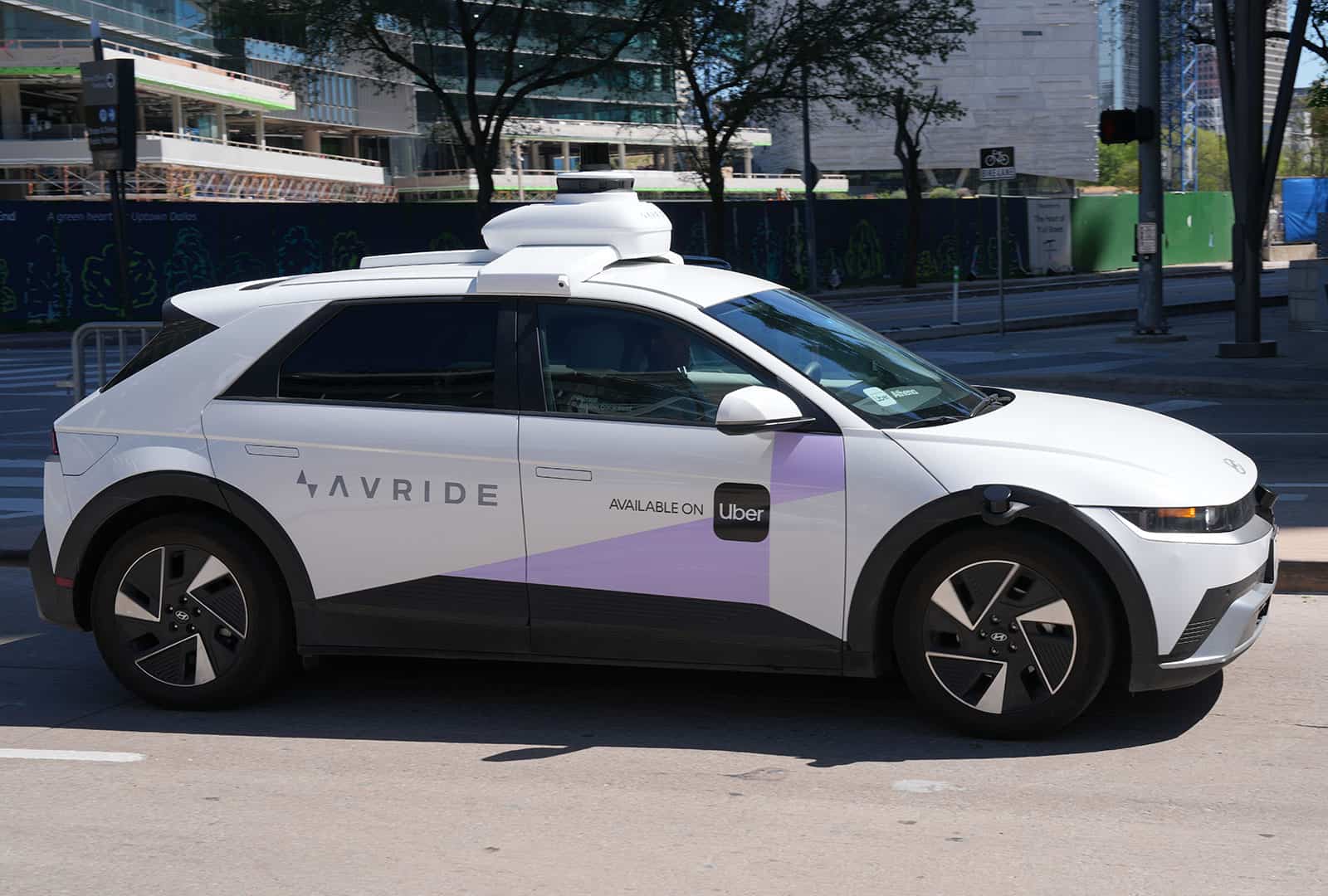
Walt describes testing Avride, noting it was surprisingly faster to hail than a standard human-driven UberX. However, the ride featured heavy braking and required two safety driver interventions when the vehicle attempted risky, impatient maneuvers around stopped cars.
[21:49] Uber’s Multi-Partner Strategy
Grayson and Walt debate Uber’s fragmented approach of using multiple AV partners (Waymo, May Mobility, Avride) in the same markets. They question how varying ride qualities might impact consumer trust and reflect on whether Dara Khosrowshahi’s historical decision to sell Uber’s in-house AV division was a mistake given the current market pressure.
[30:27] Nissan’s Autonomous Vehicle Strategy
Grayson and Walt break down Nissan’s partnership with Wayve. A Nissan executive expressed reservations about Wayve’s black box AI compared to traditional rule-based algorithms. They also discuss Nissan’s plan to leverage its dealer network for AV charging and service, a strategy Walter remains highly skeptical of.
[33:18] Zoox’s Pending Miami & Atlanta Launches
Zoox announced plans to scale services in multiple cities, but the hosts question what their actual definition of scale is. They compare Zoox’s form factor and past ride experiences unfavorably to upcoming, lower-cost competitors like the Tesla Cybercab.
[36:11] LiDAR vs. Vision Debate
Prompted by a Nuro blog post, Grayson and Walt dicuss into the merits of LiDAR versus vision-only systems. They emphasize that there is no single “right” approach to autonomy and challenge the narrative that LiDAR is flawless by pointing out historical edge cases where LiDAR failed to prevent incidents.
[41:50] Tesla Robotaxis in Dallas
Grayson and Walt discuss sightings of stacked Tesla Cybercabs and Model Ys at Gigafactory Texas, along with Robotaxi-branded Teslas spotted at Superchargers. They view this as a strong signal that Tesla is actively building inventory and preparing to scale its autonomous network.
[43:28] Foreign Autonomy Desk
Grayson uncovers that despite Waymo’s recent lobbying efforts in British Columbia, the local Ministry of Transportation stated no autonomous pilot programs are currently being pursued. Meanwhile, Walter breaks down the latest vehicle growth and safety driver ratio data from Chinese AV companies Pony.ai and WeRide.
[48:36] Next Week
Grayson and Walt wrap up the episode by emphasizing the incredibly fast pace of the autonomy industry and promise that Grayson will have his Inspector hat back on next week for more deep-dive investigations.
Full Episode Transcript
Grayson Brulte: Walt, notice the cowboy hat into the audience. That’s a sign. Walt and I were in Dallas last week doing field work, and while Walt and I were doing field work and attending the wonderful Ford Fort Worth conference, Nissan was making news. And what did Uber do? They kept the printing press hot. Walt, let’s start with the big D. What did you think of our trip to Dallas?
Walter Piecyk: it was a great trip. Um, our listeners should settle in. We got a lot of ground to cover. Um, but yeah, let’s shout out to, Forward Fort Worth. Ian Kinne, , put on a, another great show this year. It was great to see everybody.
Grayson Brulte: It was great to see everybody. We learned quite a bit, and one of the big takeaways from for Fort Worth is this hub to hub strategy is going by the wayside. Everything is going dock to dock, and then. I noticed you were in the corner having quite the conversation with Paccar. I said, oh boy. Here he is. Walt, the analyst is on patrol.
Walter Piecyk: Yeah, I was hot on the tail of, of Paccar and Volvo. Let’s just say I’m doing my part to push autonomy, uh, for the trucking sector. And speaking of the trucking sector, uh, shout out to Kodiak who had a huge military win, um, you know, during the week. So, you know, we spent some time with the Kodiak team there, but, um, you know, broadening into this military sector, which there’s obviously tremendous opportunity for them there.
Grayson Brulte: Another thing we also uncovered, had a great conversation with Peter Vaughan Schmidt , CEO of Torc, learned they’re getting closer to commercial operations and uh, he told us the redundant trucks come in. So Torc’s, uh, progressing along and looks like their timeline should hold into 2027.
Walter Piecyk: There’s also such a breadth and and of quality people that that show up at this thing. Still getting good feedback and I’m still working through this concept of. Who the end customer ends up being for these autonomous, um, category eight, I guess you would call ’em, semi trucks. And whether it’s, it’s smart to wait for the likes of FedEx or Amazon to buy these trucks and own it on their own versus selling capacity or maybe upfitting and going to individual carriers. So a lot of good incremental, uh, feedback for me to consider in, in trying to understand that market.
Grayson Brulte: A lot of good feedback not to get technical. ’cause I’m gonna get the text message. It’s, it’s not category eight, well, it’s class eight. So we had to, to set that there so we know who you are. I don’t need the emails. We’re on the record now.
Walter Piecyk: this reminds me of earlier in the podcast when I, when I screwed up, calling an ODD, an operational driving domain, I think it’s called with ODB, a famous rapper.
Grayson Brulte: ODB, uh, he know me and you know, every time that you and I travel to a new market, to an event, we’re always doing field work. This time I went and did the Waymo Field work. You did the May mobility and jointly at different times. We did Avride field work. Which part of the field work do you wanna break down first for our audience?
Walter Piecyk: Let’s start with Waymo. Tell us how, how your Waymo experience was and some of the things that you may have discovered.
Grayson Brulte: The Waymo experience Overall, very smooth. No issues with drop off in pickup. What I did notice compared to Miami and the Bay Area, the driver seems to be. A lot more cautious and I did something that I didn’t know I wasn’t supposed to do. I went to Deep Elum around two o’clock in the morning to have a bite to eat and had some interesting conversations there and, and apparently I learned it forward. You don’t go to that part of town two o’clock in the morning for food, but I digress on that point. Overall really good experience. The individuals that I met with in Deep Ellum and the individuals that I spoke with around Dallas were new to the technology. There wasn’t necessarily, this comfort level was probably my biggest takeaway. Oh, that’s cool sir. Is there a ghost in there? What’s going on? How does this work? How does this operate? Is it safe? So a lot of questions from the residents and tourists of Dallas.
Walter Piecyk: How was the ODD and and were you able to ride on highways?
Grayson Brulte: The ODD was fantastic. I was able to go all around Dallas, and my Dallas geography is not very good. So the audience from Dallas, you, you’re, have to go with me, forgive me. And this was able to go into Highland Park. I was able to go downtown. I was able to go out, I call it Logistics Row because it was all the Truck depots out on one corner. I was able to go into another corner of town. I did some rides, Walt, that were over 30 miles, so pretty good significant ODD
Walter Piecyk: Now is this product that you were on, did you get special access, early access, or is this currently available? How did, how did, how were you able to hail these, um, Waymo’s in Dallas?
Grayson Brulte: so it’s early rider to the to the team at Waymo. Thank you for granting me the access. And we can check Dallas off for a new market I’ve gone into. So it’s still early rider, even though Dallas is still an early rider. I saw quite a few Waymo’s on the roads with individual passengers cruising around in all different parts of Dallas.
Walter Piecyk: Did you notice any difference in, in, you know, how these Dallas were driving versus. The Bay Area, because last time I was in the Bay Area, it seemed like they tweaked up the aggression there. You know? Did they adjust it for a Dallas driver?
Grayson Brulte: To me, very cautious compared to the Bay Area driver of the Miami driver. Very, very cautious. Had some interesting intersections having to deal with a, a lot of traffic where the vehicle would nudge, where in the Bay Area it would just go for it. So a lot more conservative. I would say that the Waymo driver in Dallas still needs to be smoothed out a little, but overall, really great experience.
Walter Piecyk: Could it be that, um, they start out that way in a new market, um, just to avoid any incidents and as they get more comfortable with operating in an o, in a new ODD, uh, that they start to dial up the aggression.
Grayson Brulte: I think that’s plausible. But I will caveat saying that when I was one of the first early riders in Miami, I noticed the vehicle in Miami was more aggressive. And I’m gonna make an assumption here. I have no data to back this up. Perhaps Waymo, since we knew they were testing in Miami longer than Dallas. That’s why it ramped up. And if that is the case, it tells me from the time Waymo announces the market to the time they’re able to deploy, it’s gonna get shorter and shorter
Walter Piecyk: Now were you able to find that Avis depot? ’cause I believe Avis has been the selected partner of Waymo in Dallas. Did you, were you able to identify that?
Grayson Brulte: when I’m out. I have to go inspect things and I have the inspector hat for that, but today it’s the cowboy hat. In honor of our trip to the big D, I uncovered two depots in the Dallas, uh, metroplex region. One depot, I would give you an estimation, 30, 35 minutes from downtown. Another depot, roughly 15 to 20 minutes from downtown. The depot that was further away was located in an area where you’d find other depots, a traditional industrial area. What did I uncover there? Two very interesting things I uncovered at that depot. One, there is no energy infrastructure. They’re using portable energy at that depot. And two, the individuals operating that depot where wearing bright neon green Transdev vests. Is that a sign? Perhaps Transdev is operating this depot and not Avis. That’s the first depot. What do you think of that?
Walter Piecyk: I mean, it probably does mean that, I don’t know if that means that Avis is, is gonna come on later. Um, now you, you, you said something that sounds a lot like a euphemism to me, portable charging. Can you describe that a little bit more, Grayson, because I think I know what you mean, but, but why don’t you spell it out for our listeners.
Grayson Brulte: So at the the First depot site, portable charging. These are large, and I’m going to assume either diesel or natural gas generators that come in on a trailer. I saw a truck bring this in and I witnessed it and have it on video, and then the individual in the Transdev jacket went and grabbed the charger plug and plugged it into the JLR. So pretty significant. Had to come in on a trailer, on a truck. And when I say on a trailer, it had a hitch for the, the individuals that liked to get pointy on things. It had a hitch.
Walter Piecyk: Look, there was some noise on this topic, not on that particular depot, I don’t think. On another depot, um, on, on Twitter talking about like, oh, you know, electric cars are getting fueled by generators. We’ve talked about this on autonomy markets. I am familiar, and we’ve talked about this in the challenge of this third leg of the stool. Um, and the fact that like when you launch a new fleet, I’m very familiar with companies that not only bring the generator in back in a, a large tank of gas to fuel that generator before they can get a hookup to the nat gas line, which takes some period of time, and then they have to wait. The, you know, I don’t know, a year, maybe two years, maybe. To get the electrical hookups to actually charge this. So this is not an issue of these companies, like this is an issue of, of how electric works and we actually had a great, um, a great speech by one of the guys that’s in charge of that in Texas. As you many people know, Texas is an island unto itself in terms of the grid. They generate a ton of, of, believe it or not, wind. I think he said more wind than, than I think most states or maybe even a couple of the next two states combined. The infrastructure still takes time. There still has to be capital investment, not only for the data centers that everyone’s fighting about, but also, you know, to provide quickly the electric that’s needed to, to provide charging. So in the meantime, what you’re gonna see more and more as autonomy launches, because in most cases these are EVs, right? Because of a variety of reasons. We’ll, we’ll get into that later maybe. Um, but you’re gonna see. You know, generators generating electricity and someti, in some cases being fueled by gas pulled up on a truck.
Grayson Brulte: Me. It doesn’t bother me. It has to happen. I remember going back to going to Yankee Stadium in the nineties. All the telco equipment, it was all running on generators, all the boost there. For all the times of winning the World Series, you hear the generators going. It happens as part of society when you need to bring in infrastructure. It doesn’t bother me at all.
Walter Piecyk: that was the first depot. Where was the second depot?
Grayson Brulte: The second depot, I’m give you a rough estimation, about 15 minutes south of. Downtown past Deep Elum to put that in their per perspective. This depot was a, I’ll use the term, a professional depot, putting on my architectural engineering hat, which I’m not an architectural engineer, but I do like to wear hats, so I, I’ll put that out there. The depot looked very similar to the Waymo, Santa Monica, designed depot. Also very similar to the Miami Waymo depot, the one that’s currently operational. Big caveat wasn’t open yet. Extra power was there, fully secured, counted roughly 36 chargers. Those are the, those are the dual chargers. This depot can move vehicles and get ’em to where they need to go. Not operational, no cars there, but the design was identical.
Walter Piecyk: Is it possible that that’s a Avis or, or are you implying that because the design was identical, that it’s one of the existing players in the market, not a new player like Avis?
Grayson Brulte: The assumption based on the trends that we have seen in the market is that Waymo has a schematic of how they like a depot to be built. And it’s that same schematic who owns the land, unsure who’s gonna operate it. Unsure, but, and I wanna point this out. There has to be a, a mothership depot that I have not uncovered when I was there. No room to clean or service the vehicles. The temporary first depot had a garage to go in and do it, but the secondary depot is a security house, all the charging infrastructure, and for you, Walt and Teleco Corner, they had cellular galore on the backside, but just mostly pure charging.
Walter Piecyk: So if it’s a schematic that they’re basically giving to the partners, what value add does Avis provide? So if you think about flipping gears here, flex Drive is talking about, you know, engineering something and doing better than other companies that are out there. So in that case, you would think that whoever’s doing this, they’re not doing it just for Waymo. They’re gonna, I, I would hope design a business model that handles multiple AV charging. Um, so. I don’t fully appreciate the schematic concept there, and, but you know, you may be right. We’ll just have to keep tabs on this one and see if, if Avis branding ends up showing up there.
Grayson Brulte: Because this site had no bre, so we’re, we’re going to watch for that. Another thing we need to look for Walt in the markets, do we see a press release at some point around an energy management software layer that’s managing the energy? Perhaps that’s the secret sauce that goes to, because we know that Waymo’s scaling this week, they announced they’re over 500,000 rides a week, so clearly, clearly scaling.
Walter Piecyk: Yep. Uh, that’s good. That’s a good bow to put on the end of our Waymo segment. Let’s move on aside while you were, um, I don’t know where you were when I was doing this. I think you were might have been heading back to, to Florida Man State. Um, I was able to hop into a May Mobility car, May Mobility. As you, as you might remember, has a partnership with Lyft. I believe it’s in Atlanta. Um, They have a handful of cars. They were expected to launch with Uber end of 25. Um, they’re still kind of waiting on that. Um, this is the Arlington area of, of, uh, Texas. Long time listeners might remember. I did already ride in a May Mobility car, both and you and I both, um, in Ann Arbor and then I went in Arlington. Arlington. They had a project with the government providing effectively free rides, I think, to ut Arlington students in a very small ODD. Um, not a great experience at the time. Um, so I think getting back there now to Arlington, and here’s a couple of my observations. First of all, the ODD is, is clearly much larger and, and like a real ODD in terms of the size. Um, secondly, the, the ride itself, I think, you know, felt smoother. Third, the car, you know, I’ve, I’ve talked about this in May in the, in the past where, you know, may Mobility is not using ev, right? They are a, it’s a hybrid Toyota, right? So they don’t have that extra space where there’s now a lot of gas. Or, or ICE, is that what it’s called? Yeah. Inter internal combustion engine. Um, taking up space. Nevertheless, you know, they, they have compute that they’ve now moved more into the trunk. It’s a lot quieter. It’s a lot cooler ’cause that thing was creating heat before, so that’s a positive. But there’s still, the passenger seat still has something in there that you can’t take. Accept a passenger. In that front, um, passenger seat, um, externally feels like the sensors still need a little bit more subtle deployment compared to some of the other things that we’ve, that we’ve seen. And again, the od the, the overall feeling was good. I would say that, you know, it still hesitates meaning like it, when it comes up to a stoplight, it’s stopping too far in front of where the car in front of it is. or where the stoplight is. It’s, it’s a little heavy on the brake or if, if someone’s kind of coming out. It kind of reminds me of some of the FSDs. Things that we’ve talked about on this podcast before where like someone’s walking up from the side and it’s worried that it’s gonna, like that person’s gonna jump out in front of it. So it’s being too cautious and then hitting the brake. And, and I think on one hand, like, you’re like, oh, that should be cautious. But the problem is when you’re, when you’re a little heavy on the brake, it makes the rider feel less or, or feel more concerned. If it’s smoother, you’re like, oh, this thing is confident knows what it’s doing. So it has a bit of, of, um, hesitation. I did have one intervention where it thought a light. A green light was a red light, so it basically stopped. And since there was people behind us, we basically, the, you know, the safety driver had to reinitiate and get the thing going, um, to be along its way. So, I mean, it doesn’t feel like it’s, you know, imminent that you’re gonna see may mobility launch with Uber in that market. Maybe it’s gonna take another couple months or six months. So I felt like much better than what I experienced with Arlington before. You know, better but closer to what we both experienced, I think, um, back in Ann Arbor. So I think, you know, there’s, there’s probably some still, um, some development work that needs to be going on at, at may.
Grayson Brulte: Did you hail this ride using the May Mobility app or did you use the Uber app for this one?
Walter Piecyk: so this was, you know, thanks to the team at May Mobility, we just got in there and they had an app. So I did not have an app, you know, so there was someone with, with at May with me, and there was obviously a safety driver, um, there at the time. So ultimately you will be able to hail this, um, in the Uber app when they launch. Um, but again, this is one of these, you know, this is not considered launch, right? To be clear. When it does launch, there will be that I think that safety driver sitting behind the driver’s seat to handle these type of situations. So, you know, there’s nothing to necessarily, to prevent them from doing so. There are no safety issues. Right. So they can move forward with the launch at Uber, presumably anytime they want. I think probably at Uber’s, um, you know, determination, it’s probably only gonna be like 10, 15 cars, something like that. So it’s not like they have to worry about like, Hey, can we scale? It’s not like it’s gonna go to 300 cars. Um, soon, and, and again, based on that performance, it doesn’t seem like they’re, they’re gonna get to that 300 cars soon, but I think they can take the next step with Uber. But just important to understand this description when you see headlines, you know, from Uber and others about, Hey, we just launched in this given market, and when, what you’re actually dealing with in that market.
Grayson Brulte: You, you learn a lot when you’re in the market. I took a Waymo up to Highland Park and I’ve got all my cameras out and I ended up meeting the Dallas PD and to the gentleman who I met and I told him about our show. And if you’re listening, thank you. The officer gentleman told me where I can get an Avride because it’s nine square mile ODD. I’m, I’m struggling trying to get paired with this, and the officer tells me where to go. And lo and behold, Avride and they’re operating with safety drivers and you hit the nail on the head. One of the things that pointed out to me from a safety driver is that the Avride fleet is still in its infancy of, of where it’s going. What did you think of your Avride experience when you went to this magical pickup point to to get paired with it?
Walter Piecyk: Well I thank you for that g Grayson. ’cause I only had an afternoon time and I wanted to make sure that I did get the ride ib, so I went precisely to the location and I, I put precisely a destination actually for what, some reason I wanted to put a destination as the Jewel Hotel, which I’ve stayed at before. And it refused to give me an Avride to the juul, so I changed it to whatever that other hotel is that we have, we have video of, and I got it and, and frankly, once I was in their ODD, I got one pretty much every time I was in Uber, much more. And by the way, I saw I saw a decent amount of avs Avrides, specifically, they’re called Avrides, right? This is a subsidiary of Neibus, however you pronounce it. Um, basically every time I was, I was trying to contact an UberX, which is very different than, than Austin, where, you know, it’s in sometimes a challenge to get a Waymo. And, and by the way, on the flip side, like there was times when, like it didn’t assign me an AV for whatever reason, and then it assigned me a, an UberX human 15, 20 minutes away. Like, so the UberX experience in the Dallas area, especially out by SMU. Well, obviously students, well actually it’s a country club type campus, but I would think that students would rather take an UberX than like a, you know, a premium ride there. Um, and, and it was like the human rides were very long and it was a much shorter to get, um, an Avride. So again, it’s interesting to see that there clearly, while there was a decent number of Avrides on the roads in the greater Dallas area. Not as much as Waymo, but much more success within that ODD of getting one. And then the ODD itself was pretty, I thought, pretty large, right? I mean, downtown Dallas all the way out to SMU. You know, you’re talking like, that’s a 25 minute ride. Now look, it’s like, you know, some of the complaints we’ve had with, when Waymo launched in LA I was literally, it would refuse to take the highway. I was literally on a service road next to a highway because it was avoiding. Taking, taking, um, the highway and then in terms of the ride itself, definitely a little heavy on the break. Um, you know, it’s, it, it, I honestly felt smoother when we first rode Avride in Austin, um, last year. Again, maybe it’s the same issue that, that we were talking about with Waymo when they launched a new market. Maybe they’re a little safer, and then as they get more confident, they’ll dine up, you know, dial up some of the smoothness. So that heavy on the break, we, I can live without that. You gotta, you know, chill out on that. Um, and I did have an intervention in this case, and this one was a little bit more troubling. I would, I would call it, I guess, in that I was on the SMU campus and we were coming up to a stop sign as there are many there, and there was like two cars in front of me. And the Avride literally tried to like, go around the cars that were stopped at the stop sign. And in this case it was like, it went around and like into, it was gonna go into traffic, right? So the, obviously the safety driver. Grabbed hold of the situation, got us through that, hit the button and then reengaged. And there was another situation, same thing where it was almost, it was like impatient and it was, there was someone basically waiting to, I think, make a left or a right. It was make a right. And again, the Avride went into the left lane. It was a left turn only lane, but then it did the squeeze over, like, so you’re basically heading towards the person coming at you and did the squeeze over and the cutoff on the, on the, on the guy in front of you. So two incidents. Really, basically the same thing. Um, and again, you know, whatever this is, now this is the, the difference here between Avride and May Mobility. This is a launch market, right? This is a Uber launch market where there is a safety driver there. Um, and I actually saw, um, someone at one of those drop off, I think it was at the W Hotel where I was waiting for my ride, AV and a like just a regular consumer, a woman in her family. Had gotten one. I’m like, did you call for this? Did have you, did you, I asked, asked her, did you change in your app to prefer avs? No. Was the answer. So this woman had requested an Uber X I’d noted probably the Uber X issue that seems like it exists in Dallas in terms of lack of human drivers. And this woman was, and her family were assigned an AV car even though that they hadn’t. Um, so they’re obviously, they’re, they’re operating this thing. Um, but clearly some, some issues to work through with, with Avride as well.
Grayson Brulte: It’s interesting, I noticed, and I’m gonna put the another hat on the, let’s call it the in-vehicle inspector hat. Different material on the seats. And so I asked the safety driver watch. He said, oh, it’s easy to clean, so not that cloth. I have this very interesting material, so I, I noticed that, and then I have to say. It’s not the same of going in an AV with a human safety driver versus going in a Waymo with a different driver. And I know I’m gonna sound like a spoiled kid here, but being able to get into a Waymo and have your Spotify synced is a great feature. It’s truly a great feature.
Walter Piecyk: Controlling the temperature as well.
Grayson Brulte: It was hot there. It, it, it, it was hot. So. Do. Do you think the lack of Uber X drivers, and this is hypothetical ’cause we don’t have data, the potential lack of Uber X drivers that that Uber will look to fill in autonomy in those markets to backfill it.
Walter Piecyk: I have no idea what’s, what’s going on with that. Maybe it was just kind of happenstance or, or whatever. Maybe it was trying so hard. To get me an autonomous ride that I don’t know it, but it, it was, it was odd if I, wanted to basically, you know, if I obviously this doesn’t go to the airport when I need to do my airport rides, and I selected whatever premium service this thing was there in three minutes. It was, you know, it was totally fine. Um, but for whatever reason, UberX, maybe just people in Dallas, they don’t like UberX. They just like, the demand is on higher end cars. Who knows? But we should talk about like, so now we’ve talked about, you know, Avride, which is a launch market, right? May Mobility, which is, you know, supposed to have launched, will launch I think at some point in Arlington. Again, these are in Dallas. Those ods do not overlap, right? Uber is kind of Dallas up to SMU and Arlington’s kind of over here. So. Two separate AV partners in, in one market, um, going up against Waymo. That probably overlaps both of those ods, I would guess, um, within some reasonable time. Um, what do you, what are your implications for Uber on this?
Grayson Brulte: My implications are inconsistencies in, as have experienced, the Avride was different from was different from the Waymo ride, which was different from the May Mobility ride. How, how from a consumer perspective, is that going to impact the product? Are consumers gonna be like, okay, which 1:00 AM I gonna get? Am I gonna get this driver, this driver, this driver? And then you could sit here in the pushback and say, oh, that’s the same thing with X. You don’t know what you’re gonna get. I just, I think you need to pick a partner per market perhaps, and brand it that way. But I understand what they’re doing at fragmenting the market, but I’m not sure from a consumer perspective, how this is gonna go over long term.
Walter Piecyk: If we’re right and, and there’s issues between, and when I say we, I mean more so you, you’ve been more on this horse since we’re talking cowboys, um, than I have. Um, that there’s issues obviously with the, with the Waymo Uber relationship. Um, I, I just kept thinking like, you know, we get a lot of, we hear a lot of criticism about Tesla and like the feeling of the Tesla rides, whether it’s my own FSD or what we experience in Austin. Relative to where these partners are. I mean, Tesla’s ahead. Like look, it may be that that closing out that final safety case to truly launch, you know, whatever you want to call the words with, they’re gonna get there because they have LiDAR or whatever maybe. But just like we’re getting in the rides, we are actually going out there and doing the field, you know, the field work and getting the rides and you get a pretty good sense of, of you know, where company or where different companies are. So if I’m gonna say that like, you know, Avride or May Mobility is three months close, then what does that mean for Tesla? Shouldn’t they be even closer or vice versa? Like if Tesla’s gonna take longer, shouldn’t these companies then take longer? So then, you know, if you think of Uber’s partners, like that’s, that is the status that they’re at. And so we’re at a point now also, you know, we’re, there’s external forces. I mean, Travis coming back into the thick of things is, is kind also, you know, changing some of the dialogue you have on this TBPN, which is. It’s really gaining a lot of momentum. These guys had interviewed Travis, uh, Kanick. Now he’s taking Travis is like taking, uh, or excuse me, now these guys are taking shots at, at Dara and like, oh, sure. They sold the autonomy. Would they have been a lot further Emil Michael, one of the early Uber leaders is taking shots at the investors for forgetting um, forgetting acids. Just more and more pressure. Building on Uber, and if then this is the answer, and again, I’m not gonna be the only one getting to Dallas to try these things out. Like, you know, like, is it, is it a, is it enough of an answer? I mean, you have bulls out there. Like Josh Brown loved the podcast Super bull on Uber. He, he, you know, he says he owns it. Um. By the way, we don’t own any of these things, don’t have any personal ownership in any of these. That’s not what analysts do. We evaluate. We don’t own buy or sell them, Bill Ackman’s long, this thing. And they’re like, if this thing trades in the seventies, bill’s gonna be noisier and more active. Like, well, Uber’s in the sixties now, so is it, you know, is is Bill Ackman gonna do something? You know, what, what happens next? Because clearly. You know, the pressure continues to build. Um, at Uber, they’re doing everything they can, right? They’re, they’re executing on what they can do on, you know, given the circumstances. But, um, you know, this is the reality of the situation, um, in terms of their existing partners, and we’re, and we’re glad to be able to bring it to you.
Grayson Brulte: I can look at this in, in hindsight. And for the audience, I was in the original Volvo, Uber AV many times back in the day. And at that time, this was in Pittsburgh. Was it performing well for the time? Yes. Did they have the unfortunate incident in Phoenix? Yes. Could an argument be made for why Dara sold it and it was the right thing at the time? Yes. I was against the sale. And you can go back in all my public statements. I think if you look back in history, it’s gonna be one of those critical moments that it was a mistake because despite the, the warts and the faults, let’s be honest, there were a lot of issues with the Uber program. There were some great engineers in that program. There were some great policy individuals. There were some great safety individuals in that program. And I’ll be very blunt. I know I’m being Monday morning quarterback, but. I do believe that that program could have weathered the storm. It would’ve looked a lot different today, and if Uber had the program intact and was able to retain some of the key engineering talent, the, the safety talent, we’d be having a completely different conversation. Right now, I truly believe.
Walter Piecyk: Yeah, maybe, maybe however, um, you know, he got the company to positive EBITDA and, and lots of free cash flow and. The AI phenomenon over the past two years. Dara’s been there, Dara’s been there a lot longer than two years. So what AI has done to advance autonomy in the, in the past two years has been unique, to say the least. So I think, again, dealt with what was in front of him, um, the best he could. And I think right now they’re doing the best they can. I, I don’t have any, any major problems with the, with the current strategy, um, given. What the pace of, of autonomy is. The question is like, but it doesn’t change the fact that they’re gonna be under pressure. And I think my point is that with Travis Kanick being back in the mix, and you know, again, we’ll see what the next developments are for Tesla and for, for Waymo, the pressure I think is just gonna continue to increase. Over the course of the year. There was a lot of bullets fired. They’ve signed, they’ve, they’ve partnered with pretty much every AV provider there is to partner with. They’ve given them money, now they act. Now those partners have to go out and execute and we just gave you feedback on. On what two partners are doing in the market, which is great. Like I’ve had nothing like, I think that they’ve, those companies have made good progress and they will continue to make good progress. But is that what investors are gonna want right now compared to, you know, what they’re seeing out of Waymo as Waymo expands and, and what they may soon see in, in Tesla. And again, for those that knock Tesla, you have to put it in the context of these other partners. Get in the cars, ride them both. Tell me what you think. And if one feels a lot better than the other, and then for whatever reason you think the one that doesn’t feel as good is somehow gonna leap frog, that’s fine. Everyone can have those beliefs, but we just have to deal with, you know, how these developments work on a, on a daily and weekly basis.
Grayson Brulte: We do and one of the great things I give you and I a lot of credit for, we live with the product, the Tesla, and we go around the world and and ride in these vehicles to understand it. We had that really interesting bullet point from lemonade insurance. Those with FSD over 90% of the time used. So it’s clearly working. Individuals are are really liking it and we also got news this week. Nissan is coming, firing back into autonomy. What did you make of the Nissan FT interview?
Walter Piecyk: Nissan and other potential or Wayve specifically, they’re partnering with Wayve to get the autonomy, um, going there. Um. And Wayve being another potential partner for Uber, right? So it’s always good to get a check in here. This was not us personally touching it, but, but there was, in this article, um, there was a Nissan executive that privately expressed reservations about using Wayve’s technology for fully autonomous cars. Since the AI operated as a black box creating liability issues. Now this is not taking a shot at Wayve by this, this is just like. This is the, this is the challenge of dealing with OEMs. Like, Hey, we have our own development thing and we’re used to having all these frameworks and Wayve is this like end-to-end black box. Ooh, scary ai. That’s what you’re gonna deal with when you’re dealing with, so on one hand, Nissan’s recognizing that autonomy is, is an existential threat. And on the other hand, they’re they’re effectively, again, unnamed. So who knows who this maybe this Nissan guy has a relationship with another autonomy company, so he is trying to tank Wayve, but like throwing shade at Wayve because it’s black box. The executive said, this is a quote, it created an important role for the rule-based algorithm that Nissan had spent years developing in health. That is what this person is used to, and Wayve is something new. So if Wayve ever has a slip up there, like what’s the dedication at Nissan? Right. So, I don’t know. To me it was, it was it was supportive of some of the bias that I have in terms of dealing, you know, what it’s like dealing with with OEMs. Whether you’re a, a class, a truck or, or you know, you’re gonna be, you know, a, a technology company again, a an OEM like Nissan. I mean, I’d rather be like Nuro partner with a guy that’s like lucid, who is like scrappy and I don’t wanna say desperate, but in need of autonomy to work even to a greater extent than maybe someone like Nissan.
Grayson Brulte: The interview, the, the CEO of Nissan said a couple things I wanna break down with you. One, they do not want to be a contract manufacturer for a Robotaxi. So that was interesting. And then this is what you and I talk about, that the, the CEO of Nissan in the Financial Times stated. That Nissan wants to leverage its network of dealers service depots in charging infrastructure to improve and lower cost for operating robotaxis. That was interesting.
Walter Piecyk: that’s great. I, I just don’t know where these dealers are. Are these dealers are in locations that are gonna be useful? I, I don’t know. Great. We need more third legs of the stool. If that is a fragmented market, we talk about it a lot. We continue to talk to people offline that are, that are looking to invest in the space. We know power is, is the key thing. Is there power in a dealer to doche charging? If this is like an EV world, I don’t know. So great. Enter the space. We, we, we look forward to watching Nissan’s developments there.
Grayson Brulte: We’ll watch it. Do you know who else we’re watching? Zoox. They made some news this week. What did we learn about
Walter Piecyk: They’re gonna launch in Miami, Atlanta later this year, and you know, well, what? What have you learned with your inspector hat on what those ods are gonna look to look like?
Grayson Brulte: This is an exact quote from the Zoox press release. I wanna say this is an exact quote from the Zoox press release small area. That’s an exact quote.
Walter Piecyk: It’s like fine. It’s like, it’s like parsing those, the um, Nvidia press releases in terms of what launch launch means. Um, I mean, great. You know, like, like, like I’ll always say we want everything. To succeed and you know, obviously, obviously everything won’t succeed ’cause market dynamics probably don’t support, you know, 10 or 15 autonomy players. Zoox has the backing of Amazon. They obviously made a major pivot recently by partnering with, with Uber. I’m obviously a bit skeptical given again, going back to getting in the vehicles. Another one of the vehicles that I’ve gotten into more than once. That one’s even in my opinion, in just how it feels in riding it behind where Avride and May Mobility are in terms of like just the jerkiness, the shutting down and, and just the overall feeling of nausea, for me at least. But Bill Gurley respected venture capitalists liked, he tweeted he loves the form factor. Let’s, let’s keep in mind Bill Gurley is six nine and, and I guess the, the more important thing is. Um, you know, look, at the end of the day when you look at ride share, it’s, these are one or two people that are riding these things, and I like for, again, cyber cab. You and I were at the cyber cab line only a couple of weeks ago. Not my favorite car to, to ride in. I would much prefer a YI love the Y. It’s comfortable. The, the suspension’s great. You know why, or the cyber cab’s not my thing, but for one or two people and most importantly, how theyre driving the cost down in that product. You, I mean, if you’re gonna compare the, what we saw with the cyber cab and what they can get those costs down to, to God knows what a Zoox is costing as a purpose-driven, uh, vehicle. I mean, do you think there can be a comparison Grayson?
Grayson Brulte: No and what we saw at Giga, I said this last week, it was impressive. I was impressed, and they’re clearly building cyber cab to scale. And why do I want to bring up scale? Because while we didn’t get any details in the official Zoox press release, a Zoox representative did give a comment to CNBC. I had to read this three times. I, I, I couldn’t believe this and I’m gonna read this to you when Zoox scales service later this year, and that includes, are you ready for this? Walt Las Vegas, San Francisco, Austin, Miami. How many vehicles when they scale do you think they’re gonna be on? This is in CNBC, so let’s hear it
Walter Piecyk: Yeah, I, I don’t know. I mean, 20 to, I mean to me, I don’t know what’s the answer. I’m not even gonna hazard a guess.
Grayson Brulte: a hundred.
Walter Piecyk: That’s not, that’s not quite scale. I know we’ve had debates on Twitter on scale. Uh, let’s move on. JZ, , at Nuro had a blog that they tweeted out, but I thought was interesting just ’cause it was, again, it was a more balanced approach. You know, JZ for those that don’t know, has been in this space since 2009. He was one of the early engineers at, at Google’s project before Waymo was really even created. Um, and you know, just lemme read this at a high level, he says, the industry is often presented with a binary choice. One camp believes safe autonomy requires superhuman sensing redundancy with LiDAR, blah, blah, blah. The other camp argues that vision alone is sufficient and they, you know, you know you’re offset by cost, blah, blah. You know, the typical, basically LiDAR versus Tesla argument, both perspectives have merit, says JZ. Both are grounded. Both are grounded in real constraint. So here we got finally a nuanced balance thing. Obviously the end game for Nuro is gonna be within, within the, you know, the LiDAR camp. But he notes that, you know, camera only systems can exceed the safety performance of a human and that entry level vehicles. And then he says end driver assistance systems rely can, may rely on cameras alone for a very long time. So when I think about that. Entry level vehicles. I think the point they’re trying to make is like the LiDAR, people that use LiDAR, ours is gonna be a hundred times safer and vision’s gonna be X time saver, whatever you think that X is and, and the assumption that like the, the market will only go to a hundred times safer, even assuming that that’s true, I’m not even like willing to necessarily acknowledge that’s definitively true. But let’s just assume that’s true. Like you have a Volvo that is considered a very safe car. You have, I don’t know, you know, a Mazda Miata, no offense to Mazda, you know, I’m sure it’s a safe car, but maybe not considered as safe as Volvo does. No one buy a Mazda Miata does. No one get into a Mazda Miata and use one. So there’s trade-offs, right?
Grayson Brulte: Mazdas sell. Consumers don’t necessarily look at the safety ratings. They, they look at price and they look at comfort. Plenty of data to back that up.
Walter Piecyk: There’s a lot of, there’s, there’s a lot of reasons. And look, you know, there’s, I’m sure there’s some people that aren’t gonna ever get into a cyber cab because, you know, they hate Elon or whatever. It’s like, who knows? But there’s, there was more signal on this, this whole topic. ’cause I feel compelled to continue to talk about it ’cause people wanna talk about it. I, I was told that, you know, LiDAR is supposed to like, you know, have this in the case where you’re driving down the highway and, and all of a sudden someone constructs a wall that looks like a highway. I don’t know how that’s ever gonna happen, but I guess this is an edge case that’s gonna happen. You’re gonna drive down the highway, and then someone’s gonna construct a wall and then paint it like Wiley Coyote to look like. It’s, it’s a highway. So you slam into it like Big Bird or, or Tweety, whatever his name was, Tweety, whatever. I saw that exact situation on Twitter when a serve robot was like going around on a sidewalk. I’m sure many people have seen this. And just crashed into a glass wall that was part of a bus stop that has LiDAR does that does serve not have LiDAR grayson. So how does, how did the LiDAR not stop the Serve robot from crashing into this plate of glass? Shouldn’t the LiDAR have bounced off of it and prevented it from doing that?
Grayson Brulte: How dare you ask that question. How dare you ask that question? That’s not allowed Walt. That’s not allowed. He blew up the narrative.
Walter Piecyk: Okay, so, okay, so I know, I realize that that’s rhetorical. Um, and I’m sure there’s some other explanation for it. Feel free to fill my inbox with him. Love him. Then Dmitri again, I see him getting interviewed by someone else, and once again, he brings up this in Dmitri. He’s the CEO at what Co-CEO that Waymo brings up this situation where like, oh, you know, if there’s, if the child was coming from behind the bus. He’s used this, this example many, many times. The LiDAR bounces in that one space underneath the bus and it sees a child. And meanwhile, there was literally an incident where a child came out from beyond cars or whatever, and thank God, like, you know, Waymo was so safe that it barely hit this, this child was not really injured. Like it, it slowed down to three miles an hour, but it registered as an incident. And when you look at the explanation for that incident, they talk about vision They’re only talking about the vision only. Only it only saw the, it only had vision of the child at the very last minute. So we went from, I think it was 14 miles an hour to three miles an hour. So there was, thank God. No, but my, my question there was like, where was the LiDAR in that situation? And I, I asked this on a, on a prior podcast, so you continue to offer this as a. As a reason that LiDAR is better when you, there’s literally an incident in the books where it didn’t necessarily work in that, and there’s no, by the way, explanation for it. Right. The only explanation is talking about the vision. So again, I, you know, I, I think it’s important to, to point these things out. Um, you know, you know, as we continue to, to evaluate, um, you know, which, which of these different approaches, and there are many out there. Um, are, are gonna move forward or maybe stumble as we get to, to, um, to true scaling Grayson.
Grayson Brulte: No, I’ll say it bluntly. There’s no right approach. There’s no wrong approach. There’s many approaches and there’s no right way to do thing, and there’s, and there’s wrong ways to do things, but however, multiple approaches are going to win. And yes, testable launch a vision only system, and the LiDAR folks will have a cow. It’s gonna happen. You and I use it every day, and I feel extremely confident in it. Yes, there are some cases where you’re going to need the LiDAR and some cases where you’re not. Do I think you need LiDAR at the end of the day? No, I don’t.
Walter Piecyk: Well put your inspector hat on and tell me what we’ve learned about, um, Tesla preparing for, um, the hopeful conversion to actually full, you know, scaling up their driver out.
Grayson Brulte: When I was cruising around in the Waymo’s on the outskirts of Dallas, I noticed something. I put my cameras and I zoomed in. I saw the little cleaning mechanism in the back of the Tesla. That was interesting. I posted it, didn’t get much feedback, and then you sent me a post from X. You uncovered a depot. Where did you see that?
Walter Piecyk: Well that was actually from x from a guy that since I was in Dallas at the time, I could tell was out by Love Field and they showed a ton of, of, um, I think it was Cyber Kai, maybe wise as well. Also Tesla Roddy was, was Tweeting, which is a Twitter account. They were looking at these Cybercabs and the giga factor. You know, look, we saw a different one in Austin that had many, many more, um, Cybercabs and, and others. So it, it, it seems like they’re kind of building the inventory to get ready. That doesn’t mean that it’s happening tomorrow, but certainly there’s a confidence in building the inventory for specifically robot taxi. He’s not, are not in sales. And, and lots that they’re gonna sell, sell things in. Um, this is actually the o remember years ago when people used to take these pictures of like all these unsold Teslas, I said, now it’s like these lots of, of stacked up Teslas that are presumably waiting to, to launch on Robotaxis. So we’ll see if that ultimately happens.
Grayson Brulte: You know what else we’re starting to get photos of now more and more Teslas with the Robotaxi branding charging at Tesla superchargers throughout the United States. We’re starting to get those signs there as well. So all signs are pointing that Tesla is getting really ready to scale Robotaxi,
Walter Piecyk: Grayson, we had a, I think an announcement Verne Pony, AI and Uber are partnering to launch robotaxi in, in Croatia. So that’s, that’s great for Uber. Again, going international and adding additional markets.
Grayson Brulte: it is, but I, I know I’ve been harping on this. The headline tells you one story. And the professor or the inspector tells you another. So here’s the interesting thing to break down with this. Verne is not the automotive manufacturer, even though they own Bugatti. This was not their two seizure vehicle. Their original partner was Mobileye no mention of Mobileye Pony AI is the developer and this gets really interesting. This continues. Uber’s bet on China here. This is an ARCFOX Alpha T5 Robotaxi, built by drum roll please. Beijing Automotive Group. Verne’s not even building the vehicle. Verne wants to be the service provider and what we did get details from Verne Verne’s gonna own the asset. This is, uh, interesting. We need to do more work on this.
Walter Piecyk: I mean, that’s very interesting. That’s a lot of changes from some of the original relationships that existed there. So I think more to more, more to deal, more to do on that. I guess.
Grayson Brulte: we have to uncover it. I, I asked Uber for comment and I asked Verne for comment on Mobileye, but it’s very interesting and the audience shouldn’t forget that there’s new EU laws that are gonna take effect in August 2nd, 2028 that could impact this rollout. So a lot of moving pieces. Interesting move from Verne. And another thing you go to Verne’s website, not one mention of this partnership found that very, very interesting. All they’re doing is promoting their two seat vehicle, which they built.
Walter Piecyk: I don’t, so I don’t quite get this, like they’re building a two seat vehicle. They have a partnership with mobile ai, but in this situation, they’re just, all they’re doing is being the fleet owner. And a service operator, but not of this two seat vehicle that they’re talking about. And probably not with the mobile eye tech, I would say. It’s not gonna be the mobile eye, it’s gonna be the pony AI technology. So I guess the bottom line question is for this company Verne, which I don’t know anything about, is what’s up with the two seater and, and what’s up with Mobileye?
Grayson Brulte: Correct, and those are things that it’d be nice. To get some sort of clarification on it. ’cause at this point I’m confused. You manufacture Bugatti, you have world class manufacturing in Croatia, and yet you’re running the Beijing Automotive Group vehicle And you’re owning that asset. Why?
Walter Piecyk: Good questions. Grayson, as always. I’d love to see that Clouseau hat come back on because you had a lot of Clouseau moments on this, uh, podcast. What’s on the foreign autonomy desk?
Grayson Brulte: Don’t worry, the hat’s coming back next week because there’s a lot to inspect. ’cause we’re gonna dive deep into that. On the foreign autonomy desk, we had a statement and from the Vancouver Sun that Waymo was looking to change the laws in British Columbia to deploy robotaxis. And as they continued to ramp up The lobbying. The Ministry of Transportation, Transit and Finance came to the Vancouver Sun to say, this is the following. At this time, the ministry is not pursuing an autonomous vehicle pilot project, and Waymo has not approached the ministry to request one. Very interesting. ’cause the lobbying records clearly say they’re lobbying. The industry’s like, well wait a second. So that’s interesting ’cause you legally cannot deploy anything over L2 in British Columbia.
Walter Piecyk: That’s good info. Now I did my own foriegn autonomy desk this week racing, ’cause we had two, um, foreign autonomy companies, pony and we ride both report, um, this week. You know, one of the things I was focused on is, is the safety riders. Just as a re as a reminder. Waymo’s ratio. Currently, I think 3000 cars to 70 43 is probably higher than that ’cause they’ve probably added cars and expanded it, but let’s just call it 40 to 45. Interestingly, when we ride reports now there’s, they’re claiming that their safety driver ratio is 40 And Pony Inc. By the way, last reported this as 30 and Wery was at 10 at the end of 24. So like, so basically if you just do the math. I think it’s, it’s that, um, like at the end of 24 that we ride had 40 remote drivers, you know, for the 400 cars that they had on the road, but now they fired a bunch of them, so now they’re down to 28 for the, whatever it is, 1100 of their cars that are on the road. I mean, based on some of the conversations that I have specifically with Pony. It, it doesn’t seem like these numbers are, are, you know what I was expecting? Let’s just call it that. But for what it’s worth, Weide is claiming that they’re the same ratio with Waymo. Uh, and also, look, both of these companies, pony and Weide have added 400 vehicles over the past four months. I mean, good, but like 400 million vehicles in four months is not the trajectory that you want to see. You wanna see, you know. Thousands of cars getting added into these things. So for all this, you know, talk of China’s moving faster and China can ram faster, and China, this China, they’re, they’re, you know, they went from, they added 400 vehicles each in four months. Pony, pony and wheel ride. Obviously there’s other, you know, there’s other manufacturers out there. Um, but I think good, good feedback from, from both of these companies on where they’re at and obviously both wanting to partner with Uber to expand into additional markets.
Grayson Brulte: And I said this before, we need to watch the European market as that partnership unfolds, as we watch that, what do we need to watch for next week in the economy
Walter Piecyk: I got nothing on the calendar. Is there any chance we can get no info? And we had a very long podcast. Again today, every week there’s, there’s clues, something, I don’t know how you couldn’t do this on a weekly basis. Imaginably, we waited every other week or every third week. I mean, we couldn’t cover all of the things that this great industry is generating for us.
Grayson Brulte: You and I would be publishing three to four hour books essentially, if we didn’t do this every week and each and every week. You and I are here looking beyond the headlines to deliver the facts that matter and the insights that matter to this audience. The future is bright. The future autonomous. The future is looking behind the headlines, and don’t worry, Walt, next week, the Inspector hat’s coming back.
The future is bright. The future is autonomous. The future is The Road to Autonomy.
Subscribe to This Week in The Autonomy Economy™
Join institutional investors and industry leaders who read This Week in The Autonomy Economy every Sunday. Each edition delivers exclusive insight and commentary on the autonomy economy, helping you stay ahead of what's next.