


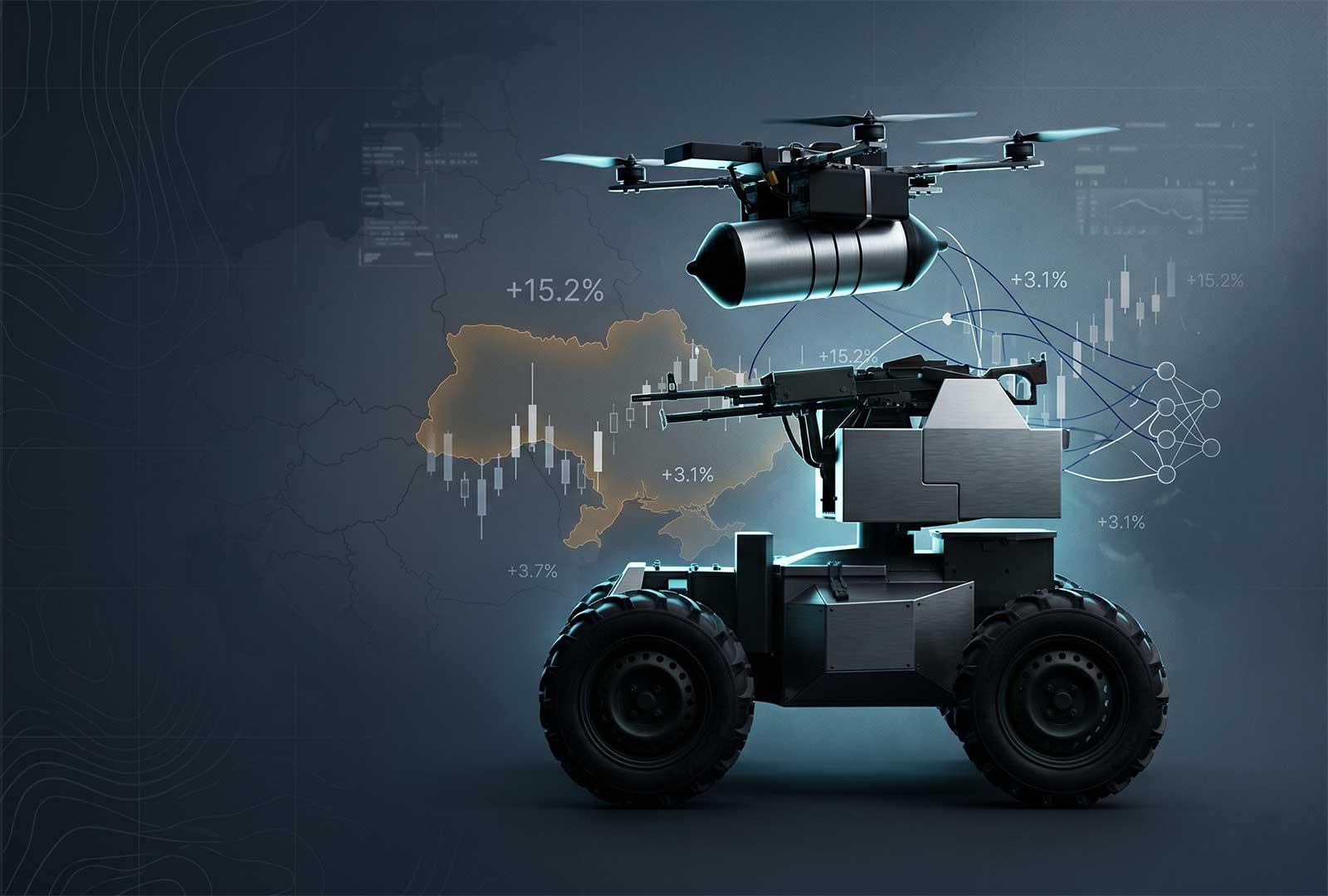
Ukraine Exports Autonomy as Combat Data Fuels Growth of Physical AI
This week on Autonomy Signals, Grayson Brulte and Rob Grant discuss Ukraine’s emerging role in the autonomy economy, the macroeconomic environment for Physical AI, train automation, and accelerating warehouse automation.
Ukraine has achieved the largest real-world stress testing of autonomous systems in recorded history, deploying ground and aerial systems for over 22,000 missions in the first three months of the year. AUTNMY AI‘s proprietary OMEGA algorithm assesses that Ukraine’s combat data-sharing initiative, which offers allied governments and tech startups access to real battlefield data, is the most underpriced event in the global autonomy economy.
Then there is the macroeconomic environment for Physical AI, that is fundamentally more supportive and durable than the hype of the 2017/2018 Industry 4.0 cycle. Today it’s all about economics and the return on investment. Unlike previously, companies can now deploy a $250,000 autonomous construction system to replace $180,000-a-year skilled labor cost and achieve an 18-month payback period that is practically immune to interest rate cycles.
While that is the Physical AI macroeconomic environment, the rail environment for autonomy is still in flux, despite a recently struck deal between Union Pacific and the American Train Dispatchers Association (ATDA). The deal between Union Pacific and ATDA will see the railroad guarantee lifetime employment for 1,300 current active dispatchers in exchange for supporting a proposed merger with Norfolk Southern and not opposing automation.
While the ATDA will not oppose automation as long as the merger closes, the 125,000-member SMART-TD union explicitly excluded automation concessions from their national agreement. With a new agreement coming in 2030, this is the one to watch.
While we wait for negotiations in that deal to open in 2029, warehouse automation is currently leading to a 10% increase in rents for automation-ready facilities. Premium, power-dense industrial properties are emerging as a foundational layer in the global autonomy economy.
Episode Chapters
- 00:00 AUTNMY AI
- 01:18 Signal 1: Ukraine’s Emerging Role in the Autonomy Economy
- 30:57 Signal 2: The Macro Environment for Physical AI
- 55:25 Signal 3: Train Automation Gains Steam in the U.S. (Or So it Appears)
- 1:18:41 Signal 4: Warehouse Automation Accelerates
Presented By

The future is bright. The future is autonomous. The future is The Road to Autonomy.
Subscribe to This Week in The Autonomy Economy™
Join institutional investors and industry leaders who read This Week in The Autonomy Economy every Sunday. Each edition delivers exclusive insight and commentary on the autonomy economy, helping you stay ahead of what's next.