


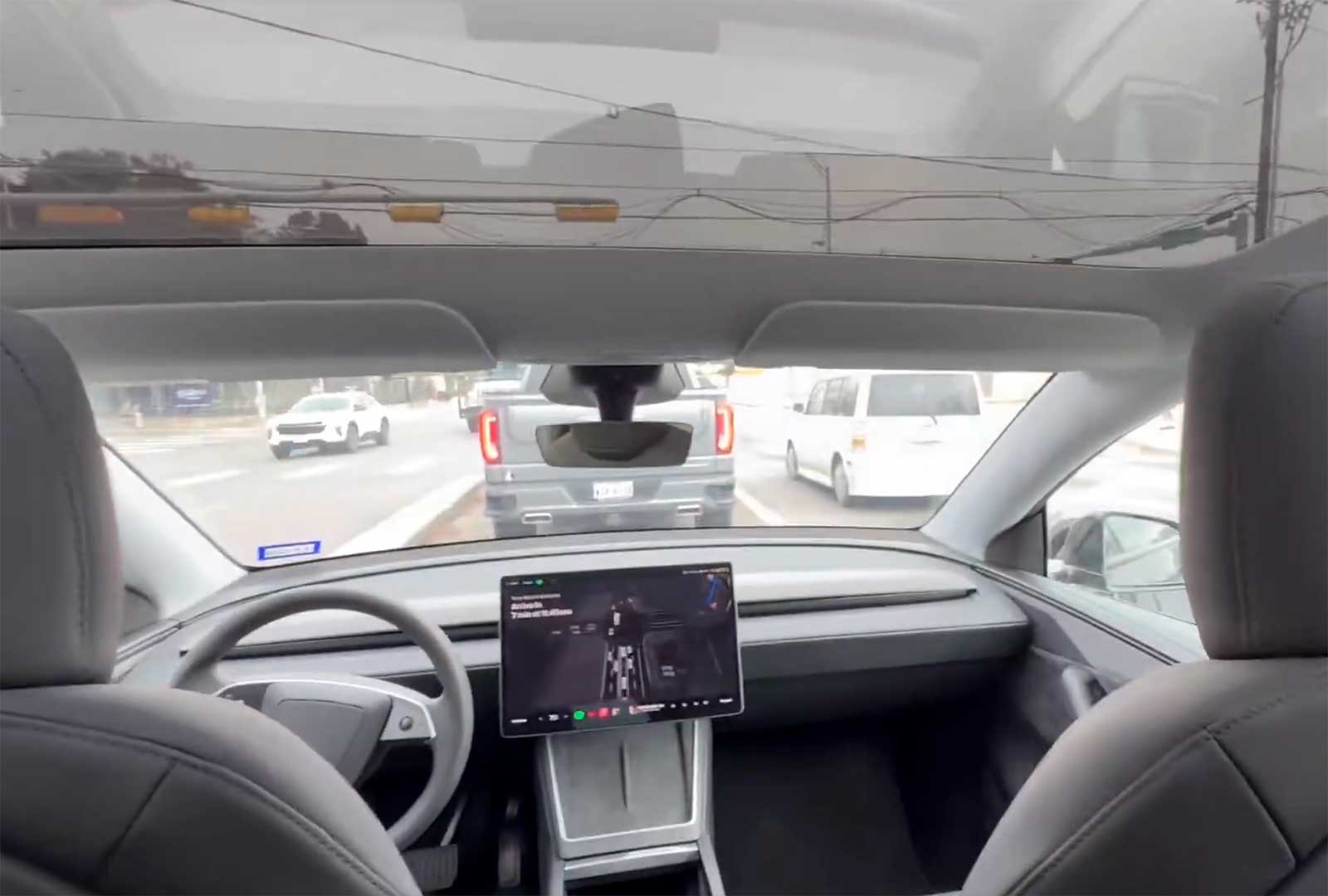
Tesla Robotaxi Underwritten and Unleashed
Executive Summary
In this episode of Autonomy Markets, Grayson Brulte and Walter Piecyk discuss Tesla removing safety attendants from their Robotaxis in Austin, while analyzing the implications of chase cars the timeline and the time line for expansion.
Later the conversation shifts to Miami, where Waymo has officially launched commercial operations with a 60-square mile service area, and concludes with global updates on Geely’s methanol-powered robotaxi fleet in China and Serve Robotics‘ acquisition of Diligent Robotics.
Key Autonomy Markets Episode Questions Answered
What is the current status of the Tesla Robotaxi in Austin?
Tesla has officially removed safety attendants from a sub-segment of its fleet in Austin. These vehicles operate within a limited Operational Design Domain (ODD) and currently utilize “chase cars” that follow the autonomous vehicle. Grayson Brulte predicts these chase cars may disappear within two weeks, with the ODD expanding to the full current zone within 90 days.
What details do we know about Waymo’s commercial launch in Miami?
Waymo has launched commercial service in Miami with a limited 60-square-mile ODD on the mainland (excluding South Beach and the airport). Access is currently restricted to an early rider program which already has a waitlist of 10,000 people. The fleet is managed by Moove AV and utilizes Jaguar I-PACE vehicles, not the Zeekr platform.
Why did Serve Robotics acquire Diligent Robotics?
Serve Robotics acquired Diligent Robotics to expand its autonomous delivery capabilities beyond sidewalks and into the healthcare industry. This move allows Serve to utilize Diligent’s technology for in-hospital delivery, diversifying their operational focus.
Key Autonomy Markets Topics & Timestamps
[00:00] Tesla Removes Safety Attendants in Austin
Tesla has officially removed safety attendants from a portion of its Robotaxi fleet in Austin. The initial deployment operates within a limited Operational Design Domain (ODD) and currently utilizes “chase cars” following the autonomous vehicles.
[04:20] Prediction Corner: ODD Expansion Timeline
Grayson Brulte predicts the timeline for Tesla’s service expansion in Austin: the current limited ODD will likely expand in 30 days, followed by a broader expansion in 45-60 days, and reaching the full current ODD within 90 days.
[14:20] Lemonade & The Economics of Safety
Insurance provider Lemonade is offering a significantly reduced per-mile rate for Tesla owners using FSD, citing data that it is two times safer than human drivers. This move is highlighted as a major validation point, with an insurance company financially backing the safety claims of the technology.
[25:20] Waymo Launches Commercial Service in Miami
Waymo has officially launched limited commercial service in Miami, operating in a 60-square-mile ODD on the mainland (excluding the beach and airport). The service is managed by fleet partner Moove AV and utilizes the Jaguar I-PACE platform.
[28:55] Vandalism of Autonomous Vehicles
Grayson and Walt discuss a recent incident of vandalism against a Waymo vehicle in San Francisco. They express concern over the lack of consequences for such acts and the potential need for stricter enforcement to protect the fleet.
[32:55] Serve Robotics Enters Healthcare
Serve Robotics has acquired Diligent Robotics in a $29 million transaction to expand into the hospital delivery market. This move signals an ambition to diversify operations beyond sidewalk delivery and into indoor, vertical logistical environments.
[37:00] Foreign Autonomy Desk: Geely & South Korea
Geely (Waymo’s partner) is preparing to deploy 100,000 methanol-powered robotaxis in China. Meanwhile, South Korea has designated the Gwangju Metropolitan City as its first specialized zone for autonomous vehicle testing, though the hosts note it is currently lagging behind US commercialization.
Full Episode Transcript
Grayson Brulte: Walt. It happened. Tesla removed the safety attendant in Austin also at Davos this week. Elon said, FSD supervised is coming to Europe and China, and an insurance company goes, yep, we will insure that. Meanwhile, several robotics is going into the hospital industry. Miami Waymo went and drive around as a dolphin, search for a new head coach. The foreign autonomy desk, no pun intended, keeps on trucking. But let’s start with Tesla and Austin Walt. It happened. I know there’s people crying and upset, but they did it. They did it.
Walter Piecyk: they’re not crying and upset, they’re just moving the line once again. But I think maybe, I don’t know where the clappy hat is, but first of all, I’m gonna clappy hat myself. There it is. Um, I think last week I talked about that we thought we might be getting close ’cause Waymo expanded their area and that these seem to be clues in these very, with these very competitive companies that they start doing announcing stuff ahead of when their peers are about to announce something. And then you also get your own clappy hat or your own, , you know, pat on the back and clap on your back because, you know, in this initial version of Tesla taking out the safety attendant, it appears to be in a, in a limited ODD compared to the broader ODD that that is available, um, you know, for the Robotaxis in, in Austin. So well done on that. I was definitely very skeptical of that aspect of it, but you nailed that one.
Grayson Brulte: The clappy hat moment is brass hue by Hugh from KPMG. Thanks for the clappy hat. It’s now part of the show. We did call it, and our listeners and viewers know each and every week on autonomy markets. We break things down. Now I gotta go to Prediction Corner for you, Walt, because if you get this right, you get your own clappy hat. When do you see Noah safety attendant? When do you see that ODD expanding and how wide do you see it getting over the next say, 30 to 60 days?
Walter Piecyk: I don’t, you know, good question. I haven’t really thought about those individual details. I think the bigger one is when they get to a couple hundred cars and I think that, you know, my view on that hasn’t really changed. Yes, they were delayed in getting to this point and frankly what happened this week, you know, just to put, you know, to put a finer point for, for our listeners that might not have looked at the fine print on this, is, you know, there is a quote unquote chase car, a car that appears to be following. The cars that have the safety attendant out. Um, it’s not the full fleet. What I think is what I’ve seen estimated like 30 cars, um, that are in the market. It’s a, it’s a sub, um, segment of that fleet. Um, but look, we’re gonna see, we’re gonna get a lot of of evidence ’cause I’m sure you know, all these YouTubers are gonna be booking their trips quickly to get to Austin or the ones that are already there. So we’re, we’re bound to see a lot of, uh, incremental videos to see them hit those smaller milestones. That I think that you’ve identified.
Grayson Brulte: And let’s not forget when they had the safety tend in there. When they first started, there was chase. There was chase cars as well. So there is a pattern, if we look back at historical data, the chase cars lasted for roughly two weeks. So perhaps two weeks is this major unlock and it’s open to the public. You don’t have to be a Tesla influencer or a YouTuber to get the into the vehicle. 18, it’s open to the public now.
Walter Piecyk: What is the point of that you believe of the, this, I guess we’ll call it the chase car, the car that’s following, um, the, the actual autonomous car.
Grayson Brulte: I, this is my, this is pure assumption. I believe if there is an, an incident or the vehicle becomes quote unquote immobile, where it’s not able to make a decision, an individual in that chase vehicle can get outta the vehicle. Go into the Robotaxi and manually take it over, but that’s what I believe it is. I’m not sure, but that’s what I’m assuming it is.
Walter Piecyk: And just kind of a public service announcement for our, for our, um, our listeners who last week we talked about teased. Our upcoming trip to Austin. We’re not, we’re not gonna rush down there, especially now this weekend where you could get stuck. Not that Austin’s a bad place to get stuck, but with this storm, at least up in the Northeast, it’s about to hit. We’ll let the YouTubers hit there and give us a lot of good feedback. We’ll wait till the market’s more seasoned. There’s more cars that are out there, and I think that smaller ODD expands. So I’m gonna throw your original question to me back at you. When, when do you anticipate. The more limited ODD for this now fully autonomous version of Robotaxi to expand in Austin.
Grayson Brulte: Days for the first ODD that you and I experienced, something similar to that. 30 days plus or plus or minus five days, 30 days. Then to get to the infamous picture, which we’re, we’re a children’s program here, so I won’t detail what that was, 45 to 60 days, and then within 90 days, it’s the full current ODD that is there.
Walter Piecyk: That’s great. And you know, if our listeners have any feedback on when they expect this to happen, let’s, let’s see it in the comments. I mean, we, we do get feedback. I, I find it interesting though that, you know, some of the more vocal feedback that we get, um, like for example, stuff that I heard. As early as a couple of days ago that in fact Tesla would not have the safety attendant out until, you know, maybe never, if not next year. And then two days later, there’s obviously news that it hits. Don’t ever get those follow ups. Like, oops, I was wrong. Maybe I need to reconsider some of my positions here. Um, and just to be clear. We’ve looked at the, this stuff and in our comments, I don’t think we’ve ever, correct me if I’m wrong, I can go back into the, into the, um, the videos ever said one way or another that yes, either, let’s say LIDAR is always a, a hot button topic that gets us good, good feedback, um, is required or not required. I’m just trying to keep an open mind and looking for incremental data points. So it’s just, it’s interesting that you have, and by the way, when, when I’ve, when I’ve, we’ve discussed these things. I’ve gotten kind of, you know, feedback from both sides. Like, you know, people that think that I was anti Tesla and then those that are saying pro Tesla, I don’t quite understand how that that can happen. ’cause I think I’m pretty precise in my words in terms of keeping an open mind and, and recognizing that in the case of, of, of Tesla, I’ve seen this, this story before with, with, um, starlink and people insisting that they knew that they were certain. , That starlink would never do X, Y, and Z, and I can list five or six different things, all of which ultimately happen. So I, I respect the certainty that, that people have on both sides or three sides or maybe five sides of this debate. But you might wanna consider that when you have a data point that. Contradicts your view that you perhaps reconsider, um, and keep an open mind to different approaches, which is, you know, which goes for the Tesla people as well. Like, you know, I don’t, I wouldn’t be, and I think I’ve said on earlier episodes, I wouldn’t be shocked, like all the people that are dug in on the anti Tesla. Like what if we just woke up one day and like. Elon’s like, okay, hardware five or whatever we’re gonna throw in a, a lidar in the, in the windshield. Like if that ever happened, like, then what, what, what, what’s your, where are you digging your heels in Then, um, keep an open mind in terms of what can happen. ’cause you’re gonna wake up one day like you just did this week and realize that all of those beliefs that you had about it not being able to happen just happened.
Grayson Brulte: folks are dug in and they’re not willing to have an open mind and look at things. It’s just, this is the way it is, or this is the way it is, and you’re going to SpaceX and starlink. I remember, I can’t tell you how many inbound calls I get that they were going bankrupt. Oh, this technology doesn’t work. It’s this. It’s the same narrative that Tesla got over and over again. And then I think it might’ve been Ron Baron who said, you never bet against Elon and Mr. Baron’s been proven right? But you, the whole key to this and what, what we do, you have to have an open mind. Technology changes, trends change, and you have to have an open mind to be able to identify and move as the market moves. And that’s what we do here.
Walter Piecyk: And that starts with, again, if you’ve had an opinion that was literally proven wrong within days, maybe acknowledge it publicly to yourself and to those that you’ve expressed that viewpoint to. Now, look on the flip side of this, like just to be clear. The fact that they’re a attendant out in Austin doesn’t mean that Tesla all of a sudden is gonna dominate the market, right? They, they still have to scale up and prove the technology and prove the operational side in order for them to do it. Obviously, the advantage that they have is when the technology gets locked down, they’ve got tremendous manufacturing capability. There’s no, there’s no denying that. , So I don’t know. I just, I think it was, it’s, it’s important to say again. We love it. Don’t, I don’t want to in, in any way, um, discourage the debate. And I, and again, like I said, I, I think it’s great to have people have strong opinions, but like again, you know, it could be helpful to, for everyone to, to understand the nuance of this industry, um, and how things, and just in technology in, in general, and how things that can evolve, evolve over time.
Grayson Brulte: One of the biggest issues in this industry that has not been solved yet. Tesla hasn’t solved it. Waymo hasn’t solved it. Nobody’s solved it. Operational efficiency. We have not seen a company develop an operational framework and a plan that is highly, highly scalable. Yes, we’ve seen fragmented incidences, but we’ve never seen a coordinated effort from a company to scale operations and whoever’s gonna scale operations very much could be the winner. ’cause you know, this very well from history. You can have the world’s greatest piece of technology, but if the market’s not ready and the operations aren’t ready, it fails.
Walter Piecyk: There are so many key factors that’s gonna be along this journey in terms of success that are gonna be important that we will continue to to try and explore. On autonomy markets, , you know, there’s many fail points and there’s many success points and there’s certainly an opportunity for the broad universe. We end up talking about Tesla and Waymo, ’cause these guys generate a lot of, of, of news. First off, they obviously are large companies well capitalized and, and have products that are, that are in the market. Um, but there’s a, you know, a host of other companies that we have covered on autonomy markets that, that I said countless times still have an opportunity to be successful. Actually, like a quick segue to this, like there’s someone I follow on Twitter that’s involved, I think, in this industry. Alex Roy, friend of the podcast, I, I actually, he probably doesn’t remember this, but I met him, , you introduced us I think in, in Florida when I was down there for an autonomy conference years ago. Um, but he actually posted on Twitter a great quote, which was from Jane, uh, from Mayer, John Maynard Keys when the facts changed. I changed my mind, sir, what do you do? That’s a great quote. And, and I think he’s representative that of someone that, you know, keeps an open mind, um, in terms of the different paths that that can exist in autonomy. And I think that’s, that’s I think, important for us all to consider. And by the way, also important to mention ’cause what did he do this past week, Grayson?
Grayson Brulte: He went coast to coast and a Tesla model S 3081 miles drum roll. Not one single intervention coast to coast, not one intervention, and a Tesla model S. It’s been achieved. You can go coast to coast without touching the wheel.
Walter Piecyk: I think he replicated, not rebel. I mean, he was the first, I think, well, not the first, but he does these cannonball runs, which I guess you drive your car coast to coast. But again, it’s just another validation point. From someone that I think has, you know, some fair amount of credibility. Um, you know, I think I was reading some of his tweets about cleaning the sensors and I’m think in my, I personally had another round trip from New York to Philly. You know, the weather here has been, has been bad. I had like, you know, crusted sensors, like I was using up a lot of the, the windshield fluid. Um, there was one time when I was on the highway I had to. Basically turn off Robotaxi or some Robotaxi turn off FSD in order to activate the jet that’s now on hardware for like to clean that, that front sensor in order to get it going again. ’cause it effectively stops. I think there’s issues like that, you know, as the, they face different, um, weather conditions that, um, and I think in Alex’s case, he talked meant, he talked about cleaning the sensors every day. There’s gonna be situations, I think where those cameras are gonna get. Crusted over with salt from the northeast roads, um, that will require perhaps some extra cleaning mechanism within these cars to make them to be able to operational, , at all times.
Grayson Brulte: But the underlying theme here, you hit the nail on the head. What Alex did was he lived with the technology. He didn’t pontificate behind a keyboard. He lived the technology and experience it. You and I experience technology every day into the individuals. It’s not a public service announcement, but it is a public service announcement. If you’re going to criticize a technology experience it Rent a Tesla for a weekend. I was never owned a Tesla for for years, and I was like, oh, it’s just not gonna work. It’s not gonna work. And then I saw the B two G podcast and I said, okay. I went out and bought one and experienced it and live technology. My mind changed because I experienced it and that’s what Alex did with that Cannonball run. He experienced it and he has the experience of working at Argo and various companies in Navy. So give Alex a a, a lot of credit and the things that he uncovered, Tesla uncovers, you know, this big snowstorm that’s gonna happen in the Northeast. They’re gonna learn a lot ’cause they’re gonna get that data and the product will get better and better over time. And for the Tesla bulls, I’m very sorry, another public service announcement. It’s not gonna be a hit of switch and you turn on it overnight and there’s taxis in, in all 50 states. It’s not gonna happen.
Walter Piecyk: Again, this may be, maybe this should be our title for our video this week. When the facts change, I changed my mind. So what did you do again? Love that quote. Thank you, Alex Roy, because there were other additional facts as well. This week in that Lemonade, an insurance company, you know, cut their per mile rate by, by 50% for Tesla. When, when FSD is engaged. Granted, like it’s engaged, it’s not engaged, but like, and they cited in this, in this release that it’s two times safer than, um, you know, than a human driver. But, but more importantly, they’re willing to put their dollars behind it. So again, getting back to those that pontificate saying, oh, there’s no evidence that it’s safer because you haven’t, as Grayson was just saying, actually used it to understand the impact that it has on your driving. Or or referencing accidents or issues that occurred from FSD whatever number ago, not 14.2, 0.2, whatever, whatever we’re on right now, they’re putting their money where their mouth is in terms of offering lower rates and, and, and talking about these claims. I’m sure people are gonna still take, I need to specifically see the data like you, but you have a company, a separate company doing this. This is an incremental fact. Again, if you wanna ignore that, that’s fine. Like you can feel free to ignore whatever data you want, but this is a data point that you should consider, um, when you’re, you’re, um, considering in terms of what FSD let alone, you know, full autonomy will provide in terms of safety and the tens of thousands of people that die on, on our roads every year.
Grayson Brulte: Do you know what I love more than anything about this? As a Tesla owner? What Lemonade did is the complete opposite of your traditional auto insurance market. Traditional auto insurance, having gone from a non Tesla to a Tesla. My insurance skyrocketed. Meanwhile, it, and I’ll give you a fact, so when I went from my Range Rover to my Porsche, that was a huge uptick because of the Porsche from this other vehicle I had to the Tesla. It went up even more than when I, I had the Porsche. And so it’s, it’s good, it’s level setting for the market. ’cause I believe one of the big deterrents to buying a Tesla is the price of insurance. And that’s why we’re seeing Tesla, raw Tesla insurance and they’re. They’re in 12, 13, maybe 14 states now, and, and Lemonades doing this, it’s gonna drive adoption. And you’re right, they’re putting their money where their mouth is because if something happens, they’re financially on the hook to pay that bill.
Walter Piecyk: Again, to reemphasize that, anyone can say anything, but here’s a company that’s running a business that’s really willing to put dollars at risk because of their belief. That it’s safer based on data that they have that you don’t have. You, you mean the listener, you don’t have that data. They do. I’m sure you can make whatever assumption you think exists in that data, but here’s a company, um, acting on that. And in addition to that, and I always love when I can reference Road to Autonomy Library, there’s a new piece of, of, uh, content in The Road to Autonomy Library. This week when you interviewed Sergey from Koop, an insurance, , provider, and you and I, and you asked him, by the way, thanks for giving me a shout out during that podcast, but you asked him, will you not insure a company, or excuse me, will you not insure a non lidar car? And what was his answer it? His answer was no meaning, sorry, did I do a double negative there? He will insure a car. It is not required to have a lidar, uh, when you’re thinking about insured, and by the way, there was other great discussion in terms of like, okay, you insure it when it’s in the ODD, not outside the ODD. So I encourage our listeners to go to that piece. Of content that’s in, in, again, the deepest library for autonomy content, bar none, , in, you know, that’s out there. But obviously insurance is gonna, is gonna play a critical role, but we, we have people in the industry already telling us that things, certain things aren’t, aren’t required. Um, which I think is great news.
Grayson Brulte: It’s positive news. And furthermore, sergey and the team at Koop, they’re putting their money where their mouth is. They’re doing a great job and they’re going even further saying, if you wanna buy a fleet of Robotaxis or Cybercabs. They’ll insure ’em for you. So they’re putting their money where their mouth is and Sergey’s, right? And do the Gretzky term to skate to where the puck is going. ’cause a Davos this week, Elon said FSD is about to be approved in Europe, in China, FSD is going global. It’s scaling Walt.
Walter Piecyk: Yeah, I mean, we’ll see if he actually does get the approval. I think Davos kind of told us how things can still be divisive. You know, across. Across the continent or the pond or whatever you wanna say. We’ll see how it impacts deals, um, in terms of a relationship with some of these European countries. So we’ll see how that goes. , There’s also, I think Elon talked about in that same, on the same day, increasing the price for FSD. Now, I don’t know if Eli’s listening to our podcast, but for a long time, listeners, you know, last week I literally talked about how it’s kind of. You know, the, the monthly pricing was, is certainly very attractively priced. I don’t know why you’d pay for the full thing. I even depe, you’d really have to hold onto your car for a long time, you know, relative to, to the monthly pricing. But look, you know, as that functionality increases a hundred bucks a month or whatever it is, you know, there’s certainly rooms for that room for that to, to go up. And talking about that. I know we’ll probably get some feedback. Oh, Rivian at 50 rivian for a product that obviously doesn’t exist. We’ll see when it does exist and, and what level of ADAS that exists to, and what their, what, you know, users will, we will be willing to, to pay for. So definitely an interesting data point in terms of them already looking to increase rates. I certainly for my FSD would, would pay more. We’ll see what the market bears.
Grayson Brulte: I don’t have a wonky hat yet. If a, a listener of viewer wants to send me a wonky hat, whatever, how crazy it might be, I’ll wear it and call it the wonky hat. So I’m gonna put my, my wonky hat here on, that’s imaginary. They have the ability to raise the price of FSD as the, as the insurance goes down. As long as the, as long as. That price increase can fit within the discount of insurance. I think they’re good to go.
Walter Piecyk: Maybe, I mean, you’re giving like if I’m on the road this, this now New York to Philly Drive that I’m having to do more often recently, and you like, let’s not even, let’s assume like everything, things happen slowly. I know. Art Tesla bulls you be, no, no, no. This is all gonna happen at once, but whatever. Let’s assume I’m on the Jersey Turnpike. I’m going from exit 15 to five. It pops up on the screen. Would you like to take a nap? Right in this geo-fenced area. Like, and by the way, maybe it’s not even the highway ’cause you don’t want to deal with 70 miles an hour. Maybe it’s the ride from my house to the Jersey Turnpike and they say, would you like to take a nap for this, for this next hour? Like, am I paying more for that when I can sleep or do other stuff and not have to pay attention to what’s on the road, let alone the, when the, when we get to full autonomy where I’m literally just going and not having to look at the road from my house? Um. Of course you’re gonna pay more. And then on the insurance front, interesting point, you can embed that incremental insurance costs into that monthly fee. Um, and again, like if what is, if, if what we believe will happen actually happens, which is that is, you know, it’s obviously saves lives, then those insurance costs will come down. Do you just look at what Uber pays to ensure their drivers in la. And you can’t tell me if you get this autonomy going in these markets, it is not gonna dramatically lower the price. We already know, you know, for fleet owners that employ people relative to what Uber’s paying, they’re getting a discount. So now you layer on top of that a trained autonomous vehicle, the savings are massive. And frankly, if you’re the, if you’re talking about personal ownership as opposed to robotaxi If it’s personal ownership, it, it, it becomes something that you can embed into that monthly fee.
Grayson Brulte: And I don’t know if this is legal, but I think the ultimate thing is if you can buy an FSD with your lease payment, with your, with your insurance, and you’re charging to one monthly fee, that’s simple math that individuals can see the big difference.
Walter Piecyk: Yeah. And if there’s a Robo taxii fleet out there, maybe as part as that, that monthly fee for that week that you need. To go offroading or do whatever, you know, you can, you can use a, you know, a cyber truck or whatever other new physical, you know, product that they have in the market as part of your monthly fee. I don’t know. And maybe that monthly fee gets reduced if you, if you contribute it into the robotaxis market, um, that that’s out there. Right. There’s obviously a hundred different business models that could exist.
Grayson Brulte: And then to use the great Walt Disney line, you plus it. You have this subscription, and then if you’re in a marketable Robotaxi, you get unlimited Robotaxi, you rise for additional monthly fee. It’s game over. Game over.
Walter Piecyk: Anyway, there’s no doubt that this was a milestone week, , for Tesla. They report next week and we’ll see what, what more Elon has to say about um. What to expect next in terms of the scaling. I mean, I, I think he’s already said, like he said, last year, well, by the end of the year we’ll be in a, in a ton of markets. But, you know, all, obviously in, in my case, interested more in some of the near term expectations in terms of when Austin scales and, and I guess Grayson, when do you think a new, like we start a new market with 20 cars and what market might that be?
Grayson Brulte: That market will be the Phoenix Metro region. What part of the Phoenix Metro region? I’m, I, I’m unsure, but I’ll say Phoenix Metro Region. Ooh, January 23rd. Since Elon loves numbers, I’ll say by Valentine’s Day, February 14th, you’ll have vehicles testing, not necessarily taking a me paying passengers, but you might have some sort of in between. Like we got invited type thing by Valentine’s Day in the Phoenix metropolitan region.
Walter Piecyk: No, no, I, I, I’m definitely taking the, over on that. It’s, it’s January 20. Is we’re talking three weeks, that’s three weeks or so from now. I don’t, I’m taking the over,
Grayson Brulte: But the cars are already there and they’ve already been ground truth testing.
Walter Piecyk: Okay. I, I hear you. But I’m still taking the over, I’m gonna say, um, March 31st, which is still pretty aggressive. I think in general, I don’t, again, I don’t think the markets are gonna expect that. So we move off of Tesla to your home state. The state of the great state of Florida, not as great as other states. Not one of, you know, not my top state, but a great state nonetheless and on the southern most tip of Florida. A very fun place to visit Miami. Uh, what’s going on in Miami?
Grayson Brulte: Before that, no clap for you for that insult. No clap for you night. No soup for you. No clap for you. Waymo has launched limited. I have to stress limited because you cannot get off the Brightline and get into a Waymo. You have to go through this early rider program, limited commercial service in a 60 mile ODD, and I’m sorry to inform you, Walt. You can’t get out to South Beach in the Waymo yet. It’s only on the mainland, not on the islands yet, but they’ve launched commercial service, a no driver in a 60 square mile, ODD.
Walter Piecyk: Do we have any more information? Like do we know who the fleet management partner is in Miami?
Grayson Brulte: the fleet management partner is move. Through the Moove AV division, which they run out of the Palo Alto office. And this is the company that is based out of Africa, has the, the legal office in London. And so that’s move and they’re, they’re operating it. We do not know the fleet size yet. We do know, according to Waymo release, there’s 10,000 Miamians on an early waiting list to go for a ride, but limited there. We don’t know what the depot is yet. We don’t know how many vehicles. However, we do know. It is the jaguar I-PACE, and I will make you a bet here that the Chinese made Ojai AKA. The Zeekr will never end up on the roads of Florida.
Walter Piecyk: I think that’s probably a safe bet. Now I get confused ’cause there’s like multiple moves, two moves. One I think renamed themselves to AVOMO. I thought both had some investment from Uber. So, so just to be clear, Waymo is using Moove as the fleet management partner, but they’re, it’s gonna be a Waymo One market and not available in the Uber app.
Grayson Brulte: are correct. It’s a, I’ll say, complicated relationship. If you look from a a cap table perspective, Uber is on Moove and this company, I think the legal name is Moove io. So Uber is on the cap table and yes, it is a Waymo one market.
Walter Piecyk: So how do we look at this? Is this like positive? Because Uber has kind of a, I don’t wanna say a foot in the door, maybe a pinky toe in the door, um, because of Moove. Or is it a negative in that, you know, they have investments in these fleet management partners. I think we both believe that fleet management is an important element of, of having success, and yet somehow that didn’t enable Uber to get pulled in as a partner in Miami, is this positive or negative? Is it, is it opening or is this like, why is it not happening now?
Grayson Brulte: From the Uber perspective. To me, it’s another sign of, of deteriorating relationship that I’ve been extremely vocal about it. It’s another clear indicator of that
Walter Piecyk: Yes, you have.
Grayson Brulte: it’s another Waymo market that’s operational. No, Uber. There are six operational markets today, four Waymo one markets, two are Uber markets, and we have not had a new Uber market since Atlanta, so I continue to believe that it is a deteriorating relationship. Furthermore, spending a lot of time studying the ins and outs of fleet management, the energy, the logistics, the charging. How do you run a fleet management company? I’m beginning to think, this is just me looking at this, that at some point down the line, Waymo is going to have to integrate Fleet operations as a wholly owned subsidiary into Waymo at some point if they’re gonna continue to scale the Waymo One markets.
Walter Piecyk: We’ll see. I mean, you know, I think that could be a market that consolidates. It’s just there’s nothing out there really to consolidate yet. But you know, that’s, that is a, an area of focus for us that we’ll see how that plays out over time.
Grayson Brulte: An area of focus that you and I unfortunately spot too often, vandalizing, Waymo’s. You came across one where the guy must have been playing the clash. I fought the law and then changed the lyrics. The Waymo won. What? What was up with that?
Walter Piecyk: It did look like the cover of London calling, where he was on top of the Waymo. It looked like he was like a, where the guy’s coming with the guitar, um, coming down. I mean, we’ve seen a bunch of these things. The thing that struck me about this is, I, I looked on the local newspapers of San Francisco to the extent that I couldn’t online. And there was really no report of it. And I mean, have we gotten to the point where just like people just are fine with the destruction of, of property. Like I, I’m almost like, I’m definitely checking back in a week or two, like any sign of arrest, like these Waymo’s have cameras, none of these kids were wearing masks. Young adults, whatever you wanna call them. Like, like why shouldn’t there be some. You know, repercussions there or some people care about it. I mean, if you don’t care about this stuff and ’cause you think, hey, Waymo, big corporation, whatever doesn’t affect you, they’re ultimately arguing. It is ultimately gonna affect you and your own, I think personal property, it’s just, it’s astounding to me. , You know, other than the video that we saw that there’s no follow look for all I know maybe all of these perpetrators have been, um, incarcerated, uh, in San Francisco. I tend to doubt that, but um, ’cause it’s just, it’s hard to find information. If you live in San Francisco and you wanna defend your state, perhaps, you know, send me the information about whether there was any consequences for people that are damaging property in such a violent way.
Grayson Brulte: Love to know. I’m not putting on my political hat, but I’m gonna put a political hat on and ask you an assumption question. Do you think or do you have any assumptions or thoughts? Is Waymo perhaps not sharing this data with law enforcement? ’cause they don’t want to be seen as Big Brother and they’re trying to avoid that potential backlash there. ’cause to me, at some point, you gotta make an example outta somebody. This nonsense. It is nonsense is going to continue and oh by the way, it is a crime because of the dollar amount of, of these vehicles that you’re impacting.
Walter Piecyk: I mean, that’s, that’s a good point. It’s a hassle to deal with this stuff. You don’t want to have. The bad reputation of being associated, you know, with, with whatever the patriarchy, whatever you want to call it. But you are Google, I mean, so you basically are the system, , as close as the system can be. Um, but yeah, it’s possible. Like I remember on our college campus, uh, there was a Wawa that had like the highest, you know, amount of things stolen from it, but it was also the highest grossing. , You know, Wawa in, I think in the region. So, you know, maybe you’re right. Maybe there’s just no, they don’t even bother. It’s just a loss that they write off. I think there’s, again, maybe this is political. There’s greater societal considerations that should occur other than like a business writing off a loss. When you have on a public street, people like, you know, in a mob. Destroying property. Um, you would think that there’d be greater considerations for that because again, I don’t know, maybe we should move on before I digress further.
Grayson Brulte: You know, I’ll, I wanna make this point. It’s a respect issue and there’s a lot of it. It, it is a respect issue and something has to happen. Now that I said my two piece, let’s move on to a place. If the Waymo could fight back, they’d end up in the hospital. ’cause the Waymo is a super car, not a human car. Serve Robotics. Ali in front of the pod, he went into the healthcare industry. He acquired Diligent Robotics in the transaction, valued according to the SEC filing at $29 million. What do you make of the move from sidewalk delivery to in-hospital delivery?
Walter Piecyk: I’m just impressed by the ambition of the management at Serve Robotics. I think spent some time with them at, at CES, their understanding of the market, realizing that what they’re going after now is, is gonna expand in the future. It’s just their focus with, with on sidewalk before necessarily you get to on street delivery. So, um, and look, you know. There’s opportunities that exist when companies perhaps run out of funding. I don’t know what the situation was with, with Diligent. Um, obviously this was a bargain at 29 million given some of the data that’s out there in terms of recent rounds. Um, but the, there’s opportunities to pick up good technology. I’m kind of shocked, and not to digress, but that neuro hasn’t been able to find a home for its robots. Yeah, I get that. Maybe. You know, it’s not sidewalk, it’s on the street. So it’s a different longer term scheme, but I think they have, they probably do have pretty good tech there. Um, so I’m a little surprised nothing has happened there. But, um, in the case of serve, I think it’s, it’s, it’s a, it’s a good move and I think they’re definitely one of those companies that we need to keep a very close eye on. ’cause that’s gonna be an element of the autonomous market that I think has in, in, on the eat side of it or the food delivery side of it has tremendous opportunity.
Grayson Brulte: And you wanna know a really cool, interesting, fun fact about serve. Serve and Waymo have the same contract manufacturing partner. The Serve robotics vehicles are manufactured by Magna and Magna Upfits, the Jaguar JLR. So Magna’s a company that we have to continue to watch ’cause they’re playing a very, very large role in this as well.
Walter Piecyk: I was just thinking the great segment on, sir, before we go to the foreign autonomy desk and we’re talking about the vandalism in terms of what the cars can do. I was thinking what Elon talked about in terms of optimists and the progress they’re making with optimist. Three. Can you imagine a Tesla robotaxis in San Francisco getting vandalized and then all of a sudden, like a garage door opens and like an army of Optimus robots start to march out to save their, their Robotaxi friend that’s in the, in the process of getting attacked.
Grayson Brulte: I will terminate you.
Walter Piecyk: I mean, the other difference, by the way, with the robot Robotaxis is, which we talked about on the past episode in Austin, is they kind of blend in, right. Actually, I remember, I don’t even know if we talked about this on the on, on the podcast, but I remember like hearing someone who went to Austin and they’re like, oh, I saw Waymo’s everywhere and I didn’t see any Robotaxis. And I’m like, well, there’s a reason for that. ’cause they look like every other Tesla other than perhaps like a detail, you know, an understated decal that exists. So that’s probably why you didn’t see the Robotaxis. And you’re insisting that there’s like one or two cars in the market when there’s obviously. Many more. You know, the, the, the Waymo’s stick out a bit more, so maybe that’ll help them. But an Optimus army. What do you think, Grayson? Is that the solution for some of these cities?
Grayson Brulte: Anything’s possible. And as we’re seeing from the Department of War, they’re massively increasing the spending in AI and robotics. So robots are going to war. It’s whether it’s gonna be urban warfare or combat and theater, we don’t know yet, but they’re coming.
Walter Piecyk: Optimus Three. Stay tuned. All right. What do we have on the foreign autonomy desk?
Grayson Brulte: Before we get to that really quick, I like Calcancis’ tweet about what he saw. So I’m really curious ’cause something, something big is brewing there.
Walter Piecyk: I’m glad you picked that up. Yes.
Grayson Brulte: Well, it’s, I have a hat for that. It’s the Clouseau hat, but that’s over in storage right now. I love my hats. I’ll have to have a, a hat rack here before we, we start the show. And I need a, an old school reporter’s hat for this segment with a little card in it. That’d be cool. For the foreign autonomy desk.
Walter Piecyk: You know, we, Jason said he wanted to do the podcast with us, so maybe in our upcoming trip to Austin, we can try and schedule to do a live podcast with him in Austin. Let’s get that on the, let’s get that. on the calendar.
Grayson Brulte: Let’s get that on the calendar. Jason, I’m gonna push you for details on Optimus, so fair, fair warning on it. You’re gonna the details behind the tweet, so let’s, let’s push him for that. Now, let’s go back to the foreign autonomy desk. This week we’re heading to China Waymo’s partner. Geely. Yes. The Chinese partner that makes the Zeekr Chinese Robotaxi Geely, is getting ready to deploy a hundred thousand bespoke Robotaxis on the mainland in China. And I got a word salad here for you, Walt. And I fact check this word salad here. So I’m gonna have to read this for you. Word to word. The vehicles are not gonna be gas. I’m sorry for those folks. They’re not gonna be electric are ready for this. They’re gonna be powered by menthol. Hydrogen Electric Vehicle technology. No, that’s not Newports for those who smoke. It’s some technology and this is coming out.
Walter Piecyk: It’s not menthol, it’s methanol. Methanol, my friend. Not menthol, but that would be great if we could get all the menthol cigarette smokers to just puff into their gas tank. It’s like, uh, back to the future when he take, he takes some banana peels and throws it in the back, and then he takes off. Hey, man. Never doubt the Chinese, they’re gonna make it happen, I guess.
Grayson Brulte: I’ll make this even cooler. You can take all, all the cigarette smoke from those Kool menthols. Those are strong. That’s coming by 2030. Now let’s go stay in that part of the region. Region in Asia. We’re gonna go over to South Korea this week. The government selected, I’m gonna butcher this, I’m sorry, the Guang Metropolitan city to be the country’s first area.
Walter Piecyk: That looks like Guang. That looks like Guang.
Grayson Brulte: thank you for correcting me. I’m not very good at this spelling. You know
Walter Piecyk: You’re welcome. I have to do that with the Rich Greenfield often on the LightShed Podcast. He’s not a great, great pronunciate, so it’s my, I might have gotten it wrong as well, but it looks like to me.
Grayson Brulte: Walt, the world’s greatest corrector. So you got Jason, the world’s greatest moderator. We got Walt, the greatest word corrector. They’re setting up that region. See, I’ll use a simple word for simple people to test autonomous vehicle technology. However, for the audience, it will not be commercial technology. An interview in the Korean Herald. They said that we are in elementary school while the United States with Waymo is in college. What do you make of this first entrance to school?
Walter Piecyk: I’ve gotten really no strong viewpoint on that one way or another, to be honest with you. Do, do you have a view.
Grayson Brulte: It seems a little, uh uh, too little, too late. ’cause there’s no path to commercialization. But that’s what happens. So now that we’ve got the Foreign autonomy desk, we got a new nickname for you. It’s my favorite part of the show. Next week, you already mentioned Tesla earnings. What else do we need to look for next week?
Walter Piecyk: I personally have a slew of earnings. A lot of companies, uh, that are reporting, uh, plus AI is having their analyst day, you know, so that we’re, it’s gonna be great to spend some more time with them there. Maybe I should bring like a camera and, and some microphones and do some, some recording and submit that to the road, to autonomy to add to your library. But, and of course, Tesla and Apple, both, both have earnings. Probably Apple’s probably not gonna have anything to say on autonomy. That ship has long passed. Um, but the Tesla earnings call, uh, Wednesday night. So well, you know, always an opportunity to get new information in terms of near term milestones, um, for the robot taxii fleet in Austin and elsewhere.
Grayson Brulte: You forgot one friend of the show, Sterling Anderson, GM Reports next week too, so we’re gonna have to watch that to see if we get any news. On autonomy and on Tuesday special edition of The Road to Autonomy, David, the CEO of Plus will be on the show, comes out Tuesday. The future is bright. The future is autonomous. The future is FSD unsupervised, where Walt can take a nap going down the Jersey Turnpike Walt, Sir. Until next week.
The future is bright. The future is autonomous. The future is The Road to Autonomy.
Subscribe to This Week in The Autonomy Economy™
Join institutional investors and industry leaders who read This Week in The Autonomy Economy every Sunday. Each edition delivers exclusive insight and commentary on the autonomy economy, helping you stay ahead of what's next.