


Is NVIDIA Full Stack or Full Hype in Uber’s Robotaxi Narrative?
Executive Summary
This week on Autonomy Markets, Grayson Brulte and Walter Piecyk discuss Nvidia’s GTC, including the confusing alphabet soup of technical terms and their ambitious roadmap with Uber. They also analyzed Uber’s $1.25 billion partnership with Rivian and Waymo’s 170 million fully autonomous miles and counting.
Key Autonomy Markets Episode Questions Answered
What is Nvidia’s primary goal in the autonomous vehicle market?
Nvidia does not intend to build its own self-driving cars. Instead, Jensen Huang stated the company aims to enable every car company in the world by providing the necessary compute for training, simulation, and in-car operations, along with their autonomous operating system.
What are the specifics of Uber’s financial commitment to Rivian?
Uber is providing $300 million in an upfront equity payment. The remaining $950 million is contingent upon four milestone payments that Rivian must reach by proving their autonomy technology works.
How many autonomous miles has Waymo completed?
Waymo recently announced they have completed 170 million fully autonomous miles without safety drivers. This includes over 68 million miles in Phoenix, 53 million in San Francisco, 37 million in Los Angeles, and 10 million in Austin.
Autonomy Markets Topics & Timestamps
[00:00] NVIDIA GTC
The episode begins with a look at the GTC conference where Jensen Huang’s keynote triggered a stock bounce. The hosts discuss the confusing mix of technical terms like Hyperion and Alpamayo, noting that Nvidia appears to be moving toward a full-stack model to sign up automakers.
[04:06] Jensen Huang; NVIDIA is Not a Solutions Provider
In a featured clip from the All In podcast, Jensen Huang explains that Nvidia wants to enable car companies rather than build vehicles itself. He notes they provide training, simulation, and car computers, but they are not a solutions provider and are happy to work with partners like Tesla who may only buy specific components.
[11:23] Uber/NVIDIA Partnership
Grayson and Walt analyze a new milestone where Nvidia and Uber plan to launch in San Francisco and Los Angeles by the first half of 2027. This is expected to be an operator-led commercial launch on the Uber app, likely utilizing a safety driver before moving to fully driverless deployment.
[25:52] Uber/Rivian Robotaxi Deal
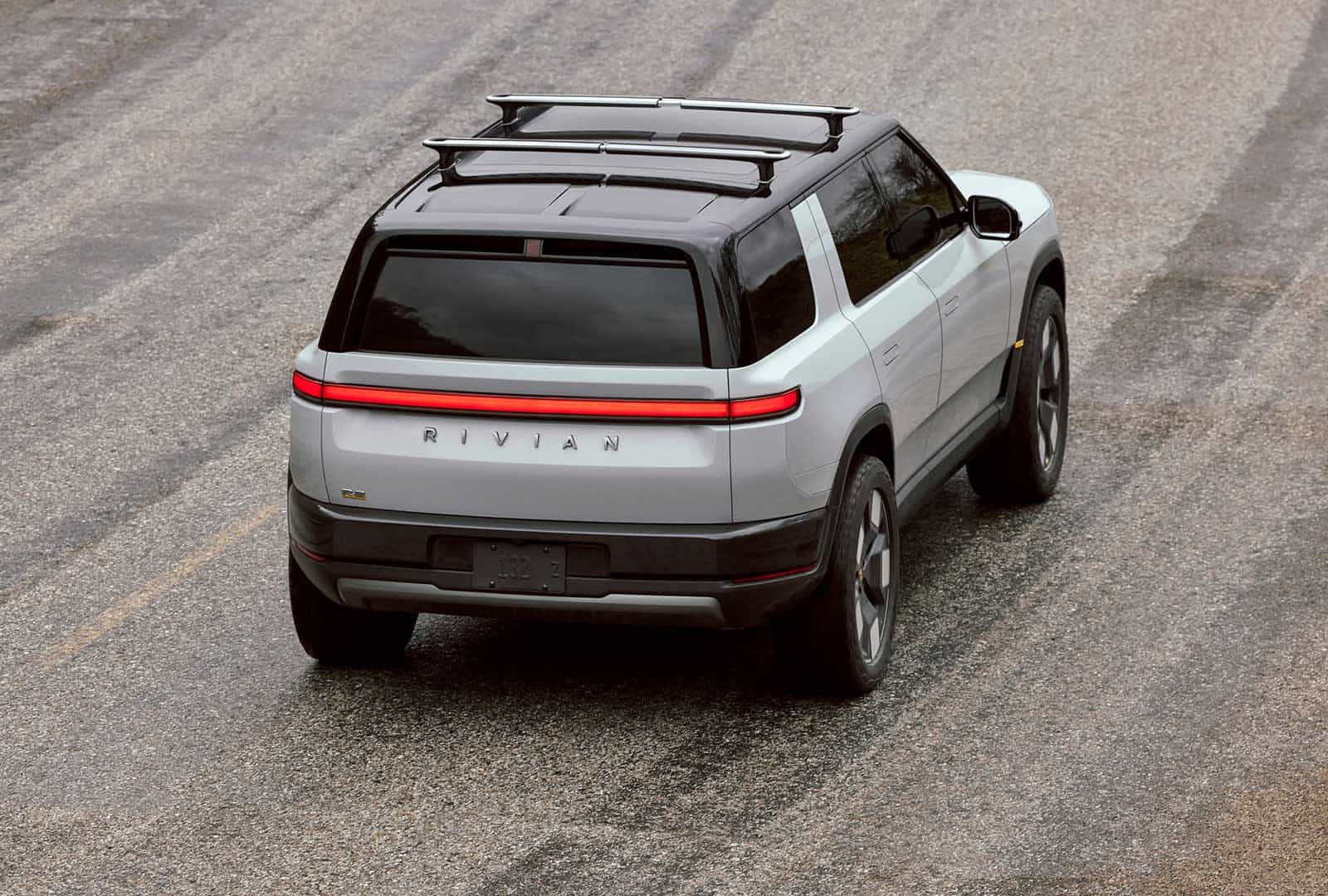
Uber announced a $1.25 billion dollar deal with Rivian, though the upfront payment is $300 million dollars. The remaining 950 million is tied to four milestone payments as Rivian proves its autonomy technology works on the R2 platform.
[32:02] Waymo: 170m+ Autonomous Miles and Counting
Waymo released data showing it has completed 170 million fully autonomous miles without safety drivers. The breakdown includes 68 million miles in Phoenix, 53 million in San Francisco, 37 million in Los Angeles, and 10 million in Austin.
[33:01] Foreign Autonomy Desk
WeRide is expanding its testing with safety drivers into Slovakia, marking its fourth European market. Meanwhile, TIER IV has started testing a new open-source autonomous stack in Tokyo, Munich, and Pittsburgh.
[34:44] Next Week
Grayson and Walt are heading to Fort Worth, Texas, where Grayson will be moderating a panel on autonomous trucking. While in the Lone Star State, they plan to investigate the latest autonomy developments across the state.
Full Episode Transcript
Grayson Brulte: Walt this week it was GTC in the Valley. And what does Jensen do? He gives a speech, whole courts, and you get the famous Nvidia bounce. While Jensen was busy holding court in the valley, Uber had some news of their own. They got a new robotaxi partner, and our good friends over at Waymo, they released some interesting safety data, which we’ll get into a little bit later.
Walter Piecyk: Well, Grayson, and I think I deserve a clap you have for this one because I think we talked about this on last week’s podcast, previewing GTC and expecting autonomy announcements specifically with Uber and that that would drive Uber stock. And sure enough it did. We’ll get to that later, but let’s, before we even go into the Nvidia news, let’s try and dissect, um, the, the alphabet soup of terms that they’re using. You’ve got. Four for, for, they’re talking about compute Hyperion, which I thought was the sensor stack, but maybe it means you, the full driver, Alpamayo, which I thought was training. But again, Jensen seems to be using it interchangeably with now, you know, the kind of AV stack you got full stack, you got half stack, you got open stack. I’m a bit lost, um, in all of their words. And I think even Jensen, when he was, you know, on the All In Podcast was getting tripped up on, on describing some of this stuff.
Grayson Brulte: Well, first and foremost, happy clap for you. So there you go. You got the clap, not the open claw. Maybe at some point we’ll get the open claw half, but right now we have the, the Happy clap Really what we need, and don’t laugh, it’s almost that you need a guide to Nvidia. Hyperion means this, Alpamayo means this. And basically, do we need the Nvidia chart to truly understand what all these things mean? Because it seems to me, from reading the press releases and going through the technical blogs. That there is a lot of technical overlap between all these various different services and functions and technologies that NVIDIA’s offering to the market.
Walter Piecyk: I agree, and it’s, it’s confusing and I, I swear that they’ve, they’ve described some of these things differently. Um, I don’t have anything to back up in the moment. Bottom line is I think they want to be full stack. Right. Um, and you know, as a result, like, you know, that really dates back to CES, like Uber stock first moved on them talking about effectively being, and when I say full stack, meaning competing with other autonomy providers, whether it’s Waymo or Nuro or Wayve, maybe more specifically than Nuro and Wayve. Those full stack companies are trying to sign up OEMs, just like I think Nvidia is, is trying to, to sign. And by the way, for long time listeners of this podcast, like we didn’t talk, you know, we talked about Nvidia wanting to be full stack all you know, well before CES. In fact, um, you know, I think we speculated on maybe that they want to jumpstart into this area. Because of doing acquisitions, and I think, you know, you put the Grayson inspector hat on and you know, you, you I think identified a document that showed that they actually looked at, at purchasing one of these companies.
Grayson Brulte: Yes, there was a court document from the Delaware Chancellory Court where Nvidia technically didn’t look at purchasing. They looked at entering into a licensing deal with Zoox for a hundred million dollars licensing deal, where Nvidia would inject a hundred million dollars into Zoox in exchange for the exclusive rights to license the technology. However, in the court documents, there was a very clear caveat, not acquire pure licensing in injection there. This is the Wei versus Zoox lawsuit, which is still currently going on. This is prior to the Amazon acquisition in 2020. But to me, interesting sign that they wanted to exclusively license that technology. And in the court document it says that, en quote, Nvidia wanted to use this as a showcase for their technology. So to me, based on these court filings, based on what we’ve seen in GTC in the Valley, what we saw in GTC and DC. Nvidia has very big ambitions, but how big are those ambitions? Because on the All In podcast, Jensen said they don’t want to build the car, they want to enable it. And let’s roll that clip and get your commentary on it.
Jensen Huang: We believe that everything that moves will be autonomous completely or partly someday, number one. NumbeR2, we don’t wanna build self-driving cars, but we want to enable every car company in the world to build self-driving cars. And so we build all three computers, the training computer, the simulation computer to valuation evaluation, computer, as well as the car computer. We developed the world’s safest driving operating system. Uh, we also created the world’s first reasoning. Autonomous vehicle so that it could decompose complicated scenarios into simpler scenarios that it knows how to navigate through just like US reasoning systems. And so that reasoning system called Al Palm Mayo has enabled us to achieve incredible results. We opened this, we ver we vertical optimization, we horizontally innovate, and we let everybody decide, do you wanna buy one computer from us? In the case of. Elon and Tesla, they buy our training computers. Um, do they want to buy our training computer and our simulation computers, or do you want to let us, uh, work with us to do all three and even put the car computer in your car? So we, you know, our attitude is we wanna solve the problem. We’re not the solution provider and we’re delighted however you work with us.
Walter Piecyk: So the, the words that kind of pop out to me is we are not the solutions provider. So I don’t know what he defines as solution provider. Is that, is he talking about Uber? Is he talking about the OEM? Is he talking about like Nuro as the solutions provider? So like that answer to the question, and I think Jason did a great job setting him up, saying like, Hey, and this was by the way, the thematic, the narrative that came out of CES, which was like, you know, Nvidia can be the Android, you know, in compete in competition with iOS, which is iOS would be Waymo or, or Tesla. Um, so if they’re the Android. Then they’re like the third player and all these other guys, I guess go away in that theory and like, I don’t think Jensen really took the bait on that based on that, that clip that we paid, that we just played.
Grayson Brulte: it’s interesting. So I I, I don’t mean to go back to Encyclopedia Britannica, I don’t mean to get into the weeds, but how do you define. The, the solutions provider, when you’re providing the compute, you’re providing some of the self-driving technology, and yet you state that you want to enable self-driving. You don’t want to own the vehicle. I just think that, I don’t want to sound like the AP style guy, but we need references for what all these terms mean.
Walter Piecyk: Look, the bottom line is, let’s just put all the words aside. Let’s go back to what we’ve said on this podcast for, again, well before CES. We think they wanna be the full stack provider. We think they wanna sell to OEMs. They’re obviously showing videos with Mercedes and, and talking about other OEMs. You don’t see, you don’t hear any mention. Of Nuro or Wayve, which are partners of Nvidia in that those companies use their compute and none of this other stuff, none of the sensor stacks or, or the drivers. So let’s just put all that aside, even though there’s, you know, kind of a jumble of terms. And I think, you know, you can again, you know, decide for yourself after listening to that Jensen quote, what you think all that meant. We’re gonna assume that they are going forward and gonna try and sign up OEMs. And I think the implication then. For these other companies, these many, many companies that Uber has partnered with, is it has to make it more challenging them, challenging for them to raise additional capital. So I think to a certain extent, you know, while Uber wants this fragmentation by endorsing, you know, and, and kind of pushing to the forefront Nvidia, it’s gonna make it harder for competition to drive, you know, competitive, um, you know, innovation across these multiple players just because it’s gonna challenge financing.
Grayson Brulte: It is, and if you look at the numbers, the Nvidia chips are very, very expensive and. The question is, at some point another chip provider could compete with them. We’re seeing moves outta Qualcomm. We could see custom fabs, what we’re seeing with Tesla and Rivan. So there’s competition on the horizon.
Walter Piecyk: now let’s move on to where we think that Nvidia is compared to. Nuro and Wayve and some of the others. We had a video as evidence, Jensen and or Nvidia put it up there with Jensen in a Mercedes, um, with another Nvidia employee and you know, obviously CEO of the company. And he’s like very excited. He’s like, oh, the car made, you know, went into the left lane and went into the right lane. And I’m like, okay, I’ve done that for months, years, whatever it is on my Tesla, FSD and obviously the many other cars that are out there. And it’s like, I don’t know why this was. So exciting. This looked like just a Level 2 implementation in that Mercedes.
Grayson Brulte: It clearly looked like a Level 2. I would compare it to GM’s Super Cruise, Ford’s Blue Cruise, Tesla’s original Autopilot. The technology seemed very clear there. What it looked like to me, and I’m not an engineer, but it looked very clearly like it was an L2 system, and on the All In Podcast, Jensen made a very interesting remark. When Jason, who asked a really great question, asked Jensen about what is the role of the driver, where do drivers go? And then Jensen offered this remark of how the car will drive itself. It’ll be an L4 car in that case, and the chauffeur will sit behind the wheel. But I put on my regulatory hat, you, you’re opening up a massive liability if that is indeed the case. But if you’re gonna operate an L2 service, that’s a hundred percent correct. If you’re gonna operate as an L4 service, the liability, the benefits of L4 go away because legally, the way that the laws are written today, the individual sitting behind the wheel is legally responsible for all interactions. When you’re at L4 legally, and there is no steering wheel, no pedals, we don’t know who is responsible, but we do know right now as the way that the laws are written, it will not be the passenger or the individuals riding in those vehicles.
Walter Piecyk: Look and the bottom. Is the business case here is to not have anyone, you know, behind the wheel in the passenger seat. I mean, obviously we’re going through the same issue with, with Tesla, uh, and their launch and, you know, they have a driver now in the, in the passenger seat and not, obviously we took rides where there’s no one in the car. So these are all just kind of steps along the way and, and they’re, the process is again, them being at Level 2 similar to I think Wayve in some of their OEM relationships, but it wasn’t. You know, one of the big companies that was going after the OEMs, again with Level 2 Mobileeye and yet Mobileeye, I don’t think was a, now down on this announcement, it would seem to me like they would get more impacted than anyone. If you’re effectively having someone like Nvidia coming in and competing to deliver EV Level 2 service, at least initially, you know, with a path to leveL4, which again is the Mobileye game plan as well.
Grayson Brulte: It is, I think this is my perspective that there’s a lot of disconnect in the market be between reality of the technology, but Nvidia go, if you go on their website, you can see all the logos, or if you watch a Jensen presentation. I don’t know the exact number, but they have a, I say a significant OEM relationship and that relationship, that NVIDIA technology could easily be integrated on the seven year cycles for L2. In theory, this is in theory which would replace Mobileeye, if that’s the the route that they chose to go.
Walter Piecyk: look at the end of the day, the presentation, the keynote, the video, that’s not the thing that was really that interesting. I mean, the new news was the announcement with Uber. They had a ton of announcements, as Nvidia always does, but the Uber announcement, which pushed the stock up 5% plus I think Lyft was also up a similar amount. We’ll get to them later. Um, and I think let’s break into two parts. You have, first you have this milestone, uh, the first milestone, which they’re saying by the first half of 2027, so that’s about a year away from now. Um, they’re gonna launch in San Fran in la. So this is important, right? ’cause this is the near term timeline. This is, you know, effectively Nvidia with whatever OEM not announced, demonstrating that they can deliver what we believe to be the full stack. This is on Waymo’s home turf. So we got signal on, you know, what the relationship is like between Waymo and Uber. Um, so like, I, you know, this, this was the thing. They’re laying down the gauntlet, which I thought made it feel more real. Who do you think the OEM is gonna be and and what did you make of this first milestone?
Grayson Brulte: I’m gonna give who I think it is, and this is based on a press release. It will most likely be a Stellantis brand. Based on the press release. However, I will caveat and also say there was a company mentioned in the press release, Foxconn. Foxconn unsuccessfully did not acquire the Nissan plant in Japan, but Foxconn has the engineering resources to do it. So perhaps it could be Foxconn. Then you’re gonna have to go through the F-M-V-S-S and all the regulatory stuff to do that. So I’m gonna give you a cop out and say it’s most likely a Stellantis brand. Which brand is Stellantis? I don’t know, but most likely a Stellantis brand.
Walter Piecyk: I mean, I didn’t see anything in the press release that suggested that, so I’d have to go back and take another look. I mean, the fact that the Jensen’s in a Mercedes and that seems to be their high profile, um, you know, car, my guess is it’s probably gonna be that. And at the end of the day, I’m not even sure it matters because when you say launch. Um, you know, I put my my inspector hat on to try and determine like what exactly does quote unquote a launch mean. And in the press release, I did see this in the press release, it said, quote, an operator led launch before transitioning to fully driverless leveL4 deployment. So this first half of 2027, to be clear, is not gonna be a Waymo type thing where you’ve got cars, you know, driving around with no one in there. To me that means you have a safety driver. And that’s, you know, by definition not leveL4, whatever. Maybe it’s a level, level, leveL4 in terms of the technology. And it’s just like, hey, the safety guy’s there just to watch Aurora style. But like, you know, there will be a safety driver there and you know, so I check with Uber. Uber’s definition of the launch is, is commercially available on the app, which again confirms kind of my view why? Because if you look at AV ride in Dallas. Or what main mobile main mobility is gonna be doing in, in Arlington, they will have safety drivers and it will be available commercially on Uber’s app. So I think that is what we should expect in the first half of 2027. What are, what are your beliefs?
Grayson Brulte: It will be a safety driver. Same thing that we’ve saw in a press release a few weeks ago, that the lucid launch with Nuro and Uber will be safety drivers. But the thing to watch in all of this, removing the safety drivers, is the ODD. How large is the service area? Is it running in complex urban areas? Is it running in suburbia areas? Is our, is Uber and their partners going to have to have their Chandler moment, and when I say their Chandler moment, Waymo very famously launched when name of the Google self-driving car project in rural Arizona because the streets were wide. The infrastructure was good to learn the technology and that did very well for Waymo. So I think that’s something that we’re gonna have to watch the, the service area and where inside of that service area or the geographical region that this has launched.
Walter Piecyk: I gotta give you credit ’cause you’ve always been very consistent on pointing this out. And that’s something I left out in the note that I wrote for our investors earlier in the week. The ODD. And you know, you talked about this in Austin and have been consistently right and yes, that’s a big part of it. Meaning that like what is the broad investor viewpoint of when Nvidia says SF and la they’re thinking probably what Waymo is delivering today. And the reality is like if it’s, you know, maybe all all of San Francisco, maybe it’s even less than that. Remember when Amazon launched Zoox, it was like in a very small, even subset of, of San Francisco. So that will also be a part of it technically. Is it a launch? Yeah, it’ll be commercially available on the app, but like. Where’s it gonna, where’s it gonna actually go? So I think that’s a great, I think that’s a great call out. And like, again, if you think about how investors react to this stock and the thing, I don’t think they have that understanding. So when people end up going in the first half of 27 and checking this out. Is their view gonna be as positive in terms of how that positions Uber and Nvidia, you know, based on what they’re delivering there. And then more importantly, like shouldn’t we get data points prior to that? Every other autonomy stack company we talk to, even prior to whatever the launch is, we or someone has been able to get into cars. And the only evidence that we have of anyone getting into an Nvidia full stack car, I guess if they call it that, is this Mercedes. And all of that feedback, although generally positive, has pointed out the interventions and the fact that it’s really just an level, excuse me,
Grayson Brulte: I was seven, eight years ago. I was in one of the original Nvidia Drive vehicles. We, we did it in a parking lot. This is before we went to, to open roads, and it was marketed and built for an L4 system. But in all reality, it was operated in a Level 2 system and controlled environment. I have not been in the latest version of the vehicle. However, we do have multiple reports in, in YouTube videos. And I believe it might, in talking about the interventions, and if I’m an investor or I’m an analyst, if I go out to San Francisco to experience this technology, I experience the NVIDIA technology. Okay. And then immediately I order the Waymo app. There’s no driver in there. I mean, I’m just thinking about this. I don’t run money, but that’s like, wait a second, what? What am I missing here?
Walter Piecyk: no, that, that’s my point. And I think hopefully we’ll get data points prior to that other than, you know, the hand selected media people that they’ve done. And I’m not, you know, there’s nothing wrong with that. Like, I think those people did a great job at reviewing, um, their experience in the Mercedes. Obviously they were doing test rides at CES and look, you know, I’ll throw it out there. I know we have got a good set of listeners. I’ll fly anywhere to get into one of those cars or anyone else that has. An autonomy stack that they want me to try that woman shot, get on a plane no matter how long the TSA lines are right now, um, to try it out. But again, those data points, I don’t know relative to what people are gonna expect from nvidia, there may be a disconnect there.
Grayson Brulte: I think there’s a disconnect, but the question to you is. When the disconnect becomes a reality, how does the market react? They say, oh, that’s less than 2% of the revenue. It’s okay. They still sell GPUs and data centers, or, how does the market react?
Walter Piecyk: Well, this podcast, there is no investment advice on it by definition. , But I think over the course of the year, there’s gonna be a lot of puts and takes in terms of, you know, who’s in the lead or not. And I think, look, you know, I would expect Nvidia to provide, um, more OEMs in terms of the partnerships. I don’t know what the various, you know, connection will be with those, with those OEMs. Waymo will do the same Wayve and, and Nuro will likely do the same, find additional OEMs expand existing relationships. So there’s gonna be that kind of. Back and forth. In the meantime, you know, over at Waymo, there’s gonna be cranking out more and more cars and Tesla, you know, hopefully will finally lock down the software to start to ramp up their own volume of, of, um, you know, unsupervised Cybercabs and, and robotaxis. So I think there’s just a lot of noise that, that we will see over the course of the year. But again, it’s just where, where expectations are today.
Grayson Brulte: I’ll tell you what you and I saw at Giga. Was absolutely, absolutely impressive and I have a whole new found respect for manufacturing, and that makes me put on my inspector hat where I’m watching press releases. Groundbreakings for factories. Does an OEM spin up a robotaxi line for contract manufacturing? I think that’s a sign that we need to watch over the next 12 to 18 months, ’cause that’ll be a really good indicator of how fast the technology is going to scale.
Walter Piecyk: So speaking of the long term, you know, there was another phase of the Uber press release with Nvidia that talked about 28 markets by 28. Now look why 28 markets? That sounds very specific. Um, it’s pure marketing, right? If, if next year happened to be 2030, they would’ve Uber and Nvidia would’ve said 30 markets by 2030, right? So that, that is the number. It doesn’t mean they can’t get there, that’s not the target. But like there are, from what I can tell, and I’ve done the research on this. There’s no specific OEMs tied to those 20 markets. There’s no specific commitments. This is not necessarily a real roadmap. They’re just saying like, look, it’s Nvidia. We’re comfortable with their, where their technology development is. We think they’re gonna hit this in the first half of 27, as we’ve talked about. They’re gonna sign more OEM relationships. Getting to 28 markets, you know, seems likely. I don’t know which OEM like they’ve listed. Hyundai Kia Solanis, which you talked about earlier. BYD, Polestar, JLR. I mean, there’s a list of OEMs. I don’t know how many of them are gonna actually go there, but again, now we’re getting caught in this trap, which I’ve talked about with the truckers of working with OEMs and expecting OEMs to move quickly to deliver products to the market. And we’ve seen the challenges that Waymo has had on that front.
Grayson Brulte: which raises the interesting question. What role does Magna play in all this? Magna is Waymo’s contract manufacturer does Magna expand out and do other contract manufacturing? And let’s not forget for the audience, Magna manufactures some of the BMW vehicles as well, so they have great expertise.
Walter Piecyk: Any upfit company we would think is probably interesting right now. Obviously the ideal is to have this integrated directly into the OEMs process, and you know, if you think about Nvidia, you would think it would be more likely not to have to upfit things. Um, so when you’re hitting 28, you would think that that’s a result of a partnership. But again. It’s March of 26. We know how OEMs move, which is slow. Um, we, and like to, to expect them to deliver those types of products in any type of scale. By 28, you know, it, it’s gonna be a challenge. Hyundai is obviously at the forefront. You mentioned Solanus and the relationship potentially with Foxcom. In terms of anyone else that get, that gets added into the mix being part of that 28 um, timeframe, other than maybe again, Mercedes, Hyundai or Stellantis. Hard to, hard to guess. And remember, this is international, right? So BYD and others could be part of it.
Grayson Brulte: And then on the US side at least, you have union issues, then you have retooling issues. And so the timelines are are extremely aggressive unless you’re going to look for foreign automakers to help accelerate that. Then you run into the tariff issue and the policy issues of bringing those vehicles into the United States.
Walter Piecyk: So let’s, let’s tie up, um, the last thing here, which is Lyft, which is up also 5% of the news. They didn’t have. A specific announcement in terms of timelines, like, I don’t think there’s, there’s not, there’s no specific OEM relationship that was, that was brought into this. There was no video of a lift, um, you know, a lift in a, in a Nvidia powered vehicle. So what is your, when you put your inspector hat on, what did you, what was your takeaway from that release?
Grayson Brulte: Not to be disrespectful. I’m a little confused. It seemed to me that it was a compute relationship. We, I reached out to Lyft for clarification. There is no vehicle involved in the deal so that we, we can confirm. It seemed that it’s a compute deal, but
Walter Piecyk: a compute for what? For a car, or for how the platform is running, how their own, you know, matching drivers to cars is running.
Grayson Brulte: I am gonna go back to the, the great Nvidia chart and say I’m confused. I, I don’t know. I, I, I don’t know.
Walter Piecyk: look, at the end of the day, like I don’t think there was anything really of note in that release. Why was it lift stock up? I mean, again, if Nvidia does become, the Android does effectively become a platform where multiple OEMs are out there. These OEMs, these OEMs are not gonna do o um, exclusives with Uber only. So Lyft will benefit from the diversification and having more OEMs with autonomy. So if a market is optimistic that they’re, that, you know, Waymo and Tesla are not gonna run away with, from the market, that’s gonna benefit Lyft. My perspective on this is like, if I’m Lyft, I, I think I go the other way. Like if there’s additional signal. Again, long time autonomy markets. Listeners, we’ve been talking about the, the issues that exist potentially between Waymo and Uber. We were earlier than anyone on that, right? Even when people were saying, oh, Austin is going so great and it’s gonna expand. So if there’s issues there and Lyft maybe should spend more time accelerating the relationship with Flexdrive, and I think it’s Nashville, right? Get that thing going. Maybe trying to become like the default choice, you know, build a good layer of Flexdrive, which enables them to put the Waymo. So like if you have choices out in the market that yes, obviously Waymo one app is probably gonna dominate across all markets, but maybe Lyft becomes the preferred platform of choice. And maybe try and bear hug Waymo to the extent you can, you know, and, and in the meantime, look, if things develop with some of these other players, then great, they can add those things onto their network as well. I’m sure Waymo is not gonna. You know, lock them up on any exclusives, in any addition, in any markets.
Grayson Brulte: I’ve said this before many times on this podcast and on The Road to Autonomy, I think Flexdrive is a strategic asset, apparently, in my opinion, an underappreciated asset for Lyft. And we have confirmation on The Road to Autonomy podcast where Jeremy Bird head of operations said. They would explore the possibility of doing deals with Flexdrive without Lyft. And if all these vehicles are going to come online, and if the theory holds that you and I believe that some of these fleets would be owned by independent third party operators, well, what do you wanna do? You want to demand? So that could benefit Lyft and say, okay, by the way, you can use Flexdrive. If you put some of those vehicles on the Lyft network. It becomes a strategic asset for them as autonomy, uh, fractures, and really truly scales.
Walter Piecyk: we have Ubers and Lyfts stock skyrocketing. Right? Again, on this I think theory that I think Jason Calas describes very well, which is like becoming the Android, like Nvidia is, is the answer. So if you’re like Uber, I mean obviously you can’t put all your eggs in one basket. They, they have prior relationships. But like if, if now Nvidia is gonna deliver first half of 27, 28 markets in 28. Two days later, you sign a deal with Rivan, right? Rivan outta the blue doing everything on their own. I think they might be using Nvidia compute. I have no idea. Maybe they’re doing their own, you know, their own. Um, but out of the blue, you, you tie up Nvidia, like, so. Uh, like it’s, it’s, don’t you think that’s a little confusing? You have like a guy that what delivers 40,000 vehicles a year? As an OEM and and you’re gonna basically throw a billion and a quarter mil billion 1.2 billion or 1.25 billion at this company. Like, doesn’t that send mixed signals on kind of where Nvidia is in the market?
Grayson Brulte: I think there’s a lot of mixed signals going on at Uber, as you and I uh, alluded last week and said very bluntly. The The press release machine, the printing press, that Uber is going on. Overdrive the Rivan threw me for a loop. ‘Cause if you look at it, their sales are declining 14% year, year over year. And we’re gonna get into the fine print of the deal there. It seems to me that what’s going on, ’cause the R2, which they’re gonna use for the robotaxis is only done. Prototyping vehicles. No commercial sales yet. So we’re, what’s going on? And not to mention we don’t have any update from VW on the winter testing. And why is the winter testing important? ’cause it unlocks a billion dollar investment from VW into Rivan. We have no update on that ’cause I bring that up because Rivan’s cash flow and cash reserves are actively dwindling and you and I know from experience building autonomy is expensive.
Walter Piecyk: it’s surprising I guess. But again, if you’re Uber, you basically partner with everyone. And let’s just break down some of the numbers. How many, how many inspector hats am I gonna be putting on during this podcast? Literally part of my job. I shouldn’t even have to be putting a hat on. I should be putting my analyst hat on. Look, the headline number was $1.25 billion. It’s really $300 million upfront, which is a typical size for the type of checks that, um, that Uber’s been writing to, to, to new partners. And then to get the additional nine 50, there’s four milestone payments that you’re basically proving autonomy is gonna work. I don’t know. It feels like Rivan iss almost at a standing start. When you hear Jensen talk about autonomy, he’s like, oh, we’ve been working on this for 10 years. And like, you know, they’ve been, to your point, like looking to license technology. So I don’t know how long Rivan has been working on this, but like all of a sudden they, they need, they’re gonna just whip stuff out in the next couple years. So obviously Uber’s really putting 300 risk as an equity payment, four milestone payments or four milestone payments if they get autonomy to work. And then look. If it all works, they have a, and that’s only for the 10,000 cars. I assume they have to pay for the 10,000 cards on top of the billion two, but who knows? Doesn’t really matter. The next thing is the free option on the 40,000 cars. Even if everything goes well with Rivan, like we’re two years from now, you know, Rivan’s gotten their billion two five. At that point, Uber’s like, oh, I love Nuro. Nuro’s doing great. Maybe we just buy Nuro. But they, they don’t necessarily have to buy the 40,000. And let’s say they like Rivne, they don’t even have to buy them on their own. They can obviously have someone else buy them for them. And again, just to put the, the three in a million in perspective, this is like two tenths of 1% of the Enter enterprise value of Uber. It’s less than two, 3% of the free cash flow. So 3 million, it’s a nice number. It’s validating. But it’s like, okay, if you’re Uber, you’re placing your bets, you’re making sure that the market knows that you’re trying to, to develop alternatives, I think, to Waymo and Tesla. Um, but it’s not necessarily, doesn’t, you know, have the bang of like, if they had gotten actually 1,000,000,003, which really would’ve been helpful for all the reasons you just talked about. If, if Nvidia, or excuse me, if Rivan had that, that type of money right up front.
Grayson Brulte: Do we know, is there any technology licensing agreements in this? And I ask that because Rivan is building their own chip, their own autonomous driving chip in partnership with Taiwan Semi. So you, you do a deal with Nvidia and then if you did a deal with Rivan, you’re getting chip technology. So I have to ask that. Do we know, is there any technology licensing involved in this deal at all?
Walter Piecyk: , most of the things in the, in the 8K were redacted. Just, you know, coming up with those four milestone payment issues, which is frankly, you know, not that advanced. Like the amount of likes and retweets I got on Twitter just from pulling out that very basic detail was enough. But none of this other stuff is, is typically, you know, is typically reported. Look, you know, obviously we want every autonomy company to succeed and get investment dollars to push it forward. Clearly not every one of Uber’s partners is gonna, you know, is gonna survive the next five years. Um, the more it fragments, I think the tougher. The tougher that gets, I mean, we can say that there’s not exclusives with certain OEMs, but like the, the end of the day, like how many, how many tech stack partners does an OEM really want to take on? So a lot of interesting dynamics. I’m not sure like how many more OEMs, or excuse me, how many more tech stack companies out there are there Grayson for Uber to write a $300 million check to have, they have, they pretty much hit everyone at this point.
Grayson Brulte: in terms of relationships, yes. In terms of investments, no. There is some obscure stuff in Europe and in Asia that they haven’t dialed into yet, but I’ll put it to you this way. They probably have 85 to 89% in terms of deals and or investments in the autonomy sector from a stack perspective.
Walter Piecyk: I mean, if they write a $300 million check to pretty much every autonomy stack company, does that really count as being validating?
Grayson Brulte: No, to me it’s level setting. You’re just getting a seat at the table.
Walter Piecyk: In any event, again, we look forward to that progress. Let’s move on to the leader in the space, which is Waymo. Um, who just, I, I actually kinda love this tweet. Like normally, historically we’ve seen kind of back and forth tweets between Waymo and Tesla and Uber. Like if they’re about to announce something, Waymo just tweets out. They completed 170 million fully autonomous miles. Through the end of the year and gave a breakdown on some of the markets.
Grayson Brulte: 37.87 million miles in Los Angeles, 53.52 in the San Francisco Bay area, 68.61 million in the Phoenix region, and 10.72 million. In Austin, the key to that, no safety drivers. Fully autonomous. 170 million miles. Fully autonomous. No safety driver. Mic drop moment for Waymo.
Walter Piecyk: I think it’s subtle, but obviously, um, it delivers the point. What else do we have in autonomy this week?
Grayson Brulte: We are gonna give you a few quick hits here. We had a photo on X shared by Nuro. Their test fleet with Lucid is roughly around a hundred vehicles now. So that’s progressing forward and we, we saw at CES and then when I visited Nuro a few weeks ago up close, that gravity is a really great, nice looking vehicle for rideshare. And then also Kodiak. Our friends over there, the autonomous trucking company, and they opened a new Lane, Dallas to El Paso. So two quick hits for you, but the market is continuing to turn both on the robotaxi side and on the trucking side.
Walter Piecyk: And what about on the foreign autonomy desk?
Grayson Brulte: The foreign autonomy desk WeRide’s. Impressive. I gotta tell you, they, they, they are in love with Europe and they continue to expand in Europe. They expanded into Slovakia, which is their fourth European market after France, Belgium, and Switzerland. Testing with safety drivers have to point that out. There is going to begin in the first half of this year, and then Tokyo based TIER IV and the TIER IV folks have been on The Road to Autonomy. Podcast have began testing in Tokyo with the University of Tokyo. They’ve been testing in Munich with the Technical University of Munich and in Pittsburgh with Carnegie Mellon, their new L4 open source autonomous driving stack, again with safety drivers, but the open source movement is continuing to evolve in autonomy.
Walter Piecyk: Sounds like it’s been busy, um, this week for, for WeRide, you know, again, you mentioned about expanding to Slovakia. We’re gonna get an earnings report from them and pony. Maybe I can get a question on the earnings call and ask them about their, the ratio of their remote drivers, um, to cars on the road. I know that was an issue we talked about in a prior podcast. What else do we have for next week? Grayson?
Grayson Brulte: Next week you and I are going cowboy. We’re headed to Forward Fort Worth. Looking forward to moderating a panel there on the business of autonomous trucking. And then we’re gonna put our inspector hats on and go see what the great autonomy’s doing in the great state of Texas.
Walter Piecyk: I’m looking forward to it. Love the state of Texas. Hope I don’t get tied up too much in these New York airports.
Grayson Brulte: Good luck with your TSA Lines. I’ve seen those lines and oh boy, they look long, so good luck with that. We’re gonna have a great time in Texas. The future is bright. The future autonomous. The future is Nvidia Walt. Until next week.
The future is bright. The future is autonomous. The future is The Road to Autonomy.
Subscribe to This Week in The Autonomy Economy™
Join institutional investors and industry leaders who read This Week in The Autonomy Economy every Sunday. Each edition delivers exclusive insight and commentary on the autonomy economy, helping you stay ahead of what's next.