


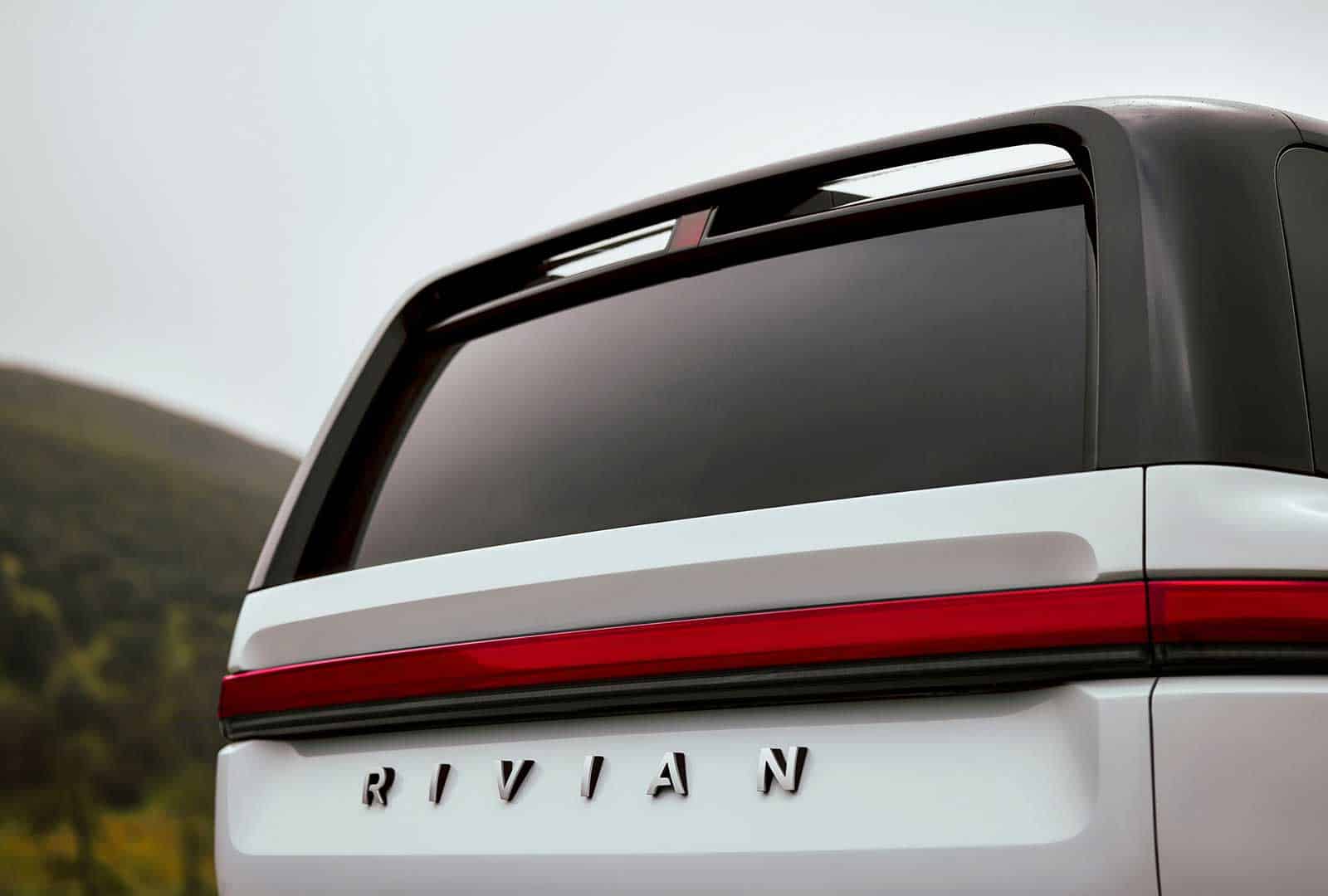
This Week in The Autonomy Economy™
Uber Aims to Further Fragment the Robotaxi Market with Rivian Deal
This Week in the Autonomy Economy, Uber continued to implement its fragment the robotaxi market strategy, Waymo announced it has completed over 170 million fully autonomous miles, and the autonomy market press releases continue to omit the important details.
Details are what matter at the end of the day. What we are seeing today is an acceleration of autonomy headlines with releases and stories that are missing key details.
When announcing a robotaxi partnership, at a minimum there should be details in the release on who the OEM or contract manufacturer is, who the fleet management partner is, because you cannot launch a robotaxi service without a car or fleet management operations. A nicety would be to disclose who is going to own and operate the asset, but we know that might be asking too much today.
We know we live in a headline-driven market that is only accelerating as our attention spans get shorter and shorter. But it is the details that matter and that is what we work to uncover for you each and every week in this newsletter and on our various media platforms.
This week, we are on the road visiting a new Waymo market, doing field work and moderating a panel on the business of autonomous trucking, which we will cover in next week’s newsletter.
On Thursday, we will be releasing a special episode of The Road to Autonomy podcast along with a special announcement, in addition to our regularly scheduled Tuesday episode.
The Future is Bright. The Future is Autonomous. The Future is Details.
📰 Need to Know: This Week in the Autonomy Economy
What is the hidden catch in the Uber-Rivian $1.25 billion deal?
The headline-grabbing $1.25 billion figure is an “up to” amount, not a guaranteed sum. Uber is investing $300 million upfront, with the remaining $950 million tied to strict milestones like “autonomy quality.” Furthermore, Rivian’s 8-K filing reveals that Uber has secured exclusivity in chosen markets for a set period, effectively preventing Rivian from launching a competing service or selling to Uber’s rivals in those specific areas.
Can Rivian actually meet the production demands for this robotaxi fleet?
Skepticism is warranted. While the deal mentions up to 50,000 robotaxis, Rivian only produced roughly 42,000 vehicles total in 2025. Additionally, the company is facing projected negative EBITDA of $1.8 billion to $2.1 billion for 2026. With commercial deployments planned for San Francisco and Miami in 2028, it remains unclear how Rivian will bridge the gap from its current financial state to mass-producing specialized L4 autonomous R2 vehicles.
How significant is Waymo’s new 170 million mile milestone?
It is a massive safety benchmark. Waymo recently announced it has completed over 170 million fully autonomous miles. The data shows Waymo vehicles are involved in 13x fewer crashes than human drivers in major hubs like LA, Phoenix, and Austin. Despite this, “ghost car” anxiety remains high among the general public, suggesting that while the technology is ready, the social trust gap is still wide.
What does the Uber-NVIDIA partnership mean for the global market?
Uber is diversifying its bets to avoid being squeezed by Waymo or Tesla. Their expanded partnership with NVIDIA aims to launch a Level 4 robotaxi fleet in 28 cities by 2028, powered by NVIDIA’s DRIVE Hyperion and Alpamayo AI platforms. This “multi-player” strategy suggests Uber intends to be the dominant software and network layer, regardless of who wins the hardware race.
Are autonomous trucks finally expanding beyond Hours-of-Service limits?
Yes. Kodiak recently opened a new autonomous lane between Dallas and El Paso. This is significant because the route exceeds standard human Hours-of-Service (HOS) windows. By removing the need for a human driver to rest, autonomous trucks can keep moving, potentially saving U.S. consumers $9 billion annually by 2035 through lowered logistics costs and increased efficiency.
What’s Moving the Markets
Uber Aims to Further Fragment the Robotaxi Market with Rivian Deal
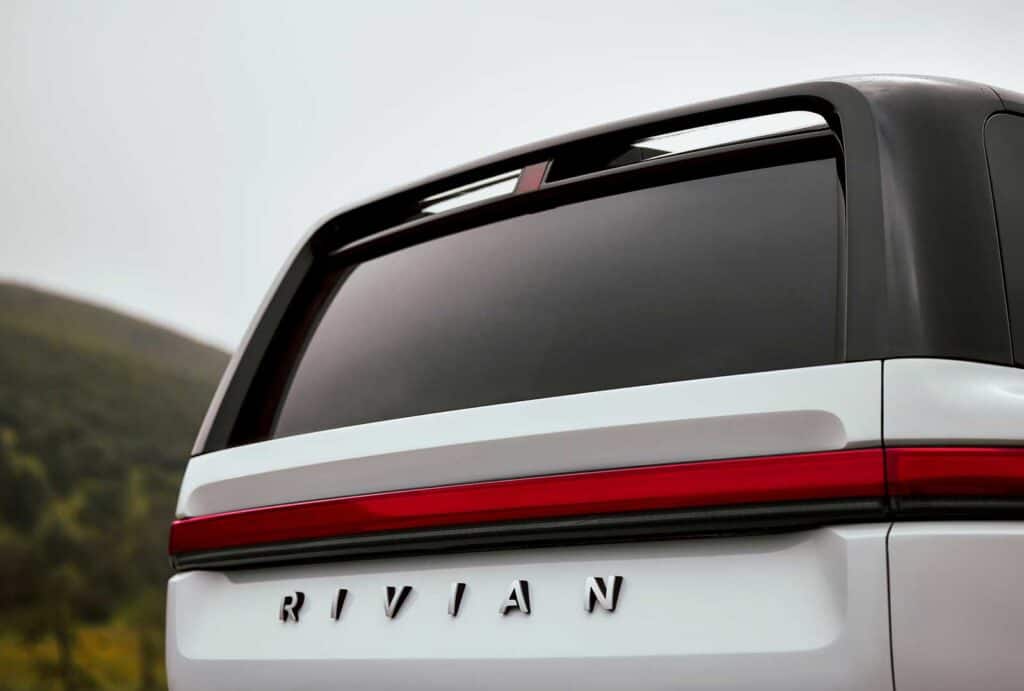
Beyond the headline lie the details. The details are where the facts live. Headlines get clicks. At The Road to Autonomy, we dive into the details and that is exactly what we did on the Uber/Rivian robotaxi announcement.
The headlines screamed: Uber, Rivian announce $1.25 billion deal for 50,000 robotaxis (CNBC). Uber strikes $1.25bn deal with Rivian for robotaxi fleet (Financial Times). Uber, Rivian ink $1.25B deal to put thousands of robotaxis on US streets (Fox Business). Uber to invest $1.25 billion in Rivian as part of new robotaxi deal (The Verge).
See a pattern and a trend here? The headline is not telling you the full story and it is setting a market narrative that is factually incorrect at this time. The key word missing from every single one of those headlines is “up to.”
That is the exact language in the release announcing the deal. But do not tell the headline writers that tiny little detail matters. It does. Here is what is behind the “up to” line:
- The total deal value is $1.25 billion, with Uber investing $300 million up front and the remaining investment subject to four milestones, including “autonomy quality.”
This will be an interesting one to watch in terms of how “autonomy quality” is defined both from a technical and legal perspective. If Waymo is the benchmark, things could get very interesting.
Then there are the details that stood out to us in Rivian’s 8-K filing:
- If Uber and Rivian choose a deployment market, Uber will have exclusivity over that market for a period of time before Rivian can sell R2 robotaxis to an Uber direct competitor or launch its own robotaxi service in that particular market.
- Uber will pay Rivian licensing fees for use of the Level 4 autonomous driving system software.
- Uber will choose the number and timing of vehicles to be received.
A licensing fee for an autonomous driving system that is not currently deployed in a commercial setting is an interesting detail. Is this simply a case of Uber exclusively locking up a partner with potential to ensure that the market continues to fragment and that those robotaxis are contractually required to deploy on the Uber network?
This deal, along with the up to 50,000 fully autonomous robotaxis headline, seems premature. There is no R2 robotaxi commercial product today. Even when you read past the headline and get to the initial 10,000 vehicle number, that figure still seems ambitious given that Rivian only produced 42,284 vehicles in 2025.
Not to mention, where is the cash flow going to come from to fund autonomy? Rivian loses money on every vehicle it sells and the company is projecting negative EBITDA of $1.8 billion to $2.1 billion for 2026.
With projected negative EBITDA, only $6.1 billion in cash on hand, and grand ambitions to begin deployments in San Francisco and Miami in 2028 with expansion plans to 25 cities by 2031, what are we missing?
We went behind the headline and into the details and we are still at a loss for how this is possible. Not to mention, what is the definition of deployments? Will these be R2 robotaxis with safety drivers? If yes, that is not a robotaxi deployment. That is a supervised deployment.
The next question then becomes; what are the service operating areas? How large will they be and will they be large enough to support a commercial deployment?
The bottom line is that this deal raises more questions than it answers.
But one thing that is becoming very clear is that Uber is going to leverage its balance sheet to fragment the market and avoid being squeezed out by Waymo and, soon, Tesla.
Our Take: Uber’s strategy is clear and it is the right one for them at this time in the evolution of the robotaxi market. Rivian, unsure.
Piquing Our Interest
Uber and NVIDIA to Launch Global Level 4 Robotaxi Fleet in 28 Cities by 2028 Uber and NVIDIA plan to deploy a global robotaxi fleet across 28 cities by 2028, leveraging NVIDIA’s DRIVE Hyperion and Alpamayo AI platforms. The service is slated to debut in Los Angeles and San Francisco during the first half of 2027.
Hyundai Mobis Pivots to AI and Autonomy in Major Strategic Overhaul Hyundai Mobis CEO Lee Kyu-seok is implementing a strategic overhaul, moving the company away from traditional auto parts toward AI, autonomous driving, and robotics. This includes selling non-core assets such as the lamp and bumper businesses.
Kodiak Opens Dallas to El Paso Lane Kodiak has opened a new lane, Dallas to El Paso, a lane that exceeds the hours-of-service window.
Autonomous Trucks Could Deliver $9 Billion in Annual Consumer Savings The accelerated deployment of autonomous trucks could save U.S. consumers $9 billion annually by 2035 through lower transportation costs and increased purchasing power.
Politics in D.C. are Nothing New, But Sabotaging? The Washington Post Editorial Board has accused the District’s Department of Transportation of sabotaging the deployment of autonomous vehicles in a new opinion piece. Based on the data, the Editorial Board is onto something. Now the question becomes why sabotage progress?
Another Day, Another Union Complaint Against Autonomy in California The California Gig Workers Union has submitted a complaint to the California Public Utilities Commission (CPUC) stating Waymo has allowed individuals under 18 to ride in the vehicles solo. Wonder why? They represent Uber and Lyft drivers and it happens all the time on those platforms. This is not about policy. This is about protectionism.
Union Politics Are Slowing Down the Deployment of Autonomous Vehicles in Minnesota While union politics may be slowing down the deployment of autonomous vehicles by requiring a licensed driver to sit behind the wheel and be ready to take over at any moment in every autonomous vehicle no matter what, Minnesota State Senator John Jasinski said it bluntly; “It is like authorizing cell phone use, but only if the phone is attached to the wall with a cord”. Senator Jasinski is right. It is not about reality. It is about politics.
TIER IV Releases Open-Source AI Software in Effort to Standardize L4 Autonomous Driving TIER IV has launched a new data-driven software stack through the Autoware repository and initiated testing across Japan, the U.S., and Europe as part of an effort to establish AI-based L4 autonomous driving as a global industry standard.
WeRide Expands to Slovakia Slovakia marks WeRide’s fourth European market, following France, Belgium, and Switzerland. Testing is set to begin in Bratislava during the first half of 2026, though a specific timeline for commercial operations has not yet been disclosed.
📰 Follow @RoadToAutonomy on X for our latest thoughts and insights on the autonomy economy.
Trending on X
170 Million Autonomous Miles and Counting
170 million fully autonomous miles and counting, and yet there are still voices out there that say this technology will not work, it is not safe, and it is downright dangerous. The fact is that they are wrong, as the data tells a different story.
Waymo was involved in 13x fewer crashes than human drivers in the cities where this data was gathered: Los Angeles, the San Francisco Bay Area, Phoenix, and Austin. The future is here and it is autonomous and it is safer than a human driver, as virtual drivers do not have emotions or get distracted.
Our take: We are currently on the road doing field work in a new Waymo market. Last night into the early morning, we rode around in Waymos in dense areas with nightclubs and activity and stopped to speak with individuals. While some of the after-midnight conversations were interesting to say the least and you can use your imagination for that one, the common question we got about Waymo was consistent: aren’t you scared? Aren’t you afraid? Where is the driver? Is it a ghost?
There was genuine curiosity, but at the same time there was fear. After several long conversations, some of those individuals overcame the fear. One reaction after a chat was; “oh shit, that’s cool.” They wanted to ride.
To truly scale robotaxis, perhaps robotaxi companies need to deploy roaming ambassadors to overcome that fear. The general public is not following the safety data. They are following the headlines.
Waymo is currently ranked #1 with a bullish outlook on the AUTONOMY LEADERBOARD in the autonomous vehicles category.
Accelerating Physical AI Adoption in Agriculture
Danny Bernstein, Founder & CEO, RESERVOIR joined Grayson Brulte on The Road to Autonomy podcast to discuss Physical AI and the growing role it is playing in agriculture.
Is NVIDIA Full Stack or Full Hype in Uber’s Robotaxi Narrative?
This week on Autonomy Markets, Grayson Brulte and Walter Piecyk discuss NVIDIAs autonomous driving ambitions, Uber’s Rivian robotaxi deal, and what all of these deals will eventually mean for the robotaxi market.