


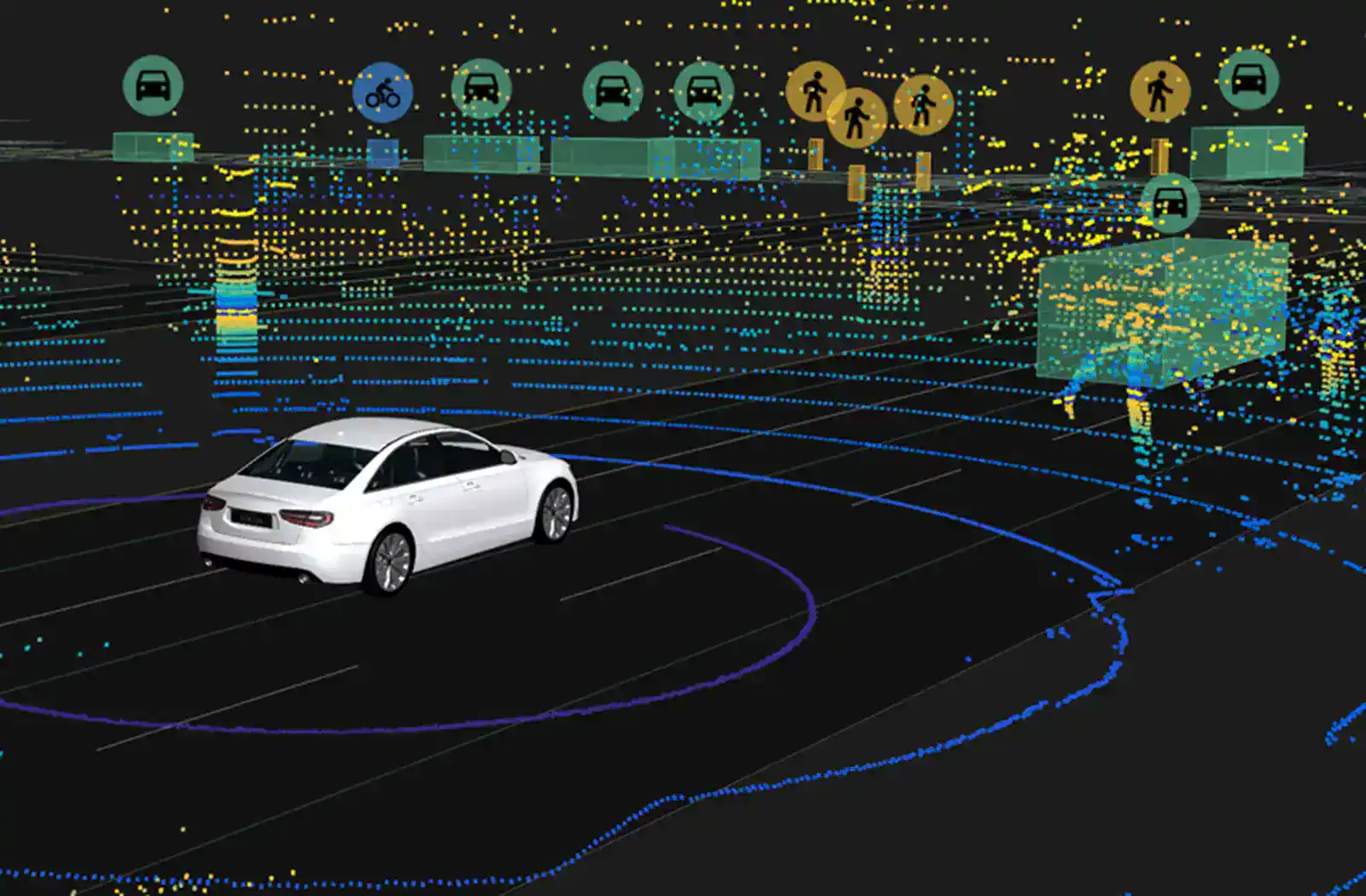
Simulation First Approach to Autonomy
Qasar Younis, CEO & Co-Founder, and Peter Ludwig, CTO & Co-Founder, Applied Intuition joined Grayson Brulte on The Road to Autonomy podcast to discuss simulation and why a simulation first approach to autonomy is key to building and scaling autonomous vehicles.
The conversation begins with Qasar talking about what the marketplace looked like when he co-founded Applied Intuition with Peter in 2017. This was the same year that Waymo began testing autonomous minivans in Chandler, Arizona without a safety driver on public roads. Reflecting on this, Peter shares his take on the marketplace.
Generally speaking, there is not really winner take all dynamics in the automotive ecosystem. There is always going to be many companies. There are going to be many players, [with] Waymo being sort of in front in autonomy technology. What is great for Applied is that they are showing the world what is possible and that we are building tools which frankly enable any automotive company to compete at that level.
– Peter Ludwig
Qasar expands upon this to share his perspective on how the autonomous vehicle industry operated in 2016, 2017.
In 2016, 2017 the only pattern was the Waymo pattern. Which is raise tons of money and build everything in house. That’s just not the case anymore. I do not think there a single sophisticated in-house sim team that isn’t also working with somebody in some capacity that is not inside.
– Qasar Younis
Building upon this, Qasar dives into the economics of build versus buy and why it makes economic sense to buy instead of building in-house simulation tools. With technology advancements over the past four and a half years and new powerful chips being introduced, Applied has been able to close the sim to real gap.
You want simulation to be as close as possible to the real-world performance of the system, while still being cost-effective to run.
– Peter Ludwig
As Applied matures as a company, the company has begun to assume a leadership position in the autonomous vehicle industry. Applied has recently published their Best Practices for The Testing and Deployment of Autonomous Vehicles guide that can be downloaded here.
In the guide, Applied summarizes best practices for the testing and development of autonomous vehicles. It is an important guide that can be incorporated into your development workflow today.
Our goal of the company is to move the entire autonomy ecosystem forward.
– Qasar Younis
Taking a step back for a moment, Qasar discusses simulation and references an interview where a Waymo Senior Director of Product Management stated that simulation is roughly responsible for 80 to 85% of their progress.
Fundamentally there are many things that you cannot test safely in the real world that are necessary for ensuring the safe operation of the vehicle. You can model those scenarios in simulation.
– Peter Ludwig
In a 2018 interview with Bloomberg, Peter spoke to Mark Bergen about scenarios. Grayson asks Peter how the team comes up with scenarios to model in simulation. Taking it to a local level, Grayson shares several scenarios and Peter explains how simulation can help to prepare autonomous vehicles for those ODDs (Operational Design Domains).
Shifting the conversation from autonomous vehicles to autonomous trucks, Grayson asks Peter what are the main differences between simulation for autonomous vehicles and autonomous trucks. Peter explains in-depth how there is a large difference in the approach to simulation for trucks due to the fact the way trucks are built and how they are driven.
While there are different forms of simulation, Applied has been solely focused on autonomy since day one.
Fundamentally we think that the autonomous industry will be very, very large. We believe that everything that moves will be autonomous. We want to enable that reality.
– Qasar Younis
Expanding different forms of simulation, Peter explains how Applied’s simulation platform differs from a system designed to generate images for movies and video games.
Wrapping up the conversation, Qasar and Peter discuss why everything that moves will be autonomous.
The future is bright. The future is autonomous. The future is The Road to Autonomy.
Subscribe to This Week in The Autonomy Economy™
Join institutional investors and industry leaders who read This Week in The Autonomy Economy every Sunday. Each edition delivers exclusive insight and commentary on the autonomy economy, helping you stay ahead of what's next.