This Week in The Autonomy Economy presented by Koop Insurance, Elon Musk ushered in the era of personal autonomy, D.C. progressives said no to progress, and we were once again on the road.
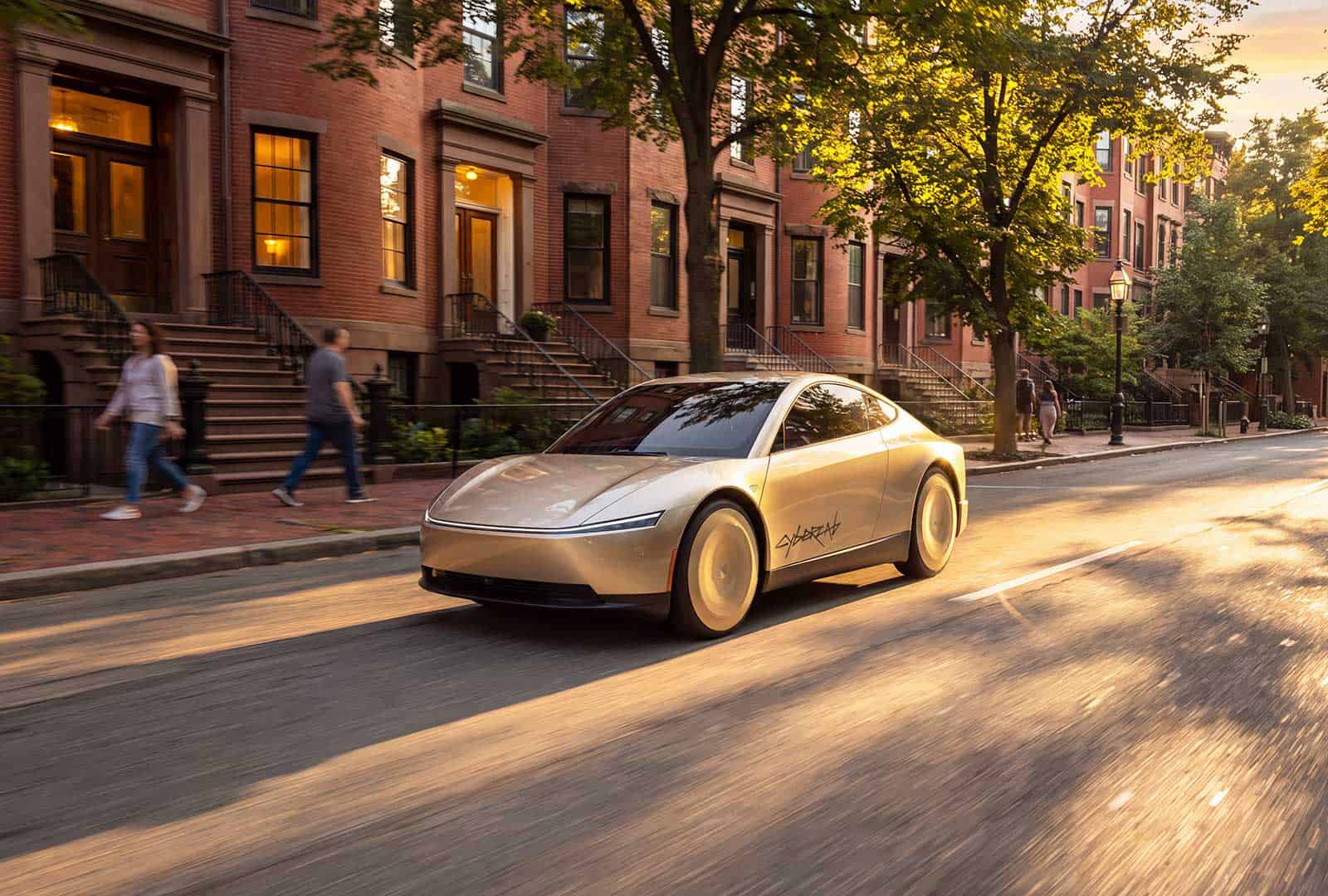
Tesla announced that select customers are now being invited to purchase a Cybercab for $29,990 for personal use in markets where Tesla already operates a Robotaxi service: Austin, Dallas, Houston, San Antonio, and Fort Worth, alongside Miami, Orlando, and Tampa.
At first glance, it looks like a good deal, until you read the fine print. To operate the vehicle, you must purchase an Autonomy Subscription for $299 a month (a fee Elon Musk has said is too high and is trying to bring down to around $115 a month) as well as your own insurance.
On top of that, the car only operates inside active Robotaxi geofences and cannot be placed on commercial ride-hailing networks without Tesla’s written approval. No subscription, and the vehicle will not operate. No insurance, and you cannot legally operate it.
If you estimate insurance at $200 a month and the subscription at $299, you are paying $499 a month to use it even after you own the Cybercab. Over a year, that puts the cost to operate the personally owned autonomous vehicle at $5,988.
Next, who is going to insure it outside of Tesla Insurance? That is the big question currently being overlooked. On an upcoming episode of The Road to Autonomy podcast, Koop founder and CEO Sergey Litvinenko will join us to discuss insuring the Cybercab and personally owned autonomous vehicles in general.
While Tesla made headlines this week, we were once again back where we learn things, see things, and get a fundamental understanding of what is really happening in the autonomy economy.
This week, we saw things that have not been reported anywhere, and we came away with a new level of respect for a certain depot owner/operator.
Over the coming weeks, we will be releasing Field Reports from our journeys, including dispatches from China, where Special Field Correspondent David Moss is currently on the ground.
As you have probably noticed, we are ramping up our Field Reports and making them a key pillar of The Road to Autonomy platform. Each week, we will be releasing three new Field Reports from all over the world.
OMEGA subscribers and AUTNMY AI clients have access to all of the in-depth data we gather, while non-subscribers receive the video report. If you are interested in becoming a subscriber or a client, please send an email to alpha[at]autnmy.ai.
This week we did not publish any podcasts due to travel and the nationwide ground stop. Our publishing calendar returns to normal next week, with Autonomy Markets releasing on both Monday and Saturday. Four shows next week along with three new original Field Reports.
📰 Need to Know: This Week in the Autonomy Economy
What is the real cost and the catch of buying Tesla’s $29,990 personal Cybercab?
Select customers in active Tesla Robotaxi markets (Austin, Dallas, Houston, San Antonio, Fort Worth, Miami, Orlando, and Tampa) can now purchase a Cybercab for $29,990, but owning the hardware is only part of the expense. To operate the vehicle, buyers must pay a mandatory $299/month Autonomy Subscription (which Elon Musk hopes to lower to roughly $115/month) and carry their own insurance. Estimating insurance at $200/month brings ongoing operating costs to $499/month, or $5,988 per year. Additionally, the Cybercab only functions inside active Tesla Robotaxi geofences and cannot be placed on commercial ride-hailing networks without Tesla’s written approval.
Who will insure personally owned autonomous vehicles like the Cybercab?
Securing coverage outside of Tesla Insurance remains one of the biggest unresolved hurdles for private autonomous vehicle buyers. Koop founder and CEO Sergey Litvinenko will join an upcoming episode of The Road to Autonomy podcast to examine how personal Cybercabs and autonomous vehicles will be underwritten and insured.
How fast is Tesla expanding its Robotaxi footprint, and when are Cybercabs launching in Dallas?
Tesla is rapidly scaling across Texas and Florida, increasing its Austin Robotaxi coverage by 63% (171 square miles) to 443 square miles, launching a 275-square-mile service zone in San Antonio (excluding the airport), and kicking off service in Fort Worth alongside active operations in Houston and Orlando. Meanwhile, more than 50 badged Cybercabs, commercial production models without steering wheels or pedals were spotted in Dallas, signaling that public rides are on track to launch before Thanksgiving.
Where are local regulators blocking or welcoming robotaxis?
In Washington, D.C., three members of the Transportation Committee, including the mayor-elect, voted against legalizing robotaxis, stalling progress in the District over politics. Conversely, the New Orleans City Council is moving forward by reviewing a proposed ordinance to establish permits, operating rules, and fees for commercial robotaxis.
How is Baidu taking robotaxis beyond short city trips?
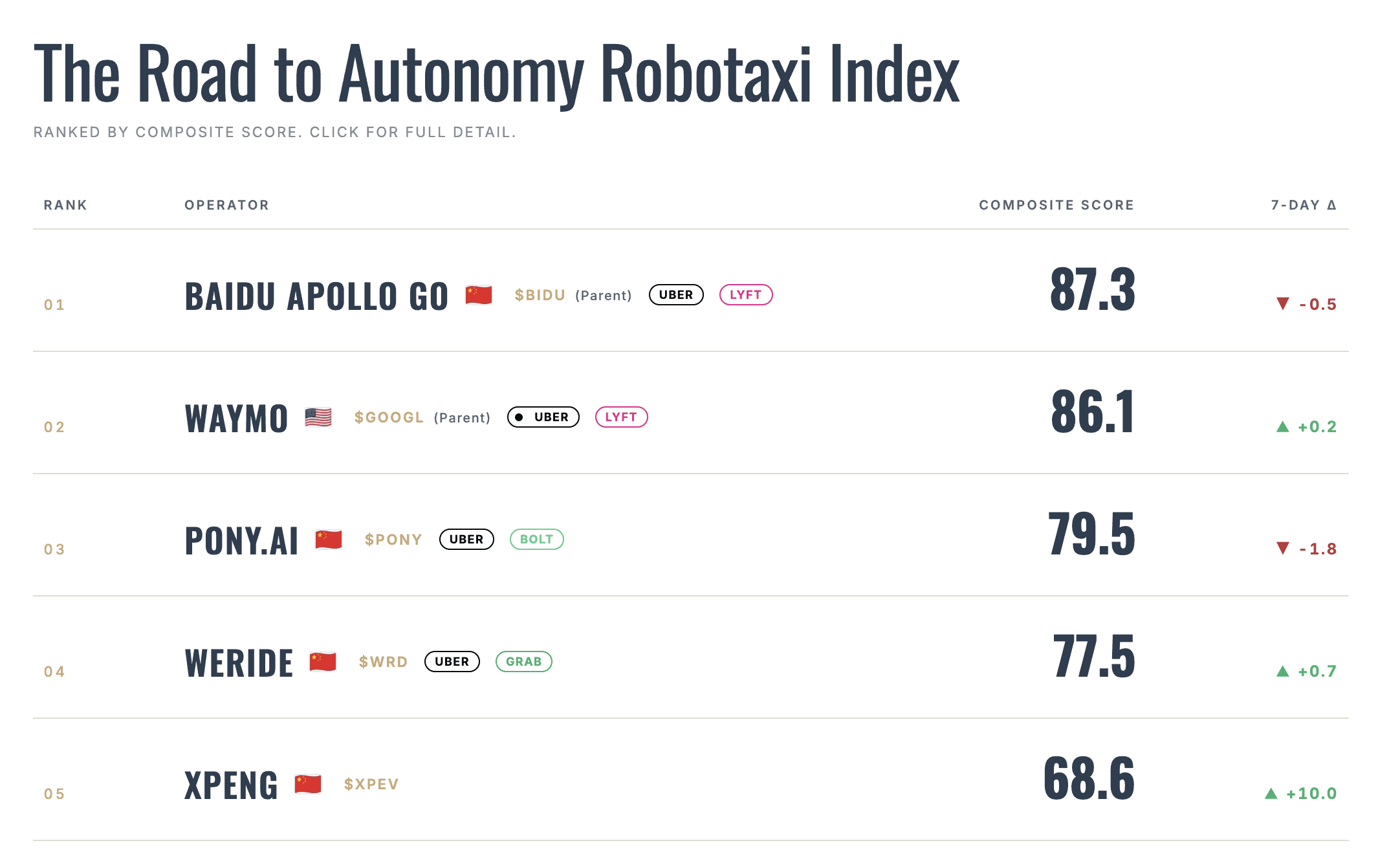
Baidu Apollo Go surpassed 240 million fully autonomous miles across 28 cities worldwide with its 350-vehicle fleet and partnered with CAR Inc. to launch an autonomous car rental service for road trips.
📈 Follow @AutonomyIndices on X for the latest updates on The Road to Autonomy Indices. Updates every 12 hours.
Tesla Houston Robotaxi Field Report
Special Field Correspondent Spencer rode in a Tesla Robotaxi across the new Houston geofence for over three hours. The report covers the geofence expansion, the pickup at the northern tip, the routing limits, the ride across the city and back, and what the expansion means for Tesla in Houston. This is the Field Report.
Tesla Fort Worth Robotaxi Field Report
Special Field Correspondent Spencer rode in a Tesla Robotaxi in Fort Worth on launch morning. The report covers launch morning, the transportation gap in Fort Worth, the ride, the drop off, remote support and what it will take for Tesla to scale across DFW metroplex. This is the Field Report.
Tesla Robotaxi Orlando Field Report
Grayson Brulte rode in Robotaxi in Orlando, visited the service center and the dedicated permitted depot. This field report covers the service area, the service center hub, the fleet count, the depot math and what it will take for Tesla to scale in Orlando. This is the Field Report.
Piquing Our Interest
Tesla Launches San Antonio Robotaxi Service Tesla has launched Robotaxi service across a 275-square-mile service area in San Antonio with one major caveat, no airport service.
Tesla Expands Austin Robotaxi Service Area Tesla increased its Austin Robotaxi service area by 171 square miles, a 63% increase, bringing total coverage to 443 square miles.
Zoox Expands Vegas Service Area Zoox has extended its Las Vegas service hours to 6 a.m.–3 a.m. daily and expanded its coverage area to the Arts District and Downtown.
Zoox Plans Atlanta Expansion Zoox plans to launch its Explorers early rider program in northwest Atlanta in 2027.
U.S. Army Tests Self-Driving Vehicles to Shuttle Troops on Military Bases The U.S. Army has begun piloting commercial autonomous vehicles at bases in Georgia and Texas to evaluate whether autonomous vehicles can efficiently transport soldiers and supplies around military installations.
D.C. Progressives Say No to Progress There was no progress in D.C. this week, as three members of the Transportation Committee, including the mayor-elect voted against legalizing robotaxis in the District. Why? Politics.
New Orleans City Council Weighs Regulations for Robotaxis The New Orleans City Council is discussing a proposed ordinance to establish permits, operating rules, and fees for robotaxis in the Big Easy.
DP World Partners with Dubai Future Foundation to Develop Autonomous Port Logistics DP World has partnered with the Dubai Future Foundation’s SHIFFT joint venture to deploy autonomous logistics vehicles across its port facilities, beginning at the Jebel Ali Port.
Baidu’s Apollo Go Expands to 28 Cities and Launches Autonomous Road-Trip Rentals Baidu Apollo Go350 robotaxis have driven over 240 million in fully autonomous miles across 28 cities worldwide, and the company has partnered with CAR Inc. to launch an autonomous car rental service for road trips.
📰 Follow @RoadToAutonomy on X for our latest thoughts and insights on the autonomy economy.
Trending on X
Badged Cybercabs Arrive in Dallas
NEWS: Over 50 badged Tesla Cybercabs now in Dallas.
Special Field Correspondent Spencer spotted over 50 badged Cybercabs in Dallas, signaling that a local launch is imminent. The distinction between badged and unbadged units is significant: a badged Cybercab has no steering wheel or pedals, meaning it is a commercial production model rather than a test vehicle.
Our take: Tesla appears on track to launch Cybercab rides in Dallas before Thanksgiving. As soon as the service goes live, we will be on the ground producing a Field Report.