


Tesla Houston Robotaxi Field Report
Field Report · Houston · Tesla · Robotaxi Ride Analysis
Filed By: Spencer on November 12, 2026
Field Verified
Tesla Houston Robotaxi Field Report
Key Tesla Robotaxi Houston Field Report Findings
What did we find when we rode Tesla Robotaxi in Houston?
Tesla expanded its Houston geofence from roughly 25 square miles to approximately 250 square miles, a 10X increase. We rode Robotaxi from the northern tip of the geofence to the southern end and back, a trip of over three hours.
Where do the challenges lie for Tesla Robotaxi in Houston?
Speed is the constraint. Robotaxi is not taking highways in Houston and is not crossing railroad tracks at this time, so every trip runs on surface streets and uses bridges over the railroads. A drive that takes 42 minutes on the toll roads took Robotaxi over an hour and a half.
Tesla Robotaxi Houston Field Report
Special Field Correspondent Spencer rode in a Tesla Robotaxi across the new Houston geofence for over three hours. This Field Report covers the geofence expansion, the pickup at the northern tip, the routing limits, the ride across the city and back, and what the expansion means for Tesla in Houston.
The Houston Geofence Expansion
Tesla Robotaxi’s original Houston geofence was in a suburb of Houston, not downtown. That is different from Dallas and Austin, where Tesla covered the downtown area pretty much right away. The original Houston geofence was also small, roughly 25 square miles. Recently Tesla expanded it to approximately 250 square miles, a 10X increase, and the new geofence is shaped like a rocket.
What the Geofence Now Covers
The expansion brings huge venues into the zone. It covers the home of the Houston Rodeo, which locals describe as a Super Bowl every night given the crowds. It also covers the University of Houston stadium and the Rice University stadium. Venues with tens of thousands of seats are now in the zone, which makes Robotaxi useful for Houstonians and for visitors to the city.
The Northern Tip
Spencer started his ride at the very northern tip of the geofence, technically in Tomball, Texas. The edge sits right next to a Valero under construction. From one parking spot you can request a car. Across the driveway, you cannot. The car would not come into that area, so we walked about five minutes to a church next to the Valero site. Pickup came in about 18 minutes.
The Routing Limits
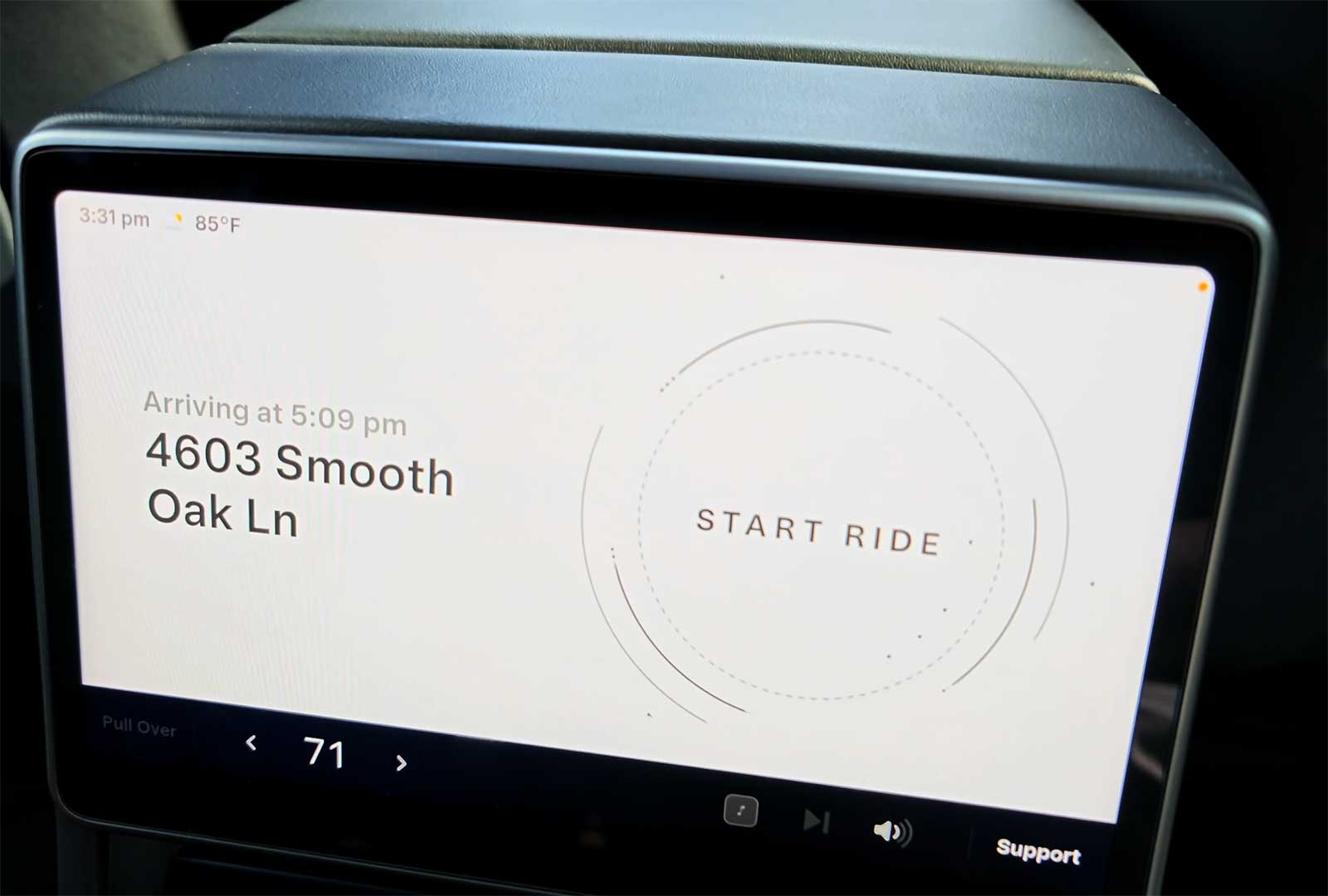
Spencer started the ride at 3:31 PM and Robotaxi estimated a 5:09 PM arrival at the southern end of the geofence. That is over an hour and a half. Driving ourselves, the same trip would take 42 minutes with tolls, or 1 hour and 13 minutes without them. Robotaxi does not take highways in Houston, so the whole trip ran on surface streets. It also does not cross railroad tracks in Houston, so it routes over bridges instead, which adds time.
The Ride
The driving was flawless. For a rider prone to motion sickness, that is the top compliment you can give Tesla on how smooth a driver Robotaxi is. When Spencer neared the southern end of the geofence, we changed the destination back to the starting point. That added 1 hour and 35 minutes and turned the trip into a ride of over three hours.
Hard Braking and Hazard Lights
Twice, a light turned red and Robotaxi decided not to go through it, braking hard. It did what a safe driver would do. Because it stopped so quickly, both times it turned on the hazard lights to alert the drivers behind us.
Outlook
Spencer passed the three hour mark rolling into the same church parking lot where we were picked up. That was three hours of driving across Houston with zero driving complaints and no honks. The new geofence now covers the venues that matter to the city, and the driving is ready. The next unlock is highways.
Once Robotaxi takes highways and crosses railroad tracks in Houston, trip times will come down and the 250 square mile geofence will become a far more competitive service. Tesla is clearly preparing to scale Robotaxi in Houston.
The future is bright. The future is autonomous. The future is field reports.
Subscribe to This Week in The Autonomy Economy™
Join institutional investors and industry leaders who read This Week in The Autonomy Economy every Sunday. Each edition delivers exclusive insight and commentary on the Autonomy Economy, helping you stay ahead of what's next.