


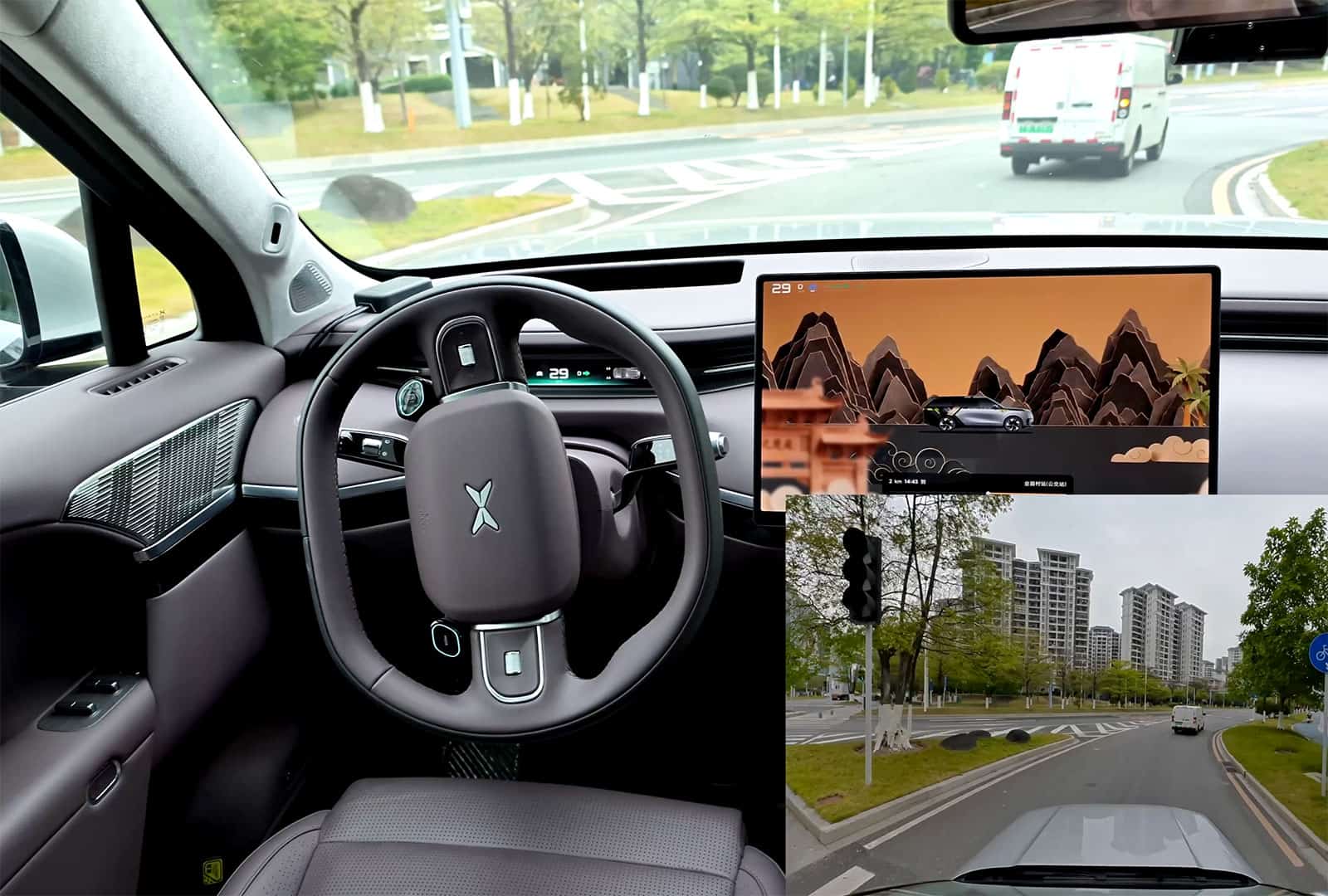
XPENG YOYO Robotaxi Guangzhou Field Report
Field Report · Guangzhou, China · XPENG · Robotaxi Ride Analysis
Filed By: David Moss on November 23, 2026
Field Verified
Field Report Summary
- Field date
- Highway capability
- No Highway
- Safety driver
- No Safety Driver, Fully Autonomous
XPENG YOYO Robotaxi Guangzhou Field Report
Key XPENG YOYO Robotaxi Guangzhou Field Report
What did we find when we rode XPENG YOYO in Guangzhou?
Special Field Correspondents David Moss and Spencer rode an XPENG YOYO Robotaxi in Guangzhou, China alongside XPENG autonomous driving product manager Tao. The vehicle is a luxury GX model operating completely driverless on a predetermined route near the company’s factory. It relies on a pure vision-only system without LiDAR or HD maps, using radars solely for low-speed parking maneuvers.
Where do the challenges lie for XPENG YOYO in Guangzhou?
The service is currently restricted to an internal testing phase and is not yet open to the public. The operating area is limited to the outskirts of Guangzhou near the Huangpu factory rather than the downtown core. Additionally, the vehicles cannot currently operate in heavy rain, though they are capable of driving in light rain
XPENG YOYO Robotaxi Guangzhou Field Report
Special Field Correspondents David Moss and Spencer tested the XPENG YOYO Robotaxi in Guangzhou, China, gaining exclusive insights from XPENG’s autonomous driving product manager. This Field Report covers the vision-only technology, the luxurious in-cabin experience, the smooth driving dynamics, and XPENG’s future robotaxi rollout plans.
Service Area and Operations
The ride took place on the outskirts of Guangzhou near XPENG’s Huangpu factory. The current internal testing fleet consists of dozens of cars operating seven days a week for eight hours a day. XPENG plans to eventually expand operating hours to 16 hours a day and extend the service area into the downtown Guangzhou city center.
Vision-Only Hardware and Redundancy
Unlike many competitors, the XPENG YOYO robotaxi utilizes a pure vision-based system relying on cameras, completely omitting LiDAR and HD maps. Radars are only utilized for low-speed maneuvers like pulling over. To ensure safety, the robotaxi is equipped with four chips, compared to the standard two or three in consumer models which act as a redundancy co-pilot system to safely stop or pull over if the main driving system fails.
The Luxury In-Cabin Experience
The modified GX vehicle offers a highly premium, chauffeur-like environment. Passengers can access massaging seats, extensive legroom adjustments, a large fold-down display, chargeable USB-C cables, and a built-in fridge for hot or cold beverages. A short instructional video plays on the screen at the start of the journey to orient new passengers to the robotaxi service.
The Ride Quality
The driving dynamics were incredibly smooth with virtually zero hard braking events. The car successfully executed a U-turn near a construction area and handled a slight brake jitter cautiously while determining a pedestrian’s intent to cross the road. The product manager noted the goal is for the ride to feel like it is being operated by an experienced human driver rather than a robot.
Outlook
XPENG is currently in a transition phase, moving safety operators from the driver’s seat to the passenger seat before removing them completely for a true driverless public launch. The company ultimately aims to serve as a comprehensive robotaxi solution provider, offering both vehicles and autonomous technology to mobility partners globally to build a wider robotaxi ecosystem.
The future is bright. The future is autonomous. The future is field reports.
Subscribe to This Week in The Autonomy Economy™
Join institutional investors and industry leaders who read This Week in The Autonomy Economy every Sunday. Each edition delivers exclusive insight and commentary on the Autonomy Economy, helping you stay ahead of what's next.