


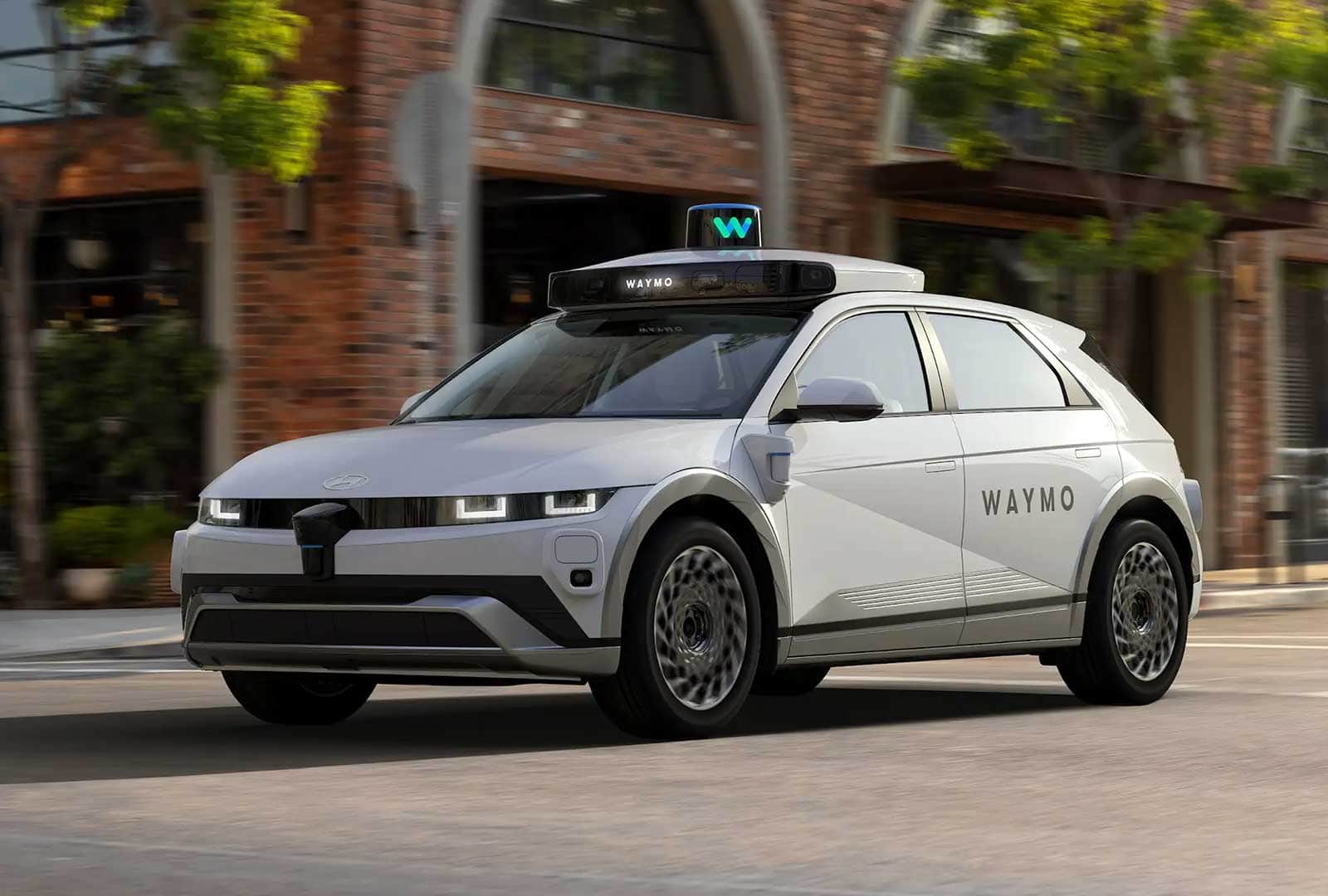
This Week in The Autonomy Economy™
Go Big or Go Home, Waymo Went Big
This Week in the Autonomy Economy, Waymo is reportedly going big with a 50,000 robotaxi order, robotaxis are scaling globally, and Kodiak continues to prove to the market that they are building a diversified business.
The theme this week is scale. When the 10,000-pound gorilla in the room, in this case, Waymo puts their thumb on the scale, the market pays attention. And despite an uptick in media coverage and podcast appearances, Uber’s narrative that they generate demand and are needed to scale robotaxis is not resonating.
We will go as far as to say that Uber is on defense, and it is not just our opinion. Uber’s stock sold off 6.83% this week, while the S&P 500 was down 1.28%. What role does Uber play in an autonomous future?
They do not own an autonomous vehicle or fleet management company, but they are investors in several. There is a big difference between being an investor and an owner. Waymo, which is well on its way to becoming a verb, is proving each and every single day that companies with immense resources, world-class engineering, and patience can replicate their business in the United States and soon globally.
First it was Waymo and next it will be Tesla. What happens if collectively Waymo and Tesla control over 50% of the rides in the traditional top 10 rideshare markets? We will answer it for you. Uber has a problem, and a big problem at that.
That is why, in our opinion, you have seen Uber over the last year shift a lot of their autonomous emphasis overseas. Are these moves foreshadowing something bigger?
One day, could Uber cede a majority of the U.S. market to both Waymo and Tesla, while turning their attention to international growth, which currently accounts for over 40% of their total revenue and is growing rapidly?
Editor’s Note: Our thoughts on Uber’s robotaxi strategy were covered in Axios, and our long-held belief that Applied Intuition is the most interesting company in autonomy was featured in Forbes this week. Thank you to both Joann Muller and Alan Ohnsman for the coverage.
📰 Need to Know: This Week in the Autonomy Economy
What are the details of Waymo’s massive vehicle order?
Waymo is reportedly in discussions with Hyundai to secure 50,000 IONIQ 5 autonomous vehicles by 2028. This deal, valued at approximately $2.5 billion, would represent the largest single order of robotaxis in history. The vehicles are expected to be produced at Hyundai’s Metaplant America in Georgia and are intended to solve vehicle supply constraints, enabling Waymo to scale into a major global business capable of materially impacting Alphabet’s earnings.
Why is Uber’s stock underperforming compared to the broader market?
While the S&P 500 saw a modest decline of 1.28% this week, Uber’s stock sold off 6.83%. This stems from investor skepticism regarding Uber’s role in an autonomous future. Unlike Waymo or Tesla, Uber does not own its own autonomous fleet, leading to concerns that they may lose dominance in their top 10 markets if pure-play AV companies continue to scale vertically.
How is Kodiak AI diversifying its business beyond commercial trucking?
Kodiak continues to prove its dual-use strategy. This week, the U.S. Marine Corps selected Kodiak to integrate its autonomous driving technology into the ROGUE-Fires (Remotely Operated Ground Unit for Expeditionary Fires) vehicle. This partnership highlights how Kodiak’s Physical AI can adapt from structured highways to unstructured, high-risk military environments.
What is the significance of the Nuro and Lucid partnership?
Nuro is ramping up production of its bespoke robotaxi in collaboration with Lucid. These vehicles are currently being tested on public roads and are slated for commercial deployment in the Bay Area via the Uber network later this year. This moves Nuro from a delivery-focused narrative to a serious contender in the passenger robotaxi market.
Is the Asset-Light model for robotaxis losing favor?
Currently, yes. The market is favoring the Owner-Operator model (Waymo, Tesla) over the Demand-Layer model (Uber). Waymo’s ability to replicate its success city-by-city using its own hardware and software is proving that companies with deep pockets and engineering patience can own the entire value chain, leaving traditional middlemen on the defensive.
What’s Moving the Markets
Go Big or Go Home, Waymo Went Big
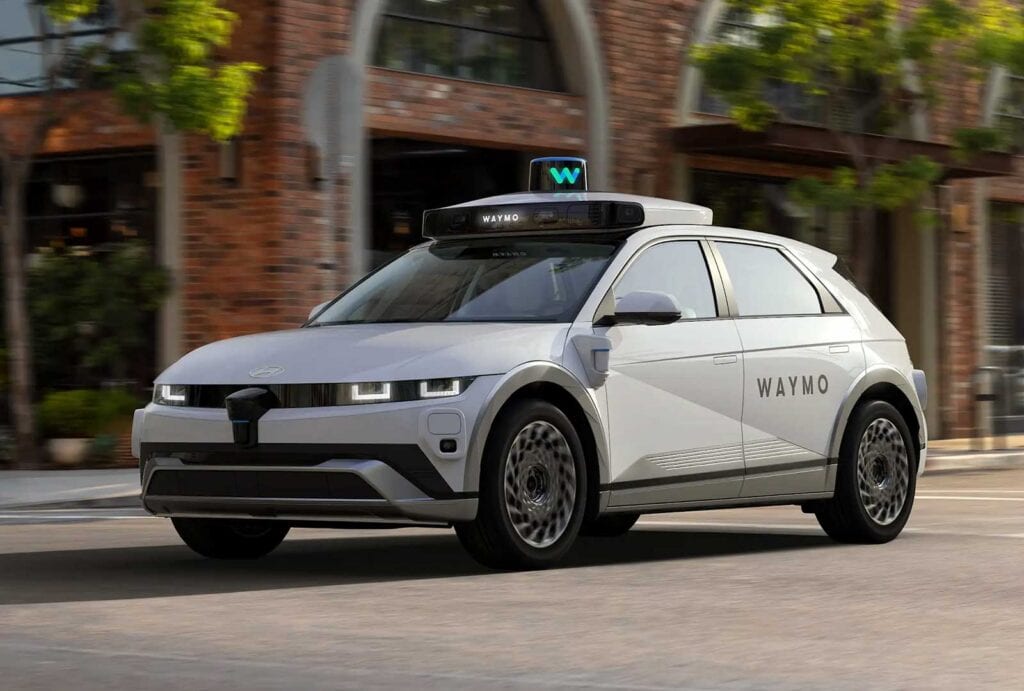
Fresh off a $16 billion funding round, Waymo is putting its new cash influx to work. The company is reportedly in discussions with Hyundai to secure 50,000 IONIQ 5 autonomous vehicles by 2028 in a deal valued at roughly $2.5 billion.
If completed, this would be the largest single order of robotaxis in history. Waymo has effectively thrown down the gauntlet, putting everyone (including Uber) on notice that Alphabet plans to scale Waymo into a major global business, one large enough to materially impact its earnings.
With plans to add over 20 cities globally and a focus on cost with the 6th-Generation Driver, Waymo clearly needed vehicles, and Hyundai appears to be the partner that will finally enable Waymo to truly scale.
This deal is a classic win-win. Hyundai needs to sell vehicles; the company’s Q4 operating profit dropped 40% year-over-year as growth slowed in key markets. A $2.5 billion order doesn’t just move the revenue needle, it gives Hyundai a stable outlet for production capacity at a time when consumer EV demand remains uneven.
Then there is the practicality of the platform. The IONIQ 5 is built on the 800V E-GMP platform that unlocks 18-minute fast charging. This vehicle is purpose-built for the high-utilization, rapid turnarounds that define fleet management operations for robotaxi deployments.
This deal signals a shift we have tracked for a long time, OEMs are being disrupted, and a large part of their business going forward might end up being contract manufacturing for robotaxi fleet operators.
For Waymo, the strategy is clear: they do not want to be in the car business, but they need cars. For Hyundai, it is more existential. Supplying 50,000 vehicles validates its world-class manufacturing capability, but it also confirms that OEMs are being relegated to a new role—one they might not be comfortable with as autonomy scales.
One day, will we look back and say the car companies got it wrong? In fact, they got it so wrong they never recovered? And how did they get it so wrong? They went all-in on EVs despite the market data and lost tens of billions while abandoning AVs to fund EVs.
Our Take: Waymo just blew up the entire retail investor narrative that robotaxis cannot scale profitably. A $2.5 billion order says otherwise.
Waymo is currently ranked #1 with a bullish outlook on the AUTONOMY LEADERBOARD in the autonomous vehicle category.
Piquing Our Interest
Applied Intuition’s Plan to Automate Everything That Moves Forbes reports that Applied Intuition generated $800 million in revenue in 2025, up more than 50% from 2024, and they are just getting started as the company has plans to automate everything that moves.
Waymo Unveils 6th Generation Waymo Driver Waymo’s 6th Generation hardware features 13 high-resolution cameras capable of seeing up to 500 meters away, paired with a multi-modal sensing suite powered by custom silicon and designed specifically to reduce costs and enable mass scale.
Waymo Starts Driver-Out Testing in Nashville Waymo is getting closer to launching commercial service in Nashville. This week, the company began driver-out testing in the Music City.
Waymo Begins Driver-Out Testing in Orlando Waymo appears to be inching closer to a commercial launch in Orlando. WESH 2 News reports that the company has begun driver-out testing in the city. Now the big question becomes, how long until Waymos are available at Disney World?
Waymo Hires Dashers, Motional Trolls with Self-Closing Doors Video Waymo has begun hiring Dashers to manually close the doors of stuck robotaxis. Just a day later, Motional, owned by Waymo partner Hyundai posted a video on X highlighting their roboatxi’s self-closing doors as a slight to Waymo.
Avride Fleet Hits 80 Vehicles as Robot Deliveries Top 316k Avride (owned by Nebius) reported this week that their robotaxi fleet has grown to 80 vehicles, while the company’s robot delivery business surpassed 316,000 deliveries in 2025.
Nevada Plans to Charge $100 Robotaxi Testing Fee Companies testing autonomous vehicles in Nevada will soon have to pay new fees. $100 for an autonomous vehicle testing certificate and $20.50 for each autonomous vehicle license plate.
NHTSA to Host Public Meeting on Autonomous Driving On March 10, NHTSA will host a public meeting on autonomous vehicle safety, which will include a stakeholder workshop.
U.S. Marine Corps Chooses Kodiak The U.S. Marine Corps has chosen Kodiak as the autonomous driving partner for their unmanned ROGUE-Fires vehicle.
Aurora Plans to Expand Autonomous Truck Fleet to 200 by Year-End With a new Roush partnership secured and a pipeline of International trucks that require no human observer, Aurora plans to scale their fleet to 200 by the end of the year.
WeRide Launches Robotaxi Service in Abu Dhabi WeRide has launched commercial robotaxi operations with safety drivers in Downtown Abu Dhabi on Uber. Notably, Uber has introduced a dedicated “Autonomous” tier in the emirate.
📰 Before these stories were featured here, they were available on X. Follow @RoadToAutonomy today to stay up-to-date on the latest news and developments shaping the autonomy economy.
Social Buzz
Nuro Prepares to Scale
Latest The Road to Autonomy Podcast
Scaling Robotaxis, Hybrid Networks and Fleet Management Globally with Lyft
Watch on YouTube | Spotify | X
Listen on Apple Podcasts
February 10, 2026
Latest Autonomy Markets Podcast
Uber’s Autonomy Myths and Realities, Waymo’s Capital Raise and Miami Depots
Watch on YouTube | Spotify | X
Listen on Apple Podcasts
February 10, 2026