


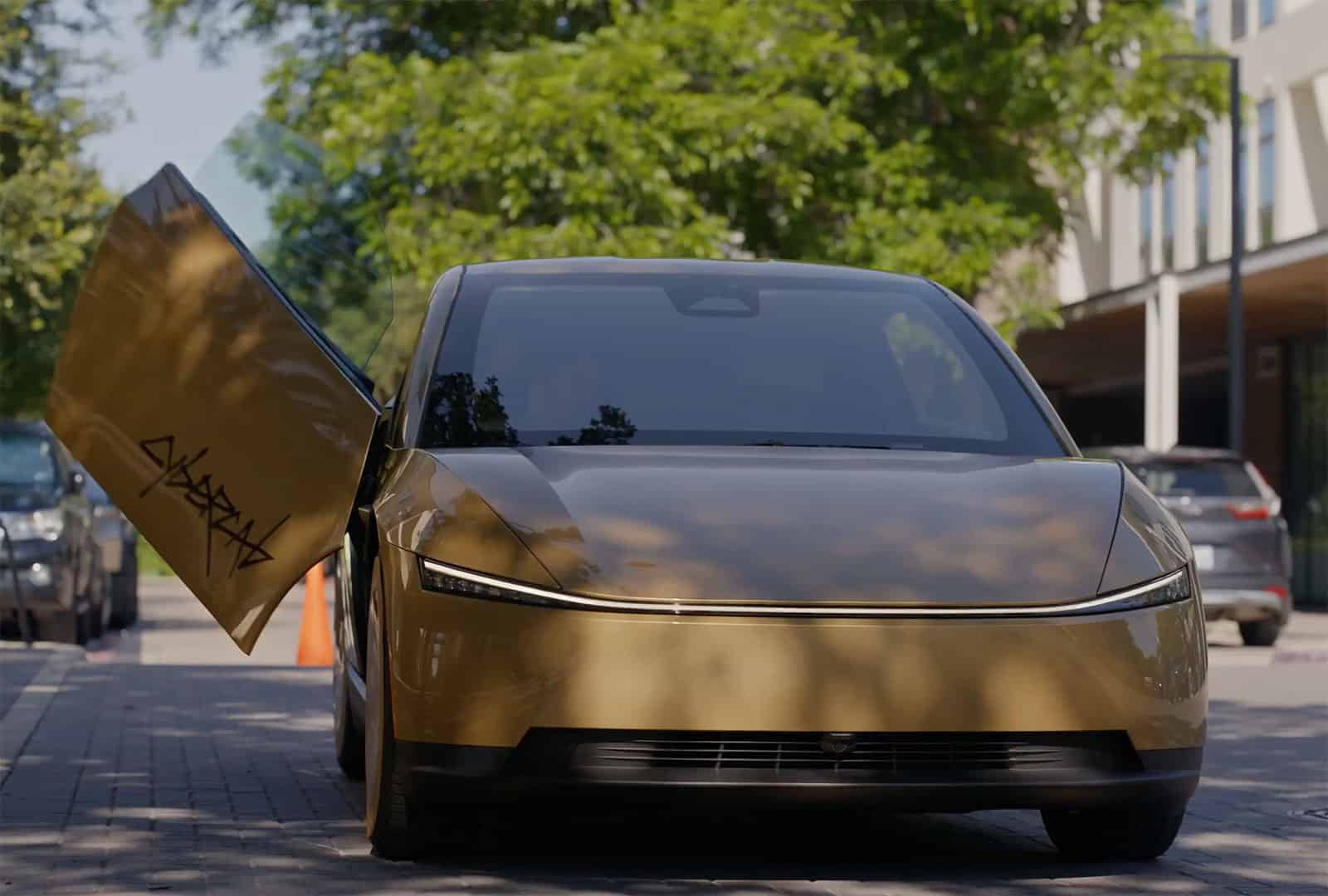
Will NHTSA Ground Cybercab?
NHTSA has issued a special order requiring Tesla to answer 21 technical and legal questions under oath by September 30th regarding how the Cybercab self-certified without traditional human controls such as steering wheels, pedals, and mirrors. Rob Grant and Grayson Brulte assess OMEGA’s predictions: a 55% chance the review continues without a service halt, 25% chance of a binding restriction on expansion, and 20% chance of a documented compliance pathway.
Waymo faces unanimous but legally toothless resistance from the San Diego City Council, with the real battleground being airport access, traffic enforcement, and depot permitting. Meanwhile, GMO Air debuted a robot EMS vehicle in Tokyo equipped with diagnostic tools and a backup humanoid, signaling an emerging adjacent economy around humanoid field maintenance.
Key Autonomy Signals Episode Questions Answered
What exactly is NHTSA asking Tesla, and what happens if Tesla does not satisfy the agency?
NHTSA’s special order requires Tesla to answer 21 technical and legal questions under oath by September 30th, explaining how the Cybercab meets FMVSS standards built around human controls and why Tesla did not pursue an exemption as Zoox did. If Tesla’s answers are insufficient, possible outcomes include a required exemption path capping deployable vehicles at 2,500 per year or a requirement to retrofit operator controls, though NHTSA has not requested a service halt as of the recording date.
Does the San Diego City Council resolution have any power to stop Waymo from operating?
No. California state law has preempted local regulation of autonomous vehicles for over a decade, and the CPUC granted Waymo approval to launch in San Diego without requiring local oversight. However, the resolution signals political opposition that could translate into real friction through airport access negotiations, aggressive traffic citation enforcement, and delays in depot or charging facility permitting.
What is the significance of Japan’s humanoid ambulance demonstration?
GMO Air unveiled a robot EMS vehicle in Tokyo equipped with diagnostic tools, spare parts, and a backup humanoid robot to service humanoids that break down in the field. According to Rob Grant, the demonstration is less a technical breakthrough than a commercial signal that an adjacent economy of humanoid maintenance, uptime services, and field support is beginning to take shape alongside the broader humanoid industry.
Autonomy Signals Topics & Timestamps
[0:00] KPMG Sponsor Introduction
KPMG works across the full autonomy ecosystem, advising operators, OEMs, suppliers, insurers, and investors as autonomous mobility scales.
[01:41] Signal 1: Will NHTSA Ground Cybercab?
NHTSA’s chief counsel issued a special order requiring Tesla to answer 21 technical and legal questions under oath by September 30th, including how a vehicle with no pedals, wheel or mirrors self-certifies to FMVSS 101, 102, 108, 111, 126 and 135, and why Tesla didn’t seek an exemption as Zoox did.
Rob is clear this is a fact-finding deadline, not a shutdown date, and expects follow-up questions two to three weeks after Tesla responds. OMEGA puts the odds at 55% the review continues with no service halt, 25% a binding restriction on expansion and 20% a documented compliance pathway, with the Part 555 exemption route and its 2,500-vehicle annual cap as the nuclear option.
[26:59] Signal 2: San Diego City Council Wants Local Control
The San Diego City Council voted 8-0 to request local regulatory authority over AI and autonomous vehicles following the CPUC’s approval of Waymo, citing emergency response and job displacement, particularly airport rides. State preemption makes the resolution toothless on paper, but Rob lays out the real levers localities hold: airport access negotiated outside preemption, California’s new AV ticketing authority, and depot and charging permits.
OMEGA sees a 60% chance the pressure stays rhetorical, 30% an airport-style restriction with service continuing and 10% an actual suspension, and Grayson flags the cracks emerging in California politics ahead of the 2026 governor’s race.
[48:39] Signal 3: Japan’s Ambulance for Humanoids
GMO Air unveiled a robot EMS vehicle in Tokyo carrying diagnostic tools, spare parts and a backup humanoid, with a purple roof light to distinguish it from human ambulances. Rob reads it as a signal that an entire adjacent economy of uptime, field maintenance and service will grow around mass humanoid deployment, potentially becoming a competitive differentiator alongside the robots themselves.
OMEGA’s take: this is a robot maintenance signal, not evidence of an autonomous medical ambulance, with tip-over risk and one-to-one human-in-the-loop as the constraints to watch.
Full Episode Transcript
NHTSA’s 21-Question Special Order to Tesla
KPMG: KPMG works across the full autonomy ecosystem: operators, OEMs, suppliers, insurers, and investors. At the moment it matters most, when the road ahead is uncertain, we’ve already been there. KPMG, accelerating what’s next in mobility.
Grayson Brulte: Rob, it’s a busy week with a lot of signals. Tesla is doing the tango, not Buenos Aires style, unfortunately, with NHTSA, DC style, while Waymo’s running into a little thing called local politics. And the biggest signal, which could be the coolest one of them all, humanoids get their own ambulances. That’s right, folks. Humanoids get their own ambulance service in Tokyo. Let’s break down the signals this week presented by KPMG, a wonderful, awesome sponsor, and thanks for the awesome hats. This week, Rob, the signals are: September 30th showdown, Tesla ordered to defend steering wheel-free design under oath. That’s the key. Signal two, Waymo hits friction in San Diego, sparked by deployment and local politics. Not happy. Don’t know why. We’ll get into that. And Japan’s newest emergency rescue vehicles rescue not humans, humanoids. That’s right. The robots, they’re coming. Rob, let’s start down with this tango between Tesla and NHTSA. Under oath is serious. What are the signals?
Rob Grant: Yeah, we can call this the September showdown in Southwest DC, as NHTSA has sent a series of questions over to Tesla asking basically, “How did you come to the conclusion that self-certification was valid?” So this, this week, NHTSA, by special order signed by their chief counsel, required answer to 21 technical and legal questions from Tesla under oath, and they’re required to answer all these questions by September 30th. Of the questions asked, they include how Tesla meets FMVSS, Federal Motor Vehicle Safety Standards 101, 102, 108, 111, 126, 135, all which require– have requirements built around human-operated controls such as mirrors, foot brakes, turn signals, self-cancel, shift position displays. And it also directly asks why Tesla didn’t go for an exemption as Zoox did. The inquiry also reaches things about did some of these test results come as a result of inserting temporary manual controls and touchscreens that override certain things certain standards and, and requirements that you pass when they’re, they’re in the vehicle, but then you take them out. So is that really the same vehicle, right? and it also ties the certification argument to the vehicle’s actual operating limits, not just its advertised autonomy. Now remember, these are, these are fact-finding requests. These are not findings by NHTSA that anything did or did not meet the law as of yet, right? Th- this is an evidentiary deadline that basically says, “To all these questions, submit your answers and your, and your evidence.” So it is not an automatic shutdown date. September 30th date really is just the date on Tesla to respond to all of these questions. But it’s super interesting, in particular, if you look at, like, FM. The questions are up. FMVSS 135, it basically says, you know, NHTSA has publicly stated in the past that we don’t think a vehicle without a br- a brake pedal can meet- and be self-certified and meet all the requirements. So explain to us how, how you’re reconciling this. you know, we’re on the record saying, “Not yet.” I mean, they have a, a advanced notice of public rulemaking out about to change that rule, but until that rule is changed. And it says, it basically already said, “We don’t believe there’s a way to do this.” so Tesla, educate us. Tell us how you did it, and we’ll figure out if that you know, meets the, the legal standards under the law. So very interesting. you know, the letter is public, but you can also contact us to talk more about a specific question, what it might mean, how one might go about answering it. We’ll talk a little bit about it here, but we’re always available for further in-depth analysis, and you can reach us at [email protected]
Grayson Brulte: That’s right. We can analyze it for you in private and give you a complete breakdown. But Rob, on the public side, I’m curious. There’s a lot of numbers here, 101, 102, 108, 111. I know normally when we talk DC, there’s a little common phrase that our audience knows or the public knows, alphabet soup. This seems to be number soup. I, I mean, maybe Campbell’s is trying to rebound the stock by making number soup. Now wait, actually no, they did have it. I had it as a kid. That’s a lot of numbers. That’s a lot of, lot of numbers. Is this. I’ll, I’ll, I’ll simplify this. Is this par for the course?
Rob Grant: Yeah, those– so those numbers actually kind of dovetail maybe with my GPA throughout high school, 1.1, 1.35. but yes, so this, for an audit of this kind, the questions, the fact that there are questions sent over with a required deadline and evidentiary requests is par for the course. Now, the, obviously, the specific questions sent over are unique to the Tesla situation. So for standard vehicles that usually have manual controls, there have been audit inquiries with follow-ups from NHTSA about how a manufacturer self-certified a vehicle with standard controls. They usually do not have specific questions about how did you certify to FMVSS 111, which is the mirror standard because they have mirrors in them generally. They might ask, you know, there was inquiries about cameras when, you know, now they’re standard in cars, right? Rearview cameras and everything like that that we, we use. And my– in particular, my sons, I don’t think they’ve ever turned their head even back up. They just rely on the camera. But not so long ago, rearview cameras were kind of an interesting dilemma for NHTSA. Like, should they allow them? Should they not? What are the standards around them? Things of that nature. So there were questions sent to manufacturers around rearview camera standards related to FMVSS 111. usually in these instances, there aren’t as many standards in question. So all those numbers represent a different standard through which NHTSA has a question for Tesla. How did you meet that standard without traditional controls? So th-this is par for the course, but perhaps a little bit more detailed and a little bit longer because the questions require more detail and include more standards than, than what I would say is usual.
Grayson Brulte: We read the document. It was very, I’ll use the term, thorough. You know, P- Peter Sunhauser drafted a very thorough document for the. Oh, I should say his name. He’s the general counsel of NHTSA. So the question is, ’cause this is gonna come from the audience, can any of this potentially, we have to use the word potentially, be fixed with a software update? Or is this looking as potential mechanical, physical changes?
Can a Software Update Fix Tesla’s Compliance Issues?
Rob Grant: Yeah, it, I think that’s a really good question. It’s unlikely that a software update could address all of the questions here. Now, there, there may be some parts of the questions that can be answered by a software update, including, you know, things like what are the limits of the vehicle in terms of, you know, a- as an autonomous vehicle, are there constraints on its speed, on its operating conditions in, in certain weather environments, things of that nature. And there could be software updates about how quickly, say the car decelerates i- in relation to the brake standard, right? That would be not necessarily a fix to the braking system, but it could be a fix to the way the autonomous system engages the braking system. But for the most part, a lot of these questions are tending towards you may need operator controls in your vehicle to meet the standard, and if you don’t, you may need to go the exemption route, at least until we change those standards.
Grayson Brulte: It’s going to be a lot of things to watch. Obviously, you and I will continue to, to cover it here o- on the show and, and privately in depth and thorough for clients. But from a, a high level perspective, September 30th rolls around. Does Cybercab shut down? W- any signals in the market, or do we have to wait for some sort of written communication from NHTSA to get a better understanding of where this could or could not go?
September 30th Deadline: What Actually Happens?
Rob Grant: To be clear, th-there is no request for a Tesla shutdown of the Cybercab right now, or a request to remove Cybercabs without manual controls from public roads. The. And that will not occur on September 30th either, right? So, so Tesla will submit a huge body of evidence on September 30th and NHTSA will take some time to review that. Until NHTSA has reviewed and either returned a series of follow-up questions, which I fully expect, I fully expect after September 30th, maybe after two to three weeks, NHTSA will come back with both further questions about the vehicle itself, but also in response to what Tesla replied to the initial questions. So I think this process is going to play out for a while, and given that they h- that NHTSA has not asked Tesla to stop the Cybercab and i-its use within the robotaxi system, I think Tesla will have free reign to continue to use their Cybercab. Now, what, what may occur in the meantime is NHTSA may be discussing with Tesla, because one of the questions they do ask is, what other geographies do you plan to put this in, right? Right now it’s just in Austin. There may be discussion between NHTSA and Tesla about pausing adding additional geographies into the the robotaxi network with Cybercabs on those networks. So a-at most I could see a potential request to pause expansion, though by no means is that necessary either. So I would say the signal is 55, 60% that there’s n- the review continues without any service halt. Is– I would say there’s a lower percentage, maybe 25%, that some sort of binding restriction on expansion occurs within that. And then I would say a resolution within, you know by the end of October is, is very unlikely you know, maybe 10%.
OMEGA Predictions on Cybercab Regulatory Outcomes
Grayson Brulte: Which is fantastic. I mean, we’re, we’re looking forward to this. We’ll, we’ll be in Austin this weekend riding in Cybercab, producing a field report as a follow-up to our special correspondent David Moss’s field report. So we’re out there experiencing this technology. And just to give the audience a, a quick update on OMEGA, OMEGA now is making predictions, and we have opened it up to certain individuals and certain clients. So if you’re interested in getting access to OMEGA, send a note to [email protected]. We can hook you up with access. It’s currently out there being used by several individuals out in the public. And on the prediction front, you highlighted some of them. I wanna highlight for our audience, ’cause now OMEGA is actively making predictions, and OMEGA has given predictions on this, and I’m gonna break them down here for you. So OMEGA scenario here, which could potentially happen by December 31st, 2026. Unresolved, no enforced restriction. OMEGA’s given the odds currently right now 55%, stating that the review continues without a service halt. There’s a very good chance of that. Then there’s a 25% chance that the enforced commercialization setback, a binding restriction on deployment or scale, what you’re talking about potentially not bringing on Miami, for example. And then there’s a 20% percent chance that there’s a documented pathway secured, a resolution establishing a clear compliance route. I mean, th- what you said i- is similar to OMEGA, and I, I know something that the audience doesn’t know. We took a big chunk of your brain out and, and, and digitized it to make these regulatory predictions. I mean, this is getting really good. OMEGA’s getting smarter and smarter now with the ability to make predictions
Rob Grant: I’m glad OMEGA and I are thinking along the same ways, or else maybe I might be diagnosed with some schizophrenia. but yeah, I, I think it’s, it’s gonna be really interesting, as we talked about previously, a lot of the risk about how many Cybercabs are put into public use and how many Cybercabs are built out of the Gigafactory, all, that’s all kind of dependent on how much risk Tesla wants to take on. And if they feel confident that in the next few months that this is resolved in their favor you may see kind of no operating difference, no manufacturing difference than you would’ve had they had this inquiry not happened. And so that’s, that’s a really interesting thing is we both have, you know, a signal about what NHTSA is interested in, and then we’re looking at the signals about how Tesla is viewing the inquiry. And then we have the market signals in terms of, you know, how the public is interacting with the vehicles, what’s happening on the regulatory front at the state level and local level, how, how those interactions are going. we just had the NHTSA SGO report. Seems like Tesla is, is generally doing a pretty good job of staying out of trouble in terms of the types of incidents that they’re seeing. And so there are a lot of signals to watch here, and the reason we keep coming back to it is because this is such a monumental mark for the industry. If, if Tesla is successful in all of this, this, this radically changes the discussion of the industry going forward just because of their sheer ability to produce a number of, of, of vehicles of Cybercabs that currently no other competitor really has the ability to do because most of them have to partner or most of them are very nascent in their manufacturing process. And so and given the, the, the speed at which we’ve seen Tesla want to expand into different geographies. So th-this is really one of the key things for the industry going forward and, and that’s why we’ll continue to return to it. It’s why I, I get so fascinated by each and every question, each and every s- turn. It’s kind of like reading a choose your own adventure book. We’re not quite sure what, what NHTSA’s gonna choose in terms of which route it’s gonna go. You know, enforce very hard compliance, maybe providing a third avenue that we haven’t thought of yet for NHTSA– for Tesla to move forward. And then what’s, what’s Tesla gonna choose? How are they gonna react to it, right? Are they gonna say, “All right. Let’s, let’s choose adventure A,” and then you get to the end of the book and you die. And I’m like, I always hated that ’cause I, you know, I was like, man, I, I, I w- I have to go back ’cause I made the wrong choice. But I, I think this is gonna be– this, like I said, it’s, it’s fundamental to how everybody and every competitor in public side, private side, retail side you know, enthusiasts, how everyone is gonna look at Tesla going forward. So this is a, a just a hugely critical moment in the industry
Grayson Brulte: It is a a hugely critical moment, and I’ve gotta give the. Those books were incredible. You’re bringing me back to early middle school here, and I remember at the time when the adventure books were popular, and, and, and I’m gonna date myself, and you’ll remember this. The Goosebump books first came out then, and how popular they were. You’re going between a Choose Your Own Adventure, Goosebumps, Choose Your Own Adventure, Goosebumps. Those were good times. And when Rob and I were kids there was a little thing. Our parents had to drive the car, and I grew up in the Northeast and so did Rob, and the most popular car at the time was the Volvo station wagon, ’cause all of us kids got to look out the back and that was the coolest thing. And you talk to any mom, I love moms, and they said, “Well, we bought the car ’cause it was safe.” Well, the kids got to see out the back, and so that was cool. But I digress on that. And no, you’re not schizophrenic, but Halloween is right a- right around the corner. So let’s get into the risk here, because there is a lot of risk but there’s also a lot of upside. And if this does happen, this will accelerate the autonomy economy in America. Now, on to the risk, ’cause we always have to mention the risk. OMEGA has uncovered the following risks. NHTSA rejects self-certification and interpretation, and requires pedal, wheel, and mirror retrofits or operating limits. I, I know the Tesla-Roddy crowd’s gonna get mad, but that is a very real, valid risk
Rob Grant: 100%. 100%. And look, if there is any delay in the rulemaking around some of these standards that are in question, I think you could very well see, they might describe it as a temporary rejection, “Hey, come back after the rules are finished. Until then, use kind of the special authority we gave Zoox so you don’t have to necessarily put the pedals and wheels back in, but you can’t charge.” Or Tesla may say, “Hey, that’s, you know, a free service. It’s not really what we’re interested in. We may go back and have to modify some of these.” I- that is a very real risk. I, I mean, I think as OMEGA put it, I think at 25% I put it at around 30%. So I, I think this is something that, that is very much within the realm of possibility, and that’s why we go back to, well, how does Tesla respond, right? I mean, how, how do. What is their next step if they’re required to do this? Do they follow suit? Do they do the free service? Do they challenge the ruling legally? there are all sorts of options for them to go forward, so but, you know, it’s not assured that Cybercab without, as it’s currently on the road in public use, is going to be allowed to continue you know indefinitely at this point.
Grayson Brulte: I don’t wanna get into politics on this, but I think this is an important point to address because it is very widely known that the president and Mr. Musk have a personal relationship. They had the falling out, but now they’re back together again and hunky dory. Let’s say NHTSA says, “No go, not gonna allow this.” Hypothetically, could Elon call the president, the president puts out a, a scathing truth post, and then could override this? Or is this NHTSA and DOT’s sole discretion and, and it could not be subject to a presidential override?
Rob Grant: This is not subject to a presidential override. I, I think what you could see happen is internally, right, NHTSA and the Office of Vehicle Safety Compliance and the, and the General Counsel’s Office, they come to a conclusion. They preview that conclusion for the Secretary of Transportation. if the Secretary of Transportation thinks that that conclusion is perhaps unsound in its foundations and also maybe unsound for American innovation, he may have the ability to say, “Well, let’s go back and review the evidence, keep it open for longer,” allowing maybe more time for those rule changes to happen. He may say, “Hey, let’s find a third avenue because we do wanna expedite the rules to allow this.” So there are, there are options from the secretary level that are legally sound, right? He’s, he– I, I’m not suggesting the secretary would say, “Hey, ignore the, the evidence and, and do something purely political.” I don’t believe that’s the type of individual we have in that position. but I think there are options available to him, and I think before anything comes out to the presidential level in a presidential social post there’ll be discussions internally from the NHTSA end that take into account both the executive branch’s stance on innovation, including AVs, its, its leadership position on AVs but also weighing kind of what does the evidentiary record show as well
Grayson Brulte: No, thank you for the clarity on that. And, and what I’m about to say, for the record, is an assumption based on publicly available data. It is merely an opinion. There is posts on the official Tesla X account, Mr. Musk has not quote tweeted it or commented on it, the Cybercab’s now in China. It is being displayed in malls. It’s not being driven, as we have not seen any public evidence of it being driven on public roads, but it’s being displayed in malls and in showrooms throughout China. To me, that is a very strategic maneuver, and this is my humble opinion, again, based on publicly available data on X, that, okay, so you won’t allow it here. We’re just gonna deploy it in China, and you and I both know this administration would go into conniption and, in my humble opinion, would make it happen and allow it here. So Tesla’s playing a lot of strategic things, in my opinion. Again, opinion based on publicly available data. Which brings us to risk number two: Tesla forced onto a Part 555 exemption path, capping deployable non-conforming units of 2,500 per year. Again, that is a plausibility as well
The Part 555 Exemption Nuclear Option and Zoox Comparison
Rob Grant: That I think is, is sort of the nuclear option here for NHTSA. and it, it’s, it’s a valid option, I think, for. And I call it the nuclear option ’cause I think it’s sort of the worst result that Tesla could get. obviously being told to halt service is, is awful but saying, “Hey, you’ve gotta go back and go to step one of a very long process that winds up with a hard cap on the number of vehicles that you can put out there,” is certainly not what Tesla would hope for by any means. So a- again, right, it, it could very well be that that’s where they end up because, you know, the law is there’s only so many options under the law for if the evidentiary standard isn’t met for self-certification. There are only so many options available, and we- we’ve kind of seen Zoox go through them, which is use of the special exemption process, which allows a vehicle without manual controls for public use, but without charging which is what, you know, Zoox was doing in Las Vegas up until they got the exemption granted, and then they had to go through the exemption process where they can now charge, but they’re limited, right? 2,500 vehicles. I mean, let’s put that in perspective. That’s 2,500 vehicles each year, so that’s 5,000 vehicles over a two-year period. you can get the exemption extended for an additional two years. But 5,000 vehicles after two years, I mean, that, that barely puts you on par with where Waymo is going to be. Waymo’s likely to be, by our estimates, over 5,000 vehicles by the end of this year. and, and they don’t have any cap because all their vehicles meet the FMVSS rules because they have steering wheels and brakes and all that kind of stuff. So you’re also then falling behind ’cause you’re limited to 2,500 a year, whereas Waymo can add as many as they want. So it, it, it. That would be a significantly bad outcome for Tesla
Grayson Brulte: It would be a bad outcome. We’re hoping that there is a resolution that’s good for the American public, the American economy, and that most importantly for what we care about and what we cover, is to allow autonomy to scale in America. So we’re hoping for the best. We’re not gonna come to a pr- pre-conclusion. We’re just gonna follow the evidence, follow the signals, and we’re gonna break it down each and every week here on Autonomy Signals. And when there is a public resolution, we will dissect what that means, which brings us to OMEGA’s Take. Rob, OMEGA’s got a really great take here, I gotta tell you. She is cooking with gas here these days. I don’t know if it’s all the new users that are using her now which is awesome, but she’s cooking with gas. Here we go. The OMEGA’s Take. “This is a certification bottleneck for Cybercab scaling, not an order shutting down Tesla’s robotaxi business. AQ26002,” not 007, that would be cool though, “002 challenges the legal basis for commercializing hardware without permanent human controls. The immediate risk is the expansion that becomes conditional on defending that certification, obtaining an exemption, or changing the vehicle.” Not good. “Commercialization has already begun. Public Cybercab service since September 3rd, 2026. State operational authorization, disputed federal certification are distinct issues.” That’s everything that you’ve talked about bundled up with a bow on. I know it’s not Christmastime, but you can put that under the tree and say, “Here you go
Rob Grant: 100%. And that, that, that’s why, you know, each one of these stages is unique unto itself. so we’re in this very interesting stage where all certification has occurred, the audit query came down, now the questions have come down. We’ll wait for the response, and then we’ll see what the response to the response is. And so you know, this is at times the, the speed of government because it is not swift. We don’t get a resolution within, you know, hours or days or anything like that, but it will be thorough, and it will be based upon the evidence. and so I think I’d rather see a job well done than a job quickly done in this instance. And I, I do think, as I mentioned earlier, I, I think this still favors a good outcome for Tesla more likely than not, as we’ve continued to say since the beginning of this year, actually, for our clients. but each stage requires us to go back and reorient and kinda give a, an update as to where our projections are. And so we’ll continue to do that for our audience and for our, our customers.
Grayson Brulte: That we will, and which, that’s a great way to segue into signal two. Waymo is running into local resistance in San Diego. For the audience, I gotta let you in on a little secret here. There’s a hotel in downtown San Diego called The Grant. Unfortunately, it’s not named after my partner Rob Grant, it’s named after the great Civil War General Ulysses S. Grant. But it’d be cool if it was named after Rob. And if it was named after Rob, there’d be no problem with deploying as much autonomy as you want in San Diego. but San Diego City, there’s a little thing called preemption. You wanna break down what’s going on in San Diego and what the implications are? Because it’s it’s, they’re trying. They’re trying
San Diego City Council Votes 8-0 for Autonomous Vehicle Oversight
Rob Grant: Yeah, and, and so, you know, again, these two signals are, are at a very high level, right? one of the things to continue, we talk about what are some of the potential blockers to mass expansion and mass adoption for autonomous vehicles. First one, right, is kind of a legal regulatory question at a federal level. What, what can a vehicle look like? How can it be built? and that goes into all sorts of things that affect unit economics, that affect profitability, that affect geographies that you wanna expand to, all of that kind of stuff. And the second one is kind of on the other end of that spectrum, which is There is so much more to deployment of autonomous vehicles or autonomous trucks for that matter, and, and we’ll see this probably as humanoids get more advanced and more out there and, and drones and things like that. Yeah, you may be able to even pass that federal question, right? And you may even get state authorization, but there are still concerns, even if there’s preemption at either one of those levels, that run right through the heart of local politics and that run through the heart of community acceptance and, and public trust. And that’s what really this signal is here for, is like it doesn’t necessarily get easier the better your technology becomes. I think we have a standard for what we want the technology to be able to perform, but there’s so much more to how you make a successful business out of autonomy. And, and part of that is what’s happening here, which is even when you think you have a clear pathway, local politics will still kind of perhaps be something that, that adds friction into your process. And so what, what do I mean then? Let’s put this into concrete terms with what’s going on with Waymo. So just a few days ago, the San Diego City Council voted unanimously, eight-nothing, to request local regulatory authority over artificial intelligence, again, we’re talking maybe humanoids, robots, all that kind of stuff, and autonomous vehicles. The thing is, for autonomous vehicles, the state has preempted local regulation of AVs for over a decade now. But this resolution is a follow-up to the CPUC granting Waymo approval to launch in San Diego, as we talked about a couple weeks ago, and this does not require any local oversight or give any local oversight to it. And so while this is sort of toothless in the sense that it doesn’t prevent Waymo from doing anything, I think it’s really important to go into what that resolution’s key concerns were. And so one was public safety and emergency response. Council members in this resolution highlighted instances where AVs stopped in traffic or blocked first responders during emergencies. This is not new to those who follow this industry. This is one of the bigger kind of black eyes that the industry has and faces these questions in almost every city they go to, right? this happened early on at Cruise, where we had instances like this when we were out in San Francisco before anybody else, and it continues to happen in markets across the United States. And so this, this really is something that continues to kind of trail the industry And, and the reason it continues to trail industry is the incidences continue to happen, right? Unfortunately. And you can go on X today and see a few things where it’s like, yeah, I, I saw one post that was like, “Waymo can s- can detect an elephant, but it can’t detect a firetruck,” and it’s, like, literally standing right in front of a firetruck. And then the second one is job displacement, and concerns were raised regarding driver livelihoods. And what I found really interesting about this, and you and I have talked about this because this is an unknown key to a, in, in securing a commercially sound robotaxi business, is that these job concerns were particular for taxi and rideshare operators at key locations like the San Diego Airport. And airport runs are so critical for any rideshare operator, drivered or driverless. But the folks on the union side for taxi drivers and those folks representing the Uber and Lyft drivers in California they are now hammering this, which is, in particular, yeah, we can get rides still that are not airport rides, but if we don’t have those airport rides, our, our folks can’t make any money. There is no way to earn a living without airport rides. And so I think this is going to be a new front, another signal here, a new front for battles because airports are generally outside of the preemption jurisdiction of states because they’re, they’re just governed differently. And so th- this is super interesting. Now, Waymo did push back, right? Waymo called the resolution extraordinarily premature and that they have 100,000 people on the local wait list, and that they continue to do ongoing safety and first responder training and work with first responders. But this is an interesting signal. While kind of toothless, it does suggest at least from the local side, these are their concerns, first responders and jobs. Now, as we’ll talk about in a minute, there are other ways that localities outside of just passing kind of toothless resolutions can affect the actual rollout
Grayson Brulte: The airport is the signal that w- we’re going to monitor. There was news that broke late last night. The MCO Airport, and for those in the know, and I’m gonna be dad, it stands for Mickey’s Corporate Office. And d- you put one plus one equals two, that’s Orlando. They voted unanimously to get rid of the congestion tax. So that just means that they’re getting ready, in my opinion, to allow autonomy there. No language in, in the resolution to allow autonomy, but they’re lowering the cost, so now it’s only a $7 fee to pick up or drop off. The congestion tax is now eliminated. So well done to MCO Airport. So that’s a r- another thing that we monitor continuously in our practice and with OMEGA. But Rob, w- the airport thing to me, and again, going back on publicly available data, that screams that Uber could potentially be behind the shenanigans because that is their biggest source of revenue for drivers. We haven’t looked at lobbying records yet, but it seems that Uber could be doing something here and setting up a potential toothless grandstanding argument by the San Diego City Council. But what does all this mean in practice? ‘Cause you alluded to it, that there are some, what I call, tricks up the sleeve that can be used
Real Friction Tools Available to San Diego Despite Preemption
Rob Grant: 100%. And I, I think it’s really great that you tied the, what we’ve seen from the Uber political playbook in terms of trying to slow down AVs in, in different places, right? We’ve seen it in New Jersey and DC, and we may be seeing it here in San Diego. So a couple of ways this, this, even though this is political signaling from the San Diego City Council, there are a couple of real ways that this signal could actually add local friction to Waymo’s operations or any AV company’s operations. One, and we keep highlighting it, access to the San Diego Airport is not guaranteed under the state preemption laws. That has to be negotiated directly with the airport authority. And the airport authority will likely have public hearings. They’re gonna wanna take account of what taxi drivers have to say. They, they are unionized in many cases in different, by different unions for different roles. But they may take this all into account because they, they have, it’s very hard to get space at an airport, right? They call it the three Cs. and congestion is one of them, of the Cs, because there are just so many vehicles coming in and out of an airport. So having opposition both from the local, excuse me, the local city council, supported by taxi drivers and their unions, supported by rideshare drivers, is going to make negotiations for Waymo to access to the airport much more difficult. and it may even delay their ability to access the airport. Or if it doesn’t necessarily prevent access, it may put them in a very unfavorable position in terms of where they’re allowed to pick up and drop off people, right? We’ve seen that at SFO, where you have to go to Grand Hyatt you know, whatever, l- like half a mile away from the actual airport. and so that, that’s one way that this political signaling can be harmful, right? The San Diego City Council could be signaling the airport, “Hey, y- we’ll have your back if you, if you stand firm against Waymo expansion to the airport.” Secondly Right? California just passed a bill last session that’s gone into effect as of July 1st, where local authorities police and others, can ticket autonomous vehicles and issue tickets for, you know violations of traffic laws and other things of that nature. So they could take a very strict enforcement policy, right? Particularly when it comes to things like double parking or blocking of traffic i- if you’re not dropping off directly at the curb, things of that nature. So you could see increased enforcement. and then you could also see it through facility permitting, right? We’ve talked about it, right? The depot infrastructure and the charging infrastructure often needs to go through a local zoning change or a land use change or permitting of different kinds, and that is not a state decision in many instances. That is a local decision. So here again, you have the San Diego City Council telling the planning commission or the land use commission, “Hey, if, you know, if you guys wanna put up an opposition to whatever that Waymo might be asking for in terms of changing the infrastructure or changing the l- the zoning plans for a depot or a charging station or a, a maintenance or cleaning station go ahead. We have your back. You have support here as well.” So even though the resolution itself doesn’t necessarily change anything, it signals so much to so many other people that could add a ton of friction for Waymo in that market
Grayson Brulte: And the friction is something that we’re going to have to watch in that market, and then we’re going to have to watch the dollars and cents from a, a lobbying perspective of who’s behind that. San Diego’s a great market. It’s a market that needs autonomy, and eventually it will go through, but the friction could be there, which brings us to OMEGA’s predictions. OMEGA’s got some good predictions here. Over the next 12 months, OMEGA is predicting the following for the San Diego market: a 60% chance that political pressure non-binding restraint of oversight rhetoric continues with no enforceable restriction. That’s 60%. There’s a 30% chance that res- that they could be restricted but operating. Example, an airport exclusion-type condition adopted but service continues. That’s something to watch there. Then there’s a 10% chance that a regulatory suspension, actual service interruption, is the real downside case. I think the 10%’s a little high. The airport I think OMEGA’s spot on with 30%. That’s the real one to watch here, and, and as you alluded, we gotta watch zoning laws to see if, from a depot perspective
Rob Grant: Yeah, and, and, and the last thing I’ll add to that is, like, look, things generally start in California and then expand outwards. So while, you know, it may take a while for the cities to perhaps go to the state again, to the state legislature here in California, and ask for more local control, you know, we have a big governor’s election here in California. We could see a potential change in that preemption law. or at least if not giving full regulatory authority, at least providing cities a little bit more local authority to regulate the rollout of autonomous vehicles. And that will not only potentially affect California, but there are many places where AV laws have not been enacted. You know, we, we’re seeing a debate in Minnesota where actually the opponents are saying you have to have a driver in the vehicle. So I– it’s, again, how do you have a driverless vehicle with a driver in the vehicle? I don’t know, but that’s the debate playing out in Minnesota. But you’re seeing it in New Jersey, and you’re seeing it in Washington, D.C. So, like, you know, if municipalities in California continue this pressure, even though right now a resolution doesn’t mean much from the San Diego City Council, but, you know, if you get San Diego and San Francisco and LA to continue to go up to Sacramento and ask for more local regulatory authority because of these concerns, particularly on emergency responses and on job displacement, you could start to see cracks in California from the top down. Whereas, you know, Governor Newsom, love him or hate him, has been pretty s- pretty straightforward, like, “Hey, we’re not sending this industry backwards with local regulation.” so but he won’t be there anymore, and so that’s gonna be a really interesting thing as we play out into 2027 with the new administration here in California. And then what does that mean beyond California? Because California clearly, right sets the tone for a lot of these discussions nationwide.
Grayson Brulte: I would say to the audience, watch the signals around Paramount. As Rob talked about cracks, there’s cracks. The mayor of LA is, is, is aligned with the governor against the state attorney general. All likelihood m- is that Paramount’s leaving. If Paramount leaves, that is multi-billion dollar impact on California’s economy, and kills 35,000 jobs in LA. And in my opinion, that starts an exodus of, of companies leaving. And why is that important for autonomy? Because if this shenanigans continues, Waymo could just say, “Hey, w- we’re gonna pull out of the state.” Well, then what happens? You have massive job loss and you have, you have an economic calamity on your hands on top of Paramount. So, watch the cracks that are emerging in California politics. A lot of these issues, despite what might be widely reported, it’s not kumbaya, everybody’s marching to the same beat in the same direction. So pay close attention to that. Which brings us to OMEGA’s risks here, Rob. The first risk OMEGA has uncovered: San Diego uses traffic stop citations, curb, and parking enforcement to disrupt daily fleet operations. Yeah. if you wanna call it the little McNasties. Eh, let’s get the little McNasties. Na, na, na, na, na, na, na, na, na, na. Or they start putting ALRPs on and doing automated ticketing. That is a possibility, because if that’s what they wanna do, they have the legal right to do it
Rob Grant: 100%. And I think we saw something out of San Francisco where over the last two years Waymo had elicited some 5,000 parking violations. And, you know, we could see this out of San Diego. Yes, that, that is a, a dent somewhat to the pocket of Waymo, but it’s more the publicity around such things and the, and the image that Waymo is a lawbreaker that I think San Diego could use from its bully pulpit, right, to say, “Hey, look, we know we can’t stop them, but, you know, they’re violating our law left and right. There are 300 violations a day,” right? “These folks don’t listen to the, to the legal requirements.” And so like I said, not necessarily, like, directly going to put Waymo out of business, but the image, it takes a hit to the image if they go super strict on enforcement and then pile up these large numbers and, and ultimately start to, to put another line in their book of why Waymo is bad. And so I think we can almost certainly guarantee that this is going to happen
Grayson Brulte: And then you and I know this, we have the battle scars for this. You’re gonna get the bike mafia. Yes, they are. They’re, they’re organized, these pro-bike people that hate cars. They’ve got a big microphone, so watch that too, which brings us to the second risk. Fire and police incident disputes prompts voluntary geofence cut or temporary service pause. Could happen. Not sure it will happen, but could happen, potentially
Rob Grant: It could happen. And, and again, this, this is both, you know, obviously we don’t want autonomous vehicles getting in the way of emergency responders. so th- that, that incident is of, of, of negative value in and of itself. But again, I’m thinking more from a public affairs side on this, which is any incident, minor or severe, can really turn public will against Waymo, right? If, if somebody’s house burns down or there’s an emergency at a school and emergency responders say, “Hey, we could’ve been there, you know, minutes to seconds earlier to help if not for a Waymo in the way,” or whatever vehicle, if there’s a Zoox down there or whatever that, that’s not going to help in terms of the public trust, the public goodwill. And again, it continues to build that, that argument for, you know at the state level for return of local control.
Grayson Brulte: It’s something that we’re going to have to watch, and God forbid there is an incident, you’re going to get the amplification. People will say, “Look, we told you, we told you, we told you.” It could be an outlier. It could be factually incorrect in some cases, but no doubt there’s going to be amplification, and people are, are going to flame, fan the flames. There we go. And here’s the final risk. You alluded to this earlier, but this is real because this is local control here. City delays depot charging or maintenance facility permits constraining fleet scale-up. While that’s a possibility, we do have confirmed fact. Our clients have all the data. Waymo has been permitted and has an operational depot in San Diego that we have field verified. But that is if they add a second or third, that is a risk
Rob Grant: Yeah, I think of all the, the, the levers, this one has the, I think, the most direct impact on operations because we, we– this is strictly within control of the localities. And so I, I would anticipate if given the opportunity to put friction into the process I think the localities will take advantage of this type of authority because that really is one of their few direct levers. The first two levers are direct, but they’re more geared towards, you know, detracting from Waymo’s goodwill and detracting from Waymo’s public trust. whereas this one is, we could really, you know, prevent expansion or scale in our city, which is something that they wanna do right now because of the concerns they raised in that resolution
Grayson Brulte: Which brings us to OMEGA’s take. we- OMEGA’s getting ready for Christmas it seems like, so we can put a bow on this one here. San Diego’s resolution is a demand for regulatory power, not an exercise of a newly acquired power to stop Waymo. The immediate signal is political friction around expansion, not an enacted operating ban. California robotaxi over- oversight sits with the CPUC and the DMV, not municipal governments. That separates permission to deploy from local acceptance. The real question is whether municipa- municipal opposition becomes enforceable restrictions. Right now it’s not, but as you and I talked about on this segment, there’s a lot of tools in the toolbox, so much so that you could even call them Bob Vila
Rob Grant: Well, I, I didn’t watch much Bob Vila, but with four boys I watched a ton of Bob the Builder. So that’s more of the Bob that I understand when it comes to building things.
Grayson Brulte: Well, that was This Old House. Norm, we were cool, but Bob is the man. Okay, so Bob Th- Bob the Builder and Bob Vila, they’re all, they’re all Bobs, and they’re bobbing around, which brings us to signal three. I am so happy to see the country of Japan embracing their incredible heritage of electronics again. Goes back to Akio Morita, which founded Sony in, in post-war Japan. I’m happy to see them going back. Not happy to see Sony sell TVs and mostly focus on entertainment, but I’m happy to see the, the, the country of Japan going back into electronics because gosh, they make really great electronics. And no surprise, they’ve got an ambulance for humanoids. That’s cool. Scary and freaky. Science fictiony, but cool. What do we know about this signal?
GMO Air Unveils Humanoid Ambulance in Tokyo
Rob Grant: Yeah, I mean, and th-th-this is the, the thing that always brings joy to my face is, like, this really is out of the future. I, I’m pretty sure we saw it in, I don’t know if it was you know, “I, Robot” or in “Blade Runner” or something like this. But, you know, really what, before I get into the details, it’s literally robots driving cars or, or being in autonomous vehicles to go help robots that have broken down elsewhere in the city. And while, you know, this was just a demonstration and a pilot and everything like that it kind of gives you that sense that the future is getting closer every day. And so what, what happened here? GMO Air unveiled a robot EMS vehicle in Tokyo last week, equipped with diagnostic tools, spare parts, and a backup humanoid robot, because of course, you need to carry a backup humanoid robot with you. And this should be, you know, for potentially, what they’re saying, you know, a response to a robot breakdown or a service interruption. it’s not necessarily an autonomy demo, though I think they pretend that, you know, in the future, this would be a, a humanoid able to help another humanoid in, in traveling in an autonomous vehicle to get to that humanoid. Of interest is they, they already thought, like, “Hey, we put a different colored light on this,” so it carries a purple roof light, which is distinct from the red lights required for human medical ambulances on urgent duty. So, like, we’re already thinking of, well, how do we kind of identify what an EMS vehicle for a robot is versus an EMS vehicle for a human? It’s, it’s super interesting from that perspective. And, you know, why, why does it matter, right? I think, one, it just, it gives you the sense that, you know, the future is coming. You know, humanoids will be here at scale. We, we see the news every day in terms of how many can be produced, what they’re able to do. I know Figure today, they dropped a very kind of cool. Brett said, you know, I think it was last night, Brett said, “Tomorrow is gonna be the greatest day in Figure history,” or something like that. I’m like, “Oh, I can’t wait.” It’s probably come out while we’re fil- filming this, and I’ve missed it, but I’m, I’m super interested to see what that is. But, you know, autonomous emergency vehicles for humanoids, I mean, that is something that, that the signal here is, like, humanoids are anticipated to be, you know mass adopted, mass produced. there are going to be economies around humanoids, right? And those could be, and include what this signal is suggesting, which is there’s adjacent infrastructure for maintenance, for service, for uptime, and things of that nature. And so- You know, we tend to think of like and get focused on, you know what are the actuators like and, you know, what are the, the tasks they can perform and how do we train those things? and now we can start to think because that technology’s moving along similar to where we’re at with autonomous vehicles. It’s like there’s a whole other economy that’s going to come up around humanoids. And, and yes, this is kind of a, a more catchy visual and headline, but it does signal, hey, there are going to be all sorts of derivative roles and ways to make money and commercial opportunities around the eventual mass adoption of humanoids
Grayson Brulte: What is the market implication of this? ‘Cause it seems that this could, as you talked about, could become a whole in- a sub-industry into itself, especially if Elon and Brett have their way, and there’s humanoids in pretty much every house around the world. And let’s not forget, Japan is one of the oldest populations in the world. And from a government regulatory standpoint, the Japanese government has an age in place policy. And so, you know, help putting a humanoid in a home of an elderly individual in Japan to remember to take your medicine or to, sorry to be blunt, but to help them go to the restroom, to tuck them into bed. There, there’s a lot of use there, and if the, the humanoid gets sick, no pun intended, needs to get his GPU replaced, the ambulance can, can come do that for him. So what are the overall market implications here?
Market Implications of Humanoid Field Maintenance Economy
Rob Grant: Yeah, I think it’s really around uptime and field maintenance support for deployed fleets in particular, right? W- I think we’re going to see a lot of them at use at airports, at train stations, within offices, right? D- whether it’s delivering the mail, cleaning offices, things of that nature. and so I think there’s a real marketing opportunity there in the short term and that could become a competitive differentiator alongside the robots themselves, right? You have not only I can build a robot, but I can service your robot, I can make sure that they’re continually in use for you at different times, right? We’ve talked about, you know, potentially u- use of them in dark factories where almost the entire factory is, is run either autonomously or in conjunction with robots in the field there. And so preserving the ability for them to continue to operate on schedule is going to be an important market opportunity. and, and this is really kind of signaling that like, hey, there are folks already thinking even if I, if, if I’m not the manufacturer, there is an opportunity for me to continue to keep those robots up and running and maintained such that the efficiencies and the gains by turning from human labor to robot labor is maintained.
Grayson Brulte: Which is really smart. What do we know about the human-in-the-loop element? Is it, is, are these tele-operated? Are they f- are they fully autonomous with the backup humanoids? What do– Or, or is a human– What do we know about the human role here?
Rob Grant: Well, yeah. So in this, in this demonstration, I think th-they w- there were human-in-the-loop controls right? So it, it, they, you know, things like stretcher manipulation, trauma intervention th-they had a human in the loop due to latency thresholds. I think ultimately where they wanna go is a fully autonomous field response without a teleoperation backup. But that’s not yet viable given some of the advances that need to come and some of the challenges of operating a, a potential kind of robot maintenance opportunity. So again, it’s not necessarily about the, the technical advancement here, but it’s more about the commercial opportunities that lay ahead that are directly adjacent to what we see as a huge humanoid industry
Grayson Brulte: The humanoid industry is gonna grow, which brings us to the risks. OMEGA, these are practical risks. They’re very good risks. The risk one here is OMEGA saying that if the humanoid tips over and injures a crew or patient, that there could be negative outcomes. That’s a that’s a valid point. You and I have seen multiple demos and videos of these tipping things. That’s a, that’s a really I would just say a real world example. Like OMEGA escaped out of there and be- and became real
Rob Grant: Yeah, I mean, it, it wouldn’t be great if you’re, if you send a humanoid out to help another humanoid, and then the first humanoid tips over and then requires help itself, right? So that kinda defeats the purpose. So yeah, that, that’s a real risk. Like, how do you anchor them in a robot ambulance, so to speak, right? You know, do they have the balance? Do they have to be hooked up in some way? How do they maintain their balance? How do they maintain their balance once you have another humanoid in the vehicle? things of that nature. So there are some real world kind of physical limitations right now to what’s being proposed here. But I think, you know, those are solvable over time. but again, this is really something for the imagination more so than it was for, like, a actual technical demonstration of, of what a robot ambulance would look like.
Grayson Brulte: The bottom line is cool and the la- the last risk here is OMEGA said the one-to-one human in the loop, it’s, it, it’s not scalable. While, you know, it’s clearly attendent at this point, it’s a risk to, to monitor, which brings us to OMEGA’s take. And OMEGA, again, this is Christmas for OMEGA here. Put a bow on this here. OMEGA’s take is, “This is a robot maintenance signal, not an evidence of an autonomous medical ambulance. The vehicle described is for servicing robots in the field, not for driverless emergency patient transport. Robot only describes what it assists, not who or what drives it.” So good point there, OMEGA. I know you love those details. We trained you to look at details. Nonetheless, this is still super cool
Rob Grant: Yeah. Look, I mean, OMEGA is the. It looks at things today and gives you the grounded, unemotional, I would say non-creative take, right? And I, I don’t mean non-creative in terms of like it doesn’t think through things in a, in a, in an imaginative way. It just doesn’t have imagination. It’s not– We haven’t built it with a conscious yet to, to think about, okay, what does this look like in the future? Whereas this is why you and I are talking about it because we see what that could lead to both in terms of the excitement for the opportunity commercially, but also just in terms of like this stuff is really cool. Like, we’re going into this future where, you know it could on- it was only imagined in, in books or in movies and, and it’s becoming a reality in, in a, in a faster than expected pace.
Grayson Brulte: It’s becoming a re- reality, and frankly, it’s awesome. Science fiction’s coming to life. Movies are becoming real, and as movies become real, there are signals. And each and every week, Rob and I will be here breaking down the signals on Autonomy Signals presented by KPMG. And a huge thank you to KPMG for being a wonderful sponsor and making this show possible. And if you’re interested in OMEGA Access or in the advisory services that Rob and I offer, send an email to alpha@autnmy, that’s alpha@autnmy. We’re here and able to assist you. And as I said earlier, we are granting OMEGA Access, so if you want that, just reach out. The future is bright, the future Thomas, the future is Autonomy Signals. Rob, we had science fiction this week. We, we channeled Bob Vila, This Old House. You went for Bob the Builder, but we missed one thing: Tonka trucks. Perhaps maybe the Tonka Kids trucks will become autonomous at some point in the future
Rob Grant: Well, and who could forget the other Bob that comes to mind from my childhood, Bob Barker, right? So come on down and play The Price is Right with Autonomy AI
Grayson Brulte: Come on down. Great show
Discalmer: Opinions here are as of the recording date, may change without notice, and do not necessarily reflect the views of AUTNMY AI Incorporated, its affiliates, or any speaker’s employer. Content, including The Road to Autonomy Indices, is for informational and educational purposes only. AUTNMY AI is not a registered investment advisor or broker-dealer and does not give investment, legal, accounting, or tax advice. Nothing in our public or gated content is investment advice, a recommendation, an offer, or a solicitation to buy or sell any security or financial product and should not be relied on to evaluate any transaction. This program may contain forward-looking statements. Investments involve risk, including loss of principal. Past performance is not indicative of future results. Hosts, guests, and affiliated entities may hold long or short positions in securities mentioned. Content is provided as is without warranty. We disclaim liability for reliance on this information. Consult your own investment, legal, and tax advisors before making any financial decision.
The future is bright. The future is autonomous. The future is The Road to Autonomy.
Subscribe to This Week in The Autonomy Economy™
Join institutional investors and industry leaders who read This Week in The Autonomy Economy every Sunday. Each edition delivers exclusive insight and commentary on the autonomy economy, helping you stay ahead of what's next.