


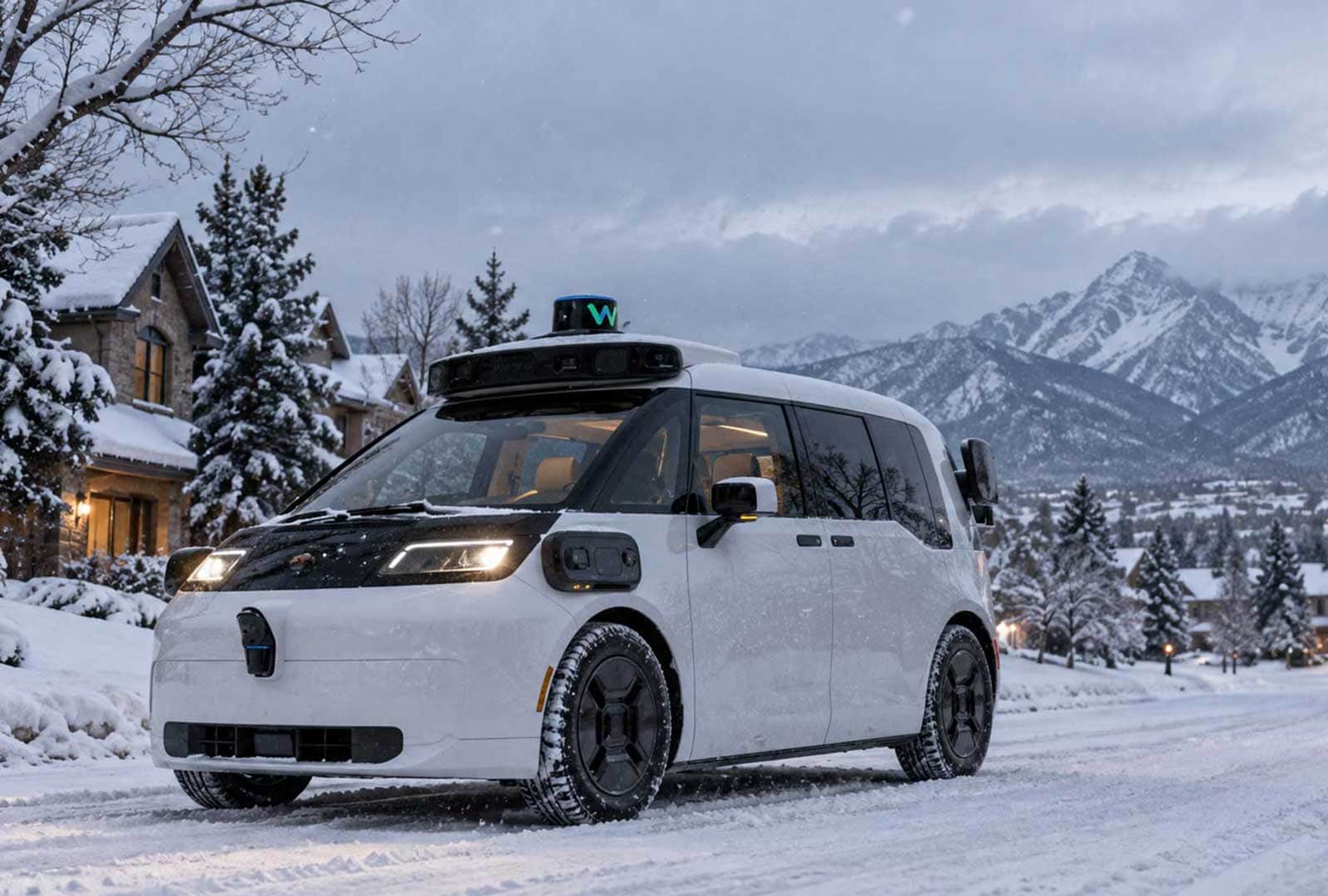
Waymo Launches Three Additional Cities as UBTECH Develops Bespoke Humanoids
Waymo launched commercial robotaxi operations simultaneously in Denver, San Diego, and Tampa on September 1st, marking a shift from single-city pilot validation to a repeatable multi-market operational playbook, with an active fleet exceeding 4,000 vehicles and over 10 million cumulative rider-only trips.
UBTech posted 1,445% year-over-year humanoid revenue growth in H1 2026, driven almost entirely by bespoke industrial deployments, signaling commercial traction but structural immaturity in scalable unit economics. Sandvik introduced the SAMI, a fully autonomous cabin-less surface drill concept, illustrating how industrial autonomy in closed-site mining environments may monetize faster than robotaxis or humanoids.
China’s dominance in humanoid hardware supply chains, motors, actuators, sensors, and batteries, poses a significant geopolitical risk to Western autonomy developers who increasingly depend on those same components.
Key Autonomy Signals Episode Questions Answered
How many cities is Waymo now operating in, and what are its key fleet and trip metrics as of September 2026?
Waymo is now active and open to the public in 14 cities. Its fleet exceeds 4,000 vehicles, it is delivering approximately 500,000 paid weekly trips, and it has logged over 10 million cumulative rider-only trips covering more than 220 million rider-only miles.
Why is UBTech’s humanoid revenue growth considered commercially real but structurally immature?
UBTech delivered 921 full-size Walker S humanoid robots at a 66.8% gross margin, but 96% of that revenue came from bespoke customization contracts with named OEMs rather than repeatable standardized product sales, making forward revenue visibility limited and the business more accurately described as a high-margin systems integrator than a scalable product company.
What is the core geopolitical risk China’s hardware dominance poses to Western humanoid developers?
China holds a near-monopoly on core humanoid components including motors, actuators, sensors, and batteries, meaning Western developers building advanced humanoid software and models still depend on Chinese hardware supply chains, potentially relegating Western companies to a software IP licensing role rather than full-stack leadership.
Autonomy Signals Topics & TimestampsFull Episode Transcript
[0:00] KPMG Sponsor Introduction
KPMG works across the full autonomy ecosystem, advising operators, OEMs, suppliers, insurers, and investors as autonomous mobility scales.
[02:07] Signal 1: Waymo Launches service in Denver, San Diego, and Tampa
Waymo opened to the public in three major markets on September 1st, bringing the company to 14 cities, a fleet above 4,000 vehicles, and 220 million fully autonomous miles. Denver is Waymo’s first cold-weather market and Tampa is the first true head-to-head market with Tesla. The depot infrastructure Grayson and Rob saw firsthand is the moat, vehicle supply is the throttle, and OMEGA expects Waymo to surpass one million weekly paid rides by year end.
[31:29] Signal 2: UBTECH Humanoid Revenue Surges 1,445%
UBTECH delivered 921 full-size Walker S humanoids at a 66.8% gross margin in the first half, primarily to automotive and smart factory customers such as Foxconn, proving humanoid hardware can be profitable. The caveat is that 96% of that revenue is bespoke customization rather than repeatable product sales. China’s near monopoly on motors, actuators, sensors, and batteries raises the risk that the West is pushed into a software licensing role.
[51:10] Signal 3: Sandvik SAMI Takes Humans Out of the Blast Zone
Sandvik unveiled SAMI, a fully autonomous, battery-electric, cabin-less concept surface drill that self-replaces its own bits and hammers via an onboard robotic arm, coordinated by a mine-wide AI agent. Removing the operator from the blast zone is immediately quantifiable ROI, and mining inbounds are accelerating. SAMI is still a concept, but OMEGA’s take is that value in industrial autonomy is shifting to whoever owns the orchestration and digital twin layer.
Full Episode Transcript
Waymo’s Tri-City Robotaxi Launch: Denver, San Diego & Tampa
KPMG Introduction: The autonomy economy is real. Commercial robotaxi operations, humanless freight runs, AV infrastructure investment measured in billions. The question is no longer whether autonomous mobility scales, it’s who advises the companies building it. KPMG works across the full autonomy ecosystem: operators, OEMs, suppliers, insurers, and investors. At the moment it matters most, when the road ahead is uncertain, we’ve already been there. KPMG, accelerating what’s next in mobility.
Grayson Brulte: Rob, we’re on the eve of the Cybercab launch. Recording this the day before next signal, you and I know we’re gonna dive into Cybercab. Well, that’s for next week, so don’t worry, folks. But we’ve got a great Signals show for you presented by KPMG. And a huge thank you to Hugh, Lenny, and the whole team at KPMG for putting on an incredible automotive summit in Silicon Valley. When you and I were out in the valley, we rode in the Wayve car, which was phenomenal. Franken Team, well done. Alex, keep engineering and building a beautiful car. And to the team at Waymo, thanks for hosting Rob and I, and we didn’t have to put on our inspector hats. We put on our welcome hats. And now let’s get to the Signals, Rob, because a lot is brewing in Signals lands. Waymo goes one, two, three. Not three strikes, you’re out. Three new cities. Now we’re gonna dive into that, because it was Denver, San Diego, Tampa. Gotta give the whole Colgan flex for Tampa. He was a Clearwater guy. Then we have hardware profits. Ubtech’s humanoid revenue explodes 1445% on door. Industrial demand, no surprise there to those who listen to autonomy signals. Then the third signal is the autonomous Sammy drill takes humans out of the blast zone. Autonomy is making us safer. Rob, let’s start with Waymo and the one, two, three. You’re on. Give us the analysis on what did we learn with this tri-city expansion?
Rob Grant: This is great news for, for fans of Waymo and, and those folks that wanna access Waymo from the public side. so this week, on September 1st, Waymo launched commercial robotaxi operations, opening up their service to the general public in Denver, San Diego, and Tampa, as you mentioned. So now Waymo is in 14 cities currently, active, open to the public. The Denver one is super interesting because it marks Waymo’s first deployment into a major cold weather market, where they’re going to use the Zeekr-based Ojai minivan, equipped with sixth-generation software and specialized sensor cleaning hardware, to make it through those very difficult Colorado winters. And Waymo also confirmed this week, as part of this tri-city launch, that their active fleet exceeds 4,000 vehicles, right? So it’s a mixed fleet of Jaguar I-PACE hatchbacks and Ojai minivans, and soon, as we all know, the Hyundai IONIQ. And the company is currently delivering approximately 500,000 paid weekly trips. But it has its target, a public target of a million weekly paid rides by the end of the year, and launching in three new cities, certainly gonna help them reach that target. Lastly, Waymo did report that it has over 10 million cumulative rider-only trips as of August 31st. 10 million. So they’ve got a lot of knowledge about what consumers want, about what consumers need, and what keeps consumers coming back to the Waymo product. And they’ve logged over 220 million rider-only miles. So that’s still the largest corpus of rider-only miles in the business. And so this is a really good week if you’re Waymo. again, thank you for hosting us. It was great to see some of the operations in San Francisco, particularly out of the different depots with the different vehicles and things like that. But look, this is, this is a big, big deal. Three major metropolitan markets on the same day, right? So this is, this is beyond what Waymo’s done before, which is sort of a single city pilot validation, into three at one time, which shows that they have a repeatable multi-market operational playbook
Waymo’s Depot Infrastructure as a Scalability Moat
Grayson Brulte: It’s working. It’s clearly scaling at 220 million rider-only miles, just for, for clarification here, and I’ve got to put this out here. Those are unsupervised miles. That’s not an, that’s not a safety observer, it’s not someone behind the steering wheel. 220 million fully autonomous miles. That’s a milestone and a milestone right there. And, and launching to three market is really impressive, and what it says and what you and I uncovered on our field work that we did in the Bay Area is that Waymo has the infrastructure to scale, and that’s not talked a lot about. They have all the, the, the below line infrastructure to scale. And furthermore, w- with the Waymo team, when they hosted us at the Toland Depot, and again, Waymo, thank you so much for hosting us. To me, Rob, one of the most eye-opening things that you and I saw at that depot as it relates to scaling and multi-city, was that how the Ohios and the Jags, they come in fully autonomously, they drive around the lot to find an open charger, and if there’s not an open charger, they go to an autonomous waiting area, and then they go to charge on their own. No human jockeying. That is impressive. From your experience at Cruise, is that. W- would you say, was that an ingredient in allowing Waymo to scale as quickly as they are right now because they’re optimizing depot operations?
State Preemption vs. Local Control: The Hidden Regulatory Battleground
Rob Grant: 100%. And look, when I was at Cruise, we did not have the ability to launch the vehicles autonomously. We were still starting them with human drivers, kind of either calibrating them with human drivers in it or actually, depending on the depot, the size and the access or ingress and egress routes and access to, to major roads, sometimes even driving them out of the depot and kind of lining them up kind of like what you would see at a NASCAR race, two by two down a street in order to launch them. so I think, you know, that maturity in operational process as well as the technical ability to do that certainly helps Waymo get to launch faster in cities and launch with more mature operations and even launch at potentially bigger scale Now, taking a step back, the larger picture in what you’re describing in terms of the depot infrastructure is super critical here because I think for me, both our visit and, you know, Waymo’s announcements this week, as well as Tesla’s announcements this week, there are there’s a larger signal to watch here, which is, yes, there are state laws in place that allow for these permissions to operate an AV taxi service for lack of a better word, robotaxi service. And many of those places that have been chosen to launch in that 14-city window for Waymo have state preemption, meaning the state has passed a bill and it’s told mu- municipalities, “You have no right to regulate the AV robotaxi service.” But what that preemption does not cover is things like land acquisition, zoning changes the n- the necessary permits to operate a maintenance facility or a car wash facility things of that nature which remain in local control. So one of the things to continue to watch as a signal is while cities can’t necessarily say, “Hey, you need a permit to operate your robotaxi service,” cities can say, “You know what? You need a conditional use change for where you wanna put this depot in order to increase your fleet. And if we’re not happy with you, perhaps it’s a lot more difficult to get that approved,” right? And then a lot of times, these local ordinances that need to be changed or amended or modified or even just to begin without those types of changes to begin construction, you sometimes have to have a public hearing, and then that allows all sorts of opponents to come in, whether they’re directly opposed to the depot in their backyard which, you know, the– we have seen in Santa Monica, for instance some of the neighbors to Waymo got an injunction that Waymo couldn’t operate the depot at certain hours of night because there was too much noise and was interfering with their ability to sleep and, and creating a nuisance. but it also allows those that are just generally opposed to AVs to come in and give voice to their concerns, right? So it may not, may, may be just pretext, but it gives them a forum to do so. So you’re thinking your unions and your trial lawyers or if I’m going to be devious, even Uber to come in and say, “You don’t get a a depot here for, for whatever reason.” so that is the kind of structural signal that lies be- behind, I think, what is a great kind of advance for Waymo in terms of increasing the number of cities that it’s operating in and, and doing so all at once as opposed to kind of sequencing them one at a time
Waymo vs. Tesla: ODD Size, Market Dominance & Tampa Head-to-Head
Grayson Brulte: What do you read in terms of their local market dominance? Their, when they’re launching in a market, let’s use Tampa, for example. Waymo’s ODD is astronomically larger than Tesla’s robotaxi ODD, and Waymo’s ODD is actually useful if you’re visiting Tampa or living in Tampa, where the, the Tesla ODD is kind of a little bit out of the way. What do you make of Waymo’s local market dominance? ‘Cause it seems that when Waymo’s going into a market, the days of seven miles square, eight mile, th- those days are over. It’s 30, 40, 50 square miles, and it seems like Waymo is truly ramping up the amount of vehicles in the market, the amount of infrastructure, and the size of the ODD. And it seems that if you wanna call it the Waymo playbook or the Waymo doctrine, they’re deploying it
Rob Grant: Yeah, and I think they’re doing a really good job with the approach that they’re taking. And, and we’ve talked about this in other signals. There’s a little bit different approach to market entry between Tesla and Waymo. And, and some of that is dictated by maturity of their technology, and some of it’s dictated by, I think, maturity in understanding how they wanna operate and, and deploy their infrastructure in each markets. so The ultimate kind of overhang to both of those is my experience in rideshare is that first to market in a, in a market, and depending on how the length of time is before the next competitor gets in, you can really dominate those markets. And if your product is good, you get a sticky market share, right? Now, what I mean by that is, you know, if you look at the Uber and Lyft battles, the places where Uber got to before Lyft, they had 100% market share. And then ultimately, they had to split market share, but they retained a large majority of that market share in almost every market. Now, there are a few that I think persist as kinda more Lyft-heavy markets. I mean, Austin has always been somewhat more of a Lyft favorable market than some other markets. but Waymo’s approach here, I think, is both we’ve done this before, we’ve learned a lot of lessons, we have a really good playbook and our technology, we feel confident in its maturity, and we feel confident in our operational and infrastructure playbook. So, we should go in with a larger part of the market open and ready to take as much market share as possible especially in competing with, with Uber and vis-a-vis also looking behind to see where Tesla’s going. And so Tampa’s gonna be really interesting because it is one of the few places that both are new to the market right? So, some of the other markets where you find Tesla and Waymo, either one or the other has been there for an established period of time. Tampa, I mean, Tesla just got started there in early July, and now Waymo is opening in September. So, it’s only about five weeks difference between when those two launched in the market. So I think it’s gonna be really interesting to see how market share develops, the speed of expansion in each market, both in terms of geographic expansion, which Waymo clearly has a bigger ODD at the time, but also fleet expansion. how many vehicles do they put in there? what are the hours of operation? What types of vehicles are they putting in, in each market? So I think Tampa, your, your choice of Tampa is a great one because it’s, it’s really one of the few markets where each are competing, each meaning Tesla and Waymo, competing head-to-head at the same time from basically the same starting point. and I will also say, I, I don’t believe this is a coincidence in terms of Waymo launching on September 1st, right? We have the Tesla Cybercab event upcoming. So this is a little bit of a preemptive flex by Waymo as well. A little gamesmanship happening here, right? The game within the game. and so, you know, what Waymo wants to keep people focused on is they want folks to judge autonomy on verified commercial metrics, right? How many trips are you doing? How many, you know, rider-only miles have you done? what’s your geofence, right, in terms of square miles? How many fleets do you have there? Where are your depots, right? Things that show maturity in a program rather than kind of have Tesla dominate or solely dominate the narrative this week by s- by this event-driven kind of promotional timeline. And so this is the stuff that, that makes me excited is to see the, the gamesmanship and you know, how each focus trying to, to kind of get in front of the other, right? We can’t not mention the fact that, that Waymo also gave a poke at Tesla for its camera-only vision earlier this week as well
Grayson Brulte: Yeah, I mean, there, there’s pokes, there’s barbs, and, you know, Uber announces this, AVride announces that, Wayve announces this, Zoox announced Las Vegas Airport today. It just seems anytime there’s a major Tesla announcement, your, your PR cannon gets ready, ready to fire. A- and the pitches that we’ve gotten in the last, you know, this last 48 hours are like, some are like all over the map, but not really to discuss here. But we’re, we’re getting the amount, I think that the market is truly nervous of trying to understand that the impact that Cybercab’s gonna have. I can tell you from the Cybercab perspective, one thing that I’m watching is obviously the general consensus in the market, which I believe is correct, Austin will be the first market. But then how fast does another market such as Miami or Dallas get turned on? And so that’s something watching there. I’m very interested in the Dallas market because Waymo is operating there now. Tesla just expanded their ODD. Tesla’s not expanded their Miami ODD, which is in Doral. Waymo has, but there can. Even as Tesla ramps up, Waymo continues to make these investments in markets. In Tampa, they’re just having that huge investment in the facility 4.8 miles, thank you, Omega, away from the TPA airport. So there’s all this noise and lots of signals here. What are your thoughts on when Waymo first opens the market? Do you think it’s 50 vehicles, 100 vehicles, 200 vehicles? What do you think that looks like, and what signals should we look for?
Waymo’s Vehicle Supply Throttle and Fleet Ramp Constraints
Rob Grant: So I th- I think what we’ve seen from Waymo’s recent launches is starting with somewhere between 30 and 50 vehicles in this 30-mile or so ODD and then ramping it up pretty quickly to, to, you know, 100, then to 200. but again, you know, Waymo’s kind of overall constraint both is its own safety culture but also total vehicle supply, right? So they are pumping in Ohais to their vehicle fleet month by month as they, they receive them from China and then upfit them in Mesa and then distribute them throughout their different cities. So, you know, Waymo may or may not be expanding the markets at the ideal rate that they would love because they have somewhat of a vehicle supply issue. And that is, it is throttled right now by the number of Ohais they can add to the fleet each month which is a, a product of both the s- the shipping aspect and the upfitting aspect. And so you see them kind of, I think, pushing to the, the farthest expanse they can in terms of the depth of their launch in each market right? They still wanna maintain a heavy presence in San Francisco, in LA, in Austin in, in, in Phoenix, ‘ cause th- these are markets, they’ve been there for a while, they’re gaining market share on Uber. They’ve surpassed market share by Lyft in some of these markets. and so you wanna take advantage of that. And they have, as we just witnessed, a ton of infrastructure in and around most of these places. So they have capacity to take on more vehicles But at the same time, they, they can’t put 1,000 vehicles in every market right now ’cause they just don’t have that many vehicles in their fleet. They’re adding them. I, I think my estimate would probably put they’ve added 20% to their vehicle, total vehicle supply since what they reported in, in mid-June. whereas, you know, what’s interesting about what’s happening with Tesla potentially is, one, we’re seeing reports mostly verified, some unverified, of Cybercabs popping up in dozens of markets, right? but not in huge volume. and this goes to the different market launch approaches. I think we’ve seen from the recent launches in Florida with Tesla that it’s not a high-volume market yet. But I think what Tesla is trying to do is, is set up the narrative that we can get to many markets quicker and set up even if it’s a smaller scale operation than Waymo. But we can get there faster, and we can get there with a playbook that, that gets us from first vehicle crossing the state line or city line to obviously opening the app and and giving it rides to the public faster than Waymo can. And what tod- tomorrow’s launch or today’s launch with Cybercab will demonstrate, I think, they’re hoping, is, “Yeah, we can do all that,” and then if this is allowed to go forward by NHTSA, we have unlimited capacity in terms of fleet supply. So not only can we get there quicker, we’re in more places, and we have unlimited supply. And so that is meant to be a very loud shot across the bow of Waymo, which has a different approach both to launching but also a different issue in terms of how fast it can expand. So it, it’s really fascinating the, the, the, the, the two different approaches and the two different potentials for throttle on each one. Whereas NHTSA’s is more of a potential regulatory throttle, Waymo’s is much more of a, a actually vehicle supply throttle.
Grayson Brulte: Yeah, and when you look for the vehicle supply throttle, you and I have talked with clients about this quite a bit, is we need news out of Hyundai. We need some public statement from Hyundai or from Waymo in terms of vehicle accounts, but we do know from the CEO of Hyundai has spoken very openly about ramping up the IONIQ 5 supply coming out of Savannah, Georgia plant. W- Love the boldness in the statements there, but we don’t, we don’t have any clarity. We n- we, we need clarity on there. ‘Cause as Waymo does the three-peat, Pat Riley, I’m sorry, I know that’s your trademark, sir. We’re not gonna pay you the royalty. The three-peat, I don’t know if you know that Pat Riley actually owns the trademark for th- for three-peat, so you always have to pay that in, in sports. Waymo did the, the, the three-peat there, or y- you’re a hockey guy, did the hat trick or the trifecta. Any term you wanna use. With all that goodness comes risks, and Omegas uncovered the following risks about Waymo’s massive expansion. I’m gonna start with risk one here and get your take. ” Trip volumes in new markets remain subscale for 18 plus months, compounding fixed depot lease and fleet operator costs with near zero revenue contribution.” That’s interesting. I’m not so sure based on what we saw. What do you think?
Rob Grant: Yeah, I think this is, this is a valid risk to call out. I think what we have seen, if past performance is evidence of future returns, so to speak, is that Waymo has not necessarily run into an issue with trip volume in the markets that it’s launched Yes, it launches with smaller fleet size, but what we’ve tend to see is that utilization is pretty high with that f- smaller fleet size. so ultimately, again, I think this risk is pointing out if total volume is your measure, right, of revenue coming in and of success, there is a risk that that might fall short of exceeding some of the costs for your fixed depots and fleet operator costs. but again, that’s really just the– and this risk, I think, is just another way to say supply is the issue. I don’t think demand, trip volume, is the issue that we’ve seen with Waymo, at least in the markets that they’ve entered i- to with some scale. but, you know, each market is unique. Each market will have kind of learnings about where trip demand comes from, who are those riders, what is the stickiness of those riders. you know, I don’t have a great sense of the San Diego market, like, as opposed to is that, like, a unique market different than some of the other markets they’ve been in? I do think Denver is the one that stands out here, obviously because of weather. It’s one thing to get into an autonomous vehicle when it’s sunny and 80 degrees and, and everything is going well. It’s another thing altogether to say, “I want to get into a Waymo when there’s three feet of snow on the ground, and I just slipped on some, you know, black ice on my way to the car.” is that vehicle ready to handle those conditions? So I think, you know, trip volume, particularly in Denver during the wintertime, might be something to follow. Are we going to see a dip? Are people a little bit more nervous to enter a vehicle, an autonomous vehicle, in the wintertime under certain weather conditions? What are the actual environmental constraints on when Waymo can offer service? You know, is it a measurable amount of snow per hour? Is it a measurable amount of ice? Is it conducive to stopping at highway speeds under those conditions? Things of that nature. So I do think there are signals to watch in that. I, I, I think this risk really is one that, that speaks to vehicle supply. If Waymo can’t get its vehicle supply up to meet its demand, then it has an issue. That’s sort of a good problem to have, but at the same time, as we talked about you know, if they’re first to the market, they have to take advantage of that. And if you don’t have enough supply to take advantage of that, then maybe you cede a lot to the second player who doesn’t have a vehicle supply issue, such as Tesla.
Grayson Brulte: Time will tell. I can tell our audience we’re going on a field trip this winter. We’re going to Denver. We’re doing a field report, and we’re gonna see what happens, and we’re gonna push it to the limits. And hopefully we’re there with a snowstorm so we can really see what happens, because that’s what we do. We go on the road and we uncover these things as Omega files the signals. Here’s an interesting risk here. The, the last one on this one: Multi-operator convergence on Miami, Vegas, or another city for Waymo, Zoox, Tesla, AVride, or Motional overwhelms local permitting capacity, creating de facto delays without formal opposition. This is regulatory row. I’m not gonna comment on it ’cause this is your bailiwick, so it’s all, the floor is yours, sir
Rob Grant: Yeah, I, I could see this happening in two respects. One, as we, we talked about earlier just now, right, the physical infrastructure needed is not already built in most of these cities, right? There are some lots that you can find that serve really well as a staging lot, meaning, like, you don’t have to do, or you can’t, or you won’t do maintenance or vehicle upgrades or upfits or calibration on those destinations. You’ll just kinda maybe have a charging facility maybe somebody to, to, to take out the garbage in each vehicle, and then set the vehicle back out. But for those big depots where you do have to do maintenance, where you do have to do work on the car, where you have to, you know, clean the car I mean, like really clean the car, send it through a, a, a, a, you know, a a washer of some kind Those aren’t omnipresent in many cities, right? So now you have potentially four or five operators looking for these parcels of land to convert into infrastructure that need upgrade on perhaps electrification and access to electricity and things like that. and you want them to convert kind of land in this area to use it for a different purpose. And so I could see, you know, that as we talked about, like, that’s now a local municipal issue. And, you know, if you’re in Nevada and you’ve just approved 7,000 vehicles last month to come into Las Vegas, you might be a little bit overwhelmed and say, ” Hey, fellas, like, get in line. Like, I’m not, I’m not ready to convert my entire city into one large set of depots for you all,” right? It’s, it’s very similar in some senses to the, the data center issue going on right now, right? That data centers get caught up in these local issues. even if you have a state bill or, you know, eventually a federal bill, there are still local issues to deal with. And so I see this as one where it’s like, you know, certain of these cities, particularly the, the, the Charlottes, the Tampas, the Las Vegas of the worlds who are not necessarily used to maybe a large taxi presence or a large kind of a bus or public transportation presence, right? Like a city like San Francisco, they’ve already had to deal with where do we store all of our buses? We got electric buses, how do we charge them? All that kind of stuff, right? It, it could easily be overwhelming for these folks, particularly because you’re gonna have a series of folks that aren’t coming in together that are gonna be asking for similar things perhaps all over your county. and that’s, that’s gonna be an issue potentially. And I, I see that as, as a real potential bottleneck as multiple operators look to really go deep in a market. And so again, I feel like, you know, what we saw out of Waymo in terms of the infrastructure it had already built out in a city like San Francisco, that is a moat in and of itself, right? because now if you’re Zoox or you’re Tesla and you’re looking for properties that work really well, both in terms of what you need to do to the vehicle, but also where you wanna position the vehicle right, in terms of being able to service all parts of the city at different hours with small wait times, you’re gonna wanna stage your vehicles in different areas. You just don’t wanna– you’re not gonna put 5,000 vehicles out of one particular depot ’cause it has to transverse the city, it uses electricity, it’s all sorts of things on your utilization and turnaround times. Cities like San Francisco, th-th-they just, there’s not a lot of property available. Little bit different in Las Vegas, right? but it’s gonna be really interesting. It both creates a moat and creates this potential risk of these, these folks may be ready to go in terms of vehicle supply, in terms of vehicle technology, but the cities maybe say, “Wait a sec, I don’t have anywhere to put all of you guys.”
Grayson Brulte: That is a very valid point, and because I consider myself a non-railroad inspector, a lot of the depots in Las Vegas are not in Las Vegas proper. Paradise, Henderson, various different entities surrounding that. We do have video on X, which I retweeted today, of it appears, we do not have proof because the gentleman didn’t have more photos or videos to show us, of a staging lot inside of The Venetian. And why do I bring that up? Because we know that Waymo has a partnership with The Venetian, so waiting to get more clarity there if Waymo does have indeed a staging/charging lot in there, something to watch. But don’t worry, the inspector will be heading back to Las Vegas because you can now get picked up curbside at the Las– at the Harry Reid International Airport in a Zoox so I’m gonna have to go there for our audience and, and inspect it, and we’re gonna break down the signals. And this has been really informative, which brings us to Omega’s take. This is a, a very concise take, but I wanna break it down here for you. “The simultaneous launch across three major metropolitan markets on September 1st, 2026 confirms that Waymo has moved beyond single city pilot validation into a repeatable multi-market operational playbook. By opening access to tens of thousands of pre-registered riders in Denver, San Diego, and Tampa, Waymo creates the dynamic demand baseline necessary to push towards its stated public goal of one million weekly paid rides by the end of 2026.” Omega’s take is right, and all the data that we’re seeing on the periphery, it appears, and I’m gonna speculate here, that Waymo will surpass their publicly stated goal of one million rides a week
Rob Grant: I agree. And look, we have an actual kind of model and breakdown as to why we think that is. But if you guys want to learn more about how we come to this conclusion please reach out to us at alpha [at] autnmy.ai
Grayson Brulte: See? Rob is smart. He’s got his sales hat on. We’re gonna get him honorary hats. And I gotta say before we go into the next signal, to the wonderful folks that we met on our Bay trip, thanks for the awesomeness about the hats. Yes, I do love hats, and they’re an integral part of the show, so thank you for picking up on that. And, and follow Rob’s lead. We do have charts, we do have data, we do have models of where we think Waymo’s going. So as Rob said, reach out. We share it with clients. It’s [email protected], all powered by our trusty awesome Omega, who for the record, for the audience, got a major, major upgrade over the last 48 hours, so she’s only getting smarter. Let’s go on to the signal two here, Rob, ’cause this is interesting. We’re going back to a topic we haven’t touched on much lately, humanoids. Ubtech’s humanoid revenue increased. So you Omega just sort of exploded 1445% on, drum roll please, industrial demand. That’s right. Not in the house, industrial demand. What do we know about this signal?
UBTech Humanoid Revenue Surges 1,445%: Signal vs. Headline
Rob Grant: Yeah, I think it’s great. Look, I mean, we obviously spend a lot of time on robotaxis and autonomous trucks but we, we we cover so much more, and I think humanoids is really interesting for us as well as, like, autonomous drones and autonomous maritime and autonomous construction and autonomous mining. so yeah, we’re not, we’re not one-dimensional here, right? we’re, we’re not the Ben Simmons of autonomy. we can do more than just dribble and pass. We can actually shoot the ball. So here what happened is Ubtech generated 1.27 billion yuan, or roughly 190 million US dollars in total revenue in the first half of this year with full-size embodied AI humanoid robot sales. those sales surged, like Omega just said, almost 1,500% year over year, and it became the primary revenue driver. Sales of humanoid robotics, right, from Ubtech became the primary revenue driver of group sales which increased for Ubtech from 6% in the prior year to 46% this year. The company delivered 921 full-size humanoid robots in the first half of this year. That’s up 2,000% year over year, pushing its total humanoid robot shipments across all categories to 16,000 units in the first half of 2026 Now look, this is why we call the show Signals. I mean, nobody should fall out of the chair that it’s 900 robots, right? I mean, that, that’s impressive on one level, but very small on another. But the signal, right, that is what we want people to pay attention to here. This signals something big and something nearer than most people think is happening with robotics. It also signals some geopolitical things that we’ll talk about in a minute. But what’s really interesting here is where this commercial volume went. It went mostly to automotive manufacturing and smart factory assembly lines for logistics, sorting, and assembly assistance to help with some structural labor constraints for the folks that it sold to, like Foxconn and others. So, you know this is an important thing, not because the number itself is important. I think the growth number is important, right? The absolute number is interesting, but not super important. But it’s the growth number, it’s the trajectory of that growth, and it’s the use case and the, and the fact that folks are coming to UBTECH saying, “Help us solve an issue here.” and I think that’s really fascinating. and we’ll get into a little bit more of it especially about kind of the, the, the, the signal around some of the issues with, with this super interesting growth from UBTECH in the first half of 2026
Grayson Brulte: The growth is fantastic. You’re right, the signal 921 humanoids sit here. Well, they’re not unitary, no. But the, the signal, as we always talk about, it’s not necessarily the headline, it’s, it’s, it’s what’s in the body there. One of the signals that popped up to me was the automotive manufacturing smart factory assembly lines. We knew this was coming, but if you’re starting to see over the last, I would say, 16 to 18 months, basically every Chinese auto manufacturer from, from Chami to Cherry to BYD to Xpeng, all investing in humanoids. Well, who do they look up to over here? Elon. It is truly amazing, if you wanna call it, I’m gonna say it very bluntly, this copycat game that goes on between the East and the West. The big difference in the East, they have the factories. They have the skill set, they have the tooling to build this, and it’s gonna be very interesting to see how fast these companies ramp up humanoids and how they integrate into their supply chains. And then I’m gonna say the controversial part out loud, until they start exporting them to the West
China’s Hardware Monopoly and the Geopolitical Risk to Western Humanoid Developers
Rob Grant: Yeah. Look, I mean, 100% on, on a, on a kind of economic and geopolitical front on a larger narrative here is that China is, is directionally winning on hardware manufacturing and factory deployment velocity of humanoids, largely because it’s new technology but traditional battery supply chain, they have a near super majority, a-a-almost a, a monopoly on cure– core humanoid components, right? Motors, actuators, sensors, batteries. Right? All these are absolutely critical to manufacturing humanoids. And now on the software IP side, right, I think Western developers are competing really well the Optimuses and the Figures. But all them almost to a, a, a T, to, to every person in this space are dependent on Chinese hardware supply chains. and this is a super fascinating development because I, I– to your point, right, within China, they’re using this supply chain advantage and this super majority you know, monopoly, so to speak, of core humanoid components to benefit the rate and capacity at which they manufacture and produce vehicles and other things, right? Even other humanoids. A-and that’s a huge advantage. And then, right, even if we as the United States were to have more advanced software and models to train folks on, in order to build a humanoid, we still need to turn to the same folks that we’re competing with in terms of this hardware supply chains. And so, you know, the, the, the question is, i-is this lead on hardware surmountable, or is it really that the West is going to be almost uniquely pushed into a software IP licensing role when it comes to humanoids?
Grayson Brulte: That’s scary. I’ll, I’ll just say it for the record, it’s scary ’cause it’s plausible. And it’s scary and it’s plausible. I, I think what, to the audience that’s looking for signals, what Rob just said, let it sink in. The West becomes software licensing. And there’s an individual, don’t have a relationship with, but a- but admire his leadership and his, and his courage for what, what he’s done. And you can go back to when Microsoft offered him a billion dollars, he didn’t show. Mark Zuckerberg, Meta. When he bought Loral Pinto’s company, Humanoids, Loral was building the software layer on top of unit three Humanoids. It’s like, wait a second, why is, why is Zuckerberg, who, who has an incredible foresight to be ahead of trends and ahead of things, buying a humanoid software layer to build it into the intelligence lab? He sees where this is going, and that is the clear signal here, where you have one of the world’s largest companies, one of the world’s m- most forethought CEOs that’s thinking all day about the future. Yes, he’s made some bad bets, but he’s made some great bets. Bad bet Metaverse. Great bet, no, I wouldn’t even say great bet. Extremely great bet, Instagram. And so the gentleman has had some hits and misses, but he keeps putting for the future. When that happens, that’s gonna get very interesting from a political standpoint, because then you’re gonna have the sovereign data rules that you know very well. Also, you wanna operate a Chi- a, a Chinese-made or Vietnamese-made humanoid with this country’s software in this country? From a political standpoint, Rob, it seems like this is, there’s a whole new GR category. For those that don’t know what GR is, government relations. It seems like a whole new GR category could be created there
Rob Grant: Oh, for sure. Look, I mean, we’re seeing this debate play out with connected cars coming from China right? We’ve– We had the, the connected car rule out of the Department of Labor and, and, and issues like that. under the Biden administration, we’ve got a couple active bills in the, in the Congress right now you know, for fear of that that administration’s rules did not go far enough, and they want to make it more clear that we really don’t want the BYDs, the Geelys, and others to, to kind of come in and just own manufacturing of vehicles and vehicle builds here in the US, which is, which is, you know, not a, a non-zero risk if you look at what they’re doing throughout the rest of the world and their manufacturing capacity. And so it’s very, you know. Th-this is a very real category of risk for developers in, in the West and humanoids and for, you know, advancement of, of US kind of leadership. and and that’s not just an amorphous term. It’s also, you know, who sets the rules? What are the constraints? What are the privacy concerns? What are all those things? What are the data? Who’s using it? How can it be used? That’s what I mean by American leadership. Th-that’s, that’s a real set of concrete things that come as a result of American leadership in innovation in different areas. but when one is so kind of one-sided in terms of who owns the hardware and supply chain, it becomes very difficult to unilaterally or even in conjunction with, with China demonstrate that leadership. so it’s, it’s a real, it’s a real issue. it’s not one that we’re just kind of posing as a straw man. But to get back to just kind of the n- the, the nitty-gritty real quick here about some of the success writ large for humanoids, that could be right into Ubtech’s success in this first half, which is, you know, this is great. It’s, it’s a, it’s a show that that commercial execution phase of, of humanoids and embodied AI is, is growing. There’s an appetite for it. There’s a market, right? this is not demand is not from necessarily the government or anything else. It’s, it’s kinda client-driven, and it’s su-sustained by operating budgets rather than innovation grants, which is all great. The one kind of break I would put on kind of the success that Ubtech demonstrated is that what you have here is kind of very bespoke, non-repeatable product sales, right? So I think I don’t wanna overstate the commercial maturity of Ubtech’s product. the, the, the mix of the systems that they were asked, you know, to integrate their humanoids into are very customized. So most of these sales are for customizable system integration, as opposed to we produced a kind of repeatable standardized product, and people are just taking it and plugging it in in different areas. So I think, I think there is a, a little bit of a break on kind of the overall success that this demonstrates and the commercial interest that it demonstrates. that, that being said you know, another, another thing to, to take account of is that, you know, there were– these were only less than 1,000 of the 16,000 total humanoid shipments. so the majority of the volume of requests that Ubtech is getting remains in non-full-size form factors, right? and so while the value is concentrating in the high-end customized product line at the other end, the generalized kind of use case, you’re not seeing a, a ton of demand for, for those things. So that– all that is to say that there’s still growth here. I think it shows that there’s still technical and software-driven advancements which is why we see the figures in, in Optimus, like, doing this kind of generalized end-to-end model training so that you’re not really just building a customizable product. Now, others are taking a different approach, just to be sure, right? Adams, that Travis Kalanick backed venture. They believe customization is the way to go. That’s the way to scale. so they’re building kind of customized robotic solutions. So it’ll be really interesting, and I think it’s another reason why we chose Utech this week, or Omega raised it to us. It’s, it’s not only the geopolitical issues, but it’s also, you know, this kind of commercial divide being shown within Utech that is also generalizable to the humanoid field generally, which is, is this a customizable product that’s, that scales at the, like a high-end product or is this a generalizable product that really shows potential for much more widespread and repeatable sales?
Grayson Brulte: And that’s the question that we’re gonna have to watch is the numbers. 96% of H1’s sales for UBTech, 96% were customized bespoke. They’re operating a tech company, they’re not operating a tailor on Savile Row. Very different margin profile, very different business, and it’s something truly to watch. I know the labor cost is cheaper, but it’s something to watch, which brings us to Omega’s risk, ’cause Omega highlighted this as the first risk. No surprise here. Customization revenue is non-recurring. Good point there. When you have a suit made on Savile Row, you don’t pay a subscription for it. What you do, you wear it with pride and a smile on your face. Different business. 96% of humanoid revenue is bespoke solutions, not repeatable product sales, limiting forward visibility. That is a very, very valid point
Rob Grant: That is. It, it, it, it goes right to the heart of what we were just talking about, which is where does the future of Kind of the industry see its greatest source of revenue, its greatest growth. Is it these customizable solutions to which, you know, someone like an UBTech or, or an Atom’s can really compete and perhaps win? Or is it more in the recurring sales for generalized applications that the Figures and the Optimus are– you know, Tesla Optimus is building towards? And, and that’s not yet defined, but I think for either path, the fact that there was so much interest in this product and from where it came from, the heavy manufacturing, right and industrial base, suggests there’s an appetite for solutions of this kind. so it is, it is affirming that the research and development and the early investments into this area could potentially see big payouts going forward. so I think, I think it’s a, it’s a positive signal, but it’s also one that kinda sets the table for what is the future of humanoids. is it both paths? Is it one path dominates over the other? Is it we start on one path and the second path kind of merges and, and, and takes over as the dominant path? I think that is still yet to be determined, and there are billions, if not trillions of dollars at stake on that
Grayson Brulte: It is something to watch, which brings us to the next risk. Competitive margin compression. This is a big one here. From BYD, Xiaomi, and other Chinese humanoid entrants targeting same industry verticals. We know one thing, these companies that are listed are hungry. And what else do we know? They have incredible engineering cultures. So that’s a very good risk
Rob Grant: Yes. And what else we know is that, that China will kind of allow multiple players to go forward and compete in this area until they feel like there is a few dominant players that they really wanna get behind and support. And so you know, right now there is a competition, much like I think we’re seeing in the robotaxi space in China, which is who can demonstrate, you know, the most reliability, the furthest advancements, the most scalability on these products within China so as to kind of win the ultimate support of the state going forward. At which point they will help promote the product both internally and externally
Grayson Brulte: Yep, because we’ve seen you’re either in or you’re out in China. There is no middle ground when it comes to their national priorities, which brings us to OmegaStake. UBTech’s H1 2026 results are commercially real but structurally immature. 921 Walker S units at a 66.8% gross margin prove humanoid hardware can be profitable. But 96% of that margin is generated by bespoke customization contracts with named OEMs, not repeatable product sales. The business is best understood as a high-margin systems integrator wearing a humanoid robotics label. But UBTech has won the first commercial battle decisively, but the war for durable, scalable unit economics has not yet begun. I like this. Omega’s got a little Shaolin shadow boxing going on there
Rob Grant: It’s great. It’s always so concise. I’m, I’m going to need Omega maybe to develop greeting cards for me so that I have more concise you know, notes to my wife on, on our anniversary rather than the, the long notes that kind of ramble on and she’s like, “I can’t read your writing anyway.” So Omega is great at summarizing these complex topics in a very specific way that is understandable, and I just love it because it, it challenges me to do better on that front
Grayson Brulte: I like it. Ramble on. You’re, you’re, you’re challenging Zeppelin. Next thing you know, we’re gonna challenge the Hallmark, the Hallmark store and when Omega’s gonna start wr- in Hallmark cards. After all, hey, you never know. Which brings us to signal three. This is a fun signal here. A little different from what we’ve got before. This is a fun signal here. Signal three. Sammy Drill takes humans out of the blast zone. All right. Autonomy doing good, avoiding the blast zone. W- read into this signal for us
Sandvik SAMI: Autonomous Cabin-Less Drill Removes Humans from Blast Zones
Rob Grant: This is great. So I mean, this is a concept, right? But on September 1st, Sandvik introduced Sami, a cabin-less, fully autonomous battery electric concept surface drill at its Future Mining event in Finland Now, I love the name Sami. I, I, I used to work with a guy at Lyft named Sami, just a great individual, so if he’s ever listening, shout out to you. I hope the family’s doing well in New York. But what does Sami actually do? Sami is a, is, like I said, fully autonomous, battery electric, cabin-less surface drill that carries and self-replaces its own consumables, like drill bits, collar pipes, down-the-hole hammers, via an onboard robotic manipulator. So it measures hole depth, deviations, navigates the mine site, and classifies dynamic versus stationary obstacles, all coordinated by a mine-wide kind of natural language AI agent that Sandvik has built as well. So what that means in real terms is, like, a lot of this dangerous work that comes with surface mining happens as you’re beginning to drill and understand where you’re drilling, the depth at which you’re drilling changing drill bits, things of that nature, right? down-the-hole hammers. All this stuff is very dangerous because you have a mix of, of potential sparks with different gases under a lot of pressure. You could imagine, like, explosions and, and fires and cave-ins and all sorts of dangerous things potentially happen in that moment when you’re surface drilling, right? And continuing throughout the drilling process, including when you’re changing over these bits, right? It is not a it is not a job for the weak. Let’s put it that way. it is very dangerous job, and what Sandvik has created here in concept really will allow humans to avoid this very dangerous process. and so I think it’s, it’s one of those things that we return to every now and then to show, like, autonomy is not just about profits and margins and things like that. And yes, that is important, and I love going into that stuff deep and understanding kind of challenges and opportunities in that space for our clients. But at writ large, autonomy can provide so much safety, whether it was detecting volcanic eruptions you know, that we talked about a couple weeks ago, to here, removing human operators directly from an area of known risk for a a job that just has to be done, right? We just talked about some of the, the, the, the, the supply chain things that, that China dominates in, right? Those are usually rare earth mineral driven. To get to them, you need surface mining. And to do surface mining, you have to put people in danger currently, so that’s why I think this, this to me was a really interesting thing to bring up
Grayson Brulte: It’s a very interesting thing. It’s a very positive thing. It goes along with the inbounds that we’ve gotten from clients and, and companies. Mining is hot right now from an automation standpoint. We’re starting to get a lot of inbounds there. W- w- what impact is this going to have on mining? Obviously, a lot of minings operate as closed sites. This is gonna obviously increase in safety, increase efficiency. What do we know about the impact of this technology that SAM is gonna have?
Rob Grant: Yeah, I mean, look you know, it, it eliminates the operator cabin entirely in this concept vehicle and automates secondary mechanical tasks like bit changing and hammer replacement, right, via an integrated robotic arm. So, I mean, I think the immediate impact is it reduces human exposure to extreme site environments while eliminating manual tooling bottlenecks that historically constrain machine utilization cycles. So there is both a human impact to it, but also I think it makes the site more efficient, right? And it reduces human bottlenecks particularly around tooling. And so anything that increases utilization almost in any area of life is a good thing. And, and that’s what, what, what we potentially see out of what’s going on with, with their SAMI drill here.
Grayson Brulte: Yeah, it’s really positive and we’re looking forward to seeing how SAMI moves from prototype to commercialization and to eventually scale, which brings us to O- Omega’s risk. So Omega’s uncovered a very good risk. It wasn’t necessarily uncovered as common sense, but still put a as Rob said at the the, the, the very concise way to put it. So first risk here from Omega, not brought to you by the Hallmark Store, so don’t worry about that, is concept to commercial gap. SAMI is explicitly a concept. Technology migration timelines are unconfirmed and could slip materially. We were just on the phone with a mining company, he was a third-generation miner yesterday, and the stories that I heard, it’s like, whoa, this is not the easy place to deploy this. This is the rough and tumble environment, and I’m saying that from a pure environmental perspective
Rob Grant: Yeah, look, I mean, anything with a concept it’s very up in the air whether or not the concept will ever come to production. I think in this case, right, what we’re seeing and we’ve talked about it, we talked about it with a few mining companies and construction companies that have that have come up as signals in the last you know, six months or so. There is a lot of technology advancements happening in mining and it’s, it’s an area that is open to innovation because the economics are either so in your favor in terms of what you’re mining but also because the economics are so kind of driven by technology from the past right now as well. So there are real identified areas of material gain and utilization and cost savings and production volumes. there’s real opportunity here to– for people to make more money if I’m going to put it bluntly. And so particularly in mining, ’cause we’ve seen that there is a lot going on in this space because, you know there is. Given some of the prices of, of what they’re mining right now and the value, as we’ve seen, we just talked about humanoids there is incentive, right? This is kind of like capitalism writ large at a, at a very big level where it’s that silent hand as Adam Swift talk about, right? The incentives are there because the profit potential is really high right now, and if you can reduce margins even more or increase production to get more profit, incentives are aligned that, hey, maybe we should take a look at automation if that helps in those cases.
Grayson Brulte: Absolutely. You always have to look at new emerging technologies into companies that are thinking, “Don’t be an ostrich. Don’t put your head in the sand.” It, it only hurts. If you look at new technologies and you pass, fine, but always keep an, an open eye. It’s like the same thing, which I love, and unfortunately there’s not a lot of them anymore, is bookstores. I go in bookstores all the time, and I browse, and I open something up, and it’s like, “Oh, this is interesting.” I end up reading it on a topic I never thought I was interested in, but I opened my eyes to learn. So I would encourage all the companies there that are thinking about different technologies, don’t put your head in the sand. Experiment with the technology, play with it, learn it. You never know, it might have a positive impact on your business. Which brings us to risk number two here. Commodity price downturn, this is a real one, causes tier one miners to defer capital expenditure on autonomous fleet upgrades. I can make a. That is true, and then, but the other part of me says, well, if you, if you invest in a down cycle, you’re gonna ride the up cycle. But that’s just me. But O- but Omega’s right and this is how most practical folks think
Rob Grant: Yeah. Well, I mean, you have the luxury of taking a long-term view, right? A lot of these folks that do mining at large scale are public companies, right? they, they have a much shorter scope to look at 90 days or so as they have to report every quarter, and they have very demanding boards for a area that is prone to boom and busts, right? So you have to plan accordingly. and you know, I think about, you know, for instance, we talked about this just the other week with c- about copper mines, right, and the price of copper. I think it was something like $13,000 a ton or something like that, right? Which had been this a- astronomically high price compared to where it was just a few years ago. And so that’s why I said, like, this is kind of seeing that, that, that pure form of capitalism at play, right? There’s opportunity now because the prices are high. your point is, you know, part of that as a leader is to look at the long-term opportunity, so even if the prices come down, it may not be the same return on that investment now, but over the long run, that return on investment’s going to, to, to be fulfilled and exceeded. but you know, some of this is very driven by, by the current price of things. If there is a collapse in some of these prices you could see people needing to cost cut and investing in new technology, technology that they feel is maybe unproven. they have long-term contracts with folks that maybe, “Hey, I don’t want you to use that technology,” right? “You’ve been using, you know, my m- drill bits and my surface excavators for, for many years. Y- don’t, don’t leave me now just because I don’t have the newest, sexiest thing.” So I, I do think given the short-term nature of a lot of the thinking around you know, mining and, and prices, strike while the iron’s hot, right? If, if, if you have the opportunity to maximize your profits now, th- and autonomy can do it to you, I think that’s why you’re seeing a lot of investment in it. But there are going to be folks that I think that have been around a lot longer, been through the booms and busts of this that are gonna say, “We should do it either way,” right? “We should, we should take that long view.” But I think right now, look, the markets are high. there’s, there’s money coming in. This is a great time to use some of that money
Industrial Autonomy’s Monetization Speed and the Orchestration Layer Opportunity
Grayson Brulte: It’s a great time to use the money, and it– Last night I was watching an interview on CNBC with Greg Abel, CEO of Berkshire Hathaway, taking over from Mr. Buffett, and Becky Quick asked him about the investment in Alphabet. And he said, “We started really getting interested in it because of the staff of the various different companies under the conglomerate,” which is very small, Berkshire, “started using Gemini.” And they noticed their Gemini spend going up, but they noticed the improvement, and that got the team in Omaha, with Warren’s blessing, to take a look at it and say, “Okay, there’s something here.” And then o-only like Berkshire, they buy a $10 billion block of Alphabet for a 6% discount. I mean, the things that Berkshire can do with that that cash pile that they have is. Now that Mr. Buffett went to go search for the elephant, now Mr. Abel is going to search for that elephant. But it’s that long-term strategic thinking that does well, and Berkshire is probably one of the best-known companies for long-term thinking and, and most importantly, operational independence of the subsidiaries. I wanna point that out there as well. And that brings us to Omega’s take. Omega’s take is the Sandvik SAMI concept confirms that industrial autonomy is transitioning from single vehicle automation to multi-asset AI orchestration. The ROI case eliminating a human from a blast zone hazard is immediately quantifiable. Domain-specific industrial autonomy will monetize quickly at a pace that was and/or is faster than robotaxis or humanoids, and that the real value capture is shifting towards whoever owns the orchestration digital twin layer, Sandy, not just the hardware. That digital layer in mining is becoming very, very interesting. Thoughts on Omega’s take?
Rob Grant: Look, I think Omega has really driven deep into the reasons that this foray from mining into automation and AI orchestration is such a, a, a, a kind of signal. And even, even though this is a concept vehicle, I think it’s using it to tell us, regardless of Sammy specifically as a vehicle, this area is ripe for autonomy and for real gains and real progress very quickly on a pace, given what you mentioned earlier, that it’s in closed environments, things of that nature that won’t be limited by perhaps the, a lot of the regulatory or municipal concerns that we’ve talked about on today’s show
Grayson Brulte: Yeah. And I mean, obviously you have OSHA concerns ’cause there are, you know, regulatory concerns there. But the bottom line, when you automate mines, it’s good for the individuals that work there ’cause it makes the environment safer, and it’s better for the economy because you’re getting access to these critical materials without having to pay a high tariff, and it’s good for the US security. So all around, automating mines is a great thing. Not to mention, if you s- take the time and you study Western Australia, you’ll notice that 60 to 70% of the workers don’t come back, and so they’re forced to automate just based on the working conditions. Each and every week, Rob and I will be here breaking down the signals in the autonomy economy. And if you wanna learn more about the work that we do or our proprietary Omega model that powers this show and all the work that we do, reach out to [email protected]. That’s [email protected]. We got a lot of good stuff cooking, some real interesting stuff. If you want a sneak peek of what we’re doing, reach out. We’re always here. The future is bright. The future autonomous. The future is physical AI. Rob, I love this week because we went robotaxis, humanoids, and drum roll, mining. Great week across the board
Rob Grant: Wonderful week, and anytime you can put Hallmark and a Led Zeppelin song and some of the other references we got in there it’s always great. I love. You know, look, we’re real people. so I love the references you bring up, and I’m keeping a catalog of them. I’m starting to learn a little bit more about what what makes Grayson tick
Grayson Brulte: Makes it tick. All I’ll say for the audience is that Rob and I sure got a whole lot of love for you, so ramble on
The future is bright. The future is autonomous. The future is The Road to Autonomy.
Subscribe to This Week in The Autonomy Economy™
Join institutional investors and industry leaders who read This Week in The Autonomy Economy every Sunday. Each edition delivers exclusive insight and commentary on the autonomy economy, helping you stay ahead of what's next.