


Tesla Scales Unsupervised Robotaxis, Wisk Doubles Fleet, Meta Aspires to Build the Android of Humanoids
Executive Summary
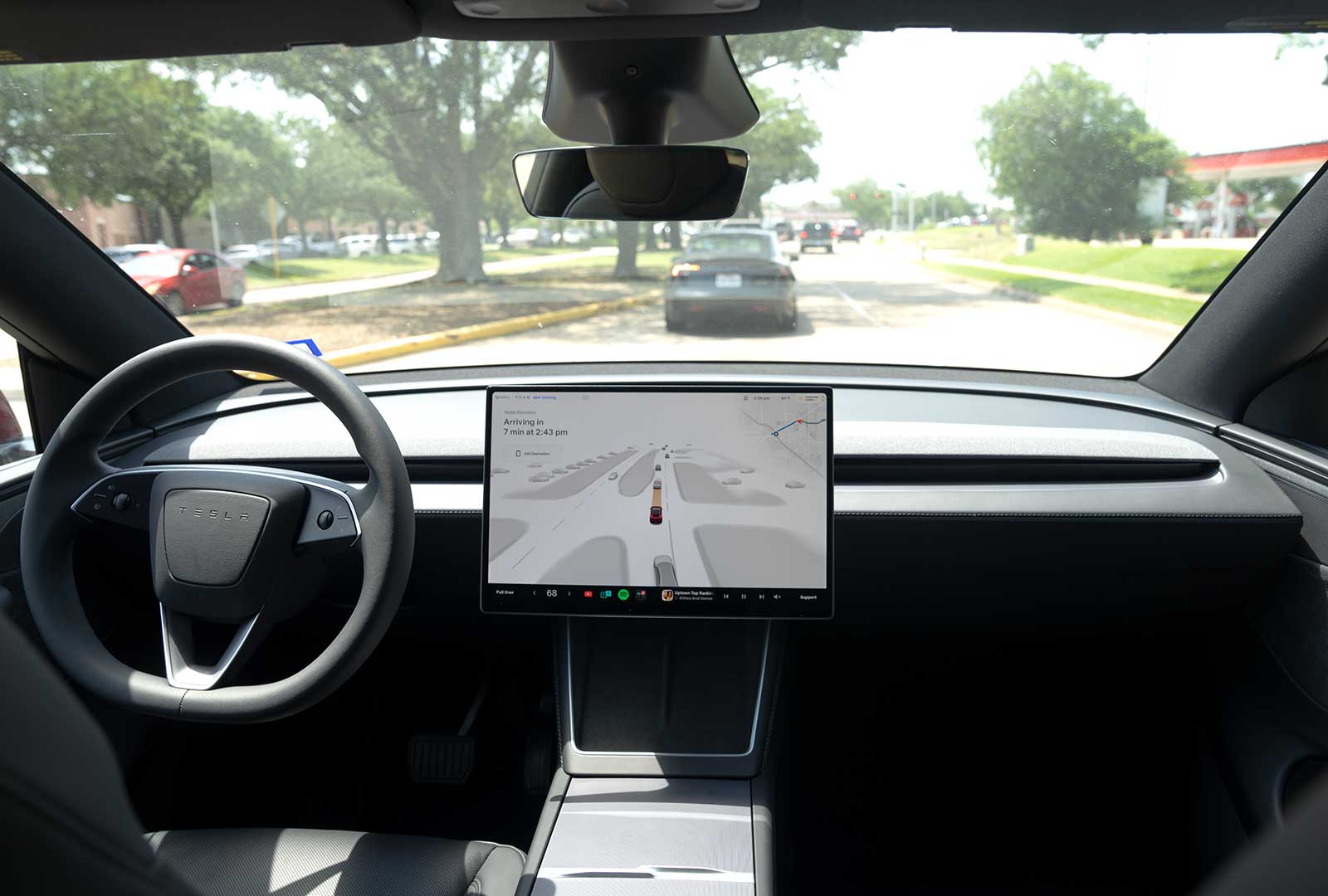
This week on Autonomy Signals, Grayson Brulte and Rob Grant discuss Tesla’s launch of unsupervised Robotaxi in Dallas and Houston, highlighting their pricing strategy and the absence of chase vehicles. Wisk Aero’s progress with its autonomous Gen 6 eVTOL test fleet and the unique regulatory challenges of certifying autonomous passenger flights. Closing out the show, they discuss Meta’s strategic acquisition of Assured Robotic Intelligence (ARI), exploring their ambition to build the Android of humanoid robotics.
Key Autonomy Signals Episode Questions Answered
How does Tesla’s robotaxi deployment in Houston and Dallas differ from previous launches?
Tesla launched its robotaxi service in Dallas and Houston on a fully unsupervised basis from the very beginning, entirely removing the human-driven chase vehicles that were utilized during its initial Austin launch. Tesla is currently operating small, geofenced areas in Texas, but early data shows they are aggressively underpricing competitors on identical routes.
How does Wisk Aero’s eVTOL certification path differ from competitors like Joby and Archer?
Joby and Archer are pursuing an FAA certification path that relies on a human pilot serving as the ultimate safety backstop. Wisk is exclusively pursuing a fully autonomous certification path, which is significantly more complex because the autonomy stack and ground-based multi-vehicle supervisor model must serve as the primary safety case itself. This requires the FAA to finalize new standards for autonomous operations, establishing a much longer regulatory timeline for Wisk compared to its piloted competitors.
Why did Meta acquire Assured Robotic Intelligence (ARI)?
Meta acquired ARI to directly integrate their specialized expertise in robot control, autonomous learning, predicting human behavior, and whole-body coordination into Meta’s Superintelligence Labs. This move supports Meta’s ambition to build a foundational, Llama-based software layer, similar to the Android operating system for third-party humanoid hardware manufacturers.
Autonomy Signals Topics & Timestamps
[00:00] AUTNMY AI
Autonomy Signals, is a show co-hosted by Grayson Brute and Rob Grant. Each week they cut through the noise and deliver the most important signals in the autonomy economy.
[01:31] Signal 1: Tesla Scales Unsupervised Robotaxis
Tesla has expanded its unsupervised robotaxi operations beyond Austin into small, geofenced areas in Dallas and Houston. Notably, Tesla proceeded on a fully unsupervised basis from the start of these new city launches, entirely removing the human-driven chase vehicles that were used during its initial Austin rollout.
[30:41] Signal 2: Wisk Aero Doubles Gen 6 Test Fleet
Boeing’s Wisk Aero successfully completed the first flight of its second Generation Six production prototype in California, effectively doubling its autonomous eVTOL test fleet. The uncrewed, pre-programmed aircraft performed a vertical takeoff, hover, and “chirp” maneuver to gather data on handling and performance.
[50:32] Signal 3: Meta Acquires Assured Robot Intelligence (ARI)
Meta has acquired the robotics startup ARI, which specializes in AI models that help robots understand, predict, and adapt to human behavior in dynamic environments, signaling Meta’s grand ambitions.
Full Episode Transcript
AUTNMY AI
AUTNMY AI: Billions and soon trillions in value will be created in the autonomy economy. By the time a trend becomes consensus, the alpha is already gone. The gap between uncovering signals and reading headlines is widening fast. When it’s a headline, it’s no longer a signal. Enter AUTNMY AI. We decode signals before they move markets, giving you conviction in the autonomy economy. AUTNMY AI: Your models, our intelligence. Visit AUTNMY.ai.
Grayson Brulte: Rob, it was another busy week. We were out on the road doing field work. This time we were in Las Vegas. While doing field work in Las Vegas, I also moderated a conversation between ABB and Waymo. Really good progress happening there, and you were doing an awesome job keeping track of all the signals emerging in the autonomy economy. I saw the data usage in OMEGA when I was gone. It skyrocketed, so well done there, sir. So that brings us to the signals for this week. We have three really interesting signals to break down.
Signal 1: Tesla Scales Unsupervised Robotaxis
Grayson Brulte: The first signal is Tesla robotaxi expands driver-out operations in Dallas and Houston. I was in Houston, as you know. We produced a field report, so we got really good color commentary there. Then Boeing’s Wisk Aero doubles their autonomous air taxi fleet. The EVTOL market is starting to heat up. And Meta acquired robotics startup Assured Robotic Intelligence. Lorel Pinto’s been on the road to autonomy, so I was really happy to see that. Let’s start with the Tesla signal. What do you make of it?
Rob Grant: Yeah, and for folks who haven’t seen the field report, go check it out. It’s fantastic. You have some really great insights about what went well and what can we improve for Tesla down in the Houston area. But you know, what happened is in the last two weeks, Tesla has launched unsupervised robotaxi service in both Dallas and Houston, so expanding outside of Austin. Now, these are small geofenced areas, but they are progressing really well, and there’s some really interesting things that we’ve uncovered about what’s new and what’s different and what shows great progress for Tesla with these new launches. So the fleet for Tesla has grown to approximately thirty-six vehicles across Austin, Dallas, and Houston. It’s a figure that is being added to in small delivery batches rather than through rapid scaling, but it’s still great progress. The Houston geofence, I think as you saw when you opened the app, it’s about twenty-five square miles, while the Dallas zone appears to be centered around the Highland Park area. Now, by comparison, right, Waymo’s Austin fleet alone is about two hundred and fifty to three hundred vehicle and has driven almost ten million miles autonomously in the city of Austin. Waymo has also expanded into Dallas and Houston, so the robotaxi wars are starting to really heat up, particularly down in Texas. Kind of becoming the new centerpiece for competition for this industry. And some really interesting data on pricing from Tesla. So the early ride data from Dallas shows Tesla aggressively underpricing its competitors in that market, with fares reportedly forty to fifty percent lower than comparable Waymo trips on identical routes.
Grayson Brulte: We’ve seen the pricing trend data when we’ve ridden an unsupervised robotaxi two times in Austin, where initially, I think we paid a dollar a mile and it was $4.20 a ride. No surprise there because it was Elon. But the last time we were in Austin, we started to notice where the unsupervised robotaxi price was going up. It was not at par with Waymo and Uber yet, but it is going up. When we rode in the unsupervised robotaxi in Houston, it was not as expensive as an Uber or Waymo. However, the pricing is going up. It’s a signal that’s not being talked about. When you’re actually out there in the field, you’re starting to see the pricing go up. And you mentioned Houston with the 25 square mile, that’s in the Cypress region of Houston. It is a more quasi-residential, quasi-commercial, and because as our viewers know, Houston does not know zoning laws. So, it’s a really interesting place, but more suburban there. And as it relates to Dallas, when we were there a few weeks ago doing field work, unfortunately, Cybercab and Robotaxi were not running then. But the Highland Park area is a more residential area. That’s where we were able to ride in an AV ride, and we also rode in a Waymo there, and also met with the Dallas PD there. So if you want to say, it’s a safe environment to launch and test, but it’s not going to get you to your big commercial yet. And so over time, I expect that to gradually see. But the Waymo ride that we had in Dallas pretty much crisscrossed the entire Dallas region.
Rob Grant: Yeah, it’s great, and I think you really touched on something there in terms of kind of the density of the rides that are available in each market. Now, they’re deliberately choosing kind of their areas of operation that I think prioritize operational reliability and safety over kind of rapid scaling. And I think this is consistent with a Tesla program that is still in active learning mode. But one thing that I thought was really great about the progress Tesla’s making and that is demonstrated in Dallas and Houston, is that if you go back to January of this year when Tesla launched in Austin, their first launches had chase vehicles behind those unsupervised robotaxi operations at the time. When they launched this past week or two weeks ago, they removed the chase vehicles. The Dallas and Houston expansions proceeded from its start on a fully unsupervised basis at the beginning of the launch, which is, I think, really good evidence that what Tesla is building is going to be scalable and provide commercially ready autonomy as they enter new markets. And so I do think that might seem like a small distinction to some, but I think it’s a big distinction, is that their operations from the beginning were driverless without chase vehicles, which is different than how they began operations in Houston just a few months ago or in Austin just a few months ago.
Grayson Brulte: Launching any market with unsupervised is a really big positive step. OMEGA in Dallas did not uncover any large commercial real estate lease. In Houston, we know that Tesla is operating out of the Cypress Service Center. But in Austin, Tesla has a Central Texas facility near Austin, approximately 300,000 square feet, which predates the Dallas and Houston launches. We were there. We visited that on a field report. It’s really, really impressive the amount of space they have there. Do you see or does OMEGA assess that as Tesla brings on more markets, that we should look for very large scale depots?
Rob Grant: I think OMEGA agrees, over time, yes, that should be what we look for. We should look for the signals from building permits, from applications for additional charging capacity, for meetings with the public to explain what’s happening, with maybe conversion of property into a facility. OMEGA is not reading any of that right now in Dallas and Houston, which to me makes a lot of sense, right? The Tesla launch is operationally embryonic, so to speak, in these markets. I think the narrative around Tesla is always large and volumous, both in terms of numbers and in actual volume. And so right now, the narrative and the scale are a little bit mismatched in these markets, but I don’t think that’s the way it’s going to play out. I do think as Tesla begins to ramp up these markets and one of the things that we’re seeing right here is that while Tesla’s geo-fenced service areas in both Dallas and Houston are constrained. The constraint is a result of kind of software limitations, meaning that the system’s trained capability to generalize to a given environment right now is being tested. It’s architecturally being put through its paces in Houston and Dallas. It’s not map-defined. It’s not defined necessarily or constrained by these operational concerns. It is a software kind of restraint that’s an internal restraint. And I think what we see as the promise of Tesla in many respects is that in principle, it can expand these operational design domain boundaries and constraints by updating its software and retraining its models and having them generalize to these new environments. And as the AI training-centric model continues to build on itself and generalize into new cities and do it well, in many instances, I know your field report had some ups and downs to it, but mostly good driving behavior, it can only accelerate from there. I think this is a real test case for Tesla’s lack of use of maps and AI training-centric rather than cartography centric model, and that its generalization, if it works well, can lead to rapid expansion in these markets and many, many, many markets going forward, which is really what that’s the plan for Tesla, right? “Hey, we’ve done well in Austin. Let’s try to see if the software generalizes well to Houston and Dallas.” And if it does, then I think they’ve got a real unlock for many markets very quickly after that.
Grayson Brulte: You have experience launching autonomous vehicles globally. Do you feel as Tesla brings on more unsupervised markets, so right now we have an unsupervised market of Dallas, Austin, and Houston, and then all suddenly it starts to accelerate because we’ve seen the permit filings and we’ve seen the lobbying records that it appears that the Phoenix metro region is next. Do you see once you get to a certain threshold, let’s say six markets, seven markets, that it just starts to accelerate even quicker?
Rob Grant: Yes. That is exactly what we found at Cruise. What I think Waymo is finding out right now is that After a certain number of markets where you’ve seen enough diverse behaviors, you’ve operated in different operational design constraints, whether that’s weather, driving patterns, density patterns, route trips, all sorts of unique things that are each market. At some point, what you can see is that your system is pretty much ready to plug and play in different markets. Now, you still may need to do a couple things to verify and validate those additional markets, but the time to do that shrinks materially as you start to scale. And then secondly, what you wind up developing is an operational playbook, right? Some of those things that were headaches early on about, you know, maintenance, about having engineers there to download the rides and learn from each rides and then put those rides in the simulation. Things about calibrating the vehicles, about cleaning the vehicles, storing them, dealing with your neighbors. You know, there’s a lot of noise sometimes that comes with these vehicles at the depots. You learn all that, and some of that is just things you have to experience, right? They can make a lot of sense on paper or in a consultant report, but as you get to markets and you start to put your vehicles on the ground, you start to ramp up those vehicles, the learnings that you get accelerate. And that means time to market for each successive market, I think shrinks exponentially. And then when you hit about a half a dozen, that’s when it really starts to take off because the learnings are ninety percent there, and now you’re just really dealing with edge cases. And so that seventh market, man, you come in with so much, being so much more ahead of the game, both from your software side, from your operational side, and from, you know, both your regulatory side, your community outreach side. You’ve just learned so much that markets six through twelve accelerate way faster than markets one through six. And I would say that’s even six through twenty, you know. And so I think both Waymo, you’re starting to see that both with the number of rides and the number of cities that it’s going into is starting to move really aggressively because I think they’ve hit that kind of ramp. I shouldn’t say cliff. Cliff assumes you’re going down. It’s more of a ramp. And I think Tesla is gonna get there pretty quickly as well. We’re seeing that right now. That is what is so interesting about what is going on in Houston and Dallas, even though it’s small.
Grayson Brulte: Based on that wonderful analysis, and this is hypothetical, is that seventh market, does that become the robotaxi Cybercab launch market if, there’s a big if here, if the regulatory environment lines up?
Rob Grant: Yeah, I’d be surprised if they don’t have the Cybercab out by their sixth or seventh market. I would say by that point, you should have a really good understanding of what your software generalization patterns and success looks like. And so I would say if they don’t have the Cybercab out, even if it’s small, I’m not saying it has to be a thousand Cybercabs in the sixth market to begin with. But if they don’t have that out by the sixth market, I’d start to question a little bit about what’s going on there. Is that an engineering issue? Is that a software issue, right? I don’t know. It would say to me that there’s something not right. Doesn’t mean they can’t correct it, but I would assume given everything we know about the Cybercab, everything we know about Tesla’s ambitions, that you’ll start to see it around the sixth market.
Grayson Brulte: You’re a rock star when it comes to policy. So this is again a hypothetical question, but I think about it. If the regulatory environment does not move as fast as Tesla would like or aligns, is there from a regulatory legal standpoint, is there any way for Tesla to deploy a Cybercab with steering wheel and pedals and only allow an individual to sit in the passenger seat? Is that a potential if the regulatory environment does not line up?
Rob Grant: Yeah, I think you can always go back. Now the cost of this, both from operational costs to engineering costs to, you know, reputational costs are considerable. But yeah, you can always take a vehicle that was not compliant to the federal rules in terms of having a steering wheel and brakes and go back and make a vehicle that has steering wheel and brakes. I don’t think that’s where Tesla will go. I think there are ability to put out these vehicles that are not compliant, or that you can seek an exemption for compliance from in ways that don’t require you to use them commercially. So they may be able to put them out there in a test fleet, at least continue to see if their software generalization is working, that even if you don’t have a commercial passenger in the back. So I think there are stages to which they would want to walk through if the regulatory environment continues or is at that stage a real impediment. There are also some novel things that they could do in terms of challenging those rules, depending on how aggressive they wanna be in terms of its pushback. And you know, there are six or seven ideas that I’ve had over time that I’ve discussed at some of my previous companies about how you may wanna challenge those rules, both in terms of how you might operate or where you might operate, who you might choose to be your partner to challenge those rules, as well as to providing a sense to the government of, “I’m not necessarily non-compliant,” right? And now I’m talking legally, so we won’t go too much in there, but there’s a difference between, maybe there is wiggle room between I’m in compliance and I’m not compliant. And so I won’t bore folks with kind of how sometimes lawyers go through parsing words, but I think if they needed to, they could find wiggle room in that definitional difference between compliance and not compliant.
Grayson Brulte: Now, let me ask you one more hypothetical before we move on to the risks that OMEGA’s uncovered. Is there a legal path for this? This is a legal question. Sorry to go down a rabbit hole, but I’m curious where Tesla can deploy the Model Y robotaxi for paid because it’s FMVSS compliant and deploy a Cybercab but not charge for rides in the Cybercab to maintain the legalities that need to go for the regulatory environment?
Rob Grant: Yes, and it would be, in my opinion, state-dependent. So, for instance, there’s a long way to go in California, but in California, they have a very broad definition of what compensation is. So even if you provide free rides, they would argue, and they have some case law in front of the California Public Utilities Commission and other places that suggest that even a free ride can equal compensated rides. So you might have more of a challenge to do it in California. But what’s new? It’s always a little bit more challenging to do things in California. But in a place like Texas or Florida perhaps, providing a non-paid ride to a member of the public might be acceptable there. And so again, this is why lawyers are always in need, and this is why Tesla has some of the best. I’ve met with many of them. I think they’ve got really, really smart folks there. And so I think they’ll be able to see what I see if necessary, that there are certain states that I think you could do this in and not really run afoul of the legal structure there, and then there are certain states where it’s just more challenging to do so.
Grayson Brulte: I think if you look for the signals of where it is, look for where Waymo’s deployed outside of California, that’s a really good signal to watch. Which brings us to OMEGA’s risks. I’m not trying to bore the audience here, but I gotta stay in the league because OMEGA has flagged a legal risk, which you’re an expert in this one. NHTSA, with a potential NHTSA escalation risk. There, obviously, there’s federal inquiries following documented erratic driving incidents in Austin. Those potentially could expand to cover Dallas and Houston operations, potentially triggering formal investigations or operational restrictions. What do you make of that risk?
Rob Grant: It’s a legitimate risk. NHTSA and Tesla kind of have a long, complicated history over full self-driving program, some of the reporting statistics and things of that nature. But look, NHTSA is the ultimate federal regulator here, whether or not you think they’re empowered enough or whether or not you think they are obstructing advancement in AVs. But NHTSA has open investigations about behaviors around pedestrians at certain conditions in the evening, around braking, that apply to Tesla and apply to others. And ultimately, NHTSA has the ability and has executed its ability in the past to say, “No, you cannot proceed with putting people in the vehicle,” or, “No, you cannot use that vehicle on the road,” or, “No, you can’t use that system on the road.” Generally, you know, when it has come to issues with the software, it said, “Do a recall and update the software, and then any vehicle that is not updated, don’t put on the road until you’ve updated that software, and then keep us informed of what those updates were, how you validated them,” things of that nature. So I think this is a real risk, particularly if the same behaviors that drew NHTSA’s attention in Austin arise in Dallas and Houston, right? What NHTSA really doesn’t wanna see is a pattern of erratic behavior. What it will say to you, both directly and indirectly is, “You know, if this is a one-off, let’s get a recall, and let’s update that software. But you’re still allowed to move forward with your program.” If it senses a pattern of behavior, it may tell you, “Hey, no vehicles with that outdated software that we’re questioning should be on the road, and don’t put any of your new vehicles on the road with updated software until you’ve shown us how you validate it and kind of basically eradicated the problem that we saw to begin with.”
Grayson Brulte: And I wanna highlight for the audience, OMEGA uncovered this early on. You and I discussed this internally. We haven’t discussed it externally, but this is public data. OMEGA uncovered data from the city of Austin where individuals, for privacy purpose we’ll remove their names, flew to Austin and tried to get the robotaxi to crash. And how do we know that? OMEGA uncovered police reports, which are public, and these individuals posted videos on YouTube of the act. So while Tesla is perfecting their software, you have this issue, I’ll call it, of bad actors that are trying to do bad things to derail it. It’s a risk. It’s something to monitor. And just this week in Las Vegas, when riding around in the Motionals and speaking with executives at Motional, is taxis deliberately try and crash into the Motional AVs on the Strip and off the Strip. So there’s a lot of risks outside of the software, and I think it’s important that we highlight this, and OMEGA will continue to uncover them. And I don’t mean to keep staying on the legal risk here, but Rob, as I said earlier, sir, you’re an expert at this, and this is a very big risk that OMEGA has uncovered that has not been talked about very much in the media. The liability risk. Tesla’s terms of service do not publicly disclose the commercial insurance structure or liability shift mechanism in the event of an autonomous system failure. This creates exposure to adverse judicial interpretation in the first serious accident litigation. And OMEGA says, “Watch for this incident to happen. If it does happen, a filed civil lawsuit in Texas naming Tesla Robotaxi LLC as a defendant in an autonomous system failure claim.” That’s a very good risk. But as you said, Tesla has very good lawyers, and for our audience that knows, you drive around the southeast of the United States, you can’t go two miles on the highway without seeing a call-a-lawyer billboard. So very good risk uncovered there that hasn’t been talked a lot about.
Rob Grant: Indeed, and I think this risk will play out, right? I mean, as much as I’m a firm believer in the technology that many companies are building, including Tesla, bad things will happen. To your point, it may not even be an incident that is a result of anything the robotaxi has done. It could be an incident that’s created by somebody else for the purpose of moving to a lawsuit. And so, you know, first thing I’ll say is, look, if I’m in the legal department of Tesla or somebody else, one of the first things I do is like, do we even let this go to litigation? Like, is the claim real here? Is the claim false here? If it’s real, do we have a way to settle it before we get to court? And we have set a precedent on this. Secondly, the courts, depending on where they bring the case, are gonna have to grapple with things that they haven’t seen, issues of first impression, so to speak. You know, and so it’s gonna be really interesting from a legal standpoint to understand how does a judge, or if it goes to an actual jury, how do members of the public who are not really educated on how all this works, it’s very technical, can be very complicated, can be really hard to educate folks on how the system was supposed to work versus what somebody’s arguing how it didn’t work. And then, you know, lastly, it’ll be interesting to see the role of insurance in this aspect. You know, is Tesla insuring it through its own insurance that it offers? What are the limits on that? What does it cover? What does it doesn’t cover? You know, what did they potentially say are things that are non-product liability? What did they say are personal liability in terms of maybe what the other driver did or what the other actor did? So, a lot of opacity here that I think will play out, and I’ve argued many times for many years, like, look, the courts will figure this out. Like, I do think this is a risk. I do think for operators that are perhaps less well-capitalized than Tesla, this is a bigger risk, right? A one or two bad lawsuits could take out a less capitalized player in this space, or one that is newer in terms of its financial position. But the courts can handle this. Like, these same courts have worked through the introduction of the airplane. The same courts have worked through the introduction of the car and interstate traffic and all sorts of novel things that we said, “How are the courts gonna handle this? They’ll never understand it.” I think that’s one of the great things about our American legal system and tort system, is that it is a learning system. It can accommodate new products. Now does it take time? Is it messy? One hundred percent. But I think these things can be resolved under the frameworks that we have now.
Grayson Brulte: That was really insightful, and it brings us to our last risk, which I’ll say is subject to judgment, probably comes down to brand and pricing, is the competitive displacement risk. Waymo’s two-month head start in Dallas and Houston, combined with a much larger fleet, creates a rider familiarity and supply density advantage that Tesla’s current three-vehicle-per-city deployment cannot contest in the near term. That is a risk today, but long term, is it going to come down to operational design domain pricing and just brand preference? Do you think that’s what it ultimately is gonna come down to?
Rob Grant: I think pricing is going to be the ultimate differentiator. You know, I live out here in California, just south of San Francisco, and everybody that I was talking about the other day who was at the airport, I was at the airport with my wife and son, and a bunch of us who were there, because it’s a hockey team thing, so there were a bunch of parents. I had them opening different apps just to see how much it would cost to go to places and, you know, Tesla was coming in way under what Waymo and Uber were coming in. And I asked folks like, “Hey, would you get in a Tesla?” They were like, “Well, I’m a little nervous, but for that price, I would hop in it any day.” And so I do think ultimately, price will be the ultimate differentiator here.
Grayson Brulte: I like that. And I agree with you, with price. I mean, me personally, if you’re in a city without a robotaxi, I open Uber, I open Lyft, and I go with the cheapest one. But me being me, Mr. Autonomous, when I’m gonna stay with a robotaxi, I’ll pay it. But you’re right, for the general public, it’s 100% going to come down to price. But I do think at some point over time, brand value will also play a role. Which brings us to OMEGA’s take on this signal. OMEGA assesses that Tesla’s Dallas to Houston robotaxi expansion is best characterized as a proof of concept deployment at commercial scale, not yet a commercial operation at proof of a concept scale, and that the operative industry trajectory question is whether Tesla can close the fleet density gap with Waymo in these specific geographies within the next 12 months. That’s good. So do you think OMEGA’s right and we need to watch for how fast the Tesla ramps up?
Rob Grant: Absolutely. Absolutely. I think at some point, Tesla has to show that it’s both confident in its abilities in these new markets, that its software has generalized, and that it can scale, and that in order to compete, right, three vehicles, you’re not getting any density, you’re not getting any sense of routes or pricing or anything like that, that really can show a comparable to what Waymo is doing in these markets. So I think Tesla can and will have to scale in these markets.
Grayson Brulte: And I think the ramp is going to be slower than most project, but when they do hit that ramp curve, it’s going to go. To me, the signal to watch in all of this is Cybercab production. We’ve been fortunate enough to tow the line, both you have and I have individually. And once Cybercabs are FMVSS certified, they can charge. Tesla’s gonna start putting those out once the safety case is closed, and that is going to play a very significant role in this industry.
Signal 2: Wisk Aero Doubles Gen 6 Test Fleet
Grayson Brulte: Which brings us to signal two, Rob. The EVTOL industry is booming. It’s getting ready to ramp up. Wisk Aero has doubled their autonomous fleet. For the audience here, Wisk Aero’s coming on The Road to Autonomy later this summer, so stay tuned for that episode. What did we learn and what did OMEGA uncover with Wisk Aero?
Rob Grant: Yeah, this is a great story I think of, and the real kind of signals that we see at the beginning, that I think are important for folks that really follow the eVTOL space. And so what happened here is, Wisk on Monday revealed that it had completed the first flight of a second production prototype aircraft known as Generation Six. This took place in Hollister, California, not too far from where I live. The aircraft was uncrewed and not under control of a remote pilot, instead following a pre-programmed flight. And so with two aircraft now in flight testing, as you mentioned, Wisk has doubled its test fleet. And this is important because it has a planned real world operation in Texas upcoming under the FAA and Transportation Department’s eVTOL Integration Pilot Program, which is a great program that’s really showing a lot of ability to be flexible and to meet the growing innovation that’s coming out of the eVTOL space. So I really give credit to the US government on this program in particular. So Wisk is gonna take a crawl, walk, run approach to its EIPP. Again, that’s the eVTOL Integration Pilot Program from the FAA, which will eventually include flights into real airports with real air traffic controllers, and that’s expected to begin in a few months. But what’s great here is during this flight, the all-electric aircraft performed a vertical takeoff, hover, and chirp maneuver. And now a chirp maneuver, for those who don’t know, also known as a frequency sweep, are maneuvers during which the aircraft appears to wiggle from side to side. So if you go online and go to the YouTube page for Wisk, you’ll see this beautiful yellow vehicle lift up and then kind of swerve side to side, a little bit like Ariana Grande, right? Side to side. It’s really cool. And the maneuvers are intended to gather data on handling and performance. And so, Wisk’s Next generation eVTOL, which we saw on the ground a couple weeks ago, is designed to carry four passengers on trips of up to about 145 kilometers, cruising at up to 120 knots at altitudes between 2,500 and 4,000 feet. The company is looking for type certification and entry into service by the end of the decade. And it’s really a great technical milestone for Wisk and the ability to double its fleet is gonna be super helpful.
Grayson Brulte: It is. When we were there, and so thank you to the Wisk team for hosting Rob and I. One of the coolest things, we got to sit in the prototype and put on the VR goggles and experience what it was, and that was really cool. And you mentioned real-world airports. Remember the landing? It landed at IAH in Houston. It was really cool, really well done, and you look down, you’re like, “Wow, there’s the ground,” and it felt like you were flying. So really excited to see as Wisk goes, and in my opinion, being owned by Boeing is going to give Wisk a competitive advantage because they have access to world-class engineering and world-class manufacturing. OMEGA has some really interesting analysis on this. OMEGA assesses that Wisk’s Gen 6 flight test cadence is a meaningful technical signal, but it does not shorten the regulatory distance between the company and FAA type certification for autonomous passenger operations, a path that remains categorically more complex than one of its piloted competitors, Joby and Archer, are already navigating. That’s really interesting. I do think autonomous flight is coming at some point. Could we potentially see Wisk launch with piloted and then eventually go at the end of the decade to autonomous? Because that FAA type certification is a long, complicated process, and to the FAA, thank you for putting safety at the forefront before putting this to public. So really thank you for that. What do you think of that assessment?
Rob Grant: Well, I think the assessment’s correct. I don’t think that Wisk is going to go with a piloted kind of measure in between. I think it is pretty much set and established on its path to doing this autonomously. I think Wisk is the only American company that is dedicated to that path, right? Joby and Archer are taking the path that you described, which is let’s have piloted flights as the kind of half measure in between and then move to autonomous flights later. And so, you know, just this week, Joby did some great work with the FAA and the New York Port Authority with its kind of first flight from Manhattan to JFK with its beautiful aircraft that it’s building. And later in the summer, I think Archer with its Midnight aircraft is also going to do something similar. And so, all three companies are making progress, but just in different ways. And really, the only other company that we know of, or companies that we know of that are planning to do this fully autonomously are Chinese companies. EHang, which has done some great work over in China. Some fascinating videos and updates out of EHang in the past six months. And then I believe another company is called AutoFlight that’s on that ride there. So I think the interesting thing, and you hit on it, right? The central regulatory question for Wisk is not necessarily gonna be the certification that Joby and Archer are going for. They’re on a different regulatory track, and I think this is where their regulatory track takes them on a longer timeline to commercialization than Joby and Archer. And that’s because the FAA needs to develop and then finalize standards for certifying an autonomous operation in which the autonomy stack itself is the primary safety case, right? And so, for piloted aircraft, accumulated flight hours feed directly into FAA’s standard airworthiness certification framework, and a human pilot remains to recognize safety backstop for this, which is the path that Joby and Archer are on. So they can go through the certification process in a similar, not the same way as all aircraft, but in a similar manner where, you know, the human backup in this case, we can prove that it’s there for a safety backstop, and you can prove that they’re ready through the flight hours and things of that nature. But for Wisk, that doesn’t exist, right? Their flight hours have to support a different evidentiary burden. So they have to demonstrate to the FAA’s satisfaction an autonomous system, not a human, but an autonomous system, including the aircraft itself, its ground-based multi-vehicle supervisor model, and the airspace integration architecture can substitute for that human safety backstop entirely. And so this is a novel regulatory construct. And so, Wisk flight data and its ability to show the FAA that it’s safe in its operations just has a different burden than what Joby and Archer are doing. And I think it’s that burden in and of itself is the reason that Joby and Archer are doing it differently.
Grayson Brulte: They are doing it differently. And to give some data here, Joby received its FAA Part 141 flight school certificate in December 2024, and Archer received its Part 141 certification in February 2025 Because of the pilot. And right now there is no FAA certification path for going autonomous, and that’s something that Wisk and the team at Boeing are working on. Cause OMEGA finds that this is a structural rather than tactical risk here. Wisk is not on a fast diversion of the same regulatory path as Joby or Archer. It’s on a different path, one where the primary bottleneck is not flight performance data, but the maturation of FAA standards for autonomous operations. You’re right about that. What do you think from your regulatory background is the FAA’s willingness to embrace manned autonomous? And when I say manned autonomous, that there’s no human in there. Obviously, we’ve seen the FAA has opened the door for out of line of sight when you’re operating autonomous drones. But how did the FAA react when you’re putting a human in autonomous flight?
Rob Grant: I think the FAA is going to take a very reasoned safety-first approach here. And I think for those that are going on the path where it’s a manned human backup in the vehicle, you know, in the flight vehicle, such as Archer and Joby, they’re going to move quicker on this. And look, the FAA should be credited. I mean, air safety is kind of the gold star of safety, right? People will tell you the most dangerous thing you can do is go and drive in your car or walk out in the street. You’re more likely to, you know, die by a bee attack than you are in an airplane. And there’s a reason for that, right? And so I do think it will be a longer regulatory track to get to certification for a fully autonomous system than it will be for one that has a safety driver, for lack of a better word, in it. And I don’t think that’s a criticism of the FAA. I think that is just a reflection of what it has learned in its sixty years of regulating air safety to the point where air safety is literally your safest option of travel. And so, as much as they are trying, and I think they deserve a lot of credit to be forward-thinking, allow for this innovation, they’re not going to sacrifice its safety reputation for it. What I will add to that is that this doesn’t take away anything from what kind of the technical milestone that was achieved here by Wisk. I think they’ve achieved something that they should be credited for. Just like Joby achieved something this week that they should be credited for. I think it’s just what we’re pointing out is the signal is kudos to Wisk on this technical achievement, kudos to doubling your flight testing patterns to increasing your ability to gather that data that’s so necessary to eventually get certification. But the regulatory reality here is that their path, the fully autonomous path, is just going to take longer than the path that some of their competitors are taking.
Grayson Brulte: Which is a wonderful, brilliant segue into the risk that OMEGA’s uncovered, and that is exactly the biggest risk that OMEGA has uncovered, is the regulatory standards slide. The FAA’s autonomous operations certification framework remains undeveloped as of May 2026. If standards development extends beyond current industry planning horizons, Wisk entire commercial timeline compresses against a fixed wall regardless of test flight performance. So again, as the autonomy economy continues to emerge, regulatory, either ground or air, is gonna continue to play a very large role and is something that we’re gonna continue to monitor here.
Rob Grant: 100%. And this is why I think sometimes people have asked me, “Why do you guys focus so much on what’s going on in the defense sector at times?” I think, one, it’s a very important sector, but two, the use of unmanned systems in the defense sector, and the way that particularly in flight capabilities, right? We talked about helicopters a few weeks ago, we’ve talked about drones, and we’ve talked about what Ukraine is doing with its Brave1 program. I think as the military begins to rely on these types of autonomous systems and they prove effective and capable, and they show that they can carry military soldiers and military personnel and military cargo, I think that only helps to add to the body of evidence to speed up the regulatory process on the commercial side. And so that is why these advances, which are in and of themselves important for autonomy on the defense side, are also important for signals on the commercial side because I do think given what we’re seeing in terms of conflicts around the world, the transition of warfare to more autonomous systems, that I am willing to go out on a limb and say that we’re likely to see autonomous aircraft carrying military personnel before we’re seeing autonomous aircraft carry civilian personnel. But I think the learnings and the proof that we’ll get from the reliability, the safety aspect of what we see on the defense side will help to speed up what we see on the civilian side.
Grayson Brulte: The Department of War is only going to accelerate this. DARPA is only gonna accelerate it. If it wasn’t for the great work of DARPA, we wouldn’t have self-driving cars today, point blank. And the US military is doing really great work investing in this technology, prototyping this technology, and deploying it. And you’re 100% right. I do believe we will see it in military applications. Perhaps we will see it in a theater. I don’t know. I don’t wanna make a prediction there, but I do believe it is coming, autonomous flight for humans in the military before it comes to the private sector. Which brings us to the next risk. This is a really interesting one. Piloted first competitors reach commercial operations first. Joby and Archer operating on more established regulatory frameworks with part 141 programs already in place could achieve commercial revenue operations before Wisk completes autonomous certification, establishing network effects, route economics, and public trust and data that disadvantage the later autonomous entrant. That’s interesting point, but I don’t mean to keep playing ping pong with you here and going back to ground vehicles, but Uber’s in the process of being disrupted by autonomous, so perhaps there is a risk where Joby and Archer get around there and then all suddenly autonomy takes off and we go through this transition period. But I think it’s an important risk there that OMEGA highlights.
Rob Grant: I think it’s a risk. It’s also an opportunity, right? There’s no evidence yet that there’s a huge first mover advantage for this market. It could play out, right? It could be that, you know, folks identify Joby and Archer as their go-to mechanisms for these types of transportation initiatives. It could be that they build up a brand and a wall around that, but we don’t know. I mean, I think Joby and Archer and Wisk all are trying to figure out the route economics for this to figure out who their consumer is going to be, who the regular consumer is going to be, where these routes are gonna be the most economically viable. And what we’ve seen in many occasions is the person who or company that comes in second or third that allows that first person to experiment and do all the hard learnings actually is the one that comes in and takes the market because they haven’t had to do all the hard work and learn all the hard lessons. They just incorporate them when they come in. So this market is still untested in many ways, both from what Joby and Archer plan to do with it and what Wisk plans to do with it. I think one of the things to continue to watch is EHang and what they’re doing over in China. Now, that market and the consumer demand may be completely different and it’s likely completely different given the size and scale and geography of many of these mega cities in China. But I do think it could give us some signals as to what are the unit economics that work here? Is there a pathway where a manned supervised ride is still viable and economically feasible or is a fully autonomous commercial operation the way to really earn revenue in this market and keep a profitable business going?
Grayson Brulte: Which takes us to the last risk, the safety case. Because Wisk’s autonomy stack is the safety case rather than a supplement to a human pilot, any failure mode identified during flight testing that implicates the autonomous system could trigger a standards reevaluation rather than a localized design fix. That could potentially be the biggest risk that OMEGA uncovered and probably perhaps the one that we have to watch the most.
Rob Grant: Yeah, it’s the one with the least known inputs, right? We don’t know how the FAA is going to react to an adverse test. We don’t know what their standards are to even evaluate whether that’s an adverse test. What are their concerns that perhaps if a piloted airplane ran into the same thing, they’d say, oh, well, that’s not a big deal. But for an unpiloted airplane, maybe that is a big deal. And so I think there’s a lot of uncertainty about how to even evaluate the inputs into this risk. But I do think Wisk has been upfront. I think Boeing’s been upfront that this is a longer lead time for regulatory approval. So I give them credit in the sense that they’re not suggesting that their business model rests upon moving to the left the timeline for approval. I think they’ve been very realistic that this is in a longer timeline than non-piloted flights are.
Grayson Brulte: Yeah. I’ll summarize it this way. In my opinion, Wisk and Boeing have been very transparent with the market. They’ve been very forward. They publish blog posts. They put X posts. They communicate to the market, and I give them a lot of credit for the transparency there, because they’re doing it the right way. They’re not cutting corners. They’re not rushing. They’re working hand-in-hand with the FAA to produce a safe aircraft that eventually will move civilians. Which brings us to OMEGA’s take here, Rob. OMEGA has a really great take. OMEGA assesses that Wisk Gen 6 flight test program, while technically credible, will not produce a type certification outcome ahead of piloted competitors on the current regulatory trajectory. The binding constraint is FAA standards development for autonomous passenger operations, a process that is independent of Wisk flight test cadence, and that as of May 2026 has not reached finalization. OMEGA summarized everything that you and I talked about. It did a really good job there.
Rob Grant: Yeah, it does it in a much more succinct way than I ever do. This is a remnant of my days in the Senate. I just continue to talk like I’m on a filibuster. So, at any point, you or OMEGA should tell me to be quiet.
Grayson Brulte: No, I can’t do that. And for the audience that knows us personally, Rob and I talk quite a bit, and the conversations go on for a very long time. Then this podcast, at one point, we might go Rogan style and push four hours. Just gotta add a few more signals, ’cause oh boy, we like to talk.
Signal 3: Meta Acquires Assured Robot Intelligence (ARI)
Grayson Brulte: Which brings us to signal number three: Meta acquires Assured Robot Intelligence. Lorel Pinto’s been on the road to autonomy. He’s one of the co-founders. We had a wonderful conversation. Again, we talked. What did we learn about this acquisition, and is this tying into a signal, an earlier signal from a podcast where Meta’s looking to acquire real-world data?
Rob Grant: Yes. So what we know about this purchase is, you know, Meta purchase terms are undisclosed. Assured Robot Intelligence, again, ARI is a startup that specializes in AI models that help robots understand, predict, and adapt to human behavior in dynamic environments. We are added to this, we know that Meta is already working on robot hardware and AI in-house. And I think, you know, the acquisition aims to position Meta as a key provider of foundational AI for the robotics industry, similar to Android’s role in the mobile world, and we’ll talk about that a little bit more. I think what’s really interesting is not only the purchase itself, but where the team will be seated. It will be joining Meta’s Superintelligence Labs. And I think what is super interesting to me, because I never believe in coincidences, one of the co-founders also co-founded Fauna Robotics. They left the company last year, and Fauna was the company that was acquired by Amazon, which we talked about a month ago, and why that was important to Amazon. So we see first Amazon, now Meta, and so we’re seeing these trend of tech giants, Goliaths, investing heavily in humanoid robotics technology. I think this is a real signal about what people see as the viability of humanoids going forward, what the market capacity is for humanoids, what the market demand is for humanoids, and that the way to bring on motivated, talented, intelligent engineers that work in this space, and there are so few of them, and they’re so in demand, is to show that your company is working on so many of these things at the forefront of technology and innovation, right? From large language models to generative AI to robotics. This is a trend. I mean, these big companies are just gobbling up these little ones in order to invest and eventually participate in this humanoid market.
Grayson Brulte: Jensen coined the term when he went out there and said physical AI, and we’re starting to see it take off. And before Jensen went out there and talked about it in 2025, Meta started Meta Robotics Studio. That was really interesting. That wasn’t very well reported as a dedicated unit building core technology software centers and control systems for humanoid robots integrating Llama models and multi-modal AI capabilities into the stack. And why is that important? Because with Loral’s company, ARI, Meta’s acquiring experts in robot control, autonomous learning, and whole body humanoid intelligence, and ARI wasn’t building a humanoid, they’re building the software layer, and the fact that they’re joining the super intelligence team, I’ll just put the pieces together and I’m gonna use the Rob term, there’s no coincidence. Meta’s getting ready to build a humanoid.
Rob Grant: To me, that is clearly where this is headed. Right? It really suggests that Meta is leaning into frontier AI problems and humanoid robot intelligence. They wanna build kind of all the layers of the stack. And in that sense, you know, what they’re doing with this acquisition is just kind of a natural extension of what they’re doing with their Llama and multimodal AIs, and large language or large model research agenda. And so I think they’re trying to put all these pieces together and ultimately, to your point, announce a humanoid. I think that’s speculative on your and I part, but I think when you see kind of all the pieces that they’re building, that’s where they’re headed.
Grayson Brulte: It’s clearly where they’re heading, and if you look at all of the non-robotics data that Meta has, all the photographs from Instagram, from Facebook, the nuances and personalities that are shared on those platforms, and you see the development, what’s going on in the super intelligence lab. Meta could take that into a world model, into a brain that they can open source and create Android where all suddenly Meta now becomes the operating system for the humanoid element of physical AI. What did OMEGA uncover as it relates to Meta potentially building the humanoid version of Android?
Rob Grant: Yeah, so what Meta uncovered, and I don’t disagree with this, and I think others have also noted this, right? OMEGA holds that Meta is attempting to replicate the Android model for the physical world, positioning its Llama-based Meta Robotics studio as the mandatory software and intelligence layer for third-party humanoid hardware manufacturers. And so, the humanoid robotics industry kind of faces a similar bottleneck that Android filled back in the day, right? They succeeded, Android did, by solving the software and intelligence problem for the hardware manufacturers who lacked the resources or expertise to build a full mobile operating system. And then, you know, Android was able to capture the ecosystem value that accrued from that position. And so here, hardware capability is advancing across multiple manufacturers in the humanoid space. But the software and AI layer, the robot control, autonomous learning, whole body coordination, world modeling that you and OMEGA both referenced remains the primary constraint on the utility. And so, you know, Meta’s acquisition here and its integration of Llama models and its other models it’s building into the robotic stack all point toward, I think, a deliberate effort to position Meta as the solver of that bottleneck.
Grayson Brulte: And on the Android analogy, OMEGA pointed out some really important qualifications, two of them actually. This is according to OMEGA. First, the Android’s analogy has its limits. Android’s adoption was accelerated by Google’s existing distribution relationships with carriers and OEMs, and by network effects of the Google Play ecosystem. Very good point there. And OMEGA goes on to say Meta does not yet have an equivalent distribution moat in the robotics hardware supply chain. That’s true, but we do know that Meta has ambitions for stores. And then you have whether the Meta Robotics Studio can achieve the kind of ecosystem lock-in that Android achieved depends on execution factors, developer adoption, hardware partner agreements, model performance. It’s not yet observable. That’s a very valid point. If you go way back in history, you had two catalysts, in my opinion, that accelerated the adoption of Android: Samsung and Motorola. And let’s not forget, years and years ago, at one point, Alphabet owned Motorola to further accelerate that ecosystem. OMEGA’s really right to point out these two things there. Do we get an announcement one of these days, and next thing you know, you and I are on a plane to Korea where Samsung’s humanoids are powered by Meta’s models?
Rob Grant: It’s very possible. I think history is always a useful guide here. And I think your recollection of history is very apropos to what’s going on now. I think we still anticipate an announcement of that kind. I think it’s very possible that this future that you’re positing is exactly why Meta went out and acquired this young startup full of brilliant folks. And I believe that there is a larger play yet to come from Meta here. And, you know, some of it will, I think, also rest upon when Meta releases its next AI model. And to your point, is it open sourced? I think that’s gonna be a really big question. And you and I, as we’ve talked about, we spent a lot of time talking to each other. I think you and I had some very long conversations on what open source might mean. Is it a liability? Is it an asset? What does it mean beyond just each company, but like, what does it mean for geopolitics, competition with China, all that? Because, you know, what we’re seeing out of China is they’re open sourcing, right? And I think that could ultimately be a real advantage for them from my perspective. I know maybe you disagree and others disagree. But for another conversation another day, but I think it’s gonna be really interesting to see what Meta does here given what its known competition has done, which is to not, deliberately not, open source its technology.
Grayson Brulte: I think the one thing with Meta, and you could say this about Elon Musk, you don’t bet against Zuck, and you don’t bet against Elon. Love or hate Zuck, the gentleman is driven. He clearly sees the future, and he’s not afraid to make big bets. And let’s not forget when he bought Instagram for a billion dollars, I remember this, the CNBC headline, “Facebook buys Instagram for a billion dollars,” and I can’t tell you how many calls I got from analysts, investors, “Has Zuck lost his mind? Is he nuts? This is a pre-revenue company.” Well, lo and behold, that thing is a financial cash cow inside of Meta. And then, yes, he went all in on the metaverse and spent billions of dollars. And you know, matter of fact, Meta spent more money building the metaverse than Alphabet has spent building Waymo. That aside, it tells you that the gentleman is not afraid to take big risks. And that’s a good place to be when you’re building the future, which brings us to the risk. We already highlighted this one, but I wanna reemphasize this as the ecosystem adoption risk. OMEGA says that the Android model thesis lives or dies on whether third-party humanoid hardware manufacturers commit to Meta’s intelligence stack. And then OMEGA says to look for a publicly announced partnership agreement naming a specific OEM will be the single most confirmatory signal for the non-consensus thesis. Absence of any such announcement through the end of 2026 would be a meaningful negative signal for the platform ambition. OMEGA’s getting a little aggressive there on the timeline.
Rob Grant: Yes, but I think OMEGA may be taking into account what you and I have colored it with in terms of what we know about the different companies here. And you just mentioned Zuckerberg’s past, how we interpret his actions as often being very bold. And so I think OMEGA reflects its parentage in this case, which is you and I. And so, I think it’s maybe a little overaggressive here, but I do think its ultimate point is to look for an OEM hardware partnership. I think that is the salient point here. I think Q4 might be a little early, but, you know, this industry is moving fast. It is moving fast, so look, OMEGA could be saying, “Hey, Mom and Dad,” I don’t know which one is the mom and dad here, but to both of us, “You taught me. Now trust me. Trust me on what I’m saying here.”
Grayson Brulte: Yeah, and you know, OMEGA’s our version of super intelligence, and she does a really great job uncovering things. Which brings us to our next risk, is the talent integration risk. The ARI acquisition’s value is concentrated in the founding team and their research capabilities. Integration into a large organization super intelligence lab carries execution risks. Observable that would confirm a departure of a key ARI personnel from Meta within 12 months of the May 2026 close. That’s something to watch. I fully agree with that risk to watch.
Rob Grant: Yeah, and we’ve seen this before with some of the other acquisitions or purchases that we’ve talked about, right? Integration risk is always huge when it comes to merging talent, merging expertise, merging software into existing platforms. You know, Superintelligence Labs, if you read the reports that have been, you know, news reporting that’s been out there for the last couple months, you might say it’s from the outside seems to have had its ups and downs in terms of personnel, the relationship between Zuck and the young CEO that they put in charge of it. And so I think here it’ll be good to see. I think OMEGA’s absolutely spot on. It’s usually look at that first 12 months. Are the folks still there? Generally, folks who listen to this probably already know there’s usually in some kind of acquisition a requirement that you stay on for a certain period of time. Generally, 12 months, could be a little bit longer, could be a little bit shorter. But 12 months is chosen here because oftentimes you’re contractually obligated in order to get the full amount of the purchase price of your company that’s been acquired and your talent that’s been acquired to stay on for a certain period of time.
Grayson Brulte: That’s very valid, and then that brings us to the next risk, which is the narrative execution gap risk. And the narrative’s very important here because a big part of the growth of Meta has been the narrative. Meta’s public pivot to personal super intelligence and embodied AI is currently a strategic frame without confirmed commercial deployments. If the gap between the narrative and observable product milestones widens, it risks credibility with hardware partners and enterprise customers. That’s valid, but again, I say don’t bet against Zuck and OMEGA saying, “Well, I’m giving you a reality based on data.”
Rob Grant: Hey, I, data as my guide has always been foundational to me. I mean, otherwise it’s just conjecture and someone’s opinion. And you know, there’s an old phrase about what opinions are valued as. So I think here the data is something that we need to follow. I think we always follow the data. I think OMEGA’s really great at highlighting the data out there and synthesizing it. And so here I’m a big believer that the data will be kind of the answer, it will unveil itself to ourselves as whether or not this risk is overcome by Meta in its execution.
Grayson Brulte: And that’s the beauty of OMEGA. It’s not just looking at cars, it’s not just looking at trucks or boats and maritime, it’s looking at the entire autonomy economy, which brings us to OMEGA’s take. OMEGA has a really great take here. OMEGA assesses that Meta is executing a deliberate platform layer strategy in humanoid robotics, not a consumer product launch and not a simple metaverse rebrand. With the ARI acquisition and Meta robotics view representing the earliest observable infrastructure of what could become a licensable intelligence stack for third-party hardware manufacturers. OMEGA is spot on on that one, on my opinion. What is your take on OMEGA’s take?
Rob Grant: Agree. I think this is absolutely a right signal to read from the acquisition here. I think what makes it special for us is the relationships that we’ve had with ARI in the past. And, you know, I think in a personal view, we’re rooting for their success. And so I’ll say OMEGA has read the signal correctly. I’m grateful that we’re able to be a part of that. But I’m also excited for the folks at Assured Robot Intelligence for what comes next in their partnership with Meta.
Grayson Brulte: I’ll say this. Lorel, sir, congratulations. Deal well done. Cannot wait to see what you build. As for what Rob and I are building, Autonomy Signals is growing. We’ll have some special news coming soon as it relates to Autonomy Signals. And if you’re interested in learning more about OMEGA, send us an email, alpha [at] autnmy.ai. That’s alpha [at] autnmy.ai. And each and every week, Rob and I will be here breaking down the signals in the autonomy economy. The future is bright, the future is autonomous, the future is humanoids. Rob, I’m looking forward to next week’s show.
The future is bright. The future is autonomous. The future is The Road to Autonomy.
Subscribe to This Week in The Autonomy Economy™
Join institutional investors and industry leaders who read This Week in The Autonomy Economy every Sunday. Each edition delivers exclusive insight and commentary on the autonomy economy, helping you stay ahead of what's next.