


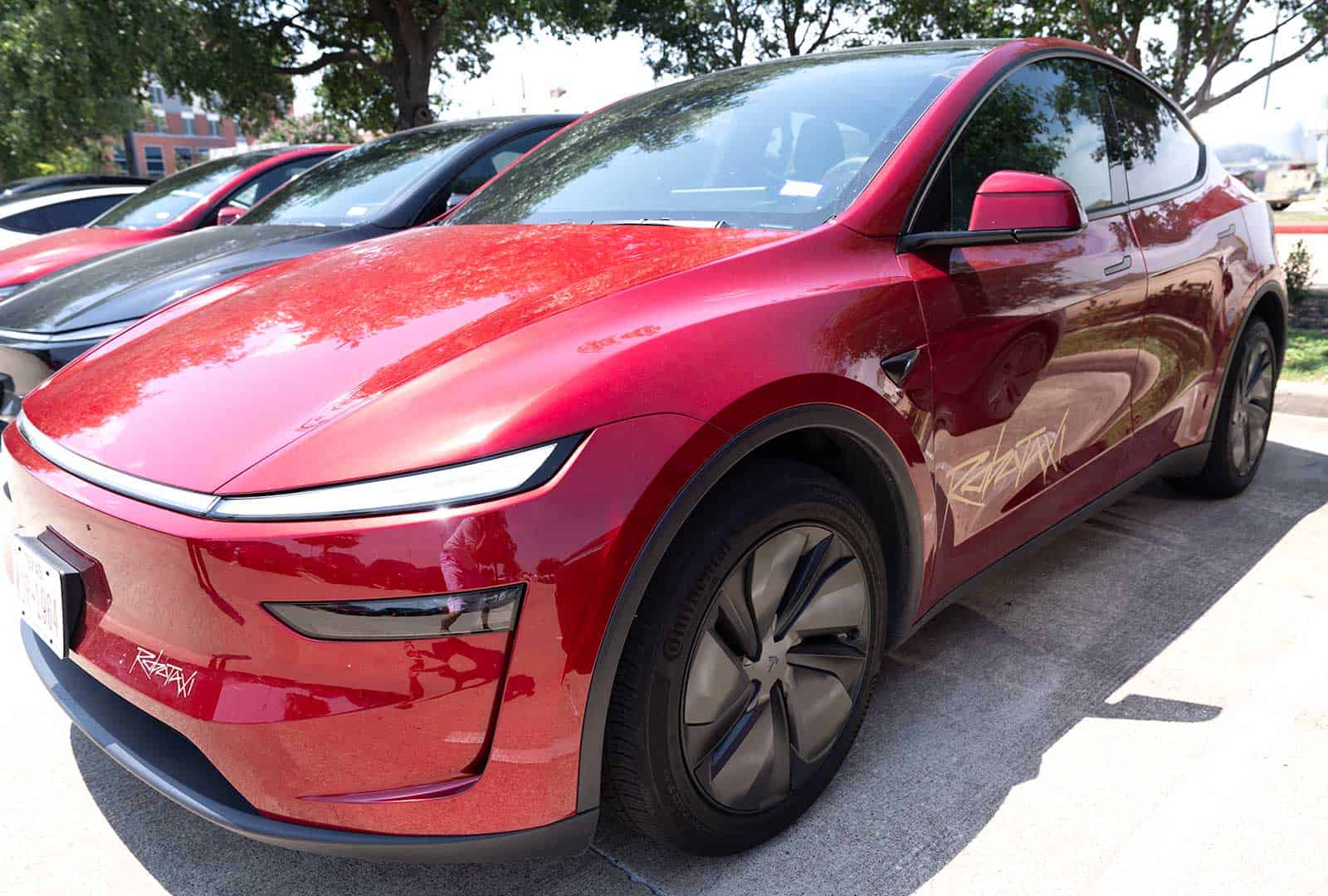
Tesla’s Robotaxi Ramp Comes Down to One Number
Executive Summary
Walter Piecyk and Grayson Brulte dissect a pivotal earnings week, revealing that Tesla’s Cybercab faces a slower-than-expected ramp due to the need for new-chassis validation miles, with best-case autonomous service launch potentially at year-end.
Alphabet’s Waymo received minimal commentary from CEO Sundar Pichai, while Mobileye’s 27-year CEO stepped down amid stock pressure and a contested pivot to vertical integration. The hosts also examine Aurora’s driverless trucking milestone, Zoox’s smoke-related software recall, and Elon Musk’s aggressive claim that FSD could come to the Tesla Semi by end of year.
Key Autonomy Markets Episode Questions Answered
Why is the Cybercab robotaxi launch taking longer than many expected?
The Cybercab is a new chassis and form factor, requiring its own set of validation miles before Tesla can scale unsupervised operations. Piecyk estimates at least 250,000 miles are needed on the new chassis, and because production is pacing to validation rather than the reverse, a best-case scenario for reaching 100 cars in a market is end of year.
What did Walter Piecyk’s question about Tesla Semi reveal on the earnings call?
Walter Piecyk asked Elon Musk about the roadmap for autonomy on the Semi, and Musk gave an aggressive timeline suggesting FSD could come to the Semi truck by the end of the year, while noting that Cybercab remains the primary focus.
Why was Zoox forced to issue a software recall, and what does it reveal about LiDAR?
Zoox issued a software recall for approximately 100 vehicles after the system was unable to navigate through smoke at an emergency fire scene. The hosts say this raises questions about lidar’s real-world limitations and gives further validation to Tesla’s camera-first approach.
Autonomy Markets Topics & Timestamps
[0:00] 380,000 Unsupervised Miles and What That Number Leaves Out
Tesla disclosed 380,000 Unsupervised miles and zero notable incidents, a real number that still says nothing about the vehicle that has to carry the ramp.
[03:13] The 250,000 Validation Miles Cybercab Still Has to Earn
Those miles were logged on Model Y, and Walter Piecyk estimates the new Cybercab chassis needs at least 250,000 of its own before commercial service begins.
[05:22] Cybercab Production Is Pacing to Validation Miles
Tesla is building Cybercabs at the speed validation allows rather than staging a fleet ahead of it, which pushes the realistic activation window six to nine months out.
[10:20] Tesla Semi FSD Coming Soon (Maybe Year End?)
On Tesla’s Q2 2026 earnings call, Walter Piecyk asked about the FSD roadmap for the Semi and got an aggressive year end timeline, tempered by Elon Musk conceding that Cybercab remains the priority.
[14:29] The Case for Vertical Integration
Tesla builds its own truck, which removes the single largest structural risk in autonomous trucking and creates an overhang for every competitor still negotiating with an OEM.
[16:24] Reading the Fine Print on Aurora’s Driverless Announcement
Aurora’s own blog post discloses a roadside assistance team member may ride in the rear seat, and Grayson Brulte lays out four questions the company should answer about what that person is actually doing.
[22:22] Alphabet’s Other Bets and the Waymo Spin Non Answer
Other Bets posted $380 million in revenue against a $1.8 billion loss, and Sundar Pichai gave the smallest amount of Waymo commentary in roughly six quarters with no milestone attached.
[25:50] How Tesla Runs Airport Curbside Pickups in California
AUTNMY AI’s OMEGA surfaced the mechanism, which is a rideshare permit stacked on a limousine permit that requires a human, because Tesla holds no autonomous permit in the state.
[27:44] Zoox Recalls Software That Could Not Handle Smoke
A software recall covering roughly 100 Zoox vehicles raises the question of what lidar actually delivers in degraded conditions, and hands Tesla’s camera only argument an unexpected data point.
[30:15] Mobileye Abandons Asset Light for Vertical Integration
Mobileye is pivoting to build its own vehicle, which puts it in direct competition with the OEM customers it spent two decades cultivating.
[36:14] Foreign Autonomy Desk: China Resumes Robotaxi Permits
Momenta, newly public on the Hong Kong exchange, secured approval for driverless commercial operations in Shenzhen as Beijing restarts permit issuance.
Full Episode Transcript
Tesla Earnings Reaction: Investor Sentiment and Cybercab Scaling
Grayson Brulte: Walt, this week Alphabet reported, Tesla reported, the Mobileye CEO stepped down, and I’m listening to the Tesla earnings call. I said, “Oh my goodness, it’s Walt.” You asked the great question about Tesla Semi with FSD, so that entered the picture. On that same call, we did get some color from Robotaxi. What were your takeaways from the Tesla call?
Walter Piecyk: I mean, overall, the, the Bloomberg messaging that I was getting from investors during the call was that the, the, he’s– the call sounded downbeat. And right around the time I was getting those messages, I think Elon chimed in that he was actually feeling under the weather. So you know, there was an issue. There was– Investors react to a lot of different things. Obviously, there was the CapEx was up. I’m not sure why that is a major surprise. but, but to me and to, to our listeners, the key thing I think was just getting some more indications of, you know, what’s going on in, in Austin and, and, and some of these other autonomous markets for them and why and when and why we can ex- or when we can expect scaling
Tesla’s 380,000 Unsupervised Miles and Safety Culture
Grayson Brulte: The nice thing on the call was we did get some color on the autonomous miles, 380,000 unsupervised miles. That was a nice number to get, but it’s, it, it pales in comparison compared to Waymo’s numbers
Walter Piecyk: Yeah, it was also interesting he talked about zero notable incidents and I think, I forget, I should have got his exact quote, but talked about people that were in the market trying to initiate problems for the cars, and we know that all too well about some people that are, that are trying to create problems down there. but, you know, we kinda knew if you do the mileage on that and they’re saying they’re doing it all day, it ki- the math works out in terms of that many miles. But the issue, Grayson, is you know, Cybercab being on the road last week I was getting, you know, hyped up. Maybe that means we’re close for all these different reasons. You know, N- NHTSA kind of moving their way as well in terms of removing some of these pedal and steering wheel requirements. But on the call, they talked about the fact that, look, they’re gonna have to put. This is a new chassis, a new shape, right? And they have to put miles and, and I think we’ve talked about that on this program. Is this something, whether it’s trucking or cars or whatever, that you need miles that are specific to a new form factor, just like, you know, Waymo was dealing with when they moved to Ojai and then ultimately to Hyundai. so this is just, you know, a further potential timeline, buffer, delay, whatever you wanna call it, until I think we see a number of cars. Unless I’m wrong and they put- they drop a ton, drop a ton of Model Ys in the market, but doesn’t sound like that’s the case.
Grayson Brulte: No. What it reemphasized, what you and I have talked about, and we’ve gotten some interesting inbound on it, it is not as easy as some individuals think to take one autonomous driving stack, deport it to another vehicle, to another vehicle, to another vehicle. It’s actually a complex process. And what we learned on that Tesla call, all, all sudden, all suddenly at once, it’s not necessarily true. It’s taking a long time, and it’s a long process to go from the Y to Cybercab. And that ramp, I believe, will be slower than most individuals are expecting
Cybercab Validation Miles and Timeline Estimates
Walter Piecyk: So it’s a noisy day in the market. again, people are focused on different things in the quarter. That to me is one of the bigger things in terms of the timing of the Cybercab. Ultimately, you’re gonna start getting this question more and more. So how many miles do you need to get to? And, and I’m sure they will– the company will be asked that question in the future. If we’re gauging 380,000, like if, if I’m gonna say best case scenario with the number of Cybercabs that we see them dumping in these individual markets, I’m gonna say it’s at least 250,000 miles that they’re going to log on these, on the new chassis. and if you kinda work out the math on that, depending on the number of cars that they’re putting in the market with drivers, right? Safety drivers behind a wheel, you know, best case maybe you’re saying end of the year is when they, when they get to what, what I call the autonomy markets benchmark of 100 cars in Austin or maybe one of these Florida markets, whichever they decide to scale first
Grayson Brulte: I think that’s a very, very valid assumption. And at that same time, hopefully as they add the miles on, the ODDs expand. And what– The one thing that we’re clearly seeing from our field reporting, and we’re seeing the photos on X, that Cybercabs are showing up in larger and larger numbers in markets, and that’s a clear validator to your thesis of having to get to at least 250,000 miles until they can activate it
Walter Piecyk: And aside from these quantitative numbers, there was also some qualitative commentary. I think it was from Elon, maybe it was another one of the ma- management team, just saying, “Safety first. Safety first.” And like, you know, we want it to be safe before we unleash this. This is stuff that I’ve talked about over the pa- you know, past year, that the culture of safety at Tesla and SpaceX is, is a much higher bar than I think a lot of people had assumed
Grayson Brulte: Became very clear on the call to anybody who’s paying attention, Tesla’s not cutting corners when it comes to safety. And Elon had the line, if there was one incident, a bump, it would be international headlines, and he’s right about that. The risk to the safety for Tesla is probably higher than any company out there right now just because Elon is such a polarizing figure to so many individuals
Walter Piecyk: Now, the other indication that we might have had is that, you know, when we were a- at the Gigafactory and we saw that the Cybercab line being brought up and it, you know, it was delivered on schedule in Q2. There was some discussion about how it would take maybe nine months or a year to get up to full capacity. Now, if on the call they’re saying the production of the Cybercab is pacing to the validation miles and not the other way around, right? Then again, that could be an indication that you’re probably talking six, nine months down the road until you’re getting that full production of the Cybercabs, which is simultaneous with when you have those validation miles and ready to go. So we’re probably gonna see these, these gold Cybercabs being stacked up to a certain extent in a lot of the lots that, that you know, you have identified through your field work
Grayson Brulte: That raises the question of the timeline. Are we realistically looking at January, February perhaps of, of Cybercab going into some sort of service?
Walter Piecyk: Well, like I said, best case scenario, end of year. So best case scenario is not necessarily your highest probability scenario. That’s just a different way of saying it
Starlink Integration in Cybercab and Telco Implications
Grayson Brulte: There’s a lot of ways t- to say things, and it’s gonna be super, super interesting. The one thing that I found fascinating, and this goes into your world with Telco Corner, the Starlink integration. What do you make of that? And I gotta ask from a telco perspective, what do you truly think that’s there for?
Walter Piecyk: Well, I loved how they, they kind of drummed up what, what you said even prior to autonomy markets, what you used to pitch on road to autonomy, like getting in a car and watching the Super Bowl, and they were talking about the types of ubiquitous speed, excuse me s- download speeds that were available to watch movies or whatever in the back of these cars ’cause obviously people’s times are gonna be freed up. The flip-flop on that is what I was asking about, is on the SpaceX side of things, there’s a lot of discussion about SpaceX becoming a competitor with AT&T and T-Mobile and others. They’re gonna need ways to offload that capacity. If you’re basically using Starlink to backhaul from the car, you know, back up to space, then that car itself becomes a hotspot for any mobile users that are around it. So I think I’d, I’d asked Elon that, about that on the call, and that, kind of more of a telco corner question, but I figured since it was a Tesla product, I could probably sneak that in there. So we got that validation, which is what I suspected was the case
Grayson Brulte: I mean, you did a really great job asking your questions, and I was watching CNBC and John Stankey, the CEO of AT&T, was asked that direct question, “Will Starlink become a direct competitor to AT&T?” Mr. Stankey was talking about their fiber, which I’m proud to report my fiber is working, and yes, there is Starlink backup now, but the, the fiber is working. So it seems to me that any which way you slice this, there’s a lot of moving parts in the Tesla empire, and so a lot of things for us to watch
Walter Piecyk: The other thing that that was interesting from the call, I don’t know if this was a one-off, but there’s kind of a new framing in terms of expansion where there was some reference to scaling to the entire state as opposed to going city by city. but then, you know, I think there was like maybe some ki- you know, countervailing commentary. Do you think that’s really the case that they would just basically continue to broaden out in the state rather than just adding more cities like the Waymo model is?
Grayson Brulte: It really just depends on the regulatory environment. If you look at the California regulatory environment, you have multiple paths. You can apply for a region, a city permit, or you can go for the state all at once. So perhaps that is a reference to California trying to get a statewide permit all at once. I do not know, purely speculating there. As it relates to encompassing the state, I think realistically it’s just going to expand out of major metropolitan areas where people are, because there’s a lot of states with very rural areas. Running a robotaxi service economically wouldn’t make sense, unless there’s bigger plans for FSD, which we, on the call, we learned that the growth of that’s been pretty substantial
Walter Piecyk: We also chatted briefly with Lars on the call about you know, the federal unlock, obviously what, what, what Jonathan Marden is doing at NHTSA, which he called them a very good partner. obviously Jersey and what’s going on there is, is disheartening when they’re talking about, you know, mandating sensors, which obviously is, is kind of a crazy concept. But you know, it didn’t, didn’t seem to me that, that they thought other than what is going forward with NHTSA, that they needed anything more in terms of their scaling. They just have to deal with these states on a state-by-state basis. It didn’t feel like there was a, a national framework beyond, again, removing these requirements for the, for the brake pedal and the steering wheel
Grayson Brulte: The comments from Lars, the comments from Elon and Ashok to me signaled confidence that Tesla believes that they have an, a path forward to do this. So I think there’s, there’s a lot of confidence there as they’re getting ready to roll this out. And you said this in past episodes, and I believe you’re 100% correct, that Cybercab will ultimately be the ultimate scale vehicle for the robotaxi service
Tesla Semi FSD: Elon’s End-of-Year Autonomy Timeline
Walter Piecyk: Now, this last one, which I really want to get a, a clappy hat for because we do cover autonomy broadly here, including autonomous trucking. But I did slip in a question about asking about the roadmap for autonomy on the Semi. You know, they’ve been talking a lot more about Semi recently. Most people think, or not most, but a lot of people think that this could be very disruptive to ICE engine you know, type of, of deployment, you know. So everyone’s optimistic there. But remember, when this thing was first talked about, I think it was ear-early as, like, 2017, they were talking about whatever these long, I forget the word for it is, but, but a convoy, I guess, of semis and autonomy. It wasn’t really talked about, so I had to throw that in the hopper. And of course, Elon gave a very aggressive timeline saying that he thought that they could get autonomy on the Semi truck by the end of the year. He, he obviously played that down saying like, “Look, the primary focus is what we’re doing with Cybercab.” But I mean, these guys can walk and chew at the same time, so I’m sure we’ll see more words around autonomy with the Semi as the quarters unfold
Grayson Brulte: I’m gonna give you a clappy, two clappy hats. One clap, two claps. One clap for, for getting on the call and asking great questions, and two, thank you for the FSD Semi question, ’cause if you talk to Matt McClelland at Covenant, he’s been for test rides. He said his drivers at Covenant, the largest overnighter in the country, they love driving the Semi. David Moss, who’s a friend of ours, he’s actually ridden in Semi. He thought it was cool, first time he’s ever been in there. And then on the backside of that, you’re getting research out of Argonne National Laboratory, one of our national labs, around megawatt charging. So the, the, the pieces are coming together from an infrastructure standpoint to scale. And all suddenly you put FSD and Semi, that gets very compelling, very interesting when you combine it with a robotic charging arm, which a lot of professors and researchers believe that you need to truly scale megawatt Semi-level charging. So great question, and a lot of questions are gonna arise out of that
Walter Piecyk: Yeah, and, and obviously there’s a lot of public, or a few public and a lot of private companies that we’ve talked about on this podcast. I do think trucking is obviously a very large opportunity. Probably is not as sexy as investors to look at right now, but, you know, there is Aurora, a $12 billion market cap company, public company that’s out there. Now, there’s Kodiak, there’s Plus that attempted to do a a SPAC and, and didn’t quite work out. And there’s other companies, right? You know, Waabi, which got some money from, you know, from Uber, but still had a, a historical trucking business. There’s a lot of companies, and look, I’ve experienced this on the telecom side, right? With SpaceX and launching their satellites, it’s been a tremendous overhang. You referenced John Stankey from AT&T talking about CNBC and ha- having to answer questions about satellites. The same thing is now gonna happen to Aurora and Kodiak and everyone else about like, okay, what happens when, you know, the semi gets there, and if it’s right around the corner? And it doesn’t have to be next quarter that it’s occurring. And the challenge then is, like, these are, these companies, you know, are not AT&T. AT&T generates free cash flow, right? And, and, and, you know, is a sustained business. These other companies are still in this kind of startup phase where there’s gonna need, need capital, now potentially having this overhang about having to deal with, with, you know, talking about Tesla and a potential autonomous semi truck.
Grayson Brulte: Yeah, and in the industry you also have Bot Auto, as private you have Stack, which is a subsidiary of SoftBank. So you have a lot of moving parts there. But to me, let’s remove the whose autonomy stack is better from this. Tesla o- with Semi eliminates one of the biggest risks that we’ve seen play out publicly in this market, the OEM risk. They’re the OEM. They’re vertically integrated. They’re taking out that risk. That alone becomes very, very interesting, especially as they look to integrate, test, validate, and scale FSD and Semi, ’cause that risk is gone
Walter Piecyk: I mean, this OEM problem crosses trucking as well as cars, you know, in terms of the, the companies. And again, to your point, Tesla kind of sees through that. That’s why they aren’t– Even though they don’t necessarily have a 100 car market yet, that’s why they’re still in the mix because once it works, they control the volumes. Waymo is still kind of eking out the volumes based on their existing partners, and I would guess it’s a challenge for them to continue to add partners just ’cause of the fear of Google. You know, that’s why, that’s why we– I don’t think we’ve seen potentially additional partners there. Trucking is, is even more challenging, I, I think, in that regard for, for a variety of reasons. So, but look, the flip side of that, Grayson, though, is maybe if these trucking companies see that, you know, Tesla Semi is, is heading their direction, maybe that, that forces them to rethink how they’ve been so, you know, apprehensive about embracing technology. And when I say apprehensive, with case in point, PACCAR. Right? PACCAR with their relationship with Aurora, forcing them, you know, to put someone in that driver’s seat. but I don’t think PACCAR’s alone. I think it’s an industry which is, is, is gonna be a challenge to deal with
Grayson Brulte: There’s a lot of challenges, and it, it goes down to the supplier level, supply part A, supply part B. There’s a lot of challenges in that ecosystem. And for individuals that wanna go back in history and, and do the research and do the homework, it’s it’s been covered in depth in the LA Times. Look at the Mark Fields original Google self-driving car negotiations in the LA Times. Russ Mitchell did a good job covering it. Go read that, and that will give you a very clear insight into the correlations that’s happening in trucking today. There is a lot of, I’ll use the term, there’s a lot of cooks in the kitchen that are extending their ability to o- override the master chef
Walter Piecyk: With that said, these companies are fighting the good fight. These are smart people. They’ve, you know, they’re pushing what, we think is, is good technology. Like we said, we, you know, we hope for them, you know, for all of them to succeed. It’s unlikely that that’s gonna happen. But, you know, just this week Aurora, you know, we’ve talked about this on this show before, you know, where they’re buying these international series trucks and putting their hardware on them, right? ‘Cause this is, this is this kind of like, how do you deal with PACCAR doing what they’re doing and waiting for Volvo, so they’re getting international. They’ve got a relationship with an upfitter that they can get hundreds of these trucks on the road and start to do their own version of scaling. Also, they showed a video with no one in the driver’s seat, so unlike the PACCARs where, you know, you can kind of see the guy eating the chips, now we can watch videos where there’s no one in that driver’s seat. So that’s, you know, a very positive, I think, step for Aurora, potentially just overshadowed by a rough overall financial market this week, but also, you know, these statements by Tesla
Aurora’s Driverless Milestone Scrutinized
Grayson Brulte: It’s a positive, but it, you know me, I put on the inspector hat and, and read the fine print. And in the fine print on Aurora’s public blog post, the following was stated: “There may be a member of its roadside assistance team riding in the rear seat on some trips on board to gather feedback and provide support like roadside assistance.” That was in an official blog. So, I have the following questions, and I’m gonna be that guy, very polite though, the questions that I think that should be answered. The first question is, does the backseat team member hold a CDL, and do they have access to an emergency stop button or kill switch while the truck is moving? The second question is, do they take over manual driving after a potential incident or drive the truck during any phase of the trip, yards, docks, or shoulder recoveries? Third question, if an onboard human has any active safety or monitoring duties during transit, it would be considered supervised. Do they? That’s the question. And the final one, and this is a very important one for those that know the ecosystem, is the presence of this team member strictly optional, or is it required by insurance underwriters, truck OEM partners, or suppliers? Those are the questions that I’d like to, to see answered, but it’s a positive step, but there’s still some lingering questions
Walter Piecyk: I mean, I think you should detail all of those questions in your Sunday newsletter, which everyone should subscribe to if they don’t already do that, ’cause that was a lot to digest, four different questions. and I think they’re valid ones as part of kind of the, the process of, of getting to commercial. Like, the driving at the, you know, driving the full way, that’s not as relevant to me. As long as that, that trip is occurring over whatever many miles, 100 miles, 200 miles, whatever. I mean, look at Kodiak, even in the Permian Basin, like, they, they take that sand at five miles an hour. But at the end of the day, someone then gets in the truck and then, and then parks it in order to accept the sand into the truck. They’re gonna move past that at some point, just like Aurora will move past parts of these times when, when maybe a human has to drive in the truck, but you gotta start somewhere. It just underscores kind of where we are with autonomy and trucking, right? There’s still work to be done. There’s still money that needs to be invested. and now you potentially have Aurora, and I– or excuse me Tesla. The other question I have, Grayson, is, like, maybe Elon is different. Elon is– What do you mean maybe? Elon is definitely different. But typically in corporate America, when a competitor does something, it evokes a response. So, like, if you’re Way- maybe Waymo could care less about Tesla. But if, if Tesla starts talking about trucking, right? And, and, you know, and autonomy on the, on the Semi, do we potentially see Waymo starting to indicate that they’re gonna revive their trucking business that, that has been put aside?
Grayson Brulte: That is one of the greatest parlor games that’s currently going on in the traditional trucking industry and autonomous trucking. Charlie Jatt previously ran the program, and the clear indicator of everything in the parlor game is no. There is not even a whisper of a noise to go there. That’s, that’s just what’s been going on. Everybody asks the question and everybody comes to the same conclusion, no. But you never know. You never know
Walter Piecyk: Well, let’s just say that all these people are wrong, ’cause that has happened sometimes. do you think Waymo would have to go from a standing start, or is there some existing knowledge, whether in people or in actual tech or in actual physical equipment? I think maybe the, some of these locations might still exist where they’re not starting from stop if they decide to go that route
Grayson Brulte: From a infrastructure standpoint, Waymo, I don’t know the terms of the things so I’m not gonna speculate. Their depot is now controlled, not owned, controlled or leased by Waabi. It’s actually owned by Hillwood, so there you go. On the truck standpoint, Waymo, believe it or not, and Daimler has publicly confirmed this on multiple earnings calls, Daimler Truck, still has an OEM relationship, a development deal. So that chassis is there, in theory, ready to go. So yes, from a chassis standpoint, Alphabet getting real estate, well, it’s not very hard. Hi, we’re Alphabet. Oh, how can we, what can we sell you today? That, that’s not, that’s not hard. The big question is, and I’ll, I’ll defer this to, you know, somebody that we know, is to, to Chuck Price. Can the technology transfer over? I don’t know. But the, the ingredients are there if they decided they did want to eventually turn it back on
Walter Piecyk: Last question on this topic before we move to Google and the earnings and Waymo. a truck, however much it weighs, traveling 50 miles an hour, ’cause that’s the, the fuel efficient way to do it, will the Tesla Semi have a lidar?
Grayson Brulte: Based on everything that Elon has publicly stated, I’ll say no, but then I’m gonna go back to your world, you never know
Alphabet and Waymo Earnings: Minimal Commentary and Spin-Off Non-Answer
Walter Piecyk: Okay. Let’s move on to Google or as they call themselves Alphabet. They reported also other bets is where the things that we care about are, that had revenue of 380 million for the quarter. and of course, a loss of 1.8 billion. So we talk about these kind of competitors, the field to the big money guys of Google and Tesla and Amazon. But even the big guys are losing a lot of money, you know, on these other bets and expansion. And that, that’s not only Waymo that’s in there, but I’m sure they’re, they’re a big chunk of those, of those losses. and yet, you know, they still get a question on the call. not on the Google call, but someone asked basically asking when the Waymo spin’s gonna happen and, and Sundar’s response was basically a non-response. “We’re really focused on scaling the business right now and executing that to that extraordinary potential.” So he said a whole lot of nothing. So I don’t know if we have any more indications. Waymo, I thought, got far less profile on this call. Obviously, people are more focused on the CapEx that, that Google was spending on, on AI. So kind of Waymo got lost in the mix, so there wasn’t that much to talk about in terms of the earnings call.
Grayson Brulte: And, and I’m basing this off of going quarter over quarter. I’m, I’m the nerd that actually listens and pays close attention to things. This, and, and, and I have not run the numbers yet, in my recollection, it has been over the last, I would say, six quarters, the smallest amount of Waymo commentary from Sundar. And, and that to me is very, very interesting because it was so minimal. No milestone. If you go back to previous quarters, Sundar has announced a milestone. Very minimal
Walter Piecyk: The only other thing I wanna kind of shout out here is that, and this gets back to the Tesla call, someone actually asked them about doing rideshare again, which I thought was amazing because it, not only has Tesla been pretty explicit saying this is a go-it-alone strategy with no need for Uber or any rideshare company it comes at a time when, you know, it seems like Uber and Waymo are, are, you know, headed for divorce with all this regulatory battle stuff that we covered last week and I wrote about this week. But it was, it was funny to hear kind of an analyst asking ab- about this still on the Tesla earnings call
Grayson Brulte: I get confused by analysts sometimes. Before, I wanna go back to Alphabet and then I’m gonna go back to here. So if you look at one of the fastest growing drivers that I suspect based on any AI developer, I don’t know why one analyst did not ask Alphabet about the growth of grounded search revenue. It, it just seems a clear understanding of not using the product. Now, now to, to, to Robotaxi and Tesla, same thing. It. I, and I’m not saying this to be mean to your profession, but shouldn’t there be like an unwritten rule where you have to use the product before you can ask a question about it?
Walter Piecyk: I guess so. I don’t– I didn’t. Whatever. It’s, it was frustrating, but at least they’re taking questions. We have companies now that are basically not even allowing analysts to, to ask questions live on the conference call, Comcast, Disney P- Peace guy which is Paramount and having them submit questions to ask. So at least, you know, people are getting the questions, but analysts, use your, use your time a little bit better so we don’t get cut off from being able to ask Elon questions. one last thing, Grayson, and, and now I’m gonna have you put your Inspector Clouseau on hat ’cause this is again Road to Autonomy. This is your AI bot maybe, maybe not with Omega. you know, there was a lot of hubbub this week when we saw that you know, that Tesla was, was picking up some people at the curbside at the airport. As longtime listeners know, I’ve railed against the craziness of Waymo getting pushed out to the kiss and fly sh– and lot, not even getting to where the Uber guys, if anyone’s been to San Francisco, pick up by that, by that garage. but you put the Clouseau on hat, and what did you discover? Why was this happening?
Grayson Brulte: We asked Omega we said, “Why is this happening?” And Om- Omega’s been, been trained in great regulatory depth Tesla for the airport, they got a license in the airport. They have a limousine. Yes, the limousine. Think of Pretty Woman, Richie, Ri- Ri- Richard Gere, Julia Roberts, that type of limousine. They have a limousine permit. That’s how they’re able to do it. And in the state of California, Tesla does not have any form of autonomous permit. They have a rideshare permit. So when you combine the rideshare permit with the limousine permit, which requires a human, that’s how they’re able to do it
Walter Piecyk: I mean, it just seems like s- crazy rules from San Francisco, but nice job for Road to Autonomy and, and Omega. you know, it’s, it’s, you guys surface a lot of information. How do, how does, how do I get that information on a more regular basis?
Grayson Brulte: So if you’re re- interested in indices, we launched a subscription to indices, so you can go to indices.roadtoautonomy and subscribe, and you get all of that data. And if you’re interested in the true Omega Pipe, we offer a variety of data services, so just send an email to hello@roadtoautonomy. Happy to get you on a subscription. There’s a lot of good data used by a lot of good folks in there
Zoox Software Recall: Lidar Fails to See Through Smoke
Walter Piecyk: Let’s shift to the other behemoth in autonomy, if not necessarily the leader Amazon specifically Zoox, which issued a software recall for, you know, I think it was about 100 of its vehicles. The number doesn’t matter because it couldn’t get through smoke. Now, wait a minute. I thought lidar could see through everything. So what the hell is going on once again? Here we are again, and I think this caused a stir the last time when I was going after Waymo for when that kid got bumped. But once again, why is w- why is lidar not enable able to see through a smoke-filled emergency fire scene, Grayson? Why?
Grayson Brulte: I t- I took this and I ran with this. I tweeted at Cheech and Chong. I said, “Come on, we need experts. Why can’t it see through?” There is a lot of moving parts, and as I said to an individual on the phone last night, that I believe that the Zoox vehicle is over-engineered. And why it can’t see through smoke, it just raises more questions, and it gives more validation to what Elon is saying with camera
Walter Piecyk: Well, you and I think it feels like it’s alone because it seems like they get a lot of, of, of rope. I’ve questioned kind of where Zoox is, but, you know, Amazon, they’re– they have a lot of money, so they’re not known to get rid of things or, or shut things down. So I guess we’ll just continue to have to be patient with Zoox. I don’t know if it’s great timing with NHTSA if this stuff’s happening and, and Morrison’s talking about how they need to talk better, you know, with first responders when, you know, at the same time Morrison is, is looking at getting rid of any requirements for pedals and wheels. But, you know, hopefully they can see through the smoke, let’s call it, and get to a, a con- a, get to a solution that’s good for autonomy in general, and also obviously safe you know, for our citizens. That’s the most important thing. That’s why. That’s what this is all about, right? Safety and changing our economy
Grayson Brulte: Yeah, we don’t want the Zoox mobile to go up in smoke. That’s, at the end of the day, we don’t, we don’t want it to go. But you know what’s really interesting last week that I picked up on a very interesting nuance, and I have a suspicion of why? CNBC, when they, when they talked about this, is branding it Amazon’s Zoox, no longer just Zoox. Is that because Zoox doesn’t get traffic? I noticed that, that little nuance there. It’s very interesting and very telling
Mobileye CEO Steps Down Amid Vertical Integration Pivot
Walter Piecyk: I think it just– I think for them, their investors care a lot more about Amazon than some rando company called Zoox, so that’s probably the main motivation. Yes, interest. so there’s another company that is experiencing some management change. no, it’s not GM. Sterling is still there, but he wasn’t on the call, not mentioned. I don’t know what’s happened to Sterling Anderson at GM, but I digress. Mobileye they’ve had a CEO for 27 years, Grayson, and he’s now stepping down. And this comes at a time when the stock is obviously getting pressured. They’ve made a major pivot. You know, in the past, they’ve said they wanna be asset light. Now they’re talking about being f- you know, fully vertically integrated. I think he has basically acknowledged that, you know, the company is, is basically outgrowing his founder model and, and enters a phase where they need better operational execution at a scale that they need. This is not probably that different than Apple, right? Moving to a different hardware guy you know, g- as AI is kind of upon us. So, you know, whatever. CEO stepped down. It’s unclear whether he’s gonna be in the board or not, whether he was forced out or not. Not really relevant. The real question, though, Grayson, is, you know, what likelihood do you think that Mobileye can, can put up ver- a vertically integrated with a not, not, not even yet OEM-announced car, right? within a reasonable timeframe. Just another vertically integrated player in the market. And does that also reflect perhaps maybe the frustration that Mobileye itself has in dealing with OEMs? If there, there was a guy to deal with OEMs, it should be Mobileye and Qualcomm and, and NVIDIA. Like, those are the OEM theoretical partners. Now this guy is going out and doing vertical integration. That’s probably not a great sign on on what the OEMs are willing to push forward.
Grayson Brulte: I’m merely reading the tea leaves here, and this is pure speculation, but it seems to me that perhaps Mobileye’s getting ready to be sold again. I, I don’t necessarily see a path for it to be a standalone operator on a robotaxi. I think it’s gonna complex a lot of the relationships that they have with OEMs, and those relationships are further being com- massively more complex with Stellantis now going with Wayve, even though I know Mobileye still has a relationship with Stellantis. But a lot of these overlaps, and let’s not forget a company that you’ve covered for decades that does a great job in telco is now moving into automotive, is Qualcomm. So there’s a, there’s a lot of deep-pocketed com- competitors em- emerging, and the question is, is this a sign that the company could potentially be put up for sale?
Walter Piecyk: I mean, it’s gone through so many processes, the overall valuation of this thing is now shrinking. I’m not sure who n-necessarily the buyer is. but you know, they’re gonna announce some capital markets day before the end of the year where we’ll get some more details on this. Again, we don’t know who the OEM is for any of this stuff. They have obvious candidates, right? They got the VW ID Buzz which is the vehicle in the Uber LA program. but I don’t know. It’s just not a great situation for them and, and not — I’m not sure, I’m not sure a model that investors are really gonna embrace. But I mean, it feels a lot like the whole concept of BlackBerry, where it’s like, okay, they wanted to sell, sell it as a service, and then like, okay, let’s just do it on our own to kind of prove it out as a model.
Grayson Brulte: Research in Motion for that while, they had that, that heck of a r- a run there. If you go way back, let’s go back 15, 16 years to the early days of autonomy, even then the market wasn’t taking Mobileye serious. And I, and I’m, and I’m not saying that to be disrespectful, I’m just saying the, the market even then had questions because the engineers didn’t use it. And if the engineers that are building these products are not using it, there’s a lot bigger questions there, and it’s clearly being reflected in the performance of the stock
Walter Piecyk: And I’m seeing a quote here from the call that reminds me of something else in our space. And, and the, and the quote is specifically, “This initiative is not a replacement for our existing partnership. It’s an extension of them.” The problem is, though, these partners don’t necessarily look at it this way. They’re like, “You’re gonna be coming a competitor to what we’re doing, and then you’re trying to help us?” I don’t know. Nvidia theoretically could face the same thing, although Nvidia is, is trying to stay kind of back and say, “We’re only gonna help everybody, give everyone the driving data, trying to enable everyone. We’re not necessarily gonna have our own car.” You think they might in the future? We’ll see. Qualcomm, same thing. But I don’t, like, this is different, and what it reminds me of a little bit is the Volvo autonomous group on the trucking side of things, where what we hear in the trucking world is like, “Wait a minute. This guy is now gonna be a competitor to what we were doing, and they still want us to buy their trucks?” So I get why companies try to thread the needle ’cause of the market opportunity. I just, I don’t know if it’s underestimating what their b- you know, other customers, how their other customers will, will perceive it, especially when those customers have other options in the market to partner with. And in this case, as it relates to, to Mobileye, you know, you’ve got Qualcomm and potentially Nvidia
Grayson Brulte: If you look at the vast Volvo autonomous solutions, I mean, they had a rocky road to get there, but I, I’m gonna give a lot of credit to Vast’s upper management. They had the backbone and they, and they stood with it, and there was a very good opportunity for Vast to play a large role in autonomous trucking. But don’t forget, Vast is not publicly traded. There’s a big difference there where, where Mo- Mobileye is, and Vast had the support of the developer and the engineering community. Mobileye doesn’t necessarily have that, so there, there’s different dynamics at play
Walter Piecyk: Well, in any event it’s on the radar. I gotta spend more time. I will be back to our listeners with more you know, with more on Mobileye when I kind of get a better sense of, of what’s going on there. What, what happened on the foreign autonomy desk this week, Grayson?
Grayson Brulte: The foreign autonomy desk has taken us back to China. China now has once again begun to issue robotaxi permits. This time, a company just went public on the Hong Kong Exchange, Momenta. They’ve got a permit to do driverless robotaxi commercial operations in Shenzhen, so Momenta is getting the momentum, no pun intended
Walter Piecyk: Nicely done. Anything else?
Grayson Brulte: We just need to continue to watch as we’re coming into the fall here. The leaves are changing, the football’s coming, the beer’s coming, and then all eyes turn to London. Does, does Waymo launch in Q4? Does Uber launch with Wayve? So that’s something to watch there on the Foreign Autonomy desk. It’s something that we’ll be paying close attention to
Walter Piecyk: I mean, it’s been kind of quiet on the Wayve front, right? So, but that is an expectation in the fourth quarter. So the other expectation in the fourth quarter is Lucid Nuro. They’re qu- they are reporting their quarter you know, next week, so that’s what’s up for next week. Maybe we’ll s- get some update on, on how that timeline looks because they have to report every quarter as opposed to Nuro, which is a private company. Uber’s also gonna report, so that should definitely, I think, be an interesting call with all this stuff swirling around about Waymo
Grayson Brulte: It’s gonna be very, very interesting, and I’m looking to get color and commentary from Dara on their delivery strategy. That’s something to watch there, ’cause there could be some telling signs as it relates to Uber’s continued investments in delivery. Anything else we need to look for next week?
Walter Piecyk: Watch Orlando Tampa, but I think after this Tesla earnings call, I’m just gonna tamper my expectations on, on Tesla ramp for now ’cause I just think that that’s not in the near term horizon. and again, get doing more prep for our Dallas field trip that’s coming up. Got a lot of good feel- feedback from listeners. I added an extra day, so we’re gonna see some of our listeners in, in the Dallas area. so it should be a good trip to see what’s going on with Aurora and other technology companies in Dallas
Grayson Brulte: Yeah, looking forward to Dallas, and you never know, maybe I’ll bust out a cowboy hat or you’ll bust out a, out a cowboy hat. You never know, but w- we’ll be in Dallas in the Big D doing field work, having really great conversations. The future is bright, the future autonomous, the future is scaling profitable commercial operations. Walt, until next week.
The future is bright. The future is autonomous. The future is The Road to Autonomy.
Subscribe to This Week in The Autonomy Economy™
Join institutional investors and industry leaders who read This Week in The Autonomy Economy every Sunday. Each edition delivers exclusive insight and commentary on the autonomy economy, helping you stay ahead of what's next.