


Tesla Goes Driver Out, Unraveling the Tenuous Waymo Uber Relationship, Will The UK Leave the EU Behind Again?
Executive Summary
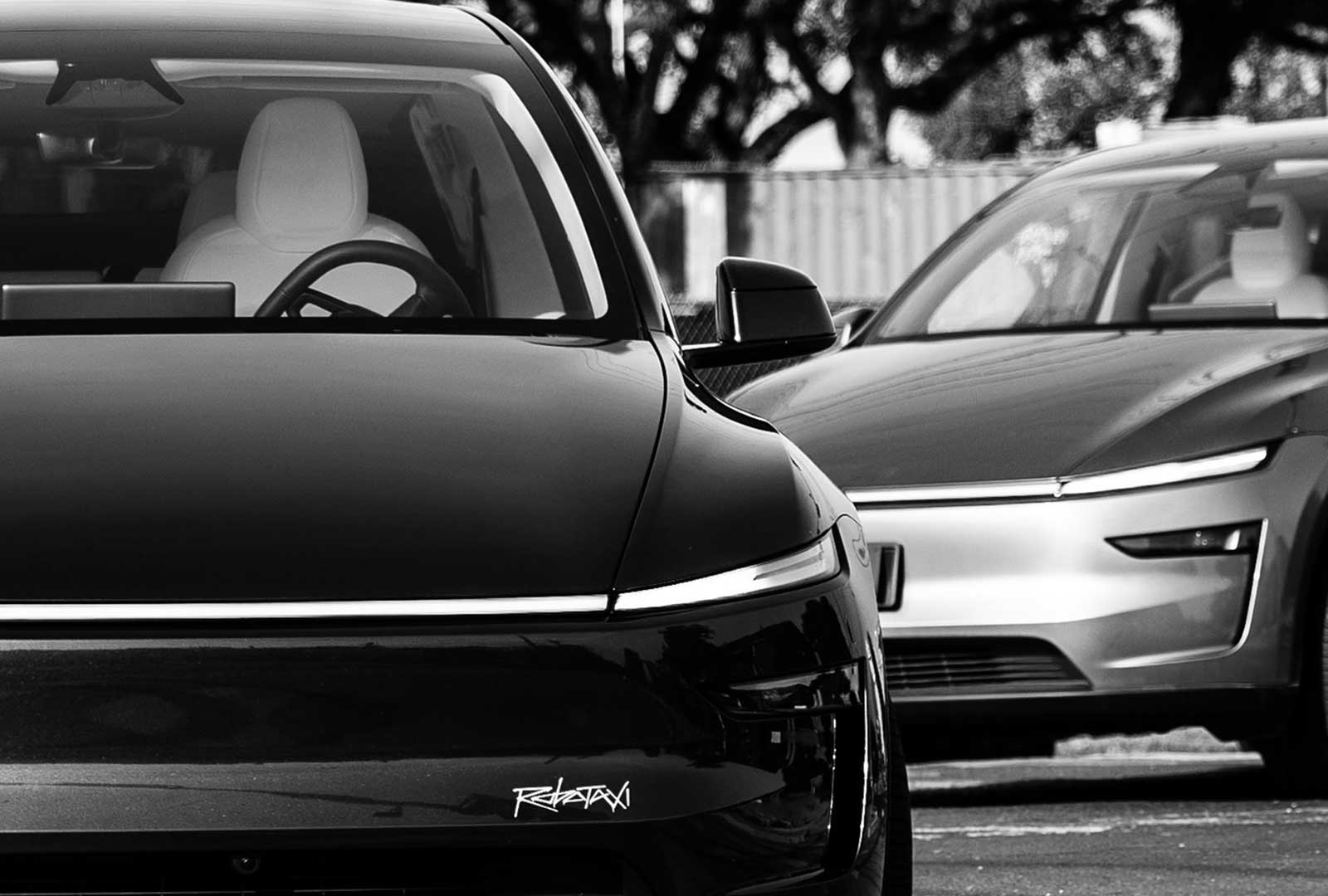
This week on Autonomy Markets, marks a pivotal moment in the autonomous vehicle race as Tesla officially launches its driver-out service in Austin, a long-held dream of Elon Musk. This milestone contrasts sharply with Waymo’s decision to indefinitely suspend service in Los Angeles following a series of attacks and vandalism on its vehicles.
Grayson and Walt dive deep into the complexities of the Waymo-Uber relationship, debating its long-term viability, potential international expansion into the UK, and the impact of new competitors like Wayve. Finally, we analyze the latest regulatory updates from NHTSA that are paving the way for a national AV framework.
Key Autonomy Markets Questions Answered
Why did Waymo suspend its service in Los Angeles?
Waymo suspended its service indefinitely in Los Angeles due to ongoing attacks and vandalism against its fleet. This included incidents where vehicles were set on fire and covered in graffiti, prompting the company to pull its cars from the city for safety reasons.
What milestone did Tesla recently achieve in Austin?
Tesla successfully launched its driver-out service on public roads in downtown Austin, with public videos confirming there was nobody in the driver’s seat. The company is also officially registered with the Texas Department of Transportation for full driver-out operation.
What is the UK’s regulatory timeline for commercial autonomous vehicle deployment?
The United Kingdom has established a clear regulatory path for autonomous vehicles. This framework will allow for commercial pilot programs to begin in 2026, with full commercial deployment of driver-out services scheduled for 2027.
Key Topics & Timestamps
[00:00] Tesla’s historic driver-out launch in Austin
Tesla achieves a major milestone by launching its driver-out robotaxi service on public roads in downtown Austin, with video evidence confirming no one is in the driver’s seat.
[00:44] Waymo Suspends Service in Los Angeles after Vehicle Attacks
Following incidents of vandalism, including vehicles being set on fire, Waymo has indefinitely suspended its services in Los Angeles and is keeping its fleet in the depot.
[05:00] Public Perception and Media Bias Against Autonomous Vehicles
The hosts discuss the challenges of public perception, including media bias and public stunts designed to portray AVs as unsafe, arguing that many analysts miss the long-term economic picture.
[10:45] The state of the tenuous Uber and Waymo relationship
An in-depth analysis of the complex Uber-Waymo partnership, with signals suggesting ongoing discussions and imminent service expansions in Austin and Atlanta.
[12:45] Will the UK be the next market for autonomous deployment?
A debate on whether the UK will be the next international market, with a clear regulatory path for commercial pilots in 2026 and full deployment in 2027.
[17:35] Wayve’s Potential Entry into the US Market with Uber
The conversation shifts to Uber’s other AV partner, Wayve, with predictions of a potential US market entry in Q4 2025 and questions about their unnamed OEM partner.
[22:24] The Economics of the Waymo-Uber partnership
An examination of the partnership’s economics, including the short-term nature of initial deals and how the financial terms might evolve over time as Uber seeks to improve its take rate.
[25:24] Will Autonomy expand the total ride-sharing market (TAM)?
Grayson and Walt debate on whether autonomy will grow the total addressable market (TAM), with one host arguing it will cannibalize traditional ride-sharing while the other believes it will eventually replace private car ownership and massively expand the market.
[31:10] US Regulatory Updates and the Push for a National Framework
An update on positive regulatory momentum, specifically NHTSA’s updated Part 555 rules, which will streamline the process for deploying up to 2,500 AVs without steering wheels or mirrors on public roads.
Full Episode Transcript
Grayson Brulte: Walter this week, Elon’s Dream came true. Tesla went driver-out on public roads. And despite what the naysayers have said, there is video evidence of nobody in the driver and I was wrong. They’re operating in the downtown Austin area. Well done. Tesla over in Los Angeles, craziness way, Waymo’s are burning, riots are happening. All sorts of nonsense going on there. And then to our listeners and viewers, thank you for the continued feedback on the Uber Waymo relationship. We’re gonna dive into that today ’cause there’s a lot going on there, Walter. Let’s start with Waymo. On Friday, Waymo sent out a post on x. They’ve suspended indefinitely. Service in Los Angeles. No Waymo’s get lit on fire anymore. They’re hibernating in the depot and they’ve also dramatically cut back on service in every deployment city except Phoenix. Is this the new normal?
Walter Piecyk: that was quite a video of seeing those Waymo cars exiting la like an army of cars for those that didn’t see it. We’ll put it, I think in the show notes, and if there is some poetry in, as Tesla is entering a market, Waymo is effectively exiting a market, in this case la but obviously for not technol technological reasons, but you know, what’s going on in those cities. Yeah. It is kind of a, it’s kind of an amazing situation. Elon took the opportunity to dunk on them. I don’t know, like Elon’s had his share of, of cars that have gotten burned by probably the same groups of people. Um, so I guess Elon’s not, not alone in terms of. The lawlessness that’s occurring in some of our cities, but hopefully there’ll be a crackdown soon enough.
Grayson Brulte: this was in a police report. There was individuals that summon the Waymo through the Waymo app and they have their IDs and they’ve been arrested. Do people not realize that these things are capturing all of your data when they drive, especially when you summon it.
Walter Piecyk: Well, I guess if you live in LA and New York, you can be arrested and then released thereafter, so maybe they’re not concerned.
Grayson Brulte: not concerned. It, it’s, it’s sad. It’s the, the raging against the machine. It to cut raises the point where, what is Waymo gonna do as they expand? If this. If you wanna call it this violence towards Waymo’s, or attacks on Waymo’s that we’ve seen, because now they’re starting to look like old 1980s New York buses. They’re riding around with graffiti. In some cases,
Walter Piecyk: I think there’s an ebb and flow to this. Obviously this feels, and it’s likely less related to autonomy. And more related to, hey, there’s just an expensive asset that’s, that’s, you know, going through the streets just like Apple stores were looted. I think other, I think there was a Nordstrom’s that was also looted. So I don’t think this really has anything to do with autonomy, but just really lawlessness in individual cities that, you know, hopefully again, we’ll, we’ll, someone will crack down on that.
Grayson Brulte: hopefully everybody has the right to walk down the street or take their kid to a park, and that’s where law and order comes in. And hopefully in LA and other parts of the country, it will be restored. So Waymo has suspended it. You can’t blame ’em. In LA we, we, we saw what happened. The photo’s been, been well documented. And thi, but this comes on the heels of Tesla getting ready to launch commercial robotaxis service, Bloomberg said June 12th. You and I both said multiple times, that’s not gonna be the date, and we were correct. Elon this week tweeted out June 22nd. Do you think or do you believe that Waymo is starting to feel the heat from Tesla? Now there there are public photos and videos of Tesla driving drive route in downtown metropolitan Austin.
Walter Piecyk: I do, and I think we’ll get to that later. But let’s, let’s focus, I think specifically on Tesla in Austin, um, as you mentioned in, in your introductory comments, there are videos out there showing driver out. You know, we’re still, I’m not sure I’ve gotten to this step where I. They’re putting the friendly users on where they have paying rides. You know, it’s, it feels like that that will still occur in the month of June. That was the original date. I think this June 12th date came from a press report initially. I don’t know if the company ever actually said that. So I think, you know, we’re still focused on June, but again, by June 12th we did see videos of driver out in Tesla. And I think the other big risk factor that we discussed last week is Elon’s stream of tweets or the concern that we talked about at great length last week that I. There would be some issue between the government and, and Elon. And certainly we haven’t seen any follow through from nhtsa. We haven’t seen anything from the state of Texas, so everyone that, that we’re saying like, you know, the Trump administration in some way was gonna, uh, stop Tesla from moving forward in Austin. That doesn’t seem to be the case. And that’s probably the, probably the biggest kind of takeaway right now. So we’ll just have to see what’s next. And again, we we’re looking forward to heading down to Austin and, and testing out these rides ourselves.
Grayson Brulte: Looking forward to it as well. This week we did get an update from Texas Department of Transportation. Tesla is registered for driver-out operation. It is on the tech government website. So full steam ahead there. Well, Tesla’s going full steam ahead. Towards a Robotaxis launch. It’s not just Waymo that are being attacked, individuals are protesting in Austin. I’m calling them stunts. They’re setting up stunts, using vehicles, running over mannequins to say, oh, look, it’s not safe. It’s not safe. They clearly have an an agenda. Why is it such a divide where nobody’s willing to look at this, like from a balanced approach that first of all, if you listen to anything Mr. Musk has said, or Tesla AI has tweeted out, it’s running a different version of FSD, what’s available today? But yet the propaganda machines want you to go out there and say, it’s not safe. And I gotta say, CNBC, stop promoting this stuff when it’s factually incorrect. It’s wrong.
Walter Piecyk: I mean, I don’t think it’s just, I don’t think it’s just CNBC. There’s. A lot of people that, you know, have a certain bias one way, and look, we’re all entitled to opinions. I’m sure that that’s fine. Um, or, you know, humans should have opinions and, and should provide supporting evidence. But, you know, even this week I heard, you know, some people railing on the tunnels that exist, you know, because of the boring company in Las Vegas and ripping into the economics of, you know, whether these are viable because they have humans driving the Teslas today. They have people helping people in those cars and not helping people in those cars. Um, and I think that doesn’t really see the bigger picture and that doesn’t also provide the context of how can you go on saying all these positive things about Waymo given the, the price of a Waymo car and, and addressing the economics of that business model. And, you know, think about Waymo in the future, but not think about Tesla in the future, meaning that. In Vegas, if the Robo Taxii occurs, they, they progress forward in Atlanta, they progress forward in the technology. All of those costs that you cite is this huge negative and just showmanship in Vegas effectively go away. ’cause you just then put Robotaxis and, and if there was ever an easy place to throw a robo Taxii, it is gonna be in a tunnel that you own yourself, you know, going back and forth within these, these two spots. So it’s crazy not to, to be able to, you know, at least address the economic, uh, capabilities there. And, and the return of where that investment can get to on one hand with, with, with Elon and with Tesla. But on the other hand, not even criticize Waymo or, you know, point out that Waymo’s got the same issue in terms of the cost of the car. And let, and let me, I, I’m just using that for illustrative purposes. ’cause here on this actual podcast, we’ve looked at it. From both sides that way, meaning that like if anyone’s cri criticized Waymo’s for those cars being expensive, I’m like, well you’re being idiotically shortsighted. Not seeing that over time Waymo will get to production, you know, qual, you know, quantities and having integrated as opposed to having Magna or what, whoever it is, retrofit these really expensive electronics and they will get to an economic model that works. So I think it’s just, you know, you show your bias. I think when you focus a little bit too on the near term saying like, oh, and like tried these companies for what? What’s happening in the near term? And don’t understand what’s important, which is what are the signals to the business model that they can get to in the future. We are still early stages across the board, whether it’s Tesla or Waymo or whoever, in terms of the profitability of these business models.
Grayson Brulte: What a lot of industry analysts and talking heads on TV v miss is the big picture. If you look at the boring example, the reason why there’s a driver in there today, it is a union regulation. It is a state regulation that they’re required to have a driver in there. And if you look at the, the economics, well, you and I have been to CES, there’s traffic galore in a tunnel. There’s no traffic. People pay a premium for that. And furthermore, the, the, the machine that digs the tunnel is autonomous. So that model will work over time.
Walter Piecyk: I didn’t even know that grace, that that was a union issue. That’s even crazier if that’s the case, because then it’s not even what the company is doing itself, it’s just the limitation in that specific market based on, um, you know, the regulations, which as we both know, you know, our administration is, is pushing forward, which we’ll get to later in the podcast towards national framework that can hopefully help with these situations. So then to criticize. That makes it even worse to criticize Tesla on that implementation when it’s effectively outta their hands in the moment because of, you know, the union requirements. It’s just, that’s just crazy.
Grayson Brulte: It’s all about the big picture. And another thing that you were spot on that you highlighted was Tesla’s safety culture. Because this week Mr. Musk tweeted, we are being super paranoid about safety as it relates to launching drive route. They care. But yet the other analysts in the talking heads, they say, Mr. Musk doesn’t care about the safety. There’s another proof point he does. And that we were right.
Walter Piecyk: Well, I mean, the fact that Elon says that they’re focused on safety, I wouldn’t say is necessarily a proof point. I did notice it as well, you know, given how I’ve talked about my views on the culture of safety, but I certainly recognized how there’s others out there that are, you know, that look at Elon and, and you know, have this belief. Um, and are not gonna be convinced, ’cause Elon says something that somehow they do have this culture of safety. You just have to see how it progresses and, you know, do it actually some work on, you know, how that has existed in prior companies. Things can change and, you know, we did a long piece last week on what would happen if, if, you know, there are accidents and, and what would Tesla’s reaction be and what would the, what would the consumer’s reaction be? So if you haven’t listened to that, I would just go back to last week’s episode.
Grayson Brulte: Two weeks before that, we did a deep dive. We got a lot of really great listener and viewer feedback on the Waymo Uber relationship. One thing that’s become very clear from reading everything and talking to individuals is that Tesla has Waymo scared. They have Uber scared. Google search is declining. Chat. GPT is eating into it. Perplexity to some degree, Gemini is coming on strong, so Google’s gonna have to figure out what they’re going to do with the search business long term. We’re getting all this feedback. So let’s dive into the Uber Waymo relationship. Where do you currently think it stands? ’cause if you go on Reddit and you look at this stuff, you got a lot of unhappy rider in Austin.
Walter Piecyk: I have been doing, I think a lot of work on this ’cause of, of its importance and just a, a few things that I think that I believe are gonna happen based on this work. I think you will see Austin expanding in, in weeks, not, not months. I mean, they have been continuing to add vehicles there . but expanding, you know, the ODD is is gonna happen in, in, in, I think a few weeks. They’re getting much closer in Atlanta, same thing. You know, something that we’re probably weeks away for from. This is probably good signal on, on the relationship that exists between Waymo and Uber. I’m not sure it’s like the end game, but certainly it feels like there’s ongoing discussions that, that continue to exist there based on that signal. And I think we should also start thinking about the next market where a lot of those considerations have been about the next US market . and I think what we should start thinking about is maybe the next market is, is actually international. Because if they’re, you know, jointly looking at what cities to do beyond this, and obviously, uh, Uber is developing their own international relationships, most of them Chinese, but now this new one with Wayve, maybe the next market is international. So I, I’m gonna throw this one back to you, Grayson. And when do you think, you know, Uber and Waymo specifically? We will launch a, an international, or even more specifically a European market, but either one, you know, European or international.
Grayson Brulte: I’m gonna zone in on the UK because there’s a clear regulatory path and I’ll give you a timeframe. The UK is now going to allow 2026 commercial pilots, full commercial deployment, 2027, so I’ll say United Kingdom, London 2026, commercial deployment in London 2027 based on the regulatory environments. And furthermore, there was a press release that came out from the UK government that quoted Michelle Peacock, global head of Policy for Waymo. Also in that press release was Alex Kendall, co-founder and CEO of Wayve. And a gentleman, uh, who’s running a really great company, Mr. Gavin Jackson, CEO of Ox, BICA based in the uk. So I’m gonna go on the record and say Pilot 2026 UK Commercial Launch 2027 uk.
Walter Piecyk: But if you’re Uber, why would you waste that international market on London when you’ve just announced that you’re doing London with Wayve?
Grayson Brulte: There’s a regulatory path, there’s a, there’s a clear regulatory path to a commercialization where in Europe we do not have that clear path yet. That could however change depending on the tariff negotiations. But right now in the eu, there’s not a clear path to deploy a commercial, autonomous vehicle to driver-out as of today.
Walter Piecyk: I mean, we have multiple tweets from Elon this week. One he’s saying, waiting for Dutch authorities and then the EU to approve another one. He’s like, you know, showing a picture, I think FSD supervised testing in Rome, Italy, pending regulatory approval. He’s got another tweet here saying, FSD in Europe is gonna save lives. Please let your government know. What’s that? You want approval. This refers to Sweden. So you got Elon putting the pressure on. You’ve got the technology moving forward, um, in the us. You know why so negative on. You know, the ability to get some type of approval in Europe, and, and again, this is something that, you know, these European markets, if two large American companies in, in Uber and Waymo come to them, they don’t have necessarily the political baggage that Elon does. Can’t they actually help with the process in Europe and getting approval at least in one of these markets?
Grayson Brulte: You said two magic words, Walter waiting, impend. Europe moves very slow. It’s a regulatory state. After all, they gave us the cookies consent. It’s a very slow moving regulatory body that loves to overregulate.
Walter Piecyk: I guess the flip side of that is then if investors are looking for Uber’s next relationship to be international as the sign of the ongoing relationship there. ’cause again, this is something we’ve debated a lot, and they ultimately get held up by the governments there, that that just looks, you know, that ends up being disfavor to Uber . you know, just because investors may consider this as like, well, where is that relationship as opposed to just picking another US city. And then when you get to picking another US city, you’ve got the fact that Lyft, which has gone really quiet on their Lyft Waymo negotiations, is probably pedaling really hard in the background to get their next relationship, you know, with, with Waymo. So it’s fascinating stuff, but, but it feels like, or I believe that there’s probably still ongoing discussions probably with both companies. And I think Google, while they’re slow moving, moving and very kind of, I don’t know, like all these large companies are very temperamental, you know,. Get very sensitive. You have John Gruber, um, who has covered Apple forever, has this podcast, daring Fireball, who’s like, you know, mostly done positive stuff. He dared point out the obvious, although very, very late, that AI was a botch. And when they had WDC this week and for I think 20 years, he had an executive from Apple on his podcast, and they iced him clearly because he called out how the obvious, which is the crappy ai. I think Google’s the same way. Like, you know, anything that that gets talked about, they, they ice people. So I think, you know, it’s hard for them to talk about discussions, um, any of these companies. But, you know, it sounds to me like there’s, there’s stuff going on in the background.
Grayson Brulte: They’re sensitive. Way, way most sensitive. Too sensitive. I mean, you say something they don’t like. You get a nasty gram. They’re way too sensitive. For their market position of where they’re doing. And we, we felt that, and I’ve personally felt that they’re too sensitive to, but yet they can go put gloves on and hit people behind the scenes. But yet when somebody calls them on it, they cry. Uncle.
Walter Piecyk: And you can see, and I think you can see this in the tweets, and, and I think they’re concerned about, about Tesla. And I think it, you know, it speaks to it if, if everyone thought that Tesla wasn’t gonna work, they wouldn’t have to be so vocal and violent, violent about it. Um, and try and do stuff, I think in, in the background. So, you know, that kind of tells you follow the actions more than the words. Let’s, um, let’s go the other way now, you know, you have this Wayve relationship, you know, where Wayve and Uber will get together in London. Wayve is certainly an ambitious company. Love following Alex Kendall on social media. When does the, some of these international partnerships that, that, uh, Uber has come to the us clearly not the Chinese ones. This is the most obvious one. So, you know, that’s the next thing to work to look for. What, what do you think, what’s your timeline on when we see a press release Wayve an Uber in, you know, fill in the blank. US city,
Grayson Brulte: Q4, 2025. Citi to be determined, but I have the big question to the folks at Wayve and to the folks at Uber, who is the OEM partner? Every press release we’ve seen, there’s been no mention of an OEM partner.
Walter Piecyk: Yeah, that’s, that, that is crazy. You know, whether it’s neuro or, or, you know, Wayves announcement or anything. It’s just, it’s, it’s odd because you would think that the OEMs would want their names to be talked about and associated with new technology. It’s just odd for them to not be about to be talked about.
Grayson Brulte: Because when I speak to auto analysts or traditional auto investors, they wanna see a path for autonomy where the automotive company is not investing in it. And if they’re licensing the technology, that’s something that the investors like. Or if they’re building the hardware, that’s something the investors like, but yet we don’t see it. It’s just there seems to be a disconnect for some reason.
Walter Piecyk: I agree. But let’s go back to the original topic on this, which is Wayve in the us you said fourth quarter of 2025. To me, that’s, that sounds aggressive, but here’s part two to the question, which is, will they choose a city that will Uber and Wayve choose a city that is an existing Waymo market or a new market and why?
Grayson Brulte: it’s going to come down to the contractual terms if, if perhaps Waymo has an exclusive on that market. Unsure. But there have been autonomous vehicle companies in the past that have partnerships that had exclusive rights with that partner to certain markets. I don’t know if that’s the same situation as it relates today. So really it’s gonna come down to the contractual, but if you look at population size, the markets that Waymo’s operating in San Francisco, Los Angeles, Austin, soon to be Miami and soon to be Atlanta, are very populous markets that are very dense suit for robotaxis. So I’m gonna put punt on this. Walter gonna come down to the contractual terms, which we don’t know.
Walter Piecyk: I think there’s a lot of populous markets. Let, let’s, let’s look at it from each person’s or each company’s approach. If you’re Uber, I don’t think you necessarily want to go into a Waymo market. You’d rather show diversity of having autonomy in more markets. I. But is there any incentive for Wayve to insist that they want their new relationship to be in a Wayve market? If you’re Wayve, would you rather go head to head with Waymo or be kind of the new novel thing in some, maybe like a snowy market like Chicago? What do you think their approach would be?
Grayson Brulte: Huh, without a re, without a national framework, you run into regulatory issues in Chicago. But I like your thinking on that. If I’m Uber, I want you in a Waymo market because now I have more supply, more diversity, and it goes to the whole theory that you’ve so well articulated, fragmentation. But as for Wayve, I don’t know.
Walter Piecyk: Then over time? If you’re Uber and you want that, does that put pressure on Waymo for all these discussions we talked about, international markets or whatever, um, to start thinking about a new type of contract where maybe there, and look, maybe it’s already exists. We don’t know the terms of the contract. But press for exclusivity in a market does, does that kind of pressure dynamic between these two companies start to shift at some point because of Wayve?
Grayson Brulte: I would say the relationship has to be complicated, to say the least. And I’m saying that because in certain markets you’re operating Waymo one and your defacto competing with Uber’s traditional business, and in other markets you’re partnered with them. So I’m gonna say it’s a very complicated relationship and I don’t see over the long term how this relationship stays hunky dory. I see at some point Waymo completely abandoned Uber and going on their own, just based on the Miami market being Waymo one. The big tell sign for me is when Waymo announces a new market, is it a Waymo one market or an Uber market? That’s gonna be a very big sign for me to watch.
Walter Piecyk: I mean, I respect your desire to go that different tangent in terms of the long term, but let’s stay focused on this segment, which is. The Waymo Uber relationship and how that kind of evolves over time. And now let’s kind of shift to the economics of that relationship. And I think Dara, I forget which podcast it was on, but it’s talked about how a lot of these orig, these initial autonomous deals are short term deals, whether it’s one year, two years, I think, I thought he said one year, whatever. I think over time, I believe that Waymo’s view is that after they get through this first year or two and they go the next phase of that re of that, um, deal with whatever autonomous company is, the e economics are gonna continue to improve. Like they want the fragmentation to begin with, but the economics in terms of the charges to them, you know, where they’re effectively seeding a lot of capital as the market expands are gonna continue, um, to improve. I don’t know whether Waymo believes that and if, and if there’s, you know, if there’s some disagreement and on how those economics. Um, you know, play out, then maybe that’s a stimulus for what your tangent was, which is maybe then more incentive for, for Waymo to go it alone.
Grayson Brulte: Do you know, it’d be really interesting to find out if it’s ever publicly disclosed. What are the economics on the depots? How does the charging work? How does the maintenance work? Where does all that go? Perhaps we’ll get some data on that because according to TechCrunch and the Information Move, which is a Waymo partner for Depots. Is in the process of raising a 400 plus million dollars round. So perhaps we, we get some insight from there, but I’d really like to see those economics made public at some point.
Walter Piecyk: Grayson, no one has done more commentary on, on, um, fleet management than you and I on this podcast. So, but again, you’re going down another path, which is, that’s the beauty of autonomy. There’s so many interesting, um, things. So let’s bring you back, bring you back to, Waymo in our ongoing segment here talking about this relationship. What you and I both believe, and which I think there’s, there’s hopefully discussion on is, getting Waymo to be able to hail at as its own thing as opposed to getting stuck, you know, in this, you know, is it part of Uber Black or whatever it is. What is your guess on the timeline for, for, you know, when we see that, when we see a Waymo only? You know, I think what I’ve said in the past, it’s a supply issue and I’ve already previously identified that supply is increasing, you know, in the market that they’re ready to increase the ODD. So should the next step be a Waymo only selection within the Uber app in Austin and whatever other Mark joint markets they have.
Grayson Brulte: To me, if I am on Waymo’s partnership or legal team, I would make it a contractual demand. So I would love to see it tomorrow. When do we realistically see it? September, October. If the vehicles are, if the demand is there, if there’s enough vehicles that continues because we have not. Yes. Well, there’s been a big spike in demand for the avs. How long does that demand continue and what is driving that demand? And then I’d also like to see when the University of Texas, Austin comes back, do we see another spike in traffic when the students are back in town?
Walter Piecyk: maybe they should send all those LA cars to, to Austin so they can both expand the ODD as well as, you know, create a separate segment. But I don’t think that’s gonna be the case. I think things will die down, you know, relatively quickly, hopefully, and, and all these markets get expanded. Okay, so the last segment of this, again, Waymo, Uber, and what does this all mean? Is this concept of does autonomous vehicles expand the market? Because we know David Richer has made this a big part of his whole shtick on autonomy that like, oh yeah, we’re losing share in these markets, but like, the overall market’s gonna grow, grow, grow. And I think the evidence that we’ve seen from Uber in Austin is, yeah, there’s some TAM growth, but it’s just tourists and it’s marginal and it’s modest. And at the end of the day today, I. The TAM expansion as it, you know, this modest tam expansion that exists is really not enough to offset the share loss, especially if you’re not a partner with the AV player in that market. So the net net is not happening. The richer narrative I’ll, I’ll call it, in terms of, you know, oh, everyone’s just gonna ride it is, is not happening. That’s, that’s the bottom line. Those are the facts. That is the data that is being seen, you know, in when, you know, Uber looks at an Austin market versus San Francisco and, and you know, what the tam, ’cause they can see the TAM expansion in Austin. Obviously in San Francisco it’s a different story. Does that change over time? Sure. What, I mean, what are your thoughts on, on Tam from autonomy?
Grayson Brulte: The ride sharing traditional sense of a human driver. That market is in long term secular decline. It’s not gonna expand the market long term. You have, I’ll use the term that my mom would use. You have the looky lose. Oh, this is cool. Let, let, let me, let me try it. And then you have the tourists that go there that wanna vacation their Waymo published data years ago from Chandler, Arizona highlighting that fact with the, the Phoenix Chamber of Commerce. So we, we know we have multiple data points on that over time. It’s not gonna expand the market. I’m sorry, Mr. Richer autonomy is going to eat the market. Mr. Andreessen said software is eating the world. Autonomy is eating the ride sharing world. And that’s just a fact.
Walter Piecyk: See I so I disagree. So I think I agree with you in the near term, the next year or two. ’cause obviously there’s evidence that suggests that already from Uber. But I think the bigger picture is it, it speaks to this, you know, when I think about the Uber IPO and this pitch of like, rideshare is such a small percentage in the market. If we’re getting comfortable with autonomy, it lowers the cost right? per mile. Do people start dropping, you know, private car ownership or even maybe their private cars have autonomy and then the market does get much bigger? It’s just, it’s just the, again, in the timing of when that market expands. Like, because I think at the end of the day, total miles driven over ride share is still very small relative to the miles driven by cars. And if you, and I believe in the benefit of autonomy, and again, maybe a lot of this will be pri be done on your, your privately owned autonomous vehicle, but I think if that occurs, you will see a massive expansion in the market. It’s just, you know, is Lyft still around as an independent company by the time you get to that point.
Grayson Brulte: But now you’re defining the market as ride sharing. I’m defining it as as autonomy. It’s a segment of the market. It’s not the overall market, and that segment of the market is going to grow and it’s going to eat the traditional ride sharing market for lunch.
Walter Piecyk: I’m with you there. It’s, it’s growing and effectively becoming the market in that example . but again, you know, that those autonomous cars are eating or potentially being the supply for those ride share companies again, that, and that goes back to, you know, is Tesla successful as an independent rideshare company? Does Waymo execute on being an independent rideshare company? So I think, again, there are scenarios where autonomy both expands the market, the tam Right? And, you know, the, the Rideshare companies benefit from that, you know, again, assuming that like Waymo maintains its relationship with Uber and, and maybe expands its to Lyft and so on and so forth with some of these. Additional autonomy companies.
Grayson Brulte: Well, the market’s been focused on. Fluctuations, the traditional ride ride share market. They’ve been focused on what is Uber’s autonomy strategy? What is Lyft’s autonomy strategy? The next thing that we’ve talked about many times in the podcasts that investors need to pay attention to and Uber needs to start messaging. What is their personally owned autonomous vehicle strategy? Are they gonna allow personally owned AVS in the future on the Uber and Lyft networks? That’s gonna be the next domino to go because Waymo, with the Toyota relationship, I know it’s only an MOU now, but they’ve clearly indicated that they’re gonna do personally owned vehicles, and Tesla has clearly stated hundreds of thousands of times that they’re gonna let you put on the Tesla network. So that’s gonna be the next thing in this evolution of conversation that’s gonna have to drop.
Walter Piecyk: I mean, I agree, but again, you’re going through a tangent here in terms of what our topic was. That’s not what I did the work on, and that’s not what I wanted to focus on. But I think we did a good job at again, addressing. Waymo Grayson, while you’ve been, you know, kind of squirreling left and right here on this segment. Um, I appreciate it. ’cause it just shows how, how dynamic this industry is and, and the topics that we can address in future podcasts.
Grayson Brulte: Yes, and you’ve, you’ve done really good work on the Waymo Uber relationship, and you’re gonna continue to do that work. I want to see how it evolves, and I love to see if it’s gonna move forward, a confidence statement from, from either party or, or, or a new market or some segment. Because right now nobody really truly knows the current state of, or the health of that relationship.
Walter Piecyk: Yeah. And, and obviously I don’t think Waymo does itself any favors and, and how they communicate with the market.
Grayson Brulte: communication is the key. You know who’s turning out to be a brilliant communicator, secretary Sean Duffy, the Secretary of Transportation, Mr. Duffy is, has been a rock star communicator. He’s hammering home the messages, he’s allowing autonomy to scale. And this week. He updated Part 5, 5 5, not the Phish song, but part 5, 5 5 of the NHTSA Regulations, which in simple terms will allow up to 2,500 vehicles without a steering wheel, without rear view mirrors, side view mirrors all the stuff to go to go on public roads or streamline that process. And he clearly communicated that to the market. ’cause as we saw it sent Tesla stock up.
Walter Piecyk: it did send Tesla stock up it. And again, it’s certainly an indication that the spat. Between Elon and the president last week has calmed down . but again, this is what Secretary Duffy’s doing is not only to the benefit of Tesla’s, the benefit of autonomy overall. And I’ll give you another example of that. We had, you know, I’ve had this issue, I think we referred to it in the last podcast at the FCC, where SpaceX, another one of Elon’s companies, is attempting to get access to spectrum that’s owned by EchoStar. And you know, EchoStar threatened to go bankrupt. And one of the Republican FCC commissioners that resigned said like, you know, the chairman of the FCC, who’s also Republican, should not be doing this. So this week you had the CEO or the chairman, the executive chairman of EchoStar, Charlie Ergen, founder of Dish, meet with Carr and then go and meet with the president. And the president summoned Carr according to these Bloomberg reports to the White House. And you know, they had some back and forth and said like, you guys need to work out a deal. So I think this is a case of, even though Elon’s relationship seems to be improved with the president, like the president, everything he does is not gonna be to the benefit of Elon. I mean, I seeing the big beautiful Bill, you’re not seeing these EV subsidies, you know, play through. And I think here’s more evidence of it where the president is trying to facilitate a deal between the FCC and EchoStar, which might be to the slight detriment of SpaceX who wants access to that spectrum. We’ll have to see how that plays out. But I think it’s, it’s important to keep to, you know, to frame this properly, that again, let’s look at what happens as opposed to the words and the speculation. Um, in terms of what this national, and, and I’ve said this even back to the earliest episodes of autonomy markets, like I think all the pressure or the influence that Elon has in terms of autonomy. It’s gonna benefit the industry overall. I don’t think there’s gonna be, you know, specific things in there that are beneficial, beneficial to them. There may be other companies, by the way, as we move towards a national framework that may go after Tesla and be like, oh, let’s, let’s, you know, let’s regulate that every autonomous car should have a LIDAR in it. Right? Which is crazy to think that the government should regulate technology and vice versa. Conversely, I’m sure, you know, maybe Tesla could lobby as part of national framework that there’d be no Chinese vehicles, Waymo, with your Zeekr cars there. So like, you know, what goes around comes around. I don’t think Tesla’s doing that. I may be wrong, but I would guess that. Other companies that are afraid of Tesla are going after their lack of lidar, which would be absolutely crazy if that worked itself into any legislation or regulatory things from nhtsa.
Grayson Brulte: everybody’s trying to protect, uh, their competitive moat, and you have individuals that are lobbying the government to pick winners and losers. That’s not the government’s job to pick winners and losers. It’s to allow innovation to thrive. It’s allow the American economy to grow. As I’ve said multiple times, even going back to episode one, Walter, this seems it was eons ago. The Zeekr is Waymo’s big unforced error. And if you read any statement, you turn on Fox News. You hear, you hear a famous line over and over again, America first, and you know what else you hear? American Made America First American made. The Teslas are made in America. The Zeekrs are made in China. Waymo has an issue there.
Walter Piecyk: I hear you. I think some of that could be lip service. I mean, we’ve, you know, we’ve seen the TikTok ban, which is a law, get effectively punted. You know, we’ve seen Apple iPhones that are largely basically made in China. Maybe there’s some assembly done in India. You know, they’re still kind of moving forward there, even though, um, the CEO of the company didn’t join the administration on their Midea trip. So, I understand the ranker and the, and the Sabre rattling. We’ll see how much of that kind of manifests itself. But again, it goes both ways. I don’t, you know, while the Zeekr thing may be falling by the wayside, I think it’s unlikely that anyone is gonna say like, oh. Just ’cause we believe the technology needs lidar. That that’s how we think every, that, that, that would, every company should perceive meaning like going after Tesla, which doesn’t have lidar. That is, that would be such a stifling thing to the innovation of our country. Um, it, it just boggles the mind. I, I get it. Like I understand why people are worried but to, to, to ban it because of your view on how a technology should work. That’s just wrong.
Grayson Brulte: If you look at technologies. There’s all sorts of different ways to build a camera, build a computer, build a furnace, build an air conditioner. None of that’s regulated that you must have this one part in there. It’s, it’s letting the best mousetrap win, letting the best product win. At the end of the day, the market’s a voting machine. The market goes up, the market goes down, and consumers vote in that market and they vote with their wall up by purchasing products. And if we have clearly seen the model, Y is the best selling vehicle in the world. And the consumers are voting with their wallet and buying Tesla products, and the demand is there for their product. So may the best product win and may the free markets win every week. Walter, the autonomy markets, we have a lot of fun. they’re humming along. What do we need to look for in the autonomy markets over the coming week?
Walter Piecyk: I mean, I think it’s gonna be a pretty quiet week. I, I suspect we’re gonna hear more on the Tesla Robotaxis, probably more on the regulatory front. It’s, it’s amazing how it’s kind of come to the forefront, um, in the discussion. We were, we’ve been concerned about that from time to time, but it, um, we’re very glad. clearly autonomy is getting demonstrated as a manifestation of ai. Thanks a lot to Jensen. From Nvidia because he’s, he’s been the biggest proponent and I think, you know, maybe, maybe we see more from Nvidia this week in terms of, you know, their relationship and what they’re gonna get more involved with in that stack with autonomy. I mean, he talks about it so much to just sit there and, and only provide the chips seems unlikely. Obviously they have investments, one’s in Wayve among others, so I don’t know, maybe we find, maybe we get some more from Nvidia.
Grayson Brulte: And what we found out two weeks ago in public court documents when Zoox was put up for sale. Nvidia tried to license the Zoox stack. So perhaps Nvidia looks to license another autonomous driving stack. Perhaps its Wayve and build a product and take it to the market. We don’t know. We can only speculate. But what we do know is Jensen’s been one of the greatest champions of physical AI and autonomy, and he’s gonna continue to go out there and champion this market that we love so much.
Walter Piecyk: But hold on, Grayson, let me get this right. So do you think it’s a, like a positive reflection or a negative reflection on, on Nvidia that they actually seriously considered taking that Zoox stack, which you’ve been so critical of in, in prior episodes.
Grayson Brulte: It was a positive ’cause they were gonna get it for cheap.
Walter Piecyk: I mean, what does cheap mean? Like if it doesn’t, if you have issues with its performance, then there’s, you know, it’s not, you get what you pay for, I guess is the, is the word I was looking for.
Grayson Brulte: You do get what you pay for. But let’s not forget, Nvidia has some of the world’s greatest engineers and they could have, they had a really, if you wanna call it a foundation to build upon. And I believe that Zoox would be in a whole different position today, if you wanted to call it Nvidia Zoox, or would’ve would’ve been if Nvidia ended up licensing it. And if Nvidia did license it and made it better, they basically def effectively put Zoox outta business and the robax would never become what it is.
Walter Piecyk: Just one last thing on Zoox though I know, I know we’ve been very critical about Zoox and for Good Reason and, and Amazon and you know, a lot of the stuff that’s going on there. But I also, you know, have, have watched Project Kuper, which is Amazon’s. Satellite constellation that wants to complete with starlink, which I think most people are familiar with from SpaceX. It took a long time for them and people thought that they were dead and they were dead, and now they’re launching satellites, and, and are on their way and in terms of providing service. So, you know, Amazon perhaps is a more patient company than, than we give them credit for. You know, we are always looking for perhaps some management changes that that can change the trajectory of, of their, their development. But maybe a project Hyper is, is an example of kind of the trajectory we can expect from Zoox. I mean, this, this market is, as I’ve said earlier in the podcast, is still in its infancy. It’s, it’s still exciting. You certainly have a lot of resources there, which are certainly very important and, and Amazon has a major distribution requirement. In terms of retail, that would certainly benefit from autonomy. Yes, they’re partnering with companies like plus on, on the trucking side of things, but you know, let’s still, no one cares about Zoox. Even when we talk about it. No one cares. There’s no inbound questions, but we’re gonna keep watching what’s going on in Amazon.
Grayson Brulte: The bottom line is we, we wish him well, and we wish him success. At this point in time, I just don’t see that path to success. The future is bright. The future is autonomous. The future is scaling profitable autonomy, Walter, until next week
The future is bright. The future is autonomous. The future is The Road to Autonomy.
Subscribe to This Week in The Autonomy Economy™
Join institutional investors and industry leaders who read This Week in The Autonomy Economy every Sunday. Each edition delivers exclusive insight and commentary on the autonomy economy, helping you stay ahead of what's next.