


Tesla FSD Supervised Goes Coast to Coast as Baidu Robotaxis Arrive in London
David Moss, Spencer, and Owen Sparks set a new Tesla FSD supervised cannonball run record of 47 hours, 15 minutes, and 39 seconds coast-to-coast without touching the wheel, validating Tesla’s mapless, vision-only neural network architecture.
Senior adoption of Tesla FSD among the 75-plus cohort is growing organically, tapping into a $47 billion senior transportation market and offering life-quality benefits that competitors have not yet targeted. Baidu launched supervised RT6 robotaxi trials in London’s Brent borough on both Uber and Lyft networks simultaneously, marking its first Western right-hand-drive market test.
OMEGA‘s analysis frames the 2027 UK driverless commercial authorization as the single binary event that will validate or collapse Baidu’s Western expansion thesis.
Key Autonomy Signals Episode Questions Answered
What were the key statistics from the latest Tesla FSD supervised cannonball run?
David Moss, Spencer, and Owen Sparks drove from the Red Ball Garage in New York City to the Portofino Hotel in Redondo Beach, California in 47 hours, 15 minutes, and 39 seconds using FSD version 14.3.6 in a Tesla Model 3, never touching the wheel once. They beat the previous record by 2 hours, 40 minutes, and 18 seconds, made 26 charging stops across 10 states, and averaged 132 kilowatts of charging speed.
Why is senior adoption of Tesla FSD considered a significant market signal?
Senior transportation is a $47 billion annual market that is structurally underserved, and the 75-plus cohort is organically adopting FSD as a mobility preservation tool without any targeted marketing from Tesla such as AARP partnerships or senior-focused campaigns. OMEGA assesses that this cohort’s high engagement rates, low price sensitivity, and utility-driven adoption imply a software revenue quality premium not reflected in current sell-side services segment multiples.
What is OMEGA’s core thesis on Baidu’s London robotaxi deployment?
OMEGA frames Baidu’s RT6 London supervised trials as a regulatory choreography play rather than a technology demonstration, noting that Baidu is effectively a hardware supplier competing on price in a platform game it does not control given its non-exclusive arrangements with Uber and Lyft. The 2027 UK driverless commercial authorization is identified as the single binary event that either validates or collapses the entire Western expansion thesis, with OMEGA estimating a 2027 launch probability dropping from 55 percent to approximately 25 percent for congestion charge zone inclusive operation if the Department for Transport does not publish final safety principles before Q3 2026.
Autonomy Markets Topics & Timestamps
[0:00] KPMG Sponsor Introduction
KPMG works across the full autonomy ecosystem, advising operators, OEMs, suppliers, insurers, and investors as autonomous mobility scales.
[01:30] Signal 1: Tesla FSD Supervised Cannonball Run Record
David Moss, Spencer and Owen Sparks drove coast to coast in 47 hours, 15 minutes and 39 seconds without ever touching the wheel, validating the scalability of Tesla’s mapless, vision-only architecture. A marketing moment no competitor can replicate, but zero advancement in L4 operational capability.
[26:23] Signal 2: Seniors are Embracing FSD
With no AARP partnership and no marketing spend, word of mouth is pulling seniors into FSD as a mobility preservation tool in an underserved $47 billion a year market. The result is a structurally high-retention customer base for Tesla.
[51:47] Signal 3: Baidu Begins Robotaxi Testing in London
Baidu launched supervised RT6 trials in Brent on both the Uber and Lyft networks, a regulatory choreography play rather than a technology demonstration. Driverless authorization in 2027 is the single binary event that either validates or collapses the thesis.
Full Episode Transcript
Tesla FSD Cannonball Run Record Details
KPMG Ad: The autonomy economy is real. Commercial robotaxi operations, humanless freight runs, AV infrastructure investment measured in billions. The question is no longer whether autonomous mobility scales, it’s who advises the companies building it. KPMG works across the full autonomy ecosystem: operators, OEMs, suppliers, insurers, and investors. At the moment it matters most, when the road ahead is uncertain, we’ve already been there. KPMG, accelerating what’s next in mobility.
Grayson Brulte: Rob, in America, David Moss is back in action. Tesla FSD went supervised cannonball run, no hands on the wheel. Globally, autonomy is taking off and expanding, as you and I called out probably back to episode one here on Autonomy Signals. London is one of the most important markets in robotaxis. This week, the signals brought to you by KPMG. Great sponsor, thank you so much. And the signals are: first one, David Moss, Spencer, and Owen Sparks broke the Tesla FSD supervised cannonball run. Signal two, senior adoption of FSD is increasing. I know a little something about this personally. And signal three, Baidu began testing the RT6 robotaxi with Uber in London. Not at Buckingham Palace. Can’t take a- it to Buckingham yet. Perhaps soon. Let’s start with signal one. David Moss and team, they did it again. They went coast to coast, cannonball, broke the record, never touched the wheel once. What do we know?
Rob Grant: Yeah, it’s such a great story not only because we- we’re, we’re personally huge fans and friends with David, Spencer, and Owen, but I think it really has some intense important signals about the crossover of Tesla’s FSD with Tesla’s robotaxi ambitions, and how this does, in fact, give them an edge at times over Waymo and Zoox and others. But, you know, here’s the nitty-gritty on what happened. The details are that, that David, Spencer, and Owen started from the Red Ball Garage in New York City and arrived at the Portfolio Hotel in Redondo Beach, California, in a record-setting 47 hours, 15 minutes, and 39 seconds. And across this drive, they never touched the wheel once. They were using FSD-supervised version 14.3.6 in a Tesla Model 3, and they beat the previous Cannonball record by 2 hours, 40 minutes, and 18 seconds. So about as long as the movie The Odyssey, if anyone’s gone to see that. Charging stats. So here’s you know, a little bit more of the granular details. They spent six hours of charging. Not bad if you’re going across the whole United States from New York to California. That is not bad at all. They had 26 stops across 10 states. Ar- average charging speed was 132 kilowatts. And if they paid, and this is where it’s always good to be David Moss, that would’ve cost them nearly $300. But David has a free year of charging. It’s what happens when you were a MVP. So with that, congratulations to the team. It was a lot of fun to follow them over X and other mediums that they post on. but it’s a big accomplishment
Grayson Brulte: It’s a huge accomplishment, guys. And I don’t mean to make you blush or put you on the spot, but my wife, being a lady, asked the question, “How did you go to the bathroom?” That was her, that was her whole thing. Guys, she thought this was great. She wanted to know how you went to the bathroom. But I digress on that point, because we had Alex Roy over for dinner o- once. He was talking to her all about his Cannonball Run Apex movie he did, and he had a catheter. Do you have a catheter? Do you have a cup? What’d you have? We don’t have to make it public. You know how to get ahold of me, so that’s really im- im- important detail. But guys, this is impressive. It’s, it’s endurance. And David, I swear, man, you are the Energizer Bunny. You keep going and going and going. You’re texting me in the wee hours last night from Las Vegas while you’re waiting two-plus hours to get a Zoox, and it d- it didn’t arrive, then it finally did. I, I love what you’re doing. This is a great accomplishment. And as you said, Rob, this validates what Tesla built with FSD. And me personally, as a Tesla owner, it validates the mapless architecture because it’s scalable. And that’s the whole key here, is what David and the team are demonstrating is that FSD is scalable
Data Flywheel and Neural Network Advantages for Tesla
Rob Grant: Agreed. It’s, it’s scalable and reliable. That’s the other word I would use, right? so it was reliable across highway and mixed road operations over hundreds of miles as– and as you so aptly point out, without geofencing support, right? Using its vision-only neural network, right? All this data then gets fed back to Tesla as well, which is a huge benefit, right? They can put it into their Dojo simulation system and actually have all of this real-world encounters in terms of anything unique that comes up on the ride. Things that, yeah, you might be able to think of as you create your own simulation model, as Waymo does, or if you’re using Applied Intuition’s simulation model, or if you’re running on NVIDIA’s chips that have you know, some simulation capabilities as well. That’s all synthetic. This is real. This is real data that feed into a simulation model and that you can build off of, right? I remember at Cruise, we used to take the real-world data and build off of that, and you would build examples. So you would– You know, if somebody cut one of the vehicles off and the vehicle responded appropriately, but you wanted to know what would happen if that vehicle that, that cut you off, the ego vehicle, so to speak i-in the scene, ego meaning it’s like the center of the action. If that action from the ego vehicle had occurred one second earlier, what would the vehicle have done? And then you can play it out, right? You could say, “Well, here going forward, now we’re projecting what our vehicle would’ve done in this real-world situation.” And this is a huge advantage to Tesla because as they build these scenarios from everyday driving, including this, this epic run by David and company that gives them an advantage for helping to train their neural networks that go into their robotaxi plans and robotaxi safety validation and things of that nature. So that’s a huge advantage. I know another advantage that we’ll talk about real quickly here is that it also shows there is consumer demand for autonomy and autonomous use cases that lay outside of, you know, dedicated robotaxi models that suggest that it’s really only in urban, dense areas where the, the demand is, and so we should focus on that. Here, right, what we’re seeing is this in The Cannonball Run The use of, of the need for autonomy in suburban to airport trips and multi-city errand chains and suburban to hospital trips, not only just urban adjacent products, but the need for autonomy as you go cross-country. And hey, look, my 20-year-old son took part of his summer this year and went down Route 66. I would’ve felt a lot more comfortable given the hours of driving he was doing and given his sleep schedule knowing that he had autonomous capabilities there to support him
Grayson Brulte: You’re right about that. We get drowsy and we’re gonna get into the, the benefits of FSD in the next signal here. But on this, I, I wanna highlight is that what David, Spencer, and Oded was a giant marketing banner for Tesla. They broadcast it live on X. Omar, Omar’s blog made a tracking thing so you could, you could track it in real time. They kept posting re- really great videos. At Tesla, even at the Santana Row out by you, they have a whole David Moss exhibit. And when we’re out there, we’re gonna go visit the David Moss exhibit. I’ll take a selfie and send it to David. I- it’s, it’s impressive that, that Tesla’s really truly latching onto this, and the question is, do they elevate it? Then we wanna watch that. And do we begin at some point to see a Waymo or another robotaxi company, do they, they try and do this and say, “Oh, yeah, you can supervise, but guess what? We can sit in the backseat.” Is that gonna come at some point? A- and as Alex Roy has talked for years, does the Cannonball Run become that de facto standard-setting moment?
Organic Marketing Advantage and Word-of-Mouth Reach
Rob Grant: That’s gonna be really interesting because to do a cannonball run in L4 technology right now outside of Tesla, right, you would need a, a, a, a, a few things capable on your vehicle that these vehicles don’t currently have, which is they have not mapped out all the routes necessary to do a cross-country run, right? So very different product that Waymo and Zoox have built in terms of reliance on very specific mapping reliance on a very specific validation and testing before even allowing the vehicle to encounter driverless operations in these mapped areas. Here, what Tesla has that, that advantage from its approach, right? Its neural network vision-only approach that doesn’t rely on mapping. as we talked about, that also creates a data advantage, and it also creates the opportunity, since you can operate in so many different areas, to really test use cases and market demand in different circumstances. So those are two areas we talked about. And then what you’re talking about as well is just this built-in marketing advantage and awareness advantage. And I’m not sure that’s replicable by anybody right now. right, we saw Waymo go live with a national campaign during the World Cup. I’m sure you– for those who watched, saw some of those v- commercials. I thought they were pretty well done to be honest. but As we experienced at Cruise even when we were focused on a singular city like San Francisco, and even in a city as ahead of the curve and aware of emerging technology and early adoption of technology, getting through to the general populace about the Cruise brand in a city open to technology was very hard. And it was very hard to do through traditional channels of media and marketing. you know, the best way to get somebody to be aware of your product is to have somebody who’s used your product tell them about your product, right? It’s this word of mouth. It’s, it’s, it’s invaluable. And here with David Moss and, and Spencer and Owen’s following, they have a word of mouth that, that Tesla couldn’t invent on its own. They– Nobody can. it is just an organic growth opportunity and marketing opportunity. I would imagine even in markets like, that are singular markets owned by, say, like Zoox, like Las Vegas I imagine Tesla and its robotaxi might have more of a consumer awareness penetration if you were to run a poll there than Zoox would. And it’s because of these types of individuals and devotees of Tesla. I’m not sure that is replicable. It’s at least not replicable in an, in an inorganic way, right? You might be able to go and pay LeBron James, who’s got, you know, 25 million Instagram followers, to talk about Waymo. That’s still not gonna have the same beneficial effect, I think, as when David Moss and somebody who is not on the Tesla payroll is just talking about Tesla and the benefits of Tesla and the benefits of the technology
Grayson Brulte: You’re right, and I wanna put this also forward, and Mr. Moss has stated this publicly in multiple videos. Mr. Moss is not a Tesla shareholder. He’s not on the Tesla payroll and he’s not a Tesla shareholder. He does this for the right reasons, and I’ll let Mr. Moss publicly explain what those reasons are, but he, he, he truly cares. At the, at the end of the day, Mr. Moss truly cares about this technology and the proper benefits that this technology will have. And if you look at companies, I, I think at some point the Cannonball’s going to come back. Alex, Kendall Alex Wayve, buddy if you wanna do it with Stellantis, I might know a, a person or two who, who might wanna do that Cannonball run, and Road to Autonomy, I’m volunteering us, Rob. We’ll gladly be the media outlet for that. Nuro, JC, Dave, you guys wanna do it? We’ll gladly be the media outlet for it. Waymo, if you wanna commercialize the MMo paper, then try it. We’ll gladly be the, the media outlet for you, ’cause we know a few people that could do it there for you. But the, the exposure that this gets, it’s not the mainstream media. You’re not seeing it in the Financial Times, you’re not seeing it in the Wall Street Journal. kicker, you’re seeing it where the people that actually buy the vehicle that influence. And you’re starting to see, oh, well, you know, it, it’s the circular firing chamber of X. X is the most popular platform in the world. Bernard Arnault recently joined. J- Jensen Hong al- recently joined. Everybody’s on there. And David Moss and Spencer and Owen are appealing to that audience, and guess what? They’re helping to sell cars. It’s working. They’re not sitting there trying to b- to, to, to put these ads everywhere that, that Tesla gets criticized for. It’s working. And hopefully more companies follow that because th- this week we had earnings from Ford and GM talking about the rise of their ADAS. But guess what? Nobody in the world’s town square is talking about Blue Cruise or Super Cruise. They’re talking about FSD. That’s because what David Moss, Spencer, and Owen just accomplished
Rob Grant: Fundamentally am aligned with that take. And, and look, I think it is a difficult thing to recreate such organic support for any product. and Tesla has done a good job of allowing discussion and debate amongst its followers, its critics without coming in with a heavy hand, right? I mean, you can go on X and you can find, you know, every critic of Tesla, and they’re just as present. I won’t say they have the biggest following, but they’re just as present as the devotees of the product. And I think that’s an unusual approach, right, from a big company. And, and a lot of times what we see is, is a more heavy-handed approach, really trying to script the narrative around your product rather than allow the product to develop its own narrative. And I, I understand that can be dangerous, right? If the product’s narrative goes off in a, in a, in a direction that you don’t deem favorable, the instinct is there to wanna kind of manipulate, change, influence, whatever word you wanna use the narrative discussion around it. I think there is a raw and honest discussion from both sides of the Tesla community about its product, and I think it’s honestly provided more benefit to the knowledge and the ultimate bottom line of the product. And so it’ll be interesting to see if If some of these new developers, right, particularly the ones that I, I’m interested in, like So Waymo, right, they have their own issues in terms of how they go about promoting their product as a bigger part of Google. and there are certain things that, you know, having worked at Cruise and having GM as our main partner, th- there are certain concerns and, and issues that two big companies have to discuss. And, you know, GM is interesting ’cause they have different product lines and they have different kind of marketing communications for each one. So the, the, the Cadillac line versus the Buick line versus the GMC, they, they all are treated as kind of separate in, in, in the way they communicate and, and Cruise was to follow that pattern, right? Cruise was not supposed to get out ahead of the GM brand or any of those different brands under GM. and I, I wonder if Waymo has the same kind of. I won’t call them constraints, but it’s just you know, internal guidelines, culture, corporate culture about what Google wants to put out there, and Waymo is part of Google, and similarly, Zoox is part of Amazon. And then you have those that, that, like Motional or AVride, who haven’t– have the budget to do this type of advertising and commercial marketing, but to what extent do they feel free to position themselves in a unique way, whether through its users of its products or itself, given its partnership with Uber? Uber being the bigger, well-known partner there, do they have to, you know, meet agree on the types of things that, that can be promoted about its product? are there restrictions on what they can say about the product? And so, you know, it’s really interesting that, that Tesla both has this kind of singular advantage because of its vertical integration but also because of its corporate culture, which is just, we don’t have a p- PR team. We don’t have a marketing team, right? And that, that existed long before robotaxi came along. and I think robotaxi’s always going to benefit from it
Grayson Brulte: We don’t have a PR team. You’re right, it is benefiting. The vertical integration, you- you- you’re seeing it across, let’s call it Elon and company, with Grok is fully integrated into the Tesla, and then just a few days ago, we saw Gemini is now integrated into Ojai. So you’re starting to see more Google products get integrated. It’s just a matter of time till Y- till YouTube TV’s integrated in there, it’s integrated in Robotaxi, and see more of the Google suite of products integrated in there. And Ethan Thatcher said, believe it’s, it’s Gemini 3.1 Flashlight. We don’t have an exact confirmation from Waymo or Alpha at what model that is. But that model could do a lot of good in vertical integration when you start integrating the Pa- Google Pay layer in there. You start getting access to the cameras. This is what’s around me. I’m in the historic district. So it’s something to watch. And you’re right about the brands and, and, and, and what they want to market. Well, the brands are focused on vertical integration and perfecting this technology and getting their message out there. OMEGA highlighted two risks here, not on the brand risk, but the brand risks are real, but on the regulatory risk and the technology risk. Let’s start with the regulatory risk here. Regulatory reclassification of consumer FSD. If NHTSA reclassifies Tesla FSD from Level 2 ADAS to a regulated ADAS requiring ODD filings, growth could slow. Regulatory is your, your wheelhouse. That is an interesting risk that OMEGA wants us to watch.
Rob Grant: It is, and it, and I think it shows the sophistication of our platform that we built. because that is not a risk that I think would jump out to most people even folks that kind of follow this really closely. That being said, I think this risk, given what we saw out of the administration today, right? It approved Zoox’s petition exemption. It put forward a couple of other series of, of newsworthy actions that they’re going to take in the future to open up the flow of innovation with AVs and get more AVs on the road faster. So with that in mind, and with this administration still having two-plus years to go before the next election, I see this risk as having a low chance of being enforced. I, I think perhaps you might see m- as, as NHTSA’s regulatory oversight grows in this area. I, I say grows in this sense, like, meaning it gets more sophisticated in terms of the reporting it wants and the federal use of, of performance standards, things of that, which are, from their perspective, designed to assist the industry, not hamper the industry. If we were under a different administration, perhaps I’d be using that growth as a, as a more concerning word. But here, not, not, not to be concerned, but actually trying to grow the industry through these actions. I don’t think that they’re going to do anything that materially imposes a constraint on FSD growth. I think you might see potential actions out of states, right? California has taken a particularly aggressive line towards Tesla Full Self-Driving. In fact, they’re in active litigation over the term autopilot, over the term full self-drive, over, you know, California at one point suspended Tesla’s ability to sell the product in California for 30 days, and Tesla filed an injunction, and now they’re at a different step of that lawsuit which I think is as much personal as it is you know industry concern with, with kind of how Elon Musk left California and, you know, some of the vulgar words that were directed at him by members of the assembly in California. So I, I think this is a potential risk. I credit OMEGA for finding it, but I think it has a very low chance of actually happening given where this administration is and its stance to try to innovate alongside AV innovation and AI innovation still maintaining safety standards, but doing so in a way that, that promotes growth of the industry
Grayson Brulte: I agree with that, and I think you’re, you’re, you’re right. Different administration, different take, but it’s still, I think it’s a really good job of the model that we coded of, of looking at all of that. The, the next risk here is an interesting one. Human-supervised FSD cross-country runs do not surpass L4 operational capability. They measure a categorically different engineering paradigm with human liability as the safety net. You and I do a lot of work in insurance. Human liability as the safety net. There it is
Rob Grant: Yeah, look, I mean, there is a fundamental difference between full self-drive and L4, right? I mean, technically, engineering-wise, operationally, regulatorily. So I think this is a admission by OMEGA that, yes, as much as we talked about the three benefits that we saw from this Cannonball Run, right, in terms of the data flywheel, in terms of the understanding of, of use case and consumer demand for certain things out of autonomy and understanding how to promote your product right? These things were all benefits. There is a limit to those benefits. It is not– FSD is not L4 robotaxi, and there are still concrete differences between a Cannonball Run that is overseen by human drivers and one that would happen without any human in that vehicle. And so that does not take away from any of the benefits we discussed or from the accomplishment that, that David and, and Owen and Spencer achieved. It’s just the reality that, yes, there are certain things from these actions that benefit the L4 technology and benefit Tesla as it looks to move into robotaxis and eventually personally-owned autonomous vehicles, but there is a limit. They are not the same, and so that has to be recognized as well
Grayson Brulte: It does, and that takes us to OMEGA’s take. OMEGA assesses that the Moss-Sparks-Spencer FSD supervised cannonball record is a technically significant demonstration of vision-only neural network generalization, but constitutes zero advancement in autonomous operational capability as defined by SAE Level 4 liability architecture. It’s true
Rob Grant: It is. This, the, speaketh the truth, right? from, from the, the, the mouth of our OMEGA platform to your listeners’ ears, that is the God’s honest truth
Grayson Brulte: And we’re not negative on FSD. We’re very positive on it, and David, Owen, Spencer, we’re looking forward to having you back on the show to analyze all that data that you got out of that OB port, and we’re gonna have a deep dive on that at some point in the future. But gentlemen, congratulations. Well done. I still don’t know how the hell you did it, and th- the fact that you’re calling me and texting me after you did it, I thought you were sleeping, but no, you guys just keep going, Mr. Energizer himself. And so well done. Look forward to having you back. And Rob, Signal 2 is a Tesla FSD story, and it’s a positive FSD story. We’re starting to get data now, and OMEGA’s doing a deep dive on this. The adoption of FSD for seniors, those individuals 75 and over, is starting to grow pretty, pretty quickly with a common denominator that we discussed with David, Spencer, and Owen: word of mouth. What do we know about Signal 2?
Senior Adoption of Tesla FSD as a Mobility Tool
Rob Grant: Yeah, I think this is a really interesting and exciting signal because of what it, it, it sends out, which is that, that there is this kind of underreported undervalued opportunity to help, to, like, provide real concrete improving one’s life condition help through this technology. And I know we generally try every now and then, maybe once every two or three episodes, to highlight how autonomy is really benefiting different industries, different advancements. We often see– We’ve, we’ve mentioned it, how it’s helping in space, how it’s helping with volcanoes and understanding when they might erupt understanding where it can help in removing humans from danger in different industries, things of that nature. And here, I think this story fits really, and this signal fits really well into that mold, but also signaling a potential economic opportunity as well. So, you know, in short, a- as a few outlets reported in the last couple of weeks, and as you’re seeing anecdotally and I’m seeing anecdotally, use of Tesla FSD by the 75-plus group of seniors is surging. you know, there’s this– It’s unmeasured, but it’s real grassroots senior adoption wave is, is organically building outside of Tesla’s kind of disclosed metrics, and seniors are adopting FSD as a mobility preservation tool, creating a real but entirely kind of underappreciated behavioral trend. And as anybody who has talked to seniors, talked to senior advocates, talked to folks who look at the health and longevity of humans as they age, being able to get outside, engage with the world, maintain your social networks, maintain your ability to get to the doctor, maintain your ability to interact with other human beings, right? So that your world isn’t slowly narrowed to those folks that enter your home. It continues to be a, a world of vibrancy and opportunity and being able to stay mobile or have mobility options is central to those outcomes. And, and literally, those outcomes have been documented in health study after health study to extend life, to give people not only more vibrant lives, but longer lives
Grayson Brulte: Healthier lives. And you think about it from a mental health perspective. You’re giving an older individual the ability to go to the barber shop, the beauty parlor, to the store without having to rely on others. And some of the seniors that, that I know, just the, the freedom to go to the grocery store and interact with people. Some seniors can’t do that ’cause they can’t drive. FSD takes them there, and that changes the game. And you might say, “Well, what does this mean from a market perspective?” Senior transportation is a $47 billion a year market. $47 billion a year market that is underserved. When I served as co-chair for the Autonomous Vehicle Task Force City Beverly Hills, we had a thing called Dial A Ride, and Dial A Ride was a clusterfuck. You have to call three days in advance, and it’s a van for one person, and it was a huge economic drain, and the seniors didn’t like doing it because they felt that it was a burden. If that same senior could get in their vehicle and say, “Hey, hey Grok, take me to the doctor. Hey Grok, take me to see the grandkids,” that changes their life. The life expectancy goes up. The Milken Aging Institute has done really great research on this. The, the, the positive benefits that FSD is gonna have on the senior community and, and individuals that are going through the natural aging process is unfounded and is something that, that we need to pay attention to because from a business standpoint, that’s a huge growth market for Tesla and every other company developing an L2 system. For society, it is a great benefit for this, what this technology is gonna do to allow citizens to live the rest of their lives happy
Rob Grant: Yes. Yes, yes, and yes. And added onto this, it, it ties to the point we just made about David Moss and, and Spencer Owen’s influence on X and its ability to create marketing and communications channels for the use of Tesla FSD organically. This growth is also organic, and organic growth is the most durable growth. And so it’s not only a great story in terms of the benefits that FSD brings, but it’s a great story about the durability and future growth of FSD. and I think, you know, the earnings report that came out for, for Tesla suggested that there is a continued growth in the signups of, of, for Full Self-Drive capabilities as people be- continue to purchase Teslas. And I think what you will see here is a similar growth pattern for seniors who are looking to purchase vehicles that provide them this mobility freedom and, and to do it at, at a, at a cost, right? At a, at a and what is in sense cost arbitrage, right? For, for, you know. I’m just trying to estimate the price. Was it $8,000, you know for a one-time purchase for FSD or $99 a month, right? It’s, it’s mobility arbitrage is what they’re buying. to your point, right, to hire a service to move you, to, to, to move you around has a ton of friction in it right? A friction that just reduces the, the likelihood of use on a consistent basis to it. It has a ton of cost to it as well. Now, you may be able to get some of that cost back through Medicaid and Medi- Medicare and other health coverages that sometimes cover these costs as non-emergency medical transit. but that’s a difficult process. not all coverage covers it. Maybe it only covers it from, to and from a, a doctor’s visit. It may not necessarily cover it to go to, you know, an optional physical therapy or an optional yoga class, or to go to the grocery store, all of which provide benefits to seniors. and so there is a, a durable growth channel here as well as a durable sales channel here. and what, what I find interesting is that without any real attention to this market, the market has found itself its preferred provider, and I think that’s gonna be a huge advantage of, of Tesla going forward
Dick Amacher and the Human Story Behind Senior FSD Use
Grayson Brulte: It is, and on the marketing front, there’s no AARP partnership. Zero, zilch, nada. I’ve been to the Villages, there’s no Tesla pop-up. Zero, zilch, nada. But yet it still happens because of stories. The Detroit News had a really, a heartwarming story. There is a gentleman, his name is Dick Amacher. He is 78 years old. He is a retired General Motors engineer from Rochester Hills, Michigan. J- here’s the key, retired engineer from General Motors. And, and what does Mr. Amacher drive? He drives a Model Y and a Model 3 FS Tesla, and he drives FSD 98% of the time. Why, why does he do that? “Because he can’t necessarily see the stop signs,” he said to the paper. He has a hard time seeing behind the leaves. The Tesla gets him to his destination happy because as we know, as you get older, your vision declines. But yet, because his vision’s declining, his mobility’s not declining because of what Tesla gives him. What Mr. Amcher is experiencing and telling all of his friends, that’s the best marketing in the world. “Look, we get our freedom back.” Holy cannoli, that’s, that’s it right there in a nutshell. We get our freedom back
Rob Grant: It is 100%. and look, one can not only think of this as something that is helpful for seniors, but there are other groups, you know, the, the folks that are low vision or vision impaired that can also benefit from this technology. And I, I had an opportunity to speak with an advocate in the low vision community last week who reached out to me on LinkedIn. Had a wonderful conversation with Phil Wilcox, and he had been to the hearing in DC and was interested to understand kind of my perspective and on what that meant for the future of, of autonomous vehicles writ large, not just for, for Tesla Robotaxi or Waymo or anybody else that was at that hearing. But he has a vested interest as part of the low vision community to see these technologies advance because they offer him such a wonderful opportunity to be free and to gain that mobility in the same way that we’re talking about here with the, the seniors that are picking up FSD for that very reason. And so I, I– the power of this technology to help folks in that situation is undeniable, and I hope that more stories like this get reported because it does bring into a crystal clear view that servicing these individuals, right, whether they’re in your senior community or in your low vision community, is good business. And that’s what I always advocated for at Cruise as well. It’s, it’s not just the right thing to do. Yes, it is the right thing to do, but it’s good business. And when the right thing to do and good business are on the same side of the ledger, there is no reason, none that you can give me, not to push forward on that type of technology
Grayson Brulte: We gotta keep pushing forward, and as of today, there’s 1.48 million users that are paying for FSD every month. While we gotta keep pushing forward, we also have to look at the economic reality. And, and OMEGA did a really incredible job with this risk, ’cause it is not a risk that you’re gonna think of or the audience is gonna think of. Interest rate risk. If interest rates go up, it makes it more expensive to b- to buy the vehicle. That is a very big risk, ’cause let’s not forget, seniors are on a fixed income here. Yes, I know you could say they’re gonna get more interest, but the, the interest rate is a really interesting thing, a very important thing actually, to watch as it relates to the adoption of FSD by seniors. So that was a good risk there to highlight by OMEGA
Rob Grant: That’s a very good risk. And look, I mean, calling or predicting where interest rates are gonna go with this Fed board and the recent discussions, I mean, jeez Louise, that’s, that’s the hardest thing in the world right now to predict. so many kind of crosscurrents going on in the economy from what’s happening in Iran and the effect on oil prices to you know, what’s happening with employment rates and CPI prices, all sorts of things like that. Regardless, to your point, right, rising interest rates make borrowing money for a car just more expensive. And for folks that are on a tight budget that have to decide sometimes between really hard choices between maybe their mobility and their health, because healthcare costs continue to go up as well between their health and their rent or their rent and their ability to purchase a vehicle, these are, these are really hard decisions that, that unfortunately oftentimes have way too close of a margin for folks. And, you know, I, I just hope that, that we see the ability in making our decisions around interest rates through the prism of as many people as possible, and not just through the prism of how the market might respond
Grayson Brulte: Well said. And what Rob said about cost is important and and seniors and, and we’re all gonna get there. As my dad said, “Nobody gets out of this alive.” And so Dad, that’s, that’s to you. In Florida, we’re home to a lot of seniors, the average cost of assisted care is $54,000 a year. $54,000 a year. That’s more than a Model 3. That’s more than a Model Y. It, it is very expensive for senior care, and then you factor in, sorry, r- runaway insurance costs, hospital costs, all these costs that keep adding up. It, it’s a very important there to watch interest rates. That’s a really great highlight here. Next risk is more closer to the technology here. General Motors Super Cruise and Ford’s BlueCruise offers hands-free highway driving on non-EV platforms, directly addressing the senior cohort’s documented reluctance to adopt EVs. If GM or Ford launches a targeted marketing campaign positioning their systems as senior mobility tools, a campaign that Tesla has not yet run, the competitive dynamic shifts from Tesla’s organic advantage to a contested marketing battle in which Tesla’s brand association with Elon Musk’s political profile is a documented liability among a certain voting bloc of seniors. That’s interesting to watch there, but as you know and I know, BlueCruise and Super Cruise are not cruising everywhere FSD is cruising
Rob Grant: That’s for sure. They, they are very limited in their geographic and operational design domain uses, and that’s intentional. They, they, they have taken, I think, at least I, I can speak more towards, towards Cruise than Ford, but I, I assume their thinking is very similar. a more conservative approach, as they would call it, than what Tesla has done in terms of where it allows their vehicles to engage Super Cruise or BlueCruise. What I find more interesting is would either company run ads to target this demographic We see different industries make concerted pitches to this demographic, right? Obviously, you see the healthcare and pharmaceutical industry make specific pitches to people of a certain age. you see certain technology companies do it in terms of, I think phone companies do this as well. You see certainly travel and service companies that do this that say, “Hey, come do our cruise. We’ll take care of everything for you,” right? “Don’t. We’ll take care of the frictions,” things of that nature. I’ve not yet known, and I could be unaware, I’m aware of my limitations as much as I, I do try to stay on top of things. I’ve not yet known any particular auto manufacturer to have targeted a community specifically for a technology embedded in one of their vehicles. You generally tend to see, as we talked about, like certain brand identities being built, right? Cadillac is the high-end premium brand, and you know, GMC is your, your big, tough tu- truck brand, your, your all-American brand. You know, Ford makes concerted efforts to, to pitch itself as, you know, the, the American company and freedom and pictures of eagles and horses running through the, the wild and things like that. But I’ve not seen anybody specifically say, “Hey,” to this segment of the buying community, “we can help you in a way no one else can.” And so it’ll be interesting. I would love to see that. and part of it is, and I, and I’ve, I’ve seen this in discussions internally, is, is the belief that the market is not big enough to justify an expense. And I just– The numbers that I see, the numbers that I was privy to in terms of the continued growth in the senior population, the continued growth in terms of folks who are low vision or have other troubles driving on their own, that number is very, very large. It is, I think, one in six folks in the United States. That, that, that’s not a nothing segment of the population. And so it’ll be interesting, particularly given our increasingly fragmented way of tapping into different parts of the market, right? You used to be able to run an ad. I mean, the only thing you can do now is maybe run an ad at the Super Bowl where most people will see it. But, you know, even the top television shows now barely register 11 or 12 million viewers a week, where, you know, 35 years ago, your top television show was near 40 million people a week. and so, you know, this fragmented sense of how do you get to different market segments might actually portend somebody taking a chance to say, “Hey, maybe we should start to look to dominate this demographic in terms of being able to pitch them a specific technology that is useful to them.”
Grayson Brulte: Hey, you never know. one, one in six is a big market. There’s, there’s companies that, that target senior citizens. Not, I’m not saying that in a bad, derogatory way, but market to them and that are, are, are doing financially very well. The, the last risk here is a real risk that I think you could potentially see emerge at the state level. ” Cognitive decline in seniors may impair the, the attentiveness required for FSD Supervised, creating a safety liability that regulators address before mobility benefits are quantified.” I see that at potentially at the state level, ’cause you just, you, you, somebody gets a bug up their butt. You never know. What do you think of that?
Regulatory and Safety Risks of FSD for Seniors at L2
Rob Grant: Yeah, I think it’s present at both the state and federal level. And so here’s, here’s the dynamic, and you, you can’t really hide from it. So we’re talking about folks that already have perhaps mobility issues or vision issues or cognitive issues, and in an L2 system, the ultimate fallback is still the driver. And if you’re relying on the vehicle to operate 98, 99% of the time, as was stated in, in that article by that one individual, which I think is a representative figure is there complacency? Is there an ability to trust the fallback operator who is admittedly You know confessing to the fact that they might have diminished abilities you know, i-i-in a certain sense. And that’s, that’s the rub, right? Because this, this is not a– F-FSD currently is not it is not an L4 system where there is no expectation that the u-ultimate fallback operator, you know, a human takes over in certain situations. Here, it still is, and that raises the question if, you know, of not only complacency, because they’re using it 98% of the time, are they really paying attention during all of that? But also ability when it falls back, and that’s the real difficult question. And perhaps a state addresses that or a federal government addresses that through performance standards in terms of monitoring the driver, of driver expectations, setting liability. You know, if there’s– You know, should there be a window of time of a reasonable expectation that a driver takes over when it’s handed back to them? Is that, is that a time-based thing? Is that a 30-second thing, a 10-second thing? I don’t know. but what happens if you fall out of it? I mean, should there be increased liability on the driver for failure to take over after it’s been notified that it needs to take over? Should it be on the manufacturer saying, “Hey, I know that certain people of a certain age and capacities are going to be driving this car, so I should have already built my system to be able to address those potential differences in fallback driver standards,” right? And we see this, right? This is not unique, right? We see it with seatbelt standards. You have to build a seatbelt for– You know, I forget what it is. It’s like there’s f-from the 5% to 95% of, of height in this country. So, you know, yeah, you might find people who are super small or super large where your seatbelt doesn’t fit, but we’re not gonna hold the manufacturer necessarily liable that their seatbelt doesn’t accommodate folks who fall in that kind of way out or out range of average height. Is that something, you know, do we address that way in terms of age or in terms of, you know, different driver license standards? Or, you know, is there going to be a, a, a separate, you know, liability contract needed to be worked out between manufacturer and purchaser based upon age or something like that? Right, which then brings into account all sorts of things with age discrimination and things. So it’s, it’s a sophisticated area that has many potential opportunities to be regulated and to enforce different standards. but I think it does need to be mentioned that that is a risk, right? As much as this– At L2 in particular, where the fallback operator is the ultimate safety fallback These are unique questions. Those questions go away at L4, right? Which is why there, there is such a push from seniors, from those in the disability community for L4 technology because it, it, it, it eliminates some very thorny questions about, yes, opportunity and yes, benefit, but also liability
Grayson Brulte: Perhaps, this is pure speculation, perhaps that’s one of the reasons why Tesla’s creating Tesla insurance, ’cause they would take all that, that liability risk on the books. Because if you wanna give pushback to the audience, my father-in-law’s 90, and he- I can’t even begin to tell you how high his insurance rate is, and he is transitioning to a Tesla because of FSD. I said it there for the records. That, to me, this is, this is personal. And w- the rate that they’re charging, I get the actuarial tables of why they’re charging that. It’s astronomical. If he is able to get his mobility at full strength, cost lower, insurance lower, that’s a no-brainer, and that becomes a direct catalyst for Tesla. No, that is not investment advice. And here’s OMEGA’s take. OMEGA assesses that Tesla’s FSD subscriber base contains a structurally high-retention senior cohort whose behavioral characteristics, high engagement rates, low price sensitivity, utility-driven rather than novelty-driven adoption, imply a software revenue quality premium that is not reflected in the current sell side services segment multiples of eight to 10 revenue. Again, not investment advice, but boy, OMEGA is onto something there with that take
Rob Grant: It’s great because, you know, you and I, I think we are very big-hearted human individuals and we spend a little bit of time more on the human side. We tried to weave in as much as we could on the economic impact and the regulatory impact and the liability questions, but OMEGA gets right to the point, and I think that’s one of the benefits of, of the platform we built and, and one of the benefits that people can see from engaging the platform if they wanna engage us or engage the platform directly, which they can if they go to alpha [at] autnmy.ai or send us an email
Grayson Brulte: Yeah, and on that front, OMEGA’s opening up in the fall. So send us an email to [email protected]. Get on the list, ’cause we are opening up OMEGA access. And that brings us to signal three, ’cause the market of London is opening up, and boy, oh boy, OMEGA put on her honorary Sherlock Holmes hat and uncovered a great amount of detail with the Baidu testing announcement as it relates to partnering with Uber and Lyft in the London market. Lot of details. What did OMEGA uncover here?
Baidu RT6 London Launch on Uber and Lyft Networks
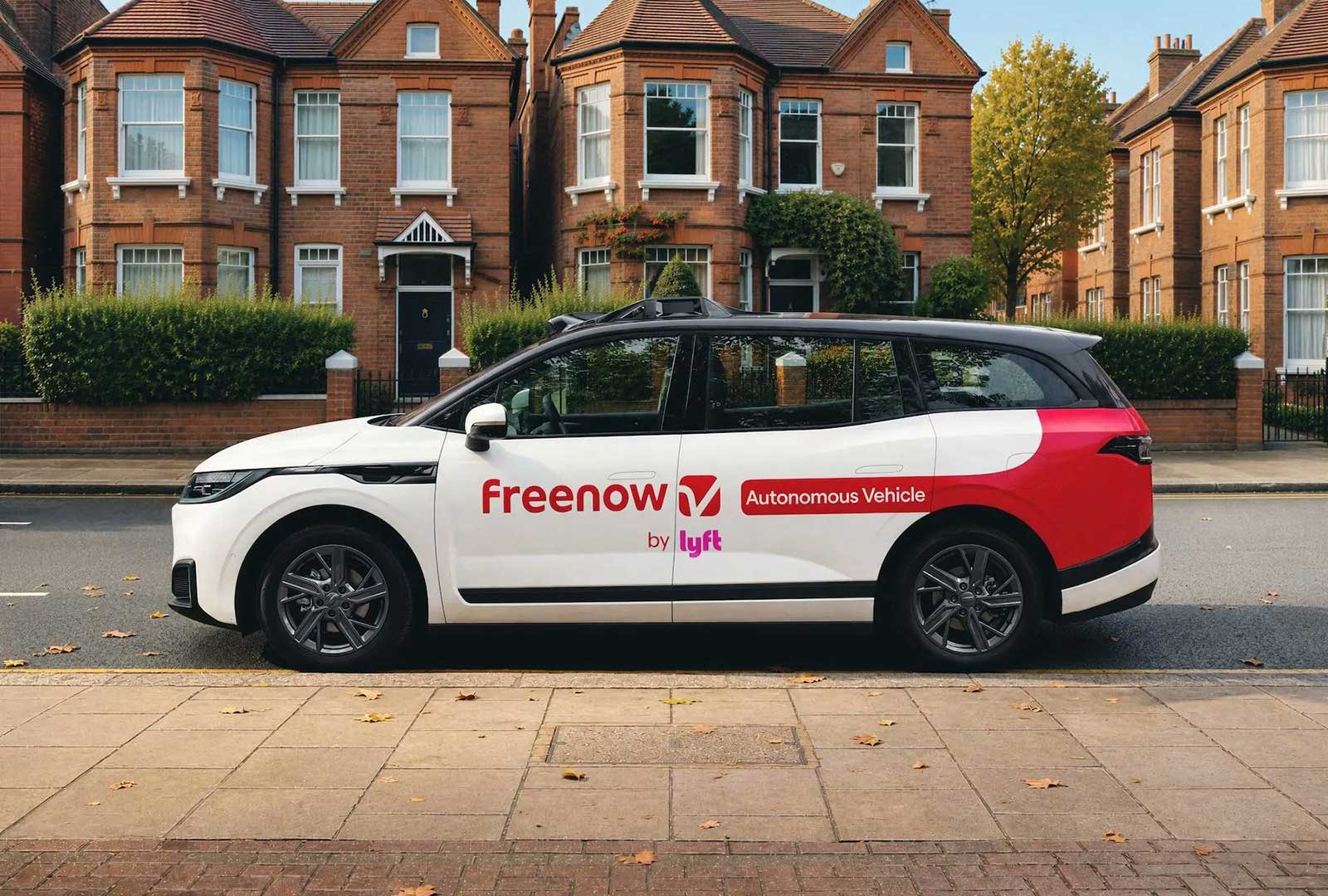
Rob Grant: This is great. As The Clash said, London is calling. And so Baidu is using FreeNow’s existing Transportation for London private hire operator license as the commercial wrapper for supervised safety driver trials in Brent, with true driverless operations pending the Department for Transportation’s national authorization in the UK targeted for 2027. Also on the Uber platform, Baidu is testing in Brent as well. We understand near Wembley Stadium, if anybody’s a big fan of tennis or in terms of concerts, as we just mentioned. So as you can see, Baidu is testing on both Uber and Lyft networks. The announcements were made within an hour of each other, with Uber coming first. As our very own Grayson picked up, Uber’s post had a Photoshop picture in it, which thank you for Baidu for responding, telling us where the actual photo and where the, the, the logos will go on the vehicles that were going on the road, in the back of the vehicle. Looks very nice, but thank you for responding. And Lyft posted a real photo. and so big news because London is now becoming this amazing kind of bake-off. You’re going to see the UK’s own Wayve operating there. You’re gonna see China’s Baidu operating there, and you’re gonna see Waymo’s, the US’s Waymo operating there. So this is like the Olympics of driverless vehicles. You remember, what was the Olympics in 2012 in London? Michael Phelps won, like, 47 medals or something that year. It was awesome. I think, was it “Call Me Maybe” that was the song of the summer then? Usain Bolt, which was amazing, his, his run as well. but yeah, London is the place to be and it’s really interesting. You have a little bit more details on Baidu’s Apollo Go’s entry into the market and its partnership with FreeNow
Grayson Brulte: I put on my ins- in- inspector hat, change hats from the, from the KPMG hat to the inspector hat here. Noticed some really interesting patterns on X, which are really important for the audience to, to want to point out. One, the photograph that Uber put out an hour before on X was photoshopped. It was the original Baidu RT6 press photo. They photoshopped on the UK where you have to have a disclaimer around privacy. So, wha- what does any good inspector do? They type in the address. Not found. I posted a screenshot on X, said, “Uber, what’s going on? Your photoshopped image doesn’t work.” Uber doesn’t respond to me. I don’t think they like me these days. Baidu responds and says, “Thank you. The issue’s been fixed.” So the Baidu team, thanks for following us all the time. Thanks for, for, for being on top of that. Then an hour later, Lyft photo comes out, not photoshopped by the way, very beautiful photo. They actually released three photos. And I asked the question, ” Where is the Baidu logo?” Well, again to the Baidu team, thank you. Baidu posted a photo on X showing the back of the vehicle has the Baidu logo on it. Very interesting there. Furthermore, Lyft, by Free Now, put out a very elegant blog post. Uber, crickets. I don’t know what that means, but I find this behavior to be very, very interesting. And furthermore, testing out in Brent, I find that to be very interesting where this testing is not occurring in Central London, and why is that important? One, this is the first Western market where Baidu is testing right-hand side drive, like we discussed with Hong Kong. Two, there have been multiple photographs posted on X of Waymo testing in Central London in Westminster. Why is Waymo able to test in Central London? Baidu is in Brent. Wayve is out by the British Museum. Just little interesting details if you want to put on your honorary inspector hat here
Rob Grant: I think those details are great, and I love the hat by Jove. It’s wonderful. I think it’s– A couple of things in addition to the things that you point out that are really interesting is the, the, the vehicle, the RT6 platform, right? this platform is priced pretty reasonably at about $30,000 per unit and was engineered for high volume deployment in Chinese suburban grids. Now, you– as you mentioned, Baidu is coming over to test in a Western market in a left-hand traffic, and they’re doing it in the City of London, which I know, you know, Brent is — each part of London is, is, is very unique and, and they have their own heritage and things, but the driving circumstances are much different than in the Chinese suburban grids, no matter where you are at. And so they’re going to get and encounter a lot of edge cases to help validate their sensor confidence a lot of feedback on the RT6 platform get a, a better sense of kind of feedback from Western expectations of what that vehicle should be in terms of you know, understanding what the vehicle maybe needs to be configured a little differently for Western markets, right? But also, right, it’s likely, and I, and I say this not only because of regulatory reasons but also because of the ability to accumulate data in left-hand drive markets, the ability to validate that data, the, the, the kind of kind of patient progress that we’ve seen out of Baidu, that we’re likely looking at, I would say, at least three to five quarters, if not more, of supervised data accumulation from Baidu in this market. And some of that will be because the, the regulations to go driverless are still out there. But I would say even if they had the ability to do so now they are going to be patient about the data accumulation and validation of the technology in their first Western market. but it is, it is a, it is a big signal that they are going to be operational and people can engage with their technology in London. It is something that we’re seeing increasingly out of the Baidus of the world, the WeRides of the world, and the Pony AIs of the world, which is bringing their technology out of China and into markets across the world. And we’re seeing slower, much slower willingness and capability to do that from the US side of things. We’ve mentioned that Waymo is, is there, but, but they’re not running a public operation yet. you know, and, and it will be interesting to see when, ’cause I would love to be able to go to London and take a ride in a Wayve, take a ride in a Baidu, and take a ride in a Waymo, and really compare the experience
Grayson Brulte: That’s gonna happen because a little birdie called me, and so I can be the honorary autonomy AI travel agent. We didn’t build a travel app. I’ll tease that to the audience. But yeah, we are gonna do that, and we are gonna take, Rob and I are gonna go on the road. We’re gonna go to London. We’re going to experience these things. And y- if you look at the London market, a few interesting things there. Baidu’s agreement with Uber and Lyft is non-exclusive. So from your experience, my question is, who’s gonna get allocated cars? And then if you look at three to five quarters, what you say, you have quite a long time there. Wayve has publicly stated in multiple releases, including Uber releases, that they’re gonna launch supervised. Waymo, if everything goes right and TFL gives approval, Waymo will be operating in London. Don’t know where, ones that wanna classify that driver-out before anybody. That’s just a, a further black eye for this divorce with Uber
Rob Grant: Agreed. And, and, you know, it’ll be really interesting to see how that relationship between Uber and Baidu goes. We now have a precedent with the Uber-Waymo relationship about the demand aggregator versus the stack provider and the vehicle operator, right? it, it doesn’t portend good things for a long-term marriage here. That’s, that’s what I will say. I have a lot more to say about that, but if you want more, you gotta ask for more you know, outside of this conversation. But the precedent has been set and I don’t think we’re, we’re seeing a marriage of convenience for now less, I think, a durable, that’s the word of the day and word of the week, a durable marriage between the two of these entities. As for Lyft, we’ll see. you know, Lyft is, is an interesting player in all this. I don’t know even how much of the London market Lyft operates in. You know I’m not sure if that’s growing. I’m not sure, you know. I think Baidu is trying to maintain as much flexibility as possible, right? Which is why it hasn’t done exclusively with Uber. Uber certainly not looking for exclusivity from Baidu, given its partnership with Wayve. So that’s why I really think a lot of this points to a, a, a time-limited marriage of convenience between Uber and Baidu. Also, I should note I made a mistake because I’m tired and I haven’t had enough of my Dr Pepper Zero Sugar. I think I said something about tennis in London in Wembley. That is Wimbledon. I know they’re two separate places and two separate locales. So just for any of our London folks who are like, “Who is that American idiot who doesn’t know his geography?” Well, there’s a lot about geography I can learn, but in this case, that was just a simple mistake
Grayson Brulte: Forgiven. We’ll have a history tour when we’re in London. I know a lot of really great historic sites. Wembley is the pitch. Let, let’s move on to the risks here because the marriage of convenience has a lot to do with this first risk OMEGA has uncovered. UK government imposes data sovereignty restrictions on Chinese origin AV sensor and mapping data, forcing Baidu’s stack suspension and stranding Uber, Lyft fleet commitments. You might say, “Oh, here they go. This is a Trump talking point.” No, all you have to do is go back to the Cameron administration with Huawei for an example that this has happened before
UK Data Sovereignty and Chinese AV Technology Risk
Rob Grant: Yeah. Pa-pa-past is good precedent to keep in mind here. Look, you know, it is not just a Trumpian concern. while it is a concern for Trump certainly and his administration, it was a concern for the Biden administration, right? They are the ones that adopted the connected car rules here in the United States. Of all the things that draw bipartisan support in the United States, it is this concern with China. whether founded or not there is a concern. And I think that same concern will pulse through Western markets as the Chinese presence of AV and, and physical AI technologies start to appear more frequently on their city streets or on their streets or in their homes or in the products that they buy. And so it’s not necessarily a concern about Baidu in particular, right? It just happens to be, in this instance, Baidu is the first one there publicly. and so I think this is a valid concern. Now, we have a change, yet another change in government in the UK, so we’ll see sort of where this concern rises in the political spectrum of things to focus on as a new government comes in. But I think it’s a real concern. and I think it will probably, in all likelihood, be a, a, a central part of the discussion that DfL and CCAV and other folks in the UK government as they begin to discuss the rollout of this technology. it might not be pitched in terms of a Chinese-specific concern when we see certain rules about either, you know, domestic housing of the technology here in compliance with, you know, GDPR or other concerns about how you process data and then how you move that data, about personal data, right? These are All vision-based systems, if not vision and lidar-based systems, so they will capture people’s faces and, and, and, and routes and trips and things of that. So I think whether or not it is pitched as a specific concern over Chinese technology, concerns about data, about privacy, about storage of data, processing of data, sharing of data outside the borders which will run both towards the East and the West, right? Because we- we’re going to have Waymo coming in and, and getting this data as well. where will they process it? Will they share it? Will you know, will they store this data in the UK? Will they store it in Ireland? Will they store it somewhere else, right? Similarly with Baidu, where is this gonna be concerned? So I think this is a very valid concern. but I would say, you know, as you’re looking at the development of the, the final kind of permission to move forward with driverless operations and the final rules and regulations around the law they passed in 2024, you’re not looking for a chapter that says Chinese concerns, right? It will be pitched in a much more diplomatic, running towards both East and West, concerns about data, about privacy, about storage of personal data, about processing of the data through the different sensors and the accumulation of all that into you know, the final product that both appears on the car and that is both taken off the car as people use the data for simulation training and other things of that nature
Grayson Brulte: That’s all true. Then there’s this risk that OMEGA highlighted, which I think goes back to the marriage of convenience. Baidu leverages non-exclusive structure to negotiate preferential terms with one aggregator, triggering a competitive imbalance between Uber and Lyft in the UK market. That is something
Rob Grant: That is definitely something to watch. you know, the ultimate question of who has leverage in these relationships is really interesting. I think it’s not always universally running in one direction or the other. I think there are a series of things that kind of push leverage more in one direction than the other, and we’re seeing this kind of chess game about leverage play out in real time as Baidu begins its operations on both networks. And in the same market, Uber has already gone with another player. and so you’re starting to see both directly and I know indirectly, the push for leverage and who ultimately gets to set the, the terms of this deal as they move forward
Grayson Brulte: I am super excited to watch this because what you and I and OMEGA analyze stuff, it’s incredible. And, and, and OMEGA’s been spot on on a lot of this. And thanks to your background and all the great training that we had to put you through to, to teach the, the OMEGA something, she’s got a regulatory outlook like nothing I’ve ever seen. And this risk OMEGA uncovered, which I have not seen reported anywhere, I think it might have come from the brain of Rob, and I’m gonna read this one here. “If the Department for Transport does not publish the final statement of safety principles under the Automated Vehicles Act of 2024 before Q3 2026, Baidu’s AST-E application timeline compresses to the point where a 2027 commercial launch requires regulatory approval within six months of application submission, a timeline with no precedent in UK transportation licensing history. The impact is a 2027 launch probability drops from 55% to approximately 25% for CCZ incl- inclusive operation, according to OMEGA.” Regulatory prediction, Rob thoughts.
Rob Grant: I think this is, this is fantastic. and it is kind of freaky how OMEGA and, and I have a mind meld at times. look, basically what this is saying is the longer it takes to put these rules in place, the shorter time there is for approval of an application under the rules for Baidu to meet a potential launch in 2027. And that is because even though the rules are in place, then they have to apply the rules for the very first time. And that generally, regardless if it’s the DFL, the TFL, the NFL takes time. The first time you do anything, it takes longer to do it than the second or third or fourth time. Now, you would hope that things get exponentially faster. A lot of times they do. We’re dealing with government, so a lot of times they don’t. See California and its approval process for driverless applications. It’s gotten somewhat better, but it’s still a very long process. and so this is a real risk, and it’s not necessarily a risk within the full control of Baidu, of Wayve, of Uber of any player. Now, they can certainly try to influence the, the expeditious rulemaking and expedited approvals, but government’s gonna work on government’s time. and that is a real risk here for commercialization of driverless operations for Baidu, and I think the percentages expressed by OMEGA, I would fully agree with
Grayson Brulte: And, and here is the last risk. This is something that I, I, I don’t know how OMEGA uncovered this. I don’t know if it went and, into the Tower of London, into a basement somewhere in a, in a pub and, and raised the ghost of Charles Dickens. I don’t know how OMEGA uncovered this last risk here. ” Transport for London’s congestion charge is subject to annual review. A proposed increase to 18 pounds per day under TfL’s 2026-2027 budget consolation would increase fleet operating costs for any non-exempt vehicles and c- and complicate the dispatch economics for trips crossing the CCZ boundary, even though the RT6 as an EV currently qualifies for the 100% discount that is scheduled for review in 2027 if the tax applies to robotaxis.” I just, I sit back and I’m like, th- this OMEGA is looking at every possible angle of wh- of, of, of what if this, what if that? We all know what happens when there’s a budget shortfall. What’s the new shiny toy? Is that what OMEGA’s saying there, but in a, in a very elegant, classy, economic way?
Rob Grant: It’s super interesting too because this congestion charge, right, CCZ standing for congestion charge zone, is very high. So, you know, normally I would say if, or at least I’ll say in my experience, if Uber and Lyft were to, say, get a per ride fee for congestion of, like, 25 cents or 15 cents. We’ve seen this, that sometimes they’re applied, like city of Chicago puts a wheelchair accessible vehicle fee on top of it because there aren’t enough wheelchair accessible vehicles on the Uber and Lyft platform, so you pay a 15 cent, like, surcharge every trip. Or in San Francisco, they apply a charge for lack of EV, which is, like, 25 or $1.25 per trip. They generally pass that, and you definitely see it at airports where there’s an entry fee, right? It’s like $4 or $7, and they, they pass it through to the consumer. It just shows up on your bill. You’ve got your, your, your charge for the ride, you know whether that’s time and fee or time and distance charge or whatever it is, and then you’ll see these surcharges, and they often include these per ride taxes or per vehicle fees for entering a certain area. At 18 pounds, you can’t pass that on in every ride. That’ll just. nobody will use the product, right? and so it really does, in this instance, as OMEGA is pointing out, it does alter the economics because normally you would just pass that through. but you can’t do that at 18 pounds every time a vehicle goes through the congestion zone area So it is a potential risk to the economics. And, and how do you, how do you then approach that? Do you, do you eat that, right? Do you limit the number of vehicles? Do you keep the vehicles within the congestion zone, change their routing so once they’re in, they don’t come back out, so they don’t get the charge again? If so, you know, does, does that limit the fleet density in the area? So it really adds elements of real meaning to both fleet economics, but also operational operating conditions, fleet utilization, fleet density, all that kind of stuff. so it is something to be very cognizant of when operating in a commercial capacity in the years to come. And I’m sure folks, if they weren’t aware now or weren’t aware before, they’re aware now at Uber, Baidu, and others, that this is something that they may wanna talk about with the government in terms of why should we be exempt? What– Maybe if we’re not exempt, is there another way to understand how this fee might be charged? Are there. Is it a per time every time you cross the boundary? Is it something you can do if you’re, “Hey, look, we’re not a privately owned vehicle. You will know where this vehicle is. You will know how many trips in and out it is. Maybe there’s some other way to account for an EV doing this. Maybe it shouldn’t be subject to charge at all. Maybe it should have a different charge. Maybe it should be based upon, you know, if you hit a certain number of rides that took away from rides that would otherwise be in a internal combustion engine vehicle that you then get reprieve from the charge.” So there’s ways to, to, to skin the cat here that could be less impactful, but if you don’t engage, ’cause maybe you don’t know that you should engage, you’re gonna be as they say, “If you’re not invited to the table, then consider yourself part of the menu.” So you know, get engaged
OMEGA’s Full Strategic Assessment of Baidu’s London Deployment
Grayson Brulte: They get engaged by calling us. We’ve, we’ve got decades of experience. You and I are like grandpas in, in this industry. We, we’ve s- seen a lot. Wrapping this up, Rob, OMEGA has a very dense, she wrote this, not me, take. And I’m gonna read this here to get your take, ’cause this one has to be read in full because it’s so darn good. ” Baidu’s RT6 London deployment is a regul- regulatory choreography play, not a technology demonstration. Supervised safety driver trials under standard UK road law are being marketed as a Western AV breakthrough, while the real inflection point is 2027 driverless commercial authorization, which remains contingent on unresolved data sovereignty, NSIA scrutiny, and ODD expansion into inner London. The cost moat is structurally real. 20- 27.5 thousand to 30,000 manufacturing baseline survives even with 100% landed cost upfit. But the commercial architecture, non-exclusive, undisclosed take rates parallel Western hedges by Uber with Wayve means Baidu is a hardware supplier competing on price in a platform game it does not control. The 2027 driverless authorization window is the single binary event that either validates or collapses the entire thesis.” A platform that it does not control is a theme that you and I have talked about. At some point, I’ll state here for the record, Baidu will leave Uber. And OMEGA hit the nail on the head with that long take. Thoughts?
Rob Grant: 100%. This is why we refer to it as the Waymo precedent before. Th- this, this is where things are going to head with any AV stack operator who can have the financial wherewithal, build up the consumer demand, build up knowledge of its product and have the capital commitment from a, of a parent to go out on its own. so I think what you will wind up seeing is, is eventually Baidu and Uber separate, which is why Uber is already partnering with Wayve there, right? Uber is taking the approach well discussed by us, of ensuring a fragmented market. They do not want a winner-take-all market, and I don’t mean that in the sense that there is one global winner. I think they’re even worried, ’cause either way, I see it in the next five years, is a regional dominance from each area, right? Waymo perhaps dominating the US market, Baidu dominating perhaps the, the European market, WeRide perhaps dominating in the Middle East. you know, Baidu, WeRide, Pony, any of them or all of them kind of dominating in the Asian markets and leaving Uber kind of a consistent second place, looking to try to preserve its space in the AV robotaxi market by finding secondary winners, right? And trying to aggregate the secondary winners together. But that, that, that is not a position of strength for them. So a super fragmented market in each of these regions puts them more in a position of strength. but what this is also saying is, is some of that strength is not necessarily bound up in its demand aggregation platform. It’s bound up in its ability to influence regulatory outcomes, in this sense, both the speed at which commercial driverless operations happen in UK in this instance, which adheres anything slower adheres to the benefit of Uber not faster, right? They are not– They don’t benefit by faster regulations. They benefit by slower regulations. A slower burn adheres to the benefit of Uber. and then secondly, because of geopolitical concerns, right? The mention of NSIA here, for those who don’t know, is the National Security and Investment Act that was passed in the UK that provides authority to u- different agencies in the UK government to look at things that might impact defense or privacy or important aspects of the UK economy as from a kind of a threat level perspective of allowing foreign market entry to dominate in these areas. And so it’s also benefiting with, from a potential concern that we raised early on, which is what is, what are those questions around Chinese technology in the UK? where is the political winds going to blow on that? So I think this is a very sophisticated take, and I think its thesis is that if commercial operas- operation by Baidu is available in 2027, then all the things that we talked about on the road to divorce, on the road to regional domination, to regional kind of market dominance by different players, that all gets put into play and, and that, that moves forward along that path. If it gets delayed past 2027, that means there are perhaps structural moats that yet have to be, still have to be overcome by a Baidu to dominate a region like the UK or Europe, and that is a signal unto itself. So that is why 2027 becomes the structural thesis which either proves or disproves what OMEGA has put forward here
Grayson Brulte: 2027 is the year to watch, and OMEGA’s put an analysis together on 2027 and what could happen and what signals to watch. And if you’re interested in that, send an email to [email protected], [email protected]. Each and every week, Rob and I will be here breaking down the signals powered by our proprietary AI model, OMEGA. And so reach out. We’ve got a lot of stuff coming. The future is bright, the future autonomous, the future is scaling autonomy globally and watching for 2027. Rob, we went all around the world. We had a deep dive, sir, and I learned a ton and had a ton of fun
Rob Grant: Agreed. I, I, I love learning and this is great, and I love talking about where things are gonna go, and I think I’m anxious for the future, excited for the future. I shouldn’t say anxious, but excited for the future
Grayson Brulte: Excited ’cause the future is bright
The future is bright. The future is autonomous. The future is The Road to Autonomy.
Subscribe to This Week in The Autonomy Economy™
Join institutional investors and industry leaders who read This Week in The Autonomy Economy every Sunday. Each edition delivers exclusive insight and commentary on the autonomy economy, helping you stay ahead of what's next.