


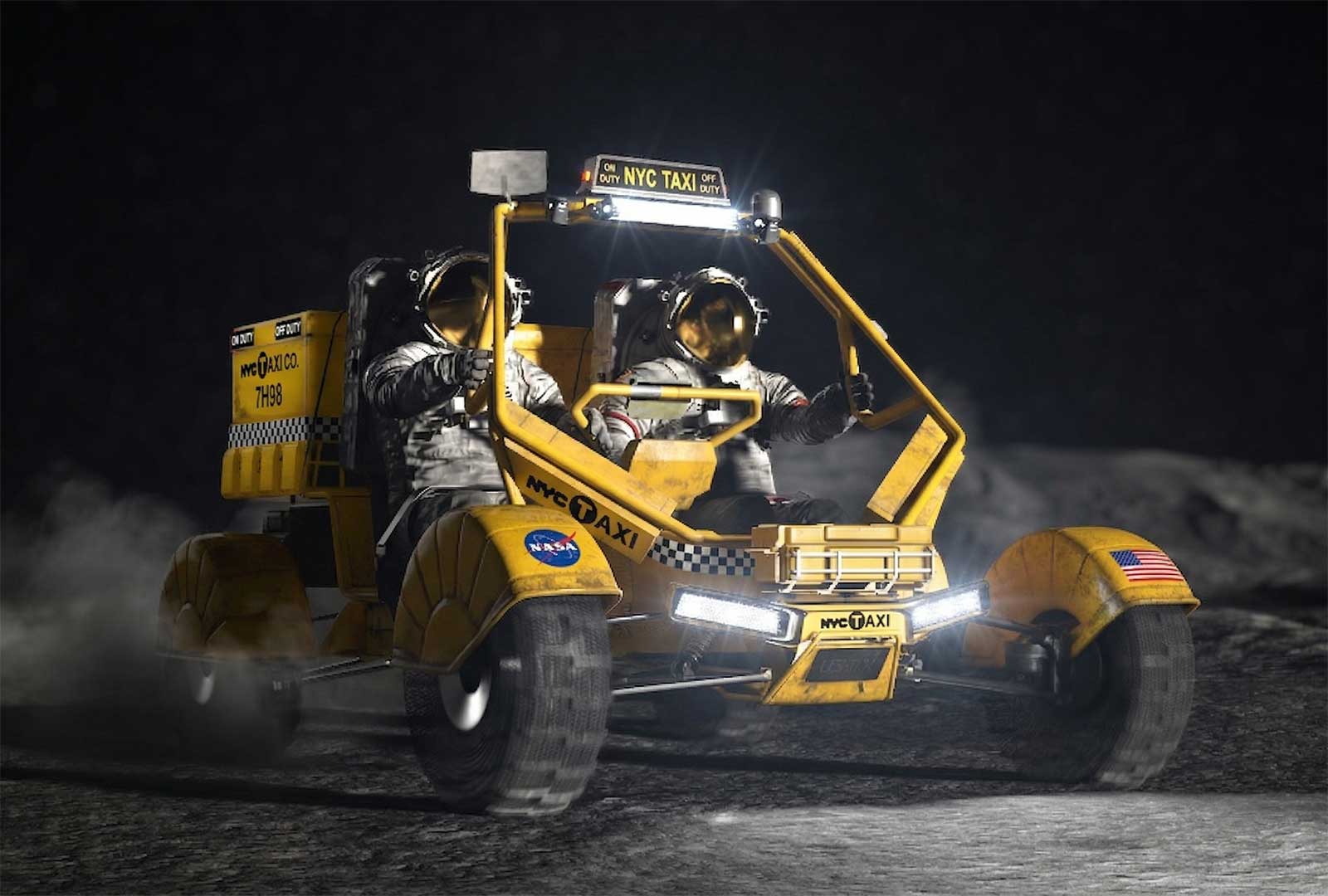
Self-Driving Cars on the Moon Before New York City?
Executive Summary
This week on Autonomy Signals, Grayson Brulte and Rob Grant discuss the nuances of human-supervised automation in the Artemis II mission and the growing divide between deep space and low Earth orbit capabilities. They also analyzed Amazon’s strategic acquisitions of Fauna Robotics and RIVR, explaining how this two-vector strategy creates a highly valuable real-world data flywheel for embodied AI. Wrapping up the conversation they discuss the growth of maritime autonomy, highlighted by Saronic’s $1.75 billion Series D, which signals the US Navy’s shift toward distributed uncrewed surface vehicles (USVs).
Key Autonomy Signals Episode Questions Answered
Is the Artemis II mission fully autonomous?
No, the Artemis II mission utilizes human-supervised automation. While the launch sequence is automated, human launch directors at the Kennedy Space Center retain abort authority at all times, preventing the event from being classified as fully autonomous.
Why did Amazon acquire Fauna Robotics and RIVR?
Amazon’s dual acquisition is a strategy to build a training data flywheel for embodied AI. By bringing Fauna’s unstructured human-interaction data and RIVR’s last-mile logistics data under one roof, Amazon gains a competitive advantage in securing real-world physical AI data that pure-play robotics startups cannot organically match.
What does Saronic’s $1.75 billion Series D funding signal?
Saronic’s historic capital raise signals that maritime autonomy has officially crossed from prototype demonstrations to industrial-scale production. It indicates a major shift in the US Navy’s acquisition doctrine, moving away from centralized capital ships toward distributed, software-defined uncrewed surface vehicles (USVs).
Autonomy Signals Topics & Timestamps
[00:00] AUTNMY AI
Welcome to the debut of Autonomy Signals, a new show co-hosted by Grayson Brute and Rob Grant. The hosts set the stage for a weekly format designed to cut through the industry noise and deliver the most important signals in the autonomy economy.
[01:10] Signal 1: Artemis || Launch and the Autonomy Gap
A deep dive into the Artemis II mission, clarifying that the launch was a human-supervised automation event rather than fully autonomous, as Kennedy Space Center directors retained abort authority. Grayson and Rob discuss the significant gap between low Earth orbit capabilities and deep space autonomy, pointing out investment mispricing regarding future requirements for autonomous flight termination systems.
[25:21] Signal 2: Early Signs of Embodied AI Consolidation
An analysis of Amazon’s simultaneous acquisitions of Fauna Robotics and RIVR, which form a powerful “data flywheel” by capturing both unstructured human interaction and last-mile logistics data. The hosts evaluate how this signals massive structural consolidation in the physical AI sector, while also discussing BMW’s factory deployment of Hexagon robots and the looming EU regulatory and labor roadblocks.
[57:12] Signal 3: Maritime Autonomy
An exploration of the rapid industrial scaling of maritime autonomy, highlighted by Saronic’s historic $1.75 billion Series D funding. This capital event signals a major shift in the US Navy’s acquisition doctrine toward software-defined, distributed uncrewed surface vehicles (USVs). The segment also covers Hyundai securing DNV type approval for commercial autonomous navigation in Norway.
[01:16:46] Signal 4: Polymarket AI Bubble Odds Decline to 19%
With Polymarket odds of an AI bubble bursting dropping to 19%, the hosts argue that the “bubble” narrative is fundamentally flawed. Instead, they suggest the market is undergoing a structural sorting between companies building durable compute infrastructure and those selling unbacked promises. OMEGA notes the real risk is negative enterprise returns caused by workforce integration gaps.
[01:23:39] Closing
Grayson and Rob wrap up the episode’s insights and invite listeners seeking bespoke, customized research reports from their proprietary AI algorithm to reach out to alpha [at] autnmy.ai.
Full Episode Transcript
AUTNMY AI
AUTNMY AI AD: Right now somewhere a company is making a move in plain sight. The street reads the headline autonomy. AI sees the signal, we deliver it before the market catches up. Autonomy, ai, your models, our intelligence. Request a private strategic briefing at AUTNMY.ai.
Grayson Brulte: Rob, the autonomy economy continues to chug along and grow and the good news is the odds of an AI bubble on Polymarket as of April 8th, 2026 at 12:00 PM they are declining. They’re down to 19%. So good sign there. And then we’re going back to the moon. Really good sign there. We’re getting signals as well from OMEGA on embedded ai and we got some very interesting signals outta Norway on maritime.
Signal 1: Artemis II Launch and the Autonomy Gap
Grayson Brulte: Let’s start with, I’ll say the coolest topic of the week, which we’re getting signals on which are different from the headlines. The Artemis two launch, NASA job Well done. Jared Isaacman. Thank you NASA. Thank you. This was great. What are the signals we are we uncovering from that launch? Rob?
Rob Grant: first of all, the images from, The, the dark side of the moon, so to speak, that they’re sending back from, the Artemis mission in Orion is fantastic. I just love it. I can’t get enough of it. I’m talking about it with all my kids. It’s, it’s fantastic stuff. So, I mean, some of the, the, the signals that we’re getting, and it really is, here where the details matter, right? So what we have in this great venture back into the moon or, or around celestial bodies, is that we have seen a human supervised automation event with the launch, from Kennedy Space Center, and not necessarily an autonomous one. And, and the signal here is that I think. There is a lot of kind of misnomer of how autonomous everything has been with this spacecraft. And so if we take a step back and we go back to, the launch day, which was Saturday, at about t minus 33 seconds, the automated launch sequencer assumed command of the launch. But here’s where it really, the details matter. Human launch directors at Kennedy Space Center retained abort authority throughout making the Artemis two launch a human supervised automation event, not an autonomous one, and that the difference is really that the sequence is automated. It’s not autonomous because of the presence of human override authority, which was never relinquished. And I think this is important because this is really, a significant difference between what we see from the SpaceX and, and, launches, which are to be fair not into deep space. They’re into low earth orbit, which are fully autonomous. Now, make no mistake, there is a ton of autonomy architecture, built into the Orion spacecraft by Lockheed Martin. But, and including post separation, where the Orion integrity is operated on fully automated flight software. But again, commander Reed Wiseman holds the manual abort authority as a backstop. So, I think this, this is a really good distinction for people to understand about where we stand with the deep space. Autonomy, sector, which is that a large majority of what is going on is an automated sequence, on the verge of full autonomy. But the abort, the ability to abort a mission, still needs human oversight. And I think this will be important for many reasons, down the road in terms of transition to commercial space, from, from, deep space to commercial applications, but also in terms of, how does the market take account of, the, the, the players in this space for building the, architecture for Artemis three.
Grayson Brulte: Really, if you think about it, and I’m gonna use simple terms and go to our backgrounds and vehicles, it’s supervised autonomy right now. And if you compare and contrast to self-driving vehicles, to spacecraft, it’s, it’s at that early stage. And if you want to use the SAE levels of automation, it’s almost that. The NASA Artemis program is an SAE leveL2 program on its way to become a leveL4 as they go further and further into deep space. And I wanna give some really interesting numbers here for the audio because these are historic numbers that are very important as it relates to the Artemis mission. I want to give some numbers because these numbers are absolutely historic. The Artemis two crew went 252,756 miles away from Earth. That’s impressive. And to put that in context, that is the furthest a human, at least a US astronaut or Canadian astronaut has ever gone that it went 4,111 miles further than the Apollo 13 mission went in 1970. That’s historic into deep space. They went around the moon, and to give some context around the moon, they were only 4,067 miles above the lunar surface. We’re getting closer, we’re going back and, hey, here’s the best part. There’s no TV studio controversy this time, but it was semi automated, not fully automated.
Rob Grant: That’s true. And look, and some of the learnings that are coming from this mission right there, there’s so many, but in particular on the autonomy side of things, right? That distance right, the, there’s a, an enormous communication delay with the, the distances that you’ve just mentioned, 250,000 miles from Earth, right? So even if you wanted earth-based intervention with something on the spacecraft on, on Orion integrity, it will take one to one and a half seconds, to send a signal up there, which is just too much time, if there’s a critical event. And again, so this is why we see, even though once Orion integrity separated from, its boosters, it is on an autonomous flight system. The autonomous flight termination system, the capability to self abort is not there without human intervention. And so some of the more critical safety decisions in this entire launch, and mission remains within human functions. That being said, a ton of what is going on up there in terms of system activation, pressure regulation, altitude control, corrections, things of that nature, the entire flight path. These are executed on autonomous logic trees, with, with the autonomous system controlling those features. And so while it might not be a fully autonomous launch, as we think about it, as you said in the L2 to L four spectrum, this may not be an L four launch, from end to end. There is a ton of what is going on here. It’s fully autonomous, but with the most critical function still being retained for human oversight. And, I think what we will see and my understanding of the Artemis program is that as we move to Artemis three, which is when we physically put humans back on the moon, which again hasn’t happened in my lifetime, be an amazing achievement, I think we’ll see a couple of things, that are gonna be really interesting. One, perhaps we’ll see a requirement for the autonomous flight termination system to be fully autonomous for that, ability to abort, to be handed over to, or has the capability at least to be handed over. To the autonomous architecture. And that’ll be interesting to see if that, that is where, where things go. And I think that is where things are going. And then two, on Artemis three we’re going to see the use of lunar terrain vehicles, moon buggies as some folks that are a little bit, in my generation or older might remember. And these will be required to have self-driving capabilities. Listen to that again. They will be required to have self-driving capabilities. And Artemis three is scheduled to be, commissioned and begin in 2028. So we are looking at the very distinct possibility that we will have self-driving cars on the moon before we will have them in New York City in Boston, which is, which is unbelievable to me.
Grayson Brulte: And you know how you summarize that it’s not a technology problem, it’s a policy political problem. If the United States of America, under the leadership of NASA can send men and women 252,000 miles away semi-autonomous and then deploy fully autonomous self-driving cars on the moon, we do not have a technology problem. We have a policy problem, and to the individuals that live in New York State and in Massachusetts, that should be your wake up call. No other way to say it. Well that’s coming. And we all know that self-driving is scaling. We’re starting to see OMEGA really picked up on a competitive landscape in the space economy, which will be part of the autonomy economy, where you’re starting to see, if you want to use the term markets, two markets evolve. You’re having the, the, the lower orbit and the deeper orbit markets evolve where SpaceX is dominating the lower orbit and they are doing a fantastic job on the verge of a reported substantial IPO, perhaps one of the largest in history. We’ll, we’ll find out in the coming months. And you have deep space, which Lockheed Mar and is looking to gain a competitive advantage there. What are you seeing, how these markets are going to evolve? And let’s not forget SpaceX is going to deep space. They’re, they’re building the rockets at some point. Does this become a race to autonomize? No pun intended. Space where we’re eventually, we’re gonna go from L2 to to L four in space. Is SpaceX gonna accelerate this with Lockheed?
Rob Grant: I think they absolutely will. I, I, I think what’s really interesting here is that, you know, SpaceX has a, a data density advantage in this low earth orbit autonomy economy, right? They’re, they’re doing. Hundreds or have done hundreds of autonomous landing and docking cycles, that provide them a ton of real world, real time feedback on the autonomous systems that they’re developing for space, economy, whether that’s on the government side or eventually commercial side. However, on the deep space, autonomy side, the distances and the latencies that we talked about, that Lockheed Martin is having to deal with and learn from and collect data from SpaceX has no equivalent operational history or ability right now to, to gain that data. And so I think we’re seeing this, as you put it, bifurcated market, develop. Now that doesn’t mean SpaceX, I’d never bet against, Elon Musk doesn’t mean SpaceX won’t have the ability. To capture those data flows and really learn about the difference between deep space autonomy and low earth orbit autonomy. But right now, I think there is a, a clear divide between both the data flows and the learnings that folks are getting between those who are focused on low earth autonomy and deep space autonomy. and and this will have, I think, consequences, going forward in terms of where the government provides, advantages in the process for determining the Artemis three partners, Artemis four partners, Artemis, five partners, and eventually, deep space travel perhaps to Mars.
Grayson Brulte: I love to go to space, ignore the bad part. I’ll say from Hal Hallucinating in 2001 Space Odyssey. And look at the positive part where you’re taking a Pan Am spacecraft into that incredible space hotel. That is a great iconic scene, and that’s something that I personally to love to experience. And as OMEGA uncovers these signals here, she also uncovers risk. And for our audience who’s not familiar, OMEGA is AUTNMY AI’s proprietary AI algorithm that studies the autonomy economy that Rob and I co-created and we co-founded this company. And I wanna highlight and go through some of the risks that OMEGA uncover. As this signal which she uncovered here. One, she uncovered somatic conflation risk, and this was fascinating. And, and for the audience, yes, we did independently fact check this. There are several analyst notes describing the Artemis two. As a fully autonomous program, OMEGA says that it will generate mispriced expectations when the autonomous flight termination gap becomes a program requirement. The re-rating will be disorderly rather than anticipated. It seems that there is a, a mispriced in the market or a misunderstanding of how truly autonomous program is. Is that signal that OMEGA uncovered?
Rob Grant: Agreed, and we just talked about it, right? There is a, kind of bifurcated, understanding of autonomy between low earth orbit and deep space orbit. And right now the question is, will SpaceX’s lead? Data lead and fully autonomous launches, fully autonomous operations in low earth orbit, will that be able to translate into deep space orbit? And conversely, will Lockheed Martin, who is operating, the Orion spacecraft now and is a central part of this Artemis program, will they be able to, take what we’ve described as the L2 space, equivalent and turn it into an L four space equivalent? And so, this is not unlike other markets that we’ve seen where we’ve asked if traditional OEMs, with on the ground vehicles here can make the leap from L2 to L four, before those folks that are focused on L four are able to, really complete their product and then maybe work backwards to dominate the L2 market. And so I think it’ll be really interesting to see how this transition plays out because I do think. As, OMEGA talks about next, and I’ll let you, you, you cover it. I believe it’s going to be a regulatory requirement at some point in the Artemis program to move to fully autonomous operations, including for the, a boarding of the flight termination, process.
Grayson Brulte: Correct. Which brings us to the policy that you talked about the, the OMEGA said as a risk is the range safety regulation lag. The FAA’s commercial launch licensing framework does not currently mandate autonomous flight termination for SLS class. That stands for space launch system vehicles, meaning the procurement catalyst for that capability depends on the regulatory action. With no fixed timeline, you’re right, we’ve got a potential regulatory risk that OMEGA uncovered.
Rob Grant: Yeah, it’ll be, it’ll be interesting what, what the requirements are for moving to an autonomous light termination. Where will the government draw its parallels to? What will be the standards for that? How, how much will they require it to be, kind of a multi-party process. Will they want one vendor? Will they want multiple vendors? Will it be an RFP? All those things are yet to be determined. And so we’ll have to continue to watch what the regulatory requirements are. And I think, I think as we’ve drawn the parallel here, I think we will be able to follow that parallel from what is going on here on our planet as opposed to what’s going on on celestial objects. And so we’ll see, where our federal programs go on things like autonomous eval on, autonomous, autonomous, maritime vehicles, things of this nature where the government is directly involved and is contracting with folks for these services, right? I don’t know if they’re necessarily look at New York City and what they’re doing for autonomous robotaxis, but there were other parallels where the government is signing contracts, expecting certain, requirements to be met, certain technical specifications, certain fail rates, all that kind of, technical, requirements that these folks will have to meet in order for the government to feel safe enough to invest billions of dollars and to invest human lives, with the technology.
Grayson Brulte: There is, and we do have a maritime signal this week, which we’ll we’ll get to later. Very interesting there, but I wanna stay on the commercialization risk here ’cause OMEGA uncovered another potential risk in the commercialization of this technology in the private sector, not the public sector. OMEGA said, human rating certification, bottleneck potential. Any commercial operator seeking to license Artemis derived autonomy architecture for crude missions must clear NASA’s human rating process, which historically adds 24 to 36 months to any certification timeline compressing the near term commercial transfer thesis. There is a, I know we’re going back to this a lot, but there’s a lot of potential regulatory, because historically we have seen technology invented in DOD programs in invented in and NASA. We have, we can go back to what Mark Moore worked on the NASA puff and paper. We’ve seen stuff in Department of Defense, department of War that eventually gets declassified and commercialized, but now you’re, now you’re adding on a, a potential 24 to 36 month add-on because of the way that the commercial transfer thesis works. Wow there. There’s a lot of, I guess, a lot of signals in the market that point to, if you’re gonna license this, it could potentially be a lot longer than individuals are expecting, which could potentially give Lockheed and SpaceX a longer competitive, advantage.
Rob Grant: Absolutely. I mean, I think this, regulatory. Delay potential is real. We’ve seen it before with, with the programs that you’ve mentioned. We’ve seen it, where it takes just a long time. But I think what this does tell us is that there is real reason to believe that there is commercial potential out of the, systems and architectures and, data and other things that we’re learning from deep space autonomy. It’s one of the reasons I was so excited for us to execute on the Artemis program when it first came out, because I do believe, when people, just regular individuals and, and, and including investors, when they see the potential, right, and they see the promise, whether it’s here or in space, something that captures the imagination, I think it’s another proof point that this technology. Is real, that it will have, actual benefit to people and that, they want to experience it, and they’re supportive of it. And so I’ve, I’ve been a big fan of, of this program for a while. When I was at Cruise, I tried to get us involved in the program. That didn’t necessarily work, but I, I made a, a, a very, spirited argument for participating in the Artemis program because I think it is the ultimate validator. And NASA is one of the few fo, government entities that people support, whether you’re, you’re red, blue or anything in between. And so I think it’s, it’s just wonderful and it’s a huge validator for, both the reasons to go back, but also for, the autonomy economy general.
Grayson Brulte: It’s great. There, there’s two, there’s two things and, and I’ve been fortunate enough to have, have toured the Kennedy Space Center. Operating a cruise vehicle in that environment is not a very difficult environment, as you know. It is a very. Highly secure controlled environment where if you did have the origin at that point, you could put the astronauts in the origin. I think that’d be a great, an American story. And then going even further, I don’t know how far you went, we’re not gonna dig into this. You could have put the, the cruise vehicles in space. That would’ve been cool. We have a Tesla roast in space, but perhaps the cruise vehicles could have been the lunar vehicles. Hey, you never know. But let’s move on to OMEGA’s. Take ’cause OMEGA, as for our audiences know, she gives us great takes of proprietary algorithm on what she thinks when she uncovers the signals. And she has some really great takes on this. And I’m gonna read this one to you, Rob OMEGA assesses that the fully autonomous launch characterization, circulating and post mission coverage is anally incorrect and creates specific mispricing investors who accepted that framing. Will be surprised when the autonomous flight termination gap surfaces as a formal program requirement, likely in the Artemis three mission review cycle, generating a procurement event that current models do not an. This is not investment advice. This is just purely a take from our algorithm. She’s onto something here.
Rob Grant: I think so. It’s gonna be really interesting to see. As we’ve mentioned, if the autonomous flight termination gap needs to be filled for the art, art Artemis three program, who will be able to step up and fill that gap? And right now we, we have quite a few contenders from, from the names that we’ve mentioned today, Lockheed and SpaceX, but you also have other folks working on this program as well, right? Whether it’s Blue Origin, Virgin Galactic, whoever else might be out there. So it’ll be, it’ll be really interesting to see, who’s able to meet the bar that that will be set for autonomous flight termination,
Grayson Brulte: there’s a high bar to be set and OMEGA. This is another take from OMEGA. OMEGA. It says that the Artemis two launch data does not weaken the autonomy investment thesis. It extends its duration and concentrates its value in the flight, termination and range safety layer, which remains entirely unbuilt. Again, this is not investment advice. This is merely a take from an algorithm, but that is an area that you and I know is technically complex, but it’s also mission critical just based on the 250, 2000 miles away, the latency. Perhaps we’re gonna see some emerging companies look to build for that and not necessarily build the entire vertically integrated spacecraft in the future.
Rob Grant: I think that’s absolutely right. I mean, a lot of the, RFPs that were for Artemis two that I had a chance to take a look at, as well as for Artemis three, what you see is, is kind of multi manufacturers, multi, corporate entities competing, together. So they co come together and form a team and say, I’m gonna do X part of this. I’m gonna provide y part of that. So that could be one who provides, the hardware architecture for the rocket itself. The other could be the autonomous stack. Another could be, you know, when we eventually get the, the landing on the moon, we’ll be the, the kind of person who services the robotic arm that provides the ability to move the cargo from, the rocket to the surface. Another will be the lunar terrain vehicle. So it’s quite possible that we won’t see just one kind of winner take all. We might see multiple folks both competing, forming teams together to compete and then actually, winning the RFPs for different segments of this, including just for perhaps the autonomous flight termination segment.
Grayson Brulte: It’s becoming very clear from OMEGA and the signal she’s uncovering that there’s a lot of opportunity in the space economy. Before we move on to the next signal, I wanna highlight this incredible, incredible analysis that OMEGA did. OMEGA assesses that options flow in the autonomous vehicle and aerospace defense sectors. Over the past two quarter signals institutional acuma accumulation in names with deep space adjacency, inconsistent with the consensus view that Artemis two is a NASA budget story rather than a commercial autonomy catalyst. The divergence between public analyst framing institutional positioning is the alpha in this analysis. Again, not investment advice merely a take from an AI algorithm. Again, not investment advice, but really interesting data and the signals that OMEGA uncovered and that’s why you and I built autonomy AI to uncovered those signal.
Signal 2: Early Signs of Embodied AI Consolidation
Grayson Brulte: Let’s move on to the, the next thing that we’re going from space to embedded AI where we’ve been for quite a while here. The next signal is the early signals of embodied AI because consolidation is common. That’s what it appears in the signals that we’re starting to, to see the embodied AI sectors ongoing. A structural consolidation determine which platforms control the. Intelligence layer for the next two decades. That’s being driven by amazon’s simultaneous acquisition of Fauna Robotics and RIVR. It signals a two vector strategy, humanoid IP for unstructured environments, plus last mile autonomy for logistics assembled under one roof. Amazon’s got a flywheel going. Is this the early science of potential consolidation in embodied ai?
Rob Grant: I think it pretends more consolidation in the future, right? If, if you look at the acquisition, right, the consensus framing of Amazon’s acquisition of Fauna robotics, which make these cute little robots that interact. With humans and, and, and do other sort of small tasks, but it’s, it’s very, adorable. The, the robots they built and they socially interact and things like that, but they’re out in the real world interacting around humans in unstructured environments. And then also RIVR. Which for folks who are unfamiliar with RIVR this is kind of a, last mile delivery robot. It looks like a, small, cooler on top of four legs that have wheels on the bottom. And, they put the package in the, in the cooler or container, and then they release the, robot and it’s able to climb upstairs, able to go downstairs, able to move around, people able to, go up to a door and drop the package off and then come back. Again, it’s a, it, it provides, Data from a messy, unstructured, real world environment. And so this is how, I think you and I and OMEGA are seeing this acquisition. It’s not necessarily a robotics bets. Well, yes, these are robots. What Amazon is buying, is, is more than just hardware. It’s buying real world interaction data at this moment when there’s a scarcity of physical ai, for, real world messy, unstructured data. And so I really think that this provides Amazon a huge advantage. It creates this training data flywheel, that nor no pure play robotics startups can match organically. Right? And while the market is seeing this as two discreet m and a events, I think you and I and OMEGA see this as a single coordinated platform play. And I think. That signals to me, that if you are kind of a standalone independent, robotics manufacturer, such as Figure AI, physical intelligence, apron, it’s gonna be really hard to compete against a Amazon’s data accumulation rate. So as, as people long time ago, smarter than me said, data is the new oil. And here I think Amazon is trying to strike it rich with its two investments that are coordinated in order to get it, that real world data, that physical AI needs to improve. And I think Amazon, hit it outta the park with both of these acquisitions.
Grayson Brulte: Amazon did well, and they’re the largest, if not the largest robotics operator in the world. So it’s, it’s, I’ll put it this way, it strengthens the strength they’ve already had. They have the key robotics, and we’ve seen what that’s done to their delivery. So it, it only strengthens it, and this is a really good, in my opinion, a really good access for Amazon. I’ll be curious how they use it. And then you have to look at Amazon’s peers. You have to say, okay, what does Microsoft do? What does Google DeepMind do? The reason I bring up Google DeepMind, because they have a lot of really great robotics data sets available on HuggingFace that they’re, they’re on GitHub, and so they’re clearly working on robotics. And then you have the, the Chinese humanoid companies, and not a day goes by that I can’t go on ecstasy, a Chinese robot do this, a a Chinese robot, do that. And it seems that we’re in the battle for real world data where you’re going to need a lot of those edge cases. And you know this from your, from your days at Cruise and, and previous other companies. You need that real world data because somebody a lot smarter than me to use your line telling me once, not all data’s created equal simulation can get you so far, but you need that real world data. It seems that Amazon’s taking the two pieces of advice that you and I have independently gotten, maybe from the same person perhaps, and they’re trying to get ahead of this and, and build a competitive moat as they look to fully transform their business. And this is my personal opinion, but I believe that Amazon wants to truly become the world’s first autonomous company from the everything store to the Everything autonomous company.
Rob Grant: Yeah. And it’s, it’s fascinating kind of if you look at the, where they went out and acquired these companies, right? One is on the kind of human interaction side, right? Fauna is, is all based upon these, these small robots that are interacting with humans in unstructured environments, right serving humans, entertaining humans. Things of that nature. And so it’s much more of a social environment that they are, are gaining data from. And then RIVR is much more what you would think of Amazon. It’s a very much a logistics set of data, right? How do you climb up broken stairs? What do you do if there’s broken glass on the ground? How do you, deal with ice or snow or potholes? Things of this nature that, there’s a long tail of issues that, robots will face as they make last mile deliveries, right? They’re out in the, outdoors or interacting with different humans or interacting with vehicles, all sorts of things. Amazon went out and they found data from real world interactions with humanoids and, data logistics. Which really speaks to where Amazon is as a company. It is both in your house, right, with your, Amazon Echo or whatever you might have, and it is, at your front door, with their traditional logistics and Amazon Prime delivery. And they went out and they found two ways to get real world data in both of those spheres that I think are really gonna be helpful to them as they look to become more automated and, increase their margins in both spaces.
Grayson Brulte: Absolutely. And then on the back end of this, the, the signals that we uncovered on the Sean Ryan show, the Sean Ryan podcast, Brett Adcock, the, the CEO and founder of Figure ai. He said this and we had to fact check it and read the transcript, which we did, that they a figure AI can assemble a humanoid in 90 minutes. That’s right folks. 90 minutes, one hour and 30 minutes. Wow.
Rob Grant: Incredible
Grayson Brulte: So if, if figure AI can do that in a 90 minute span. Now the question, the signal that we need to watch for, when do we get an official press release or a post from Elon Musk guy next saying how fast Tesla can assemble Optimus, then if, if they are, if, if Tesla is hypothetically able to beat that 90 minutes. Now humanoids are going to go from a, a data collection issue to a manufacturing issue. And then this opens up all sorts of, of different things for us to watch in the market.
Rob Grant: Indeed. And, and we talked a little about this, about how you might increase your efficiencies of manufacturing last week on last week’s show, where we talked about, dual use of manufacturing platforms between, vehicle manufacturers, and humanoid manufacturers, and the ability to combine supply chains, learnings, manufacturing capacities, things of that nature. In order to make both the volume of humanoids, that we anticipate in the future, and also to increase your, margins in producing those, humanoids. And so, the fact that 90 Minutes is kind of now, the, the new bar to beat, it’ll be fascinating to see if these standalone folks, can continue to improve that while also getting the same volumes that are potential for anybody that’s kind of, doing this dual purpose manufacturing that we talked about last week, such as Tesla. I think what’s also really interesting is what we’re seeing is that, the data flywheel that we’re talking about and data accumulation and why that’s so important to training, these robots in the future. You have a couple of different approaches going on, and I think what we’ve also seen as a signal this week, in this same space is that, rather than looking for your all purpose, figure AI type of robot Optimus robot, that needs to be trained for human interaction generally, right? And all sorts of, features and abilities, we saw, BMW take a robot that they call, hexagon, which is a wheeled human weight and deploy it on their actual manufacturing line. And so this is a very specific use case that will allow them to gain a tremendous amount of data in one particular vertical. And it, it, that resonates because I think that’s what we’re seeing from Amazon, which is like, let’s get data specifically for the vertical of delivery. Let’s get data specifically for the vertical of social interaction. And going deep in one area might be a good wedge, or ability, to kind of, weather the storm until and if figure, AI and Optimus are able to figure out kind of general humanoid interaction. And so BMW not necessarily known to be the most, risk taking of institutions. Deploying a humanoid on their actual manufacturing line is a really big indication that some of these humanoids in very specific areas are getting very good and are very reliable and are providing, real world utility and real world, margin gains. Because, you know, the BMW does not want liability exposure. And, from. Potential interruption of their supply chain, that an unproven system might do. So if there is complete faith from BMW that they can use Hexagon and avoid liability exposure and pro production disruption, that means that the reliability of what Hexagon is providing is really high.
Grayson Brulte: It is and the interesting thing to note for be. MW The first deployment that BMW did was with figure ai, traditional human looking humanoids in Spartan, South Carolina. This time they, they partner with Hexagon and they’re doing it in Germany, wield. And for the audience, I think it’s very important to highlight, OMEGA has covered this in depth in a proprietary research that we share with clients is that not all humanoids are gonna come in the same shape and size. I was with Optimus a few weeks ago. Optimus is over six foot, the one that I saw in the, in the Tesla giggle thing. And we, and so that’s over six foot. Then you are going to have humanoids that are smaller. You’re gonna have humanoids that have feet, you’re gonna have humanoids that are going to have look like Rosy the robot from the Jetsons, and they’re gonna have wheels. So they’re gonna come in all different shapes and size. And I think what we’re seeing in proprietary research that OMEGA has generated for our clients, Rob, is that. The form factors are changing and they’re being purpose built, where you’re starting to see the introduction of bespoke robots, bespoke humanoids, and, and embodied AI for different applications and different uses. And I think, in my opinion, you’re gonna start to see more of that going into, into the hazmat because of the dangerous risks there. And it’s very clear based on all the data that that, and the signals that we’re seeing that robots are here, robots are scaling, and we’re, we’re merely only in the first inning of where this is truly going.
Rob Grant: Agreed. And look, I mean, I think to the signal that we’ve seen, this week from OMEGA, the primary kind of competitive advantage in embodied AI are clustered around three kind of structural factors, right? First hardware, software, vertical integration. And, and the firms that control both the mechanical platform and the inference stack rather than licensing either retain the ability to co optimize across the full stack as the models improve, right? And so we’re seeing, a part of this is why we do believe consolidation is happening between the hardware and the software, right? And, and, and we’re, we’re seeing that. With the acquisitions that, Amazon made, and then second, like deployment density. And this speaks to what BMW is doing. Every robot operating in a real environment generates proprietary sensor fusion data that cannot be purchased or replicated in simulation, right? When you put vehicles, not vehicles, but robots in the real world, humanoids in the real world, whether that’s in a factory or on the sidewalk or in a home, you are getting data that that is just immeasurably valuable, compared to what you can simulate or what you can do in kind of more, constrained, controlled, environments. And third, you know, there’s enterprise anchor relationships, right? So BMW’s Hexagon deployment creates a reference customer that kind of de-risk procurement decisions for every tier one manufacturer evaluating embodied ai, right? You have kind of one of the world’s foremost manufacturers of vehicles. Validating, deployment of humanoids that it, it is worth, more, than a hundred pilot programs that they’re actually using this on the line is a really big signal to other OEMs that, you know, this is where vehicle manufacturing is headed. And so I really do think this signal, shouldn’t be underappreciated. And the, and the question for some going forward, as we talked about really is going to be a little bit about can those who don’t, get this real world data or are not able to get it in the same volumes or able to, to train from it? In the short term, are they in a vulnerable position? And I, I think they are.
Grayson Brulte: They are, and that’s, that’s what the signals are pointing to. The signals are clearly pointing to consolidation based on the signals we got from OMEGA. And based on market dynamics, I would expect deep pocketed tech companies to roll up some of these smaller robotic humanoid companies, potentially merge them together and let’s call it a, a robotics division. So consolidation has coming a signal that you and I will continue to, to wa over the coming weeks in the, in the coming months as we tend to do the show and build out our company. But before we get to the risks, I have to go to policy. You’re an expert of this and OMEGA uncovered some really interesting stuff that has not widely been covered or discussed that we’re gonna break down here on auto signals. BMW’s German factory deployment of the Hexagon robots require an extensive two certification, very similar to what we see in autonomous vehicles sphere. Then no surprise, a work union negotiation, a process that was publicly disclosed by BMW took months. As humanoids move from the United States and China into Europe, which you and I have said on previous podcasts, is that can become a, a battleground for autonomy. You’ve got a lot of European regulations that I don’t think a lot of in investors and individuals are paying attention to that could potentially slow this down as OMEGA uncovered these signals.
Rob Grant: Yeah, I, I think, I mean, Europe is just a very difficult place to advance innovation quickly. And a lot of that is due to the regulatory intervention and the really strict kind of labor protection frameworks that are, are in place throughout. Europe. I mean, this is not just exclusive to Germany, though it is, very much omnipresent whenever you try to operate, in Germany. Whether that’s you, you know, acquire a German firm as, as Cruise did at one point when we were operating, the labor protection laws are intense. And so look, I still think, you know, BMW and the use of hexagons or any other person that wants to, build, and operate humanoids at large scale in Europe, they’re going to have to kind of reprice their unit economics, because I believe there’s likely to be deployment restrictions in terms of the number of vehicles, the scale, I mean the number of humanoids, the scale at which humanoids can be, filtered into factories and things of that nature. In, in addition to, you know, there’s gonna be all sorts of questions about privacy. If you’re using cameras on these humanoids and you have laborers along the line as well. What are the, the laborers, you know, rights, to that data, to having their images used in that data to having their, biometrics potentially used in that data. So I think the regulatory path is going to be a bumpy one for wide scale deployment in the eu. That being said, right, BMW went forward with this program and took the time to, to negotiate a deal, with the work council. It took a time to get it certified by tube. That to me signals that it is worth it. The transition to kind of humanoids and the margins and efficiency gains and other things that, they can bring to making a factory more profitable. Are worth these challenges. However, these challenges are going to be seen in timeline delays in broader adoption. I think particularly in Europe.
Grayson Brulte: think there’s no other way to say this. BMW clearly sees something. That’s why they’re going through the certification process. That’s why they are going through the council negotiations. That’s on the policy side. And then you have the single vendor concentration risk to OMEGA. Singled out because a majority of robotics companies all run on Nvidia compute. So you have that risk. Which brings us to the risk. OMEGA highlighted a lot of risk for the potential embodied AI consolidation and, and let’s go through those risks. Risk one here from OMEGA regulatory intervention, the EU AI Act implementation timelines combined with Germany’s existing labor protection frameworks, which you discussed in depth, could impose deployment restrictions on factory floor humanoids at BMW Scale. I’m not saying BMW, that’s saying BMW Scale in terms of size operations before Hexagon achieves the unit economics required for profitability. So if the regulatory environment slows this down, OMEGA is suggesting that there’s a potential that humanized companies are not gonna wanna deploy there because their costs to get profitable to get through the regulatory hurdles might be too burdensome.
Rob Grant: I think OMEGA is spot on here. Again, we’re not saying that humanoids don’t come to Europe. I think the timeline by which they get there and the scale at which they get there is going to be behind, what you see in the US and what you see in some of the Asian markets. What will be interesting is those producers of humanoids in the West and in the Asian markets, who can offer, their products at such a lower price, that it becomes, worth it to, enter and deal with the challenges, the regulatory challenges and the labor challenges that are in the eu, right? At some point, those expenses just outweigh the regulatory expenses and overhang, outweigh entering those markets. But I do think. As we talked about, whether it’s through consolidation or through, use of dual purpose factories, I think the unit economics for building humanoids in the west and in Asia, particularly out of China, will become such that it’s worth dealing with the, the hangover in the headaches from EU regulatory hurdles.
Grayson Brulte: Because at some point the EU commission or commissioners will realize that, that the EU needs this. And as we’re starting to see now, based on politics not cutting into this, you’re starting to see the growth of Poland. You’re starting to see Eastern, Eastern Europe really take a hold and take a hold of the eu From a political standpoint, mostly from Western Europe is going to to Eastern Europe. If that political shift holds, it’d be very interesting to see from a policy standpoint around automation and, and, and autonomy. And I’m not giving a reason why. I’m just saying it’s something that we’re going to. Have to watch, which brings us to the next OMEGA risk that, that she uncovered. Training data liability. This is an interesting one here, Rob. Amazon’s integration of Fauna robotics and RIVR data pipelines into the AWS architecture creates a single point of regulatory exposure. If the EU or FTC classifies embodied training data as a competition concern triggering forced divestiture proceedings before the flywheel matures and takes off. I never thought of that until OMEGA brought that up. That’s a, that’s a, whoa, that could be a really big problem.
Rob Grant: I mean, yeah, I think here you have to balance kind of the probability of that happening with the severity of that happening. I think you’re absolutely right. That’s a very severe problem. I think the probability of that happening is, extremely low. I think, you know, while I, I praise Amazon for the Fauna and RIVR acquisitions, I don’t yet think it’s kind of cornered the market or created a monopoly on embodied AI training data. And certainly, I think others would argue that, they have plenty of their own data, that they might even argue that the Amazon acquisitions were unnecessary, that we can get this data through simulation or other places. So while I think OMEGA is correct to call this out as a potential risk factor, I do think the probability of this risk factor is really low.
Grayson Brulte: I like that it’s low. I find it interesting and it’s something that, you know, we put into the algorithm to watch, which brings us onto our nest risk factor. Hyperscaler platform lock-in Amazon’s vertical integration of Fauna and RIVR creates a closed training ecosystem that independent robotics firms cannot access effectively locking them out of the highest density. Real world data environ. There is some truth to that yet, and yet there is open source data available on GitHub and HuggingFace, but that is a potential risk as well that could potentially emerge.
Rob Grant: I agree. And, and I think that’s why the overall signal is that consolidation is coming, right? Because folks, that are the, the single manufacturer in this process, they’re going to look for additional data sources. And whether that’s, they go out and try to find, whether it’s. Human folks to hire, right? There’s companies out there that you can pay and you know, you literally, put, put stuff all over a human and, and you watch them move and train, to, you know, are they gonna acquire a, a, a smaller manufacturer that’s doing a specific vertical to gain their training data? So I think this risk factor really ties into the signal we’re getting, which is to get that data, which is so crucial, that real world data, that non simulated data, consolidation is one of the, the, the few ways, that it’s going to happen.
Grayson Brulte: The move data when you put the suits on is cool. I didn’t wear a suit, but a 20th Century Fox years ago hosted me when they were looking into VR and got to go in one of those environments and enter into a war movie through a virtual character. So that’s really cool. A lot of interesting technology there. Before his untimely passing, Paul Allen was actually investing heavily in that, in that technology, and he built this really cool, don’t know if it ever became public, but he built this really cool surfing simulator in vr. So a lot of technology being done there. We’re seeing with EA sports, we’re seeing with Epic games. So the technology there. So it’d be real interesting to see how that evolves and it becomes as a service, as we’re starting to see all sorts of other services evolves, what brings us to our next risk. And OMEGA had a lot of, potential key risk factors here. The next one is the independent operators. Most at risk are those currently positioned as platform agnostic middleware providers. We’ve seen this happen in autonomy with the vehicle and the truck side. OMEGA says, firms offering RO robot operating system or simulation environments without controlling the deployment are at risk. I’m not saying the Mark Twain line about history rhyming or repeating itself, but there’s precedent what has happened in the vehicle and truck size and autonomy for that potential risk.
Rob Grant: Agreed. I, I, I think this is a risk that, It’s not only present for humanoids, as you mentioned, it’s present in, trucking. It’s gonna, I think it’s a, it’s a risk that we’ll talk about when we get to maritime. I think these middleware layers are, very much in danger, of, of being squeezed out. Right? And so it’ll be interesting to see where these folks go if they become the, the prime acquisition targets, in, in future, deals.
Grayson Brulte: Yeah. And then we also have to watch from the AccuHire, are these companies hiring individuals and is there a talent train and is that talent train consolidating or that something to watch? Which brings us to the, the next signal, which to me is the most important one from a risk factor, which you and I have talked about at depth on the last two episodes is the Chinese platform entry. For the, for the listeners and viewers, you can go listen to the last two episode of autonomous signals. Rob and I went through the Chinese supply chain for robotics. Highly recommend that so you can truly understand this risk factor here. And OMEGA says Unit three, robotics and, and utech. Both state adjacent are operating at price points 60 to 70% below. That’s 60 to 70% below Western competitors, and they could capture tier two industrial deployments in non, this is important. Non NATO markets before Western platforms achieve cost parity permanently bifurcating the global market. That risk is real. We’re seeing what’s happening with Iran and China. We’re seeing what’s happening with the President Trump and NATO. This is a risk, this is a probably the biggest risk so far.
Rob Grant: Agreed. And look, I mean, I think there, there’s no hiding. The fact that my point of view on a lot of what we’re seeing out of the autonomy economy is that we’re headed towards kind of a regionalization, if you want to call it really kind of two distinct hemispheres, with a potential third, kind of independent party. I think you’re, you’re seeing for all sorts of geopolitical reasons. And also economic and national security reasons. You’re gonna have kind of your western hemisphere dominant firms, and you’re gonna have your, eastern hemisphere dominant firms, which are gonna be led primarily by the United States and by China. And now what is up for grabs, I think is, Europe and, for the reasons we talked about, right? Europe is, is, is just a very difficult place to enter. I think they want to give preference to firms in Europe. So I think you’re going to see a little bit more support for, autonomy and humanoids and, and things of, of, of, of, value in the autonomous sector, coming out of Europe, particularly Eastern Europe, because they, they have, a lot of good engineers and a lot of good minds that are there, coming outta the, the particularly Poland and some of the former. Russian, Soviet Bloc states. And so you’re gonna see a, I think, a push in this regionalization for Europe to, to, to kind of home grow those sectors. I’m not sure that will succeed given some of the regulatory constraints they have there. And then the, the, the, the fourth kind of, factor is what, what’s gonna happen in the Middle East? And I, I, I believe the Middle East and the Gulf Coast countries is really, I think in the future, likely to be the only place you see the Western hemisphere manufacturers of, of autonomous vehicles, of autonomous EVTOL, autonomous drones, of autonomous, humanoids and the Chinese version of them compete directly. But I do think we’re headed towards a, kind of, two hemispheres of influence, dominated by the US and China. And I think we see this playing out with the conflict in Iran right now and where oil is going and. Who’s supporting who through proxies and things of that nature. And I think we’ll continue to see it particularly as, what’s happening in the South China Sea and the Taiwan Straits continues to evolve.
Grayson Brulte: Taiwan’s something that keeps me up at night and, and I, I think a lot about, and I agree with you about Europe and the UAE and the Middle East in general, but I’m, we’re also starting to see signals out of Southeast Asia, especially around Singapore. We’re seeing grab go, go, go there, and we’re seeing us companies go there. We’re seeing Chinese companies go. Could Singapore and Southeast Asia be that third potential market that we need to watch as it relates to Chinese and American deployments?
Rob Grant: I definitely think so. I think China has a, a step, a step ahead of us in those markets, right? The, the. Deal with Grab is with Reride. You know, we see a lot of Chinese manufacturers moving into Southeast Asia, into Vietnam and other places to get around some of the US tariff constraints and things of that. So, I do think it is a market that will be competed over, but right now the Chinese are making, further inroads in that market than the US.
Grayson Brulte: And we’ll continue to watch those markets. Which brings us to OMEGA’s take. In summarizing all this, OMEGA assesses that Amazon’s. Dual acquisition of Fauna Robotics and RIVR represents the opening move of a hyperscale led land grab and physical AI that will see two additional platform acquisitions and the conviction is high. The physical AI sector is the equivalent of the 2012 to 2013 cloud infrastructure consolidation moment, the window to acquire strategic assets of pre platform war prices according to OMEGA closes within four quarters. Are we that close?
Rob Grant: I think four quarters, we’ll see, see a lot more. I don’t know if it’s limited to four quarters. I might myself personally give it maybe four to six quarters, 12 to 18 months. But I certainly think, OMEGA is, is approximately correct in its timeline here.
Signal 3: Maritime Autonomy
Grayson Brulte: This has been a week full of really great signals, which brings us to our next signal, signal. Number three, the emerging growth of maritime autonomy. We’re gonna start to cover maritime autonomy a lot more here on autonomy signals. We’re also gonna do it on the the road to autonomy, our flagship podcast, because it is going to play a very large role in the autonomy economy. Any term you want to use, doesn’t matter. Maritime is gonna grow and he, here we go for this signal, Saronic raised a $1.75 billion series D at a $9.25 billion valuation. It is the single largest capital event in maritime autonomy history, and it signals that the sector is crossed from prototype demonstration. Into industrial scale production. And to put that into context, this is a transition that took drone warfare six years, and it’s taken maritime autonomy three years.
Rob Grant: Impressive, impressive growth.
Grayson Brulte: very impressive growth. And then this rounds explosive deployment. Target is the Gulf Coast shipyard expansion for mass production of, of uncrewed surface vehicles. It signals that according to OMEGA, that that Saronic’s leadership has made a deliberate bet that the US Navy’s acquisition doctrine is shifting from the paradigm of capital ship concentration toward distribute. Our treatable software defined maritime force projection. According to OMEGA, this is not a fringe thesis. This is an operational conclusion. Drawn from Red Sea drone interjection data. The Taiwan straight war game outputs in the Navy’s own replica adjacent procurement signals throughout 2024 and 2025. It the signals that we’re getting from OMEGA to seem that Saronic’s onto something and that the maritime autonomy is about to take off.
Rob Grant: Hundred percent. I think taking a step back, just so folks really understand what OMEGA was putting forward there. This hanian paradigm shift, the hanian kind of tenant is that, the primary kind of objective is command of the sea, right? And that if you control, the seaways, you ensure kind of national greatness, right? And so it’s all about concentration of, of ships to control strategic, points out in the ocean. So not just defending your coastline, it’s all about, you know, protecting your, your ports, your strategic bases, your strategic, straits and things of that nature. And so this, this seems, you know, intuitive to folks because it’s, it’s been in place since the 1890s when, when this naval officer put forward his, paradigm. And so what, what OMEGA is saying is that. Yeah, so shows of force and, and concentration of ships, as we’re seeing currently right. Play out in, the Middle East, right? We see that’s why you send, the USSS Lincoln, the USSS, other, other, naval ships out there is, it’s, it’s, it’s a show of force to control strategic, points, in the ocean, and strategic, commercial shipping lanes and things of that nature. And that’s really what powers the economy and, and sends us into national greatness. Just as an aside, I love Mahan and, and learning about him, this week because one of his great quotes is, force is never more operative than what it is known to exist, but it’s not brandished. And so what OMEGA is saying is that Ciran is betting that. As opposed to capital ship concentration of these large, naval, ships that we see, that the US Navy leads the world in, that there is going to be a little bit of a shift from the Navy in, using and purchasing, ships that are more, distributed attributable, software defined, but also continue to project that maritime force. And so, it’s not a tremendously different, theory from what Mahan is putting forward, but it is a little bit different. And so what they’re saying is, I think in the, award of contracts and in their use of funds to build up and project force throughout, the world, the US Navy is going to, look to smaller ships, more distributed, more autonomous operations. As opposed to concentrated in these big naval vessels. And so that, that is a really interesting, if that holds true, that’ll be really interesting, for folks in this space, because it will signal that there is a larger demand, for, this defense purposes to build autonomous, surface vehicles. I think that will then dovetail with what we’re seeing from the commercial side, which is that, there is a greater expiration for use of these unc crewed surface vehicles in the commercial shipping lanes. And then what we again, kind of find ourselves coming back to is who can take advantage of both the, military. Opportunities here as well as the commercial opportunities here. And instead of being a competition on who can build the fastest or who can build the biggest shifts, it will come down to who has the best operating system, who has the best software stack, who who has the ability to, advance, the technology so that it can be as useful in projecting force as, these capital intensive ships that, that we currently rely on.
Grayson Brulte: When we get ships, let’s say large tankers, and they go fully autonomous, and I’ve studied the insurance markets, the maritime insurance rates will, will, will tank because the traditional maritime, the the reason you’re outside of the cargo and we see what happened with pyrus and you seeing ’em off Somali. We’re seeing what’s happening in the Strait of Hormuz right now. You’re paying for insurance for the crew, for kidnapping risk. If you are having a fully autonomous vessel, that kidnapping risk goes away. So in theory, this is in theory. Insurance rates could go down. And while Sarna got the headlines this week for the giant capital raise, we had some very big, I’ll say, policy news that will have a global positive impact on autonomous shipping. Hyundai’s, H-I-H-I-N-A-S control system, which is an advanced autonomous navigation and collision avoidance system for commercial ships received DNV type approval. And that is A DNV type approval is a globally recognized certification for con, confirming a product meets strict safety, quality and performance standards for use in maritime, offshore and industrial sectors. They got that from Norway, the government of Norway. When you pull back that and you just simplify this, Hyundai has the legal ability to operate a commercial vessel, fully autonomous off of Norway. They have the shipping platforms out there. That’s fascinating.
Rob Grant: Yeah, what’s really interesting, and so the reason they went to Norway is, is I believe the subsidiary of Honda, Hyundai that did this Abacus, is based there. What it means is more than just one ship. I mean, the, the really fascinating part about this is with the DNV certification, it means any ship that wants to use, Hyundai’s, navigation system here, high nas, can do so. So it is certified the, the, the systems and the technical capabilities of what. Hyundai is built. So it’s not unique to one ship. It can be any ship that then wants to use this within the classification that that, that, DNV certified for, for the classification of ships can use this technology. And so that is a real stamp of approval. And so it, it, it pretends, there’s a certain commercial legitimacy that comes with this that will feed directly into, Hyundai’s, naval procurement conversations, particularly with NATO allies seeking non-US source, us, non-US sourced autonomous maritime capability. Right? Again, it’s this conversion of what’s happening with regionalization and hemisphere, geopolitics, but this is a big deal because commercially this provides Hyundai a real advantage, but it also signals that there are autonomous navigation systems. Have advanced to the point, that certification bodies are saying, yes, you can trust this. It is reliable. It is safe. It is something that, we determine can be used, for these purposes. And so it’s a third party validator. As I mentioned when we were talking about NASA, these are the types of things that, you know, these validations from outside parties, really speak to the advancement of the technology. It’s, it’s, it’s a really big win for, autonomy in general and for, maritime autonomy. Structurally,
Grayson Brulte: I would say it’s a huge signal for the growth of maritime autonomy brings us to the risk factors that OMEGA uncovered. OMEGA listed a really interesting one because we know presidents come and go. Administrations come and go Congress overturn, which brings us to the the Navy acquisition doctrine reversal. If the fiscal year 2027, defense budget prioritizes large surface. Combat recapitalization over distributed, unmanned surface vehicles. Procurement Saronic 1.75 billion production build out faces, demand gap that commercial revenue potentially cannot bridge on the required timeline. That’s something to watch where that goes.
Rob Grant: For sure, and this goes back to why I spent some time explaining what the Hanian paradigm, is. Right? So, when OMEGA talks about large surface combatant recapitalization, it’s talking about. Either updating or building new ships like the, the USSS, Abraham Lincoln, these enormous battleships, of which the US is by far the leader, both in technology that goes into these ships, but also the number of ships and the use of them around the world. I think really what’s happening here is potentially, not in conflict with the, the, the, the Hanian paradigm and where the US Navy, wants to project its force, but it’s an offshoot where it’s an examination of yes, there are alternative ways, that we’re learning that we need to be, projecting force, right? And so these, this new modern warfare is a bit asymmetrical, not only in terms of how it’s fought, but just the technology being used, right. And we’ve seen this play out in the Iran conflict and then in the simulations, that OMEGA referenced, right? In terms of the, the, what was happening in the. Taiwan Straits, war game outputs and Red Sea drone interdiction data and things of that nature. And what we’re seeing in Iran, right? They have these drones built for hundreds of dollars. We use millions of dollars of missiles to shoot them down. That’s not something that we, we wanna see continue going forward. And so in the space of maritime autonomy, the question is how much of those learnings will the Navy then devote to its budget to maritime purposes? Will they need a, a, a fleet of smaller uncrewed surface vehicles that can perhaps, serve multi-purposes, both kinetic and non-kinetic, situations and conflicts going forward, to project US force? And so, the reason this is called out as a risk is it’s unclear how big of a paradigm shift there is. But even if it’s not as big as, what IC may be betting on, I do believe. The Navy, will continue to investigate and put some big dollars. I mean, we’re talking the Navy’s budget’s enormous. So even if it’s a small dollar for them, it’s big dollars to, to many folks, into exploring, these new, modern, vessels, and how they fit into projecting force around the world in order to protect those, commercial lanes, commercial straits, things like that, that feed into the hanian principle that, that naval, supremacy leads to national greatness.
Grayson Brulte: I love that. Which brings us to software stack commoditization as a risk factor. Northrop Grumman’s integration of SHIELD AI’s autonomous navigation architecture into existing USV programs if accelerated post 2026, could commoditize the software layer before Saronic establishes proprietary locking with the Navy C two infrastructure. That’s something to watch. ’cause as we know, Northup is a very famous old school prime.
Rob Grant: Exactly. And, and this kind of mirrors a little bit of the discussion we had, with NASA. The software stack, is gonna be really interesting, to see who, who stack stands up, who stack meets the, the strict requirements from the United States government, particularly the Department of War. And then who has the inside track, right? I mean, these contracts, generally fall to the primes for a reason. There’s a long history of integration, of collaboration, of, knowing, what you’re getting, and then knowing if something is wrong, who to go to, to talk about it and what you might get, in terms of service quality, reliability. Some of these newer firms, they don’t have that track record. And when you’re talking about putting, you know, both military personnel at risk as well as, you know, national security at risk, the, desire to take risks from that perspective is, much less.
Grayson Brulte: I feel like we’re playing this ping pong game here because between maritime and NASA, there’s a, there’s a lot of similarities. Which brings us to OMEGA’s Next risk is that DNV app, approval competitive response, Esberg, maritime, which already holds a significant market share in commercial vessel automation. It’s positioned to pursue the equivalent DA and V certification versus K automaster system within 18 months. Directly contesting Hyundai’s first mover advantage in the certified autonomous navigation market. It seems like, okay, we’ve got incumbents and they’re gonna spend dollars and they’re gonna make this a competitive market here.
Rob Grant: 100%. And look, I mean, the first mover advantage is only, as good as the first mover can make it. And I’m unaware of how deep, the high NAS system is, by Hyundai is desired by others, or even known by others, or want to be integrated. Whereas, you know what, coonsburg Maritime is doing that’s a well-known name in this space. And even though they may not be first to get the certification. They now have a, a, a learned pathway to follow to get that certification. So while it may have taken Hyundai three years to get its certification, that time is likely to be a lot shorter for Konsburg. And they’ll take advantage of it. So it’s not necessarily that the first mover here wins the market. I think it’s, the first mover has a window in which to take advantage of, and we’ll see if Hyundai can do it. But I I, I, you know, this is not the first time this happened. I think there we’ve seen in other times throughout history in the autonomy economy, the first mover doesn’t always necessarily, win the market. Sometimes, it’s the, the person who comes in and learns from what the first mover has done that that takes the market.
Grayson Brulte: Then there’s the China risk because CSSC and and Whooshing ship building operating under the planned procurement mandates with state capital, that is the China state capital and a two x faster regulatory approval timelines in the US peers are developing autonomous surface vessel programs that could render SAR next export market ambition, structurally vulnerable within 36 months if China continues to invest. That’s real. Again, that’s another signal that we’ve seen across multiple, multiple industries in the
Rob Grant: Oh, for sure. And look, I mean, right now when it comes to ship building, the movement of goods on ships, China dominates those markets right now. And so if China is able to replicate what, Hyundai has been able to do, and what Saronic wants to do, , in a faster method and at greater scale, like it’s gonna put a lot of pressure on those folks to compete. Particularly given that that we’ve seen. State support, particularly in the maritime shipping industry, autonomous or not. China wants to dominate that globally and is dominating it globally.
Grayson Brulte: as I’ve publicly said on this podcast and others that China wants to do, their autonomous belt and road initiative is something that we’re gonna continue to watch and we’ll see what signals OMEGA uncovers there, which brings us to our last and I think is the most interesting potential risk factor. So software layer disruption. This one OMEGA threw me for a loop. I had to think on it. I thought about it at dinner and I think OMEGAs onto something here. NVIDIA’s multi OEM partnership strategy in the AV sector supplying autonomy, comu compute to competing platform simultaneously has a direct maritime analog. If Nvidia or a comparable platform provider establishes the dominant maritime autonomy compute stack, bolster and HD Hyundai become hardware, commodities, running third party software, collapsing their margin profiles, that is a very real risk. As we see Jensen is all in on physical ai. Watch the earnings calls, watch the presentations, jenssen’s all in. This is a risk that I don’t think the market’s pricing in.
Rob Grant: Agreed. Agreed. And look, I mean, Nik is already using or has a partnership with Nvidia to use its, chips and compute stack to help them advance their own autonomous stack. And so, you know, letting the camel’s nose in under the tent, we’ll see how that works out for,
Grayson Brulte: we’ll see how it works out, and as we’ve seen in autonomous driving, NVIDIA’s beginning to compete with their customers. We don’t have an outcome in autonomous driving, but there is precedent for this to going. Was brings us to OMEGA’s take and she has a great take here, Rob, about maritime autonomy. The convergence of naval and commercial autonomy on the same certification technology frameworks creates a dual use platform dynamic that the market is systematically undervaluing the software stack required to navigate A USV through a contested environment and the stack required to optimize a cargo vessels fuel consumption across TransUnion routes, share similar common fusion path planning and collision avoidance architecture. Companies that build credibility in one domain gaining a structural advantage in the other. Great take from OMEGA there on maritime autonomy.
Rob Grant: Agreed and, and I mean, this I think is such a, a interesting space to watch over the next 18 to 24 months.
Signal 4: Polymarket AI Bubble Odds Decline to 19%
Grayson Brulte: It is. Which brings us to our final signal. The week we had a lot of signals. We’re getting data now from. Polymarket, there’s a 19% chance of the AI bubble bursting by December 31st, 2026. The odds are going down. They’re down four points from where they were earlier in the week. Is this a sign, in your opinion, or or a signal that the market is getting adjusted to just what type of growth engine AI might become?
Rob Grant: Look, I think, I think the bubble framing here is actually wrong. I think what we’re seeing occur is a sorting between companies building durable compute and energy infrastructure, and those selling AI capability promises without the underlying operational architecture to deliver them. I think the actionable aim insight is not whether AI collapses, so to speak, but which layer of the stack survives the transition from speculative deployment to industrial accountability. Right. And so I think what we’re seeing here is, the public consensus conflates AI infrastructure speculation with ai, enterprise value creation. And I think these are separate phenomena and I think the, what we will see play out, is, who is going to survive. And I, I, I think that is more interesting to me than whether or not, you know, the investors on Polymarket and I look, I love Polymarket and, and Kalashi and others, I think they’re super fascinating. But I think this is the wrong frame.
Grayson Brulte: I agree with that because we have data that 70% of business leaders are expecting Ag agentic AI to transform their operations in 2026. We’re already seeing that Goldman Sach is very publicly using anthropic. Other organizations are using ChatGPT Open AI and Gemini is obviously embedded into the Google Work suite. So we’re starting to see these large language models enter the enterprise and just what we’re seeing, it’s really interesting data. Andreessen Horowitz actually put this out. We’re seeing people work longer and harder with more efficiency. So I don’t think we’re on this verge of a bubble, and I, I think you’re right about that.
Rob Grant: Yeah, I mean, look, I don’t, I don’t have any, personal, value at stake, so to speak, in the Polymarket on this particular market. But, I would put, the probability as, as low. But I’d also say that it’s really, it’s, it’s more. Interesting as a kind of dinner table conversation. And it is as a actually, market conversation. ‘ cause I think the things to look at are, are quite different than whether or not we’re in a bubble. It’s really, as I mentioned all about, who is gonna survive, you know, in which layer the stack survives, a potential kind of downward movement, as, we go from speculative deployment to industrial accountability.
Grayson Brulte: We’re seeing that within, within embodied ai, we’re seeing that with physical ai. We’re, we’re seeing that in cars and, and AI is gonna play a critical role in the autonomy economy. It’s gonna become, if you wanna say the energy, no pun intended, that’s going to power the autonomy economy. Bring this to, our risk factors here. Maybe had two quick hit. Let’s here on a risk factor here. OMEGA said energy constraint bottleneck. US electricity generation requires a 40 plus percent growth over the next decade to sustain projected AI compute, demand permitting delays on SMR deployments by Amazon and Google could create a 2027/2028 compute capacity ceiling that forces hyperscaler CapEx reallocation, disrupts the infrastructure build out thesis. I’m really not so worried about that. I’m worried a lot about personally speculation where individuals are buying land trying to get permits for, for data centers who don’t have the capital to do it. That’s what I’m worried about. Not necessarily that risk factor you.
Rob Grant: I’m aligned with you though. I do think, I continue to look at. Kind of the need for energy and electricity more as an opportunity, that has been unmet, but many people are trying. I think there will be winners out of that. I, I, I do think we will, see, people meet the, the demand here. And I think, so I, I, I’m more aligned with you than not, but I, I, I don’t discount the fact that there could be an energy or there is a foreseen energy crisis upcoming, but I, I think, I think the demand will be met, before that ever gets invoked.
Grayson Brulte: And then OMEGA’s good at policy. She says that, 25% of enterprises deploying AI without adequate data governance faces simultaneous operational failure and regulatory penalty event when the first major agent AI error triggers fiducial liability under EU AI Act enforcement. That’s, that’s I got, I gotta give it. That’s, that’s a very good risk to watch.
Rob Grant: Yeah, it is a great risk to watch. I also, I was just talking about this with some of my, legal friends. I, I have a law degree. I haven’t practiced law in a while, but, did for, for a small period of time. This is where I, I kind of smile when folks say, you know, these AI companies are gonna put all lawyers outta business. I think there are certain roles that, that lawyers do that, that will certainly be able to, be replaced by ai. But here we’re gonna have really interesting questions about what is the liability of an AI agent. The AI agent won’t be able to answer that, right? You’re gonna need, you’re gonna need human lawyers to argue through, you know, what is the liability here? You know, is it product liability? Is it tort liability? Is it strict liability, fiduciary responsibilities, all of that kind of stuff. It, it is a large gray area, and I think this will, actually ensure a certain level of legal employment going forward. So it’s not necessarily, you know, all lawyers, employment Security Act, but I do think for a while as we, we see these really novel legal issues arise as AI continues its progress, there’ll be plenty of work for lawyers to do.
Grayson Brulte: The bar. Thanks you, not the bar Moe’s from the Simpsons, but the legal bar they thank you for for that day. They’re very proud of you. Which brings us to OMEGA’s. Take OMEGA assess is that the 19% Polymarket AI bubble probability is a sentiment artifact very, from what you said, not the operative risk. The operative risk is that AI infrastructure investment generates negative real returns for the majority of enterprise adopters through 2027. Due to the workforce integration gap, creating a two tier performance divergence between organizations and front loaded training and those with front loaded compute. Interesting take interesting times.
Rob Grant: For sure in so many ways here and in space.
Closing
Grayson Brulte: Here and in space. And I know this week was a long show, but there was a lot of signals to uncover. And each and every Thursday Rob and I will be here breaking down the signals that OMEGA offer proprietary AI algorithm uncovers. And if you’re interested in learning more about OMEGA or getting a bespoke customized report based on OMEGA research, please send an email to alpha [at] autnmy.ai. That’s alpha [at] autnmy.ai. The future is bright. The future autonomous, the future is signals. Rob another great show. Looking forward to next week, sir.
Rob Grant: Can’t wait. Have a great week, Grayson
The future is bright. The future is autonomous. The future is The Road to Autonomy.
Subscribe to This Week in The Autonomy Economy™
Join institutional investors and industry leaders who read This Week in The Autonomy Economy every Sunday. Each edition delivers exclusive insight and commentary on the autonomy economy, helping you stay ahead of what's next.