


Robotaxis Go Curbside at Airports as Uber’s Robotaxi Boss Heads for the Exit
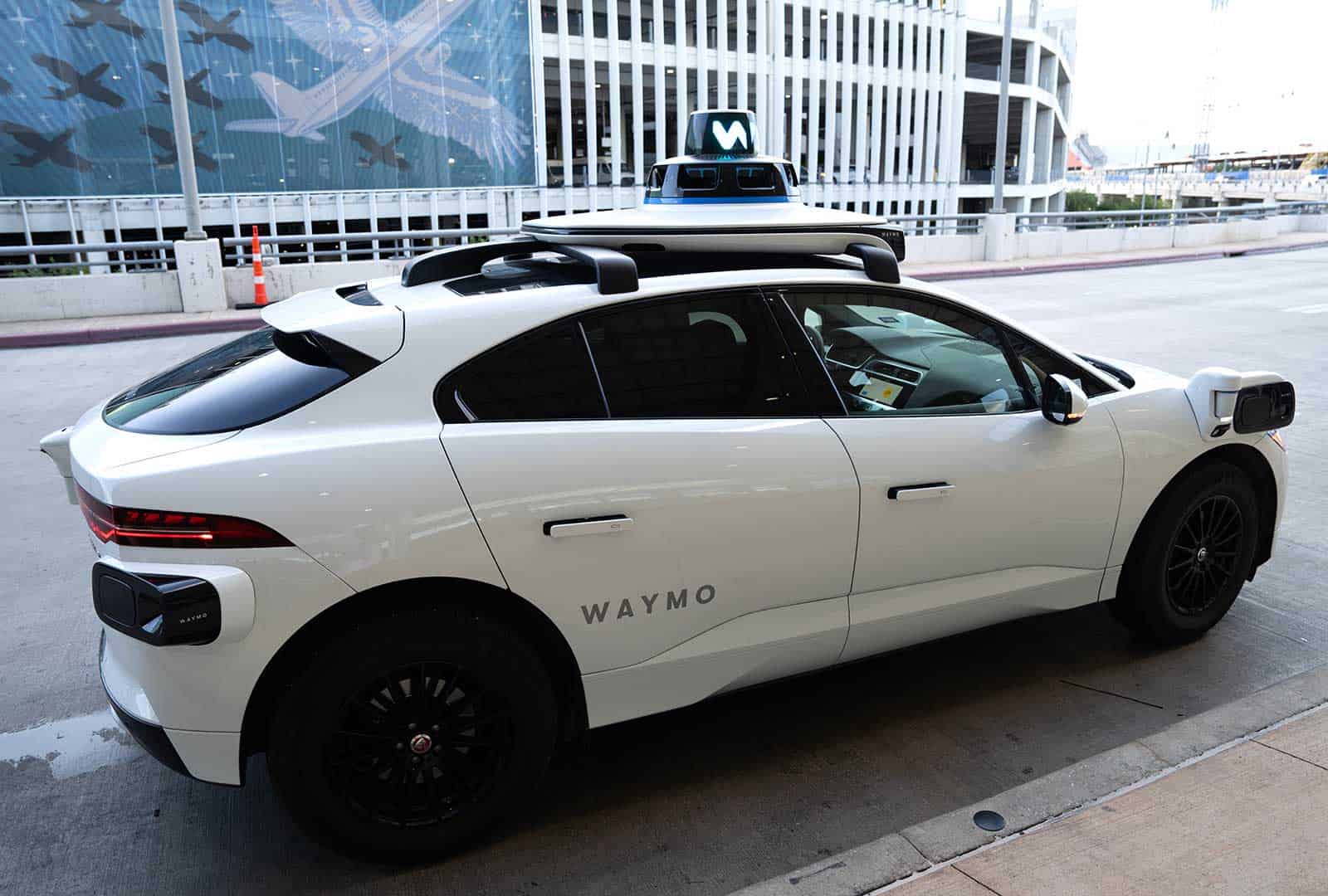
Waymo‘s curbside pickup at San Antonio International Airport is delivering a near-perfect passenger experience, under four minutes from car to security, setting a model for other airports.
Uber’s head of Global Autonomous Mobility and Delivery, Sarfraz Maredia, is leaving after 12-plus years, raising questions about a potential strategy shift toward logistics or infrastructure.
Tesla’s Cybercab fleet in Austin has crossed 300 registered vehicles and Dallas is next, while Wayve scores a reported VW deal to supply an autonomous driving system for Audi and Porsche driver assistance.
London’s APS permit battle could determine whether robotaxi operators control their own destiny or remain dependent on platform partners like Uber.
Key Autonomy Markets Episode Questions Answered
Why does Waymo have curbside access at San Antonio Airport but not San Francisco International?
Grayson says it is a matter of politics and leadership, not technology. San Antonio airport leadership chose to embrace the technology, while SFO has not yet acted. Grayson states Waymo is technically capable of handling SFO curbside pickup today.
What does Sarfraz Maredia’s departure from Uber signal about the company’s autonomy strategy?
Grayson says something is brewing, pointing to simultaneous signals like Uber Freight’s head giving a Wall Street Journal interview about Uber becoming a logistics platform. He notes that a 12-year tenure running mobility ending with a move supposedly outside of transportation does not add up.
What is the APS permit and why does it matter for robotaxi operators in London?
The Automated Passenger Service permit, controlled by Transport for London, is the legal right to deploy a driver-out service. Operators who hold it independently such as Waymo, which Grayson says has started the type certification process can fire platform partners. Operators who obtain it only through Uber can be cut off if Uber ends the relationship.
Autonomy Markets Topics & Timestamps
[0:00] Waymo San Antonio Airport Experience
Waymo drops riders curbside at San Antonio International Airport, and Grayson clocked under four minutes from the car to security. Grayson argues SFO’s lack of curbside service comes down to politics and leadership, not technology, and predicts another 1,200 Waymos in the Bay Area would put the flatlining myth to rest.
[05:57] Motional’s Las Vegas Technical Center & Hyundai IONIQ 5 Upfitting
Grayson tours Motional’s Las Vegas facility, home to over 100 vehicles built in Singapore, as the company prepares to go driverless by the end of the year. With Hyundai owning 98% of Motional, its future rests with Hyundai. With Motional, Avride and Waymo all running the IONIQ 5, riders will struggle to tell the services apart.
[08:33] Private Ownership vs. Robotaxi Fleets
Walt asks whether Hyundai follows GM toward privately owned autonomy, a shift that would challenge the bull case of rideshare growing from 1% to 30% of miles. Grayson says personally owned autonomous vehicles will never scale with maps, and the signal to watch is whether Hyundai adopts a mapless strategy.
[12:58] Human Factors and SAE Level 4
Walt questions whether geofenced Level 4 highway autonomy holds up for private owners. Grayson warns that drivers who have mentally checked out cannot safely take back control when the vehicle demands it.
[14:27] Autonomy Subscriptions
Grayson sees a hybrid future where a single subscription bundles a personally owned vehicle, robotaxi access, insurance and charging. Walt counters that a hybrid model makes the 30% rideshare thesis harder to reach.
[16:04] Dallas and Europe Field Reports
Spencer’s Dallas field report from the Avis depot spotted Ojai vehicles days before Waymo announced them. Field reports are ramping to two or three a week, with David Moss reporting from Paris and London.
[18:03] Uber’s Management Turmoil
Sarfraz Maredia is leaving Uber after 12 years leading autonomous mobility and delivery. Grayson reads the exit as corporate PR speak and believes something is brewing as Uber Freight pushes into logistics. Walt notes that Uber has been hiring infrastructure talent from Tesla.
[21:21] Uber’s Lofty 15 City Robotaxi Goal
Walt offers Jason Calacanis double or nothing that not all 15 of Uber’s announced markets will have 100 driverless vehicles by the end of 2027. Grayson says announcements are one thing and deployments are another, and scaling requires boots on the ground.
[23:29] Growing Number of Cybercabs in Austin
Tesla reports over 300 Cybercabs in Austin, but Grayson cautions that Texas DMV registrations are not the same as vehicles deployed. He gives Austin the green check mark, though it is not yet at full scale, citing a 38 minute wait at Tech Ridge.
[28:01] Cybercab’s Pending Dallas Launch
Grayson predicts Tesla launches Dallas before the end of the year, noting that the Cybercabs seen there so far are unbadged test mules. Walt believes the launch is closer, pointing to a Robotaxi app alert of more vehicles available in Dallas.
[32:01] Waymo Opens Nashville Airport (BNA) Service
Waymo begins Nashville airport rides and opens San Antonio, San Diego and Tampa to all riders, with a BNA field report coming soon. Grayson finds dirty vehicles at a Waymo charging depot in Austin, and both hosts expect the depot layer to consolidate around operators with the capital and the energy expertise.
[36:11] Zoox’s NHTSA Authorization for Hayward, California
Zoox receives NHTSA authorization for Hayward, its ninth area. Grayson explains that Hayward is not a service launch. It connects Zoox’s storage lot to its upfitting facilities, which are not factories.
[38:17] Wayve’s Potential Volkswagen Deal
Der Spiegel reports that Volkswagen selected Wayve to supply driver assistance AI for Audi and Porsche, which would make VW Wayve’s fourth OEM. Grayson calls it a huge blow to Mobileye, noting that a field team found zero vehicles at the MOIA depot in Austin.
[41:18] Applied Intuition
Applied Intuition is reportedly raising at a $30 billion valuation. Grayson calls it the most interesting company in autonomy as it moves from picks and shovels up the stack to become the most important company in automotive.
[43:29] Red Tape and Regulations
Portland proposes a 75 vehicle cap per company, St. Paul calls for a study and NHTSA opens a petition on Tesla robotaxis in school zones. In London, Grayson predicts Waymo will launch commercial driverless service with its own APS permit by Q1, and Tesla renames FSD in Europe as approval momentum builds.
[56:48] Verne’s Shift Towards Fleet Management
Pony.ai has confirmed that Verne is becoming the fleet management partner, with Pony as the driver and Uber as the platform. Grayson calls it a big pivot as the partnership scales into London and Manchester.
[59:25] Next Week
Tesla’s Q3 earnings on October 21 headline the week. Investors will be watching for Cybercab counts, Dallas and the NHTSA petition, while Motional, Nuro and others race to deliver on Q4 driverless promises.
Full Episode Transcript
Waymo Curbside Pickup at San Antonio Airport
Grayson Brulte: Walt, it’s another week and I’m on the road. And when I go on the road, I put the inspector hat in the car and let the folks know the inspector’s here, you better behave. And I had a great lunch yesterday with Ben Seydel from Autolane at the Autolane house in Austin, and I walk in, they’re playing ’90s hip-hop, and Ben goes, “Where’s Walt to curate the music to comment on it?” Well, Ben, here it is. I asked Walt where he was. He was back in the office doing work. While you’re back in the office doing work, I’ve been riding in Ohi’s in San Antonio, and I gotta tell you, Walt, the airport experience is flat-out awesome. While I’ve been doing that, Tesla’s been busy on X saying Cybercabs are coming to Dallas. Where do you wanna begin today? Because there’s a lot to cover.
Walter Piecyk: Well, first of all, I hope you had a good time with Ben. And again, also, always for full disclosure, LightShed Ventures does have an investment in Autolane, so I’m glad you had a, a a happy visit there. But I think we should always start with field reports ’cause that’s obviously a true area of differentiation that we have here on Autonomy Markets. You know, airports has been a key thing, Grayson. You know, we, we’ve talked about San Francisco. I know everyone believes that market share gains have stabilized from Waymo in the California area. I think in part that’s, you know, they’re, they’re at some point gonna dump a lot more cars into the market. But in other, in other ways, some of the most highest value trips that a rideshare company can offer is trips to the airport. So it’s very critical for us and for our longtime listeners. You know we’ve discussed the factors that it takes to get not only access to the airport, but access in a convenient location. As, as many of you know, in San Francisco, I think you’re still at the kiss and fly lot. There might be a hotel that’s, that’s thereby. So I’m very interested in the San Antonio Airport and how that was– how that experience was, Grayson, and how does it compare to the long walk at San Fran and, and other airports that, that you visited that have autonomy?
Grayson Brulte: There’s no comparison to San Francisco. The, the kiss and fly, the 20-minute tram ride to the Hyatt, bye-bye. This is great. Walt, it drops you off curbside right in front of the door. I kid you not, right in front of the door. I timed this because that’s what we do at Autonomy Markets, we time things. And from the time I got out of the car to the time I got to the TSA gate, Walt, under four minutes. Four minutes. That is perfection. And then when I got picked up from the airport, you go right to the TNC rideshare pickup zone, right on the outer curb. Eh, I’d say about six, seven minutes, eight minutes at the most when you’re walking out of security. Right there, the Waymo’s waiting for you. Really great experience. Here’s a very funny thing to point out, which you only learn in field work, and I have to tell you something funny about field work in a minute. The speed limit posted coming into the San Antonio International Airport, for those nerds, it’s SAT airport code, is 15 miles an hour. So what does the Waymo do? 15 miles an hour. What does the general public do? 45 miles an hour, flying by you. Once you get used to that, it is a wonderful, wonderful experience. It’s a model all airports should follow
Walter Piecyk: That’s definitely one of those quirks in terms of autonomy that you and I have experienced with FSD as well in terms of, like, say, say, stop signs, and it comes to that complete stop at a stop sign where I think most people don’t do that. you know, but just getting back to the airport, I will say, you know, San Antonio, I’ve been there. It’s a smaller airport, so it’s, it’s a little easier to keep those walks tighter. So it’s perhaps a, a, an unfair comparison in some ways to San Fran. But San Fran does allow an Uber Black car to come to the curbside. I don’t think functionally, given the performance of some of these autonomous vehicles that we’ve seen, at least more of the advanced ones like Waymo or Tesla that they couldn’t– they would be able to manage a curbside pickup at San Francisco. I’m just curious if you agree with that, or is, is, are the dynamics of the size of San Anton- San Antonio being much smaller make it that much easier for them to accomplish that there while they can’t do that in San Francisco?
Grayson Brulte: No, it’s politics and leadership. The San Antonio Airport leadership said they wanted this technology. It’s not a technical problem. I’m at the San Francisco International Airport at least once a month, and in my experience of, of riding Waymos all around the country, soon to ride them internationally, Waymo can handle the SFO Airport. It handles it beautifully from the Hyatt. It handles it beautifully from the kiss and fly. There’s no doubt in my mind that they can handle it from the curbside. And if S- if SFO got their act together, which I believe they hopefully they will soon, Waymo is technically capable of doing it. And when they do it, you and I talk about flooding the market. Let’s hypothetically say, I’ll go on the record here, Waymo adds another 1,200 cars to the Bay Area, you’re gonna watch the myth of Waymo flat-lining completely dissipate, and they’re gonna start to eat massively into market share
Walter Piecyk: Right. I don’t know if it’s the airport alone that’s gonna do that. It could be when they get to their next version of car or when they’ve got more volume of cars to, to, you know, to deepen the penetration in an existing market. Maybe they just test one of these markets. I don’t know if California’s the right one to do it, but test what high volume of cars mean in, you know, whatever city it’s gonna be, let’s say Austin, when they finally punt their relationship with Uber. Maybe they just dump a ton of cars there just to see, show the market show, show the world what it would look like when they, when they had true volume of cars there, and then we’ll see how those share numbers look in that individual market. but rather than, I think, you know, get too involved in, I think, a new segment that we’re gonna talk about later now, red tape rundown on what it takes to get airports, let’s move on to another field report that I saw you, I think, tweeting about a little bit. Maybe we’ll get a little bit more details here. Motional’s Las Vegas Technical Center, which I think you, you described to the public as super impressive in person. Tell us a little bit more about that here.
Motional’s Las Vegas Depot and the IONIQ 5 Identity Problem
Grayson Brulte: The Motional depot in Vegas is impressive. There’s over 100 vehicles there. It’s completely state-of-the-art, and I just want to state for the public, Motional has stated this many times publicly, but I want to reemphasize it. The vehicles that Motional’s operating in Las Vegas come off the line in Singapore at the Innovation Factory. It is a state-of-the-art facility. They’re getting ready to go driver-out by the end of the year, and it’s just thoroughly, thoroughly impressive. And their command center, the whole team running it is really impressive. And when you visit multiple factories and upfitting centers, you just realize the precision of the Hyundai engineers, that the technology and the processes that they’re putting into the Motional facility are world-class, Walt. There’s no other way to describe it. It’s a world-class facility
Walter Piecyk: If we think of the variety of partners that Uber has, right, and when they’re gonna get driverless, and again, we’re still early stage in this, in, in this industry so there’s not enough cars out there to say that someone has, you know, is way out in front. But Motional clearly seems, you know, like they’re a leader. How does that relationship evolve over time? How does Motional, you know, grow as a company? And, and you know, we’ve talked about, you know, companies that Uber might want to own a bigger stake of, if not outright in the future. You know, where does Motional fit there, and how would you see that playing out if it went, did go down that path? Is that even possible?
Grayson Brulte: I think it really comes down to the Hyundai Motor Corporation. W-what does Hyundai want to do with Motional? And I say that because Hyundai has an internal competing division that’s been well documented in the Korean press called 42Dot, and I’ll use the nice term, there’s been a lot of head-butting between Motional and 42Dot. I think Laura, who’s leading Motional now, is doing a phenomenal job, but I ultimately think that the, the future of Motional comes down to Hyundai, and I say that because Hyundai owns 98% of Motional. There is an investment fund that owns 2% with Hyundai owning 98% of the company, so it’s really gonna come down to, to what Hyundai wants. But I want to s- caveat that and say that I visited Avride’s upfitting factory in Austin yesterday, and how is the public going to be able to differentiate between a Motional vehicle and an Avride vehicle and a Waymo vehicle in the same market because they’re both running– they’re all three of them actually are running the IONIQ 5. It’s something that I’m starting to, to, to think about and to the Avride team, thank you for showing me the branding that you’re working on. Really, really impressive, and thank you for, for showing the facility of how you’re upfitting these vehicles. Also very impressive. But I think it’s gonna be interesting when you have three different providers with IONIQ 5s in the same market. How is the public gonna know who is who?
Walter Piecyk: I mean, strategies can evolve over time for sure. So, you know, and Hyundai, as we’ve, you know, patted them on the back is, is certainly at the forefront in terms of being the vehicle of choice as a partner, whereas other OEMs have, have effectively circled the wagon. So, but it’s possible that the initial motivation was to sell cars and being technology agnostic, and then well, voila, as they say, voila. All of a sudden Motional is doing great. Hey, this is the tech that we own. Hey, wait a minute. Maybe the real future of autonomy is private ownership. I mean, just this past week we had Mary Barra t- talking up with that she does not want her cars or her technology as part of a robotaxi fleet. She wants it for private ownership. She thinks that consumers want that in their driveway. It’s the Steve Jobs approach. I don’t care what you say you want, I’m, I’m gonna tell you what you, what you want even though if you don’t believe that today. But maybe Hyundai comes to that conclusion and says, “Look, the bigger opportunity for us here, you know, is our own technology, is private ownership.” And by the way, if you think about this long term, you know, th- this con- this bull case thesis on rideshare, whether it’s from Tesla Robotaxi or Waymo or Uber, is this concept of it representing 1% of share going to 30%. But ha- but it works in the opposite if all of a sudden the OEMs are delivering a product where you can have autonomy in your garage. So I guess the question is, how do we get– what are the signals to watch? I know you like the term signals. It’s, it’s, it’s what your AI beast is so good at. What are the signals that we should be looking at to understand, you know, which way Hyundai is gonna take this in the future? And is this a risk, you know, to companies like Avride and Waymo to rely too much on Hyundai as their OEM partner?
Grayson Brulte: The signals, we don’t necessarily know what the signals are in general. There is one signal that I will point out. Ben and I actually discussed it over lunch, is you, in my opinion, will not be able to scale a personally owned autonomous vehicle with maps. Point blank, I’m sorry, Mary Barra, GM, you’re never gonna be able to scale a personally owned autonomous vehicle with maps. Two reasons why. If you don’t map the, the ride to the school and you don’t map the ride to the grocery store or to the Little League field, it’s never going to happen. And we’re seeing all the success that you and I both own a Tesla with FSD. We’re seeing the success of that, and then you’re seeing the success that Wayve is having with all the partnerships. They’re lining up no maps. If Hyundai announces a no map strategy, then I think that becomes a signal. But at this time, it is my belief, based on all the publicly available documentation that we have, that Hyundai is fully committed to robotaxis. And then to use a term that your partner, Rich Greenfield of LightShed side uses, they’re an arms dealer. Hmm. They’re, they’re, they’re saying, “Okay,” like Rich says, “We’ll sell our content to everybody.” They’re saying, “No, we’re gonna sell our platform to everybody.” And so I would watch for the map versus mapless strategy
Walter Piecyk: So if that’s true then, then their willingness to perhaps part ways with their economic stake in Motional and be the arms dealer, the guy that makes the car, should be there. And then that’s maybe an opportunity for Uber to take a stake or maybe some other company to take a stake in the, in the technology front and then look to, to license that out to other OEMs. I’m gonna guess what some of our listeners’ pushback would be on, on your last statement, though in that, you know, I’ve heard this theory of having a geo-fenced you know, mapped, as it, as it were, autonomous solution. So I’m driving my car through some of the areas, but when I’m on the highway and I wanna take a, a, you know, a nap, and that’s mapped on the Motional, that, that there’s value there. I, I would say the problem with that is, you know, in using FSD, even when it’s supervised, like, y- I think when you go from unsupervised, let’s say, on the highway, taking your nap between New York and Philly, to getting to that area, even if you have to supervise it, that’s the experience you’re gon- Once you’ve experienced this, let me just assure you, this is the experience you’re gonna want. I don’t think you’re gonna wanna go from level four full autonomy, taking your s- taking your nap, to actually full in control. I think you’re gonna wanna revert to some, you know, supervised. So I think it’s a finer point, but it’s definitely something to think about in terms of private ownership, where you don’t necessarily have to have ubiquity, y- you know, of autonomy. You could have a geo-fence in an area where wherever that technology is pr- providing it for you, which is I’m sure what Mary Barra or others would suggest
Grayson Brulte: But then you’re opening the can of worms around human factors. This is hypothetical. You leave your, your home, you get on 95, and let’s say you go to Walt Eagles mode, and you got all your Eagles highlights and you’re having Eagles time. While you’re thinking about the Eagles, you’re not thinking about the road, and then it says, “Beep, beep, beep, beep,” you gotta take over. It’s like -oh, the human factors in the brain aren’t ready, I don’t think, to comprehend that yet
Walter Piecyk: I mean, there’s transition things that you’d have to work out in that scenario for sure. But if a human is not taking over the car’s obviously gonna pull over. But I’m with you. again, like that’s my point, is that I think that this transition from unsupervised to a, a supervised that we’re, you know, we’re, we’re experiencing with Tesla today seems m- you know, like the experience that a consumer would want versus going cold turkey and like having to be full attention from no attention at all you know, doesn’t seem like the right approach. But it’s definitely something to watch because as I build my f- my long-term 10 and 20-year financial models to figure out what the ultimate value is to Waymo and Tesla and others, there is this kind of tension and this pull of like, okay, 20 years from now, are we gonna have the Calacanis view of the world where it’s, it’s 30% is rideshare? Or 20 years from now, do you have so many privately owned AVs that in fact rideshare miles as a percent of total miles decline because you’re just u- it’s your own car actually delivering, you know, that service to you
Grayson Brulte: I don’t know. I, I think it, it’s definitely going to be a hybrid. I think at some point in the future, I don’t know when, it’s gonna go into a, I call it a hybrid subscription, where you’ll have access to a robotaxi and you’ll have access to a personally owned, and it’s all gonna be bundled into one lease payment or one subscription payment. I think that’s coming. We had, decades ago, Porsche tried it, Cadillac tried it. So I think that’s coming. I think you’re gonna have this, this bundled experience, and especially when you include the insurance and the charging in it
Walter Piecyk: Okay, but that’s fine. But if it’s a hybrid approach, how still– I don’t see how you get to the 30%. So I don’t know. The models, you know, it’s easier b- to build a model these days ’cause you can use AI and Claude to help you with it, but we can build sensitivities around this, but it, it’s definitely something to keep in mind, especially, again, when the OEMs are signaling, “Hey, we don’t wanna do robotaxis,” right? GM is almost like saying like, “Hey, we’re not gonna talk to you, Wayve,” or anyone else that’s out there. “We’re doing this on our own ’cause we wanna sell private cars.” I think that’s a failed strategy ’cause I don’t think the OEMs have the culture to move this technology that quickly forward. No offense, Sterling. You know, but I think, whatever, it’s something that we’ll have to watch ’cause. And, and, and clearly in the case of Hyundai, who’s certainly further along than OEMs, any OEM other than Tesla, a- as it relates to, A, having their cars ready to be the partner of choice, and B, having a technology that, again, we’re expecting to be driver-out within the next couple of months
Grayson Brulte: Yes, I’m, I, I’m looking forward to driver-out. I will be there whenever they announce it publicly and going for a ride in the Motional vehicle driver-out. Looking forward to that. I mean, there is a lot changing in the general automotive sphere. And I’ll say this point blank, a little bit off topic, Detroit’s in a lot of trouble. Just look what’s happening in Europe with, with the ri- rise of Chinese auto manufacturing. That comes into America. D- Detroit has a two-headed front. They’re losing on autonomy, and they’re losing on engineering. And then that is going to become a very, very big issue because it all comes down to price. And once the protectionist policies go away, the problems arise even more
Walter Piecyk: Well, it’ll definitely be interesting to see how that plays out, but certainly that has dramatic impacts. I mean, again, the valuation for these things is all about where the market is gonna be 20, 10 or 20 years from now. so those are pretty big swing factors. But what else do we have in the field? Spencer, I think David were out ferreting out some new information, had their inspector hats on. What, what did they say?
Grayson Brulte: Yeah, it was great. Spencer produced a wonderful field report from the Big D, Dallas. He went to the, the Avis Depot, the temporary charging depot, and in the field report that came out earlier, we noticed Ohais were in Dallas, and a few days later, Waymo announces Ohai’s available. So go check that report out. And for the audience, we’re ramping up field reports. We’re trying to do two or three a week. We’re doing international. David was just in Paris, now he’s in London. Spencer was in Paris, so we’re gonna have a lot more international flair coming to that. And know when we go international, we go to the depots. Thanks to OMEGA, OMEGA knows where the depots are and, and, and we go there and create field reports. And Walt, you wanna know the coolest thing about all of this now? I’m riding in the Ojai last night back from dinner, and I said, “Gemini, what do you know about autonomy markets?” And what is the first thing it said, Walt? Field reports. Gemini in the Ojai knew all about field reports. And for the audience that doesn’t believe me, go try it. Walt even has a recording of it ’cause I was so proud
Uber’s Autonomy Chief Sarfraz Maredia Exits After 12 Years
Walter Piecyk: You did send that. Very excited. So yeah, it’s true, but that’s, that’s what it is. I mean, that’s, that’s what– that’s one of the most important things, obviously, to understanding this market. Get in the cars, people. Just get in the cars and try them and you can formulate your own judgments on where each of these technologies are. So I think we’re having some personnel changes again at, at Uber. you have Sarfraz Maredia le- leaving Uber after 12 years plus. That’s a hell of a reign there. He was– he ran the Global Autonomous Mobility and Delivery. He’s going to a top job outside of transportation, but the last time I heard that was Sterling Anderson leaving Aurora, apparently, you know, not doing anything competitive, yada, yada. All of a sudden we see him at GM talking about privately owned autonomous cars, and now even yet this week, as I just mentioned, Mary Barra talking about privately owned autonomous cars. So I’ve heard this before when an executive in autonomy leaves that, “Oh, they’re not gonna do anything that competes with us.” But what do you think is going on here with Sarfraz?
Grayson Brulte: Something’s brewing. To me, sorry, with all due respect, this reads like corporate PR speak. and the reason I say something’s brewing, Rebecca, the head of Uber Freight, gave a long, in-depth interview with the Wall Street Journal talking about how Uber wants to become a logistics platform. I was like, “Oh, that’s very interesting timing.” So I don’t know. You’ve got the head of Uber Freight coming out giving an interview to the Wall Street Journal about logistics. Then on the other side, you have, I’ll just say, corporate PR speak. The question is, you’re right, as we saw with Sterling, you’re, you’re running mobility for 12 years and necessarily you’re gonna jump to something outside of mobility? One plus one equals two. This is one plus one equals three, and it doesn’t add up
Walter Piecyk: I mean, Uber has been pretty persistent in saying that this third leg of the stool, the service component, that they want it fragmented, right? They’ve partnered with MOOVE, Avomo and, and, and others to do that. Didn’t want ownership of it. But I mean, you know, on LinkedIn, I’m seeing more people that they’ve been hiring from Tesla, among other places, that have done infrastructure, right? In figuring out charging stations. So it’s interesting that you say that ’cause I, I have been men- I have been noticing that this, this past week. Now, the– this person’s not gonna be replaced. I think the, the job duties are gonna bit- be split up between Samarth and Aaron you know, to do this, which is fine. But this is also following, you know, the, the guy Peterson left, he was the former head of AV partnerships. Lando Juarez a unit legal chief leaving. So there’s, there’s a decent amount of turnover. I mean, I know some people are gonna say like, “Well, the stock hasn’t done much.” Like, look, there are a lot of autonomy stocks that are getting destroyed right now. Like, you can complain about Uber stock, but it’s been pretty stable at least. and you know, from what people’s beliefs are and their opportunity there there can be growth in there. So I don’t know, we– it’s, it’s always important to keep an eye on, you know, some management turnover. This does not seem out of sorts, just to be clear. This is not crazy. It’s kind of on the margin, but these are, you know, people in the area that we care about the most, which is autonomy.
Grayson Brulte: Yeah, I think it’s something we’re going to have to watch and see. We’ll see where, where he lands. I’m sure he’ll announce it publicly on LinkedIn or the company will announce it. Also, let’s watch to see if there is more personnel changes or if perhaps there is a change of strategy. Maybe Uber leans a little more into infrastructure, leans a little more into this or a little more into logistics. Or maybe they try and do something more with Uber Eats around autonomy. I, I don’t know. But I think there’s something brewing is what I would say
Walter Piecyk: Now, one other thing as it relates to Uber, I just wanted, you know, last week for a long time listeners, you know that I kind of admitted that I might have botched my be- bet with Jason ab- about Wayve’s progress on autonomy. Apologies to Wayve on that. We’ll see how that goes. Maybe I’ll be right. Who knows? But I was trying to get a double for nothing this week because, you know, we talk about this, I kind of was like chiding Uber from always saying, “Oh, 15 markets launch by end of year.” And I’m like, “Okay, at the end of the day, does that really matter? It’s driver-out.” so I tossed out a double or nothing to Jason, which I don’t think he responded to, maybe he will after hearing this, but saying that I don’t think all 15 of those, you know, will be driver-out by the end of, of ’27. And, and that, and that’s ultimately my point, right? Th- that, okay, you’re announcing 15, that’s a good milestone, but, like, that doesn’t mean what– that you’re gonna get each of those to, to end of ’27. So we’ll see. And again, the bar here is 100 plus cars driver-out, you know, and you’re, you have paying customers in those 15 markets. So we’ll keep tabs on that. Hopefully, I can clean up the, the bad bet I made on Wayve with this, with this better bet. But maybe Jason knows not to take that bet ’cause he knows that all 15 won’t, in fact, get to driver-out
Grayson Brulte: Either way, the three of us will be enjoying steaks. The question is, Who pays? That’s gonna– Who’s paying is gonna be the question, so it’s gonna be a, a, a roulette game there to figure it out. But I do wanna emphasize is that announcements are one thing, deployments are completely another thing, and getting to unsupervised is another thing. I don’t think that a lot of individuals realize how difficult it is just to actually build out a commercial deployment that’s unsupervised. And a credit to you and credit to us is that we actually go out in the field and look at this infrastructure because that infrastructure is key to scaling it. A press release, you could write it with Claude. Sorry, I said it. Infrastructure, building out, deploying, you actually need boots on the ground
Tesla Cybercab Update: Austin Check Mark and Dallas Expansion
Walter Piecyk: Yeah, and at the end of the day, like, driver-out is what matters. Like, that’s literally the whole point of this, right? So, you know, like I said before, we’ve made progress in this industry. Now it’s you know, this is part of the inflection of this industry. Like, let’s focus on the driver-out. Speaking of a company that took a while to get driver-out, we have Tesla official numbers saying they have 300 plus Cybercabs serving Austin. That’s an, I think, an like, an 8X in 30 days possibly, although that’s obviously kind of a bullshit number because it’s, sorry, mom, it’s a multiple of a, of a very small number. we already knew that the DMV was showing registered cabs over 300. I guess my, my question. Oh, by the way, and you had, like, Twit- or excuse me Tesla kind of dunking on themselves in a way, saying, but also saying like, “Hey, we’ve actually delivered.” Saying, “We’re.” You know, ’cause this is the two-year anniversary of, of We, Robot. They, they said at We, Robot that they would deliver Cybercab in two years, and it, the quote was, “We are learning to be on time.” So that’s like a, kind of like an acknowledgement that things have not been on time in the past, but also it’s kind of puts pressure back on people that love to create th- these, these narratives about, like, how there’s all of these delays, and they’re never gonna get there, and they’re never gonna get there. Well, I think they’re there, right? And I guess the question is, Grayson, do they get the green check mark? Like, are there now 100 cars that are, that are operating effectively at the same time, at least in Austin, charging rides? Is, has Austin been check marked in, in terms of how we determine this?
Grayson Brulte: Yes and no, and I want to give a, a very big caveat here. The number that is reported to the Texas DMV is not the actual number that’s actually deployed in the wild. That is a number that is registered that could be deployed. We don’t have the true number of what is deployed. So there is a big difference between this company has a thousand, this company has a hundred, this company has two hundred. That means they’re registered, they can legally get deployed, but they’re not necessarily deployed. And I learned that yesterday, and I won’t name names, but I learned that yesterday. And for those that, that are subscribers to OMEGA, the data is in OMEGA, and if you’re not a subscriber, reach out. But Walt, there is a big, big swing there
Walter Piecyk: Okay, so when these companies aren’t gonna tell us exactly how many cars are in service, this is something at some point we’re gonna have an estimate on. So I think, I guess the que- and by the way, I see plenty of videos of Austin where there’s, like, these golden robotaxis, Cybercabs, excuse me, everywhere. Like, so when do we give them the check mark that yeah, they’ve hit that market, that market is, is commercially there?
Grayson Brulte: I would say, you know, com-commercially, it is my belief that there is over 100. You, you, you see them in all aspects of. They’re mostly concentrated in the downtown area, south of Congress area. You don’t see a lot of them up in Tech Ridge by the, the Samsung Foundry. So they’re– The, the density is concentrated around the downtown South Congress area, where a lot of the activity is, a lot of the press is, a lot of the cameras are concentrated in there. They’re not necessarily concentrated in the farther regions of the ODD going into the, the North Austin area, north of UT. They’re not necessarily all the place over there. They’re concentrated. Give you an example, if you’re up at Tech Ridge and you’re visiting the Samsung Foundry, I experienced this yesterday, it’s a 38-minute wait to get one up there. So they’re not necessarily up there yet. So there, there’s still room to go to get the ODD fully, fully functioning
Walter Piecyk: Okay. Well, that’s a lot of words, and this is like pulling teeth on what I think is supposed to be a monumentous occasion here. Do they or don’t they have 100 cars active at any single time in that market? I get that you’re gonna have, like, a, a wait time on some perimeter that’s gonna be, that needs to be addressed in that moment. But, like, when– We can’t be this subjective in terms of giving the green check mark
Grayson Brulte: Yes. Can we give the green check mark? Yes. Is it impressive? Yes. Is it at full scale yet? No
Walter Piecyk: All right, this was the worst kind of reveal. You would think that when, when Autonomy Markets is ready to give their green check on a market launch, it would be like, there, they got it, and like bam, it’s, it’s happening. So I think what we’re gonna have to wait for is, since we’re so unwilling to give them that clear green check mark, th- they’re gonna report next week. They’re gonna give themselves that green check mark. They’re gonna probably give more precise numbers, and then the market’s gonna react like this hasn’t been talked about before. So I guess we’ll wait for then. I think this was a fail on our part in, in not making this more dramatic. But let’s go on to their next market because there was a, a, another portion that Alak r- put on his tweet that said, “Dallas soon.” So we know, I think, you know, based on some field work about Cybercabs that have been seen in Dallas is he’s, he’s effectively confirmed that. How quickly do we think Dallas comes online?
Grayson Brulte: Dallas will come online. I’ll just sit here and make a prediction. Dallas will come online before the end of the year. The Cybercabs that Spencer has seen, I have seen, Massa’s seen, other individuals have seen in Dallas are not the Cybercabs that are going into commercial production. They’re mules commonly known as a test fleet. And how do you know that? If you read the Tesla First Responders Guide, Tesla has published the identification for first responders. They’ve made that data public on how do you identify. If the robotaxi is not badged with robotaxi written across the back, they want to call it Tesla’s tramp stamp, then it has a steering wheel. Those vehicles are not going into commercial service. Once we start seeing the stamp, the branded robotaxis, we’re getting close. It is my belief that they will launch that market by December 31st. We have not seen independent verified reports of the badged Cybercabs yet in Dallas. I believe it’s just a matter of time. They’ll get there before the end of the year
Walter Piecyk: Well, I think you’re wrong, c- and, and I’ll tell you why. Because on Sunday I got, you know, I have the robotaxi app on my phone, and I got a pop-up, as most people I think did, that said, “More vehicles available in Dallas,” and basically come and, come and use the product. So I think that’s Tesla basically saying, whether it’s Model Ys or Cybercabs or whatever, that they, they are ready to go in Dallas. So, you know, I, I know we’ve said on this podcast before, this is not like an all at once thing that I think some of the Uber Tesla bulls believe is gonna happen. But it seems to me that Austin’s kind of there and Dallas is about to be there, you know, with what I think will, will deserve a green check mark from Autonomy Markets. Hopefully, we can be more concise and confirmative about this next week or the week after as these things happen
Grayson Brulte: Yeah, I’m looking forward to it. It’ll be in Dallas in the coming weeks, so hopefully I’m wrong and it launches sooner, and then we’ll produce a field report on it. We know where the vehicle’s stored at the depots. There’s multiple depots for Tesla throughout Dallas, and hopefully we start to see some badged Cybercabs in Dallas
Walter Piecyk: OK, Tesla Bulls
Grayson Brulte: And I will give another interesting nugget. After midnight, you can, you get that J.J. Cale Clapton song, after midnight, let it all hang down. I spotted Cybercabs on the highway in Austin. Yes, they were being supervised, they were unbadged, but after midnight, there were Cybercabs testing on the freeways around Austin
Walter Piecyk: Yeah, I mean, you gotta use the car and the new vehicle to test in the individual market. This is why it’s not an all-at-once thing. But every market you go to, I think that testing timeframe, we saw how long it was in Austin, which was, what? Much faster than expected. It has to be shorter, right, in other markets because it’s not just about the car at that point, it’s just, just about the market itself, right? So in Dallas, for example, like when I was taking the robotaxi, which was the model, effectively the Model Y, it was avoiding certain areas. It was creating these circuitous routes. They, they have to work those things out more so than, than whether the Cybercab works there. But, you know, we’ll, we’ll see that soon enough. I, I think I’m more optimistic than you are, but we’ll find out. Shall we move on to Waymo? always making progress. Steady Eddie, right? Continuing to go. they started airport rides in Nashville. Obviously, that’s of great interest to us you know, given Flex Drive, Lyft’s wholly owned subsidiary or Cort- you know, they own this, this thing and, and the infrastructure side of it at a time when maybe Uber’s reevaluating infrastructure. So we hope to get down to Nashville soon to see how that operation’s working. and then you’ve got San Antonio, San Diego, and Tampa that are now no invite. Anyone can download the app and ride. So again, you know, not like a massive data point. This would’ve been a massive data point like a year ago, but this is just par for the course regular news for Waymo now, you know, moving, you know, multiple markets at a time into fully available to, to anyone downloading the app
Grayson Brulte: I will say that a field report from the BNA, Nashville Airport, is coming in the coming weeks, followed by another report at the depot. Flex driver will be hosting us. She’ll be joining me, so we’re looking forward to producing that for the audience. And the field reports continue as Waymo continues to scale. And I, you know, I said this earlier, but you really truly learn a lot from getting out in the field and riding in vehicles and visiting depots speaking of visiting depots, Walt, I found a Waymo charging station on South Congress in Austin. First time I’ve ever been there. Lot of vehicles going in and out of there, but unfortunately, there was a common denominator with the Avomo depot, the big one that we found. The cars were dirty. They weren’t being cleaned. I sat there for an hour, Walt, and I watched. I didn’t witness one person clean a car, and then I sat at the exit, and I watched. They were dirty. I have not yet to see a clean Waymo in Austin. But yet the Cybercabs, they’re clean. The Waymo’s, they’re dirty. It’s a it’s a tale of two cars is what I would say, no pun intended
Walter Piecyk: I mean, it’s a fascinating part of, of our coverage here, how this third leg of the stool is gonna happen. Again, it’s possible Uber’s strategy might be changing here. I think some of the existing partners might not necessarily be performing that great as we’ve covered before. Avis, Hertz, whoever, have an opportunity here. And it’s also just interesting to see, like, what structure’s gonna work. Is it gonna be, like, one major service center with, with smaller individual service centers? Like, this is kind of open field right now. So obviously the field work you guys and, and, and even myself are doing is, is certainly gonna be helpful to understanding how that evolves. And there will be companies that will fall by the wayside, no doubt. and others, you know, will pick up the, pick up the assets, and I think ultimately that market consolidates. I think it’s gonna be very hard for Uber to, to force a fragmentation in that market. It just seems like something that once someone does it well and they get the capital behind them, it’s gonna be replicated city after city
Grayson Brulte: Correct. You’re, you’re 100% right. Somebody’s gonna emerge, if you wanna say, that’s gonna do it with m- they’re gonna develop the best practices, they’re gonna have the capital, they’re gonna have the policies and procedures in place. And what are they gonna have? They’re gonna have energy specialists on the team that know strategically where to put these in order to get the energy. That, that is another leg of this thing. You have to have energy specialists on these depot teams to truly understand how to scale
Walter Piecyk: And as a reminder for maybe more recent listeners, ’cause we’ve talked about this before, when you don’t have power in, in a location, that doesn’t stop these companies from trying to get these locations. They just roll up a generator. The challenge with that is, like, you know, you’re gonna get a 60 Minutes report about the generator that was stuck behind someone’s apartment complex, and they ain’t gonna be too happy about it when– And there, there’s gonna be another version of pushback on autonomy, and this is what’s gonna be used by the local politicians to, to push back on this. So, you know, it– this is a, this is a long, you know, a long lead time type item that needs to be addressed. But we’re on it. We will, we will let you know how it goes. Grayson, Waymo was not the only person, ex-excuse me, company expanding this week. NHTSA gave Zoox its third a-authorization, this time in Hayward, California. This is its ninth area. They still have this cap at 600 vehicles, but 600 vehicles is nothing to, nothing to sneeze at, especially when you’re talking about Hayward. That should be enough to g-to give a basic level of service. it– this feels to me, honestly, a little bit like, I’m gonna go telco corner now, like T-Mobile in the early days, where it’s like John Legere, not the early, early days, but when John Legere takes over, they don’t, you know, the, the Deutsche Telekom has, has effectively starved their ability to invest in the network and meaning the technology is not great. But they’re promising and moving and expanding as at the same time they’re d-they’re developing the product. I think smart from Zoox’s standpoint to continue to move forward. I just wonder, like, is the product itself. It still has to be good enough so that when they’re gonna face competition in Hayward, people are gonna wanna get in their vehicles as opposed to the other autonomy solutions that might be out there.
Grayson Brulte: Have you ever been to Hayward, Walt?
Walter Piecyk: I don’t believe I have
Grayson Brulte: Rob and I have been to Hayward. They are not launching a service in Hayward. Hayward is an industrial commercial area of Oakland with large logistics parks. We’re gonna release this as a field report soon. We went there, we visited. Tesla has three facilities. There’s two that are publicly known, but there also is a third that Road to Autonomy, we uncovered. And I will give a hint, they’re not exactly on the same side of the street. So what this allows the Tes- what this allows Zoox to do is to go from the storage lot to the upfitting facilities. And for the record, they are not factories. For the record, they are not factories. And if you know, you know. If you’re an OMEGA subscriber, you know exactly what that means
Walter Piecyk: All right. Well, that was very teasing, so let’s just move on before I try and push on something that I think I’m gonna get an answer to. I, I don’t know. We’ll, we’ll continue to watch Zoox. As you know, I’m a little bit more on the skeptical side. next time I’m getting into Zoox will be in a couple of months at CES. Hopefully, my experience is better. Let’s go across the pond to the UK, where our friends at Wayve were chosen by VW to supply AI for the driver assistance in the Audi and the Porsche. this is according to three insiders on Der Spiegel. I don’t think there was a contract signed, but Der Spiegel is reporting that maybe VW has selected W- Wayve. You know, even this, this is like an FSD replicant. This is obviously an important progress, as we talked about before, getting revenue and profit to fund, you know, continued development into, into level four, which I think Wayve has all the intentions on delivering. what else are we– am I missing? What– How, how do you read this VW deal?
Wayve Reportedly Selected by VW to Supply Autonomous Driving for Audi and Porsche
Grayson Brulte: First of all, it’s pronounced Porsche. And I pitched this idea of Porsche doing an L2+ system years ago, starting with the Cayenne. I was told from this executive that I was basically a Looney Tune. Well based on this report from Der Spiegel, it doesn’t appear that I’m a Looney Tune. It appears that that’s where they’re going. But that all aside, this is a huge blow to Mobileye. Where’s Mobileye? We’ve have sent field individuals that work with us to try and find the VW Moia depot in Austin. We found it, because that’s what we do. And guess what, Walt? Zero cars. Zero cars. So Mobileye’s robotaxi business we know is in fundamental trouble. There’s zero cars in Austin that we could find. It is my belief, based on publicly available data and photographs, that they’re not gonna launch with Uber in LA by the end of the year, which Uber triumphantly put out in this massive press release that they’re gonna have all these vehicles. Don’t see that happening. And now they’re losing their L2 business to Wayve. Where does Mobileye go? I think that is the, if you wanna call it. That’s the big question in all this
Walter Piecyk: I mean, I don’t think you can chide Uber that much. They’re trying to support as many partners as possible. It’s, it’s unclear which of these partners will, you know, take the lead. So they wanna support as many as they can. But let’s focus on the positive here, where, which is that for Wayve, this is their fourth OEM. And I think it was just last week that we had the Nissan stuff, right? So you got Nissan, Stellantis, Mercedes. Mercedes also, by the way, a partner of, of NVIDIA’s full stack. but a lot of momentum on Wayve. You know, I don’t know may- I don’t know where they are capital-wise. I know they had raised some cash earlier in the year, but with this many victories, maybe it’s an, an opportunity to, to mark it up and, and raise some more capital.
Grayson Brulte: I’ll give you a pun. The Wayve team is surfing the wave. They’re doing really good locking up these contracts, and I can’t wait to see these vehicles get into commercial production. Wayve has stated, Stellantis has stated, which is also a partner of theirs, next year it looks like we’re gonna get the Jeep Grand Cherokee with the Wayve technology. So looking forward to testing that. And we– you know, they got the Fiat stuff, they got the Maserati going. Wa- Wa- Wayve is surfing all the waves. If you wanna say this, Alex, you’re riding the Maverick, buddy. You’re riding the Maverick
Applied Intuition Eyes $30 Billion Valuation
Walter Piecyk: But Jason, don’t get too excited because this is FSD-type technology, and our bet is based on driver-out, so that’s a completely different thing, so don’t get too excited. Speaking of capital raising, you have your buddies at Applied Intuition. I think there was some story in The Information, a credible news source, unlike some of the others that we’ve cited over the years that is looking at a $30 billion valuation. Billion. I mean, that is a big, big number. and this is potentially maybe like a, you know, a large realm, let’s call it, that, that is probably gonna be off of this. that doubles the– I think they did a $15 billion series F in June of, of ’25. so that would be a huge uptick. I, I still don’t really understand what Applied Intuition does, Grayson. Like, are they the software stack that’s gonna be in cars that are autonomous? Are they the, you know, a military company now? Like, what exactly– Where does Applied Intuition fit within the autonomy landscape?
Grayson Brulte: I said this before and I’ll say this again, Applied Intuition is the most interesting company in autonomy. And I’ll also share a little tidbit with you. Qasar and Peter, the co-founders of Applied Intuition, have been on “The Road to Autonomy” podcast as guests more than a- any other company, any other guest. I’m, I’m big believers in the company. What Applied Intuition’s done, and Qasar’s done a brilliant job along this with Peter, is that they’re the picks and shovels. They, they started by giving– building the tools. Here’s the tools to build the software for the vehicles. He- here’s the tools to build the autonomy kit. And now they’re actually building the autonomy on their own. They’re deploying that and they- and they’re moving up stack, and they’re becoming the most important company, not just in autonomy, but they’re slowly becoming the most important company in automotive, and they’re doing it all through software. And frankly, they’re running a brilliant strategy and they’re executing. And, and Qasar, sir, you’re doing a really, really, really great job. Keep going. And Peter, keep building, sir, and keep shipping is what I’ll say.
Red Tape Rundown: Portland, Minneapolis, and Federal Preemption
Walter Piecyk: Well, I’d love to continue to learn more about them. Maybe we can add them to our, the California trip that we do in, in the, in the spring of next year and, and expose them to some to some more investors. Although it doesn’t seem like they need it with that $30 billion price tag that they’ve, that they’ve built up over the years. Let, let’s move on to a segment which I’m just gonna call Red Tape Rundown. And this is, you know, whether it’s local or federal, the, the regulations that are either helping or hindering this, the autonomy industry. And, and this week you know, if anyone’s ever seen the sitcom “Portlandia,” they may have a g- better sense of this. In Portland they, the PBOT briefed the council’s Public Works Committee on robotaxi rules. They’re proposing a 75 vehicle cap per company 225 driverless taxis citywide in year one, and before there’s any paid rides, there has to be 50,000 miles on the Portland streets. That sounds like a Waymo type of, type of insertion there. And 25,000 with a driver, 25,000 without. you also have the, the typical stuff, the first responder pans, the first responder plans have to be in place, cra- crash and trip data to the city, typical regulation stuff. do you see this as, I think, good or bad in Portland? To me, in a way, while there are limitations, at least there is a path for robotaxi in Portland, of all places.
Grayson Brulte: Politics, politics, politics. Womp, womp. i- is there some, if you wanna call, l- l- positive light there? Yes. O- o- overall, no. This is. What, what are you gonna do with 225 cars? And if you multiply that across multiple companies. But here’s the kicker, and I haven’t read all the, the legalities around this. Can one company run the tables and get the 225 and lock somebody out of the market? That could be interesting. I haven’t read everything yet, so I don’t wanna comment on that, but if that’s the case, that could be interesting. But politics, it’s like womp, womp
Walter Piecyk: Well, the proposal is 75 per company, but that’s only for year one. Now, look, the, the risk here is that year two they s- they say it’s 100, right? But it’s not, you know, it’s not like an outright ban like we’ve seen in other cities, right? At least there’s providing some opportunity to provide some amount of cars, even though 75 doesn’t even qualify for the autonomy markets check mark. But at least there’s something. But I agree with you, it’s not positive, but it’s not as bad as it could be, especially given the perception of Portlandia.
Grayson Brulte: I was sitting here laughing and y- you’re trying to find the hope every which way and you’ve got the great autonomy hope. That’s Walt, the great autonomy hope. Here it comes, the great hope, the great hope. I don’t like it
Walter Piecyk: Isn’t your bet with Jason based on that, on that hope that, that this will happen? Or is it just that there will be some federal mandate that will prevent the PBOT from preventing cars from entering their market?
Grayson Brulte: The federal mandate is, is called preemption. That’s a, a, a national framework. When that comes, I don’t know. E- every year there, there’s starts and stops, and there, there, there’s hopes and there’s dreams, and all suddenly, like most bills in Congress, it, it evaporates and, and goes away. It’s gonna be a long time until we get a national framework, and if this becomes legislation in Portland, it’s not overrode by the, the Oregon State government, it’s gonna be a long road, no pun intended, until AV is truly scale in Portland
Walter Piecyk: Well, it’s funny you say Oregon state government because in, in fact, Oregon, the state has even more restrictions where they still require a human operator in most cases. So the city rules sit on top of that. So I don’t know how that works out, like who gets precedent? Like did, can they, can Portland remove the requirement that the state has already implemented, I think, for a human operator? I don’t know
Grayson Brulte: The state always preempts the city unless they get an exemption. I haven’t studied it, so I don’t wanna offer a comment until I have studied the proposed legislation
Walter Piecyk: You know, Grayson, as a resident of Florida, there’s always a lot of good memes about Florida Man, but I think the better memes now are, are Minneapolis Man, and the kind of crazy shit that we see that comes out of that city. so in St. Paul, the council president r- had a resolution that directing the city to study AV labor and community protections before any launch. God knows what that means. but I think that the override to the mayor of Minneapolis, who vetoed some of these attempts to stop autonomy, needs n- nine votes. They’re still stuck at seven, so Minneapolis is still kind of Minneapolis, let’s put it that way. And, you know, we’ll, we’ll, we’ll see how that progresses. I’m not, in this case, as optimistic as I, as I am. As you pointed out, I had that hope for for perhaps Oregon
Grayson Brulte: No, it’s on the, on the Minneapolis side, you have a mayor that says we have to be pro-business. The mayor came out and did a wonderful interview and basically called it an outright ban. And on the St. Paul side, they wanna put together a, a, a, a study group to study the impacts. I mean, give me a break. The question is, who’s funding all of this activity? ‘Cause it’s popping up in multiple states with the, with the same playbook. There’s consistency here, Walt. What do we do here? We look for signals and we find patterns. There’s con- there’s a consistency pattern in all this, and it seems like it’s a coordinated effort across multiple states
Walter Piecyk: Well, I think we’ve seen one company show their hand in that regard in some other states because they’ve had to, right, in terms of public disclosure. So maybe there’s other things that need to be unveiled. But let’s move on to Tesla where you have, you know, in th- in this case, this NHTSA has this, I guess they call it a der- defect petition, DP26010. And the allegation, robotaxis speed in active school zones. four incidents are in the file. This is from social media, none of the, none, none from, I think, the Tesla reports. I’m not sure what this is, but does this add a wrinkle in the process that they’re going through in Austin where the Cybercabs have launched, or is this something completely different?
Grayson Brulte: It’s my opinion it, it’s, it’s different, but obviously that decision is going to ma- be made by NHTSA. But it’s just, you see individuals are– Certain individuals are trying to hype up certain things. I think that NHTSA, under the leadership of Administrator Morrison, is doing a very fair, level, balanced job, and they’re putting safety first, and they’re doing a really good job at that. And, and hopefully they get it approved. I’m not gonna speculate one way or another, but ho-but hopefully they get it approved. But I wanna say that Administrator Morrison and the team at NHTSA are doing a fantastic job of putting safety first
Walter Piecyk: Well, on the, the Cybercab front, I think there are answers that Tesla, has to answer, I guess, by October 30th. That again become, come before the earnings day. I’m sure they don’t have to wait till October 30th in order to deliver those answers. I’m just gonna speculate and, and assume that they are providing those answers to NHTSA ahead of time. So I don’t know. I mean, I guess it feels like we’re getting closer. I guess, you know, this is probably one of the more important earnings calls to get more detailed updates on whether they’ve truly hit that inflection point or maybe providing a more precise timeline for when that inflection point comes in Austin and then I think soon after Dallas
Grayson Brulte: Hopefully, and if you look at the last two earnings calls, there’s a common denominator. Few days before, Robotaxi announces a new market, and it’s a common denominator. The question is, what’s the new market? What’s the expansion? Maybe it’s Dallas, maybe it’s not. But if you look historically, there’s a track record here, and the third time’s the trifecta. So I’m expecting some sort of Robotaxi announcement leading into that, potentially a new market expansion
Walter Piecyk: And the last topic on our Red Tape Rundown is, is something that you always light up about and talk about, and I start to, like, zone out because I don’t know what the hell you’re talking about. It’s talking about in London, TFL, APS, there’s a lot of acronyms that they use for who gets what license, and I know you’re very passionate about does Uber get the license? Does this guy get the license? But I guess there’s a London Assembly Committee call for the TFL powers over the APS permits plus fleet caps. I have no idea what that, what sentence, that sentence that I just read even means. So can you dissect what that means and explain to us Luddites what the hell, how this all works in London once again?
London APS Permits: Who Holds the Keys to UK Robotaxi Deployment
Grayson Brulte: Well, I’d like to do it over a pint in London with you, so that would be better to do it over a pint. The APS is the Automated Passenger Service permit. And what does that mean in simple terms? That’s the power. Who- he who holds the APS permit controls their own destiny. If Baidu, Pony, Wayve all get the permit through Uber, hypothetically Uber could fire them, then they cannot legally deploy a driver-out service in London. If Wayve, Uber, Pony get the APS permit on their own, they control it. They control their own destiny, and they could fire Uber. See where I’m going here? We do know, Waymo has stated this publicly, that Waymo is getting the APS permit, and we do know from House of Commons filings in the UK that Waymo has started the type certification process. So what does that all mean in a nutshell? I’m going on the record, I’m saying by Q1, Waymo launches commercial driver-out service with their own APS permit in the UK. But he who holds the permit holds the keys. And since it’s London and there’s a monarchy, he who holds the permit is a king
Walter Piecyk: That’s your best explanation yet. Very clean, very concise. However, here’s my follow-up question now that you– now that I understand what the APS is. So it sounds like this data point that we got from London Assembly from this London Assembly Committee, is that th- they want, and I don’t know what this is, TFL powers. They want the TFL, I guess, to control, you know, these APS permits and the fleet caps. So what is the TF- like, who controls the APS permits now, and what is the TFL and, you know, how would, what– if, if TFL had the power over these APS permits, what could that possibly mean for the future of autonomy in the, in London and, or the UK?
Grayson Brulte: TFL does control the APS. There is the Transport for London, they’re the controlling agency for that. So they control the power by– But what it seems like is politicians are trying to take more control over it, and what we’re seeing in the UK play out in. I gotta say, the UK tabloids are brilliant, Walt. I mean, they’re probably the best tabloids in the world the way that they, they do things. Is there’s a power struggle, and there, there are certain politicians that want to limit where the robotaxis can go in the capital. I said, “How great would it be to go from the Natural Portrait Gallery to Buckingham Palace, to, to, to, to go here, to, to go there, to, to go to Parliament?” Right now they’re, they’re focused on Brent. That-that’s right now where majority of the vehicles are testing. Waymo is testing in downtown proper London, but you’re starting to see political jockeying of, “Well, let’s limit where these vehicles can go.” And that goes back to the, the TFL, which I believe, I’m not– and I’m speculating here, that wants to control the traditional London black cabs. There is a lot of pushback there. The Financial Times, I will say for the record, has done a fantastic job, obviously they’re based in London, of covering this, and they did a really great seg-segment in, in the paper on the pushback from the black cabs. And there was an individual they interviewed that, that was a black cab driver, and I’ll put it to you this way, he used some very colorful language in an FT interview, not very proper I might add, at describing his thoughts and feelings towards robotaxis
Walter Piecyk: Great. So let’s cross the channel and go to Europe. Yes, that’s correct. London is not in Europe. Tesla n- renamed the FSD in Europe. It’s now Tesla Assisted Driving. this is all rooted in Germany. Their transport minister was calling FSD misleading, and Tesla s- and Tesla’s the one that basically came up with the new name itself. Like, honestly, call it whatever you want, like, but get it in the hands of these Europeans. Like, when I’m– whenever I’m in, in my car, which now is, I think I mentioned, I think I’m up, up to, like, 10,000 FSD miles. Like, it. Full self-driving is basically what it is, right? I mean, yeah, I’m, I’m obviously supervising it, but I don’t give a shit. Like, call it whatever you want. Get it in the hands of people, and they will decide for themselves if they want it. So now Germany is now backing the wide approval for the E- EU. Slovakia became the ninth country, so I think you have an EU vo- vote, excuse me, coming up in December. so you, you could, you could be, like, basically 15 of the 27 states, I beli- believe, of the EU. So this is 65% of the, of the population, Nine countries plus Germany is 32%. I mean, it just seems like there’s momentum to get FSD available more broadly in Europe
Grayson Brulte: There seems to be momentum and we’re wishing Tesla well to deploy in Europe. I think it’d be great technology for Europe and we’ll, we’ll watch and see how it rolls out. But Europe is, is becoming a massive, massive hotbed for robotaxis. So you have on the Tesla on the L2+ side with FSD, and then you have it on the robotaxi side on the L4. Europe is becoming a very important market for– I’ll frankly say a very strategically important market
Walter Piecyk: And honestly, FSD to me is an entry-level drug into full autonomy in terms of consumers experiencing this and then wanting more out of it and seeing the power of what it can do. Cybercab is gonna be at the Paris Motor Show. France, always a problem right? And I think they’re, they’re trying to get France on board with all this. Good luck with that. they’ve got their own issues, but you know, to your, to your point, best of luck. And for our European listeners, you’re missing out by not being able to get FSD, I gotta say. It’s amazing. speaking of Europe we’ve got Verne and Sagra, which we know about, but they began testing their fully driverless rides I think just this past week. They have 30 vehicles. They have about 1,500 users. They, they talk about 10,000 on the wait list. and in Verne’s case, they’re hoping that they’re gonna get two driverless rides to the public at some point next year
Pony, Verne, and Uber: Roles Clarified in UK Expansion
Grayson Brulte: We’ll see. I do want to clarify something. Pony has made public statements. They sent out a press email, and they made this public today. Verne is becoming the fleet management partner. They have nothing to do with the technology. Uber is the platform for the connectivity. Pony is the driver. Verne is the infrastructure depot layer. That, that is a big change in how this has evolved over the last couple years. And I just want to point that out. That is very, very, very interesting, especially as the Pony-Verne-Uber relationship continues to scale into the UK with London and now Manchester. So, this is getting very interesting. A big pivot for Verne if this trend holds of Verne becoming the, the infrastructure layer
Walter Piecyk: Yeah, that’s, that’s an important correction, so I appreciate that. So I, I was, I was reading that as if Verne was the guy. Pony is the tech, right? And they also, by the way, announced, I think they’re going to Manchester, so this is the second UK city in six days they’re starting to test there. so good job with Pony. Obviously, Chinese technology competening, competing with WeRide, who’s also trying to expand internationally given the, you know, I don’t know how much opportunity they’re gonna have in their home country. Certainly significant in size, but, you know, facing their own regulatory challenges there as they wanna try and balance the market as always in China. So yeah, Pony is at the root here. So maybe rather than ever saying Verne again, I’ll just always, whenever I see the word Verne, I will just read it as Pony
Grayson Brulte: That sounds great, and I will put this out there, not to plug field reports again, David Moss is in the UK looking for cars. So if the pony cars are there, Mr. Moss is gonna find them, and we’re gonna publish it as a field report
Walter Piecyk: David, if you’re listening, go to the Footman pub. It’s wonderful. It’s a li- nice area, Mayfair. See if you can take an autonomy car there and have a, have a pint. or the Ye Olde Cheshire Cat or Ca- Alehouse, whatever they’ve got, the oak, the oak barrel bitters. So delicious. Enjoy your time there. Looking forward to your field report.
Grayson Brulte: David, I will say Walt has made those pub recommendations to me and I have been to both and, and they were fantastic. Walt, this has been an incredible show. Lots of field work going on. What do we need to look for in the markets next week? ‘Cause it just feels like every week autonomy just keeps heating up, heating up, and getting hotter.
Walter Piecyk: I’ve kind of said this throughout the podcast already. October 21st, Tesla’s Q3 earnings could be one of the more interesting ones as it relates to what’s going on in autonomy. You’ve got the NHTSA issue that’s going on with, with Tesla and, and, you know, whether we can give it the full green check mark, counting those number of cars, looking at what’s actually happening in Dallas. Like, so there’s a lot of Tesla things I think you know, to, to look for in, in the coming week. Obviously, at the same time, you have a lot of these other companies that have promised Q4 driver-out, whether it’s Motional or, or Nuro or others that, you know, you never know if, if they’re gonna deliver some, some news for us in the upcoming week
Grayson Brulte: You never know, but what I know is that you and I are gonna be here each and every week covering this. And for the audience, no surprise, the inspector’s going back out in the field again next week. Not telling you where I’m going. All I’m saying is the inspector’s going back out in the field, and the field work is going to continue. The future is bright. The future autonomous. The future is fieldwork and Walt travel recommendations. Walt, until next week
Discalmer: Opinions here are as of the recording date, may change without notice, and do not necessarily reflect the views of AUTNMY AI Incorporated, its affiliates, or any speaker’s employer. Content, including the road to autonomy indices, is for informational and educational purposes only. AUTNMY AI is not a registered investment advisor or broker-dealer and does not give investment, legal, accounting, or tax advice. Nothing in our public or gated content is investment advice, a recommendation, an offer, or a solicitation to buy or sell any security or financial product and should not be relied on to evaluate any transaction. This program may contain forward-looking statements. Investments involve risk, including loss of principal. Past performance is not indicative of future results. Hosts, guests, and affiliated entities may hold long or short positions in securities mentioned. Content is provided as is without warranty. We disclaim liability for reliance on this information. Consult your own investment, legal, and tax advisors before making any financial decision.
The future is bright. The future is autonomous. The future is The Road to Autonomy.
Subscribe to This Week in The Autonomy Economy™
Join institutional investors and industry leaders who read This Week in The Autonomy Economy every Sunday. Each edition delivers exclusive insight and commentary on the autonomy economy, helping you stay ahead of what's next.