


The Robotaxi Reality Check You Won’t Get From an Investor Deck
Grayson Brulte and Walter Piecyk spent 48 hours in Texas riding and inspecting autonomous vehicles across Austin and Dallas, including Cybercab, Robotaxi, Waymo, Avride, May Mobility, and Kodiak and Aurora autonomous trucks.
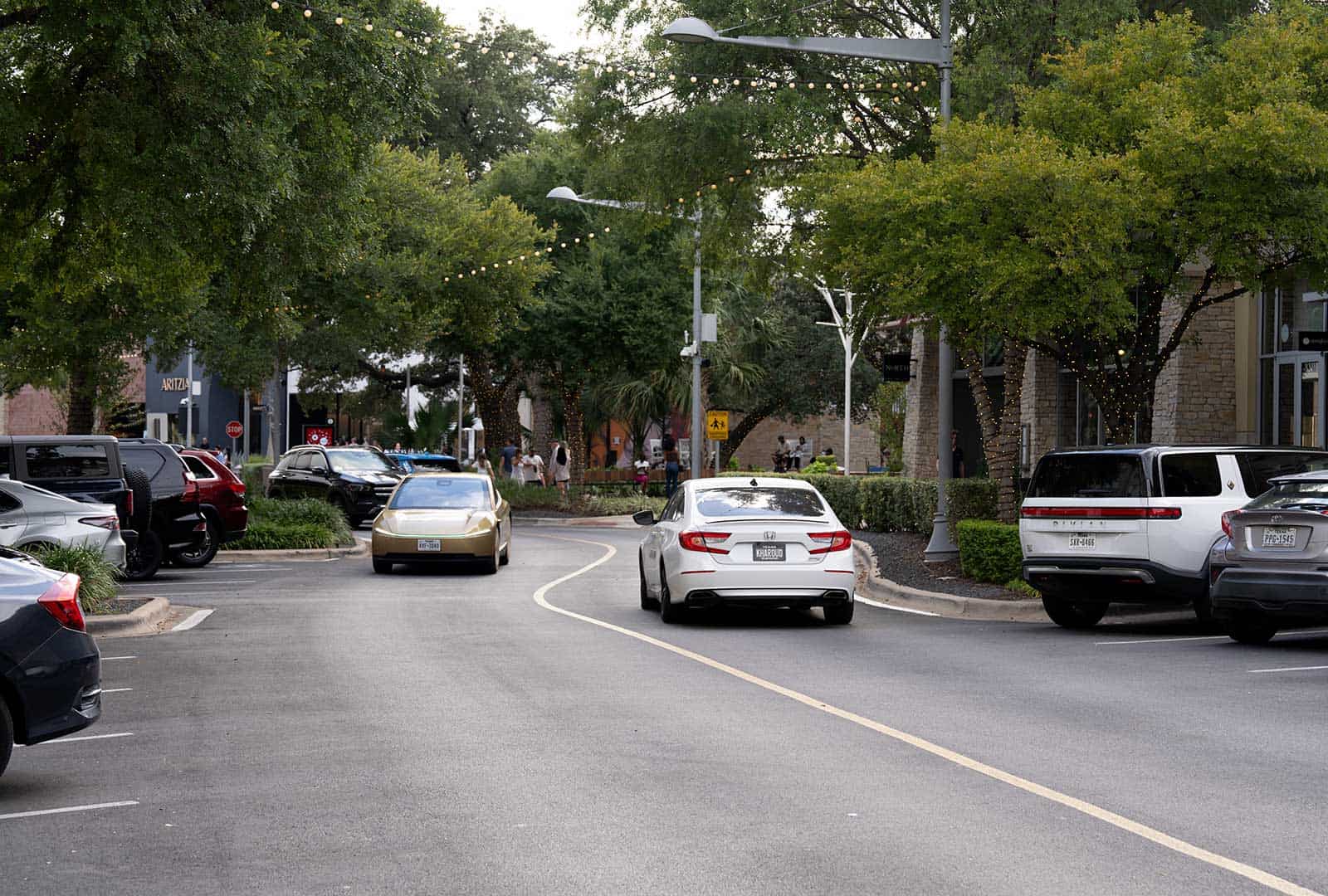
Cybercab impressed with its interior experience and smooth ride, though routing needs improvement, while depot visits revealed meaningful differences in fleet readiness across companies.
Grayson and Walt also discuss the LiDAR debate, upfitting versus line-fit manufacturing, the stalled US-China auto summit, and international autonomy news including Wayve‘s Mercedes deal and Baidu’s London robotaxi testing with Lyft.
Key Autonomy Markets Episode Questions Answered
How did the Tesla Cybercab compare to the Waymo Robotaxi in terms of ride experience?
Grayson found the Cybercab’s interior experience transformative due to its large screen, reclining bench seats, and no manual controls, making him feel like he was in a living room. From a pure software and driving-performance standpoint, however, he said there was no material difference between the Cybercab and a Robotaxi Model Y.
What did depot inspections in Austin and Dallas reveal about the state of autonomous vehicle fleet operations?
Grayson observed that Waymo vehicles in Austin were not being cleaned at their depot while Dallas depot vehicles were, Tesla’s ODD appeared ready to expand based on depot activity, and the Zoox depot showed no visible construction progress since March. Most notably, Avride’s Austin upfitting facility held an estimated 200 to 300 vehicles, a scale the hosts say the market is not paying attention to.
What is Aurora’s near-term truck deployment plan and what concerns exist about its compute footprint?
Aurora is targeting 300 trucks delivered by end of next year and over 1,000 trucks by end of 2027, with upfitters like Roush capable of meeting those volumes. Walt noted a concern that Aurora’s compute stack fills the entire sleeper cab with no clear roadmap to shrink it for non-sleeper cab trucks, which could limit the addressable market over time.
Autonomy Markets Topics & Timestamps
[00:00] Once You Go Cybercab, You Don’t Go Back
Grayson rode Cybercab in Austin and came away impressed by the screen, the reclining bench and the living room feel, though from a software perspective he found no material difference from the Model Y Robotaxi.
[03:56] Robotaxi in Dallas
Walt found the unsupervised Tesla Robotaxi to be the smoothest ride in Dallas, with Waymo braking more aggressively, and both hosts share why consumers will choose the consistency of autonomy over human drivers.
[09:01] Cybercab Wait Times, Pickups and Routing in Austin
Wait times averaged two to five minutes across dozens of rides with consistent pickups, but routing remains the area Tesla needs to improve, with Walt’s Dallas rides appearing to avoid whole sections of the city.
[12:10] Austin Robotaxi Depots
Grayson observed Waymo vehicles not being cleaned at the Austin depot, and after visiting Tesla’s operational and under-construction depots, he believes Tesla’s Austin ODD is getting ready to expand again.
[13:45] Avride’s Austin Depot
Grayson counted 200 to 300 vehicles at Avride’s upfitting facility, a presence he believes the market is overlooking, while Walt notes Waymo’s Texas registrations are up 49% in three weeks.
[16:02] Zoox’s Dallas Depot
The Zoox depot near Love Field was under construction with no visible charging infrastructure and four Highlanders, and Grayson estimates it is 12 to 18 months from operational.
[17:22] May Mobility in Arlington
May Mobility is making progress with its Toyota Sienna fleet, still with a safety driver, and Walt believes there are situations the company will need to work through before it can scale driver-out.
[20:17] Kodiak Targets Driver-Out on Dallas to Houston by Year-End
Walt rode a 30-minute loop at 65 miles per hour and noted clear improvement, with Kodiak targeting driverless operations on the 219-mile Dallas to Houston lane by year-end and learnings from the Permian Basin carrying over to the road.
[24:19] Avride in Dallas and the Uber Partner Math
Walt hailed Avride through the Uber app and found the IONIQ 5 ready for launch, but lays out the math on where an Uber partner with 50 driver-out cars stands against Waymo at 10,000 and Tesla in the thousands.
[26:46] Hyundai Is the Quiet Winner in Robotaxis
With the IONIQ 5 powering Waymo, Avride and Motional, Grayson views Hyundai as the quiet winner of the robotaxi buildout, as every robotaxi added to the road is another IONIQ 5 sold.
[27:30] Walt Amends His View on Upfitting
Walt is now more open to upfitting in the near term, as Roush and others can upfit in the thousands while OEMs remain resistant, and both hosts agree the LiDAR obsession is wrong.
[30:57] Tesla’s Vertical Integration and Supercharger Advantage
Roush and Magna are world-class manufacturers, but Tesla’s vertical integration and access to the Supercharger network is a massive competitive advantage that Grayson believes is not discussed enough.
[33:06] Aurora Investor Day and the 1,000 Truck Target
Walt rode driver-out in an Aurora Class 8 truck and believes upfitting can deliver Aurora’s 1,000 trucks by the end of 2027, while Grayson explains why autonomous trucking will be a hybrid network for decades.
[40:22] President Xi’s Visit and a Wake-Up Call for Detroit
President Xi’s visit produced no movement on Chinese automakers entering the US, but Grayson views the visit as a wake-up call for Detroit.
[47:01] Foreign Autonomy Desk
Baidu is ramping supervised robotaxi testing in London with Lyft, Mercedes-Benz signed a licensing deal with Wayve, and Tensor Auto is preparing to deploy robotaxis with Volt Premium Taxi in Bulgaria.
[49:33] Next Week
Walt is watching the NHTSA deadline, Tesla’s Roadster event and Q3 deliveries, and Kodiak’s monthly safety case update, while Grayson asks whether the Roadster will hover.
Full Episode Transcript
Tesla Cybercab First Impressions: ‘Once You Go Cybercab, You Don’t Go Back’
Grayson Brulte: Walt, the inspector was out in the field, and I had my inspector hat out doing lots of inspections in the Lone Star State while we were there. We rode in Cybercab, we rode in Robotaxi, rode in AVride. You rode in May Mobility, rode in the Kodiak truck, and you went to Aurora Investor Day. Boy, did we get a lot of inspections packed into 48 hours. And let’s not forget, yes, we did visit depots. Let’s kick things off with Cybercab. I’m gonna tell you, Walt, I was impressed. Very thoroughly, truly impressed
Walter Piecyk: Yeah, we did take a lot of autonomous miles over the past week, you know, primarily in the great state of Texas. So but let’s j- to your point, let’s start with Cybercab. how was it?
Grayson Brulte: It was awesome. There, there, it’s, it’s awesome. I’ll summarize it to you this way, and it’s a little bit of tongue in cheek, but I am dead serious. Once you go Cybercab, you don’t go back. Our good friend David Moss said, “Go robotaxi, then go Cybercab and, and compare and contrast.” No – I’m sorry. I, I didn’t like robotaxi after riding in Cybercab. I felt like I was traveling in a movie theater. It was awesome. I just needed popcorns and a cocktail, and then life would’ve been awesome. But it was really great experience
Walter Piecyk: Can you be a little bit more specific? ‘Cause when I get in my own FSD or yours and I also took robotaxi rides, it’s, it’s pretty smooth. The Y itself, you know, the new Ys have better suspension, so they’re more comfortable than the old Ys. Is it possible it just felt more comfortable because the Cybercab sits lower to the road, maybe better suspension? Be more specific in terms of what was better. Was it the, the software and how it was braking and turning, or was it just the comfort of the car and, and the quietness of how it was manufactured?
Grayson Brulte: I’m gonna give you a LightShed answer. Your partner Rich Greenfield. It, it, it was the screen. It was the, the, the experience, the, the entertainment. And when you’re sitting in there, it’s really cool. You can recline the seats all the way back. You can move them forward. It was just, I know this sounds silly, but that screen, you just forgot that you were in a car. You felt like you were in your living room sitting on a sofa. And it didn’t, didn’t have any intersection problems. We didn’t have any remote operations. The ride was very smooth. Some of the routing needs to get better, but overall great suspension. The audio could use a little bit of an upgrade there, but overall very good. But there’s just something magical about sitting in a vehicle with no manual controls and on, and on a, on a seat or a bench, if you wanna use that term, that feels like you’re on a sofa. I mean, from an aesthetic standpoint, Tesla hit a home run
Walter Piecyk: Okay, so to dissect that, that inner cab experience I get. But what about the ride itself? Like, was it– ‘Cause, you know, one of the things that I noticed, which I’ll get to in a little bit, was when, you know, when you hop in from an AV to a Waymo, from a May to a, you know, to a robotaxi all in the same day, you can notice those differences. Now, look, I’m gonna say you know, I, I’ve used this analogy before. It’s like, you know, if you go to a Best Buy and you, and you look at a HD or a 4K or an 8K television, you can see the difference when it’s right next to each other or back to back. That might not be as relevant if you’re just taking the same car every day or, or, you know, there’s, there’s not as much time in between it. So I just wanna zero in. If you really focus in on, like, was there anything about the ride itself, like how the software controls the car, that you think is different than, than robotaxi in a Model Y?
Grayson Brulte: From a software perspective, no. What you could tell though from a rider perspective of being lower to the ground, a little bit smoother than Y, but from a driving performance perspective, n- no material difference. I would, I would even challenge individuals, you could probably blindfold one individual, put them in a Y, and then immediately put them in a Cybercab, and they couldn’t tell the difference besides how high they’re sitting in the vehicle
Waymo Robotaxi in Dallas: Aggressive Driving Profile Compared to California
Walter Piecyk: Okay, so let me give my context here. you know, because the last time I was in Dallas, I did notice or end note on this very podcast that, you know, the way the, the Waymos drove in Dallas felt different than California. And even in California, when you go back from time to time, things change in terms of the feel. look, Dallas drivers are pretty aggressive especially relative to California drivers, so that– maybe they have to provide a different profile for those rides. But, but to me, you know, in Dallas at least, the robotaxi had the smoothest ride. And, and I’ll be more specific. In terms of the braking, like, you know, a lot of these cars, they’re perhaps on a software load that’s being more cautious. They’re braking to, you know, a little bit more aggressively. Again, if you rode in those cars in a vacuum, totally fine, and probably better than most human drivers. But if we’re gonna compare these things and split hairs, as they may say, then, you know, in my case, you know, the, the robotaxi was much smoother than I think all of their peers. Obviously, Waymo’s a smooth ride. but, you know, there was a lot of braking and, and aggressive– more of aggressive ride than I was, than I was familiar with
Grayson Brulte: That tends to be a characteristic of Waymo in Texas. So I’ve ridden in Houston, so thank you Waymo for early rider access in Houston. I was able to ride in Houston. I’ve ridden in Dallas, and you’re right, they tend to be a little more aggressive. Friend of the pod, Matt McClellan from Covenant, he FaceTimed me this morning riding in a Waymo, showing me how aggressive it was. So it’s not just you and I noticing how aggressive or assertive the driver is. We’re getting it from other individual friends of the pod. But I gotta say, while I did that drive in a, in a manual car, it was the worst experience because it had no FSD from Austin to Dallas. 15 minutes into the ride, I was joking, this individual went all the way from the far left to the far right to get off, so the drivers downtown there are are very aggressive. So I understand why, if you wanna say the Waymo driver is tuned to that aggressiveness, so I get it
Human Driver Safety Concerns vs. Autonomous Vehicle Consistency
Walter Piecyk: And let me also provide my own context relative to human drivers that I experienced o-on this, this trip to, to Texas. which again, we’re, we’re, you know, splitting hairs relative to these autonomous vehicles. Two different experiences. I think I had three total human rides. on one case I had– I was going to the airport and the driver, you know, pulls up and is like, “Hey, do you mind if I stop at the gas station on the way to the airport?” I’m like, “I kinda have to catch my flight.” So I’m, I, I didn’t quote unquote allow him to stop at the gas station because I needed to catch my flight, but apparent- I’m guessing that that’s gonna give me a bad rating. But, like, obviously with autonomy, that’s not gonna happen. The second thing is, is a bit more disturbing. You know, I had this, I had to connect through Atlanta to get to Dallas. There was a lot of weather. You had you know, a fiber cut, which don’t even get me started on that since I know a lot about fiber cuts and how ridiculous that they had no redundancy for basic infrastructure, but I digress. In any event, I got in late. I got in late to Dallas and, you know, we’re on that highway between DFW and, and downtown, and I’m looking in the rearview mirror and I can see that my driver is, like, dozing off and the car is, like, starting to swerve into the lines. I’m, like, asking him, “Hey, it’s a little warm in here. Turn up the air conditioning.” And, and, you know, so– And look, I feel bad. The guy is trying to earn a living working at two o’clock in the morning to drive people, but that’s not a safe situation. And it, and it just speaks to how I think consumers are gonna seek out what is safest, what is most consistent, right, in terms of their experience from getting point A to point B. So I thought that was– I think that’s notable. These are exact experiences that I’ve had, and notable to bring up when we’re talking about this comparison between, hey, maybe Waymo’s a little bit more braky than, than Tesla in a given market.
Grayson Brulte: The comparison’s spot on. I only had to use a human-driven vehicle twice on this trip outside of me driving. one was to come meet you in Arlington, and the other was to get to the airport, and my first human-driven ride after, you know, fully autonomy going to meet you in Arlington, I was like, “Oh, this stinks.” I, I mean, it’s just no consistency in the product. I understand why Travis built the Uber X tier, but boy, oh, boy, no consistency of a product. I’ll tell you something, there is no loyalty. I’m going, “Who, who’s the fastest? Who’s the cheapest?” when I have to use human, but I would gladly more wait for a robotaxi ’cause that consistency of experience and just being able to, to be myself, to, to make a, to make a phone call. And I’m sorry to say this and, but I have to be very honest, the overall cleanliness of robotaxis tends to be cleaner than a majority of the human-driven transportation network vehicle companies
Walter Piecyk: Just to be clear, this was not an UberX I was in. This was Uber Comfort, and I still had these issues. But let’s go back to your Austin experience. Tell us a bit about the rest of it. Like, how were the pickups? How were the wait times? You know, what was the availability? You know, what was the routing? Tell us more about Cybercab in Austin
Grayson Brulte: Sure. So the pickups were consistent. There was, at the hotel, and you and I have stayed at the same hotel, and it’s funny where robotaxi, both when you and I were supervised and we were unsupervised, and then I was in Cybercab, it picked up at the exact same spot right there on the side every consistent time. First of all, wait times averaged, I would say, two to five minutes, so really good wait times. My longest wait time, I took dozens of rides, was 17 minutes. I went from the south of the ODD all the way to the north of, of the ODD, and all the way to east to west and, and started zigzagging around the ODD. Some of the routing was odd. It taking some more side streets versus more of a traditional road that you and I would take, but the experience didn’t bother me. And then I got to one place when I had that 17-minute wait. It was hotter than hot, and I mean it was hotter than hot. So I went and got an ice cream. So that 17 minute didn’t wait me. I got an ice cream and I waited for the next Cybercab to come. But they, Tesla does need to work on the routing. That would be my one big takeaway for this audience, that Tesla needs to do, improve the routing
Walter Piecyk: I mean, I would say that the robotaxi which is again unsupervised that I took in Dallas, which is great, right? No driver in there, so that’s awesome. the routing there was more than just odd. I mean, it looked like it was avoiding sections of Dallas to get from point A to point B. So a ten-minute ride, you know, effectively turned into a twenty-minute ride. Now this is, you know, a similar concept to what we’ve experienced with Waymo pre-highway, right? When you’re do- using these back roads to get point A to point B, you’re effectively adding minutes that consumers are not gonna want. So I suppose that as they go into these markets and in, in Tesla’s case, build them out more and as Waymo adds highways, that these things will be resolved as part of the roadmap on, on, on technology. I don’t– I can’t see why you can make it work in certain areas and not others unless you’re specifically avoiding, you know, certain times, certain types of rights and lefts. But that shouldn’t rule out whole effectively geographic areas that, that seemed like you know, they were getting blocked out. So hopefully that, that changes over time. It’s also an important point, which we’ve made on this podcast many times, as a reminder to those that are very bullish on Tesla in that like it’s not everywhere all at once, right? Individual markets are gonna have their own quirks that are gonna need to be worked out market by market. And that I think is, is I think an example of that.
Grayson Brulte: Yeah, and I will give a shout-out. Spencer was with us for some of the field work that we did, and the things that Spencer showed me on the Model Y, I’ll just put it this way, completely reinforces exactly what you’re saying. And I wanna reemphasize that this is not turn on the switch, it’s everywhere all the time. It’s not gonna happen that way. I would say sorry bulls. You can reach out to me, you can reach out to Spencer. There’s a lot of differences that you’re overlooking
Walter Piecyk: So tell us more about Austin. Was there anything else? Y- y- you had your inspector hat, I assume it wasn’t there just to ride Cybercabs. Can you give us a little taste of some of the things that, that you saw there?
Austin Depot Inspections: Waymo, Tesla, Zoox, and AVride’s Massive Upfitting Facility
Grayson Brulte: The Cybercab was the was the big thing that I wanted to see. But first thing I did, I, I landed, I, I went to Hertz. Gil, great job of what you’re doing at Hertz, sir. Got in my Hertz rental car and went on depot hunting, ’cause that’s what we do. The inspector hat was on, I was in the Hertz Mobile and going around inspecting depots. First stop, I went and visited the Avomo Waymo depot. And Walt, remember how you and I went on the sidewalk in, in front of the building and the sidewalk behind the building? Those are all blocked now. They must have known that you and I were there. You can’t see it anymore. It’s all blocked. However, they did not block off the side where there’s a public road. So I sat there parked on the public road, and I monitored the depot for roughly an hour or so, and I noticed something: the vehicles weren’t being cleaned. The ’cause I noticed when I was in downtown Austin, vehicles were dirty, the vehicles at the depot were not being cleaned. There was no car wash in sight. There was no cleaning bays at site. And that’s something to watch because to compare and contrast, which we’ll get to later, the Dallas depot, boy, oh boy, they were clean, and I saw individuals cleaning them. So that’s something to point out there. Also visited Tesla’s depots, their under-construction depots, their operational depots. And I’ll tell you something, Tesla’s ODD, this is just my personal opinion based on visiting these depots, it’s getting ready to expand again, so pay attention to that. And also, I think, I would say probably the biggest highlight or the biggest surprise, we all follow the, the Texas Automated Vehicles database of the number of vehicles that are registered in Texas. I went and visited AVride’s upfitting facility. Walt, I kid you not, there must have been, I would say, 200 to 300 vehicles there. Some were upfitted, some were not upfitted. The, the, I don’t think the market is paying attention to how large of a presence AVride has in Texas. I mean, that was just incredible the amount of vehicles that I saw at their upfitting facility in Austin
Walter Piecyk: Well, we’ll get to AVride a little bit later, but in general, I think also Waymo had a big push in Texas. in the last three weeks you’ve seen registered vehicles, at least, up forty-nine percent. Now, we know registrations aren’t necessarily cars on the road. Like, AVride has a lot of registrations, but those are, in many cases, cars that are building the miles and the safety case that they need, you know, to get to driver-out. And again, we’ll, we’ll get to that later. so just keep in mind those differences when you see these numbers that are pushed out there. But I also do believe in the case of of Waymo, you know, they don’t, they don’t need a lot of those cars for, for building the product to work. That’s for commercial service. And this is, again, for our longtime listeners, something that we’ve talked about before, like, if something’s gonna happen in a market, in this case, Tesla, you know, building Cybercabs, you know, adding driver-out in multiple Texas cities, that’s when Waymo wants to come in and surge and show the market what their, what their presence is. We saw that when Robotaxi first launched a little over a year ago, and obviously we’re seeing it now that Cybercab is, is started and, you know, depending on when things clean, clean up with NHTSA probably ready to start ramping there
Grayson Brulte: I would agree with that. I could tell you visiting Waymo’s Dallas Depot, I saw Ohios. They had California plates, but there were Ohios there. I wanna ask you this question. One of the most interesting things I saw at Waymo’s Dallas Depot, they have three of them, I visited two of them. There was a Waymo Jaguar I-PACE that Spencer knew and took a photo of, had Oklahoma plates. I have never seen a Waymo with Oklahoma plates. What do you think that means?
Walter Piecyk: Yeah, I don’t really know how that all goes down. We always check to see who owns the cars and take pictures of that stuff to see if there’s any ownership change there. Obviously, these guys still have the issue of, of residual value in terms of getting third parties to really step in. I wouldn’t wanna speculate on, on what that means at this point.
Grayson Brulte: That is fair. And then I will say, you know, when we were in Dallas, I did visit other depots. I visited the Zoox depot o- over by Love Field. I gotta say, Walt, and I’m not saying this to be critical, I’m just saying this from fact, and we are gonna release this in a field report. The depot was u- under construction. There was no charging infrastructure visible. There, we counted four Highlanders. I’m, I’m not a construction expert, so I’m stating this as not a construction expert, but somebody that follows this stuff. It is going to be a long time before that depot gets operational. I would say at least 12 to 16 months, maybe 18 months. And just completely, completely fascinating. And I wanna dovetail that with, to the audience that knows, we have another field report coming. I was in Austin in March with you. We visited the Zoox depot, and then I visited last week. Walt, not one difference, not one construction movement, no visible changes, and again, only four Highlanders. So I, I don’t know. I just wanna point that out to the audience. I just think that the Zoox timeline is getting pushed ba- even based on their public press releases about getting ready to launch markets. The infrastructure, the Hollywood term, below the line, that’s where the details matter when it comes to scaling, and they’re not even ready
Walter Piecyk: Now, one place you didn’t get to, which I thought I wanted you to go to, was the, the proposed site for where Paramount was considering in Austin, which is, which was near, I think, a trash dump. But I think that’s now a moot point as our, I don’t wanna say friend, as our foil, Rob Banta, caved this past week, so now not really relevant in terms of seeing them, at least for the time being, move out of LA into Austin. But with that said, let’s go to the visits, the rest of the visits from Austin to Dallas. The first being, and I’m gonna do these in chronological order May Mobility. you know, May Mobility, which I’ve been in these cars in multiple locations and in the Arlington location, you know, you know, I think this is probably my third time in these vehicles. They’re definitely making progress, which is again, commendable given that this company, which is in the process of trying to raise money through a SPAC but has only raised less than five hundred million dollars. I don’t know, like, that’s probably what, what Waymo spends in, in months that this company spent, you know, for forever. But you know, it was, it was. We still had obviously a safety driver. The, the car itself was, was definitely cleaner in terms of, like, the overall. It looked like it was getting closer to ready to go. There’s still, I think, issues that the company is gonna need to hash out before they can really get to driver-out. There’s certain situations that the car faces that they’re probably, at least at launch, gonna avoid rather than, than doing that. and, you know, but overall, I think good progress for May Mobility, but just, you know, contextually, not really at that, at that phase where I think you’re gonna see scale driver-out cars. Now, look, they have indicated that, you know, there are software loads that are coming. Even when we were there, there was a software load that was gonna address some of the issues that we were, that we were seeing right away. So these things can happen very quickly, and autonomy development is, is accelerating. Like I said, things have, have improved over time. So it was a good visit and, and good to see that they had made progress with these, with these Toyotas. Which by the way, you know, is a hybrid car, so they’ve got the challenges of dealing with, you know, the engine and how braking works versus other cars. It’s a, it’s a more complicated task, you know, than perhaps having a cleaner, EV,
May Mobility and Kodiak Truck Rides in Arlington and Dallas
Grayson Brulte: It is a more complicated task. I remember the old days, Brian Salesky, when he was running Argo, would make the argument that hybrids have more uptime. I’m not necessarily sure that’s the argument now, but I don’t– I think it’s all eventually gonna go electric. I like the Sienna architecture. I think Toyota builds an incredible vehicle. Obviously, they have the dual redundant version of the Siennas. But overall, it was very nice of them to, to host us, and thank you for that, and just a really good team, and we, we wish them well
Walter Piecyk: Yeah. And then there’s, you know, there’s details that, that exist in terms of how we think this is gonna roll out that I think they’re gonna address during their, you know, the phase of raising this capital. And then after May we headed over to Kodiak. Kodiak. of course, being autonomous for trucks. They are driver-out off-road, right, in the Permian Basin. but they also named, I guess, a Dallas-Fort Worth to Houston as their first driverless long-haul lane. that’s two hundred and nineteen miles on old I-45, and the expectation, I think, is that they can launch that by year-end. The truck again, like again, just to be clear, when you get in a, a Class 8 truck, it is not a comfortable ride, not relative to the autonomy. Just there’s, like, you know, there’s bouncing. It’s a big, it’s a big heavy truck when things are, that are happening. Like s- the, the goods and, the goods, I’m gonna, I’m not gonna say services. The freight doesn’t care about a, a comfortable ride. But I think there was, every time, I think this is maybe the fourth time, maybe third or fourth time I’ve been in a Kodiak truck. Again, progress in terms of entering lanes and, and dealing with stuff, so clear improvement. and, you know, we did another thirty-minute loop. We’re doing sixty-five miles an hour. Sounds like that safety case is, is improving. I guess we’re gonna get an update on that next week. But the big news there is, is obviously if they can get to driver-out you know, on a road, you know, by the end of the year. And, and we look forward to, to hopping back in that Kodiak truck without a driver in the driver’s seat
Grayson Brulte: I think that’s gonna be awesome. Looking forward to that. I think it is very clear from what you and I experienced, I actually went there the day before, brought Spencer along part of the, The Road to Autonomy friend group, and rode in
Walter Piecyk: Did you get Spencer in the Class 8? Did you get Spencer in, in the truck? And what, what was his impression?
Grayson Brulte: Sp- Spencer went in the truck. He was very impressed. First time Spencer was ever in a Class 8 truck, so I got h- him going in, and he’s made a video, and David Moss is gonna be going for a ride. So, if you wanna call Friends of the Road to Autonomy, we’re getting them in Class 8 trucks. And they had a really good experience. But from a, a technology standpoint, Kodiak is clearly, clearly improving in the right direction. The technology is getting better, and from what Don told us when we had the private meeting with him is that there are a lot of learnings from the Permian Basin are coming over to the on-the-road, and that’s gonna be really curious as they scale both in the Permian and the, the over-the-road driverless fully unsupervised you know, w- the impact that that’s gonna have. I think it’s gonna be relatively positive
Walter Piecyk: And like a lot of these companies, look, there’s just a need for capital, right? You can move through and get more driving miles. I mean, it’s a little bit more apparent, you know, with, with cars, right? If May Mobility had more cash, you get more cars on the road, you get your miles testing. All of these things move, move faster. But, you know, they’re dealing on leaner budgets than these larger companies who have been flush with, with cash have dealt with. And I think as a result, they’re scrappier and, and, and as a, as a result, work more efficiently. They had a lockup that, that occurred this week. good and bad, right? ‘Cause obviously it has– it impacts the stock. But good in that it, that it creates flexibility or, or more liquidity and enables them to go shelf el-eligible, you know, in a week later. So that increases the flexibility or availability of ways to raise cash. but look, capital ends up being one of the items that, that’s important for all of these Companies.
Grayson Brulte: Yeah, we, we all know capital’s important, and the end of the lockup is basically, I believe it’s their one-year anniversary of being a public company, so congratulations on that. And, you know, we just, if you look at the economy and you look at the dr- the growing driver shortage, you look what Secretary Delpy’s doing with this crackdown on illegal drivers, I don’t know any other which way to say it. Elon said it in a video yesterday. We need autonomous trucking to shore up the supply chain. I mean, we need everybody to succeed because it’s truly vital to the US economy
Walter Piecyk: So we did end there, spent some time at AVride in the cars doing some, some drives there. Again, safety driver. This is– Remember, you can hail these things on your own if you want to. Go to Dallas. I did that as well multiple times. you know, in the Uber app, you just go to certain locations, call for Comfort. Again, s- I feel like a broken record here, but definitely progress. The car there, like, you know, which I think you had, like, an iPad kind of jerry-rigged up there, it looks like it’s ready to go. Like, the Ionic, IONIQ 5 is a, is a nice car. They have nice you know, screens that are, that are set up. It’s, it’s got all the bells and whistles I think that you need for this initial, for this s- initial launch. The key is, again when can they get that supervisor out from behind the car? And I think there’s still, you know, some, some wrinkles that I think need to be worked out there. So my guess is, like, you know, getting back to when I wrote about this for LightShed whether, you know, just whether any Uber partner, like if you’re a year out and it’s like June of next year, a, a good scenario is AVride’s got, what, 10, 20, 30 cars driver-out in this market. That’s a positive for them. Like, if they’re, you know, wanna raise capital and they’re telling their investors, that’s a positive. But the context of that is, you know, Waymo’s gonna be at 10,000. And, you know, given what’s going on at Tesla right now, I think you’re probably gonna see Tesla in the, in the thousands at that point. Now, from their standpoint, they look at that and say like, “Okay, so what?” Like if ultimately we’re in this for the long haul, right? We’re able to raise the capital. We continue to develop. We put– And look, we know AVride’s got hundreds of cars on the road, so they’re probably doing hundreds of thousands of autonomous miles a week, which is what you need to, to safety test this thing. So from their standpoint, it’s like, “Look, I don’t give a shit if I’m at 50,” sorry, Mom, “if I’m at 50 miles,” or excuse me, “50 cars in a year. I wanna know where I’m gonna be in 2030 or 2031 when there’s 500,000 cars on the road. And then if my disparity between us and, you know, Waymo and us and Tesla is still 10,000, 20,000, even 30,000, like, that means I still have an opportunity to have a lot of, a lot of cars on the road and be, and have a great business model.” In the US, let alone what they’re gonna do international.
Grayson Brulte: Well, I think one of the big winners here, and I think you and I are probably the only podcast and very few handful of individuals that discuss this, is Hyundai. It’s the IONIQ 5. We, we know based on Hyundai’s Investor Day that in Q4 of ’26, later this year, in mass production of the IONIQ 5 will be going to Waymo. AVride is, is running the IONIQ fleet. Motional, which is owned 98% by Hyundai, is running the IONIQ fleet. Hyundai is quietly emerging, in my opinion, as a big winner here. The more ve- robotaxis that go on the road, the more IONIQ 5s they sell. And let’s not forget, go look at Experian data, look at Cox Automotive data. Pre-robotaxis, the IONIQ 5 was not selling very well, and they are blowing them out on super savings Aisle
Upfitting vs. Line-Fit Manufacturing and the LiDAR Debate
Walter Piecyk: I also wanna take this opportunity– I’m glad you brought that up ’cause I wanna take this opportunity to, I think, amend stuff that I’ve said in the past where I’ve been, I don’t wanna say anti-upfit, but maybe too critical of the importance of upfit in the, the next two to three years you know, of the growth of this business. Why? Because, like, for you to get to line fit, you’d have to lock something down today to get something two years from now, right? So in the, and in the meantime, you have great people at Roush and, and other companies that have, you know, been upfitting police cars, ambulances. The, the ability for them to crank volumes. Again, let’s go to AVride as an example. Like, I talked about whatever, you know, 50, you know, driver-out cars. Like, if things really went wow– well, excuse me, Roush or others could upfit these Hyundais in, in the thousands. And if thousands, in the perception of an investor today and certainly how people view Uber and their ability to have partners, would be perceived very positively. And I think– So I think I, I am amending, and I think I’m being more open to the importance of upfitting. And if you think about upfitting, there is an incremental charge, right? It is not as efficient. But it’s not, like, a dramatic difference in these early years. For sure, in the long term, when we’re talking about millions of cars, you know, getting in on the manufacturing lines is, is, is gonna be critical. But I think I am more open to the upfit model, I think, in the near term, especially for these, these partners. And look, at the end of the day, like, you have to deal with OEMs that are largely resistant. In some cases, they’re trying to build stuff on their own, and they think that they can develop this internally. In, in other cases, they think that if they just circle the wagons, they can prevent autonomy from hurting their overall business. So it’s gonna take time for some of these, you know, OEMs that have that manufacturing bus-bus– you know, ability to cave. I’ll just throw this in there. Like, Tesla does not have that issue at all Period. End of story. And the other 10,000-foot observation I had from a lot of conversations over the last three days is, I’m not gonna say what you were so vociferous with last week, I think it was, where you say lidar is not needed. But, like, this– I think this, this lidar obsession that some people have is just wrong. It is just wrong. And that there can be autonomy with things that don’t that don’t have lidar, and that I think is an important thing for people to consider when you think about manufacturing capability of, of, of what Tesla can deliver going forward. And look, we could be weeks away from seeing this, right? I mean, we have this NHTSA thing going on. I think once that– we get some confirmation on that, again, not everywhere all at once, but there’s a big difference in terms of what Tesla can do versus what Roush or others could spin up in, in some period of time. So I know I kinda spoke out of both sides of my mouth there. I think upfitting is certainly, I’m more positive on than I was before. I’m also more positive on Tesla based on what I’ve heard ab-about what I’ve experienced in the cars themselves, what I’ve heard about this, the, the NHTSA situation, and, and what I believe to be true about the, the need for or not need for, lidar.
Grayson Brulte: I wanna give some context for those that are curious. Roush is world-class manufacturing. Ford’s supercar, the Ford GT, is manufactured by Roush. Magna, another world-class manufacturer, they manufacture the Mercedes-Benz G-Wagon. They manufacture several of the BMWs. Not to mention Magna, as we all know, upfits the Jaguar I-PACEs and the Ojai’s. The bottom common denominator between Magna and Roush is they’re both world-class manufacturing, and until you hit that, as, as Walt clearly laid out, that massive inflection point to millions of vehicles, upfitting makes sense. Motional has an advantage, just like Tesla does, because they’re owned by Hyundai, and those vehicles come off the line from the Singapore innovation plant ’cause they have the proper tool in there. But, but Tesla, as you said, and we walk that line, boy, oh boy, that is a huge, massive competitive advantage of the vertical integration. And here’s another thing not on manufacturing that is going to help Tesla as they scale: the supercharging network. I don’t think that’s discussed enough of what big of a competitive advantage access to all of that energy gives Tesla, and the expertise on how to build the charging infrastructure
Aurora Investor Day: Driverless Class 8 Truck Ride and Fleet Targets
Walter Piecyk: I mean, there’s just no denying that, Grayson. Like, it’s just, there’s no more beating around the bush on this. Like, that is a huge advantage. And again, to reemphasize this whole, like, lidar thing, like, we’re the ones in- going in all these cars and all these trucks. We’re the ones driving it. Like, and when you sit in. Frankly, get your friend’s Tesla FSD and go for a ride. That is more advanced and, and performs better in the 9,000 miles that I’ve put on that car than many of these test drives that I’ve done without lidar So, and now we’ve been sitting in cars that have no drivers in there as well, without incident. So I don’t know. It’s it’s just, it’s, it’s good to get out and do field work. I’ll just le- I’ll just leave it– I will leave it at that. shall we move on to Aurora? Again, moving in chronological order. they had an investor day. Again, got into another truck. Again, sitting in a Class 8 truck, no driver on there. I posted some of the video on, on the internet. In terms of the upfit, by the way, these guys have effectively replicated with Roush, and I talked to the Roush guy who was at their investor day, what Kodiak has done. In trucking upfitting, I’m even more open to because the volumes just aren’t obviously as big as cars. Now, Sasko from Volvo was there. I spent a lot of time with him talking about how in 2028 or 2029, as they kind of put these manufacturing lines together, the benefits that, that will happen. But let’s, let’s look at the, the targets that Aurora has in the near term. You’re talking about 1,000 plus trucks by the end of ’27. Upfitting can do that, right? Look, Aurora will deliver, I think, 300 trucks by the end of next year. 300 of the 1,000. So what does that imply of where, where the rest is coming from? Even the 7,500 trucks that they’re targeting for the end of 2028, when talking to the Roush guy and other– There’s, you know, Roush is not the only upfitters that are out there. These are things that can be delivered on. Sure, greater efficiencies when you, when you get to these line fit you know, as they exist. You don’t have to deconstruct the entire truck in order to reconstruct it. So for anyone to argue that it’s just the same, it’s not just the same. There’s obviously gonna be, you know, a benefit to that. But, but again, we’re talking about companies that are raising capital and need to get to revenue, you know, in the near term. Like that, they need to get like 1,000 trucks out there and gen– and hitting those near-term revenue targets. and I’m gonna stop denigrating anyone in terms of using upfitting to do that ’cause it’s, it’s certainly, you know, an opportunity. By the way, the, the ride in, first ride in, in Aurora truck, so I have nothing to compare it to. Whatever. Felt like I was in a truck. Felt fine. Like, I don’t know what it’s supposed to, supposed to feel like. It didn’t– It, it did lane changes. It, it avoided people on the side of the road. we did the same thing that I did kinda with Kodiak, except in this case without a driver, an important point in a, in a 30-minute loop. And, and you know, I think it went pretty well. And, and by the way, hat tip to Aurora you know, for putting so many people involved in their ecosystem, customers, manufacturers, available for investors to talk to. I’m not sure how many of them took advantage of that, but that’s a different story. So it was great to get access there, even to their detriment to a certain extent. War- the dude from Warner was up there like talking about negotiating the deal. but, you know, credits to Aurora for at least putting that guy and others in, in front of investors
Grayson Brulte: I think that’s wonderful. I mean, your video was very cool about. I would say about a year and a half ago, two years ago, Roro hosted me in Palmer, Texas, and I went for a ride in their PACCAR with a safety driver. And overall, really great experience. So it was interesting. So the day that you went was Investor Day, and then the day after that they had Industry Day. So, so two days, and the interesting thing about Industry Day was that was the same day Tesla did Semi. And what that says to me is that Tesla clearly, clearly wants to g- to find out where the loyalty lies when it comes in the trucking industry. So interesting timing there, but glad that You had a Good time
Walter Piecyk: You know, someone at Twitter was like, “How did it feel?” Like, “Did it feel natural?” I’m like, “It felt like a Class A truck.” And again, the freight doesn’t care how it feels. No one’s gonna be in that truck. That’s the point. However, there will obviously be human truck drivers for a long, long time. And I think the bigger risk to PACCAR, to pick on them particularly, is, you know, if, if you’re circling the wagon on autonomy, like, and the drivers themselves are gonna find a truck more comfortable to drive, your risk is now semi because the truckers are gonna, are gonna want a more comfortable drive than what you’re offering. Now look, I’m gonna criticize myself immediately. Talking about whatever, what I think what Tesla said last night, like 500 miles. These PACCAR trucks are going into the Permian Basin, right? The real Permian Basin, not like the Aurora version of the Permian Basin where you’re still on a road. Like, the Permian Basin where you’re, like, in the sand and bouncing and they’re– And, you know, some of these, some of these mileages, I’m sure gas-wise are gonna be much longer miles. So there’s always gonna be certainly a, a demand for the market. But the point is that semis, I think, are attacking these OEMs on the human side of things. So maybe these guys should be a little bit more embracing and, and and, you know, integrating, you know, with autonomous technology, whether it’s from Aurora or others
Grayson Brulte: The bottom line is, and multiple individuals who work in the truck industry have told me this, and I firmly believe this. If you as a human say you’re 18 or 21 years old and you start as a truck driver today, you will retire as a truck driver. It is not going to be all at once, you flip the switch, everything’s autonomous. No, it is going to be a hybrid network. And I could see, and a lot of individuals agree with me, that the long haul routes, the, the, the tag team drivers, the DFW to Atlanta, those are gonna go autonomous first because those are hard drives for drivers, and drivers will tend to do the shorter routes over time so they can go home at the end of the day. But the bottom line is, either you’re going to embrace autonomous trucking or you’re gonna go the way of the dodo bird. Plain and simple, no way About it
Walter Piecyk: Before we want– move on, just one little geeky tech thing which is what I would call the footprint of the compute, which I’ve seen, you know, Kodiak where I was like: “Wow, that’s big. It’s in the sleeper cab.” And then I actually was able to take a peek at their next gen that was in, I think it was an international truck. I forget the type of it was, but where it wasn’t a sleeper cab, where they effectively compacted the stuff. So this is on– It’s actually, I literally saw it, so it’s happening with Kodiak. so I was interested to see what the Aurora compute looked like. They had it obviously at the conference, you could see the nuts and bolts of it. But then I– when I, you know, looked in the truck, it’s big, right? It takes up the entire back of the sleeper cab. and there’s no real roadmap to shrink that down, you know, in order to get it for cabs that are not sleeper cabs. I don’t know how important that is. It’s certainly not important in terms of them hitting their thousand trucks by the end of next year. But in terms of, you know, the broadening of the market and, and where that stuff can fit. And I, I presume a, a non-sleeper cab truck is cheaper than, than one that is. I could be wrong on that, but I think it, it was just kind of an interesting observation that I made in terms of how this stuff works.
Grayson Brulte: And just to clarify, the, the truck that you saw was a Western Star Daimler, so it wasn’t International truck according, ’cause a Western Star Daimler. And you’re right, th- that computer w- it went from ooh. I mean, it was impressive
US-China Auto Summit: No Movement on Chinese EVs or AVs Entering the US
Walter Piecyk: Yeah, I love that stuff when– I mean, I’ve seen that with LIDAR too in terms of the size of things, and that just– I don’t think it’s, it’s like a physical reflection of, of, you know, technological development. Shall we move on? That was– That kind of encapsulates our, our Texas trip. I want to address one thing which is, you know, obviously there was a lot of activity in New York City this week with the UN. President Xi was visiting Trump. And i-in advance of this, there was a lot of chatter. You never know with Trump on what he may or may not agree to. it started, I think, back in early September. A Democratic US senator, Elissa, Elissa Slotkin, said that. And I think she was doing this to kind of scare people, right? That Trump is planning to let Chinese cars in the US. So I think it was kind of like a, a fear thing. On 11th, actually, on the September 11th, but only two days later, Trump’s like: “Well, if China wants to come in and open a plant to build cars, I’d be okay with it, but it has to be all American,” blah, blah, blah. By the 18th of September, Detroit’s trade groups were going nuts. You got Jim Farley, the Ford CEO was, was conversely pitching for a JV framework. So there’s like, there was noise. Let’s call it noise, right? And this is obviously has big implications for autonomous here. September 18th, 17th and 18th there was a Reuters report, you know, we’re not, you know– Well, I won’t say anything. It was– Let’s just say it was a Reuters report saying that BYDs and Xiaomi and Gotion were on the shortlist to travel with President Xi. So, okay, noise dialing up even further. So here we go. The summit happens. No Chinese auto executives in the delegation. The Nikkei, which I’d probably put on equal footing to Reuters in terms of info, says BYD and Xiaomi execs flew in anyway. The, the US offered a dinner-only access, but Beijing said no. So, so basically nothing, nothing happened. And we go back to your kind of unforced error that it seems like Chinese– There’s still gonna be a wall, let’s call it, the great wall of, of EV that’s gonna continue to exist in this country. did I get any of that wrong, Grayson, or do you think there, there could be changes In any of That?
Grayson Brulte: No, I think that was a very fine and dandy summary. Obviously, you know, we have protectionism policies as it relates to bringing in Chinese manufacturers. Obviously, we have national security concerns. But I look at this, if you wanna call it the tussle, the, the back and forth tussle, is r- r- started to do a lot of research on this, and I’m not w- well in depth to go in depth on it. But if you look at when Japanese automakers first came into the United States market, that’s your Nissan, your Toyotas, it forced the Detroit vehicle manufacturers to, to update their product. Is this a wake-up call to Detroit, where Detroit says, ” -oh, if these vehicles come in, our product is not superior”? I mean, that’s, that’s the way that I’m looking at it, and this should be a wa- no matter what happens, this should be a massive, massive wake-up call to Detroit. I’m not saying it’s gonna happen. I’m just saying it’s a pretty big wake-up call because you’re seeing what’s happening in Europe now. Just look at VW. Wow. You see what’s happening when they come into that market, the sales plummet. And obviously, this is fear driven, but why, wh- why be fearful wh- when you can innovate, when you have great engineers and great men and women that work at these companies that can build great products? Build a better Product
Walter Piecyk: I mean, don’t you blunt the concern of American jobs if basically, let’s say, BYD built the car in South Carolina with American workers? Like, wouldn’t that blunt any of these job concerns that are out there?
Grayson Brulte: Okay, so let’s get into the facts. In Spartan, South Carolina, BMW, German manufacturer, United States jobs. Hyundai in Savannah, Georgia, Korean company, United States jobs. Look at VW in Tennessee. They have that very I believe it’s carbon neutral plant there in, in Tennessee, US jobs. So it will create jobs. It’s just not going to create Detroit jobs. It’s going to create jobs in other states that are more friendly to, I would just say very bluntly, to building an Automobile
Walter Piecyk: But the other answer though is that if you create those jobs and they have a better product that’s better manufactured and cheaper, it ultimately creates less jobs because it potentially drives some of these US companies out of business
Grayson Brulte: Yes. If, if Chinese vehicles came into America, the, the, you could put on a countdown clock the number of days Detroit’s in business. That’s how I see
Walter Piecyk: Okay. So we’ll, we’ll, we’ll see how it happens. I’m sure it can be painted, especially with this president, you know, how he can. He’s a good marketer in terms of whatever decision he makes and how it’s, you know, allegedly good for the American citizens. So, you know, we’ll have to still keep tabs on that. But this is a pretty big data point, I think, when you have the president of China come and visit and no, no actual movement. Now, I, I think we’re gonna get some report next week. Maybe there’s some stuff going on, but it doesn’t sound like that’s the case. Shall we move on to The foreign autonomy desk, or do you have more to say on China?
Grayson Brulte: I would say this before we move on. It’s something that I would encourage our audience to follow. And on The Road to Autonomy we’ll be doing, having some Chinese automobile experts on to discuss the issue further. But it’s just something to definitely, definitely Watch
Walter Piecyk: In a way though, sorry to, to extend this, but in a way, it might actually be better for autonomy companies because I think even if you let Chinese EVs in, there would still be a restriction on AVs. I think that would probably be a bridge too far. But that would then lower the manufacturing cost and potentially accelerate the development because a lot of the, the US OEMs feel like– it feels like they’ve circled the wagon against Google and others in terms of embracing or trying to do stuff internally. I mean, only recently did, what was it, Ford or maybe it was GM, reverse this nonsense about not putting Apple CarPlay, you know, in their, in their vehicles because they wanted to design it on their own and keep Apple out. Like, that’s just ridiculous, like not giving the consumers what they want. So– And, and look, at the end of the day, like it makes it cheaper for the AV guys, and maybe that competition, you know, sparks some, some true inner examination for these companies on how they need to be more innovative
Grayson Brulte: I have to be more innovative and not to continue this, but if you go back to the early days, Mark Fields was CEO of Ford at that time, and same thing, Mary was still at GM. And remember it was the whole, “Oh, we can’t let Google eat the car. We can’t let Google eat the car. We can’t let Google eat the car.” The consumers like Android and they like CarPlay. Consumers are the ones that are spending $50,000 on a vehicle, and we’re clearly seeing and Experian and Cox Automotive data that consumers are moving to vehicles that have the features that they Want
Walter Piecyk: Sterling Anderson gets this. Let’s get him into the head of GM sooner rather than later. Now let’s move to the autonomous autonomy dance. What do you got For Us?
Foreign Autonomy Desk: Baidu in London, Mercedes-Wayve Deal, and Bulgaria’s Tensor Auto
Grayson Brulte: Now that we’ve moved on to the foreign autonomy desk, we’re gonna stall- start, stall it, start in one of Walt’s favorite places, London. Baidu is ramping up the testing of their robotaxi in London with Lyft, putting out some videos on X. Fully supervised, we do not have a launch date yet, but it’s good to see movement from Baidu, Lyft, Free Now over in the UK. So very happy to see that. Again, no details, promo video, but still nice to see
Walter Piecyk: What about Mercedes? I think I, I saw some interesting but surprising news ’cause I thought Mercedes was, was progressing with NVIDIA and NVIDIA’s full stack for autonomy, and then I see something across the, the transom, as they say, about a deal with Wayve
Grayson Brulte: Mercedes-Benz has signed a licensing deal for an autonomous driving system with Wayve. In the official Wayve press release, we do not have a mention of, of the level of autonomy. I am gonna use an assumption here that it’s an L2 plus system, very similar to the Stellantis deal. NVIDIA is also an investor in Wayve, and NVIDIA has a relationship with Mercedes to, to do an autonomous driving system. So who goes on who, what vehicle models, how this partnership works from the three-way perspective, I’m not gonna speculate, but it’s another positive win for Wayve. And well, I got one country that we haven’t talked about yet: Bulgaria. Tensor Auto is getting ready to deploy hundreds and soon thousands of robotaxis with Volt premium taxi in Bulgaria. Again, no details, press release, but that’s Foreign autonomy
Walter Piecyk: Where are those Tensor cars made? Do we know?
Grayson Brulte: The only thing that we know is that Tensor has a manufacturer relationship with VinFast. Whether they’re made in Vietnam or where they’re made, we do not have any actual insights on
Walter Piecyk: And yeah, where do the components come for you? I’d love to– I would definitely fly to Vietnam or wherever those components. Well, maybe I wouldn’t fly to where the components are made if we ever found out. So I, I’m definitely interested in more, learning more about Tensor, but thanks for that Bulgarian, the Bulgarian update There.
Grayson Brulte: Depending on where It Is I will come
Walter Piecyk: Is the car gonna be under $200,000?
Grayson Brulte: We don’t know. Who, Who, Who, knows? I mean, life is like a box of chocolates. You never know which one you’re gonna get. You never know price you’re gonna get, to, to, to paraphrase Forrest Gump there. But depending on where it is, I will put the inspector hat on and come inspect it. Walt, next week I’m back on the road again doing more field work. As I’m out there doing more field work, what are you watching?
Walter Piecyk: Well, I mean, I think primarily, let’s take a look here. we’ve got the NHTSA deadline ending, so I don’t know, it might be too early to see Tesla ramping, but certainly something to watch. Tesla’s got a Roadster event next week. Been very active with, with the events. Tesla’s gonna have their Q3 deliveries announced. I don’t know if they’ll say anything around robotaxi or Cybercab with that announcement, but at least we’ll know what deliveries are looking like, like. you know, you got Kodiak probably g- provides their monthly update on their safety case, and as we talked about earlier, bec- they can become shelf el- eligible in terms of different ways to raise capital. you know, you already mentioned all your field work, and I guess Waymo was a little quiet this week, so I don’t know. I, I just kinda feel like we’re due for some news out of Waymo
Grayson Brulte: I agree. And here’s the one thing I gotta ask you on the record here, ’cause we’re on the tape, that, I mean, the speculation, I’ve seen videos and I don’t buy it, for the record. I’m just gonna state that before I tell you what it is. What do you make of the speculation that the Roadster is gonna hover? That Speculation will Not die down
Walter Piecyk: I don’t know about hovering, but It looked like there. I mean, he did do an interview. Elon did an interview before where he showed these kind of air engines that make the acceleration very fast. There was, I think, some report about them clearing airspace above the above the event. Maybe that means Trump’s coming in. Who knows? Imagine they put Trump in the Roadster and, Roadster and then had him, like, propulse, propell it. You could see his hair go flying back from the propulsion of it. that would be quite an event. I don’t know. They’re pretty good showmen, you know, so We’ll we’ll see what they Say
Grayson Brulte: We’ll see what they say. And for the record, I believe the airspace closure most likely has to do with the drone show. Again, pure speculation. I don’t see it hovering despite the videos I’ve seen. I think, as Walt said, the thrusters are for speed. The future is bright, the future’s autonomous, the future is Fieldwork. Walt, until next week
Discalmer: Opinions here are as of the recording date, may change without notice, and do not necessarily reflect the views of AUTNMY AI Incorporated, its affiliates, or any speaker’s employer. Content, including the road to autonomy indices, is for informational and educational purposes only. AUTNMY AI is not a registered investment advisor or broker-dealer and does not give investment, legal, accounting, or tax advice. Nothing in our public or gated content is investment advice, a recommendation, an offer, or a solicitation to buy or sell any security or financial product and should not be relied on to evaluate any transaction. This program may contain forward-looking statements. Investments involve risk, including loss of principal. Past performance is not indicative of future results. Hosts, guests, and affiliated entities may hold long or short positions in securities mentioned. Content is provided as is without warranty. We disclaim liability for reliance on this information. Consult your own investment, legal, and tax advisors before making any financial decision.
The future is bright. The future is autonomous. The future is The Road to Autonomy.
Subscribe to This Week in The Autonomy Economy™
Join institutional investors and industry leaders who read This Week in The Autonomy Economy every Sunday. Each edition delivers exclusive insight and commentary on the autonomy economy, helping you stay ahead of what's next.