


Powering Precise Location for Physical AI
Aaron Nathan, Founder & CEO of Point One Navigation, returns to The Road to Autonomy podcast to discuss how the company has evolved from autonomous vehicle positioning into a broad location platform serving autonomous mowers, last-mile delivery robots, agricultural equipment, drones, and humanoids.
Point One’s RTK network delivers accuracy down to two centimeters, 100 times more precise than standard GPS, enabling robots to operate reliably at scale. The company recently closed a $35 million Series C led by Khosla Ventures and is growing more than double year over year. Aaron also previews the Fuse conference series, designed to bring together the location and robotics community around real-world deployment challenges.
Key The Road to Autonomy Questions Answered
How accurate is Point One Navigation’s positioning technology compared to standard GPS?
Standard GPS provides roughly five meters of accuracy. Point One’s RTK network reduces that to five centimeters and, within their full solution, down to two centimeters, making it approximately 100 times more accurate than outdoor GPS alone.
What markets and applications is Point One Navigation serving today?
Point One serves autonomous mowers for consumers and golf courses, agricultural equipment, last-mile delivery robots such as those from Serve Robotics, traditional parcel logistics, aerial drones for delivery and first-responder use cases, humanoid and quadruped robots, and the surveying industry through partnerships like the one announced with Emlid.
What is Point One Navigation’s Fuse conference and why did the company create it?
Fuse is a conference series Point One launched to create a practical, non-academic forum for discussing real-world location challenges in robotics. The first event was held in Toulouse, France, and the second is scheduled for San Francisco on November 19th; attendees can learn more at fuse.point1nav.com.
The Road to Autonomy Topics & Timestamps
[0:00] Point One Two Years Later
Physical AI tailwinds have turned Point One’s small early customers into large ones, and the business has come back from a post-COVID dip with more momentum than before. Expansion is now the theme across every market the company serves.
[01:43] New Applications for Precise Location
Point One has more than 100,000 production vehicles on the road, and it now reaches far beyond automotive. Its partnership with Emlid brought tens of thousands of surveying customers in the first month, and autonomous mowers have grown to hundreds of thousands of devices across homes, golf courses and sod farms.
[06:58] Point One, A Location Company
Point One wants the blue dot to work everywhere. That starts outdoors, then extends to parking decks and urban canyons, and eventually indoors. The long term opportunity is coordinating whole fleets of robots, and people working with robots, rather than one robot at a time.
[11:24] Location for Last Mile Delivery
The largest logistics customers still deliver with people and vans, and they gain significant efficiency from confirming a parcel reached the doorstep and not just the address. Robot delivery companies like Serve Robotics rely on precise location as a core function, because a robot that keeps getting lost erodes public trust.
[14:23] How RTK Delivers Two Centimeter Accuracy
GPS alone is accurate to about five meters. RTK uses fixed reference stations to bring that down to two centimeters. Point One runs the network, corrections and software as a utility that customers build on, much like developers build on a wireless carrier.
[19:30] Precision Location in Agriculture
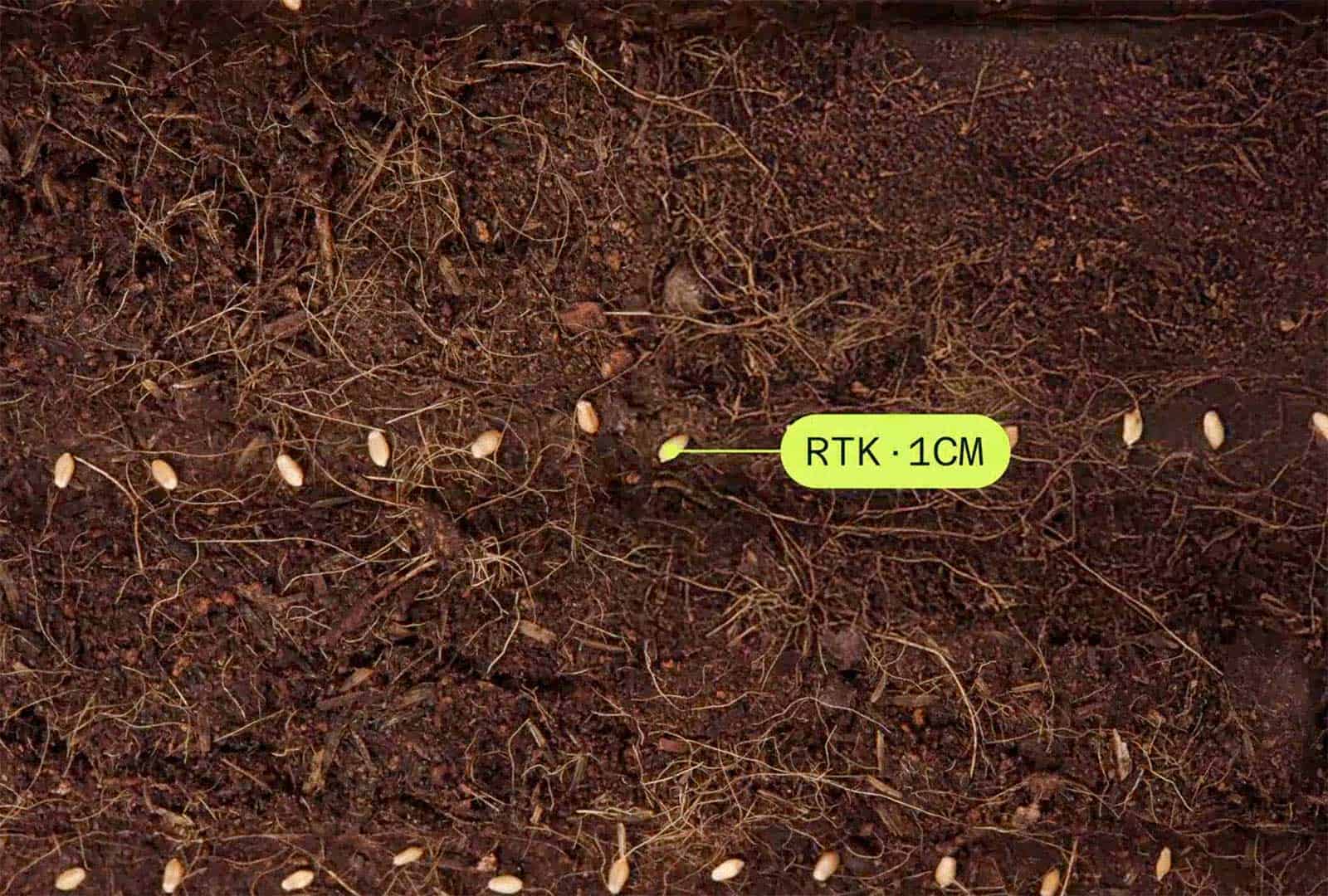
Some farmers now record exactly where each seed was planted. They apply water, fertilizer and pesticides only to that spot, which saves up to 80% on materials with the same or better yields. With farm labor shortages deepening, Point One sees precision location as existential for agriculture.
[22:45] Location for Humanoids
Foundation models have made humanoids and quadrupeds capable, but to be commercially useful they have to move efficiently through hospitals, factories and homes. Point One handles the global question of where the robot is, while onboard models handle local tasks like climbing stairs.
[31:00] Location for Aerial Drones
In the air the stakes are higher, whether the drone is doing inspections, serving as a first responder or delivering packages. Drones need less separation when their location is more accurate, so better accuracy means higher fleet density, more deliveries and, eventually, coordinated drone traffic across vendors.
[37:35] GPS Denied Environments
Before Point One, Aaron developed anti-jam and anti-spoof GPS technology. Today the company has farm customers in Finland facing daily jamming near the Russian border. Operating in compromised electronic warfare environments is on the roadmap, with more expected as early as next year.
[39:17] $35 Million Series C
Khosla Ventures led the $35 million Series C. The capital will go to sales and core technology, because customers keep saying they wish they had found Point One sooner. Now more than 10 years old, the company is more than doubling year over year with a lean engineering team.
[41:02] Fuse Conference
Point One has launched Fuse, a location conference positioned between academic and product events. The first was in Toulouse, and the San Francisco event follows on November 19th at fuse.point1nav.com.
[43:47] Future of Location Services
Location accurate to under a meter will become something people take for granted, even on phones, and visible autonomy will become routine. Point One aims to build a generational company that people pay because it delivers real value, not an ad supported business, and to be the source of truth for where things are.[
[47:20] AUTNMY AI
AUTNMY AI is an applied intelligence firm whose mission is to develop a field-tested, ground-truth understanding of how the Autonomy Economy is being built and translate that understanding into the intelligence, foresight, and counsel that help the world’s leading institutional investors navigate the most consequential industrial transition of this century.
Full Episode Transcript
Two Years of Growth and Expansion at Point One Navigation
Grayson Brulte: Aaron, it’s been two long years since you’ve been here on “The Road to Autonomy.” Two years, too long. But during that time, I know you, you’ve been very busy building and shipping. How has the business of Point One Navigation evolved over those two years since you were last on the pod?
Aaron Nathan: Well first, thanks for having me back again. And I apologize it’s been two years. We have been exceptionally busy. I’ve been to Europe now three times in the last four weeks. So that’s that’s been a lot. And yeah, I mean, the theme has been expansion. I mean, you know, there’s been a lot of tailwinds with all the physical AI progress that’s been being made. Customers that we started with that were small now becoming big. And you know, what looked like you know, a little bit of a dip coming off of COVID and everything has rebounded and then some. And I think, you know, we have tailwinds from all kinds of stuff that are making that happen, and location is if anything, more important than ever So we’re we’re really happy to see that, and I think, you know, we’ve also had a lot of commercial success just looking at how do we, you know, get into not even just robots, but you know, lots of other applications that are at scale today. And so, you know, been able to build this incredible business that has applications that are at scale consumer level and is really helping bring in the forefront of technology, which is, you know, personally where I love to sit. So yeah, it, it’s really an exciting time.
Grayson Brulte: What are some of those applications? ‘Cause when you were on two years ago, and before that you were, you were on several times. I think this might be your, actually your fourth time on here. We had a lot of conversations around location for autonomous vehicles, but your technology’s evolved, the market’s evolved. You’re going deep into, to physical AI. What are some of the new applications that Point One’s powering from a location perspective?
New Applications: Autonomous Mowers, Surveyors, and Consumer Devices
Aaron Nathan: Yeah. I mean, so some of them are new and some of them are really old. and so we started the company with this notion of we wanna be on everything that moves. and that hasn’t changed. Like, it’s just that category’s gotten bigger. and I think the vehicle stuff is still super interesting. shipping on vehicles takes time. Like, it’s complicated from a tech perspective, a sales perspective. you know, we’ve done it a few times over now, and I think we have over 100,000 vehicles in production today on the roads with our stuff. But yeah, it is still early days, you know? So the new use cases though that we’re seeing are actually taking, you know, some of the, I would say, like classical problems of, let’s use as an example, surveyors, right? That’s a frankly one of the oldest industries, you know, in precision location. and, you know, we’ve seen that there’s been this almost consumerization where you can make products that are way higher performance, way easier to use, and that has ushered in just like huge volumes and interest of how do you take, you know, best in breed service companies like us and combine them with these companies who sell in, you know, hardware and really build amazing products for the customer. So we just recently announced a partnership with this company Emlid and they’ve like deeply integrated PointOne into all of their products and ship them to every customer. And so it’s like those kinds of scale that’s really what’s changing. and so, you know, that’s like tens of thousands of customers, you know, in the first month. Like it’s, it’s really amazing. the other one that I’m like I have to admit was not on my bingo card when we started autonomous lawnmowers is a big thing. And I mean, these things, they’re amazing. They’re like little self-driving cars. They just wake up every morning and mow your grass. And you know, we’ve seen just an incredible amount of uptake from those, and I think the technology is now at a point where it’s so affordable you kind of have this like super Roomba thing. Trust me, it works way better than a Roomba does. And it’s wakes up and like you just have like a perfectly manicured lawn. And that’s the consumer level, so you know, hundreds of thousands of devices. and then we even see it at the, you know, professional level, you know, when it’s mowing like medians, mowing golf courses, mowing sod farms. I mean, like I had no idea there was so much grass.
Grayson Brulte: We’ve done several episodes on autonomous mowers. I think autonomous mowers are fantastic. You- where I live, we have a lot of golf courses, and boy, oh boy, you better not mess up that green with that mower. Location is very important on a golf course. The house, yeah, we can get away with it, but the golf course, you cannot ruin that green. It, it seems to me if you. The law. The autonomous mower doesn’t know exactly where it is, and these cr- you know, like by an inch, you could ruin an entire green. How do you get. How do you ensure the accuracy for these autonomous mowers on golf courses?
How RTK Technology Delivers Two-Centimeter Accuracy
Aaron Nathan: Yeah. I mean, it, it comes back to, like, our core value prop. So, you know, Point One, we we do specialize in a lot of different types of technology, all with this common goal of how do you get to, like, a handful of centimeters of accuracy? So in our highest accuracy service, I mean, we’re talking two centimeters. Like, it, it’s, it’s almost unbelievable. And you get to the point where it’s like you literally have to calibrate, like, the GPS antenna because it’s that– it’s smaller than the antenna, the level of precision you have. and so yeah, I mean, the the core idea is we are leveraging a bunch of things that we’ve built. So one of them is RTK. We have now one of the largest professionally owned networks in the world. and that technology, you know, it’s been around for a long time. Like, you know, we talked about in previous conversations when I was doing the Grand Challenge in 2005, like, yeah, we used a form of RTK GPS back then. What we’ve been able to do is drive it now to a scale and a price where it could be in consumer devices and still have, like, this, like, insane level of accuracy. but it is, like, Point One has evolved into not just an RTK network, it’s like we’re doing the whole stack. So there’s, you know, the software that makes that work. We even, like, help companies find the right hardware vendors. and we end up being like like a design partner in, you know, just making the success happen. And I think that’s that’s really proven to be highly valuable as, as we’ve started to scale out.
Grayson Brulte: How should we think about PointOne? We should think about it as a navigation company, a location company, or, or a, “Hey, we’re not gonna let you get lost company”? How should we think about PointOne?
Aaron Nathan: Today, we’re really a location company. That’s like– We like to say that, you know, there’s like the blue dot everybody knows. we want to make that blue dot work everywhere. Like, and when we say everywhere, we really mean everywhere. And, you know, we can’t do that on day one. Like, so we’ve started with, hey, we’re gonna make that blue dot work with incredible precision, incredible availability outside. And that’s super valuable for a ton of use cases that we’re servicing today. and then we said, okay, cool, we’re gonna make that blue dot work in more places. So we built software that lets it work in like parking decks and, you know, other kind of GPS difficult places urban canyons, et cetera. And then, you know, in the future, that blue dot’s gonna work inside and, you know, in all different types of locations, and it’s continuous. That that’s kind of like V1 of Point One. there’s this world of, well, once you’ve done that, there’s a lot of interesting things that you can do for coordinating fleets and robots and even people with robots. And so we’re starting to see that emerge already. and the most exciting thing about it, in my mind, is that location doesn’t just become about like the one robot. It actually becomes about, like, how do you coordinate fleets? How do you coordinate like, you know, this modern autonomy world that we’re trying to build and think about the problem not as like individual robots, but like literally like a intermixed society of these things working together. And to me, that’s, that’s like the future that we’re all really trying to build and excited by. the individual robot is just a step along that journey.
Grayson Brulte: I remember, oh, what, 10 years ago, 12 years ago, we were at CES near the parking. You had the red Lexus that you had at Joshua Self Racing Cars, and you were showing the, the parking deck, and it was super, super impressive. The only downside was it took an hour to get from the convention center to where you were But it worked well. The demo worked great
Aaron Nathan: Yeah, that was early in the company’s journey, and getting a prime spot in CES was a little bit outside of our budget, but, you know, being the creative Silicon Valley startup, we figured out that renting the UNLV stadium is super cheap on CES weekend. So we did that and yeah, I appreciate you coming to the demo, and that was the early beginnings of, you know, what we’ve been able to prove and I’ve had a few customers that now are, are at real scale tell us they went to that demo and that was the thing that got them convinced. So I’m very proud of that demo. and you know, to this day, like we’re always gonna remain scrappy. We still have the red Lexus. But it’s you know, I, I think this is a a big piece of, you know, showing people, not just telling them that this is possible. It’s like, “No, we can show you that this really works.”
Grayson Brulte: You can. And, and, and then history, you were kind at Self-Racing Cars, Thunder Hill, you put me in the car and we went around the track autonomously. So that’s another thing for the history vaults.
Aaron Nathan: Yes. yeah, actually, so to follow up on that you know, we we ended up sponsoring the Indy Autonomous Challenge, which is a really awesome, like event that’s put on and, you know, lets students be able to build these incredibly impressive cars. They’re, like, basically full-scale, you know, Indy cars going, like, almost three hundred kilometers an hour, and this year they were actually doing wheel-to-wheel, like, at three hundred. It’s wild at Laguna Seca. And so you know, they’re all using Point One for their positioning and that’s great. But there’s this whole notion of hey, like, being able to take the technology demonstrated at the limits has always been, like, a piece of what we’d like to see. and I mean, there’s the separate thing of, like, I have a soft spot for universities and people being able to kind of have access to this technology ’cause it’s what got me started, so yeah, I mean, I think that those, those types of demonstrations are really important and, like, I wish we would see more of them in the industry.
Grayson Brulte: It’s wonderful because the reason I, I wanted to highlight that, I mean, we’re friends and I’m proud of you. The company has, has evolved and grown, and I love it that you’re, you’re expanding into say, if you wanna use the term different verticals, but you still have location at its core. One of the verticals that you’ve expanded to that’s, that’s booming, and we even have an index for it, Road to Autonomy, the, the autonomous bots index, is last mile delivery. How are companies using your technology for that last mile delivery?
Enabling Last-Mile Delivery: From Van Logistics to Sidewalk Robots
Aaron Nathan: Yeah. It’s it’s an amazing sector because we have customers that are, I think, at all kinds of different levels of autonomy, I guess you could call it using Point One. And it turns out that the biggest customers, you know, they’re still delivering things with people and vans and, you know, that’s turns out that’s how most of us get the things that we order online all the time. And so it turns out that they have a huge use for this technology because if you can get a parcel, not just to someone’s address, but literally to their front doorstep and know it got there that can, like, raise the efficiency of, you know, these logistics operations by, like, very significant percentage points. And at some of our customers’ scale, that translates into a lot of money. and then, you know, we have other customers that are actually doing, you know, delivery robots. And so, like Serve Robotics as an example, they’re doing a lot of really advanced delivery to be able to get, you know, goods to people in a, you know, efficient package. And having the system know where it is, is like a pretty core function of these these robots. And so, you know, we’re, you know, helping in that in that regard, and a lot of that processing and everything is ultimately, like, in a lot of ways existential to having these companies be successful ’cause, you know, the robots are constantly getting lost and everything. It’s like, creates a nuisance and then, you know, people, you know, have a revolt on something that can be actually, like, an incredibly valuable you know, utility in a way to be able to get goods in a efficient and quick manner. So I, you know, I really do see our role as being, you know, a key enabler of making these technologies successful in their deployments. We don’t do everything, obviously. Like, our customers are doing a huge amount of work to make this whole system work. but we’re proud to be, like, you know, a part of that, that takes some of the load off of their table.
Grayson Brulte: I’d say, you know, Ali and the team are doing, you know, great things at Serve, and I mean, he, the gentleman’s got grit and he keeps building that business and building it and, and I think he’s in a better place than he was before. And if anybody’s wondering, go listen to the last earnings call. It’s all there on the earnings call. But I wanna highlight from a technology standpoint, point when you’re 100% more accurate than outdoor GPS.
Aaron Nathan: Yeah, a hundred times. Yeah, yeah. It’s, it’s a. This is one of those, like, scientific, I don’t know, miracles in a way where, you know, GPS was this thing that was invented, like, fifty-plus years ago. we don’t pay for it, I guess, indirectly maybe through our taxes, but like, you know, it’s this free asset that you can just use. It’s, it’s kind of incredible in this way. But it’s not super accurate by itself. It’s only about five meters. so we use this technique called RTK that allows you to take, like, a known point on Earth, put a really high-end GPS receiver in it, and then effectively, like, use the data from that station in conjunction with, like, your real GPS receiver. And when you combine them together, you go from that five-meter accuracy to five centimeters, and now, like, down to two centimeters inside of our solution. And so there’s a whole bunch of complexity on, like, operating that network at scale and then having the software that does all that signal processing. We do all that, and so you don’t have to worry about it. and like, the closest analogy I have is it’s kind of like, you know, when you use your phone and you’re calling someone, you don’t think about, like, how complicated 5G is and all these, like, very you know, like, all the towers and operations and maintenance and that goes into running an AT&T or a Verizon. And so you know, a lot of ways these carriers, they’re like a, a utility that you just build on. And it’s, it’s insane and really valuable how much that has changed. Like just our current, you know, we can walk around and, you know, watch a HD movie on your phone if you wanted to. you think about, like, in the ’90s how insane that would have sounded, where you were paying, like, I don’t know, six cents for a text message or something, you know? So there’s this I think, very strong reality that taking problems and pushing them into a network makes it so that everybody who’s building on top doesn’t even need to, like, think about those problems, and they can start at this much higher level of abstraction. that’s like the first level of it that we built, and we’ve built many other levels now on top of that. So there’s the network, the service, the corrections, all this observability that goes into making sure it’s working and the stuff that we have planned is going to take that and just push it even to the next level. And so, yeah, there’s, there’s really, I, I think an exciting future you know, for obviously our customers that are already on Point One and then, you know, for the companies that haven’t even been founded yet that are all gonna try to be solving the next, you know, autonomy problem to be able to start from something that’s far greater than zero.
Grayson Brulte: Staying on that line of thinking then, are we gonna go from two centimeters to one centimeter accuracy as it evolves? Or how do you see that evolving?
Aaron Nathan: Yeah, I mean, the, you know, the evolution of the business becomes not so much about chasing the centimeters because you get to a point of diminishing returns, honestly. but it’s more about how often can you get to two centimeters. And this is kind of the, like, really hard thing with robotics in general is, like, everything is a probability, right? So you’re like, how often are you able to do the thing? And, you know, I think we’ve all started to kind of experience this as consumers when you’re working with, like, your ChatGPT or whatever your favorite agent is. It’s like the responses are not deterministic, like there’s some level of, like, variability. In the robotics world, that’s, like, all the time. Like, you know, that’s just how you’re dealing with things. And so our job is to try to narrow that distribution so that you’re always going to be pretty close to two centimeters as often as humanly possible. And then very importantly, you also want to know when you’re not in that two centimeters and be able to tell the user, and this is like the equivalent of when your AI is hallucinating. You really want to know when that’s happening, so you don’t just go and, like, confidently make the wrong decision and, like you said, go and mow, like, the wrong deck height on the green of the golf course because that’s not a fun day. You know, that’s this is the part of why, you know, positioning is not as simple as just go get a GPS receiver and plug it in. It’s actually, like, a much more difficult sensor fusion problem. And when done well, it’s kind of the difference between a robot that works 90% of the time and a robot that works 99.999%. U- uptime is key, and if you look at an industry where location going down to the centimeters really makes a big difference, and it’s a matter of are you gonna have a successful year or an unsuccessful year, it’s the agriculture industry. Because if all suddenly you run over the crop -oh, you- you’ve, you’ve got trouble till, till next year.
Grayson Brulte: Are you seeing adoption in the ag industry of your technology?
Precision Agriculture: Planting Seeds and Saving 80% on Inputs
Aaron Nathan: Yeah. I, I have to say, like I going into this was not like super read up on like the agriculture industry, and I have developed such a deep appreciation for how complex farming is and actually like how advanced the technology already is there. I think it’s like, you know John Deere kind of has this line where it’s like, “Oh, we’ve been doing autonomy for 20 years.” Which I mean is true to some degree, but like the real thing is how much the ecosystem like can use the technology. I’ll give you an example where we have customers that are literally able to understand like exactly where they planted a seed, and there are these crops that like they grow down, they don’t grow up. So you have no idea that the thing is there. There’s no visual representation. But since they memorized the location when they planted the seed, they can just apply water or fertilizer or pesticides to that one location, save like 80% of the actual like normal cost that they would have of those materials and have like the same or better yields. And so like net, yeah, they’re saving money and it’s also like a healthier product ’cause there’s less, you know, chemicals and whatever that were put on that actual device. They used less water. Like, I mean, this is like really where I’m like, this is how robotics makes the world better. Like it’s not about automating things for automation’s sake. It’s about literally solving the problem in a better way. and so ag is probably one of the most exciting places where you’re starting to see the real benefit of automation or even I should call it more like precision because a lot of times it’s still like a guy driving the tractor or monitoring, you know, equipment. And it’s about how do you make like the actual end effectors and everything more you know, effective at what they do.
Grayson Brulte: To me is one of the most important industries in robotics. Danny Bernstein and the team at Reservoir have been doing a really good job of trying to, to shine a light on it. We did a podcast with Danny and Google DeepMind, so DeepMind, Google DeepMind robotics is starting to get in there and, and put exposure on it because if we don’t a- automate farms, we don’t put robotics on farms, I’ll just say it very bluntly, we’re not gonna have enough food to feed the world because of the labor shortage that’s there on farms. Everybody talks about the labor shortage with over-the-road long haul trucking, but there is a m- a, a more intense mission critical, dare I say, shortage on farms, and it all comes down to labor. And it, when you start putting robots on farms, you need accuracy. You gotta pick the corn, you gotta pick the cotton, whatever it might be. You need accuracy
Aaron Nathan: Yep. And it’s a lot of it. Like, if you’re three centimeters off and y- you know, the– Agriculture’s also, like, it’s an unforgiving environment. Like, I mean, you’ve got diesel, hydraulic fluid, mud. Like, you’re operating in all weather. Like, these guys they really understand robust. Like, it’s. Passenger vehicles looks like a walk in the park compared to, you know, what they’re doing. So yeah, I I definitely agree with you. It’s, it’s an existential problem.
Grayson Brulte: And then moving out of the, the, the, the dirt and the mud and, and moving into, say, the lavatory, I don’t know why I decided to say that. Well, it’s almost Halloween, so we could do Young Frankenstein, we could channel Mel Brooks here on a whole thing, but humanoids. It’s, it’s something like Mel Brooks might, might have came up with and made a movie on it. And I mean, he’s no longer with us. Gene Wilder was brilliant in that movie, just for the record. Humanoids have to know where they are. I keep asking humanoid companies a very simple question: How do you stop the humanoid from going in the pool? And I saw in Japan, and I. This was in the, in the, in the Nikkei, that there is a humanoid ambulance now that will come pick humanoids up. It’s a test service, but I was like, “Okay.” It’s all about location because that one centimeter, two centimeters, whoop, whomp. Are you working with humanoids?
Humanoids and Quadrupeds: Location as the Foundation for Mobile Robots
Aaron Nathan: Yeah, I mean, we do have a few customers that are doing both humanoids and also quadrupeds. They’re in the same camp in my mind. and, you know, there’s– I think, you know, the, the big unlock, if we’re honest about those, has been the, you know, foundational models that are able to actually take this incredibly complex mechanical structure and make it do useful things. And so, you know, we’ve been able to build, you know, humanoid robots in terms of, like, the motors and the drives for a long time. It’s, it’s really been the end-to-end controls and everything that are brand new and enabled kind of the amazing demonstrations you see. you know, even the guys at Boston Dynamics who are arguably one of the leaders in the field, it’s– they’ve went from a lot of very painfully hard-coded controls to now these incredible learned behaviors. And so you can now see Atlas doing backflips and all kinds of crazy stuff. it’s amazing. And I think, you know, the, the big challenge is how do you actually make these things commercially relevant and able to do something that’s gonna deliver value? And a lot of that’s gonna be they have to be able to traverse space. They have to be able to, like, go from one end of a hospital to the other, or one end of a factory to another. And the place where location matters is how do you make it so that they can do that efficiently safely, not fall into the pool, to your point. But like, you know, there’s a lot of other things that, you know, when you have effectively a map and a location, you can be way more certain about what the world is and not have to just completely rely on local perception for every single decision. And that also increases the speed that they can operate. and at the end of the day, I mean, that’s the real metric is, like, can these things create utility that’s equal or greater than humans? And I think that’s that’s only gonna happen by giving them more data, more context, and that’s really. Location’s an incredibly powerful vector there.
Grayson Brulte: It is, and when you do that, you, you need more compute. But I’m curious from a location perspective, let’s just say we put a humanoid at your house, humanoid at my house, humanoid at Bob’s house, Rob’s house, Roger’s house. How, how does it work? Because all of our houses are different. We live in different geographies, different sizes. I might have steps. You might not have steps. H- How, how, how does the location work? Because it’s just completely different environments
Aaron Nathan: You know, this is the thing, location is not one of these problems that there’s some magic silver bullet technology that solves it all. and this is kind of the long-term reason for Point One to exist, frankly, is taking all of those different almost like point solutions, so whether it’s RTK GPS LiDAR camera, radars some other crazy force transponder sensors you’re able to take all that data and then convert it into this like relatively simple concept of like, where the heck am I? And then in some cases even provide the context around, oh yeah, by the way, there’s stairs there, or there’s the handle for the door, or hey, there’s a elevator over here. and so if you can provide where you are and some of that contextual information the foundational models we have today are actually able to do like a lot of the other like, okay, how do I place a foot on the next level of the stair that I can see and actually climb the stairs with a fair degree of success? And so I see this as there’s kind of the two sides of the global problem of navigation, which is like where we solve, and then there’s the local problem of like, okay, I know I’m on the staircase, how do I go? That’s where like these models really are amazing and like are able to show working progress today. So yeah, if I were gonna build a you know, humanoid that was gonna take a package from my house to your house and you know, we didn’t live 100 miles away you know, you’d be able to do that I think with a lot of this technology we have today, and it’s not that far away.
Grayson Brulte: Do, do you think, this is a broad question, do you think that a lot of these robotics startups and roboticists, location is top of mind? Or do you think it evolves as the product evolves? Like, oh, wait, we really need to know where the heck this thing is, and GPS is not highly accurate
Aaron Nathan: Yeah, I mean, for better or worse, it’s really hard to do almost anything if you don’t know where you are. I mean, so like that’s a, that’s a pretty obvious statement. now granted, like there are some very narrow application things like, you know, the KUKA robots that are in car factories painting things. Like they know where they are in the context of, you know, I can measure the angles of all these joints and calculate with insane levels of accuracy, you know, where the end tool is. But that’s not the kind of robots that like we’re really trying to work with. we’re trying to figure out, like, how do you get, you know, this, this next generation of like truly mobile robots to be able to to work in the real world? And I think you realize pretty quickly when you start these systems that it’s the locomotion part of the problem is a big one. And like that said, it’s rarely the thing that sets like your company apart. So you’re really looking for like, how do I get past this problem as fast as possible, and then like work on the thing that I’m really good at, like, I don’t know, harvesting lettuce or something. And so like, you know, there’s a. And, and I think we’re starting to see as companies are moving away from the like, “Hey, we’re gonna build this like general purpose everything box,” to very application specific in autonomy you’re going to have to be able to leverage these you know, pretty horizontal parts so that you can now focus on like the specific application that you know a lot about, you know how to sell into, all the traditional things that like you need to build an actual business. I think that’s, that’s gonna be the evolution of this as we get out of you know, the 1.0, like barely out of the lab stuff, and now into like, okay, this stuff really works and we’re gonna see at scale.
Grayson Brulte: I see it, Gail. Starting next year, Hyundai put out a press release. I haven’t seen photo, but they did put out a press release that, that the Atlas robots are gonna start coming out of a factory in Savannah next to their meta plant. So if they do start coming out the factory, that’ll be interesting to watch. Tesla obviously is very public with their Optimus ambitions. That’s gonna be something interesting to watch, and the market seems to be, I’ll use the term frothy for humanoids, and boy, oh boy, do I have flashbacks to 15 years ago what you and I went through when when the autonomy bubble. I’m not saying that’s happening. I’m just saying you and I have the battle scars to relive what happened there, and a lot of it seems familiar, and you, you just slap on humanoid, you got a billion-dollar valuation. You know this. You slap on the word autonomous, you get a billion-dollar valuation. It, it doesn’t matter. But that’s the ground side. Since we spoke last two years ago, too long, and I’m not gonna stop harping on this, is you’re, you’re now working with autonomous air drones. How is it different from location for when you’re up in the air and till you’re down on the ground? How, how is that different?
Aerial Drones: Delivery, First Responders, and Fleet Density
Aaron Nathan: The stakes are higher when you’re in the air, ’cause you really, like, can’t get it wrong. and a lot of the customers you know, there’s two camps really. the first is the folks that are doing, like, we’ll call drone inspections. So they’re flying basically a camera or maybe a lidar around, and they’re trying to, like, map something or see something. And so that’s you know, we have a lot of folks now doing what they call drones as first responders. So, like, drone comes out of the box, flies down to a, you know, crime scene in progress and is able to track the bad guy, you know? And I mean, this stuff sounds like science fiction. It is awesome to see. Like, it is really, like, amazing. so that part you know, obviously knowing where you are is pretty important. and then, you know, there’s the, you know, a future where it’s not just the drone, it’s actually the whole fleet of first responders all have this kind of situational awareness of, “Hey, here’s where, you know, the police officers are, or here’s where the ambulance is or the firefighters.” And that’s that’s something we’re seeing. The other side on aerial is being able to do delivery. And I think, you know, it’s– this has been something that, you know, we’ve heard a lot about. You know, Google has a thing, Amazon has a thing, and obviously there’s, like, the big independents like Zipline and now many others Manna, Flytrex, like the list goes on. And you know, we’re working with several of them now to be able to not just make it so the package delivers on your doorstep, which is a thing, but also how do you get the drone back to the facility and actually dock so that it’s able to get its next package? And the thing there is that at scale, you have a lot of these things, like, all operating in a pretty close space. And so in you know, airplanes you always talk about, like, the separation, and the separation ultimately drives safety, and your separation has to be proportional to how well you know where you are. So it turns out, if you have better location accuracy, you can now fly in tighter quarters and create higher density and do more deliveries. So location not only is, like, an enabler, again, for the one robot, it’s actually an enabler for scale on the fleet. And so it’s it’s I would again say almost like an existential part of the problem, but it’s not the thing that’s necessarily gonna make them work. They have a million other hard problems to solve. And so we’re just seeing this pattern as like, hey, we can help make location you know, a problem you almost don’t need to worry about.
Grayson Brulte: There was a viral video, and I’m gonna say we don’t know if it was AI generated, so I wanna state that because Amazon did not comment on it. But there was the video where the Amazon drone dropped the box in the pool. Whether it was AI generated or a mistake, I don’t know, but it went all over the internet. Now, hypothetically, if that drone had a PointOne system in it, it would have known that was a pool, and no, no, that’s not a drop zone. That’s a splash zone
Aaron Nathan: It would absolutely know that the location that it had is a pool. So we are definitely– Unless you have a two-centimeter pool, which probably is fine we would be able to tell you if you were dropping in a pool or not. And so yeah, this is, I think, a classic reason that you need to have high precision accuracy. But also, let’s be clear you gotta also know what the surface looks like. Now, the clever thing that a lot of our customers do, and this is true in automotive, where they don’t only use our stuff to know where they are, they actually use our stuff to help build newer maps of the place. ‘Cause if you think about it, it’s you have a camera, and then you know where you are, you can kind of build your own little Street View car. And so a lot of our customers actually end up using us not just to know where they are, but also to build maps. and when you have both of those things being accurate it’s really hard to drop stuff in pools. We we seem to be on, like, an anti-pool theme, by the way. I just noticed.
Grayson Brulte: No, we’re, we’re definitely not anti-pool. We’re pro-pool. I just don’t want the pool to get ruined. So just just for the record there.
Aaron Nathan: Okay, fair. Save the pools.
Grayson Brulte: Yeah, we’ll get. shirts made at The Road to Autonomy “Save, save the pool, keep the robots dry.” It can become a, a, a voting a slogan there. As drones are expanding, I’ll give you probably the most pop- populous market in the United States for drone delivery is the Frisco, Texas market, just n- north of Dallas. And there is a lot of drones. Looking forward to going to visit some drone operators out there in a few weeks and getting a, a first-hand report and doing a field report on it. When does air traffic control for drones attendent pitch? ‘Cause you have this precise location. Can you do it, can the companies do it in-house, or do you see y- your location powering potentially an air traffic control for drones at some point?
Aaron Nathan: Yeah. I mean, I think in the first version of this, the companies will do it because that’s– they have the most contention in the places that they’re actually going and delivering. the FAA is going to control, like, a lot of this. I’m sure that will be the you know, the net result of it. but I think that having the high precise location is going to be, like, existential because, I mean, the other problem for drones is, like, you don’t just care about, like, where you are laterally, you also care like your elevation very accurately. And you know, these things, they’re operating in a relatively small airspace compared to, you know, commercial jets. And so you do have, like, a pretty reasonable you know, probability that, hey, like, there could be an incident. Now, in fairness, they do have, like, local sense and avoid type of things, but it’s always better if you don’t have to rely on that. And so yeah, I, I think as the density goes up the need for centralized cross-vendor correlate decorrelation will happen. and I absolutely see us being a part of that. I don’t think we’re gonna go build the whole system. that’s not kind of our business, but we are definitely gonna be a big piece of Making that possible.
Grayson Brulte: You’re in the business of, of location and one of the big things, staying on the drone topic now, is that if you see the statements in RFPs that have come out of the Department of War and Secretary Hegseth, there has been a, a large call for drone technology to put them into GPS denied environments, into hostile environments, also known as theater for combat. Is, is– Do you see any of your technology being used for military applications since location is so important?
Aaron Nathan: Yeah, I mean, I, I come from a background of before Point One you know, I developed some of the highest, you know, anti-jam and anti-spoof technology that’s available in GPS. And it’s one of those things that you know, we take for granted as civilians, but when you– we sell even to customers in Finland, they’re right on the border of Russia, and there’s jamming every day. And like, the guy’s just trying to operate his farm, you know, his tractor, and it’s like, he can’t because, you know, there’s this radio interference. And so I think, you know, the unfortunate reality is that this is a it is a need, and it’s a very pressing need. we are doing some things very early on to see what, you know, Point One can specifically address in that market. And you know, a lot of it starts with how do we do the things, like, around that problem, and then yeah. I mean, like, it’s always kind of on our roadmap of how can we increase the places that we operate in, and that will include places that are compromised from you know, an EW perspective. So that is definitely on the roadmap and something that, you know, you’ll hear more about, I’d say as early as next year.
Grayson Brulte: Well, looking forward to hearing about that. And the company recently closed a $35 million Series C led by Khosla Ventures. Congratulations on that. I love it ’cause it wasn’t a large raise, which tells me that you’re running a capital efficiency business. How are you planning to deploy that additional capital?
Deploying a $35 Million Series C: Sales, Engineering, and Growth
Aaron Nathan: Yeah, I mean, so we are at this point now where we have just seen incredible tailwinds with everything that’s happening with physical AI. and you know, one of the things that I hear from customers is “Man, we wish we knew about you guys sooner.” And so that tells me that there is a a little bit of an awareness thing that we’re trying to work on, and that means that, hey, we need to invest in getting you know, more sales folks, you know, able to talk to people and getting the solution out there. And of course, like, you know, we’re investing in the core technology. to your point, I mean, we’ve built, I’d say, an incredibly efficient and I’d say capable engineering team that although we may not have, like, hundreds of engineers we’re able to deliver like an extremely competitive and you know, performant solution. And so I think there’s a a different DNA that we have as kind of this almost foundational company where we want to be efficient and we want to be a company that, like, our customers can rely on us being here. We’re now over 10 years old. you know, we have a real business, which is nice. and I think, you know, what we see is you know, growth that’s just really, really exciting. You know, more than doubling year over year So
Grayson Brulte: The thing I, I love about having known you on this, throughout this journey is that you’re not saying and sticking in a silo, you’re constantly evolving the business as the market evolves. And I give you a lot of credit for that, ’cause obviously, 10 years ago when we first met, 11 years, 12, whatever it was, we weren’t having a conversation around humanoids. Yeah, we would, we would geek out on different sensors. This was when Velodyne was still around and, and Nvidia was, was barely a spec. And remember when Joshua at Nvidia went, “Oh, Nvidia’s here. Oh, okay.” And nobody paid attention to him. Boy, how times have changed. But, but it- I give you a lot of credit for always staying o- on the cutting edge. And if you wanna say it, now the business is becoming more mature. It, it, it’s highly diversified. And now you’re launching your first event. You got an event called Fuse. You’re putting locations on the map. are you gonna get a GPS pin for this map? How’s that gonna work?
Fuse Conference: Building a Community Around Location in Robotics
Aaron Nathan: Yeah, so we will have the location of the conference to, I don’t know how many degrees of latitude and longitude precision, but I can also give you the address. Yeah, it’s. When, you know, we’ve been talking to all these customers, the thing that we’ve unearthed is that a lot of people understand that location’s, like, a really big problem. But there isn’t, like, a place or to really talk about it that’s I would say, you know, a balance of not being, like, an academic conference and not being some, like, product conference. It’s really, like, how do we talk about, like, the system and the problems about solving, like, the real issues that come up when you’re building. So yeah, we actually started a conference series. We just I just got back from France doing our very first one in Toulouse. and our second will be in San Francisco, and it’s kind of like a big deal for us on November 19th. we have an incredible speaker lineup with, you know, all kinds of folks that are both, like, deeply technical but has also, like, shipped at scale talking about, you know, their specific journey, not in just robotics generally, but, like, in the context of location. And I think, like, it’s, it’s one of these, like, unsung problems in robotics because it’s, it’s hard for us to relate to as humans. Like, fundamentally it’s, like, a different way of solving this problem. So yeah, we’re super excited to put together this conference. It’s really the first of its kind. We have this amazing speaker lineup and then, yeah, folks can check it out. It’s fuse.point1nav.com. and yeah, we’d love to, you know, have folks join. and I think it’s if France is any indication you know, people walked away and were like, “This is, like, one of the most useful conferences I’ve been to.”
Grayson Brulte: And you hit the nail on the head. You talked about scale, and the ventures have been there that scale. For business to survive, it, it needs to scale. And as things become more connected, physical AI, you know, takes off and goes into sectors that we haven’t even thought about, location is going to be the backbone of all this. Aaron, how do you see the future of location services evolving? And at its core, where do you want Point One Nav to be?
Aaron Nathan: I see there being two sides. you know, the availability of high accuracy position, so like we’ll call it less than a meter for now it’s going to become something that, like, we just take for granted. and so, you know, I think eventually you’re gonna see even your phone is gonna have, like, a level of accuracy that is gonna be, like, pretty amazing. And, you know, we see that coming from the market on all the major players today. that, that’s one element. The other element is that there’s going to be a lot more visible autonomy in the world. It’ll become common that you will see, like, an unmanned, you know, a street sweeper, an unmanned you know, whatever your lawnmower is, all these kind of jobs that are out there. And I see that it’s like they’re just gonna work, and you’re gonna take it for granted and not think about it. That’s actually success in my mind. It’s always. We talked about this in the autonomous vehicle industry. It’s like you get in a Waymo or any car that’s, like, done well, and, like, in the first two minutes, you’re out on your phone and just like it’s, like, boring. You know? That’s success. and so this is this is kind of our our philosophy. And Point One is I think uniquely positioned to be in the kind of like nexus of a lot of this very fundamental problem of knowing where you are as a robot, and then also knowing where all of your peers and other things you care about are. And so we are doing everything we can to build towards that future and you know, I think so far you know, our customers are extremely excited to have us be a part of that journey and help them deliver, you know, the Best applications
Grayson Brulte: What is the future of Point One? I’m in this for the long haul. Like, we really, I think, have this capability to build like a generational company in the sense of there is going to be one of these companies that are out there that ultimately is commanding what is location, like what is truth, where are things? that can be, you know, some ad-supported business.
Aaron Nathan: That’s not what I wanna build. I wanna build it in a way that’s we’re actually delivering value, and people pay for that value, and then that’s kind of it. and I think that’s, that’s gonna be what’s really exciting. If you think about the future for robots we’re gonna have new use cases new demands, frankly, for what is a map even. And, like, that to me is where Point One’s really going to have a very bright and very exciting future built upon, like, this very Robust foundation we’ve built today.
Grayson Brulte: There’s new robots, new demands, new challenges, but have no fear, Point One’s there to solve the location problem. The future is bright, the future is autonomous, the future is Point One Navigation. Aaron, two years too long. I’m not putting up with that. That timeline is going to shrink, but thanks for coming back on The Road to Autonomy.
Aaron Nathan: Thank you, Grayson. Always a great, pleasure
AUTNMY AI: Billions and soon trillions in value will be created in the autonomy economy. By the time a trend becomes consensus, the alpha is already gone. The gap between uncovering signals and reading headlines is widening fast. When it’s a headline, it’s no longer a signal. Enter AUTNMY AI. We decode signals before they move markets, giving you conviction in the autonomy economy. AUTNMY AI, your models, our intelligence. Visit AUTNMY.ai.
Discalmer: Opinions here are as of the recording date, may change without notice, and do not necessarily reflect the views of AUTNMY AI Incorporated, its affiliates, or any speaker’s employer. Content, including the road to autonomy indices, is for informational and educational purposes only. AUTNMY AI is not a registered investment advisor or broker-dealer and does not give investment, legal, accounting, or tax advice. Nothing in our public or gated content is investment advice, a recommendation, an offer, or a solicitation to buy or sell any security or financial product and should not be relied on to evaluate any transaction. This program may contain forward-looking statements. Investments involve risk, including loss of principal. Past performance is not indicative of future results. Hosts, guests, and affiliated entities may hold long or short positions in securities mentioned. Content is provided as is without warranty. We disclaim liability for reliance on this information. Consult your own investment, legal, and tax advisors before making any financial decision.
The future is bright. The future is autonomous. The future is The Road to Autonomy.
Subscribe to This Week in The Autonomy Economy™
Join institutional investors and industry leaders who read This Week in The Autonomy Economy every Sunday. Each edition delivers exclusive insight and commentary on the autonomy economy, helping you stay ahead of what's next.