


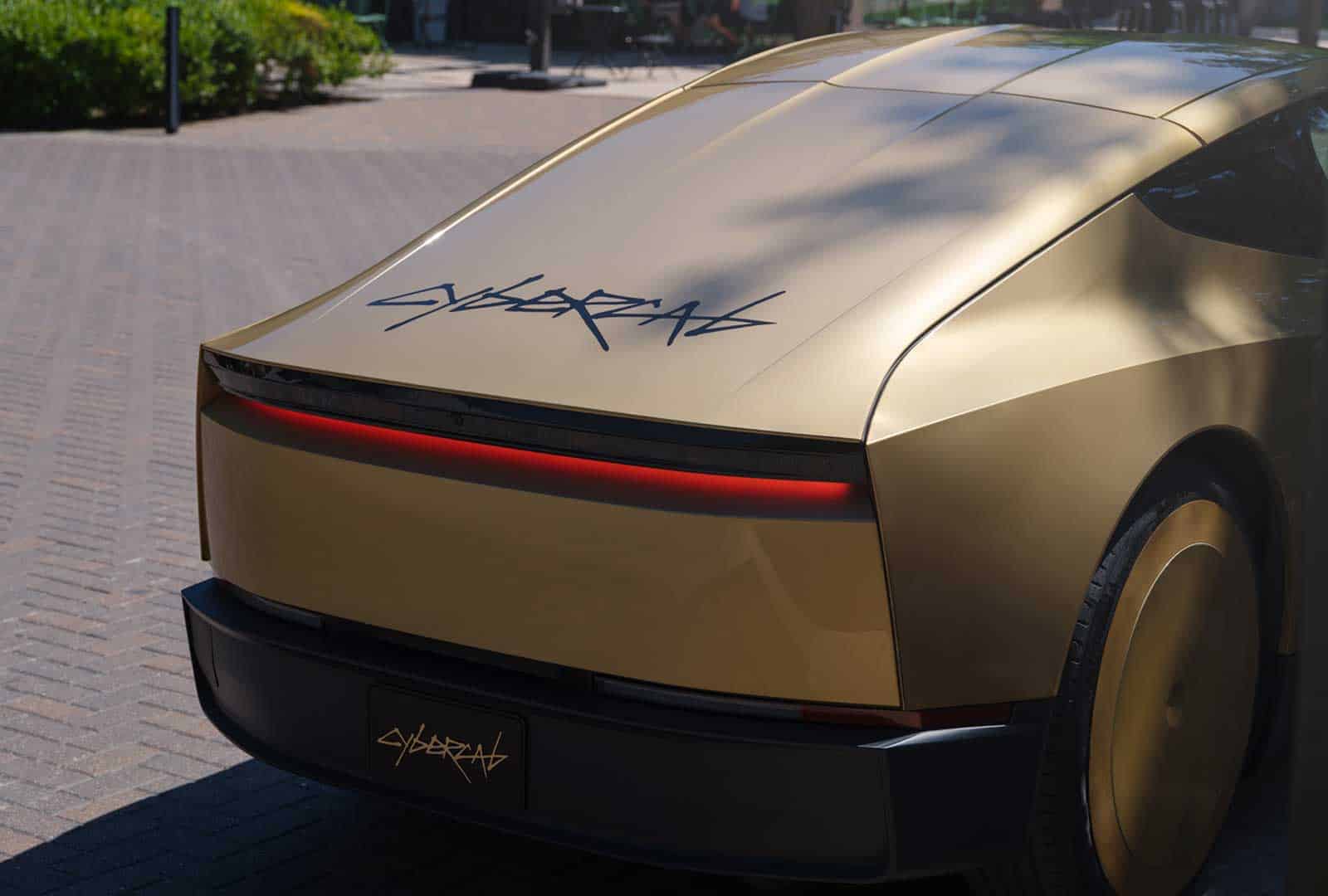
No Wheel, No Pedals, No Driver, Cybercab Launch Is Imminent
Tesla is preparing to deploy its steering-wheel-free, pedal-free Cybercab in Austin, Texas under self-certification, bypassing the federal exemption process that constrained competitors such as Zoox, a move that could unlock uncapped mass production at Gigafactory Texas.
Waymo received CPUC approval to expand commercial driverless service across 18 California counties covering roughly two-thirds of the state’s population, cementing a regulatory moat measured in years over any competitor.
The NHTSA stance articulated in the Zoox petition—that ADS performance will not be evaluated as part of self-certification review, dramatically improves Tesla’s regulatory outlook. Meanwhile, SoftBank led a $200 million Series A in Gravitas Robotics, valuing the ETH Zurich construction-retrofit startup at $1 billion and signaling software-level platform potential across a $1 trillion global heavy-machinery install base.
Key Autonomy Signals Episode Questions Answered
Why is Tesla’s self-certification approach for the Cybercab strategically significant?
By self-certifying rather than seeking a federal exemption, Tesla avoids the production volume caps and time limits that apply to exemption-holders like Zoox. If NHTSA does not challenge the self-certification, Tesla can mass-produce the Cybercab at whatever volume Gigafactory Texas can support, giving it a manufacturing scale advantage no competitor currently holds.
How large is Waymo’s regulatory lead in California and what could erode it?
Waymo currently holds 100% of California’s driverless deployment rides and has gone through the dual-regulator, seven-permit process approximately 11 to 12 times since 2018, creating a lead Rob Grant describes as measured in years, not months. The lead could be eroded if California’s legislature mandated a human driver in all vehicles, or if the CPUC lowered barriers to accelerate new entrants under a more business-friendly governor.
Why did SoftBank value Gravitas Robotics at $1 billion on a $200 million Series A?
Rob Grant explains that Masayoshi Son is applying a software-company valuation multiple, not a hardware multiple, because the Gravitas rack retrofit system monetizes the existing $1 trillion install base of heavy machinery without requiring fleet replacement, implying steep and scalable revenue growth similar to a software platform rather than a capital-intensive hardware business.
Autonomy Signals Topics & Timestamps
[0:00] KPMG Sponsor Introduction
KPMG works across the full autonomy ecosystem, advising operators, OEMs, suppliers, insurers, and investors as autonomous mobility scales.
[01:50] Signal 1: Cybercab Launch is on the Horizon
Tesla is preparing to put its steering wheel-free, pedal-free Cybercab on Austin roads as early as this month, starting with employee rides. Rather than seeking a NHTSA exemption like Zoox, Tesla is self-certifying the vehicle, a path with no production caps that, if NHTSA stays silent, clears Gigafactory Texas to build 125,000+ Cybercabs a year and hands Tesla a manufacturing moat no competitor can match.
[39:06] Signal 2: Waymo’s Golden State Robotaxi Monopoly
The CPUC approved Waymo’s advice letter authorizing paid driverless rides across 18 California counties from Sacramento to San Diego, covering roughly two-thirds of the state’s population. With 100% of California’s 1.4 million monthly driverless rides and no other operator holding a deployment permit, Waymo’s seven-permit, dual-regulator head start is measured in years, though the phased approval may open a door for Zoox or Tesla to apply for the whole state at once.
[1:11:11] Signal 3: SoftBank’s $200M Bet on Gravis Robotics
SoftBank led a $200 million Series A in ETH Zurich spin-out Gravis Robotics, the largest in construction robotics history, valuing the company at $1 billion. Its retrofit system bolts onto legacy excavators from Caterpillar, Komatsu, Volvo and John Deere and is distributed through rental companies, a bet that monetizing the $1 trillion install base of heavy machinery is a software-multiple opportunity, with OEM-native autonomy and rivals like Bedrock and Built Robotics as the key risks.
Full Episode Transcript
Tesla Cybercab Austin Rollout Plan
KPMG Introduction: The autonomy economy is real. Commercial robotaxi operations, humanless freight runs, AV infrastructure investment measured in billions. The question is no longer whether autonomous mobility scales, it’s who advises the companies building it. KPMG works across the full autonomy ecosystem: operators, OEMs, suppliers, insurers, and investors. At the moment it matters most, when the road ahead is uncertain, we’ve already been there. KPMG, accelerating what’s next in mobility.
Grayson Brulte: Rob, it’s finally happened. The golden Cybercabs are coming to the streets of Austin. As they go there, Waymo channeled their g- greatest McDonald’s impersonation with the golden arches because they got the Golden State approval. As the two goals move forward, Massa, who loves gold, is saying construction autonomy is the next big bet. A huge thank you to KPMG for being a wonderful sponsor of Autonomy Signals. And Rob, this week, as I alluded to, the signals are golden. Signal one this week: no wheel, no pedals, no driver. Tesla Cybercab is coming to the streets of Austin. Don’t worry, I was not gonna say, “No shirt, no shoes, no service.” Don’t worry about that. Signal two: the ultimate robotaxi monopoly. Waymo unlocks the entire Golden State. You’re right, sir. What you know about regulatory and what that truly means, and we’ll break that down here in the signals. Signal three: SoftBank drops $200 million to turn everyday construction diggers into billion-dollar robots. I called them earth movers as a kid. I had Tonka trucks and I thought they were cool. Now they’re getting automated. But Rob, let’s go to Austin. Let’s start with Cybercab. We’re on the verge of it making it reality, and I can’t wait to go with you. Together, you and I, and we’ll record an episode as we go around Austin in Cybercab. The day is finally getting closer. What do we know?
Rob Grant: Yeah, it’s I mean, so much happening this week, as you said, right? Golden cars, Golden State, and the search for gold bars with construction diggers. It’s great stuff. So here’s what’s happening with Tesla this week, right? Tesla is preparing for an initial public rollout of its steering wheel-free and pedal-free Cybercab in Austin, Texas, targeting deployment as early as later this month. The operational plan follows a staged sequence, beginning with employee rides on public municipal roads before integrating vehicles into the broader public Austin robotaxi service that they already have in play. And now, Tesla has been doing this with some ground preparations in Austin, including emergency response training with local first responders, as we mentioned, public road test drives conducted since June, and an official promotional event running through August 23rd, of which many of our good friends, David Moss and Spencer and others, are trying to rig in their favor by taking as many possible rides in the Austin territory as they can. So the, the– what’s about to happen is huge, and we’ll explain why, not only for the Austin market, but what it means for Tesla, the Tesla factory, and also for what it’s gonna mean for Uber and Waymo and others, because this is gonna be a seminal event, and that’s why it’s our number one signal this week.
Grayson Brulte: And I love the way they’re doing it. They’re going for rides. I mean, David’s the Energizer bunny of, of rides. It’s, it’s really incredible w- what he does. But then the other aspect re- reminds me, and you and I were joking before we recorded, we’re getting old, and I remember in the old days to get either dead tickets or fish tickets or other tickets, you had to s- you had to mail in the request. The dead tickets. And then on the, you, all the different art that you would have on the envelope trying to get better tickets. Well, Tesla’s doing the same thing. You can mail in to try and get it. We’ve seen some really creative designs on X of individuals that want this. And what you alluded to when you said, and you were right, meeting with first responders two weeks before Tesla launched Miami, same photos were appearing. So what does all of this mean? Because I, I am reading this signal says this is really happening. This is not a head fake
Self-Certification Strategy and NHTSA Implications
Rob Grant: Yeah, no, th- I mean, this is, this is really happening and it’s a huge step towards the actual, like, physical execution of the larger Tesla pa- plan with robotaxis. And for me, right, the central signal out of this is Tesla, in order to accomplish the task it has just laid out in front of itself and that we just described, they are not seeking federal regulatory approval, federal NHTSA approval, in terms of an exemption petition to put their Cybercab, which has no steering wheel and no pedal, similar to the Zoox sedan, right? Completely different design, but in, in that two– in those two areas, identical. No driving brake pedals, no acceleration pedal, no steering wheel, and they plan to put this vehicle into public use And as I just mentioned, Zoox, they attempted to do this at one point, which is to put their vehicle on the road without asking for an exemption from the Federal Motor Vehicle Standards. That was rejected, and then they were forced to go through this long, exhaustive exemption request that just, thankfully, in their favor, was given to them or granted to them last week. and which is why they’ve been able to start charging and all sorts of other things, which is a huge win for them. But Tesla, if they move forward by putting their vehicle, their Cybercab, on the road without needing an exemption, will not be subject to any of the same restrictions in terms of the volume of vehicles it can produce and the, the time limit or duration of which those vehicles can be used. So when they put this vehicle on the road, they will then be able to claim that nothing stands in their way from mass producing the Cybercab at any volume that the Gigafactory is able to produce. And that is a huge, huge step forward over any other competitor in this space. Right? Zoox has a vehicle that’s purpose-built but is subject to caps because they had to go with the exemption petition. Waymo does not have a s- purpose-built vehicle yet. I don’t believe you and I are not aware of one that they’re working on ’cause we know the Ohais have come with a steering wheel and pedals, and we know the Ionics that they’re going to be working on next come with a steering wheel and pedal. And Uber, none of the, the folks that it’s working with currently Motional, Wayve, others, have a purpose-built vehicle. So how this plays out, just for folks to know on a regulatory level, kind of the sequence that you’re seeing here, NHTSA has no ability to stop Tesla from self-certifying its vehicle ahead of time. So- Tesla can say what it wants. It can tell you it’s gonna have a launch date. It can throw a big party. Because we don’t have pre-approval or what is called type approval everywhere else, where a regulator has to approve the vehicle before you can put it on the road. Here in America, which is unique, our regulators say, “If you self-certify,” which is exactly what it sounds like, I sign a piece of paper that says, and I put a sticker on my car that says, “This car meets all the Federal Motor Vehicle Standards,” you can go ahead and put that car on the road. It’s only after the fact, if NHTSA has a question about it, could they take some action. So up until Tesla actually puts this vehicle on the road, puts members of the public in the back, charges a fare, we won’t really know for certain how NHTSA feels about their self-certification. And so that’s why I call it a seminal moment. The minute those cars go out on the road, whatever date that is after August 23rd, does NHTSA come calling? Does NHTSA not say a word? That particular path, if NHTSA says, “Wait a second, I got questions. Slow down,” that will tell us one thing about the future of Tesla’s ability to scale and to scale the Cybercab. If NHTSA doesn’t say a word, that’s the answer in and of itself. NHTSA says nothing, Tesla can go forth and produce as many Cybercabs as it feels comfortable to do, and that would be a transformational moment for Elon’s grand plans with the Tesla robotaxi
Grayson Brulte: I’m gonna ask you the political question, then I’m gonna ask you the engineering question. The political question is, and, and this data came out from JD Power, the Model 3 and Model Y are the most American-made cars. That’s right, the most American-made car. It’s the 250th anniversary of America. The president is very, very proud of that. Secretary Duffy has been on this, this road trip showing America 250 different sites all over. He was just at DJT Airport the other day. Sorry, Secretary, I missed you. Is that an advantage to Tesla before I get to the engineering side of that? Is that an advantage where they can say, “Look, this is the most American-made robotaxi. And oh, by the way, it’s not using Chinese LIDAR.” Does that help them?
NHTSA Standards Review and the Zoox Precedent
Rob Grant: It certainly helps them. I’m not sure if that’s the primary reason why NHTSA would allow this to move forward under a self-certification regime. I, I think it reduces the r- Reasons for NHTSA to oppose, right? Now, really what’s happening here from the NHTSA end is there are, there are federal motor vehicle standards, there are tests for how vehicles meet each standard, standardized tests, standardized parameters within those tests about pass-fail rates, things of that nature, very specific. That is the first thing that NHTSA’s going to look at if it does examine Tesla’s self-certification further. And what they will do, in particular, is look, this is where the Zoox– what Zoox was granted just last week or two weeks ago is so important. They will look at those particular standards that Zoox had to ask for an exemption for, right? So they had to ask for an exemption from certain things with telltale signs, with glazing, with rearview mirrors, with side view mirrors, things of that nature, with crash impact, things of, of that category. I think there were eight exemptions they had asked for. So they will look, and they, if they have questions, it’s a big if, they will say to Tesla, “Submit to me the evidence that you used to support why you achieved this level of safety under the, the standard.” And so that will be everything from your traditional types of evidence that any other vehicle would use, to perhaps new forms of evidence that meet the standard in a different way. and I’ve had real-world experience with this. And so when I was at Cruise in 2018, we put a petition in for basically a Bolt without a steering wheel and without brake pedals. We called it the T5 ’cause it was track five of the different model builds that we were building. And so the, the T5 petition we, when we submitted it, it had 21 exemption requests in it thinking that we, we needed special exemptions from 21 different federal motor vehicle safety standards. Ultimately, we decided to withdraw that petition, which is a funny story that we can tell on a different day. And then we created a new vehicle what eventually became known as the Origin. For a long while internally at Cruise, it was called the SAV, a shared autonomous vehicle. when we went to submit the petition for the Origin, we only submitted 411 exemptions So like Tesla, in that period between when we submitted the T5 petition and the petition for the Origin, we, along with lawyers regulatory engineers, engineers for each of the vehicles, we thought we had figured out at least different ways to meet 10 different standards in a traditional way, right? So we didn’t know– we no longer needed all the same exemptions. And so that’s what Tesla’s saying here is, “Hey, there might be eight things that Zoox asked for, for an exemption, and they couldn’t show how they met those under traditional standards, but we have found a way to do that.” And NHTSA may ask for that evidence, they may not. And so it’s unlikely that they’ll be focused on where is the origin of many of the parts. I think as a political question, after the NHTSA regulatory team and engineers that work for the government look at the standards, that’s a potential secondary question, right? In terms of the political decision that comes with it. And ultimately, you know, the secretary, Secretary Duffy will have to, if they investigate, will have to sign off on any findings of that investigation. and so there are some political questions that come into play there. But it’s mostly a very kind of legalistic review. I mean, legalistic in terms like there’s a standard, those standards are clearly laid out. How did the evidence that Tesla submits meet those standards? so it’s a very particular examination. now they may not examine it at all. that’s– I think to me, that’s more of the political question is, has this administration decided that in terms of autonomous vehicles we know they’re rewriting some of the regulations to take into account new vehicle form factors. They’ve been very pro-AV. is there a political pressure to not interfere with the advancement that Tesla’s making here with the Cybercab? So again, I think it’s less about the, the, the origin of the parts and more about the standards as well as influenced by some of the political point of view of an administration that wants to see this technology advance and roll out more faster
Grayson Brulte: That’s a really good answer on the political side. Now, on the engineering side, you and I have both had the opportunity to tour the Cybercab line at Giga and, and walk the line, and it’s impressive. And the way that I saw the vehicle that the Cybercab engineered, it looked like a safety cocoon. The way that the reinforced steel, does that help Tesla from the self-certification that they are an auto manufacturer as many people wanna say they’re an AI company, at their core, they still bu- build vehicles. And if you look at their, their NHTSA crash ratings, they are very, very, very safe vehicles. Does that go into account? And they have the test track, the dummies, and they can, they can put a vehicle through more rigorous advanced testing than a non-traditional automotive company. Does that help them? And has self-certification been done with any traditional vehicles before?
Rob Grant: Oh, it 100% helps them. And yes, self-certification is the process that is used for any vehicle that’s on the road that’s not built in the way that the Zoox vehicle is. and so, you know, you go outside and look at my driveway, I’ve got a, I’ve got a, a Cadillac Escalade, I’ve got a Honda Pilot, and I’ve got a, a Jeep out there. All those vehicles were self-certified by the various manufacturers there, right? So GM, Honda, and I forget, Jeep has been passed around now. Is that, is that a Stellantis brand now? they– those manufacturers self-certified those vehicles. If you go into any of your cars right now and you open your driver’s side car door, you’ll see a bunch of stickers plastered on there. And that, that will. one of those stickers will say, you know, “This vehicle was manufactured in accordance with, you know, the National Motor Vehicle Act and federal regulations,” blah, blah, blah, blah, blah. That’s literally the self-certification. and that is all that is necessary for the manufacturers to put those cars on the road. So this is, this is the, the typical way. And so yes, Tesla having self-certified the Model Y, the Model X, the Roadster for years and years as a trusted manufacturer in the United States, that, that will definitely help them. They are super familiar with self-certification. You know, a lot of the, the vehicle build and architecture and, and dynamics are similar between the Cybercab and the vehicles they built before. The fact that they can say, “Hey, we understand how our Model Y, for instance performs in standardized crash tests. We understand how they pass the electronic stability control test, FMVSS 126,” right? “We understand how it passes the rearview mirror camera test, the FMVSS 111.” they have all that data for all the vehicles they’ve ever self-certified, and now they are trying to take a different, a slightly different form factor, right, and self-certify to that. So they have tremendous expertise in this. just like how I, I explained how GM, when it went from the Track 5 vehicle to the Origin, was able to take away 11 exemptions, ’cause they have smart people there too, right? and so I think that is a, a huge benefit to them The last thing I’ll mention on this is within the Zoox petition, right? So this is, this is something that I think a few people have missed. In the Zoox petition itself, in the first few pages as they describe how they’re going to evaluate that petition, NHTSA says something really interesting. It basically tells Zoox and all the folks who commented about Zoox’s petition, “We are not going to evaluate the ADS performance in making our determination of if the Zoox sedan that they built meets an equivalent level of safety as a Zoox sedan with a, a steering wheel and a brake pedal would be.” Basically, they said, “We’re just going to look at the standards and say, ‘Did you meet those standards by the letter of the law?’ We are not evaluating your ADS performance.” I think that in and itself, when I read that, I said, “Tesla’s chances of getting self-certification approved have just shot through the roof Because when NHTSA takes a look at what Tesla has done, if it takes a look, it will n- necessarily have to say the same thing. We are not evaluating Tesla’s level four AV stack. That is not the purpose of why we are gathered, so to speak. We are going to look at the evidence for each of the standards, and based upon the evidence that was submitted by Tesla and how we evaluate all the evidence that’s ever been submitted by Tesla and other manufacturers about how to meet this standard, we’re gonna confine ourselves to that particular standard and the m- methods and methodologies and evidence for that standard to evaluate that standard. We’re not gonna say, “Oh, well, you know, but does the ADS perform well around school buses?” That’s– Th- there’s no school bus standard, right? The, the, the, the safety folks, and, and, and not to say that th- without merit, they want to be like, “Okay, great, yeah, you can meet the electronic stability control standard in an alternative way, because you can still turn the vehicle at a certain angle at a certain speed to see if it turn, tips over.” That’s, that’s what electronic stability control is at a very high level. And there are many people who spend their whole lives on this that probably just passed out when they heard me explain it that way. But that’s basically what it is. and yeah, they, they can find a way to pass that. But the, you know, some of the safety experts here will be like, “That’s great, but really what we wanna know is if that car is making a turn, and it runs into a school bus with a stop sign, is the ADS gonna recognize that child? Is it gonna recognize the school bus? Is it gonna stop?” But that, there’s no standard for that. And I think what NHTSA said in the Zoox petition is, sticking to the letter of the law. Congress wants to change the laws and tells us what to evaluate, we’ll, we’ll adapt.” But there is nothing in the Federal Motor Vehicle Standards that says, “I have to evaluate the ADS performance in order to determine either the Zoox petition for their argument about equivalent overall safety, or the Tesla self-certification.” And that is just an enormous victory for Tesla, and for anybody else for that matter, who, who wants to go down this path going forward
Grayson Brulte: It’s a huge positive step and under Administrator Morrison admits that they’re doing a, a good job, and you said they’re looking at the letter of the law. By, in my opinion, by not looking at ADS performance, you’re removing political elements from it, you’re re- removing bias. there are individuals, and you know this, that do have bias one way or another. “Oh, you have to have this sensor, you have to have this electrical, you have to have this, you have to have that.” By not looking at it, you’re removing that bias. Well, this is positive today, in this current environment. Before we move on to the risk that OMEGA uncovered, I have a brain too, and I uncovered a question that could be a risk. What happens with a change of administration? President Trump’s out and let’s say the Democrats take the White House. Could they all suddenly turn this, turn this spigot off? Or, or, or, or once it’s self-certified and it’s accepted in the law and, and filed that it’s good to go, what are, what are those risks? Are there any?
Rob Grant: That’s a really great question. Generally, precedent, like in the, in the courts, precedent is meaning that the decision has been made in one direction before is, is adhered to pretty strictly in, in the corpus of NHTSA rules and regulations. Now, the interesting thing is, is as Tesla goes forward and in, you know, in their announcement or at least in some of the X follow-up that, that some of their executives had on, on the different threads that were going along on X, they mentioned that there are other form factors that are s- that do not have a steering wheel and you know, brakes that they are hoping to introduce. Now, each of those form factors could be self-certified by Tesla, but in a different administration, they will have to be self-certified or they’ll have to seek an exemption, right? There’s, those are the two paths. So they will undoubtedly seek to self-certify. If we’re under a different administration, there could be a new level of scrutiny which says, “You know what? Actually, we, we, we are going to look at this from a different perspective.” We’re still going to look at the rules because the rules are the rules and they’re out there. Now, the rules are gonna be updated. That’s part of what, what NHTSA said this summer. There are things that are already underway and there are other things that they’re looking forward to do, including setting ADS performance standards, right? They’re asking SAE a, a third-party neutral organization to help develop actual ADS standards. So depending on the pace of those things, a new administration could be like, “Hey, I have reason just based upon our traditional review of federal motor vehicle standard and self-certification that I could reverse these decisions on,” because it will likely be a new form factor by then, so different considerations. And/or, “Hey, now we actually have ADS standards, and so I’m gonna evaluate your ADS as part of this as well.” and so I would say yes, it’s a possibility. I would say that, you know, for these vehicles, for the, you know, Cybercab that goes out there, the make and model that’s out there, that if it gets approved under self-certification and those vehicles are now in service year three or four on the road, you’re not going to see a new administration come in and say, “Oh, well, they’ve been good for three years. Take those cars off.” I find that very unlikely. I think what they will say is, “Hey, for any new vehicles that you’re trying to self-certify, we might have a different way of looking at this.”
Tesla’s Manufacturing Moat and Vertical Integration
Grayson Brulte: So in theory, Tesla self-certifies, crickets, nothing from NHTSA, 2,000, 3,000, 4,000 vehicles out there operating, good track record. If I’m just reading this right, all suddenly Tesla’s got a massive moat because they’ve got that manufacturing line. Am I thinking about this the right way?
Rob Grant: 100%. 100%, right? All the talk about the benefits of vertical integration in building a vehicle in large supply at a lower overall BOM cost. and we have to remember, the BOM cost for the Tesla Cybercab is estimated to be considerably lower than the Waymo Zeekrs which were considerably lower than the Waymo I-PACEs. So that’s a huge win, that to be able to produce a vehicle that has a lower cost to begin with and at a greater volume, and to be able to control that volume which is something that Waymo cannot do, right? They have to deal with a partner. to, to understand, to build your vehicle around the capabilities and changing hardware, you know, silicon and other things that, that we’ve talked about that Tesla wants to do, right, as they move to their advanced chips and things like that. All this now is under their control which is a huge advantage over anybody else in this field because they would own both the manufacturing process, the ability to fine-tune that process to any vehicle type that they design as well as to produce at scale that no one else can. And then also have, you know, one of the more advanced compute systems, AV stack systems out there as well as putting it out through their own app, right? You and I, I, I, I’ve, I’ve talked about this for many years with you. there, there are three legs to this stool. operational is the fourth leg, right, in terms of infrastructure and depot, and that’s becoming more of a reality. But the three legs of this stool are, are the platform, the software, and the manufacturing. And if, if Tesla is able to do what no other manufacturer can do right now, it’s a huge victory. They, they, they, they have kind of taken the unabashed lead on the manufacturing side over anybody else. And they obviously, I think you and I would agree, they have a little bit of a gap to close on the software side. But the, the robotaxi platform you know, I know we’ve gotten a lot of flak from Uber about demand aggregators and things like that, but I mean, we’ve talked to a lot of people privately in the marketplace that, that work in a lot of these AV developing places, including many who have partnered with Uber. They all wanna go with their own app. they do not ultimately want to have to split that take with Uber and become some part of Uber’s priority system, whereas they wanna be their owner of their own kind of priorities as well. And Tesla has set up well for all three of these stools right now
Grayson Brulte: And what Tesla has set themselves up for, they’re doing what Apple doesn’t do. Apple’s, if you wanna put it on there on, on a chart, and you wanna put it behind me, Apple vertical integration, vertical integration. Well, Apple doesn’t manufacture the phones. Hmm. Foxconn manufactures the phone. Well, you could say, “Well, why is that different, Grayson?” Well, Tesla is going to manufacture Robotaxi. Tesla builds the software. Tesla self-certifies. That’s the vertical integration. And y- you and I talk a lot about Depot in a Box. Well, Tesla has Robotaxi in a Box, and I believe that the, one of the assets that is not talked a l- enough about, they have the largest supercharging network in the United States. That’s an asset to be utilized. And another thing that I’ve talked about for years with Apple, when I thought Apple, when we knew they were gonna do the car, they can leverage the stores as points to introduce people to the vehicle. They have all the pieces of the pie together. Now it just comes down to execution, which brings us to OMEGA’s risk. OMEGA had a great risk take here. “Tesla has c- confirmed installed annual Cybercab manufacturing capacity exceeding 125,000 units at Gigafactory Texas, with production already commenced as of Q2 2026. The unboxed assembly line tooling is not the binding constraint, rather unsupervised FSD software maturity, regulatory state and local approvals, and geofence expansion are primary bottlenecks.” It’s right there. You said it. Manufacturing, we do not have to worry about
Rob Grant: Yeah, look at that number, 125,000 units in a year. I– Anybody go back and look at the public numbers of what Waymo has contracted for with Geely or what Waymo has contracted for with Hyundai th- that doesn’t even equal the number that we’re seeing here that OMEGA has uncovered, right, and that Tesla touts. And that’s for multi-year contract. This is what they can do every year. And even when you add up all the agreements that Uber has done, right, with Rivian and others, you’re still barely beating that 125,000 unit a year number that Tesla can put out. So this manufacturing lead can really show itself over the course of time. Now, the, the risk points out, right, great, you can make way more vehicles at a lower cost than everyone else, which helps with unit economics, helps with pricing, then helps with being able to put, you know, the, the right number of vehicles in each fleet in each city which all helps you win market share and win consumer trust as your wait times go down and your price, right? Those are kind of two of your biggest ingredients as a, as a consumer. What’s my wait time and how much am I gonna pay to get this car, right? And, and the ability to produce vehicles at a massive scale allows you more flexibility on those two areas when it comes down to actually how does that impact the consumer. The question will be, yeah, I can build that many, but can my car, can my software actually perform across these ODDs, right? Can I handle highway speeds? Can I handle for those airport runs? Can I handle local roads? Can I handle, you know, the 45 mile an hour roads with four lanes where I have to do an unprotected left? Can I handle situations around school zones, things like that, so that– Can I handle particularly as it comes to vision only, right? What happens when my camera gets occluded, or what happens when there’s great glare or in darkness, things of that nature. That is a real gating thing for Tesla right now. And they believe they can solve that in a myriad of ways of, as we’ve talked about in previous things, including by out-computing some of their issues. which is why as you look through some of the discussions that, that we’ve had with folks recently, the move from the AI4 chip to the AI5 chip is so important for them. I think the ones that go understated are these regulatory state and local approvals, and that’s not just for robotaxi permits. That’s for the depots, that’s for the charging infrastructure, that’s for the maintenance facilities, right? This is where I think the next version of competition moves, right? As we start to gain clarity right now, if Tesla can self-certify, you would say, yes, they’re winning on the manufacturing leg of the stool. Like right now, people, you know, I think undoubtedly see Waymo or, or Baidu as the leader on the software side of things, right? and then on the platform side, undoubtedly Uber in the moment has to be recognized as the leader given the number of volume of rides they do and where they’re located. But I think that that mode is temporary as Waymo and, and Tesla and others, they can build their own app. I don’t think that — And, and, and yes, that’s harder said than I think most people realize. I want to give credit to the Ubers and Lyfts of the world. You know, if it was easy to build an aggregator app, everyone would’ve done it by now. It’s a little bit more sophisticated. But I do think that is the one that has the least durable moat around it. But they have to go through these things. So it’s, as you mentioned, it’s an execution risk now. They have the fundamentals in place. Can they execute? and now Elon has found himself be- here in this position before, right? Whether it’s with Tesla originally as a vehicle manufacturer to begin with, or whether it’s with rockets, whether it’s with satellites. We’ve seen this question come his way, and so far he’s three for three in answering it. So you know, a lot of execution risk here, but track record is pretty strong.
Grayson Brulte: His track record’s extremely strong, and he is one of the men in history that you don’t bet against. There was the, the, the great documentary of all the blowups of all the rockets out, you know, way out there in specific. He said, “Okay, we’re gonna try again, and try again, and try again,” and, and kept going. And Ashley Vance in his book on Elon did a really good job of, of breaking that down. If you go back to Tesla, but pr- but, but pre the, the Roadster platform, I’m drawing a blank on the platform that they- oh, the Lotus platform. Pre-Lotus platform, JB Straubel and the team, they were building those on Mercedes, and I’ll never forget it, one of them burnt to the ground and burnt a hole, and they’re like, “Okay, the company’s over.” They didn’t give up. And so for the individuals to sit here and say, “Oh, this is masquerading new,” insert this word, no it’s not. The guy is, is fundamentally proven to the market time and time again, he is not going to give up until he solves it. And when he does solve it, watch out. And you hit the nail on the head with the infrastructure and depots, and we’ll tease to the audience, because we’re opening OMEGA up in the fall. OMEGA’s very smart on depots and infrastructure, because we believe that is a competitive advantage for the market, and so OMEGA is very deep on that. Which brings us to OMEGA’s take. ” Tesla has built the physical and legal scaffolding for commercial robotaxi operations in Texas. Institutional investors and platform aggregators must monitor Tesla’s ride completion rates, vehicle fleet counts, and fleet utilization in Austin as primary leading indicators for robotaxi disruption. Traditional mobility-as-a-service aggregators face strategic displacement if custom vehicle manufacturing achieves lower cost per mile economics, while autonomous fleet operators and Sun Belt municipal regulators must prepare for the rapid operational scaling if Tesla successfully expands beyond initial employee cohorts into the general public commercial availability.” I believe it’s coming, and I think that was a really good take there by OMEGA
Rob Grant: 100%. And look, that’s why the, the signal here is you gotta follow the self-certification question. That is, that is the litmus test for, or the linchpin for everything that comes next with Tesla. And so that is the question that everybody should have circled and pay attention to. Does NHTSA need to investigate self-certification? Does NHTSA let it slide? let it pass. I shouldn’t say let it slide, right? I mean, they, they may have shown in, to themselves the right evidence to, to get to self-certification. So I don’t mean any negative implication by that
Grayson Brulte: I’ll summarize it this way: self-certification is the yellow brick road, and you wanna follow the yellow brick road because there’s, there, there’s a wizard behind the curtain, and that wizard in this case is NHTSA. And in NHTSA, all they wanna do is make the road safer for you and I, and from what I saw with Cybercab, I believe they’re gonna do it. I believe they’re gonna do it, and I can’t wait to take a ride in Cybercab because competition’s brewing, which brings us to signal number two. Waymo has unlocked the Golden State. I don’t know how you did this. As I read this document, this document, this document, this document, California has more autonomy and regulations than probably regulations exist. But yet Waymo continues to autonomously drive through them and rack up wins. What do we know from this signal, and how big of a regulatory moat has Waymo achieved in the Golden State?
Waymo’s 18-County California Expansion
Rob Grant: Yeah. I, I mean, I think this may be one of the more undervalued, underreported underconsidered advantage that Waymo has, right? California, by far the most populous state in the United States, nearly 40 million people, you know, big cities throughout the s- the state, huge rideshare cities, and Waymo has a regulatory moat that is 18 to 24 to even longer timeline ahead of everybody else. I mean, they are going to dominate California for years, and by dominate, I mean 95% of the rides. If somebody gets moving, maybe just 85% of the rides in one of the biggest nations in the state, right, with high volume rides. And so this is, this is a huge moat, regulatory moat, and this is not intentional on the California regulators’ part, right? There, there are two regulators, which is why there’s such a moat. I’ll get to why we’re talking about this and what actually happened to Waymo this week, but just so folks can understand, there are a combined seven permits that you need to get to go from originally testing in California an AV to deploying in California for commercial purposes Embedded in that is also a, a fundamental permit that you have to get just to run kind of anything that looks like a rideshare network. And to date, unlike, say, a state like Texas or Florida, where most, or Arizona, where once you submit your request for a permit if you have to submit a request for a permit, it’s applicable statewide. What California has done in this seven-permit dual regul- regulator process is it’s basically gone city by city, county by county, geography by geography. Sometimes it’s a little bit more than one county, sometimes less. So, like, it’s not a one-time process, or at least it hasn’t proven to be. So Waymo has started the process of accumulating all the necessary permits way back. I mean, the first one it got was 2012, but we’ll start from 2018 when the actual DMV regulations went out. But from 2018 to now, they have probably been in front of both of these regulators 11, 12 times. And so on this final time, or the last, and once the final, they’ll probably go back to expand even more. In the latest round, which they had submitted an application back in February, so this gives you a sense of the timelines here, right? The DMV had signed off, so the process is usually you have to submit to the DMV first and they review the safety of the vehicle and the safety of what you’re about to do in terms of the, from the vehicle perspective And then from the passenger perspective, in terms of actually the transportation service, once the DMV signs off to something, then you have to go to the CPUC, and they have to sign off on it. Again, like I said, there are seven permits, but the permit is not a one-time thing, so you can go for, it’s called permit six. You might have to go back four, five, six times to get permit six as you expand your geography. And that’s, so that’s what Waymo’s been doing. It’s just been slowly accumulating assets, so to speak. So if you’re a fan of Settlers of Catan, you know, they’re just, they’re just piling up the ore and the wood and stuff like that over time. or if you’re a little older and you played Monopoly, they’re just accumulating, you know hotels and things like that as you continue to have to go pass Go. So in this latest round, what happened from an application they put in February, it was finally approved by the CPUC this week, and the process is technically called an advice letter, often shorthand in the industry called a Tier 2 letter. it authorized the expansion from the CPUC’s perspective, so meaning for passenger, paid passenger travel for Waymo to extend its commercial fully driverless route piloting services across 18 California counties, including San Diego, as far south as San Diego, and as far north as Sacramento. And so this is a huge win. it expands the service area for Waymo to cover nearly, I think it’s two-thirds of the population of the state of California. And you gotta remember, California’s 40 million people, so two-thirds of that, my math is, is always terrible, but I’ll estimate that at about 27 million people, which is more than literally any state still, except for Florida at that point. So it’s a tremendous amount of coverage, and it, it extends into areas, and this is what’s fascinating now, not only the urban centers, but it got a lot of rural and suburban places, like those areas, if you’re familiar with California, north of San Francisco. So Sonoma County, wine county, right? and places that extend out towards Fresno as you go out there, which is the Central Valley, and where a lot of the agriculture is. Places south of San Diego as you head to the border and you wanna get over to Tijuana or down to the Baja area. and so their diversity of geography has now been extended greatly. And then two more things to note of what was granted just this past week One, it’s a phased rollout framework, so this is a little bit different. Usually, it’s been, Waymo has been in an area just, like, on the verge, like, ready to turn paid rides on. So you see the testing, because they have the testing permit. You see employee rides because they’re now at that stage, and basically they’re doing everything. So think about it, like, as we read about San Diego. Like, we know Waymo’s been down there. As soon as they get this, they’re gonna turn it on and take paid rides. But a lot of these areas that they got, they’re not, they’re not there. They haven’t completed the process that they’ve generally completed, the internal process for Waymo, that they generally completed before launching. And so that’s a little bit different. And so the CPUZ explicitly said, ” Hey, you, you have authority, but do this gradually, guided by your internal safety framework,” with no specific launch timelines mandated, but for the first time saying, “Okay, we’re, we’re not– You, Waymo, are not waiting for us to grant you the approval, right? You’re not even at the stage where you’re ready to do this, but we’re gonna give it to you anyway.” So that’s a big change. And I mention that because this gives. If I am a Tesla or a Zoox, and probably Zoox is more nearer towards asking for commercial deployment in one area, in San Francisco. They don’t have commercial deployment in San Francisco, right? They have the federal ability to do it now. That’s what the federal exemption said, “Sure, you can co-charge now.” They don’t have the state authority yet. They still have to get the state authority in, in California just to do San Francisco, no less thinking about all the places that Waymo is, which is why we talked about this moat, right? Waymo’s in LA, Waymo’s in San Diego, Waymo’s in Sacramento, Waymo’s in Oakland, Waymo’s in you know, all up and down the peninsula here in California. They’re all the way out to Fresno. These are all areas that they, Waymo separately had to go back for, and now s- Zoox hasn’t even asked for one of them yet, right? But And I’ve talked about this with some of, of the folks, executives that I know at some of these companies. I’m like, ” You’re never gonna catch Waymo if you do it the way Waymo did.” Now, the regulator, there’s no rule saying you can’t ask for the whole state at once. They’ve just never done it that way. And so this, I think, if I’m looking at this and, and this is kind of what I did for a living, I see a little bit of an opening here, right? Okay, you told Waymo, “You’re not on the verge of, of being ready internally, but we’re gonna give you authority anyway.” If I’m Tesla, I’m like, “I don’t wanna go through this 16-round process that Waymo’s done to get the whole state. Can I do this once? Maybe I’m not ready everywhere, but I’d like to get the process over and done with just once.” So it’ll be interesting to see how the regulators react to that. I would say they probably react kinder to Zoox than they do to Tesla. As folks who have followed Tesla, they know they have some active litigation with the state of California over the definition of full self-drive, all that kind of stuff. Anyway, that, that’s super interesting. I think that’s something that you probably won’t hear anywhere else. It’s something to pay attention to. And then lastly, the other important thing, and you saw it in a lot of the Air X announcements this week, wrapped up in this tier two letter or tier two advice letter that was just granted. Because they have a new form factor, they had to go back and ask for the ability to charge in that form factor in all the places that they had already received approval from, from the I-PACE or the Jaguar. And this is why if you lived in California, you were like, “Hey, I get free Ojai rides everywhere. This is great.” Well, that’s gonna end because wrapped up in this, the CPU said, said, “Yes, we reviewed your new form factor. We reviewed your passenger safety plan around this new form factor, and yes, indeed, now you can go charge in this new form factor.” which is super interesting, right? Because no other state really has this process. But it’s because of all this process that the lead that Waymo has is, is measured in years in California, not, not in days, not in months, in years.
Grayson Brulte: I’m gonna ask this from a, a current situation that, that’s going on. So right now, if David Ellison is threatening to move Paramount, Warner Brothers out of California to Austin, Texas because of the, the spat with the attorney general. After approval in the EU, the UK, and then the reason I’m bringing it up, the mayor of LA, Karen Bass, came out today and says- told the attorney general to knock it off. This is a bad idea. It’s like, whoa, there’s a break in the ranks here. Is there any political in the, in the next administration, since Governor Newsom is termed out, that could come in and say, “Okay, override the California Public Utilities Commission, override the DMV, and allow autonomy or pull stuff back”? Do we have to worry about a change in administration since the normal kumbaya of certain individuals is, is starting to, to break and, and, and fracture?
California Political and Union Risks to Autonomous Vehicle Deployment
Rob Grant: 100% you do. And so here’s the thing. The California Public Utility Commission is less subject to the whims of a changing governorship. Yes, the, the members of the CPUC, there’s five commissioners that run the CPUC. They are appointed by the governor, but their terms cross oftentimes elections. It’s not as if, you know, if, if, if Becerra wins in, in November that all five members get replaced. It’s, it’s not like that. Their terms will kind of slowly play out over time. and they are a quasi-legislative, quasi-judicial body. It’s, it’s literally– I’m not making that up. That’s not a Rob Grant term. That is how they describe themselves, which means you generally don’t see Sacramento and the legislature dictate the outcomes that happen at the CPUC. The CPUC in this case, right, they, they, they took jurisdiction under their charter, which is in the Constitution of the California. They took jurisdiction over passenger travel. they just said, “You know what?” For– They did this in– for ride hail initially. They said, “Hey, we’re, we’re, we’re gonna be the regulator for that.” And then, you know, California passed a law that said, “You know what? The DMV’s the regulator of AVs.” And th- Sacramento and LA came together, passed a law, said, you know, 2012, DMV put out some regulations, took them forever and a day to get to regulations in 2018. They did, and then, like, six weeks later, CPUC said, “Oh, wait a second. Actually, you actually need to get additional permits, and here’s the rules that we have come up with.” They didn’t need legislative authority. They have it under the Ca- California Constitution to regulate this. So they were a little less susceptible to a change in administration, is the short way to put it. But The legislature could easily, under Becerra, and if there’s continued pressure from unions and others to elect people who are anti-AV, the legislature could easily tell the DMV, “You know what? No more AVs, no more driverless vehicles. There has to be somebody in the car.” and they could, they could do that if they wanted to. So– And if the DMV requires you to have a driver in the car, it doesn’t really matter if the CPUC still has its own rules about driverless cars. You, you, you know, you gotta adhere to both, which means you basically fall back to needing a driver in the car ’cause there’s no way you can adhere to the DMV rule if the CPUC rule is followed. So yeah, there is a great danger it could be rolled back. and that, that would be a huge, huge negative, as you might imagine. so yeah, I would, I would be worried about that, particularly from the unions. I think the unions right now seem to be focused. Obviously, they sued California over the AV trucking regulations. DMV for AV trucks did hand out two permits last week or so. I think to Kodiak and Aurora, if I’m not mistaken. I think those were the two folks who got them which is a great sign. But I, I think in the election coming up, it’s pretty clear that the unions will be focused on rolling back for heavy vehicles, the use of autonomous vehicles. If they’re successful, I imagine they come for light-duty vehicles soon thereafter
Grayson Brulte: The messaging from the unions has changed recently towards heavy duty, where perhaps they’re waving the right flag, which I highly doubt they would do, and they seem like they’re focusing on trucks. And as you rightly point out, maybe trying to defeat trucks. Okay, they win, then they work their way back to, to light passenger vehicles. With it- the uncertainty, because there is a lot of uncertainty. There’s, there’s an election, there’s a lot of uncertainty. Do companies continue to invest in infrastructure and all of the assets needed to build this out? Or do you think that companies take a pause and put resources other ways until there is some sort of clarity on where this could eventually end up? And I say that with saying, if Waymo magically somehow gets 100% of the state covered and they have Depots up and down, and the status quo continues and you didn’t invest, like -oh -oh -oh. There’s really nowhere to go
Rob Grant: Yeah, I– so I would look at it from two perspectives. If I were sitting down with the CEO, I would say, “How important is it for us to show material growth in terms of rides, in terms of access i-in terms of showing technical growth in the short term?” And the second question I’d ask as a quick follow-up would be, “What’s our runway look like? Or what’s our financial backing look like?” ‘Cause two things, depending on how you answer that question, I would say most players who are not supported by Google California, one, you’re way behind Google anyway. It’s a slow permitting process, and it’s an expensive place to operate. So to me, that would say, unless you have a tremendously patient and tremendously deep pocket behind you, go to, go somewhere else. I’d say go to Arizona, go to Texas, go to Florida. These are places where you’re going to be able to demonstrate your technology, show growth, get continued investor interest as well as start to build your brand and develop a narrative, right? I’d have put Nevada in that list too, though Nevada is a little bit more difficult. I wouldn’t say anywhere near California level, but it’s just, you know, as you go up the, the tiers, it’s a little bit harder. so I would say, look, unless you have deep pockets and deep patience California is not your place to go, which ack- acknowledges the fact that that only continues Cal- Waymo’s moat in California, right? So now, right, I think that’s a majority of the players that Uber has on their platform. That’s what I would tell them. now, if you’re somebody else, if you’re a Zoox and you have the backing of Amazon I would say I would invest in California to make sure that you get either San Francisco or LA, ideally both, started. I may not target the full state the way that Waymo has done, but I would say, “Hey, those are your two biggest markets by volume and by dollars. You have to get there. You can’t just surrender those for, for an even longer period of time,” right? I would say, “Hey, yeah, it’d be great to be in Sacramento and have the lawmakers see our technology and all that. It would be great to be in San Diego and have folks, you know, particularly, you know, it’s a, it’s a great destination site for a lot of visitors. it’d be great to be there, but it’s probably not worth the squeeze.” What I would say is, “Go for San Francisco and LA, and then look at trying to expand into those other markets that I said.” So you have kind of– ‘Cause they just have more patience and more capital to spend But if you’re, if you’re, like, an upstart and you need to show your growth and your technology quickly, California’s no longer that state. It’s just, it’s just not. that’s not to say you, you know, obviously, right, when you see the size of California and you see the potential and you see the TAM, you know, total addressable market that California brings, you can’t ignore it forever. But you’ve gotta play the, what do I need in the short term versus what do I need in the long term? And, you know, short term, you’re looking at those other metrics that suggest that you should probably get outside of California first. Long term, what you’re hoping for is maybe that wedge, that little opening that the CPUC gave to Waymo, that you can exploit that and take your time to market based upon the regulatory permits. Take that from 18 months, and maybe that gets down to nine months. And then you’re like, “Okay, that’s a different question,” right? but right now, just the regulatory process it, it. Like I said, this isn’t– The regulators didn’t come together and say, “Let’s benefit Waymo,” right? The way it used to work was every time that Cruise and Waymo went for a permit, they would hold us up so they could approve both of us at the same time. We were just pushing each other, and they were aware, okay, it’s better to have both of them so we can preserve some competition going at the same time. And I know that frustrated Cruise at some times, and it definitely frustrated Waymo at other times ’cause they were taking a, a, you know a more conservative approach to vehicle supply than, than Cruise ever was. But Cruise doesn’t exist anymore, and so what are you gonna do? You can’t hold Waymo up. Nobody else has even applied for any of these permits since Cruise went out. That’s– I mean, think about that. Cruise, Cruise shuttered in 2024, and we’re almost 2027, and there’s not been any additional permit for driverless deployment. So, you go to the CPUC website, and they, you know, they just released their last quarter’s worth of rides, and you go to deployment program, there’s one operator under there. One. Waymo. You wanna know how many trips that Waymo did? How much of the market they own in California? It’s exactly 100%. All 1.4 million rides a month- Are Waymo rides. There is not a single operator doing any rides. And now Zoox has a few of the permits. I think they have three or four. They might have four, but they don’t have any of the, the driverless deployment permits. That’s the next one they have to go to. and based upon where they’ve tested, because your permit is tied to where you’ve tested, they only, I think, are close to perhaps moving for driverless deployment in San Francisco. Believe they have some vehicles going in Los Angeles. if I were them and I saw the same things that I saw in terms of, hey, Waymo, you can go to these places that you’re not ready to launch, I might make a calculated guess to ask for San Francisco and LA at the same time. But San Francisco alone, that might take you four to six months to get, and maybe if you throw in LA, it’s now five to seven months. But it’s better to do the seven-month period than do consecutive six-month periods, if that makes sense. so folks that used to work for me, they always– they’d always hear this from me. I said, “The big thing for regulatory in California is time.” Is how can you pull time on a chart right to the left? As you go on the chart, that’s further quarters out. As you look at the chart to the left, that’s, that’s nearer quarters to where you are now. Our whole job, if you were to sum it up, how do I pull time to the left to get those permits earlier? And so that’s what I’d be looking at if I were Zoox. Do I wanna go for San Francisco, maybe get that in four months? Or do I wanna do San Francisco, LA, maybe wait seven months, as opposed to having to wait a total of 12 months if you do them sequentially? So it’s fascinating. I don’t know. I’m geeking out about this. I should stop. This is, this is just what I used to do, so it gets me excited
Who Can Compete in California: The TAA Reality
Grayson Brulte: No, I love it. I mean, that’s, that’s the, the beauty of your brain is now i- inside of OMEGA, and w- we love your, your excitement and your enthusiasm. And I’m gonna date ourselves, and you’re gonna laugh at this, your Encyclopedia Britannica and knowledge of regulatory. I, I, I love it, ’cause you and I have all these great conversations, and now you know, and OMEGA ingests this, and you know how to write the algorithm to help it interpret it. ‘Cause it seems to me, based on all the seven permits and the regulatory this, this, and this, you have to be TAA. And what do you say is that? That’s Tesla, Alphabet, Amazon. That, that is trillions and trillions of dollars you’re probably there’s s- probably $8 trillion right there in market cap. A lot of money to play in California, which brings us to the risks that OMEGA has uncovered, which are spot on, which I have a feeling your programming helped in bring up some of these risks. Risk one OMEGA has uncovered, Tesla accelerates FSD unsupervised validation and files for California DMV driverless deployment permit ahead of schedule, leveraging the Oakland Depot, which OMEGA uncovered. There it is. It’s the combination of capital, acceleration, and infrastructure. And if all goes well, that could eat into Waymo’s 100% market share, ’cause no one’s gonna stay 100% forever, but that accelerant could lead into it
Rob Grant: Right. And as we know, as we just talked about in signal one, if they’re able to accelerate it, they have the ability to supply the California markets at a level that Waymo does not, in a time period that Waymo cannot match. So to me, that is something that Waymo is you know, assiduously dedicated to working on right now, is, “How do I get my vehicle supply here faster than perhaps Tesla can move into the California market?” And that’s why the self-certification question is so interesting, because that would add delay if NHTSA doesn’t agree with it, to Tesla’s plans and allow Waymo more time to get its supply numbers up. ‘Cause, you know, traditionally you know, the first mover in these markets are– it’s a big advantage. So if you’re used to, you know, two, two years plus in San Diego or three years plus now in San Francisco of your only AV service provider being Waymo, that– and y- and that could get very sticky in terms of, like, consumer use, meaning they return to that platform over and over again ’cause it’s the only one they know. And so that’ll be, that– it’ll be really interesting if Tesla is able to gain that software maturity, get the validation from NHTSA. And then, I think, because of their ability to do testing at a larger scale than anybody else because they have the vehicles, I would say to them, “You go for that whole state. Forget this.” Even if it takes me 12 months to get the whole state, you’re gonna get it in a faster timeline than doing it in the piecemeal way that Waymo’s had to do it. And to be fair, that, that– Waymo was sort of dictated into that process, right? And this was started almost 10 years ago now, so it wasn’t as if Waymo woke up one day and said, “You know what? I don’t wanna go for the whole state. I wanna do this piecemeal.” That’s– this is just the product of being the first one through, or I would say the second one through, ’cause Cruise was often the first one is that you had to kinda make it up as you go along. And now Tesla, I think, given what I’m reading in this latest advice letter, could go for the whole state, and that’s what I would say to them is, “Even if it takes me 12 months to get the whole state, that’s better than the seven-year process that Waymo has gone through to get to the whole state.”
Grayson Brulte: Yeah, and that was an, an OMEGA risk. And, and you’re, and you’re right. And here, and here’s the final risk here. “CPUC regulatory framework changes to lower barriers for new entrants, reducing Waymo’s first mover regulatory advantage.” To me, that ties into a conversation we had earlier. That is very real, very real
Rob Grant: It is. I mean, the risk that we talked about earlier about perhaps taking away the ability to do AVs is very real, and this risk is, is real as well because, you know, as Waymo continues to dominate these markets and their growth, right, 10X growth in two years. If they 10X now, they’re doing 10 million rides a month in California. That’s great for Waymo. That’s maybe, you know, we’re a very litigious state in California. I’m sure somebody’s gonna say, “That’s not great for the consumer to have one person dominate the market,” right? and so the– i-it’s gonna be really interesting ’cause you know, Waymo would then argue, you know, “Hey, Uber and Lyft are in the same market.” And people are like, “Really? Are they really in the same market?” right? So it’s gonna be fascinating. I could see them making it easier for, for more participants to come, particularly given how I described how many are gonna think about approaching California, which is too hard, too expensive, too long. I need to get somewhere else faster. and so that also might be a, a thing from a California investment perspective, where they get some pressure from a business-friendly governor to say, “Hey, let’s speed this up.” now, we’ll see how the elections go in California. You know, business-friendly and California aren’t words that you hear very often, even though certain elected officials would like you to think so. But we’ll see. Stranger, stranger things have happened
Grayson Brulte: Stranger things have happened, and that wasn’t even filmed in California in the TMZ 30-mile zone. That was actually filmed in Atlanta, Georgia. So, things do happen, and Waymo has to worry about the monopoly risk that’s, that’s rapidly growing there in California. It’s, he’s right with legit society, which brings us to OMEGA’s take. “Treat this as a c- capacity-gated, not permission-gated market in California for Waymo specifically. The correct metric to track is the conversion rate from authorization to revenue service rather than regulatory filings.”
Rob Grant: Yeah, I think that’s right. I think, you know, we’re going to want to see now because, right, as we just mentioned, there is no competition for Waymo, so they’re not being pressed to compete in these geographies right now in California. But some of the things that you’re gonna wanna watch, right? Time to first paid ride in Sacramento and San Diego. So fast execution implies a productized city launch process and a higher terminal depot footprint, while slow rollout implies continued capital and maybe labor-intensive scaling issues, right? So that time to first paid ride is gonna be really interesting. Freeway and freeway service operasi- operationalization is gonna be important, right? We know that Waymo’s had some issues with freeways. If you look at their latest CPUC report, you saw a bit of a dip in the total ride numbers between May and June. I attribute it to and this is just my take, that is when they were asked or internally decided to pause freeway operations. And so that limited you know, abilities to, to, to meet certain rider demand and certain routes. And I think, you know, particularly the airport routes were constrained, and they weren’t serving the airport for a little bit. routes particularly in the peninsula area if you’re not going on either the Highway 101 or US 280, it can take a tremendously long time if you’re not using the highways to get to places. So I do think that freeway pause is probably what explains. It’s a slight dip. It goes from like 1.47 million rides in April to 1.38 or something in May, and then back up to lower 1.4s in June. so I think that, that does explain it, but watching the freeways is gonna be really interesting because that, that’ll tell you about their ability to unlock the airports in San Diego and Sacramento and other places that are high volume, high dollar rides. And then lastly you know, as we just mentioned, the competitor permission trajectories, right? I mean, the current regulatory status gap between Waymo and every other operator in California is tremendous, and it just compounds over time. It’s a real structural advantage. And so we’ll see whether Zoox looks for that approval in San Francisco or San Francisco and LA. If Tesla continues to move through the permitting process if some, you know, other expe- unexpected player tries to get some in, I don’t really see any other than those two right now, but we’ll see if they continue to move through the process and how long it takes them to move through.
Grayson Brulte: We’re gonna be watching the regulatory environment in California, and we’re gonna see where it goes, and we’ll cover it in all of our platforms. And on Signal3, it’s something we haven’t dived into a lot, but we do have a lot of fun stuff coming up here related to Signal3, is SoftBank invests $200 million to turn everyday construction diggers into billion-dollar robots. Love robots, love construction. You’re never taking the Tonka truck kid out of me. What do we know about this signal?
SoftBank’s $200M Series A in Gravitas Robotics
Rob Grant: Yeah. So, so as you mentioned, Gravitas Robotics closed a $200 million Series A led exclusively by Masa at SoftBank in August of this just this week. and it marks the largest Series A transaction in construction robotics history. So the investment values the ETH Zurich spin-out at approximately $1 billion. So establishing the Swiss company as Europe’s newest robotics unicorn. So Gravitas Robotics develops the Gravitas Rack hardware software retrofit system and Gravitas Copilot software. It’s designed to bolt onto legacy heavy machinery such as excavators manufactured by some of the world’s largest construction manufacturers, Caterpillar, Komatsu, Volvo, John Deere. I mean, that’s what’s really the new thing is that it is a retrofit application that can go across hardware. and so the financing round, it follows $23 million seed round in November 2025 which funded the early operational footprint expansion across the US, UK, and Europe. and so yeah, th-this is not an area where we talked about a few folks that are in this area in the last couple of months And the retrofit of heavy machinery is a growing, growing business. We’ve seen it with Pronto and what they were doing with Mariana Minerals when we talked about the new mine they opened up there in Utah a couple weeks ago. We’re seeing it with some other competitors in the space Bedrock Robotics and Built Robotics. and so this is a really growing, that’s why it’s a signal. It’s, it’s, it’s a growing body of evidence that there is a real potential for autonomous retrofits of heavy machinery. And, you know, one thing that’s super interesting here is the valuation, right? so this, this valuation from Masa is basically Masa saying that theirs is a software multiple narrative for this industry, not a, not a industrial hardware narrative. And so I think what he is seeing in the signal here is this is eminently scalable in, in a way that you know, a hardware– It sounds like it’s a hardware fix, but it’s really not. It’s a software fix. and software firms are always, or at least traditionally have been valued at multiples much higher than hardware just because scaling of software, right? It’s, it’s always considered kind of to, to increase at a, at a scale much at a steeper curve than, than hardwares. so I find that super interesting here. One, Masa’s interest in it. Whenever Masa’s interested in something, that draws my attention, and then the way he valued this is super interesting in addition to just the, the, the issues that it’s solving in and of itself
Grayson Brulte: It’s very interesting. A couple things. Massa, if you’re listening, sir, we have a software intelligence platform called OMEGA that uncovers this stuff even before your golden touch does. So reach out to us. We’d love to have that conversation with you there, sir. Now that the pitch to Massa is out of the way, Rob, Zurich. It is the largest international engineering hub for Google, second-largest hub in the world behind Mountain View. Zurich is, is emerging as an autonomy hub. OMEGA, a few weeks ago, uncovered that Waymo filed for a regulatory sorry, did not file for a regulatory permit. I take that back. They filed to do business in Zurich, so that is an indicator there. And then the president of Switzerland was in Mountain View a few weeks ago, rode in there, said, “We want you in Switzerland.” So Zurich, outside of everything happening in Gravitas, Zurich is a very important market for autonomy for us to continue to watch ’cause deals are happening, Waymo’s potentially going there, and autonomy’s being built in Zurich, and Baidu’s there, too
Rob Grant: That’s what I was gonna say. Don’t forget Baidu. They’re, they’re, they’re there as well. And so yeah, it’s, it’s fascinating because there are a lot of folks that are in the non-physical AI world, but they just are in the l- you know, involved with large language models, world models, end-to-end models, all that kind of stuff in Zurich as well. Many of the, you know, OpenAIs and Anthropics and others, they, they have a heavy recruiting base out of Switzerland. And so Zurich is becoming one of those places to keep an eye on. In, in a way, in a way that’s different than you and I are always like, “Hey, watch what’s happening in Dubai and watch what’s happening in Riyadh,” right? Those are, those are important signals I think more for growth metrics, expansion possibilities, what it means for in terms of commercialization metrics, right? Zurich obviously has that because, because we know Baidu and, and Waymo are interested in it. But it is also, I think, more of a technical hub to watch as well. So it has that– That’s kind of makes a difference. Zurich’s pretty small market overall for commercialization, so you’re not really looking at that as a, as a kind of strong signal, though it does send some signal. It’s really look at the talent that’s there, right? and as we’ve seen both you personally just down the road from you in terms of when talent aggregates like in Miami whether that’s financial talent or other talent when it’s aggregated here in Silicon Valley where I live unique things happen when you get a specific kind of highly desirable level of talent that’s all kind of aggregated in the same place. It really generates, I think more value both for the individual companies that are hiring that talent, but also for that economic region. And so I think Zurich is one to watch because it is starting to really shine through as a technical hub. And so you’re– I think we’re gonna see more companies like Gravitas Robotics come out of there. So it’s not only, you know, the talent working for the bigger known companies, but it’s also when those talents then say, “You know what?” As they’re looking over at the engineer that they’re working with “We’ve got an idea. Why don’t we go and take this and do something with it?” I think, I think Zurich’s gonna be a real hotbed going forward.
Retrofit Distribution Model and Competitive Dynamics
Grayson Brulte: Yeah, to any entrepreneurs listening, just go build. That’s what Rob and I are doing. Go, you just go build, control your, your own destiny. Really interesting thing on, on Gravitas is that their distribution model is going to rental companies, not partnering with deployment in the company. So that’s really interesting that they’re going to this rental market to upfit and have the rental market act as the distributor. That’s really interesting
Rob Grant: Yeah, I, I think it is really interesting, right? It, it’s one, I think it’s an interesting way to prove their technology works because as they partner, I, I see some of the ads for construction rental companies as I watch various sports programs throughout the evening. some of them are, you know franchise, right? We just do sell Komatsu, but a lot of them, they, they have Caterpillar, they have Volvo, they have Komatsu, they have you know, Hivi, whatever it is. and so this is a really great way for them to say, “We– Our technology works across all of this,” right? and so it’s a way to get out there that, you know, for potential larger customers or, you know, some of the f- the, the incumbents here to say, “Maybe we are worth your time to look at for a bigger deal together,” right? “To, to become part of your service network because we. If not, we can just take this and, and take all of your equipment and, and turn it autonomously either way.”
Grayson Brulte: Yeah, and you have to watch how the OEM incumbents react because what Gravitas is, is doing, we haven’t seen any audited documentation. They could technically deploy autonomy much at a lower cost than their competitors, which brings us to the risk. And OMEGA had a really good spot on risks here. Caterpillar, Komatsu, and Volvo CE possess 800 plus autonomous machines in the field in dominant service networks. OEM native autonomy could com- commoditize the retrofit wedge. While it could, if it’s gonna come down to cost at the end of the day, and then it’s gonna come down to who’s gonna get litigious with who over modifications, as we have seen in the right to repair, you’ve seen it with Deere tractors, and it’s gonna get very interesting to see how this evolves
Rob Grant: Yeah, I think you’re right. I think there, th- there’s uncertainly gonna be a legal fight around this particularly around, like, modification of the hydraulic and, and other systems that are on it. Like, have you then violated your warranty? Have you somehow done something against the, the, the lease terms for the vehicles? And so I think that’s going to be one thing to play out. Another thing is, right, as we talked about, right, some of these companies, right, Caterpillar has been really invested in autonomy over the years. I think we talked about Caterpillar, and now this is where I should have done my homework before coming on. They acquired a tractor company that went out of business, all of their IP, right? Monarch Tractor, was that correct? oh, wow. Yeah, still got it, you know. a few marbles still rolling around up there. so, you know, they’re not gonna give up without a fight, but I’m also, you know, if I’m Gravis, this is a real strong sign that, you know, I’m coming at this from my angle with a huge backer, right? I mean, Massa is an enormous name. his faith in the technology would give me pause if I’m Caterpillar to say, “Is this friend or foe?” Right? how do we deal with this situation? So, but it is, I think undoubtedly, like, the incumbents, one, will be very litigious, and two they’re gonna look for ways to expedite their own autonomy process as well. Particularly if the rental market choose, chose to be a, a– autonomy is valued, right? It’s, it’s perhaps something that, that goes un- undeterred, but it’s, these are very difficult vehicles to operate, right? They’re not easy. I will, I will admit my wife can operate them. She’s amazing at this. I cannot. my father-in-law makes fun of me for not being able to operate heavy-duty vehicles. But I tell him I make money other ways. as I think I’ve told you before, he, he calls me the dumbest smart man he’s ever met ’cause I don’t know how to operate any of this stuff. but my wife, she’s like, “Yeah, okay, I’ll move the digger. I’ll, I’ll take the excavator.” She works at a big farm, and they have to use all this equipment for various purposes, and she can just hop right in there and move it. But I’m like, “Hey, guess what, Jerry? If this stuff were autonomous, I’d look just as smart as you.”
Grayson Brulte: That’s true, and I- that’s impressive. I, I couldn’t move it, but you’re right, if it was autonomous, I could tell it what to do. And, and this is, and OMEGA’s got another good risk here, which I think is really, really important here. Bedrock Robotics, 350 million plus in total funding in built robotics are direct retrofit competitors. Category leadership has not yet been determined. That is a very valid point. They’re still gonna fight it out. Nobody has that 100% Waymo market share yet
Rob Grant: Yeah, no, it’s gonna– Like I said, this is an up-and-coming really hot market in terms of the potential value of the market in terms of its, its TAM, its applications, what it could mean for other use cases. like I said, it’s, it’s not just about turning an autonomous mining vehicle into a vehicle that can move on its own. That can then provide better economics to increase the number of mines out there and things like that. So there are other kind of derivatives of, of this market that are untapped. and leadership, as OMEGA calls out, is not yet set. So I think it’s, it’s a fascinating market to watch and one that I enjoy looking at because it’s a market that goes a little bit under the radar
Grayson Brulte: Yeah, it’s a market that we’re going to absolutely cover more and perhaps we’ll do some field reports in that market. Brings us to the final risk here, and I think this is a very important one. Headcount bottleneck. Scaling from 75 individuals to deployment capable team across EU and North America simultaneously is a binding constraint on the conversion speed. That’s gonna be something to watch because there is not a lot of talent in this emerging. Yes, you could say it’s physical AI, but as you just said with your wife, individuals that can operate this stuff, you still need safety drivers and users understanding that is a small market
Rob Grant: It is a small market. It is a small market. so yeah, being able to bring and scale that talent, I’m sure of the you know, $200 million that were provided here, a, a serious chunk of that will go to how do we scale the go-to-market operations here, both in terms of you know, the testing and the infrastructure that’s needed to, to build out each of these retrofit vehicles, both from a technical end, but also from a, you know, how do I convince people to use this end? And then how do I reach those people? They’re, they’re specialty individuals, right? It’s, it’s, it’s difficult. It’s like trying to sell to the police, right? If, if you don’t speak their language and you don’t know their kind of culture, it’s a very difficult thing to do. I mean, go ask you know, Axon and the folks who sell you know, either the video cams or the body vests and things like that. You, you can’t just take any Slick Rick you know, from sales and make them a good salesman to the police, and then that’s the same in this industry as well.
Grayson Brulte: That is a great, great analogy, which brings us to OMEGA’s take. For SoftBank, the Gravis bet is architecturally significant because the retrofit model, Gravis Rock, monetizes the existing $1 trillion install base of heavy machinery rather than requiring fleet replacement, compressing the sales cycle and capital intensity for customers. At a 1 billion post-money valuation on 23 million in prior disclosed funding, SoftBank is pricing in platform-level dominance across multi-brand heavy equipment fleets globally, not just cons- software niche. SoftBank’s betting on the retrofits, as you own this, you don’t necessarily wanna go buy a new autonomous version. You wanna update it, very similar to what Travis is doing with Pronto now in Atom. So the market there is emerging
Rob Grant: It is. It is. I, I think I think it will be the way to move forward in this because the upfront cost of replacing a fleet on this is so much higher. Like, I think we’ve talked to a few folks that have asked us, “Hey, when, you know, Cybercab is being produced in these large levels, do you think you’ll see kind of individual people form an LLC and buy 10 Cybercabs and run a small fleet out of it?” Yeah, I think that’s possible. With– If cars are selling at $30,000 each, right, you can buy 10 for $300,000 or you can leverage money or borrow money for that. But some of these heavy mining equipments, if you wanna replace, you know 10 of these vehicles, you’re talking more towards, you know, three to $8 million level, and that’s, that’s a whole different can of worms, as they say.
Grayson Brulte: It’s Buco de Nuro if you want to u- use that term. It’s a lot of buckaronis. we did a heck of a job. We broke down all the signals from Tesla robotaxi to, to Waymo in California, to the regulatory moat, to Zurich and w- and, and what is happening with mining and he- industrial equipment. And for the audience, that’s just the tip of the iceberg. As you know, each and every week, Rob and I break down the signals here on Autonomy Signals presented by KPMG. And if you want the signals that Rob and I have access to, OMEGA’s opening up this fall. It’s going to be available as an MCP. We are getting ready to open a wait list. But you as a listener to Autonomy Signals, send an email to [email protected]. That’s [email protected]. Get on the list, request early access. And if you’re not ready for that, Rob and I have a variety of things that we do for some of the world’s largest corporations and institutional funds. The future is bright. The future is autonomous. The future is robotaxi. Rob, we went all over the map, and we didn’t even have any Swiss cheese, but that’s what happens. It was another great show
Rob Grant: Yeah, we, we, we definitely missed out. Maybe next time I’ll get a little cheese, a little wine, and we’ll see where the show goes after that
Grayson Brulte: And that’s gonna be a fine time
The future is bright. The future is autonomous. The future is The Road to Autonomy.
Subscribe to This Week in The Autonomy Economy™
Join institutional investors and industry leaders who read This Week in The Autonomy Economy every Sunday. Each edition delivers exclusive insight and commentary on the autonomy economy, helping you stay ahead of what's next.