


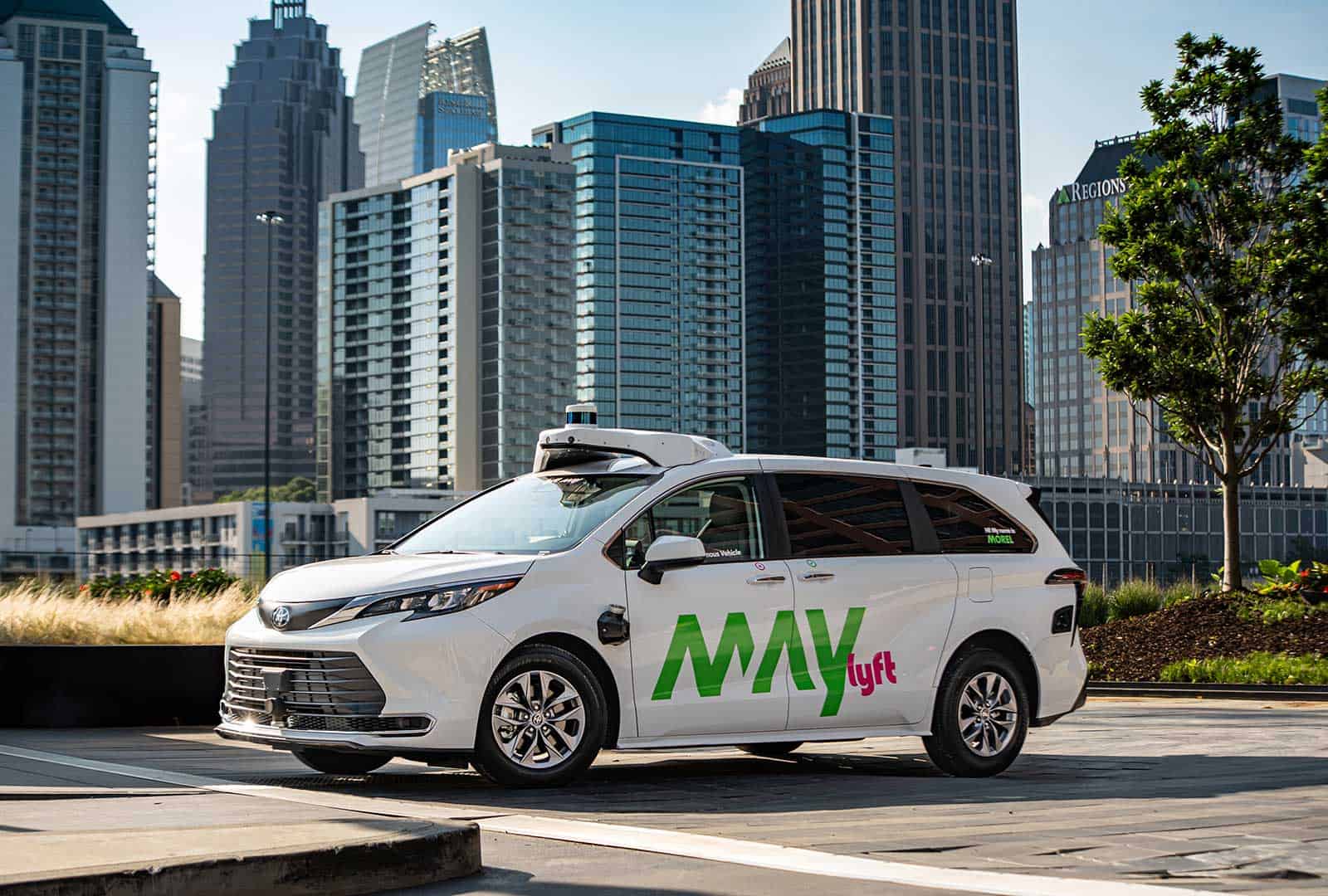
May Mobility’s SPAC and the $93 Million Question
May Mobility has proposed merging with ACP Holdings at a $1.4 billion valuation, aiming to raise up to $337 million as part of a SPAC transaction, but faces a roughly $93 million annual cash burn against only $10 million in 2025 revenue, leaving a narrow runway to prove commercial viability.
Mercedes-Benz signed a definitive agreement with Wayve to integrate AI driver software as a third automated driving partner alongside NVIDIA and Momenta, signaling a retreat from standalone L3 systems toward advanced supervised L2.
Figure AI unveiled Helix 2.5, demonstrating zero-shot household task completion across 30 previously unseen homes, raising success rates from 9% to 56%, though a 44% failure rate and absence of independent benchmarking temper the commercial significance.
Key Autonomy Signals Episode Questions Answered
What are the key financial risks in May Mobility’s SPAC deal?
May Mobility carries an estimated $93 million annual cash burn against roughly $10 million in 2025 revenue, a ratio of about 9.3X. The $337 million maximum gross proceeds is a no-redemption scenario; only $120 million in PIPE funding is committed, covering approximately 1.3 years of operations at the current burn rate.
Why did Mercedes partner with Wayve, and what does it mean for NVIDIA?
Mercedes signed a definitive agreement with Wayve to add L2 point-to-point urban and highway driving assistance, making Wayve its third automated driving software partner alongside NVIDIA and Momenta as it retreats from standalone L3 systems. NVIDIA’s role is ambiguous, it is simultaneously an investor in Wayve, a software partner to Mercedes, and a potential competitor developing its own full-stack autonomy software.
What did Figure AI’s Helix 2.5 actually demonstrate, and what are its limitations?
Helix 2.5 performed three household chores, bed making, towel folding, and toy tidying in 30 previously unseen homes without local data collection, raising zero-shot task success from 9% to 56% using human behavior pre-training on Figure’s Index dataset. However, a 44% failure rate remains, testing was conducted in curated environments, no independent benchmarking exists, and the results represent R&D validation rather than commercial deployment readiness.
Autonomy Signals Topics & Timestamps
[0:00] KPMG Sponsor Introduction
KPMG works across the full autonomy ecosystem, advising operators, OEMs, suppliers, insurers, and investors as autonomous mobility scales.
[01:45] Signal 1: May Mobility’s SPAC
May Mobility is going public at a $1.4 billion valuation with only $120 million of its proceeds committed, against an estimated $93 million annual burn and SPAC redemption rates that have historically run above 80%.
[27:52] Signal 2: Mercedes Partners Wayve on Autonomous Driving
Mercedes adds Wayve alongside NVIDIA and Momenta for Level 2 driving assistance as it retreats from L3, which raises MB.OS integration risk and questions about NVIDIA’s role.
[47:07] Signal 3: Figure AI Introduces Helix 2.5
Figure’s human behavior pre-training raised zero-shot chore success from 9% to 56% across 30 unseen homes, but a 44% failure rate and reliance on teleoperation keep it short of a dependable home humanoid.
Full Episode Transcript
May Mobility SPAC Deal Explained
KPMG: The autonomy economy is real. Commercial robotaxi operations, humanless freight runs, AV infrastructure investment measured in billions. The question is no longer whether autonomous mobility scales, it’s who advises the companies building it. KPMG works across the full autonomy ecosystem: operators, OEMs, suppliers, insurers, and investors. At the moment it matters most, when the road ahead is uncertain, we’ve already been there. KPMG, accelerating what’s next in mobility.
Grayson Brulte: Rob, it’s been a busy week. We’ve been in the field. We got lots of great field reports coming. I gotta give a shout-out to our special field correspondent, David Moss. He’s out in the field making all great content for us in Las Vegas. Well, we’re, now we’re back in the studio, and we’re here to record Signals presented by KPMG. So to the team at KPMG, Hugh, Lenny, huge shout-out to you. So thank you so, so much. But Rob, you and I know SPACs are back. I’ll never forget the Bloomberg Businessweek headline that said, “SPAC attack.” Well, SPACs are back. Well, SPACs are back. Mercedes continues to date. Nope, they’re not going here. They’re not going there. They’re playing the field. And Figure AI, all that Brett and the team can do is build. So this is this week’s Signals, and they’re good ones here. Mayday or payday? Now, that’s a clever one. That’s a clever one. May Mobility files to go public with a, with a $93 million cash burn. Well, what does Mercedes do? They’re waving goodbye to monogamy. They’re diversifying their driverless portfolio. And then there’s Helix 2.5: Dropping the Broom. Human data pre-training takes on the household chores. We all gotta do them. Let’s break down the first signal with May Mobility. As our audience knows, we were visiting with them last week in Arlington. What do we know about this signal, Rob?
Rob Grant: Yeah. Before that, let me just say, hey, for folks that have big questions or small questions related to, you know, all sorts of aspects of the autonomy economy, you both can come to us, but also you can come to KPMG for some of the specialty things they do. So just wanna call out you know, the team at KPMG, thank you for the sponsorship. They know their stuff. we’re in contact with them all the time. and so while we offer different types of services I think if you have some consulting issues or strategic management or anything, or mergers and acquisitions work, all that kind of stuff, they can tell you much more in depth what they do than I can, but they’re great at it and they’re great people. But here, I know if we go– speaking of great people, I know great people at May Mobility. Shout out to Tom Tang, ex-Cruiser, head of people over there, great guy. but what happened this week? So just this past week, as you mentioned, autonomous vehicle company, May Mobility, announced it is merging with a special purpose acquisition company, ACP Holdings Acquisition Corp, and will become a publicly traded company. It’s a deal that could raise up to $337 million for May at a valuation of $1.4 billion. And once the merger is complete, May Mobility will be trading under the ticker symbol MAY for May, and said it will be the first public company in the US that is focused entirely on autonomous ride-hailing vehicle. And that, that– it was called out over and over again in, in their press release and in their news reports because they really wanna differentiate themselves from a number of other public companies in autonomy, such as Tesla and Rivian and Lucid and the trucking companies such as Aurora and Kodiak. So they went with the idea that it was the first pure play, entirely focused autonomous ride-hailing vehicle company. We should n-no-note that in our Road to Autonomy Robotaxi Index, May is ranked as of September 4– 24th, I should say, of the cycle of the Road to Autonomy Robotaxi Index. May sits ninth out of 16 companies that we track in that composite index with a score of 42.4. So a lot of interesting things here. You know, we should– I don’t know where you wanna begin. We can talk about what the financing means for it you know, what, what, what it means for how May is positioning itself. But happy to begin wherever, wherever caught your eye, my friend, and then we’ll see how that aligns with OMEGA’s take at the end.
Grayson Brulte: I gotta give a shout-out to, to Ed Olson and the, the team at May. Some of the nicest people. And to the team at May that were in Arlington, thank you very kindly for hosting us. It was wonderful to see your Arlington depot, and I’ve been in a driverless vehicle at May in Ann Arbor, and Ed and the team are doing really good things. Unfortunately, Ed, if you’re watching or listening, I don’t have a dinosaur behind me, unfortunately. But when we have you back on, we’re looking forward to seeing that infamous dinosaur that you have. I’m curious, Rob, there’s the old saying, “April showers bring, bring May flowers.” And then it’s, “Sell in May and go away.” So, what is this gonna be? Are April showers gonna bring May success? I, I’m saying that ’cause it’s raining outside right now. Why is this deal matter? Why is it important, and what do the numbers look like?
May Mobility’s Financials: $93M Burn vs. $10M Revenue
Rob Grant: So let’s, let’s start with some of the numbers, and then we’ll get into, you know, what those numbers might mean for why the deal matters, right? So M- May Mobility enters this merger with ACP Holdings to produce this public company with $10 million in 2025 revenue at a 27% gross margin against what we estimate to be about a $93 million annual cash burn, making closing cash in this deal decisive for continued vehicle deployments and expansion of ride operations. And the $337 million maximum gross proceeds figure that they put forward in the press release is a no redemption case. So there’s $120 million Atlas anchored private investment in public equity, or PIPE, that is tied to this, and that is committed while up to the remaining $217 million remains subject to shareholder redemptions. All that is to say, it’s unclear at this moment, based upon the information that we have, where– how much of the funds that are potentially raised here will wind up in the bank account of May to help them continue with their operations and expand those operations accordingly. Now, what is really interesting is what May has, May Mobility has been touting as their autonomy as a service model, and this, this is unique in, in a lot of compared to what we see in a lot of other companies and a lot of what we spend time talking about here. So May strictly supplies the autonomy software while its partners carry the vehicle depot and maintenance costs, tying deployment pace to partner execution and their available operating runway. However, when you think about the numbers we just talked about, right? because they are asset light- is less of a cost in doing what they’re doing. Now, the economics are far from self-funding here, right? The $1.4 billion valuation is about 140X 2025 revenue of about $10 million, as we put. And the 2025 cash burn of about $93 million, we estimate, is roughly 9.3X revenue. So at the current burn rate, the maximum proceeds here of the $337 million figure covers about 3.6 years. However, the committed PIPE, which is the actual money we know that they, at a minimum, will wind up with, alone covers about 1.3 years, right? These are, these are simple ratio numbers. They’re, they’re not hard forecasts, right, since they ignore existing cash and deal costs and things like that. But it gives you a sense that there is a real-term pressure for May, as part of this deal, to bring in revenue, right? And part of where that, you know can be also seen is that to the way they’ve talked about themselves as kind of the only pure play autonomous vehicle operator in, in how they’re differentiating themselves from the Waymo’s of the world. This provides, you know, a signal, I think they think, to the market, like if you really are deep in autonomy and you want kind of a singular kind of thesis for asset-light autonomous plays, this is where you should put your money, right, in the public markets. So it’s, it’s, it’s super interesting. you know, I, I think there’s a lot more to be talked about here, but the numbers themselves suggest that, that May is providing themselves a window of time via their, their available cash and their v- versus their burn rate, to show that they can grow into a much bigger player in this market. And look, May’s been around a while. They have really good relationships with Toyota and other folks like that. They have proven themselves with a couple of examples of where they’ve gone driver-out in different markets. that- that’s kind of taken a one step forward, one step back type of thing, depending on, on the, on the program they’ve, they’ve offered. But look, let’s give them credit. They’re one of the few people that have gone out and put driverless operations on the road and opened it up to the public and taken in some money for that. so that shouldn’t be discounted either. But the, the financing here is super interesting. and like I said, my takeaway is that it gives them kind of this narrow window to, in which to really prove that they can compete with some of the more well-funded organizations that they’re competing for in this market.
SPAC Redemption Risks and Global Expansion Outlook
Grayson Brulte: If you look at just the interest that I don’t think a day goes by where you and I, maybe the weekends, but a day goes by when you and I don’t get asked the same question, “When is Waymo going public?” And I’ll say what I say to everybody, “Nobody knows.” That’s point blank. Nobody knows. I’m not speculating on that. N- nobody knows. I find it very interesting with the framing around the first pure play robotaxi provider. If you look at the public markets, WeRide is in the public markets, Momentus in the public markets, Pony.ai is in the public markets. Yes, Pony AI has trucks. They call them robo trucks. James Peng, good name to call that. WeRide has an L2+ business. Momenta is a licensing business. So US-based, yes. Global-based, I, I’m a little shaky on that argument. I think it’s really interesting when you look at May’s partnerships. They have a Grab partnership. They have a Lyft partnership. They have an Uber partnership. So they’re clearly there with the demand aggregators, and as you and I know from a lot of the field work we do, and from your experience at Cruise, there’s a common denominator here. Depots are expensive and they can go into the tens of millions. And so the asset light is gonna be very interesting to see how they, how they scale that. And I’ll make a prediction here that I believe over time, as May grows into a more mature company, a majority of their revenue will come from overseas. And if you look at 100% redemption rate, it’s possible. I’m not saying it’s gonna happen, but if you look at the previous SPACs, Aurora and Kodiak, you’re looking at conservatively north of 80, 85% redemption. So you know, they’re, they’re going to have to probably raise more capital once they, if they do de-SPAC and go into the markets, and that’s also a very expensive and complex process. Wish them luck. I think it’s gonna be a very complex process. It’ll be something really interesting to watch and see what decisions May makes and which they decide to put an anchor in which market and why.
Rob Grant: Yeah, 100%. I mean, I think you just shared a ton of thing, particularly as you look back at what the prior kind of SPAC process was for, for others and the redemption rates there. you know, the things that to call out, right, is, is that, look, I mean, where May has been in the past doesn’t necessarily mean that defines their future, right? They have a core OEM partnership now. They don’t have a second major auto O-OEM integrated, but that-that’s not to say there isn’t one that they’re talking to, and I’m sure they’re talking to some. and with the demand aggregators, I think that’s very valuable as we’ve talked about vis-a-vis kind of Uber’s position in that demand aggregation triangle and why some of these smaller players right now or, or less capitalized players kinda have to rely on the demand aggregators to, for consumer demand, for utilization, for you know, fleet maintenance, fleet operations, things like that, that would otherwise they’d have to fund themselves. Now, what’s not discussed here is, is kind of what are the revenue splits with those partners? how will those revenue splits affect their current kind of SaaS-like margins? right? so th-they have real operating experience. I mean, as we talked about and as they say in their release, they have over 550,000 commercial autonomous rides cumulatively in their history, 1.1 million miles, three US driver-out launches. However, you know, the supplied public release materials and the things that we can find you know, from our investigation and f- with OMEGA’s help, there’s not a lot disclosed on, on their, their margins, their proportion of rides completed without a driver versus those that are, are completed with a driver. So for me, look, I want May to do really well. I think they’re gonna do really well as part of this process. I think they’re gonna give themselves opportunities via this process that they wouldn’t have had they not done this, right, or foregone the SPAC route. but It is hard to know right now, in my opinion, if this establishes, like, a attractive value proposition from the market’s end, or, as you said, will, you know, this additional capital translate into an economically sustainable deployment? These are open questions. Their history suggests that they’ve had some success, but yet it’s not necessarily sustained success. and will this extra capital be that kind of fuel to that sustained success, I think is an open question. it’s not a slam dunk, right? If this is Waymo coming to the market, I’d be like, “Hey, we’re not really worried about their ability to have continuous, reliable 24/7 commercial operations. We’re more worried about how quickly they can scale those operations.” Here, I think May needs to establish much more consistent, reliable operations focused on, you know, a few markets. And then if they can generate revenues and margins or, or go out for an additional raise, then they’re at that, that stage that, say, a Waymo is at, which is like, “Okay, we think you’ve answered the basic question of can you provide a, a, a sustainable business here. Now we wanna know, can you grow that into something that’s global?”
Grayson Brulte: You hit the nail on the head. 24/7, when I was in Austin and went out for a late dinner after doing field work all day, our, our friend David Moss said, “You gotta order a robotaxi before. Given the shutoff, you’re not gonna get it.” And sure enough, in the app it said, “Depending on where you’re going, we might or not give you service.” So to m- Waymo’s 24/7, I mean, obviously you and I have very clearly set the benchmark. It’s reflected in the indices that we created around unsupervised miles and, and unsupervised paid miles. To me, the next metric the industry needs to move towards, and Waymo’s been doing a bang-up job of this, is 24/7 service. So if you and I, let’s say we wanted to go to a hockey game or we wanted to go to a basketball game, go Knicks, and all suddenly the game gets out after or, which happens if you have overtime or double overtime, oh no, then you and I get stuck in traditional rideshare. Wah, wah. Not, it’s not, it, it’s not very nice. I can tell you, Walt was with me in Dallas, and when we had to take a traditional rideshare, like, “Oh, this is not good.” I mean, I appreciate the guy going 90 miles an hour to get me to the airport on time, and I made my flight with five minutes before the door closed, but it was not a very, very good experience. So I mean, we’ll see, but I think what we really gotta watch, though, is the cash burn, the redemption rates, and, you know, we wish them well, but there’s a lot, a lot to watch as, as they go through this process. And a $1.4 billion valuation at a 140X multiple is a little, little frothy
Rob Grant: Yeah. And look, I think, you know, this– I think what the best way to summarize this is investability and operating competitiveness are two different signals for, for May. A public listing creates a visible valuation reference, as you just mentioned. But in and of itself, it does not establish a cost advantage or the fact that May, whether May has a superior service that, that people are gonna turn to in light of the other competitors that are out there. But in the end, for the autonomy market writ large, right, th-there’s significance in that you now have an ability to get separately traded exposure to autonomous ride-hail technology. And I think that’s, that’s a good sign for the market that we’re so super vested in and interested in writ large.
OMEGA’s Take on May Mobility: Financing Credibility, Not Commercial Proof
Grayson Brulte: It is a positive for the market. It shows the autonomy economy is growing. And not to be self-serving, we love it because there’s more publicly available data for OMEGA to analyze. That’s why I love it. So I encourage all these companies to go public, ’cause you have to file with the SEC, and OMEGA can ingest all of your SEC filings, which goes into the Induce algorithm. So we love, we love public filings with the SEC, and we love all publicly available data, ’cause it really helps us. So yes, we encourage all companies if they do, ’cause we just like the publicly available data. But that aside, Rob, we alluded to it as we always do in every segment, there’s risks, and OMEGA has uncovered the same risks, some that you and I already knew about, but some others. Let’s start with the first risk here. High ACP trust redemptions cut cash available for vehicle deployments and ride operations. My, my say on that: Let history be your guide. There’s a lot of publicly available SPAC data, and OMEGA has ingested a large chunk of SEC data, and so I, I know exactly where she’s coming with this risk
Rob Grant: Yeah. I mean, this is going to be something we have to watch closely for because I think it will define how narrow or broad the window is for, for May to accelerate its reliability and consistency of service as well as, as, as expand their ability to serve more people. right? All this there is way more beyond it than just the financial end, but let’s be real. I mean, the, the financing of, of these types of services is key to success at times. and so we’re gonna find out how much runway, so to speak, both literally and more metaphorically this process provides for May to, to prove itself. and look, they must. I, I think they, they feel confident that they can meet this, right? And they can do it quickly because they feel confident in their vehicle, and they feel confident in their people. And I think that’s, that’s a strong sign from their leadership. now we’ll see what the outside world can they convince them of the same?
Grayson Brulte: We’ll be monitoring the SPAC, O- OMEGA will, and perhaps on an additional show we’ll cover it, or we’ll put it in this week in the Autonomy Economy newsletter, which you can sign up at roadtoautonomy/ae. So we’ll, we’ll analyze it there and continue to break it down. And for subscribers and clients, we’re happy to walk, work through the model that we have as well with you. Let’s get on to risk two here that OMEGA has uncovered. A 93 million annual burn rate against 10 million revenue shortens runway for fleet expansion and service continuity. That’s another one it all comes down to, I gotta go there. well, I’m going there. Wu-Tang Clan, dollar dollar bill, y’all. That’s what it comes down to
Rob Grant: For sure, right? And, and look, I mean, there, there are a couple levers here that they have to, to ensure that this ratio doesn’t come back and, and, and burn them, so to speak. and so, you know, bringing in more revenue is going to be kind of central amongst that, right? To slow down that burn rate, to rely on their partners to provide you know, ideal depot locations so they can cut down on how long it takes to get those vehicles into service, maybe how long it takes to get them back for maintenance, and turnaround time so they can keep their utilization high, so they can offer this service continuity that we’ve mentioned before has been somewhat of an issue for them. And you know, I think availability, price, and quality are all things that are gonna be key to growing their ridership. and availability has a lot to do with how many vehicles they have where are they located, and you know, what, what is their utilization capacity? And so we’re gonna see. you know this isn’t– this is actually a pretty good burn rate for a company in this space. I, I mean, I’ve been at companies that this is, like, a week as opposed to an annual thing. so I think, I think, you know, th-this, th-they should be somewhat credited with being very efficient with their capital, even though they’re still losing a lot of capital each year vis-a-vis their, their spend versus revenue. But comparatively this is actually quite efficient, and let’s hope that they get more efficient. I think going through this process will force them to do that. And then if they de-SPAC into a public company, clearly that will what do you call it? That the, the reporting requirements just kind of generally demand that
Grayson Brulte: A autonomy company in general burning $93 million a year on a burn rate is very small compared to the average across the industry. Yes, there’s, there’s a few outliers, Kodiak’s on the smaller side, Bot’s on the smaller side. There’s a few outliers, but a majority of these companies, let’s just call a spade a spade, are burning billions of dollars a year to, to build this technology. We wish them well. I mean, the burn rate is, is relatively modest compared to their peers, and as I said, we, we wish them well, but as they expand and ramp up, you and I both know from our experience, the burn rate over time is going to increase, which brings us to risk number three. Sub 500 unit fleets and 10 to 50 per market density limit ride volume growth. OMEGA is right on that. The autonomy markets benchmark for a considered city launch is unsupervised 100 vehicles in a market. That’s expensive, so this is a really, really good risk
Rob Grant: This is– A-a-and look, it’s really hard to run a public service with only 10 to 50 vehicles per market. I mean, y-you’re, in that category, y-you’re, you’re basically running, you know, a private car business. you know, it would be great if they had 10 to 50 celebrities in Atlanta using their cars. that, that might be something of note and capture the public’s imagination. But, you know, if you’re in a place like Atlanta, which is extraordinarily spread out which takes forever to get anywhere 10 to 15 vehicles in a, in a geography of that large, it’s, it’s going to be extraordinarily difficult, to put it kindly to increase rider volume growth with that service level of cars. They, they which is why one of the reasons I think they’re, they’re, they’re making this move now, I, I think they realize they have to have more vehicles in their fleet. They just, they just have to. and even if that means spending more of the money up front, there’s no way they can increase their rider volume growth or ride volume growth without more vehicles. They, they, they, they could max this out and still have a number that doesn’t look like it’s very impressive to the markets.
Grayson Brulte: Atlanta, I mean, could you imagine, we both experienced this traffic of going from Buckhead to watch a game with the Braves. I mean, you could be an hour and a half, hour and forty minutes with that traffic. The Atlanta traffic is I’ll use a, a term loosely, not nice. Huh. I, I, I don’t know what traffic is worse, LA traffic or Atlanta traffic. Either way, they’re, they’re both, they’re both not nice and they are gonna need more vehicles in that market. Or let’s not forget, in the publicly disclosed documentation that May made public when they went public, their two largest investors are Japanese-based, NTT and Toyota. So perhaps that there is a shift more towards Tokyo, which you and I have talked about on previous episodes, because if Toyota’s an investor, they have the Toyota Sienna minivans. Japan’s protectionism, they could put those vehicles into Tokyo, meet all the protectionism clauses. So that’s gonna be something to watch. Not making a prediction of, of, of where they truly expand, but I’m just saying if you go through their investor filing that they filed, it’s very interesting and there’s a lot of signals in there, which brings us to OMEGA’s take. OMEGA’s got a meaty take here. I mean, the more data we give OMEGA, the more trading she has, the smarter she gets. So here we go. “The signal is financing access ahead of demonstrated operating leverage, not proof that May Mobility has won robotaxis. OMEGA’s reading is financing credibility ahead of economic visibility. The private commitment strengthens the financing story. The unresolved questions are how much cash actually arrives and what operating returns that cash can support. The next decisive evidence would be closing disclosures showing actual proceeds, followed by reporting that connects driver-out activity,” very important to be unsupervised, “to revenue and cost. Those disclosures, not the proposed ticker, would change the assessment from access to capital towards evidence of a durable business.” As I said, meaty, very good.
Rob Grant: Very good. It, it’s, it’s very good, and perhaps my loquaciousness is rubbing off on OMEGA. I will try to cut down on my verbosity so that she is much more concise moving forward
Grayson Brulte: I don’t like that. I like your fancy words. We gotta stay with fancy words. We call it Rob Fancy Words Grant. See? We do it right
Rob Grant: My kid just took the SAT, so fancy words are on the tip of my tongue
Grayson Brulte: Oh boy, I did not like that. I don’t envy anybody that has to go through that again. That was not fun. That’s what I’ll say. Rob and I are old. We’re not ready for the home yet, but we’re past that stage of life. We got kids going through it, and I don’t wanna go through it again And that brings us to signal two here Mercedes is waving goodbye to monogamy. They’re saying, “Nope, we’re gonna go play the field.” They’re diversifying their driverless portfolio. First it was Nvidia, now it’s Wayve. What do we know about this thing? Now what’s going on?
Mercedes Partners with Wayve for L2 Autonomous Driving
Rob Grant: Yeah, so Mercedes-Benz just signed a definitive agreement with British startup Wayve to integrate its AI driver software into future models, offering point-to-point level two urban and highway driving assistance within the next two years. This expands the software roster with which Mercedes is engaging. Wayve becomes Mercedes’ third automated driving software partner, joining, as you mentioned, NVIDIA and Momentum, as the German automaker pivots away from standalone L3 systems towards advanced supervised L2 capabilities. The deal does build on a prior technical partnership and Mercedes’ participation in Wayve’s recent Series D funding round, with software already integrated and tested across Mercedes hardware and MB.OS architecture in Germany, the UK, and the US. Wayve currently ranks fifth of eighth on the Road to Autonomy autonomous driving licensing index, while under the same umbrella that Mercedes is working with, Momenta ranks second
Grayson Brulte: Yeah. And there’s a lot changing if you look at it. Momenta m- is public. They’re public on the Hong Kong exchange, so we have a lot more data to work with a- as, as the ranking algorithm works. I’ll put that out there. as we know, Momenta is also testing in Germany, and they’re also testing in Dubai in the UAE with Mercedes. And I’ve gotta say, the, the videos they put out, that’s a beautiful S Class that’s full self-driving. I mean, this seems a luxurious ride. I’m, I’m looking forward to, to riding in that. And the interesting thing is here, the underlying signal for the audience that you and I know very well, when you call it L2 or L2+ or plus, plus, plus, a- add as many pluses in there as you want, your insurance liability costs go down because L3 is a can of worms when it comes from insurance. So I give Mercedes a lot of credit, one, for sticking with, with L2, L2+ just from a liability perspective. And we’ve been reminiscent. We don’t give a shout-out to Alex and the team at Wayve. They just continue to put wins on the board. So Alex, you’re well done, and I’ve been in your vehicle several times. I can’t wait to ride on the highway next week. So thank you to Team Wayve for putting me in the highway vehicle next week. Another great deal for Wayve. Wayve is becoming the world’s alternative to Tesla’s FSD, and that’s a very lucrative market as we know
Rob Grant: Yeah, look, I mean, W-Wayve, it, it, it’s putting itself in a wonderful position, right? but it, it, it is it is going to challenge Wayve. They’ve put out big ambitions, right? Their, their supplier model is gonna get a real test. I, I would say the Mercedes production deal makes Wayve kind of the broadest independent software provider with the largest footprint in Europe. That, that’s not someone who’s a sole supplier, right? and, and I mean, that’s, that’s a big statement from a company that is relatively new on the scene, right? They, they are– now have three big OEM partnerships. But this is gonna put them under a lot of pressure because now it has to deliver the Nissan ProPILOT in Japan, which I think they’ve said is starting hopefully by fiscal year April of 2027. It has the Stellantis AutoDrive hands-free partnership in North America, which they believe should be out on the roads in 2028. And now Mercedes. the great thing here, right, is, is when they deliver, and I say when because I have full faith in, in the Wayve team. I know many of the engineers over there. They’re, they’re wonderful. The founders are great. They have a, a really good sense of commercial purpose. when they deliver across all three of these OEM integrations, I mean, that is gonna demonstrate a, a, a monumental reusable driving software business that nobody can ignore. now, right, there are going to be some interesting challenges in doing that. You’re gonna have divergent schedules and integration demands. it could expose expensive customer-specific engineering. I’m just gonna say Mercedes, very engineering-based company. you know, that, that’s going to be an interesting relationship. But I think the operating momentum for Wayve is huge right now. It’s great credit to them for, for both securing these deals but also to, to execute on them because I think if they execute on them, they’re gonna do something that, that, that, that no one else has done. and for certain, they will move up that robotaxi licensing index.
Grayson Brulte: Absolutely. The, the deals are great, but Alex, I have one big request, and you and I have spoken about this. You gotta go surfing with Kelly Slater. You gotta get Wayve to sponsor a surf team. The, the OEM deals are great, sir, but you gotta get something going with a surf team. You gotta get Kelly Slater in a car. Go surfing with him. I mean, it’s, it’s in the culture. It, it, it’s in the DNA. And if I’m invited, I’d love to go surfing with you as well. And heck, maybe you, you never know how much fun we can have.
Rob Grant: It’s all about you, isn’t it, Grayson? You’re like, “Alex, you should do this, but also bring me along.” So I love it. Alex, bring Grayson along when you go surfing with Kelly Slater
Grayson Brulte: Absolutely. Alex, where I live, this individual who has passed away, used to surf with Kelly all the time and, and never got to, but that individual passed away. He’s a good man. But that I digress. Yes, I would like that, and I am being a little selfish and greedy there. On, on the, on the me not being selfish and greedy side of this is Nvidia. It’s a multi-trillion dollar juggernaut. They’re involved with this. They’re also an investor in Wayve. They have a partnership with Mercedes. What impact do you think this is gonna have on Nvidia?
NVIDIA’s Ambiguous Role in the Mercedes-Wayve Triangle
Rob Grant: Yeah, I think, I think it’s really interesting. You know, I think it’s pretty clear what Mercedes is trying to accomplish here. I think it’s pretty clear what Wayve is trying to accomplish here. In my mind, there’s a lot more kinda ambiguity around the story for NVIDIA as it relates to its relationship with Mer- Mercedes and its relationship to Wayve. So I mean, Wayve could run alongside NVIDIA’s software, but it could also replace it on some vehicles. Or it could run on NVIDIA’s compute underneath, right? And losing the software role wouldn’t automatically mean losing the compute revenue. However, Wayve also has a deal with Qualcomm to use their Snapdragon Ride, and they’ve received $60 million from AMD, Arm, and Qualcomm in their, in their extension of their Series D, right? So it’s a It’s interesting the relationship that is developing between Wayve and NVIDIA, and I think it’s a signal of the further ambiguity, you know, potential conflict, potential frenemy relationship that is going to develop between NVIDIA and a lot of folks that are providing full stack autonomy software. Right? There, there, there’s the compute relationship with that, which I think remains fairly clear, particularly ’cause NVIDIA is, is the leader, but there are other options out there. And, and, and as we’ve– if you read the news, there are potentially soon to be Chinese options out there as they’re looking to, to put investment in that category. But on the, on the software side, right, NVIDIA is developing its own stack, right? We’ve, we’ve talked about it and we’ve talked about– and they talk about it. If you go back and look at their I think X feed in the last week, it’s a combination of everything that we’re talking here. So it, it– I think in their sense, they’re a little bit am- ambiguous about, are we competing with Wayve? Are we a partner to Wayve? Are we investor in Wayve? Is it all three? and so I think it– that to me is gonna be the really interesting thing here, ’cause we talked about NVIDIA as a potential competitor in every kind of space that our robotaxi, or, I mean, our road to autonomy index is touch, right? They could, they could be a licensor. They could be an operator at some point as well, right? they could be somebody that attempts to work with Uber to, to achieve their fragmentation story. They could be somebody who is a supplier to you know, some of the folks that are trying to compete against Uber. So it– They are fascinating because of the breadth of where they touch everything in the autonomy economy, and I think this particular deal brings to head, in concrete terms, that type of ambiguous situation that, that NVIDIA is in vis-a-vis Wayve and Mercedes, but I think that’s gonna be repeated in many places as we move forward.
Grayson Brulte: I think the bottom line is it’s going to be something to watch of how this relationship evolves, but then how NVIDIA’s relationships with, with partners who they end up potentially competing with them also, something to watch there. To give a, a, the audience a little sneak peek, we have both AMD and Arm coming on the Road to Autonomy podcast. So the Arm podcast drops on Tuesday, really good, all about physical AI, so tune in for that. AMD is coming next month, so stay tuned for that as well. But we’re on the cusp of this. There, there’s a lot of. I say, Rob, we talk about the signals, but I’ll just say this very bluntly, the signals are growing, at the end of the day. There’s gonna be more and more stuff for us to analyze, and thank goodness we’ve got OMEGA cooking over there to analyze all this data in real time, which brings us to the risk and this deal that OMEGA has uncovered. Risk one, MBOS middleware complexity hosting competing NVIDIA and Wayve neural paradigms delays series integration. That is real. That, I mean, that’s tactical, but that’s real
Rob Grant: Well, th-th-th-this is super real. I mean, it– If I were to see a reason for a delay in the timelines that they put forth in these announcements, it is squarely situated in this kind of tripartite relationship between the architectural middleware that Mercedes-Benz has developed in their MBdo-OS system and then integrating it with either or, you know, NVIDIA and Wayve technology and then perhaps both. Maybe it’s Wayve technology running on NVIDIA chips, right? So it’s– And who is determining– I mean, my, my sense from this is the fact that MB.OS is even a part of the architecture here is that, that Mercedes is, is probably more calling the shots than anybody else. But that’s a guess. I’m not involved in these conversations. It may be something where they agree it’s a– it goes to a joint board or something like that, but the board has more Mercedes members on it than Wayve members on it so to speak. I’ve seen that happen before. but it’s this type of integration when you have three different types of technologies coming together that, you know, when you add them up, the sum could be greater than its parts. But trying to figure out what we’re adding in terms of parts could be the real process breakdown here
Grayson Brulte: And when you put a lot of cooks in the kitchen with different agendas and different personalities, you see what happens. And I’ll just say this to listeners that are wondering why, I’ll give you a clue. History is your guide. Look what happened when an OEM bought an autonomous driving startup. There’s, there’s two indications, I don’t have to name them here, but history is a guide in this, this I would say the tension is well, well documented in the media. Which brings us to risk two. Overlapping NVIDIA and Wayve software scope creates production allocation and responsibility conflicts. There we go. Chefs in the kitchen. Somebody could end up acting like the Swedish chef from The Muppets, and then somebody else could act like Sergeant Bilko. You don’t know. OMEGA’s good. I started putting in pop culture references. I’d be like, “Where are you? Did you get out of your training data?” But this is really good.
Rob Grant: Yeah. Well, I know it must be around dinnertime on the East Coast because you’ve, you’ve made a, a couple of chef references and cook references, so, you know, I, I, I hope whatever you know, Mrs. G over there is cooking up fits your, your, your hunger demand right now, my friend. But yeah, I mean, this is exactly right. It, it is– These, these are, these are big decisions. These are decisions that, you know, it– They’re, at times are not one-way doors, as we talk about, right? You walk through them, and there’s a commitment. When you’re talking about architectural designs and software scope into a production vehicle, there are, there are key timelines that must be met, and if you make a decision to go one direction, it is very difficult and very expensive to change that decision as you get down that line. And that cost both in terms of, you know, engineering time and everything else, but also into real dollars because maybe you have to change suppliers or you have to exit a certain supplier contract. Like, th-this is real money at stake. And so that’s often why these decisions up front are one-way doors because the production timelines for vehicles are very static and they are reluctant to move them. The US automakers, trust me, I know all about this, are reluctant to move them, and it’s a great battle to do it. Having some interactions, not with this particular German automaker, but with other German automakers, I can only imagine the ferocity of the defense of their production timelines. and if the decision is made between NVIDIA and Wayve, and then somebody wants to go revisit it a year and a half down the road, that’s just not gonna fly. So it’s gonna be really interesting. I, I, I think they have to make sure that these conflicts, allocation of resources as well as responsibilities, they have to be clear up front where the process is, is going to break down under the weight of that production schedule later on
OMEGA’s Take on Mercedes-Wayve: Strategic Signal, Not Commercial Commitment
Grayson Brulte: And if the process breaks down, the project gets delayed and that costs revenue and then it turns into the, the pointing fingers. I guess I’ll give you the, the, I think one of the most visible public examples is that the Argo, Ford, VW finger-pointing debacle. It’s all publicly documented. I’m not gonna give a history lesson on it here, but that situation could happen again here. Not saying it is, just saying it is a potential that it could happen. Which brings us to OMEGA’s take here. OMEGA goes on to say, “The substance is narrower than the framing. This is a level two point-to-point assistance deal on a two-year clock with no model, market, launch year, or financial terms named.” I’m gonna insert my own voice here. Details matter. Back to OMEGA’s take. “The signal is strategic, not commercial. Mercedes is running automated driving software as a portfolio of suppliers while retreating from L3 Drive Pilot on the facelifted S-Class. The central question is how Mercedes splits work among its suppliers and whether it actually ships, not whether a level two system becomes driverless autonomy.” You said it, Rob. I said it. I just think we– I don’t know, do we look for Silicon Valley for clues? Do we look to London for clues? Do we look for Germany for clues? ‘Cause there’s gonna be a lot of places. Oh, here we go. Going back in the old school. Blue’s Clues. There’s gonna be a lot of places to look for clues
Rob Grant: Yeah, I’m surprised you didn’t go with the breadcrumb analogy since we’re on the chefs and everything like that. But agreed. There, there’s gonna be a lot of things that we need to follow r- look into that will give us signals about how this is progressing and what it means, quite frankly, for the German OEMs, in particular Mercedes-Benz, who, you know are by their own admission, whether begrudgingly admitted or, you know read between the lines admitted are falling behind on the introduction of all sorts of levels of autonomy from L2 to L4, right? Every time we talk about somebody doing something with a German OEM or in Germany, it’s the OEM partner is supplying the vehicle, and it’s somebody else supplying the stack or the technology right? And so that, that’s whether it’s Momenta, Wayve Baidu you name the partner. so it’s, it’s going to be really interesting. This is such a critical time for these German OEMs, right? And I know, like we’re not talking about Volkswagen. They have their own issues. That’s all over the press. But it’s, it’s, it’s, it’s whether it’s Mercedes or BMW or Volkswagen, it– this is a really defining stretch of time the next three years for each and every one of them
Grayson Brulte: There’s no nice way to slice the bread. See, I’m staying on a food analogy here ’cause I’m, I’m hungry ’cause I want yummy in my tummy. Like, I’ve got these kids- I got kids analogies and food analogies going on. I don’t know what’s going on. But there is no nice way to slice the bread on this one here. The German auto industry is in trouble. The, the Financial Times has done a wonderful job covering it, and it, it, it is truly a mess if you look at the way that VW and Porsche and all the the issues that they’re having. I, I, I don’t know, and I’m gonna say something that the folks in Germany will not like, and they probably will kick me out of the country. There’s a very good chance that a large part of German OEMs could become contract manufacturers. At the, at the end of the day, I, I said it, and we’re gonna watch the signals because it has implications, especially as robotaxis expand into Germany, Berlin, Munich, the two big markets that we expect robotaxis to go. Obviously, in Munich, we have Waymo. In Berlin, we have Momenta, Mercedes partner, so we’re gonna be watching that, and there’s a lot to watch in Europe as Europe becomes a robotaxi battleground. And then let’s get here to, to signal three. We’re going to humanoids. I love how we integrate all this humanoid stuff. Brett and the whole team at Figure AI, they’re running a really great marketing campaign, and while they run great marketing campaign, they’re getting really, really good data. Very clever how they’re doing this here. They dropped the Helix 2.5. It drops the broom. Human data pre-training takes on household chores. We all have to do them. It’d be nice to have the humanoid do them. What do we know about signal three?
Figure AI Helix 2.5: Zero-Shot Household Chores in 30 Unseen Homes
Rob Grant: Yeah, this is great. I thought the Figure team and Brett did a really good job of kind of building anticipation. I think it was just last week we were like, “Hey,” as we were signing off from our, our Signals episode last week, Brett had dropped on X, like kind of life-defining, corporate-defining moment coming tomorrow out of Figure. And, and that’s what we’re talking about here and why I wanted to ensure that it was part of the Signals this week, ’cause we left everybody in such suspense last week. so what happened? zero-shot real-world testing, right? And so what this is, is Figure unveiled its new Helix 2.5 neural network, which enabled their humanoid robots to perform three complex household chores: bed making, towel folding, and toy tidying across 30 previously unseen homes without collecting local data or adapting the model. So they, they went out, Airbnb-ed 30 homes that they had never put their Figure robot into. and based upon their ability to pre-train the robot through their process that didn’t occur in these homes, right? So that’s what it means by local training. They didn’t put them in there and then give them a sense of space and everything like that. They didn’t have a, a, a predefined map or layout of the home or where things would be. they trained it outside of that. the, the Figure humanoid was able to go in and perform these three plus complex chores without ever having been there before. So that’s zero-shot, right? Basically, think of it as that’s the new term that everyone’s using. You zero-shot something, which is you basically put a robot in an environment it’s never been before, and it’s able to perform a task that you maybe trained it for but have never trained it for in that particular environment. So that was, that was really cool to see. you know, I’m like, “Hey, man, you could have come to my house and paid me some money. I got plenty of stuff and crap on the floor if you wanna pick it up,” but I was not asked. so the pr- pre-training the system on Index, Figure’s proprietary data set of human behavior, increased the zero-shot task success rate from 9% to 56%, while requiring half the task-specific adaptation data compared to the prior Helix policy. So what that means is it took less data to become more successful at these three tasks in an environment in which it had never seen. And so there, there’s a lot in there, but all of those points are important, right? Less data new environments, higher success rate. those are the key things that they were advertising as part of this, and it, it is a, it is a huge step forward for them. And so as part of their, I think– I mean, the video, the initial video, I wanna say, was 12 minutes, and they released video of all the hours in the homes. But anyway, through this, the company established a human-robot transfer scaling law, demonstrating that systemically, systematically I should say, scaling human pre-training data predictably improves downstream robot action prediction. Allowing model loss to be mathematically forecast before training. So all of this is very helpful not because the tasks that were performed were performed perfectly, but because the signal that they got from this is that they can do more with less in absolute zero-shot environments through their new kind of model and training. And that’s a huge step forward because this is where they’re at now. Now that they know that the feedback loop on this is, is super positive they can, as they say in corporate speak, double-click on this over and over again to make it better. and, and I think that’s what the real promise is here.
Grayson Brulte: It’s clearly scaling, but you said they got a bunch of Airbnb hats, and I’ve gotta ask you to put your legal hat on ’cause I’m the weirdo that reads the terms of service. How long until we see a no humanoid training pol- policy in the Airbnb terms of service? Is that coming? Could this have been this, first it was no parties, now perhaps is it no humanoid training?
Rob Grant: I mean, it’s interesting, right? We– A couple months ago, we covered the humanoid robot that was kicked off the airplane, right? they didn’t have a policy, so they let the, the, the thing sit in a seat like a person. And then I think it was Southwest then later said, “Wait a second. We’re not gonna allow these type of things on the airplane.” So we’ll see how Airbnb reacts. I, I, I think in this sense, right, there is, you know, probably there was some s- risk to Airbnb that they did not know about that this was happening. Maybe they did, I don’t know. I’m not, I’m not– I didn’t talk to anyone on the legal team on e-either side of those big names. But in the end, it wasn’t like they were holding robot fighting wars in the backyard, right? They were trying to demonstrate that a robot could actually do household chores. but, but to, to return a little bit to the, you know, what, what the real– why this matters so much, right? And, and for Figure, the potential moat is the conversion pipeline so much, not the data pile, right? If, if human demonstrations reliably reduce the need for expensive robot-specific training, Figure can improve household capabilities without collecting proportionally more data on physical robots, right? Because adapting to each home one at a time would, would just kill deployment economics here. and so that’s, that’s why this– we come back to that, you know, less data, improved results, zero shot you know, effectiveness. And so, you know, I think what we have to remember is that testing in different homes can show the transfer across environments, but it doesn’t show performance with arbitrary objects, residents, pets, interruptions, or a combination of tasks, right? Yes, th- a lot was shown that was visibly kind of encouraging particularly for the conversion pipeline. But if you go back and look, you know, the homes are, are, are, you know, they’re asking to do pretty specific things without a lot of kinda chaos that comes in a normal house, right? And without you know, the chaos in, in my house, right? Those homes, they look beautiful. I was like, “Wow, that’s, you know, one day when my kids are all out, maybe my house will look like that.” And yet– And, and there, there still hasn’t been any independent replication yet, right? And a large share of the attempts, we should mention, did fail, right? 44% of the time they did fail. but they went from 9% success rate to 56% rate, but that still leaves 44% failure rate, right? and, and overall, residential operations remain company-funded R&D validation, right? These were not you know, the first economic contracts to clean homes or sell robots or anything like that. So I, I, I think there’s a lot of positive in here for Figure, and I can understand the excitement because there is excitement generally, particularly on that kind of diffusing or, or, or, or taking less data to produce better results with less training time which is all super important for anybody in the robotics field. And so I think there’s a lot of encouraging things here, but we should acknowledge that, you know, this was a pretty limited R&D display more so than it was any kind of economic consumer transaction
Grayson Brulte: While it was limited R&D, I gotta give a plug for the wonderful sponsor, Koop Insurance, that sponsors our This Week in the Road to Autonomy newsletter. They started a new company called autonomy.insurance. They insure robots, and if you go on our X account or, or read the newsletter this week, and you will see an incredible skit that Sergey did based on an old SNL skit around robots and insuring humanoids. Very classic there. So as they accelerate, and as Figure moves their bots and, and zero shot, and they get more and more advanced, you and I know the question that the audience wants to know is, the market wants to know, how does this compare to Optimus?
Helix 2.5 vs. Competitors and OMEGA’s Risk Assessment
Rob Grant: That’s a great question, right? And what Figure did is really a, like a, a benchmark challenge. It’s, it’s not a ranking. this isn’t like a third-party benchmark-rated activity. and I mention that because, you know, for those folks like us who are ingrained between autonomy and artificial intelligence, you can go on all sorts of third-party websites and see the AI benchmarks, right? And they, they publicly grade each model on multiple categories. This is not that. Th- th- this is not a benchmark standard, so it’s, it’s hard to, to know where it stands vis-a-vis Tesla or Apptronik or any of the other humanoid providers. So ’cause, like, a fair comparison would need MATS testing in unfamiliar homes with the s- the same disclosed training exposure, intervention rates, and failure accounting. And n- and none of this exists, right? I think what it does do is it does, in some sense capture the imagination of folks interested both from the consumer side but also from the applied AI side, right? How do we get robots and humanoids to be on a level where they can work in the real world without having to do millions and bill- if not billions of hours of actual training on everything that they could possibly encounter? Like, what is the kind of general reasoning abilities and learning capabilities from smaller sets of data? And that is where Figure made some headway. What, what I don’t know is where Tesla stands on that right? Given what we’ve seen with the Tesla work on autonomy A path familiar to this generalized ability to operate in environments, right, seems akin to what they’re doing on the autonomous driving side. I don’t need detailed maps. I don’t need multiple sensors, right? I have an ability to produce a training set and a neural network that can reason in real time how to move a vehicle through space. I imagine they are doing the same thing with a humanoid through space. So I– it would be really interesting to see what Tesla can do in a similar situation, but I would, I would argue that Tesla’s retort might be like, ” thanks for catching up with us. This is exactly what we’ve been trying to train and how we’re training our robot already.” you know, so I think it’s, it’s great for Figure, and it shows real promise. but I– my gut tells me that given how Tesla approached autonomous driving, taking a similar approach of generalized reasoning without specific sensual inputs or additional sensual inputs falls squarely within the same realm of what Figure just promoted.
Grayson Brulte: I think the bottom line is, no matter who it is, there’s gonna be a lot of compute costs. Those are gonna get very expensive, and there’s still a lot of training that has to be done because OMEGA’s uncovered some, some really good risks here. And I wanna highlight these because it’s important that the market doesn’t miss these. Risk one here, 56% success rate misread as production reliability despite a 44% failure rate. this is not baseball. This is not baseball. Hitting 560, you’d be in the Hall of Fame. This, this is real world dependable applications. If you speak to any individuals, who a lot of them are friends of ours, that work in logistic, you need 99.99999% uptime, and if you speak to an executive from UPS or FedEx or DHL, they’ll tell you seconds matter. So that’s gonna have to get fixed. That’s a good risk there
Rob Grant: 100%. And, and, and to stick with your baseball analogy, right? What you’re talking about is like a Wade Boggs or Tony Gwynn type career, right? You have success at a high rate over many, many years. what was shown here was more like a hot streak in Double-A, right? Okay, I changed my batting stance and it showed really good results for two weeks. Now what can I do to make it more reliable and more consistent? and so yeah, this is definitely not production reliability in any means. but it shouldn’t be lost that the increase in success rate was from 9% to 56%. That’s what, 6X? that’s, that’s, that’s a really positive, super positive thing. But yeah, this, this is, you know, testing in 30 homes, three chores a good Double-A hot streak and they’re working their way up to, you know, Tony Gwynn level
Grayson Brulte: That’s a very well put. I mean un- unfortunately we lost Tony too, too early. And then, I mean, you’ve, you got Ted Williams, who’s an- another example there of just a pure, pure hitter that, I mean, they were just consistently doing. Boggs, he was great. I’ll never forget when Boggs got his first World Series ring in the Bronx, and he hopped on the back of the NYPD horse and rode around the old Yankee Stadium, which was great ’cause that thing rock and rolled and was, was awesome. It was funny w- it was the night that Clemens threw the bat at Piazza. I was watching the game at the stadium, and of all people, I was in the, in the announcer’s booth with Denzel Washington. Super cool guy. So a little in- inside Well, we, we can’t have a Wade Boggs mention without the favorite sign that appears every time that ESPN’s College Football GameDay appears somewhere is the famous sign that Wade Boggs once drank 64 beers on a cross-country flight, which I’ve seen a couple documentaries and people say is true So who could drink more, Wade Boggs or David Wells? I think that would be a
Rob Grant: Combined, I don’t think they could drink as much as Andre the Giant from, from some of what I’ve read
Grayson Brulte: That is true, ’cause let’s not forget, and I’m gonna digress here. Don’t forget when Wells admitted he pitched drunk and he wore the Babe Ruth hat out on the mound before the. I mean, this is when baseball was great
Rob Grant: Yeah, some real characters back then. Real characters
Grayson Brulte: Oh, the ’90s. The ’90s were fun. Oh, boy. And let’s not forget all the posters that they had in the ’90s of all the, the, the, the sports heroes and you know, that was fun. So before we go down baseball mem- memory lane, oh, you had the great Ryan Sandberg playing second base for the Cardinals then. You had the in- incredible Ozzie Smith for he, he did the fl- the flips for the Cardinals. Oh, gosh, those, those were the good days Okay, here we go. So now we’re back to the show now. the second risk, 44% failure in curated homes understates failures in cluttered, unscripted homes. Good risk
Rob Grant: It is a great risk. And I was surprised, and, and maybe they did some of this but didn’t, didn’t feel comfortable sharing it. Like, you know, I, I watched, you know, I don’t know, may- maybe 35, 40 minutes of, of, of video from that. just super fascinating to me because I do, I do think this is gonna be a reality for, for many folks in, in the near future. Y- you know, I, I. It didn’t show, like, what would happen if the you know, robot came across, like, a whole suite of kids’ toys all over the floor and, like, you know, Legos everywhere and everything, and how it would handle, you know, not being on a flat surface, having to pick up very tiny things, you know. Knowing that, you know, half of what used to be, you know, He-Man’s Lego castle is still on the table and the other half is now on the floor because the two-year-old knocked over the eight-year-old’s Lego stand, and that those two should go together. Things like that. You know, the fact that, you know, you’re gonna have some kind of knit blanket that grandma made, you know, and the, and the cat’s all wrapped up in it, and you pick it up, and the cat’s gonna freak out and jump all over you. Not that I’ve had that experience recently, but some of the scratches on my arm might indicate otherwise. you know, so it. Yes, like, a lot of positive here, but still a long way to go. A lot of kind of real-world kinda applications and scenarios and obstacles that still need to be demonstrated that they can handle zero shot. Like, show me that, right? Show, show me the, the Legos everywhere, the cat in the blanket you know, all that, and that this, this, this humanoid is operating well in those environments, and y- you will probably have your first pre-order as soon as I see that.
Grayson Brulte: Absolutely. If you go back to He-Man w- that was the days of Hulkamania a- and Macho, Macho Man Randy Savage. Ooh, yeah. Remember those whole Slim Jim commercials? I mean, stack more Slim Jims. Ooh, yeah. I mean, when y- you’re going back to the, to the ’80s there, I mean, this is, this is getting good cooking. See? I got a cooking analogy in there, which brings us to the third risk, ’cause we’re cooking here. Continuous o- operation converts multi-minute task failures into multiple interventions per hour. Anybody that’s had little kids knows stepping on a Lego that you can’t see really hurts your foot, so that’s a good risk
Rob Grant: I- indeed. And look, I mean, you know, there– part of the use case here and why consumers, particularly, you know, household consumers are, are interested in humanoids is that they can do these types of tasks regu- regularly, reliably, consistently. and if you have to, to, to wait for the humanoid to call back for multiple interventions, to call back to remote assistance that’s not the type of experience that, that people are looking for, right? It, it. Like, going way back now into to the old, you know, commercials at night, they want it like Ronco did with their Ronco toaster oven, set it and forget it, right? That’s what they wanna be able to do. And then from the Figure side or any other manufacturer side, you know, if they have to rely on a robust remote teleoperation staffs, right, this is certainly gonna weigh down and constrain household deployment scale and unit economics. So I think, I think this is a real concern, right? That’s why we continue to harp on consistency and reliability and things of that nature. Uptime, as they call it as kind of a shorthand in the humanoid world. it, it, it’s key here because I think, I think for a consumer product that is going to be in people’s homes they’re going to want it to work all the time, right? When you come home from a hard day at work whether you know you’ve, you’ve got dinner that you can order from DoorDash reliably, you’ve got hopefully an autonomous vehicle that’s driven you home reliably, and then you want, you know, your, your in-home robot to, to be able to clean up and take care of things reliably, both in your presence and in your absence
Grayson Brulte: For a minute when you started this, I thought you were gonna say Hungry-Man TV dinners. I mean, I thought we were, I thought we’re, we’re bringing this thing they were so bad. I don’t, I don’t know, for some reason as kids we liked them when they were so bad, and you had the, the special tray that you would sit and you would watch TV, hence TV dinners. And then you could have a humanoid now that can bring you your TV dinner. You never know. I won’t eat that stuff anymore. I’m trying to get healthy. And which brings us to the final risk here. Reliance on remote teleoperation staffing constrains household deployment scale and unit economics. If you’re hungry and the food’s not coming, you’re gonna open that app and say, “Get on this, get on the remote. Get on the remote.” That’s a good final risk
Rob Grant: It is. And like I said, it, it also runs a risk towards the manufacturing side, right? It, it– if you have to have a one robot to one remote teleoperator ratio or even thing that’s even one to 100, that’s gonna eat into your unit economics pretty quickly
Grayson Brulte: And this brings us to OMEGA’s risk here. OMEGA’s hungry, even though she did good here. She ate a lot of data for this one. Figures Helix 2.5 announcement strengthens his case for household generalization, but not yet for a commercially dependable home humanoid. The strongest signal is the controlled comparison. Indexed human behavior pre-training raised aggregate success from 9% identical model trained from scratch to 56%. That is a 47-point gain, roughly 6.2x the baseline. It supports a particular learning strategy. It does not establish superiority over competitors or readiness for, my favorite word, unsupervised household use
Rob Grant: That was, that was a little morsel of a word for you right there by OMEGA. And, and notice it’s gonna whet your appetite, so to speak, by using the word unsupervised
Grayson Brulte: Absolutely. And then I’m gonna have a cocktail with some food here in a, in a minute. But before I have my cocktail, each and every. No, I’m not it’s not, it’s always somewhere, and I’m not 90 where that, the day starts at, but it’s somewhere. And for the record, it’s after where I currently am. Now, with that stated, each and every week Rob and I are gonna be here to break down the signals. And a huge thank you again to KPMG for sponsoring Autonomy Signals and making this show happen. And if you need help with us, you can reach out to [email protected]. And if you’re interested in OMEGA, OMEGA is now currently being beta tested, so reach out to us as well a- and we’ll be here. And the future is bright, the future is autonomous, the future is unsupervised. Rob, it’s time to go eat some yummy tummy food
Rob Grant: Go get full, my friend. Go get full
Discalmer: Opinions here are as of the recording date, may change without notice, and do not necessarily reflect the views of AUTNMY AI Incorporated, its affiliates, or any speaker’s employer. Content, including the road to autonomy indices, is for informational and educational purposes only. AUTNMY AI is not a registered investment advisor or broker-dealer and does not give investment, legal, accounting, or tax advice. Nothing in our public or gated content is investment advice, a recommendation, an offer, or a solicitation to buy or sell any security or financial product and should not be relied on to evaluate any transaction. This program may contain forward-looking statements. Investments involve risk, including loss of principal. Past performance is not indicative of future results. Hosts, guests, and affiliated entities may hold long or short positions in securities mentioned. Content is provided as is without warranty. We disclaim liability for reliance on this information. Consult your own investment, legal, and tax advisors before making any financial decision.
The future is bright. The future is autonomous. The future is The Road to Autonomy.
Subscribe to This Week in The Autonomy Economy™
Join institutional investors and industry leaders who read This Week in The Autonomy Economy every Sunday. Each edition delivers exclusive insight and commentary on the autonomy economy, helping you stay ahead of what's next.