


LastFeet Autonomous Delivery Field Report
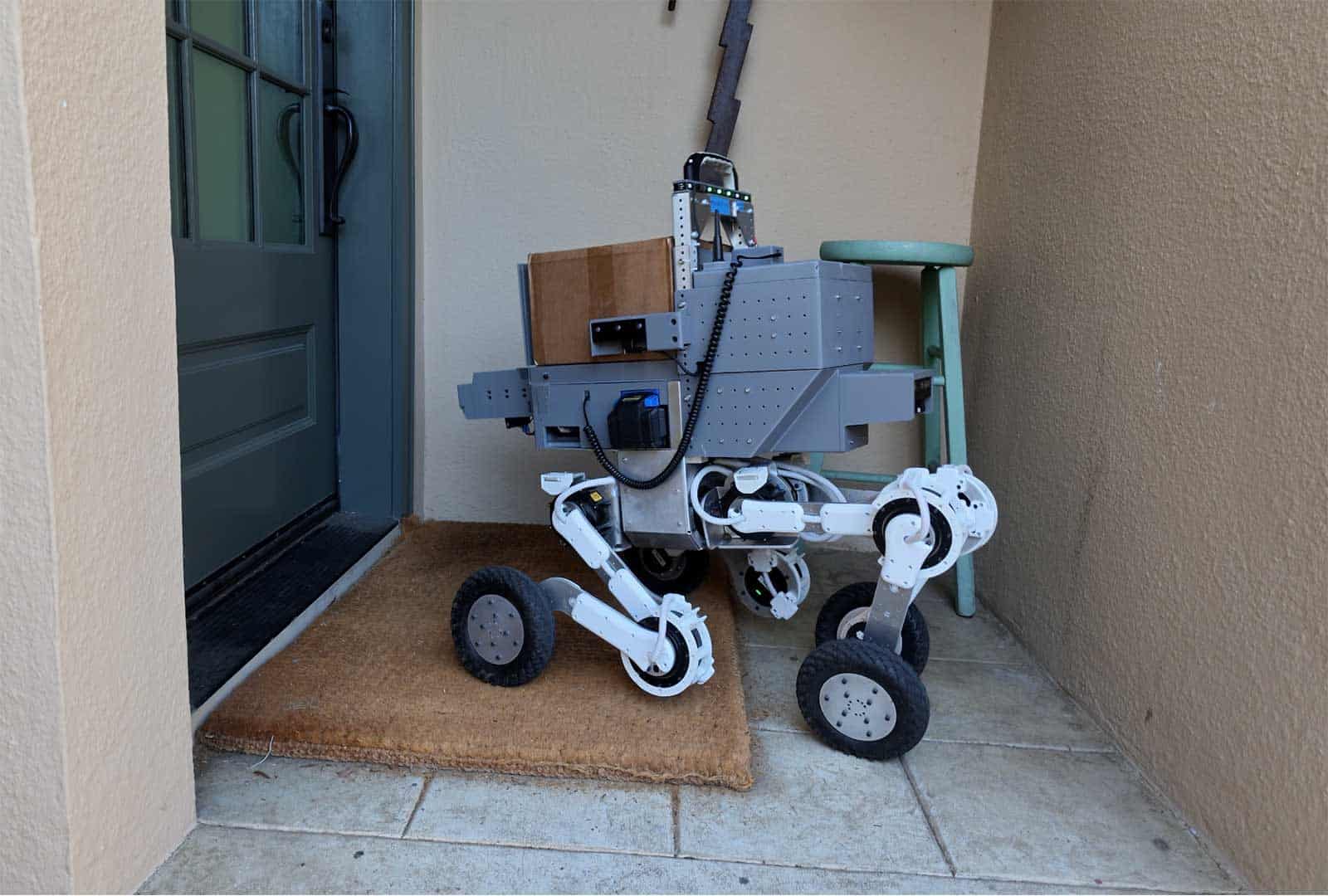
Last Feet has built a quadruped robot named Boxer that autonomously delivers packages from a van to the front door, navigating stairs, sand, logs, curbs, and uneven terrain without any human intervention. The robot uses cameras—including two downward-facing cameras and simulation-based training across hundreds of thousands of runs to master stair climbing and rough terrain.
Founder Lee Redden says the first market is package delivery in Palo Alto, with plans to expand to other cities as the technology matures. According to the Field Report, Last Feet robot saves 25% of the time required to deliver a package to a door.
Key Field Report Questions Answered
How does the LastFeet robot navigate stairs and rough terrain?
The LastFeet robot, Boxer uses cameras all around its body plus two downward-facing cameras that see the ground, allowing it to identify steps and place its feet precisely. It also trains through hundreds of thousands of simulations covering stairs and wild terrain to learn its own geometry and sensor data.
What time savings does the LastFeet robot deliver?
According to the Field Report, the LastFeet robot saves 25% of the time required to deliver a package to a door by allowing the truck or van driver to remain in the vehicle while the robot handles the full door-to-door delivery autonomously.
What is LastFeet’s go-to-market plan?
Last Feet’s first market is package delivery in Palo Alto, California. After perfecting the technology there, the company plans to expand to other cities, and Founder Lee Redden also anticipates the robot will be well-equipped for snow given its four legs, four wheels, and four driven tires.
Field Report Topics & Timestamps
[0:00] LastFeet Autonomous Robot: Boxer
Introduces LastFeet’s fully autonomous robot designed to solve the last 50 feet of package delivery without human intervention.
[0:22] Package Delivery & Van Docking Demo
Demonstrates the robot maneuvering through yards, navigating around obstacles and stairs to drop off packages, and automatically re-boarding a delivery van. This process cuts delivery time to doors by 25%.
[1:54] Complex Terrain Testing
Shows real-world field testing in complex residential environments, where the robot navigates gardens and climbs multi-flight staircases. Highlights that existing delivery vans require no modifications to house the robot.
[3:25] Off-Road Stress Test
Tests the robot’s mobility across harsh terrains, including sand, grass, tree stumps, logs, and curbs on the Stanford University campus
[5:33] Camera Tech & Simulation
LastFeet founder Lee Redden explains how Boxer utilizes surround and downward-facing cameras for stair navigation, along with extensive simulation training to coordinate its wheel and leg movements across wild terrain.
[7:02] Commercial Launch
Lee Redden outlines LastFeet’s commercialization plan, starting with commercial package deliveries in Palo Alto before expanding to other markets.
[9:25] AUTNMY AI
AUTNMY AI is an applied intelligence firm whose mission is to develop a field-tested, ground-truth understanding of how the Autonomy Economy is being built and translate that understanding into the intelligence, foresight, and counsel that help the world’s leading institutional investors navigate the most consequential industrial transition of this century.
Full Field Report Transcript
Introduction to Last Feet and the Last-50-Feet Problem
Grayson Brulte: We’re back in the field again. This time we’re visiting Last Feet. No, it’s not an autonomous vehicle, it’s a company that’s solving the last 50 feet autonomously. This is the field report. Here it is. Here’s the Last Feet robot. That’s right, the Last Feet robot is fully autonomous. And what is it trying to solve? The last 50 feet of delivery. In the future, an autonomous vehicle will pull up to your house, a Last Feet robot will get out, it’ll go over your hose, it’ll go through your grass, and even go around the corner, and watch this, it even goes up the stairsaAnd it avoids your Halloween decorations. And when it’s time, the robot gently bends down and delivers your package, all without any human intervention. Shoes? No problem for the Last Feet robot. It gently goes around them and down the stairs it goes. As it traverses your yard, you never know what you’re gonna find in the yard as it heads back to the van.
As the Last Feet robot approaches the van, it puts itself in, lays down, and then off to the next delivery, all fully autonomous. That is solving the last 50 feet. That saves 25% of the time delivering the package to your door. Thought that was a one-off and that was staged? Oh, no. The Last Feet robot, yes, it’s built to go anywhere. Here we go. We’re going to a different house, a different environment. You could even say it’s a more complex environment. Up the stairs we go. One, two, three, here we go. Through the garden, around the bend, up another step. Oh, wait, what’s that? There’s more steps. Two more. Have no fear, the robot’s autonomous and it knows where it’s going There’s the package, delivered on time, fully autonomous with no human intervention. Back to go down the stairs. There goes the robot. Oh, look at that. It can do a turn. Perhaps it thinks it’s a cool surfer. No, it’s a robot.
Through the garden it goes, back down the stairs, around the corner as it looks for its home. Its home is a delivery van. The best part about what the team Lee Redden and LastFeet are building, you do not have to retrofit the vehicle. It simply uses the preexisting vehicle. As you can see, in it goes, and away the van goes after the robot gently sits down
Well, that was impressive. I said to Lee, “Show me what the robot can do.” He said, “You wanna see sand?” I said, “Sure.” The robot goes right through the sand and through the grass. You never know what you’re gonna find at houses these days. You could find stumps like this. No stumps, no problem. The robot goes right over. The Last Feet robot is built for the last 50 feet. Logs, if you’re in the Northeast, no problem for the Last Feet robot See? Over it goes And what’s a robot demonstration without seeing man’s best friend? Yes, that’s a dog. The Last Feet robot made a friend at the park, and we’ve headed to the Stanford University campus to see what it can do. Up curbs, over telephone poles, the Last Feet robot handled it all. Rocks? No problem. Handled that, too.
Those look to be fiber installations. No problem. Power conduit going over that? No problem. The robot can handle it. You never know on a delivery what’s gonna be thrown at a robot Stairs. Easy. Here we go. One, two, three, up we go. Yay, here’s your books for school. Yay, yay, yay. Down we go. On to the next delivery it goes. Oh, wait, nope, it wants to go back up again. Forgot to deliver a book. Down complicated stairs. Even as a human, those were long stairs Now it can go right back up the stairs. No problem for the Last Feet robot Lee, what did we see today? Today you saw our last speed robot Boxer go and deliver a couple packages at people’s house here in Palo Alto, and you saw it do some off-road tricks. Yes, but we also saw it go upstairs.
That was impressive. Yes. Yeah, you saw it go up some long sets of stairs, some short sets of stairs at people’s houses and get up to their porch and gracefully bow and drop the package off. So how does Baxter do it? Is it, is it camera based, or what’s the secret sauce? It was impressive. So Boxer has cameras all around, and it sees its surroundings. And it has two downward-facing cameras that see the ground. And so it knows where to put the feet so that when a stair comes up, it sees the step and then gracefully puts the foot up, and so it can climb up and down. How did you learn how to master stairs? That was impressive. so we learn in simulation.
Lee Redden: So the robot goes through hundreds of thousands of simulations of going up and down stairs and all over all kinds of other wild terrain to learn about its own geometry, its own sensors, and how to move its body to traverse rough terrain.
Grayson Brulte: But I gotta say, this, the stairs, I know I’m saying this to you again, they were just massively impressive. I mean, what are the limitations on stairs, if any limitations? so if they are stairs that are within code, the robot can do them. So stairs aside, what problem does Last Feet solve?
Lee Redden: So Last Feet solves going from the truck or van to the door with packages to autonomously deliver them. And how big of an issue is that that needs to be fixed today? Because it seems like a lot of drivers don’t necessarily have to walk up the stairs. Yeah. So right now more and more people are having packages delivered and the LastFeet autonomous robot enables those packages to be delivered without the truck driver without the delivery person leaving the van.
Grayson Brulte: Okay. So the product works. It’s awesome watching this delivery. When does it become a business? so we’re expanding operations and we’re gonna start to take this out and start to do deliveries from our van with our robot and start to deliver packages around town. Awesome. So what would be the the first market?
Lee Redden: First market is package delivery here in Palo Alto. and then as we perfect the technology, we’ll be ready to expand to other cities. When you say perfect, first thing goes through my mind, snow. snow. Yeah. So this robot is actually gonna be extremely well-equipped for snow. four legs four wheels and four driven tires give it some really good off-road capability as you can see from some of the footage today of it going off road and going up and down sand. And so I’m excited for us to have it out in snow and start to tackle those environments, too. And what were some of the biggest challenges that you had to overcome to get where we saw today? so we have spent a ton of time getting the wheels and the legs to coordinate together along with the rest of the sensor package to be able to see the environment, perceive it, and then s- make, make smart decisions about where it goes.
Grayson Brulte: So putting this all together, what’s the future of Last Feet?
Lee Redden: The future of Last Feet is that we have gainfully employed robots that are taking packages from the truck to the door and and expanding operations.
Grayson Brulte: As you saw today, Lee Red and the team, they’re building the future of the last 50 feet of delivery. This company’s got big ambitions and big things planned. So stay tuned ’cause we’re gonna be monitoring their progress and visiting them often. The future is bright. The future is autonomous. The future is LastFeet.
AUTNMY AI
AUTNMY AI: Billions and soon trillions in value will be created in the autonomy economy. By the time a trend becomes consensus, the alpha is already gone. The gap between uncovering signals and reading headlines is widening fast. When it’s a headline, it’s no longer a signal. Enter AUTNMY AI. We decode signals before they move markets, giving you conviction in the autonomy economy. AUTNMY AI, your models, our intelligence. Visit AUTNMY.ai.
Discalmer: Opinions here are as of the recording date, may change without notice, and do not necessarily reflect the views of AUTNMY AI Incorporated, its affiliates, or any speaker’s employer. Content, including the road to autonomy indices, is for informational and educational purposes only. AUTNMY AI is not a registered investment advisor or broker-dealer and does not give investment, legal, accounting, or tax advice. Nothing in our public or gated content is investment advice, a recommendation, an offer, or a solicitation to buy or sell any security or financial product and should not be relied on to evaluate any transaction. This program may contain forward-looking statements. Investments involve risk, including loss of principal. Past performance is not indicative of future results. Hosts, guests, and affiliated entities may hold long or short positions in securities mentioned. Content is provided as is without warranty. We disclaim liability for reliance on this information. Consult your own investment, legal, and tax advisors before making any financial decision.
The future is bright. The future is autonomous. The future is The Road to Autonomy.
Subscribe to This Week in The Autonomy Economy™
Join institutional investors and industry leaders who read This Week in The Autonomy Economy every Sunday. Each edition delivers exclusive insight and commentary on the autonomy economy, helping you stay ahead of what's next.