


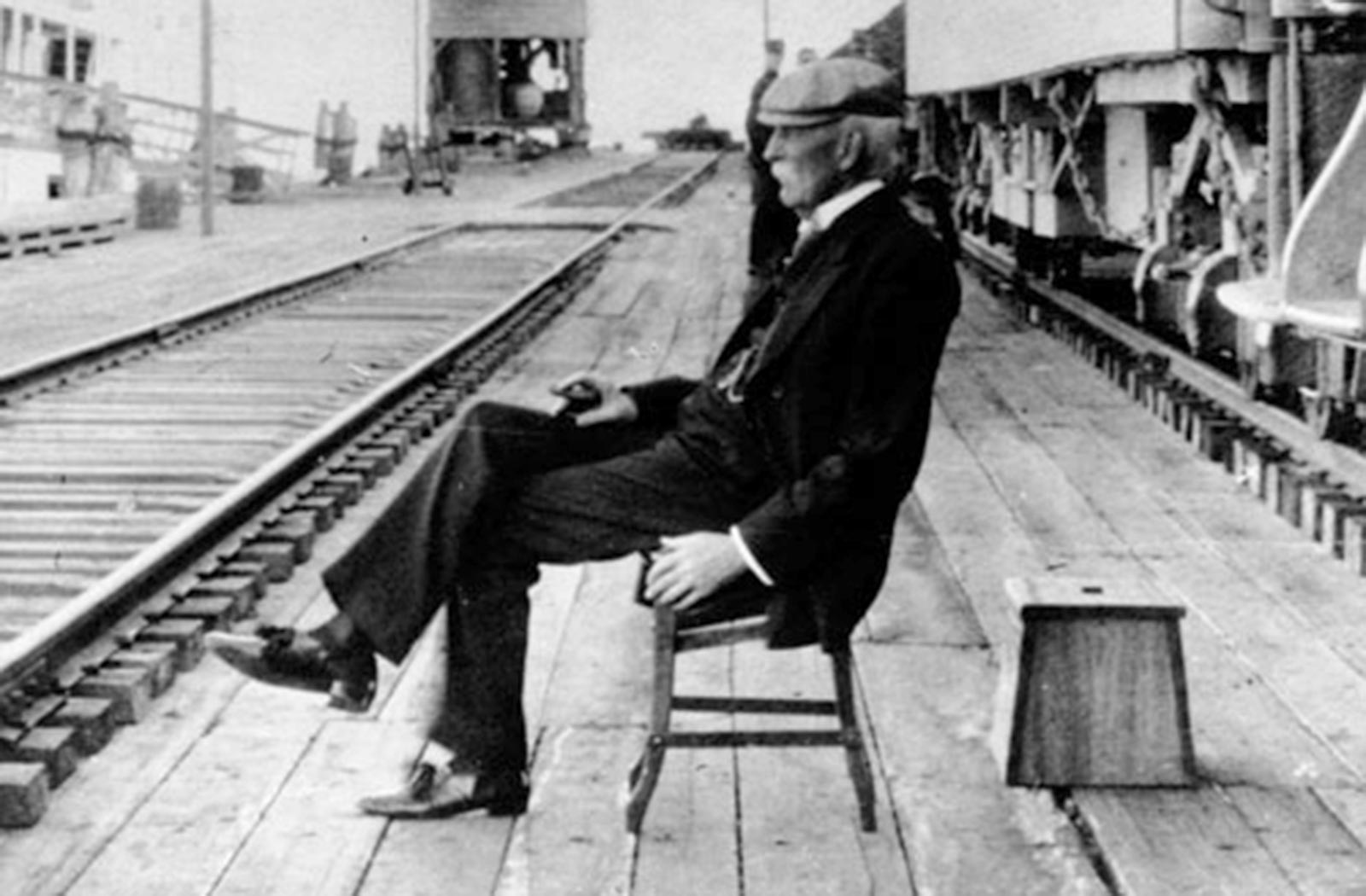
Henry Morrison Flagler and The Future of Mobility in Florida
Executive Summary
This episode of The Road to Autonomy explores the fascinating parallels between industrial titan Henry Flagler’s development of Florida and the current innovations in mobility happening in the state.
Grayson Brulte was joined by Christopher Emmanuel of the Florida Chamber, we discuss how Flagler’s model of integrating the Florida East Coast Railway with luxury hotels created a seamless travel experience, a concept being reborn today through companies such as Brightline and the emerging world of autonomous vehicles.
The discussion highlights how Florida’s pro-innovation regulatory environment is paving the way for it to become the epicenter of the next transportation revolution.
Key The Road to Autonomy Episode Questions Answered
How is Henry Flagler’s historical transportation model in Florida similar to what is happening today with companies like Brightline?
Henry Flagler built the Florida East Coast Railway and paired it with a series of luxury hotels, creating a seamless, high-quality travel experience. Today, Brightline is using the very same rail lines Flagler established to create a modern, comfortable, and efficient passenger rail experience, demonstrating a “full circle” return to Flagler’s model of integrated transportation and hospitality.
What makes Florida’s regulatory environment so attractive for autonomous vehicle companies?
Florida has taken a leadership role by passing what is considered one of the best pieces of autonomous vehicle legislation in the country, House Bill 311, which allows fully autonomous vehicles on the road. Unlike some states like California which have restrictions, Florida’s state and local governments, along with its airport authorities, are actively welcoming and encouraging the deployment of autonomous technology.
What is the economic impact of tourism and population growth on Florida’s need for innovative mobility solutions?
Florida welcomes over 127 million tourists annually and sees about 900 new residents moving to the state each day. This massive influx of people creates a significant need for efficient and safe transportation solutions. This growth presents a tremendous economic opportunity that companies can address by connecting different regions and spreading tourism dollars across the state through integrated mobility networks.
Key The Road to Autonomy Topics & Timestamps
[01:00] The Legacy of Henry Flagler and the Florida East Coast Railway
Henry Flagler was an industrial titan who was instrumental in building Florida. He established the Florida East Coast Railway, which still exists today and runs from St. Augustine down to Key West. Along this railway, Flagler constructed a series of luxury hotels. His influence was so significant that the city of Miami was almost named “Flagler” in his honor, though he preferred the name Miami.
[02:22] History Repeating Itself: Flagler’s Model and Brightline (Virgin Trains):
The conversation highlights that history is repeating itself in Florida’s transportation sector. Flagler’s Florida East Coast Railway was an “experience,” offering luxury train travel and beautiful hotels. Today, Brightline (formerly Virgin Trains) is using the same rail lines established by Flagler to provide a similar seamless and comfortable passenger experience. This represents a “full circle” return to Flagler’s original concept.
[04:00] The Power of a Seamless, Branded Travel Experience
Henry Flagler created a revolutionary, vertically integrated travel model. He operated a train service from New York to Key West, where tourists would then board a boat—also operated by Flagler—to a hotel in Cuba that he also operated. This created a consistent, opulent, and luxurious experience under a single brand. A similar model is emerging with Virgin, which operates Virgin Atlantic, Virgin Voyages, and Virgin Trains (via Brightline), with the potential to add branded autonomous vehicles to connect the entire journey.
[07:00] Florida’s Booming Tourism and Population Growth
Florida’s economy is fueled by two major factors: tourism and population growth. The state receives over 127 million tourists annually, a figure that only includes out-of-state visitors. Additionally, due to a welcoming business environment and high quality of life, approximately 900 people move to Florida every day. This presents a massive opportunity for economic growth and expanded mobility solutions.
[10:45] How Autonomous Vehicles and High-Speed Rail Complement Each Other
Different modes of transportation, like Brightline and autonomous vehicles, are expected to be complements to each other, not competitors. There will be a need to move people efficiently to and from a Brightline station, creating partnership opportunities with companies like Lyft or future autonomous vehicle services. This integration makes it possible to live in one town center like West Palm Beach and commute to another, like downtown Miami, without ever owning a car.
[14:00] From Transportation to “Experience” Companies like Airbnb and Disney
The discussion shifts to how modern brands are focusing on the total customer experience, much like Flagler did. Companies are moving away from siloed services toward creating a single, integrated package for the consumer. Just as Flagler combined transportation and hospitality, modern companies are forming partnerships to ensure a seamless handoff of the customer from a transportation entity to a hotel or shopping center.
[18:00] Florida’s Favorable Regulatory Environment for Autonomous Vehicles
Florida has a significant regulatory advantage for autonomous vehicle companies. Governor Ron DeSantis signed House Bill 311, considered one of the best pieces of AV legislation in the country. Unlike states like California where it is illegal for an autonomous vehicle to do airport pickups or drop-offs, Florida’s airport CEOs are welcoming the technology to enhance their customer experience. This pro-innovation stance is supported by partnerships at the state and local government levels.
[27:00] Why Partnerships are Crucial for Building the Future of Mobility
For companies looking to invest in Florida, partnerships are exceptionally important. Florida’s success is built on the strength of its partnerships between insurance, energy, telecommunications, and experience companies, all collaborating on the future of transportation. This collaborative ecosystem, combined with business-friendly laws, makes Florida the ideal place for autonomous vehicle development. Flagler himself started his railroad empire through partnerships.
Full Episode Transcript
Grayson Brulte: Hello and welcome to the Road to Autonomy podcast. I am your host, Grayson Royalty. The Road to Autonomy podcast is brought to you in part by Florida Internet and television. It’s time to cut the tax on tech. We’re honored today to have a dear friend Christopher Emmanuel. Policy director for the Florida Chamber and Director of Autonomous Florida here on the Road to Autonomy podcast. How you doing Chris?
Christopher Emmanuel: Doing great. Thank you for having me.
Grayson Brulte: Oh, you’re welcome. And, uh, thank you for coming on yesterday. We spent a wonderful day at the, uh, flagger Museum in Palm Beach, and we talked a lot about the history of transportation and the role that brands and mobility have played in that. Can you talk a little bit about that?
Christopher Emmanuel: Sure. For, uh, those that aren’t familiar, Florida was in many ways built by Henry Flagler, a titan of industry, and a, uh, really innovative thinker when it comes to transportation. He set up the Florida East Coast railway, which was, it’s still in existence today, but it’s a railway that hugs the eastern coast of Florida from St. Augustine all the way down to Key West, and along this railway, he built a series of luxury hotels. It’s difficult to overstate how important Henry Flagler is to to Florida and to the way that our state was shaped when they were trying to figure out the name for the city of Miami. They actually asked him if they wanted to name it after him Flagler, but he preferred the term Miami. But we were able to tour the campus, see the museum, and kind of get an insight of the things that he did right and what we can learn from those in the 21st century.
Grayson Brulte: And I think it’s really interesting about Henry Morrison Flagger that a lot of Indi individuals do not realize is that he was actually John d Rockefeller’s business partner and co-founder of Standard Oil, and he was the individual responsible for doing all the transportation deals and the distribution deals with, uh, standard oil and then with his retirement. From Standard Oil. He first came here to Florida in, in 1878, eventually opening up 13 hotels along the, uh, the rail lines. And it’s really interesting when I love our conversations ’cause you and I are both history geeks and we have these really interesting conversations about history. And one of the things that we’ve had over the past couple days we’ve spent together is the classic example of history repeating itself, and I’m a very unbiased fan of Bright Line, which is now known as Virgin Trains. I think it’s absolutely awesome, and we were having that great conversation over dinner last night where you’re saying, wait a second, this is history repeating itself. Could you, and expanding itself could. Talk about that a little?
Christopher Emmanuel: Oh, absolutely. Um, I mean, and it’s very hard. The Florida East Coast railway was, was an idea. I mean, it was an experience people would get on these luxury trains and be able to stay at beautiful hotels or to be transported, uh, efficiently and carefully and in a pleasurable way from all the way from New York City, um, actually down to Key West. And, and we’ll talk a little bit in a moment, I’m sure about the, the boat service that was operated there, but. The idea of transportation of that kind of ease and comfort and being something that people wanted to do that’s coming full circle. The Bright Line and virgin rail is on the floor to East Coast industry rail lines. They’re using the rail lines that Flagler established for that same kind of seamless experience and. Transportation has only gotten more important. We’ve got more people, we’ve got more goods to move. We’ve got, uh, more things going on. And I think Flagler and the, the lessons of the Florida East Coast railway are very acute and clear for the, the coming decades.
Grayson Brulte: And, and it’s interesting, you know, talking about what Henry Flagger did here in Florida, but it was the thing I didn’t know until this weekend. Was actually that flagger operated a train from New York to the docks in Key West that eventually put tourists on boats to Cuba. And that journey was revolutionary at the time. ’cause it only, it only took three days to go from New York City. To Cuba. And the interesting thing about that was the flagger operated the rail lines, operated the boat, and then operated the hotel in Cuba. It’s a fascinating model where we’re seeing the transportation brands take control of that whole experience. And there’s a lot of individuals, such myself that have on. Been pontificating about with the licensing agreement with Bright Line with Virgin Virgin opening hotels around the world. Virgin Operating Virgin Atlantic, and now Virgin Voyages. It won’t be much longer until Virgin adds in a branded autonomous vehicle that will connect that whole experience. It’s Henry Flagger 2.0. That whole travel experience is that Virgin experience. Similar to the way that when Henry Flagger operated the Florida East Coast Rail company, operated the Florida East Coast Hotel company. They were known for opulence luxury, and it was a really consistent experience. Virgin is known for cool, cutting edge, innovative hip brand. This is just really interesting that history is repeating itself again. And the fun part about that with history repeating itself as Floridians, it’s being done in, in our state, it the, the first version of the innovation. It happened here in Florida with Henry Flagger. The second version is happening here in Florida with Sir Richard Branson. As a native Floridian yourself, how does that make you feel? Because my wife and I talk all the time that moving from California to Florida, we always felt like innovation really wasn’t occurring in California anymore and was all happening in Florida and we were missing. And now that we’re living here in Florida, it feels like we’re at the epic center of it. It’s always been here. It was just never. Uncovered. What do you think about that?
Christopher Emmanuel: Well, I’m certainly proud to be a Floridian and, and proud to work with so many innovators and innovative companies that are doing really incredible things, and, and they’re the ones that are the, the customer facing, uh, technologies and innovations and, and. That whole package. And I think that’s what makes Florida really unique, is that we’re not looking to create something that’s only a few people use, or it’s not something that’s gonna be a piece of software that gets downloaded on your computer. It’s things that people do and experience and see and take away with them. That’s, that’s pretty intrinsic in the Florida DNA from the theme parks to Central Florida, the beaches in North Florida to, uh. Hotels that Flagler established and all of the destinations down here in South Florida. To kind of follow on that, I, I think one thing that’s very obvious for Floridians and may not be for those outside the state, is not viewing the experience. At the hotel’s edge or at the theme Park’s Edge or at the Beach’s Edge, we really see it as kind of a whole package. And when we’re talking about transportation companies, specifically autonomous vehicles, if you look at them in a vacuum and just see them as replacing a driver car, I think you’re missing that opportunity that the value can be added with partnerships, with innovative links between companies and places to stay and things to do. If you just view an autonomous vehicle as a place to get from point A to point B, and you want everything else to say exactly the same, I, I don’t see it working. But if you can see it add to the system, I think that’s when you see some really exciting opportunities.
Grayson Brulte: And you’ve put a giant smile on my face because you’ve said my favorite word experiences and we’re seeing. The incredible growth of the tourism economy. We’re seeing it here in, in Florida. Um, a good friend of both of ours, Dr. Jerry Parrish, puts out some incredible economic numbers. Can you talk about some of those economic numbers that, that Dr. Jerry Parrish has put out as it relates to. Tourism here in the state and the positive economic impact that it has on the state?
Christopher Emmanuel: Well, absolutely. Uh, there’s, there’s two parts that it’s important to think about when you’re talking about Flo’s economy and the opportunity here. The first is the people visiting. I mean, we have over 127 million tourists annually. And the way that we calculate tourists a little different than other states, and this is gonna nerd out for a second, but those are 127 million people that. Aren’t from Florida that are visiting Florida. So the fact that I’m down here in south Florida about 600 miles away from my hometown, also in Florida, I don’t count as a tourist, but the people from OUTTA state too. So that’s a tremendous opportunity there. And then the second thing is because we have this welcoming environment, because we have business favorable regulations, low tax structure, and just a. Really high quality of light and quality of roads. We see about 900 people a day moving to Florida, so we anticipate this being about a 30 minute perhaps conversation that means about 15 to 20 people have moved to Florida and called it home by the end of this recording. That’s a tremendous opportunity for economic growth and for having expanding this Florida dream.
Grayson Brulte: No, it’s, it’s definitely tremendous economic opportunity for the state, but it’s tremendous economic opportunity for the individuals that are moving here. ’cause the future is being built here in Florida and with tourism playing such a large part of it and the regulatory environment, especially rates to autonomous vehicles and all the new innovations. And having Governor Ron DeSantis, who’s extremely pro innovation, uh, signing the house Bill three 11. To allowing fully autonomous vehicles on the road. We’re gonna see some really interesting trends happen in this state. And then one of the, the interesting trends that you and I talk a lot about is with 127 million tourists coming to this state, flying into Orlando, flying into Miami, flying into Tampa, flying into the panhandle, and having different experiences. The one thing that’s missing in all this is the ability to, to connect all these things. If a tourist can go fly into Orlando, they can go to Miami. That’s really interesting when a Bright Line connection comes in and then. It’ll be very interesting too in the future when we connect an autonomous vehicle to the Bright Line or to other foreign ation, then that those tourists then can have this full Florida experience because Florida is a really unique state where Orlando’s completely different than say Palm Beach. And Palm Beach is completely different than say Miami. It’ll be really interesting to have the economic tourism dollars spread across the state. Mobility is going to enable us as a state to allow that to happen. From a Chamber’s perspective, what are your thoughts on that, that economic growth? For that,
Christopher Emmanuel: I think it’s incredibly exciting that we’re gonna have individuals that can be able to move safely, efficiently, and with a high quality experience across the state. And I think Brightline, um. A tremendous and perhaps the most exciting infrastructure project in the United States from a Chamber perspective, from the business climate that I’m seeing and the partnerships that are forming, I think it’s really important to realize that these modes of transportation are supposed to be and will be compliments to each other. There is gonna be a need to move people efficiently around a Bright Line Station. So that’s partnerships that you see that Bright Line has with companies like Lyft, but. Also, you’re now gonna see individuals that are able to stay in one town center and move to another town center on a daily commute via, uh, private passenger rail. We haven’t really touched on this. This is all private capital. It’s a very exciting private project that’s solving a public need. But, um, we’re here in West Palm Beach if you wanted to work in downtown Miami and never own a car that’s possible. So I think when autonomous vehicle companies in particular are looking to expand, you need to understand the ecosystem that you’re getting into, that each community is a little different and the needs are a little different, and the partnerships have to be made in each community at a community level. The business model around a bright line rail station is gonna be different than an international airport. That will be different than a retirement community. That’ll be different than a golf resort. That’ll be different than a university campus. And a university campus. May be different from university to university, probably will be if you had a big football stadium on campus. There’s all sorts of opportunities there. If it’s a commuter school that serves a different population. The deployments are gonna look very different. So I’m excited to see the partnerships that are gonna form, and I really hope that autonomous vehicle companies take a hard look at what use cases, um, are possible with their technology and build those partnerships today.
Grayson Brulte: And you’re a hundred percent right where. With mobility, especially around autonomous mobility, it’s not a one size fits all solution. It’s a multi sized solution. So if you know moving individuals to and from the Super Bowl or to and from a college football game, you’re going to most likely use larger vehicles with multi passenger. If there’s a business executive that’s taking the bright line from West Palm to Miami needs to get to a meeting, it’ll be a smaller single occupancy vehicle where that individual can then get to that meeting. And I think the really interesting thing when you. Look at mobility, you look at Brightline in general is, Brightline is a couple things. One, it is an incredible experience, incredible customer service. But the third and most important aspect of Brightline and the most common thing that if you hear talk to any individual that rides Brightline, is it’s clean. It is clean and you can’t underestimate the importance of being clean. Coming from the Northeast and seeing how trains are operated there, they’re not particularly clean. These trains are are spotless, and it’s something that Bright Line and Fortress Capital should be extremely proud of. Taking that cleanliness experience, then moving that into a different form of mobility. Where the consumer has the mindset and the expectation that this is gonna be a clean, enjoyable experience that will operate on time, that’s gonna be really interesting. As Virgin transitions, that brand and into mobility, a lot of brands here are transitioning into mobility. We’re seeing in this state the growth of Airbnb. And the interesting thing about Airbnb is that. At the end of the day, Airbnb is not a hospitality company. Airbnb’s an experience company, and if you look at the growth of. Bookings versus the growth of their experience business. Their experience business is growing almost five times faster than their booking business ever grew. Where do you see the experience business going with Airbnb as it directly relates to mobility and autonomous vehicles?
Christopher Emmanuel: Well, and. Kind of going back to where we started, I think history can be a pretty incredible guide here. The hotel chains that Flagler put together was a combination of an experienced company and a transportation company, and you had to understand to operate such a complicated business like that, not only transportation logistics, but experience logistics and that that’s certainly difficult, but the customer that’s going through. Didn’t necessarily see those as two different entities. It was all part of the same package and we moved away from that model in some ways over the last a hundred years. And now I can see us moving right back to it. So there, there are opportunities abound for these. Branded experiences that you and I talk about for these new partnerships and collaborations among entities that have been somewhat siloed because they are dealing with only certain parts of the customer, but anybody who flies on a plane is gonna have to use surface transportation to get somewhere else. At some point, if you’re moving food across the state, you’re using a truck at some point. If you’re on a bright line. Your destination may be the station, but most likely it’s a step outside that station to something else. And understanding that we are passing customers off from company to company, from transportation entity to hotel entity, to shopping centers, um, realizing that that is one individual. I think that’s kind of the frame that you have to look at as a business and find those innovative partnerships to make that experience better.
Grayson Brulte: And it’s really interesting if you, if you look at the airline industry and you look at. There’s debate and controversy around autonomous vehicles are bad for the airline industry. They’re gonna have a negative impact on the airline industry. I actually take a, take an opposite approach. I think that autonomous vehicles will have a positive impact for the airline industry where you’re a passenger, the, uh, the branded airline of your choice. We’ll send you an autonomous vehicle, uh, depending on your, your status of that airline. There’ll be different, uh, different perks available in that vehicle. We’ll take you to the airport. You’ll go through a dedicated lane, a dedicated door. We’ll avoid all the potential of, um, you know, long TSA line. And the interesting thing about that is where you can get a push notification. And so the vehicle will be picking you up five minutes earlier than expected, expected time due to traffic. So you’ll eliminate the anxiety of getting to an airport. Will there be a lot of traffic on the way to the airport? Will there be a long security line? These vehicles will be programmed with all that data. Then these vehicles will be able to drop you off curbside at the airport and put you through these dedicated doors. And I think, which is, which is really interesting in this, is that. You. You cannot do that in every state. Certain states have laws and regulations against autonomous vehicle drop off and pick up at airports. In California, it is illegal to drop off or pick up a passenger in an autonomous vehicle. Where here in Florida you have extremely forward-thinking, innovative airport CEOs that are, that are welcoming this and viewing us as this can enhance my airport experience. When do you see us? Having the first autonomous vehicle drop off and pick up occur at an airport, in what region in the state would you think that might occur in first?
Christopher Emmanuel: Oh, I think, uh, there’s quite a few airports in this state that would fight for the opportunity to be the first one. So, um, I’m not sure if I feel. Prepared to figure out who’s gonna win that race because so many people are, are running as fast as they can, and it’s an exciting competition. One thing I think you touched on there that’s bears repeating is that there’s a political component to this policy gets made at the town halls, the state governments, the federal government level, and autonomous vehicle companies are in this interesting regulatory spot where the. Vehicle itself is regulated by the federal government. Drivers and driver’s. Licenses are regulated by the state, government and local government regulates the curb. And for an autonomous vehicle company to really be successful, you need to have all three be uh, accepting. Florida has taken a leadership role. Um, governor DeSantis signed, I think, the best piece of autonomous vehicle legislation across the country in house Bill three 11. So we’ve got that middle part down in that final local government piece. We’ve got a lot of great local governments that are pushing forward, uh, city of Gainesville, Miami-Dade County, uh, Tampa Bay and Hillsborough. We’ve got JTA and Jacksonville Transportation Authority that are pushing for some really interesting innovations. All of these folks are forming those partnerships because that’s gonna be where the rubber hits the road. That’s where the passenger’s gonna be dropped off. And getting that curb ready and prepared and the partnerships ready and primed is exceptionally important. Floor is in the right spot for that, and I think other states have a lot to learn from so far our success in the space.
Grayson Brulte: And you’re a hundred percent right about the partnerships and the rubber hitting the road. If you look at it from, from the airport perspective, I’ll, I’ll go out on, on the limb here and I’ll say it’s most likely going to be, uh, Orlando, MCO. And, uh, there’s a great line that travel agents say, and I said, and they said, oh, Kristen, do you know what MCO means? And uh, first I didn’t know. I said, oh no, I’m trying to, trying to figure out, it’s gotta be named after an important transportation figure in the area. And, uh, this really nice, uh, individual said, no, it’s named it for everybody’s favorite friend. And, and I said, who’s that? She goes, Mickey Mouse. Oh. I said, oh, I love Mickey Mouse. She’s like, yes. The M is for Mickey, the C’S for corporate and the owes for office, Mickey’s corporate office. She said, MCO basically is a bank for Walt Disney World from the amount of individuals that go through that airport to Disney World. And if you look at what. Everybody’s favorite friend Mickey Mouse is doing around innovation, and if you look at the brilliant. Absolutely brilliant, innovative leadership of Bob Iger, of what he’s done with Disney. Where he’s going with Disney is he’s setting the wheels in motion to put the. Rubber on the road from taking all of the, the IP that with the Fox transaction of getting 20th Century Fox, the brilliant acquisition of Marvel, the brilliant acquisition of Pixar and the brilliant acquisition of Lucasfilm. They have an incredible amount of IP that is owned. And if you look at Disney from a business perspective, Disney’s two things. It’s a theme park business and it’s a licensing business, and Disney is all about experiences. And when Walt Disney was alive, if you read some of the writings, he was very adamant that everything must be family friendly under all circumstances. It has to be a place where you can let a child be a child, and a mother or a father does not have to worry. About a hostile, unsafe environment. It has that old school main street from Missouri that, that he grew up. When you take that experience of Disney World and we fast forward in the future, and, uh, there’s a family going to go have a wonderful week in Disney World, one of the 127 million tourists to visit the state. Imagine in the future the, the family came cross country. And, uh, it’s mom and dad and, uh, two children and the dad or the mom gets a notification on the phone, says, okay, your, your vehicle transportation’s ready. Go to spot A one. They get in the vehicle, the family’s facing one another. And there’s screens in the vehicle that that pop up in the middle. Let’s say little Sally likes Mini Mouse. They already know that there’s a mini mouse plush doll in the vehicle, mini mouse on the screen. Son Joey likes Goofy. There’s a goofy show and a goofy doll there. And then mom and dad get a drink and they can relax and the kids can watch a show after a transcon flight. They’re arriving at the, at the hotel. Relax. There’s no stress of where do I find the transportation? How do I call an Uber? They’re arriving there and from a business aspect of Disney, they’re selling you that experience, that Mickey Mouse Plush Dolls, 1999, that, that, that Goofy Dolls, 1999, they’re extending the reach of their services there. That’s special and that’s something due to the regulatory environment and the leadership of Governor Santis. That’s something that can only be done in this time, in this state. Do you see more of that innovative business practices coming to Florida and expanding in Florida due to the governor’s incredible leadership on innovation.
Christopher Emmanuel: I, I do think there’s a lot of opportunities in the space, and one thing that you’ve touched on in kind of that thought experiment is that it’s gonna look very different than the trans transportation system that we have today. You can have branded opportunities for long distances. You can have shorter vehicles for shorter distances. You can have an autonomous vehicle. Pull up beside you while you’re on the beach and deliver you a beer there. There’s a lot more opportunity here. If we think about the cars that we have today, they are in many ways over-engineered. The car that’s in your driveway can probably go 300 miles at 90 miles per hour. Air conditioned, five individuals and tow. Maybe a thousand pounds of luggage in the back. That’s, that’s a lot for most people. Most of the time, autonomous vehicles can really specialize into specific tasks. We can have machinery and experiences that are built around one thing, and the vehicle that you send a soccer practice, if that e exists, is gonna be very different than the one that may take you to the beach or the shuttle from the airport to the hotel. Whatever that may be. There’s, there’s new variety that I think is very, very possible and with that variety requires a lot of specialization. So, coming back to what, where we started Flagler and, uh, Florida East Coast Rail a hundred years ago, really understood that each property was different, that each experience was different, the clientele was a little bit different. That the needs of every community was a little different, and they specialized companies, especially autonomous vehicle companies that are looking to. Move into an existing system, you really need to understand what’s happening on the ground, and there’s opportunities in that space for that specialization with the right partnerships, perhaps with the right brands to really make, uh, some magic happen here in Florida.
Grayson Brulte: Yeah, the, the magic is going to to happen here in Florida and with tourism paying such a large role of our economy, it’s gonna be very interesting when an innovative hotel brand. It announces that they’re gonna open a mobility transportation lab in the state, and they start running experiments, or Disney pulls, pulls back that curtain. But if you look at this conversation, the one thing, the clear takeaway is that Florida’s clearly leading on all things autonomy. Florida has a growing economy and a really robust, solid business environment. And as the director of autonomous Florida. To an individual that’s listening from an autonomous vehicle company that says, my state has deemed this illegal. I can’t do this, or I’m worried about making a multi-billion dollar investment because. I’m operating under an executive order signed by a governor, not by an active legislator. What is the message and the, and the clear takeaway from your, your role as Director of Autonomous Florida, that you would like an individual as CEO or investor of an autonomous vehicle company to take away as it relates to Florida?
Christopher Emmanuel: Well, I, I suppose there’s two parts there. The, the first one is. Floor is open for business. And I mean, I think most CEOs in this space understand that rules and laws matter, and we’ve got the best ones on the books that transportation authorities from the Secretary of FDOT down to your local government, those individuals being willing to work with companies, those partnerships matter. And I think the second thing that I hope that people take away from this is that partnerships. Are exceptionally important. Autonomous Florida at its very core is a series of partnerships among companies for a specific goal of making Florida the autonomous capital of the world. And because of the strength of those partnerships, because we’ve got insurance companies and energy companies and telecommunications companies and experienced companies all talking about transportation. And what autonomous vehicles are gonna do and how we can be helpful to each other and to them, because of those partnerships, Florida is the place to be.
Grayson Brulte: No, and you really tied it together, uh, with partnerships when, you know, flagger began his railroad career down here in Florida. He started in partnerships with Jacksonville St. Augustine and the Halifax River railways in, in 1881 to eventually build and then own those started as partnerships in. Partnerships are are key to this. And as we look at this space, it’s gonna be really important to understand partnerships and look at where partnerships are are going. And as you’ve heard in this conversation, we’ve had a wonderful opportunities about the tourism opportunities, the opportunities to deploy branded services in the state of Florida. And I really thank my wonderful friend and guest here on The Road to Autonomy podcast, Chris Emmanuel for. Coming on and sharing the true vision of Florida with us. The future’s bright. The future’s autonomous, and Florida will become the autonomous vehicle capital of North America. Thank you for listening to the Road to Autonomy podcast. If you’ve enjoyed listening, please rate review, and subscribe on your favorite podcast platform. Want to get in touch? Follow us on Twitter. At Road to Autonomy The views and opinions expressed on the Road to Autonomy podcast do not necessarily reflect the views. And opinions of the company. The content discussed in this podcast is for informational purposes only, and should not be taken as legal, tax, investment, or business advice.
The future is bright. The future is autonomous. The future is The Road to Autonomy.
Subscribe to This Week in The Autonomy Economy™
Join institutional investors and industry leaders who read This Week in The Autonomy Economy every Sunday. Each edition delivers exclusive insight and commentary on the autonomy economy, helping you stay ahead of what's next.