


Has Robotaxi Begun to Scale?
Executive Summary
Tesla’s registered robotaxi count in Texas quadrupled from 42 to 175 between June 1st and July 15th, signaling a potential inflection point for robotaxi scaling. A proposed DC bill to allow commercial driverless operations has exposed a public rift between Waymo and Uber, with Uber arguing the bill would ban hybrid networks while Waymo’s mileage requirements could lock out competitors.
Lucid’s stock cratered nearly 60% intraday on restructuring reports, raising partner risk concerns for both Nuro and Uber’s autonomy plans. Globally, WeRide and Baidu are scaling across multiple markets, with Grayson predicting Baidu will begin manufacturing robotaxis in Kazakhstan within 12 to 18 months.
Key Autonomy Markets Episode Questions Answered
How fast is Tesla scaling its Robotaxi fleet in Texas?
According to Texas DMV data cited in the episode, Tesla’s registered robotaxi count grew from 42 on June 1st to 175 by July 15th, a quadrupling in six weeks with 58 vehicles added in just the final two days of that period.
Why are Waymo and Uber clashing over the proposed DC autonomous vehicle bill?
Uber argues the bill would ban hybrid networks where riders can be matched to either an AV or a human driver, while a 250,000-mile in-market requirement effectively advantages whichever company enters first widely seen as Waymo locking out faster-following competitors.
What is the risk to Nuro and Uber if Lucid faces financial distress?
Nuro is contracted to deliver 35,000 vehicles built on the Lucid platform as part of its Uber partnership; if Lucid were to face a restructuring or bankruptcy, both Nuro’s deployment timeline and Uber’s autonomy roadmap could be significantly disrupted, forcing a return to the drawing board on the OEM partnership.
Autonomy Markets Topics & Timestamps
[0:00] Tesla’s Growing Robotaxi Fleet
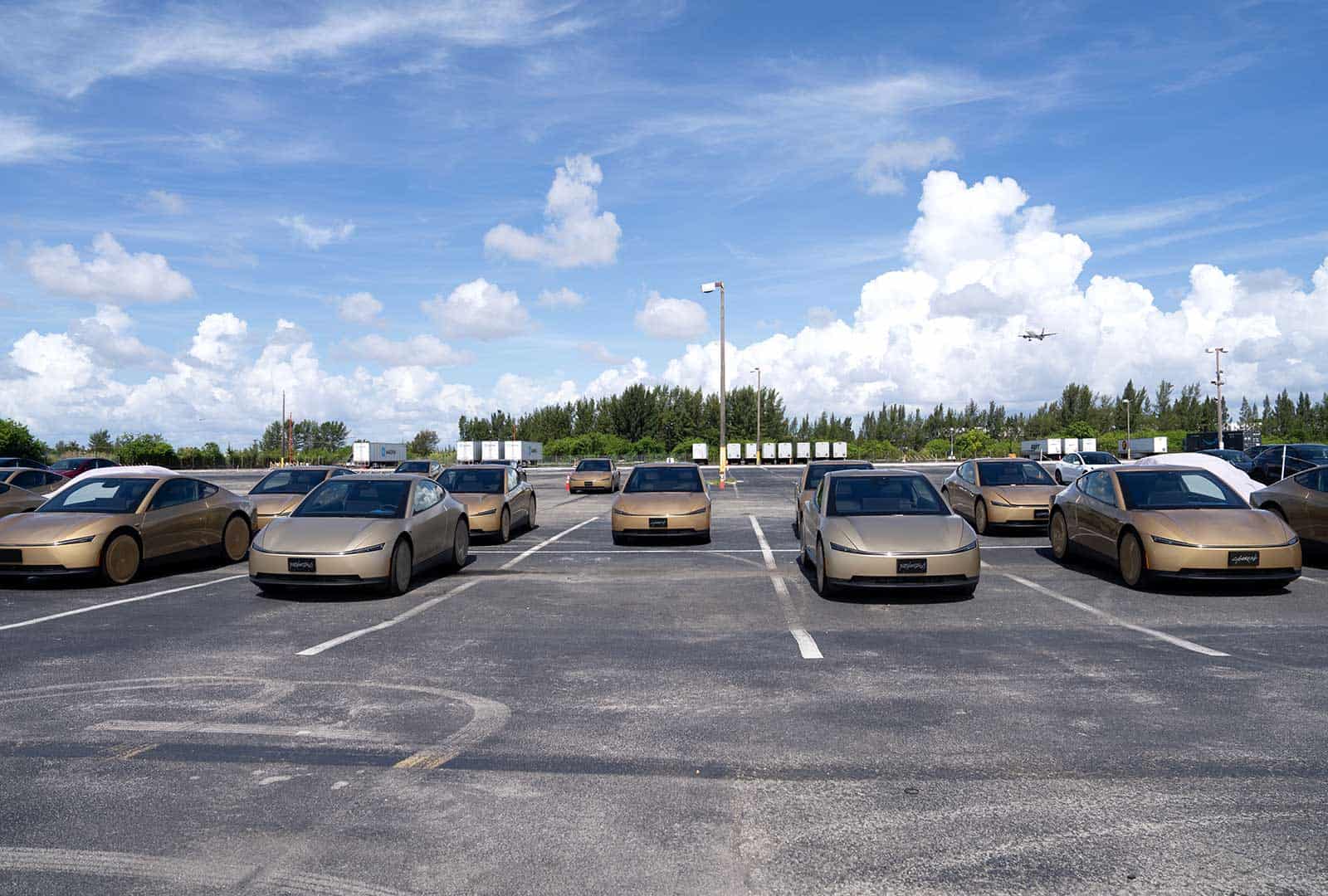
Tesla’s robotaxi registrations in Texas have quadrupled in just six weeks, surging from 42 on June 1st to 175 by mid-July. Field reporting from Miami indicates a similar acceleration, with visible Cybercabs jumping from under 10 to nearly 40 within five days and wait times dropping to as low as one minute. The hosts estimate that Tesla is rapidly approaching the 100-vehicle benchmark in Austin, a milestone that would signify a true commercial launch and a pivotal inflection point for the expanding fleet.
[4:52] Washington DC’s Autonomous Vehicle Bill
A newly introduced DC bill aims to regulate commercial driverless operations with stringent new requirements. To charge fares, autonomous vehicle companies would need to log at least 250,000 miles in the district, carry a $5 million liability insurance policy, report crashes within 8 hours, and pay a 15-cent-per-mile tax to fund public transit. While the high mileage threshold creates significant regulatory capture favoring early entrants like Waymo over platforms like Uber, the hosts predict the AV industry will ultimately unite to kill the bill and prevent its trial-lawyer-friendly clauses from setting a dangerous national precedent.
[12:03] Uber Acquires Delivery Hero and Bets on Autonomous Delivery
Uber recently expanded its food delivery footprint by acquiring Delivery Hero, earmarking €2 billion in Germany through 2031, an investment that explicitly includes autonomous vehicle initiatives. Despite the heavy capital use for acquisitions, Uber’s leadership reaffirmed that autonomy remains their top investment priority. The company is finding significant early success on the delivery side, as partner Avride has already logged 60,000 trips over 1.3 million miles, suggesting that autonomous food delivery may scale faster and more smoothly than passenger robotaxis.
[18:07] Lucid’s Selloff and the Nuro Partner Risk
Lucid’s stock plummeted nearly 60% intraday following unconfirmed reports that the company had hired a restructuring firm to evaluate a Chapter 11 bankruptcy. Although the stock partially rebounded after Lucid denied the claims in an 8-K filing, the turmoil underscores a severe partner risk for Nuro, an autonomous delivery company relying heavily on Lucid to manufacture its vehicles under a major Uber-backed contract. However, because Nuro’s contract demands up to 35,000 vehicles, their business is vital to Lucid, which could out of necessity push the automaker closer to becoming a dedicated robotaxi manufacturer.
[23:19] WeRide’s Level 2++ Expansion
WeRide has commenced on-road testing for its Level 2++ (supervised ADAS) systems in Germany, France, and Japan, in partnership with Bosch. The hosts view this strategic expansion as a “mini-Waymo” approach. By utilizing consumer-facing ADAS as a reliable cash engine, WeRide aims to fund and validate its longer-term, fully autonomous robotaxi ambitions globally.
[24:57] Foreign Autonomy Desk
The Hong Kong government recently issued 63 autonomous driving licenses across seven companies, with Baidu securing a permit and logging nearly 150,000 miles with safety drivers on pre-approved roads. Meanwhile, Baidu is also expanding its presence into Kazakhstan. Given the country’s robust infrastructure of over 15,000 manufacturing companies, Grayson predicts Baidu will begin producing robotaxis there within the next 12 to 18 months.
[27:10] Next Week
Next week is highly anticipated for Q2 earnings calls from major tech and auto heavyweights, including Google, Tesla, and General Motors. Grayson and Walt expect further confirmation of Tesla’s robotaxi scaling efforts, speculating that Elon Musk might use the earnings call to announce that non-paying members of the public can officially begin riding Cybercabs in Austin.
Full Episode Transcript
Tesla Cybercab Registrations Quadruple in Texas
Grayson Brulte: Walt, this week, Lucid hit some turbulence. They hit turbulence, and my fiber decided to go down, so a lot of turbulence all around. While we face turbulence, Waymo and Uber are battling out in DC. Why can’t we be friends? Who knows? And then lo and behold, it looks like, as we re- reported in our field reporting, we’re getting more photos that Tesla is preparing to ramp up Cybercab. So let’s dive into it. A lot happening this week
Walter Piecyk: There is a lot happening and, and you’re doing this over your cell phone because your fiber was cut in your, in your area. That’s never pleasant. hopefully they have tools that can connect those strands, but given the amount of people that are out you might be in for it for a little bit
Grayson Brulte: It’s not nice, is, is what I will say. It is not nice not having fiber. There’s no other way for me to describe that to you
Walter Piecyk: You know, in New York they have signs everywhere that say, “Call before you dig.” Do they, do they not have that in Florida?
Grayson Brulte: No. The only signs they have in Florida are watch out for alligators. Where I live there are no alligators fortunately, but maybe an alligator got in there. Who knows?
Walter Piecyk: Well, let’s get to the news of the week, I guess, with Tesla. we did cover Cybercab two weeks ago. So by now and going into this week, you ju- you should have had employees starting riding in the digi- the Giga Texas campus. I think we’ve seen some evidence of that. but I think more interestingly, Grayson, I’ve seen reports in the last couple of days of the inventory o- of robotaxis available in Texas rising. it, it, it says, I think there was a July 15th report that came out from the Texas DMV that Tesla had 175 robotaxis registered in, in Texas. That’s up from 42 on June 1st. That’s a, that’s a quadrupling in six weeks. Quadrupling. And I think according to some, some data I saw out there, there’s 58 were added really in like the last two days. So is this– Have we hit this kind of pivot point? We’ve been kind of thinking that we might have gotten there you know, based on, on kind of what you saw in, in, in Miami. Are we at the pivot point here? Are we gonna finally see Tesla start scaling up?
Field Report: Miami Cybercab Deployment Accelerates
Grayson Brulte: I don’t know if we’re at the pivot point, but I think if you wanna use the baseball term, ’cause we just had a really great All-Star weekend, is that we are at the inning one. And I would say we’re, inning one, we’re, we’re at the bottom of the first. I was in Miami for Robotaxi Launch Day. It counted roughly a dozen or a couple dozen Cybercabs. Counted, I would say under 10, give you an estimate, under 10 robotaxis. And lo and behold, I go back five days later, Walt, there’s over 30 to 40 of them there. So we’re seeing it in Texas. We’re seeing it in Florida. So I say Te- Tesla is at the bottom of the first inning as they get ready to ramp up and scale. Another thing I noticed from doing another field report in Miami on day five, my wait times, I don’t know if this was no pun intended, were five minutes. And the greatest thing happened. One robotaxi said, “One minute wait. Arrival time.” I said, “Elon, is this a sign? Is this a sign? arrival time.” And then I put a photo on X of my finger in the, in the middle, and it said Star Ride. And a, and a great commentator on X said, “See? It’s another sign.” No response from Elon on X, but I just find it was kinda cute and catchy
Walter Piecyk: I mean, the bottom line though is, is I think the, the demarcation number that you and I have provided is 100 cars in a market. So given some of these numbers that I’ve seen in the last couple of weeks, it’s possible that next week we can truly kinda check off Austin as launched if we can get some evidence that there’s 100 cars out there on the road. Now let’s put the, some context around this. You know, AVride technically has 317 cars according to the Texas DMV. You and I both know there are not 317 active commercially available AVride cars on the market. There’s a lot of test m- test cars. So I think, you know, we have to kinda caveat that. but I don’t think you put this many cars in the market. I don’t know. It, it seems like we’re kind of hitting an inflection point. It’s, it’s kind of surprising that it hasn’t been covered a little bit more you know, by the mass, by the mass market. It seems like a pretty, a pretty pivotal point given it’s been like a year since they launched this thing, and they’ve kinda been forgotten about because they hadn’t done any type of scaling up.
Grayson Brulte: Well, today, and I’m not making excuses for the mass market, SpaceX has the rocket launch. A lot of attention is looking down at South Texas for the rocket launch. P- perhaps that’s why, but I think it is a bigger inflection point than the market is really, truly grasping at this point
DC Bill Proposes Commercial Driverless Operations Framework
Walter Piecyk: Okay. Well, we’ll see. We, we covered it here, hopefully, I don’t wanna say first, but once again, early. Why don’t we shift over to one of your expertise topics and not because of Omega because of your, your interest is what’s going on in Washington DC. Not at the federal level, I don’t think, right? This is in the D- at the DC level. There’s a DC bill to allow commercial driverless ops, and it was introduced by a council member, this guy Charles Allen, back in May. And this updates the, the DC or the district’s AV Act of 2012 to allow driverless testing and commercial driverless operations. So just to be clear, today, Waymo and Zoos can only operate in DC with a safety operator aboard. does this change things? And what are some of the, what are some of the requirements that are getting proposed here?
Grayson Brulte: I think I’m gonna be very polite, but maybe I won’t be polite. I’ll just be a matter of fact. Change things is an understatement. This this puts a rule of book, a, a, a, a, a rule of books and says, “Okay, you have to do all of this in order to get a permit to operate commercially,” that’s where you can charge fares. You have to drive in the district over 250,000 miles. I’m not naming names, but there’s only one company right now that’s capable of doing that, not naming names. And you have all these other regulations that go around with it. You have the ability for class action lawsuits that can occur out of this, not at mere you as the riders, but as the autonomous driving system there. There is a lot of language in that bill, a lot of, call regulatory capture in that bill that benefits particular company and a particular set of individuals that do something for a living, which we won’t get into, ’cause I don’t wanna get one of those fancy letters. But there is a, a lot of hubris and it is a big, hot, stinking mess. And I know DC’s a swamp, and so it does smell swampy
Walter Piecyk: So some of the requirements are a $5 million minimum liability insurance, crash data reporting within eight hours for a commercial fleet. That seems, like, reasonable enough. You should know what the data is. 72 hours if it’s a privately owned AV, so they’re already looking to the future. I think there was some banter about a million-dollar application fee. I don’t know if that’s true or not. And then there’s a- another tax, 15 cents a mile, which for those that know the economics, the unit economics, that’s not a small tax. 15 cents a mile to go to to the, to the, to the district, I guess, where they’re gonna allocate it to public transit and a number of other things. So you’re right. It’s, it’s a pile. There’s a lot of piled up things. But I think, let me just zero in on the one that you talked about, this 250,000 miles. You know, this is, this gets back to what I’ve said before on why Waymo is not adding all of their cars to California to get to what I would call true scale, and they’re doing 300, 300, 300. ‘Cause ev- as you go to the every new market, and you’re the first guy in, you can effectively establish the rules. So if the rules are, “Hey, I’ve got 250,000 miles in that market,” that can close out competitors from quickly following you in that market. Do I– Am I seeing that wrong?
Grayson Brulte: Walt said the quiet part out loud. I gotta emphasize this. Establish the rules in that market. You said the quiet part out loud. No wonder you’re so darn good at what you do
Uber vs. Waymo: The DC Regulatory Skirmish
Walter Piecyk: So, and I think the flip side of this is exactly why in some of the feedback we got from Uber in after past episodes when we talked about, you know, kind of what they’re doing, ’cause, ’cause they don’t want, you know, effectively Waymo to write all the rules. But this once again kind of underscores and I think brings to the forefront once again the current relationship between Uber and Waymo. Uber says the bill, this bill would effectively ban hybrid networks, and it’s fighting for the opposite, one platform where a rider gets matched to an AV or a human. so you can see Uber’s colors really showing in this kind of little local skirmish that’s occurring in DC. I think there’s a head of policy, I don’t know how do you pronounce this person’s name, maybe you do, you do where this person, Curioso, I think, is, is claiming that one AV displaces, displaces four drivers, so obviously fanning those flames of, of populist concerns in order to try and get some hurdles put in the way of these autonomous these autonomous companies.
Grayson Brulte: Javi is a nice gentleman. I mean, I’ve known Javi going back to his Miami days, and Hobby is a, a, a wonderful operator. But I just gotta sit here and, and look at this from the outside, ’cause never been on the inside of Uber, and saying, “Okay, Uber went from trying to disrupt the taxi cab industry,” which it collectively did, to sitting there and saying, “Okay, now we’re the 10,000-pound gorilla. We don’t wanna be disrupted. This is how we were disrupted. Let’s try and put a playbook to ensure that autonomy doesn’t disrupt us.” It’s, it’s coming, if you wanna say, full circle, the, the, the strategy here
Walter Piecyk: Yes, it’s classic NIMBY, where someone, when they move to an area, then they wanna keep everyone else out. and that’s a good call-out, ClappyHat, to you. For a decade, you know, Uber fought to keep drivers cheap and on contract. I mean, let’s go back to kind of the AB5, which was a California law that would’ve made Uber’s drivers employees and broken the contractor model, model. Uber fought that tooth and nail, and then you had Prop 22 which was this ballot fight, which I think they spent a couple hundred million dollars on to keep them as contractors, and they won, and it was upheld in ’24. And by the way, I support that, but it’s just ironic you know, kinda how this, how this, this has flipped now. Now that they’re in, they’re secured via Prop 22 and whatever exists in these other coastal markets, that they’re gonna try and use the same type of tactics that were used against them to keep the new entrants out
Grayson Brulte: I’ll summarize it this way: Uber has a really great policy memory. I mean, that’s really kind of the, the way to say it, which raises a lot of questions around, you and I have talked about this, I think actually going back to episode one, is their Fragmentation strategy. It’s just, it, it seems to me it’s just slow, slow, slow everything down until one of their fragmented partners can eventually catch up. That’s how I’m reading this
Walter Piecyk: So the bottom line, Grayson, in DC is how do you think this ultimately plays out in terms of this bill and the ability for autonomous companies to operate in the District of Columbia?
Grayson’s Prediction: DC Bill Dies, Industry Unites Against Trial Lawyers
Grayson Brulte: I think this is, this is pure, pure, pure speculation. I think the bill dies, the bill doesn’t get passed And I, I do not think that you will be able to assign the bill not passing to Uber, to Waymo. At the end of the day, I believe that Uber, Waymo, and the rest of the AV industry, despite their infightings over the bill, will come together for the betterment of the Washingtonians and autonomy in general, and kill the bill to stop a foothold w- with the trial lawyers that want a lot of egregious clauses in there that would overall have a n- very large negative impact on scaling autonomy in the United States. I think that they will come to that realization of what this could do. It could open Pandora’s box
Uber Buys Delivery Hero and Earmarks €2 Billion for Germany
Walter Piecyk: Interesting. And, and I would ad- amend that that view and say just another indication that Austin and Atlanta, the two markets that Uber and Waymo are paired, are probably gonna go the same way as, as Phoenix did. clearly a relationship that does not look like it’s it’s, it’s headed in the right direction. Which is probably why, you know, Uber, you saw recently just you know, this week, this. Another podcast post on Saturday, had a major deal to buy Delivery Hero, more scale, more logos, you know, really pushing into, you know, the, the food delivery side and, and obviously other goods and services. You know, Dara’s done a good job at, at diversifying that business. you know, Uber earmarked about €2 billion, I think it was, in Germany through 2031, explicitly including AV initiatives. So AV’s, you know, a little bit a part of this. but really it’s kind of diversification in foods as they’re kind of managing this. Now, on the call that they did with the analysts you know, they, they highlighted that, look, in term- even though this was a large deal, use of capital, priorities, number one priority is still investing in autonomy. Obviously, if there’s acquisitions like Delivery Hero and others, they’ll do those and, and then obviously you have capital return which they still believe they can i- issue a lot of capital return. So I think, you know, I don’t know if I’ve heard, I’d have to go back, I don’t know if I’ve heard them specifically say autonomy was at the top of the list. Of- it’s certainly been clear based on their actions. I’d have to do a little AI analysis of past transcripts to, to determine whether that’s new. but certainly this, this whole narrative of free cash flow where for our longtime listeners, you know, you know in the past we, you know, we’ve pointed out when they’ve talked about, “Hey, don’t worry, we’re gonna keep buying stock back while investing in these autonomy companies,” I kept highlighting this you know, as more dollars went elsewhere. What, what was your, what was your take on the Delivery Hero?
Grayson Brulte: I watched the interview that Dara did on CNBC. I thought that was very well done. I’ll say very well orchestrated from how he expressed it. To me, it just seems that Uber is building on the strength of Uber Eats, wanting to expand that business and grow it into Europe. I love how you said it, more logos, ‘ cause there was a lot of assets there. The interesting thing in, that you highlighted is y- you know, the allocation for autonomy. If you listen to past earnings calls or if you read past transcripts, it always, you would always see the terms or hear the terms priority or str- str- strategic. And now you’re actually getting the real al- allocation terms, and then Germany specifically. So that raises the question there that I look at. Uber has a very public partnership with Momenta. Momenta is ramping up operations in Germany. Could some of that money be potentially allocated towards the Momenta operations in Germany? Because the German markets of Berlin and Munich are, as we both know and Omega has uncovered, are becoming hot markets for autonomy in general as Waymo looks to potentially expand to Germany as their corporate filings have disclosed
Walter Piecyk: Well, the Uber’s gonna maintain Delivery Hero’s, Hero’s Berlin headquarters and German workforce through ’29 at least. so yeah, Germany is, you know, maybe we’ll have to do some field work in Germany. Obviously a lot going on there. As an aside, you know, one of their autonomous delivery partners, AVride, who, you know, they, they do have these, these street robots, which we’ve, you know, we’ve posted videos about launched a r- operations in Miami, again, with Uber Eats. So like, you know, this, this relationship that, that Uber has in the food delivery with these robot companies, 60,000 Uber trips for AVride, 200 plus cars, 1.3 million miles. Like this is different than the challenges that they face with Waymo and Tesla and, and some of these other autonomous companies. There’s a real opportunity for them to, to, you know, to really leverage autonomy on the eats side of the business. so perhaps they should, they should start leaning to that more. I think I saw Coco as well launched in an East Coast market this week. so good opportunity there for Uber on the autonomy side.
Grayson Brulte: It, it’s, I think the autonomy side and the demand aggregation narrative holds up for the Eats side of the business. So I think it’s very good, it’s a very positive that Uber is investing in, in autonomy for the Eats side of the business. ‘Cause on the robotaxi side, which we’ll get into in a minute, I, I don’t think it’s there. And then Rob Grant and I have been discussing this quite a bit, is when, say, take AVride, when they become big enough brand, does the demand generation narrative go away? That’s potentially. And then Uber can say, “Look, well, we have the Eats business and that, look at all the demand that generates.” So that, I don’t know. I think it’s a very wise move and perhaps Dara is seeing something in the tea leaf that we’re starting to catch onto here with robotaxi actually being smaller and delivery potentially being bigger
Lucid Stock Craters on Restructuring Reports, Nuro Partner Risk Exposed
Walter Piecyk: I mean, I still think there’s an opportunity for Waymo and Tesla just to send those cars to deliver food. We’ve talked about some of the business opportunities that spring out of that earlier, which we won’t delve into now. but, but the. I- in that case, you know, if you think about Nuro, who had cars or vehicles like AVride, like Coco, that were not on the sidewalk, that they were on the street, those had challenges. So maybe cars will fit that, that bill. So then maybe they have future competition but right now I think you’re right that this Uber Eats business can kind of exploit some of the autonomous business. Serve Robotics obviously another one out there. It is coming down from, from drones as well that, that’s available to them. So good luck there. So let, let’s move on though in terms of, you know, Uber and its first priority being autonomy. One of the companies in the autonomy world that they threw a m- a bunch of money to was Lucid in their partnership with Nuro, and where they’ve, they’ve invested $500 million into Lucid. And earlier this week, we had a mega drop in Lucid stock. It was almost down like 60% intraday on the 14th one of the worst days ever for that, for that company. Why? You had a random website, which I think you might be familiar with, I’m not as citing that Alex Partners, a, a company that Uber– excuse me, Lucid in fact did hire was weighing Chapter 11 or, or that they’re gonna go pi- private. The stock got cratered on that. now Lucid has subsequently c- come out and said that’s completely false, filed an 8-K, cited all their liquidity. It’s been, it’s ripped back 30%. I think it’s up another 10% or 15% the second day, so it’s, it’s bounced back. you know, it’s still a question, right? This is, Lucid is, is, you know, Nuro’s partner. We question that being kind of the primary risk in that relationship historically. I’ve, I’ve been in, in situations like this in the past where it depends on the wording. Like, okay, did you ask them or didn’t you ask them? And everyone claims, “Well, I didn’t specifically ask him to evaluate Chapter 11.” At the end of the day, like, you hire a restructuring person, I would guess that that’s gonna be on the agenda. Now, they were pretty precise in their 8-K language denying that, so whatever. We’ll just have to see how that, that plays out. But clearly people already had those, those kind of risks associated with Lucid for the stock to react that quickly on, on that news story.
Grayson Brulte: I won’t comment o- o- on the, the blog or the, the new- the news story. To me, the underlying thing which, which you highlighted is, is the risk, and there is a very large risk for both Nuro and a very large risk for Uber if that situation were to happen. Do they go back to the drawing board or, or where do they go? To me, it’s just a, you wanna call it an emphasis of a risk. While the risk was, quote-unquote, “debunked,” it, it still exists based on the current shape of the company
Walter Piecyk: Yeah. I mean, look, at the end of the day, you, you’re hiring a company that, that, you know, I don’t know whether it’s a restructuring a company, whatever, but something to evaluate the entire company. You just changed a bunch of your management team, right? It’s not like things are going smoothly at, at Lucid. And, you know, look, this is, to your point, an important partner. Like, this is one of the leading Uber partners. This is someone we expect to potentially be driver-out by the end of the year, have 150 cars mid-year. This is like, you know, Nuro is, is the real deal. Hopefully you know, Lucid is, is not gonna hold them back frankly. And, you know, if you get back to the priorities of cash, like, you know, if Lucid needs cash, my guess is that Uber’s gonna be there to hit that button to give them more money just based on the progress there. I mean, even in recent weeks, we’ve seen the Uber team out at Nuro testing, you know, with this Lucid car
Grayson Brulte: We have, and the fact that Nuro’s sitting there posting a very public video of Dara and JZ is another signal. The one thing I’m looking for in the market, looking for tea leaves, looking for an X post or any sort of indication, when does Nuro publicly begin to explore an additional OEM partner? That’s something I’m looking for. I’ve been in the vehicle multiple times. I’ve been to the Las Vegas racetrack. The tech’s real. The partner risk is unfortunately also very real too
Walter Piecyk: I mean, I, I think they’re already gonna– They’re already looking for one. I’m guessing that they will have one within, I’m gonna put it out there, within six months they’ll have a second partner. but in this case, they’re the– It takes time, right, to develop with a new partner. You want this one to work. And I think the upside of all of this is with all the turmoil at Lucid, like the importance of Nuro is that much higher, right? Nuro can deliver 35,000 vehicles. That’s part of this Uber-Nuro-Lucid contract. That’s a big– That’s a real number for a company like Lucid. So if anything, in a way, I’m gonna say the silver lining here is that this is a positive just because Nuro is that much more important to Lucid
Grayson Brulte: That’s a very valid point, and now I’m gonna ask you again, this is a very hypothetical question. Could Lucid just be, end up becoming a robotaxi manufacturer depending on where this all goes at the end of the day?
Walter Piecyk: I mean, is Tesla effectively becoming a robotaxi manufacturer? They’re, they’re effectively shutting down lines, and we see a bunch of Cybercabs come off. We’ll see what the future is, Grayson. You know I’m very bullish, so I, I don’t think that’s out of the realm of possibilities. And again, at– when I was looking at the market cap that was left at Lucid, you know, during the sell-off, relative to the amount of money that, that Uber put in, it’s, it’s effectively a rounding error if, if Uber ever needed to just fully take control of this thing. But that’s definitely not something that I think that they would prefer to do. it would only be something out of necessity. Why don’t we move on to one of Uber’s more successful partners, unfortunately internationally, which is WeRide. and on July 13th, it began on-road testing. Again, this is Level 2 plus plus. This is, like, the, the AD- what you would call, some people would call ADAS, the supervised personal use of autonomy that they co-developed with Bosch in Germany, France, and Japan. This isn’t a robotaxi. It’s, it’s for consumers, but this is, which we’ve talked about before in terms of WeRide, this can create, like, a nice cash engine for them as they continue to expand on their fully autonomous stuff. So the WeRide tweet was, “What works in one market may not work in another. That’s why global validation matters.” Good on them for getting into mul-mul-multiple markets. They’re kind of like a mini Waymo, right, in, in, in entering a bunch of these markets
Grayson Brulte: WeRide’s scaling globally. Their road to autonomy robotaxi index component company, and you look at their publicly available data, they’re doing very well. And for, you know, with the pushback we’ll get, I’ll just remind the audience, WeRide’s publicly traded. Go through their SEC filings. All, all the data’s there. They’re, they’re truly scaling, and I like their approach ’cause they’re using their L2++ business as a cash driver as they build out their robotaxi business. They’re basically using it, in my opinion, to fund it, and it’s the same thing we saw with Momenta that had a very successful IPO in Hong Kong. Same business. And let’s not forget the 10,000-pound gorilla in the room that does that, Tesla. Yes, I know the FSD take rates are not the greatest in the world, but that L2++ business for Tesla, in my humble opinion, is driving a lot of those vehicle sales
Hong Kong Issues 63 Autonomous Driving Licenses; Baidu Logs 149,000 Miles
Walter Piecyk: What do we have on the foreign autonomy desk?
Grayson Brulte: The foreign autonomy desk, we’re going to Hong Kong this w- this week. The, if you wanna call the, the city state of Hong Kong, AKA China, has issued 63 autonomous driving licenses to seven companies. That’s according to government data there from Hong Kong. And out of that, Baidu has one of those licenses. They’ve driven approximately w- 149,129 miles in Hong Kong with safety drivers. Wanna point out the caveat because you know I love fine details. Under the way that the Hong Kong autonomous vehicle regulations are written, the system can only be engaged on pre-approved roads. No details from the government, that means pre-mapped or what it means. It just says pre-approved roads. So that’s, that’s something really interesting to watch there
Walter Piecyk: Okay, that’s good for China. And now what else, what, what other parts of the world are we. I see something here from the home of Borat
Baidu Expands to Kazakhstan; Grayson Predicts Robotaxi Manufacturing Within 18 Months
Grayson Brulte: Yes, and no, I’m not gonna wear that outfit, and everybody knows what that outfit is. I like hats, not that outfit. We are going to Kazakhstan. Why are we going to Kazakhstan? No, we’re not going to visit Sacha Baron Cohen, AKA Borat. We’re going there to tell you about what Baidu is doing there. Ba- Baidu’s expanding to Kazakhstan, and so why is that important? You might say, “Why Kazakhstan?” Now, this is an interesting fact, ’cause I love details. Kazakhstan is home to over 15,000 manufacturing and industrial companies. 15,000. I’ll make a prediction here, Walt. Baidu will start manufacturing robotaxis in Kazakhstan within the next 12 to 18 months, and I would expect a press release or some sort of formal post on X within the next three to six months
Walter Piecyk: These are the type of actions that Waymo and others need to be making, getting OEM construction in, in countries that can deliver you inexpensive vehicles. But I digress. Waymo’s still doing a great job
Grayson Brulte: Everybody’s doing a great job except for my fiber man. Ay, caramba, we’re still doing this over cellular. I don’t know how we did this whole show over cellular. So hopefully by the time we get together next week, the fiber man will have fixed the fiber at my house. Living without 10 gig is hard. But until then, what do we need to look for next week? Because a little birdie told me there’s a lot of stuff coming next week
Walter Piecyk: Well, I think first of all, I wanna just chide you because I, our Tesla listener base, I think is gonna be very upset that you don’t already have a Starlink as a backup to your fiber. So hopefully you’ll be, by the next show, you’ll, you’ll be able to have your, your Starlink fiber backup and then we won’t have these issues. But I think the cellular network. Well, who’s your cellular carrier that’s, that, that is responsible for this episode?
Grayson Brulte: I wanna thank T-Mobile, ’cause T-Mobile’s working and it’s doing a fantastic job. So the Un-carrier network is doing a fantastic job making Autonomy Markets possible this week. So thank you to T-Mobile
Walter Piecyk: There you go. You can also get a T-Mobile 5G hotspot as well as a backup but go for the Starlink. It’s more fun. You can take it around with you wherever you go in your travels. A field report. We’ll do multiple field reports. When we go to these cities, we’ll also try Starlink in all these different cities. Okay, so for next week, earnings is on. We got Google, we got Tesla, we got General Motors. We haven’t heard much of Sterling Anderson. Is maybe is he, has he fallen back in his CEO aspirations, Grayson?
Grayson Brulte: I don’t know. As you and I know, GM is a highly, highly well-managed, well-run corporate machine, and when you’re in a corporate machine, you can’t say a lot
Walter Piecyk: We also have, I think next week, what we started with our, it, I just feel like we’re gonna get more information on this Tesla scaling. I feel like next week could finally be the week where we can officially say that Austin is like, is a real deal. It’s got its 100-plus cars. What do you think?
Grayson Brulte: Potentially, or does Elon announce on the earnings call that non-paying members of the public can begin to ride in Cybercab in Austin? Does that happen
Walter Piecyk: Either way, could be a big week
Grayson Brulte: It’s going to be a big week, and I will be back here with either Starlink or fiber. Either one, the show must always go on. The future is bright. The future is autonomous. The future is manufacturing and scaling robotaxis. Walt, until next week
The future is bright. The future is autonomous. The future is The Road to Autonomy.
Subscribe to This Week in The Autonomy Economy™
Join institutional investors and industry leaders who read This Week in The Autonomy Economy every Sunday. Each edition delivers exclusive insight and commentary on the autonomy economy, helping you stay ahead of what's next.