


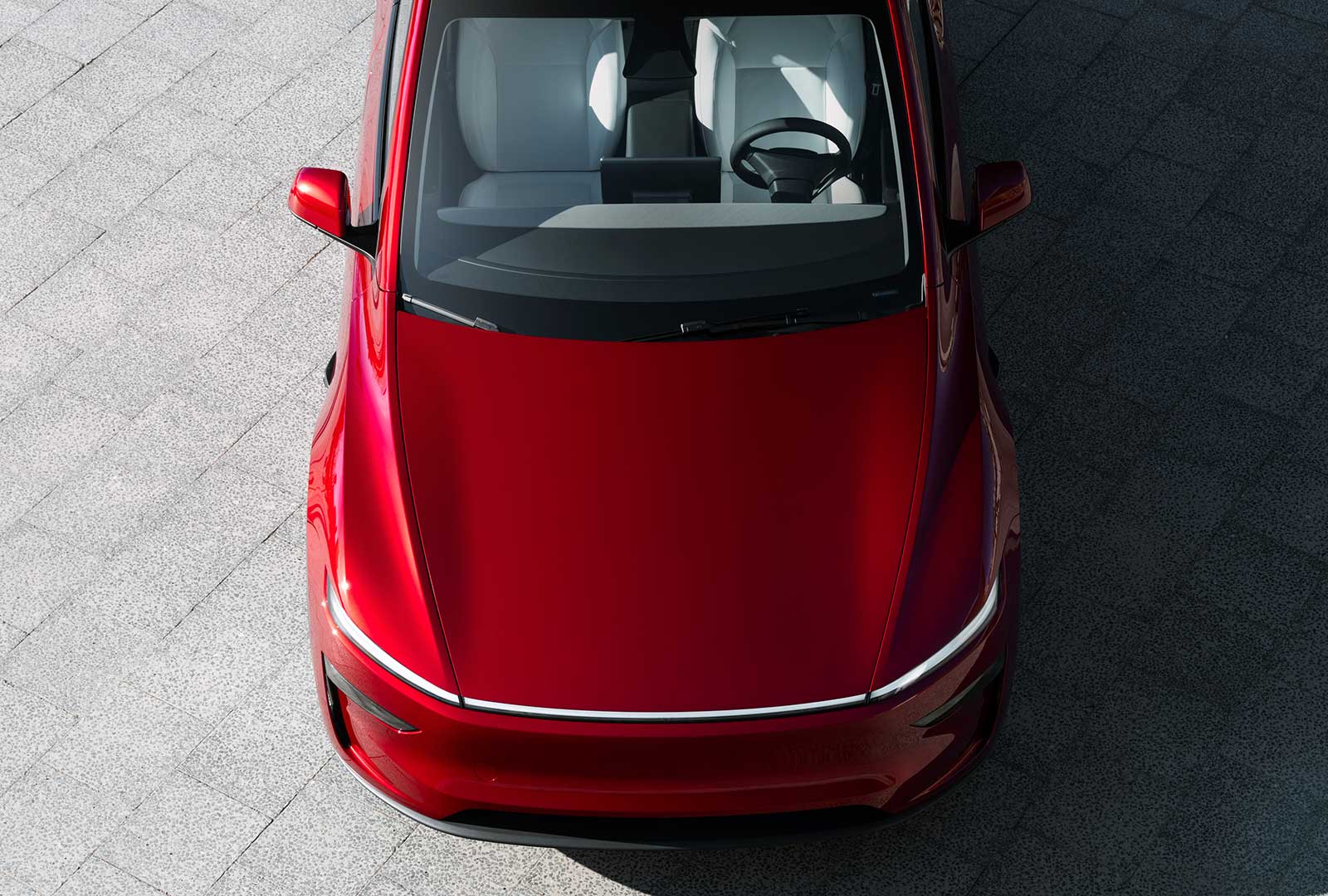
Does Tesla FSD 14 Matter?
Executive Summary
This week on Autonomy Markets, Grayson Brulte and Walter Piecyk discuss the the major implications of Elon Musk’s announcement of Tesla’s FSD 14, debating whether it signals a new era of personally-owned autonomous vehicles and a potential reduction in driver monitoring.
Grayson notices Waymo has plans for UK expansion, after reviewing recent job openings and he predicts a 2026 expansion to London which commercial service to begin the second half of 2027. The discussion closes out with an analysis of the competitive landscape, including predictions for Waymo’s and Uber’s partnership, Zoox’s path forward, and the news of Kodiak going public.
Key Autonomy Markets Episode Questions Answered
What are the main implications of Tesla’s FSD Supervised 14 update?
The update is seen as a signal that Tesla is moving closer to personally-owned autonomous vehicles and is demonstrating its ability to innovate and scale autonomy quickly, forcing competitors to keep pace.
What evidence suggests Waymo is planning to expand to the UK?
Waymo is actively hiring for key roles in the region, including a fleet readiness lead, an incident response manager, and a head of business development for Europe, the Middle East, and Africa. This, combined with an interview in the Daily Telegraph where Waymo verified its interest, points to a clear expansion strategy. Furthermore, UK law is set to allow small commercial pilots in the second half of 2026 and full commercial operations by the second half of 2027.
What is the key difference between Tesla’s and Waymo’s approach to scaling their robotaxi services?
The primary difference lies in their core challenges. Tesla has the capacity to manufacture hundreds of thousands of vehicles but is still focused on advancing the underlying autonomous technology. In contrast, Waymo is widely considered the leader in autonomous driving technology but faces a significant challenge in ramping up vehicle supply and production to scale its operations across multiple markets.
Key Autonomy Markets Topics & Timestamps
[00:00] Analyzing the Buzz Around Tesla’s FSD 14
Grayson Brulte and Walter Piecyk discuss Elon Musk’s announcement of Full Self-Driving (FSD) version 14. With Walter is excited about potential fixes for personal driving annoyances, like navigating driveways and parking lots, and is less interested in Musk’s description of the system as “sentient”. FSD 14 is seen as a move closer to personally owned autonomous vehicles and a demonstration of Tesla’s ability to innovate quickly. There is speculation that FSD 14 might reduce driver monitoring, which would signal Tesla’s growing confidence in the technology but could also trigger backlash.
[03:45] Is FSD 14 a Signal for Robotaxi Progress in Austin?
Grayson Brulte believes the advancements in FSD 14 for consumer vehicles are directly related to Tesla’s robotaxi development, and speculates that the robotaxis currently operating in Austin might already be running a pre-release version of FSD 14. This progress is viewed as a sign that the robotaxi technology is improving and Tesla is confident enough to ship these advancements to its consumer fleet, indicating an acceleration of their overall autonomous vehicle program.
[06:50] Waymo’s Ambitions: Uncovering Plans for UK Expansion
Evidence suggests Waymo is planning to expand into the United Kingdom. The company is hiring for key positions, including a fleet readiness lead and an incident response manager for the region. An interview in the Daily Telegraph also verified Waymo’s interest. Based on UK law, which will permit small driver-out pilots in the second half of 2026 and full commercial operations in the second half of 2027, a prediction is made that Waymo will launch in London accordingly.
[10:20] Predictions: How Many Markets Will Waymo & Tesla Operate in by 2026?
Grayson and Walter debate the scale of Waymo’s and Tesla’s operations by the end of 2026. For Waymo, one prediction is 20 markets with an average of 100-150 vehicles each (excluding California), while another, more bullish prediction suggests it could be over 25 markets with 350 cars each, contingent on vehicle supply from partners like Hyundai. For Tesla, the number of markets is dependent on perfecting the technology, but if they achieve driver-out capability, they could scale very quickly due to their massive production capacity. The core difference is that Waymo is a technology leader needing vehicle supply, while Tesla is a manufacturing leader needing to finalize the technology.
[17:55] What’s Next for Amazon’s Zoox?
The discussion addresses Amazon’s continued dedication to its autonomous vehicle subsidiary, Zoox, despite past speculation that its interest might fade. While Zoox is seeking an exemption for 2,500 vehicles, there are concerns that its rate of innovation has slowed and its technology may not scale effectively. The current deployment in Las Vegas is a fixed-route service, which limits its market size compared to on-demand robotaxis. While the company legally cannot charge for rides yet, the primary challenge is proving the technology works at scale; a profitable business model is expected to follow easily if the tech succeeds.
[23:05] Nuro and Lucid Partnership with Uber Moves Forward
Nuro has received its first factory-built autonomous vehicle as part of its partnership with Uber and Lucid. The sensor stack has been installed, and the vehicle is now undergoing software integration and calibration before road testing. While this is a significant milestone, the conversation shifts to the need for scale. For a launch to be meaningful for a company like Uber, it will need to involve a substantial number of vehicles, with one host suggesting at least 100 cars in a market like Los Angeles to be considered relevant.
[28:50] Wayve and Nissan Announce ProPilot System for 2027
Nissan, a partner of Wayve, announced its ProPilot system, powered by Wayve’s driver technology, will go into mass production in 2027. While this is a big deal for a global OEM, it is a Level 2 system. The host expresses that with companies like Waymo and Tesla pushing for Level 4 autonomy, the expectation for the market is rising, and the focus should be on getting to Level 4 at scale with hundreds of cars per market. The vehicle’s sensor package includes 11 cameras, five radar sensors, and one LiDAR, which could enable higher levels of automation in the future.
[31:45] Kodiak Goes Public
Autonomous trucking company Kodiak has gone public, which provides it with cash on its balance sheet and a higher public profile. This development is seen as a positive news event for the autonomy sector in general and will bring more attention to Kodiak’s technology, business model, and customer adoption. It also provides another publicly traded company in the autonomous trucking space to analyze, alongside competitor Aurora.
Full Episode Transcript
Grayson Brulte: Walt, my beloved Yankees are about to win the AL East and we’re hopefully gonna capture another World Series title.
Walter Piecyk: Your beloved Eagles boy, oh boy, your Eagles. They got the tush push to 3 and 0. Jonathan Morrison was sworn in this week, is the 17th administrator of NHTSA Way to go, Jonathan. And the big news that’s brewing. Elon posted a tweet, not about politics this time Walt, but about FSD 14. What do you think? We know it’s coming. What do you think?
Walter Piecyk: Yeah. Grayson. And that, that tush push is creating as much controversy as, as we see in our comments section with the Waymo people, fighting the, fighting the Tesla people. For sure. This FSD 14 is something I’m personally excited about because as you know, some of my, my two complaints have been my Tesla doesn’t go up my driveway and, and when I drive to the fish store, it doesn’t park in the parking lot. So I don’t know if that’s gonna be a part of this, this software upgrade that we’re about to get. But I’m hopeful, I’m less interested in what Elon calls the sentient, you know, it being more sentient or alive, whatever that actually means, because. If that implies that it’s gonna feel more human. I think FSD 13 pretty feels pretty, pretty good already. Overall, it’s just the overall, I guess, you know, safety and getting to lo, you know, final locations.
Grayson Brulte: You and I we’re both running hardware for 13.2.9 and the two things, this says to me about FSD 14 one, we are moving closer to a personally owned Tesla autonomous vehicles. That’s right. I said it, it’s gonna happen at some point. And the other thing that we’re doing, it’s happening, Tesla is proving that you can innovate and build autonomy quickly. They’re gonna force the market to move along with ’em. Those are the two big things that FSD 14 says to me.
Walter Piecyk: One of the things I read about that some people believe will be part of this software. 14 is to reduce driver monitoring. Now, on one hand that’s, you know, supports what you’re just saying, getting closer, closer to private ownership. But on the other hand, you know, as well as I, that, that is gonna trigger a lot of the Tesla haters in saying like, oh my God, how are you, you know, having the driver monitoring allow the person to look away from the wheel or not hold the wheel as often, which by the way. Has not been the case in my experience so far. So, you know, again, a question for you. Do you think that’s gonna be part of V 14 and B, do you think that ultimately gets perceived by the broader, more rational public as a positive or a negative?
Grayson Brulte: I’ll summarize it this way. How many times a day do you see somebody staring at one of these when they’re driving a car with no, ADAS and no FSD? I guarantee you at least once an hour, twice an hour, three times an hour, this the call the cell phone causes more crashes than somebody not paying attention with FSD there. I said it for the record. That’s what I believe as it re reduction in driver monitoring. I think it would be a positive step and what it would say to the rational folks in this market that the technology is progressing to the point where Tesla feels. Confident, I’m not gonna say extremely confident, but confident in the point where they’re growing confident, which gets to what I said earlier, closer and closer to personally owned Tesla autonomous vehicles.
Walter Piecyk: What you did is what I would call, what about is meaning, like what about the human that does this? I’m like, that shouldn’t be part of the conversation, right? I mean, yeah, human drivers are bad and yes, we both believe that autonomy’s also gonna make it safer. Again, the bigger question, what you answered is like, you know, if they reduce driver monitoring. You know, is the public outcry by some gonna be louder, meaning like, oh my God, I can’t believe they’re allowing people to look away from the, from the wheel. Again, assuming this even happens versus others where it’ll be encouraging like, wow, they must be getting close if they’re letting me look away from the wheel and take my hands off the wheel more. So you answered it. You think it’s it’s the former. I don’t, I don’t know. I think, you know, we know the usual suspects will, will be having, having their say. The other, the other interesting thing I, I’d, I’d be interested in your impression here is like. Does going to 14 for the privately owned cars, have any, you know, bearing on or, you know, be, is providing any signal in terms of whether they’re any closer in Austin, um, to going driver attended out? Or are these completely separate topics?
Grayson Brulte: No, they’re very similar topics. I said this when we were in Austin and I said it on a, uh, podcast following that, I believe when you were in and I were in Austin this summer, that that robotaxi, which we have no proof, and this is purely an assumption and speculation, was running FSD 14. That’s what I believe, I believe today that is running. Uh, I believe that there are at least one to two, potentially three release categories ahead of that. And what this is signaling to me is that the Robotaxi technology is getting better and they’re, and they’re taking it and shipping it to the humans ’cause they’re confident in it. It’s saying that they’re accelerating.
Walter Piecyk: You could be right and, and I guess we’ll know soon enough. I will say this though, that, you know, for people that that claim that the company makes. You know, deadlines that they never meet. You know, we’ve had this, this September deadline for them expanding their, their area in Austin, which occurred and now delivering on this software, which it sounds like they will later this month. So these were nearer term deadlines that were provided by the company in Elon, that they’re executing on. ’cause I know it’s, it’s obviously fun and true for people to talk about how Elon promised a million robotaxis however many years ago. But here you’ve got some examples where they’re smaller mile milestones, but things that are getting executed on by the company.
Grayson Brulte: And I also think what we’re in the midst of, if you remove the, the, the Tesla bulls from the scenario is that on a gradual. Stable rollout. You and I remember the press articles, the tweets, oh, they’re just gonna hit a magic button. Bit bop boops. Yeah, I got it in for you today. And on magically all the Teslas are gonna turn on overnight. You and I know that’s not true, and you’re starting to see ground truth videos where Tesla is continually in Tesla. testing this technology, and you said this many times on past episodes. They’re doing this in a safety first way. They’re doing this in a very rigorous way, and then I just don’t feel they get enough credit for this rollout because there is so much noise on both sides of the equation. And what you and I try and do is eliminate the noise to bring it to a common ground here in autonomy markets.
Walter Piecyk: Well, we’re dealing with a lot of speculation, so hopefully we both get our 14 upgrades next week and we can report, , you know, in, in the real world on, on how these things are performing. Why don’t we move on to. Their, you know, the leader and their primary competitor, Waymo. Um, which I think you’ve done your sleuth work and, and uncovered some plans that Waymo has for, the UK.
Grayson Brulte: Waymo has UK ambitions since we’re going the UK. Sir Arthur Doyle. I gotta put on my Sherlock Holmes hat here for you. Is Waymo is hiring a fleet readiness lead. They’re hiring an incident response manager and a head of business development for Europe, the Middle East and Africa, and the Daily Telegraph, the UK paper did in, in an interview with Waymo verified that Waymo does indeed have interest. So there is, there’s job postings, there’s a interview in the Telegraph. It’s just a matter of time till Waymo comes to the UK and I will say that beginning under UK law in the second half of 2026. Companies will be able to conduct small pilots of driver-out commercial vehicles on public roads in the UK and the second half of 2027, according to UK law, full blown commercial operations. So prediction, Walter Piecyk Waymo expands to London to 2026. They launched commercial operations the second half of 2027.
Walter Piecyk: I mean, it’s a longer time timeline than I would’ve liked. And, and you know, again, so we’re sleuthing this out now. It’s not like the company is hyping this up ahead of time. So there’s a lot of things that can happen between now and then. And one of those things that’s gonna happen is one of the partners that we’d love to talk about here, which is Uber, which already has a partnership with Wayve. So I think our expectation before had been that Uber. We’ll launch with Wayve. I assume that in this case Waymo will just find a different partner, whether it’s Lyft or or, or a local, maybe Avis or whoever it is, a local partner, uh, for that market. What are your thoughts on that?
Grayson Brulte: It could be Lyft. ’cause a few months ago, Lyft Closer transaction of Free now, which gave Lyft their first corporation structure footprint outside of the US and Free now does have a presence in the UK. So it very much, well could be Lyft.
Walter Piecyk: I’m gonna ask for a wild prediction also what, since it’s 2027, so it’s possible Waymo could announce a new OEM that by the time London’s ready. If they have a new OEM in London. So do you think it’s a unannounced OEM for London? Or did it ends up being, you know, either Zeekr or, or Hyundai?
Grayson Brulte: I’ll give you a point blank prediction. It will be a Zeekr market. If I was a resident of the UK, I would tell you it’d be a Tata vehicle, but I’m not a resident of the UK so I will tell you in my point, humble opinion, it will be Zeekr market.
Walter Piecyk: So also while we’re talking about Waymo, I just wanna go back to the topic we didn’t really cover last week or the week before after the Lyft, the big, uh, announcement with Lyft in Nashville. But given that we’re talking about, um, you know, Waymo and Uber and that whole, you know, lengthy discussion, do you think Uber is gonna announce. , A different partner, whether it’s Nuro or May Mobility in Nashville or some of these other markets where, you know, Waymo has not picked them as their partner.
Grayson Brulte: From a kid growing up that used to love to watch heavyweight fights when Tyson was in his prime. I hope so. I want something to analyze and discuss with you. So. I’ll give you the cop out answer 50 50. The kid to me says, yes. Come on, let’s have a knockout, blowout. Draw out fight. If it does happen, and let’s say the odd shift is 60, 70%, to me that’s an indicator of that relationship is fractured and it’s pretty much over. So I’ll take it away and see approach, but I’d love to see it because I like to see heavyweight fights.
Walter Piecyk: I mean, I, I actually think it’s, it’s, I’m, I’m on the more bullish side or de depending on which company you’re approach, you’re here. I think it’s pretty likely, , that Uber does that and you know, whether it’s to keep Waymo, honest or whatever. And like the weird thing is. It probably has a negative signal to their investors if they’re launching on top of Waymo, where they’ve, where they’ve launched with, with a, an alternative part partner. But I don’t think they really care about that anymore, like it is what it is. Um, they’re not gonna try and like wrongly convince people that Waymo and Uber are like locked, um, together for every market going forward. That certainly could be. In the future, but there’s no reason. And these companies all have showed some competitive edge to them. And I think, you know, maybe showing how they can perform in that market where they, where they’ve already launched is, is, um, you know, it’ll be interesting to watch. And so I think I, I think I’m a little bit higher percentage than you are on that one.
Grayson Brulte: You just blew up the whole TV narrative, Walter Piecyk, how dare you blow up the TV narrative. You gave a real honest opinion. And I I’ll side with you on, on, on the bullishness, but I, I want one favor. I wanna sit there with you and Nashville and we’ll have some barbecue and watch this heavyweight fight. You got a deal on that?
Walter Piecyk: I can’t wait. Last, last question on this, just ’cause I don’t wanna let it go. ’cause Waymo and, and Tesla and Uber are kind of the three most important, companies in this space right now. And, and this relates to the whole Uber topic. How many markets by the end of 2025? ’cause we’re coming up to the, you know, it’s the fall now as, as you talked about. Now, let’s go out to the end of 2026. How many markets will Waymo have launched, you know, in, by or by the end of 2026? And what’s the average number of cars? Forget about California, which will be the most mature, but in those, in the whatever number you pick, what’s the, what’s the number of cars that they, they will have in those X number of markets?
Grayson Brulte: 20 markets, a hundred, 150 vehicles per market on average, excluding California.
Walter Piecyk: I’m gonna take the over on that, Grayson. I mean, ultimately it’s gonna be coming to supply. We’re in the dark in terms of how quickly Hyundai can ramp, I mean, if they’re talking about delivering cars to Avride and, and starting testing with, with Waymo this year, and they’re talking about. Always at these incremental markets, whether it’s Seattle or Denver or whatever, you know, maybe it’s gonna be 25 markets and maybe it’s gonna be, you know, 350 cars and, and like, that sounds crazy. Now, given the process, it takes them to outfit a Jag or what we’ve seen thus far with Zeekr. But I mean, you would hope there’d be some planning to ramp it. So I’m gonna take the, I’m gonna put some faith in Waymo and in and in the production side of the house. And say that, that we go well over your prediction of, of the, the 20 markets and whatever that limited number of of cars you’re talking about. But look, you know, it’s gonna be on those, whoever’s sourcing those cars to make that happen. So as, as we get more information on that, then, you know, we’ll, we’ll have to edit or, or revised whatever those numbers are, up or down.
Grayson Brulte: I’m willing to revise my prediction once we begin to see photos of the Hyundai IONIQ 5 Waymo’s testing on public roads. And then we need to, from the time the first publicly available photo becomes released to the time it goes into service, then we can, we can measure that. We have the Zeekr, which is still not in service in, what are we, A couple months now? Six months since that’s been out there. So let’s just hypothetically say that Waymo, we get a photo January 1st of a Hyundai IONIQ 5 on a public road testing. What are we looking at June 1st? I don’t know. Those numbers are gonna change really, just depending on that.
Walter Piecyk: I think your lack of faith is disturbing us, as they would say in Star Wars, that you’re assuming that Google has really dropped the ball here. Waymo has really dropped the ball at trying to prove that, push that, you know, that relationship forward. And, and if you’re right, um, and you need to see it, which I don’t think I need to see it. I’m, I’m gonna give them a, a little faith here. But if you’re right and I’m wrong, then there should be some level of a panics, probably too aggressive of a word, but, you know, aggression towards getting an additional, uh, OEM to get these, to get these cars on the road.
Grayson Brulte: There’s the famous line by President Ronald Reagan. Trust but verify. That’s what I’m doing here. I’m trusting, but I need to see verification.
Walter Piecyk: I definitely appreciate that. But sometimes we have to try and read the tea leaves. , A market is materializing. We, we can see. The level of pressure in the press releases in the markets that they launch into, , you know, this would be, this would be a pretty big fail. I think if the ramping on this Hyundai would be slower. I mean, again, we’re in the dark here, so I think I’m gonna, I’m gonna assume that that Waymo is, is gonna manage this properly and ramp up these cars in 26.
Grayson Brulte: Okay, so let me take the other side of this great debate and ask you this question. By 2026, how many markets will Tesla be operating robotaxi in, as Walter Piecyk says, with safety attendant? With safety attendant. I gotta get Walt. We got Professor Walt over here. He called, he said, I called the fitness director the other day. Well, we got the, we’ve got professor over here. How many vehicles? Per market and how many markets and you, and it’s including the safety attendant.
Walter Piecyk: Well, first of all, the, the availability of cars, uh, is not gonna be an issue with Tesla. It’s, it all comes down to the technology. Right? And, and while, yes, as you said earlier, it’s not like every car is gonna get unlocked. You’re gonna go market by market, but. If you get to the point in Austin or California or now Arizona, you know, which I think is next for them, where they take the safety attendant out, then I think you’re gonna, you can see markets unlocked very quickly across 2026 with as many cars as they’re gonna need. They have that production capability that they can ramp up, and obviously they have some existing cars on the road that come back after leases. Obviously they’re gonna probably need Hardware 4 to do that. So. You know, for them it’s, it’s, it’s all about the technology. It’s clearly not about ramping the production. That’s the difference between these two companies.
Grayson Brulte: You proved my point. If there are, they’re on. They’re on opposite ends of the spectrum. Tesla has the ability to manufacture hundreds of thousands of vehicles. Waymo, as you and I both know, is the clear leader in this technology. So they’re on opposite ends of the spectrum. If I’m in Waymo’s shoes, we had a, what, two paragraph, a paragraph and a half statement from Toyota. If I’m Waymo, I’m trying desperately to cut a deal with Toyota, one of the world’s best manufacturers to really ramp up and scale because Tesla’s clearly coming for me.
Walter Piecyk: May, maybe Grayson, but, but I’m gonna go into Telco Corner here and it could be that Waymo is like the cable companies and they call, you know, 5G home internet. They call it cell phone internet, and they stick their heads in the sands and don’t, don’t, you know, have a, an appreciation for how some new technologies can come and compete with them. So maybe they don’t feel as pressured to get to production as, as you think they are because of their, you know, of very firm belief about the need for LiDAR and, and where Tesla is in that, you know, cycle. And certainly we hear from engineers and listeners about that. I don’t know if that. It extends all the way to the top. I think that would probably be not great management to just assume that, um, Tesla can’t get there and that they, they would push forward with production, but you know, you never know.
Grayson Brulte: With all that out there, Amazon hasn’t had a good year in the public markets. They have Zoox. They’re going for an exemption for 2,500 vehicles. Where do they go if Waymo’s gonna get to, to the numbers that you’re predicting? If Tesla’s gonna get to the numbers where I think they’re going 2,500 vehicles on, on an undefined period of time is, is not gonna cut it. So what does Amazon do? How do they speed this up if they truly want to compete?
Walter Piecyk: Grayson, we’ve done this over a year and if we went back to some of the earlier episodes, you were pretty negative and unforced errors, I think with Zoox, maybe not unforced errors, but ripping into the toaster box. And I’ve agreed to with you in that, you know, it hasn’t really expanded in California. But I think we, we speculated that Amazon would kind of lose interest or other things would happen in the company and they’d say, well, why are we spending all this money in Zoox? And, and maybe that that would peter out get sold or otherwise spun off. And I think anything but the opposite has happened, right, in that it just seems like there is still dedication at this company to continue to advance and push things forward. Now, they still may be challenged. Technologically, it may not still be right to have this toaster and they that they need OEM partnerships. I don’t know those, those things can still be decided. But, but one thing is, is clear that I think the both of us have gotten wrong. More so you than me, I think is that, you know, Amazon’s interest in Zoox would fade and I think, you know, look, it’s a big company. They can attract, you know, great engineers just at the parent company. Obviously this is the sub company of, of Zoox. , So I think we need to, to, you know, to give them a little bit more slack and see what they can do if they can get these 2,500 vehicles on public roads. ’cause that’s 2,500 vehicles on public roads is more than Tesla has in terms of the robotaxi in the moment.
Grayson Brulte: You bring up a valid point around the technology. The vehicle’s over-engineered, everything is moving. As we saw in Waymo’s Emma paper, it’s moving to a vision-based system. I don’t know if the technology’s gonna scale. And I say that having visited with Zoox and Slack bidding in the, in the original toaster, the technology back then was so far ahead of everybody. It was light years ahead of it, but then it just kind of seemed that they slowed down the rate of innovation, that they slowed down the, the rate of technology. And what caused that, I don’t know. But I just don’t feel like they’re moving fast enough. And the proof point that we have in the market right now is Las Vegas. It’s fixed route. You and I can’t go where we want, you spend billions of dollars, you have this, uh, world-class leading technology and at one point they were either tied with Waymo or they were ahead of Waymo. So let’s put that out there for the record. And it just seems like it’s really slowed down.
Walter Piecyk: I’m not a huge fan of the fixed route, so I’m sensitive to that. I mean, I, I do. Also acknowledge that maybe this is a way, this is, you know, the kind of the baby steps that you, that you take, um, when developing an autonomous technology. There’s a number of different, um, you know, theories on that to, to be sure. But for me, I don’t care. That’s not my problem. I, I, you know, you wanna do the fixed route, that’s fine. That’s a business model that has a certain market size that is smaller than the, the market opportunity that you and I are most excited about and what this podcast is primarily about. So. If you’re gonna do a fixed route, fine, let us know when, when it’s not a fixed route, and I can pick my destination and pick the route that I want to go, or at least have the sensible route for the, you know, from a point to point, , you know, delivery.
Grayson Brulte: And the other reason why, if you want to use the term negative, they legally cannot charge for rides yet. And they don’t have a path right now to legally charge for rides. So Amazon’s a business, they’re not operating Zoox. As a business,
Walter Piecyk: Yeah. I mean, that’s nitpicking, like who cares? Like this is about getting the technology to work. If they get the zoox to work, it’s not on a fixed route, you know, it’s a, it’s a vehicle that people want to go in. They’ll find a place where someone will let them charge for the rides. This goes back to this debate. You and I have had many, many times over this podcast, like, you know, we’re still in this phase of like, let’s figure out which companies are gonna, the technology’s actually gonna work, and then the business models will follow. And I’m very confident that all of them, if they can get their technology to work, can follow a path, you know, if they execute properly to very solid profitability. There were bears thinking that, you know, Uber with their high costs of insurance and humans couldn’t get to profitability and look at the free cash flow they’re generating today. The path here is easier, you know, in terms of getting a, a profitable business model. It’s just, you know, will the technology work And there’s a lot of obviously aggressive debate on who can and can’t do that, and the time and the amount of data required to do so.
Grayson Brulte: You are right about the technology because, uh, as the, at the rate of the progressions that I’ve seen firsthand, slow down, that’s a flag. But the business model, you’re also right. The sign that I wanna watch for at some point in the future, if Amazon launches Amazon Prime Mobility Tier, we get unlimited Zoox rides. Okay? Then you’ve, then you’ve got a business, and that’s something I’m looking for.
Walter Piecyk: I am definitely not worried that Amazon can’t find a business model. For an autonomy technology that can work. Zero worries about that. Am I worried that maybe they don’t have the right people or the right technology to get the pro the product itself to work? Sure. But you know, I don’t count them out. ’cause it’s, it’s a, it’s a good company. They have good people there and they have the ability to recruit top people as well,
Grayson Brulte: While Zoox is working on their technology, and we’ll leave that debate for another day. Nuro is moving full speed ahead with their Uber Lucid partnership this week. In fact, they got delivered, the factory built first Nuro autonomous vehicle that they’re starting to test. This is a big step for Nuro, and it seems like this deal from a technological engineering perspective is moving quickly.
Walter Piecyk: at first when I saw it, I thought they just like shipped a Lucid and hadn’t put the, the sensors on. Obviously that was not the case. It, the sensor stack has been installed, I think it’s somewhere in California, and now they’re going through the software integration, I assume, , you know, whatever calibrations that they need to do on this, on this vehicle, and then to get it on the road. Obviously we’re very interested in in, in knowing. How many cars are gonna go through this multi-step process? I know there’s plans to have all this stuff installed at Lucid. When does that happen? You know, when do they go to drive route? So there’s a lot, you know, to still learn. But I think, you know, it was only a, it feels like a couple of weeks ago when this thing was announced and they’re already, you know, they’re already, I think, progressing forward. Although I’m sure that there was these discussions. Occurred for an extended period of time. So it’s not like it literally just took, took, took, uh, you know, two weeks to make all this happen. But, um, you know, it’s, it’s a, it’s a good data point for Nuro. It’s a management team that we’ve met and we like. , It’s a technology approach that we, that we think is interesting. In this case, I think there’s. There is a LiDAR in the system. I think Nuro has looked at, you know, vision only type systems as well. But, um, you know, congrats to that team for, for hitting this, this milestone, looking for more info out of them.
Grayson Brulte: And I also want to give a shout out to a team that doesn’t get enough credit is Lucid has one of the finest engineering teams in the world from an automotive perspective. They have a really, really great engineering team and I love to know from Lucid to shed some more light on that. What role did Eric Bach and the engineering team at Lucid Play to make this such a reality? Because. It’s scaling. It’s scaling and it’s moving quickly. And I say that Walter Piecyk, because we’re in September, Uber has said that these vehicles are coming online in 2026. So this ship ship is moving quickly.
Walter Piecyk: I’m getting more jaded as the months go by in terms of one or five or 10 car launches and, you know, I, I want to know when there’s 30 or 50 and when you can actually, you know, deliver a, some type of you, you know, you’re just talking about Amazon and having commercial service, having enough cars to offer commercial service. And I think I’m pretty comfortable with, you know, the progress that Nuro has made on the technology front. Now we’d like to see them show how they can execute with Lucid. Which I don’t know as much about as you do, um, in terms of getting cars on the road and, and, and offering service, even if it’s with a safety attendant.
Grayson Brulte: So we know the safety attendance coming first market, I’ll make a prediction for you will be the LA market. The question for you to make the prediction, how many vehicles do you think Uber’s gonna launch at first? ’cause the LA market is vast.
Walter Piecyk: I don’t know. And frankly, I’m gonna push this on, on Uber if you don’t have. You know, you know, a hundred cars in that market, I don’t find that to be, um, meaningful in, in today’s autonomy. Like launching with these five or 10 or 15 is nice and it’s proving out the technology, but for it to be relevant for Uber, given the, the threats that they face with Waymo and with Tesla, you know, it’s gonna have to be more material.
Grayson Brulte: I like that. I really do like that because I don’t even know if a hundred vehicles is gonna cut it in the LA market to begin with.
Walter Piecyk: You gotta have something. But to, to, to launch with like five cars is great for the technology companies behind it. But like, does that mean anything for Uber when, you know, Waymo’s launching markets with 300 cars in it? And, and as we discussed earlier in this podcast, like. We could wake up six, nine months from now and, and all of a sudden Tesla’s in 20 markets. It’s, it’s fine. It’s the ecosystem that they have to develop. But, you know, at some point we need to move on in terms of our expectations here on autonomy markets where, you know, our, you know, our, our base level of, of expectation for a market has to just, has to go higher.
Grayson Brulte: It has to go higher, so. Do you feel that Uber will saturate, as I said, the LA market? Get that up and running, get the driver out before they announce a second or third market with Nuro.
Walter Piecyk: I have no idea. I know Uber cares about wait times. I know Uber has committed to fund a lot of cars in this case with Lucid, obviously they have more than just Nuro and Lucid as partners. If I were to guess, I would say that they try to get one market to work really well in the hopes that that would attract outside capital to help fund, you know, more markets. I don’t know, maybe in their mind there’s some value. Into showing how Lucid can work in and Lucid and Nuro, in this case, in one type of topography and another type of topography. Who knows? Like, but at this point it’s more ramping scale for me, that matters more so than additional markets. So whatever they decide is up to them. I’m telling you what matters for me.
Grayson Brulte: It’s gonna be interesting to watch one of Uber’s partners, which Uber is an investor in, in Wayve, their partner Nissan. This is Wayve’s Partner Nissan announced that the pro pilot system powered by the Wayve driver goes into mass commercial operation production in 2027. That’s a big deal. I’ll say it’s a level two system, but to have a global OEM going into mass production is a big deal.
Walter Piecyk: You know, I’m pretty cranky today, Grayson, and I’ll admit it, level two system like level two system. Like I, this is autonomy markets. I get it. That, you know. You need these steps. Level two, maybe, you know, set routes, maybe five markets. Um, but my expectations are going up. Why? Because Waymo is putting more and more cars in the market, and Tesla is, is is moving forward. You know what I’m interested is how quick you’re getting to level four at scale. And at scale, meaning, meaning for me, like hundreds of cars in an individual market where you’re delivering a service.
Grayson Brulte: I believe that they’re gonna get there and I’ll learn more next week. But I wanna highlight the sensor package on this car. ’cause this is interesting here. It has 11 cameras, five radar sensors, and one LiDAR. It’s a lot of sensors that could go to higher levels of automation.
Walter Piecyk: Yeah, absolutely. And, and that’s our expectation. Like, you know, we’re huge fans of Wayve’s Approach and it can be, you know, very disruptive. To how the legacy autonomy companies have approached the market. That’s great. And you know, they’ve been taking this car around the country and showing people how it works, and maybe you’re not even gonna need that, that one LiDAR that they have, at least in, in this case. That’s all great. And you know, let’s see the progress to that because imagine if we were out here, you know, stumping that, oh, level two is great and Wayve and this means that they’re gonna be a player. Like, you know, imagine the feedback we get in comparison to those that are on the market today with no driver in right at level four in the markets. Not doubting that they’re gonna get there, but you know, that’s, we need to see. More progress in which we will from these companies to getting to those points and, and, and looking forward to working with those companies and, and, you know, and understanding that timeline better.
Grayson Brulte: we’re gonna see progress, we’re gonna see technical progress, and we’re also seeing progress in the markets. ’cause the markets for autonomy. They’re hot right now, and they’re, they’re opening from an IPO perspective this week. Kodiak went public. What do you make of that?
Walter Piecyk: What does it mean, Grayson? , They got cash on the balance sheet and it’s a public company, so that helps the profile. I think Don Burnette does a great job on CNBC and, and with investors, they get to, you know, more attention to how their technology’s working, how their business model works, where their customers are buying the trucks. So it’s just another. Good news flow for autonomy in, in, in general. Meanwhile, by the way, I, I went to the YouTube channel for Aurora, and, you know, they had that YouTube thing, which I enjoyed watching. The, the, uh, the driver. There’s only, I think, four people watching there, Aurora driver on this road to Houston. So it’s nice to have another company perhaps out there generating some news flow for us and for the public markets in terms of autonomy in the trucking sector.
Grayson Brulte: We’re gonna have more details to analyze and cover now in the autonomous trucking sector. And perhaps it is a, a sign of things to come. And I’ll say to Don, Jordan, Andy, Dan, the whole team of Kodiak, congratulations. I know how hard you worked. And this is a, a big milestone, taking the company public. Walter Piecyk, while Kodiak goes public. You and I are going on field work adventures. Next week I get to put on a Sherlock Holmes hat And you get to put on a Washington DC hat. Besides our field work, what do we need to look for in the autonomy markets next week?
Walter Piecyk: the only thing I care about is getting my FSD 14 download and, and seeing what, what this sentient experience is supposed to be like, to see if it’s gonna be the big step up from 13. So to me, that’s, that’s, that will be the big, the big news.
Grayson Brulte: And I can’t wait to try it with you and I together ’cause we are going to break it down and analyze it every week like we do every Saturday at 10:00 AM Eastern on autonomy markets, the future is bright. The future autonomous, the future is driver out commercial operations. Walt, until next week.
The future is bright. The future is autonomous. The future is The Road to Autonomy.
Subscribe to This Week in The Autonomy Economy™
Join institutional investors and industry leaders who read This Week in The Autonomy Economy every Sunday. Each edition delivers exclusive insight and commentary on the autonomy economy, helping you stay ahead of what's next.