


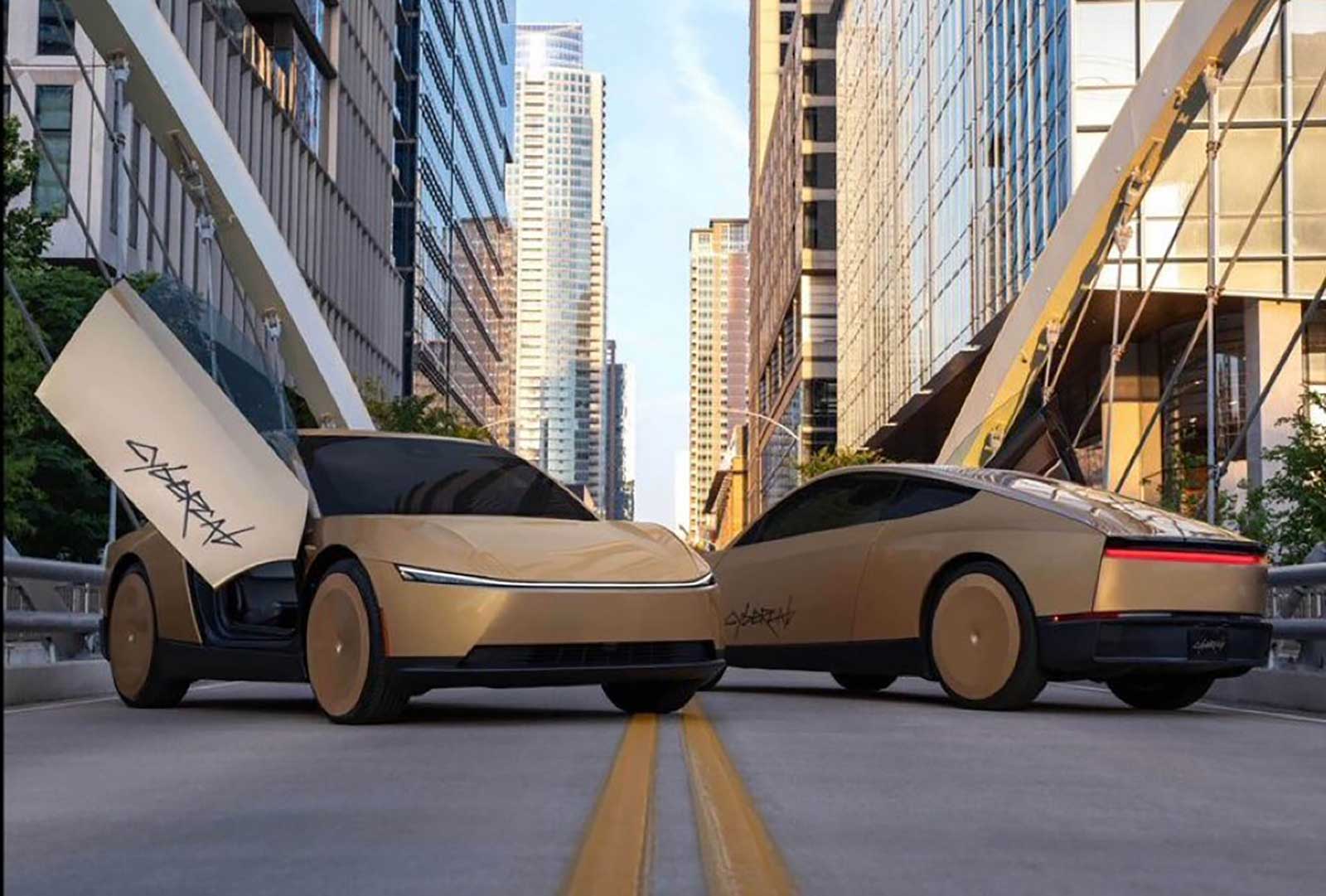
Cybercab Day Arrives as Robotaxis Become Bankable
Tesla’s Cybercab launched paid commercial rides in Austin with no steering wheel or brake, reaching one million unsupervised miles and opening to the public, a milestone Grayson Brulte and Walter Piecyk call historic for autonomy.
Waymo simultaneously moved to raise roughly $3 billion in debt, expanded to 14 commercial markets including Denver, San Diego, and Tampa, and posted a logistics manager role signaling accelerated fleet growth. Uber’s lobbying efforts to mandate 85% human drivers in new legislation drew sharp criticism as regulatory capture, while Wayve earned praise for transparently labeling its new UK hailable service as supervised.
The episode also covers Zoox at Las Vegas airport, DiDi’s R2 robotaxi, Applied Intuition’s Saudi Arabia freight corridor deal, and Aurora’s upcoming analyst day in Dallas.
Key Autonomy Markets Episode Questions Answered
How many unsupervised miles had Tesla’s CyberCab accumulated at the time of the Austin commercial launch?
Tesla reached one million unsupervised miles at launch, with Walter Piecyk estimating approximately 620,000 of those miles added in the roughly six weeks since safety monitors were removed.
Why did Grayson Brulte and Walter Piecyk criticize Uber’s lobbying on autonomous vehicle legislation?
Uber was pushing for a mandate requiring human drivers to account for 85% of rides during a three-year pilot, which the hosts called regulatory capture. They noted that Uber’s own policy paper simultaneously admitted driver utilization and hourly earnings were already declining in AV-active markets like San Francisco and LA, making the framing contradictory.
What does the Waymo logistics manager job posting suggest about the company’s near-term plans?
Grayson Brulte interpreted the posting, which required international experience as a signal that Waymo is preparing to take possession of Hyundai Ioniq 5 vehicles, expand its depot infrastructure, and potentially grow from 14 commercial markets to roughly 28 to 30 markets within a year.
Autonomy Markets Topics & Timestamps
[0:00] Tesla’s Cybercab Launch in Austin
Tesla opens the Cybercab to the public in Austin with paid rides across the full ODD in a vehicle with no steering wheel and no pedals. Grayson and Walt call it a historic moment for the Autonomy Economy despite a coordinated effort to downplay it.
[08:38] NHTSA’s Probe into Tesla’s Self-Certification
NHTSA’s evaluation of Tesla’s self-certification is the agency doing exactly what it should. It builds public trust, it is not slowing Tesla down, and it could run for weeks or months with no commentary from either side.
[15:49] LiDAR Debate
Grayson and Walt take on the LiDAR absolutists. There is no one size fits all for autonomy, and every company should be allowed to build its own stack and run the race.
[21:42] Tesla’s Fleet Ownership Model Questions
Tesla’s new form inviting individuals and companies to purchase Cybercab fleets and infrastructure signals a franchise or private ownership model, with Tesla’s ability to finance the fleet as a structural advantage.
[26:21] Tempering Expectations on Cybercab Rollout
The rollout will be methodical, not all at once. Austin needs to reach 100 vehicles before the pace in other markets can be judged.
[27:54] Uber’s Regulatory Capture Campaign
The Financial Times reports on Uber’s push to require human drivers for 85% of rides in New Jersey and Washington, DC. Grayson concludes Uber is under siege from autonomy, while Walt notes the cap kneecaps Uber’s own autonomy partners.
[34:44] Waymo Expands to Denver, San Diego and Tampa
Waymo opens public rides in three new markets, reaching 14 U.S. cities. Denver will be its first cold weather test.
[36:33] Waymo’s $3 Billion Debt Raise
Waymo’s first ever borrowing arrives less than a year after its $16 billion equity round. A new head of logistics posting signals the Hyundai IONIQ 5 ramp and more depots are coming.
[38:45] Robotaxi Depot Infrastructure
Depots are more complex than they look. Power, zoning and car wash permits are becoming gating factors, and private equity is already rolling up car washes.
[41:08] Zoox Launches Service at Harry Reid International Airport (LAS)
Zoox earns its first clappy hat for curbside pickup and drop-off at the Las Vegas airport, then expands testing to Houston and San Diego. Grayson believes Houston is a commercial launch market in disguise.
[48:40] Wayve and Uber Launch Supervised Rides in London
Wayve states plainly that a safety driver is on board for every trip. Uber frames it as the first autonomous rides in the UK. Only one of them gets a clappy hat.
[52:32] Autonomous Trucking
Secretary Duffy shuts down 110 CDL schools, tightening driver supply on Aurora and Kodiak lanes. Plus.ai attempts a third SPAC at roughly $800 million and Kodiak hauls one million tons of sand autonomously for Atlas Energy.
[55:22] Foreign Autonomy Desk
Applied Intuition partners with Humain on an autonomous freight corridor in Saudi Arabia, DiDi begins driverless trials with the UAE next, Waymo heads to Munich against Momenta and Uber, and WeRide’s robobus operates in Singapore.
[1:00:33] Next Week
Investor conferences put every autonomy CEO on stage, the Waymo debt deal closes and the Cybercab fleet count in Austin gets watched day by day.
Full Episode Transcript
CyberCab Goes Commercial in Austin
Grayson Brulte: Walt, it happened under embargo for whatever reason but Tesla threw their Cybercab launch party in Austin at Austin City Limits. I’m sitting here hoping the w- the great Willie Nelson was gonna come out and be the first rider. Unfortunately, Willie wasn’t there, Elon wasn’t there. Limited stats as Tesla hype machine geared up low and behold on the right shoulder came the press release cannon every company in autonomy dropping bombs in press releases all over the place. They did that, Waymo tapped the bond market. Bond? Waymo bond. Let’s start with what happened at Austin City Limits where our good friend David Moss was there with his father live and in person
Walter Piecyk: I mean, when I saw one of David Moss’ rides in the CyberCab and he was playing, I think it was Kanye, I was assuming that you were gonna lead in with some, some type of Kanye lyrics or some type of lyrics, so I’m thankful for our listeners’ sake that we didn’t get a a rap opening this week. but look, Cyber Cab, this is, you know, this is a pretty big event, right? You literally have today in this market more than a few cars throughout the entire ODD taking paid rides in a vehicle that has no steering wheel and no brake. And unlike the other car vehicle that did this, which was Zoox in Las Vegas, it’ll go wherever you want it to go. It doesn’t go to six or seven locations, and from what I’ve seen s- thus far hasn’t stopped in the middle of any, any intersections. I mean, I realize that people are always gonna try and tear things down. That’s fine. it’s not at 100 cars, I don’t think yet, so it hasn’t hit the milestone that you and I have set to deem that a market’s commercial. But like this is a pretty monumental event. It’s. I guess it’s a little odd that, that Elon wasn’t there, but, but to make such a big deal that like at this, whatever this event that they had for the, for the influencers among them you know, that’s not the, that’s not the story here. Like the story is like that the cyber cabs are in the market taking paid rides in, in the full ODD. Like I don’t know how you view that other than being a pretty big milestone for autonomy in this country if not globally
Grayson Brulte: It’s a major milestone for autonomy. Tesla’s doing the one thing the US Open isn’t doing, they’re inviting the influencers in to, to see this because Elon understands the power of X when the m- my opinion, one of the reasons why he bought Twitter but I gotta tell you Walt, you and I analyze this yes it is a, it is a historic moment despite that let’s call it the negative Nelly brigade. I’m just gonna say this for the record It seems to me in my analysis that there was a coordinated attack to make this not look important through various different folks in the media and influencer channels Maybe they need to go down a few honey deuces at the U S open to realize that this is a very important moment Not just for tesla But for the entire Autonomy economy
Walter Piecyk: I don’t disagree with you. There was obviously press releases ready to go, media talking points that were s-, that were sent out. and based on some of the conversations that you and I have had, yeah, I mean, I get it because that’s, that’s what fear. That is what you know, fear drives in the market. So look, we’ll, we’ll have to monitor this closely. We’ll see, you know, how many cars they get there. We’ll be in, in Texas in a couple of weeks and, and, you know, ha- have an opportunity to get in some of those cars in Austin just– And l- look, for context, right? I mean, they hit a million unsupervised robotaxi miles. That’s obviously, you know, much less than the 200 million that Waymo has. But okay, so what? Like, they are now commercial in the market, and it’s just growth and competition from here. by the way, the number of miles that they put on where I thought I didn’t think that this was gonna happen until year end. These guys cranked out 620,000 additional miles since the l- Since, in the last six weeks, it sounds like if, if that’s, if my math is correct. Maybe my math is off. I’m sure some of our listeners can help me out with that. but since the safety monitors came out, they’ve put on a lot of miles. And now you look in the market, and there’s these gold cars everywhere, which by the way, is a complete counterpoint to an episode that we did probably over a year ago, where we talked about the benefits of, of not having all of these sensors on the top and not being, you know, not standing out as an autonomous vehicle. These CyberCabs clearly stand out a lot in, in Austin from what we’ve seen
Grayson Brulte: They do stand out, and you missed the key point there when you said a million miles. A million unsupervised miles. Unlike some companies, Tesla discloses supervised versus unsupervised miles, so I’m never gonna stop on that until the market agrees with it. And to, and to Wayve, I mean we’re gonna get this later. I just gotta give Julianne and the team a huge shout-out. Thank you for putting out an honest press release, and we’ll get to that later but thank you. You’re doing it the right way. Back to Tesla, I like it that it stands out. We were– You and I had these great tacos in Austin and we’re talking about this Walt Disney analogy of just kind of blending in, and then the Cybercab is growing on me. One of the things that, going back to X that we’ve seen, the pricing is different. They’re pricing it as a two-seater not a four-seater. So it’s, it’s even more affordable which, I’m sorry Uber bulls, is gonna put more pressure on Uber as Cybercab scales ’cause they’re gonna undercut the price even further
Walter Piecyk: Look, I a- I am not going to. I- I’m gonna stay consistent, I think with what I’ve said historically on this podcast about pricing. Like you cannot draw any conclusions from day one pricing. You don’t know if they’re generating profit on this. Like this is not a, you know, a truly public product yet. So you could have companies that, that try and price aggressively to send messages or to try and grab share. However, like we did go and see how this car is made. We have a good understanding of the cost of this car relative to where Waymo’s cost is, and certainly some of the other cars that Uber is partnering with that are in the market. And it’s substantially lower amortized over a half a million or a million miles, right? For a utilization that Uber CEO himself, Dara has said, “You know, the autonomous cars are utilized much higher than a typical, you know, Humain driver.” I don’t think that’s you know crazy to understand why that’s, why that’s the case. So for grant me where the pricing is today, I think it’s, it’s interesting. But ultimately, you know the cost structure of this is much lower. And then the most important thing, Grayson, you’ve got a cost structure, you’ve got what you price in the market. The most important thing: competition, right? Competition is what drives lower prices and more innovation. So if you go to Austin today, you can get an Uber, you can get a Waymo, and now you can get a Tesla you know, for a robotaxi. And, and competition is, is again, you know, what makes our country great in terms of the innovation and, and, and building business models that are ultimately good for consumers
Grayson Brulte: Bingo You’re right, competition is the free market. Let the, let the product win. Don’t sit here and try and put regulatory moats inside with unions to meet your current objective, which was your, not your old objective. We’ll get into that a little bit later. But Austin, and then, you know, we talk a lot about it, but Zoox has clearance now to charge, so perhaps they’re gonna get going in Austin. They’ve been testing there for a while. So then you’re gonna have three. You’re going to have U- Uber you’re gonna have Waymo on Uber, which you’re gonna have to play autonomous roulette, which is a not a good experience. And y- you’ve got Tesla CyberCab, Tesla Robotaxi, and then perhaps the Z- Zoox Mobile and even perhaps Motional or Lucid Nuro goes in that market. So that’s going to be a very, a hot market. But when we look at that market, and before we get back to Tesla, the one company that’s kind of disappeared, and this has been their home base for a long time of testing even before Tesla relocated there: VW MOIA. You don’t hear about them in Austin very much, even though that’s their home testing base in America. Just wanna put that out there. But back to Tesla, you’re right about pricing. just a little bit clarity here. We just got a tweet about 10 minutes ago, Walt. “Cybercab is opening to the public at PM CST today.” So members of the public are gonna start riding it at PM CST. We’ll be in there in a few weeks. It is a good positive sign. Now the clock ticks to how long does Dallas, Austin, Miami come online with Cyber?
NHTSA Probe
Walter Piecyk: Now let’s get to the FUD that we were getting pummeled with yesterday. And, and I think there’s, in my dealings with investors, you know, I think there’s a l– s- a fair amount of misunderstanding. I’m not sure where this information is coming from. I’m guessing I, I’m guessing. I think I know where it’s coming from, but I’m not gonna. I don’t know for sure, so let’s, let’s not speculate. But I think there was a -not to pick on somebody, but sometimes some certain people are easy to pick on. In this case, Gene Munster once again with a tweet, I think encapsulates what I’ve been hearing today. This is what he tweets: “NHTSA needs a wake-up call.” Needs.” NHTSA needs a wake-up call.”. Administrator Morrison. The agency,” quote, “‘rained on the Tesla Cybercab launch by opening a probe into Tesla’s self-certification'” And then there’s an em dash, so I don’t know if that’s AI or he uses em dashes. But anyway, specifically whether a vehicle with no steering wheel or pedals meets federal safety standards. Question for NHTSA: Why slow the rollout of autonomous vehicles when the best data we have say they’re seven to ten times safer? Blah blah blah blah blah.” So I think that the, the problem here is that, or the challenge here, and, and maybe I’ll let you, ’cause you and Rob have done far more work on this than I have, is like this is like what is expected. Like when you self-certified, it is the job of NHTSA to actually watch what’s going on and then if they have questions, and clearly this is a new vehicle, they’re gonna have questions see what’s going They’re not stopping Tesla from doing anything. They’re not slowing down anything. They’re seeing how the roll out’s going and, and for good reason. Like the, the administrator I think who’s very pro innovation, you can look at the, the CNBC clip. I’ve, I put it up on my, on my Twitter feed, X feed If you wanna take a look at how he’s talked about this should be focused on safe He’s doing his job. That’s his job. But at the same time, he’s pro innovation, is not just gonna li do a knee jerk reaction like we’ve seen fil, from so many other politicians on shutting things down because of the perception of what a sensor What sensors are needed or,or whatever other kind of FUD has been pushed out into the market. But again, I’m sorry for going on for so long. Grayson, you and Rob have done much more work on this. What are your thoughts on this tweet and all of this, this buzz around NHTSA?
Grayson Brulte: I think the tweet is highly inappropriate to, to quote Mr. Munster and say NHTSA needs a wake up call is. It’s incorrect. Furthermore, it is factually incorrect, and I would encourage Mr. Munster to go through the vast archive in, in the public media where Secretary Duffy has spoken about America’s need to lead on autonomous vehicles and setting the regulatory environment so America can accelerate this. Read the public statements and speeches given by Administrator Morrison on NHTSA’s commitment to scaling autonomous vehicles in America. Both Secretary Duffy and Administrator Morrison are well aware of the competitive threat that China faces, and this does not come as a surprise if you listen to Autonomy Markets or Autonomous Singles or read any of the research that we put out at Road to Autonomy. NHTSA’s merely doing their job. NHTSA does not need a wake-up call, point blank. NHTSA is doing their job, and I commend administrator Morrison and Secretary Duffy for putting autonomy front and center and caring about it because, Mr. Munster, if you go back three and a half years to the Biden administration, this vehicle would never be on the road. And if you don’t believe me, go read the public documents in the Federal Register. That’s right. If the Biden was still president, or Harris, this vehicle would not be on the road. So that needs a wake-up call, not NHTSA
Walter Piecyk: All right, so I don’t– Again, I didn’t mean to make Gene the punching bag. He’s a very nice person. I’ve met him many times. he’s just reflecting, I think, what’s in the investor base. I think there’s, there’re so many people that are kinda down on Elon for a variety of reasons that are always looking for the negative. And again, we were dealing with this yesterday prior to the launch. Now look, just to be clear, like if this rollout doesn’t go well, right? If these Cybercabs start to get into accidents and aren’t acting safely. First of all I, I’m just gonna assume based on my interaction with, you know, both Tesla and SpaceX, it is– The, this is gets back to what I’ve said many times in this podcast. There’s a greater culture of safety at this company than I think anyone gives them credit for. but aside from that, like then yeah, then the, the NHTSA will play a role like they did with Zoox. But again, if this rollout goes well, like and this could take an evaluation investigation, whatever you wanna call it, days, weeks, months, like you might not hear anything o-out of NHTSA over that period. Am I, am I getting that wrong or is that your understanding as well?
Grayson Brulte: You’re getting that right. This could go on for weeks. It could go on for months with, with no commentary either out of Tesla or out of NHTSA so this is just how this process works but I wanna point out a big difference and I’m not a regulatory expert, that’s Rob’s department. You and I had the very fortunate opportunity to walk the CyberCab line. We got to see the giga casting we got to see the safety breakdowns we got to see some incredible stuff on that tour. The Cyber Cab is built on a factory line. The Zoox which will be releasing a road to autonomy report on, is upfitted It’s a difference
Walter Piecyk: Yeah, there is a difference in, in how self-certi- certification works but again let, let’s stick to the central message here which is like an investigation is what it is that’s w- what they should be doing That’s what all Americans should want them to do All Humains You want these cars to be safe and we’ll see how this, this rolls out And, and like we’ve always said like safety first you don’t Like i-it doesn’t help anyone and by the way NHTSA is doing a favor for the industry Whether it’s Tesla or AV ride Which had its own issues in, in Dallas and investigations related there in Dallas Or Zoox which has been you know to a certain extent limited It’s a benefit to the industry because you want everyone to be safe If one of these companies has some major you know accidents,It’s gonna impact the ability for autonomy to run out in any of these cities So like y-you know Again Administrator Mars and everything I’ve seen I think he’s doing a great job putting safety first But I don’t think that has anything to do with slowing Tesla if anything Tesla has been the biggest gating factor on themselves as they’ve tried to get this technology up to a point where they’re ready to go By the way One of the things I noticed on that To digress a little bit When I saw some of these influencers that were taking the rides today The drop off points were like three minutes to the walk whatever it was Like th– it wasn’t the exact dropoff point so I think that might have been the kind of end around On the issues that we’ve had historically why we thought this thing was getting held back The pickup and drop off points are certainly A challenge for all au-autonomy companies Maybe the way they’re doing it is They’ve now identified Safe pickup and Drop -ff locations that might require you know a short walk That’s not the exact location that we try to do In our past Rides on robotaxi An-and had Some issues with
Grayson Brulte: For the most part for robotaxis in general drop off and pick up is, is a challenging aspect that still not solved And for the audience of you N- NHTSA what does the S for NHTSA stand? Safety. And Mr Morrison and the team at NHTSA are putting safety first and they are building trust with the public. And because this is what happens in this polarizing society if NHTSA did not issue a letter there would be outcry all this outcry going on “What’s wrong?” They don’t care about safety No they do care about safety Well this, this loud mouth audience over here The same ones that were colluding In my opinion to make this a botched launch wanted it to fail They– ‘Cause there are individuals and I have gotten emails Must have lidar You don’t need fucking lidar End of dis- end of, end of the subject Okay? You don’t fucking need LIDAR
Walter Piecyk: Whoa, whoa. Y- y- are you gonna apologize to my mom for that language?
Grayson Brulte: Mrs Piecyk I am sorry but when you get outlandish emails you have to comment and use language that certain individuals understand They have proven it
Walter Piecyk: First of all, I am not, I am not on board with you there. They have proven it in for 30 cars in a ODD of one market that they’ve been there for a year. So on one hand, I’m gonna say like, I’m gonna pat us both on the back for having open minds where other people have had very closed minds on this topic, and I, and I kind of liked the fact that their, one of their CTOs that was, that was presenting at this event last night talked about all the experts that were out there that were insisting you needed the thing. So I think, you know, hats off to them. But again, like, there still could be, like, that lidar is better and then as they get into the night or different weather conditions, there’s still more learning that I am going to keep my mind opened, again, as many people like to denigrate both sides, listening to both sides. But for sure those that’s, that are absolutists, and I think you were a little bit absolutist there, I think that’s a, it, it’s a bit too far. For anyone claiming you can’t do LIDAR, like, or we can’t do without LIDAR you know, whatever. You know, I’ve got 9,000 miles I think now on my FSD. versus those with LIDAR where. No, no. No disrespect to Wayve but they, you know, they have LIDAR but in the first ride that someone did, I think from one of the journalists that, that went there, they had two interventions on, in one trip. I never had— We didn’t ever have two interventions in any trip that we took in a Tesla for the past, you know, year since this thing has been launched. Let alone, you know, in our own FSD you know, w- vehicles
Grayson Brulte: Am I an absolutist? No. Did, was that statement made as an absolutist? Yes. You could say it was made out of out of anger or o- frustration. There you go, frustration. Tesla and the team at. What Elon and the team at Tesla AI have built is completely different, and I don’t think any- anybody is truly replicating that. Every company is trying to replicate what they built with vision only. There is not a one size fits all for autonomy, okay? And for, for individuals sit here, you must have LiDAR for individuals to sit here and say LiDAR is a crutch. Let each company run the race and b- and build the stack and deploy it on their own, and don’t pontificate over nonsense to get your point across ’cause you invest billions of dollars in something that’s not actually working
Walter Piecyk: I’m gonna repeat an analogy that I’ve repeated in the past, ’cause I know you’re gonna have a listener be like, “Would you put your child in a car that didn’t have the ultimate safety of the lidar?” So like let, let me just acknowledge, and I’m not even saying that this is true for, for the Tesla bulls don’t come after me for this. But let’iest just say for sake of argument that lidar adds another level of safety that you don’t have from, from the camera approach. I’m not saying I agree with that but let’s just for sake of this argument assume that that’s the case. Okay, but if the r- robo taxi is, in Tesla’s case with the cameras, still much safer than a Humain driver we’re really just above where the Humain driver is, not to mention all the other benefits relative to where Waymo and Tes- and, and autonomy approaches. And then okay get- getting back to the criticism, how could you put your children there? Like well, you know, I own a Model Y. I think that’s the safest car on the market. Other people will spend for a Volvo which has been rated the safest pe- you know, car on the market. There’s a lot of people that put their, their kids in cars that are not very high on the, the ratings of safety. So I say to you look at your own car and, and check out where their, their safety standard or where they rank on the safety of, of whoever ranks them Consumer Reports or whatever it is. And I ask you why are you putting your kids in those cars if it’s not the safest car on the market
Grayson Brulte: Yeah. I mean, there’s socioeconomic issues ar- around why that is that, but
Walter Piecyk: Well, there is more than socioeconomic, but I, ’cause I, ’cause Grayson, some people are putting their kids in a Porsche, right? And, and, and they’re driving their kids around in a Porsche. That’s not a socioeconomic issue. Do you think a Porsche is safe relative to a Volvo?
Grayson Brulte: No, I have to correct you. It’s Porsche. It’s not Porsche, it’s Porsche
Walter Piecyk: Oh, whatever. Well, you know I don’t own one.
Grayson Brulte: So the, the issue is, is a lot of it is politics at the end of the day, and it’s just this madness that surrounds a company and an individual. Like them, dislike them, safety’s first and foremost at that company. You and I have experienced it. We both own Teslas. We’ve been in Robotaxi. We look like a. They fundamentally care about safety. And to all the haters that wanna hate, if Tesla was not as safe as they were, nobody would buy them. Why is the Model Y the best-selling car? Answer that question. Because they don’t have Derangement syndrome. They’re buying a safe product
Tesla’s Franchise Fleet Signup and Ownership Model
Walter Piecyk: Yeah. I mean, I’ve talked about this on the LightShed podcast as well. whatever. I mean, it, it is, it is what it is. let’s, let’s move on to there was other news in this, in this day of disappointments the day of s- you know, supposed disappointment which was le- the mainline media run on this thing. They also had a thing pop up on their website that said basically, “Come help build the Robotaxi network.” And, and they had people submit their names and their companies and whether they were interested in, in purchasing a fleet of Cybercab mobility hubs or infrastructure. So they’re like already onto that next step of not Tesla owning every car but, you know, to a s- I w- I guess you would call this private ownership. It’s not necessarily you, you know, only one car, but I’m sure that is part of the, the, you know, the process here that they’re gonna get to. But that was pretty big in and of itself and, and ki- I think got overshadowed by the event of the Cybercab launching. Can you kind of break it down a little bit more For us?
Grayson Brulte: It got overshadowed by the event but it didn’t get over, o- overshadowed by us. I think it is a massively important moment and I’ll say it point blank, I think it’s a bigger moment than the influencer launch. What Tesla is signaling to the market is that they want to do a franchise model. And there was a robotaxi company back in the day which I’ll remain anonymous, was going to divide up markets and sell licenses to that market in a franchise model. If that’s where Tesla’s going then they’re saying, “Okay, well you can get the New Y- You can get the, the tri-state area license. Okay Grayson, you can get the South Florida license. Okay David Moss, you can get the Seattle license.” That’s gonna be interesting. I filled out the form. Now I applied. I wanna see what happens. I’m interested in owning a fleet of these things and I think there’s others. Our, our friend Sergey over at Koop, he’s got 2,300 inquiries of individuals that say, “How do we insure this?” It is a positive step though there could be a lot more brewing there and it could be a franchise model. And for those that understand franchising not all QSR, that’s quick service restaurants, franchise models are identical. So if, if Tesla’s gonna go all the way to the Chick-fil-A model, not so interesting. If they’re gonna go more the Wendy’s McDonald’s model, very interesting potentially to individuals. So we’re gonna have to see how that modeling goes
Walter Piecyk: I don’t really think it’s gonna be a franchise the way you describe it in terms of someone getting, you know, effectively exclusive access to a market. I just think that in a market if you wanna, you know, run 20 cars they’re gonna allow you to own and, and plug into the network for, for 20 cars. They’re not gonna allow those same cars to plug into Uber or Lyft Network. And I think you start with 20, 30 cars ’cause that’s the effective– That’s the more efficient way to build this thing out but what you end with though is what if I just buy one car? And for my car it tr- y- Yeah, there’s no steering wheel on this thing. It’s gonna be my personal usage so anything that’s on the network is free to me and then I can plug it into the network for usage at night. So then you address this issue that a lot of people have brought up in terms of like, “Oh, what do you do in the peak hours?” How. Do you have to have a fleet of X to handle it for the peak hours? Well, if you have private ownership even on an individual car basis where someone could use that car during the day and then turn it out to the, to the network at night that becomes your, your peak hour. Now someone might argue like, “Well, how’s that gonna work? Someone’s gonna want to use their car.” It’s the same concept as that exists today with Uber. Like, where do you think those Uber drivers are doing? They’re using– They’re not using their cars at the peak hour. They’re actually out there being workers in those peak hours. So it’s effectively the same concept. You h- you own an asset, in this case one that’s probably less than $30,000, right? So depending on what type of car that, that you’re getting from Uber typically higher than that, at least the cars that I take maybe not on the Uber X on, on the Uber X level that is now e- you know, a revenue generating asset for you as well as your own personal autonomous vehicle
Grayson Brulte: And because this is Autonomy Markets and you’re Mr. Wall Street, I gotta bring this up. Tesla has the ability to finance the fleet for you. That is a big difference compared to a traditional Uber driver that has to get independent financing to, to get a vehicle to drive on Uber. Yes, I know there was the fair deal back in the day, but Tesla has their, has their own bank, o- own underwriting, o- own credit, the ability to underwrite these vehicles from a loan perspective to put them on the fleet. So let’s not count that out
Walter Piecyk: Now before we move on to Uber, just one tempering item on all of this Tesla foolishness that s– th- that we just delivered. For, for those that are there saying, “Oh, all at once,” you know, this whatever the comment is like, oh f-, you know, slow and then al. just we’ve said this many times in the podcast, it’s not gonna be all at once. Like, you’re not gonna have 10 markets just light up with 500 cars. There are, in our view, and I think this is, you know, an educated view, there’s work to be done in individual markets as they roll out. Now look, they’re not gonna be limited like Waymo has been limited in, to the extent of upfitting and getting c- Jaguars and then waiting for the, you know, the, the Ohios to be done and then upfitting those. They can crank out a lot, so the pace will be faster, but the pace is not all at once. This is the absolutism that that I just really disfavor.It will be methodical. It can be quick. Let’s see how they do in Austin first. Let’s, let’s g- let’s get them to 100 in Austin and then maybe some of these other markets, and then, and then we’ll, we’ll reevaluate how quick that pace can be. But I think you have to temper some of those expectations
Grayson Brulte: That’s what we do here. W- I mean, we’re the, the truth detectives or the inspectors, whatever term you wanna use, but you’re right. It’s, it’s, it is going to be a slow, gradual rollout, which goes back to what you and I have said for a long time, and we get a lot of flack for it, Tesla fundamentally cares about safety. And I wanna leave you with that as we go on to the next section. Tesla fundamentally cares about safety
Uber’s Regulatory Capture Push
Walter Piecyk: All right, so the next thing is I’ll give Financial Times credit. I think this was a strategically timed release of this article which really wasn’t new news. It was a bit of a rehash with some additional quotes including from Uber themselves, which was a little surprising honestly. but just talking about how they’re pushing on lawmakers in Jersey and DC and you know, and th-this again something we’ve talked about here before on this podcast that Humain drivers have to be 85% of rides during this three year pilot. Obviously this could be restrictive to autonomous companies and it’s what we call, you know regulatory capture. In Uber’s own policy paper that they used to support this– This was published back in May of ’26. They actually conceded that driver utilization and hourly earnings are already declining in San Fran and LA, which is interesting, right? Because didn’t we see on Twitter a lot of reports pushing how “Oh there’s no impact on us in San Fran and LA,” And yet part of the argument here is that oh, that the hourly wages are down. I think there’s a Gridwise analytic study of some AV active cities where hourly wages were dropping 3 to 6% year over year in San Fran, LA Austin and Phoenix while Rideshare markets without robotaxis had a slight pay increase. But even U-Uber’s own policy paper said driver utilization and hourly like earnings were already declining. So which is it? Are they having no impacts on you in the market or are they having impacts on your market and is this reaction of regulatory capture you know a bit over the top? I mean even in this article Uber COO Andrew McDonald Mac, we love the guy. You know, I think he does a good job. A great job at Uber acknowledged that the stance did look strange. He called it ironic. He literally s-called it ironic, right? Why? Because of how Uber entered the market. They entered the market, they grabbed their share, their 80% share whatever 70 to 80% share whatever it is now they wanna, you know capture that through this regulatory these regulatory walls
Grayson Brulte: I mean, if I was Rip Van Winkle and I went to sleep and I came back, I’d be questioning everything that’s happening with Uber. First they wanted to fight the man being the taxis in the unions, now they wanna be the man. Okay, so here’s the thing, and I’m just gonna put this out there just to kinda, just to just nag a little bit. If Uber wants to buddy up to the unions, why not let AB5 become law where every driver becomes a union member? Why not come out and support that? That you stopped and you fought it tooth and nail, and now you’re going after the unions to stop autonomy? You, you can’t have your cake and eat it too. This is, this is not Marie Antoinette. I mean, what is fundamentally going on with Uber? And I’ll tell you what, in my opinion, is fundamentally going on. Follow the commentary on X. Uber’s under siege from autonomy, point blank, and they are desperately trying to do tactics with regulatory capture and change the narrative by rolling out certain individuals on TV and in the media to do this. But I gotta give Rafi and the team at The FT a lot of credit for, for publishing the ground truth. The FT is, in my opinion, is doing the best job outside Joanne Mueller at Axios of covering robotaxis and, and Walt. I mean, this is strange times. I’m gonna go call up Stanley Kubrick and bring back Dr. Strangelove. I don’t know what’s goin’ on. Time to ride the bomb
Walter Piecyk: Look, again, I don’t blame them for what they’re doing, but it’s also a tell. Actions speak louder than words, right? You’re talking about autonomy at the same trying, trying to kneecap autonomy, right? And if you’re a partner, if you’re Nuro, if you’re Wayve, if you’re AVride and you’re seeing this guy like capping your volumes at effectively 15% in these markets, not to mention you’re already fighting for share among the multiple partners that Uber is trying to go on the market, like that’s– These guys are still need to raise capital in, in many cases. Like, that is not, I think, an ideal situation. The counterargument to this, and hopefully we’ll get Jason you know, on, you know, on the podcast to kind of debate this live, is like, “This is the only way.” This is what Uber said. This is what’s Jason saying like, you know, there’s. Everyone is so fearful of job loss that, you know, you have to do it. There’s no other way to. Well, there are markets where you can do that, right? And again, let’s get back to Uber’s own statements about the very, very small percentage that autonomy has in these markets. They’re not losing two million jobs overnight. This is already gonna be a process that occurs over time. And by the way, as that process occurs, as that transition to autonomy occurs, what’s happening at the same time? You’re saving lives, you’re having lower costs to the consumers because of, of competition, and you’re creating new economy jobs to service these vehicles. Eli’s talked a little bit about what they’re, what they’re hiring in Texas. These are the other states. So it’s not like this binary thing where like three– two million jobs or two million driver jobs are just gonna disappear overnight. It’s not gonna work that way. I get why you frame it that way, right? You’re framing it that way to create the fear to, in order to protect the market share of Uber. But the reality is that’s not the way it’s gonna work. So look, if in individual states let it happen, I’ve said this many times on the podcast before, like, you know, y-we, we have what Hochul and Mandami are doing in New York. When the citizens see the benefits of lower cost, cleaner, safer, more consistent rides in these other states, the consumers are ultimately going to demand this. That’s my View
Grayson Brulte: Your view is right, and then I mean in, in early education, Mamdani wants to ban AI. And I disagree with Bill Ackman on his Uber stance, but I agree with his stance going after Mamdani and saying that kids need access to this technology. So you’re right. Once an, an, an individual or a family gets access to a technology. Now gonna give a great example to Clem at Hugging Face and what him and the robotics team done. They’ve made these cute robots for kids, and it’s a great ex- exercise where a parent can sit with a child probably as little as six or seven and build robotics and learn deep, deep models and deep learning and deep thinking. I mean, that is just a fascinating thing. To the team at Hugging Face, your, your, your Pollen Robotics, great. The new duck, I’m still on the wait list, is great. Keep going and encouraging children to experiment with the nees- new technologies. Now Jetson, now that you own Hugging Face, please keep the open source train going. Now that I’ve said that, yes, what’s going to happen, and I predicted this probably about 15 years ago: individuals are going to go to a city where there are robotaxis unsupervised, for the record, operating, and they are gonna come back and put pressure on their local city councils and the- and their local governments to allow this technology. It’s going to happen, and there is going to be a tsunami, I’ll call it the autonomous wave, that is going to sweep the country at some point
Waymo Expands to 14 Markets and Eyes Debt Financing
Walter Piecyk: Let’s shift over to Waymo. they’ve got their announcement I think again directed at, at you know during week when everyone knew Tesla was gonna have this event aside from adding additional cars in the market which is what we talked about I think on last week’s podcast that’s like what they did The first time by the way The first time they did that it was noticeable right You would go to Austin there’d be Waymos everywhere and they were like flooding the market when Tesla had very few cars in the market Now with the flood of these golden cyber cabs in the market i think that impact was probably a bit mu– nuh m-muted To say the least They also By the way opened public rides in Denver San Diego And Tampa So now your commercial markets are up to 14 US cities Cities They talked about a fleet size of four thousand Which seemed low because I think we had gotten an update back in May of thirty eight hundred so I don’t know if that Four Thousand must be rounded down I’m guessing that they’ve got many more than four thousand vehicles In the market especially now That Ojai Is going to be cranking in Obviously Waymo continues to pace forward and It’s still the leader For sure in This Market
Grayson Brulte: Waymo is the leader, and they are scaling 14 cities driver-out unsupervised commercial operations. Tampa, sunny environment; San Diego, sunny environment which was not talked a lot about. The, The Denver Statesman did a good job on this, the local Denver paper. Waymo’s gonna be operating in a cold weather environment where it snows. That’s something to watch. I plan on going there this winter to ride in the Ohi in the inclimate weather. That’s something to really watch and see how. This will be their first cold weather market, how the Ohi performs in that cold weather. That’s something to watch
Walter Piecyk: One more thing. there was some headlines about Waymo being in the final stage to raise about $3 billion in debt. this is the, I think the first ever borrowing. this is less than a year since they did that$6 billion. $16 billion sorry, equity round. so you know, lot of, lot of reasons to invest obviously buying all these cars, these OHIs hopefully getting that Hyundai plant going. I s- Grayson, I also s- I think you sleuthed out, you put your Inspector Clouseau hat on and, and which, yeah, you have a new one. You have a baseball cap with Inspector Clouseau. Nice. But did you see some advertising for like ops managers? Is there a possibility that, that Waymo is gonna start building more of its own service locations or is this just a manager to bring on third parties to put that layer together for their network?
Grayson Brulte: Yeah, so now the, the, the trusty inspector hat’s on, not, not the baseball one. The baseball one is why we’re in the field, and the reason why I’m wearing that, I’m teasing to the audience, there’s a lot more field work coming. And I have a special guest who’s joining me on a lot of that fieldwork, and you know who you are, sir. Can’t wait to get out in the field with you. As it relates to logistics manager, yes, there was a hiring that popped up on the Waymo jobs career. A logistics individual with experience of managing logistics. What this tells me, in reading between the lines and, and reading the public statements that Waymo has made around the, the categories and the requirements you have, to have, they are looking for an individual as the head of logistics to oversee all the logistical components. To me, that says that Waymo is getting ready to take possession of the Hyundais. There’s more vehicles coming. It also says to me there is more depots and infrastructure coming, and they need an individual to keep the, the, the Tim Cook line, to keep the trains moving on time. And to me, it signals scale, and then the– One of the key requirements in the job posting was international experience. Waymo is getting ready to put their foot on the accelerator. 14 markets, by next, this time next year will probably be 28 to 30 markets. They are not slowing down, they’re only accelerating
Walter Piecyk: So that sounds like a role that’s, that’s managing third party partners for a lot of the logistics as opposed to investing in building their own logistics. I know last week you had a great podcast with the founder of Voltera whose– That, who’s buildings you know charging obviously right now they would only deal with one AV company at a time or one whatever fleet at a time but ultimately i think that’s a shared thing One of the interesting takeaways that I had from that podcast Grayson which I meant to ask you about was him saying the importance of finding locations of. That had zoning for car washes Like it’s an incremental problem if you want to have like a true service facility for car washing So we’ve already talked about the challenges of finding something where You could find the power that’s needed Right? The typical process here is like you bring a tr— truck of fuel to a generator to charge the electric cars Then maybe you get the gas hookup and then maybe a year later you get the power that you need Now he’s saying on top of that Maybe you need to coordinate not obviously in all locations You’ll have these sub depots everywhere But finding locations where car washes Is this there a model for private equity To just start to roll up a bunch of car washes And see if that’s A location For some of these the future of autonomy rideshare lots
Grayson Brulte: Private equity’s already rolling up car washes as, as you and I both know. It’s amazing when you look at the numbers, the amount of cash that car washers spit off. No pun intended, they do a good job of washing the money. But I digress. I digress on that statement. You are– Yes, it’s interesting when you, when you, when you talk to Frank at Voltera or y- you talk to Rob, all the intricacies that go along with zoning, and I had no idea how complex getting a zoning permit approval is for a car wash. It is a lot more difficult than you think. Give you an example, Tesla’s depot in Las Vegas h- has been approved for a car wash. I won’t disclose the location of where it is, but it’s not exactly on the strip. It’s more of an industrial area. Depots’ infrastructure are complex from a regulatory standpoint. And yes, you are going to see a lot of nuances from the local regulatory things for putting in car washes, putting in energy locations to schools. It, it is a lot more complex than individuals actually think it is
Zoox Launches at Las Vegas Airport and Expands to Houston and San Diego
Walter Piecyk: So Waymo wasn’t the only one to drop news the day of the Tesla event or around it, but also our friends at Zoox dropped something and, and even I think got some. Their CEO chiming in about how great this was, and specifically that they’re gonna re- begin driverless rides at Harry Reid International Airport. The first AV service permitted at the Vegas airport, both terminals. this is very soon after the August 10th paid launch that we covered. free rides to fares to airport to access in under a month is pretty good, and. But my question though for you is– Well, first of all, my question to the tweet, ’cause you know I had to do a little troll, I’m like, “Can I take it to the,” “.to the Cosmo?” ‘Cause we know that the challenge at Zoox is they only have limited ar- you know, number of drop off locations. But the bigger question, Grayson, is like I thought that, that the, the NHTSA limitation, they cap them at 45 miles an hour so how are they getting to the airport if you have to take that road that has a higher speed? Do they basically get now get a waiver on being able to drive these things at the faster speed?
Grayson Brulte: No, they, they do not get a waiver. this is AAA. I have not been to Vegas in a while since the AAA p- average posted speed that what you’re supposed to do is 40 miles an hour. So technically Zoox is going to operate at 40 miles an hour. It will be slow. How much honking there’ll be? I don’t know. I’m looking forward to getting to Vegas to experiment it. But they’re within their, they’re within their legal right of, of the roadways to, to operate there. The most important point, and I am afraid to ask how much it’s gonna cost but I’m gonna do it anyways because I’m gonna go there and experience it: drop off and pick up at the curb. To Team Zoox, you get the clappy hat. I think this is the first clappy hat I’ve ever given Team Zoox. But again, you’re getting the clappy hat because drop off and pick up curbside. That is awesome. Now, I’m afraid to ask what the surcharge is gonna be ’cause we know it’s $40 at The Sphere. I’m afraid to ask what it is at at the airport, but extremely well done with, with curbside. Now Walt, the question is does Waymo get curbside next for this? Does Tesla get curbside next for this? And if they do, does Uber have a meltdown
Walter Piecyk: I mean, you already covered the amount of advertising that Zoox does in that airport so it doesn’t surprise me that they’ve, they’ve built a strong, a strong relationship there. If you s– You claim you’re gonna take it but then you’re gonna have to stay at a hotel that Zoox actually has a drop-off location at unless you’re gonna take a. You’re gonna connect through to another to another ride. But I don’t know. And again, getting back to the 45 miles an hour like they can go 40, but I thought the limitation was if the speed limit on the road was that high that that car was not allowed on the road. I think we need to do a little bit more work on, on how that all went down and, and you know first, firsthand experience if anyone’s out in Vegas take one of these things and let us know how it goed, how it’s going. Th-that wasn’t the only news They also expanded to Houston and San Diego. You know Houston is near and dear to our heart. i-it’s –They, they by the way painted this as a weather issue in its own talking about the heat in Houston the heavy rain that’s in Houston. They talked about San Diego, the fog and the freeway corridor So they’re, they’re, they’re like playing up “Hey our Zoox is gonna operate in more difficult locations.” Those are still warm locations Let’s be honest Imma see these things in the snow That’s, that’s the true I think challenge for these things. but Houston is interesting just because that’s, that’s the market we identify where we thought that Nuro you know maybe should, should identify To launch in first given the challenges that you and Rob think that Nuro is gonna have in getting the permitting that’s required to launch that Nuro Lucid Uber partnership in California by year end as, as many people expect
Grayson Brulte: Yeah, based on the regulatory environment it is going to be in our belief Houston because they can charge for rides. Uber has told the market that they are going to launch paid rides. I do not see any which way that that’s gonna happen in California this year; paid rides. They could launch a service with free rides but I don’t see whether they’re gonna get to paid rides unless I misread this. But I believe that market is gonna be Houston. Zoox is clearly expanding and I alluded to it in last week’s newsletter that Zoox has grand ambitions and it’s no longer rounding error. We’re producing a report on that and all I’ll say there’s a lot more vehicles in different states of shape than Zoox is having you believe. They have the ability from a vehicle standpoint to scale this. While I say they have the vehicles, I still have questions around th- the technology and the rollout into still my belief that is– it is overengineered. And I was thinking about this the other day, which I’d love to get your take on from the Zooksmobile: people go to Vegas and they bring big suitcases for whatever weird reason. What’s gonna happen if you have two people with big, with, with big checked luggage getting into the Zooksmobile? There’s no trunk,
Walter Piecyk: There’s no trunk, but I think there’s plenty of room in that cab, just like if I take a, a London taxi, there’s plenty of room in that cab, you know, for those luggage things, or maybe they’ll just get a second Zoox. But can I get your impression on the, i- is Houston and San Diego really something to brag about as it relates to weather? Is that truly a weather challenge?
Grayson Brulte: San Diego, no. Houston, yes. Houston gets monsoons. They get incredible heat. The, the Houston weather, I mean from a heat perspective is, is hot but they’re also testing in Miami which you know, you could say Houston’s hotter but I just think that they’re looking at Houston from a deployment market. I think this is gear– I think they’re using the guise saying oh we’re going there to test. I think that’s not necessarily true. I think they’re going there to gear up to launch commercial service because if you look at this, they gotta get out of Vegas. They got to get into a real market, not an adult Disneyland market
Walter Piecyk: I mean, I’m not sure why heat is a challenge, but whatever. But I’ll give you the heavy rain, ’cause we know that, that obviously Waymos have had issues with heavy rain and the resulting flooding. So if you’re Zoox and you’re framing this as like, “Hey, we’re going to Houston to do weather validation,” as your stated point, then I can’t wait for that first heavy rainstorm. So are we gonna assume that they will not suspend service during the heavy rains like we’ve seen Waymo, and I think in some cases even Tesla do?
Grayson Brulte: Don’t know. What we do know, and there has been a public blog post so I wanna cite this to a public blog post put out by Magna Steiner that Zoox has done extensive rain testing in Austria at the Magna Steiner plant. Whether that translates into real world, I’m not sure. I I think the flooding issue for our friends at Waymo is close to being solved. I have. With David Moss and I were in a Tesla robotaxi. We handled a flood and that was a pretty big flood. But Zoox, we have yet to see them operate in a non-dry environment ’cause Vegas is a very dry environment, so let’s see how it truly operates. And not testing putting paid passengers in the vehicle so we can get unfiltered feedback
Walter Piecyk: I mean, does Vegas not get hot?
Grayson Brulte: Vegas is scorching. It gets scorching
Wayve and Uber Launch Supervised Robotaxi in London
Walter Piecyk: Right. So the heat thing, I don’t. Just enough of the heat thing. That can’t– If that’s a challenge, then autonomy’s got a problem. Anyway, let’s go across the pond where you get— You don’t get heavy rains, you get spritzy rains. Lovely weather in London. It’s spitting out. Uber and Wayve launched first hailable robotaxi service this week. Mustang Mach-Es, I believe, small fleet. to your point earlier, like hat tip, clappy hat, whatever you want, get the clappy hat out. The Wayve tweets are very plain about it. Supervised autonomous ride. They said a trained, a, a TFL licensed private hired driver on board for every trip. You know, talked about the locations that it can and can’t do. You can request a Robotaxi, you only get matched. So, like pretty detailed and straightforward, just the way we like to see it. And then conversely, you had the Uber framing, which I think, you know, you had had some issues with last week. First ever autonomous rides in the UK, like no mention of all this other stuff. And I think getting back to the earlier kind of Gene Munster, like I think most people when they’re, when they’re just digesting the information that’s fed to them from these companies and all they see there, th-that’s why you, you know, when you have all of these online things about, oh, Uber’s 15 partners and they launch in this market and launch in that market without the kind of recognition that you have a safety driver in there. It’s not as y- to your point, unsupervised. So, to present it as such, I think kinda helps that narrative continue to their benefit, right? So I think to Wayve’s credit ’cause I think credibility is the greater issue here as it relates to autonomy you know, they were a little bit more detailed in, in announcing this new market
Grayson Brulte: Happy clap to you, Frank, Julian, Alex, Rob, and the entire team at Wayve. Tilly, you’re back, so you get to clappy hack ’cause you’re the OG and you’ve been doing great things there since the beginning They did it right. They clearly stated supervised rides. Wayve did not try and manipulate video footage to show that there was no driver like their partner did, they said it straight. And to team Wayve thanks for communicating the truth with the market and not trying to stretch it into your partner Uber please if you have– If there’s a safety drive, please show the safe driver. It’s nothing to be embarrassed about. Please say that it’s supervised There’s nothing to be embarrassed about The technology is evolving I’m f– unfortunately, Waymo left you at the altar but your new partners of technologies are evolving so be honest about it Don’t try and get cutesy and crafty We all see what happens when that happens So no clappy hat for you
Walter Piecyk: They still get a clappy hat because it is a market that launched for them, you know, another market that launched, right? They have a, a number of different markets that have launched with safety drivers and, and obviously with WeRide you know, without the safety driver. but I just– When I saw that, when I saw that Wayve tweet post, I was like, “Holy cow.” That was, like, very straightforward and it just, it was so starkly different than what their, what their partner posts. Which by the way, you would think that it should be actually the opposite, right? Where the technology company that, that needs to raise probably more capital would be out there effectively hyping it as, as much as they can. But so it is. So it goes. I mean, look, not a great PR week for Uber between the Financial Times article and how they’ve managed this whole regulatory capture thing and then that, you know, not ideal. shall we move on to what I’m gonna call trucking depot? because you had a couple of quick things. Don’t fast forward everyone. Foreign autonomy desk is, is next, but trucking is a big industry. Stop the fast forwarding through trucking. First you had Secretary Duffy. he shut down 110 of these CDL schools. So these are basically, you know, these drivers that have created the problem. The AV angle here is obviously every driver that’s pulled from the pipeline, pipeline tightens the supply and these are the exact Sun Belt lanes that Aurora and Kodiak are running in. So this is regulation is becoming an additional tailwind as if the trucking didn’t already have plenty of tailwinds. So I thought, you know, hats off to Duffy for doing that, but I think this underscores the importance of, of autonomy in trucking which is a huge market. Now meanwhile, there’s a, there’s a competitor in the market Plus.ai who’s trying to go public again via new SPAC. This one’s called Texas Ventures Acquisition. do you wanna give us the history of the SPACs of Plus.ai?
Grayson Brulte: Third time’s the charm. That’s what they’re hoping for. the first two SPACs unfortunately didn’t work out, and now they’re trying a new SPAC with a company that has interest in crypto. And I’m not a SPAC expert. I’m not going to comment on the likelihood of the outcome. All I’ll just say is that Plus is probably hoping, I’ll guess that they’re hoping, that third time is the charm
Walter Piecyk: I mean, Plus is gonna– plus posts a bunch of revenue ’cause they’ve had Amazon trucks, right? That historically that provide them with driver data that they’ve been able to monetize and sell for autonomy. So that gives them a nice revenue number relative to what you seen Aurora and Kodiak have, which are more traditional autonomy numbers. But, but just to put some hard numbers around this SPAC issue, I think the first one was the Hennessy SPAC. This, this is back in ’21, so five years ago. I think the initial valuation sought there was 3.3 billion, and then the most recent one was Churchill. That was 1.2 billion. And this one, I think the implied valuation is 800 million. So you’re really down pretty substantially from the first attempt to go public. you know, f- hopefully for their sake that they can get this capital in the door and, and kind of move that, that model forward. Meanwhile, our friends at Aurora remember are coming up on a big analyst investor day down, down in Dallas. We’ll be down there doing other meetings as well and checking out some stuff in Dallas and Texas. always love to get back down to Texas. It is, you know, the state for I think Autonomy
Grayson Brulte: And let’s not forget Kodiak announced this week that they’ve hauled one million tons of sand fully autonomously unsupervised for Atlas Energy. So can’t forget that there. You’re gonna have fun at Analyst Day. I won’t be there, don’t worry. I’ll be on a secret mission doing something else
Walter Piecyk: So let’s go to, what do we got on the foreign autonomy desk this Week, Grayson?
Applied Intuition Partners with Humain on Saudi Arabia Freight Corridor
Grayson Brulte: The foreign autonomy desk is great this week. I’ve said this many times to Qasar and Peter who were the cofounders of Applied Intuition. Applied intuition is the most interesting company in autonomy, and for those that put my money where my mouth is, Qasar and Peter have been on The Road to Autonomy podcast more than any other guest, and they are coming back. And once again, Applied Intuition continues to make really great news. This week, they announced a partnership with Humain, which is a wholly owned subsidiary of the PIF, the Public Investment Fund in the Kingdom of Saudi Arabia, where they’ll be partnering to deploy autonomous trucks and building an autonomous freight corridor in the Kingdom of Saudi Arabia. Big move there for Applied. Th- their stack is clearly scaling, and for those that wanna go back in the way back machine with us, do not forget, Applied Intuition bought Embark. So part of this is built on the old Embark stack
DiDi Launches Driverless R2 Robotaxi and Global Autonomy Desk Roundup
Walter Piecyk: I think we also had some news out of Didi, who began their fully driverless service trials at least. They have a next gen robotaxi they call the R2 bookable on the DiDi app. So I think this is a company, Chinese company obviously, pairing a demand network, so like Uber, with its own purpose-built vehicle, right? And so this is effectively the Tesla model or I guess, you know, probably gonna be the Waymo mo– Well, not the Waymo model, sorry, ’cause Waymo does not have their own purpose-driven vehicle. What, what are your takeaways on, on DiDi here?
Grayson Brulte: Going back Eight years ago Alan Kornhauser, you’re gonna have to fact check me on this. Alan Kornhauser is a professor at Princeton. He hosted a, a really great autonomous vehicle summit. He hasn’t done it for a few years but way back in the day he did it and he brought the individuals from DiDi go way, way back. And then for a while, DiDi’s tech was far ahead so I’ll, I’ll, I’m gonna frame this as a comeback. Alan, you might have better insight than I do, but I’m gonna frame this as a DiDi comeback. It’s going to get interesting ’cause their technology w-was ahead before something happened. I don’t know what happened, not gonna speculate on that. Positive, so Beijing GuanZhong. And th- no, no surprise here, they’re getting ready to expand to the UAE so you and I need to put on our inspector hats on and, and head to the UAE to really see this technology because it seems that after Hong Kong, the next stop is the UAE for this technology. So overall positive step. We don’t have much data, still looking to get data, but a, a positive step of another Chinese company looking to export autonomy to the world in an initiative that I’ve coined The Autonomous Belt and Road Initiative
Walter Piecyk: Now there’s one other company that we’ve talked about here, which is GSM which is Vietnam’s electric ride-hailing operator. I think they have an IPO plan on the Hong Kong Exchange, but I think there was reports this week about them weighing expansion in the US. Now, I don’t know– I think their model is car ownership, right, as opposed to platform. I don’t know if that’s what they would plan in the US, but do you think the US market can sustain that them as an entrant?
Grayson Brulte: I’m gonna look at this ver- in a very simple way. I’m gonna give you a cop-out answer. VinFast is not exactly driven up the auto sales charts, so I’ll leave it at that
Walter Piecyk: They have 40% of Vietnam’s ride-hailing market. A little different than the US market ahead of Grab there, but they’re already in Laos, Indonesia, Philippines, India, and Kazakhstan. You know, similar dynamic markets. I think the US would be a pretty big strategy shift for them. anything else on the autonomy or On the foreign Desk?
Grayson Brulte: You just said the word that I think we’re the only ones, and Rob and I have done, I think three or four podcasts on it now: Kazakhstan. Not the home of Borat, the home of manufacturing. They’re operating in Kazakhstan. That is a market that I cannot emphasize enough that our audience needs to pay attention to. And staying on the global front, Waymo announced they’re getting ready to build and deploy in Munich next year. So Waymo continues their European push, and that’s gonna be a market where, no surprise to our audience, Waymo will be competing with Chinese Momenta who has a partnership with Uber, another head-to-head market. Regulatory capture has started here. Now does Uber start regulatory capture in Europe? Don’t know. Not speculating, just saying watch
Walter Piecyk: And there’s a lot of head-to-head markets that are in oc- that are occurring around the world, London, you know, Austin, I think Tampa. so it should be interesting to see competition within autonomy, let alone what they’re gonna do to the, to the Humain-driven rideshare Companies.
Grayson Brulte: Last thing before we, we go to wrap here, WeRide has their GXR Robo bus, robo bus operating in Singapore. And so pay attention to the Singapore market. It’s a very important market. So now that I’ve given the important markets, Kazakhstan, Singapore, pay attention to, they might not be on your radar, Walt’s gonna give you the breakdown for next week because he’s given me a little tidbit insight. It’s a very busy week. What do we have on deck next week, Walt?
Walter Piecyk: Well, you have like multiple investor conferences next week so all the CEOs of these companies will be speaking and I’m sure they’re gonna probably throw some shade or comments about the Tesla launch and what’s going on with Waymo in their own markets. clearly we have a– We’re looking forward to a weekend of, of reports whether on Reddit or Twitter or wherever else on how people Cybercab are going. Are they truly operating throughout that domain? How many are in the market? I don’t know how we’re gonna get to that delineation of 100 cars but it’ll be interesting. We’re gonna have to watch this one day by day This Waymo debt deal which was announced So I guess. And I don’t even know if it’s announced It was talked about in the press See where that closes If it already didn’t I may have missed that But it’s really the conference isn’t A lot of these management teams That are gonna be talking About the markets Which Should be fun
Grayson Brulte: Yeah, well, and what we’ll do is we’ll look for the signals and we’ll analyze them here on Autonomy Markets because there’s always clues and signals in what is said. The future is bright. The future is autonomous. The future is Cybercab. Walt, until next week
The future is bright. The future is autonomous. The future is The Road to Autonomy.
Subscribe to This Week in The Autonomy Economy™
Join institutional investors and industry leaders who read This Week in The Autonomy Economy every Sunday. Each edition delivers exclusive insight and commentary on the autonomy economy, helping you stay ahead of what's next.