


Bot Auto’s Playbook for One Billion Autonomous Miles
Executive Summary
Brett Suma, newly appointed President & COO of Bot Auto joined Grayson Brulte for his fourth appearance on The Road to Autonomy podcast to dicuss why he joined the autonomous trucking startup and what it signals about commercialization.
Suma details Bot Auto’s differentiated go-to-market strategy—owning a direct shipper relationship, building a sequenced lane network, and treating capacity as a utility rather than a truck count. He warns that competitors operating mixed autonomous and human-driven fleets face serious trade-off risks around utilization and driver relations, and outlines Bot Auto’s goal of moving one billion autonomous miles within four years using capital-efficient, organic growth strategies borrowed from traditional trucking.
Key The Road to Autonomy Episode Questions Answered
How does Bot Auto’s go-to-market strategy differ from other autonomous trucking companies?
Bot Auto goes directly to shippers rather than selling a driver-as-a-service to trucking company intermediaries. This gives Bot Auto control over its own network design, capacity deployment, and utilization rather than being dependent on a third party in either direction.
What is the risk Brett Suma sees in operating a mixed autonomous and human-driven fleet?
When an AV truck has limited network optionality and shares lanes with experienced human drivers, operators face an impossible trade-off: making the autonomous truck productive may mean idling a long-tenured driver, and giving the driver the load leaves the autonomous truck unproductive. Suma argues this problem is compounded when comparators build AV lanes in high-density corridors that also happen to be the best and most sought-after driving routes.
How does Bot Auto plan to finance fleet growth without large capital raises?
Suma says Bot Auto will use the same traditional banking and financing relationships that have scaled the largest trucking companies, financing trucks and trailers as operating assets rather than raising equity capital to buy depreciating assets.
The Road to Autonomy Topics & Timestamps
[0:00] Why Bot Auto
Brett Suma explains why he joined Bot Auto as President & COO after 20 years at Knight and successful exits of his own. The market read his hire as a signal that Bot is serious about commercializing autonomous trucking.
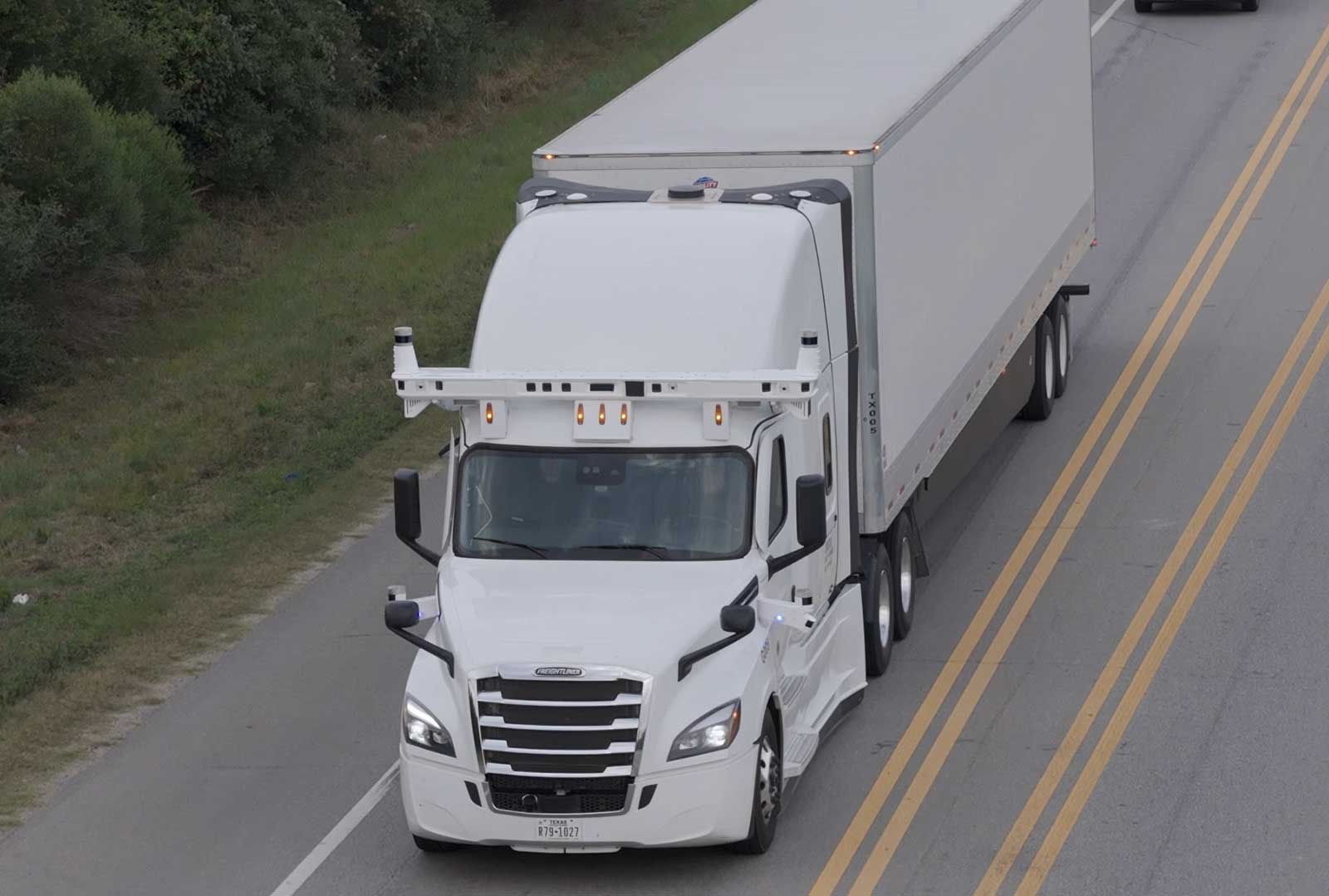
[4:56] April 29th Humanless Houston to Dallas Run
Brett reflects on Bot Auto’s first humanless run from Houston to Dallas, a milestone he never doubted given Xiaodi Hou’s track record of building world-class technology. Bot has the technical and regulatory capability to run the lane again today, with cadence moving from monthly to weekly to daily as the freight and economics align.
[9:52] Economics of Humanless Miles
The humanless mile itself is a solved problem. The real economic challenge is sequencing lane builds, corridors, and network optionality to maximize utilization, which Brett calls the problems most people never talk about when they talk about autonomy.
[14:36] Building a Trucking Business
Drawing on more than 10,000 hours of RFP analysis, Brett explains how predictable contract freight enables Bot to build the first trucking business with deterministic outcomes. Elastic autonomous capacity deployed against known freight flows removes the guesswork from performance.
[17:17] Capacity as a Utility Grid, Not Truck Counts
Brett rejects the router-and-cable analogy and frames Bot’s network as a utility grid for a demand-driven system. Without hours of service constraints, capacity is measured in sellable hours per market, shifting the industry from tractor counts to capacity nodes on a network.
[24:19] Bot Auto’s Business Model
Unlike comparators selling driver-as-a-service to trucking companies, Bot maintains a direct relationship with the shipper and controls its own network design, utilization, and optimization. No dependency on third parties in either direction.
[29:34] CapEx and Financing Trucks
Bot will not raise venture capital to buy depreciating assets. Trucks and trailers will be financed through the same banking relationships that scaled the largest trucking companies, while network expansion stays exceedingly capital efficient.
[32:15] Hidden Risk of Operating a Mixed Fleet
Brett lays out the trade-off no one discusses. When an autonomous truck and a 12-year veteran driver compete for the same load on a limited network, there are no good outcomes, and the dense, consistent lanes AV developers are building are the very best driving jobs in trucking, not the ones facing a driver shortage.
[41:49] Staying Disciplined as Bot Auto Grows
High expectations and low tolerance define Brett’s approach to disciplined growth. He is pairing Bot’s four-year lane development roadmap with a comprehensive financial model that maps truck growth by quarter, drawing on lessons learned running Knight Transportation’s largest division at 27.
[44:24] One Billion Autonomous Miles in Four Years
Brett believes Bot Auto will move one billion autonomous miles in four years. Growth will be organic and demand-driven, with the market seeing Bot stake its claim lane by lane, free from reliance on any third party.
[47:36] AUTNMY AI
AUTNMY AI is an applied intelligence firm whose mission is to develop a field-tested, ground-truth understanding of how the Autonomy Economy is being built and translate that understanding into the intelligence, foresight, and counsel that help the world’s leading institutional investors navigate the most consequential industrial transition of this century.
Full Episode Transcript
Why Brett Suma Joined Bot Auto
Grayson Brulte: Brett, it’s great to have you back on the Road to Autonomy, and I can’t believe it, sir. It’s your fourth time on the Road to Autonomy, and every time you come on, you give a masterclass in trucking economics. And today, for the audience doesn’t know, we have very big news. You were the recently appointed president and COO of Bot Auto. First and foremost, congratulations, sir. Secondly, thanks for coming on. Why join Bot, Brett? You’re an entrepreneur at heart. Why did you join Bot?
Brett Suma: Well first, thanks for having me back on for the fourth time. hopefully I provide enough value to justify the, the, the recurrence. and thank you for the, y- you know, for the congratulations. you know, I, I you know, I am an entrepreneur and I, and I do believe in building businesses and scaling them. But I don’t, I don’t believe that. W- when you look at my career history you know, I spent 20 years working at Knight, which was probably the most entrepreneurial place that I could have worked. and so I had so much opportunity there to work directly with founders which makes it feel like you’re, you know, an entrepreneur. Then obviously, you know, went out on my own, started, started a few businesses, had some successful exits there. and then when the opportunity came to come to Bot I feel right at home here in terms of working side by side founders and entrepreneurs and people who have, have built businesses before. And then, you know, fortunate enough to continue to work with people who I value and that, that are, are huge, a huge part of my success. And so you know, the, when the opportunity came to come, it was a, a real, like no, no-brainer for me. you know, just the ability to take my experience and, and, and my, you know, what I would call my freight education and then get to work alongside just world-class technologists and, and, and people who really challenge me to think deeper than I’ve probably ever thought before
Grayson Brulte: Yeah, if you look at Teta, the gentleman that works with Xiaodi, we, when I was there for the humanless run before you joined, we had some deep technical conversations. So Teta, thank you for recommending the, Demis Hassabis, the, the founder of DeepMind book. I’ve learned a lot, lot from that. Brett, when we look at you joining Bot Auto, the market is s- it, it’s saying, it’s like, okay, Bot’s getting ready to commercialize and scale because you started in the trucking industry at 19, so you’re bringing a lot of experience there. Is the market interpreting your hire as a signal that Bot is getting ready to scale commercial operations?
What Suma’s Hire Signals About Bot Auto’s Commercialization
Brett Suma: Yeah. I, I think you know, I was really touched with the, the, the outpouring of support that I got when when the announcement was made. and I think that it I, I definitely think that it’s a signal that that we’re serious, that, that Bot is serious. I think that the industry as a whole is, you know, gotten. There’s a huge spotlight on us this year. I think ’26 has kind of been the year where people are really starting to take notice of, of the inevitability of it. and so I do think that it’s been a signal. I’ve, I’ve gotten so much support of, you know, this makes so much sense in terms of, you know, what, what my ambitions are and, and the things that I want to see happen in the industry. And so I definitely think that it’s a signal of that. there’s some other signals that happened that I wouldn’t necessarily would, would say were like congratulatory things, but they were there was some things that, that. And, and I just chuckled when it happened, but and I’m not gonna go into the details of it, but I– The, the day of the announcement and there happened to be another a post that day by, by somebody who I respect a lot about how far in the future autonomy trucks actually are. And so I, so it, it felt very the timing of it felt very funny to me that they would bring up this old this old interview and post it that day. which, which was funny to me. But no, I think it’s a definite signal. I think that those who know me and know my understanding of freight and network and how network building actually happens and know my history would, would look at it and say, “Okay, this is a serious move by Bot,” and, and really a serious move by myself too to, you know, to move towards the commercialization of, of autonomy
Grayson Brulte: It is. a few months ago at dinner in Austin, Jason Calacanis said to me, “You getting attacked?” And I said, “No.” He’s like, “Well, you know you’re not doing something right.” And lo and behold, I watched the Road to Autonomy Industry, said, “Boy, I’m getting attacked every l- every, every which way.” So I guess I’m doing something right, and I guess that you’re doing something right is how I’m interpreting that. And Bot as a company is doing something right. April 29th, we were there. We witnessed the first humanless run that the company achieved. It was impressive. Construction zones, all sorts of weird stuff, and I’m sure you saw the video of the motorcycle guy going 100 miles an hour by the circus over the bridge, and the Bot truck handled that adverse situation, if you want to use the term. The people were trying to attack the truck, and the truck kept going very politely. When Bot achieved that historic mission, what did you think?
Reacting to Bot Auto’s Historic Humanless Run
Brett Suma: Well, you know, I, I felt, I felt bad for all of my contacts here because and I think that you probably were with Robert the entire time, right? And so I know that you guys were awake all night. But I– what I would say is that because of the because of my conditioning of being in, in transportation for as long as I’ve been, I was up at wondering what was happening. And so, so my text messages at, at and went unanswered because everybody had, you know, finished for the night and, and probably had gone to bed. so there was about a five-hour period there in the morning where I was just wondering how it went b- you know, because our, our hours were off. But no, I was, I was anxiously awaiting the culmination of that. You know, obviously at that particular time you know, we were still kind of finalizing the details of, of my transition in, and so I was, you know, I was kind of, you know, on pins and needles a little bit just to hear how it went. I didn’t– I, I never doubted it. Again, I’ve known Xiaodi for such a long period of time and so y- you know. A- and, and the, and the great thing about Xiaodi is that you know, everybody that I’ve, I’ve spoken to after the announcement you know, the, the, the answer always is, “Well, he– y- we know that he’s gonna build a world-class technology.” And so so I, so I never doubted it. but it was just so amazing to see and, and I remember that morning I shared it with my, with my boys that it happened, and they knew that it was happening, and I– and they– so th- that morning they asked how it went. And you know, it was like the, you know, we, we felt success even though we weren’t part of the team yet, you know? And so but no, that was a, that– look, that’s a big signal of the capability, right? A- and so so you have that, and then you have, you know, some, some, you know, obviously me coming over, what that signal, you know, signals, and then, you know, some other things that have been happening that have been really good for us. You know, we’re– it’s just setting us up for success.
Grayson Brulte: To me, it was a magical time and as the audience knows, you know, Robert and I are dear friends and we had some really incredible conversations of, of watching history unfold. And you’re right, we get back ear- early in the morning. Robert’s like, “You gonna go to bed? You gonna go to bed?” Yeah. I go- call my daughter. ” How’d it go, Dad?” Awesome. Okay, going to bed. Well, I went to bed for two hours, then lo and behold, Robert and I were back up and back at it again cr- creating more content. So it was a, it was a historic moment. When should the market look for more humanless runs from Houston to Dallas?
Brett Suma: That’s a great question. And I mean, we could do it today and we could do, you know, we could do Dallas back to Houston today. you know, we, we’re– we have that capability. you know, it takes– there, there’s, there’s other considerations that you have to make in terms of how does your freight work and, and your customer and, and all of those things. We have no issues doing it from a technology perspective or from a regulatory perspective. you know, but we, but we also, I mean, you know y-you were there, how, how many support vehicles did we have with it? You know, and so, so you, so you have to start thinking about like, okay you know, when and how are we going to start doing this? You know, let’s say we, we, let’s say we start doing it monthly and then we, we, we push that down to weekly and then down to daily, right? Like, that’s, that’s kind of like our, our, our methodology. And so you know, but we wanna make sure that A, we can– we know that we can do it, okay? How do you do it and how do you generate the economics to make it make sense to do without, with all of, you know, the, the chase vehicle and all that kind of thing that, that, that was part of the original, the original event. So, you know, we’re re- we’re ready to go. We just need you know, we need some other, other things specifically around freight and how the freight works and, and those types of things to, to move forward
Grayson Brulte: Yeah, and then, I mean, you technically need the, the chase car because the warning triangle issue until that gets r- resolved. Is, is the economics of the humanless runs, is that one of the things that you’re spending most of your time, is that how to, how to build that model and to profitably scale that model?
Network Sequencing, Optimization, and Utilization
Brett Suma: I would say that the, the ability to build the humanless mile is, is less of the economic concern around– as much as building the right network through lane selection, through corridor building, through network building, which is really a sequencing problem that you have to solve for, which we have solved for. And so, so from a e- from a macroeconomic perspective, when I mean by macro, I mean like thinking about the entirety of our system, right? And looking at it from the largest global view possible. and how do we, how do we sequence our, our lane builds in such a way that maximizes network mile creation, and then ultimately n- maximizes economic benefit to the company? And then in the proper sequencing, how much network optionality are we building into, into it? And so so m- like I’m working on the most fascinating things that I have worked on in some, in some time because I’m getting to really think about you know, how are we doing from a sequencing perspective and what is the key unlock that’ll, that from a, from a network perspective that that sequencing makes sense. And then how much optionality are we getting from it? And so those are the things that I’m most concerned about because from my seat optimization and utilization are the problems that we’re solving for. and, and those are, those are problems that most people don’t talk about when they talk about autonomy. They talk about the tech to– the, the tech that drives the truck autonomously. And in, in the world that I live in, that’s a solve-solved problem. and so now we have to think, be thinking about how do we build how do we build the business around optimal and, and high utilization
Grayson Brulte: Some things never change. There’s consistency here, Brent. For the last three episodes you were on, optimization, utilization, focus on cost was a common denominator of all, of all three times that you’ve been on The Road to Autonomy. I- I’m curious, you’re sitting there in your office, and let’s say you have, you have a map of the United States with lanes. How do you start to pick a lane and then go to investigate that lane a- as you start to build out this network?
Brett Suma: Well, I mean, part of the investigation just relies on, you know, like inherent institutional knowledge from participating in, I, I don’t know. they say that you’re not a master of anything till you spend 10,000 hours doing it, right? I can assure you I’ve spent 10,000 hours looking at RFP responses for shippers. And so, so from a freight network design perspective I, I, I have no doubt that that number is well north of 10,000 hours. and so, so I think that there’s that element of it, right? And then there’s also other things that you can use in terms of freight and, and, you know, w- you, you, you can, of course you could use DAT, you could use Sonar, you could use Genlogs, you can use you know, any- anything that you want. You also can use your repository of all of those RFPs that you’ve participated in that you have kept. And so my database of, of what freight moves in what lane is extensive. and not only from a, from just from knowing it, but also just from, you know, every RFP that comes in, you take the lane and the volume and you put it into your database, right? And so so we, so we know where freight moves. And, and look, a- any- anybody who works at a trucking company, specifically in their general management team, which is probably the team that responds to the RFPs knows exactly what I’m talking about. And so freight, freight is pretty predictable in terms of the lanes that it moves in specifically contract freight. Now there’s variations to, you know, to volumes based off of, you know, awarded volume and, and, you know, award realization. But the fact is, is that freight’s pretty predictable. and one of the things that I love about the business that we’re building here is for the first time, and, and I’m gonna use this, this concept, is that we’re building a freight business, a trucking business that has deterministic outcomes. And I, and, and I feel very confident in saying that. I feel very confident in saying that we will be able to have deterministic outcomes in our performance because, because freight is, you know, it’s pretty easy to understand. and then now that we have, you know, a capacity offering that’s completely elastic. Now you can come back into the optimization and utilization and, and, you know, the, the optionality component of it, which is then how you deploy that elastic capacity. but, you know, the reality is, is that it all leads to deterministic outcomes
Grayson Brulte: Do you also take into account seasonality as well?
Accounting for Freight Cyclicality and Seasonality
Brett Suma: Oh, certainly, certainly. you know, when I, when I have to speak with, you know, laymen in the, you know, in the industry, right that don’t really necessarily understand how freight markets work, I kind of explain that, like, the, the cyclicality of it is a very large rolling hill, right? And then the seasonality of it is a smaller rolling hill, right? And then the, the supply and supply-demand you know, inequality is like this, right? And so you have these three different things all moving in at one particular point in time. And so, so you definitely are, you know, aware of the current market cycle, then you’re also aware of the current seasonality, and then you also have to deal with the, the day-to-day inflections of, of supply and demand imbalances. And that’s where us, when we, when we think about building a native AI orchestration platform to optimize everything which is what I’m, you know, charged with, with helping do then you start to be able to, to instead of having a demand curve that is all over the place based off of, you know, seasonality or in- inbound, outbound market differenti- you know, differentiations or whatever you really can predict where you need to move your capacity. And because you’ve built your network in such a sequenced way, you have the optionality to do so, and you can move that capacity along the network in the most optimal way to give you the deterministic outcome that you’re, that you’ve programmed for.
Grayson Brulte: I mean, I’m gonna simplify this, but should we think about a network where the lane is the ethernet cable, the hub is the router, and everything is interconnected back to a central point? Is that how we should think about network architecture for PoP?
Brett Suma: No, I, I wouldn’t necessarily l- look at it like that. I would look at it more more like a, a utility grid
Grayson Brulte: Why would you look at it as a utility grid? Just based on demand
Brett Suma: Well, it’s, it’s a demand. Yeah, it’s a demand-driven system, right? Like trucking is a demand-driven system. For everything we wanna say, you know, when you look at what’s happening in the current world that we’re living in from a where we’re at in a market cycle perspective, is that it’s a capacity-driven. Our current market cycle is a capacity-driven cycle, which is not typical. Typically, cycles are always, you know, predicated on a, a shift in demand one way or the other. and so, so we’re in this, we’re in a different, you know, market cycle from a, from an origin story perspective. if we, if we were also experiencing a demand cycle right now, the freight market would be, like, insane. It, it would be insane if there was also a demand event that was occurring with this current capacity event. And so what I would encourage people to be thinking about when they think about Bot is that we’re building a utility of, of capacity. And when I think about capacity, I don’t think about truck counts in a market. I’m thinking about what’s the total amount of available hours I have to sell in a market And then, then how do I ingest my demand to match my, my capacity?
Grayson Brulte: And the big difference is when you’re fully autonomous, you don’t have hours of service regulations, so you could potentially, I’d say potentially, increase the amount of capacity you have
Brett Suma: 100%. I don’t think it’s a potential. I think it’s, I think it’s a given. But my point being is that if I’m, if I’m looking ahead you know, four days from today, I’m going market by market and understanding how many hours of capacity I have available to sell. And so, you know, we, we, we shift from the concept of tractors and tractor counts to the concept of capacity nodes on a network
Grayson Brulte: Do you think your competitors are thinking along these same lines, or are they thinking in a more traditional sense, would you say?
Brett Suma: I’m gonna push back on you ’cause I’m gonna ask you to define competitor to me
Grayson Brulte: To me, a competitor. Well, that’s a very good thing and I, and I do appreciate the pushback. To me, you have your competitors in, in, in autonomous trucking, and then you have, obviously, the outer ring, you have your more of your traditional trucking companies
Brett Suma: So I would, I would classify the other AV players as comparators Okay? I wouldn’t classify them as a competitor to us. I’d classify them as a comparator. and then the traditional trucking companies who by the way, I love and respect every single one of them, okay? traditional trucking has moved and delivered goods for America for a long, long period of time, created a tremendous amount of jobs created a men- a tremendous a- amount of benefit to the overall economy and so do I think that those from, if, if I was competing against those do I think that they’re thinking about it in the same way that we’re thinking about it? No, I don’t. I, I think that they, they are they, they’re, they’re great companies that in the most, for the most part when you think about a lot of them, not all of them, but when you think about a lot of them they’re family businesses. Their names are on the sides of the truck. There’s a tremendous amount of pride associated with the businesses that they built and the communities that they served and, and all of those, you know, great things that those companies have done. And they’re some of the most giving organizations that you can come across in terms of in their local communities. and so when I think about them from a competitor perspective, do I think that they view things through a different lens? I absolutely think that they do. I think that they view the, the business through the lens of, of Billy and Johnny and Susie that drive their trucks for them, and that’s exactly how they should be viewing th- their business, you know? I think that when we, when we view our business we view it through the lens of, can we build the safest transportation mode? Can we build the, the highest level of service? Can we build the highest level of elasticity of supply? and so those are the things that I think that we think of while they’re thinking of, you know. Look, I– it’s not like I don’t pay attention to, you know, every single million-miler that, you know, Shelly Simpson congratulates on LinkedIn or that Knight-Swift congratulates on LinkedIn, right? Those are, that’s a big deal. and, and those drivers deserve to be celebrated. They’re, I mean, Hunt just had a million-miler in Memphis that, that hit five million miles. You know? Like that was that’s such a big deal that Brett Sand, who’s, like, the senior vice president of safety for Knight-Swift, commented on how big of a deal that was. And so we should be celebrating those things, and that should be where they’re, they’re focused. and so our comparators in the AV development space have, you know, different, a, a, a different agenda and a different business model. And then, you know, if, if we’re thinking about competing with you know you know, traditional trucking companies for the movement of goods, yeah, we look at, we look at things differently. But, you know, that doesn’t mean that the way that they’ve done it. And look, look at the market caps of them. They’ve been wildly successful you know, doing it. And so we wanna have success. we want them to have success. The reality is, is that this industry happens to be large enough to where an independent owner/operator can have success. An autonomous trucking startup can have success and the largest in the industry can continue to be
Grayson Brulte: You bring up a very valid point that I want to emphasize, that traditional trucking companies, they’re great stewards of their community. They give back a lot, they do a lot, and I think it’s really cool because you see a lot of. They support a lot of youth baseball and youth sports. They do, they do a lot of good into the, the truck drivers, the million milers, the five million milers. Thank you for your service. It’s. I couldn’t do it. I don’t like to drive and, and, and you have this incredible gift to drive, so thank you for doing that, and keep on trucking for that because you, you bring the goods to us that we need. On the autonomous side, how would you say your model differentiates compared to your peers in, in, in the autonomous trucking, not traditional?
How Bot Auto Differs from Other AV Trucking Comparators
Brett Suma: Yeah. So, so what I would classify as our comparators, right? those that are building AV, you know, AV trucks. you know, I think that the, the general thesis that, that they have gone down has been to build a driver as a service. and so they build, they build the, you know, sensor array they build the compute stack, they, they build the software that powers it. And, you know, and, and then they want to package that and sell it at some cost per mile to, to their, to their customer, who is a trucking company. and I was a customer for a long time you know, potential customer for a long time in that model and waiting for wait- waiting for delivery of, of AV trucks. And the– There’s a couple things from that, is that their customer is, is not the shipper, and so they’re removed from their cust- from the actual you know, freight. So there, so there is a, you know. In that particular alignment, the trucking company becomes the intermediary between the AV, AV developer and the shipper. And so, so there’s a, there’s an intermediary relationship there. you know, then you’re, you’re charging a cost per mile for the utilization of the driver as a service. and you know, there’s a lot of questions around the dependency on that relationship with one another. And what I mean by the dependency is, is that the trucking company customer is dependent on the AV developer to bringing on new lanes and, and building the network. It’s not, it’s not based off of what the individual trucking company needs from a, from a network design perspective. And so, so the trucking company becomes dependent on the AV developer for building the network that may or may not fit their network Okay? and so there’s that dependency. there’s the dependency on the AV developer that the trucking company take delivery of the truck and then fully utilize the truck, which may or not, may not be possible in the network development that the AV company has done, right? And so, so, so I think that there’s a lot of dependency there. And then again, you’re removed from the actual customer, which in, in the world that we live in, whether we like it or not everybody’s just trying to get wallet share of the shipper. That’s why shipper conferences are so sought after for attendance, right? And so, so the reality is, is everybody’s trying to get as close to the shipper as possible. and so I, I don’t wanna be removed from the shipper, right? So our, our, you know, go-to-market strategy different, okay? We, we have a direct relationship with the shipper. and then in addition to the direct relationship with the shipper, we can decide to build our network around our shipper demand if, if we so choose, or we can build it around overall market demand the way that we want to build our network. And so we don’t have. And then again, from a utilization perspective we’re going to build network, and then we’re going to deploy capacity, and we’re going to control our own destiny and whether or not that capacity is being optimized and utilized. And so again, I, I, I, I like our business plan of not being dependent whereas I think our competitors have not only are they dependent on their, their customers from a utilization and optimization perspective, they’re removed from it too, right? Like they’re, they’re, they’re not connected to the utilization and optimization. and then their customer is dependent on them to build a network that works for them. And you know, I’m not, I, I’m never gonna be like, you know, publicly critical of anybody specifically, but sometimes there’s just some things that happen in terms of like network development that I just scratch my head and say, “That just doesn’t really make a lot of sense that they would build that particular lane.” And if I was a customer of them, I would say, “I don’t really understand why you’re spending the time to build that lane. why aren’t we focusing on some other areas that would be more beneficial for, for me as the customer?” and so I, I, I like to not have anybody dependent on, on, on a, on another, on a third party. And that’s how I would look at it is, is it’s a third party in either direction
Grayson Brulte: You’re retaining optionality. With the optionality comes CapEx. Do you think the market’s prepared for the increase in CapEx?
CapEx Strategy: Financing Trucks the Old-School Way
Brett Suma: You know, the CapEx thing is, is an interesting one. first off, from a network build perspective, network expansion perspective our strategy for network expansion is such that we will be exceedingly capital efficient in bringing significant amounts of network miles online, okay? And, and much, much lower than our comparators, okay, from a network expansion perspective. The CapEx that you’re really, I think, trying to get to though is the, is the trucks and the trailers, right? And the reality of that is, is that there is a lot of trucking companies that have scaled to significant size through organic growth, through, through contract rates, and great financing relationships. And we happen to have those great financing relationships. We happen to know those people. We happen to know the experiences of, of great friends of ours that have scaled businesses to 500 trucks to 1,000 trucks to 1,500, 2,000, 3,000 through typical financing methods. And so we would not be raising money to go and buy depreciating assets that are operations assets that we could otherwise finance in a very, you know, normal way that every other trucking company that has scaled has done it. And so we’re very confident that we will be able to scale not only from a network expansion perspective in a very capital efficient way but when you think about how we’re going to scale, you know, our tractor and trailer counts we’re gonna, we’re gonna use a very old school playbook that has, has been the same playbook that has scaled the largest trucking companies. And it, and it just involves a great banking relationship a tremendous sales force, and then the ability to execute and, and drive, you know, net income and EBITDA
Grayson Brulte: So just, just for clarification, I’m assuming on the traditional trucking side, there, there are dedicated banks or funding mechanisms that are already in place that are already accustomed to, to funding trucks and trailers?
Brett Suma: Yes, sir. it’s a huge, it’s a huge business
Grayson Brulte: Okay. So then to me, that, that, that, that takes away a, a risk. And you gave an interview recently where you brought up a fascinating risk to your competitors, if I’m using the, the term right here, where you talked about there’s inherent risk of operating a mixed fleet. And when I say a mixed fleet, a fully autonomous fleet and, and a human-driven fleet. Could you talk about what you meant with that risk in the interview that you gave?
The Mixed Fleet Trade-Off Problem
Brett Suma: Well, yeah, the risk really comes down to trade-offs and optionality. if you are, i-if you are operating autonomy in a limited network design, what that means is that your autonomous truck has a limited optionality to operate. And so in that particular example that I was giving is that if you have Johnny, who’s worked for your company for 12 years, and he runs from Houston to Phoenix, and you also happen to have a autonomous truck in that market that day, that from an optionality perspective only can run from Houston to Phoenix because you don’t have you don’t have a corridor set up, you don’t have a, a, a, a robust network build out and you have one load. Like, who do you give the load to? Do you give it to Johnny or do you give it to the AV truck, right? Now, you might only have one load to Phoenix out of Houston that day, but you may have 15 loads from Houston to Atlanta and, and Johnny would be a perfect candidate to move that load from Houston to Atlanta, cover another load for your customer, service your customer, and give the load for the AV truck to Phoenix and, and service that load and co- and cover that load. You know, but Johnny doesn’t go to Atlanta, he goes to Phoenix. That’s what he does. He’s been doing it for 12 years. you– there’s no, there’s no good outcomes of that conversation, right? You can give the load to the autonomous truck and make that truck productive and you can have Johnny not do anything that day, and that’s not gonna be good. That’s not a good outcome for Johnny. You can try to force Johnny to go to Atlanta that’s not gonna be a good outcome for, for Johnny, and it’s not gonna be a good outcome for the company because the second that that happens, Johnny is looking for another place of employment to go take his great, his great abilities and skills to. Or you can sit your AV truck and give Johnny the load, fail a load to Atlanta and make your AV truck unproductive And so when I, when I look at and again, not being publicly critical of anybody, but when I look at announcements around, “We’re gonna deploy this, and we’re gonna bring this amount of trucks in,” and you look at the network that exists for AV, I just don’t see how you can do it without having a huge sacrifice to productivity, utilization, optimization, and how it can’t, how it’s not going to be disruptive to your general driving fleet. Now, the other thing too is, like, we have to, like, be honest with ourselves in terms of, and this is the thing that, and I’m probably gonna get a lot of heat from this, Grayson, but I’m gonna share it with you is that when we talk about – There is not a shortage of drivers that are willing to go from Houston to Phoenix twice a week. There’s just not a shortage of drivers for that. Okay? We can talk about the driver shortage all we want but there is not a shortage of drivers to drive from Dallas to Phoenix every single week and b- and back. There’s just not. Okay? The driver shortage, some people would say there is one, some people would say there isn’t one. Right now there’s a capacity shortage. There’s no question that we’re in a capacity-driven market. but the reality of it is when you talk about autonomy and you look at the na- lane network build-out that people are focusing on they sure aren’t focusing on the lanes and building the lanes that there is a driver shortage in. They’re, they’re building out the lanes that have the greatest amount of density. The greatest amount of density equals the greatest amount of consistency. The reason that people are focused on that from an AV perspective is because AV, in order to reach its full potential, has to have consistency and repetitiveness. Those are the very best driving jobs that exist. And so when our comparators talk about driver shortage, I don’t understand what they’re saying when you look at the build-out of their network and the freight that they are wanting to, to put into autonomy. And, and so then I look at their– the customers of those and how they’re planning on deploying autonomy, and again, I think you’re going to come down in that mixed fleet scenario where you’re going to have to make trade-offs, and those are gonna be very, very tough trade-offs to make
Grayson Brulte: Mixed fleets, as you eloquently described, are clearly risk. One, I don’t think the market understands that risk. And from a market perspective, the market rewards the Dallas to Phoenix. They rave about, “Oh, look at the distance. Look at the distance.” Do you think that, and this is just an assumption, that one of the reasons some of these lanes are chosen because of the distance and the market roars about the distance of, “Look at, look at this, it’s multi-state. Look at how far it is,” but not truly going, if you wanna say below the line, which, which you so eloquently described
Brett Suma: Yeah. I, I mean, first, if, if, if we’re going to take the time, and again, sometimes I look at it and I say, “I don’t understand why they’re taking the time to develop that particular lane.” but if we’re gonna take the time to develop a lane it has to make economic sense. And in order for it to make economic sense, there’s an element of the length of haul, there’s an element of the efficiency of the, of, of that length of haul. There’s obviously the underlying economics around what that, what that particular origin and destination pairing yields from a rates perspective. and then there has to be a certain level of density that exists in order to be able to justify building it. And you take all of those things into consideration, and the reality is, is that the AV lanes are gonna be in some of the, the, the best corridors to move freight And a-and, and that of- and that often means that you’re gonna have to make tr- tough trade-offs if you’re operating a mixed fleet when you’re looking at deciding, okay, is Johnny gonna haul the load today or is the AV truck gonna haul the load today? And because you’ve not fully built out your network in a sequential way, what happens is that you have no optionality for that AV truck. And so the math is the math. It’s like, like I, like Tuza’s office is next to mine, okay? There’s no question that he’s a genius and he can do math that I can’t even dream of doing, right? But freight math is not overly difficult to do. And so the reality is, is that the math is not hard to, to, to do and, you know, there’s a lot of things that you gotta fix in order to make autonomy work. and there’s gonna be trade-offs and there’s gonna be tough conversations and tough questions especially in a mixed fleet. And so you know, again, I wish everybody well in the industry because, you know, I definitely believe in, you know, that if we all do well, the industry does well, and so I want everybody to do well. but when I say everybody, I’m not just talking about, you know, the comparators in the AV developer side and the, and, and the trucking company side, but I’m talking literally about Johnny too, you know? And so, so I want everybody to do well in our industry. It’s large enough to, to, to support everybody. anybody, anytime I meet a driver and, and, and we talk about, you know, the work that I do you know, the question that they have, “Well, is it gonna replace me?” And I said, “Anybody who’s a driver today can retire a driver.” There’s, there’s no question that that’s the case. and so, so is it, you know, an element where we have to continue to innovate and we have to continue to, to find new ways to be you know, leaders in the industry and leaders in society and, and leaders for consumers and, and, and even leaders for, for driving associates? 100%. We, we’re obligated to do those things. and, and we just have to do it in a, y- you know, we have to run our race at, at Bot. and again, others have been. I wish them nothing but wild success. you know, but that looks different for everybody
Grayson Brulte: No, you’re right, and I’m in the same boat. I want everybody to win, and as you and I know, at some point consolidation’s gonna come and the market’s going to vote one way or another. As Bot grows as a business, you in the role of COO, how do you ensure the business stays disciplined as it grows and it just doesn’t grow for the sake of growing?
Brett Suma: That’s a really great question. I think that people who know me well, Grayson, they would describe me as having high expectation and, and very low tolerance. and so, and so you know, so those are. Although I have definitely softened around the edges as I’ve gotten older. but I, I think that there’s I have– look, I have to give all the credit to, to Chatty and the world for, for recognizing that myself and David and Jessica are the right three people to bring a significant element of discipline and and a thoughtful and intentional approach to how we grow. You know, and so I’ve, I’ve, you know, very quickly come in and been able to work directly with Teta on what does our four-year roadmap look like from a lane development perspective and specifically why. Come back and, and overlay that with, with a, a very, very comprehensive financial model that outlines exactly what the financials will be, along with the truck growth by quarter for the next five years, and what that equates to in terms of, you know, our march towards, you know, a billion autonomous miles. And so so I think that from that perspective you know, y- I, I’m the, I’m the right person for that job simply because, you know, I learned that at 19, 20, 21, 22, 23, you know. I was 27 years old and, and ran the largest division of Knight Transportation. I got a tremendous amount of education by fire on how to, how to, to grow a business in a disciplined and profitable way. And so, so I just think that, that it’s a combination of world-class technology and then, and then a proven track record of professional leaders in, in building and scaling profitable businesses
Grayson Brulte: Where do you see bot in four years, picking up on that Tete conversation?
Bot Auto’s Four-Year Roadmap to a Billion Autonomous Miles
Brett Suma: Well, four years is exactly the, the, the, the timeline that I have in terms of our, our network build-out. you know, I believe that we will be able to move a billion autonomous miles in four years
Grayson Brulte: A billion miles in four years is impressive. And Br- as we look to wrap up, what are the signals that the market should look for as Bot grows and you look to hit those billion miles?
Brett Suma: I think, you know, we’re in the, we’re in the process of, of taking the work that we’ve done thus far in terms of what does the next four years look like, and distilling that down to to more manageable pieces, right? And so when you start to see what our network build looks like and then our ability to, to onboard customers again, we’re gonna grow our business very organically like, like any other trucking company has where demand is the catalyst behind bringing on more assets. And so I think that you’re gonna start to see, you know, as time goes on here, you’re gonna start to see more material from us around, you know, staking our claim in terms of what exactly we’re doing and the sequence in which we’re gonna do it and then what that does to unlock our, our business and then customer acquisition to go with it. And again, coming back to the, like, the central theme that you had asked about us versus, versus them is that, you know, we’re not dependent on, you know, a third party to, to, to run our race, and that’s, I think, something that is. The most exciting thing for me is that I’m not, I’m no longer dependent on on a third party to, to help me build the company that I wanna build. And, you know, people who know me know that this is what I wanna do. Like, I’ve wanted to build a fully autonomous trucking company since 2017. and so, you know, you’re, you’re coming in on 10 years of that and, and no, and I, and I no longer have the constraints of reliance, right? And so now it’s the ability to say, “Okay, these are the things we have to do.” And, and instead of like having a, a call with somebody, now I just walk into Tessa’s office and say, “Okay, like, this is what we, we need to do. How do you feel about that?” And his response, and we go back and forth and we say, “Okay, like, what do we can, you know, what, what, what can we do on a timeline? How do we prioritize those types of things?” So I’m just more energized than I’ve ever been simply because I have no more constraints. It’s, it’s all incumbent now on just going and doing the work.
Grayson Brulte: Summarize this way: Bot’s building a business and, and Brett’s there to see it’s a disciplined, profitable business. The future is bright, the future autonomous, the future is Bot Auto. Brett, thanks again for coming on “The Road to Autonomy,” and we can’t wait to have you on once again for your fifth time.
Brett Suma: Thank you so much, Grayson
AUTNMY AI: Billions and soon trillions in value will be created in the autonomy economy. By the time a trend becomes consensus, the alpha is already gone. The gap between uncovering signals and reading headlines is widening fast. When it’s a headline, it’s no longer a signal. Enter AUTNMY AI. We decode signals before they move markets, giving you conviction in the autonomy economy. AUTNMY AI, your models, our intelligence. Visit AUTNMY.ai.
The future is bright. The future is autonomous. The future is The Road to Autonomy.
Subscribe to This Week in The Autonomy Economy™
Join institutional investors and industry leaders who read This Week in The Autonomy Economy every Sunday. Each edition delivers exclusive insight and commentary on the autonomy economy, helping you stay ahead of what's next.