


We Found Atoms, Rode Wayve and Watched Uber’s Autonomy Clock Speed Up
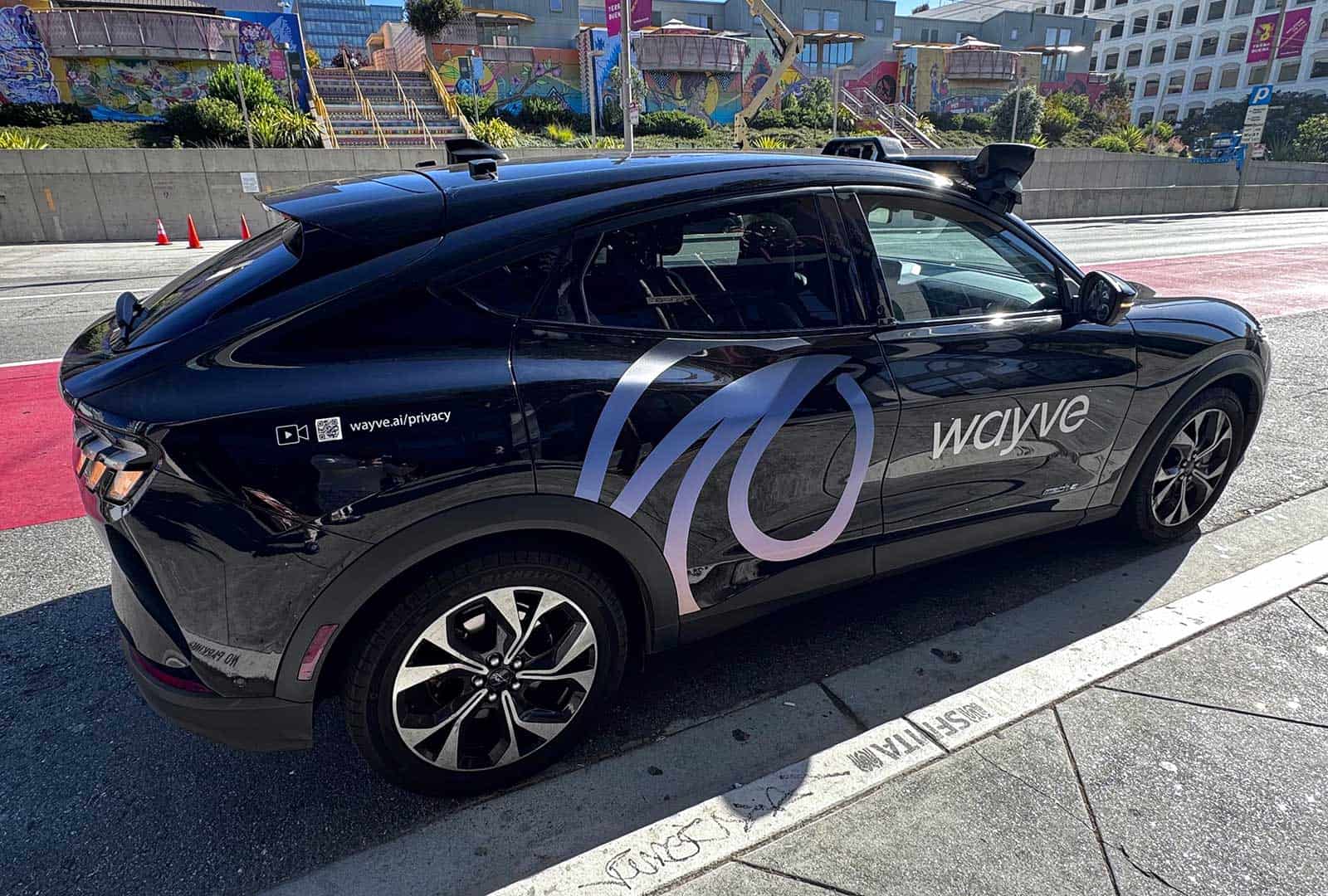
Grayson Brulte reports from San Francisco field work, delivering a firsthand account of a smooth, zero-intervention supervised Wayve highway ride he estimates is 12–16 months from an FSD-competitive product and 36 months from full L4.
He became the first known person to publicly document Travis Kalanick’s ATOMS autonomous vehicle, spotting it near Golden Gate Park and locating its depot via OMEGA. The episode also covers Uber’s driverless milestone with Pony.ai and Verne in Zagreb, DoorDash’s expansive autonomy ambitions at Dash Forward, and growing concerns about Mobileye’s AV future and Zoox’s intersection issues.
Key Autonomy Markets Episode Questions Answered
How did the Wayve supervised ride perform on the San Francisco freeway?
The Wayve vehicle completed the full urban-to-freeway route with zero safety interventions, demonstrating smooth merging and assertive but legal lane changes in congested downtown San Francisco exit lanes, which Grayson compared favorably to riding in a robotaxi.
What is the significance of Grayson spotting the Atoms autonomous vehicle?
Grayson appears to be the first person to publicly document Travis Kalanick’s ATOMS test vehicle, spotting it multiple times near Golden Gate Park and locating its depot using OMEGA; a detailed field report with an up-close view is scheduled for release on Monday.
How does the cleanliness of Waymo vehicles differ across markets, and why?
Grayson found Waymo vehicles in San Francisco to be spotless while those in Austin were notably dirtier, attributing the difference to Avomo, the Uber minority-owned fleet operator managing the Austin market, and questioning why the contract has not been terminated faster given the performance gap.
Autonomy Markets Topics & Timestamps
[0:00] Waymo SFO Pickup Experience
Grayson times the 24 minute walk from United’s E gates to the Grand Hyatt pickup, pays $11 for a black coffee, and reaffirms that riding a Waymo on the freeway is a magical experience.
[04:38] Wayve San Francisco and Freeway Ride
Picked up directly in front of his hotel on an unmapped route, Grayson rides Wayve from urban streets onto the freeway through dense traffic with zero interventions, calling it very similar to Tesla’s Robotaxi.
[08:58] Wayve Timeline to Unsupervised
Grayson puts Wayve 12 to 16 months from an L2+ product and 36 months from fully unsupervised, most likely first in London. Walt takes the under.
[10:13] 233,000 Mile Waymo I-PACE
Grayson spots the highest mileage Waymo documented to date, compares the Jaguar and Ojai back to back, and notes the Ojai is still teething but dramatically better than three weeks ago.
[13:23] Waymo’s Avomo Problem
The San Francisco Waymos were spotless while Austin remains the dirtiest market Grayson has ridden in, pointing to Avomo’s depot servicing as the third leg of the stool Waymo needs to fix.
[16:23] Atoms Autonomous Vehicle
Grayson finds Travis Kalanick’s Atoms test vehicle near Golden Gate Park, locates the depot through OMEGA, and teases Monday’s Atoms Field Report with an up close look at the vehicle.
[20:08] Mysterious BMW Testing in San Francisco and Mountain View
A BMW running a camera and radar only rig with no lidar turns up in San Francisco and again in Mountain View the same day, alongside NVIDIA Mercedes and several Wayve vehicles testing.
[22:08] DoorDash Dash Forward Event
DoorDash’s autonomy ambitions are grand, with Dot in 2,000 Phoenix locations, DoorDash Air drones launching in Northern California, and a heavy investment in MCPs to put the platform inside every agent.
[25:39] Dara Khosrowshahi Rides Unsupervised in Zagreb
Uber’s CEO posts from the back seat of a Pony.ai powered Verne robotaxi, a validation of Pony’s tech, though Grayson is watching for the service to move beyond fixed routes.
[27:02] Where’s Mobileye?
Verne’s swap from Mobileye to Pony AI, German reports that MOIA is shutting down, and no MOIA test vehicles in Austin lead Grayson to question whether Mobileye has an autonomy future at all.
[30:05] Lyft Expands Brand to Europe
Lyft opens its app to North American riders in Barcelona, Hamburg, Dublin, Athens and Warsaw via FreeNow, and opens the Nashville depot with Waymo on October 1st.
[33:15] Who Jumps from Uber to Lyft First?
If Uber buys a full stack partner, Grayson’s curveball pick for the first to defect to Lyft is May Mobility.
[36:49] When Does Uber Vertically Integrate Robotaxis?
Grayson sees Uber owning a stack in 18 to 24 months, floats a Nuro and Lucid combination and a Zoox acquisition from Amazon, and argues MCP integrations will kill the download another app argument.
[43:24] Zoox Perceived Intersection Problems
Multiple reported incidents in Las Vegas and vehicles observed stuck in intersections in San Francisco raise concerns about how Zoox scales.
45:18 Kodiak Announces IKEA as Unsupervised Over-the-Road Partner
Kodiak announces IKEA for its I-45 driver out launch by year end, Waabi completes a 300 mile zero intervention run, and Grayson issues his PSA to report supervised and unsupervised miles separately.
[49:05] Foreign Autonomy Desk
Dubai opens the Dubai Autonomous Mobility Lab as it prepares for 25% fully autonomous operations, with WeRide already running driverless there.
[49:30] Next Week
Tesla’s NHTSA decision, Kodiak’s safety case update, the Atoms Field Report on Monday, and a Last Feet field report with Blue River co-founder Lee Redden on Wednesday.
Full Episode Transcript
Wayve Supervised Highway Ride: Zero Interventions
Grayson Brulte: Will you please welcome Autonomy Markets. Walt, that’s the opening line of Bill Graham from One From The Vault. I spent time in San Francisco, and when I was there I went for a walk through Golden Gate Park. And when I was in Golden Gate Park, as I told my wife, I saw Moby Dick the white whale, AKA the ATOMS autonomous vehicle. And whilst in San Francisco, driving around listening to Legion of Mary, a little Jerry Garcia Band, I happened to go for a Wayve ride on the highway. Did a lot of incredible field work. While I was out there doing field work, Dara got the terminology right. He rode in the back seat unsupervised. Dara, well done, sir. Ladies and gentlemen, we’re not going into help into slip, we’re going into autonomy markets, and the inspector was in the field, Walt
Walter Piecyk: Yes, you were, Grayson. you were tweeting some stuff out. I’m sure there’s other stuff that that you’ve held back, which we can’t wait to learn more about here and in, in the weeks to come. But I think my first question is, when you go to San Francisco, one of the longstanding things that our, our longtime listeners are always interested in is, did you have to get, go to the kiss and fly lot to get your Waymo? What was that experience like in, in getting a Waymo from the airport? Which many people claim Waymo goes to the airport, but you and I know, you know, it’s still a bit of a challenge.
Grayson Brulte: The walk is horrible from the United Airlines terminal, and I don’t know how I got lucky, Walt, because, oh boy, I got lucky. They put me in the last possible gate in the United terminal. It was exactly 24 minutes from the E gates all the way to the Grand Hyatt. I was able to pick up Waymo at the Grand Hyatt. 24 minutes, I timed it. I got some of it on video. But I do have to give credit to the Grand Hyatt. When you get into the Grand Hyatt, it’s a very nice experience, but I had sticker shock, Walt. I had to pay $11 for a large cup of coffee. I literally fell out of my chair. $11. Outside of the long walk, the $11 cup of coffee, which is not fancy, it was pure black, by the way. Great pickup. It was simple, it was easy, it was a shaded area, and then away I went down on the highway. And I know I’ve said this multiple times, and I’m gonna say this again: riding in a Waymo on the freeway is a truly magical experience
Walter Piecyk: Well, $11 for coffee is, is pretty bad. It kind of reminds me of those fees that they charge in Vegas to get picked up at certain locations. But the other thing that kind of stood out to me is you said you were, you were at the United terminal. I didn’t know you were a frequent flyer on United, and maybe I will join you on some of your United trips. It’s an airline that I generally avoid given its location at Newark, which is a, which is– not that any of these airports in New York are good, but, you know, earlier this week, the Delta CEO had some not so nice comments about Elon. So, I think United has now offered me to, to match my Delta status over on United, so I might take a look at that. What do you think? How was United overall? Is it worthwhile? How was your internet on the plane?
Grayson Brulte: I’ve moved over to United. I have been on several flights with Starlink, and it’s a game changer. I’ll just say it point blank. I no longer fly Delta. It’s because of Starlink. I am that customer. This flight unfortunately didn’t have Starlink, but it, it took off on time and we arrived 18 minutes early, so I was able to make it to my meeting on time. So overall, great experience, but being able to work in the sky with Starlink makes a huge difference. And now I’m not, I’m not a loyal United flier. I am loyal to direct flights, not to United, but every chance I have a route to take United and I get Starlink, I will take it, but I am loyal to direct flights
Walter Piecyk: So to some of our impatient listeners, this is a good crossover topic. As you know, I do cover space and, and telecom and wireless, the, the industry, and it’s, and it’s interesting that, you know, you’re using internet that works so well. This is exactly what people told me years ago. Elon would never get to work, never get the CPE down enough for terrestrial, never get it to work on planes ’cause LEOs are moving and planes are, are moving, and here you are surfing at very high speed. So, and I think that is, that is instructive about a lot of the things that we’ve heard about Tesla in recent years and robotaxi in recent years, despite our real-world experience, not only in our own FSD cars, but also in unsupervised robotaxis and Cybercabs in, in the great state of Texas.
Grayson Brulte: I will say, not to go down a telco corner, but I’ve been able to upload field reports from Starlink on a United flight. That upload speed, it’s, it’s impressive. And I will say, I won’t say where I stayed in San Francisco, Starlink on a plane is better than some Wi-Fi in hotels in San Francisco. So put that out there
Walter Piecyk: So let’s move on to, you know, you s- you’ve been to many things, so we’re gonna go through these one at a time. the first thing that stood out to me, and there’s a lot of, I think, what I would call positive news from Uber partners. the first being that you were able to get into a Wayve supervised ride around San Francisco. I think this was also on a highway. Tell us about that experience, the car, how it handled, compare it to other autonomous cars that you’ve driven in and, and give us an update on, on what’s going on at, at Wayve.
Grayson Brulte: Sure. First and foremost to Julianne, thank you. Alex, thank you. They picked me up in my hotel. This was not a mapped route. And my request was I wanted to go on a freeway. I wanted to see how a Wayve handled a freeway. And we went during dense San Francisco traffic. We were able to get some, we want to call, use the term open road in, in some, some dense environments. We went to urban to highway to what I call freeway, but some people call it highway. Any term you want to use, you can call it that. But the, the Wayve driver, and I, and I’m, w- don’t want to overemphasize this, but I want to emphasize this, was very, very smooth. And we, we are coming into, on, we’re on the freeway, very good merging. And we were coming off. You know, some of these, these lanes to get off in downtown San Francisco are very congested, and you have motorists that like to grip the wheel and not let you in. And the Wayve driver, and I want to say for the record, not one intervention, not one intervention, aggressively moved in, totally legal by the California DMV rules, and was able to get in there. Very smooth ride. Had to be aggressive when it was aggressive, and felt totally comfortable and, and, and normal. I said this on X, and I’ll say this again here on our show, Walt, it felt very similar to riding in robotaxi. It was very, very smooth. You didn’t have that mechanical robotic jerkiness that you might have experienced in some vehicles. It was very, very smooth and exceptionally well done by Team Wayve
Walter Piecyk: And the commonality with robotaxi is this generalized approach that, that Wayve takes which they’ve mentioned before. And Wayve has also talked about and is testing products that don’t necessarily use our favorite technology of debate, LIDAR. so it’ll be interesting to see there. So great, great to hear that, that positive update about Wayve. I’m sure Uber is gonna be happy to hear that. There is no public rides on Wayve in San Francisco. These are friends only. Obviously, you’re a friend. where do you think you are– they are into unlocking either in San Francisco or London where they’re giving supervised rides, I think on, on Uber. And I guess as part of that question, ’cause I think it’s a challenge for the industry, did you get to experience like pick-up and drop-off locations, or was this more of a, you know, a, a a company guided visit on, in terms of the Wayve service?
Grayson Brulte: This was not company guided. I was picked up right in front of my hotel door. And to put that in context into my, my dear friend Bert Kaufman, when I spent some time with him there in San Francisco, when Bert and I rode in the, in the Waymos, we had to go behind the hotel to get picked up, and the Wayve vehicle picked me up directly in front. So it wasn’t, it wasn’t pre-planned. I said, “Okay, here, here’s the entrance.” It was right there. It, it pulled up, and away we went, so really good pickup and drop off. And as far as timeline to where it’s going, yes, you can play. Sorry, Dara and Mac, you can play autonomy roulette in London if you want to get paired with it. But I don’t want to give a timeline necessarily on where I think Wayve is on the L4. I do want to give a timeline where they are in L2+. I will go on the record and I would say they’re probably 12 to 16 months away from putting an FSD competitor product into market and having highly huge success with that. That’s where I think they truly are, that they have a. I would say they probably have the world’s best competitor today to FSD
Walter Piecyk: Now, FSD is obviously a product that you and I both think has a tremendous opportunity and provides potentially a revenue opportunity, whether it’s Wayve or or WeRide or whoever. but does it, you know, some have criticized those that, that first go to level two, FSD, how- whatever you wanna call it, supervised, where you have to be in the driver, and that that challenge to get to level four from level two is, is monumental. What was your sense there? ‘Cause let’s, let’s not talk about it in, in the context of, hey, an FSD competitor. Tell me where Wayve is for what’s beneficial to Uber, which is fully unsupervised robotaxi
Wayve L4 Timeline: 36 Months to Unsupervised, London First
Grayson Brulte: If you’re gonna push me for a timeline, I would say 36 months. The, the 36 months to going unsupervised. How large of a service area that is, I don’t wanna make a prediction there, but I would say 36 months to going fully unsupervised. And based on everything that’s been publicly reported and based on where Wayve was founded and headquartered, I’ll just go on the record and state that the first unsupervised market most likely will be London
Walter Piecyk: I like being more direct, Grayson, and I’m gonna translate 36 months. That’s three years. Three years. I, I could look at my model right now and tell you how many Waymos and, and Teslas I think are gonna be on the road unsupervised in three years. I’m gonna, you know, actually, this is gonna shock you. I’m gonna take the under. I think, you know, with the right funding and with the development, I think, I think Wayve can compress that you know, fairly dramatically. But it’s again, it’s, it’s good to hear these positive updates in, in terms of Wayve. So thank you for that. Should we move on?
Grayson Brulte: Yeah, let’s do it. And I will add one more thing to it that you alluded to it, that the L2 plus business for funding, which we’re seeing from WeRide, you can see in their SEC filings, I think is a very star strategic move because it provides funding for these companies to grow as they pursue L4
Waymo Fleet Observations: 233K-Mile I-Pace and Ojai Progress
Walter Piecyk: Okay, so I was just looking at your Twitter and I see that you spotted a Waymo I-Pace with 233,000 miles, which is I think the highest documented mileage on a car. I haven’t, I haven’t had my AI bots scrape through Reddit quite yet. I think that’s pretty high, but there’s. What is there? What do you think? 750,000 to go, the car was s- probably, it looked like it was in pretty good condition.
Grayson Brulte: The car was in great condition. The interior was phenomenal. So funny of all, the first thing I do, and I’m a front seat rider, first thing I do when I’m in a Jag, ’cause the Ohi does not show you the mileage, is I snap a picture of the mileage to see. So I have a, an ongoing archive which is available in OMEGA so subscribers can see all of the mileage of all the different various vehicles that we have there. And for the record, Walt, scraping is a no-no. You don’t wanna scrape. No, bots cannot scrape. That’s a no-no. You can’t do that. OMEGA does not scrape. OMEGA plays by the rules
Walter Piecyk: Okay. So then also on Waymo, were you able to do back-to-back comparisons between the Jag and the Ojai? and I guess I have two questions here. As, you know, as a great follow-up to our, our, the comparisons that we provided last week from our, both of our experiences in the great state of Texas. you know, when you ride these things back-to-back, you can tell a difference. So, so first, the Jag compared to the Jag in Texas, did the f- did the ride feel different? And then more specifically, the Jag compared to the Ojai, if you were able to get into both vehicles
Grayson Brulte: I was able to get into both vehicles. I want to highlight something, and I have not reached out to Waymo for comment on this, but I will say this from my personal experience of having, being, having freeway access in multiple markets, is that the Waymo rider on the freeway, and for the audience who’s unsure, you can only get a Jaguar I-PACE on the freeway. It, it, it capped out at 65 miles an hour. It seemed less aggressive than it was previous times. But I do want to give the Waymo engineering credit, I would encourage Dmitri and, and the engineering team to pull up this data from, from my ride last night. Guys, go through my file. We’re cruising along in the, in the second lane over, and all suddenly, while I’m listening to Legion of Mary, ’cause I gotta stay in the, on The Dead from San Francisco, and all suddenly I hear, “.” I’m like, “Oh, is it a Phil bomb? Is it a Phil bomb?” “.” Getting louder and louder. And these two, I’m sorry, I’m gonna say a mean word, maniacs, must have been going 110, 120 miles an hour on motorcycles in between the cars. And what did the Waymo do? It gently moved over and let these maniacs blow through. Me as a human driver, I would’ve been like, “What the heck is going on?” But really well done from an engineering perspective. Just wanna highlight that there to the team at, at Waymo. But from a comparing, and I did, I went Jaguar, and then I went Ojai. The Ojai is still, if you wanna say, working out the kinks. It’s still, if you wanna use the, the parenting term, it’s still teething. But from the last time I was in it three weeks ago to being in the, in the Ojai today, it is dramatically getting better
Walter Piecyk: First of all, these dirt bikes that are on our roads that have no license plates that are not street legal can we just get some enforcement of the laws? but let me go back to a question. The Jag in California versus the Jag in Texas, did you notice any difference in the overall feel of the, of the ride?
Grayson Brulte: The overall feel of the ride, no, but I noticed a major, major, major difference because I am Mr. Persnickety and I wear an inspector hat, but I am polite Persnickety. The vehicles in San Francisco, spotless. The vehicles in Austin were on the dirtier side. That was the big comparison for me. From a driving perspective, you really couldn’t tell. So if I was to put a blindfold on you and put you in Austin, then put a blindfold to put you in, in Dallas, and then in San Francisco in a Jag, I think you’d be very hard to be able to tell the difference outside of the cleanliness
Walter Piecyk: Well, you and I both know that the issue in Austin is it’s Avomo, and that they’re, they’re going to that depot and it is, these cars are not getting cleaned. Avomo, minority-owned by Uber. We haven’t seen the contracts. We don’t know when that deal was announced between them, between Waymo and Uber, whether the Avomo thing was forced in there. So maybe we have to wait for the ultimate divorce for them to get it. But I mean, if these guys are not performing, these guys meaning Avomo, in terms of the servicing of the vehicle, why is that, why aren’t they just terminating that contract faster?
Grayson Brulte: I would defer that question to the legal department. I, I, I don’t have a legal answer for you. I can tell you as somebody that’s ridden in every Waymo market but two, that is by far the dirtiest market of any vehicle that I’ve been in, and that’s for, and that’s field work
Walter Piecyk: These are important factors, right? Obviously, we are closely and, and most interested in getting cars that are unsupervised, right? Commercial, you can pay for it, 100 cars. But that third leg of the stool, which we’ve talked about many times, the servicing. Cleaning the cars, and frankly, just in, in, in Tesla’s case, the routing of these things. The pickup and drop-off locations. We at Autonomy Markets will not be falling asleep on that. Those are important elements ’cause as you get more cars and they scale, you can’t just, you know, route someone anywhere or drop them off two minutes from where their pickup is or give them a dirty ride. These are, these are necessary things to check off the box if you’re truly gonna be a competitive service and you’re truly not going to integrate you know, with Uber. So let’s get on it Waymo, and let’s get on it, Tesla. You both have some of these things, these check boxes to clean up if you’re really gonna take share in this market
Grayson Brulte: And I wanna highlight something, and for the audience, I wanna publicly give you a lot of credit. Walt was the one who encouraged me to, to do field work, and if you wanna say, “Walt lit a bug underneath my tookie,” and that’s why I’m out on the road every week, every other week doing this stuff. And as Walt told me a long time ago, it makes a big difference getting out there and doing field work because you can actually truly see things. And so Walt, thank you for putting that bug in there, and thank you for dragging me to Austin to do the initial field work, and then look what we’ve become. I think we are the leading channel platform covering field work. So sir, thank you for doing that because it’s made a huge difference in what we cover
Atoms Autonomous Vehicle Discovered Near Golden Gate Park
Walter Piecyk: Where’s my clappy hat? I think that’s a I think that deserves a clappy hat. and this is right before I was about to give you the clappy hat because I’ve buried the lead on your Inspector Clouseau activities in California because I was searching on my AI, I could not find anyone that has found Travis Kalanick’s ATOMS test vehicle. We- There’s been discussion of it. Obviously, this is not, like, shocking news that, like, Travis and Anthony Levandowski would be working on an autonomous vehicle, but Grayson, you did it. It’s– And it reminds me of our field work down to see Avomo. We’re like, “We found you,” and I’m sure I could just see you, and I’m sorry I wasn’t there with you. See you on the streets of, of, of California saying, “We found you,” as that ATOMS test vehicle was driving by. How excited were you when you saw that?
Grayson Brulte: Well, first and foremost, clappy hat to you and clappy hat to the inspector f- for finding this. Well, I was over the moon. I, I was on the phone actually with David Welch at Bloomberg, and I said, “Hold on.” I said, “There it is, the Moby Dick. Hold on, I gotta get a photo. I gotta get a photo.” And I snapped a photo of it because I was determined, and, and you know me well, and I told my wife, I said, “Just so you know for the record, I am not coming home until I find the whale.” And sure enough, I find it after visiting the Grateful Dead House, which was really cool, and right by Golden Gate Park. And then, Walt, something must have went in the air. I said, “It’s gonna be a good day.” And then I spotted it multiple times, and then I went into Autonomy AI’s proprietary, intelligence system, OMEGA. And I will tease this. I found the depot. OMEGA knew where the depot was. We visited the ATOMS depot, and I will tease to the audience, on Monday we’ll be releasing a field report with an up-close view of the ATOMS autonomous vehicle. And for the audience, it’s not what you think it is
Walter Piecyk: I mean, this is, has to be some of the biggest news that has hit autonomy in a while. It’s crazy. Like, you’ve cited a new vehicle from none other than Travis Kalanick and Anthony Levandowski. I assume Anthony’s involved with this aspe- aspect of it. I don’t see why he wouldn’t be. so i- it’s incredible, and I’m, and I, I’m shocked that, that the tweet, although you have a, a shit ton of views Sorry, Mom. that it hasn’t gotten more attention. So look, you know, Anthony, or I guess more importantly, Travis, let’s get you on the podcast. We’d love to hear more about it. Now that your car’s on the road, I’m sure now that, that Grayson is unveiled, you’re gonna have other people out there watching it. Maybe not. Maybe people don’t like to do field work and figuring out what’s going on at, at ATOMS. And of course, let’s just give a throwback. If you haven’t listened to the podcast. With one of Travis’s good friends, Jason Calacanis, who we did the podcast with, who I think one of the most interesting things that we talked about there was, you know, maybe Travis is the guy to kinda come back to the helm at Uber on this kind of next. He’s been in– Again, nothing against Dara. As I said on that podcast, has done a great job getting them to the free cash flow when everyone doubted their ability to do this. But I don’t know. It, it’s just an interesting development, so good job there.
Grayson Brulte: I will tease something for the audience, and I’ll tease. Anthony’s involved, and watch the video and you’ll understand why on that front. Travis, you know how to get ahold of me. We each follow each other on X. Shoot me a DM. I’d love to have you on the show because field work is good work, and that’s what we do here. And well, also, you know what else I found when I was out there? I found something new
Walter Piecyk: What is your find? Let us know
Mystery BMW with Camera-Only Radar Rig Spotted Twice
Grayson Brulte: I found a BMW cruising around San Francisco with a very interesting camera only and radar, no lidar rig on it. And, And this is the important part, I spotted it in San Francisco when I was talking to you when I was car counting, huh? And later when I had dinner with my partner Rob Grant in Mountain View, well right around dinner I said, “Rob, hold my bags.” I ran down the road and I got another photo of it. So I spotted it in San Francisco, and then I spotted it down in Mountain View later that evening. So it’s making the rounds
Walter Piecyk: So let’s go behind the curtains here a little bit on Autonomy Markets. I’m on the phone with Grayson. He’s just sitting on the street in San Francisco. In one case, someone’s coming up to him, “Grayson, love the podcast,” which was great. I love to hear that. But then I- I’m talking to him, he’s like, “Oh, hold on, hold on. I gotta get the camera,” and like this car drove by, and that car drove by, and this car. Look, we’ve given a lot of props to Texas, and to a certain extent, we’ve denigrated the great state of California for, you know, legitimate reasons. So I’m gonna give a hat tip to California. You can go there and talk about a hotbed of autonomy, lot of great things happening, and a lo- obviously, a lot of test cars, and a lot of great, and for good reason, right? You have smart people that have lived there, at least for now, until they’ve been driven out of the state, that are still developing products. So you know, I think we need to spend more time out on the West Coast, Grayson. What do you say?
Grayson Brulte: That’s happening, and stay tuned for, for that. So we, we, we, that is happening on this end. And also I did spot an NVIDIA Mercedes testing and I spotted several, and I say several, Wayve vehicles testing. So Wayve is, is ramping up. But yeah, I mean, if you wanna do field work, reach out to me. I know the spots. And I wanna say for the audience, we only stay on public property. We only stay on public property, and I’ll say that
Walter Piecyk: Good to know. Okay, so let’s move on to another thing you did in California. We’re still, still staying in the Cal- in California. you were on the ground for what’s known as Dash Forward, where they, I think, reveal a lot of different tech. you had Dasher Returns, DoorDash Air, which is like a, this drone thing, Dot, which is in now, which is the robot, I guess now in 2,000 locations in greater Phoenix and a bunch of different things. So like just, w- first of all, what was the overall vibe there? Like how. ‘Cause we’re not, when we talk to DoorDash, they seem to, while they, they are very, you know, forward in their ac- actions in autonomy, on the investor side of things, it seems like they downplay it. Like, I go on these investor calls, and the analyst and, and even the, the, the team there seems to downplay the importance of autonomy. What was the vibe you got at Dash Forward?
DoorDash Dash Forward: Grand Autonomy Ambitions and MCP Strategy
Grayson Brulte: First of all, Bert, Henry, Stanley, Tony, thanks for the invitation. Thanks for the hat. Thanks for the cap. That’s what we got the. I’m rocking the DoorDash Air hat here, so thank you for that. Tony gave a really great presentation along with the team. Before we get to autonomy, I want to, I think, highlight the most important thing, and I’ll disclose that I am a beta tester. Going to the event, we got beta access. Is the messaging DoorDash is awesome, and DoorDash is investing heavily in MCPs. There’s, ’cause we, we know a lot about MCPs ’cause OMEGA’s available as an MCP. And you could see a future where DoorDash is taking the DoorDash platform and making it available inside of all of the agents. And how is that important and why is it important for autonomy is that, in my opinion, I talked to Tony about this, is that DoorDash is de-risking, de-risking getting a partner going away, where they’re investing in air, they’re in- they’re investing in, in ground. And I wouldn’t be surprised if you see them invest in other aspects of autonomy. But DoorDash is, I’ll just say this point-blank, their autonomy ambitions are grand. They were on display there, and I really can’t wait to see when the air starts delivering. They’re gonna start in the Northern California market, then I would suspect based on where Zipline is and where Wing is, perhaps Dallas, Frisco area will be next. And then we will be doing a field report live from DoorDash Dot in Phoenix, so stay tuned for that. But their autonomy ambitions are grand, and I think that there’s, there’s big things coming from DoorDash on autonomy because they’re gonna vertically integrate it, and they’re gonna make it all available from an MCP. So you can basically go on, on Muse and say, “Okay, I’d like a burrito.” Next thing you know, you’ve got a. Well, you live in, you live in New York, so I’m sorry, you probably can’t have it ’cause Holston won’t let you. But if you lived in a friendly state, you could have it. You could have your burrito delivered with DoorDash Air
Walter Piecyk: We’ll see what happens. Again, California is, is allowing a lot of autonomy. Maybe things can change in New York or maybe, I don’t know if you saw the news earlier today, Uber and, and Lyft agreeing to some pretty nice pricing, or excuse me, pretty nice payments to their drivers, 35 bucks an hour. we’ll see how that impacts the economics there. At the same time, obviously, Boston continues to try and block autonomy, so I’m not sure how these two things, you’re driving up the price for your consumers and then you’re telling your, your constituency that you can’t have the lower priced rides of a, of a autonomous vehicle and the safety of it, but but I digress. But maybe that’s a good segue into Uber overall because, again, generally I think from our standpoint, in the news that you generated and that we’re talking about here, I think a positive week in terms of the data points for Uber and, and its partners. So, and, and more specifically Dara posted from the backseat in Zagreb, watching the car drive itself. And in this case, and I feel like it’s almost a shout-out to, to, to autonomy markets, where he specifically talks about it being driverless, watching the car drive itself. This is, again, Uber’s partnership with Pony.ai, which is a Chinese autonomy company and one that we have respect for, and Verne. Now, and this is, you know, just for hein- like for, you know, this is not new, right? Verne and Pony started driverless test rides back on September 10th, but it’s great to see Dara in the car and acknowledging truly driverless because that’s, you know, what I know all of our listeners agree is the most important thing in terms of autonomy
Uber-Pony.ai Zagreb: Dara Rides Driverless with Verne
Grayson Brulte: It is the most important thing, and y- if your true autonomy w- with no driver is reflected in The Road to Autonomy Index, that is the key there. But it’s a very positive for Verne. It’s, a positive for Pony and, you know, I’ve known James Peng, the, the CEO and co-founder of Pony for a long time, and it’s a validation o- of Pony’s tech. The question is, and we’ll be watching this, right now it goes on a fixed route from Verne’s HQ to downtown Zagreb to the airport. But I’m gonna be watching as that service area expands, and to truly operate a robotaxi service, sorry, you cannot have fixed routes. So we’re gonna be watching that. But nonetheless, big step for, for Uber, big step for Pony
Walter Piecyk: Now, I should have got my magnifying glass because the thing that I saw there was that car was not the original Verne Mobileye relationship, right? This is a, this was a Chinese car, Ar- the ArcFox Alpha T5, I believe, from BAIC, running obviously Pony.ai’s Gen7 stack. And I guess the question then is, where does that leave Mobileye? Like, you know, we, we get inbound saying, “Hey, why don’t you talk more about Mobileye?” Like, okay, let’s talk about this specific relationship that dates back to 2024. Mobileye, you know, was supposed to do something with Verne. They unveiled a two-seater with no wheels or no pedals driven by Mobileye. There was, I think, dollars raised. They promised 100 cars in Zagreb by the end of 2024. Okay, where are they? And then obviously in March of, of this year, ’26, this is when they swapped over to Pony and Uber. So like, where does that leave Mobileye? And I think, you know, going back to your prior comment on that BMW, is there any chance that that BMW that you saw in San Francisco is another one of Mobileye’s partners, like a further development or, you know, what’s going on at Mobileye? Or have they, you know, is BMW going a different– I mean, BMW probably has some Chinese relationships, but I doubt that they would be testing those in San Francisco. I would hope not. So, you know, tie this all together for us, Grayson, on what you think is going on here. Where is Mobileye? Is it possible the BMW was running Mobileye, the one that you saw in San Francisco?
Mobileye’s Autonomous Vehicle Future in Question
Grayson Brulte: As it relates to Mobileye, I’ll be gentle about this. When they initially rolled out the Jules Verne vehicle, named after the famous author, and I’ve got to say, Twenty Thousand Leagues Under the Seas, amazing, Around the World in Eighty Days, incredible reading books, is that the Mobileye-powered vehicle stopped on stage, and there is YouTube archives of the live stream that are available, and you can see the vehicles out there. So it seemed to me that there were technical issues on day one, and then all suddenly we, you and I, we got the m- pony press release. It was like, “Okay, where’s Mobileye?” And it seems that Mobileye’s business for autonomy is struggling. There are reports in the German media that MOIA, which is a Mobileye partner, is shutting down. Again, these are reports in the German media. We do not know the exact facts of that. But I will tell you, one of the coffee meetings that I had in San Francisco, there’s somebody that, a good friend of mine said, “When’s the last time you saw a VW MOIA testing in Austin?” And I said, “Well, Walt, and I spent a lot of time there. I haven’t seen one the last two trips I’ve been down there, and that’s a Mobileye vehicle.” And then you had the founder resign or retire, if you want to use that word. So was this a sign that Mobileye’s AV business is coming to an end? Yes, I know they had the pilot with Beep in Lake Nona, but that’s not a, that’s not a big commercial deployment. I don’t know, Walt. If you look at everything that’s being publicly reported, you look at doing field work, I almost wonder, and I’m speculating here, does Mobileye even have an autonomy future?
Walter Piecyk: I don’t know. I reached out to the company for any type of comment and really got nothing. So who knows? So let’s move on to the next thing that we saw, which is Lyft. Traditionally, obviously a US company. On, on la- earlier this week, David Risher, the CEO, who’s been, I think, relatively quiet on autonomy. He’s been pretty kind of anti non-lidar and, you know, God knows other stuff. But basically now they’re expanding in Europe and North American riders can now use the Lyft app in Europe. So Barcelona, Hamburg, Dublin, Athens, Warsaw through October. This is, this is, you know, a result of the FreeNow network that Lyft bought in 2025, so expanding their presence. Just a quick reminder, like who are the AV partners? You have the, the Nashville partnership that, that Lyft has with Waymo that should be on the Lyft app, and obviously they’re gonna move to the, to the their own Lyft depots, which is I think a critical thing that we’ve talked about, and we will go to Nashville and, and report on that as soon as that is up and running. They got May Mobility Atlanta. We gave you our field report from being in the May Mobility cars last week. they’ve got Baidu which is targeted for 2026 in Germany. They have this Mobileye Moove by Mooveni Dallas. I don’t know where that is, so no launch yet. Was supposed to be as soon as 2026. Haven’t heard anything. Tensor I’ll just say that they’ve, they’ve have a press release with Tensor and leave it at that. and then maybe some, some other shuttles. So, but I think the interesting thing with Lyft is you know, given that they’re kind of expanding this footprint and getting back to what we’ve said with Uber before, which is like if Uber goes down a route where they really zero in on one player does, is Lyft creating that more of a global platform that they can be an alternative partner to Uber if Uber’s partners end up being dissatisfied?
Grayson Brulte: Potentially, and I just wanna say for the audience, today is October 1st. We’re recording into Team Lyft, Team Waymo congratulations. Walt, today is opening day of the Depot in Nashville. We were invited, but I was too tired off of the red-eye to go up to Nashville, but I’ll be there in a few weeks. So Lyft, Waymo, thank you for the invitation. Looking forward to seeing you in a few weeks in Nashville, visiting the Depot and riding that, and then we’ll release that as a, as a field report. I don’t know, as it relates to Europe, ’cause I will say this, historically, the Free Now business has been a taxi business. And for any individual, including myself, who has spent time in Athens, you know the Free Now vehicles are everywhere, but they’re primarily taxis. So I don’t know. It, it could be a global alternative, but it really just depends on the Free Now culture. I don’t have enough insights into the Free Now culture, but if you read the public statements from the former Free Now CEO pre-acquisition, it was taxi, taxi, taxi. So I, I don’t know. I just think we need to do some work and get an understanding of the, of the culture, so I’m gonna take a “I’m not sure at this time”
Walter Piecyk: But taxis are just another form of fleets and, and globally, fleets are more important than, you know, the traditional rideshare that we have here, where you have these variable drivers there. So again, it creates this, you know, peak hour opportunity where other fleets can plug in, and you have that fragmentation. So I guess, let’s assume that, you know, there’s a rando company that Uber announces at some point in the future, we’ll get this in our, into our next topic on timing of this, that Uber owns the full stack, which you and I, you know, think is, is probably gonna happen. I think we talked about this again with Jason Calacanis on whether this is, like, the right path for Uber forward. Who is the first, who is the first company that’s gonna call up David Risher once Uber buys a company that’s not them? Let’s just assume that it’s, like, Nuko comes. Like, who, who is the most likely to wanna jump off being fragmented on the Uber platform when they wouldn’t be, like, on the Uber stack when Uber owns their own stack on there? Who’s calling Lyft or who’s trying to buy Lyft quickly of all of the Partners that Uber Has today?
Grayson Brulte: Who’s trying to buy Lyft, or who does Lyft wanna Buy?
Walter Piecyk: Well, e-either way, either partner or purchase. But I mean, you, you cannot say partner with Lyft and not acknowledge the very small market cap that they have. Like, when we look at where some of these autonomy companies are raising capital, I get it, private market versus public market. Like, Lyft is a rounding error, so, like, at some point, like, do you partner with them or do you just own them as part of this, this process? But answer it any way you want. Who’s the first guy to, to jump ship a-and wanna partner with, with with Lyft?
Grayson Brulte: The one that’s left at the altar that doesn’t get married. I mean, that’s really who it is
Walter Piecyk: Sure. No, I get that. But let’s assume they’re all left at the altar in this fictitious situation that I’ve created. Who’s the most anxious or would be the most courageous to jump off Uber and go to Lyft?
Grayson Brulte: I’m gonna give you a curveball here. The most logical one that I could see is May Mobility. I mean, they seem to be the most logical one. I don’t see any of the Chinese doing it. I don’t see Wayve doing it. I don’t see Nuro doing it. I would probably say the most logical in, in that scenario would probably be May Mobility
Walter Piecyk: We’ll see. I mean, Zoox is obviously out there. I don’t really consider them a full partner with, with Uber, but they are a partner obviously in some markets. maybe Ride owned by Neibus. Obviously Neibus has their own capital needs, but it’s a 60 billion or so ODD company. so I think there might be some more obvious choices. But let’s shift to the next related topic is, you know, ’cause we’ve talked about this before, but, you know, there’s no rush, right? These companies, like just before you talked about Wayve taking 36 months. You know, we think AV Ride, you know, maybe a year from now, if it’s again or Nuro is a big success, they’re driver-out, but we’re not talking about a ton of cars, maybe hundreds of cars. So there’s not gonna be, I think, enough progress that a year from now that it’s gonna be clear who Uber would want to own, right? let alone the impact that that would have on the other partners. I think they would want the other, all of the partners to continue to be able to raise capital and develop their technology and still live in this fragmented world, which all of them, as far as I can tell, other than maybe what’s going on in Europe, are very happy to stay on this Uber platform. So let’s think about this more broadly. Like, how long does that go before Uber needs to kind of, not needs to, but is more likely to step in and own the stack? ‘Cause that’s been a question that we’ve debated here, for months now.
Grayson Brulte: If you look at the publicly reported that the FTA has reported and when the Waymo relationship is scheduled contractually to end, I would say post that contract ending, and then it’s a question of whose tech is the furthest along, because I truly believe that Uber has to rebuild ATG. But as we’ve heard Dara speak about on earnings calls and at investor conferences, they don’t wanna necessarily own it. I think they’re gonna have to, and I think they’re gonna have to vertically integrate. So I would say you’re probably 18 to 24 months at, at the, the long tail
Walter Piecyk: Yeah. I mean, so I don’t disagree. I don’t know if they have to own it, but it might be a choice to make to accelerate. Because again, if we’re a year out and we’ve deci- and now we’re saying like, “No, it’s probably not gonna happen in ’27,” because you need the field to continue to develop, assuming these companies are able to raise more capital. Now you move out to 2028. So if Waymo had 10,000 cars in ’27, I’m not gonna talk about on this podcast quite now, but I have models that have much higher numbers in ’28. And again, if we see Tesla getting through the NHTSA stuff and they start ramping, think, just think about the number of cars that Waymo and Tesla are gonna be have, have on the road by the end of ’28. I’ve got a good idea what that number’s gonna look like. And then, you know, where will the field be? And at that point, like, does even owning it at that point make a difference? Like, maybe they’re, they’re gonna be in a situation where there, there’s never the right time for them to own the stack, and they’re just gonna have to be reliant. Maybe they add extra funding and take bigger and bigger stakes in, in the, in the companies that are doing well. but maybe it’s, it’s a challenge for them just because how the timeline’s gonna work, that it never ends up being the, the right time to, to own this one of these partners.
Grayson Brulte: I think the market’s gonna force their hand, and I will throw two curve balls out at you with potentials. One I think is the most obvious based on what the market thinks, is you have a, a Nuro-Lucid co- combination and Lucid becomes a, a robotaxi company and perhaps Uber is the largest shareholder along with the PIF, and that’s off balance sheet. But then here’s the wacky curve ball. Could Uber go full-blown autonomy and say, “Okay, Amazon, we, we, we wanna buy Zoox and make it exclusively available on the Uber platform”? They have a differentiating product in the market. I know that’s a massive curve ball, but it’s something for them to talk about. I know it’s wacky, but it’s something for them to talk about
Walter Piecyk: Well, Grayson, I’ve been in an Avride. I’ve been in a Nuro. I have not been in a Wayve, you have. You just gave us your report on that. I’ve been in a WeRide. have not been in a Waabi or a Rivian. I’m not sure Zoox is the one that I’d be picking, ’cause I’ve also been in a Zoox. Now, obviously that development path can change, but the curve of the development path of Zoox relative to, let’s say, a Nuro or a Wayve or an AVride and what we’ve experienced over the past 12 months I don’t know about that. And just for the record Jason Calacanis, again, we’re referencing it because, hey, we want more views on the Jason Calacanis interview. I think he mentioned 36 months, that timeframe is probably the timeline where he would see maybe w- a full stack. And again, from his standpoint, just because they own one of it doesn’t mean that other partners wouldn’t exist on the platform. I’m just not sure all of those partners are gonna wanna stay on a platform at the moment that Uber ends up owning one of the full stack competitors or partners that they Have.
Grayson Brulte: If I was the competitor, I wouldn’t stay on the platform. I would figure out a legal– have the legal department figure out a way to get off. I’m like, “I want nothing to do with you.” Because I don’t necessarily believe the demand aggregation. I think it comes down to brand at the end of the day. It’s consumer’s brand, and then also and I’ve been talking about this a lot on X, and I’ll say it here. At some point, somebody’s gonna pull the trigger and do a muse integration, or somebody from an AV company is going to do an MCP and integrate it into ChatGPT or to Claude or to, or to any app that you use, and you’re no longer going to open the app. And that was the indication that we got at the DoorDash Ford event, and I think at some point the autonomy companies are gonna do that, and then all suddenly, “Oh, I have to download another app.” That argument just went down the toilet.
Walter Piecyk: I mean, br- if you’re saying brand is important, Uber’s brand stands at the top. And at the end of the day, like, I don’t think Uber’s gonna say, “Hey, if Nuro’s brand or Lucid’s brand ends up generating a very good ride,” that they’re gonna allow the customer to specifically order a Nuro/ Lucid. They’re gonna say there’s g- there’s gonna be an autonomous tier. So I think that challenges those companies, you know, from developing some brand connection. I mean, right now, like if I get a black car, I can’t exclude a Tesla, you know, that I find uncomfortable if it’s not a, a recent Tesla that has terrible suspension. So I doubt they’re gonna allow any of these autonomy partners to be specifically selected. Hey, if we’re wrong, Uber, let us know, but I. That’s just not how they’ve operated to date. So let’s, let’s get the early battles. Let’s at least be able to, to request an autonomous vehicle, but I certainly don’t think powered by Nuro is gonna develop enough brand equity for these guys to be able to break free three years from now, right? Again, when we’ll have different numbers at Waymo and Tesla and, you know, who do you go to then? And is Lyft even still available as, as an option at that point?
Grayson Brulte: You don’t know. I mean, that, that is, that is the great parlor game. What happens to Lyft? You, you and I have that conversation with multiple people every week. What happens to Lyft? And, and to the audience, I I don’t know
Walter Piecyk: Yeah, I mean, and I get that, that people will say, “Oh, you know, small player,” blah, blah, blah. But like, it’s. Look at the market cap. That is a rounding error, and they still have access to mostly the same two million drivers that Uber has, right? And especially if their autonomy is not developing, those Uber drivers might end up being more loyal on the Lyft platform as Uber, you know, fragments and pr- and starts sending more rides on autonomy. So, like, there’s theoretical value there, and there’s an app and a brand that you know, should play a role and should have a value to someone. But again, we’ll just have to see how these companies roll out and, and who, you know, gets the funding and the valuation that, that makes sense. Should we move on to Zoox? Because I think they had a 100 vehicle cap in Nevada that expired on September 25th, but then there’s been some, some issues, you know, some collisions some s- I think some, some stuff reported in the press about Zoox grounding its Atlanta test fleet after they had some gas exposure. So, like, what, where do you think we’re at with Zoox right now?
Zoox Intersection Problems and Grounded Fleet Concerns
Grayson Brulte: If you read the Las Vegas Sun Review-Journal, there has been multiple reported incidents. There was the one incident in front of the Four Seasons Mandalay Bay where it appeared, and we do not have the traffic reports, it appeared that the Zoox vehicle was stuck in the intersection and it was hit behind by a Nissan vehicle. Unfortunately, the individual in the Nissan vehicle was taken to the hospital. We wish that individual well, hope they’re doing okay. We, we do not know the condition of the individual, so I don’t wanna speculate on that. But then if you go through and you look at the Las Vegas Locally X account that covers this, you will see multiple videos of Zoox what appears to be getting stuck in intersections. And Walt, when I was doing field work in San Francisco, I w– I know where Zoox operates, and it appeared, what I saw, that Zooxes were getting stuck in the intersection. So all combined, it appears, and I’m not an engineer, but it appears that Zoox has an intersection issue, and I have a lot of concerns of how they’re going to scale. And subscribers to OMEGA have seen data of, I’ll put it to you this way, tens of hundreds of Zoox vehicles sitting, not operating, sitting
Walter Piecyk: I mean, I hate to say it, but I’m just not surprised. and I just feel like broadly this company gets a pass ’cause it’s owned by Amazon, and you just obviously expect great things from a great company. for our longtime listeners, you know we have concerns there. let’s move on to Kodiak, which we saw last week. they’ve landed Ikea as their first driverless launch partner. Again, this is planned for later this year on this I-45 route. Obviously, they’re finalizing the safety case. I’m not sure if we’ve gotten greater percentages now, but th- things seem to go on track there. Stock’s obviously getting killed because you’ve got, you know, lockups and there’s just, you know, the mechanics of how lockups, you know, work there. But I don’t know. It’s, it seems like progress there, but again, it gets back to this, hey, we’ve got a difficult financial market. You’ve got like Aura Ring pulling their IPO. You’ve got Plus trying to do an IPO. you know, the, the need for capital and to, to recognize the progress that they’ve had for a company that does not spend a lot and has gotten, you know, a long way in terms of delivering driverless you know, driverless operations. a lot of positive news. We just hope that they can continue to co- you know, to, to get that progress and move to the next step of, of signing up more and more customers. But congrats, I guess, on the Ikea deal.
Grayson Brulte: We wish them well. I’ll use the terminology that Ora filed with the SEC, difficult market conditions. You just turn on the news, you can see difficult market conditions. But market conditions aside, I think, I think it’s a positive. Ikea is a big household brand, so we, we wish them well, and, you know, we’re rooting for them to achieve driver-out, as they publicly stated, by the end of the year. So rooting them to do it.
Walter Piecyk: And another one to root for is Waabi, you know, who drove, I guess, 300 miles, Dallas to San Antonio, zero interventions. Of, of course, they’re not expected to go driver-out till 2027. Interviews that we’ve seen with R- Raquel don’t seem to have like, you know, that. They got a lot of money, so there’s not this pressure, I think, to deliver. Although it seems odd because the industry is moving quickly right now. I know Volvo has, has been, you know, who’s their partner and who’s gonna hopefully start making these, these trucks in, in Q1 of ’27, you know, remains positive there. But remember, with Waabi, like they got money and part of it’s from Uber to kind of pivot to doing cars. So I don’t know. I mean, again, positive development, so you gotta shout it out. 300 miles, Dallas to San Antonio, zero interventions. Great. Again, getting out, you know, now that Aurora is fully out and Kodiak’s well on their way to being fully out on the road already, obviously fully out driverless in the Permian Basin, You know, good, good at least indications from, from Waabi. We just– I don’t know. Do you think they can deliver in the first half of ’27 as we expect?
Grayson Brulte: I’m unsure, and I say I’m unsure because if you look at Waymo as a, as a history guide with Waymo, with the Waymo Via, which was their trucking program in robotaxi, obviously Waymo made the decision to focus on robotaxi and shut down trucking. And let’s just call a spade a spade. Waymo has Alphabet resources, which are pretty much unlimited for practical purposes. So I don’t see how Waabi is going to deliver robotaxis at, at what they publicly stated at, at the timeline, and fully autonomous driverless trucks. It seems to me that it’s a distraction. They’ll say it’s the same driver, but when you speak to engineers, and this includes individuals, ex-Waymo folks, that will tell you it is a completely different engineering stack. I have questions about that, but we do wish them well, and I will give my very public PSA, which people know where I’m going with this. If you are driving unsupervised with no human in the cab, please report those miles separately from the supervised miles. I love to see two reports. One, unsupervised, and that includes no human in the cab, no safety observer, not an employee, humanless. And then I’d also like to see miles supervised, and when I say supervised, that includes an employee that’s in the truck. So love to see more disclosures around that. That’s truly how we’re gonna measure these companies
Walter Piecyk: Yeah, I agree with that. look forward to that. So tell us what’s, what do you have on the foreign autonomy desk for this Week, Grayson?
Grayson Brulte: Well, the foreign autonomy desk, Dubai continues to lean into autonomy. They opened up the Dubai Autonomous Mobility Lab as a, as a test track to prepare the country for going 25% fully autonomous in the coming future. So they’re, they’re truly, truly leaning in there, and they do have driverless operation services today with WeRide
Walter Piecyk: Anything else?
Grayson Brulte: No, foreign autonomy desk was a little bit slow this week, and so not much to go for. What do we need to look for in the markets next week?
Walter Piecyk: I mean, technically the, the Dara trip in, in Croatia, in Zagreb is counts as a foreign autonomy desk in a way. Anyway, for next week I mean, my– the big thing I’m waiting for is, you know, this whole NHTSA stuff with, with Tesla. I think September– it’s October 1st, so September 30th is, is long gone. how quickly we’ll see obviously the preponderance of Cybercabs, which we’re finding in lots, in many cities. And thank you for our listeners for sending stuff. And thanks to you, Grayson, for finding those lots as well. so that’s, I think the key, really big key one in this industry to unlock. Obviously, Kodiak, maybe we’ll get an update on their safety case, on their percentage mix. and I think we’ve got the Tesla Roadster rescheduled, but I think that’s two weeks out, so I think we’re not gonna see anything new on the Tesla Roadster. Not really an autonomy thing, I don’t think, but obviously always of interest to see what Elon’s gonna, gonna announce Next
Grayson Brulte: It’s always interesting, and for listeners and viewers, from a programming perspective, on Monday we’re dropping the ATOMS field report. You’re gonna wanna tune into that. That’s very interesting. And then on Wednesday, we went and visited Lee Redden, co-founder of Blue River, for his new Last Feet startup. So we’re getting a field report on Wednesday from Last Feet. So tune in. We got lots of content coming your way from the field. The future is bright, the future autonomous, the future is fieldwork. Walt, until next week
Discalmer: Opinions here are as of the recording date, may change without notice, and do not necessarily reflect the views of AUTNMY AI Incorporated, its affiliates, or any speaker’s employer. Content, including the road to autonomy indices, is for informational and educational purposes only. AUTNMY AI is not a registered investment advisor or broker-dealer and does not give investment, legal, accounting, or tax advice. Nothing in our public or gated content is investment advice, a recommendation, an offer, or a solicitation to buy or sell any security or financial product and should not be relied on to evaluate any transaction. This program may contain forward-looking statements. Investments involve risk, including loss of principal. Past performance is not indicative of future results. Hosts, guests, and affiliated entities may hold long or short positions in securities mentioned. Content is provided as is without warranty. We disclaim liability for reliance on this information. Consult your own investment, legal, and tax advisors before making any financial decision.
The future is bright. The future is autonomous. The future is The Road to Autonomy.
Subscribe to This Week in The Autonomy Economy™
Join institutional investors and industry leaders who read This Week in The Autonomy Economy every Sunday. Each edition delivers exclusive insight and commentary on the autonomy economy, helping you stay ahead of what's next.