


This Week in The Autonomy Economy™
Not All Miles Are Created Equal
This Week in the Autonomy Economy, Uber’s CFO got into a heated X exchange over regulatory capture, Waymo began testing in Charlotte, and we called for a new transparency standard.
A pattern is emerging here with Uber’s C-Suite public posts on X, and reading the tea leaves, it’s very telling.
On April 29th, Uber’s CTO Praveen Neppalli wrote on X that he witnessed a scary moment as a Waymo “overtook a Muni bus in the wrong lane at a signal, didn’t stop, and aggressively tried to squeeze between me and the bus. Had the bus driver and I not steered away, this could have been a serious incident.”
On July 16th, Uber CFO Balaji Krishnamurthy got into a heated exchange on X with Ethan McKanna over Uber’s perceived autonomous vehicle regulatory capture strategy.
In the series of posts, there was a common denominator: Waymo. Any way you slice it, there appears on the surface to be no love lost, and we were the first outlet to publicly state that Uber and Waymo are on the verge of divorce on November 1, 2025, months before others noticed.
We are not a media company; we are analysts, and we conduct deep research. We do not copy posts nor articles and reframe them as our own, which is unfortunately becoming an issue that we have to deal with on a daily basis. We do the hard work and offer you our honest take each and every week on all of our platforms.
We will state it once again for the record: it is only a matter of time until both the Austin and Atlanta markets become Waymo-only. The days of playing autonomous roulette trying to get a Waymo in those markets is coming to an end.
When it ends, how does the market react? That is the million-dollar question.
📰 Need to Know: This Week in the Autonomy Economy
Why did Uber’s CFO get into a heated exchange on X?
Uber CFO Balaji Krishnamurthy engaged in a sharp public debate with industry analyst Ethan McKanna regarding Uber’s legislative strategy. Critics have accused Uber of pursuing regulatory capture, specifically via a controversial Washington, D.C. autonomous vehicle bill (DC B26-0684) to stall fully driverless competitors. Krishnamurthy fiercely defended Uber, stating that the company is actively protecting hybrid rideshare models to prevent a winner-take-all robotaxi monopoly.
What is the common denominator hinting at an Uber-Waymo divorce?
The common denominator behind recent high-profile corporate friction is Waymo. A clear pattern has emerged from Uber’s C-suite, starting in April when Uber CTO Praveen Neppalli posted a video criticizing a Waymo vehicle for a scary illegal passing maneuver in San Francisco, and continuing through July with Krishnamurthy’s fierce defense of policy positions that clash directly with Waymo’s open-deployment model. With Uber investing billions into alternative autonomous partnerships, the cracks in their current Austin and Atlanta market alliances are widening exactly as predicted late last year.
What is the new Unsupervised vs. Supervised transparency standard?
To cut through corporate marketing spin, a strict new linguistic and reporting standard is being proposed to replace vague terms like autonomous capability. Under this framework, Unsupervised refers to true driverless operation with no safety driver, no front-seat observer, and no human in a truck cab, while Supervised covers any system that still relies on a human fallback driver capable of taking the wheel. The framework calls for all operators, including Tesla, to host real-time, public mile-counters on their websites to benchmark true technical scaling based on these concrete definitions.
Where is Waymo launching its latest testing fleet?
Waymo has officially deployed vehicles with safety drivers on the streets of Charlotte, North Carolina. This testing phase serves as the data-gathering prelude to a commercial robotaxi launch, expanding Alphabet’s autonomous footprint into the American Southeast and setting the stage for direct regional competition.
What software failure triggered Zoox’s recent vehicle recall?
Zoox issued a voluntary software recall for 105 robotaxis following a recent incident in Las Vegas. The fleet’s perception system failed to appropriately navigate an emergency scene obscured by dense smoke, highlighting a critical edge-case vulnerability in how sensor suites manage unpredictable environmental hazards.
What’s Moving the Markets
Not All Miles Are Created Equal
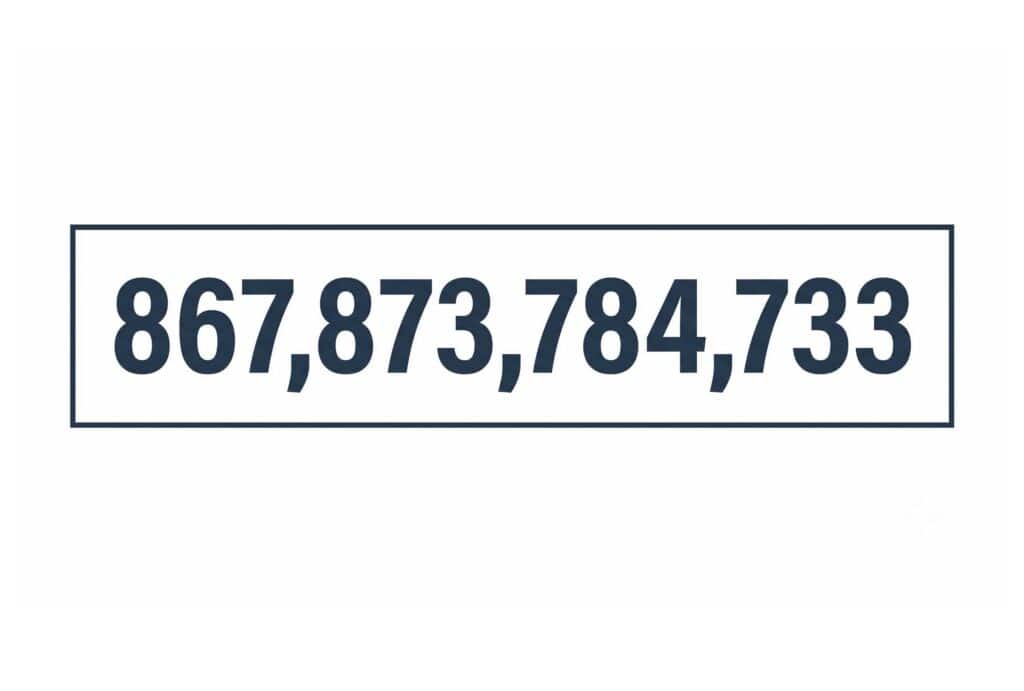
It’s time for a new standard. A new metric.
As autonomous driving scales, companies should follow the lead of Tesla and disclose autonomous miles driven in real time, not monthly, not quarterly. A live counter, on a public page, ticking upward for anyone to watch.
And as part of that standard, companies should stop using fancy marketing terms to imply they are driverless when they are not.
The definition of autonomous (driverless), in our opinion, is no safety driver, no observer in the front right seat, and in the case of autonomous trucks, no one sitting in the cab. This is autonomous. This is Unsupervised. Add a human into the mix who is capable of taking control of the vehicle, and it is Supervised.
Unsupervised and Supervised are two simple words that every single member of the public can understand. These are not marketing terms designed to fit a corporate narrative. They are facts.
And just as the electric vehicle industry resisted and pushed back against Tesla’s NACS plug and ultimately lost, the robotaxi and autonomous trucking industries will most likely push back against this simple vocabulary approach.
Why? That comes down to each individual company. But for some, this simply blows up the narrative they have put into the market, because there is no ambiguity with these terms. There is no room for interpretation.
As part of adopting these terms, companies should build public counters on their sites that disclose the number of both Supervised and Unsupervised miles driven in real time or as close to real time as possible. This applies to Tesla as well. They publicly disclose Supervised miles. Now it’s time for them to disclose Unsupervised miles as well.
Until these companies reach meaningful scale, this is one of the best metrics we have to measure the success of their autonomous operations. Over time, this data could be used to benchmark companies and give the public a true understanding of just how fast autonomy is scaling globally.
To get past the marketing hype, we built The Road to Autonomy Indices. After all, someone had to set the standard, and it had to happen sooner or later, so we built the Indices and made them public so anyone can follow along and watch how the autonomy economy is growing.
Our Take: Let us not forget, not all miles are created equal.
Waymo’s Road to Charlotte
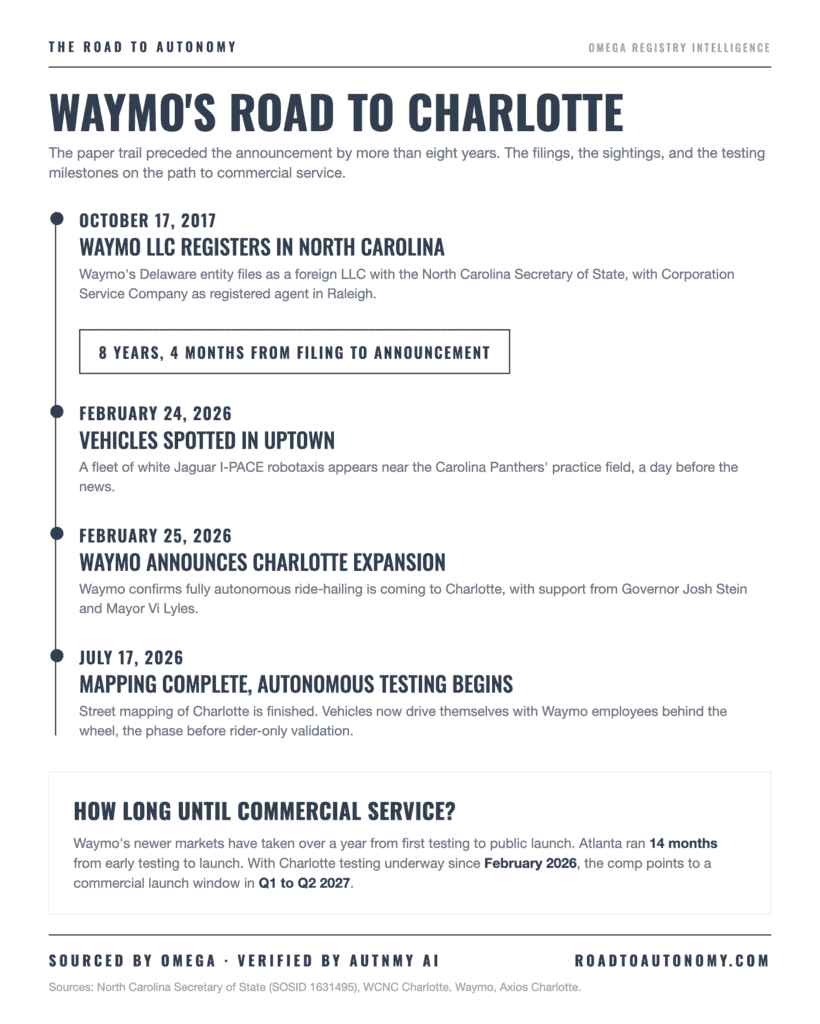
If you find the graphic to be useful, please feel free to share it with credit to The Road to Autonomy.
The Road to Autonomy Robotaxi Index
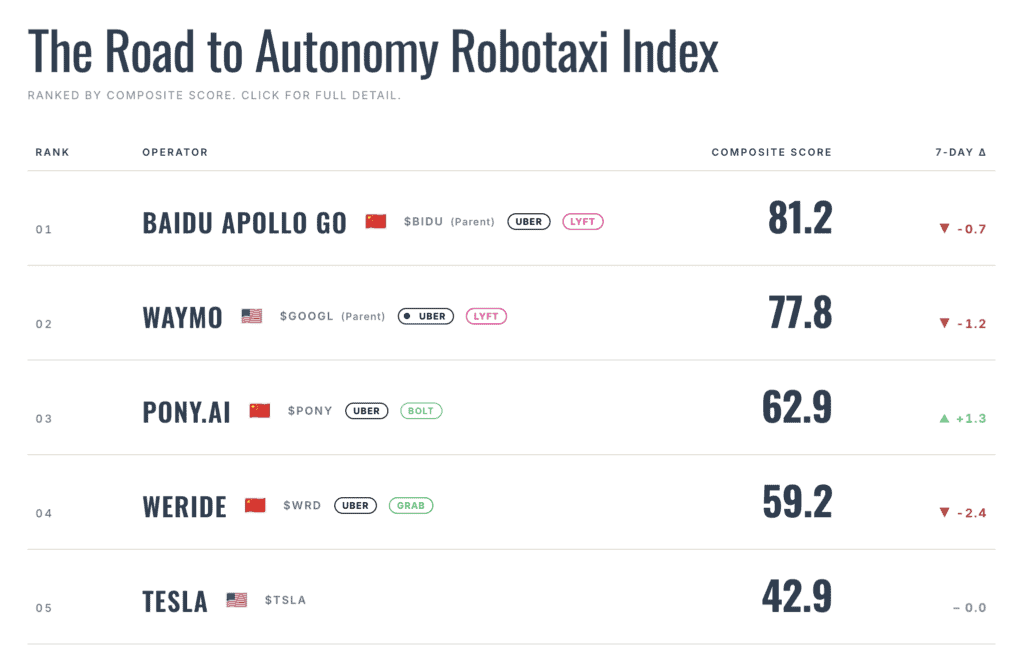
📈 Follow @AutonomyIndices on X for the latest updates on The Road to Autonomy Indices. Updates every 12 hours.
Piquing Our Interest
Uber’s CFO Gets Into Heated X Exchange Uber’s CFO, Balaji Krishnamurthy got into a heated X exchange (the post is still up) with Ethan McKanna over Uber’s perceived autonomous vehicle regulatory capture strategy. The tone and the comments say a lot. We encourage you to read the full back-and-forth exchange and come to your own conclusion.
The Battle Lines are Being Drawn in Washington, D.C, But Not on The Federal Level The situation currently unfolding in Washington, D.C. (DC B26-0684 Bill), is something we’ve been tracking for nearly two years. Friends have become rivals, and rivals have resorted to outright chicanery. What is now common knowledge has been brewing behind the scenes for a long time, and unfortunately, we expect things to completely boil over this fall. Pay close attention to these dynamics, as they are about to go national and autonomous vehicle policy is about to enter the mainstream.
Waymo Begins Testing in Charlotte Waymo has begun testing with safety drivers in Charlotte, NC as the company gears up for a commercial launch.
Zoox Issues Software Recall for 105 Robotaxis Over Smoke Zoox issued a voluntary software recall for its robotaxi fleet after one of its vehicles drove into a smoke-obscured emergency scene in Las Vegas.
Tesla Surpasses 12 Billion FSD Supervised Miles Over 12 billion miles have been driven with FSD Supervised engaged.
IMAX Has Autonomous Ambitions IMAX is looking to bring the IMAX experience into autonomous vehicles, beginning with the Chinese market.
VW’s MOIA Launches Restrictive Autonomous Shuttle Service in Germany VW’s MOIAhas launched a pilot program offering free, supervised self-driving shuttle rides with safety drivers to pre-registered residents in Hamburg.
Japan Plans Nationwide Infrastructure to Support 10,000 Autonomous Vehicles by 2030 TheJapanese government is launching a nationwide communication infrastructure strategy that standardizes intelligent transportation systems (ITS) and promotes collaboration between automakers and telecom companies as part of an effort to support having 10,000 autonomous vehicles on the road by 2030.
CaoCao Launches Commercial Operations for Robovan in China CaoCao has deployed their first fleet of autonomous delivery vehicles on real city streets, transitioning its unmanned freight business into a commercial Robot-as-a-Service model targeting 100,000 Robovans by 2030.
Hong Kong Ramps Up Autonomous Vehicle Tests as Baidu Expands City Trials Hong Kong is accelerating its autonomous driving initiatives by opening more roads and issuing new pilot licenses, coinciding with Baidu’s deployment of its sixth-generation robotaxis for fully remote-controlled trials in Lantau.
📰 Follow @RoadToAutonomy on X for our latest thoughts and insights on the autonomy economy.
Trending on X
Baidu Apollo Go Expands to Kazakhstan
Baidu Apollo Go continues to expand internationally, with Kazakhstan becoming its latest market. On the surface, you might wonder why Kazakhstan? Below the surface, this move signals a deeper expansion into manufacturing, as the country is home to over 15,000 industrial and manufacturing enterprises.
Our take: In our opinion, it is only a matter of time before Baidu Apollo Go announces a robotaxi assembly plant or manufacturing facility in the country.
Scale Not Technology Is the Real Constraint in AI Manufacturing
Todd Deaville, VP, Advanced Manufacturing Innovation, Magna, joined Grayson Brulte on The Road to Autonomy podcast to discuss how artificial intelligence and advanced robotics are transforming global manufacturing.
Baidu’s Hong Kong Robotaxi Expansion Unlocks Right-Hand Drive Markets
This week on Autonomy Signals presented by KPMG, Grayson Brulte and Rob Grant discuss Baidu’s Apollo Go robotaxi expansion in Hong Kong, the first combat strike using Saronic autonomous vessels on an Iranian naval base, and autonomous drones mapping volcanic gas clouds off the coast of Sicily.
Has Robotaxi Begun to Scale?
This week on Autonomy Markets, Grayson Brulte and Walter Piecyk discuss Tesla increasing their robotaxi inventory in Texas, a controversial autonomous vehicle bill in Washington DC, Uber’s acquisition of Delivery Hero, and WeRide’s global expansion strategies.