


This Week in The Autonomy Economy™
Lucid Needs Cash, Uber Needs Autonomous Vehicles
This Week in the Autonomy Economy, Kodiak went public on Nasdaq, Elon Musk announced on X that FSD 14 (Supervised) is coming next week, and we pondered the future of Uber and Lucid’s relationship, which we featured as this week’s featured analysis.
On Thursday, Kodiak went public at a $2.5 billion valuation, joining Aurora as the only two publicly-traded autonomous trucking companies. No matter who you’re rooting for, having two publicly traded autonomous trucking companies is good for the market and a clear indication that investors are beginning to see the opportunity in autonomy outside of robotaxis.
Autonomy is becoming an economy that we call the autonomy economy. Today, we are just beginning to scratch the surface of how transformational autonomy and automation will be for the global economy.
📰 Need to Know: This Week in the Autonomy Economy
Why is Kodiak going public a significant event for the autonomy economy?
Kodiak’s debut on Nasdaq at a $2.5 billion valuation is significant because it makes it only the second publicly-traded autonomous trucking company, joining Aurora (AUR). This is seen as a clear indicator that investor confidence is growing in the broader autonomy economy, extending beyond robotaxis and into the commercial trucking and logistics sector.
What is the latest update on Tesla’s Full Self-Driving (FSD) software?
Elon Musk announced on X that FSD (Supervised) version 14 will be released to a wide group of users next week. He also teased subsequent updates, versions 14.1 and 14.2, claiming that by version 14.2, the car will “feel almost like it is a sentient being.” The key question for users and investors will be how much of an improvement version 14 is over the 13.2.9, the current software release.
Why is there speculation that Uber might acquire Lucid?
A strategic acquisition could solve key problems for both companies. Lucid (LCID) is facing significant financial losses and will likely need to raise more cash by 2026. Uber (UBER) needs its own manufacturing capabilities to control its robotaxi supply and compete with vertically integrated competitor Tesla (TSLA). With Saudi Arabia’s Public Investment Fund (PIF) being a major investor in both companies, the fund could facilitate a deal that salvages its Lucid investment while giving Uber a critical manufacturing footprint and long-term competitive advantage.
How is Waymo expanding and competing with Uber?
Waymo is actively expanding its operations and services. It has begun testing at Austin-Bergstrom Airport in preparation for a commercial launch with Uber, while exploring an expansion into London, and the company recently launched “Waymo for Business.” This new service allows companies to integrate Waymo into their employee travel programs, positioning it as a direct competitor to Uber’s corporate offerings.
What is the autonomy economy?
The autonomy economy is a term coined by Grayson that describes the entire economic ecosystem being built around autonomous and automation technologies. The autonomy economy is about more than just personally owned autonomous vehicles or robotaxis; it encompasses sectors such as trucking, logistics, and delivery, and is expected to be a major catalyst for the global economy
What’s Moving the Markets
Lucid Needs Cash, Uber Needs Autonomous Vehicles
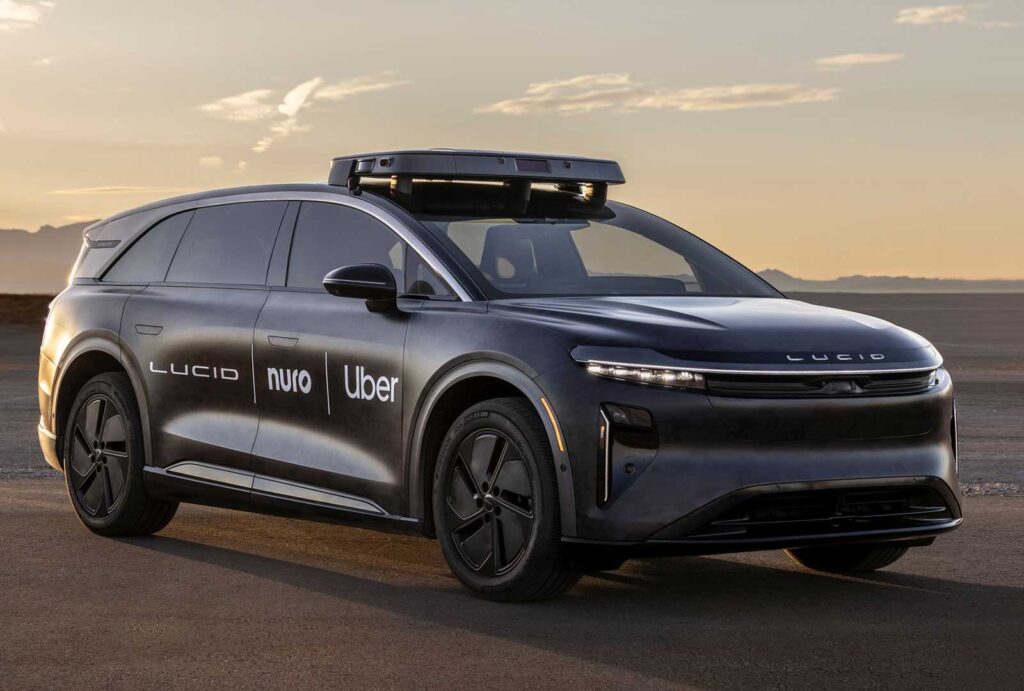
Lucid, which needs to raise additional cash by the second half of 2026 to remain competitive with Tesla, may find itself open to a strategic sale. The most logical buyer? Their new partner, Uber.
Both Lucid and Uber share a powerful common investor, Saudi Arabia’s Public Investment Fund (PIF). The PIF owns ~60% of Lucid and ~3.75% of Uber.
To date, the PIF has invested over $8 billion into Lucid, more than Lucid’s current market cap of ~$7.36 billion. A PIF-backed transaction that sees Uber acquire Lucid could allow the fund to salvage its investment while simultaneously giving Uber the manufacturing capabilities it needs to compete with Tesla and Waymo.
Lucid’s Q2 2025 results highlight both progress and fragility:
- Produced 3,863 vehicles; delivered 3,309 vehicles (+38.2% YoY)
- Revenue: $259.4 million
- Adjusted EBITDA loss: $632.1 million (losing ~$2.44 for every $1 of revenue)
- Net loss: $(0.28) per share (GAAP)
- Liquidity: $4.86 billion
- Production guidance cut to 18,000–20,000 vehicles (down from 20,000)
Deliveries are rising, but losses remain severe. At this pace, Lucid will need to raise additional capital again by 2026, potentially in a slowing economy at a valuation that looks high when compared to traditional automakers that trade at modest EBITDA multiples despite consistent profitability. Lucid, meanwhile, remains unprofitable yet trades at ~$7.36 billion, a valuation that implies far more than its fundamentals justify.
On a revenue basis, Lucid generated $259 million in Q2 2025. At that run rate, even assigning a generous 2–3× revenue multiple would imply a valuation of only $1.6–2.4 billion, a steep discount to current levels.
At those levels, would the PIF step in and play matchmaker with Uber, which has slowly begun shifting away from being an “asset-light” aggregator of robotaxis towards selective asset ownership?
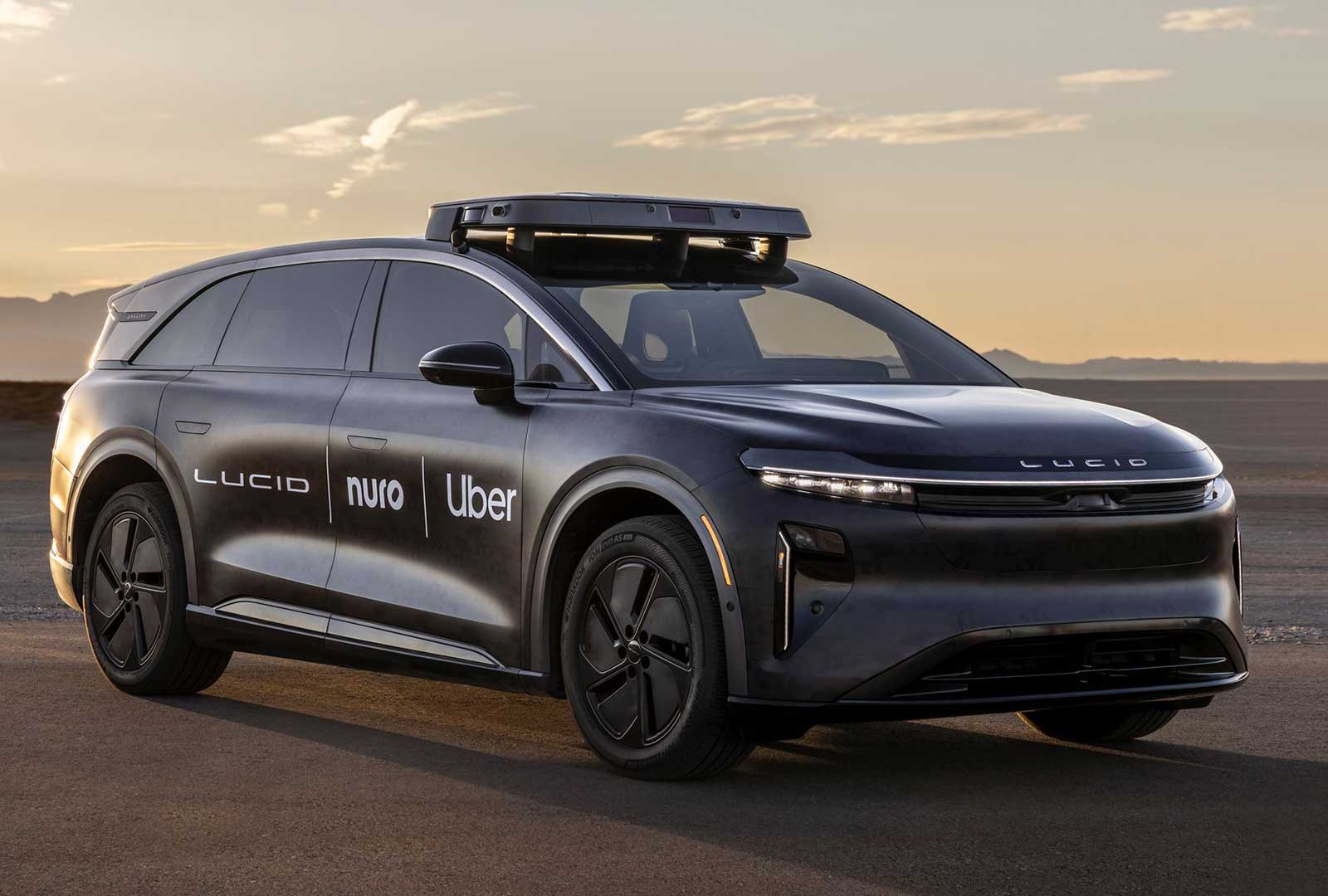
Their recent Lucid/Nuro robotaxi deal, targeting 20,000 Lucid Gravity robotaxis integrated with Nuro’s autonomous driving system where Uber will own the robotaxi assets, is merely the starting point in our opinion. In fact, Uber even funded the retooling of Lucid’s Arizona factory to support the robotaxi program.
This suggests that Uber’s long-term strategy might be to control its own supply of robotaxis globally. Then there’s the issue of timing, while Waymo expands into new markets constrained by OEM partnerships, Uber could follow Tesla’s lead and accelerate global robotaxi deployments through vertical integration.
Waymo is dependent on OEM partners Hyundai and Geely and contract manufacturer Magna, each with their own priorities, politics, and timelines to deliver vehicles. Tesla is not constrained in this way, and if Uber did a deal, they wouldn’t be either, giving the company a long-term strategic advantage.
In order for Uber to build a global robotaxi business, they cannot be constrained by partners, they have to own and control their own robotaxi supply. If Uber potentially looks to secure manufacturing control, Lucid’s Arizona factory could supply the U.S. market, while their Saudi Arabia facility could serve the Middle East, Europe, and the U.K.
By combining Lucid’s manufacturing footprint with Uber’s global network and PIF’s funding, Uber could position itself as Tesla’s only true rival in robotaxis globally.
Skeptics will argue that acquiring Lucid would make Uber too asset-heavy, but the company would not always have to be asset heavy. At some point in the future, Uber could spin out Lucid’s factories, their robotaxi depot real estate, and robotaxi fleets into a REIT-like structure, retaining operational control through long-term agreements while reducing balance-sheet intensity.
If this deal or a similar deal were to happen, robotaxis would shift from a risk to strategic advantage for Uber. To win in robotaxis, Uber must control the manufacturing and own the assets until the market becomes saturated.
For Uber, Lucid isn’t just a car company. It’s the missing piece of the puzzle that will allow Uber to compete with Tesla and Waymo long-term and perhaps one day surpass Waymo in terms of daily rides globally.
Our take: Sometimes you just have to think big, take a big risk and go for it.
Uber is currently ranked #1 with a bullish outlook on the AUTONOMY LEADERBOARD in the software platforms category.
Piquing Our Interest
Waymo Begins Testing at Austin-Bergstrom Airport Waymo has begun testing at Austin-Bergstrom Airport (AUS) with a safety driver as the company prepares to launch commercial service in the future with Uber at the airport.
Waymo Eyes London Expansion Waymo is gearing up for a London expansion as the company has posted job listings for a Fleet Readiness Lead, Incident Response Manager, and Head of Business Development & Strategic Partnerships, EMEA, all based in London.
Waymo Unveils Waymo for Business In a move that we view as a clear indicator that Waymo plans to compete with Uber long-term, this week the company announced Waymo for Business that will allow businesses to integrate Waymo into their employee travel workflows.
Only in LA Does a Waymo Go Up in Smoke LA is home to some of the oddest behaviors in Waymos, and this week, a Waymo went up in smoke when an individual allegedly started a fire inside the vehicle.
Wayve CEO Discusses Continued Japan Expansion on Bloomberg TV During an appearance on Bloomberg TV live from Tokyo, Alex Kendall, co-founder & CEO, discussed the Wayve business model, robotaxis and the company’s continued expansion in Japan.
Zoox Seeks Further NHTSA Exemptions Zoox continues to seek additional NHTSA exemptions as the company prepares to ramp up service.
Chinese AV Startup Momenta Seeks $6 Billion Valuation Momenta, a Chinese autonomous vehicle start-up and Uber partner is currently looking to raise a new round of funding at a $6 billion valuation.
Avride Surpasses 100,000 Autonomous Deliveries In partnership with Grubhub, Avride with a fleet of 115 autonomous robots has surpassed 100,000 autonomous robot deliveries at Ohio State.
Kodiak Goes Public on Nasdaq This week, Kodiak went public on Nasdaq at a $2.5 billion valuation. Following the ringing of the bell, founder & CEO Don Burnette joined The Claman Countdown where he discussed the company’s public market debut.
📰 Before these stories were featured here, they were available on X. Follow @RoadToAutonomy today to stay up-to-date on the latest news and developments shaping the autonomy economy.
Social Buzz
FSD (Supervised) v14 Coming Soon
Next week, Tesla ships FSD (Supervised) 14 to a wide group of users, with the biggest question being how much improvement will this release be over version 13.2.9.
Our take: We drive with FSD Supervised every single day and each day we continue to notice improvements which further bolsters our confidence that it is only a matter of time until Tesla ships FSD Unsupervised.
Tesla is currently ranked #1 with a bullish outlook on the AUTONOMY LEADERBOARD in the personally owned autonomous vehicle category.
Latest The Road to Autonomy Podcast
Autonomous Trucking’s Watershed Moment: Bot Auto Proves Less is More
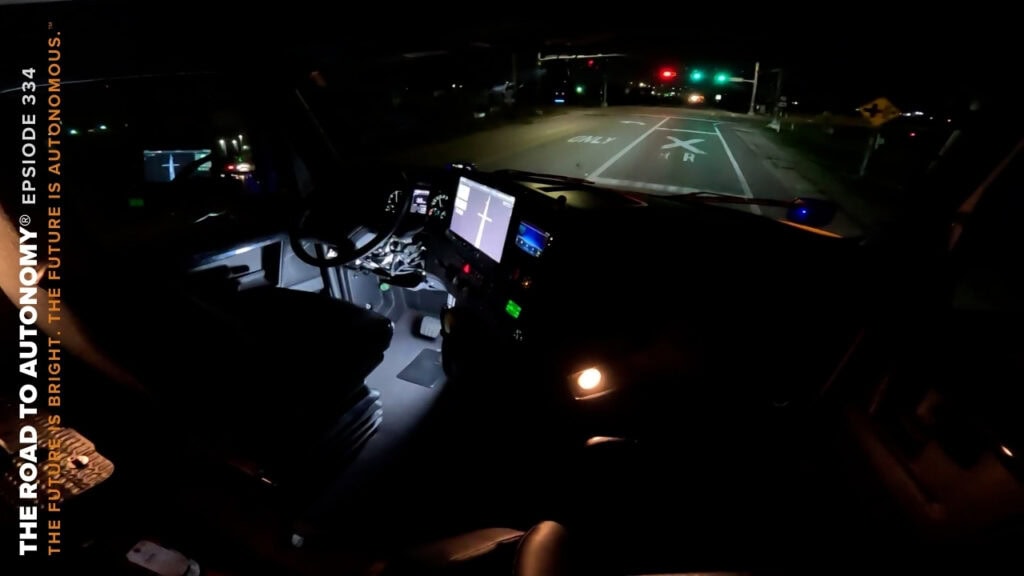
Chuck Price, President, AI Kinetics joined Grayson Brulte on The Road to Autonomy podcast to discuss Bot Auto’s successful 40-mile, fully autonomous run with no human in the cab or operating the vehicle remotely.
Watch on YouTube | Spotify | X
Listen on Apple Podcasts
September 23, 2025
Latest Autonomy Markets Podcast
Does Tesla FSD 14 Matter?
This week on Autonomy Markets, Grayson Brulte and Walter Piecyk discuss the upcoming release of Tesla FSD 14, Waymo’s potential expansion to London and Nuro taking delivery of their first Lucid-built robotaxi.
Watch on YouTube | Spotify | X
Listen on Apple Podcasts
September 27, 2025