This Week in The Autonomy Economy, presented by Koop Insurance, Waymo had a big week with confirmed launch plans for both Tokyo and Singapore, along with restarting service in San Antonio. Lucid is beginning to look more and more like a company that could become a contract manufacturer for robotaxis, and we are on the road conducting Field Work in Texas.
To truly understand how robotaxis and autonomous trucks are being deployed, you have to visit the markets where they operate, meet the teams, ride in the vehicles and trucks, and visit the depots. Otherwise you do not get the full picture of what is happening on the ground.
Over the coming weeks, we will be releasing a series of Field Reports from our autonomous adventures throughout the Lone Star State. While we focus on fieldwork, stay tuned over the coming days to our X accounts, where we will be posting tidbits from the field in real time.
📰 Need to Know: This Week in the Autonomy Economy
What are Waymo’s latest global and domestic expansion plans?
Waymo announced commercial launch plans for Tokyo in 2027 (in partnership with Nihon Kotsu and GO) and Singapore in 2028 (with mapping beginning in 2027). Domestically, Waymo resumed commercial operations in San Antonio including trips to and from the airport and partnered with Allianz Partners to secure fleet insurance for European operations.
How did recent news coverage misrepresent Minneapolis’s proposed autonomous vehicle rules?
A Fortune headline claimed Minneapolis was considering driver requirements due to public safety fears. In reality, the proposed city ordinance (Workers Drive Minneapolis) was introduced by city council members as a labor protection measure for human rideshare drivers. Furthermore, fully autonomous Waymos are not driving on Minneapolis streets today; the company is only running a limited number of test vehicles with safety drivers behind the wheel.
How is Lucid entering the robotaxi market?
Lucid is partnering with ride-hailing company Bolt to co-develop SAE Level 4 autonomous vehicles built on Lucid’s Midsize platform. Bolt aims to own and operate at least 25,000 fully autonomous Lucid vehicles across European cities, with a long-term target of 100,000 autonomous vehicles on its network by 2035.
How do vehicle hardware costs impact Waymo’s path to profitability?
Waymo’s upcoming Hyundai IONIQ 5 robotaxis (slated for late 2026 production) are estimated at $55,000 to $65,000 fully equipped with its 6th-generation system. This represents a significant cost reduction compared to its Zeekr-built Ojai (~$125,000) and Jaguar I-PACE vehicles ($150,000 to $200,000), positioning Waymo an estimated 14 to 18 months away from profitability on a pure-ride basis.
What key regulatory and corporate moves affected other autonomous vehicle players this week?
Zoox: Its 100-vehicle permit cap in Nevada expires on September 25, allowing fleet expansion in Las Vegas.
Tesla: NHTSA ordered Tesla to answer 21 technical and legal questions under oath by September 30 regarding Cybercab self-certification.
May Mobility: Announced plans to go public via a SPAC business combination at a $1.4 billion enterprise value.
San Diego: The city council passed a symbolic 8-0 vote requesting local control over autonomous vehicle deployments, though regulation remains at the state level.
The Headline Is Not the Story
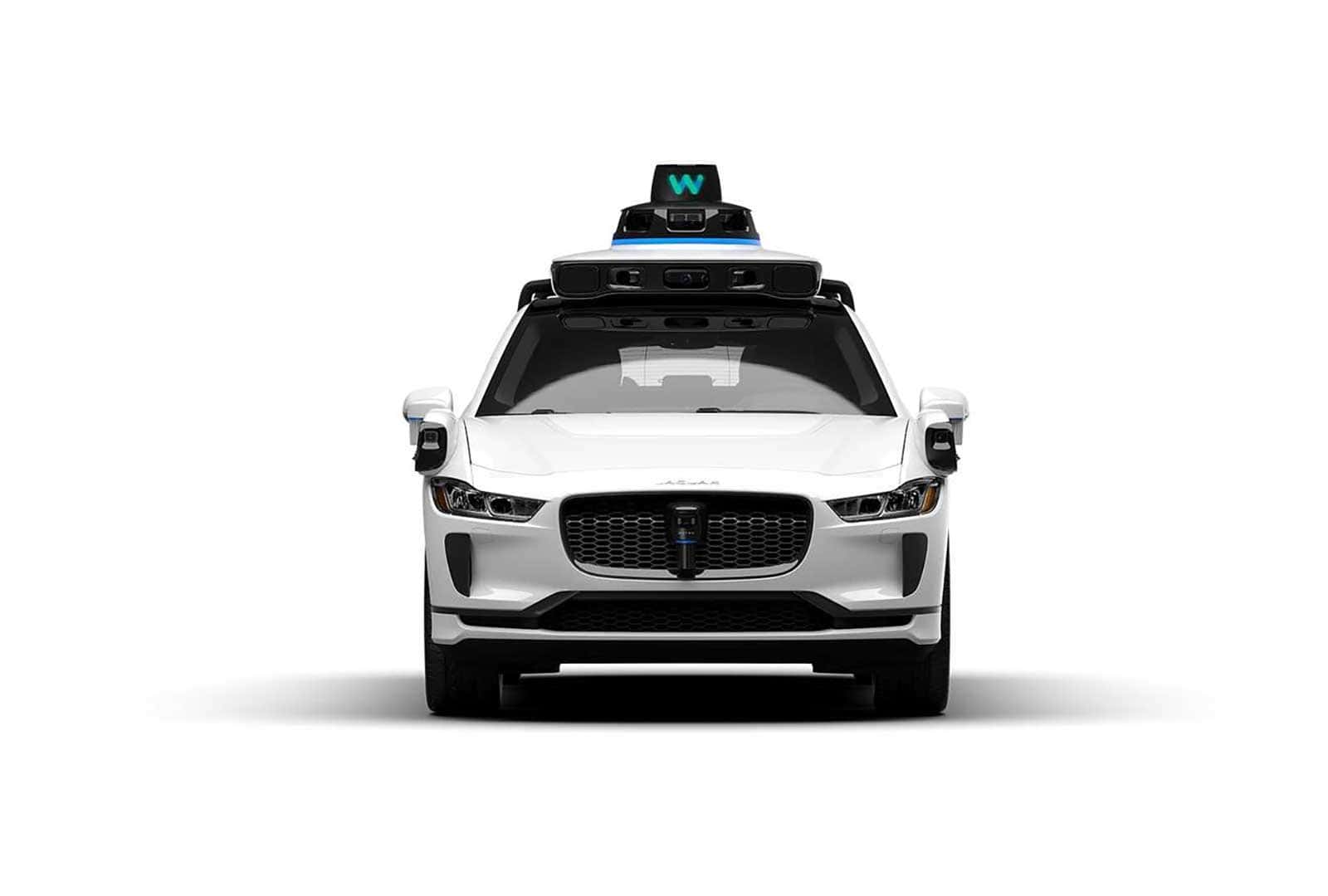
Waymo Jaguar I-PACE | Source: Waymo
Misleading headlines are shaping how the public, policymakers, and markets interpret autonomy. The headline gets the clicks and sets the narrative, while the facts stay buried deep in the story, if they are even in the story.
This week, Fortune took headline clickbait to the extreme when the outlet published a headline that read, “Americans are so concerned about autonomous vehicles that Minneapolis is considering requiring drivers to sit inside Waymos.”
That headline is factually incorrect. Here is what is really happening in Minneapolis. Four of 13 council members have co-introduced a city ordinance titled Workers Drive Minneapolis, and the sponsors say openly that the goal is protecting rideshare drivers.
That is the story. You would not know this unless you read halfway through the Fortune story. Fortune’s editors buried the facts in the middle of the piece and led with a safety narrative, not a labor one.
The Minnesota Reformer, unlike Fortune, published the correct headline, “Minneapolis weighs ban on driverless robotaxis to protect rideshare drivers.” Yet the Fortune story got picked up and syndicated with its headline intact.
Furthermore, the bombastic title also implies fully autonomous Waymos are driving on Minneapolis streets today. They are not. Waymo is testing a limited number of vehicles with safety drivers, but you would not know that from the Fortune headline.
The first public hearing is September 22. Mayor Jacob Frey’s office has called the ordinance a back door ban and bait for the state to step in and preempt the city, which is what happened the last time the council took on Uber and Lyft.
Fortune chose to cherry pick data from a Pew poll showing 71% of Americans would be uncomfortable in a driverless car. Read the questionnaire. Pew asked one hypothetical question about personal comfort. It did not ask about safety. It did not ask about regulation. It did not ask whether a human should be required behind the wheel.
The 71% includes 28% who chose the mildest negative answer available. The same survey found only 5% of Americans have ridden in a driverless car, and among those who have, 40% say they would be extremely or very comfortable. Among those who have not, 5%.
Fortune says Americans are growing nervous. Pew published a single reading from February with no trend line. The data point that does measure safety, an IIHS study finding Waymo has a lower crash involvement rate than human drivers, shows up deep in the piece, long after the narrative was set.
Headlines matter because we live in a headline-driven society and a local city council member or one of their constituents could see the headline and misinterpret public sentiment.
We ride in the vehicles, visit the depots, and read the filings because that is the only way to see the distance between what is reported and what is happening on the ground. The autonomy economy will be built on deployments, unit economics, and regulatory approvals. It will not be built on headlines.
Waymo to Launch Commercial Service in Tokyo Next Year Waymo, Nihon Kotsu, and GO have agreed to launch commercial service in Tokyo in 2027. Riders will be able to hail vehicles through both the GO and Waymo apps. The initial fleet will be limited before expanding to the Autonomy Markets metric of 100 vehicles.
Waymo Targets Singapore Commercial Launch in 2028 In partnership with Singapore’s Ministry of Transport and Land Transport Authority, Waymo plans to begin mapping in 2027 and opening commercial service in 2028.
Waymo Restarts Service in San Antonio This week, Waymo resumed commercial service in San Antonio, including trips to and from the airport.
Waymo Partners With Allianz For European Insurance Waymo’s grand European ambitions are now insured, as the company recently announced a partnership with Allianz Partners for fleet insurance, digital claims, and safety research to support scaled autonomous operations across the continent.
Zoox’s 100-Vehicle Cap in Nevada Expires Next Week The Nevada Transportation Authority permit limiting Zoox to 100 robotaxis expires on September 25th, enabling the Amazon-owned company to grow its Sin City fleet and hopefully lower wait times.
May Mobility to Go Public via SPAC at $1.4 Billion Enterprise Value May Mobility is going public through a business combination with ACP Holdings Acquisition Corp.
Lucid and Bolt Partner to Deploy 25,000 Autonomous Vehicles Across Europe Lucid and Bolt to co-develop SAE Level 4 ADS-ready vehicles on Lucid’s Midsize platform, with Bolt aiming to own and operate at least 25,000 fully autonomous Lucid vehicles across European cities toward a longer-term goal of 100,000 AVs on its network by 2035.
San Diego City Council Votes 8-0 for Local Control Over Autonomous Vehicles In a toothless, symbolic vote, the San Diego City Council unanimously passed a resolution asking for local authority over AI and autonomous vehicle deployment, even though California regulates these vehicles at the state level.
Bot Auto Sets One Billion Autonomous Miles Target for 2031 Autonomous capacity, not the truck, is the product, and Bot is building Capacity Grid to grow from validated lanes into a commercial network toward one billion autonomous miles by 2031.
Pony AI Unveils Gen-4 Level 4 Robotruck Built on GAC’s battery-electric platform with a 70% reduction in hardware costs, Pony AI’s new SAE Level 4 autonomous truck is scheduled for volume production later this year to serve long-haul and port logistics.
Grab to Grow Singapore Robotaxi Fleet Fivefold Grab is planning to scale their WeRide powered robotaxi fleet in Singapore from 10 to 50 vehicles over the next six months and broaden its service coverage beyond Punggol.
📰 Follow @RoadToAutonomy on X for our latest thoughts and insights on the autonomy economy.
Trending on X
15 cities. Same reliable driver. Thank you to our teams, partners, and riders who help us build the future of mobility every single day. pic.twitter.com/bQgIrThSNt
Waymo is scaling. Fifteen cities. Fully autonomous operations done the Waymo way. And as we prepare to turn the calendar to 2027, Waymo has way more cities on deck.
Our take: With the Hyundai IONIQ 5 vehicles coming off the line in Q4 2026, Waymo’s expansion is only poised to accelerate.
Building Plaid for the Autonomy Economy
Ben Seidl, Co-Founder and CEO of Autolane joined Grayson Brulte on The Road to Autonomy podcast to discuss building Plaid for the autonomy economy, an independent, OEM-agnostic orchestration platform that connects autonomous vehicles to businesses for tip-free delivery.
Will NHTSA Ground Cybercab?
This week on Autonomy Signals presented by KPMG, Grayson Brulte and Rob Grant discuss NHTSA ordering Tesla to answer 21 technical and legal questions under oath by September 30 on Cybercab self-certification, Waymo hitting local political friction in San Diego after CPUC approval, and GMO Air unveiling a robot EMS vehicle in Tokyo built to service humanoids in the field.
Waymo Takes the World While Tesla Takes the NHTSA Test
This week on Autonomy Markets, Grayson Brulte and Walter Piecyk discuss Waymo’s expansion to Tokyo and Singapore, NHTSA’s ongoing audit of Tesla’s Cybercab in Austin and Bolt’s plan to deploy up to 25,000 Lucid robotaxis in Europe.
In The News: Waymo Is Scaling Robotaxis. But Consumer Cars Could Be The Real Prize.
September 16, 2026 | Investor’s Business Daily quoted AUTNMY AI co-founder Grayson Brulte on Waymo’s robotaxi scaling, noting that Waymo is becoming a business with a massive vehicle ramp ahead, citing estimated Hyundai IONIQ 5 robotaxi costs of $55,000 to $65,000 fully equipped, and saying that on a pure-ride basis Waymo is roughly 14 to 18 months from profitability.
Brulte estimates a fully equipped Ioniq 5 robotaxi could cost about $55,000 to $65,000, including Waymo’s sixth-generation sensor and computing system. He estimated that Waymo’s Zeekr-built Ojai costs about $125,000 fully equipped, while its Jaguar I-Pace vehicles cost roughly $150,000 to $200,000.