


This Week in The Autonomy Economy™
The Great Pivot to L2++
This Week in the Autonomy Economy, the loud chorus of negativity emerged amongst the backdrop of delightful surprise as Infrastructure Committee Chairman Graves and Ranking Member Larsen introduced a bipartisan BUILD America 250 Act, which would create a unified federal framework for autonomous trucks.
No matter how many inflammatory headlines get published and picked up by local news media, robotaxis are scaling and they are proving to be a hit with consumers. As the old saying goes, the train has left the station, and what is happening now is nothing new.
In fact, in the 1810s, the mythical leader of the Luddite movement, Ned Ludd, came to prominence as the Luddites tried to stand in the way of technical progress during the Industrial Revolution in England.
The tactics used to slow down the technical progress being made in England to destroy mechanical weaving machines failed as Britain went on to mass produce textiles and export them to the world, earning the UK the nickname Workshop of the World.
The same thing is going to happen in America. The modern day Luddite movement will fail as American technical prowess continues to grow and prosper as America exports autonomy to the world, ushering in the Autonomy Economy. Perhaps, even America might earn the nickname Factory of Autonomy.
📰 Need to Know: This Week in the Autonomy Economy
What is the BUILD America 250 Act, and why does it matter?
The BUILD America 250 Act is a major bipartisan five-year surface transportation reauthorization bill introduced by Infrastructure Committee Chairman Graves and Ranking Member Larsen. This legislation is a pivotal milestone for the industry because it establishes the first unified federal policy framework regulating autonomous trucks in the United States. By replacing a patchwork of local rules with a single federal standard, it provides the legal clarity necessary for autonomous trucking companies to scale safely and efficiently across the entire nation.
How rapidly is Tesla’s FSD growing as a commercial business?
Tesla’s Full Self-Driving (FSD) Supervised has successfully shifted from a niche tech feature into a massive recurring revenue engine for the company. FSD subscriptions surged 44% quarter-over-quarter to reach 476,100 active users, who now make up 36.7% of the total FSD user base, while legacy pre-paid purchases account for the remaining 63.3%.
This subscription boom is currently generating just north of $47 million a month, putting Tesla on an impressive annual run rate of roughly $565 million. The software is also expanding its physical footprint rapidly, having recently surpassed 10 billion cumulative miles driven while quietly pushing into Europe through fast-tracked approvals in countries including Lithuania.
How does GM’s Super Cruise compare to Tesla’s FSD in terms of revenue and capability?
GM’s Super Cruise is proving to be a formidable revenue generator, on target to bring in $400 million this year as the company aims for 850,000 paid subscribers by the end of 2026. However, its underlying technology faces strict limitations compared to Tesla’s FSD because Super Cruise is entirely geofenced, relying on pre-mapped and pre-approved highways in the U.S. and Canada rather than allowing unconstrained door-to-door navigation.
Because of these geographic restrictions, Super Cruise has only accumulated 1 billion miles since its 2017 launch compared to Tesla’s 10 billion, and GM faces a retention hurdle, as only 40% of customers choose to continue paying for the service once the initial three-year subscription expires.
What is the Great Pivot to L2++ among global legacy automakers?
The consumer-driven demand for supervised autonomous driving (Level 2++) is forcing global automakers to realize that they face a severe long-term sales problem if they do not offer an un-geofenced equivalent to Tesla’s FSD. In response, automakers are aggressively turning to external partnerships to bridge the software gap, exemplified by Stellantis recently partnering with autonomous vehicle tech firm Wayve to integrate the Wayve Driver into its vehicle lineup.
This partnership allows Stellantis to bypass rigid geographic limitations and offer door-to-door autonomy on brands like Jeep, though the company faces a critical timeline risk since these vehicles will not be available until 2028, giving Tesla two more years to advance its software lead.
What are the major robotaxi expansions happening globally?
Despite ongoing media skepticism, commercial robotaxi services are scaling aggressively across major international markets. In the United States, Waymo expanded its San Francisco Bay Area operations by 60 square miles, expanding into Cupertino and Campbell, bringing their total service footprint to over 330 square miles, while tech provider ECARX agreed to supply thousands of purpose-built autonomous vehicles to May Mobility.
Internationally, China’s XPENG has commenced mass production of its GX platform robotaxi for testing later this year, and Baidu’s Apollo Go completed a staggering 3.2 million fully driverless rides in Q1 2026 alone, expanding its global operations to 27 cities.
What’s Moving the Markets
The Great Pivot to L2++
Tesla has done what no regulator, no consortium, and no industry working group has been able to achieve to date. They captured the public’s imagination and turned the tide against the conventional thought of what was possible with personal car ownership.
The company has made supervised autonomous driving cocktail chatter and turned it into an emerging big business, despite a cottage industry of Negative Nellies and a constant barrage of incendiary headlines around the globe.
Instead of running ads, Tesla simply showed the public what was possible. We drive FSD every day, but for years, we doubted the progress of the software and brushed it off.
That all changed after watching an episode of the BG2 podcast with Brad Gerstner and Bill Gurley, where Brad spoke about how FSD had improved so much and how genuinely impressed he was with it.
We did what any good analyst would do. We got into the car and headed to a Tesla showroom to try it ourselves. That day, we walked out as Tesla owners, and we have never looked back.
Since that time, the progression of FSD has advanced by leaps and bounds. The software has noticeably improved with every release, and the tide is beginning to turn. The big shift began with 13.2.9, and now FSD Supervised is on 14.3.3, as Unsupervised gets closer by the day.
We are not the only ones noticing this rapid acceleration. Global OEMs around the world are watching too, as they are now facing the harsh reality that they do not have an equivalent supervised autonomous driving system.
FSD is no longer just a proprietary feature. It is the absolute baseline for what consumers expect when they purchase or lease a new vehicle. We won’t even consider looking at another brand because FSD is that good and we use it every day.
If you are an OEM and you do not offer your own version of FSD, you have a long-term sales problem, and you already know it.
To their credit, GM recognized this earlier than most, and Stellantis has now come to that conclusion as well, as the global take-rate for FSD sits at 14% as of Q1 2026, up from 12.4% in Q4 2025.
While the overall fleet percentage is relatively low for now, legacy outright purchases of FSD, made before it became solely a subscription service, still account for 63.3% of the active user base.
That active user base is growing, as FSD subscriptions grew 44% quarter-over-quarter to 476,100, accounting for the remaining 36.7% of all FSD users, generating recurring revenue just north of $47 million a month, putting it on a run rate of roughly $565 million a year.
With consumer demand comes monthly recurring revenue, and GM is now highlighting the revenue their L2++ Super Cruise system is generating quarterly. Super Cruise revenue as of Q1 2026 has grown 85% year-over-year and is on target to generate $400 million this year as the company targets 850,000 paid subscribers by year-end.
While these numbers might appear competitive with Tesla’s FSD take-rate, it is important to remember that Super Cruise is pre-paid for the first three years of vehicle ownership. After that initial subscription expires, 40% of users continue the service.
Super Cruise compared to FSD Supervised is limited, as consumers can only engage the system on compatible roads across the U.S. and Canada. Whereas in a Tesla, you simply get in your vehicle, tap in the address, and engage the system.
Get into a GM vehicle, and you are strictly limited as to where you can use the software, as the system relies entirely on roads that are pre-mapped and pre-approved. Hence, despite launching Super Cruise in 2017, only one billion cumulative miles have been driven with the system engaged, while Tesla recently surpassed 10 billion miles.
The biggest difference between both systems is that you can go almost anywhere with FSD, and it appears that Stellantis has taken notice. The company recently announced a partnership with Wayve to integrate the Wayve Driver into their brands, enabling owners to have a similar experience to Tesla, door-to-door.
With the Wayve partnership in hand, Stellantis bought its own version of FSD. No pre-mapped geofences, no strict oversight of where the consumer can enable the system.
In theory, when the first Wayve-equipped vehicles become available for sale or lease in 2028, a consumer will be able to hit a button and go wherever they choose without the rigid geographic limitations that GM customers currently face with Super Cruise.
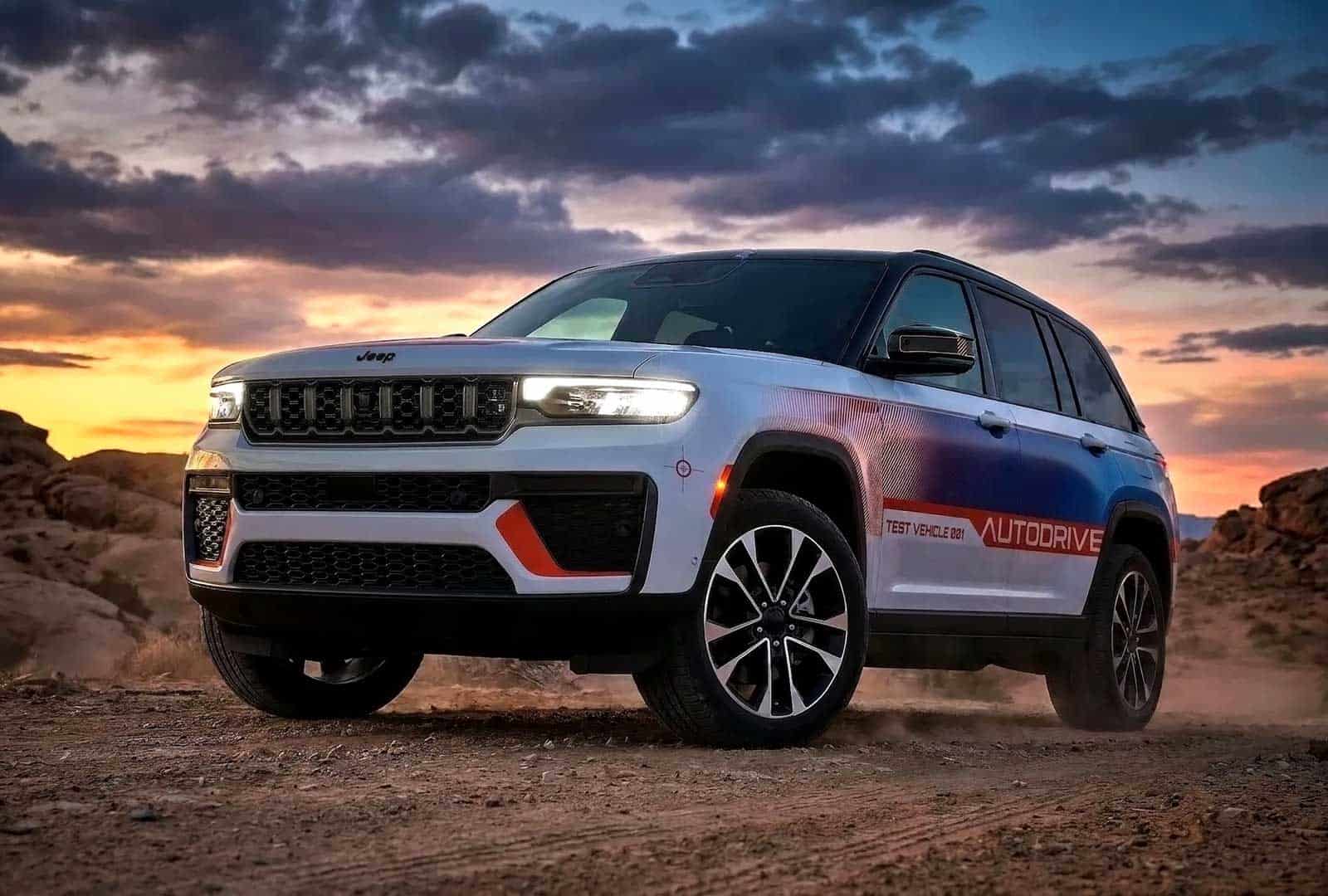
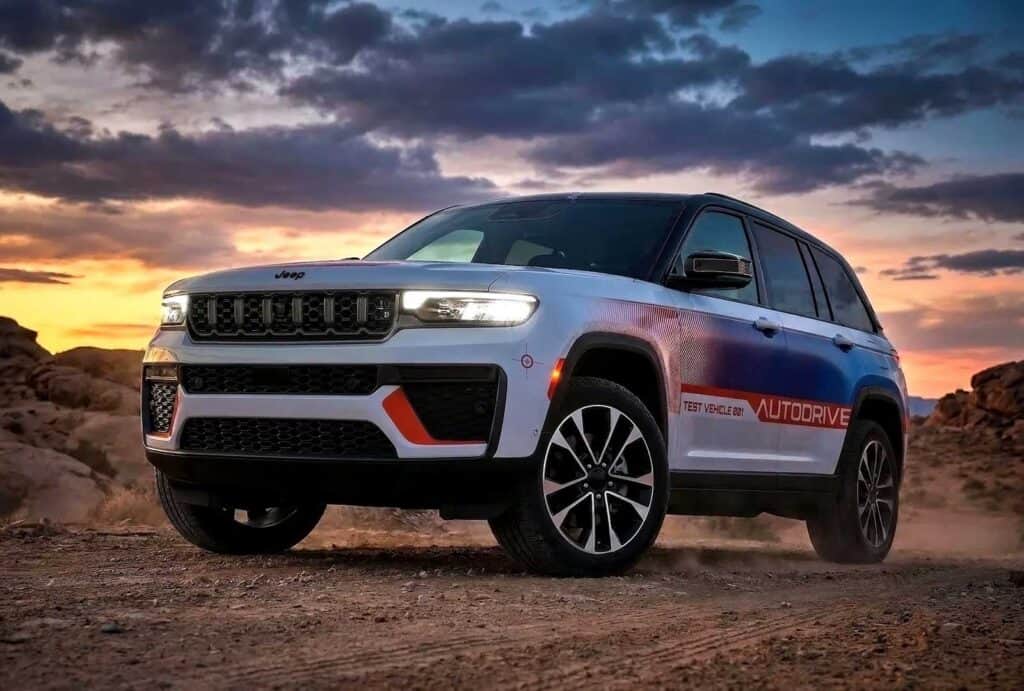
But 2028 is two years away, and at the rate Tesla is advancing FSD, will FSD be too far ahead for Wayve and Stellantis to catch up? Or will Stellantis’s new management successfully revitalize the iconic Jeep brand by introducing the world’s first supervised autonomous Jeep powered by Wayve?
Only time will tell. But no matter the outcome, Stellantis’s new management deserves credit for reading the writing on the wall, understanding the true direction of the market, and decisively positioning the company for the future of the autonomy economy.
Our Take: The great pivot to L2++ has begun and it is being driven by the consumer.
Piquing Our Interest
Waymo Expands Bay Area Service Waymo has added roughly 60 square miles of service across Willow Glen, Vista Park, Campbell, and Cupertino in the San Francisco Bay Area, expanding their Bay Area service area to more than 330 square miles.
Ecarx to Supply May Mobility with a Robotaxi Platform Geely-backed ECARX has entered into an agreement to supply May Mobility with thousands of purpose-built autonomous vehicles, including custom central computing platforms and full-stack sensor suites.
Stellantis Expands Applied Intuition Partnership Stellantis is expanding their partnership with Applied Intuition to bring Vehicle OS, Cabin Intelligence, and autonomy systems to the next-generation STLA Brain platform across multiple brands and vehicle platforms.
America 250 Act Establishes First Federal Framework for Autonomous Trucks Infrastructure Committee Chairman Graves and Ranking Member Larsen have introduced a bipartisan five-year surface transportation reauthorization bill that includes the first federal policy framework regulating autonomous trucks.
UK Opens Applications for Autonomous Vehicle Pilot The UK has opened applications for autonomous vehicle companies to operate commercial robotaxi and autonomous bus services across Great Britain, with passenger service expected to begin later this year.
XPENG Begins Production of Mass-Produced Robotaxi XPENG has begun mass production of its robotaxi built on the GX platform, with testing slated to begin in the second half of the year in China.
Baidu’s Apollo Go Surpasses 22 Million Rides Baidu’s Baidu’s Apollo Go robotaxi service completed 3.2 million fully driverless rides (but how many had a safety attendant?) in Q1 2026, with weekly rides peaking at over 350,000 in March, growing total rides over 120% year over year and reaching a global footprint of 27 cities as of May.
📰 Follow @RoadToAutonomy on X for our latest thoughts and insights on the autonomy economy.
Trending on X
Tesla Continues FSD Supervised Expansion
Tesla’s eastern push into Europe continues as FSD (Full Self-Driving) Supervised is now live in Lithuania, after the Lithuanian Transport Safety Administration fast-tracked the approval by recognizing Tesla’s existing Dutch safety certification.
Our take: Tesla is quietly building an FSD European footprint one country at a time. Add a few more country approvals into the mix, and we will be heading to Europe to test FSD on the continent to produce a Field Report.
Inside Kodiak’s Autonomous Trucking Operation in the Permian Basin Field Report
After spending two days in the Permian Basin visiting Kodiak’s operations and partner Atlas Energy Solutions, conducting depot reconnaissance, visiting the Dune Express and meeting with Kodiak’s operational team, we identified several realities that distinguish autonomous trucking in the Permian from every autonomous trucking operation we have covered to date.
Build America 250 Act, XPeng’s Pure Vision Robotaxi, SMILE Reaches Orbit
This week on Autonomy Signals presented by KPMG, Grayson Brulte and Rob Grant discuss the BUILD America 250 Act, XPeng’s mass-produced pure vision robotaxi, and the ESA-China SMILE mission reaching orbit.
Waymo’s Lead and Autonomous Trucking’s Inflection Point
This week on Autonomy Markets, Grayson Brulte and Walter Piecyk discuss Waymo’s undisputed global lead, the growing consumer-driven shift toward supervised ADAS (Level 2++), and autonomous trucking’s inflection point.