Presented ByInsurance for robotics and autonomous vehicles
This Week in the Autonomy Economy, we hit the road and headed to Austin, Uber turned on the printing press and Tokyo continues to emerge as a leading robotaxi market.
Before new autonomy markets emerge, there is always a signal that points to it and we saw the Tokyo signal years ago, when autonomy companies began to open offices and the Japanese government began to overhaul regulations to allow for fully autonomous vehicles and trucks. But how do you uncover signals before they become headlines? AUTNMY AI.
AUTNMY AI, co-founded by Grayson Brulte and Rob Grant, was built to find the signal before it becomes a headline. That is where the alpha is, and that is what AUTNMY AI is built to find.
The Road to Autonomy is now part of AUTNMY AI and together we are building the only media and intelligence platforms dedicated solely to the autonomy economy.
📰 Need to Know: This Week in the Autonomy Economy
What was it like to ride in an unsupervised Tesla robotaxi in Austin?
The ride is remarkably unremarkable because the driving quality was indistinguishable from a supervised operation, which successfully formed a critical trust bond between the passenger and the technology.
What are the production targets for the Tesla Cybercab at Giga Texas?
Tesla is aiming for mass production to begin this April with a target price of $30,000 and a vehicle engineered to last 500,000 miles.
Which markets is Tesla currently targeting for robotaxi expansion?
The service is scaling into San Antonio, Houston, Miami, Tampa, Las Vegas, and Phoenix because these cities have regulatory environments that allow for driverless commercial operations.
Why is Tokyo being highlighted as a major emerging market?
Tokyo is surging because the Japanese government proactively overhauled its regulations, leading major players Waymo, Wayve and Nuro establishing operations in the city.
How is the U.S. government supporting the growth of the autonomy economy?
The Department of Transportation and NHTSA are proposing updates to safety standards to allow for the deployment of bespoke autonomous vehicles that do not have steering wheels or pedals on public roads for commercial use.
What’s Moving the Markets
Field Report: Robotaxi Unsupervised & Giga Texas
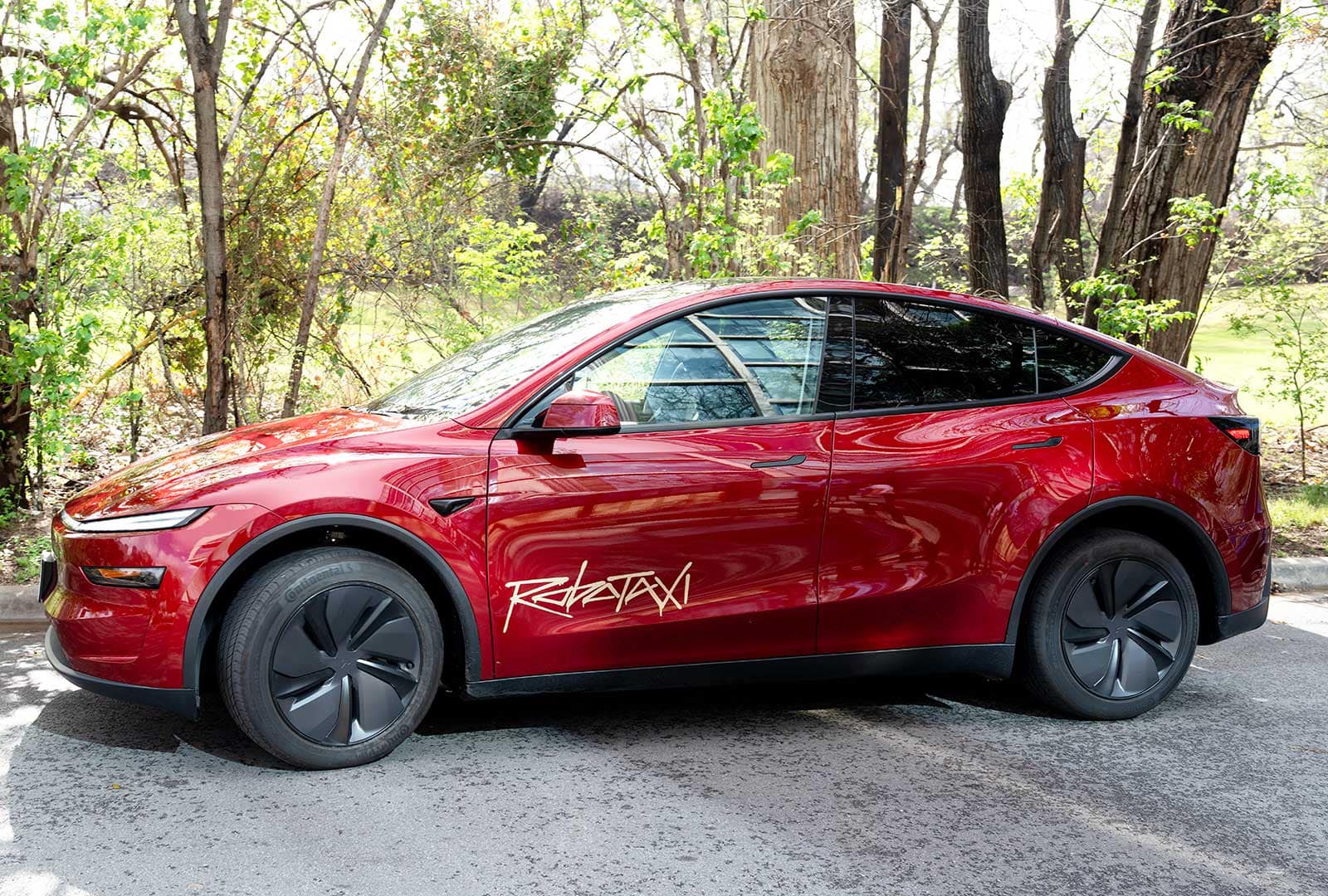
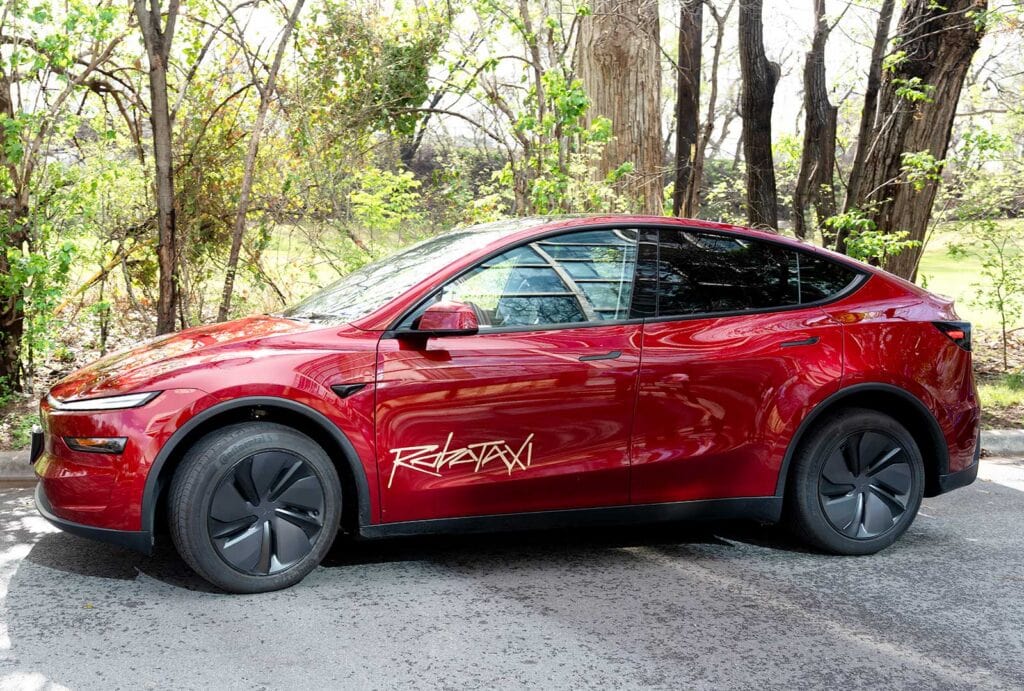
Unsupervised Tesla Robotaxi | Source: The Road to Autonomy
This week we headed to Austin for a planned tour of Giga Texas to learn about the production of Cybercab, and while we were there, we were determined to catch a ride in an unsupervised robotaxi.
After several tries we succeeded and scored a ride in an unsupervised robotaxi and the experience was unremarkable. In fact if you closed your eyes, you would not be able to tell the difference between supervised and unsupervised.
It was a smooth driving experience and the vehicle frankly drove better than a human would have in the same conditions on the same route, and for those who are wondering, there was no chase car, it was just us in the car with no driver cruising around Austin.
When the ride quality is indistinguishable from supervised operations, a trust bond is formed. Waymo has formed this bond with their riders and now Tesla is about to form it with their riders as they scale the service to multiple markets around the U.S.
The markets that Tesla is currently targeting for robotaxi expansion are San Antonio, Houston, Miami, Tampa, Las Vegas, and Phoenix. All markets in states with regulations that allow the scaling of commercial robotaxi services without safety drivers or attendants.
The two major drawbacks to unsupervised robotaxi that we encountered were that the unsupervised robotaxis are only available in a small subset of the service area, and that we unfortunately could not take a robotaxi to Giga Texas. We had to take an Uber there and the experience was less than ideal, and it only reinforced our belief that consistency is one of the main keys to winning in autonomy.
Tesla knows this as does Waymo, and what we saw at Giga Texas only emphasized that. The Cybercab line is in a multi-million square foot factory with production spanning three floors. What we saw was impressive.
With mass production scheduled to begin in April at a targeted consumer price around $30,000, Tesla is aiming for the vehicle to have a lifespan of 500,000 miles and a cost per mile of 30 cents, Tesla is getting ready to scale and make Cybercab robotaxis a very big business.
The Cybercab is engineered for longevity and safety. The structural integrity that we saw makes the Cybercab feel like a cocoon. We would have no problem putting a loved one in the vehicle for a ride, simply based on the engineering that went into the safety design of the vehicle.
Once there is a clear regulatory path to scale Cybercab, Tesla could turn the entire robotaxi market upside down because of their manufacturing capabilities. Over the coming months we expect to see Waymo share more details on their relationship with Hyundai and perhaps at some point announce more robotaxi manufacturing deals. Perhaps we might even get some insight into their relationship with Toyota.
When we weren’t riding around in robotaxis and visiting Giga, we put on our inspector hats and visited a Tesla depot in Austin. Tesla’s robotaxi operational depot was massive and it was filled with Model Ys, Cybercabs and Cybertrucks equipped with LiDARs for ground truth validation.
After our ride in an unsupervised robotaxi, visit to Giga Texas and one of their depots, it became very clear to us that Tesla is planning for robotaxi to become a very big business.
When you combine their maniacal focus on costs, world-class manufacturing abilities, energy resources and a scalable autonomous driving stack, you come to appreciate just how big of a business that autonomy can become for Tesla. Now the hard part begins. Tesla has to execute.
Our Take: If Tesla executes, the robotaxi market will change and the focus will shift from autonomous driving stacks to operations and manufacturing.
Tesla is currently ranked #1 with a bullish outlook on the AUTONOMY LEADERBOARD in the personally owned autonomous vehicles category.
Piquing Our Interest
Zoox Pivots and Partners with Uber The days of vertical integration for Zoox are over as the company announced a partnership to put Zoox vehicles on the Uber network beginning in Las Vegas this summer followed by Los Angeles in mid 2027.
Motional to Relaunch Robotaxis in Vegas, This Time with Uber Following a significant restructuring, Motional has relaunched a robotaxi service in Las Vegas on Uber, not Lyst this time around. The service initially utilizes safety drivers and is limited to specific areas on the Las Vegas Strip, Downtown, and Town Square.
Wayve, Uber and Nissan to Deploy Robotaxis in Tokyo In late 2026 Wayve and Nissan are planning to launch robotaxis with safety drivers on the Uber network in Tokyo subject to regulations.
Nuro Expands Testing to Tokyo Nuro has expanded testing to Tokyo as the company prepares to launch commercial service in the U.S. with Uber later this year.
Lucid Unveils Lunar, a Bespoke Two-Passenger Robotaxi During their 2026 Investor Day, Lucid unveiled Lunar, a purpose-built, two-seat robotaxi concept designed on the upcoming Midsize platform, while highlighting the company’s expanded relationship with Uber.
Qualcomm and Wayve Partner to Deliver End-to-End AI Driving Systems Qualcomm and Wayve are collaborating to integrate Wayve’s AI Driver software with the Snapdragon Ride platform, offering automakers a streamlined solution for deploying L2+ systems, with plans to explore robotaxi applications in the future.
Marsh Risk and Apollo Launch Autonomous Vehicle Insurance Program for Uber Marsh Risk and Apollo have created a dedicated insurance program for Uber’s Autonomous Vehicle Solutions initiative.
Rivian Spinout Mind Robotics Raises $500M Series A Mind Robotics, an industrial automation startup spun out of Rivian, raised a $500 million Series A co-led by Accel and Andreessen Horowitz.
Advanced Machine Intelligence Raises $1.03 Billion Series A Yann LeCun’s startup Advanced Machine Intelligence raised a $1.03 billion Series A with funding from Toyota and NVIDIA.
Pony AI Deepens Tencent Integration Pony AI’s robotaxis are now fully integrated into Tencent Mobility Service through WeChat in Guangzhou, China
Geely to Deliver 2,000 Robotaxis to WeRide Geely plans to deliver 2,000 GXR robotaxis to WeRide by year-end, starting in Q3.
Geely Secures EU Certification for G-ASD Chinese automaker Geely has become the first Chinese manufacturer to secure an EU certification for their advanced driving assistance system (L2).
Social Buzz
Built in America, Deployed Globally
🚨 Are you ready to ditch your steering-wheel? ⁉️
We just held the first-ever National AV Safety Forum at DOT HQ @NHTSAgov
We’re cutting red tape ❌ and empowering our innovators to build big, beautiful, AMERICAN-made AVs 🚘
The U.S. Department of Transportation is paving the way for America to usher in one of the key elements of the Autonomy Economy. With NHTSA proposing updates to Federal Motor Vehicle Safety Standards (FMVSS), the path for deploying and scaling bespoke autonomous vehicles with no steering wheel and no pedals is being created.
This is AV, not EV. The technology is American and the dependency on foreign adversaries that defined EV era are over. American ingenuity with DARPA’s support built this industry. Now with the right polices in place, it will scale and benefit every single American.
Our take: Secretary Duffy and NHTSA Administrator Morrison are putting the pieces in place to usher in the golden age of autonomy, which will accelerate the growth of the Autonomy Economy.
Merging LiDAR Performance with Radar Robustness
Matthew Carey, Co-Founder & CEO, Teradar joined Grayson Brulte on The Road to Autonomy podcast to discuss the company’s emergence from stealth with $150 million in funding and the creation of a brand-new category of terahertz (THz) sensors.
We Rode in a Tesla Unsupervised Robotaxi and Walked the Cybercab Line
This week on Autonomy Markets, Grayson Brulte and Walter Piecyk discuss their field work in Austin, Texas, where they rode in a Tesla Unsupervised Robotaxi and walked the Cybercab production line at Giga Texas.
Subscribe — Free, Every Sunday
Join institutional investors and industry leaders who receive our exclusive market intelligence and analysis every Sunday, complementary.
No spam. Unsubscribe anytime.
{% if featuredImage and featuredImage != "" %}
{% endif %}
{% if excerpt %}