


This Week in The Autonomy Economy™
Cybercab Is Waiting on Batteries Before Scaling
This Week in the Autonomy Economy, Tesla opened Cybercab up to the public in Austin, Waymo opened three new markets and Wayve launched supervised commercial robotaxi service in London.
It was a busy week in the autonomy economy with Tesla dominating the headlines and signals flowing below the line. In London TfL’s (Transport for London) slow walking of the APS permits was noticed by British media with the odds shrinking that fully autonomous robotaxis will launch in London this year.
While London’s odds shrink, Tokyo’s odds are increasing as it appears that the city will become Waymo’s first international market. We expect Tokyo to come online with Jaguar I-PACEs by the end of the year, followed in subsequent years with a more formal Toyota relationship and Tokyo becoming Waymo’s first Toyota market.
Could 2027 or 2028 be the year that Nissan with Wayve and Toyota with Waymo compete on a fully autonomous robotaxi project head to head in Tokyo? Only time will tell, but we have a feeling it will happen sooner rather than later.
📰 Need to Know: This Week in the Autonomy Economy
Is the Tesla Cybercab currently available to the public?
Yes, paying passengers can now ride in Tesla’s Cybercab within a 288-square-mile service area in Austin. The vehicle operates fully autonomously without a steering wheel or pedals. However, a broader nationwide rollout remains on hold while Tesla scales battery cell manufacturing at Giga Texas and navigates federal regulatory compliance.
What is holding back mass production of the Cybercab?
The primary constraint scaling Cybercab production is a bottleneck in 4680 battery cell manufacturing, specifically due to challenges with the fully dry electrode process on the Gen 2 Cybercell architecture. Although the Giga Texas line is physically built for 125,000 vehicles annually, only around 1,000 Cybercabs have been manufactured to date because battery output is shared with the Cybertruck. Additionally, Tesla is navigating an open NHTSA audit to evaluate whether the pedal- and wheel-less design complies with Federal Motor Vehicle Safety Standards before volume deliveries can proceed.
Where is Waymo expanding its commercial robotaxi footprint?
Waymo has officially launched fully autonomous commercial service in Denver, San Diego, and Tampa, bringing its total number of active U.S. markets to 14. Looking internationally, Waymo is preparing Tokyo as its first overseas market, expected to come online with Jaguar I-PACEs by the end of the year before expanding into a broader Toyota partnership. To fund this rapid growth, Waymo is in final negotiations to raise over $3 billion in its first-ever debt deal.
Will fully autonomous robotaxis launch in London this year?
Fully autonomous launches in London are unlikely this year because Transport for London (TfL) is slow-walking the necessary permit approvals. Despite the regulatory delay for driverless operations, autonomous progress continues in the UK, as Wayve has successfully launched supervised commercial robotaxi rides to the public in London via the Uber platform.
How does Tesla plan to scale and fund its broader Robotaxi network?
Tesla appears to be pursuing a franchise model to rapidly expand and fund its mobility network through third-party fleet owners and depot operators. Tesla recently opened an interest signup page for fleet purchasers and mobility hub operators, mirroring strategies considered by other robotaxi companies. Franchising allows Tesla to deploy Cybercabs into smaller regional markets and towns where operating a direct, company-owned fleet would be economically inefficient.
Cybercab Is Waiting on Batteries Before Scaling
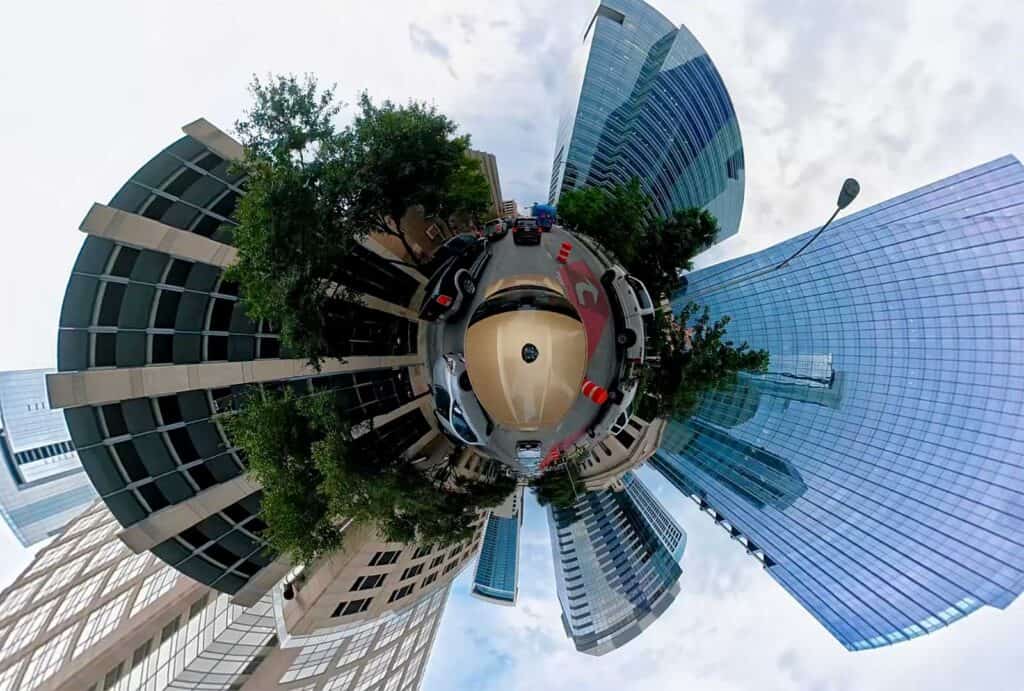
Elon Musk unveiled the Cybercab on October 10, 2024, at the Warner Bros. lot in Burbank. Exactly 693 days later, on September 3rd, people paid to ride in one for the first time in Austin. Wall Street remained unimpressed and the media turned negative, at times openly hostile. The paying riders in Austin, however, loved it.
And that is what counts. Paying passengers. Real people riding in a vehicle designed from the ground up with no steering wheel and no pedals. This is the future, it is here today, and it is coming to a town near you.
Cybercab might not be in your town tomorrow, but it will be there in the future, and one day it will drive your kids to school. The time between riding in Austin and that school run is not measured in time. Instead, it is measured in 4680 battery cells. To reach you, Tesla has to ramp manufacturing at Giga Texas. So what is the Cybercab capacity? We asked OMEGA.
OMEGA’s data shows Giga Texas has an installed Cybercab line rated above 125,000 vehicles a year. That figure comes from Tesla’s Q2 2026 shareholder update on July 22nd, the first official capacity number Tesla has published for the line. OMEGA is clear on what it means. 125,000 is what the Austin line is physically built to do, not what it is currently doing.
Within days of publishing that number, Tesla removed explicit Cybercab volume production timing from its 2026 plan and named 4680 battery cell pack capacity as the binding constraint.
OMEGA traces the bottleneck to Austin, where Tesla produces 4680 cells on its Gen 2 Cybercell architecture using the fully dry electrode process, a transition Tesla has acknowledged proved far harder than envisioned at Battery Day.
Current cell output is split between Cybertruck and early Cybercab builds. The Cybercab is drawing from a shared, already stretched pool of 4680 cells.
Roughly 1,000 Cybercabs have been manufactured since pilot production began in February 2026. With roughly 1,000 vehicles built to date and no public 2026 volume production date, treat 125,000 as the ceiling and 1,000 as the floor. Tesla has committed to no date for closing that gap. By Tesla’s own revised guidance, volume does not arrive in 2026.
The slow ramp works in Tesla’s favor actually. On September 4th, the day public rides opened, NHTSA opened an audit covering roughly 1,000 Cybercabs to evaluate whether a vehicle with no steering wheel and no pedals complies with the Federal Motor Vehicle Safety Standards (FMVSS).
If and when NHTSA agrees the Cybercab meets FMVSS requirements, Tesla can take the next step of selling the vehicle to you and to fleet owners.
This week, in addition to the event, Tesla opened an interest form for prospective fleet purchasers and owner/operators of mobility hub infrastructure (depots), in our opinion an effort to gauge demand. Tesla also quietly opened a “Help Us Build Our Robotaxi Network” signup page.
Together, the form and the page are a signal of just how grand Tesla’s Cybercab ambitions truly are and how they plan to fund them. One way is franchising. Tesla would not be the first robotaxi company to consider it.
Over the years, we have met with two other robotaxi companies that had, and still have, similar ambitions to franchise their fleets to owner/operators. The economics that attracted them are the same ones now in front of Tesla and the same ones that will appeal to prospective franchisees.
The more franchisees, the more Cybercabs in the market and growing in towns where it would not make economic sense for Tesla to operate their Robotaxi service on its own.
While the general consensus in the media is that Tesla’s Cybercab event underwhelmed. In reality, it is the complete opposite. It succeeded.
Today, you can go anywhere in a 288 square mile service area in Austin in a vehicle designed for autonomy with no wheel and no pedals. That is a success.
The riders in Austin have experienced the future. Those outside of Austin are waiting on 4680 cells.
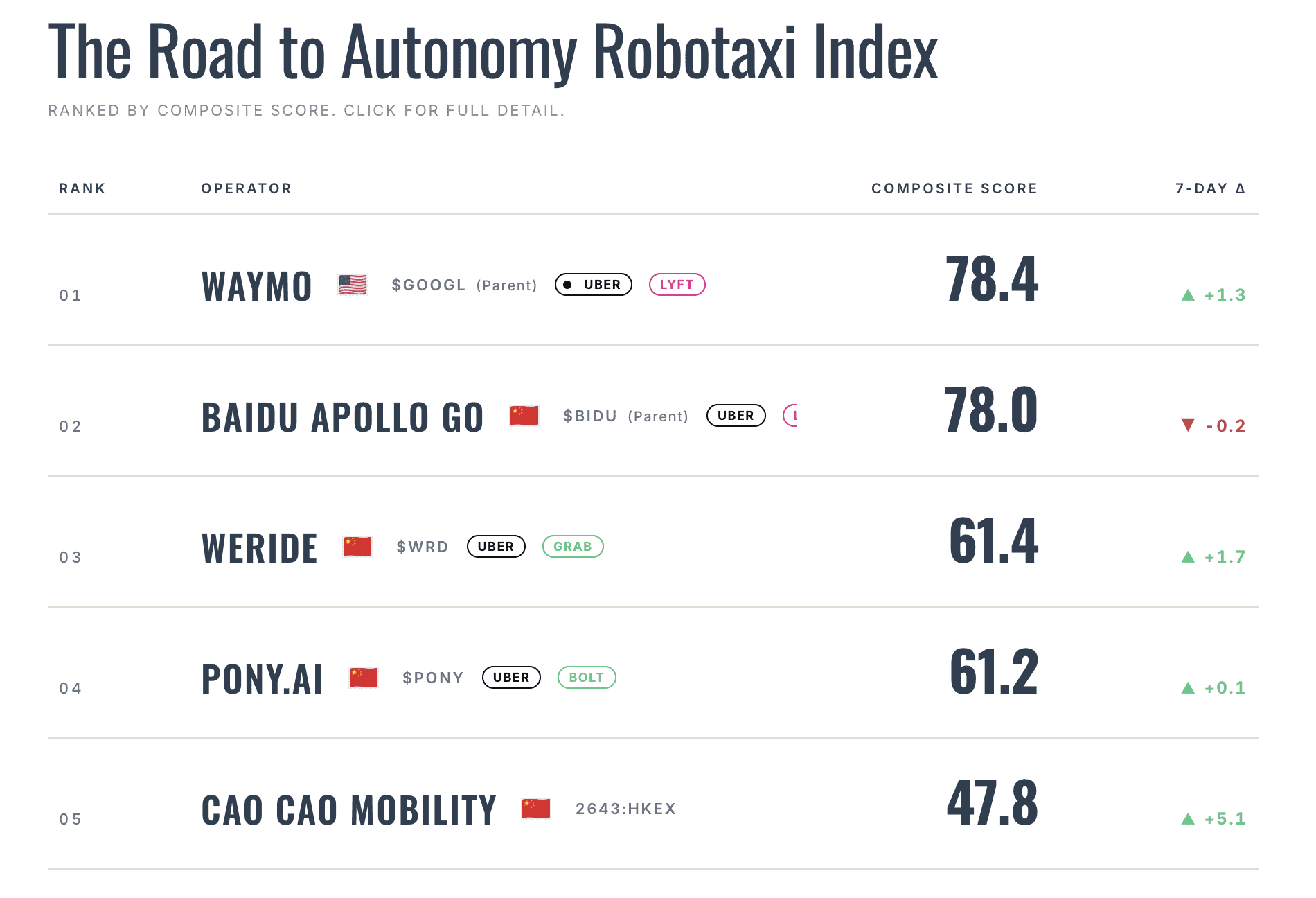
The Road to Autonomy Robotaxi Index
Piquing Our Interest
U.S. DOT Releases National Strategy for Automated Vehicles U.S. Transportation Secretary Sean Duffy has unveiled a new Automated Vehicles National Strategy aimed at slashing regulations, prioritizing safety, and accelerating the commercial deployment of autonomous vehicles and trucks in the United States.
Waymo Launches Commercial Service in Denver, San Diego and Tampa Waymo has opened fully autonomous service to public riders in Denver, San Diego, and Tampa, bringing the company’s total number of commercial markets to 14.
Waymo In Talks to Raise $3bn+ in Debt Waymo is in final talks to raise more than $3 billion in its first-ever debt deal to further fuel their global expansion.
Waymo Begins Mapping in Cincinnati Waymo has begun mapping and manually driving in Cincinnati, even though current Ohio regulations prevent the launch of fully autonomous commercial robotaxi services.
Zoox Expands Testing to Houston and Dallas With hundreds of Zoox toasters sitting in parking lots, is Zoox finally getting ready to scale? This week the company announced it has expanded testing to Dallas and Phoenix.
Tesla Receives Approval to Build San Antonio Robotaxi Depot Robotaxi is coming to San Antonio. The City Council recently approved Tesla’s plans to build a robotaxi depot, conveniently located 3.5 miles from San Antonio International Airport (SAT).
Uber Picks a Side The Financial Times Lex column published an opinion piece this week titled; Uber picks a side in driver vs robotaxi wars: its own. The piece sums it up in one line, warning that Uber’s presence in so many markets makes it easy to fall into “talking from both sides of its mouth.”
U.S. Military is Preparing for GroundBreaker The U.S. Department of War is planning an October event to evaluate autonomous robotic ground vehicles to expand its new digital Drone Marketplace initiative.
Wayve Launches Supervised Robotaxi Rides in London on Uber Wayve has launched supervised robotaxis in London on Uber, marking the first time supervised robotaxi rides have been made available to the public in the UK.
HUMAIN and Applied Intuition to Deploy Autonomous Trucks in Saudi Arabia HUMAIN and Applied Intuition have formed a strategic partnership to build and deploy autonomous trucks in the Kingdom of Saudi Arabia.
DiDi Begins Fully Autonomous Robotaxi Trials in China DiDi Autonomous Driving has begun fully autonomous passenger trials for its Robotaxi R2 in designated demonstration zones across Beijing and Guangzhou.
📰 Follow @RoadToAutonomy on X for our latest thoughts and insights on the autonomy economy.
Trending on X
How Zoox pulled off curbside drop-off and pick-up at Harry Reid International Airport (LAS) would probably make for a good story, as long as it doesn’t involve holes in the desert and a wiseguy named Nicky.
Our take: Well done, Team Zoox! Next up: Waymo, Tesla Robotaxi, and hopefully Motional (Uber partner).
Voltera Is Powering the Growth of Robotaxis
Frank Reig, CEO of Voltera joined Grayson Brulte on The Road to Autonomy podcast to discuss how Voltera is powering the growth of robotaxis and what goes into building a robotaxi depot.
Waymo Launches Three Additional Cities as UBTECH Develops Bespoke Humanoids
This week on Autonomy Signals presented by KPMG, Grayson Brulte and Rob Grant discuss Waymo launching commercial robotaxi service in Denver, San Diego, and Tampa on the same day, UBTECH’s humanoid revenue surging 1,445% on industrial demand, and Sandvik unveiling SAMI, a cabin-less autonomous surface drill that removes humans from the blast zone.
Cybercab Day Arrives as Robotaxis Become Bankable
This week on Autonomy Markets, Grayson Brulte and Walter Piecyk discuss Tesla’s Cybercab commercial launch in Austin, Uber’s continued regulatory capture campaign and Waymo’s first ever debt raise.