


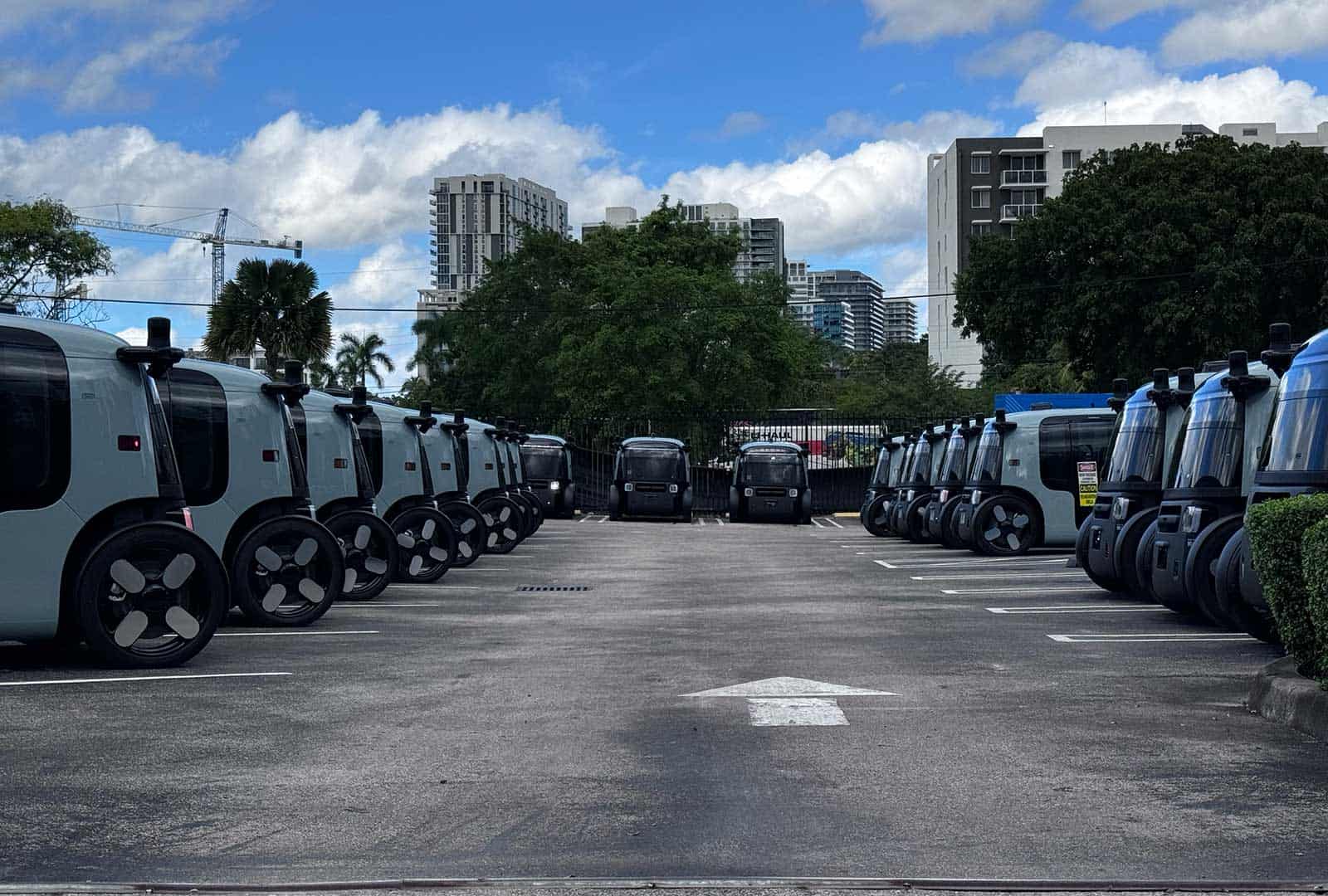
Waymos Egged in Denver as We Are Confronted at Zoox’s Miami Depots
This week on Autonomy Unscripted, Grayson Brulte and Rob Grant discuss the rise of anti-autonomy backlash in Denver and recount Grayson’s security confrontations outside Zoox‘s Miami depots. They also examine Waymo’s Ojai fleet arrival in Miami, Senator Moreno’s proposed ban on Chinese vehicles, and why America’s vehicle affordability crisis is accelerating demand for robotaxis and Tesla’s Cybercab.
Key Autonomy Unscripted Insights
Why Physical AI Faces a Data Center Backlash
Reports of a Denver man repeatedly placing orange cones in front of Waymo vehicles and egging them more than 30 times highlight a deeper structural risk for physical AI. Much like the local pushback confronting new AI data centers, public frustration over jobs, regulatory clarity, and perceived loss of control is spilling directly onto city streets.
Even when state legislation preempts municipal oversight of autonomous fleets, localized conflicts over noise, staging, and neighborhood disruption can quickly escalate into operational injunctions like the one Waymo faced in Santa Monica.
Inside Zoox’s Miami Depots and Rising Security Friction
Field reports from Miami reveal a heightened security posture around Zoox’s operational and charging infrastructure, including guards confronting observers on public sidewalks and a Zoox Highlander trailing outside a site positioned directly beneath a bilingual Zoox Miami billboard.
Beyond the optics, siting a charging facility four to five feet from residential property walls creates a predictable neighborhood noise risk, while a 2.1-mile separation between vehicle operations and primary charging introduces unnecessary deadhead friction. Institutional clients can access verified Miami fleet counts and depot intelligence directly inside OMEGA.
Waymo’s Ojai Expansion and Senator Moreno’s Chinese Vehicle Ban
Sightings of Waymo’s Geely-built Ojai vehicles staged in Miami underscore how rapidly the Mesa integration plant is scaling toward roughly 8,000 vehicles by year-end, with an estimated 6,000+ already in the fleet. While Waymo previously secured an exemption from the Department of Commerce connected-car rule, Senator Moreno’s proposal to prohibit Chinese vehicles and shells would formalize a transition Waymo is already preparing for through its Hyundai and Toyota partnerships.
Because import tariffs nearly double bill-of-materials costs on Chinese platforms, unit economics are already pushing Waymo to phase out Geely regardless of how Congress votes.
Detroit’s Affordability Crisis Opens the Door for Robotaxis and Chinese EVs
Legislative firewalls offer Detroit protection rather than resolution as average U.S. new-vehicle prices sit near $54,000 and climb toward $75,000 to $100,000 for large SUVs and trucks, while Chinese automakers deliver competitive vehicles between $12,000 and $18,000.
In a K-shaped economy squeezed by auto leases, insurance premiums, and grocery inflation, affordability is becoming autonomy’s strongest demand catalyst. With Tesla expanding its Dallas robotaxi geofence by 85% to roughly 135 square miles and pricing personal Cybercabs near $28,000 to $29,000, autonomous mobility is positioned to start displacing traditional car ownership once service areas cross the 100-square-mile threshold.
Episode Chapters
- 00:00 Waymos Coned and Egged 30+ Times in Denver
- 04:50 Why Physical AI Faces a Data Center Style Backlash
- 08:28 Visiting Zoox’s Miami Depots and Residential Noise Risk
- 09:42 The Giant Zoox Miami Billboard and Security Confrontation
- 14:51 Depot Noise, Cruise Lessons, and Local Injunction Risks
- 18:35 Zoox’s 2.1-Mile Charging Gap and Miami Fleet Counts in OMEGA
- 20:04 Industrial Zoning, Community Friction, and Preemption Limits
- 23:22 Why Robotaxi Depots Cluster Next to Scrapyards
- 25:38 Waymo Ojai Spotted in Miami and Fleet Scale to 8,000
- 28:15 Senator Moreno’s Chinese Vehicle Ban and Waymo’s Geely Exit
- 32:23 Chinese EVs in Europe and Detroit’s Protectionism Dilemma
- 37:55 Could BYD, Geely, or XPENG Build Factories in the U.S.?
- 39:19 Macro Pressure, Aurora’s Inflation Message, and Tesla’s Dallas Expansion
- 41:29 The Vehicle Affordability Crisis and $29,900 Personal Cybercabs
- 45:24 Robotaxi Economics vs. Monthly Car Lease and Insurance
- 47:26 AUTNMY AI
Key takeaways
- A Denver man coning and egging Waymos more than 30 times reflects a broader public backlash against physical AI similar to local pushback against data centers. Even where state laws preempt city regulation of robotaxis, localized friction over noise and staging can still trigger operational injunctions like the one Waymo faced in Santa Monica.
- Zoox's Miami footprint shows rising depot security alongside structural real estate hurdles, with a new charging site placed four to five feet from residential property walls and separated by 2.1 miles from its primary operational facility.
- Waymo's Geely-built Ojai vehicles have arrived in Miami as its Mesa integration plant scales from an estimated 6,000+ vehicles toward roughly 8,000 by year-end. While Senator Moreno's proposed Chinese vehicle ban would formalize a Geely exit, import fees that nearly double bill-of-materials costs are already pushing Waymo toward Hyundai and Toyota.
- Legislative firewalls give Detroit protection rather than resolution as U.S. automakers rely on $50,000 to $100,000 vehicles while Chinese manufacturers produce competitive cars for $12,000 to $18,000. Over time, consumer demand for affordable transportation and job creation could bring Chinese auto plants to non-union U.S. states much like Japanese and Korean automakers before them.
- With average new-vehicle prices near $54,000 alongside rising auto insurance and grocery costs, affordability is emerging as autonomy's strongest demand driver. Tesla's 85% Dallas robotaxi expansion to roughly 135 square miles and a $28,000 to $29,000 personal Cybercab position autonomous mobility to begin displacing traditional car ownership once service zones exceed 100 square miles.
Questions answered in this episode of Autonomy Unscripted
- Why are robotaxi depots facing local pushback even in states with AV preemption laws?
- State laws may preempt cities from regulating autonomous vehicle services, but they rarely override local land-use and zoning rules. Noise from chargers, cleaning, vehicle doors, and overnight staging near residential properties can trigger localized community backlash and injunctions like the one Waymo faced in Santa Monica.
- What operational challenges stand out at Zoox's Miami robotaxi depots?
- Fieldwork in Miami revealed heightened depot security alongside a charging lot located four to five feet from residential property walls, creating a clear neighborhood noise risk. In addition, a 2.1-mile separation between Zoox's operational facility and its primary charging site adds deadhead mileage to fleet operations.
- How would Senator Moreno's proposed Chinese vehicle ban affect Waymo's Geely-built Ojai fleet?
- While Waymo previously secured an exemption under the Commerce Department's connected-car rule, a legislative ban on Chinese vehicles and shells would accelerate its phase-out of Geely platforms. Even without a ban, import tariffs that nearly double bill-of-materials costs are already pushing Waymo toward its Hyundai and Toyota manufacturing partnerships.
- Can legislative tariffs solve Detroit's competitive threat from Chinese automakers?
- Tariffs and legislative firewalls provide Detroit with short-term protection rather than a structural resolution to its cost disadvantage against $12,000 to $18,000 Chinese vehicles. As U.S. new-car prices stay above $50,000, consumer demand for affordable cars could eventually draw BYD, Geely, or XPENG to build factories in non-union U.S. states.
- How is the vehicle affordability crisis accelerating robotaxi and Cybercab adoption?
- With average new-vehicle prices near $54,000 alongside rising lease and insurance costs, consumers are increasingly looking for lower-cost mobility alternatives. Once robotaxi service zones expand past 100 square miles, such as Tesla's 135-square-mile Dallas footprint, or personal Cybercabs arrive near $28,000 to $29,000, autonomous mobility can undercut monthly car ownership expenses.