


Tesla Robotaxi Dallas-Fort Worth Field Report
Field Report · Dallas · Fort Worth · Tesla · Infrastructure & Depots
Filed By: Spencer on November 2, 2026
Field Verified
Key Tesla Robotaxi Dallas-Fort Worth Field Report Findings
How is Tesla building its robotaxi operation in Dallas-Fort Worth?
Tesla runs its Dallas robotaxi operation from the Tesla Service Center on Cedar Springs, at the entrance to Dallas Love Field, with dispatch and staging spread across the Tesla Collision Center across the street and two nearby lots on Maple Avenue. Beyond Dallas, Tesla has sites permitted, under construction or operating in Irving, Grand Prairie and Fort Worth, which points to a metro wide footprint rather than a single city launch.
What is the current state of Tesla’s DFW infrastructure?
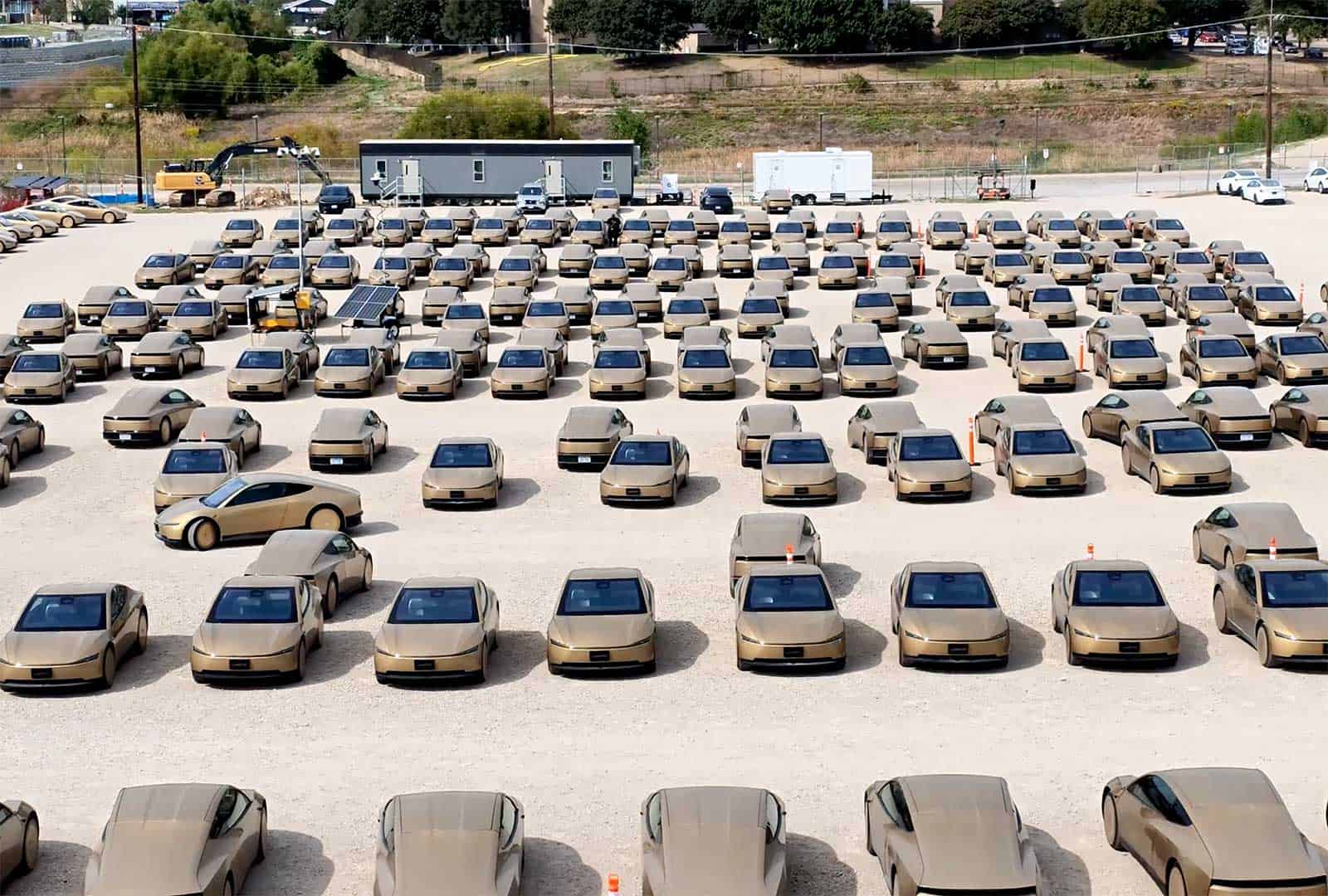
Dallas is the most built out market, with 24 private Supercharger stalls permitted at Cedar Springs that appear to be installed, and hundreds of unbadged validation Cybercabs staged on Maple Avenue. Fort Worth holds about 40 validation Cybercabs at its service center, where Tesla filed a permit in late September 2026 for a private fleet Supercharger. In Grand Prairie, Tesla told city staff it expects roughly 130 vehicles per hour at night at a service center under construction.
Where do the challenges lie for Tesla in Dallas-Fort Worth?
Local permitting is the constraint. Grand Prairie first banned robotaxis at the new service center and then allowed charging, cleaning and maintenance only, with no storage or dispatch. The permitted Irving site near DFW Airport showed no construction progress after five months. And with more than 100 municipalities between Dallas and Fort Worth, connecting the two cities is a much bigger challenge than launching service in either one.
Tesla Robotaxi Dallas-Fort Worth Field Report
The Road to Autonomy special field correspondent Spencer traveled across the Dallas-Fort Worth metroplex to map where Tesla is building its robotaxi infrastructure, from Dallas Love Field to the Fort Worth Stockyards. This field report covers Tesla’s Dallas operating base, its staging and charging footprint, the permitted sites in Irving and Grand Prairie, and what Fort Worth signals about the next phase of expansion.
The Market
Dallas-Fort Worth is much more than a tale of two cities. The wider metro is home to roughly 8.5 million people spread across more than 100 municipalities, making it one of America’s largest metropolitan areas. Dallas is the country’s ninth largest city and Fort Worth, about 30 miles to the west, is the 10th largest.
Dallas Operations at Cedar Springs
The Tesla Service Center on Cedar Springs is one of the main operating points for Tesla’s robotaxi in Dallas. After dark, once the service center closes to customers, we observed robotaxis and validation Cybercabs being cleaned, maintained and serviced on site.
Tesla has permits for 24 private Supercharger stalls at this location and appears to have installed them. On a drive by a few weeks earlier, an open door gave us a view of Superchargers inside the site. Whether those are existing chargers or the new 24 stall private installation found in permitting remains to be confirmed.
The site sits toward the northern edge of the current Dallas robotaxi zone and directly at the entrance to Dallas Love Field, the smaller of the region’s two major airports and primarily home to Southwest Airlines. Across the street, the Tesla Collision Center is also being used for dispatch, with at least a couple of parking spots dedicated to robotaxis.
Maple Avenue Staging Lots
Two lots on Maple Avenue extend the Cedar Springs operation. At the main lot, we counted hundreds of Cybercabs alongside Model Y robotaxis being dispatched. On our visits, roughly half of the site appeared devoted to the robotaxi and validation operation, with the rest used for general Tesla storage, including vehicles awaiting transport, trade ins and buybacks. The Cybercabs are unbadged validation vehicles with steering wheels, not cars offering customer rides yet.
The paved lot next door belongs to a nearby hospital. Tesla’s own lot is gravel and dirt, leaving cars dusty or muddy, and it reads as an interim solution until dedicated facilities come online.
Just down Maple Avenue is a second storage and dispatch lot, where we have seen Model Y robotaxis operating alongside unbadged Cybercabs. Tesla has added a privacy fence there in recent months. Together, the two lots give the Dallas fleet space to stage vehicles near the service center.
Public Charging
Tesla’s fleet also uses public charging around Dallas. At a riverfront Supercharger, robotaxis and validation vehicles, including Cybercabs, have been seen charging alongside ordinary Tesla drivers, and we spotted a Cybercab during our visit. With private chargers now operating at Cedar Springs, dedicated fleet charging could reduce the fleet’s reliance on public sites.
Irving
Permits show more than 212 parking spots and 16 V4 Supercharger stalls, with plans to dispatch, maintain and clean vehicles at the industrial site.
As of late October, we saw no sign of construction. It is unclear whether Tesla will follow through, whether the project is stuck in permitting, or whether other issues are holding it back. Given its proximity to DFW International Airport, this is a site we will keep watching.
Grand Prairie
In Grand Prairie, a suburb southwest of Dallas off I‑20, Tesla has a service center under construction, and the city’s conditions make it unlike any other Tesla site in the metroplex. In a letter dated October 14, 2025, the city added a condition banning robotaxis at the location. Tesla asked the city to loosen the ban and received permission to use the site for charging, cleaning, repair and general maintenance of Tesla owned autonomous vehicles, an amendment the city approved on December 16, 2025.
Section four of that letter states, “Accessory use of the site shall be limited to cleaning, servicing, and charging of autonomous vehicles for hire.” Tesla told city staff there will be no storage or dispatch from the location, that employees will charge the cars, and that it expects roughly 130 vehicles per hour at night. Tesla also described the site as one of many that will serve its fleet across the Dallas-Fort Worth metro. Those are huge numbers, and they suggest Tesla is planning for a fleet far larger than what operates today.
Fort Worth
Fort Worth has no metro or rail system, and its city bus network is heavily underutilized, which makes it a prime market for robotaxi and autonomous services in general. Tourism adds to the demand, with the historic Stockyards drawing millions of visitors every year.
Tesla’s Fort Worth service center opened last year, and we found approximately 40 Cybercabs in the back lot. Tesla appears to be running its validation fleet from this location, and we saw no badged Cybercabs. Several Model Ys with sensor washers also appear to be part of the validation fleet, and over the past week we have seen a large number of Cybercabs on Fort Worth streets performing validation.
The service center already has four private Supercharger posts. At the end of September 2026, Tesla filed a permit with the city to install a private fleet Supercharger as well. The filing gives no indication of stall count or capacity, but it suggests Tesla will use this site as its starting point to launch robotaxi service in Fort Worth.
Outlook
Tesla is building Dallas-Fort Worth as a metro wide network, with an operating base at Love Field, staging lots and private charging in Dallas, a validation fleet in Fort Worth, and permitted capacity in Irving and Grand Prairie. The open question is whether Tesla expands the Dallas geofence to include Fort Worth or launches Fort Worth as a standalone city.
With dozens of jurisdictions between the two, we expect a standalone launch, taking the big wins in the nation’s ninth and 10th largest cities first and bridging the gap over time. DFW International Airport sits roughly between the two cities, and adding it would be the clearest signal that Tesla is connecting the metroplex. Municipal conditions like those in Grand Prairie, and stalled sites like Irving, will determine how fast that happens.
The future is bright. The future is autonomous. The future is field reports.
Subscribe to This Week in The Autonomy Economy™
Join institutional investors and industry leaders who read This Week in The Autonomy Economy every Sunday. Each edition delivers exclusive insight and commentary on the Autonomy Economy, helping you stay ahead of what's next.