


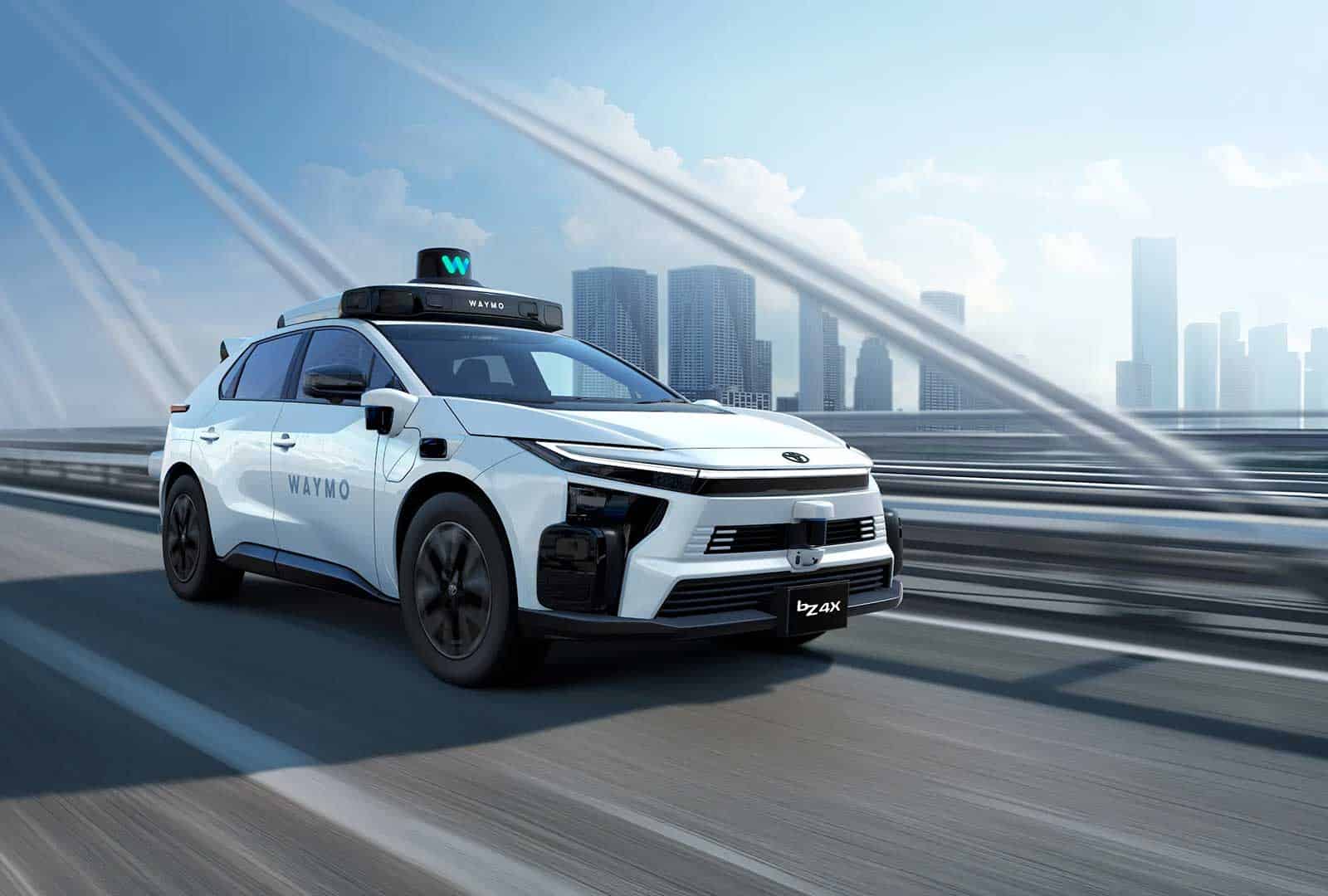
Toyota Gives Waymo Scale and a Path to Your Driveway
Toyota has entered a partnership with Waymo to manufactor autonomous bZ4X vehicles line-fit in Japan starting in 2027, with plans to expand globally and effectively eliminating Waymo’s vehicle supply constraints. The deal also hints at personally owned autonomous vehicles from Waymo and Toyota, a development that could accelerate the decline of multi-car households.
Field reports from Orlando reveal hundreds of Ojai robotaxis at a major depot, Tesla operating 32 badged Model Y robotaxis and four Cybercabs driverless, and airport access still blocked, potentially due to Uber’s ownership of ground transport operator Mears.
Aurora missed its 200-truck milestone and reduced revenue guidance, while Kodiak announced a binding driverless trucking deal with DTL Transport for 75 trucks on the Dallas-to-El-Paso route.
Key Autonomy Markets Episode Questions Answered
What makes the Waymo-Toyota partnership so significant?
Toyota is the world’s largest automaker and will produce autonomous vehicles line-fit at its factories, signaling material production volumes. The deal is planned to start in Japan in 2027 and expand globally, including Europe, effectively eliminating Waymo’s vehicle supply constraints and opening the door to personally owned autonomous vehicles.
Why can’t Waymo pick up passengers at Orlando International Airport?
Waymo can only get passengers within 10,000 feet of the Brightline station near MCO. Grayson speculates this may be connected to Uber’s ownership of Mears, a ground transport operator that previously used political donations to keep Uber itself out of the airport before Uber acquired it, a dynamic that may now be working against Waymo.
How does Kodiak’s approach differ from Aurora’s in autonomous trucking?
Kodiak announced a binding per-mile deal with DTL Transport for 75 driverless trucks on the Dallas-to-El-Paso route and is tracking toward a December driverless highway launch, while Aurora missed its 200-truck milestone, pushed delivery to February, reduced revenue guidance, and announced only a non-binding letter of intent for 500 trucks with Charter Logistics. Aurora’s burn rate is also significantly higher, at approximately $250 million per quarter.
Autonomy Markets Topics & Timestamps
[0:00] Waymo and Toyota Partnership
Toyota will build an autonomous bZ4X fleet line fit at its Takaoka plant, with testing in Japan in 2027 and the United Kingdom to follow. Grayson argues that with Toyota and Hyundai, Waymo has zero scale issues, predicts Munich and Madrid will become Toyota markets, and notes OMEGA flagged the deal 208 days ago.
[06:36] Personally Owned Waymo Toyota Vehicles
Waymo’s announcement says Toyota and Waymo will explore autonomy for personally owned vehicles. Citing Experian and Cox Automotive data, Grayson expects a personally owned Waymo Toyota to accelerate the shift from multi car households to one car.
[09:18] Waymo’s Volume Ramp to 2030 and the Impact on Rideshare
The Toyota deal sets up a volume ramp in 2028 and 2029 heading into 2030. Walt sees a growing headwind for rideshare, and Grayson points to airports, starting with LAX, as the first place rideshare will lose share.
[11:53] Waymo Expands Service Coverage by 250 Square Miles
Waymo added 250 square miles across five cities in a single week, including Los Angeles to Torrance, Nashville, Orlando and San Diego. Grayson notes field work showed the vehicles and depot infrastructure weeks before the announcement.
[13:15] Alphabet Earnings
Alphabet reported a wider Waymo loss and a 50% increase in fully autonomous miles since February but left out the Toyota news. Walt calls autonomy a trillion dollar opportunity and notes Waymo just raised $5 billion in a term loan.
[16:08] Waymo’s California Advantage
Waymo is the only company operating a paid driver out commercial robotaxi service in California, a de facto monopoly Grayson says is not discussed enough. Walt adds that more OEMs may turn to Waymo as they realize what they are facing.
[18:20] Orlando Field Report
Grayson rode Waymo for five hours across the 120 square mile service area, now prefers the Ojai over the Jaguar and had his ride nearly hijacked at an Amazon logistics center. He tours a depot with hundreds of Ojai vehicles, explains why Waymo still can’t serve MCO, and counts 32 badged Model Y robotaxis at a Tesla service center down the road.
[33:17] Tesla Robotaxi Houston Expansion
Tesla expanded to a 254 square mile rocket shaped service area in Houston. Grayson flags that Tesla’s robotaxis are not yet crossing at grade railroad tracks downtown, something Waymo’s Ojai handled with no problem.
[35:47] Tesla Extends Robotaxi Service Hours
Tesla extended robotaxi hours to 2 AM but missed its 24/7 target for the month. Grayson speculates remote operators may not be available overnight, an answer Walt doesn’t accept.
[37:47] Aurora Delays Its Truck Milestone
About a month after telling investors it was on track, Aurora pushed its truck milestone to February after a parts issue in its upfit program and cut revenue guidance. The hosts trace the setback back to the PACCAR relationship.
[41:28] Non Binding vs. Binding Autonomous Trucking Deals
Aurora announced a non binding agreement for 500 trucks while Kodiak signed a binding deal with DTL Transport for 75 driverless trucks between Dallas and El Paso. Grayson questions the gap in burn rates between the two companies.
[46:13] Gatik Class 7 Truck Spotted in Plano
Grayson spotted a Gatik Class 7 truck with a safety driver on the highway in Plano, a sign Gatik may be moving up a class.
[51:46] Rivian’s Autonomy Plans
Rivian reiterated its Level 4 target for 2028 with an autonomy and AI day coming in December. Grayson argues any OEM without a credible system that competes with Tesla’s FSD won’t be able to sell cars.[
[55:07] Foreign Autonomy Desk
XPeng won a citywide Level 4 permit in Guangzhou, Baidu’s Apollo Go was approved in Switzerland, and Pony.ai and NVIDIA plan a Level 4 deployment in Kazakhstan. MTZ signed a letter of intent with Tensor for up to 500 robotaxis in Munich, Tesla gained FSD Supervised approval in Latvia and WeRide partnered with Allianz.
[1:00:08] Next Week
Walt previews a heavy earnings week led by Uber, Lyft, Qualcomm and Kodiak, and challenges analysts to ask Uber about the Waymo Toyota partnership.
Full Episode Transcript
Waymo-Toyota Partnership Announced
Grayson Brulte: Walt, happy Halloween. I think you can guess who I’m dressed up as: the inspector. Because I’ve been busy inspecting. I’ve been on the road. You can call me an autonomous rambling man. But no, Walt, I was not born in the backseat of a Greyhound bus. While I’ve been on the road, Tesla launched a rocket ship, yes they did, in Houston. No, it’s not a merger. It was an expansion. While they were doing that, Waymo went big in Japan. We got concrete details on the relationship between Toyota and Waymo, and wow oh wow, it’s big. Let’s start with the big news of the week: Waymo, Toyota. Wow
Walter Piecyk: I’m laying in bed, I have my AirPod in, as I often do, listening to a podcast. I’m not sure what podcast it was, and at a certain time of day, it, it interjects with text messages. I get an early AM text message in bed from Joe Galone who works with me here at LightShed, about the news. I literally. it, it was shocking. Shocking that it finally happened. Now, for context, as our, as our longtime listeners know, there has been a prior press release between Waymo and Toyota about 18 months ago, April of ’25, which we have you know, let’s say joked about often on this podcast ’cause it was one of those preliminary agreements an intent to intend to intend. so n- we didn’t hear anything and, you know, I’ve been always on here saying supply is the big issue. A, a deal with the supply. Deal with supply. Now, you know, I will say that, you know, our good friend OMEGA, which is part of the road to autonomy, did flag this. So G- I think you need to take that inspector hat off and put your clappy hat on, ’cause you deserve a clappy hat ’cause OMEGA flagged this deal about 200 days ago when it was out, when covered, uncovered, I guess, a Jang- Japanese language media briefing, of all things, given by Waymo’s chief product officer, that you could interpolate that maybe something was going on with Toyota. And we do have that, and I think we should, we should send those clips out later on X as evidence that OMEGA was, was early on this, 200 days ago, almost a year ago
OMEGA’s Early Signal and Market Reaction
Grayson Brulte: I would say OMEGA for the win. Boom, boom, boom. And what OMEGA uncovered, I wanna say this was in Japanese and OMEGA translated it, there was discussions around building a vehicle platform. 208 days ago, OMEGA picked up on this. Today, the market’s just picking up on it, but in my opinion, Walt, the market reaction to this huge news has been subdued for some reason. I don’t think, in my humble opinion, the market understands just how big of a deal this really is
Walter Piecyk: Well, before I got woken up by Joe Galone’s tweet in my ear, there were other tweets within, or texts, I think, within many of my chat groups about a lot of stuff that was happening in tech land. A lot of misses, a lot of sell-offs, Binance getting hacked, $6 billion of crypto just, poof, disappearing. so I think there’s a little bit of a distraction in the market, but I do agree with you that you know, i- people are almost looking for reasons to kinda downplay the significance. So let’s get into the details, like what exactly happened. So Toy- Toyota and Waymo are are gonna begin initial operations to test and validate an autonomous Toyota bZ4X fleet. I don’t know, what is BC4, bZ4? Not a great name for a car in Japan in 2027. so the initial reaction before we get to the next part of this was like, “Oh, well, they have to do this. Like, if you wanna do anything in Japan, you have to make the cars in Japan.” And we’re getting like the pat on the, the pat on the head like, “Oh, this is nothing. This is just Toyota and Japan.” Even though it’s a new OEM that we’ve been begging for for, for months, if not years now.
Why Toyota Changes Waymo’s Scale Equation
Grayson Brulte: Let’s just put this into simple terms, and let’s underline this, let’s bold this, let’s highlight this. Toyota is the world’s largest manufacturer of automobiles. The world’s largest. It is not staying in one market, as we learned from the press release. This is going global. This is a big effing deal. See, Mrs. Piecyk, I held back today. It is a big effing deal. I can’t even begin to stress how big of a deal it is. When you combine Toyota and Hyundai under one roof, you have zero, I repeat zero, scale issues. It’s a wowzer moment
Walter Piecyk: Well, just to be clear, Toyota and Hyundai won’t be under the same roof, but I like the, the imagery there because what is occurring under one roof is how each of these companies individually will be cranking out cars. And the difference between how the Jaguar and the Ojai works, which is they receive the cars, then send them to get upfit with the sensors, and there’s a whole process there. This is all gonna be made line fit. These are coming off the line in Japan. So you’re talking about. You don’t do that unless you’re talking about material volumes. And then to your point on, you know, other markets, I think there is a Reuters report that Europe is most likely the next market. I don’t know what you’re thinking on the specifics there, but, like, having this relationship, to me, it goes even beyond that. Obviously, Toyota makes cars around the world. If this is successful, if this sells Toyota cars obviously they’re gonna– they can have the opportunity to expand this to other manufacturing lines throughout the world. And we know there are obviously those in the United States
Grayson Brulte: Yes, there are several lines here for Europe. I’m gonna go on the tape and I’m gonna predict Munich and Madrid will be Toyota markets. So, and we know that London is going to be a Toyota market. This thing, I know I’ve said this earlier, I’m gonna repeat myself, sorry for repeating myself, this is a big deal. This gives Waymo the ability to hit the SEM4 number. Not only does it give them that, it gives the ability to blow past that number. The wh- the whole debate, oh, Waymo’s vehicle constraint and Waymo’s vehicle constraints, that went bye-bye. Bye-bye. Waymo has no more vehicle constraints. We know because the debt raise, they have the capital. We know that they have the Waymo Driver, and now they have the manufacturing prowess. I’ll just gonna say it for the record, Waymo is preparing for global dominance of robotaxis
Walter Piecyk: Now I want you to get out your inspector magnifying glass and, and tell me what else you saw in that Waymo blog. Oh, you actually have one. Get out that magnifying glass, although it wasn’t in fine print, as some of our companies like to put things in fine print. Get out that magnifying glass and tell me what else that you spy in this, in this in this Waymo blog
Personally Owned Autonomous Vehicles on the Horizon
Grayson Brulte: I spy in this Waymo blog personally owned autonomous vehicles. The inspector inspects everything, reads every fine line with the help of my trusted friend OMEGA, personally owned autonomous vehicles from Waymo and Toyota. They are coming. Goes back to everything that you and I have discussed with Wayve, with their L2+ system, Tesla with their FSD system. Now it appears, we don’t have details yet, that Waymo’s going down that path. If that happens, buckle up. That’s all I’ll say. Buckle up. Because remember, the rules of the road say buckle up for safety, so I’ll say buckle up
Walter Piecyk: I mean, so obviously scant on details, and a lot of times, like Rivian, for example, when you talk about what they’re gonna do for personally owned, it’s more ADAS, right? FSD as we like to call it, or I guess they’re calling it point-to-point. We’ll get to that later. but ultimately, like the end game here, which I think brings back the whole debate, and we’re gonna have to get back on the air with, with Jason about can you get to 30% of total miles driven being on rideshare if individuals will just own their cars, and then that effectively eats away at rideshare. This becomes like an ultimate headwind. Now, obviously early days you’re gonna have geofences and, you know, ODDs as we like to call them and and all these things. But like, those are the early signs when you’re talking about a behemoth and global leader in Waymo with Toyota, a global leader in car manufacturing, you know, talking about this now. Yes, it’s gonna take an extended period of time, but obviously another very important element of this press release.
Grayson Brulte: It’s extremely important. And here is what’s lurking. This was not mentioned in any press release. This is based on financial data from Experian and Cox Automotive, so I just want to stress those are the data sources here. You are already starting to see a decline in households from three car to two car to one car. If and when a personally owned Waymo Toyota autonomous vehicle becomes available, you will see that trend towards one car ownership only accelerate. So wa- watch that trend ’cause that’s gonna be something else to, to watch if and when this vehicle does come to fruition
Walter Piecyk: So let’s just back up and just think about how all of this ladders now. We’ve already in, I think last week or the week before, in that Semaphore report, we’ve already seen that the numbers that, that are now getting expected from Ojai and Hyundai were much higher than what I was initially expecting for ’26 and ’27. This, this Toyota deal has nothing to do with 2027, right? You’re gonna– maybe you’ll see some limited stuff in ’27. You’re getting things in place for a volume ramp in ’28, ’29, and ultimately that date 2030, which is like how many cars these guys and Tesla at that point can have on the road. You have the multiplier effect of what one autonomous car means versus a, what is a human rideshare driver, and the impact that that can have on the market within the next five years. For an industry that was, I think, denigrated earlier this year saying that like y- they wouldn’t get to any realistic volumes that had any impact on share, not for one decade, decades. Decades was the, was the statement at the time. obviously, again, just wanted to, again, we’re doing a lot of reiteration, but I think it’s, it’s worthwhile to bring this up, bring it in context. Yes, it’s gonna start in Japan. Yes, it’s, you know, there’s only initial volumes, but it’s, it’s getting to understand how that ramp happens to understand the market. ‘Cause I think if you look at people’s 2030 numbers relative to what’s in the market today, you’re gonna need a massive expansion, I think, in the market to offset the share losses that are, you know, that could impact the existing rideshare companies.
Grayson Brulte: The impact is going to be tremendous, and the impact for rideshare companies is going to be negative. We’re seeing early signs of this now at US airports as Waymo expands to more and more airports. I said this, I believe it was last week. The one that I’m watching is LAX. Waymo gets into LAX, you’re gonna watch that rideshare market share decline. And then as we get towards the 2030s and these Toyotas are on the road globally and they’re connecting, let’s say He- London Heathrow, th- they’re connecting to various other airports ar- around the world, there’s going to be a fundamental reckoning is going to take place because the volume is there, the airport connectivity is there. I was at the Alamo recently, so if you wanna say, “Remember the Alamo,” does that become the, the calling sign of traditional rideshare? “Remember the airport,” and they try and build a barrier not to let that go because, well, changes are coming. As Bob Dylan once sang, “These times, they are a-changing.”
Walter Piecyk: So this wasn’t the only thing that was happening with Waymo this week. They also added 250 square miles across five different cities in a, in a week. LA to Torrance, Nashville I think expanded, Orlando, which you spent some time in. We’ll get to that a little later. San Diego. I don’t know if Riverside has yet followed. You know, that’s one of my, my mar- markets that I wanna see them cover. so let’s get there so we can check that one off the list. so there was a- a market expansion. you know, so they’re just doing the blocking and tackling to, to expand these service areas for obviously the cars that are on the way
Grayson Brulte: They are, and I’m really proud of the field work that we do. We’re seeing more cars in these markets, and we’re seeing them ramp up faster than, say, individuals are expecting. And then lo and behold, when we go in the field and we see the amount of cars and we see the depot infrastructure, weeks wa- later, Waymo announces a big expansion. The signals are there in the field, and when you’re in the field, you just see how many cars Waymo is putting into markets. And while our little threshold of 100 per market, we’re probably gonna have to raise it over time, ’cause I’m starting to see a lot more in certain markets than 100 Waymo vehicles
Walter Piecyk: I don’t disagree with that thought, but, but, but we’ll raise that for another day, and let’s put a pin in the field report, ’cause I know that we have that coming up, and just close out this Waymo section, excuse me, talking about the fact that the company reported. Obviously, the stock’s off. There’s AI, there’s, there’s search issues, which we’ve talked about at length on the LightShed podcast and, and the obvious risk that that search has. when they’re delivering this not so great news, then the only thing you hear out of the autonomy side of things is, like, a revenue update, a greater loss, you know, CNBC calling it a niche. the fully autonomous miles is 300. The last update was 200, so that’s great, you know, a 50% increase since February of ’26. Like, not a lot of updates. They had this huge Toyota news. Like, how do they not include that when they report earnings?
Grayson Brulte: I don’t know. I’m gonna have to defer that one to you. I, I don’t have a, an answer on that. I’m gonna have to defer that one to you. Perhaps, this is perhaps, it was timing to time it for the opening of the Japanese market
Walter Piecyk: Yeah, I don’t know. It, it just seems odd. Like I get when people say, “Well, this doesn’t, you know, this Waymo is not a big portion. This is a massive company. This thing’s only valued at $150 billion.” I’m like, “Okay.” But if you believe in the opportunity o- of autonomy, as you and I do, I mean, this is a trillion-dollar opportunity. Like, so this is not a small thing. This can have a dramatic input- impact on the overall valuation of Google. So I just thought, I don’t know, odd. And stocks, whatever, one of the worst trading days forever. I mean, you could, you could speak to the fact that, look, with all this investment in AI, there’s like capital concerns on Waymo, but these guys are raising money on their own. They’re like, they’re bringing outside capital in as m- as investors directly into Waymo. And to your point that you said earlier, they just raised $5 billion in a term loan. I don’t think that whether internal or external to Google that Waymo would have a difficult time. And look, I know that everyone’s trying to raise capital, but I don’t think they would have a difficult time raising capital. This is tangible. You’re seeing their, their traction in the market. They’ve now lined up the OEMs, like, and I think we’re hearing a lot of stuff on the infrastructure side as well, that they’re kinda moving forward after some maybe early, you know, early what’s the word I’m looking for? Missteps perhaps, you know, with some of the, you know, some of the initial relationships that I think they’re, they’re finding their footing there on getting the infrastructure ready, for this expansion that’s coming.
Grayson Brulte: The infrastructure’s getting ready. We’re, we’re visiting it. Obviously, Waymo still in certain markets is energy constrained. That’s why you’re seeing portable energy solutions set up at these depots. But if we remove the little, as they call it, nuances, the company’s firing on all cylinders, and they’re growing faster than any robotaxi company currently in the market today. And th- here’s what matters: their lead is only expanding. They’re light years ahead. And I wanna point a f- a, a fact out. I t- I spoke to an individual yesterday, and this is something that I don’t think is discussed enough. It is a very important fact, and if I was Sundar or an Alphabet executive, I would mention this on the earnings call. Waymo is the only company currently operating paid driver-out commercial robotaxi services in the state of California. The only one, numero uno. There is one, and there is Waymo. For all practical purpose, they have a de facto monopoly. Uber, zero. Zoox, zero. Motional, zero. Waymo is the only one operating a paid driver-out commercial service in the state of California. That is huge unto itself, and I don’t know why that fact is not talked about more, Walt. That is a, a massive, massive competitive advantage
Walter Piecyk: It’s one state, and that what I would I’d underscore and, and kinda end this segment on Waymo in saying, just remember, this is not about a couple hundred cars in California, couple thousand cars in California. This is a global opportunity that Waymo is attacking. so obviously huge, huge step for them. And like, look, this doesn’t, this is not the end of it necessarily, Grayson. Just because they’ve added Toyota doesn’t mean they can’t add others. And I think as OEMs realize what they’re facing, or those OEMs that are trying to develop this on their own maybe those paths get altered at some point and they come back to, to Waymo to say, “Hey, be our driver in our car.” Waymo, I think, is more a likely partner in that scenario than Tesla. not because it’s better technology or whatever it is, just ’cause of the nature of what Tesla’s willing to do in partnership. Tel- Tesla wants to make these, obviously, on their own. Can you buy the kit? Sure. Is it easier to deal with, with Waymo? Probably, in terms of a partnership to build these things. Obviously, there’s Wayve and many others that also have this opportunity. But anyway, huge day for Waymo. congrats to that team. But now let’s move on to what makes us, what makes autonomy markets and s- specifically the road to autonomy what it is. Field reports. You went down to I would say Rich’s favorite place, but it maybe is not his favorite place given some of the battles that he’s had with Bob Iger over the years. Rich Greenfield, my partner at LightShed. You were in Orlando. what did you learn in Mickey Mouse land?
Orlando Field Report: Waymo ODD, Depots, and a Ride Hijacking
Grayson Brulte: Orlando’s diverse. That’s, that, that’s, that’s what I’ll say. Orlando is diverse. I rode for five hours in Waymos around the entire ODD, from, I’ll call it the Lake Region to downtown to west of downtown, all the way down to the corner of Kissimmee, over to the MCO Airport, to, to south there, rode through the entire ODD. Orlando is an interesting place, is, is what I’ll say, to say the least. I found it, I’ll summarize it this way: you have residential, you have Universal land, you have Disney World, you have strip malls, and then everything in between. It is a very interesting, interesting place. I, I learned a lot. There’s a lot of good stories that we’ll get into, including a Waymo hijacking. So where do you want to start with this field report breakdown?
Walter Piecyk: Well, first of all, I mean, give us a sense of the service area. I mean, is it, how big is it? ’cause the numbers seem very large. Like, this is like, compared to I think what we experienced maybe in Austin, I think this is a much larger service area. Am I wrong?
Grayson Brulte: It’s huge. It’s 120 square miles. In the north, it goes all the way up to the Science Center. In the southwest, it goes all the way down to right where Disney Springs is. You can’t cross over there. All the way over into the east, over to the MCO Airport, and then all the way up to the northeast into what I call the lake area because there was a lot of lakes and a lot of residential properties up there
Walter Piecyk: I mean, I assume DeSantis doesn’t allow Ojai in there, so were you just in Jags the whole time? And how was the, How was The ride compared to other cities?
Grayson Brulte: I was in Ojai’s. my first couple vehicles were Ojai’s, Does governor DeSantis know that there’s Ojai’s in the s- in the state of
Walter Piecyk: Florida?
Grayson Brulte: He does actually, and he’s ha- he has acknowledged them on X. So I, I am backtracking my unforced error, as I said on the previous podcast, and I’m continuing to backtrack it. The Ojai has grown on me. I prefer the Ojai over the Jag now. And I’ve said this many times to friends, and I don’t have any scientific way to back this up, but I s- it is my assumption and belief that the Waymo vehicles are tuned differently to each market. I found the Ojai to drive better than the Jaguar I-PACE in Orlando, and that says a lot. Furthermore, I want to emphasize the point, I saw hundreds upon hundreds of blue Ojai’s at the depot and only a couple dozen Jags. So it looks to me that Orlando is gonna become a primary Ojai market
Walter Piecyk: Now, you did what I c- what I attack. Again, Rich is getting a lot of play time on this, on this podcast. Thesis creep is what we call it, meaning that, like, the unforced error was not because you liked or didn’t like the, the car itself, its shape, or how it r- rode. It was, the unforced error was like, “Holy cow, in this administration, why are we moving forward with a Chinese-made vehicle?” And the challenges that we’re gonna have and, and of any states. Like, Florida would seem like a state where they would have issues. So, I think this is like a full rebuttal, a, a re- a refutation, if that’s a word, of this being an unforced error. I think Waymo has won the day if, if we’re seeing Ojais cruising around the great state of Florida.
Grayson Brulte: I agree with that, and I am further convinced in my own personal beliefs that it is only a matter of time until Chinese-made vehicles enter America. I am fully convinced that it is happening at some point
Walter Piecyk: Well, clappy hat to you for when the facts change and the circumstances change, you change your opinion. We know obviously there’s many people that would just continue to dig in their heels and insist that, “No, no, this is just a fluke,” and the boogeyman is coming for them.
Grayson Brulte: Oh, thank you. I’ll, I’ll give a, a clappy hat to myself for reevaluating the situation as it’s changed. It’s completely, completely changed, and e- even though I’m reevaluating the situation, I do wanna state for the record, I do believe more than ever now with this Toyota r- r- announcement that the Ojai is a st- is a stopgap vehicle. But it is a great vehicle. It’s not a premium vehicle, but it’s a great vehicle, and it rides wonderfully. I prefer the front seat
Walter Piecyk: Now tell me a little bit about some of the hairier situations that you got involved with while taking all these rides in, in Orlando or the gre- let’s call it the Greater Orlando area
Grayson Brulte: Oh, we got Mr. Politically Correct Walt today. Holy cannoli. See, I got the great Phil Rizzuto there, The Scooter. So be- before we get there, I wanna give a little context. I tried to get picked up, tried to trick the Waymo ODD to pick me up at the airport by going to the Brightline station. It didn’t work. To give context and details, the Waymo can get you 10,000 feet, that’s right, I measured it, 10,000 feet away from the Brightline station to, that’s the train in Florida, and unlike California, this train operates, to where the Waymo can pick you up. So I had to order, yes, I’m gonna admit it, I had to order a traditional Uber to go the 10,000 feet. Well, the closest place to get picked up, well, file this under you can’t make this up, and I’ll be releasing a video as proof. That spot 10,000 feet away is an Amazon logistics center. Amazon. So I said, “Oh, this is gonna be great.” So lo and behold, I get picked up. It’s Florida, I got picked up in a pickup truck. That was an interesting conversation to itself, but I digress on that. And I get dropped off at the Amazon logistics center, and the Waymo picks you right up in front of the the Amazon sign, right at the front door. So Waymo, job well done on that. Job well done. So as I’m walking towards my Waymo, it starts driving away. I go, “What the you know what?” So I hit the pullover button in the app. Vehicle pulls over. Then it starts driving again. I hit the pullover button. This goes on for about six times, Walt. I said, “What the hell?” I said, “I’m gonna stop this thing.” I hit open trunk. Guy pops out at, “What the you doing?” See, Mrs. Piecyk, I’m behaving today. “What are you doing? This is my car.” Walt, he tried to hijack my ride. And the guy got into a confrontation with me. He tried to hijack my, a confrontation with me. I called Waymo support. They said, “Would you like us to press charges? We have all the video.” I said, “No, I don’t wanna get into this.” And I got in my ride. That was my, that’s how my day started. I, I got into a, my Waymo was hijacked at an Amazon facility. W- w- well, I don’t know. May- maybe it was a Zoox employee trying to sabotage me
Walter Piecyk: When you get in these cars it says, “Hey, Grayson,” right? This guy had to know what he was doing
Grayson Brulte: It is my assumption, I’ll use the legal terms, that he, of course he knew what he was doing. Do I have any proof? No. Was he confrontational to me? Oh, boy, oh, boy. And I’m like, this is Florida. There’s. I’m like, I’m not gonna push this too far. But yeah. It’s a Waymo hijacking at the Amazon logistics facility.
Walter Piecyk: Was any of this on video? This would, this would make For a good YouTube clip, I think
Grayson Brulte: Oh, okay, Gabby. Okay, Rob. No, I was worried about a situation arising just because of certain laws in Florida. I was like. But yeah, and so that was, that was the highlight, and then I got stuck in a protest, and the Waymo handled the protest very well. I was on the phone with David Moss when that protest happened
Walter Piecyk: Well, that sounds like quite an eventful trip, and this is what happens, you know, when you get out and, and do some, do some field work there. what else did you see when you were in Orlando? Any depots? I know you Love to go See the depots
Grayson Brulte: I did go to the depots and I don’t know if they know I’m coming, but they increased the security. They had individuals patrolling the perimeter. But thanks to the great Walter Piecyk, I know the rules of the road, no pun intended. So I marched around the depot on a public right-of-way sidewalk. I would estimate the depot’s over 100,000 square feet. As I said earlier, saw hundreds of blue Ohai’s there, saw portable charging. We’re releasing this all in a video. And a dozen, roughly, IPACES. Fascinating with location. But you wanna know a little interesting secret, which we do on Fieldwork, Walt? An eight-minute drive down the road, Tesla’s building a depot. So perhaps this part of Orlando, which we will not disclose where it is, will be called Depot Row. So very very interesting
Walter Piecyk: I mean, I feel like phase one of these b- rollouts, you’re gonna have these m- major depots probably near airports, maybe using, utilizing rental car agencies. But then over time, I, I would imagine you’re gonna, it’s going, going to evolve to have a, you know, more distributed inc- infrastructure to deal with these cars. Not obviously necessary now, but I think the, probably the wheels are in motion to get those things going. But in the meantime, obviously the depots are certainly a good signal. But I wanna go back to the airport thing, Grayson, which is why, like, y- you had such a good experience in Nashville, which was like, that Nashville, the tweet that you made was so perfect ’cause I’m like, okay, it’s cheaper, it’s more convenient, right? It’s safer, it’s more consistent, like no-brainer. But now you’re gonna have all the Uber guys in your mention being like, “Oh, Grayson had to take an Uber just to get his autonomous vehicle.” Well, what’s, like, why is, why is there such variability with these airports? Did the, did the towns or the cities and the states just have no say on This?
Grayson Brulte: Airports are, if you wanna use the term funky when it comes to regulation. Some is the, the city commission, county commission. So th- there’s various different, if you wanna call it, r- regulatory approval bodies, and they differ from city to city. So why they’re not letting MCO, which the inside joke stands for Mickey’s Corporate Office, Mickey’s Corporate Office cannot connect to Mickey’s other corporate office, the Magic Kingdom. I, I, I don’t know why, and I wanna, for individuals that have not been to MCO, the infrastructure is new. The driving, the layout for the rideshare is simple. It is a very. And this is my opinion, and I’m not an engineer. It, it is a very simple market to put robotaxis in. Why they are not allowing it politically, I don’t know. But what we do know, Walt, and Rich knows this too, he’s probably spent too many dollars there, is that Orlando is a tourism capital. And what a better way for that hour plus drive than to go in a Waymo, and you can play your favorite Disney World songs on your way to to Disney World. That’s what Waymo can offer you
Walter Piecyk: Yeah, I mean, they sell these like fast passes or whatever it is, those VIP things, you know. I’m sure people that have gone to the Mouse know that they have their special buses you get to, and it’s a pain in the ass at that airport in general because of getting to the parks, whether it’s Universal or or the Mouse. But you’re right, if it’s the VIP experience, can you get– Imagine getting in a theme, like they wrap the car with, with one of the characters, they have the music playing. It’s, you know, it’s that Tomorrowland experience. It’s, it seems like a no-brainer. So I guess it’s surprising that we didn’t see Anything There.
MCO Airport Politics: Uber, Mears, and Waymo’s Blocked Access
Grayson Brulte: Well, before we get into the politics of this, ’cause there is a little bit of politics here. There’s a little bit of politics. Years ago, I met with Disney when Disney, if individuals remember, they were running that Star Wars hotel before they shut it down, and we had discussions about what an interior would look like of an autonomous vehicle to go from MCO there. And yes, it was an interactive im- im- immersive experience. I even pitched the idea wh- when Steve Jobs joined the Disney board to build what they did with the children’s store when they took it back to build a prototype in Glendale, where they build a lot of prototypes, and to kind of mock it out. So those discussions, this was going back, well, probably a decade ago, happened. But here is a little, if you know Orlando politics, little detail. There’s a company called Mears, M-E-A-R-S. Yes, if you’re from Orlando, you know Mears. Why is Mears important? Mears donated, yes, this is public record, an immense amount of money to keep Uber out of the Orlando airport. That’s right, and this is all publicly documented in filings. I wanna stress it, publicly documented. Well, how did Uber get into the Orlando International Airport? They acquired Mears. That’s right, they acquired Mears. So I’m speculating here, could the same thing be happening where th- this is the Mears monopoly 2.0, let’s keep Waymo out of the airport? I’m purely speculating, but Uber is the owner of Mears today, and that’s how they got into the airport. So that’s a little bit of politics there
Walter Piecyk: Well, I mean, if they own it, I’m sure that they’re continuing to use that power to keep others out. I don’t know. Are you unable to get a Lyft in the airport? I think that’s, that would probably be Easily Checkable.
Grayson Brulte: You are able to get a Lyft. Yes, you are
Walter Piecyk: We’ll see what happens, but this is not unique to Orlando. Obviously, airports still in San Francisco, the initial market is, is still an issue. what did you see in terms of Tesla In Orlando?
Tesla Orlando and Houston Expansion
Grayson Brulte: Tesla, just for the record, has three depots. We will not disclose the locations. Two construction has not begun yet, and the, and the other one they are operating out of a service center. We went and visited the service center. We counted 32 badged Model Y robotaxis, four unbadged Cybercabs. Wait time was three minutes for all the rides we took. This is north of the Orlando Airport in the ODD. That data is public. But Walt, this is nowhere land. There’s nothing over there. Like, there’s no, no, nowhere to go, nowhere to connect to. You can’t go to Universal. And by the way, Universal has great pickup, and the Waymo went in the parking garage for that one. The very limited ODD, but 32 badged Model Y robotaxis, four unbadged Cybercabs, and we did see an unbadged Cybercab outside the ODD going on the I-4
Walter Piecyk: So you got in these robotaxis, and was there a safety driver or These were Fully autonomous?
Grayson Brulte: No safety driver, fully autonomous. Had a couple black ones and a couple red ones
Walter Piecyk: So it’s kind of crazy that like here in the background, you just go to another random market, Orlando, and there it is, another 20 or 30, you know, Model Y robotaxis with no, with no one in the driver’s seat, no one in the passenger seat. And wasn’t long ago we had so many opinions about how that was never gonna get past, what, five cars in, in in Austin, let alone now you’re in Orlando. Interesting.
Grayson Brulte: It’s interesting, but I do wanna state, and this isn’t on the tape here, you and I were asked in there for right after the launch to ride in it. And every new market Waymo launches in, Tesla launches unsupervised service, or any company, for a matter of fact, launches unsupervised service around the world, we’re going, and we’re gonna produce a field report
Walter Piecyk: Orlando’s not the only place where there’s Teslas running around with no one in the driver’s seat, no one in the passenger seat, so we don’t have to worry about that that terminology, and no chase car. Remember those days, Grayson? “Oh my God, there’s a car behind the Tesla.” No one, no random people jumping out of the bushes in Austin and then filing police reports. None of that stuff. and it gets to Houston now, and I saw a picture of, I guess I’m gonna call that a rocket in terms of what the geo-fenced area is gonna be. It has a distinctive shape as always Elon’s Elon’s geo-fenced And what we call ODD Areas Do
Grayson Brulte: And you have to love the post that Mr. Musk put on X, “I swear it’s just a coincidence.” It’s not. Houston, in my opinion, it’s not in my opinion, Houston’s the home of NASA, and so a, a rocket. The new ODD is, is 254 square miles. Very big ODD, but a very big caveat as we, as we, as we saw on X. Robotaxi is not going over at-grade railroad tracks yet. ‘Cause if, if you’ve been to Downtown Houston, I don’t recommend it, sorry I said it, there are these trains, trolleys that run, and the robotaxi’s not going over it. We were there two weeks ago. We rode Ojai throughout Downtown, went over the railroad tracks no problem, so that’s something to watch
Walter Piecyk: I think that’s very odd because my Tesla on FSD does go over railroad tracks with no issue. Maybe there’s concern about, you know, from t- from times past, they had those issues where it was ignoring the rails that were coming down, so maybe the, the answer is just avoid those situations altogether. There are gonna be situations, like I can think of like San Diego, where like you can’t get from one area to another without going over some, some rail tracks. So I’m not sure what that situation is. but again, field work is what identifies This Stuff, I guess.
Grayson Brulte: Yeah, no, field work’s great, but it is a huge improvement from the ODD. And to put this into perspective for the audience, this is with Hous- Houston traffic, I’m not a Houstonian. It’s about 45 to 50 minutes on the freeway, that’s, this is not back roads, to go from Tesla’s original ODD out by Katy to the larger ODD downtown. We’ll be there in two weeks. Yes, field work continues. We’re gonna ride in robotaxi. We’ll, we’ll report on it, but looking forward to it, looking forward to seeing all the nuances and how it handles the the great town of Houston
Walter Piecyk: And then lastly, I guess in terms of Tesla, we, we did see today, the end of the month, that they did increase their hours to AM. They’re talking about like, oh, ri- right when bars close, but, you know, sometimes people stumble out of the bar after AM, so maybe you wanna extend that to or. I provided that suggestion. are these last four hours, like, is it less– Is it more dark at, at and in the morning than it is at in the morning? Like, I don’t understand these last four hours. I know they’re, they’re claiming they’re gonna get there you know, by the end of the year, but this was supposed to happen this month
Grayson Brulte: From a light perspective, once you start hitting AM, yes, it gets a little bit lighter. But here’s the thing, this is pure speculation. I wanna emphasize, this is pure speculation. Perhaps its remote operator’s not available during those hours. Again, pure speculation, but it just seems odd based on the darkness of, of those times historically throughout the year
Walter Piecyk: How are you a company of Tesla’s size, you’re not able to, to hire a remote assistance person for, for those hours of the day? I mean, you’re gonna need that in, in terms of, of, your service. that seems. I don’t like That answer.
Grayson Brulte: Okay. Well, let’s hopefully Tesla will give us a better answer
Walter Piecyk: One last thing. We’ve been seeing Cybercabs in New York City. Obviously nothing’s changing there in terms of the politics, at least in the near term, but it’s nice to see them driving around, driving around the city. When Rich saw it ’cause I s- I, I got one, and then Rich saw one, and apparently he was, like, running down the street after it. I’m like, the, the camera person probably was like, “Oh my God, here comes someone ready to, like, spray paint something on the side of the car.” So it sped up and he wasn’t able to get a good shot. But there are Cybercabs in New York City pr- I guess doing training or perhaps just just trying to troll the Local Government
Grayson Brulte: What’s that great Beastie Boys song? No Sleep Till Brooklyn, perhaps. Rich is thinking of No Sleep Till Cybercab Photo. There we go
Aurora Trucking Misses Milestone; Kodiak Announces Binding Deal
Walter Piecyk: Exactly. All right. So let’s go into we had some news in the trucking world. you know, we have Aurora who’s kind of out there. you know, we had this big event that, that I was at not long ago. It felt like a month ago, a month and a half ago. They had, you know, a lot of their partners there, including someone from Roush. Everything’s on track. We’re gonna get to 20 a week. We’re gonna hit our 200 truck milestone. Everything’s good. And then, like, 30 days later, maybe 40 days, I don’t know the exact amount, not a long distance, like, ” no, we’re not gonna hit the milestone.” And I guess not on Roush, right? I think he’s ready to go. He can crank out more. He’s excited. He’s doing this, I think, for for Kodiak. No issue there, but quality control, right? I mean, this is what happens when– I mean, let’s go to the history here. Like, they had the issue with PACCAR, and by the way, the quote that was given in the Bloomberg story, which was like PACCAR is like, I forget the exact term, but it was like very cautious or something in that context. Not, not necessarily the best thing to say about your partner. but so the PACCAR thing kind of happened where they, they prevented Aurora from moving forward. So then I– it, you know, it feels like it was a rush, like, “Okay, let’s upfit these international trucks and get them out, get Roush involved.” And so then you, you’re not like, your supply chain in that case is a bit rushed. You’re not getting multiple suppliers ’cause you’re not gonna do tons of trucks, although they will, you know, continue to, to do and use Roush beyond 2027. And, you know, surprise, surprise, you had some issue with some of the parts, and that sets them back. So now they’re not gonna hit the trucks, you know, until February, and as a result, the revenue gets reduced and, you know, is what it is. Like, so the stock did not like that because, you know, you could argue that, “Oh, this– what’s a, what’s a month or two? What’s a month or two?” Like, this is w- how it works with, with what I would call a story stock, something that doesn’t have revenue today. You’re buying it on future EBITDA and future free cash flow. Those near-term points become much more important in terms of, like, execution risk. Now, look, all this kind of goes by the wayside. They have Continental with the kits. They’ve got, you know, our buddy Sasco at Volvo, where they’re gonna do their trucks, and that’s gonna be integrated at Volvo. So a lot of these things should work themselves out, but it’s not ideal when you bring a bunch of investors and tell them, like, things are on track and then 30 days later have to push it out a month or, a month or two. And as a result, you saw the impact on the Stock.
Grayson Brulte: I’ll just summarize as the kids say, notgood.com. it’s just there, in my opinion, there’s a lot of questions a- about this. 30 days, I’m assuming that you would know, but the question is, it goes back to the PACCAR relationship. Was that relationship healthy until it went driver-out, and then it just deteriorated and then they had to do a pivot? I think there’s a lot of questions of, of how it got here, because as you and I both know, supply chains are finicky, and getting, getting parts and getting stuff ramped up is not a overnight process. You can’t, quote-unquote, “Amazon” it. You have to build it and prepare for it, and it is a very complex process
Walter Piecyk: Yeah, it definitely was a pivot, and that’s why, you know, you have to put it, put it in that context, meaning that, like, the end game for Aurora is not you know, upfitting, you know, basically trucks bought off you know, basically bought, you know, as is, you know, with Roush. Like, that’s, that’ll be a part, some part of the volume, but that’s not, like, what people are investing in. So you can’t ding them too hard, but, you know, not great. Meanwhile, like, they announce, and I get this when you’re a company with very little revenue like you announce any new engagement. So they have, like, this non-binding thing that they announced with forget who it was the name of the company, but Charter Logistics, I think, for 500 trucks. Look, we criticized Waymo for doing this with Toyota you know, whatever it was, April of, of ’25. Same goes here. Like, you know, MOUs are just that. they’re not, they’re not binding. and interestingly Kodiak and Don Burnette, they announced a binding deal with DTL Transport for 75 driverless trucks, obviously much less, but binding. They’re actually there. That’s an order with a per mile fee, and this is the Dallas to El Paso, and, and Don also announced he’s got 99%, so they’re, they seem to be on track to getting to their, you know, closing out their safety case, meaning getting to f-first driverless high- highway launch in December. Revenue’s pretty much the same right now, right? So from a revenue standpoint, not a lot of difference at this point between these companies. and obviously that company, I don’t think it was a mistake that they put binding in their press release on the heels of a non-binding announcement By Aurora.
Grayson Brulte: I think it was, I would just say my assumption is it was probably put there strategically, but why. To me, when you, when you put out a, a, a non-binding agreement, I have flashbacks and nightmares of the, let’s call it autonomous trucking 1.0. When every company would announce this and, and announce that, and there was no substance to it. And now we’re in autonomous trucking 2.0 where companies were flushed out and there’s a new breed of them. I just don’t understand why a non-binding agreement. If they really wanna do it, why don’t you make the number smaller and make it binding? Isn’t that how it should work?
Walter Piecyk: I’ve seen this before, right? Companies in various ways, like there was a, you know, a company that, that was trying to sell Spectrum and like, oh, this is. You know, we have one person that’s at level one layer of interest, and we have another one that’s level two, and they’re trying to give you something because they don’t actual- they don’t have the actual contract to sign. So it’s some type of incremental information you know, to provide. But on the flip side, you know, I see other companies like Telesat, which is launching a new LEO constellation, will only announce contracts like, you know, take or pay contracts for people that wanna use their satellites for connectivity. At the end of the day, like, you know, it’s fine to, to, to announce them. Then as, as investors, you just put a probability on that and you’re trying to come up with some, you know, type of revenue forecast. So it’s, it’s, I think in certain ways better to have more information than not, but you just have to look at that stuff accordingly. And I think, you know, obviously, you know, the market sees through those things and ultimately it’s gonna come down to you gotta report some revenue, right? You gotta. After you have to increase the revenue. So it’s coming, it’s coming, it’s coming. So in, in, in Aurora’s case, it’s now coming a little later, right? So they had to reduce the revenue guidance. you know, we’ll see now that Kodiak is finally getting to those points, you know, how their revenue ramps across, 2027.
Grayson Brulte: And here’s the big thing of just looking at this from the outside, and I’m just looking at high-level numbers. The burn rate between the two companies is, is, is astronomically night and day. And I’m still trying to figure out how Aurora’s burning $250 million a quarter. ‘Cause if I look at it from robotaxi companies and I look at this, I’m still trying to figure that out. And if you look at the numbers that Kodiak reports, the burn rate, it just seems to me, is astronomically high. Like, I’m still trying to figure out where all that capital’s going
Walter Piecyk: So it’s less than that. It’s two– It, it will be 250 for the fourth quarter, but it averages less than that. So they’re, they spent a little bit more in Q4. Although I will say with the guidance, when you give a guidance 190 to 220, the perception is gonna be that it would not exceed 220 in a quarter. Whatever. your larger point is really has to do less with, with burn rate, but runway in terms of. And that’s ultimately what matters. Like, it’s the amount of cash that you have. And you know, hopefully the burn is not following the available cash. You know what I mean? Like, if you– just ’cause you have it to spend, you shouldn’t necessarily spend it. But there’s yeah, it, it, it is kind of a disparate difference. We’ll see if it ends up with disparate revenue growth over the next two years. If it doesn’t, you know, I think the market will, will figure that out one way or Another
Grayson Brulte: We’ll watch it, and that’s, that’s all we’ll do. We’ll just, we’ll sit back and, and watch it, and as, as other autonomous companies emerge for trucking, where will the Burn rate land? Will it land on the Kodiak side of the aisle, or will it land on the Aurora side of the aisle? We’ll just watch and see where the market coalesces
Walter Piecyk: Speaking of trucking, just one last thing on this trucking corner, I guess. let- let’s call it the trucking depot. did you see a Gatik recently, or what, what. Did you, What was the issue here?
Grayson Brulte: I did. I was in Plano, Texas with Spencer, and we were inspecting depots. We were on public property, and we spotted a Gatik Class 7 truck with a safety driver on the highway. So that was a Class 7, bigger than the Class 6 they traditionally operate on, with a safety driver. So that was very interesting, followed by a Pepsi truck. We know they have a public relationship with Pepsi. So to me, the indication is that Gatik is looking to potentially move up a class or two
Walter Piecyk: Hmm. That is very interesting, right? ‘Cause everyone’s kind of put them in this little box of that last mile, that, that type of the autonomy and how that was the more challenging thing. So to see that kind of indications that they’re going up for a company that’s obviously doing well on what they’re doing, you know, certainly should be interesting for this space. That’s a good catch. What, now for us laypeople, what does a Class 7 truck look like compared. I’ve been in a Class 8. I know that’s the big 18-wheelers, I guess. What’s A Class 7 look like?
Grayson Brulte: A Class 7 in, in simple terms looks like a longer version of a Class 6. There, there, there is no tractor And Trailer. It,
Walter Piecyk: Well, I don’t know what a class six is. You’re, you’re like using a term to define another term. A bigger version. Yeah. I mean, if you had asked me like, “What’s a class seven?” I’d be like, “You know what, Grayson? A class seven is bigger than a class six, but smaller than a class eight.” That’s not what I’m asking you. Like, give me an example of what it Looks like
Grayson Brulte: Well, simple terms, I actually learned to drive one of these and I, and I can drive one, is a Class 6 is a box truck. Produce deliveries, food deliveries, you see them all around communities around the United States. And it’s a box truck.
Walter Piecyk: Can’t you go to U-Haul and Rent a Class 7 truck then?
Grayson Brulte: You can run a Class 7 from U-Haul, yeah. So take the back of the Class 6 and pretend that you’re Walt Armstrong, and you’re gonna extend it, and you’re gonna add something onto it. That’s a Class 7
Walter Piecyk: My son made the mistake of leasing one of these box trucks, I don’t think it was a Class 7, it was big, to move himself in Brooklyn, and that was just a bad mistake ’cause he just took the front end off of some guy’s BMW. It was a very expensive Lesson for This young Man
Grayson Brulte: Yes, because the turning, the turning radius is you have to turn them a certain way
Walter Piecyk: Horrible. Yeah, we’ll never– I’m not gonna get in a car with you in a Class 7, no offense. Only if it’s autonomous, then I will hop in there with you. I don’t even look. I own this Ford Expedition Max, and like I had it– My wife was using, ’cause now she’s like addicted to the Tesla FSD. She was against it you know, for a variety of reasons. Now she’s addicted, so I had to take the Ford. It’s horrible to have to drive, actually drive a car. Like the pr- pressing a button is so much better. I just don’t understand why people wanna drive. I digress. Let’s go to Mobileye. took a big charge, whatever, reported, stock’s down. Probably not a big surprise to listeners of this podcast, given some of the things that we’ve revealed about Mobil- Mobileye and, and some of the, the challenges that they had. I think one of the things they’re talking about is 100 vehicles in a city, Orlando of all things, in 2027. I mean, if you’re gonna be in Orlando in 2027, how does Grayson Brulte, Grayson, did you, I guess the question is. I’m not gonna pre- pre- presume anything. Did you see any Mobileye vehicles in Orlando, like any test cars At all?
Grayson Brulte: I have in the past. I was a guest of Beep, so full disclosure there. So I, I have in the past, but these vehicles are operating in Lake Nona. To put that in geographic perspective, Lake Nona is east of the Orlando International Airport. Both Tesla and Waymo do not service that area. There’s not much there. I’ll say the quiet part out loud. That area was built for Disney when they were, and Rich covered this, did a really good job on LightShed, when Disney was looking at moving their corporate headquarters from Burbank to Orlando. This whole community of housing, a hospital, a hotel, was all built to support Disney employees. There there’s nothing over there. But for tax purposes, there are cows because it technically qualifies as a ranch or a farm. There’s not much over there, and it is a simple, simple driving environment. So you go, “Moo.” Moove Over.
Walter Piecyk: I always remember what Sergey from Avride said to us when we’re like, “You know, how do we evaluate getting the car?” He’s like, “Well, there’s a one simple thing. If you go to the market and you don’t see the cars, that’s probably not a good sign.” You need the cars to do the test miles before you can launch. So, you know, over the years, ’cause we’ve been doing this now for years, like, people have wanted us to cover Mobileye, like, what exactly is there to cover? Like, like, what, what is happening there? The, the only thing that we’ve, that we’ve been able to cover is how they’ve been replaced
Grayson Brulte: You’re right. And not to tout Fieldwork again, but we do, we visited their depot in Austin, zero cars. David Moss, special field correspondent for AutoTomme, visited their depot in Austin, zero cars. We can’t find them anywhere. They’re not operating in major, major areas, and they’re being replaced left and right by Wayve. Just look at the press releases that are coming out
Walter Piecyk: I tell you a company I do wanna cover more though is Rivian. I listened to their earnings call. These guys are like, they’re fun to listen to, they’re engaging they tell a good story. They’re talking about their level four target still in 2028. Just a reminder you know, Uber originally invested 300 million in them. There ex- there’s another 950 remaining due on milestones. They’re expecting to get another 250 million by year end, so in the fourth quarter, hitting that milestone. So, you know, looking forward to hit that. I’m sure Uber’s not gonna just willing them g- willingly give them 250 million unless they’re, you know, they’re making progress. You know, they’re calling. I think they’re acknowledging, by the way, the importance of FSD. On one hand saying like, “Hey, not really impacting numbers today, but, like, this is gonna be important.” Yeah, it is. Like, Like, it is. Like, I don’t– I just believe it, right? It, like, the FSD, whatever you wanna call it, I know there’s debates about the technology. It’s called FSD, right? To me, that’s the perfect name for it. You wanna call it point to point, fine. You wanna get stuck in, on the language, all the, you know, someone’s gonna, like, drive a certain way, you call it something. No, they’re not. Like, you’re gonna get in the car, you’re gonna supervise it, you’re gonna press the button. it’s a great service, and I think Rivian kinda understands this, and they’re gonna have their autonomy plus service. They’re gonna have. They’re not disclosing attach rates or anything else, so they’re a little squirrely there. But I think it’ll definitely be, for me I think an interesting story to, to watch and and they have a big AI or a big autonomy and AI day coming up in early December
Grayson Brulte: Rivian, RJ sees the writing on the wall. If you are a manufacturer of an automobile and you do not have a credible L2 plus system that competes with Tesla’s FSD, you’re not gonna be able to sell cars. As, as, as your wife experienced, as you know, she now she’s hooked on FSD. My wife, she’s hooked on FSD. When I go on some of these long four-plus hour drives going from depot to depot to city to city, and I have to manually drive it, I’m u- every other word under the sun to the steering wheel. I can’t stand it. The consumer wants this technology. RJ and the team at Rivian, I give them a lot of credit. They’re going down that road. I don’t know if their timelines are gonna hold or what the adoption curve’s gonna be, but I give them a lot, a lot of credit for investing in this. And we do know, they’ve publicly said on the call, they want L4 in 2028. That’s gonna be something to watch if they can hit that target
Walter Piecyk: I can literally see the eyes rolling of some of our listeners when we talk about the fact that people are gonna want what we call FSD, ADAS. Again, call it whatever you want. Who cares? You know what we’re talking about. You know, pressing a button and having your car drive you, whether you’re supervising or not. like y- look at s- look at California in terms of, of Waymo and tho- those stats that we, that we provided from that poll last podcast or the podcast before, and how quickly within two years when you experience it, like how quickly the mindset changes over. I mean, it’s just, it’s phenomenal. Are there people that are always gonna want to drive? Sure. And want that control? Sure. But experience this for a couple days, weeks, months, whatever it is it’s gonna be important for the Market for Sure
Grayson Brulte: It’s gonna become a defining factor if a global OEM sells a car or it doesn’t sell a car. The future’s autonomous. The future is not human-driven
Walter Piecyk: All right, Grayson, ru- run us through, this has been a long podcast. I think it’s been one of our more fun ones, at least for me it has. Can you jog us through the foreign autonomy desk?
Foreign Autonomy Desk: Xpeng, Baidu, Kazakhstan, WeRide, and More
Grayson Brulte: It’s Halloween. This goes out to Ben Seidl a- a- at Auto Lane. Ben, I could be Inspectah Deck. I’m not dressed up as the inspector. I could be Inspectah Deck, and you know exactly what that means, buddy. Yeah, so let’s run through here the foreign autonomy desk. Okay. Xpeng’s YoYo, yes, not the yo-yo that kids play with, got a citywide Level 4 demonstration permit in Guangzhou. So Xpeng Is Good.
Walter Piecyk: I think that’s Guangzhou.
Grayson Brulte: Thank you for correcting me on that. And I’m gonna plug a field report again. Spencer, special field correspondent for The Road to Autonomy, was in Paris and tested the XPENG’s L2 system, so check that video out on our YouTube channel
Walter Piecyk: Well, I’m glad he got out safely if he Was in
Grayson Brulte: He did. We’re very Thankful he’s home safe, and he’s got a few more reports coming. We, we gotta keep these guys working here, Walt. All right, next one here. Baidu’s Apollo Go won L4 approval in Switzerland.
Walter Piecyk: Lovely country. I love going to Switzerland. One of the. It’s beautiful there. It looks exactly like the postcards and the Instagram. So if you Haven’t been, Get to Switzerland
Grayson Brulte: Looking forward to going to Switzerland with Baidu to ride in the vehicles,
Walter Piecyk: Oh, wait a minute. You’re, hold on. You’re going to Baidu? You’re going to Swi- I mean, I, I, I’m always looking for an invitation to go to Switzerland. I mean, there’s nothing like Switzerland. Can I Come?
Grayson Brulte: Yeah, it’s gonna be a, it’s gonna be a family affair. You know, Rob’s coming, Spencer’s coming, Dave is coming, now Walt’s coming. We’re gonna have a family affair. It’s gonna Be Great
Walter Piecyk: I think this is a great Idea. I’m In. In
Grayson Brulte: Oh, I I gotta think of some riff on Sly and the Family Stone.
Walter Piecyk: Maybe we should have like a Charlie and the Chocolate Factory ticket for like a, a lucky listener that gets to Join Us in Switzerland
Grayson Brulte: Ooh, I like that. And we, well, we’re gonna talk about that offline.
Walter Piecyk: Send in your submissions. Do you wanna join us in Switzerland?
Grayson Brulte: I like that. See? Walt’s thinking. Here we go. Next one, a country that I’ve talked quite a lot about on Autonomy Signals and written a lot about, Kazakhstan. Why? Because of EU-type certification, and funny fact, Spencer has been there and he’s gonna do a field report for us in Kazakhstan.
Walter Piecyk: And Borat ha- does have a new movie out, so that’s also appro- appropriate for This Week
Grayson Brulte: Oh, this is, this is great. So what’s going on in Kazakhstan besides Borat? Pony.ai, NDrive, and NVIDIA are planning an L4 deployment in Kazakhstan. Strategic because of the EU certification. Now the question is, does the country screen the Borat movie?
Walter Piecyk: What Else?
Grayson Brulte: Okay, next one. In Germany, Munich taxi operator MTZ signed a letter of intent with Tensor for up to 500 robotaxis. No date, no money, Just a press release
Walter Piecyk: Okay. W- I’m I, I’m guessing we’re gonna see Tensor with that vehicle once again at CES this year. We’ll see if anything else happens. I’m gonna start, I’m gonna start looking under the hood, though, For For more detail on where the parts come from. Yeah, I mean, I’m taking the inspector, the inspector magnifying glass to inspect Where those Parts are Coming From
Grayson Brulte: Walt the inspector is going to CES to inspect what’s there. The inspector did not Even need a magnifying glass
Walter Piecyk: CES is gonna be f- awesome this year, by the way. I cannot wait. It’s Gonna be the Best CES ever
Grayson Brulte: It’s gonna be the best CES ever. Rob’s gonna be there, Spencer’s gonna be there, David’s gonna be there, the band is gonna be together, so Wa- Watch out
Walter Piecyk: We’re all gonna get chicken Caesar salads at Topgolf and drive and hit the drives, and then we’ll, we’ll hop into Zoox together and see who can, who can keep that down with all the jerkiness Of the Zoox ride.
Grayson Brulte: And do you wanna know a, a a secret that David uncovered in one of his latest field reports? The vehicles are aging. The interiors are starting, the, the, that little like foamy stuff’s starting to Peel back
Walter Piecyk: How is that possible? Was it. Those were like McDonald’s seats. They, they seemed extremely Durable
Grayson Brulte: They’re not Food Folks of Fun, they’re, they’re Food Folks of Mess. Oh, we’re gonna have fun at CES. See, we’re on a roll. Maybe I’m gonna get dressed up as the inspector. All right, where are we going next here? All right, so then we’re going to Tesla has approved a Litivia, Litavia for FSD supervised
Walter Piecyk: Latvia, Latvia. You’re like Greenfield now. Latvia Or you could say Latvia
Grayson Brulte: Well, there’s worse things to be called than Greenfield. Okay, last one here on the foreign autonomy desk. WeRide launched a global insurance partnership with Alanize. Gosh, I’m off today.
Walter Piecyk: Alliance. no, Allianz. Now you got Me screwing it up.
Grayson Brulte: You pulled the Greenfield.
Walter Piecyk: Wow, it’s been a Long podcast. We’re Running out Of energy.
Grayson Brulte: Allianz Singapore, to me, that signals scale. That’s the foreign autonomy desk. And a quick hit today with this, the Waymo hits keep coming. They announced a partnership with the Denver Broncos. Also, what are we doing, Walt? We’re going to Denver in a few weeks, we’re gonna go experience this. But are the Eagles next? That’s what I wanna know. When are the Eagles gonna get an Waymo to operate?
Walter Piecyk: There’s not much to say about the Eagles this year, but I am surprised that. ‘Cause I thought Uber had a pretty close relationship with NF- the NFL. I’m surprised that the teams can have official ride-hailing Partners, so I gotta look More into That
Grayson Brulte: While you look more into that, what do we need to look for in the markets next week?
Walter Piecyk: I mean, we might sound a little slap-happy now, but I don’t know, look out next week ’cause this is like the earnings deluge, deluge for me. in terms of things that our listeners may care about, Uber, that’s the big one. You know autonomy is gonna be probably every question if these analysts know what they’re talking about. you have Qualcomm, obviously they’re involved in this space as well. Lyft, Apple, probably not gonna say anything about a car. Kodiak so, and for me, probably 10 or 15 other companies I’m gonna deal with earnings reports on. So, hey, if you’re a company out there, maybe take it easy on regular announcements. Let’s just let us deal with earnings for a week and you can get back to your expansions and your new partners and everything out, Else like that the week After.
Grayson Brulte: I do have one question before we wrap as it relates to Uber. Do you think, in your opinion, o- one analyst will ask about the impact of the Waymo-Toyota relationship, or will this Be completely brushed under the carpet?
Walter Piecyk: I think they will. Yeah. I think, I mean, I, I think. Look, on my telco calls, SpaceX dominates the questions, and the impact of SpaceX on the telcos is gonna happen much later than the impact of Tesla and frankly Waymo on, you know, on Uber, which is like, it’s happening, right? We’re like we’re in the ramp phase right now. So yeah, I think, I think that will get asked. But I don’t know. Like, you know, you’re right. The, the reaction to Toyota today maybe people are distracted, but I know a lot of the, I know a lot of my, my peers, I’ll call them, listen to this podcast. So, hey guys, like, if you’re enjoying this podcast, like, you know, buck up and ask a tough question about this Toyota relationship. Thank you. That, that’s what you get for. That’s all I ask. I let you get this for free. Now, now that’s all I ask. Ask a real question.
Grayson Brulte: And this is a LightShed plug, but please no more great quarter guys. I had to say it. You and the team at LightShed do a great job, but this is to Me is Just Want, want land
Walter Piecyk: Again, I know these, I know these people listen, so let’s be very specific. If you. ‘Cause I get great quarters and we, we track this. We have a special thing where we track what companies are the worst, typically Morgan Stanley, at like great quartering or saying, “Oh, great quarter, guys,” on the earnings call. But I’m gonna be more specific. If, if if Uber does have a great quarter, which they very may well have one, you know, in terms of their. If you say, you’re gonna have your name called out specifically on this podcast next Week
Grayson Brulte: And Walt is not saying that because it’s Halloween. We’re not gonna be spooky. We’re gonna be inspectors and, and Walt’s gonna hold you accountable. Ben, Walt’s becoming Inspectah Deck. The future is bright, the future’s autonomous, the future is scaling globally. Walt, until next week
Discalmer: Opinions here are as of the recording date, may change without notice, and do not necessarily reflect the views of AUTNMY AI Incorporated, its affiliates, or any speaker’s employer. Content, including the road to autonomy indices, is for informational and educational purposes only. AUTNMY AI is not a registered investment advisor or broker-dealer and does not give investment, legal, accounting, or tax advice. Nothing in our public or gated content is investment advice, a recommendation, an offer, or a solicitation to buy or sell any security or financial product and should not be relied on to evaluate any transaction. This program may contain forward-looking statements. Investments involve risk, including loss of principal. Past performance is not indicative of future results. Hosts, guests, and affiliated entities may hold long or short positions in securities mentioned. Content is provided as is without warranty. We disclaim liability for reliance on this information. Consult your own investment, legal, and tax advisors before making any financial decision.
The future is bright. The future is autonomous. The future is The Road to Autonomy.
Subscribe to This Week in The Autonomy Economy™
Join institutional investors and industry leaders who read This Week in The Autonomy Economy every Sunday. Each edition delivers exclusive insight and commentary on the autonomy economy, helping you stay ahead of what's next.