


LastFeet Autonomous Delivery Field Report
Field Report · Palo Alto · LastFeet · Delivery Robots
Filed By: Grayson Brulte on October 7, 2026
Field Verified
Key LastFeet Autonomous Delivery Field Report Findings
What problem does LastFeet solve?
LastFeet targets the final 50 feet of package delivery, automating the leg from the delivery van directly to the customer’s doorstep. By deploying an autonomous robot that exits the van, navigates yards and stairs, places the package, and returns to the vehicle, LastFeet reduces package delivery time to the door by 25%.
Is Boxer a purpose-built delivery robot or an adapted sidewalk rover?
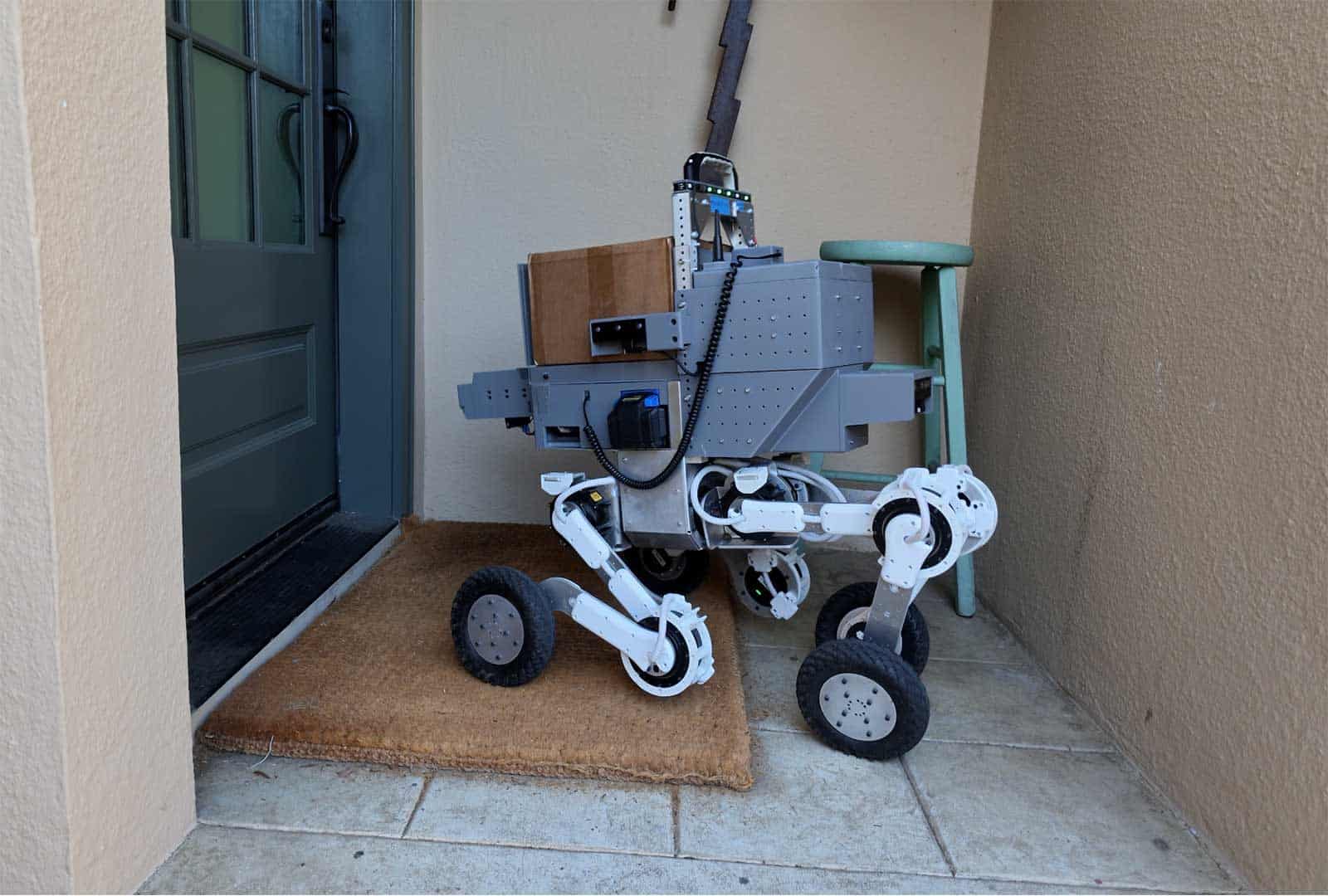
Boxer is a purpose-built robot that features a hybrid 4-leg and 4-wheel design with four driven tires. It is engineered to traverse lawns, sand, curbs, logs, rocks, power conduits, and multi-flight staircases. It automatically bends down to gracefully place packages at the front door and requires no retrofits to the delivery van.
How does the technology handle complex terrain and where do future challenges lie?
Boxer navigates complex environments using a surround-camera array paired with two downward-facing ground cameras that accurately position its feet on individual steps. The primary engineering hurdle was coordinating wheel and leg movements with real-time perception. The key operational test ahead will be expanding from its initial Palo Alto market into heavy snow conditions.
LastFeet Autonomous Delivery Field Report
Grayson Brulte joined LastFeet founder Lee Redden in Palo Alto and on the Stanford University campus to evaluate the company’s autonomous last-50-foot delivery robot, Boxer. Across multiple live delivery demonstrations in residential neighborhoods, Boxer proved capable of handling real-world obstacles, including stairs, garden paths, lawn debris, and pets or custom van modifications.
LastFeet Robot Capabilities and Terrain Navigation
During field testing across various residential homes, Boxer demonstrated autonomy from van departure to package drop-off. The robot navigated garden bends, grass, garden hoses, shoes, and Halloween decorations before ascending multi-step porch staircases. Upon reaching the doorstep, Boxer gently bowed down to release the package.
In stress-testing on the Stanford campus and local parks, the robot traversed deep sand, tree stumps, fallen logs, curbs, fiber optic installations, power conduits, and long flights of stairs. Boxer is capable of tackling any staircases built to standard building codes.
Van Integration and Autonomous Docking
A core operational advantage of LastFeet is that it requires no vehicle retrofitting. Boxer operates out of existing, standard delivery vans. Upon returning from a delivery, the robot aligns itself with the van door, climbs inside autonomously, lays flat/sits down for transit, and stays secure as the driver moves to the next destination.
Under the Hood: Perception and Simulation Training
Boxer’s navigation relies on a comprehensive camera suite, including surround-view cameras and two dedicated downward-facing cameras focused on the ground. These downward cameras allow the perception system to identify stair edges and terrain changes to place each foot precisely.
To master complex physical maneuvers, LastFeet trained Boxer’s control algorithms through hundreds of thousands of physics simulations. This simulation training taught the robot its body geometry, sensor integration, and dynamic locomotion needed to coordinate four legs and four driven wheels across unpredictable terrain.
Business Strategy and Market Expansion
LastFeet is transitioning from prototype testing to commercial operations. The company’s initial commercial deployment market is package delivery in Palo Alto, California, with plans to expand to additional cities as technology refinements continue. While Palo Alto provides a temperate baseline, LastFeet designed the 4-leg, 4-wheel driven chassis specifically to maintain traction and mobility in harsh winter conditions and snow.
The future is bright. The future is autonomous. The future is field reports.
Subscribe to This Week in The Autonomy Economy™
Join institutional investors and industry leaders who read This Week in The Autonomy Economy every Sunday. Each edition delivers exclusive insight and commentary on the autonomy economy, helping you stay ahead of what's next.