This Week in The Autonomy Economy, presented by Koop Insurance DoorDash unveiled DoorDash Air, Special Field Correspondent David Moss played autonomy roulette in Vegas, and Minneapolis Mayor Jacob Frey stood up to insanity by vetoing a bill that would have required a safety driver behind the wheel of autonomous vehicles at all times in The Twin Cities.
As autonomy continues to scale, the politics are only going to get more interesting as special interests dig in their heels and, in some cases, put misleading narratives into the market. But if you are Elon Musk, you can lean into some of the controversies and use them to your advantage.
While that’s politics, This Week in the Autonomy Economy sponsor Koop Insurance released its inaugural In Bots We Trust report, showing what five years of underwriting Physical AI says about the promise and risk of robots.
The promise is real, and in Phoenix, robotaxis are only getting safer. In fact, there are only 3.43 crashes involving robotaxis per million miles driven in the Valley of the Sun. In one of every four crashes, the robotaxi is rear-ended. In one of every five, it is sideswiped by a human driver, not by a robot.
The Koop report is titled In Bots We Trust. At AUTNMY AI, we trust bots and have for a long time, and now there are vast resources of data pointing to just how safe it is to ride in an autonomous vehicle.
Next week, we will be releasing several field reports. On Monday, we will release our Field Report on Atoms autonomous vehicles, followed by our visit with Lee Redden and LastFeet.
📰 Need to Know: This Week in the Autonomy Economy
How is DoorDash preparing for an autonomous delivery future?
DoorDash is aggressively investing in in-house autonomy and agent integration to control its own platform destiny. At its annual Dash Forward event, the company unveiled DoorDash Air, a bespoke delivery drone designed in-house using historical delivery data to seamlessly handle 80% of standard restaurant orders. Coupled with its Model Context Protocol (MCP) strategy and Corporate Ordering Connector, DoorDash is building the infrastructure so consumers and enterprise AI agents can seamlessly order food without touching traditional apps. Beyond aerial delivery, DoorDash’s “Dot” ground robots are already operating at scale across 2,000+ merchant locations in Greater Phoenix.
What does the latest data show about Physical AI safety and robotaxi crash rates?
Empirical data show autonomous vehicles and Physical AI are significantly outperforming human drivers in safety. According to stats highlighted in Koop Insurance’s inaugural In Bots We Trust report, robotaxis operating in Phoenix record a low crash rate of just 3.43 crashes per million miles driven. Furthermore, human driving errors account for the vast majority of collisions: in one out of four incidents, the robotaxi is rear-ended, and in one out of five, it is sideswiped by a human driver.
What are the primary insurance and risk takeaways from Koop Insurance’s In Bots We Trust report?
Robots are proving to be a top-1% insurance risk, causing premiums to drop sharply while capacity grows. Key takeaways from Koop’s five-year underwriting analysis of 390+ U.S. robotics firms include:
Lower Costs: Insurance premiums per dollar of revenue dropped 69% between 2022 and 2025 as real-world trust increased.
Systemic vs. Hardware Risk: 34% of all loss dollars were driven by cyber incidents rather than physical robot failures.
Underwriter Incentives: Deploying verifiable safety frameworks or safe-stop systems offers up to a 25%–65% reduction in premium rates per dollar of revenue.
How are local political battles over autonomous vehicle safety drivers unfolding?
Mayors are stepping in to prevent local legislative overreach that hinders autonomous vehicle deployments. In the Twin Cities, Minneapolis Mayor Jacob Frey vetoed a City Council ordinance that would have required human safety drivers inside autonomous vehicles at all times. Calling the proposed mandate impractical, Mayor Frey’s veto stands against special interest pushes to effectively block driverless innovation in local markets.
What major commercial and testing milestones were reached across the autonomous vehicle industry this week?
Autonomous deployment momentum is accelerating across commercial freight, urban transit, and global markets. Kodiak and IKEA announced plans to launch an unsupervised, safety-driverless freight route along Interstate 45 between Dallas and Houston later this year.
Waymo accumulated over 150,000 supervised testing miles in Philadelphia and partnered with Lyft’s Flexdrive to open an 80,000-square-foot fleet depot in Nashville.
Zoox is expanding winter weather driver testing by deploying Toyota Highlander test fleets to Denver.
In international markets, Momenta is expanding its Chinese robotaxi fleet into Dubai and Europe, while Neolix is launching robovan delivery and waste collection pilots in Brussels.
DoorDash is Investing for Growth
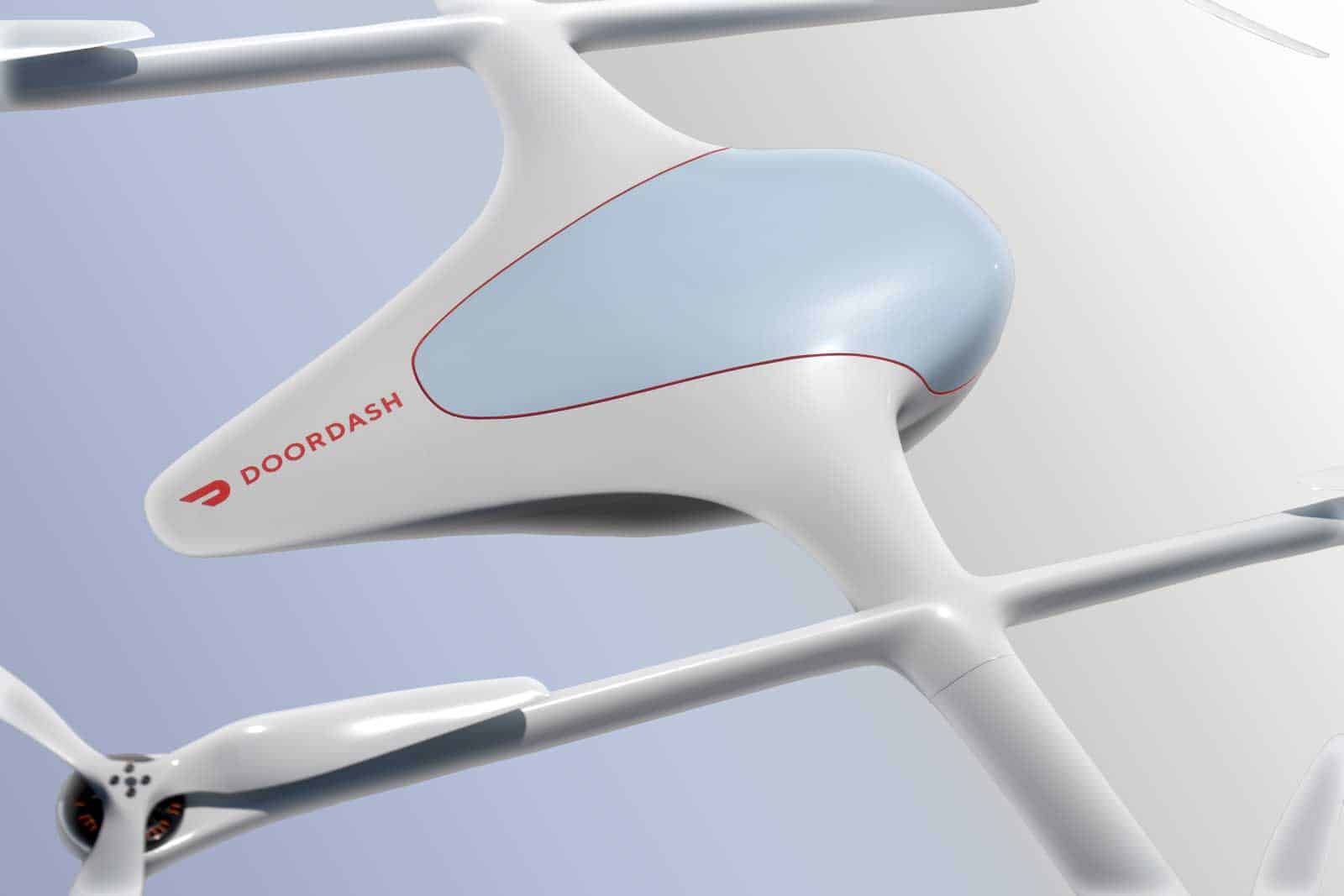
DoorDash Air Drone | Source: DoorDash
This week, we were on the road and attended DoorDash’s annual Dash Forward event in San Francisco. Our takeaway from the event is simply this: DoorDash is investing for the future. While they have a vibrant ecosystem of partnerships, the company is refusing to risk its future by solely relying on a partnership strategy.
Instead, they are investing in autonomy to control their own destiny rather than waiting for a partner to have a major technical breakthrough. In DoorDash’s Q2 2026 10-Q filing, the company reported R&D expense of $535 million, up 52% year-over-year. This is a clear indicator that DoorDash is aggressively preparing for a changing market.
A market where apps could go away as consumers shift to agents that connect through MCPs. Why should you have to open the DoorDash app to order food when you can text it or ask your AI agent? The plumbing is there, and DoorDash knows this, which is why they unveiled their MCP strategy and a new Corporate Ordering Connector.
While it’s built for companies today, tomorrow it will be for consumers. It’s merely a matter of time until your agent places the order for you and an autonomous drone or delivery bot drops it off. Traditional deliveries are done by drivers whom DoorDash refers to as Dashers. In the future, this will be done autonomously, and DoorDash is planning for this reality by investing in and building internal autonomy programs.
At the event, DoorDash unveiled DoorDash Air, a bespoke drone built for delivery in-house, not by a partner. While it’s a heavy CapEx investment, it’s also a hedge against a rising interest rate environment where a partner might struggle to raise capital and potentially shut down, which would end DoorDash’s autonomous drone delivery ambitions overnight.
Harrison Shih, Head of DoorDash Air, emphasized that DoorDash did not start with a drone and ask what would fit. It started with what people order and how local businesses operate. Drawing on data from over 14 billion historical deliveries, Mr. Shih and his team designed a drone capable of comfortably handling 80% of today’s typical restaurant orders.
An external partner could not build this, as they are simply not a sole provider. A third-party drone company is focused on building a business to serve multiple clients, not optimizing perfectly for just one. But in order to get drone delivery to scale, you need seamless infrastructure. To that end, DoorDash is developing customizable loading systems designed to fit seamlessly into existing restaurant operations.
For a consumer, this ensures quick deliveries with hot food and crispy french fries. For the restaurant, drone deliveries ensure high customer satisfaction without operational headaches. It’s a win-win.
But why stop there? DoorDash is also investing in autonomous ground delivery with their Dot robots, which are currently deployed in the Greater Phoenix area delivering from over 2,000 locations. This is not a pilot; this is scale, and this is what the DoorDash platform enables.
When you combine the DoorDash platform with autonomy, you get scale. When you add in an MCP strategy, you become ubiquitous and part of a consumer’s everyday life. This is where DoorDash is going, in our opinion.
They want to be the invisible, autonomous platform that delivers food and goods to you multiple times a day, without you ever having to open an app or wonder if your fries will be crispy or not.
150,000 Supervised Miles and Counting That is the amount of supervised miles that Waymo has racked up testing in Philadelphia as the company works towards a commercial deployment in the City of Brotherly Love.
Flexdrive Officially Opens Waymo’s Nashville Depot Lyft’s Flexdrive has officially opened a new 80,000-square-foot depot in Nashville to manage the Waymo fleet as part of their market deployment agreement.
Zoox to Test Highlanders in Denver The Mile-High City is becoming the Mile-High Testing City as Zoox is deploying a test fleet for a few months to test the Zoox driver in winter conditions.
Minneapolis Mayor Vetoes Driver-In Bill The Minneapolis City Council attempted to effectively ban robotaxis by passing an ordinance that would require human drivers to monitor fully autonomous vehicles at all times. Mayor Frey vetoed the measure, saying “it does not make sense” during an interview with FOX9 KMSP.
Kodiak and IKEA to Launch Unsupervised Autonomous Truck Lane Later this year, Kodiak will remove the safety driver from its trucks to launch an unsupervised freight service between Dallas and Houston in partnership with IKEA.
Applied Intuition and LG Innotek Deploy Data Gathering Vehicles in Korea Applied Intuition and LG Innotek have begun driving around Korea collecting data that will be used to develop autonomous driving software.
Momenta Eyes Dubai and Further European Robotaxi Expansion Momenta is following the tried-and-true playbook of Chinese autonomous vehicle companies expanding into the UAE and Europe. Now, the company is planning to accelerate its global expansion by increasing the fleet size from hundreds to thousands of robotaxis.
Neolix to Deploy Autonomous Robovans in Brussels As part of a pilot, Chinese autonomous delivery start-up Neolix will deploy its robovans in central Brussels, where they will be making deliveries and collecting trash bags by the end of the year.
📰 Follow @RoadToAutonomy on X for our latest thoughts and insights on the autonomy economy.
Well done, Dara! No one behind the wheel is the future and it’s autonomous. While the deployment in Croatia is limited, we are looking forward to watching Uber partners scale unsupervised service across the world and hopefully a dedicated robotaxi tier emerges in more markets.
Our take: As Uber partners scale unsupervised service, we call on Uber to begin disclosing how many unsupervised miles were driven on the Uber platform each quarter. Unsupervised miles is one of the key metrics for measuring the growth of autonomy.
Motional Autonomy Roulette on Uber in Las Vegas Field Report
Special Field Correspondent David Moss headed to Las Vegas to play autonomy roulette on the Uber app. After ordering ten rides and canceling, David finally hit Motional. This is the field report.
We Found Atoms, Rode Wayve and Watched Uber’s Autonomy Clock Speed Up
Grayson Brulte and Walter Piecyk discuss Grayson’s San Francisco field work, from riding in a supervised Wayve autonomous vehicle on the freeway with zero interventions, finding Travis Kalanick’s Atoms autonomous vehicles and Dara Khosrowshahi’s unsupervised ride in Zagreb and what it means for Uber’s autonomy timeline.