


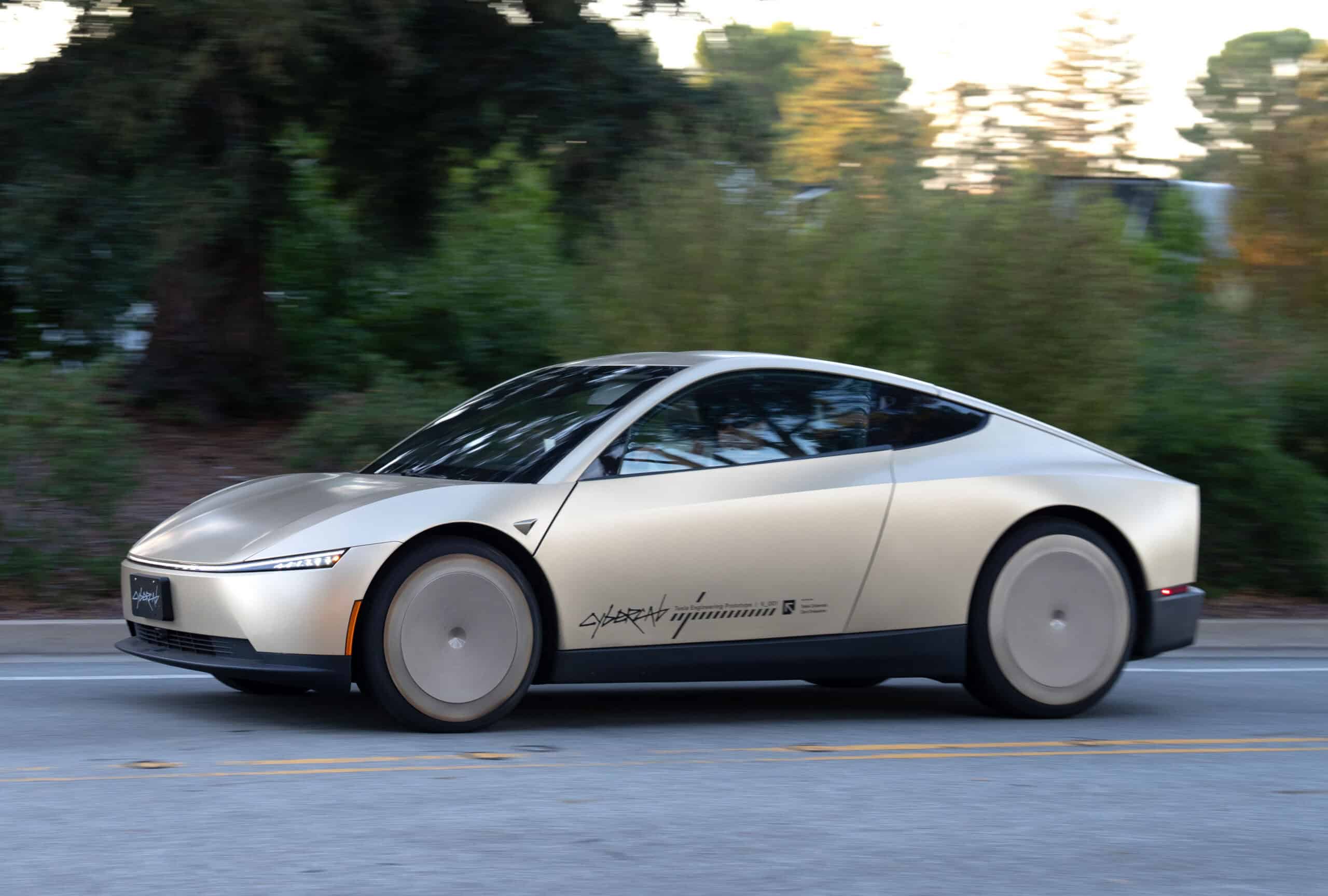
Cybercab Is Coming, Waymo Isn’t Impressed
Grayson Brulte returned from extensive California field work comparing the Waymo Ojai, Jaguar, Zoox, and Wayve vehicles firsthand, offering candid assessments of ride quality, sensor design, and operational infrastructure. Tesla officially announced its Cybercab commercial launch for September 3rd in Austin, with Grayson predicting fewer than 30 cars on the road initially while outlining a domino expansion theory across Texas cities.
Waymo published a pointed list of AI autonomy lessons widely seen as a shot at Tesla’s camera-only approach, while Nevada authorized up to 5,000 Tesla and 1,000 Waymo vehicles for Clark County. The episode also covered PACCAR’s vulnerability to Tesla Semi, Uber’s defensive discounting against Waymo, and expanding Chinese autonomy into Europe via WeRide and Kazakhstan.
Key Autonomy Markets Episode Questions Answered
How did the Waymo Ojai compare to the Jaguar in Grayson Brulte’s field test?
The Ojai had noticeably more wind noise, felt significantly lighter than the Jaguar, and lacked front-seat recline and easily accessible USB-C charging. However, Grayson noted that if weights were equal and wind noise removed, the actual driving feel would be indistinguishable from the Jaguar. He views the Ojai as a gap measure before the Hyundai IONIQ 5.
How many Cybercabs does Grayson Brulte predict will be on the road in Austin after the September 3rd launch?
Grayson predicted fewer than 30 Cybercabs would be available for rides in Austin initially, citing unfinished infrastructure under Tesla Robotaxi LLC and an assumed internal safety metric that would govern the pace of expansion. He expects a domino rollout to Dallas, Houston, and San Antonio in subsequent weeks.
What did Nevada’s transportation authority authorize for autonomous vehicles in Clark County?
Nevada voted unanimously to authorize Tesla for 5,000 vehicles, Waymo for 1,000, and Uber via Motional and Zoox for 1,000, plus an existing Zoox allocation of 100, totaling 8,000 vehicles over 12 months in Clark County.
Autonomy Markets Topics & Timestamps
[0:00] Grayson’s Latest Bay Area Field Report
Grayson Brulte shares firsthand impressions from his California field work: first rides in Waymo’s Zeekr-built Ojai, a visit to the Toland depot, rides in the Zoox and Wayve vehicles, and why the Ojai’s elevated sensor placement reduces insurance payouts and repair costs. He predicts 1,000 to 1,200 additional vehicles gives Waymo significant Bay Area rideshare market share.
[19:30] How Many Cars Will Actually Be on the Road when Cybercab Launches?
With the Cybercab commercially launching in Austin on September 3rd and nearly 300 robotaxis registered in Texas, Grayson Brulte goes on the record, expect sub-30 Cybercabs in week one, with dominoes falling from Austin to Dallas, Houston and San Antonio.
[24:25] Tesla’s Self-Certification Strategy for Cybercab
Grayson lays out the belief that Tesla will self-certify the Cybercab, and if NHTSA does not object, Tesla can legally charge for rides before ramping the fleet.
[25:31] Tesla Semi
Grayson saw Tesla Semis attached to reefers at Tesla’s engineering headquarters, a telling sign for refrigerated freight. Drivers love the Semi, and OEMs that are not investing in autonomy, namely PACCAR, are at risk.
[30:40] Waymo’s 10 AI Lessons
Waymo published 10 AI Lessons from Driving 200+ Million Fully Autonomous Miles on the eve of the Cybercab launch, a shot across the bow at Tesla that caught WeRide, Wayve and NVIDIA as strays. Grayson counters that end-to-end is highly scalable and capital efficient.
[36:36] The Robotaxi Infrastructure, Energy and Manufacturing Layers
The autonomous driving software layer is solved. The real battle is everything below it: infrastructure, energy, maintenance, operations and manufacturing, where Tesla holds a monster advantage with Giga Texas.
[37:38] Nevada Authorizes 8,000 Autonomous Vehicles in Clark County
Nevada’s Transportation Authority unanimously authorized 8,000 autonomous vehicles over 12 months: 5,000 for Tesla, 1,000 for Waymo, 1,000 for Uber via Motional and Zoox, plus Zoox’s existing 100. But autonomy drop-off fees threaten to bring resort fee fatigue to robotaxis.
[39:55] Uber’s Robotaxi Playbook Raises Doubts
A consensus is brewing in the Valley, Uber will have to make an acquisition and bring an autonomy program in-house, because the partnership playbook is not working.
[42:08] Waymo Expands to Munich, Germany
Waymo announced Munich as its first European city, a corporate filing OMEGA uncovered 58 days ahead of the public announcement. Grayson also shares his experience using Gemini in the Ojai and expects roughly 100 Jaguars for initial testing.
[45:06] NVIDIA Earnings. Where is Automotive?
NVIDIA reported earnings with no update on the Mercedes partnership or autonomy, just a single line noting automotive reached $8 billion on a trailing 12-month basis. With NVIDIA in a buying mood, does an AV company acquisition come next?
[49:53] Autonomous Food Delivery
Delivery platforms are a toll tax that brings limited value, while Coco cuts a new deal with Uber Eats in Helsinki, where its bots handle the snow no problem.
[52:33] Who is Cheaper? Uber or Lyft?
Lyft’s CEO and Uber’s CFO traded blows on X over pricing data, with Grayson noting Uber is pushing discounts in San Francisco as it worries about the growing threat of Waymo.
[56:39] SFO Robotaxi Access
Grayson expects Waymo to unlock normal pickup and drop-off at SFO by October or November, and when it happens, Waymo will dramatically eat into traditional rideshare market share.
[58:10] Foreign Autonomy Desk
Kazakhstan will begin manufacturing Chinese trucks as the Autonomous Belt and Road Initiative marches on, and WeRide expands into Denmark with GreenMobility. Autonomy is a global technology.
[59:53] Next Week
The Cybercab launch on September 3rd, an investor conference where NVIDIA is speaking, and the NHTSA comment docket. Walt and Grayson will be covering it all.
Full Episode Transcript
Waymo Bay Area Expansion & Ojai First Impressions
Grayson Brulte: Walt, busy week. I was in California, and the trusty inspector hat was on doing all tons of field work. While I was there, I played Snoop Ojai, Ojai doggy style. That’s how it rolls. While Martha Stewart, she played Ojai home style. That was a very interesting ad there from Waymo. While they play home and Snoop gets ready to bake the Ojai, Tesla’s getting ready to roll out the golden Cybercab. They were everywhere in the valley, and next week, hopefully paying rides in Austin. While that’s all happening, there’s a lot to break down this week and lots of Waymo news. So what do you wanna start with? The inspector trip to California or a comment of why the hell do you keep talking about rap?
Walter Piecyk: I mean, I think I’m finally getting closer to being able to translate what the hell you say in these opens. It’s taking a lot of my mental focus. I think it’s the creatine is, is helping me out on that front. I did notice some comments when Martha was getting out of the Ojai about what Snoop is doing inside the Ojai, so I think I kinda caught some of your references about baking the Ojai. but yeah, let’s, let’s start with obviously the most important thing always is getting out there and doing the field work. The reason our listeners are, are receiving this podcast on Sunday and not today is ’cause Grayson was doing some, some red eye activity, so we got a little delayed, and he was capturing this much more field work. So Grayson, why don’t you tell the listeners, you know, what you learned while in you know, California?
Grayson Brulte: Yeah. I, I don’t mind the red-eye. I know you prefer the gentleman’s flight, but I don’t mind the red-eye. So don’t worry, I’m full of coffee today, and I’ve got a lot of opinions. What I saw in the Bay Area was a dramatic expansion of Waymo’s operations. F- From the city all the way down to San Jose, going east. It is a very big ODD with a lot of operational infrastructure being put in place. Waymo was kind enough to host me at the Toland Depot. I got to see the Ojai for the first time, and I gotta tell you, Walt, you and I talk about Waymo being vehicle constraint. I’m not so sure the. how constrained Waymo is, and I’ll go on the record here and make a prediction. If Waymo adds roughly another 1,000 to 1,200 cars in the Bay Area, they will have a, a, a significant market share of the ride hail. And I say that because the longest wait time I had in a Waymo was 12 minutes all up and down the peninsula
Walter Piecyk: I mean, the problem with your supposition is that that’s three add- additional markets using tho- those thousand cars that you might see in a lot there. they’re still likely getting upfit, right? These things are not getting– Are– They’re not lined, so there’s still some limitation in the grand scheme of things when you think about all of the markets that they’ve launched and the ones that they have queued up. that’s the issue. So for me, I th- I would– I wouldn’t get too excited. I would guess that they’re gonna allocate those things to individual new markets. One of those markets, by the way, and I wanna tie this into your initial comment about California getting much bigger, did you happen to ask them when our friends in Riverside are gonna get service?
Grayson Brulte: No, I, I, I didn’t ’cause I left my wallet in El Segundo. So I, I’m sorry, I forgot that one
Walter Piecyk: So what else did you see out, out there other than. And by the way, how was the Ojai in comparison to the Jag and, and any other vehicles autonomy-wise that, that you tried out there?
Ojai vs. Jaguar vs. Zoox: Ride Quality Compared
Grayson Brulte: Sure. So the, the pushback on the vehicles, in my humble opinion, the vehicles are coming ’cause the infrastructure that I saw. You’re not making the capital investments in the infrastructure and the energy. That’s something that’s not discussed a lot, the energy, if you’re not going to add those additional vehicles. Clients have seen the reports and, and, and, and we’ll, we’ll tease it here, but there is big plans in our opinion for what’s happening there in California. Yeah, so I got to test the Ojai several times. I did front seat rider. I’m a front seat rider guy. I love to sit in the f- in the front seat, and then I also did the back seat. I gotta say, Walt, because I just got off a red-eye and I’ve had a lot of coffee, somebody’s gonna make a San Fernando Valley movie in that Ojai. There’s that much room in the back seat. Yes, there’s photos of luggage, but you know, I- I’m a guy and my mind goes somewhere else, so I think that’s gonna happen. It’s an incredible amount of room in the back seat. It, it’s really exceptional. In the front seat, something really interesting, I posted this on X, and I don’t know why, and so I don’t want to speculate on this. I use my, my measurement stick on my Apple phone. There’s roughly 32 inches of dash space. It seems rather large. So what’s in there? That is a question. Overall, the ride felt very light. I wasn’t a fan of the ride necessarily. It felt ve- the vehicle felt very light, like it was manufactured almost like a Matchbox toy, so I didn’t like that. Another thing I did not like, in the front seat, you can’t put the recline back. There’s no recline on the front seat. Didn’t like that. The Jag, I can recline. The other thing is I had to call Waymo support. I couldn’t find the USB-C. I’m out there doing field work and I couldn’t find the plug. The plug in the front is hidden underneath, so very hard to find. I didn’t like that. The back seat was cool, as I said, with all that space if you want to have extracurricular activity. Overall, wasn’t necessarily a fan of the Ojai, but I love the doors. I thought the doors were cool, and how they zzt, open up. I posted a, a video on X, tell- on my X account here at G Brulte. Check it out. It was funny when the Waymo was dropping me off, a Zoox test mule f- pulled in front, so you get to see a Zoox test mule and the Ojai. Overall, I am going to go on the record and say I believe that this is a, a gap step measure to getting to the Hyundai. I do not believe that this is going to be a long-term vehicle just based on the experience there that I had. Because what I did was, as, as any good field reporter did, I did inspections. I rode in the Zoox, then I rode in the Ojai, and then I rode in the Jag, so I was able to compare all three rides and completely, completely different experiences.
Walter Piecyk: Well, I’m glad you finally came around on the larger cabin. I know your original pushback was on the Zoox, which is similar, I think, maybe in size. Maybe Zoox is a little bigger and you’re, you’re facing each other like a, like a London taxi. and I’m sure for anyone that’s on the Ojai project, they’re happy to hear the guy who called it an unforced error say positive things. But let, let me ask a little bit more in trying to unpack this concept of light. is light meaning that when you close the door, the door’s not as heavy, the noise is, is– the noise d- inside is different? That’s fine. That’s maybe of the manufacturing of the equipment. Or is there– What about the ride itself in terms of how it takes turns, it’s stopping. Like, is the feel of the ride, if you detach it from how you’re describing light any different than the Jaguar?
Grayson Brulte: Sure. So let’s break it down. There is a lot more wind noise, and I do not have Ojai highway access, so just wanna clarify that. I do have Jaguar highway access, and we, we did that. We could talk about that. Going on a street of 45 mile an hour, you, you hear the wind noise. You don’t not hear that wind noise in the Jag. And from a weight perspective, it’s basically comparing a Cadillac to a Kia in terms of weight. The gross vehicle weight of the Jag is much heavier. It rides much, much heavier. It just feels more luxurious, where the Ojai does not feel luxurious. If you were to hypothetically have the same weight of the Jag and the same weight of the Ojai, minus the wind noise and minus, by the way, the speakers are not nearly as good in the Jag ’cause I was, I was busting Snoop there, the D-double-O-G, and, and I had The Dead going, too, going around San Francisco because that’s what you do. Minus the stereo, minus the wind noise, if the weights were equal, you, from a driving perspective, you would not be able to tell if you were blindfolded
Walter Piecyk: Got it. So that’s, to me, that’s fine, right? The ride feels the same. the the quality of the ride. Look, you know, at the end of the day, we’re trying to get the price per vehicle down. I’ve talked before about how Waymo is effectively still a science project, the Jag and the pr- cost of the Jag, as well as the sensor stack that’s on there, which is much higher than the Ojai, but that’s not a sustainable business model. We’ll see what, what happens when we get to the Hyundai and perhaps you know, a fourth OEM. But, but a lot of this is having to drive down you know, the cost of that underlying vehicle. And I don’t. You, you mentioned in your, one of your comments being a stopgap measure. I agree, and this has always been. And this is my pushback on being an unforced error. They needed something in the interim while some of these other OEMs seemingly are circling the wagons, wanting to develop autonomy on their own. So I’m looking at you, GM, Ford, et cetera. but Hyundai will be there. Hyundai, I’m sh- I’m guessing, will feel a bit closer to the Jag and the overall quietness. And look, let, let’s relate this to Tesla. Like, the Tesla Y that my wife had that we’ve subsequently returned compared to the current Y, is like night and day in terms of what it sounds like inside and the overall suspension and the comfort of the ride. Every vehicle is gonna be different. This kind of argues for some diversity of vehicles within the fleet, which Tesla’s talked about and, and obviously Waymo is actually ex-executing on. So but the important thing I think to pick out from what you said was that the, the ride itself felt similar. And I think that’s important because we’ve heard so often that when new vehicles are launched in the market, they have to go through a whole new training process. You know, we heard this about the Cybercab and, and obviously Waymo ha-had similar things with the Ojai, and now, and they’re probably gonna have to do it for the Hyundai. When you have a new vehicle, new training, I always– I’ve been curious, I don’t wanna say I was worried, curious whether the, the, aside from the feel of the vehicle, the feel of the ride is, is similar. So that I think is, to me, positive news in terms of where Waymo is with autonomy in their, in their multiple, multi-vehicle fleet that they have now
Ojai Sensor Design & Insurance Cost Advantages
Grayson Brulte: One thing that I wanna highlight for the audience that we’ve learned on our trip is you see the Ojai, the sensors are up left, right, high. And you might wonder, well, is that for better vision? Is that for this? No. And I gotta give a lot of credit to the Waymo engineering, the safety team, the policy team, and the, and the leadership for this. That’s for reducing the insurance payouts in the event of a crash because when a Jaguar is rear-ended, and it happens, there is sensors behind that bumper. I saw them. Waymo was very kind. I s- I actually saw all the sensors that are behind the bumper of the Jag. On the Ojai, those sensors aren’t there. They’re up here. It’s basically what it looks like is what Don Burnette did with the sensor pods. It looks like sensor pods. So if the Ojai is rear-ended, you do not have that giant insurance claim, you do not have that, that really expensive, one, downtime from a maintenance cost, and two, repair cost. So this thing, nobody’s talking about this. It is cheaper to operate just purely on where they put the sensors and the design standpoint. And furthermore, we also learned this, and I’ll say this for the record, I don’t think at the time Waymo had a choice but to do the deal with Geely. And if you know, you know
Walter Piecyk: So I just wanna go back, ’cause I think after CES on the trade show floor when we saw the w- Ojai, when it was getting renamed at that, at that time from what they were, they were calling it the Zeekr to the Ojai I did have that conversation with the Waymo people on the floor, and I think also at the at the Google, the Google event that they do in Cal- California, right, Google I/O or whatever it’s called. and then the other. And, and to, to your point, y- you’re talking about accidents, but just maintenance. Sometimes these sensors do go bad, and one of the things they pointed out was, like, how, how easily they could basically take the sensor off, the lidar sensor that’s up in those t- those front corners, and take it back on. Or if they wanted to iterate to additional or new sensors that, that perform differently, that that was advantage. So that, that’s kind of the. It’s a counterargument to what, you know, more so myself, but I think you’ve been in agreement, line fit, meaning, like, embedded in the car, looking like it kind of blends into the environment. that is one of the downsides, right, in terms of the maintenance on a line fit embedded sensor type car might be a bit more challenging than, than what they’ve developed with the Ojai. I don’t know. I still think at the end of the day, you wanna be able to crank out thousands and millions of these things in line, you know, line production integrating the car is, is ultimately the end game for this.
Grayson Brulte: I agree, and we, we’ve said this many times on this podcast, and the CEO of Hyundai has come out and, and said it without naming Waymo that they’re gonna ramp up production. I believe that the Hyundai IONIQ 5 is going to be the massive ramp vehicle for Waymo, and it’s gonna come off the line
Walter Piecyk: Any other rides you wanna talk about when you were out there in, in sunny California?
Grayson Brulte: Yeah, so as I said, Jag went in a highway. It is a magical experience going on a, in a, on a Jag on the highway. It’s just awesome. There’s no other way to describe it, so I wanna say that, that is awesome.
Walter Piecyk: It’s not terrifying to be doing 50, 60 miles an hour on the highway with no one in the driver’s seat
Grayson Brulte: No, it’s awesome. I love it. It is my preferred method of transportation w- when I’m in the Valley, and I would use it exclusively 100%, except for one issue. I was gonna take it to SFO. I was going out of the Harvey Milk Terminal, and the Waymo app, give the UI team a lot of credit, pops up, “Please note we are going to drop you off at the, the Kiss and Fly, and it’ll be a minimum 15 minute to get to your terminal.” I was like, “No. You know what? This, Miss Piecyk, I’m not gonna say it. I’m gonna be well-behaved, ma’am.” So I I took robotaxi you know, AKA delivery service, got dropped off right in front, no intervention, down from Palo Alto to the airport. Really great experience in robotaxi. For those wondering about economics, it was half the price. And I wanna say this for the record, it wasn’t the same having a driver there, even though she was a wonderfully nice lady. It wasn’t the same having a driver there. I much prefer to be in the cabin with no driver. So, so I did that. I also went and visited our friends at Wayve. So Alex and the team, thank you so much for the invitation. Juliane, Frank, everybody, I gotta say, your ride’s getting good. And thanks for the ride to the KPMG event. Hugh, thanks for hosting a wonderful insurance summit. Team at Wayve, w- the Wayve tech, Walt, it’s accelerating from when I was last in the vehicle in London. And for those wondering, yes, it does highways, and it does them flawlessly
Walter Piecyk: Well, that’s good that you’ve got some, some level of comparison. I have still yet to be in a Wayve vehicle, so anytime they wanna invite me out to California or London, I th- I know again, the Eagles are playing in London coming up in a, in a couple of months here. I’m happy to hop in, in one of those cars and, and give my perspective, or even Vegas at CES, wherever. I will fly wherever you want me to. I’m glad you had a positive experience. and was that with a safety driver? Was there a dr- was there someone in the passenger seat? How did that ride, how was that ride executed?
Grayson Brulte: So it, it, it was with the safety, before we get to that, there was an individual who listens to the show, came up to me and said, “I just wanna tell you something.” I said, “Yes?” He said, “I am a huge Eagles fan, so I like when you and Walt get into the Eagles banter.” So Walt, you have an Eagles fan out there, and this person is going to London, so perhaps you can have a pint with this individual in London. Reach out to me privately. I will connect you with Walt.
Walter Piecyk: Is that a Wayve person? If that’s a Wayve person, then yeah, let’s, let’s go to, go to the Eagles game in London and then, and then take some Wayve rides afterwards. That sounds like a great plan
Wayve Technology Update: Dynamic Routing & Highway Capability
Grayson Brulte: So here’s the kicker on Take the Wayve Rides. There is no planned route. KPMG was hosting an event there. We got in the Wayve vehicle, they punched the address in, and it went. So the Wayve ride, no fixed route, just completely dynamic, so wanna point that out there. yes, there was a, there was a safety gentleman behind the wheel. Learned some really great insights, which we’ll talk about in future podcasts, about what they’re doing with Nissan and the LEAF a- and their, their London plans, but Wayve’s gearing up for, for, for big things, and they are on the road to unsupervised. And yes, they will report supervised versus unsupervised miles, unlike some
Walter Piecyk: I’m sure Uber’s gonna be very happy that you gave that update on Wayve. What about Zoox? Did you have a chance to hop into Zoox and go to the Zoox Lounge?
Grayson Brulte: I was shaking in my boots, Walt. I’m doing. So if, if individuals know San Francisco, it’s a, it’s a, it’s a four intersection, and I sat across the street for a while, and I’m sitting there twirling my thumbs, taking my phone out, zooming in, able to hear some things. I have pretty good hearing for an old person. And I kept hearing, “Free ride, come in and try. Free ride, come in and try.” I said, “Oh, okay.” I’m, I’m thinking, I go. My wife’s like, “You better be careful. They’re gonna have your photo on the wall there,” because they’re very prickly, as we, as we learned on this trip. And I was just gonna say, “No, no ride.” So I go in there and I said, “Oh, hi. May I take a ride?” And, “How long is the wait?” They said, “10 minutes.” I said, “Perfect.” I said, “Well, where can I go?” They’re like, “Well, you have to pick a loop.” I said, “Oh?” They’re like, “The only loop we have available in 10 minutes is the 10-minute loop.” So I said, “Okay, I’ll take that.” And they said, “Your name?” I said, “GB.” And they said, “What’s that stand for?” I said, “Greg Benson.” “Can we see your ID please?” And they saw my ID. I was like, “Oh, shit. I’m not.” Sorry, Mrs. Piecyk. I, I said, “I’m not getting a ride.” But lo and behold, Zoox put me in the vehicle. Unlike some individuals I know that have gone in there that have not been able to get in the vehicle, they put me in the vehicle. I went on this, I’ll call a Disneyland attraction on this loop, a 10-minute loop around San Francisco. Ride, eh, it was okay.
Walter Piecyk: How’d it compare to Vegas? ‘Cause we’ve all been to Vegas and tried it there.
Grayson Brulte: Same issues because I have video on this. We got stuck at an intersection just like when we had the, you had the wonderful LightShed party and KPMG had one as well. We got stuck at an intersection, I have it on video, and I noticed I went to a Blue Bottle Coffee where the, the Zoox go by and I noticed several times of them getting stuck in intersections. So I don’t know what the intersection issue is, and I’m a taller guy, not as tall as Walt, but I’m pretty tall. That neck bar hurts my neck and I don’t find it very comfortable at all. And not to be nitpicky, but you are a design company. If you put your phone at the top of the pad, it won’t charge. You have to move it all the way down the pad to charge. And I didn’t like the fact that my Spotify didn’t sync. It was a Disneyland attraction and in the lounge I counted 12 individuals, not one native San Franciscan, all tourists
Walter Piecyk: Maybe we should call it more of a a Universal attraction because Universal is known, especially at Epic, for some of the rides breaking down. Not necessarily Disney. It’s the Universal attraction. I mean, it’s kinda wild, right? Still limited stops, you know, still with the breaking down. and yet they get obviously a lot of press because they’re owned by by Amazon. But, so okay. I mean, Grayson, you did more field work in a few days than I think m- most other people will do in a year. That’s incredible. Can. Is there more, or can we now move on to, to the Tesla date that w- That Dropped?
Grayson Brulte: There is a lot more field work, but that was reserved exclusively for clients. So if you’re interested, reach out. There’s a lot more
Tesla Cybercab Launch Date & Expansion Predictions
Walter Piecyk: Perfect. All right, so we can move on to Se- Tesla. This is not a huge shock, but they did announce since our last podcast, the date of the Cybercab launch, which is September 3rd, that people, I think a lot of influencers will be there. They also, by the way, announced a party or an event, I guess, for the Semi on September 24th in Las Vegas. So, and then subsequent to this announcement you know, you’ve seen, I think it was 79, we, we got information on, I think it was Thursday, 79 new Model Y robotaxis were registered in Texas. So that fleet side, I think is, is approaching 300. At least registered, right? These could a lot, be a lot of test cars. I think people in the market have noticed a lot more Teslas. I know someone that lives in, in Austin, he’s seen more Waymos in areas that he hadn’t seen before. So I think like last time when Cyberco- cab launched, I’m guessing that Waymo’s gonna kinda dial it up, maybe, maybe put some more vehicles in the market. Probably, I wouldn’t be shocked to see Waymo expand the ODD in advance of this September thir- third launch, which is days away. so look, it’s- it’s- it feels like it’s happening, but what do you think happening actually means when this thing launches on September 3rd? Like, when September 3rd happens, what’s the day after? ‘Cause a lot of times we’ve seen something happen, then the day after, it kinda gets quiet, and, like, those cars aren’t on the road. by by our show next week, how many of these Cybercabs do you think are gonna be on the road in Austin?
Grayson Brulte: Sub 30. And sorry to the Tesla bulls
Walter Piecyk: So even though they’ve registered up to, up to approaching 300 cars, only 10% of them you think are gonna be available for rides?
Grayson Brulte: In Austin, yes. And if we look at history as our guide, when you and I have been in both ODDs, the small one and the larger one, they’ll probably start in the smaller ODD and then work their way into the larger ODD. I will say this, and this is all public filings with the state of Texas, for the record. Te- Tesla is starting to acquire real estate and put energy assets in under Tech- Tesla Robotaxi LLC. That infrastructure is not up and ready yet, so I just want to point that out. So that’s why, based on the infrastructure I’m going to go on the record and say a smaller amount. I would not be surprised, Walt, to see dominoes fall. Week one, Austin. A week later, Dallas. Two weeks later, Houston. I wouldn’t be surprised to see those dominoes fall, and then eventually San Antonio
Walter Piecyk: And when you say dominoes, you’re, you’re saying just like Waymo puts 300 cars in a market the domino for Tesla is 30 versus, like, get to y- you know, the autonomy market’s benchmark of 100 cars in that market? that’s that’s how you’re guessing this this thing plays Out?
Grayson Brulte: It’s gonna play out in smaller numbers. We’ve all seen the photos shared on X of these large lots full of Cybercabs. I’ve seen a lot of them in person as well. I just don’t think on day one they’re gonna rip the Band-Aid off and just put out the autonomy markets standard in all those markets on day one. I could be 100% wrong. I just don’t necessarily seeing it happen. If you go back to past comments that Elon has made on the Tesla earnings call about being super concerned and super focused on safety, I, I believe that they’re gonna wanna gently expand into this. That’s just an assumption, but that’s my belief
Walter Piecyk: Well, let me just make one connection or one correction for all of our listeners who are Tesla haters out there. It’s not technically day one. I think it’s more like day 400 in Austin. Again, 100 is, is what I care about. 30 is obviously gonna be a milestone. This is the issue that I think Uber has. It’s like, you know, 1,000 paper cuts. it still feels like they should get to now, if they’re launching or relaunching or officially launching, whatever you wanna call this in this market, that they should get to 100 by the end of the year. Or do you think by the end of the quarter, if you were to have to pick between two?
Grayson Brulte: I’m gonna base this on a metric that they’re probably using internally as they’re basing– They, they probably have an internal safety metric, which we do not know, we do not have access to. They have not published it publicly. I am under the assumption that there is an internal safety metric that they’re looking at will determine the growth. What that metric is, I have no Idea
Walter Piecyk: Okay, so but, but, but why even do this Cybercab event if you’re not gonna, if you’re not at that safety metric? Why not wait until you’ve hit whatever that’s, that presumably that safety metric is that exists before you get to that 100 cars? And honestly, is there really a difference, dramatic difference? Can’t wait for the, what’s gonna show up in my mentions on this one when I say it. Is there really a difference between 30
Grayson Brulte: There’s a, there’s a major Difference.
Walter Piecyk: Mean, if you can do a 30, Can’t you do 100?
Grayson Brulte: There’s a major difference. Because do not forget, this is the path that we believe, and we do not have a public statement on this. So I want to say, we do not have a public statement. We have hints of this. It is our belief that Tesla will self-certify these vehicles. And, and it is our belief they want to wait a certain period of time after this, after they declare the self-certification till they really ramp. That’s just a hunch, but I believe that’s the path they’re going, because when they self-certify and Mr. Morris and the NHTSA administrator does not send them a letter, they can legally charge. That’s right, folks, they can legally charge for self-certifying
Walter Piecyk: Well, I can tell you that the market as far as I can tell, is in your camp, where they don’t really expect them to hit 100 or 200 in an individual market anytime soon. That’s how these- the stocks and the related stocks are behaving. So we’ll see. We’ll see what happens. The expectations seem to have pulled back dramatically you know, for Tesla. You know, perhaps for some good reason, but we’ll see. I don’t know. The car’s, the car’s performing well. I’ve been getting some good updates on my Y. Let’s move on to the Semi though. this- they had this event, and I think someone was teasing that there might be, like, another thing of some Euro specification and another Hanover or some type of conference in Hanover. Like s- the Semi, which we hadn’t heard about in a while there seems to be more and more coming out about this. Obviously they’re not initially gonna be autonomous, although I’m- I would guess that if they’re doing this event in Nevada, Sparks, Nevada to be exact you know, in, in later September, that they are gonna show people that go to that thing autonomous operation. It does have you know, sensors and cameras on there. I’m not sure if there’s al- there’s LIDAR on that, on that Semi or not, but I would guess that they’re gonna show autonomy w- at this, this event for the Semi Now
Grayson Brulte: There is no lidar. I can tell you I was at the Tesla engineering headquarters this week, and semis are front and center. I mean, they’re, they’re, they’re hard to miss, front and center. For, for those in trucking, they were attached to reefers. That’s right. Those in trucking, the Tesla semis I saw were attached to reefers. That is very interesting.
Walter Piecyk: Reefer. Are w- are we going back. Hold on. Reefers? Are we going back to Snoop Dogg again? What, what, what’s a reefer?
Grayson Brulte: I, I’m behaving. No, I, I don’t have a, I don’t have a joint or a blunt to, to go up and smoke here. But a reefer is a refrigerated truck. Different power requirements. Yeah. See, Walt’s head’s in the gutter. He went from the valley to, to this, to the clouds. All over the map. I can’t take you anywhere. V- very interesting tell sign
Walter Piecyk: I now follow, there’s a, there’s a Tesla Semi account I followed, and they were interviewing a gentleman, or maybe they were retweeting something of a gentleman that was interviewed who had a what’s the PACCAR sum- su- s- oh, Peterbilt. And this, this trucker, 30 years trucker, was going off about how the Semi was so much better than his Peterbilt truck. And all I could think about is those, those guys at Peterbilt, who I did sneak one question in on their ear- on their earnings call, PACCAR, but have been shut down ever since, and how they have they have not been forward-thinking in how they’ve dealt with autonomy and their supposed partner, Aurora. And I’m wondering what the PACCAR management is gonna think about when they– when, forget about autonomy, but just they see truckers preferring perhaps the ride of the Semi versus what they’re doing. And I don’t know what they did on on electric trucking, whether they’ve made investments in that or not. But given how they’ve treated Aurora, which I can say is only described as, as shabbily then I doubt that they’ve done much on the electric side as well. And are they then at risk?
Grayson Brulte: PACCAR has done stuff on the el- on the electric side, yes. PACCAR is at risk. Again, inside baseball term, PACCAR is Detroit, end of the day. They are milking the profits and not investing in the future. That, that’s truly what it is. Talk to Matt McLellan, friend of the pod here, at Covenant. His drivers, they love it. If you go read Freight Wayves, they love it. Just go down and speak with, with million milers, five million milers, these incredible men and women that drive these trucks. They love the semi. That, to me, if you’re a traditional manufacturer, say a PACCAR, who does not invest in the future, you’re screwed, any which way to put it. The, the, the truck companies that are investing in the future, Daimler Truck is doing a phenomenal job. Volvo’s doing a phenomenal job. So perhaps in the future, the big three trucks are gonna be Tesla Semi, Volvo, and Daimler. And there’s a common denominator between all three of those companies. They all invest in autonomy. They don’t put their head in the sand like an ostrich, like Detroit’s doing and PACCAR’s doing
Walter Piecyk: Oh man, I really set you off. I didn’t mean to do that. But I do find it interesting to see if at some point PACCAR comes back begging to Aurora to be like, “Whoops, screwed that up. Let’s get you back on track.” Whether Chris Urmson is in a position at that point to be like, Sorry, bro. Already got Volvo going. We’re cranking them out. Have these other international trucks we’re cranking out. We’re gonna put you in the at the back of the line.” You know, and there’s consequences for Their Actions
Grayson Brulte: There’s consequences for the actions, and this industry has a long memory. You see the way that PACCAR has treated their partners, and this goes way back, I’m not gonna name names ’cause we’re polite here. It goes back to the Silicon Valley Innovation Office and some of those early, early contracts going back over a decade. It was a love-hate relationship on, on both sides. Now the other OEMs have caught up and allowing companies to, to innovate and to build the future. The future of trucking is autonomous. Without autonomous, the American supply chain for trucking is, is in fundamental trouble. The American supply chain needs autonomy, especially on trucking, and that’s what those companies are investing in. And I forgot International, they’re also investing heavily in autonomy as Well,
Waymo’s 10 AI Lessons: A Shot at Tesla
Walter Piecyk: Well, I’m glad I got you into salty mode because that’s a good segue into our friends at Waymo, who have already been, at least behind the curtains salty with, with Uber and Uber vice versa, given what they’ve done on the regulatory front. But I guess Waymo’s feeling a bit pugnacious, would be the word, in general. because on the eve of the Cybercab launch, they published, I guess they called it 10 AI lessons from driving 200-plus million fully autonomous miles. The head of the AI foundations wrote this. I’ll skip– I’m not gonna read all of the lessons in the, in this, in this Twitter stream that they provided, but clearly this was, I think, directed at at our friends at Tesla. And, you know, when we said this in the past, when we, like, look between the, the lines and see what they’re talking about, it’s typically been between Uber and Waymo. And, and looking at those signposts, those red flags, whatever you wanna call it, was 100% accurate, right? I’m not gonna say it’s 100% accurate, but clearly they’re taking shots at Tesla. When companies do this, in my analysis is, it shows a defensiveness, right? It’s just like literally when Tesla’s about to, to do something new, you come out with this, this post. It just shows fear, in my view, more than confidence. Let’s go through some of the things that they said. “Cameras alone can’t deliver full-scale autonomy.” Quote, “The AI can only make sense of what it sees, and if you just can’t see it, the AI can’t do much.” By the way, there was a video of a Waymo hitting a car that it didn’t see. Now, again, it wasn’t necessarily the Waymo’s fault, but, like, don’t talk to me about AI not being able to see it. Once again, you didn’t see a car behind another car where we’ve seen videos in the past where the lidar was supposed to see under the car, around it or whatever it is. Anyway, that’s lesson one. Lesson four was: You can’t build trust with a black box. Pure end-to-end raw pixels to steering is not able to meet our safety bar. Reminder, you know, Google had this white paper talking about pure end-to-end. Wayve has talked about end-to-end. This is the fundamental the Bigelow Battle, right, between Raquel from Waabi, you know, versus Sterling Anderson, who was then at Aurora and now is at GM. Again, end-to-end versus these kind of hybrid models. Again, this is also the Tesla approach. Lesson 10, which was I think the line of the week: “Simply improving a driver assist system for full autonomy is a false summit.” Now look, that was 100% targeted Tesla, but by the way, who’s catching a stray here? Isn’t this exactly how WeRide has talked about it, and WeRide is driver-out and in China and expanding throughout Europe. Isn’t this also how Wayve ha- is, is doing effectively a driver assist system that can ef- effectively evolve over time? Isn’t this also how NVIDIA i- is approaching their system with, with effectively an ADAS or a Level 2 system evolving to Level 4? I could be wrong on, on any of those, but that is. This, this was the, kind of the mantra, again, I think clearly targeted Tesla ahead of their launch. but I mean, I don’t know. What, what is your kind of takeaway from this type of post out of Waymo?
Grayson Brulte: It’s a, it’s a shot across the bow at Tesla with some minor casualties on the side. You’re right about WeRide, we had that in their earnings report, or their, their L2+ business. Wayve is, is, is building a licensing business, and they do have some L2+ exposure as they go into L4. But mainly it was driven right at Waymo. And I will say this for the record, in all the research I’ve done, and I have a lot of relationships and I get to spend a lot of time with some of the smartest engineers in the world, E2E, end-to-end, is highly scalable, and what we talk about here on Autonomy Markets, it is highly capital efficient. That’s right, it is capital efficient to scale E2E. That’s the future. The Wayne Gretzky term, we’re skating to where the puck’s going, that’s, that’s where the future is, is, is E2E. The paper you mentioned was the Waymo, it was called the EMMA paper, E-M-M-A. It’s available on, on Waymo’s website. You can go read it where they talked about that. So they have done research on this. But the one that stood out to me, number four. Number four says, “You can’t build trust with a black box pure end-to-end.” That sounds like an insurer wrote that, because the insurers to underwrite this want access to the data. And some insurers are holding Waymo up as the gold standard. Look at all the data they share with us. So that was a sh- another shot at Tesla there, because there’s some insurers that I have met with, that will remain anonymous, they wanna know the weights that go into the algorithm of FSD. And you and I both know that’s a non-starter. They’re not getting that data
Walter Piecyk: Anyway, it’s fascinating. I mean, normally I would say it makes the company look bad. As an observer of this industry, I love it, ’cause it’s a signpost of, like, things are happening, right? And, you know, again, they wouldn’t post that if they weren’t worried about where Tesla was. Competition is in fact what breeds innovation, right? We don’t wanna control situations, letting individual companies in a market using regulatory capture and prevent others from coming in. So this is great, I think, for– I, I did appreciate it, even though I kind of salted them a little bit there. I appreciated that, that post. This is not- nothing really new. These are the same old criticisms of Tesla, and we’ll just have to see how it plays out. I mean, I’ve, I’ve heard the fearmongers on Tesla, you know, claim a lot of things were gonna happen up to this point that haven’t. Conversely, the super bulls on, on Tesla have done the same thing, where they claimed Tesla would be at a certain you know, phase of, of all time, which it hasn’t happened. So I think that story is not yet written, but we’re still, at least I am, I can’t speak for you, still optimistic about what T- Tesla can deliver in The Market
Grayson Brulte: I am extremely bullish what Tesla can deliver in the market because we are getting to a point and we have NHTSA documentation. That’s right, we have NHTSA documentation. NHTSA is not validating and certifying the ADS, that’s the autonomous driving system. They’re not doing that. That’s not the concern that NHTSA has. Not the concern that I have. There, and, and Rob, my partner, at AUTNMY AI talks about this all the time, there’s too much focus on the software layer. That’s solved. Point blank, that, the autonomous driving is solved. It’s everything that goes below that, from the infrastructure to the energy to the maintenance to the, to the, the service, the operations. That’s where the ba- And to your point, manufacturing, that’s where the battle’s gonna be fought. And why do you see the nervousness? ‘Cause Tesla has a monster advantage with that factory that we walked there at Giga with that cyber line
Nevada Authorizes 8,000 AV Vehicles for Clark County
Walter Piecyk: Yeah, well, the one thing that isn’t solved quite yet is the pick-up and drop-off locations, and that’s part of the software, so hopefully that gets taken care of. Just one quick cleanup from last week, because last week we said Nevada capped Tesla’s Vegas fleet attendent vehicles. That was the pre-hearing status. We did record a little early. what actually happened is they voted unanimously to authorize Tesla for 5,000 cars, Waymo 1,000, Uber 1,000 via Motional and Zoox. so again, I guess they’re– the N- the Nevada Transportation Authority is, is in that case authorizing Uber as opposed to the companies themselves, and then the existing Zoox 100. So that’s for Clark County, which is Vegas, that’s 8,000 vehicles over 12 months. That’s a big number. So thank you to the State of Nevada for seeing the future. but a biggest number there, interestingly, for Tesla
Grayson Brulte: Yeah, and not to go harp on this again, look at the infrastructure that Tesla’s building in Las Vegas, and then look at the support infrastructure they’re building. They’re clearly building the infrastructure to support that. While this is a positive for Las Vegas, and we thank Clark County for their, their leadership on allowing autonomy to scale, I’m not happy. I’m not happy because the Las Vegas Convention Bureau that controls the tourism there put out a report six months ago talking about resort fee fatigue and how resort fee fatigue is causing conferences to leave. Individuals are not going there to spend money. Well, now we have autonomy drop-off fees. You wanna go to the Sphere with Zoox? $40. Waymo announced an exclusive partnership with The Venetian. We don’t know what that fee’s gonna be. The nickel and diamond is alive and well in Vegas
Walter Piecyk: It’s also gonna be interesting to watch whether this becomes a delineation of, of competition within autonomy. I don’t like it one bit, but it’s a reality of of the open market that these things can evolve. We’ll have to see how that plays out. Maybe third parties can step in there and grab those exclusivities before they get segmented between operators. If that happened, right, meaning that if Zoox gets The Sphere and somebody else gets this hotel, and another guy gets that hotel, fragmentation is exactly what obviously Uber would like. And by the way, our friends at Uber, once again, in Nevada lobbying for the hybrid human plus AV model, same playbook that they had in DC and New Jersey. Now they’re on the record in Nevada, so those games of regulatory capture Continue
Uber’s Regulatory Playbook & Potential Acquisition Path
Grayson Brulte: I’m gonna state this here for the record. This was a lot of the conversations that I had in the Valley. There’s a general consensus brewing in the Valley, and I am fully aligned with this. Uber is going to have to make an acquisition and bring an autonomy program in-house, ’cause the playbook’s not working, and a lot of the partners are unfortunately not gonna work out. And so is this a stall tactic till Uber can have a bake-off to see who they eventually want to acquire? Potentially, but Uber’s in between a, in, in between a rock and a hard place here
Walter Piecyk: I mean, I think it’s way too early to say their playbook’s not working, first off. and secondly, I think that they can own that technology, so I don’t disagree with what you’re saying, but at the same time, partner with other people. And again, over the long term, who knows? Maybe five, six years down the road, when Waymo has built out in all these markets and they’ve driven their additional demand and they’ve got excess capacity, they can place that on an Uber network. That certainly makes logical sense. it’s just getting from here to point A to point B we’ll see what happens. And yeah, ownership can be a part of that. We’ve talked about that before, and given your experience with Wayve, like, I don’t know, maybe that’s there. That’s, that’s the opportunity, a new opportunity for Wayve. We’ve talked about Nuro in the past, although I think Wayve is a little bit more focused on licensing from a, you know, a technology stand- standpoint to OEMs, so it doesn’t necessarily fit as well, I think, into the Uber model. But, you know, once you buy something, you can do whatever the hell you want with it, I Suppose.
Grayson Brulte: And on my, in my field work and I have a photo, I’m gonna post it later today, I only saw one Nuro vehicle testing in San Francisco proper, human driven, and I saw roughly a handful testing in the Valley. Not a lot. A, a handful in the Valley, one San Francisco. they were also doing day, night, day and night testing, so I wanna point that out there. So not sure how large that, that fleet is, but they, they weren’t visible. And not to go back to the field work, I did see an Nvidia Mercedes testing on the 101, so you have it
Walter Piecyk: Two other things on Waymo quickly I think. Munich, first European city, and, and I think we saw I think I saw some tweets, although I thought we already knew this, that you had Gemini in the cabin available to you. I obviously love using Grok when I’m using FSD in the Tesla. We, you and I have talked about this in the earliest episodes in terms of the synergies, you know, for these companies, and the data that they’re obviously collecting as well. So just what are your thoughts on, on Munich and, and the Gemini, and Gemini in the, in the Waymos?
Grayson Brulte: Sure. So on Munich, if you follow The Road to Autonomy, our OMEGA algorithm uncovered the corporate filing on June 28th. That was 58 days ahead of the public announcement. So just wanted to put that out there. Follow The Road to Autonomy. We make all this information freely and publicly available. I got to use Gemini in the Ojai. It was cool. It knew who I was. I was like, “Wow, this is cool.” It knew all about the The Road to Autonomy and the episodes that we do. I liked it. I really liked Gemini in there, and then I tried to trick it and say, “Hey, Gemini, I’m in the mood for a hamburger. Where can I go? Can you route the car there?” It couldn’t do that, but the experience, the, the voice clarity, knowing who I was, really well done there. And I know there’s been a lot of changes at DeepMind, but Gemini is a very solid solid product
Walter Piecyk: And in terms of getting back to specifically the European and Munich, w- car-wise, like what are the cars that we expect there? ‘Cause in Europe, obviously the ability for Chinese vehicles, we’ve seen the, the progress that WeRide and now Pony have made. But what do we, what should we expect for Waymo in terms of of vehicle partnerships?
Grayson Brulte: From vehicle count, I’m gonna go on the record and say expect 100 vehicles initially in the market for testing. I am going to base this on London data. It’ll most likely be Jaguars to start. So I’ll say 100 Jaguars, day one testing human. Who the partners are in the future, unsure. I wouldn’t be surprised eventually if that became a Hyundai market
Walter Piecyk: What about a European? Bring in Mercedes
Grayson Brulte: Mercedes is a, is a luxury product made in Stuttgart. It’s a great product, perhaps, but do not forget, Mercedes has the partnership with Momenta, who has the Uber partnership, and I don’t think Mercedes wants to be viewed as a contract manufacturer. Then there’s the one that they start, stop, start, stop, and you know who you are. I’m sorry, and you’re probably gonna stop again. VW. Huh. You’re going into defense contracting manufacturing. Do they finally realize, “Hey, we need to become Waymo’s vehicle partner”? Unsure, but that’s the one that I would point out there, but I don’t think the, in the EU Waymo is going to have a European partner unless they somehow turn on and revamp up. I think it’s going back to 2017 or 2018. You have to fact check me on this. There were no partnership that they had a long long time ago
Walter Piecyk: Well, one company that I think has also claimed to be a partner with Mercedes is NVIDIA, and they did report earnings this past week. So I was eagerly awaiting any update on the Mercedes partnership or autonomy in general, and there was nothing. There was one automotive line where the CFO said basically on a trailing 12-month basis, automotive vertical reached $8 billion. They talked about physical AI, but it was really more about Amazon warehouse robots. So despite all the hype, CES and subsequent you know, investor, or excuse me, conferences that NVIDIA had, not to mention what Uber has has said, didn’t even get a mention on, on their earnings call. So we obviously have no idea we continue to have no idea where that status is with Mercedes. Again, like I said, w- with Wayve I will fly out to San Fran or wherever tomorrow to hop in a Mercedes and, and, give it a test ride. It, it apparently works, right? We’ve seen videos of it where people have, have been in with no with no intervention. So nothing on from NVIDIA on that Mercedes relationship. Or signing up, I think, you know, any new OEMs, and that was one of the bigger potential positives for Uber and negatives for the autonomy field is if NVIDIA is going out there announcing new relationships. Really, at the end of the day, it’s just, it’s just Mercedes, right? As it relates to a full stack autonomous Solution
Grayson Brulte: Correct. And when I saw the Nvidia Mercedes on the 101, it was hands on the wheel. Not hovering, actual ha- hands on, on the wheel. So I don’t know how far they are along, but I’m beginning to, to, to look at the market, and Nvidia’s making big acquisition after big acquisition, and now if it is confirmed, which it has not been, the Hugging Face acquisition of 12 billion, they’re spending a lot of money. Do they go and buy an AV company to accelerate their ambitions? I don’t know. They’re clearly in, in a, in a buying mood so that’s something to watch, that I’m watching
Walter Piecyk: There was stuff in the press release talking about Alpamayo for, was available for commu- super commercial use or for commercial use in the hype Drive Hyperion, which is their robotaxi-ready platform ecosystem, right? There’s the different levels of what it is, has expanded with Foxconn, VinFast, Uber, and Humane. Again, all known information. So whatever. I guess we’ll have to wait for some more hype at CES at the NVIDIA floor. It’s not even a booth, right? They take that floor at that, at the, at that hotel
Grayson Brulte: We- we’ll, we’ll wait and see. I just think that if you read the comments and you watch the speeches that Jensen gives and he talks about physical AI and he rolls the robots out, well, the car’s a big robot. So I do believe it’s just a matter of a time, and we have it from the Delaware Chancery Court, the comments that Nvidia does have ambitions in automotive. We know that going back over a decade and a half now. When does it come to fruition? Unsure.
Walter Piecyk: Grayson, in the wor- in the financial markets, there’s still some liquidity for new entrants on the technology side that are not Amazon or Tesla or, or Google. Gatik, $200 million. It led by the Qatar Investment Authority. Koch, I think, was involved in there as well. they ha- they claim to have 600 million of contracted revenue, 85,000 driverless orders completed. Again, this is middle mile, right? This is not the long haul stuff that we’ve talked about in, in the context of of, Aurora, of Kodiak, of, you know, Bot Auto plus whatever the field, let’s call it. you know, so positive, I guess, right? ‘Cause this is certainly an autonomy company. I’m not sure where the driver-out scale is with Gatik. I think it’s probably still relatively limited, but certainly I think positive for the industry that you’re still having, you know, dollar amounts of $200 million getting raised. I don’t know what Gatik’s cash burn looks like. You know, does it look more like Aurora, which is 200 million probably is not nearly enough, or is it more like Kodiak, where it’s, where $200 million would be a great Check to have?
Grayson Brulte: I think the bottom line is great for the autonomy economy. It, it’s, it, it validating the middle mile. My only thing is love to get some more clarity and more transparency on how much of the operations is driver-out. I think that would be really helpful to get some, some clarity around that. We get a lot of press releases, but not a lot of details, because you know in autonomy markets, we like to go beyond the headline into the fine print details
Walter Piecyk: Let’s go into food, food delivery. Two items. First, you had a great podcast with Serve Robotics CEO, and I think the, the quote of the line was that the platform, quote, “Brings you no value. All it brings you is a toll tack- toll tax.” What. Can you give us more context around That Quote?
Grayson Brulte: Yeah. I, I mean, that’s, what’s the, what’s the value? A- and it, it’s just a tax at the end of the day that restaurants and QSRs that are struggling, by the way, as minimum wage goes up, they’re struggling and they cannot w- afford the fees. Where those fees are gonna have to go away. And, and for Serve, paying Uber basically a tax, a, a, a fee for demand, and it’s clearly been validated in what they announced, that they don’t even have to pay that fee
Walter Piecyk: I mean, wouldn’t the value be that Uber has all of these restaurant relationships already and it, it’s hard to rep- replicate those relationships where there’s a platform so that when the customer knows where to order the food, they can go to Uber Eats, or if they go to the website of the, of the company, it’s an Uber Eats or a version of DoorDash is gonna be available on that website?
Grayson Brulte: Yeah, but the consumer, if you’re like me, you don’t wanna pay the, the Uber Eats fees. And so you’re starting to see consumers now that are budget crunching, if you look at the Fed data on that, and they’re looking to go direct, and restaurants don’t wanna pay the fees. So a lot of this is going to shift to lower fee models at the end of the day
Walter Piecyk: Meanwhile, as Serve competitor Coco cut their own new deal with Uber, of all places, Helsinki, which gets kind of dark in the winter and they get a lot of snow. I’ve seen those Coco robots. can they handle the snow? And I don’t know, do they even, they, do they have a, a headlight to, to see when it’s, when you’ve got whatever, four or five hours of sunlight In the winter?
Grayson Brulte: They can handle the snow. Coco, Zach, and the team at Coco. Zach’s coming back on the pod, by the way. They’ve had a presence in Helsinki for a while now, yes, and Zach has shown me videos. They made videos public on X. It goes through the snow no problem. the little, the Coco keeps on trucking
Walter Piecyk: Well, I look forward for that update. I know Coco’s equipment is a little bit lower cost than I think some of what their competitors have put together. But also autonomy was, like, a hybrid approach where I think there was some remote operation in many situations. So we’ll– it’ll be interesting to get an update from them. Looking forward to that podcast on, you know, the, the autonomous portion of the, of the ride mix and whether that has layered on incremental expenses to that unit. ‘Cause obviously those cost dynamics are critical, especially when It comes to food delivery
Grayson Brulte: It is, and you know me, I ask the questions. How many are supervised? How many are unsupervised? So when Zach comes on, we’ll, we’ll ask Zach to to shed some light on it
Walter Piecyk: All right, Grayson, we had a busy week, and the Waymo battle with Tesla was not the only battle that was out there. There was another one, in this case, Lyft versus Uber, the battle of the platforms in a way. First, it, it was set up by a16z published this, this Gridwise analytics chart over the past two years, and their title was, “It’s not your imagination: Ridesharing does cost more,” talking about how the prices have kind of gone up. But what it all– what that chart showed was Lyft was cheaper than Uber. So David Risher, CEO of Lyft, reposted it, put a little line through it, and put the other guys. So it basically said, “It’s not your imaginash- imagination: The other guys do cost more,” him r- in this case referring to Uber. So our, you know, our friend Balaji from Uber, the CFO, who’s been increasingly active on Twitter in always an entertaining way, obviously hops in there. I don’t think he, he specifically replied to Risher, but basically was rebutting it directly and providing this counter-metric, basically saying it’s a normalized price index, that it was a mix issue i,i- in terms of the rides, and that’s why Lyft appeared cheaper. But in reality, what he was trying to argue is that they are at parity with Lyft. I don’t know, like, I’d love to get more consistent information on this. I’m sure there’s data providers out there that provide this. But anecdotally, it just seems like. Again, anecdotally, right? This is not research. That when myself or friends or, or loved ones, family members check prices, more often than not, the Lyft is cheaper than taking an Uber. What am I missing here?
Grayson Brulte: It is. I look at it and compare. I don’t use either service. I use purely autonomy when I’m in those markets. It is. But another thing I wanna point out, I was having coffee with a gentleman, and he’s saying that he’s noticed, he, he, he’s a native San Franciscan, lives in San Francisco, and he’s saying that he’s noticed when he opens the Uber app, discounts. So we opened it up throughout a couple days. Every time I opened the Uber app, I didn’t ride once, by the way, discounts, special discounts, special discounts, special discount. So Uber’s clearly discounting to trying to eat into Waymo, and that tells me despite what the misinformation that’s being put in there that, that Waymo’s rides are going down, that’s because highways were turned off for the record. Uber’s discounting, I mean, ’cause they’re worried about the threat of Waymo. And then why do I bring that up now? Because if you go on the Lyft app, the Lyft app is even cheaper than Uber. And so and we’re back to the, okay, the, remember the old incentive days. Who can discount more? That, th- that’s where we are. And, and historically, this is just my personal mini data set, Lyft has always been cheaper than Uber
Walter Piecyk: I think, Uber can rely on inertia to a certain extent, where people have basically lived in that app and, and most people I don’t think will check it. So I think they’re fine. Pricing I don’t think really means anything yet until Waymo gets the cost of their vehicles down or Tesla ramps up their low-cost Cybercabs, and then they eat away at that early kind of novelty revenue, which there’s no reason for them to price aggressively. So it’s not happening tomorrow or even next year, but maybe the year after. So maybe in ’28 when the volumes have picked up at Waymo and potentially Tesla and others, that you’re gonna see this ability to take price down. Because when you eliminate that, obviously the driver, the insurance costs associated with it, you know, being a much safer ride you know, that is the future model. It’s just, I don’t, I don’t think any pricing now is kind of relevant to consider, but it was fun to see this little battle between Uber’s CFO and and effectively Lyft’s CEO. What’s, what’s fascinating though is when we’re talking about data, like Uber themselves were, got in their own battle on Twitter about the data that they were talking about, saying how little share Waymo has taken in California and how that, you know, data was manipulated based on the ODDs of the areas and things like that. So it’s kind of like a little karma here, I feel like. and I think what’s interesting is I’m hearing that maybe Waymo’s getting closer to getting away from that kiss and fly drop-off location and maybe getting some better approvals in the San Francisco Airport. What do you feel like the timeline on something like that might be?
SFO Waymo Access & Ride-Hail Pricing Battle
Grayson Brulte: So we’re August. Mm, October, November, I think it, it, it’s coming. The airport just had an airport innovation award for autonomous vehicles. Kid you not. Kid you not. It’s getting closer. I think there will be pressure from Mayor Lori’s office to do this. San Jose is doing it, and it’s been a, a great success. So I believe that, that, that pressure will build, and hopefully the board and, and Mayor Lori do the right thing to allow it, ’cause it is a great, safe experience. And I will say this for the record: once Waymo unlocks normal drop-off and pickup at SFO, I don’t really care what chart you wanna put up, what data provider you want, Waymo is going to dramatically eat into that market share of ride– traditional rideshare
Walter Piecyk: I think it’s still gonna take volume of cars, but maybe that goes back to our earlier conversation on this podcast about those thousand vehicles where I thought they might divide them up between three new markets. Maybe those a thousand vehicles are gonna be ready for when San Francisco Airport truly gets opened up, where you don’t have to, to take that 15-minute extra walk or ride, whatever it is, to get to the kiss and fly lot
Grayson Brulte: Talk about volume, but what I saw and, and, and clients saw in San Francisco, I do not have a volume concern. I do– What I saw on the ground, I do not have a volume concern
Walter Piecyk: Okay, so this was a lengthy week. What do you want to tell us about the foreign autonomy desk? Or what is on the foreign autonomy desk that you want to Kind of run Us Through?
Grayson Brulte: Well, I got, first of all, f-friends of the show, David Moss and Spencer, they’re in China. They got a Chinese driver’s license. They’re testing NIO, so can’t wait to get their field report from there. I mean, that’s something else. I mean, this guy is doing something that, that, that nobody else doing. He’s going and testing all this technology in, in foreign land. So look forward to that. That’s gonna be really interesting. What do you think of David’s now global testing expansion?
Walter Piecyk: I think, you know, I was gonna say that you do more field work than anybody, but David, David’s out there as well. The t- between the three of us, the field work that’s the key. That’s the key, man. But it is crazy. Like, he’s in China testing this stuff. I’ve been enjoying some of the, some of the tweets he’s put out, Already
Grayson Brulte: Yeah, and so now let’s go into Europe via China. Kazakhstan is gonna start manufacturing Chinese trucks. Which, Rob and I did a deep dive on autonomy signals for what that means. It means a lot more than what you think it means. The autonomous Belt and Road Initiative is alive and well. Now let’s go over to Denmark. WeRide is expanding into Denmark with green mobility, so Chinese robotaxi expansion into Europe i- is alive and well and is kicking.
Walter Piecyk: What are they gonna call the car? The Borat?
Grayson Brulte: Only if you go there. Only if you go there
Walter Piecyk: Anything else on the foreign autonomy desk, Grayson? Are we good?
Grayson Brulte: I think we’re good. There’s a lot of stuff on L2, but it’s been a long week, so we’ll get into that other, another week. But I would say on the foreign autonomy desk, autonomy is global. That’s why Walt and I highlight it. So always pay attention to the for- to the foreign autonomy desk. Autonomy is just not a North America technology. It is a global technology
Walter Piecyk: So for next week, what we have is the Cybercab event on September 3rd. So I think X or Twitter is gonna be live. We’ll see. Maybe we’ll get some more details on how many cars to expect there. we have, I think the there’s a big investor conference where NVIDIA’s speaking, so I will be listening carefully to see if they say anything about Mercedes and N- NVIDIA, or excuse me, Mercedes autonomy or Uber. And I think, you know, you have this NHTSA comment document that got pushed out a month. So we’ll look for anyone who files early on th- on this NHTSA. I’m sure that will be Active
Grayson Brulte: We will be active covering the autonomy markets. We can’t wait to see what happens at Cybercab. David Moss will be there with his father, so we’ll g- get a great report from, from David there. And every week, Walt and I are here. We’re either in the field or we’re managing and understanding the data. That’s what we do each and every week. The future is bright. The future, Thomas, the future is camera only, otherwise known as vision only. Walt, great show this week. Looking forward to next week
The future is bright. The future is autonomous. The future is The Road to Autonomy.
Subscribe to This Week in The Autonomy Economy™
Join institutional investors and industry leaders who read This Week in The Autonomy Economy every Sunday. Each edition delivers exclusive insight and commentary on the autonomy economy, helping you stay ahead of what's next.