


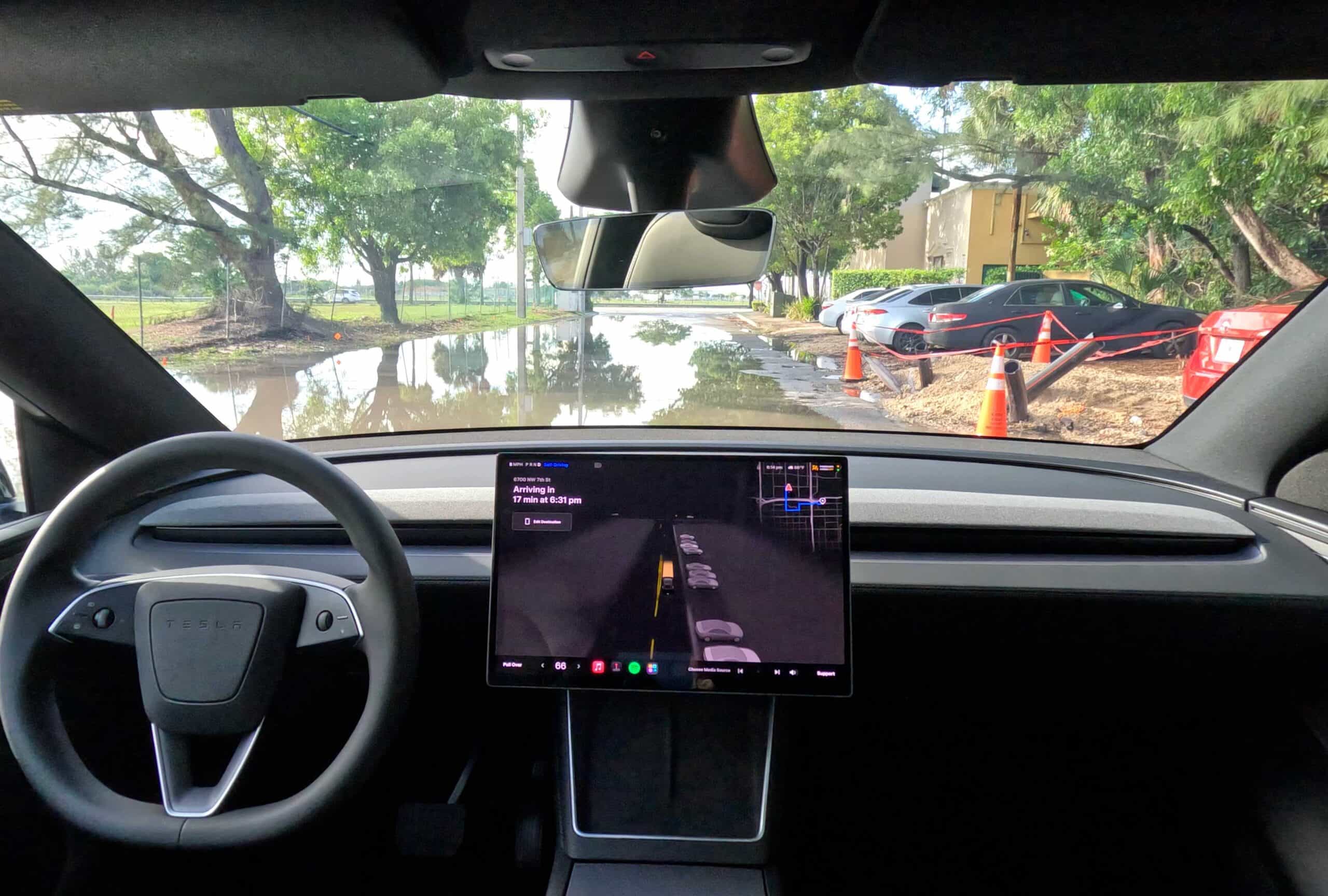
Tesla Launches Robotaxi in Miami, Waymo’s July 4th Stumble, Momenta IPOs in Hong Kong
Executive Summary
Tesla launched fully unsupervised robotaxi service in Miami on July 5th, 2026, expanding beyond Texas into a 14-square-mile geofence with retrofitted Model Ys and a premium pricing strategy averaging $1.70 per mile. On the same holiday weekend, Waymo experienced a major operational failure in San Francisco as vehicles bricked during Fourth of July fireworks, raising questions about remote operator staffing, connectivity, and event preparedness.
Meanwhile, Chinese physical AI company Momenta successfully listed on the Hong Kong Stock Exchange, with its retail tranche oversubscribed 414 times and cornerstone investors including BlackRock, Fidelity, Mercedes-Benz, and BYD. Together these three signals reveal the competitive, regulatory, and capital-market dynamics shaping the autonomy economy.
Key Autonomy Signals Episode Questions Answered
What made Tesla’s Miami robotaxi launch significant compared to its Austin and Houston operations?
Miami represented Tesla’s first expansion outside Texas and California with fully unsupervised service, operating in roughly 14 square miles with retrofitted Model Ys featuring rear camera washers. The host described it as the best-performing vehicle across all cities ridden, and notably the service area expanded slightly within the first three days of operation.
Why did Waymo vehicles brick en masse in San Francisco on July 4th?
Vehicles became trapped in extreme traffic and unexpected road closures during fireworks, leading to depleted batteries that required physical towing, plus connectivity failures in dense crowds and likely insufficient remote operator staffing. One vehicle caught fire after an individual allegedly placed a firework in it, and the incidents drew a Board of Supervisors inquiry.
What does Momenta’s IPO signal about investor appetite for the autonomy economy?
The retail tranche was oversubscribed 414 times with cornerstone investors including BlackRock, Fidelity, Mercedes-Benz, and BYD, signaling that institutional investors are shifting preference toward proven, high-margin physical AI providers over speculative capital-intensive deployments. Momenta’s 70-plus percent gross margins and 42-fold licensing revenue growth over three years were cited as the core attraction.
Autonomy Signals Topics & Timestamps
[00:00] KPMG Sponsor Introduction
KPMG works across the full autonomy ecosystem, advising operators, OEMs, suppliers, insurers, and investors as autonomous mobility scales.
[01:16] Signal 1: Tesla Launches Unsupervised Robotaxi in Miami
Tesla launched fully Unsupervised Robotaxi service in Miami on July 5th, its first market outside of Texas and California. Grayson rode through heavy rain and flooded roadways on launch day, uncovered a Cybercab staging lot near Miami International Airport, and the receipts reveal a premium pricing experiment running 3X to 4X the base fare of Tesla’s Texas markets.
[38:38] Signal 2: Waymo’s July 4th Stumble in San Francisco
Waymo vehicles bricked across San Francisco on the 4th of July as fireworks, road closures, and connectivity failures overwhelmed the fleet. The incident exposed a remote assistance bottleneck that threatens Waymo’s path to one million weekly rides as regulators eye special event requirements and staffing ratios.
[1:11:27] Signal 3: Momenta IPOs on the Hong Kong Stock Exchange
Momenta listed on the Hong Kong Stock Exchange as the market’s first physical AI stock, with the retail tranche oversubscribed 414 times. With its software in over 900,000 vehicles and licensing revenue growing 42-fold over three years, the IPO signals institutional demand for proven physical AI providers.
Full Episode Transcript
Tesla’s Miami Robotaxi Launch: Day-One Field Report
KPMG Ad: The autonomy economy is real. Commercial robotaxi operations, humanless freight runs, AV infrastructure investment measured in billions. The question is no longer whether autonomous mobility scales. It’s who advises the companies building it. KPMG works across the full autonomy ecosystem, operators, OEMs, suppliers, insurers, and investors. At the moment it matters most. When the road ahead is uncertain, we’ve already been there. KPMG, accelerating what’s next in mobility.
Grayson Brulte: Rob, it was an eventful week. America celebrated 250 years of independence and greatness. While America celebrated independence and greatness, Waymo acted like the British and suffered a loss. While Waymo suffered a loss, Tesla said, “We’re here. Happy birthday, America. We’re going unsupervised in Miami. Through the rain, through the puddles, through it all, we were there and saw it.” And then Momenta went public in Hong Kong. Those are the signals, and a huge thank you to KPMG for being a wonderful, wonderful sponsor for Autonomy Signals. Rob, let’s get into it, and let’s totally break these signals down this week. Signal one, Tesla makes a splash in Miami and drives through a puddle. American independence is undefeated as Waymo goes the way of the British. They took a loss on the Fourth of July. And Momenta, as we said, went public in Hong Kong. Let’s start with Tesla in Miami. We were there for launch date. We produced a field report. It was pretty impressive what I saw. What did OMEGA think of what happened?
Rob Grant: Yeah. First, for folks who may not know, which or maybe a few folks listening in on July 5th, 2026, Tesla launched fully unsupervised robotaxi services in Miami, making its first expansion outside of its initial Texas and California markets. This was with no supervisor in the car, albeit in a limited geography, maybe about 14 square miles or so with purposely retrofitted mo- Model Ys. So there’s a retrofit for rear camera washers, which we can get into. And for those that listened to our conversation with David Moss and Spencer you’ll know that the standard Tesla does not come with rear camera washers. so this is an acknowledgement of, of maybe a certain limitation that needs to be addressed as they move to fully unsupervised. I think another key signal, and, and you have the receipts, and you sent them to me literally, it’s a little bit of a new pricing going on with the robotaxi service in Miami. But the, the, the great thing was you were there to capture it on day one, day two, day three. so yeah, give us a sense of your kinda just biggest highlights from your experiences with the new service
Grayson Brulte: The biggest takeaway is we’ve been unsupervised in Austin, we’ve been unsupervised in Houston, and now we’ve been unsupervised in Miami. The best performing vehicle of any of the cities we have ridden in robotaxi. It is to the point where I felt totally comfortable. You forget that it is driving and there’s nobody there. So the vehicle performed really, really well. Wanna highlight that. The other thing is, thanks to David Moss, who joined me on day two of our wonderful adventure down in Miami, is that we saw dozens of Cybercabs. So that was really interesting. There was a staging lot, roughly I would say a mile and a half to two miles from the entrance to the Miami Airport. You could hit it with a nine iron on the backside of the airport. Dozens of robotaxis staged, ready to go. Interesting to point out, each one of those Cybercabs had a steering wheel in it. Interesting else, they also had, no surprise, Florida plates. And then we counted five robotaxi Model Y. So to me, it was a clear indicator and a clear signal that Tesla is truly getting ready to scale up the Miami market. Also, I, I will tell you from day one to day three, the service area expanded. That wasn’t reported. And when I say expanded, I’m talking two blocks. It went two blocks further northwest in Doral, and if you know, you know, and I’m gonna tease it at that, but there was a tiny bit of an expansion there. Overall, really great. Went through puddles, went through rain. The one question we’re waiting for confirmation from Tesla and from Waymo is, will the vehicles operate in lightning storms? When we heard the golf siren go off, the Waymo went offline, the robotaxi went offline. So that’s the question that we’re still trying to get confirmation for. The signal is Tesla has grand ambitions for Miami
Camera-Only System Stress-Tested in South Florida Weather
Rob Grant: Yeah, it’s great. A- and I think what really struck me from your field report was the last few minutes. I mean, the– all of it’s great, but the last few minutes with the visual of you and David in the car going through this tremendously deep but a tremendously long puddle, and the vehicle slowing down to, I don’t know, seven or eight miles an hour, but going through it cautiously but safely, not stopping before to even consider whether it should enter, but knowing what it was, recognizing that it should slow down but yet managing to get through it all without pausing or having to ask for help. And I, I thought that was a really good sign. And then also that you were operating in rainy conditions because I think this dovetails really well with what OMEGA’s signal is, is that the Miami launch directly tests the camera-only system against South Florida’s intense tropical storm at a time that it should be known, right? And is, is, is out there. Sensor degradation for full self-drive is in these conditions, right? In, in heavy rain in storms of this nature that occur on a daily basis in Miami, for those that don’t know. all that is under current active NHTSA federal engineering analysis. So yes, as we mentioned, there was a slight retrofit for camera cleaning added to the Model Ys that you so intelligently point out in your video. but I think it also signals a confidence an internal confidence, an operational maturity from Tesla that it can operate in these severe operating conditions and that it understands the regulatory and technological stakes at play here And yet Tesla still moves on because it has the confidence and the safety of the vehicle to operate in those conditions. and also the operational maturity. You had some experiences with some of their remote operators that seemed to go fairly well. and so there is a I think that is a signal in itself that, you know, entering a new market at a bigger scale than they’ve ever done prior, going straight to unsupervised and taking head-on these operational environmental conditions are all super important signals that OMEGA has picked up from just the first now 10 day– not even 10 days, five days of operations.
Grayson Brulte: And we’re, we’re heading back. You have Norway-England in the World Cup, so we’re, we’re, we’re heading back to Miami to experience that and to, to r- to ride in robotaxis, so we’ll produce a, a- an, an update to that field report. The rain issue to me is solved. I’ve been on 95 in South Florida going through a monsoon where I can’t see six feet in front of me and I’m in full FSD. The vehicle kept going, no problem. When we were riding around in robotaxi, we did not experience the, the, the monsoon downpour. We experienced heavy rain at times, no problem. And you mentioned the, the water. I would call them, they’re like little mini lakes that flooded, and it was four. It went through four of them ’cause we had to go down, it turned around and went back again. So it went through it four times. No problem, no hesitation. I know i- this is gonna sound weird, but to me the vehicle had a very good sense of its surroundings. And OMEGA’s right to point out the weather and what I’ve experienced as a Tesla owner and what I experienced in robotaxi is that monsoon level rains do not affect the system. It works flawlessly in those conditions. And what we’re seeing in Cybercab, and we, we got public documentation in the first responder report, with the cleaners on all the cameras. So yes, the, the retrofitted Model Ys have the rear cleaner. Perhaps all of the vehicles that have full unsupervised will have cleaners on every one. We’re seeing that on Cybercab. Perhaps that eventually expands to the Model Y. That’s something to watch there as well
Rob Grant: Yeah. And look, I think it is a really in line with what we understand about Tesla and how they operate generally, whether it’s on full self-drive or, in this case fully unsupervised. Miami is, is, is, I think, a binary kind of catalyst, right, if– for them. If, if they successfully navigate these environmental conditions kind of directly taking on one of NHTSA’s biggest questions about single sensor vision-only systems, can they operate in these certain environmental conditions? I think if they’re successful in that, and they’re off to a really good start, this will accelerate Tesla’s unsupervised robotaxi deployment velocity nationwide. I think while on the other hand, and very much like I’m saying, the, the line of high risk, high reward that we get with Elon Musk and Tesla and SpaceX and X and everything that he’s doing any high-profile failure in these conditions will validate the federal concerns and the NHTSA investigation that is currently undergoing. So I think it, it– to me, the fact that they went for Miami, right? And again, yes, Florida is very permissive in terms of its business environment for emerging technology, which I think is a great credit to the state. but there are other places that are permissive as well, right? there’s Arizona, and there’s Georgia, and there are other places that Waymo is at that they could have turned to that don’t present necessarily the same constancy of this environmental condition and the challenges it presents. and yet they chose to go there, and I think it’s very deliberate because they’re trying, I believe, to take on one of the biggest questions about their technology, which is, “Can a single sensor vision-only driven system perform well in adverse environmental conditions such as heavy rain?” and I think, I think the choice of this particular launch city is very intentional. I don’t think that’s an accident. Again, the flip side is if it doesn’t go well and there’s an incident then I think it could slow down velocity And lastly, I’ll point out it could give wind to what we’re seeing as maybe a, another trend, which is competitors and/or opponents, maybe not necessarily direct competitors, but other opponents to this technology introducing bills and legislators that prohibit the use of vision-only or sensor, single sensor robotaxis in unsupervised autonomous vehicles, as we’ve seen in New Jersey. And so again, high risk, high reward, but I give them credit for the internal confidence they seem to have in its ability to navigate in these conditions, and for going to a place that would necessarily challenge the capability of the vehicle. I think it is very important what is happening in, in Miami and how that launch goes for, for, for at least those two reasons, if not more
Hurricane Season Timing: A Deliberate Regulatory Statement
Grayson Brulte: And he, here’s another aspect that has not been brought up or, or discussed. They launched on July 5th, and w- and why is that so important? We are in the middle, in South Florida, of hurricane season. Hurricane season runs to the end of November. If you go back previous years, even going back to when John Krafcik was CEO of Waymo, July, August, September, Waymo used to come to South Florida t- for hurricane testing. They tested in Miami, and they tested in Naples, and there was an old Chrysler proving ground in, in North Naples. They came to test. Tesla, it is my assumption, knows something that we don’t know as it relates to handling this adverse South Florida weather during the middle of hurricane season. To me, if they were not ready or not sure, they would’ve waited until after Thanksgiving when hurricane season passed. And then you could sit back here and, and flip it. “Oh, well, Grayson, there’s less, there’s less traffic now in the summer.” Yes, but there’s a lot more adverse weather, which is more difficult. So to me, it’s saying that they know something, and perhaps they will use it as a validation to the regulators, “Look, we went through South Florida during hurricane season without an incident.” So you’re right, it’s high risk, high reward
Rob Grant: Yeah, I think, I think– A-and I think that’s intentional. You know having been in C-suites of, of various AV companies, these are the types of things that are discussed, right? What is the benefit, what is the risk of putting ourselves in these type of conditions at this time? It is not, “Oh, I.” You know, generally it’s not been my experience where someone says, “Oh, I just like the city of Miami. Why don’t we just open shop there?” Right? you do a lot of evaluating a city on multiple categories, right, in terms of fleet utilization, in terms of consumer behavior, in terms of routing issues, depots, infrastructure, all of that. But you also very much, when it comes to an autonomous vehicle, are evaluating, “Can my system perform well in the conditions that are present in that particular city or geographical area?” Because you both want to understand and have a good sense of the limitations and not put your system in a place where it will fail. But you also have to remember, right, ultimately, this is a consumer-driven experience, and you do not want your first impression to be disappointing to consumers. And, and I mean that I think it runs even more aggressively on that end for Tesla, given that they have this very strong following of users and devotees. And yes, at times they can be more forgiving but at other times, they are very the first to hold Tesla accountable for things that they feel have fallen short. and so these are folks that, that are generally in love with Full Self-Drive, and they want that similar, if not better, experience from the unsupervised L4 technology. And so putting it out there, knowing the challenges, and knowing that you have to win over consumer expectations I think are very much things that Elon and his leadership team have discussed. So I don’t, I don’t, I don’t really put this in the category of this is just Rob and Grayson speculating that this is what Tesla did. I can almost guarantee you these conversations were had. And the fact that they made the decision to move forward as this next market is a signal that they feel very confident in where their technology is going, particularly how it’s handling adverse weather conditions
Grayson Brulte: If you’re handling adverse weather conditions, which we’ve experienced firsthand, that is a positive catalyst for the company moving forward. Another thing we uncovered in Miami, and I wanna share the receipts with you, pricing strategy here is different than other markets. What did you uncover from those receipts?
Miami Pricing Strategy: Premium Tier and Consumer Elasticity
Rob Grant: Yeah. So we uncovered from, from those receipts, and thank you for sharing them with me both because I keep the corporate records and I need to pay them off, but also because it’s, it’s helpful to understand, you know, what is different between what is happening in Austin and, and in the small operations going on in Houston and Dallas. So here what we uncovered is an increase in price compared to what we’ve seen previously in the Texas markets. and I would, I would kind of summarize that as, as it’s a, while commercially modest in terms of the size of the geofence and the number of vehicles right now, what Tesla is trying to do is really understand consumer price elasticity here. And so what I mean by that is the base fare for just literally entering into the vehicle before it even moves an inch has increased 3X to 4X of what we see in the Houston market or the Austin market. And then the price per mile was also higher. and so the price per mile, at least, again, this is a limited sample size averaged around $1.70 per mile. What we’ve seen from Uber is maybe $1.80 per mile, a little bit higher. So it’s not a drastic price reduction as we see in Austin, where we’re running at, you know, 50 or 60 cents per mile. And so I really do think that, that- Miami is also being used to understand the ability of Tesla to perhaps price at more of a premium tier rather than a budget tier. And yes, some of this could be influenced by the history of Uber and Lyft and their early large discounts that they gave riders which riders got very much attached to. and so some of this may be, you know, do we start in that same position and kind of undercut the current pricing of Uber by a drastic amount to win market share? Or is our product good enough and desirable enough given its experience that we can price to begin with at a premium tier? And so I think this is a really kind of a price discovery, consumer elasticity type of experiment going on, albeit small. I think it’s important for Tesla to really understand, you know, the economics of a market. maybe this could just be f- because Miami is a uniquely different consumer base than Austin. I’m not quite sure my experience at Lyft would suggest that’s the case, but it could, it could have changed over the last 10 years. but we’ll see. So I think that’s really interesting. And, and just so folks know and Grayson, I hope you don’t mind, I’m not sharing our credit card number, but I will share that one of your rides, just so folks can put this into concrete in their heads. The ride was for 4.4 miles, and the total cost was $11.02, of which $3.25 made up the base fare. So that comes out to roughly $1.75 per mile based upon that cost. And so now you’ve experienced this directly as you’ve taken rides both Austin and Miami. You know, what’s, what’s your sense of the price difference? do you find it significant? what, what was– You know, having been the, the user in this case, did you feel you got value for it still at that price point?
Grayson Brulte: I feel like I got a lot of value for it, and I feel like I paid for a lot of billboards. If you, and if you live in South Florida, you know what that means because you can’t go on 95 without seeing, “In a crash, in an accident, call 1-800-SUE-PEOPLE.” It’s. We need tort reform. There, I said it. I’m on my soapbox. We need tort reform. I feel a lot of that 325 was to cover insurance costs because the insurance costs in South Florida are astronomical because we need tort reform. But was the experience better? Oh, God, this, the experience was a million times better ’cause I took an Uber r- roughly a- around the same price, a little bit more in some cases, but the experience was, was, was what you want. When you look at Miami, I mean, they. I mean, Will Smith did, did a song about Miami. Not gonna sing the, you know, “You gotta get jiggy with it” down here, is Miami is an experience market. Individuals go to Miami for an experience. Miami is a brand. Rick Ross, the, the, the rapper, who will not get in a Tesla, by the way, if Trey’s gonna take him to the police station. We saw what happened out in California. I, I digress on that, but it is a brand. Individuals go to Miami for an experience. They go to the beaches. They go to the nightclubs. They go, they go for food. They go for whatever they go. It’s an experience, and they can price that experience. But underneath that, I believe, and I, we don’t have data, based on the billboards and based on the insurance cost, that 325 is partially driven by insurance costs
Rob Grant: That, that would make sense. You know, I think you know, if you’re a homeowner in South Florida or, or are paying for car insurance or auto insurance down there I think you feel that pain every, every year as those continue to ramp up. Now, real quick, just so folks understand, you know, we’ll give you a, a little bit of a sense of kind of where Tesla’s operations stack up against Waymo, just sort of a quick vibe check before we get into the risks. But, you know, again, Tesla in a much smaller ODD, kind of limited to the western and central zones of Miami, so that’s excluding downtown and Miami Beach. so they’re not in the highest demand corridors, but yet still around corridors where folks would need a ride or take a ride, so they’re not completely out in the boonies, as they say, where, where I grew up. now Waymo launched fully autonomous operations in Miami in November of last year, so they’ve, they’ve had a full six, seven months head start on Tesla. and they did this as part of a kind of pre-planned multi-city rollout targeting, you know, the, the FIFA World Cup and the Super Bowl. and, and, you know, as you mentioned earlier, you’ll be going down and taking a Waymo to see how it does in the World Cup game coming up, how it deals with some of the issues around proximity to the stadium, how it deals with the extra pedestrians and congestion that’s gonna be down there as, as Argentina is it England and Norway? Is that who– That’s who’s down there, right? So you know, we’ll see all the, all the Vikings you know, and the red crew that they bring, and Erling Haaland, who’s amazing how Waymo performs in that and, and what your reporting is out of that. But in terms of total square miles we understand the Waymo to be approximately about 150 square mile operating area. I think it might have slightly expanded ahead of the World Cup. it could be up to 200 square miles. at least that was what OMEGA is saying, is that there was a planned expansion ahead of the World Cup. and that OMEGA estimates that Waymo’s operating close to 150 Jaguar I-PACE vehicles in Miami currently. again, that has ramped up considerably from November in anticipation of rider demand and the FIFA World Cup
Grayson Brulte: Yeah, and when we were in Miami, we went and visited the two Waymo depots that we know about. We went and visited the, the Wynwood Design District depot. They increased security, so we can point that out. But we would estimate there were 60 to 70 vehicles in there getting charged and getting cleaned. A very, very compact lot where they’re operating out of for the amount of vehicles. Very interesting. The land immediately adjacent to it says, “For lease.” Nobody has taken it yet. We did notice that when we were first down there, there was the pavement changed colors. It was repaved from the substation there, so I’m assu- we are assuming that more power is going in there, and we assume, based on the circumference of that, that that will be a, a temporary depot. We went, visited Waymo’s airport depot. No movement, but we did notice some power upgrades there. Construction has not begun yet. Across the street, we noticed activity, which perhaps that Waymo is going to build a se- a third depot over there, something we’re watching. But Waymo is clearly gearing up for a major, major expansion in Miami. That, that’s what it said to us, ’cause as we’re seeing this progress in Miami, as you know, is turning out to be an autonomous market. Zoox, we did not see one of the toasters operating around. Oh wait, we did see a Highlander at a Sunoco gas station getting gas. A little odd seeing an AV at a gas station getting gas, but we did see that. But it’ll be real interesting to see as this market, it heats up and as Tesla expands. So that’s the, the little side there on Waymo. Let’s get to the risk that OMEGA has uncovered here on this about Tesla. “Tesla’s vision-only autonomy is currently trapped in a paradox where the system’s reliance on massive real-world data sets necessitates the very geofencing it claims to bypass, as the company must naturally curate and validate memory zones to achieve the safety thresholds required for both internal and external confidence expand.” That’s interesting take. What do you make of that risk?
Rob Grant: Yeah, it is. I think it is reflective of a technology that is not at its apex, right? I think the promise of Tesla is that with its vision-only and its learning model and its extra compute power and things of that nature, that it can, in the future, be kind of a, a drop-in anywhere type of vehicle and perform well. I think given the high-risk nature of what any singular failure that leads to a severe crash or unfortunately, a s- a fatality, and how that can derail momentum, that until there is this Real internal confidence that they can do this drop plug-and-play system, which is their goal. I’m not saying they’ve changed their goal, but they’re not at that goal yet, that they are kind of stuck in what feels like a familiar expansion playbook, which is go to areas that you know you can operate in well, then slowly expand as you get more familiar with that area and then, you know, build out your infrastructure around where you’re expanding into. that is sort of the, the traditional playbook, and you see it by, you know, Waymo is the classic example of this, right? You see it in, in what they’re doing with their city-by-city approach, but then they start in a certain area of the city, then they expand into other areas then they build out their infrastructure into particular, you know areas of the city that you and I have identified as pretty consistent in every city where you wanna begin your, your depot strategy and infrastructure strategy. And so Waymo, you know, has done that as the classical way. I, I think Tesla wants to break that mold. so you don’t see them buying necessarily and building the same infrastructure because that’s not the playbook that they wanna run. I think they wanna run a different playbook, but their technology is not there yet. So rather than having infrastructure and kinda operations be the leading end of where your expansion’s gonna go, they’re waiting for the software, I think, to, to come to a point where they feel confident enough that they can put it anywhere and then match the software’s capability with the infrastructure you know kind of being the lagging indicator of where it is. So I think there are very different strategies going on here, but it does create, for now, I think the short-term paradox that, that OMEGA has identified, which is y- you have a system that you can claim, you know, works on vision only and doesn’t need the mapping and everything. And yes, that’s true, but it’s also not 100% yet confident to be put it on any road in America and any place at any time, and it will operate unsupervised. And so they’re, they’re stuck in this kind of middle world right now. And I think it’ll be a temporary time that they’re there. I don’t think it’s a permanent thing, but I think it is something that OMEGA is picking up on is like, wait, you say you’re not like Waymo, but your playbook looks a little bit like Waymo, but it’s not fully like Waymo. and so I think that’s what, what the signal is there is that we’re in this kind of bridge time between when Tesla can really run the playbook it wants to do, which is very different than the playbook model of expansion than what Waymo is doing
Grayson Brulte: The bridge is, is a really great way to look at them. The metric that I’m looking for is when do we get 100 unsupervised robotaxis, either the Model Ys or Cybercabs in the market? And when we cross that threshold, it’s buckle up, because then I think then, then you’re off to the races to scaling. What brings us to another risk O- OMEGA has uncovered here, which is a very interesting one here. Tesla reverses premium strategy under competitive pressure from Waymo or Uber dynamic pricings a- algorithm, slashing prices towards say 50 cents per mile to capture market share. Do you think that risk could actually happen in this market?
Rob Grant: I think Tesla does not want to go there because I, I think it wants to receive larger margins on operating a robotaxi network. I think it’s testing in Miami what is the, like I said, the, the consumer acceptance of a higher premium pricing strategy. I do think it’s a risk, especially in certain markets where Waymo has a much bigger head start or Uber has a much bigger head start because what you wind up having to do is somebody’s got to pay for the actual cost of the vehicle. And if it’s not the consumer then you will, it will necessarily eat into any margins or perhaps even have them operating at a loss as Uber and Lyft did for many years. so I think there is a risk in that that premium pricing strategy that, that we believe they’re intentionally trying in Miami doesn’t work, and in order to garner market share when they hit scale, that they’ll have to use price as a way to convince consumers to make that switch. But we’ll see. to your point, like you felt like your experience was much better in a Tesla than it would’ve been in, in Uber particularly a human-driven Uber. And so it may be that price parity is enough, right? I think what we’ve seen from Waymo, which has been interesting, is that Waymo is pricing above Uber at certain times. Maybe not at surge times, but in regular demand hours in San Francisco at least, you will find Waymos are often more expensive than Ubers. And so that’s like a luxury category almost, right? where you’re paying for something that above what Uber is charging because you’re getting a special category of vehicle, your own vehicle, your right to choose your own music, all that kind of stuff. I think Tesla is saying, “Well, you know, maybe we don’t have to price like Waymo, but also maybe we shouldn’t price like Uber and Lyft did in 2014 and 2015,” because it took them a decade or more to get out from under that. so I think they’re trying to maybe get a sense, even if we’re just at parity or a little less than Uber, will folks say, “Hey, I can get that premium Tesla feel and experience. I can get one of their gold cars with the cool doors that open up, and choose my music and not have to worry about, you know, who the driver is. and I can get that at the same price.” That’s a good enough deal as it is
Grayson Brulte: It is. And the thing that you and I harp on, and I harp on, on all our various platforms, is consistency of product. When I was there on launch day and I had taken an Uber, ’cause I was outside of both the Waymo ODD and the robotaxi ODD, it’s the consistency of product. Very nice gentleman driver, so I’ll say that for the record. The car smelled, and there was an o- and there was an open glass of alcohol. and I said, “Sir, you have an open beverage in the car.” “Oh, oh, okay. do you want me to empty it out?” I emptied it out. The consistency of product. My daughter’s like, “Daddy, what’s going on?” That’s what. It’s the, it’s the in- it’s the inconsistency. You want a consistent product. And, and consistency went away, and I know why they did it, and it’s been a, it’s been a huge growth for them. So when Travis Kalanick introduced the X tier at Uber, that, that shot Uber s- off from a growth demands perspective. But the product is massively inconsistent, and what autonomy does is solve the inconsistency. Waymo solves the inconsistency problem. Tesla robotaxi solves the inconsistency problem. Zoox, hopefully they’ll solve it at some point. AVride. All these companies that, that, that operate will solve it. And Uber has a consistency problem, which brings us to OMEGA’s take. OMEGA has a really great take here on this: “Strategically, every layer of the autonomy economy must monitor Miami’s weather event data. For platform operators such as Waymo and Zoox, a Tesla stumble validates their capital-intensive, safety-first sensor fusion models, preserving their competitive moat. For gig economy aggregators Uber and Lyft, Tesla’s success poses an existential threat to their driver-dependent supply side, potentially forcing them to accelerate partnerships with alternative autonomous vehicle platforms to remain competitive. Investors should view Miami not as a standard market expansion, but as a regulatory and technical proving ground that will either validate Tesla’s robotaxi valuation with camera only or expose the hard limits of camera-only perception.” There’s a lot in there, and I think it’s right
Rob Grant: I think it’s ri- it goes back to that high risk, high reward, but the intentional choosing of a market such as Miami, right? The next market could have easily be Phoenix, and you’re not gonna deal with strong monsoon-like rains in Phoenix. and you’re not, you know, and that could be a safe choice given that there is an existing investigation into, you know perception issues on full self-drive in these types of conditions. so I, I really do think this is kind of going into that hardest problem and showing that you can handle kind of one of your biggest potential weak points. and I think it’s a very Tesla-like move, which is, “Yeah, okay, you think I’m weak here? Let me show you what you think is a weakness is not a weakness. I’m actually strong here. So what’s your next complaint?” so yeah, I think, I think it is, it is a market that holds a little bit more value than, say, if we were talking about, okay, now Tesla’s in Phoenix. They will get to Phoenix undoubtedly, right? and I think they’ll get there probably fairly shortly, and that’s great for them. It is part of an expansion process that needs to happen for them to, you know fulfill their promise. But it doesn’t have as much signal as going to, to Miami or going to. You know, Phoenix doesn’t have that signal. Las Vegas doesn’t have that signal. Miami is a market that has a big signal because of the adverse conditions that are presented in Miami
Grayson Brulte: Miami’s a great market at the end of the day. I, I, I love the Miami market, which brings us to signal two: weakness. Waymo had a weakness exposed on the 4th of July as we barbecued and celebrated 250 years of greatness and independence. Vehicles were bricking all over San Francisco and the Bay Area. I said, “Holy cannoli, somebody trying to launch fireworks at these things.” I said this to a reporter friend of ours today, and I will say this again here: Waymo needs to get into the transparency business because I’m calling for it. You’re gonna get an, an elected official or regulator’s gonna call for it. This is the second time. First, the lights went out in San Francisco, something happened with the vehicles. Now the fireworks went off in San Francisco, something happened with the vehicles. What did we learn? What signals did OMEGA uncover here? ‘Cause there’s something brewing
Waymo Bricks on July 4th: Operational Failures in San Francisco
Rob Grant: Yeah. And look, I can tell you, you know, I live in the Bay Area. I had two of my four boys that had gone up with their friends to go see the fireworks in San Francisco, which by the way, were a little bit disappointing ’cause it was not great weather conditions up there. you know, for those that were sweating it out on the Mall in DC or in New York it was fifty-nine degrees and freezing cold in San Francisco on the Fourth of July with, with a large foggy overhang. and it, it kind of s- that weather kind of sets the tone for what was, I think, a disappointing evening for Waymo. and so, you know, one of my sons texts me. He’s like, “Dad, there’s twelve Waymos on the street, and they are all just with their flashers on, and they’re not moving, and people are climbing all over them. They’re in different– pointed in different directions.” And I was like, that was my first thing. I, I literally got a text from my son. It’s at, at you know, it was maybe about, not even, maybe or something like that just how bad things were happening. And I was like, “Okay, we’ll see what makes the news.” And so what, what occurred that evening, you know, there was– vehicles became trapped in these extreme traffic and unexpected road closures, leading to prolonged congestion which if anybody followed Cruise, very similar, you know, in terms of the outcome, right? Of the impact of bricking vehicles as Cruise had at the Outside Lands in twenty twenty-three, in fall twenty twenty-three. we saw multiple Jaguar I-PACE units idled until their batteries were depleted, so they had to be physically towed. you saw that vehicles were, as you mentioned, they were driving through active fireworks, right? So some perception and behavioral issues, right? th-th- you know, one of the vehicles actually caught on fire as a result of it, and that image is, is quite frightening. and then there was, I think, you know, another failure and it’s kind of a failure to learn from the past a little bit. You know, when you get these dense crowds there are going to be connectivity issues. I, I mentioned it to you, I think, when when, where I was watching the fireworks. I was like, my Google Maps was going haywire. We couldn’t connect or anything like that. and it just, it happens particularly, or at least in the Bay Area, where you get a lot of people in a large crowd, there are connectivity issues. And then To further complicate that, you– so you have these connectivity issues, you have all these dense people walking around, you have road closures. The vehicle may need to call back for remote help, and either that connection is not strong or lost or unable to connect which is not helpful in those situations because the remote operator is the first fallback. But then you don’t have enough remote operators. And, and I don’t think. Waymo has not said they didn’t have enough remote operators. But look, I’ve worked in the industry. It, it, it, it– my, without knowing all the facts, one of my assumptions is they just did not have enough remote operators working that night either. Now, the other things I mentioned are facts, right? The system gridlock, the operational failures, the, the running out of power, the perception behavioral incidents, and, and, and a, and a depleted connectivity, to be kind, are all facts. I also tend to think that they, they may, may not have been staffed as much as they should’ve been on that. And so what we’re seeing in the immediate aftermath, one, it’s surprising, I think, how little coverage this got. right? You, you see Waymo’s announcement of four new cities. That gets a lot of great coverage. That’s great, but I think the stronger signal for folks that are really interested and, and wanna know what are the things that impact these companies and their bottom lines and their rate of expansion and where they’ll expand next and their ability to take market share, it is a performance like this, right? Because it not only gives you a sense of their limitations in terms of technology, but also their limitations in terms of operations, in terms of infrastructure, in terms of thinking through an issue that should have been known because it has happened before, and it’s happened before in the same city. and now you’re starting to see slowly filter in the regulatory response. San Francisco officials, including Board of Supervisor member Bilal Mahmood, have launched inquiries into the incident. You know it will certainly prompt a reevaluation of implem- planning protocols between Waymo and the city. it will call into account again the question of remote operations and what should be that staffing ratio. you know, as folks may or may not know, there is a current active bill in California that is saying that there should be a, I believe it’s started off as one to three ratio. I think it may have been changed to one to five. you know, Waymo has not really disclosed what its current remote operator-to-vehicle ratio is, right? That, that could lead to a more expensive type of operations. So and then on top of that, you, you have this- You have Uber, as we’ve talked about, saying these are the very types of scenarios that you must keep a hybrid network in. You have to have human drivers because this stuff, while yes, they get caught in congestion, the human would know they’re running out of battery. The human would know not to drive through a firework. The human would know ahead of time what to do, have scenarios baked into their head. And, you know, if it’s an old geezer human like myself, they don’t even try to go down there because it’s a disaster, and you just know it’s gonna be a disaster. And you’re like, “Yeah, it could be the greatest freaking fireworks show in the history of fireworks, but I don’t wanna sit in traffic for four hours as I, as I, you know, slowly transverse through Cow Hol- Cow Hollow or the Marina District in San Francisco.” so yeah, I, I, I think, yes, we could lambast them for a dismal performance that evening and, and, and I think they’ve kind of gotten away a little bit unscathed for it. But I think that, that for more importantly for our listeners and for folks that, that rely on us or wanna rely on us for actually understanding what matters on a day-to-day basis, the signal here is much stronger than what they announced yesterday in terms of going into four markets
Grayson Brulte: And unfortunately, there’s a, there’s a pattern here. And the vehicles got brain dead. They brick, they cause traffic, and you saw the, the NHTSA letter, but Administrator Morrison published talking about this and just Administrator Morrison, sir, job well done on CNBC today. Holy cannoli, they tried to trip you up, sir, and you, you delivered a Mike Tyson in his prime right hook. It shows why you were the right choice to lead NHTSA, so well done there, Mr. Morrison. But it is, so to me, you look at all this here. You, you have the battery, you have the, the intersections, you have the potential remote, you have the potential cellular. H- where does perception fit into what this potentially could’ve been?
Rob Grant: I think you do have to question a little bit about what is going on with their driving stack in, in, in terms of, like, understanding how to dynamically reroute around congestion understanding how to m-manage its energy reserves and understanding, you know, on July 4th, fireworks are going to, to be a, an issue, right? so I don’t know if they did testing of fireworks on the roads or sparklers on the roads and things like that, but it– This is not one of those so strange long tail issues that you shouldn’t have been prepared for it. And that’s, and that’s what frustrates me, is like, I so wanna see every AV operator succeed, including Waymo. I, I, you know, there are many people that I care very much about that, that are involved with Waymo and are doing a great job. but this seems to me to be like, like an, as my kids call it, taking an L when you didn’t need to. and I understand some of the desire to show folks, right, that yes, Waymo is at that scale and at that operational maturity to handle an evening like July 4th, right? just like Cruise tried to suggest that it could handle Outside Lands. But I think Cruise, there was a bit of. I wasn’t there when this occurred. I had left before I returned to Cruise. But there was a bit of a, like, at Cruise, “We’re gonna show you that we can do this,” right? And I think there was a little bit of that running through Waymo, which is like, “We’re gonna show you we can operate on these things. Like, we’re, we’re making great progress.” And so I don’t necessarily think it was hubris per se, but I do think there was a, a sense that, “Hey, we have seen a lot of pedestrian traffic. We’ve operated in heavy conditions,” but, like, having it all come together and it just not performing well is disappointing. and it– Look, I’ll give you one of the reasons why I think this is so interesting, and the outcome of it is, after Cruise had its incident in Outside Lands, about 48 hours, maybe 72 hours later, we got a letter from the DMV. I say “we,” I wasn’t there, but Cruise got a letter at the D- from the DMV saying, “You have to cut your number of vehicles your fleet by 50% right now.” Like, boom, 50% of your vehicles have to go, right? so and when you add that to what A-Administrator Morrison was saying in the letter he sent saying, “Hey, these brick vehicles and things getting in the way of law enforcement, like, that’s gotta go.” These are the types of activities where you, you brick a vehicle because you haven’t necessarily Properly prepared for the event. And, you know, July 4th, there are lots of people out in the road, and there are lots of people who do dumb things on J- July 4th that require law enforcement to get there. If your vehicle breaks because you, you sent it out and it didn’t have enough power, and now it can’t dynamically reroute back, and you lose connectivity to it and it gets in the way of an emergency vehicle, you know, these are the types of things where whether it’s the state government or the federal government, they may say, “Hey, you gotta not only reduce your current fleet, but, like, are you serious? You want to expand your fleet to other places right now?” if you’re New Jersey, right, and you look at this, and you’re running that bill that, that, that is, you know, directly adversarial to Tesla, you may also say, ” You know what? Maybe we should put in some requirements around big events,” right? and so it- it’s gonna be interesting to see what the fallout from this is because these are the types of things where the progress that is being made, and we see it, right? We see it every day in the ridership volume and the, and the things that, the successes that aren’t reported, but it’s these types of failures that can really just wipe out years of goodwill and good progress. and so I think that is, that is the signal to, to see in this, is that, yeah, I, I appreciate Waymo’s willingness to take on an event like this, but we’re past the point, and I think that’s a good thing and we’re past the point of giving them a pat on the back for it. Now it’s like you gotta go out and perform, right? You can talk the talk, but you gotta walk the walk. And I don’t feel like I, I, I’m a critic of the industry for saying that. I feel like this technology can perform well, and it does perform well. I think it just wasn’t set up to perform well in terms of its execution days in advance of what should have been a lot of these issues potentially foreseen
Grayson Brulte: There’s a lot of issues. If you live in the area, individuals know weird quirks in your neighborhoods of things that happened, and I’m shocked because very publicly, we all know this based on the buses, a lot of individuals live in San Francisco that work down in Mountain View. It’s, it’s a, it’s a well-known fact. The DMV risk, reducing the fleet by 50%. One, do you think that happens? Or two, I’m, I’m gonna put on the the tinfoil hat here and say, “No, we, we, we, we can, we cannot damage the golden boy.” Is, i- is, could that happen there? Because it seems like, okay, you know, Kyle was the punk rock band. Oh, we gotta get punk rock. No, it’s not good for us. Oh, Way- Waymo’s the golden child. They’re Frank Sinatra. Yeah, they get a pass. Could that potentially happen? Because when you do a side-by-side comparison between Outside Lands and, and July 4th, there’s a lot of similarities, but just different executives
Rob Grant: Yeah, I do, I do not foresee the DMV coming down as hard on Waymo as they did on Cruise for a, a variety of reasons. One of which is there, there are definitely defin– e-executive presence and executive relations between the leaders at the DMV and the leaders at those two companies at the time. I also think Waymo has had a better operational history for a longer time than what Cruise did, right? Cruise had had, even before Outside Lands, instances of creating traffic jams from bricked vehicles. so this was not kind of the first known instance of that issue. In fact, there’s a weird sense of ownership in, in the, in the, in the regulatory requirements. They’re, they’re called vehicle retrieval events or VREs. that’s a term that Cruise had to invent because we were the first to suffer them. and so I do think there will be a different treatment of Waymo for those two reasons. And I think what we will see is rather than kind of a, a punishment perhaps a extra responsiveness for the next big event. Show me your plan, right? Maybe not written into the law, but, like, you may get somebody at the DMV who says, “Prior to the next big event, Outside Lands in the fall,” right? “I wanna know what you’ve done so that this incident, these types of incidents don’t happen again.” Right? And it could be as simple as, “We’re not running during that time,” right? “We’re gonna temporarily pause,” or, “We’re gonna stay outside of a certain zone,” or, “We worked with the Presidio Trust to set up pick-up and drop-off locations in different areas.” and so I think that’s more likely what you are to see, which is a, a little bit of more forgiveness from the DMV, given the, the generally better operating history that Waymo has had than the way Cruise had at the time. And also because the public pressure is not as much. It may build, right? We may see it build with the Board of Supervisors inquiry. and certainly, you know, the, the board has always maintained that it wants more control, local control over AVs writ large. So anticipate that the questions will be very pointed, and that ultimately look, this is my political hat, whatever response, even if it’s fulsome from Waymo, will not be enough to satisfy the board. The board will say something negative about Waymo. And so if you’re Waymo, I can guarantee you they’re sitting there thinking, “Well-” Is our response, knowing that whatever we say, the board is unlikely to, to accept, are we writing our response really to, to, to ensure that the public still remains faithful in us, so we’ll be as forthcoming as possible, but mostly because we want the public to see this, not because we think the board is gonna be satisfied by it? Or do you say, “Hey, by the time we actually get to a board meeting, it’s months passed. We give the minimum amount required. Nobody’s really gonna take a second look at what we put out there. Yeah, the board is gonna run to the San Francisco Chronicle and crap all over us either way.” that’ll be the interesting response. you know, so but I, I do think Waymo will wind up, at least in its operations in San Francisco, relatively unscathed compared to what happened to Cruise. But I do think this just adds fuel to the fodder on the fires they have to fight in places like Chicago, in Boston, in Philadelphia. That image of Ojai on fire is gonna go in every deck in every presentation to a state legislature or a city council board from the Teamsters, from you know, others that are opposed to AVs and, and, and claim that AVs are, you know not ready for prime time and shouldn’t be allowed in the city
Regulatory and Public Trust Fallout from the July 4th Incident
Grayson Brulte: It’s the poster child. If you look back at the incident, fireworks again with the Jaguar I-PACE burnt to the ground, where the individual allegedly put a firework in there. I say allegedly. And, and that went all over, and you’re, you’re right. It’s. Is, is the impact in San Francisco gonna be large? No, it’ll be very minuscule. If it was Elon Musk and Tesla, it would be y- you know, the, the, the second coming of everything you could throw at him. But the fact that this is Waymo, I think in the San Francisco market, it, it, it, it gently goes away. But you’re right, in the, in the union stronghold markets such as Chicago, it’s gonna be plastered out there on the TVs. It’s gonna be handed out to every individual walking into that room. “See, look, we told you. Look, we told you.” It’s, it’s bad, and let’s not forget i- all the union issues that are, that are happening in New Jersey now around roadways, that you have to have this. And so it’s only going to be plastered, which brings us to OMEGA’s risks. OMEGA uncovered a lot of very pointed risks here. The first one is, you alluded to when you said the remote assistance bottleneck. The July 4th incident exposed a systematic remote assistance bottleneck, not merely a software reasoning gap, making Waymo’s lean human supervision model the critical scaling constraint in burst demand emergencies. That’s what OMEGA says. And I’m gonna put on my congressional hat. Let’s not forget that they’re all not based in the United States, so the risk grows
Rob Grant: Yes. Yeah, yeah. So, I mean, look, I mean, it’s, it’s– There is an aspect, as you talked about, about fixing some of the edge case perception issues alone, but, right? The, the point here is that the scaling constraint, and that’s what folks wanna know, how does this impact, or what they should be asking, how does this impact scaling? I think it impacts scaling significantly because Waymo is gonna be pressed to increase its human-in-the-loop architecture and that will come at extra cost. and we’ll see how much that actually is driven. it could be driven, set by an example, by the California bill, which is one in three, right? So, I mean, if you’re currently operating at one to 20 or one to 40 or even greater than that, right? If you have roughly, assume they have 1,500 vehicles, and you’re operating at a one to 20, that’s, you know I don’t know, 70 operators. Is that right? my math is always bad. But y-you’re looking at, you know, a, a great increase. If it’s one to 20 down to one to five, that’s a 4X increase in this. If it’s one to 40 down to one to five, that’s an 8X increase. for folks that are likely now to have to be based in the United States, so you’re gonna have to pay them more. you know, I get it, you know, but the reality is wages in California are a lot higher than wages in the Philippines. and so, you know, you’re, you’re increasing that cost, and then you have to replicate that market over market as you look to a scale of hundreds of thousands, right? and so I think that’s, that’s a real potential bottleneck here. and look, I think a lot of the safety advocates, you know, that we talk to, that we read, that we see discussing these things say, “That’s a needed measure. If you’re not gonna put a safety advisor in the car, you have to beef up your remote assistance operators.” So ratio, I, I think it is inevitable, and I think circumstances like this Only make it more so. and so I think, you know, again, I would go back and say, you know, there is the, the forest that you have to see through the trees when you make a decision to operate in an environment like this. If you’re gonna take on that big risk of operating and taking on the challenges of big events like this yes, there’s a big upside to it, but the downside, I think, is not limited to just that market, right? Now it’s, now you’re talking every market is gonna talk about what is your remote assistance ratio? What are your events for big plans? how are you gonna prevent, you know, July 4th from turning into a bonfire of, of Ojai’s next year in my city? so you put at risk more than just an operational failure or consumer frustration in a local market. You bring into account all of these larger issues that can affect your bottom line at a, at a national level, and going forward, your ability to scale and the cost of that scale
Remote Operator Bottleneck and Scaling Cost Implications
Grayson Brulte: Then there’s the regulatory risk. Regulatory mandate forces temporary ODD, that’s the service area density reduction in San Francisco during high congestion events, directly constraining Waymo’s path to one million weekly rides target. That is a big risk ’cause they are on the ticker saying one million weekly rides. If San Francisco says, “Nope, we’re gonna get local control and we’re gonna constrain you,” getting to that million-mile target’s gonna be a lot more difficult
Rob Grant: What I think will necessarily happen, I mean, I, I. The timeline will be sometime in the next 12 to 18 months. But one of the two regulators in California is the California Public Utilities Commission, and they regulate passenger safety in autonomous vehicles, right? As opposed to vehicle or operational safety, which is basically the purview of the DMV. Now, the DMV, they have a regulatory process that is more traditional, right? They put out advanced notice of regs, they have a comment period, they take the comments, they have a hearing, and then they put out a final notice of regs. And so it’s a very kind of f- I wouldn’t say finite period of time, but it’s, it’s pretty defined. Now, what the CPUC does is they basically have a, an open book of, it’s called a proceeding, and the ability to operate driverlessly with passengers for a fare is an ongoing proceeding. So it is basically a book that continues to just add chapters to it, and they can add chapters to it whenever they want, at whatever pace they want. So they don’t have to necessarily go through the same formal process, even though it is a process that has formality to it. But if they say, “Hey, you know what? You know, next time we wanna think about allowing Waymo to expand or Tesla to expand, we should ask them a bunch of questions, and they need to answer sufficiently in order to get approval from our board. To do so, let’s just add a chapter on what you’re gonna do for special events,” right? “And, you know, let’s talk about what we’re gonna require in those. Should we require an advanced plan? Should we require to understand 30 days in advance? Should you have to send us, like, a, a permission request? Should you have to document, you know, for the public what you’re gonna do?” And so the regulatory burden, I think, for special event scenarios for AV because of an event like this is necessarily going to get heavier. And look, California is already a regulatory heavy state. And for Waymo, yeah, that might add some delay. They already have a huge head start in California beyond everybody else. So they, they may see it as more of a friction than a panic moment. But it’s an incident like this that can almost guarantee another chapter in the regulatory proceeding or the semi– they call it a semi-judicial, semi-legislative proceeding in the CPUC. Another chapter will be added to that book about special event planning. In particular, how are you gonna deal with passengers? What do you do with a passenger when they’re in a car that runs out of battery? What are you gonna do if they’re stuck in congestion for two hours, right? What are the safety things that you need to take care of? You know, if the car dies and you get– the passenger has to get out, yet there’s active fireworks going on, how are you gonna preserve the safety? Like, you can just. The questions that come to mind and the regulatory burden has just been added to as a result of, of this mishap
Grayson Brulte: Yeah, and the mishaps, unfortunately, to the final risk, is the erosion of public trust. And that’s why I c- I’m on my soapbox about transparency. Accumulation of low-severity incidents without formal response erodes public trust faster than regulatory action, triggering ballot or legislative intervention. ‘Cause according to Pew Research, less than 5% of Americans have been in an AV, and boy, oh boy, we know the unions love to get out the boogeyman and the, “Hey, autonomy’s a boogeyman.” So that’s a big potential risk
Rob Grant: For sure. And, and look, California loves its ballot initiatives. I mean, just absolutely adores them. you know, my ballot in November is often 13 to 15 pages long, and it’s, it’s the last 10 pages are ballot initiatives. we’re gonna have the big ballot initiative that everyone’s talking about, about the wealth tax, right? Do we tax people over a billion dollars on all sorts of things to, to fill a, a deficit in the healthcare stuff? That has been introduced by the healthcare unions. so as these issues continue to bubble up right, the time for this ballot initiative timing has passed, but you can almost count the days and, you know, the unions here kind of rubbing their hands together being like, “Oh, here’s another thing we can add to, to, to why we shouldn’t allow AVs on the road.” you can see it, it, it’s coming. And if they happen often enough, you might have a public that’s more receptive to it, right? Right now, I don’t think the issue is, is prominent enough for most people to care, right? Even though California is one of the centers of AV testing, you know, I, I think the last numbers I saw when I was at Cruise, like maybe even in San Francisco, Waymo had gotten to about 60% name recognition and only about 15% of adults had even thought about trying one, no less gotten into one. That number has probably increased, but that’s, like, at a place where AV operators have been for a dozen years now. so in places like San Diego, Sacramento, other places that they’re not encountering them. I don’t think the issue’s ripe enough, but you can guarantee that th- there is a ledger being kept by the unions of all these mishaps to take advantage of a moment that is ripe when they feel AVs are at their weakest to run a ballot initiative
Grayson Brulte: They’re gonna roll it all out. And they, they’re, they’re keeping track of it, and they’re gonna unfortunately roll it out, and hopefully before then we can get a national autonomous vehicle framework that would preempt all of this nonsense here.
Rob Grant: Yeah. Or, or, or, or we just perform better, right? I mean, I think, I think Waymo has the ability to perform better than it did last night, and I’m sure that is what they’re talking about, right? They, they, they have– they can perform better and they must perform better in those circumstances
Grayson Brulte: I like that. Have and must, and let’s not forget they have the resources to perform better as well, so you Cannot say a resource issue. It’s the bottom line. We can all agree on that. Brings us to OMEGA’s take here for this section. “Waymo re- remains the structural leader, but the autonomy as a utility thesis is currently being stress tested by the realities of urban chaos. The company’s ability to maintain its market position will depend on its capacity to integrate human-in-the-loop remote operations more efficiently and develop a more sophisticated event-aware fleet management protocol. The market should expect increased operational expenditures, OpEx, as Waymo invests in the physical fleet recovery and localized depot management to satisfy municipal demands.” That CapEx is ri- it’s going up
Rob Grant: Yep, for sure. For sure
Grayson Brulte: Well, that’s OMEGA’s take, and it’s not all bad news for Waymo. OMEGA’s been working overtime. She’s been eating Wheaties and using her TPUs very good because she uncovered foreign filings in Germany, Spain, France, the Netherlands, Australia, and oh boy, she got a motherlode in, in Singapore. That’s what our AI does. Our, our AI, OMEGA, that Rob and I built at Autonomy AI, uncovers things before the market picks up on it, and we’re going on six or seven days since w- we made public the filings from France, Netherlands, Singapore, and Spain, and not one major media outlet has picked up on that yet. So if you listen to our, to our shows, you read our content, interact with us, you’re seven days ahead of the market. And b- I mean, OMEGA really performed. Those Wheaties and those TPUs were kicking some tukey there
Rob Grant: Oh, it was great. It was great. You know, as I sat there and OMEGA was pinging me, like, just, you know, over and over again, I was like, “Man, you know, OMEGA has got something to say.” So I was like, “Brother, say it. Say it loud and proud. Let me hear it.”
Grayson Brulte: It is in. OMEGA’s uncovered a few other things that, that we’re going to be dis- discussing in the coming weeks. Which brings us to signal number three: Momenta has gone public on the Hong Kong Exchange. Another autonomy IPO. The autonomy economy is alive and well. What do we know about this new IPO?
Momenta IPO: 414x Oversubscribed on Hong Kong Stock Exchange
Rob Grant: Yeah. So as you said, Momenta Global Limited successfully listed on the Hong Kong Stock Exchange, positioning itself as the market’s first physical AI stock. And, and look, the retail tranche saw massive demand here, oversubscribed 414 times, right? The offering secured 14 cornerstone investors, including global asset managers BlackRock and Fidelity International, GIC, and s- their strategic industrial partners as well, Mercedes-Benz and BYD. you know, Momenta has deployed its solutions, and they have L2 to L4 solutions in over 900,000 vehicles, securing design wins with nine of the world’s top ten automakers, including a big deal with GM when I was there. and so the company is, is, is successfully pivoted from, like, custom engineering to a recurring software licensing model, which is driving gross margins to s- over 70% and achieving a 42-fold growth in licensing revenue over just the last three years. So it’s, it’s, it’s been tremendous uptake massive scale and they are really, really doing some great work with so many well-known names folks don’t even know, right? So crucially, I, I’ll just point out that Momenta has secured the smart driving system contract for the next generation Mercedes-Benz S-Class. so they are working with US automakers, German automakers. They’re embedded with, you know, one of their str- strategic partners is BYD, so Chinese automakers. I mean, it, it, it is incredible what this company has been able to achieve in a short period of time. and I will point out that in our latest Road to Autonomy autonomous vehicle licensing index, which just takes account of the L4 licensing Momenta currently has a rank of three but closing in on number two pretty quickly. And so Momenta is building and building and I think its oversubscribed IPO really tells you that the capital markets are thirsty for companies of this nature that are showing tremendous growth in the physical AI area
Grayson Brulte: And A little more details and context. Their, their system is currently running in 900,000 vehicles around the world, so that’s a big number there. I’m excited from the data standpoint, ’cause now they’re publicly traded, we’re gonna get a lot more filings and disclosures, so looking forward to that. O- overall, what do you think this IPO signals to market? Massively oversubscribed on the, on the Hong Kong exchange. Do we see a dual listing in New York at some point? What do you think this signals, signals to the markets? It’s just that there’s a, a pent-up demand for the the autonomy economy, as you and I always describe it?
Rob Grant: Yeah. I mean, I, I think it signals that institutional investors are, are, are shifting their preference away from speculative capital-intensive physical AI deployments towards proven physical AI providers. Again, it, it’s as simple as you gotta walk the walk at some point, right? and, and you don’t have to do it at, you know, a global scale on par with Apple to begin with. But if you show me that you’re growing and you’re actually building and people are paying you for the service that you are providing, and that you have a roadmap to expand into other markets and, and other high-margin industries, we’re gonna reward you for it, right? And so they, they are a market and, and it’s debut July 8th, I mean, is rewarding Momenta and companies that, that are demonstrating this high-margin kind of software licensing economics, deep OEM integration, and scalable production-ready technology. And so you know, I think there are many companies that could learn from– that we cover and that our folks turn to us to help them uncover the realities of what’s happening and where the market is going and what the market is seeing and what we’re seeing beyond the market, as you mentioned, some cases seven days ahead of everybody else is that, is that Momenta is an example and it’s b- that others should look at for how do you succeed. and I think its, its strategy is one that is been very successful. So you look at other places that the– and people that are competing in this space. Just take a look at our autonomous licensing index. You look at the companies on there and you say, “Who are those?” ‘Cause most of those are private companies. some of them are public, right? Mobileye is public. but as I look at that and I look at, you know, other companies in this nature, Applied Intuition or others, there’s a lot of things to be learned from the Momenta IPO. but, you know, I’m not gonna share everything I know with everybody. But if you wanna learn more, you know how to contact us, [email protected]
Momenta’s L2-to-L4 Funding Strategy and Global Expansion
Grayson Brulte: That, that’s right. And I’ll point something else out to the audience. This is validation to Tesla, it’s a validation to Alex Kendall and the team at Wayve. Momenta used their L2+ business to fund L4 deployment. That, I will make a prediction, is going to be a growing trend because Momenta is going into the robotaxi business. At some point, they’re using the funding from the L2 business to deploy fully autonomous luxury Mercedes-Benz in Abu Dhabi, and we know that they have a partnership with Uber for Germany. So we’re gonna be watching their L4 growth of robotaxi, ’cause they’re, they’ve now that they’ve got, let’s see, we got the number here, $751 million new capital. They’ve got the resources to go global and expand, and this goes back into a, in a recurring theme that you and I talk about over and over again, the growth of the autonomous Belt and Road Initiative. It’s all coming together
Rob Grant: Yeah. And you make a great point about their dual leverage strategy, right? About using their L2 technology to fund their L4 efforts. I think that’s, that’s a, a, a very, very solid point that you just made there
Grayson Brulte: And then like any other good section, we break down signals. There’s risks here. Here’s one of the risks. This is a fascinating one OMEGA uncovered. OEM in-house ADAS development, BYD Geely displaces third-party software suppliers compressing Momentus addressable m- market. That is a very good risk to highlight ‘ cause we have seen some OEMs bring it in-house. No, no, no, we don’t wanna do it. Bring it out-of-house. No, we got a partner. Nope, fire those folks. VW, that’s you. But we have seen companies do that, and we do know that Chinese OEMs have grand ambitions, so that’s a really good risk to monitor there
Rob Grant: It’s right on, right? We see folks like Xpeng who are saying they’re gonna do it all in-house. That’s a Chinese company, right? and so the BYD, we know they’re, they have advanced L2++ technology ’cause we’ve talked about how it’s appearing in other markets in, in Mexico, in, in Europe, and how they’re selling L2++ technology for, you know, pennies on the dollar it seems like, $13,000 in one of their, I think they’re called the Dolphin or whatever model. so it’s really going to be interesting to see, will folks continue to bring in outside providers if they think they can do it in-house? and particularly if they think in order to survive in a very competitive Chinese marketplace, that you have to be vertically integrated. and so, you know, this question is not unique to Momenta, right? We’re seeing this with, with Mobileye as well. right? They’re, they– You know, similarly to Momenta, their L2 technology is in a lot of vehicles and a lot of manufacturers, but is the uptake for L4 gonna be the same? because you’re starting to see many of the manufacturers outside of China also think about the same question. “Should I be developing this in-house? Or conversely, should I turn to Momenta because Momenta’s technology is better than Mobileye?” I’m not saying that’s the case, but I’m saying that’s the discussion being had. So it’s, it’s, it’s this kind of super fascinating competitive triangle going on. Do I build it in-house? If I go outside, do I go outside with a Momenta and a, and a Chinese supplier, or do I go to Mobileye and a, and a different supplier that’s not Chinese? and this is what makes working in the autonomy economy so fun because this is all being played out in real time. and people can make wise investments. They can make poor investments. you can make what looks like a poor investment, and it turns into a wise investment. So it’s, it’s an interesting time to be in this space. But I love the fact that they’re public, and we now can get more data. I think selfishly, that’s the best part of all of this.
Grayson Brulte: Yeah, well, we always call for transparency. Here’s the last, Chris. This, this is one that you alluded to, but I’m just gonna call it out ’cause I’ll make it to it as well. Competitive pressure from vertically integrated rivals Huawei, Tesla commoditize software licensing fees. Now that they’re public, we’re gonna be able to see where those fees go
Rob Grant: Yep, 100%. I think, like I said, this is, this is, there’s a, there’s this triangle of competition going on right now that makes this market so dynamic and so interesting to cover
Grayson Brulte: Put it all together, this is OMEGA’s take on Momenta. Momenta’s IPO is a software flywheel monetization event executed from a position of financial strength using Hong Kong capital markets to fund Chinese AI infrastructure while maintaining the optionality of vertical silicon integration. Every capital signal, asset light burn, 71.6% gross margin, 60%-plus R&D allocation confirms a software tier one scaling thesis, while every structural signal confirms a China-centric vertically integrated adversary to incumbent global autonomy stacks That sums it up
Rob Grant: And it does. Once again, you can listen to me for 15 minutes or OMEGA can give you the real deal in about 30 seconds
Grayson Brulte: And because you teased a little, I’m gonna tease a little. There’s an OMEGA data product coming that you can subscribe to. The insights that we show you here, there is a SEC-compliant data product coming, so stay tuned for that. Every week, Rob and I are gonna be here breaking down the signals in the autonomy economy. We provide data, we provide advisory services, and if you just wanna call us and talk to us, you can do that, too. Send an email, alpha [at] autnmy.ai. That’s alpha [at] autnmy.ai The future is bright, the future autonomous, the future is scaling. Rob, another great show. Great signals, lots to look for
Rob Grant: Well, as always, I enjoy every minute of it
The future is bright. The future is autonomous. The future is The Road to Autonomy.
Subscribe to This Week in The Autonomy Economy™
Join institutional investors and industry leaders who read This Week in The Autonomy Economy every Sunday. Each edition delivers exclusive insight and commentary on the autonomy economy, helping you stay ahead of what's next.