


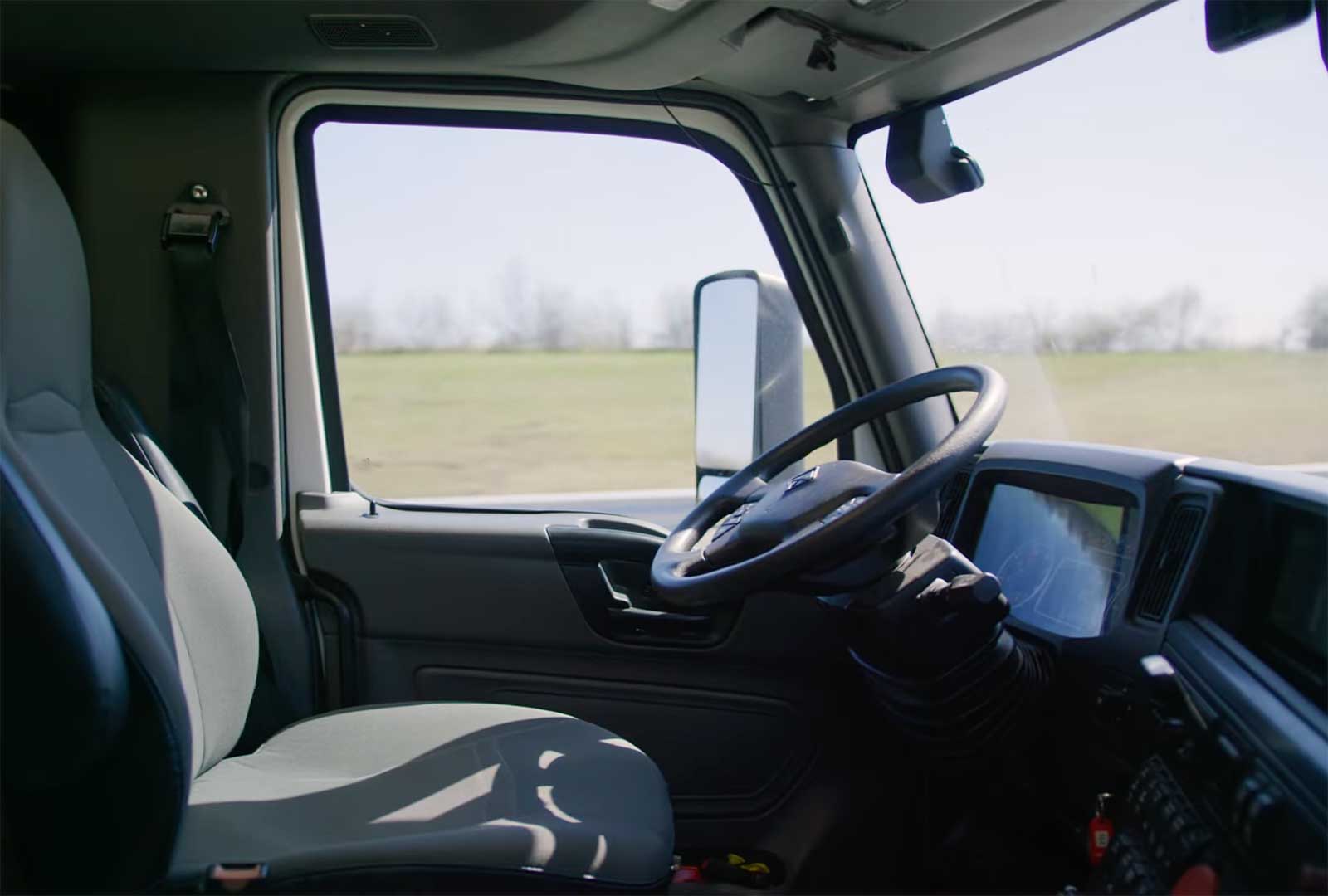
Taking PlusAI Public
Executive Summary
In this episode of The Road to Autonomy, Grayson Brulte sat down with David Liu, CEO and co-founder of PlusAI, to discuss the company’s transition from a private technology developer to a publicly traded company.
David details the strategic roadmap for commercializing autonomous trucks by 2027, emphasizing the importance of lane-by-lane expansion and the critical role of their partnership with Traton. The conversation also explores how Plus AI is leveraging global data from operations in the U.S., Europe, and Japan to refine their AI driver and close their safety readiness case for launch next year.
Key The Road to Autonomy Episode Questions Answered
When will PlusAI launch commercial driverless trucks?
Plus is targeting a commercial launch for integrated fully autonomous trucks in 2027. David Liu confirmed they are on track to achieve 100% safety case readiness by the end of this year, which will allow them to remove the safety driver and begin scaling operations shortly thereafter.
What is the Lane by Lane expansion strategy?
Rather than attempting to launch everywhere at once, Plus AI is using a lane by lane strategy where they validate the safety case for a specific route (starting in the Texas Triangle) before expanding to adjacent lanes and regions. This methodical approach ensures high safety standards within a limited Operational Design Domain (ODD) before expanding into the Sunbelt states and beyond.
How does the partnership between Plus and Traton work?
The partnership is structured as an asset-light, SaaS model. Plus provides the virtual driver AI software, while Traton (owner of International, Scania, and MAN) manufactures the physical trucks with the necessary redundant chassis and safety frameworks. Traton then sells and services these integrated trucks through their existing dealership networks, ensuring fleets have access to established support systems.
Key The Road to Autonomy Topics & Timestamps
[00:00] Going Public & Traton Investment
David Liu announces that Plus is set to go public in early February after their S-4 was declared effective. To accelerate this transition, their partner Traton is committing an additional $25 million in non-dilutive capital to speed up development.
[03:00] Critical Safety Metrics & Readiness
Plus tracks Safety Case Readiness (currently at 90%) and aims to hit 100% by year-end. Liu emphasizes that they will not conduct “driverless trials”; they will only remove the safety operator once the system is fully validated and ready for commercial scale.
[07:00] Lane-by-Lane Expansion Strategy
The rollout strategy focuses on validating safety one lane at a time within a limited Operational Design Domain (ODD). The initial commercial lanes will launch in the Texas Triangle (Dallas, Houston, San Antonio) before expanding to the Sunbelt states.
[09:00] The Necessity of Factory-Built Redundancy
Scaling requires factory-built trucks rather than retrofits. Plus partners with Traton (International, Scania, MAN) to integrate their virtual driver directly into trucks equipped with redundant chassis, steering, and braking systems to ensure safety during hardware failures.
[18:00] Global Data & A Single AI Driver
Plus utilizes a single AI software stack trained on global data from operations in the U.S., Europe, and Japan. This allows the system to adapt to diverse environments, from snowy roads in Sweden to driving on the left side of the road in Australia without needing separate software versions.
[27:00] Commercial Launch Target: 2027
David Liu reaffirms that the fully integrated, factory-built driverless truck is on track for commercial availability in 2027
Full Episode Transcript
Grayson Brulte: David, it’s great to have you back on The Road to Autonomy. You came on last time, talked all about the wonderful technology that you’re building at Plus AI, and then lo and behold, a few weeks after you came on, I see a press release that that Plus AI’s gonna go public. So you’ve been a very busy gentleman, sir. It’s just a matter of a few weeks until you go public. How are you feeling? You went from building technology to scaling a business, to taking it public. So how you feeling?
David Liu: Thank you Grayson, and thank you for having me on. Uh, it is indeed an extremely exciting time for us. Uh, we’ve been building this business for years. Finally, we are on the cusp of going public. Uh, we’ve announced the deal, uh, late last year. Uh, we’ve declared our S four effective, uh, earlier this month. And then, uh, looks like we’re gonna be closing the deal, the transaction, and going public, uh, in early part of February.
Grayson Brulte: When you go public, the transaction closes and you’re officially traded on the exchange. How do you think that your management style’s gonna change in terms of how you run the company? Will it just be the same what you’ve run or, or are you’re gonna implement some changes to how you manage?
David Liu: we’re gonna keep our management style and, uh, you know, operating style, uh, the same, uh, except that we’re probably gonna accelerate on how we operate the business. We’re on the cusp of commercializing, uh, the technology and the product we built over the years. Um, you know, the next few quarters is gonna be crucial for us to really, uh, put the technology and our product, um, you know, in use at scale.
Grayson Brulte: And you’ve been testing it with commercial fleet trials on I 35. How have those trials been going?
David Liu: it’s been going really well. So we started those commercial trials along with, uh, some of large fleets of our partner in, uh, uh, international. Um. So, uh, there’s been tremendous demand coming from the fleets. Every one of these large fleets, uh, you know, want to participate in this commercial trial. We’ve been fairly selective. We wanna start slow, right? So we select a few, uh, very high profile, very important, uh, fleets, uh, to start out the, the commercial trial. And, uh, we’ve been holding commercial, uh, freight and, uh, we’ve been gathering, uh. Metrics and data on, on some of these operations. And then we’re refining our innovation operations over time. So we’re gonna be expanding those trials over time. And then for the remainder of the year, we’re gonna continue to expand our, our operating domain, add more runs, collecting more data, do more validations, and uh, uh, uh, leading up to, uh, the commercial launch, uh, sometime next year.
Grayson Brulte: So you’re reiterating commercial launches on track for 2027.
David Liu: Yes. So there are a couple of our key high level metrics. We’re watching one something called safety case Readiness Metric, and the other is, uh, remote assistant free trip raft metric. Uh, we’ve been disclosing, uh, those two metrics, uh, over the past few quarters. So over the last 12 months, uh, we’ve improved our SER metrics, safety case readiness metric. From 75% to 90%, uh, we are on target to achieve a hundred percent safety case readiness, uh, by the end of the year. That’s the point where we can actually pull the driver, the safety driver, or the monitor out of the, the cabin, and then do a driverless runs, uh, you know, before the, the end of the year. The other metric is the RAF metric that measures. Within the o uh, within the runs of commercial routes that we, we enable how many times or what’s the percentage times that we don’t need to have any remote assistant monitor, uh, get involved for those out of ODD situation. For instance, if you have a, a road construction, road closure, sometimes you call remote assistant for decision making. So this is a metric where we, uh, we measure the operational efficiency of our, our route. We’ve improved that metric by 10%, getting up to about 80%, uh, by the end of last year. We want this number to be above 90%, uh, before we can, uh, you know, really scale this thing up big time operationally.
Grayson Brulte: To achieve the goals that you clearly articulately laid out, is that, are you putting the decision making of the system on the truck to make those decisions? And if so, is that when you’ll hit that , hundred mark?
David Liu: Yeah, so safety case readiness really measures, uh, can we operate the, make, make sure that the, the truck addresses all the safety cases that that’s out there from engineering point of view, right? So we laid out the, the safety case, uh, you know, in multiple levels. Uh, the top three levels are published on our website. We want, uh, so there are like thousands of different safety cases we need to address before we can launch the, the, the truck without the, uh, uh, a safety driver in the cab. So we’ve, we’ve tackled a 90% of those, and then the remaining 10% will be addressed the rest of the year.
Grayson Brulte: That’s fantastic. You said a little bit ago that there’s over, I’ll use the term overwhelming demand or a lot of demand for your fleet trials is, is individuals watching your business Will is the next step after fleet trials then, will you do driver out driverless trials before you commercialize? Is that a metric that we should look for?
David Liu: So there’s no section as driverless trials. You know, we, we take a very, very safety centric view on, you know, when can we take out the safety driver or the safety monitor, right? So the trials, what that means is we do put, we, we, we keep a safety monitor in the, in the truck. Uh, we will only take out a safety monitor when we are safety case complete when we can guarantee, uh, the safetyness of the, this driverless truck. So we are not gonna do any trials. We’re only gonna be, uh, be, be launching the service at scale. When we, uh, when we’re fully confident this, uh, the truck achieve the safety level, that’s much superior to a human driver truck.
Grayson Brulte: When the data reaches that level, is it a board level decision? Is it you with your management team? Is it you with safety consultants? How do you make that decision when the data says, okay, we’re at a hundred percent? How do you ultimately make that final decision?
David Liu: Yeah, that would be all of that, right? So it’ll be on the engineering level. Like people, you know, we, we we’re a very data-driven company. We look at these metrics. It’s going to be a management, uh, approve, approve the decision. And certainly, you know, this would, uh, go, go through our board where everybody would look at the number and be fully confident. We’re at the point where we can launch the product safely. ’cause, uh, this is a safety critical industry and, uh, you know, a, a lot of, uh, the, the, our customers are counting on us, you know, providing, uh, the technology that will improve the safetyness of the, of the transportation network.
Grayson Brulte: And it’s been proven. I mean, there’s been papers from Zurich re, various other insurance outlets. There’s been. Quasi government papers that have been put out, improving the safety metrics there. When you re remove the safety attendant, will it be a lane by lane safety case where each lane will have a different safety bench to make? Or how will that, how should we think about that from an expansion standpoint as you grow the business?
David Liu: Yeah, that’s exactly how we think about it. Lane by lane. So the model we operate under is, uh, you know, we enable one lane at a time, so it’s a limited ODD. So for every single lane we can prove out the safety case. And then once we do that, and then we expand our lane to the next one and adjacent ones. So we’re starting out, uh, the initial lanes in the Texas Triangle, Dallas, Houston, um, San Antonio. Uh, and uh, and, and, and then we are gonna expand the lanes from that Texas triangle. To the, the Sunbelt states, right? So that’s the current plan on how we are going to operate and expand our network.
Grayson Brulte: And part of the ex, the expansion. I wanna highlight for the audience. You have a very deep relationship. You International, which is now going by the name of, of Traton, same company in my opinion, but I know it’s a little political there. But you have a very deep relationship with Traton and they’re in partnership with you are creating a factory. Autonomous truck, you have the demand from the fleece. Is there gonna be enough capacity from a factory standpoint to to build these trucks to meet the demand on day one?
David Liu: Yeah, that’s a very, very important point, right? We’ve been doing, uh, pilots and trials, uh, with many, uh, major fleets. Through retrofit programs, right? But that’s not a way to really scale the business. The only way to scale this business is to through factory build trucks. It is a safety critical industry. Four major truck manufacturers provide all of the millions of trucks on this market, right? So including international, you know, which is a sub-brand of trade on. They also run brands, Nia and the MAN. Those are some major brands globally. Um, and then in the US there are three other brands, uh, you know, OEMs that, that produces the trucks, right? So all fleets buy trucks at volume in production from these four manufacturers, uh, because of the safety net, uh, safety requirement because the services and warranty that’s required to run their business. Uh, so, you know, these are, you know, decades long or sometimes, you know, a hundred year old partnerships, uh, between the fleets and OEMs. So fleets are okay doing trials with tech startups like us, but they only wanna buy volume from truck manufacturers. This is why years ago we constructed this partnership with, with Traton, with International, where we are providing our software, virtual driver to be integrated at factory level with their trucks. They’re focusing on providing the redundant chassis, the drive trains, and then the safety framework on the hardware side. And building these trucks, uh, you know, for Million Mile intended, uh, you know, uh, li life cycle. Uh, and then integrate that with, uh, at a, at a component level with our software, with our AI driven, uh, you know, native, uh, uh, uh, virtual driver software. So it is a integrated product that provide the safety and, and the warranty and the maintenance level that’s required by the fleet. So, you know when I say we’re gonna go, you know, commercialization in 2027, it meant, it means that the integrated driverless truck will be commercial available at that time.
Grayson Brulte: When the, the international trucks, I’ll just use the term powered by the the Plus AI driver, are on the road since they are built by Traton on the international line. Is it fair to assume that these trucks will be serviced at the traditional international service stations?
David Liu: So that’s the intention, right? So from a free customer point of view, they can continue to look at international as their supplier. Of the transportation tools. It’s just that in addition to the hardware truck, international will also be providing them a virtual driver, right? So it’s added level of service to the fleets. That’s what fleets desires. That’s what international going to be providing. That’s what we are helping international. We’re enabling them to produce this product.
Grayson Brulte: We get a lot of feedback here around redundant chassis. What is it? What? What does it mean you’re working hand in hand with your partner? Could you explain to the audience of. Uh, what redundant chassis is and, and why it’s so critically important to what you’re building.
David Liu: Sure. Um, so think of our Autonom truck truck today. You have a safety monitor in the, in the cabin, right? So suppose this, the system go outta service, the primary virtual driver system go outta service. Maybe it’s a hardware fault. Let’s say, you know, your compute caught on fire, right? You do have a, the human safety driver in the, in the cabin to take care of that. The, the person that the safety driver can slam on the brake or, you know, drive, steer their truck to the side of the road. Now, if you take out that safety driver. You need a virtual driver, a virtual safety driver, to monitor the primary virtual driver to make sure it is in operations. And if it’s not the backup virtual driver, the monitor, virtual driver need to be able to, to actuate, to steer the truck or to to break the truck right? To, to stem, step on the brake. So you, you need a redundant set of actuation to drive the truck. That’s what we mean by redundancy, right? You need redundancy, redundant steering, redundant braking, and redundant actuation for the truck.
Grayson Brulte: In broad, broad math terms, you have the, you’re public with your. Zero to 100 for your safety. What percent broad terms would you say the redundant platform plays in that getting to a hundred percent?
David Liu: Well, there’s a lot of, uh, you know, that’s an enabling factor, right? So, you know, uh, that’s about on the hardware side. You need to make sure that. We provide the capability of providing this level of redundancy. A big portion of our safety cases revolve around that, right? So if you encounter some cases, you know, if you detect the hardware fault, right? If the bird poops on your, your, your camera or, or lidar, what do you do about it? Right? So you need the redundant set of sensors and actuators to take care of these situations. So that’s assumed that you have that. So without that. You can’t have a, you know, driverless truck that with, with no human monitoring in it and claim that to be, you know, entirely safe. Right? So it’s a enabling factor for you to be safety case, uh, complete.
Grayson Brulte: What you’ve described, and this is. Public again, your partner Traton is very bullish on it and, and collectively you’ve set some pretty ambitious revenue goals of a hundred million 200 and 400 million. That’s a lot of, that’s a, I’ll use a kids term. Oh, that’s a lot of macaroni, sir. How are you planning to reach these milestones that you’ve publicly put out to the market?
David Liu: So first of all. Those are, uh, revenue milestones for trade town to obtain certain warrants in the company. You know, so they’re making a major, uh, investment, uh, or, or, uh, you know, alignment of our roadmap, uh, as we go public. Um, so, you know, I, I can’t disclose their internal plan, but the idea there is that, you know, everyone in the industry realizes how important the autonomous driving technology is to transform the industry. If you think about it, you know, 400 million is, is a big number. However, it’s tiny, tiny compared to how big the, the industry is. You know, we’re talking about hundreds of billions dollars, uh, of transportation costs in this country every year, right? So $400 million roughly equates to, uh, you know, on Plus AI’s part, you know, about 10,000 trucks operating for a year. That’s amount of revenue we’ll be able to generate. So it is a big number, but it is a number that we will, you know, we feel comfortable that, you know, together we’ll be able to achieve in the coming years.
Grayson Brulte: And when you initially launch in, in 2027, will it be a dozen trucks? You can try 50 trucks, a hundred. What does the, the scale path look like to hit these milestone numbers?
David Liu: So we’re gonna do this, uh, commercial launch, uh, methodically. We’re gonna start out with a limited size of, uh, you know, operations, right? Uh, you know, on, on the water of, you know, dozens or, or maybe a small number of, you know, few hundreds, right? On, on some major routes. We’re gonna run the solar operations for some some period to gather data, gather metrics, and make sure that we, we operate the, the, the, the network, uh, efficiently, uh, and safely. Uh, and then we’re gonna scale from there. But just to put things into perspective, at 10,000 trucks sounds a lot, but there are 2 million trucks running in this country, right? So. It’s a very, very small portion of the entire industry. And then we’re just automating the industry. Uh, you know, one step at a time. Right there, there’s eight 80,000 driver shortage every year. So we’re just looking at how do we, how, how do we, uh, you know, meet some of these, you know, demand on, on the edges initially, and then gradually over the years transformed the industry.
Grayson Brulte: And through your partnership view, MI plus they are are, are not gonna own the asset. Is Traton gonna own the asset, or is the fleet gonna to buy the asset from Traton and hold it on their balance sheet? How is that gonna work?
David Liu: Yeah, that’s a great question. Uh, so our business model is asset light. We’re software producer, right? So we have, we run a SaaS, um, business. We provide our technology to the OEMs. They integrate that onto their truck. They build a truck. Then they sell the truck and service truck for, to the fleets. So that part of the business, we try not to, not to change, right? So there is the existing infrastructure and value chain to provide that services, right? So there are, uh, truck financing companies and truck, you know, insurance company, maintenance companies, and you know, and, and dealership network. All of that, uh, will likely to, we’re trying to. Evolve it or help the, the, the OEM OEMs and fleet evolve it. We’re not trying to get into, you know, disrupting it, right? We’re trying to help everybody make more, uh, more money, uh, by, by enabling, uh, the entire industry. Um, but from our point of view, you know, we are a enabler. We provide the technology, the AI software. To, uh, to automate the industry so that we can operate these trucks, uh, uh, more safely and we can, uh, we, we can operate these trucks more economically.
Grayson Brulte: Now, will you take that same model where you’ve have recent announcements over the last several weeks that you’re. With Iveco in Spain and with T2 in Japan, will you take those same models or will you look at models that historically have, have worked in each country? Because you and I both know there’s a lot of different customs in various countries around the world in terms of how they live and how they do business.
David Liu: Yeah. So, uh, you know, recently, you know, we are looking at partnering with. Folks globally, right? So for instance, you know, Mitsui is a large Japanese trading house, uh, one, one of the top four large trading houses in Japan. Uh, but they’re also, uh, you know, uh, for instance, they’re, they’re the largest shareholder, Penske, right? They own many large logistic assets throughout the world, globally. Uh, they’re very interested in taking our technology. To distribute it globally, to enable the, the various industry, uh, in different, uh, geo, geo, geo geographic areas. So, for instance, you know, uh, Mitsui owns a, uh, uh, or is a prime, uh, majority shareholder of a company called T2, which is the, you know, they have the ambition or mission of, uh, you know, providing a autonom of freight network in Japan. So we are providing collaborating and partner with them to provide our technology to enable them. To run that autonomous freight network more efficiently and to get that into operation more quickly. Uh, you know, we’re partnered with iveco, where we are providing our technology to help Iveco automating, uh, their trucks, right? So for their future product line. On on the automation side, we are their autonomy provider, and now they’re working with, uh, you know, uh, a large, uh, Spanish, uh, freight, uh, operator called sae. So we’re going to be starting a three year, uh, pilot program, uh, in Spain looking at how do we, uh, run L four uh, trucks in in Spain.
Grayson Brulte: Fasting. I was there this summer. So I have to ask you, this is a hyper personal question. When you go into into the Basque region and where France and Spain meet on the border in the southwest. I can’t even tell you how many Iveco trucks I counted on these where I was like, oh, there’s another one, there’s another one, there’s another one. If we were playing punch bug, I have a very, uh, sore arm since you’re there, there plants then to go into France or to go into other parts of Europe since, if you want to call it, you have a beach head in Spain with, with a partner that is operating in other member states of the eu.
David Liu: Yeah, I mean the idea there is that, you know, our technology can be utilized globally. You know, part of our technology, uh, lineage came from an AI world where we’re very data centric, right? So we have, uh, one of the broadest dataset, if not the most broad, uh, data set in the, in the a at Autonom trucking space. We have data, uh, you in, in all of the continental United States, uh, you know, throughout the 40 states. Uh, we’ve driven every single, uh, one of the highways, uh, in, in those states. We have data, you know, we’re doing pilot and, and uh, development work because of our OEM partnership in, in, in Europe with scan and with MAM, with iveco. Uh, you know, we have operations, uh, in, in Sweden, in Germany, in Italy, in in Spain. Uh, we’ve also run, um, you know, with, with our fleet, uh, customers, uh, you know, run a trial. Some pilots in, in Japan and, and Australia. So we have data globally, right? Given that we have experience of expanding our technology to, to anywhere, um, you know, to, to all these places, uh, you know, with, with, with, with a lot of experience, uh, applying our technology and our technology actually built to satisfy the demand globally. So this is why, you know, our partners, uh, look at our technology and look at this as a great opportunity to take this proven technology. This, uh. You know, uh, the, the, this tech, uh, AI driven technology to many of these places, uh, globally with us.
Grayson Brulte: If you look at the differences driving in California, perhaps on the 1 0 1 or driving in the southern part of the United States on the 10 versus driving in Spain versus driving in the left hand side of the road in Japan. Those are David four very completely different driving environments with frankly, different skills that you have to be able to adapt to. When I use the term, when you export the Plus AI driver to a new environment or to a new country. How does the, the AI driver adapt to the different driving envi environments?
David Liu: Yeah, think of this way. Our AI driver is already trained in all these environments ’cause we have data for all these environments. Our AI driver is one single AI driver that can drive in Japan on the left hand side and Australia and in Europe, in Stoy condition in Sweden and in Texas. It’s one single software that’s learned on all of the data we have ever collected. So, you know, with more data, our driver becomes more intelligent. So we’re not, you know, so in, in a way, we have the, the broadest and smartest AI driver out there in the industry.
Grayson Brulte: do you have to send. A test fleet of one a truck, two trucks, three trucks to try it to, if you wanna say ground truth, validate prior, or again, the ai just go right out of the box.
David Liu: So, you know, in all these places we have been working with either our customers or partners or in, in occasionally we, we send our own fleets out there, but mostly it’s with our partners or our customer fleets. So, you know, for instance, in, in the us uh, we’ve been running for years with one of the largest logistic and e-commerce company, you know, hundreds of trucks, uh, automated with our technology being out there operating, and we’ve been collecting millions of miles of data with this partner. So that’s one, one big data source. We’ve been doing our trials and tests and and development with, uh, with Scania in, in Sweden. So we have a lot of snow data. We have probably the most amount of snow data drive on large trucks in the industry, right? So our driver, like if you happen to have snow snowing condition in Texas, can we handle it? Absolutely. We’ve seen a lot of snowing condition previously, so our AI drivers saw it, know how to react to it, can recognize it, and can operate safely. Already. So that’s why, you know, if you have your sewing condition in Texas, it’s not the first time our AI driver seen it. That’s why it, it can handle it. That’s why it has more intelligence than, than, than the one that’s not trained with that type of data.
Grayson Brulte: Do you feel, and this e Elon Musk has been out there talking about the miles, the data that Tesla has has gathered through FSD and the different things that they’ve seen is, so do you feel that one of your advantages in autonomous trucking for plus as a company is, if you wanna call it the vast diverse data set that you currently have?
David Liu: That is a core competitive advantage we have. Right? We’ve also built up our technology to be able to. Absorb to learn from all that data. And also in addition to real world driving data, we have simulation technology to multiply that data, right? So we can easily change, you know, uh, you know, for, for instance, you know, we can take Australia driving data. Layer that on top of the snowy condition that we’ve seen, right? So you can have, you know, it’s snowing in, in the middle of the summer or winter here, right? Uh, mid middle of summer over there and put snow on the road and see how it reacts. So having this diverse data set and that coupled with our ability to multiply the data through simulation, uh, it really provides our AI driver, um, you know, really high level of intelligence and performance.
Grayson Brulte: How much simulation goes into to building the driver, because I’m, I like the, the snow analogy is really good, but how much simulation? Or what type of the os what type of scenarios do you run through the simulation to, to prepare the dryer for something that you and I might not see as a human, but we can think of it. So let, let’s simulate it.
David Liu: Yeah, so we have a vast simulation infrastructure. We also work with, uh, industry leader in this regard, right? For instance, we. Partner with Nvidia for many years. You know, we are, we’re one of the early users of the Cosmo environment, right? So Jensen actually in the, uh, in the last years, he gave the keynote speech, actually highlight part of that collaboration. Uh, so, you know, our approach is used. What’s best out there, you know, we trying to not recreate everything, recreate a wheel in-house, right? We we’re trying to take advantage, all this advancement in technology. With generative ai, with all, all the compute power we can get there with all the advancement in foundation model, which on its own is, is a, you know, basically that consume all of the data on the internet, right? So we already have, we’re standing on the shoulder of the giants, right? But we have this proprietor data, truck data globally. That’s that that’s something that no one else has. So we can fine tune some of the foundation model out there and make this to be the best. Virtual driver, physical AI driver for our industry.
Grayson Brulte: You bring up an interesting point. Now, Vinod Khosla gave a speech recently and he said The alpha, if you don’t use the Wall Street term now is proprietary data that that folks don’t have. It’s like, yeah, the Internet’s been scraped, it’s been done. Sorry. You need that proprietary data. How do you ensure that, obviously, so you have the foundation layer, let’s just call that the base that’s publicly available, but then you have your proprietary layer, which if you wanna use the Vinod Khosla it’s it’s, it’s your alpha layer. How do you continue to feed the alpha layer to continue to have that proprietary data to keep your edge over your competitors as you grow the business?
David Liu: Yeah, so this is the, you know, it is a positive feedback loop, right? Because you know, right now we have the broader data set and we have the, one of the most mature tech stack out there. We’re going commercial and launching these things, and we expect to have. Hit, uh, uh, a major scale in, in the coming quarters and years. Right? And along with that, we’re gonna keep expanding the, it’s more about diversity of the data center than, than the just sheer quantity, right? So it’s about have, have you seen all these cases? And can you, can you have the base so that we can multiply these, uh, the, the, the, the data through, uh, simulation and, and synthesis.
Grayson Brulte: It’s become very clear that you plus and your partner Traton, are accelerating to development. There was a release that came out recently that. Traton committing 25 million for r and d and non-dilutive capital. That’s a a positive reinforcement. Will that go into the AI r and d? Will that go into the hardware or is it gonna be a combination of everything to accelerate the Plus AI driver?
David Liu: Yeah, definitely. I mean, it’s a major vote of confidence and in, in. Partnership. You know, let me just clarify though. So first of all, each part is investing hundreds of millions dollars into our part of development, right? So for, for this, uh, partnership, you know, trade on’s putting out, you know, hundreds of engineers in addition to all the other resource they putting into this program, developing their side of the technology, right? The, the redundant chassis, the validations, uh, work that’s, that’s required. The integration of the, of the, of the virtual driver with the, with their truck. So there, there’s a lot of work going on in terms of producing a integrated driverless truck. So they’ve already putting hundreds of people on that. On our end, we’re responsible for developing the AI driver, you know, we are putting in the capital to do that. Then the business model is we’re gonna, you know, kind of profit share on, on top of that, right? So for, for all the economic value we generate, you know, trade on is gonna keep a big portion of it. We’re gonna take a, you know, a portion of it as software licensing fee. That’s the, the, the business model. The business arrangement. Now, on top of that, you know, through, you know, while we’re, we’re going public trade ons committing another $25 million to us. So essentially they’re paying us $25 million to accelerate the development. And the integration of our virtual drive onto their platform. And that fund will primarily dedicated to, to programs, to accelerating our, our current roadmap. Right? We have a current, a roadmap in place to launch the integrated truck, you know, in the coming quarters. So the, this fund will be, be used to, to ensure that, that we, we, we continue to progress along the, the roadmap and, and, and accelerate.
Grayson Brulte: Which to me in, in my terms says Traton bullish. Based on what you described and and the data that was in the release, why do you think Traton and in your humble opinion, is so bullish on the future of autonomous trucking?
David Liu: think it’s becoming clear to everyone, not just trade town, but becoming more and more clear to everyone, you know, in the industry and outside the industry that. Driverless vehicles are happening, in, in some cases already happened, right? In, you know, for instance, for Robotaxis, there are hundreds and thousands of them running around in major metros. So people no longer become, you know, uh, become, uh, kind of even excited about seeing a vehicle with no driver in it. It, it’s no longer, you know, sign fiction. So having a driverless truck running down the highway. I think people see that happening like today, like right now or in the very near future, and that is going to transform the transportation industry and trade down being a major player in, you know, enabling the transportation industry. Uh, very extremely so. First of all, it’s extremely important for the core business. And secondly, they’re extremely bullish on the, uh, on the development of the, uh, of the automated, uh, trucking business.
Grayson Brulte: So we also have a well-documented driver source, which you highlighted. Then we also have, not political, but you have an I Immigration crackdown, which is leading to a larger driver shortage. So you have to, to fill it in there to me. It’s a good time to be in the autonomous trucking business in a matter of weeks. Sir, you’re gonna be a publicly traded CEO and I’ve had, and this is just for the record, you’ve been on twice when you’ve been a private company, CEO, and we are going to have you back on again when you are a, a public CEO besides watching for your IIPO. What do we would need to watch for in the coming months as plus takes the, the next step in the journey of this company?
David Liu: So, uh, I think, uh, you know, in the, in the coming month or quarters, uh, you know, we’ll be continuing to release. Uh, data about our operations, the metrics. We’re going to expand our commercial trials and we’ll be, uh, going to be commercially ready to, uh, to release our virtual driver, uh, our, uh, AI driver, uh, by the end of the year. And then we’re looking forward to launch the, uh, integrated driverless trucks sometimes in 2027.
Grayson Brulte: Awesome. Well, we’re looking forward to your launch. The industry needs. More autonomous truck and it’s a thriving and healthy industry. The future is bright. The future autonomous, the future is Plus AI. David, sir, thank you so much for coming on The Road to Autonomy, and we cannot wait to have you back on again when you’re the CEO of a publicly traded company.
David Liu: I look forward to that. Thank you.
The future is bright. The future is autonomous. The future is The Road to Autonomy.
Subscribe to This Week in The Autonomy Economy™
Join institutional investors and industry leaders who read This Week in The Autonomy Economy every Sunday. Each edition delivers exclusive insight and commentary on the autonomy economy, helping you stay ahead of what's next.