


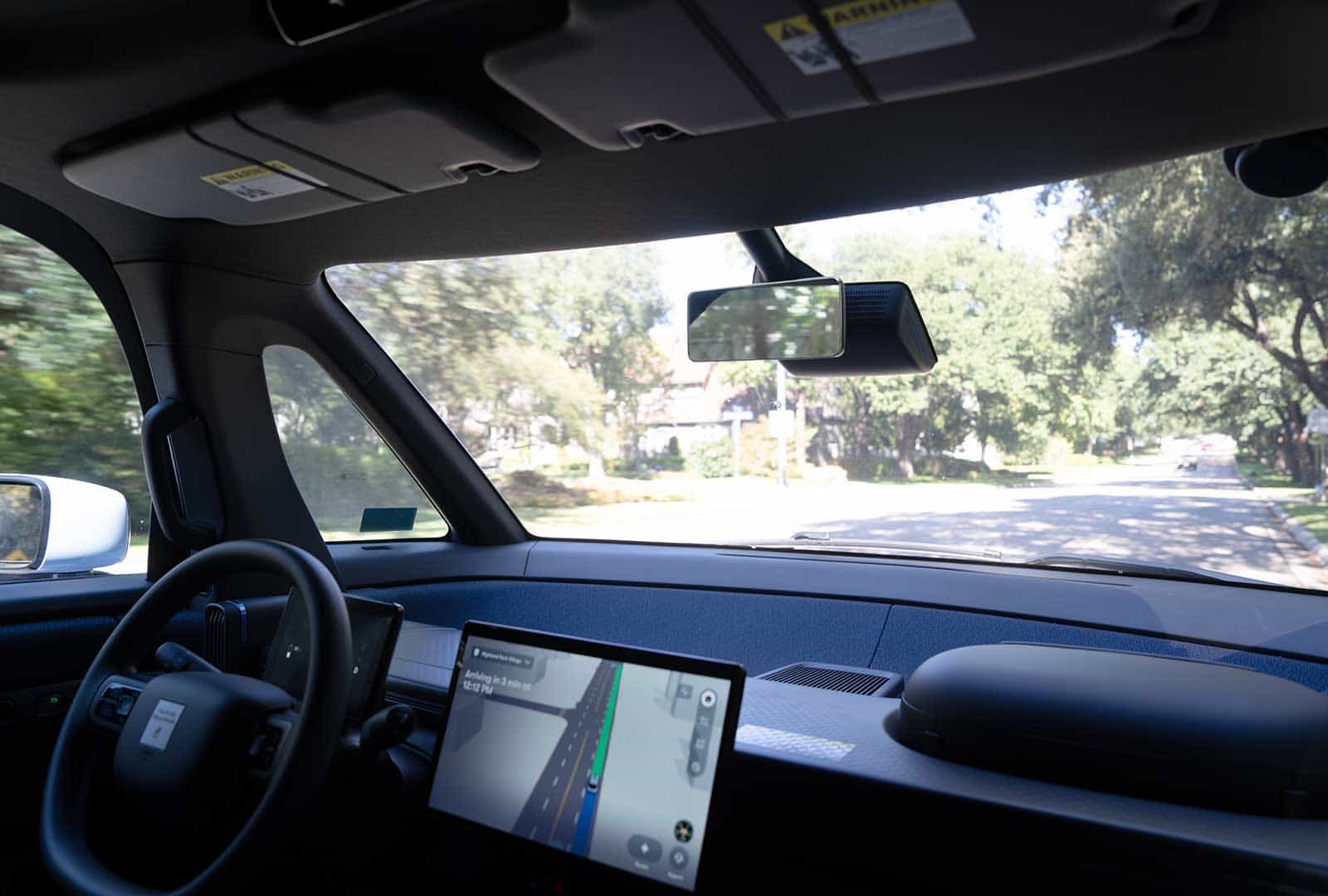
Waymo Is Accelerating Robotaxi Deployments. Who’s Trying to Stop It?
Grayson Brulte delivers firsthand field reports from Nashville, Dallas, and Houston revealing Waymo’s rapid depot and airport infrastructure buildout, while Walter Piecyk breaks down Tesla’s earnings call highlighting a 75% FSD attach rate and plans for multi-city robotaxi expansion.
A Washington Post investigation uncovers a shadowy group called the People First Transportation Alliance allegedly working to block robotaxi deployment in Washington DC. Meanwhile, Oro Mobility spins out of Hertz with Steve Cohen’s family office backing, signaling growing investor interest in the autonomous vehicle fleet management sector.
Key Autonomy Markets Episode Questions Answered
What did Grayson find at the Nashville Waymo depot and airport?
Grayson inspected two depots, estimating each could handle 300–500 cars, strategically located on opposite sides of BNA Airport. At the airport, Waymo has four dedicated outside-lane pickup spots with a door-to-vehicle time of two minutes and twenty seconds, which he called a serious emerging threat to Uber.
What key takeaways came from Tesla’s earnings call regarding FSD and robotaxi expansion?
Tesla reported a 75% FSD attach rate and announced four new robotaxi cities, Las Vegas, Jacksonville, Phoenix, and San Antonio. The call also addressed the concept of private vehicle owners contributing their cars to the autonomous fleet during peak hours, and 24/7 service was targeted for year-end.
What is the People First Transportation Alliance and why does it matter?
The Washington Post identified the People First Transportation Alliance as a group allegedly working to block robotaxi deployment in Washington DC, but its true funders remain unknown. Four named founding members publicly denied involvement, and Grayson and Walter suggest it is backed by one or more companies without a competitive autonomy program trying to slow the industry.
Autonomy Markets Topics & Timestamps
[0:00] Nashville Field Report
Grayson inspects Waymo’s two depots near BNA, plays 25 minutes of autonomy roulette in the Lyft app without a match, times a two minute and 20 second walk to Waymo’s dedicated curbside pickup and spots a gold Cybercab testing.
[08:38] Dallas Field Report
Grayson calls Dallas the robotaxi capital of America as Waymo and Avride scale, hundreds of unbadged Cybercabs sit at a test lot and he explains why he now prefers the Ojai.
[12:19] Chinese Vehicles Are Coming to America
With Chinese vehicles already in Canada and Mexico, Grayson argues it is only a matter of time before they cross the border, while Walt notes how quickly political winds can shift.
[13:20] Avis Waymo Depot Buildout in Dallas
Avis is spending significant CapEx on a high quality depot moving at lightning pace, in sharp contrast to the slow progress at the Zoox depot.
[15:36] Houston Field Report
The Uber, Nuro and Lucid depot showed six vehicles and no unsupervised operations, while Tesla is building a significant depot next to IAH.
[19:55] NHTSA Administrator Morrison Interview
A preview of Grayson’s conversation with Administrator Morrison on embracing the future and updating FMVSS standards so America can lead.
[21:08] Tesla Earnings
FSD attach rates hit 75% as Tesla outlines a path for owners to add personal vehicles to the robotaxi fleet, challenging one of Uber’s supposed moats.
[25:15] Waymo and Tesla Depot Infrastructure Buildout
Grayson argues the most underdiscussed point is that Waymo and Tesla are the only two leasing real estate, building depots and installing charging at true scale.
[27:17] Semafor Report: 20,000 Waymos by End of Next Year
Semafor’s 20,000 vehicle estimate sits well above Walt’s 15,000, and hitting near term targets makes the 2030 ramp achievable.
[28:43] Tesla Unsupervised Miles and 24/7 Service
Unsupervised miles are growing double digits weekly, but the 24/7 target slipped to year end and Grayson wants disclosure on paid versus deadhead miles.
[31:17] Robotaxi Pricing vs. Rideshare
Walt explains why removing the driver is what ultimately drives lower fares and higher robotaxi adoption.
[33:08] Tesla’s Four New Cities and the Depot Ground Truth
Las Vegas, Jacksonville, Phoenix and San Antonio were announced in an order that tracks depot construction, with San Antonio last after its permit was denied.
[33:45] Waymo’s Las Vegas Airport, Madrid and Toronto Expansions
Waymo opens Harry Reid, targets Madrid in 2027 and Toronto in 2028, with OMEGA calling Madrid more than 100 days early.
[35:08] Uber Nears 100 Fully Autonomous WeRide Vehicles in the UAE
Uber approaches the 100 vehicle benchmark set by Autonomy Markets, and Uber and WeRide prepare to launch in Madrid with safety drivers.
[37:19] Hertz, Avis and the Depot Market
Hertz spins out Oro Mobility, which operates 45,000 vehicles and is backed by Steve Cohen’s family office, positioning it to service the entire autonomy market.
[39:46] GM’s $20 Billion Buyback
Walt and Grayson question why GM is buying back stock instead of investing in autonomy as consumers demand FSD like capabilities everywhere.
[45:12] People First Transportation Alliance
The Washington Post uncovers a group working to stop robotaxis in DC, while San Francisco polling shows support jumping from 44% to 67% once residents rode the vehicles.
[51:06] London Driver Protests and TfL Robotaxi Caps
Uber drivers protest Uber’s own partner as the London Assembly seeks power for TfL to cap robotaxi numbers.
[51:56] Santa Monica Leases Lots to Zoox
Santa Monica authorizes 150 Zoox vehicles to park in city lots for $500,000 a year, while Waymo faces complaints over NHTSA required backup beeping.
[55:01] Foreign Autonomy Desk
A VW MOIA van in Europe is spotted running Wayve rather than Mobileye, and France signals support for autonomy alongside a Wayve and NVIDIA announcement.
[56:08] Next Week
Mobileye and Alphabet report earnings as the October 30 NHTSA deadline approaches.
Full Episode Transcript
Field Report Intro: Nashville, Dallas & the Week’s Big Stories
Grayson Brulte: Walt, at Autonomy Markets, we keep on trucking. We’re out in the field every week doing field report, wearing our inspector hats, and I gotta tell you, Walt, this is a funny story. I’m on a plane. This gentleman’s looking like this to his phone and points at me and points down. He’s a fan of the show. I met a guy on a Southwest flight that was a fan of this show. While we were doing that, Tesla and Elon were giving an update on FSD on the Tesla Print. While he did that, Steve Cohen’s family office invested in robotaxi operations. And how can we forget DC? It’s swampy because something fishy’s going on up there. Somebody’s trying to stop robotaxis in the nation’s capital. But let’s start with the field work. Walt, I was in Nashville and Dallas. I uncovered quite a bit. What do you wanna know?
Walter Piecyk: Yeah, it was a very busy week. We had a lot of earnings as well which we’ll hit on some of the things that came out of there and, and particularly on the, on the Tesla, the Tesla call, which is, as we expected, fairly informative. but I mean, in Nashville– Now, were you in Nashville to check out that FlexDrive location? I thought we were doing that in a couple of months
Nashville Field Report: FlexDrive Depot and Waymo App Experience
Grayson Brulte: We are, but the inspector has to go do pre-inspections now. That’s the new thing. We do inspections and then pre-inspections. So yes, I was there to inspect the two depots, ’cause there are two depots, which I found both, and to also ride in the vehicles, try the airport, and it’s in Ojai market, so I had to try that as well
Walter Piecyk: And so how was the, you know, first of all, what did the, how did the FlexDrive how did the FlexDrive Depot look from your outward observations?
Grayson Brulte: From my outward observations, and I gotta, if this was Lyft that did this, Flex tried to do this, or Waymo that did this, I’m gonna give you credit. I don’t like this, but I’m gonna give you credit. Well, it was the most secure depot we’ve been to. It’s built into a hill. You can’t see much, but have no fear, the inspector saw quite a bit and there’s gonna be a field report coming on that
Walter Piecyk: It was like a James Bond basic you know, depot that, that was happening here in the side of a volcano
Grayson Brulte: I’m not a side of volcano, a, a side of a Shakira hill, so a little bit of James Bondage. But I, I was double O inspector, so don’t worry about that
Walter Piecyk: What was the, how, what was it like getting a Waymo? Did you try both on the Waymo app as well as the Lyft app? And I guess we know with the Waymo app how that works. H-how did it work with the Lyft app?
Grayson Brulte: I’m sorry Team Lyft wasn’t good. I was told to go down to Broadway, which is, if you wanna call it Honky Tonk Row, where there’s all sorts of individuals going in and out of honky tonk bars to try and get paired. I stayed there and I’m gonna be releasing a field report on this next week. 25 minutes playing autonomy roulette, 25 minutes. The interesting insight, I went over the 10, the 10 limit mark where David Moss was banned. I still wasn’t banned, but after 25 minutes of getting paired, I finally gave up. It was not a very good experience
Walter Piecyk: What was the David Moss ban? Like, why would he get banned for the wait time being too long? Wouldn’t it go the opposite way, where he would ban using the app if the wait time is too long?
Grayson Brulte: It wasn’t the wait time, it’s playing autonomy roulette. So Mr. Moss ordered, canceled, ordered, canceled, ordered, canceled, And I was on the phone with him when it was happening
Walter Piecyk: Got it. So as a reminder the way this market is different than Phoenix which was the market where Uber and L- and Waymo launched together was in Phoenix, they had two separate fleets. Now, what we learned later was the cars allocated to Uber were only about a dozen, and Waymo had a lot more. In Nashville, that shouldn’t have mattered because there’s one singular fleet that is shared across both apps, the Waymo app and the Lyft app. So it’s, it’s curious why the way the algo works is that when you try to get it from the Waymo app, I assume your wait times were a lot shorter than the Lyft app. Like, that shouldn’t necessarily make sense, right?
Grayson Brulte: In theory, it should in all of my Waymo waits throughout the city because I do what we do. We went throughout the entire ODD. The longest wait I had was seven minutes. Some were even two to three minutes. So really good wait times there inside of the Waymo app
Walter Piecyk: Sorry if I missed this, but did Lyft have a autonomous tier specifically, or were you basically just, again, doing the roulette at a comfort tier trying to get a, a, you know, allocated in a Waymo?
Grayson Brulte: No dedicated tier, but however, when I did open the Lyft app at the BNA Airport, it said, “Would you like to opt into Waymo Ride?” So I did that and I still was not paired, so I played roulette
Walter Piecyk: Okay. Well, I think that leaves some unopened questions, because I think we were led to believe that the single fleet could handle these apps a, a bit better than, than what the Uber relationship was. I think Lyft made a big point about this, is how different it is from the L- and structurally, I guess it is different, but experience-wise, I guess it doesn’t appear to be very different at all. So that experience, not necessarily positive. It’s like, it’s early. the one I’m more interested in is obviously getting into that depot seeing how Flex Drive is, ’cause that obviously, as we pointed out before, you know, is a different strategy that Lyft has, owning and operating, you know, these, these service centers, which in and of itself could be its own large business over time. So whatever. Anything else you saw in Nashville, any other, do you see any Teslas or, or other autonomous vehicles trying to train on that market?
Grayson Brulte: Yes, be- be- before we get to the other vehicles in, in the airport, I just want to say to the team at Lyft, FlexDrive, and Waymo, great location. While it literally butts up to the airport, you can probably hit a nine iron and hit the airport. It’s a really great strategic location there. As I got picked up at the airport, which we’ll get into in a minute, it was a fantastic experience. I said, “I must be lucky today. I must have triple sevens. I saw the gold Cybercab testing.” And that, and then, and it went on to a wonderful day, so I did see a Tesla Cybercab testing on the streets of Nashville
Walter Piecyk: I mean, that fits to what we heard on the Tesla call in terms of new markets, but I think we’ll get to that later. You know, you always talk about these good locations near airports for some of these depots, and yet airports seem to be the, one of the harder things for these autonomous companies to, to get signed up and, and that becomes its own milestone. And, and do you see the irony there?
Waymo Airport Access: BNA Nashville Sets a New Standard
Grayson Brulte: What I saw and what I experienced in Nashville and what I experienced in San Antonio, I’m gonna say this for the record: Uber has a serious problem coming. These Waymos are going into the airports. To give you an example here, at BNA, Nashville Airport, from the door to the Waymo pickup area, because we do things here right, two minutes and 20 seconds. I timed it. And how Waymo struck this deal, I don’t know, but Team Waymo Airports, well done on this. Walt, they’re on the outside lane. As my father-in-law would say, they got the pole position. They don’t have to deal with all the rideshare traffic in the middle. They go right to the VIP, very important Waymo rider line, right on the outside, four dedicated spots. You don’t have to sit in all the congestion. Right out of the airport you go. Beautiful, beautiful experience
Walter Piecyk: I mean, we’ve talked about this since the earliest episodes in terms of when you interpret these numbers in some of the earlier markets excuse me, that Waymo is, is participating in, that without really good airport access, these are the most valuable rides. These are obviously gonna drive significant share as it relates to overall share in that market. So, you know, when we’re quoting or when others quote whatever the share numbers are in San Francisco, when Waymo is still stuck in the kiss and fly lot or the Hilton or whatever the hotel is that you have to get to, versus a two, three-minute experience or like Uber experiences in San Francisco with a black car service curbside pickup, which I think approximates to your two to three or five, obviously San Francisco is a much bigger airport. As those hurdles, you know, get unlocked, you know, those are pretty material in terms of the impact that it can have for Waymo and I guess soon Tesla’s share in these markets.
Grayson Brulte: Big time. And I, and I wanna say it’s a great consistent experience. You’re, you’re coming off a flight. I’m sorry, you don’t necessarily feel good, so all you wanna do is take a shower. You don’t necessarily wanna talk to anybody. You, you get into the Waymo, it’s a great consistent experience. And yes, I could see this ramping big time at the Nashville Airport just purely based on the location. And I will go on the record here and say I would estimate that that depot could probably handle 300 to 500 cars. That’s how large that depot is. And there is two depots. There was a temporary depot, which we believe no activity there. But you wanna know something interesting about that? They’re both on opposite sides of the airport, so in theory, Waymo could push multiple cars, hundreds of cars to the airport any one time if they needed
Walter Piecyk: Okay, let’s shift to Dallas. This is Dallas week for the Eagles. We’re playing, it’s Monday Night Football. Both these teams not exactly playing that well. I’ve always hated the Dallas Cowboys, but Dallas is one of my favorite city, great people, and now it’s. I, I like it even more given the amount of autonomy that we see there. So it’s only been a couple weeks since I’ve been there but what’s new in, in Dallas?
Dallas: The Emerging Robotaxi Capital of America
Grayson Brulte: What’s new in Dallas is that I, I’m calling it, for the record, as the robotaxi capital of America. Sorry, San Francisco Bay Area. Dallas is emerging, especially up in the Parks area, the Uptown area of Dallas. Walt, cars are everywhere. I was very fortunate and lucky. I was paired with an Ojai, so for the record, I’ve ridden an Ojai in every Texas market. I am gonna say that I like the Ojai better now, for the record, ’cause I like being up higher and I like the experience. Really, really good experience. But the, the amount of Waymo cars in Dallas, the amount of AVRide cars in Dallas, truly, truly scaling. I saw a few unbadged Cybercabs testing. Spencer and I went to the test lot. There was hundreds of them there, fully unbadged, sitting there. No badge, I wanna say for the record. Spencer and I did not see one badged robotaxi. But the, the AVRides are scaling up. The, the Waymos are scaling up. The one thing I’m waiting to see in the Dallas market, and for those that know the DFW Metroplex, it’s going to have to spread out to the east and west and to the north and south, because I didn’t realize how many major communities are inside of the DFW region that aren’t yet connected
Walter Piecyk: Well, I told Spencer on Twitter that I’m looking forward to the day that I can get out of DFW, hop in a Cybercab, and take a ride to the Hotel Drover. love that the stockyards hanging out there, you know, for that big Forward Fort Worth conference every year. But I just wanna go back to your Ojai, ’cause look, I love the fact, I think it’s great when people can, you know, you get new information and you change your opinion. So where– Can you rank the, all these, the cars that you’re in? Or do you put the Ojai, in terms of your comfort experience, above the Cybercab now? Is that what you were trying to insay, or just that you enjoy this, the Ojai more than you did before?
Grayson Brulte: I enjoy the Ojai more than I did before, and I want to state for the record that it is my belief that Waymo tunes the vehicles per market. We have no external confirmation, but having ridden the, the Jaguar and the Ojai in every Texas market, I believe that they are tuned differently to each market. I’ve said that publicly on X. I won’t disclose who, but I will say a few Waymo engineers liked the post when I said that. One even said, “Thank you for noticing.” So is that confirmation? I’m not gonna say it is, but I prefer the Ojai in Waymo markets. I do enjoy the Cybercab as well, and I’ll just say this, I just enjoy autonomy in general. It really just depends on where am I going, but there’s something special about riding up
Walter Piecyk: Well, sure. It’s also better than the inconsistency of, of whatever human driver you get in the roulette of, you know, picking Uber cars. I mean, I think it’s also funny to our listeners who have call- who know, our longtime listeners that know that Grayson has called this Ojai previously called Well, let’s not go through its variety of names, but it’s a Chinese-made vehicle, obviously upfit with American technology, you know, in, you know, here at these at different facilities in the United States. So here, Grayson Brulte is saying positive things about a vehicle that he has called in the past an unforced error for Waymo. What do you have to say to defend yourself?
Grayson Brulte: Opinions changed. It was still an unforced error, yes. Was the timing early? Yes. But the vehicle has grown on me and, and I will state this for the record, I stated this last week, but I’ll state this again. It is only a matter of time until Chinese vehicles come into America. Michael Dunne does a really great job covering this as an an- as an independent analyst. The vehicles are in Canada and they are in Mexico. It’s just a matter of time until they come over the border. I’m just gonna say it there for the record
Walter Piecyk: Well, we’ll see about that. Political winds can change very quickly. And with the winds come fires, and fires travel with wind. and clearly if, if, you know, the issues that we have with China elevate going forward, that not only could impact the Ojai, but obviously Uber’s involvement with many, many Chinese companies overseas. But we’ll just have to see how those things play out. We have an election coming up in two weeks and we’ll see how the fallout goes there. So on the Avis side of things, you know, again, we’ve talked about the depots. Obviously Flexdrive is a big one. I think in the past you’ve talked about Hertz. You’ve– We’ve talked about our concerns about Avomo, right? We, we’ve de- we’ve spent time with oh God, I’m blanking on the names. There’s so many right now, but, but let’s focus on Avis for, for a moment ’cause, you know, we knew that they were involved and then it kind of went quiet. We tried to see these depots before. What are your impressions? Give us more detail on your impressions of the, of the Avis, Avis’ involvement in this game in terms of building depots and service centers for the autonomy industry.
Avis vs. Zoox: Who Is Building Depot Infrastructure Faster?
Grayson Brulte: I’ll say it from a firsthand ground truth observation, Avis is doing things right. Avis is spending significant CapEx to build these depots. They are not cutting corners. There are pavers, Walt, like really nice pavers that you would put in your house at these depots. Beautiful charging infrastructure, and when you go and visit the site in Dallas, they the construction is moving quickly. And I say quickly. Whoever Avis hired, well done, Team Avis. Your construction team is moving, I’ll say, at lightning pace. You’re making incredible progress. More and more chargers are coming online. If you want, like, the core energy infrastructure is there. The, the, the roads in and around the depot are finished. And I want to compare and contrast this, and I don’t mean to go down a rabbit hole, Walt, but Spencer and I also went and visited the Zoox depot. Very little progress compared to the, to the construction team that Avis is making. It’s, it’s, it’s The Tortoise and the Hare, and I’m not gonna say who’s gonna win, but man, Team Avis is just, is just going for it and doing a really great, beautiful job from a construction perspective
Walter Piecyk: Good to know. It’s gonna be a fascinating market. you know, it can be obviously a sizable one. The one I’ve related to is something I’ve covered for a long time, the tower industry, which supports the wireless industry, which as an aside, got a, an extra boost this week as well because SpaceX gave some more information about building wireless networks, which is gonna include these tower companies. So profiles these large REITs and, and obviously we see the same opportunity, if not larger you know, for the, for what’s going on in autonomy. Autonomy obviously a market changer in, in so many different ways. But let’s move on to, to Houston. Not one of my favorite cities. Very hot and humid in, in Houston for a lot of, you know, many parts of the year. But one of interest to us because, you know, we’ve outlined the challenges that we think that Nuro might have in California because of the regulatory environment there, and thought that maybe Houston, Houston, excuse me can be an alternative market for Nuro and Uber. What did you learn in, in Houston?
Grayson Brulte: Walt, he likes to talk like a New Yorker. That’s how I’ll sum that up there. Yes, I did. I’m sorry, Uber. I know you sent somebody to follow me, but I was on public property on a public trail, so I’ll have you know I had the legal right to be on that trail and inspect your depot. Just for the PSA there for the individual that followed me, as I was followed. They have a depot. It is in a very, I’ll say, odd location. Outside of the depot you have to go under a bridge, and then after you go under the bridge, where do you go into? A construction zone. A, a one-way street in, and on the way out, a construction zone. Very odd location to say the least. Six vehicles is what I counted there on the ground and, and that does not include the two original Prius vehicles that they were using as test mules for when they were doing the delivery bots. Not a lot of activity. I saw one vehicle that had a safety driver and a safety engineer. Six vehicles, I’ll say it, it was very premature. The mar- the market was not advanced, and no activity going in and out of the depot. The gate, the doors, the roll-up doors never went up. Not a lot of activity. I did see one in the museum district driving around that only had one safety driver, no safety engineer. I did not see anything that was unsupervised
Walter Piecyk: Well, that’s a bit disappointing, I have to say ’cause I thought that w- one of your predictions, you know, when we realized or you guys realized because of the great AI work from your from Omega that, you know, maybe Houston would be an alternative market for them versus California. So that doesn’t sound like there’s dramatic progress there you know, for Nuro, you know, i- in that market. So I don’t know. I mean, what else is there to say on, on, on what, on the Houston market?
Grayson Brulte: Realistically, what it comes down to for Uber Neuro Lucid is regulatory environment. Based on the regulatory filings, there is no path for Uber Neuro Lucid to launch driver-out service commercially paid in California by the end of the year. There is a legal path in Houston, whether they do it one vehicle to say they launched the market, I’m not gonna speculate on that. But based on what I saw from an infrastructure perspective and what we’ve seen on the ground and what we’re seeing in San Francisco, I’m just gonna say this for the record, it’s gonna be a while till that service gets to meaningful scale in either m- market. as for what else we saw in Houston, this is not talked about a lot, but there are public filings to back this up, and yes, we are inspectors, and we went. Tesla is building a very significant depot butted up to, you guessed it, the airport, the George Bush International Airport, IAH. Tesla’s building a big depot there
Walter Piecyk: Okay. Well, good to know. So, and then lastly, I guess not necessarily feel worried. By the way, you know, when you said you’re getting followed around, let’s put this in context. I mean, you’re wearing an Inspector Clouseau hat, you have a very distinctive beard, and you oftentimes wear very colorful clothes. Maybe that person was following you because maybe that look stands out a bit in the city of Houston
Grayson Brulte: You’re, you’re very kind, and I do wear bright colors, And Everybody knows that.
Walter Piecyk: Was that. kind?
Grayson Brulte: It was kind ’cause th- obviously they see me coming. I won’t say what company, but my wife has a belief that my photo’s on the wall of a certain company ’cause every time I get out of a vehicle on the sidewalk, somebody walks out to confront me. It happens in every market. I won’t say what company that is, but I think you all know what company that is. d- was. Why this individual came up to me, I don’t know, but I will say this for the record, this individual did have an employee badge, and I won’t say what company was on the employee badge out of privacy purposes, but the individual did have an employee badge
Walter Piecyk: Good to know. You can actually say it, I think, if it’s on public property and the person’s coming up to you. Anyway, let’s move on. in any event I believe for SAE you did an interview with NHTSA Administrator John Morrison, who we’ve cited many times on this podcast, obviously a very important figure in the world of autonomy. You know, given we’re the, you know, the weekly podcast for this industry, maybe we should have, like, an end-of-the-year award, the 10 most influential people in autonomy. Certainly Morrison would rank at the top of that list or near the top of that list. can you give us some preview? I, I don’t know if it’s out or not yet, but topics covered, things that are relevant for our Autonomy Markets listener base
Grayson Brulte: The podcast is out, and Administrator Morrison on the podcast talks about not sitting still, embracing the future, and updating the FMVSS standards. And on Thursday, we had a press release where they’re taking that first step. And then the bottom line is Administrator Morrison cares about safety and realizes for America to compete and to lead on this technology, the FMVSS standards have to be updated. So that’s a little teaser of a preview. But Mr. Administrator Morrison is clearly on the right path and wants to see this technology scale safely in America
Tesla Earnings: FSD at 75% Attach Rate and Multi-City Robotaxi Rollout
Walter Piecyk: Okay, let’s move on. So Grayson, I had a very busy week this week with our good friend Elon Musk. both SpaceX and Tesla reported. Appeared on CNBC to talk about some of the, the SpaceX side of things. Obviously last week had done that, that podcast with with The Verge and the Decoder podcast talking about SpaceX. For those interested in, in learning about that, just check out the Decoder. Just got into detail on what his plans are to offer you, the American consumer, an alternative to these three telcos. but that’s not what this podcast is about. It’s about autonomy. So let’s talk about the Tesla podcast. And there was, I thought, a l- for me at least, a lot of good information there. I mean, and, you know, some of it was more so about FSD attach rates being at 75%. I mean, that’s a pretty, you know, stunning number given, you know, in quarters past where we queried, like, why are more people not doing it? I think the bottom line is word has gotten out at how, how good FSD is, and it’s obviously showing up now in the attach rates, and I think obviously gonna drive demand for the cars. You’re seeing GM scramble, you know, in terms of talking more about, you know, what I believe their version of FSD is. Other OEMs I think are gonna be left by the wayside, you know, unless you have some term, some type of FSD, ADAS, whatever strategy you want. The strat- You know, you want, you– And what you want, let me tell you, is a car where you press a button and it drives you to your destination and you’re supervising it That’s it. End of story. So o- others are gonna have to catch up. Obviously, it’s starting to resonate with Tesla given the advancements that, that have occurred in FSD. They went one step further, Grayson, talking about the software that is, you know, in the cars in Austin where there is commercial service ap- appearing in your car at home, your Model Y, maybe at some point in the next year or two, maybe you get some version of a Cybercab, and then contributing that car into the fleet. Now, look, this is one of those things that I am not gonna stick by the timeline that Tesla gives, right? ‘Cause it could take some time. The bigger issue here, though, or the bigger point here, though, is for all those that think that the only reason or one of the primary reasons that Uber will ultimately survive is because you could not fund a fleet of 20 or $30,000 cars and have some sit idle waiting for those peak times, which I think that premise for a $30,000 car is wrong, you know, at the outset. Like, I think given the cost of the car and the util- overall utilization, you can have cars sit fallow waiting for those peak hours. But let, let’s put that concept aside and let’s acknowledge that, no, maybe that’s wrong and maybe you do need part-time fleet. Already talking about the fact that private owners for those peak hours can contribute those cars into the system within a reasonable timeframe. Right, we’re not– Like, again, let’s say it doesn’t happen in ’27 and ’28. That’s not why Uber is at $66. It’s not about the cars in ’27. It’s not about the cars even in ’28. It is the amount of cars, whether Waymo or Tesla, that are gonna be in the road in 2030 and the percentage of rideshare that that could represent. And this is an example, you know, on the roadmap and, you know, clearly logical for how you address one of those, you know, supposed moats that Uber would have in terms of sizing the fleet. So again, these are not necessarily new things that were said on the call. But again, now that we’re getting closer to, you know, adding hundreds and thousands of cars, not only into Austin, but several markets by the end of the year, another thing, you know, said on the call that you get a s- a step closer in, in terms of this process.
Grayson Brulte: It’s happening. I’m not going to necessarily agree with a timeline or give a timeline on when vehicles will be able to go into the fleet. But what is not talked about on the earnings call, which is not talked about in the bulls and the bears on the Uber side and the Tesla side, is Tesla is spending significant dollars on building out an infrastructure for this to scale. Probably second only to what Waymo’s doing. And then you have to– We, we do this all the time. We get on the ground and we do the field work. If you wanna look at this from a infrastructure standpoint of who’s building out the infrastructure to scale, it’s Waymo and Tesla. They are, they are buying up, leasing up real estate, building depots, building charging infrastructure. They’re getting ready to go. Yes, is Uber buying and leasing some depots for their partners? Yes. But Walt, this is not nearly at a scale to scale autonomy the way that Waymo and Tesla are doing. I think that is a, a point that is not discussed enough
Walter Piecyk: I mean, I just think it’s funny that you are talking about depots as a limiting factor when for most of these episodes for Waymo, it hasn’t been about the depots, it’s been about how many cars that they can put on the road. Why is that happening? Why? Because as a reminder, you and I have seen it, like the amount of Cybercabs that these guys can crank out, you know, in a year, in a month, in a week, you know, that is the unlock, right? And the only limiting factor really had been the, whether they can get the software to a point where it was, it was comfortable to do that. Now, I think they’re kind of there, although, look, they s- they still have talked about safety cases that they need to address on a call. There’s certainly issues that are out there. These things are not perfect, but they’re much better obviously than, than. And yes, I said obviously. Obviously than humans. but you know, those things are less challenging I think than, you know, getting the cars on the road You know, I’m gonna fast-forward real quick and then we’re gonna come back to Tesla. In the meantime, you know, there was a Semaphore report that came out this week and, and, you know, I’m pretty bullish on autonomy. I think I’ve established that. I have estimates for, for Waymo. Semaphore came out with numbers. You know, Waymo or Google has not affirmed these numbers, so I don’t have enough experience with Semaphore to know whether they’re accurate or not. But these numbers were much higher than what I had, specifically by the end of next year, 20,000. They’re, they’re saying that Waymo is gonna get to 20,000 cars by the end of next year. We were at 15,000. So that’s a pretty big difference and certainly validates, again, the number that matters, which is like when these near-term, and I’ve seen this in wireless, when these near-term net adds are validated, then the number you really get to where the value is 2030, 2035, where the value is created, 2040. That ramp looks more obviously believable when you’re hitting your near-term targets faster than expected. Now look, there could be some mix of international versus domestic, and mine was more of a domestic number. I don’t– You know, we’ll see how those numbers specifically play out, but, but what a great validation in terms of the volume that’s occurring in this industry. So it’s great. I mean, we’re here, we are pulling into the end of the year and both of these companies, the leaders. Yeah, Tesla is a leader now, right? They’ve got basically more cars than, than anyone else other than Waymo in the U.S. market in, you know, with, with unsupervised. Their unsupervised model– miles are growing double digit every week. Double digit growth every week. I mean to throw shade at them not being, not going through the scaling process at this point is just it’s silly. So we’re, you know, we’re kind of at that inflection point. Now look, let’s, let’s take a shot at them now. They, they were s- they were talking about like, you know, full-time service. Now it’s like we’re– they’re gonna go to a.m. pretty soon. So they’re not a 24/7 service, but let’s, again, put context around that as well. Do you need 24/7 service for it? I mean, the whole point of like in the morning is like, okay, that’s– there’s not a lot of demand well maybe in Nashville there is at, at in the morning. They talked about getting to 24/7 24 hours, seven days a week service by the end of the year. so there’s still obviously some, some kinks to work out.
Grayson Brulte: There are some kinks to work out, and not to give Tesla pushback, but you and I love disclosures and the market loves disclosures. I’d love to see how many of those unsupervised miles are paid versus, versus how many are deadhead miles. I think that would be a really interesting number to see, and then from that data, we can really model it. But at the end of the day, there’s a common denominator between Tesla and Waymo. Both are scaling without Uber. That’s the common denominator. And just wait until robotaxi gets into airports. That’s gonna get very, very interesting. When you have Tesla and Waymo operating at the same airports, wow. Then you wanna know, here’s the, here’s the golden jewel to look at, and I base this off of publicly available rideshare data. Once, once the spigots open at LAX and Tesla robotaxi gets in there and Waymo gets in there, buckle up. That’s all I’ll say is buckle up
Walter Piecyk: So again, just to underline that point, Elswam, he said 24-hour service was around next month. He said that in September. We’re h- we, we talked about this on this podcast October. Now he’s saying, “Oh, it’s AM soon, 24/7 by year-end.” So that’s a miss, right? A month ago, you said it was gonna be next month, and now it’s end of year. Look, the same thing can happen in terms of, “Hey, we’re gonna be in more markets by end of year.” That could, that could turn into Q1. That’s just the nature, you know, of how this company operates. But now that we’re, you know, a few days away from October 30th, I think we’re gonna see, and I think there’s already been an indication of more model Ys in the market. One other note on this, Grayson, on pricing. Like in the past, I’ve talked about like ignore pricing in the early days. It’s not reflective of anything other than like, “Hey, might- they might be testing something.” But he was asked this question on the call, and the response was, “You’re comparing our fares with rideshare that has a driver in there. We don’t.” The implication and the question w- you know, the question that was being asked is like, “You’re lower. You’re lower price than Uber.” But the implication is just basic logic, right? The cost of a driver and the insurance associated with that driver, who’s more likely to get in an accident than a, an autonomous vehicle, is higher, right? That- that’s the whole thing. And we can talk about the quality of service and the low-hanging fruit and like, “Hey, you can charge more day one because it’s a better service, it’s more consistent, it’s cleaner,” yada, yada, yada. But ultimately, what gets us to the Jason Calacanis view of the world, which I’m not quite there, he’s going to 30%, I think in the models that we’ve run, I get to 10, 15%, still super bullish, right? It’s gonna rely on lower fares, right? And the way you get lower fares in these vehicles and get more rideshare usage is to take the driver out of the car. End of story. And that’s not gonna– That’s never gonna change. Like, we’re not gonna like drive down the wages of these drivers. Like they, if anything, they need to get paid more. So I don’t know. It, it was, I think for me, a pretty affirmative call. I don’t think there was anything in there other than, you know, this 24/7 push out, typical Tesla stuff that, that really changed my view. If anything, we’ve, I’ve gotten more bullish on the potential for this company as we kinda roll into the end of the year and into ’27.
Grayson Brulte: And on the call, they mentioned four new additional cities: Las Vegas, Jacksonville, Phoenix, San Antonio. And why is that relevant, and why is San Antonio last? The city council denied Tesla’s depot infrastructure permit, so they ended up pulling it. Now they’re building one out in a, I’ll say, interesting area between a Home Depot and a HomeGoods. And we were there two weeks ago. Construction hasn’t begun yet. And what do we know? Why is Las Vegas one? Because Tesla has started construction on the depot. So again, it goes down to the ground truth of why these markets are being announced in the order they are
Walter Piecyk: I already talked about Waymo and the Semaphore report in terms of volume. Good news for, for Waymo. They also opened airport access at Harry Reid. We talked about Madrid. First ri-riders targeted for 2027. I think that’s a clappy hat for O- for Omega and the road to autonomy. October, they talked about Toronto, first riders in ’28 with another fleet management company there that we’ll be doing some, some work on. So Waymo, you know, steady at the till in terms of adding markets and airports. And clappy hat to you
Grayson Brulte: Well, thank you. The clappy hats here, and for the audience, I will state this is public on X. Our Omega algorithm was over 100 days early on finding publicly available data on Madrid. We called it over 100 days ago, so follow us on X @roadtoautonomy. You can see that. And for the audience, I know it’s not gonna surprise you, and I know Walt, definitely not surprise you, we’re heading to Vegas, Walt. We’re going to experience Waymo at the airport, so we’ll have a field report coming on that ’cause we wanna see how it works. We recently just published one with Zoox. David Moss, our special field correspondent, was there, and just a little tidbit of a hint, don’t leave a backpack on the seat. Watch the video and see what happens. But we’re heading to Vegas, do a field report on Waymo at the airport
Walter Piecyk: Keep that clappy hat on, Grayson, ’cause I think we have to keep, give a clappy hat to our good friend and Uber CFO, Balaji who was in Dubai, and, you know, I think, you know, specifically mentioned almost at 100 fully driverless WeRide vehicles in the UAE. Now, look, we know 100 is the key benchmark defined by autonomy markets. We’ve got Jason Calacanis, big Uber shareholder, on board with the 100 as well. so clappy hat to Uber for obviously getting close to 100, so we can give them a nice green check mark for a market there. But also, you know, po- noting or, or realizing that 100 is, is the number that, that these companies need to get to
Grayson Brulte: I’ll give a clappy hat to the benchmark being adopted. This is great, Walt. We’re setting the standard. We’re setting the benchmark for, for what this is doing, and we, we. This is fun, and I can’t wait to see where this evolves and, and where this goes and, and good for Uber and good for WeRide
Walter Piecyk: Now Madrid, I’ve got a college-aged student. This is a very popular destination for the semester abroad. so I’m not shocked that, you know, in our last segment we’re talking about Waymo getting to Madrid in the t- in for 2027. And also now Uber you know, with WeRide, I suppose, with gonna appear in Madrid next month with, with safety drivers. Now, my son is not gonna be in Madrid, but I’m sure these kids like to travel around, so we’re gonna have to do, we’re gonna have to empower him with the road to autonomy field work and send him over to Adrid- Madrid to do some some test rides on these Uber WeRides
Grayson Brulte: I like it. We can make your son an honorary inspector and he can get the Piecyk hat. So we’ll make him an honorary inspector. I love that
Walter Piecyk: All right, so congrats to Uber on, on, you know, that market. Again, just for context, and we’re talking about 20,000 Waymos by the end of next year. That’s the context. Let’s move on back to the world of servicing on Hertz. you know, obviously you had very positive things to say about Avis. I feel like, you know, I’m thinking about O.J. Simpson running through the airport, the battle back in the day of rental cars. Are we gonna have. Who’s gonna be running through the air- Saquon Barkley’s gonna be running through the airport now and jumping over bags backwards? Or are those days behind us and the new, the new new for Avis and Hertz is, is gonna be servicing the autonomy industry?
Grayson Brulte: We’ll be going through the airports with a stopwatch of timing how long it takes to get to the curb to get into the robotaxi, not jumping over, over bags. We won’t do that. And y- of course, you gotta put your beloved Eagles in there. I still miss him as a Giant, but that’s, I digress on that. Yeah, I mean, Hertz and Avis are, are, are both moving into the depot infrastructure job. Gil West, the CEO of Hertz, has recently been on the Road to Autonomy Podcast, and Mr. West is doing a really good job with it, and they spun out Oro Mobility with Steve Cohen’s family office investing in it. And to me, it’s a clear indicator on the growing depot fleet management market that you and I have covered since day one when a lot of individuals necessarily didn’t
Oro Mobility Spins Out of Hertz with Steve Cohen Investment
Walter Piecyk: Got it. So Oro is not no longer a part of Hertz. This is formerly of Hertz, and this is Oro. and what type of numbers do we know about them?
Grayson Brulte: Right now they operate a fleet, this’ll blow your mind, 45,000 vehicles, Oro Mobility operates. A majority of those vehicles are in Uber and rideshare. they do have a public partnership with Nuro, Uber, Lucid to, to manage the fleet in the San Francisco Bay Area. Mr. West on the Hertz earnings call talked about that relationship expanding, but big things are, are coming here, and they’re really planting a flag in the ground around autonomy
Walter Piecyk: All right, so is the issue here then that they’re gonna be tightly wound with Uber, or do you expect that these fleet operations to service over time Waymo, Tesla, or others?
Grayson Brulte: I expect Hertz, and th- and this is on The Road to Autonomy podcast with Mr. West, that they will, as we say, service the entire market. This will not just be limited to Uber. I would say Uber’s merely client one of many clie- clients that they’re going to have because if you look at Hertz’s specialty, it’s managing large fleets. They know how to clean them. They know how to deal. Sorry if there’s drugs in the car, if there’s puke in the car. They know how to deal with all of these elements, and they know how to manage insurance at large scale. So there’s a lot of tools in the toolbox that Hertz and Oro Mobility bring to autonomy
Walter Piecyk: Let’s shift over to GM. I mean, Grayson, when companies have nothing to invest in, they issue dividends and they, and they buy stock back. It’s– But it’s shocking to me that a car company, by the way, who’s had to be bailed out, are, are doing share repurchase share repurchases. I’m, I’m sure, and I’ve seen it already on Twitter, you know, this is obviously gonna trigger certain politicians that wanna outlaw share repurchase for, you know, of all companies, for auto companies to, to, you know, to brazenly do these share repurchases. But, but the th- that’s the, that’s not the thing that upset me, obviously, ’cause share repurchases should be a part of a capitalist society. we know the, we know the challenges that face th- these companies. They know it, right? They, they’ve, they’ve talked about trying to get some autonomy. They brought Sterling Anderson in, you know, to build up some Level 2, Level 3, although Sterling I know gets annoyed when, when people talk about Level 3. So, so to, like, do the share repurchase rather than reinvesting those dollars into the future of this industry, which is autonomy was, was surprising. So, you know, we’ve talked about, you know, what Sterling’s role could be in this company in the future, like, with steps like these, and it was not received well. Obviously the stock, you know, a lot of times companies will announce share repurchases to gloss over, you know, fundamentals that are crappy. The stock was, like, down whatever it was, 5%, 10% you know, on this announcement. but this is, these are, these, they should be in reinvesting in their business. There’s a growth opportunity there, or at least an opportunity to offset the future or to build some type of a moat relative to other OEMs that, you know, might not be taking that same path.
Grayson Brulte: If you study GM, the buybacks don’t necessarily come as a surprise. That’s what they do. That’s historically what Mr. Jacobson, their CFO, does. The 20 billion number was the, I think, the largest might have been in GM’s history. But I, I got news for GM and the board. There’s a little thing called FSD. We s- we talked about the numbers earlier. It’s coming. The consumers want that technology. Your competitor, Stellantis, they partner with Wayve to build their own FSD-like technology. Autonomy is inevitable. It is coming, and here’s the other dirty thing when you talk to individuals: they don’t wanna be limited of where they can use it o- o- only on highways. “Oh, you can take a nap on a highway.” The consumers wanna be able to go to the baseball game, to go to dinner, to go to the in-laws’ house. They wanna be able to go everywhere. And guess who does that? Tesla FSD. That does it. That’s, that’s the, the gold standard for what the consumer wants, and now we have numbers in the print to, to back it up. It’s just, I don’t wanna say they’re, they’re a ship without a captain. That wouldn’t be very nice, but I mean, what the you know what – see how nice Mrs. Piecyk is – going on?
Walter Piecyk: You know, they have this event after earnings, it’s called GM Forward. I think they probably stole that from Forward Fort Worth. No, I’m just kidding. but last year at GM Forward, you know, and as it relates to autonomy, obviously we’re a, a one-issue podcast here. They talked about this one Escalade with, has autonomy, but it’s gonna be 2028. You do GM Forward again, there’s literally no updates in terms of additional vehicles or acceleration or, or when whatever. So I guess GM keeps moving forward to the one car, the Escalade, the thing that they may or may not have in 2028 for. We’ll see what that service is, is like in terms of how it compares to FSD and whatever else is gonna be in the market. Obviously, Wayve is doing a lot of OEM deals which can provide this type of functionality into OEMs that are, that are willing to embrace external involvement as opposed to what a lot of these OEMs like GM are doing, which is trying to develop this internally. Just don’t think they have the culture for that, especially with a CEO that’s, like, using basically share repurchase to try and offset the weakness in the overall business.
Grayson Brulte: $20 billion buys you a lot of engineers. It buys you a lot of technology. It buys you a lot of GPUs to train stuff. Pull back the curtain, what we know based on hiring patterns that GM is hiring more in California than they are in Detroit, so they’re, they’re hiring, which we assume to be software engineers, but what’s going on? They had Cruise. Cruise was doing really well. Obviously, it had two incidents and one led to a fatal thing, but they were getting it into reboot, and then GM pulled the plug seemingly days before. And as we’ve seen, just look at VW, they can’t build anything in-house as it relates to autonomy. Sorry, I said the quiet part out loud. GM has started, stopped, started, stopped. What’s, what’s going on? I just, I, I question everything
People First Transportation Alliance: Who Is Funding Anti-Robotaxi Lobbying in DC?
Walter Piecyk: 20 billion. Can you imagine, like, writing Don Burnette a $500 million check and, and what he could do with that in terms of autonomy in the trucking industry or any number of these, you know, companies that we talk about every week that are, that are developing autonomy for cars? I mean, it just you know, whatever. Let’s move on to red tape desk ’cause that obviously is, is also an important part of, of, you know, what goes on in this industry. We have, I think, some of the biggest red tape news that we’ve seen break, kind of break, I guess I wanna call it. The Washington Post has uncovered something called the People First Transportation Alliance. And there was some work done, I think it’s half done. They didn’t really find who’s exact funding this, but I, I don’t think this story doesn’t feel like it’s gonna die in terms of ferreting out who the money is behind a lot of these efforts in these markets to stop autonomy from moving forward. So like always, what was it from I forget which, which book, maybe this was Watergate, follow the money. At some point, you’re gonna have journalists that are gonna follow the money, and I think it’s important to understand the, the role obviously always, right, for any, for any number of issues on any side you wanna look at. The money behind the special interest groups that are leading to decisions by politicians at the local level, which tends to be more susceptible to money. well, I guess everyone’s susceptible to money, but but who is the money that’s, that’s, that’s driving politicians to stall the arrival of a product that can, you know, make our roads safer and lower the cost of service for people to obviously travel around?
Grayson Brulte: We don’t know wh- who it is yet. We hope that the journalists are being journalists and looking into this, and we assume that that’s happening based on reports on X from journalists. But something smells, and it doesn’t smell right. And if you look at public statements on X and you look at other public statements, this is clear, it’s either one company or multiple companies that do not have an autonomy program that’s up to snuff, and they’re trying to stop and slow this down so they can catch up.
Grayson Brulte: The Washington Post, good journalist work, by the way, they call them, and four of the founding members, Walt, said, “That’s not us. We want nothing to do with this.”
Walter Piecyk: Yes, that was part of the article for those that have not read it. People that were allegedly on here as, as representatives when, when Nick Shirley came knocking on their door, they’re like, “What are you talking about? I’ve n- I never signed that. I never signed that document.” so whatever. There’s still, there’s still money behind it, and I think, you know, we’ll see, we’ll see where it goes. but keep that in mind when you talk, when you think about these local poli- politics you know, and how this works. Obviously, not a surprise to anyone, and this occurs, I think, on, on multiple sides of the issues. Although I will say in, in telecom land, there are some companies that I n- that, you know, I don’t necessarily need to detail them here, that are more willing to get dirtier in D- well, I don’t wanna say dirtier. More ag- let’s call it more aggressive in DC than others. And I think it’s, it’s, it’s good for citizens to know who those are over time, you know, because those companies also rely on consumer dollars for their own services typically, right? ‘Cause they’re, they’re trying to effectively protect whatever business that they’re trying to protect. let’s move on to San Francisco because I think it relates to this. There was a poll I think I tweeted this, you can go to my account, where they were showing this very issue, which was You know, back in September of ’23, before people actually experienced the product, you know, only 44% of people supported autonomy and 51% opposed. So San Francisco, you would think about as like one of these markets where like, “Oh my God,” like, you know, “Reject this,” and this is good for whatever the workforce, blah, blah, blah. So let’s fast-forward to ’25. 67% of people support autonomy and 30, 30, 29% oppose. Why? ‘Cause people experienced the product, right? They got– There were so many Waymos in there. They experienced the product. They want it. And this has been my longstanding thesis that, you know, over time, once you get access, like anything, right? It’s always easy to hate the thing that you haven’t experienced. But, like, when you actually communicate with others, whether it’s other humans or specific type of technologies, you realize how great it is. I’ll– You know, I’ve said the same thing about FSD, right? You know, just get in the, in the car, and maybe some of your derangement syndrome will kind of fade when you realize how great of a, of a service it is to, to be in one of these cars. So I thought that was just a great– Maybe it was, by the way, I don’t know, maybe that was an old stat that someone just, just dug up that I’ve discovered. So it was new to me, so if you already knew it, apologize. But, like, and it’s obviously obvious, but it was a great. It was one of those great data points to have on Twitter at a time when you had this Washington Post and I think other people ferreting out those that are trying to stop the advancement of autonomy.
San Francisco Polling Flip and Global Autonomy Updates
Grayson Brulte: And you wanna know the most interesting thing about that polling data, Walt? This, the swing from n- never rode in it, don’t like it, to rode in it, love it. All suddenly, if you have some politicians that are on the fence, “Oh, I never liked this,” now they rode it, “Oh, wow,” they flip. And then guess what happens? We get closer to a national framework than the special interests that are trying to stop this. Their whole argument just implodes. Implodes. Does a politician get picked up on Capitol Hill a- and go to lunch or, or go somewhere in the district? That whole argument, “This technology’s not safe,” implodes because they experience the technology. So they’re doing this to, to. To me, this is a, a, a, not just a district issue, this is a national issue of why these individual or individuals or whoever doing this is doing it to stop us on a national scale
Walter Piecyk: Back to the red tape. Next city, London, we had some protests. Don’t worry, no buildings were put on fire, but there was about 20 drivers have protested you know, about, I guess, autonomy, and the London Assembly does want statutory power for the TFL to cap the robotaxi numbers. any update here?
Grayson Brulte: The irony, I posted this on X. Uber drivers protesting Uber’s partner. Just let that sit in for the, for the irony there. Where it stands, the TFL is doing a rigorous process to ensure this, and can you. Do you. Should you cap it? No. Let the free market put the technology into the market and let the consumer choose. That’s my opinion. But the irony is Uber drivers are protesting Uber’s partner. Let that sink in
Walter Piecyk: So I got a good one here. This is ironically in California, but this is how capitalism can work. the council of, in Santa Monica was have, have authorized 150 Zoox to park at the library and other city lots. Why? ‘Cause it’s given the city $500,000 a year. And this is. Look, maybe this is the solution for data centers. We get through this election and, and ultimately cities have budgets that they need to fill, and this is an opportunity for the industry to pay them and compensate them. I think Jason has talked about this as well, Jason Calacanis, in terms of, like, having fees so the cities can benefit and they can His, his idea was redirect those fees to retrain Uber drivers, but let’s be honest, like, those fees are probably just gonna be eaten by the government and spent in other areas as opposed to doing something logical, like what the initial concern was. But, you know, money can still be a driving force here to knock down some of these red tape walls. So hat tip to Santa Monica and for Amazon and Zoox for figuring this part out
Grayson Brulte: Dollar dollar bill, y’all. I mean, that’s really w- what it comes down to. But they lease parking spots. Why? Because there’s no permanent infrastructure built yet. It’s a stopgap measure, and it just tells you how far the service is behind in actually being deployed at scale
Walter Piecyk: I think this is, Grayson, this is also the same city where Waymo is, is getting. Aren’t they getting sued by Santa Monica for some, like, overnight charging lots that they’ve been using? So again, hat tip to the Amazon team for taking an approach that worked versus, I guess, battling it in courts. But I don’t know, maybe, maybe ultimately it’s cheaper to pay some lawyers than it is to pay the 500K a year or whatever the number is to get access to the library lot
Grayson Brulte: Here’s this thing that n- the LA Times hasn’t covered, the local media hasn’t covered, and it hasn’t been talked about a lot. The issue is the Waymos beep when they back up. Well, why do they beep? That is a NHTSA regulation, a NHTSA requirement. The vehicles have to beep when they back up to prevent somebody from potentially being hit. That’s why they beep. Not because Waymo said they have to beep. It’s because it’s a regulation they must follow. So if this library is near an apartment building or near a duplex and somebody complains of the beeping, the same thing is gonna happen
Walter Piecyk: But what is a backup in a Zoox? ‘Cause if, when you look at that Zoox there, it doesn’t seem like there’s a front and a back. So couldn’t they theoretically argue that we’re never backing up ’cause it’s always going forward?
Grayson Brulte: They could, but NHTSA will say, “Well, you are technically, legally backing up and you have to beep
Walter Piecyk: Maybe Waymo, if they want some regulatory capture, should go after Zoox and be like, “Well, it’s always backing up, so any movement it should be beeping ’cause it always is technically backing up.”
Grayson Brulte: That would be a very, very clever move. But Waymo, I would just keep focused on scaling, ’cause if the Semafor article is true, you’re way, way ahead
Walter Piecyk: All right, let’s move on to the foreign autonomy desk. I’m turning this over to you. Tell us what’s going on around the world
Grayson Brulte: Around the world, I think the most interesting thing is there was an individual on X that posted a photo of a VW Moya van. And in the EU, they have to tell you everything that’s there and for privacy purposes, ’cause of GDPR, a giant pain in the, in the neck. Well, it said Wayve. It was a Wayve Moya VW vehicle, not a Mobileye. That is a, is a, is a big, big change. And furthermore, on that front, I’ve been going back and forth with the CEO of Vern on X. I asked him, “Where’s the Mobileye relationship stand?” He goes, “We will talk about that in due time.” That’s something interesting. Two signals there, Walt
Walter Piecyk: For sure. and obviously incrementally more information let’s call on, on Mobileye’s future
Grayson Brulte: And then, the French transport minister comes out stating that he wants to embrace autonomous vehicles, and there was a press release put out with Wayve and NVIDIA. Again, light on details, and I think France has their hands full with something else wh- while they’re putting out this press release well, that’s the Foreign Autonomy Desk. What do we need to look for in the market next week, Walt?
Walter Piecyk: We got more earnings. You just mentioned Mobileye, they’re gonna report. We’ll see what they have to say for themselves about some of these issues that we’ve surfaced here over the last couple of weeks. bigger one obviously is, is Alphabet, Google. They typically do say stuff about Waymo, so maybe we’ll get a some more details on the fleet number. I doubt it. I doubt they’re gonna respond to like a Semafor article, but who knows? we’re gonna hopefully get through this NHTSA deadline. It feels like October 30th is, is, is, is forever. But we’ll be through it soon, so we’ll see how Tesla’s fleets ramp up or if they, they ramp up as I think many people anticipate. So yeah, I mean, I think it’s, it should be a good, a good week of earnings.
Grayson Brulte: It’s gonna be a good week, and if the, the dole, if it continues, you and I both know that there’s gonna be lots of news shared by companies on X. The future is bright. The future, Thomas, the future is scaling globally. Walt, until next week
Discalmer: Opinions here are as of the recording date, may change without notice, and do not necessarily reflect the views of AUTNMY AI Incorporated, its affiliates, or any speaker’s employer. Content, including the road to autonomy indices, is for informational and educational purposes only. AUTNMY AI is not a registered investment advisor or broker-dealer and does not give investment, legal, accounting, or tax advice. Nothing in our public or gated content is investment advice, a recommendation, an offer, or a solicitation to buy or sell any security or financial product and should not be relied on to evaluate any transaction. This program may contain forward-looking statements. Investments involve risk, including loss of principal. Past performance is not indicative of future results. Hosts, guests, and affiliated entities may hold long or short positions in securities mentioned. Content is provided as is without warranty. We disclaim liability for reliance on this information. Consult your own investment, legal, and tax advisors before making any financial decision.
The future is bright. The future is autonomous. The future is The Road to Autonomy.
Subscribe to This Week in The Autonomy Economy™
Join institutional investors and industry leaders who read This Week in The Autonomy Economy every Sunday. Each edition delivers exclusive insight and commentary on the autonomy economy, helping you stay ahead of what's next.