


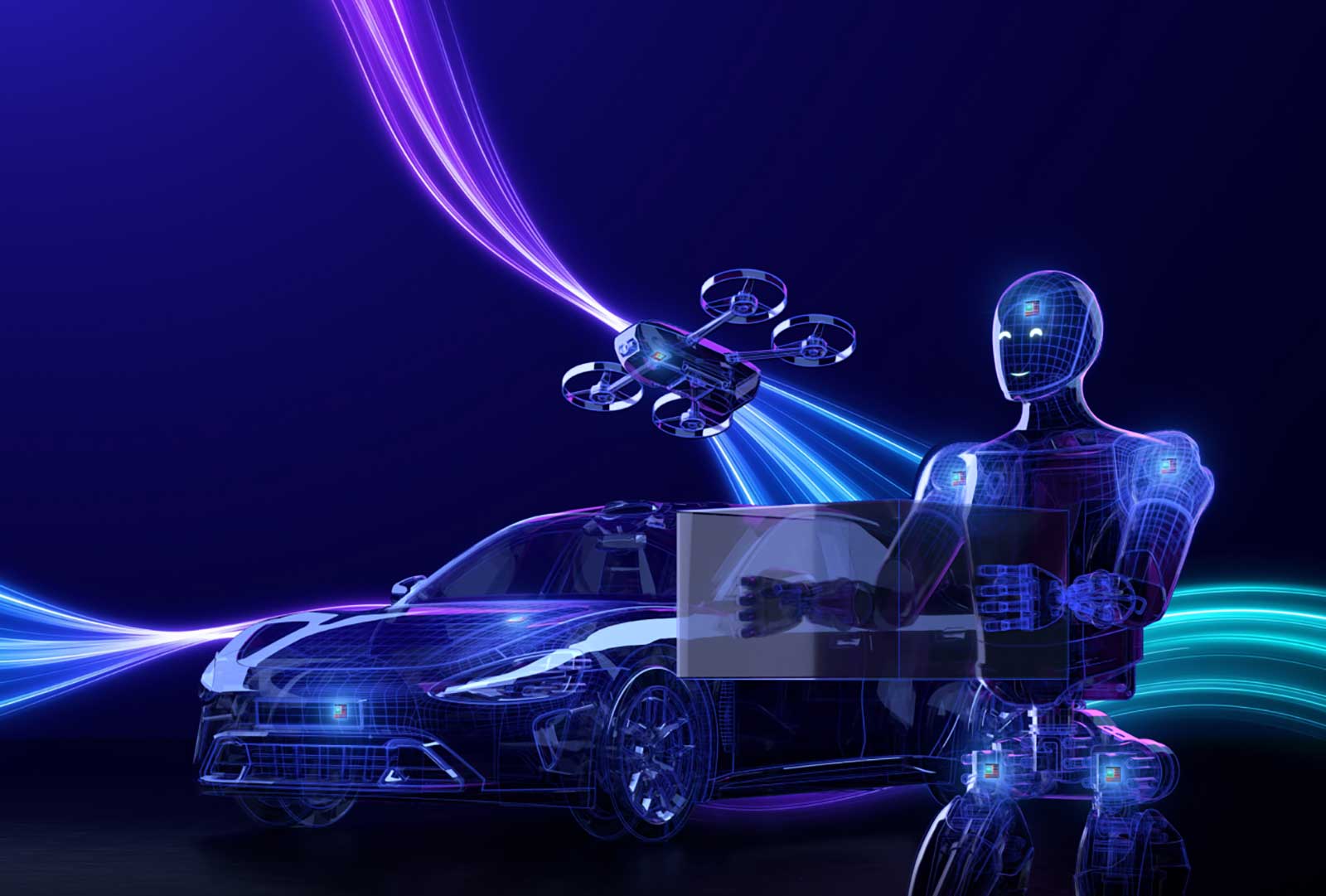
Scaling Robotics and Autonomous Vehicles with Arm
Dermot O’Driscoll,Vice President GTM and Customer Solutions, Physical AI, Arm joined Grayson Brulte on The Road to Autonomy podcast to discuss how Arm’s 30-year automotive heritage and mobile-derived low-power architecture position the company at every compute layer of physical AI.
O’Driscoll introduces Arm’s Robotics Capability Framework, an SAE-levels-style standard for robots, and the Arm Total Design for Physical AI program, which attracted over 80 partners in under a month.
He projects the physical AI compute market will grow from roughly $25 billion today to $200 billion in the early 2030s, an 8–10x increase driven by autonomous vehicles, humanoid robots, farming, mining, and logistics.
O’Driscoll frames Arm’s role as incubating ecosystem standards and fostering collaboration until a formal standards body can take ownership.
Key The Road to Autonomy Questions Answered
What is Arm’s Robotics Capability Framework and why does it matter?
The Robotics Capability Framework is Arm’s proposed common language for classifying robots from reactive, fixed-rule machines up to self-improving, self-training robots, analogous to SAE ADAS levels zero through five. Arm published a manifesto on the need for such a standard and is inviting the robotics community to co-develop it, with the eventual goal of handing it to an independent standards body for certification and enforcement.
How large is the physical AI compute market and when will it reach peak growth?
According to O’Driscoll, the physical AI compute market stands at roughly $25 billion today and Arm projects it will reach $200 billion in the early 2030s, representing 8–10x growth over approximately five years. Growth will be fueled not only by autonomous vehicles but by AI applied to farming, mining, logistics, and other sectors representing the two-thirds of global GDP not yet benefiting from AI.
Why does Arm’s low-power mobile heritage matter specifically for robotics and physical AI?
Robots are highly energy-sensitive: power consumption directly determines battery size, whether liquid or air cooling is needed, total robot weight, and how many hours the robot can operate between charges. O’Driscoll argues that Arm’s mobile-derived low-power design techniques, clock gating, power gating, near-zero idle consumption are essential to making physical AI commercially viable and enabling longer operational windows.
The Road to Autonomy Topics & Timestamps
[0:00] Growth of Physical AI Explosion
Grayson Brulte welcomes Dermot O’Driscoll to discuss the rapid expansion of physical AI (AI embodied in machines that sense, reason, and act in the physical world). Dermot notes that physical AI spans two primary markets for Arm, automotive and robotics, which share fundamental compute challenges across sensing, perception, planning, and actuation. Arm’s architecture aims to sit at every layer of the compute stack, extending up to cloud-based fleet management and learning.
[02:33] Arm’s Heritage in Automotive & Mobile Compute
Dermot explains Arm’s competitive advantages: a 30-year legacy in automotive IP with built-in safety and qualification features that simplify system integration, paired with low-power mobile heritage focused on extreme power efficiency (e.g., clock gating and power gating). He emphasizes that Arm provides complete automotive-enabled (AE) stacks spanning CPU, GPU, image signal processing (ISP), and compute subsystems.
[06:02] Why Low-Power Architecture Unlocks Robotics
Addressing the critical role of energy efficiency, Dermot discusses how power constraints dictate battery size, weight, and cooling methods (air vs. liquid cooling) for autonomous systems. Power efficiency directly unlocks longer operational time and greater productivity in robotics, avoiding poor user experiences caused by high energy consumption.
[08:00] Scaling Physical AI & Standardizing Capabilities
To help physical AI scale and reach its ChatGPT moment, Dermot highlights the need for industry standardization and a common language similar to SAE ADAS levels (L2–L4). Establishing shared definitions allows builders, integrators, and regulators to align on capabilities and safety certifications.
[10:00] Arm’s Robotics Capability Framework
Dermot outlines Arm’s Robotics Capability Framework, an open invitation to the robotics ecosystem to establish a standardized language. He also introduces the Arm Total Design for Physical AI program, which rapidly signed over 80 partners within a month, demonstrating industry-wide demand for scalable ecosystem collaboration.
[13:35] Ecosystem Defragmentation
Continuing the discussion on framework levels (Level 0 to Level 5, ranging from reactive to self-improving robots), Dermot stresses the importance of overcoming fragmentation. Fostering direct communication between silicon vendors, software developers, model trainers, and hardware/actuation engineers enables optimization across modular layers.
[18:30] High-Performance Compute Constraints
Dermot describes physical AI as one of the most challenging compute environments due to competing constraints: integrating real-time computer vision, sensor fusion, safety-critical tasks, and high-performance compute within a tight power footprint (often under 100 watts).
[22:00] Standardizing Robotic Architectures
Dermot highlights how Arm’s pervasive architecture enables developers to maintain software consistency across varied robot types (AMRs, quadrupeds, humanoids) and across internal compute layers (from microcontrollers in dexterous hands to perception and planning platforms).
[25:19] Arm’s Physical AI Business Unit
Dermot clarifies his role running go-to-market for Arm’s newly established Physical AI Business Unit. Created to deliver a unified internal response to market demand, the unit focuses on bringing the ecosystem together to accelerate commercial deployment.
[27:24] Comparing Physical AI Growth to Early Cloud Adoption
Drawing parallels to the early adoption of cloud computing over a decade ago, Dermot notes that physical AI is entering a similar rapid growth phase. Driven by established AI training foundations and heavy capital investment, robotics and autonomous platforms are poised to scale even faster than early cloud transitions.
[31:57] Robotaxi Compute Architecture
The discussion shifts to robotaxi compute architectures, which combine central domain controllers, autonomous driving (ADAS) chips, specialized ECUs, and in-vehicle infotainment (IVI) systems. Dermot notes that the market is entering a new phase with custom-built vehicles tailored specifically for autonomous ride-hailing.
[35:45] In-Vehicle Infotainment Experiences
Dermot highlights how removing driver controls enables immersive in-cabin experiences, citing trends in China such as large screens and 4D gaming. Because mobile AAA games are optimized for Arm architectures, porting rich media and entertainment directly to vehicle infotainment systems is a seamless transition.
[37:56] $200B Compute Market Opportunity
Arm projects that the compute market for physical AI will grow from roughly $25 billion today to a $200 billion market by the early 2030s (an 8x–10x expansion over five years). Dermot frames this around global GDP ($115 trillion total), noting that while one-third represents knowledge/data center industries, the remaining two-thirds ($75 trillion) in physical industries is just beginning to adopt AI.
[42:26] Industrial Markets
Dermot explores the vast potential for physical AI across industrial sectors, including agriculture (e.g., smart tractors), mining, logistics, shipping, and delivery. Building trust in these sectors requires establishing shared safety standards, clear operational capability definitions, and dependable support ecosystems.
[47:34] 5-Year Outlook for Physical AI
Looking ahead, Dermot forecasts massive scaling of physical AI over the next five years across transportation, industrial operations, and eventually personal spaces. The combination of strong engineering innovation, standardized frameworks, robust ecosystems, and capital investment will drive a major industry transformation.
[49:01] AUTNMY AI
AUTNMY AI is an applied intelligence firm whose mission is to develop a field-tested, ground-truth understanding of how the Autonomy Economy is being built and translate that understanding into the intelligence, foresight, and counsel that help the world’s leading institutional investors navigate the most consequential industrial transition of this century.
Full Episode Transcript
Arm’s Physical AI Vision and Core Markets
Grayson Brulte: Dermot, it’s great to have you here on The Road to Autonomy. Physical AI is exploding. It’s everywhere. It’s real, and Arm is at the center of it because you have a low power architecture. How is Arm approaching the advancement and the commercialization of physical AI?
Dermot O’Driscoll: Hey, Grayson. First off thanks for having us on. I am a big fan of your pod and, and I’m just listening to the one on robotaxis, so maybe we’ll get a chance to talk about that a little later. Arm- Arm’s approach here is that, you know, physical AI is where AI is coming into machines. It’s embodying AI in machines, machines that sense, that can reason, that can act in the physical world. So very simply you know, that, that, you know, that is two major markets for us. That’s the automotive markets and, and the robotic market. and those markets share some common sort of compute challenges when you sort of look into them, right? When you sort of double-click into what is similar about the, the automotive market and, and the robotics market. And I think I’ve heard you say that you know, you know, autonomous vehicles are just robots on wheels. if I’m not mistaken, I think that came from you. and I think there’s a lot, lot of truth to that, right? So when you get into, you know, the different levels of compute, which, which are required for robotics and autonomous vehicles, when you’re talking about perception and planning, when you’re talking about interaction actuation and sensing, there’s a lot of common, common technologies there. So, you know, our goal is, you know, and, and, you know, we, we see that Arm compute is at the heart of every layer of, of that– of those, right? up to and including, you know, what’s happening at the moment, which is the cloud, right? Where you’re seeing fleet management additional learning and training happening in, in, in the cloud on Arm-based compute. So I, I feel like our vision is, i-is that, you know, Arm is at every layer of, of the compute, you know stack when you, when you look at, at, at physical AI.
Grayson Brulte: Us personally, we use your architecture because it’s efficient. It’s really good architecture and it’s, it’s massively efficient. And I’m just– I, I’m a user, I’m a customer. But, but, but overall, in your opinion, you’re sitting there, you’re developing as you’re working with it, what does the Arm architecture unlock for physical AI that your competitors cannot unlock?
What Arm’s Architecture Uniquely Unlocks for Physical AI
Dermot O’Driscoll: So what we bring is we bring two, two sort of you know, forms of heritage for want of a better term, right? and, and the first is that we’ve been in the automotive space for 30 years, right? We’ve been building, you know, IP that’s been consumed by people building chips for the automotive space for 30 years. That has allowed us to learn about that market. It has allowed us to build in special features, safety features into our products that make it, you know, much more straightforward. If you’re building a chip based on, on that IP stack you know, you’re building a chip that you have to qualify the, the serv- the, the person taking that chip has to build, you know their product and have to qualify it and the market that– all of that stack. If you have to do that based on IP that is not qualified, it’s a much harder ch- much harder challenge for you as a system provider. And most people don’t wanna get into that. They just wanna trust and believe that the IP stack that they’ve built upon is, is, is that, right? It’s trustworthy, right? And the reason you buy IP and license IP is for that trust. So we’ve spent a lot of time and, and, and energy learning about the market and learning about the needs and, and building the right IP stack. the other piece of heritage that we bring is what comes from the mobile market, right? And, and probably where we’re most more famous actually. I don’t know that everybody knows we’re in almost every vehicle on the road, but I’m sure most people who know about Arm think of us as the mobile company. And and that heritage you know, is just, it’s low power, right? It’s everything is done, you know, as a, you know, an, an ex-engineer myself, you know, inserting clock gates at every level in the clock tree, inserting, you know, power gating in every piece of the implementation, building an SoC that consumes as close to zero power when it’s not in use, right? Like we have all of those technology, you know, facets built into, into the IP stack. So you bring those together, now you’ve got a really low power power efficient solution. Plus you’ve got plus you’ve got the automotive-enabled piece. Now the other thing actually, which, you know, as we’re talking about it, you know is like we don’t just build CPUs, right? We’re not just a CPU company. We build CPU IP, we build GPU IP, we build image signal processing IP. So– And then we build, you know, compute sys- subsystems where we pull it all together. And, and what that allows you to do is go, you know, if I’m building a vision pipeline to take all of the sensor data that’s coming, that I’m ingesting, whether that’s into a robot or into a vehicle, that sens- that, that, that, you know, that computer vision pipeline is all– it’s all automotive. You know, we call it AE, right? Or automotive enable. It’s all automotive-enabled grade. So you can go, okay, everything from the sensor to the compute and back out to the actuator is already a proven safe pipeline. That’s the value kinda we bring there because we’re, we’re presenting it as a complete stack, you know. And I think that just makes it easier if you’re a chip maker to bring your own, you know, differentiation, but to build it on a foundation of, of all those IPs
Grayson Brulte: Do you imagine this is hypothetical, a scenario where Arm wasn’t around with your low power architecture and, and physical AI tried to scale on high power? To me, it would just be a failure. I mean, to me, low power truly unlocks physical AI and what’s possible with it
Why Low-Power Architecture Is Essential for Robotics
Dermot O’Driscoll: If you look at most, most robotic solutions are energy sensitive, right? And that’s, you know, I mean, you know, that’s a– the, the– it’s, you know, how much, how much energy you’re consuming, right, drives how big a battery you need to have, right? How big your cooling solution needs to be. Can you do it with air cooling or do you need liquid cooling? And then how much does it weigh, right? You know, if, if, if I’m building something that has liquid cooling, now all of a sudden I’ve gotta make a decision. I’ve gotta put a liquid cooling solution in, which is probably taking away some of my battery capacity, which is therefore taking away my day-in-the-life experience for this robot. I’ve seen some, some really cool examples, you know, on my, on my travels of, of robots where people are putting them into operation for 8 to 12 hours at a time, but they’re looking– they’re always looking for more, right? You know, the longer you have that robot in operation, the more you’re– you know, the less charging time, the, the more you’re getting, the more productive that robot is, right? So yeah, so I, I mean, it’s, it– Maybe not to answer your question, but I just think that the robotic space is super sensitive to, to power, and I think power efficiency just it, it, it, it unlocks robotics. and, and without it, I, I think you end up with some pretty poor experiences, you know?
Grayson Brulte: Historically, robotics have always been, “Oh, that’s a science fair kit. Oh, that’s the, the, you know, it lives in this little small ecosystem.” And now it’s on its way into the mainstream. When Jensen gave the speech and, and declared physical AI, all suddenly the attention turned to it, but unfortunately it, it’s fizzled, and a lot of the attention is still on LLMs. So here’s the, here’s the big 50,000-foot question: When does physical AI have its ChatGPT moment, would you estimate?
When Will Physical AI Have Its ChatGPT Moment?
Dermot O’Driscoll: It’s a great question. So first, you know, you have to give hats off to all the people who’ve been in robotics from the start, right? And who’ve been believing that this is, this is going to happen. And I talk to, to these guys all the time, and, and it’s just awesome when you, when you meet with these guys ’cause they’re just so passionate, right? And they’re so open and so sharing. So it’s a fantastic community. I love engaging with that community ’cause they’re definitely– none of them, even though they’ve been in it for, you know, many of them since high school, no sign of being jaded by it. It’s really cool, right? So, so but to answer the question on how do we scale physical AI, right? And, and I think you know, there, there– what we have to look to is Some form of standardization, right? Some form of common language, some form of you know way to describe robots that those building the parts for robots, those assembling the robots, those deploying the robots, those exposed to the robots can understand, right? And, and if I draw the analogy back to, you know, ADAS standards, you know, most people in, in– certainly tech people, but even outside of that i-in the indus- in, in the industry will understand what ADAS L2 means, what ADAS level three means, what ADAS level four means, right? And, and, and that has allowed that ecosystem to scale. Right now it’s still at the early phases of it, but it’s scaling because you now can say, “Well, that’s an L3 vehicle, and I understand what that means.” And a regulator– You can have a conversation with a regulator, whether it’s in Austin, Texas, where I live, or, you know, somewhere else in the country, and you can say, “Well, this is an L3 vehicle.” And they can go, “Oh, what does that mean?” And there’s a, there’s a lookup table for what that means and, and all of the, the, the, the meaning behind it and all the work that’s been done to certify it. We don’t have that yet in the robotics space. and that’s something that, you know, when we, when we announced a robotics capability framework, one of the things we were looking to do was to start that conversation, right? It’s– And, and, and I very much emphasize it’s the start of a conversation with those in the robotics ecosystem who are building and deploying robots. you know, we as Arm, we, we don’t pretend to have all the answers, and we don’t pretend to show up with a perfectly defined robotics capability framework. That would be that, that would be amazing hubris from our, from our side. But what’s been interesting about it is from when we’ve announced it, the interest in working on it is– it’s, it’s, it’s wide, wide in the industry. So we’re getting a lot of interest on the robotics capability framework. So I think having a standard language, and that’s what we’re doing with the, the robotics capability framework, is really important. And anybody who’s listening to this who’s in the, in the, in the mix and in, you know, working on robotics, please reach out and, and absolutely love to connect with you. You know, we have our you know, chief. We, we recently hired a chief robotics technologist to come in and work in this space. So, you know, that’s, that’s really, you know, I think, you know, a wide-open invitation. The other thing that we’ve been talking about as we talk about scaling physical AI is how do you make it easier to build, assemble, procure parts, prove out software? How do you get, you know, some of the, whether it’s VLAs or LLMs or whatever models running on it? Like e-essentially if– again, if you look at any other ecosystem that has scaled there’s communities, right? And there’s an ecosystem of players. And there’s a place where they can have common discussions and common conversations. We think- with the Arm Total Design for Physical AI program that we’ve announced, we can, we can help with that, right? We think we can help with that. And you know, we we put that together in, in just over a month, right? And this will tell you the kind of interest that we’ve seen. we scaled, right, from, you know, just introducing this to some of our partners and some of our customers to having, you know, over 80 partners signed up in a month, right? It– Yeah. Yeah. It, it, it– I was very surprised. I had set a target for my team, “Hey, can we get to 25? Can we, can we get to 25 before we announce this?” And, and, you know, we’re, we’re at 80, and there’s still more coming in. And I, you know, that’s not– I, I don’t think that’s a– Man, that’s a reflection of my team. I think they did a great job, but I think it’s also a reflection on the fact that there’s– everybody in the industry feels like this market, this, this physical AI market has yet to scale, and they’re looking for ways and opportunities to to drive that scaling. And I think, you know, when somebody says, “Hey.” When somebody, particularly with Arm’s reputation for building ecosystems says, “Hey, we’re gonna, we’re gonna help with this, and we’re gonna participate and bring people together,” people go, “Yeah, that’s the kind of that’s the kind of community that can, can, can make that kind of change happen,” you know?
Grayson Brulte: You have the community there. You also have the resources and the technical know-how to, to accelerate this. Well, it sounds to me there’s, there’s two threads here. One, it sounds that the framework is very similar to the SAE levels of automation, and then it sounds that the ecosystem is, let’s call it home brew, a, a grown-up version of home brew. People can come together and build the future. Am I reading both of those correctly?
Robotics Capability Framework: From Reactive to Self-Improving Robots
Dermot O’Driscoll: Yeah. Well, let’s start with the framework. So just like the the SAE ADAS framework, there’s level zero to five. and it’s everything from just reactive robots, you know, to robots with a plan, deliberative robots, all the way up to self-improving robots, robots that can sort of self-train, right? And as you look at those you start thinking, okay, what, what is, what are the important factors of those robots? So they’ve got different capabilities. I need to understand their behaviors. I need to understand what kind of outcomes they, they’re expected to drive and ultimately what capability is beneath the, the, that level, right? You know, it might be fixed rules, right? So very directly programmed old school kind of robots. – robots with rule-based logic you know, self-optimizing robots, you know, and across that spectrum. So the, the robotics capability framework as it stands, and like I said, it’s, it’s something that, you know, we’re inviting the community to help us shape tries to set the boundaries of what, what, what is important there. But even in some of the early conversations we’re having with partners, we’re getting feedback on, “Hey, there’s a vector here that we maybe n-maybe need to think about.” So it’s great, right? It started a conversation, and that’s what we wanted, right? We wanted to, to start a conversation. so that’s it on the robotics capability framework. On the Arm Total Design Ecosystem, yeah, I love that, that reframe as a sort of maker grown up, right? I– you know, it, it is interesting when– you know, ’cause it– with being at Arm and just having sort of this front-row view into the industry and the ability to talk to all of these companies you know, you sit in a lot of rooms with people who who’ve been in the automotive industry or at the early stages of the physical AI industry. And quite often what they, they, they bring up is th-there’s, there’s a fragmentation issue, right? There’s a fragmentation concern, and unless we can come together in a way where the guy building the low-level SoC and the guy building, you know, the board and the guy writing the software and the guy training the model that runs on the software, and the guy actually building the robot at the end of the day, you know, have a place to gather and to work together. They’re all operating in, in isolated silos, right? And, and I think, you know, what we know from history is you know, when you build sort of modular solutions, you know, you buffer on every level of that modularity, right? So you, you create interfaces that are standardized to make it easy for each layer to talk to each other. But by doing that, you, you kind of remove the opportunity to optimize across those layers of, of, of, you know, whether that’s compute or software. So I, I think it is important for the people who are building the software and the models to be talking very closely to the guys who are building the actuation system so that they can go, “Hey, how can we make this better?” Because we’re still at a stage where you know you know, a humanoid robot spends an awful lot of its energy just on standing up Right? And that’s just one example, right? Okay. Where you think, okay, if, if you could optimize the way the actuators talk to the models, maybe you can improve that, right? And it’s not just, hey, I’ve fixed- I’ve got a fixed actuation plane, execution plane, and I’ve gotta make my software work on it. Maybe the software guy can now communicate with the actuation guy and go, “Hey, if you built it a little bit differently, I could have a better solution.” And together they would work better together. So that level of communication and, and interaction between teams and between companies is kind of what we’re trying to foster there
Grayson Brulte: I’ll just name them. I mean, years ago, we’re probably going back a decade ago, maybe a little bit longer, I used to attend this event. Joshua Schachter had an event up at Willow Run in Northern California called Self-Racing Cars. And it was just a bunch of us got together, and you would build cars, and you would run them fully autonomously ar- around a racetrack with a Safe driver ’cause re- re- requirement of that. But there was one company that was there, NVIDIA. This is before NVIDIA became NVIDIA. They were there saying, “Hey, we can offer you chip support. We can offer you this.” And then lo and behold, fast-forward today, NVIDIA’s pretty much in every single robo- robotaxi and autonomous truck out there. But it started with those, those local d- do it yourself events, those like, those homebrew events. Could we see a similar thing with Arm where some of these smaller events where you become the glue, and then you fast-forward X amount of years, and all suddenly Arm is at the center of the physical AI economy?
Dermot O’Driscoll: Well, so let me start out by saying NVIDIA is a, is a very close and wonderful partner of ours. and I, I love, I love talking to people when they go, “Oh, we, we use NVIDIA.” And, and you go, “You do realize that’s Arm?” And they go, “Oh, no, I didn’t realize that was Arm.” So it’s kind of, it’s kind of interesting. you know, it’s been the, the secret technology behind some of the most successful stories. But y- yeah, to, to answer your question on you know, how this plays out. So, you know, Arm has always done well, you know, when our partners do well, right? And, and that’s a– it’s a key part of our sort of company DNA is the collaborative mindset and sort of the we’re enabling and we’re underlying technology that allows the most advanced solutions i- in the world to be built, right? And, you know, our take on this physical AI space is these are going to be the most advanced computing solutions. They’re going to be some of the most challenging you know, compute solutions. I, I, you know, spent 10 years in the cloud space, you know, working with some big, big companies like Amazon and Google and others, and they have a complex problem to solve, for sure, right? But if I oversimplify it, it’s networking and compute, right? Right? It’s, it’s networking and compute. And and, and, and my old boss won’t love me for saying that, but that’s. You know, whereas in this space, you’ve got, you’ve got computer vision, you’ve got you’ve got sensing, you’ve got the processing of that vision data, you’ve got the coalescing of that vision data with real-time models, with, you know, you’ve got to have a real-time compute environment. You’ve got to have safety criticality. You’ve got to have, you know, high-performance compute, but you’ve got to do it all, you know, in a power footprint of less than 100 watts so that you can put it on the back of a robot. there aren’t too many spaces in any ecosystem where you have those you know competing, you know, constraints. And the competing constraints, by the way, that’s what makes this kind of cool, right? Like, and I, and I think, you know, it’s the kind of fun part of the, the, the physical AI space is you know your power footprint. You know– You’re, you’re now trying to figure out what can I get out of it, right? How can I, how can I achieve things that people would not expect in that power footprint? And I, and I think by enabling that, Arm will, will, will, will do, will do just fine, right? As a, as a, as a company and as an ecosystem, and that’s our goal. Our goal is, you know, we build ecosystems to you know, to, to help scale technologies that benefit both those in the ecosystem and sure, it benefits Arm as well.
Grayson Brulte: And there’s one common denominator across physical AI. Not everything’s the same, and it’s not a one-size-fits-all solution. There’s no better– And that’s how it’s going. Is that one of the benefits of your IP and your architecture, that it can be adopted and adapted for different solutions? ‘Cause it’s not just this one solution, there are multiple solutions, and who knows in the future what other solutions or form factors are going to emerge
A Common Architecture Across All Robot Types and Compute Layers
Dermot O’Driscoll: That’s absolutely the case, right? So if– whether you’re using say a Rockchip chip in your, you know, in your AMR or you’re using a, you know, NVIDIA processor in your humanoid or your autonomous vehicle you know, and all of the others in between, NXP, ST for the, the, the little micros that are used in some of the dexterous hands it’s a common architecture, right? It’s a common architecture that is, you know, pervasive across all of these you know, both all of the layers of compute but also all of the different kinds of robots. and what’s, what’s useful and helpful about that, right, is it allows the software challenge, which for many people is the challenge they really want to spend time solving to be fairly consistent, right? So, you know, you can build a you can build a solution that scales whether– You know, if you’re a company who’s building, you know, robots you don’t wanna have to switch architectures between your AMR and your quadruped and your humanoid you know. And you also– You know, so, so that, that’s, that’s a, that’s a great advantage. You also don’t want to have to switch architectures if you can avoid it going from the actuation on your humanoid up to, you know, the perception and planning, you know, and, and, and data ingestion side of, of, of your robot. So the ability to go broad across different types of, you know, devices as well as go, you know, north-south in terms of the technology that’s within them, I think that, that, that’s a, you know that, that’s what Arm enables people to do and just makes their– ma-makes that problem go away. You know, right? It make, makes it much easier for them to do that.
Grayson Brulte: I would summarize it in a very simple way. Arm enables companies that use your architecture to scale. I mean, you have some very public customers who are scaling rapidly on using your IP and your technology. On the physical AI side, if you had to estimate, I know this is gonna be a broad estimation, how many physical AI devices or iterations out there would you say are running Arm architecture today?
Dermot O’Driscoll: That’s a great question. So I well, yeah, so, so I know from from last year’s data, I know that over two billion devices shipped based on Arm last year. So that’s, that’s in 2025. Now, if you go back, you know, you start accumulating that over the years, it’s obviously a massive number, right? But what’s, what’s, what’s, you know, what’s amazing about that is just how different those can be, right? From, you know, whether it’s a Cortex M-based micro, you know, you know, that’s, you know, managing the digits of, of a device all the way up to, you know, the hi- high- highly advanced compute. So yeah, it’s, it’s very, it’s, it’s, it’s very pervasive
Grayson Brulte: If you look at your, your public filings that you’ve made with the SEC, you can see the growth numbers. And so I encourage the audience to go read Arm’s SEC filings. You can see all the financial data. You can s- you can see the actual numbers of how the company’s g- company’s growing. So we have your data filed with the SEC, which is showing really remarkable things from a growth perspective. And then recently, the company made a public announcement that they’re standing up a physical AI unit, which you’re heading. What is the company seeing in the market to make a dedicated unit just for physical AI?
Arm Launches a Dedicated Physical AI Business Unit
Dermot O’Driscoll: Yeah. So let me just I’ll just clarify one thing ’cause my boss might listen to this. He, he actually likes listening to your pod too. I’m not heading it. My, my boss is heading it, but I am, I am running the go-to-market on it. yeah. So we, we see we see that physical AI is is on the cusp of scale, right? We see a, a, you know, an ecosystem that is ready to transform. and having worked in, in the cloud ecosystem, you know, i- in the last 10 to 15 years, I watched that transform, and Arm was sort of a key, you know, catalyst to help that transform, you know with, with Amazon and Google and Microsoft and others, Meta adopting our technology. So we see a lot of similarities in this ecosystem in terms of the challenges. And the challenges we think, you know, we can bring we can bring solutions to. So that’s, that’s why we put the Physical AI business unit together, was to bring a coherent response from inside Arm to the ecosystem and then bring the ecosystem together. So yeah, so we, we– we’re, yeah, we’re, we’re all in on the physical AI space. not only is it, you know, do we, do we think it’s ready to transform. It’s, it’s super– It’s a super exciting technology space. it’s, it’s, it’s a great place to, to, to engage with the developers of those solutions, to work with people who are doing creative things you know all sort, all manner of whether it’s robots or, or autonomous vehicles or autonomous trucking or autonomous, you know, diggers or what have you. It’s just, it’s, it’s, it’s– it, it is. You know, I, I meet with a lot of people and a lot of companies, but there is a huge amount of intellectual investment going into this physical AI ecosystem right now. And we believe that to unlock that needs a concentration of, of an ecosystem and focus which is why we put the Physical AI business unit together.
Grayson Brulte: I wanna dovetail with your background in cloud. God, this was pr- oof. I mean, we’re probably pushing 15 years now. I remember I was invited, so thank you to Google. I was invited to the original first ever Google Cloud event, where I think there might’ve been 200 people in this room in San Francisco, and I’ll never forget it. Google Cloud was so proud. They signed their first big customer with Snapchat, and I got to meet Evan Spiegel back then when he, when Snap was just starting and, and how important that was. And they talked about the data storage and the, and the architecture. I was like, “Oh, there, there, there’s a kernel of something here. There’s, there’s something here with this, this, this cloud stuff.” And then I, from there I went down cloud rabbit hole. Are we– Are at that early, early stage, obviously before that you had AWS w-was starting to stand up. They had this. I was at the original AWS event for Hollywood, and I always remember this. They were so proud. They rolled out Netflix was running on AWS originally and PBS, and Netflix gave this whole presentation to Hollywood about how Netflix and PBS are using this in their scaling. And that was, you know, like I said, 15 years ago. Are we there going back in time? Is that where we are physical AI today?
Dermot O’Driscoll: I think we’re, we’re certainly approaching that point, right? I think we’re approaching that point of the transformation happening. I think we’re still a little earlier than when some of, some of that was happening on the, on the journey around around physical AI. Now, it does depend which area of physical AI I think you look at. So if you look at for example, right you look at autonomous vehicles and, you know, I, I, I live in Austin, and we’ve got, we’ve got Waymo, we’ve got Tesla Robotaxi, we’ve got Avride, we’ve got Zoox. I’m probably mis- I’m probably insulting somebody by, by not mentioning them, but there’s at least four, right? And they’re all now deployed, but that took quite a long time, right? It took quite a long time from the early work that Google was doing on AVs to getting here. I think this ecosystem, the, the physical AI ecosystem and robotics is going to scale much, much faster because it has such a great foundation. And we’re also in a, in a world where training and understanding of AI is so much further advanced than it was when, when that started, right? But, but, but coming back to your question I think we’re, we’re, you know. I, I, I expect we’re going to see, you know, a fast acceleration now of autonomous vehicles. What’s, what’s– what, what we see in the robotics space is there’s early trials. There’s a lot of that going on right now, and you’re seeing, you know, in the order of tens of thousands of units of robots being deployed you know, if you’re talking about humanoid level. so I think it’s, it’s there. Some of the, the challenges that we’re looking at are things like generalization, right? So you build a robot, and the robot is capable of doing a certain task. You want that robot to do a different task, you now need to retrain that robot, right? And, and so, you know, having robots be able to self-learn or retrain, I think is a capability that we need for things to scale. So I think it– I think it’s still somewhat early compared to the– where the cloud was 15 years ago, but I think it’s going to move very, very quickly, and I think that’s the difference, right? I, I think there are enough companies investing enough time and energy, and there’s enough technology there that it’s now about defragmentation, right? And, and, you know you know, and, and breaking down some of these barriers around generalization and integration that people will move very quickly.
Grayson Brulte: That’s a valid point. I, I’m happy we’re earlier, and that makes me excited just as a, as a human from having lived through that and experienced that and was able to participate in that to, to, to where we are today. And just for the record, you are correct. So it is AVride, Tesla Robotaxi, Waymo, and Zoox. So you are correct. You didn’t miss anybody from a robotaxi perspective. So well done there, Devant. So on the robotaxi standpoint, how does Arm think about it? Do you look at creating bespoke architectures for robotaxis? Do you look just putting in chips to do certain types of, of tasks inside of the vehicle for sensors perhaps? Or how is Arm collectively thinking about robotaxis since robotaxis are such a large important part of the physical AI ecosystem?
Dermot O’Driscoll: Yeah. And so robotaxis, right? if, if you, if you look inside the robotaxi, there’s quite a lot of technology i-in, in a robotaxi, right? you know, from the traditional sort of central domain controller that’s become more common in all vehicles, but now you’ve also got, you know, so you’ve got an ADAS chip, right? An autonomous driving chip that has to have, you know the right capability. you’ve got the sensing technology, you’ve got the the various ECUs that are controlling different behaviors around the vehicle. And then you’ve also got you’ve got some form of compute that is interacting with the, you know, the human who’s in the vehicle, right? And so w- you know, again, this is a this is a platform, right? So what you’re seeing is you’re seeing people leveraging a common architecture, whether they’re building that ADAS chip or whether they’re building that, you know, what people call IVI, the in-vehicle infotainment chip, whether they’re building the ECU chip or the sensor or, or the actuators, right? So, so there’s a lot of technology in a vehicle. and for the most part, a lot of those, you know, those chipsets are leveraging, leveraging Arm and the Arm architecture. and some of that is, you know, just because we’ve been working in that space for so long and, and, and bring a lot of, you know, good technology to it. And, and some of it ’cause it’s just, it’s, it’s, it, it’s easy for them to work across chipsets if you’re building an autonomous vehicle, if you have a common architecture. so, so that’s kind of what we see there. but it’s — What’s interesting is what we see today I would argue is just the earliest versions of robotaxis, right? And I think the, you know, what we’re s- you know, and, and maybe, you know, you could, you could argue that the Tesla Robotaxi is the start of the next phase, right, of, you know, custom-built vehicles for that market, right? Where, where, where, you know, you know, Tesla have invested in building something that is specific to it. But I think the level of user experience is just going to get better and better, you know? you know, so I, I think that, that, you know, the, the ability to, you know, to occupy your time and your mind and, you know be entertained whilst you’re in a robotaxi is just gonna con-continue to advance, you know? So I think, I think that portion of that ecosystem is still early. but I mean, it’s amazing the, the, the step forward that, that the companies have made, right?
Grayson Brulte: The step forward, I would call it a leap forward. Tesla, a few months ago, was very kind and hosted me at Giga, so I got to walk the, the Cybercab lines or the Tesla. folks that listen, thanks for inviting me and thanks for letting me see the mold injection and how they build Cybercab. It was massively impressive. And, and I want to emphasize this ’cause it’s not talked about a-enough. What I saw there from a safety perspective, the safety that goes in those vehicles was absolutely incredible. And I’ve said this in my house, and I’ll say this now publicly, I’d put my 12-year-old daughter in that car and send her to school in one ’cause I believe that’s how safe that technology is from what, for Tesla showed me. But think about it from this perspective and because Arm is vast and wide. When you remove all manual controls, you have a, a canvas that you can paint on, and your architecture is giving an artist, which in my opinion, as an engineer, w- as an artist, is things to build. I can just imagine all the incredible things in the future that Arm is going to power inside of a vehicle. Not just the ADAS system, but the actual in-vehicle entertainment system gets very, very fascinating and potentially a lucrative market for Arm
Dermot O’Driscoll: I think so. I think that– I think we’re just starting to see glimpses of what that experience is going to be. I was. I spent a lot of time you know, traveling to China, and one thing you notice with some of the Chinese car makers is they’re pushing that to the limit, right? So they have massive screens. They have what they call 4D gaming, right? Where the vehicle, when parked you know pitches and rolls. So if you’re watching a movie or you’re playing a computer game, you have this amazing experience. And I, and I think that, you know that, that, that type of experience is coming, is coming to the robotaxi. And I agree with you. if you think about where gaming is going you know, most people are. It, it’s mobile gaming, right? Like, there’s still console gaming, but a lot of it is mobile gaming. And triple A gaming on a, on a, on a mobile handset reflected in vehicle, I mean, who, who– That’s a fantastic, you know, that’s a fantastic experience. And because those games are currently built to run on mobile, you know, devices, those mobile devices are ARM-based, it just naturally transfers over to run in the vehicle, you know you know, as you’re, as you’re you know, traveling, whatever distance you’re traveling. You know, if you have a 45-minute commute and, and you have 45 minutes of gaming time, or you have 45 minutes of, you know, you know, wraparound, you know, Zoom conversation with your, you know, your family across the planet or what have you. Yeah, I think we’re just at the beginning of, of what IVI is going to look like. There’s a huge amount of creativity that’s gonna get unlocked as people put just more and more advanced hardware into the vehicle.
Grayson Brulte: In all of the, we’re gonna call it experiments, ’cause they were experiments that were made from various different cloud providers early on. Look, you can stream live audio, you can do this. Those experiments are going to, to go in vehicle at some point, and they’re. The common denominator that you and I both agree on and probably majority of this audience agrees with is that physical AI is, is going to scale. And I’d be remiss if I didn’t ask you, when are you projecting the hockey stick growth for physical AI as it relates to ARM?
$200 Billion Physical AI Compute Market by the Early 2030s
Dermot O’Driscoll: So as we look at the market, what we’re projecting and is that, you know, i-in the early probably part of the 2030s, this is going to be a $200 billion compute market, right? Now, that’s, you know, that’s a massive increase from where we are today. Today, that number sits about $25 billion. If you look at, you know, the compute that is deployed into the physical AI, you know ecosystem. So, you know, I– you know, conservative math says it’s eight to 10X growth in the next five years. so I think, you know, that, that, that’s– that level of adoption and, you know penetration into the market and is, is going to be driven not just by autonomous vehicles, but by bringing AI to solving other problems, right? That we have i-you know you know, farming, mining, transportation any form of logistics, right? you know you know, I think once you, once you start realizing that AI is a, is a tool that can be applied to lots of different problems and to lots of different problem spaces that’s– and, and all– a lot of those problem spaces are are physical, right? They’re physical, right? and we, we look at this quite closely and because we have, you know quite good penetration into the cloud space, you know, what we see is it– when you start looking at the de- the, the numbers is global GDP, right? If you l- think about global GDP global GDP is about $115 trillion, right? It’s about $115 trillion for global GDP. – Roughly one-third of that is what exists in, you know, you know, in and around the knowledge industries, right? So data centers, you know, that kind of class of compute. And that class of compute is where people typically think of AI being deployed, right? When people think about AI, they think about that, you know, large, large data centers and what have you in that space. The other two-thirds, the other $75 trillion is, is largely, you know, not yet taking advantage of what AI can bring, right? So you think of that $75 trillion worth of GDP that could be enhanced, improved, optimized, and obviously that GDP grown by the application of AI technologies. You know, and like I said, it’s, it’s whether you’re talking about food production and farming, there’s already innovation going into the farming space, right? You can see that with, with the, the companies who are building farming equipment. but it’s very early in that space. The same is true in mining, right? You can see that they’re starting to apply, you know, we’ve met with companies who are building solutions that sit on top of, you know, various mining, you know equipment. You get into shipping and, and, and logistics and moving all of that product to where it needs to be consumed and then delivery. So so it, it’s, it’s, you know, physical AI has the potential to, like, improve productivity, efficiency, you know, make it, make it, make it cheaper for us to get access to, to the things we need. Just a– it, it’s a very wide-ranging opportunity
Grayson Brulte: How much of the– I wanna– And, and this is a very true fact, and the audience can, can go look this up of what I’m about to state. How much of it is a lack of awareness? And I have to give a lot of credit to Danny Bernstein over at Reservoir, what he, what he’s doing of exposing physical AI and ag tech to the ag community, and he’s funding it. And he’s, and he’s– now he has a partnership with Google DeepMind and putting robotics on farms, but he is becoming a, a one-man machine, no pun intended, as a pr- to promote the opportunity in, in ag. Do you think a lot of this is awareness? ‘Cause on the mining side, the largest deployments, as you’re well aware of, are in Western Australia. And so you’re starting to see pockets, but how much of this do you think is just general awareness that some individuals and corporations, a matter of fact, might not know that this game-changing technology is available for them today to implement and deploy into their organizations?
Dermot O’Driscoll: I think there’s some of that Grayson, I, I do. But I, I also think that if you’re a, you know, if you’re somebody in that market, how do you know that you can trust these technologies, right? Like, how do you know what these te- technologies are going to do you know, in, in challenging situations, right? What is the safety standard that they’re written to? so it kind of does– It, it comes back to, you know the, the conversation around how do we like how do we define a common language and a common, you know set of standards and capabilities for physical AI devices, right? So that if you’re a, you know, a farmer in, you know, the US Midwest, you go, “Oh, okay, I, I can, you know, I can trust this, you know, John Deere or Ford or whoever’s tractor because I know it’s been built to this standard and to this safety standard,” right? In the same way as when I get into my, you know, my Model Y, I can trust that it’s been built to a certain safety standard. So I think, I think that’s a key part of this is y- you know, is, is the standard setting. but I also think that, you know those companies who are trying to deploy these solutions, they need ecosystems, right? They need somebody who can come up and repair that vehicle should it have an issue. They know– need to know that there’s a, you know, a replacement policy. They need, like– So there’s a lot of the other pieces that fit in here, right that are just important. you know so I just– I think it isn’t just communication or understanding of what’s possible, but I, I think that’s going to– I think that’s very quickly gonna catch on
Grayson Brulte: Is one of the, the overarching goals of the framework to build this, this standards the community adapts that then will then lead to building the trust? Okay, well, this product was built to the, I’m just gonna call it the Arm standard. Okay, well, we know basically this has the Arm seal of approval. We’re good to go. Is that kind of where you’d ultimately like to go with the framework?
Incubating a Robotics Standard Before Handing Off to a Standards Body
Dermot O’Driscoll: What we’ve done in the past is we’ve brought community together. We’ve helped align on a standard and. Well, firstly, you start by aligning on the need for a standard. So we wrote a manifesto, which we published to talk about the need for that standard which is definitely worth a read. And then what is that standard and helping define it. Now, at some point, that standard has to transition to be managed by a standards body. That’s not us, right? So, so we have to find the right place to land that, and we’ve done that pretty successfully in the past with other standards. so you know, that’s the goal. The goal is that we get enough of a community around this that there’s a natural place for it to land as a standards body. Because then you start talking about, okay I have a standard, how do I enforce that standard? How do I certify to that standard, right? How do I, how do I. Right. So that- that’s where you, you wanna make sure that you have the right kind of individual driving the, that behavior with the standard
Grayson Brulte: Would you view this, and I’ll use this term very broadly, as Arm kind of incubating the concept before passing it off to a standards organization?
Dermot O’Driscoll: Absolutely. Incubating and i-inviting collaboration actually. So one of the things that we want to make sure people don’t think of this is, is Arm is defining the standard for robotics capabilities. Arm is fostering collaboration in the ecosystem to help define a standard. That’s, that’s, you know, that’s– it, it’s language, but it’s important because we want those who who are building and deploying robots today to bring the knowledge that they’ve got from that experience. Because what we see is you’ve got a lot of individual organizations or companies who’ve built a robot, and then they go to deploy that robot, and they, they run into hurdles because they either have to figure out, you know, “How do I deploy that robot in that factory?” Right? Or in another factory, or there’s no way for them to go, “Oh, I can– I can build a robot and I can deploy it in a dozen factories.” Every factory is a new experience and a new training paradigm. so, so, so, you know, you, you do have to think through the the scaling challenge, right? And if you’re in the robotics field particularly people who’ve been in the robotics field a long time, they know what’s possible with robots, but they’re waiting for that scale to happen. And I think until you have, you know, that, that level of, of common knowledge brought back into a standard from the people who’ve been experiencing it and developing it and deploying trial, you know, robots you can’t say that you have a standard that is industry ready, and that’s what we’re looking to do. So incubation’s the right word. fostering the development of this common language is, is kind of the goal.
Grayson Brulte: Yeah, I would summarize this way: Arm is building the ecosystem for physical AI to scale globally. And you’re about putting this all together. In your opinion, sir, what is the future of physical AI?
Dermot O’Driscoll: I think we’re going to see a massive scaling of physical AI in the next, in the next five years. and we’re going to see adoption of it across transportation and into industrial you know, oper- spaces initially, but then eventually moving further into, you know, beyond the industry into, you know, personal spaces, right? But it’s, it’s– I think it’s a fen- it, it’s a, it’s a, it’s a great opportunity for innovation, right? This is a market that has always included people who are very innovative but it hasn’t always seen the sort of capital investment that it’s seeing now. So when you take great innovators, standards, and, and an ecosystem, you know, and capital investment you know, it, it– I think it’s gonna be remarkable what we see as, as, as this industry transforms from where it is today.
Grayson Brulte: It’s going to be remarkable. Arm’s going to continue to be at the center of it. As Dermot said, we have massive scaling coming in physical AI over the next five years. And if you’re a developer and engineer looking to build in physical AI, I’d highly recommend you reach out to Dermot and the team at Arm, because as I said earlier, they’ll be the center of the ecosystem. The future is bright, the future autonomous, the future is Arm. Dermot, thank you so much for coming on the Road to Autonomy, and I cannot wait to see where Arm goes in physical AI
Dermot O’Driscoll: Thank you, Grayson, and appreciate your time
AUTNMY AI: Billions and soon trillions in value will be created in the autonomy economy. By the time a trend becomes consensus, the alpha is already gone. The gap between uncovering signals and reading headlines is widening fast. When it’s a headline, it’s no longer a signal. Enter AUTNMY AI. We decode signals before they move markets, giving you conviction in the autonomy economy. AUTNMY AI, your models, our intelligence. Visit AUTNMY.ai.
Discalmer: Opinions here are as of the recording date, may change without notice, and do not necessarily reflect the views of AUTNMY AI Incorporated, its affiliates, or any speaker’s employer. Content, including the road to autonomy indices, is for informational and educational purposes only. AUTNMY AI is not a registered investment advisor or broker-dealer and does not give investment, legal, accounting, or tax advice. Nothing in our public or gated content is investment advice, a recommendation, an offer, or a solicitation to buy or sell any security or financial product and should not be relied on to evaluate any transaction. This program may contain forward-looking statements. Investments involve risk, including loss of principal. Past performance is not indicative of future results. Hosts, guests, and affiliated entities may hold long or short positions in securities mentioned. Content is provided as is without warranty. We disclaim liability for reliance on this information. Consult your own investment, legal, and tax advisors before making any financial decision.
The future is bright. The future is autonomous. The future is The Road to Autonomy.
Subscribe to This Week in The Autonomy Economy™
Join institutional investors and industry leaders who read This Week in The Autonomy Economy every Sunday. Each edition delivers exclusive insight and commentary on the autonomy economy, helping you stay ahead of what's next.