


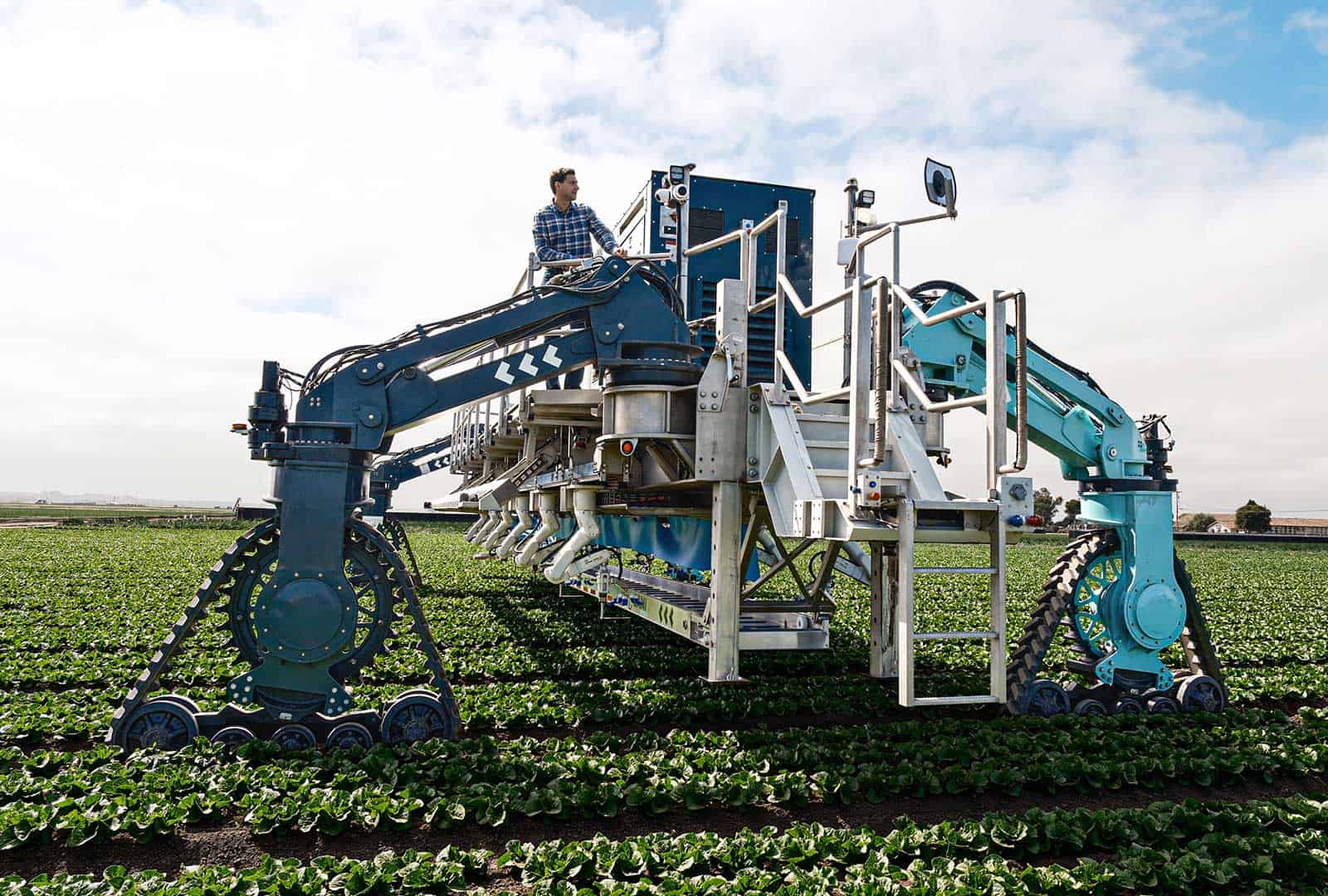
Building the Real World Farm Lab for Physical AI
Danny Bernstein, Founder & CEO, RESERVOIR and Paige Bailey, AI Developer Relations Lead, Google DeepMind joined Grayson Brulte on The Road to Autonomy podcast discuss how rugged physical AI is rapidly reshaping agricultural technology, highlighted by the Ruggedized event that drew over 70 startups, Google, NVIDIA, and the USDA to a working farm.
Bonsai Robotics’ $60,000 autonomous hybrid tractor and Google DeepMind’s Gemini and Gemma models are making farm automation increasingly accessible to smallholders. A key challenge remains bridging the trust gap between tech builders and farmers, which Reservoir addresses by providing free, real-world farm access for prototyping and structured grower feedback sessions.
Both Danny and Paige agree physical AI is in its earliest days, with every company eventually needing to become a robotics company, and urge developers to start building now.
Key The Road to Autonomy Episode Questions Answered
What is Reservoir Farm and why does it matter for agricultural robotics startups?
Reservoir is a real-world farm and technical community that provides free farm access to ag robotics startups. Danny Bernstein noted that after raising venture capital, startups typically waited six to nine months before accessing a farm, and Reservoir was created to close that gap and allow real-world testing of prototypes in a psychologically safe environment.
How are Google DeepMind’s Gemini and Gemma models being used in agricultural robotics?
Companies at Reservoir are using Gemini models for vision tasks like crop scanning and segmentation, including Orchard AI using Gemini Flash and Zumi Robotics using Gemma for segmentation. Gemma’s two-billion-parameter model can also run on a Raspberry Pi 5 to power robots like the Reachy Mini for conversation and tool calling.
What is ‘breeding for automation’ and why is it significant for the future of farming?
Breeding for automation refers to developing crop varietals designed to be easier for machines to identify and harvest, such as a long-stalk Bayer broccoli being harvested by SAMI Robotics at Reservoir and 2D trellising systems for tree fruit. Danny Bernstein explained that seed companies and geneticists are now investing in this area because they believe automated harvesters are one to five years away from broad deployment.
The Road to Autonomy Topics & Timestamps
[00:00] Rugged Physical AI Goes Mainstream
Danny Bernstein explains how RESERVOIR’s event brought more than 70 startups, Google DeepMind, NVIDIA, and the USDA to a working farm as Physical AI moves off road.
[01:02] Google DeepMind’s Robotics Ambitions
Paige Bailey details the hundreds of companies in DeepMind’s robotics trusted tester program and how Gemma now runs on a Raspberry Pi 5 to power conversational robots.
[04:11] Bonsai Robotics’ $60,000 Autonomous Tractor
Bonsai has sold more than 400 robots, and its sold out hybrid tractor works across vineyards and strawberries at a price point built for the smallholder.
[06:43] Why Startups Wait Months to Reach a Farm
Funded ag robotics startups typically wait six to nine months for farm access, and systems that work in simulation often end up in the mud once deployed.
[10:17] Building Trust Between Growers and Engineers
RESERVOIR is scheduling structured visits from growers like Driscoll’s and Taylor Farms, and startups that immerse themselves in rural regions are the ones reaching venture scale.
[14:45] Physical AI as a Growth Market
Paige explains why robotics is a DeepMind priority and why the industry needs a ChatGPT moment for robots.
[16:24] How Robotics Moved to the Center at Google
Robotics has moved from research labs to Google Cloud with dedicated sales and customer engineers, while farms demand diesel power and extreme heat tolerance.
[18:31] Broccoli Bred for Automation
SAMI Robotics is harvesting a Bayer broccoli varietal bred for automation, and two dimensional trellised orchards are preparing tree fruit for robotic harvest.
[22:44] Gemini Vision for Crop Scanning
Gemini handles crop vision, bounding boxes and segmentation, giving multi crop equipment a model that is not locked to a single task.
[24:39] Is Agriculture Ready for Automation?
With farming unprofitable and acreage shrinking in California, automation is becoming a necessity built around cobots and upskilling.
[26:34] Physics Replacing Chemicals
As chemicals come off the table, companies like Zennio are using electricity and potentially sound to control weeds.
[29:57] Weather Next and Google Earth Engine
Paige outlines how Weather Next and Google Earth Engine could help farmers plan around weather, fire and flooding.[
[33:17] The Future of Physical AI
Paige argues every company will become a robotics company, and Danny explains why growers must optimize their land for automation now.
[35:19] AUTNMY AI
AUTNMY AI is an applied intelligence firm whose mission is to develop a field-tested, ground-truth understanding of how the Autonomy Economy is being built and translate that understanding into the intelligence, foresight, and counsel that help the world’s leading institutional investors navigate the most consequential industrial transition of this century.
Full Episode Transcript
Ruggedized Event: Rugged Physical AI Goes Mainstream
Grayson Brulte: Danny, since you were last on in March, there’s one common denominator. Physical AI has gotten hot, and you’re leading the team at Reservoir with the Rugged event, and now it’s getting really popular for off-road farm ag stuff. How did the event go for you?
Danny Bernstein: I appreciate it. Yeah, it’s, it’s totally true. It, it feels like last time we spoke, we had to explain to people that AI was out- outside of the keyboard that there were machines with degrees of freedom that we were pushing out, you know, into the field and, and now it seems like it’s a much more accepted idea. We– as you know, we decided to add that word in front of physical AI, which is rugged physical AI, to describe this other space where things are off-road and they’re messy and it’s gnarly and, and yeah. So we had over 70 startups at our farm. We had obviously Google DeepMind, we had NVIDIA, we had USDA, we had FBI. It was really cool. And I think we’re starting to see, not just with us, but a lot more discussion about all these sub-segments of physical AI. It was really cool. You know, it’s the off-road to autonomy
Grayson Brulte: I like the off-road. I think it’s cool. Paige, Google DeepMind’s been in robotics for a long time. You have some incredible datasets and papers that you published on RVX. You were there on the ground at Danny’s Farm. What were your takeaways from the event?
Google DeepMind’s Perspective on Agricultural Robotics
Paige Bailey: I was overwhelmed. my background on both sides of my family are, is farming in Texas, and so being able to see in real time how AI and robotics is transforming agricultural technology is is really, really impressive for. It was really, really impressive to see. I think it was also a really useful place to get product feedback for some of our models that have recently been released, both for on-device use cases for robotics as well as API-based calls for embodied reasoning on robots. So, I’m super proud that a whole bunch of the, the companies at Reservoir are using Gemini and Gemma models, and can’t wait to work more closely with them in the next couple months
Danny Bernstein: It’s this idea that we threw a technical conference on a farm. Like, we were, we were using acronyms. Like, it wa- it was the real thing. So that was, that was incredibly cool. Paige really showed up on faith. Like, we, you know, we came to her and said, “We’re gonna do a technical conference on a farm. It’s a new community.” She brought a technical talk, and people, people loved it
Grayson Brulte: I think it’s wonderful ’cause if I look at this, obviously Paige, your, your sister company Waymo, you’re in self-driving cars, but the years ago NVIDIA would show up at self-racing cars, these little what they call DY- DIY make your car drive itself, and that built into an ecosystem. And if you go through the public data that Google DeepMind’s put on GitHub and you put on Hugging Face, it seems to me from somebody that loves to play with your models, is that Google DeepMind has am- grand ambitions in robotics
Paige Bailey: I know that the robotics team has been working very, very hard to make it to make it possible not just for DeepMind, but also for all of our users and all of our customers to use robots for their work. our robotics trusted tester program has hundreds of companies some of which we’ve we’ve mentioned publicly, like our work with Boston Dynamics and the the Gemma models are being fine-tuned for a whole host of use cases, everything from medical applications to work with pharmaceuticals to lots and lots of robotics use cases. One of my favorite use cases for the Gemma two billion parameter model is if you’ve heard of the Reachy Mini or the, the MicroDucks that were just recently released from Pollen Robotics. you can run Gemma just on a Raspberry Pi 5 and it’s, it’s doing pretty well. It can, it can help the robot have conversations with users. It can do tool calling so it can move the robot around and I think this is all possible now and was not possible just even a year or two ago
Grayson Brulte: It’s truly what Clem and the team did with the acquisition and then really if you wanna say accelerating getting those robots out. I think as a father it’s great for kids. My daughter has them, plays with them. And so to me, you get the exposure to the physical, but you also get the exposure to digital. And then I get to have fun and play with them too, but don’t tell anybody that. I probably play with them a, a little more. Danny, getting back to the farm, you had a company there, Bonsai Robotics. They’re developing hybrid electric robots using vision AI in GPS-denied environments. What was their demonstration look like? What did you learn from them coming out to the farm?
Bonsai Robotics: A $60K Autonomous Tractor for Smallholders
Danny Bernstein: Yeah, Bonsai is an incredibly cool company. They’ve sold over 400 robots. they– This is their f- third version. It’s a little bit more production ag scale, but it’s still at a price point that is honestly, I think, disruptive. It’s a $60,000 autonomous hybrid tractor that can actually flex between permanent crops and and bedded crops. So you can take the same tractor and you can run it in strawberries, and you can take the same tractor and you can run it in vineyards. And it’s modular, and so you can have different attachments for it. so they’ve sold out. They sold out of this line, and it represents, I think, a lot of the promise of the future of ag tech, which is that it’s actually accessible to the smallholder. A-ag tech has an unfortunate heritage of actually being really, you know, sort of favoring consolidated, favoring the corporate farmer, and I like to say if that was our end game, then we should stop doing this right now. So we love the idea that they’re actually putting out this accessible price point and so it’s really, really exciting what’s going on, and we just are excited to see where it goes from here.
Grayson Brulte: The key takeaway of what you said that I pick up on as it relates to Bonsai, it sounds like there was farm influence or somebody who grew up in a farm because of the m- the multi-use case
Danny Bernstein: Yes. But it’s also, I think, speaking to just the– their sort of robotics first approach. They really are thought of as a tech first company. And if you think about ag, ag tech, I, I often say they’re strange bedfellows. We have companies that come from tech and you have companies that come from ag. It’s very rare that they actually kinda have equal weight. They’re usually kinda weighted in one direction. But this actually– this company really came from tech. And I think where it came from is that they’ve, I think as much as anyone, really deeply immersed themselves in, in California agriculture and rural economies. So they understood the price points, they understood the pricing pressure. They began to understand the difference in farming systems, but they’re tech first. So it– you would think that they have that farming DNA, but their DNA is, is robotics. their, their DNA is more like Paige’s DNA or– Well, Paige actually has both, let’s be clear, as we’ve learned. But it’s a little bit more roboticist than it is agronomist. But yeah, they’ve been able to make it happen
Paige Bailey: And I, I really, really love that Reservoir makes space for farmers and also for these technologists to work together and to have conversations. It was wild to me. What was the stat that you quoted, Dani, that that these companies would receive VC funding and then they, they wouldn’t even get to, to start partnering with a farm until much, much later?
Danny Bernstein: We found when we, when we did our initial discovery to build Reservoir, we asked startups, “After you’d raised venture capital when did you have access to a farm?” And they said that on average they would– when they would raise venture capital, they didn’t have access to a farm and it was six to nine months. So can you imagine raising a pre-seed round, raising a couple million bucks for a farm robot or crop robot and not having access to a farm? But yeah, we– it, it takes, it takes something. Like our– we feel like our farm’s still underutilized by startups. We made our farm available for free. It’s still underutilized. So there is a lot more to go for the roboticists to really be testing in the real world. And the challenge of, a little bit, is you guys are all making these simulated environments so attractive that they just feel like there’s so much gains that they can do there. I mean, Paige, like how, how would you, how would you, like, advise the developer now to balance between real world and sim? And, and we, you know, it’s just, it’s a huge opportunity but feels like it’s something that’s evolving.
Sim vs. Real World: Why Farm Testing Is Critical
Paige Bailey: So much works in sim and then you get it out into the real world and everything falls apart. Like, one of my, one of my favorite examples is there was a company that was building drones to observe the grapes in vineyards. and so, so they would have these these drones w- with cameras attached kind of flying through to make sure that everything looked okay to, to just do this synthesis of data. And what they found is that if it was raining, the drone would eventually, like, get lower and lower and lower and lower and lower to the ground as it had its trajectories. and they didn’t have a way to accommodate for that. so everything worked perfectly in sim, but then as they deployed it out into the real world they were looking at their camera footage afterwards and everything was in the mud by the, by the end of the flight plan. So, so I, I think that there’s immense, immense importance to having a place like a farm where people can actually test to make sure that the plans work as expected. you know, the, the models that you can build and the simulations that you can build, they’re, they’re never truly representative of these real world use cases.
Danny Bernstein: It’s a great point. W- I sometimes I’ll say to ag tech folks that they’re a bit of shower singers
Paige Bailey: It’s true. It’s true.
Danny Bernstein: You know, it’s like, “Okay, pick up the microphone. Let’s, you know, let’s hear it. Let’s hear if you can actually sing.” yeah. And so I think that there’s, there’s that balance, but it’s hard because I think for the roboticist to feel even, like, psychologically safe to be out on the farm is a thing, and we know that how much trust matters in this industry, the connection between ag and tech, it’s such a thing. And to be able to trust that this is a prototype, to be able to set those expectations effectively, these are completely different languages. And so that’s part of why Reservoir exists, but it’s also I think a little bit of our call it season one learnings that we want to incorporate into season two is how do we help educate ag that it’s okay to have a prototype, it’s okay that this doesn’t work as perfectly advertised. We don’t need to damage that, that company or that engineer reputationally because it’s just a completely different thing. And we know that, that growers are tinkerers as well, right? They have crops that fail. They have– They’ve built you know, their own implements that fail. So kind of being able to level the playing field a little bit, being able to create that acceptability so we get a few more shower singers on the farm, I think that’s a big goal for season two of Reservoir
Grayson Brulte: I like that ’cause I mean, the term that I use all the time, not all miles are created equal. I mean, you could, you could put anything in sim, but when you actually put it in the real world, it’s, it’s completely, completely different. So you, you have to build, I guess, trust, ’cause trust to get those individuals onto the farm. And Paige, your drone example is a great example, but then also the farmers, you have to get them to realize, hey, some of this might not work, but we’re gonna experiment. How do you get your farm so you’re, you’re going at max capacity? You’re, you’re underutilized now. How do you bring those parties together to say, “Look, listen, this technology’s coming. It’s a safe space to trust it, to test it here, and you never know where it’s going to go.” How do you get them to come together?
Building Trust Between Farmers and Tech Startups at Reservoir
Danny Bernstein: We’re experimenting with different methods of programming. I think the challenge with something like Reservoir is that there’s no playbook, and so we’re building an on-farm technical community. We can’t just replicate Y Combinator and say, “Got it. We figured it out.” So I think we’re in this learning process. Ruggedized was a learning process. we kind of split our weeks into two. We have one day a week where we have sort of an orchestrated visit from a major grower, and we’re gonna do structured feedback sessions. But the coaching on both sides is that it’s, this is a, this is feedback. This is a safe space. It’s real, but it’s a safe space. It’s approachable. So we wanna have more engineers have positive experiences with these sort of feedback-oriented grower interactions, and then we’re gonna publish that calendar to the startups almost like a football calendar so they can actually plan for three months out, “Okay, Wonderful’s company, Wonderful Company’s coming this day. Driscoll’s is coming this day. Taylor Farms is coming this day.” And then coaching both sides about how they show up together. I think that there’s so much familiarity in other parts of technology about how to do customer interactions. What I found when I was at Google, I was at Google for 10 years, what I found at Google was that the app developer was like they knew how to talk to Google and give them feedback, right, Paige? Like, they know how to say, “These APIs are working, these are not.” They do it every year. They’re in these trusted tester programs. There’s some folks in trusted tester programs that have probably been in them for 20 years, and so they’re like coached as trusted testers, but we’re kind of starting from scratch when it comes to a new area like this. So that’s a big one, and we’re learning. I would say that it’s a big learning process for us, and we’re excited to learn from folks like you and learn from the growers
Paige Bailey: I think it’s also really, really fascinating. There was, there was a lot of buzz just this morning on on social media about Anthropic starting a wet lab in San Francisco. So adding like a place in the physical world that they could test out some of their ideas. And then of course, there are these great companies like Periodic Labs that have robots working to, to kind of revolutionize material science. If you think about it, Reservoir is kind of the same thing, but for ag tech. Like you’re, you’re building the real world laboratory for for AI systems being able to, to interact with the, with the real world and to really help farmers and grow food.
Danny Bernstein: Yeah. No, I think there are a lot of similarities. I think there’s a lot of new physical AI labs that are coming up in mining, in, in coastal restoration, in o- in, in ocean and nuclear, et cetera. So yes, I think we are one of those in that, in that same category. I think one of the big differences is that some of these are sort of simulated environments placed in a place like San Francisco, and they’re– and that works great in some cases because you have that technical density. We decided to put ours in really industrial capitals, and we’ve said we’re gonna put this in the leafy green vegetable strawberry capital of the world. It’s a $5 billion ag economy. So also the motion for the developer of leaving Palo Alto and going into, you know, putting on their flannels, putting on their boots, et cetera, I think that’s something that we’re also trying to encourage. Companies like Bonsai Robotics, like Orchard Robotics that have done that, that have really immersed themselves in these rural regions, not surprisingly, those are the ones that are starting to look like venture-scale companies. There’s almost a direct correlation between companies’ willingness to integrate in a rural region and then looking like Carbon Robotics, looking like Bonsai, looking like unicorns
Grayson Brulte: We talked about that last time, Danny, where, you know, I said you have to roll up your sleeves and, and be with your customers and understand their culture. I mean, that’s really truly what it comes down to. And Paige there is no doubt you go on X, you, you go on social, physical AI is hot. It’s, it’s really getting exciting and it’s growing, and now you’re starting to see a lot of movement with basically ’cause Danny’s shining a, a, a light on it, is ag on physical AI. From a Google DeepMind perspective, do you view physical AI as a growth market?
Paige Bailey: It’s definitely something that that is considered a priority for DeepMind. And particularly, I, I think it’s interesting from the perspective of our DevRel team in the sense that increasingly you know, in the before times you would’ve had to fine-tune a dedicated model to be able to run for any arbitrary robot. And now we’re seeing that you can use all of these REST APIs in order to, to control the robot, to be able to, to write code to to run on it. all of these things that previously would’ve required extraordinarily specialized knowledge and really bespoke systems are now becoming a lot more democratized. And if that’s the case, then, you know, just like we had this sort of ChatGPT moment that, that democratized AI for the n- for, you know, everyday users there’s going to need to be one of those for robotics. and so the, the question is, is how fast can we bring it about? And then, like, how many roboticists can we make in the world? Like, I think that’s a– From a my perspective, I, I really care a lot about education. I care a lot about empowering people and about helping them kind of prepare for where the puck is going. You know, the world’s gonna have a lot of robotics. Jensen Huang said that every company’s gonna be a robotics company. Like, we gotta make sure that people are prepared all over the world and in every vertical for that.
Danny Bernstein: One thing I’m really interested in, Paige, like, okay, how long have you been at Google and you’ve seen the, the approach to robotics evolve? And when I was there, robots w- robots was a niche of a niche of a niche. And I remember this a gentleman on my team came to me and said, “Danny, I’m starting to do partnerships in robotics.” And I was like: How much of your time is that? You know, he’s like: Well, it’s a quarter of my time. I’m like: I don’t know if I can spare you to that. And now it’s like people are falling over themselves to position around robotics. Like, how are those changes playing out internally at Google?
Paige Bailey: I, I think that the, the cloud teams are starting to host many of the robotics models. Previously, they had been more of a research thing, so being sponsored out of our foundational research teams. and then we also have quite a few quite a few sales and customer engineers that are exclusively focused on robotics use cases. So, so I think, you know, in the before times where it might have been, you know, something that perhaps happened within the walls of a laboratory, now it’s you know, through the Trusted Tester program, through all of these deployments, through our customers on Google Cloud I think we’re finally getting to a place where robotics is front and center, and people are, are really, really getting excited. And I, I also really loved just as a technologist being able to, to come to Reservoir and to talk to some of the constraints about robots as you get them onto the field. Like, as an example they were mentioning everything needs to be powered by diesel fuel. And so, so as a person who, you know, thinks a lot about electricity you know, Waymo and other electric cars being, you know, the autonomous robots that they are hearing these things like, “Oh, well, we can’t have batteries on the field because they might leak.” Like, everything needs to be powered by diesel fuel. you know, there are these extreme temperatures and heat and pressures that feel more like you’re operating at the surface of the moon or the surface of Mars than than, you know, just like a, a shady street in Palo Alto. Like, these things are, are very, very important,
Breeding Crops for Automation: Broccoli, 2D Trees & More
Danny Bernstein: A lot of really fun stuff happening. Like, we have a automated lettuce ro- automated lettuce and brassica harvester at our farm right now. it’s a company called SAMI Robotics. It’s a French Canadian company. The engineers are in Montreal, but the field engineers are in Salinas, and that’s a trip, by the way, just to watch them communicate. But they are currently harvesting a varietal of broccoli that was bred for automation. And it’s a Bayer varietal, and it is a long stalk broccoli. And so the, the it act- So the broccoli pops up above the canopy of the plant, and it’s easier to identify, and it’s easier to harvest. So it’s one of the first varietals that is bred for automation
Grayson Brulte: As a chef, I’m gonna ask this pure as a chef, what’s the impact on, on the flavor and the taste? And secondly, how is that varietal developed?
Danny Bernstein: Yeah, it’s a great question. So it’s really early and, and part of the stops and starts of, of autonomy in general i- is that it’s been difficult, let’s say, to design in physical infrastructure to keep up with autonomy. And you see this in our cities, right? It’s a real urban planning problem, and you could actually say that there’s a similar challenge with agriculture. How do you plan for autonomy when we can’t really predict the future? We haven’t really been able to understand when will the automated harvesters be ready. And so right now it’s more architectural design in the broccoli, and in the future it will merge architect with taste, with, with, you know. So those things will come. But there’s a significant new initiative at the research level, which is arou- around breeding for automation because there is a belief that the time is now, just like self-driving cars, just like all these other areas of automation. So there’s more discussions of breeding for automation today because the, the breeders, the Bayers of the world the seed companies the geneticists, et cetera, they are– they themselves are beginning to see the demos and that we are one, two, three, five years away from being able to do automated sort of harvest and other sorts of things. My favorite one is 2D 2D trees. And so that doesn’t make any sense, but there are trellising systems that are developed for tree fruit that are basically growing the plant in a two-dimensional fashion. And so it’s already easier for hand harvesters, like people, to be able to be picking apples and picking stone fruit. But this is also what lends itself much better to the lollipop than a lollipop style tree, which all the fruit is hidden sort of and obscured from view. So it’s already easier for people to do manual harvest, but it will also be ready when automated harvesters are there too. 2D trees, guys, it’s the future
Paige Bailey: So in the same way that you know, vineyards kind of carefully grow and architect the way that the grapes are hanging on the vines and the structure of it they’re starting to do it for apples and for stone fruit as well? That’s. Wow, that’s really interesting.
Danny Bernstein: So if you’re driving through, let’s say, the more like scaled tree fruit regions of California or of Washington, you’ll already see this. If you’re going to like a pick yourself kind of farm, you really won’t because people are still trying to meet sort of the pastoral expectation of the apple tree. But if you’re going for like m- more of the scaled production, more of what I say the feed the world production, it already exists. So maybe that’s our next field trip, you guys
Paige Bailey: This is so cool. So, so fun fact, or I don’t know if it’s a fun fact, but it’s definitely a Paige fact. The the this, this weekend is my birthday weekend, and so I’m going to the Mendocino Apple Fair the, the, the apple show and county fair up there. I’m, I’m curious if I’ll be able to see any of these, these new farming techniques Along the way
Danny Bernstein: Yeah, that’s a really good question. I think definitely ask a few folks and it’s like, “Are you doing, are you doing trellising? Are you growing in two-dimensional?” And things like that. But yeah, in Washington which is where the next big ag robotics conference will be is in Washington in a month. It’s called FIRA, F-I-R-A, and there’ll be, you know, a couple hundred different startups there. It– That’s in that, that major Washington tree fruit region, which really originated a lot of these trellising systems, and is really the first stop if you’re building a harvester, you go to Washington
Grayson Brulte: It’s really, to me, with, if you wanna call it the, the new. I’ll call it Food 2.0, if you wanna use that term. A lot of it’s gonna come down to vision page. Yeah, there’s a company that was there, Orchard AI, they’re using your G- Gemini 3.8 Flash models for vision to, to scan crops. I mean, that’s impressive. It seems that there’s a lot of, I’ll say, versatility in the Gemini family
Paige Bailey: 100%. We can also invoke code execution with the Gemini models both the Flash series and the Flashlight series to do things like segmentation. so, so in addition to being able to do bounding boxes both two-dimensional and three-dimensional for all of the different plant types or for anything else that you might care about you can also do image segmentation. We were playing around a little bit with it, the Zumi Robotics team even using our Gemma open model family out of the box for some of the segmentation use cases. so, so I think it’s you know as, as Danny was mentioning, we’re, we’re getting to this place where the equipment can support multiple different kinds of varietals. And as you, as you get to that, you need a model that can flexibly do that too and not be, like, fine-tuned for a single task.
Danny Bernstein: Yeah, and we s- we will see consolidation of growing methods that are really tuned better to autonomy. And, and it’s similar to urban infrastructure, which will adapt over time and certainly will in markets that can build things quickly. but growers who maybe have been using a lol- the lollipop method for decades may, may have to slowly begin to replant, and that requires CapEx, et cetera. So there’s a, there’s a big sort of, you know, in food 2.0 and, and sort of getting ready for the autonomy motions, which will begin in the more expensive markets like California, Australia, Western Europe, and then will make their way to, you know, South American growing regions as well.
Grayson Brulte: Do you think the market’s ready for this, I’ll call it societal change that’s going to occur when automation scales on farms globally? Do you think they’re ready?
Danny Bernstein: Gosh, it’s a good one. I would say that it’s invention born of necessity in the sense that we are, we are living in a, a environment where technology is an imperative. It’s technology for resilience. It’s the difference between being able to keep a farm open and closing it. And, and so it’s really you know, a, a major, major sort of force multiplier around labor, around input prices, around climatic changes, et cetera. So it, it will be a forcing function. It’s really different than a lot of other areas of technology where things are already working pretty well and, and technology arrives and, but it disrupts sort of a pretty good status quo. Like, we were pretty good at drafting emails before ChatGPT arrived, and now we’re, like, freaking amazing at it, right? But, like, farming was not scaling, is not scaling. Farming is not profitable, and so, and, and we’re losing acreage in California. So I think in some ways we’re ready for it. it will be a point of fascination. I think the other thing too is that when I look at the designs of these robots, even the most cutting-edge ones, the ones where we have the single article of the most advanced machine, there are still many humans in the loop. And so we’re really talking about cobots versus full-on sort of human replacement technologies. It’s really very integrated. So then it becomes more of an upskilling story. So there’s, there’s so much thinking to be done and, and honestly, like, it’s moving rapidly and we’d love to come back if you’ll have us and we just keep talking about what’s going on, then we can get Paige’s perspective on, on the tech side of it.
Grayson Brulte: You’re always coming back
Danny Bernstein: We gotta keep the hat, we gotta keep the hat production going for you though. You know, it’s gonna be blue, maybe a, a, a dark green. I don’t know. We’ll figure it out
Physics Replacing Chemicals: Electrocution, Sonic Waves & Sustainable Farming
Paige Bailey: I love it. I also, I also really, really love and I would love to get y’all’s perspective on this too. I think that historically some of the, the innovations that came with farming were more on the chemical side or, or incorporating things like fertilizers or fungicide or, or some of, some of those things that really disrupt the biochemistry of spaces and also of people’s bodies. Whereas robots you know, the, the methodology of, of harvesting that’s a little bit different. You know, it’s, it’s just it’s not introducing any additional chemicals. It is very, very much kind of innovating and, and making the, the process a lot a lot more streamlined and a, a lot more hopefully easy on the farmers, easy on their pocketbooks. But it’s not disrupting the chemistry of a system or, or leading to these things. Like, I also learned about the spray days that are, that are– have to get announced in the that have to get announced whenever they happen on farms. ideally, you know, with some of these innovations, we can get to a place where the, you know, the acceleration happens and it’s and it’s doing great for the farmers and great for all of you know, the humans that get to benefit from the products of the farms, but isn’t necessarily having the same kind of impact on the environment.
Danny Bernstein: Yeah, I think it’s a, it’s a great topic and it’s one that we’re really excited to see evolve, which is basically physics replacing chemicals. And, and then the question becomes how does that scale? Does it scale? there’s a company I really like in Australia called Zennio, and they are in this category of applying electrocution for weeding. And there are half a dozen maybe companies globally that are applying electrical solutions for weeding, and they have different methods. Zennio is more of a blunt instrument. That’s really how, how their positioning has been, and they basically say, “Imagine you have a field that’s been sort of left and you have a huge weeding challenge,” and they can kind of come in and just be like, boom. Okay. And, and so have you ever played Mario Kart?
Grayson Brulte: Oh, many times. Oh, many. We could go down a rabbit hole on that one.
Danny Bernstein: Okay, so bas- you know that one, I don’t know what, they’re not called weapons, whatever, like, the collectible thing is where it looks like a little speaker and, and basically it’s actually one of my favorites, and it kind of clears the people out around you. Anyways, Zeneo did a drop today on LinkedIn, and it said, “Coming soon,” and all they have is a picture of a humongous speaker in a field So they’re teasing that they’re going to be using audio and vibrations and sort of sonic waves to address weeds because this is their area of expertise. So it’s a really interesting Time from that perspective.
Paige Bailey: It makes me wonder what sounds weeds don’t like. Like, what kind of music gets on the nerves of weeds?
Danny Bernstein: It’s a great question. It’s probably Ella Langley. I’m just kidding. No, it’s I’m an Ella fellas, that’s not fair. But you know, it’s a really good question. and so I think this is like a lot of what we’re tracking right now, but you’re right. There are a lot of chemicals being taken off the table, especially in California, we’re gonna be an increasingly regulated environment. There is there are not new chemicals being added. There are not new solutions. We either need bio-based solutions, which require AI, or we need new physical solutions, which require capital. So it’s a really interesting time, and we’re just excited to See more of that sort of traffic happen at Reservoir
Google’s Weather NEXT Model and Earth Engine for Ag Planning
Grayson Brulte: I think it’s exciting. I’ll say it is bye-bye chemicals. I’ll, I’ll cheer that along. There, there is one element that has to hold this all together no, no matter where you are in a farm, a manual farm or an automated farm, is weather. And Paige, I gotta give a lot of credit to your team. The Weather NEXT model that you have is awesome. Just the historical data in there, the accuracy of prediction model, the data that you have in there. I play with it quite a bit, so I’m very familiar with it. Do you see that model potentially being used on automated farms? And I’m saying this as a user and as a, as a, as a customer. The accuracy of that has been really, really impressive.
Paige Bailey: Thank you so much. And the, I know the team has been working really, really hard on it and incorporating a, a lot of the, the work from the Gemini and the Gemma teams as well. The Weather Next is available to, to use for folks right now. I, I know that they have customers across a, a broad number of industries, everything from finance to you know, people who are planning out crops and systems to, to me, who, you know, tries to see if it will be a sunny day to to go to a farm and to go camping. But I, I think the, there is certainly an opportunity to, to start integrating it a little bit more for farmers and then also other products like Google Earth Engine. I could easily see them being beneficial for things like like planning, visualization, being able to, to understand how different kind of topography and satellite satellite imageries could inform farmers and their farmers and their plans
Danny Bernstein: It’s actually been so cool to watch Google begin to show up in ag because a lot of a lot of academics use Google tools in their research, like Google Earth Engine, for example, and they may not have had a pathway previously to an outreach team, to a developer relations team. But when folks like Paige are starting to show up, then they can say, “Oh, you know, we– if you made a couple of these changes, we could probably be using Google Earth Engine a lot more in our study.” So that sort of feedback loop, we’re starting to see it, and it’s been– it’s created A lot Of energy.
Paige Bailey: And like things like fires, like the– We have a couple of layers that, that teams have been working on for, for things like notifying folks if there, there are fires happening in California or otherwise being able to send out alerts for things like that or for flooding. I, I think that you know, in the future it would be really wonderful to see some of those layers for also things like weather conditions being able to to, to understand if today is going to be especially windy or especially hot or if there’s going to be some sort of temperature warning in effect for a given time of day. So stay tuned. but the more feedback you can give us, the more we know what to build. So I’m grateful for folks like Danny and the, and the folks over at Reservoir who can be partners on these experiments.
Grayson Brulte: The greatest thing about today is that you have tools available for developers and engineers and individuals that wanna go into, to Agtonomy that weren’t there before. And now Danny has a farm that you can go and deploy there, which in my opinion, is going to accelerate the adoption of, of physical AI in the rugged environment. And as we look to close out this conversation, I gotta ask the big picture question. What is the future of physical AI? Paige, we’ll start with you, please.
The Future of Physical AI: Every Company Becomes a Robotics Company
Paige Bailey: So I really do believe what, what Jensen said, that just like every company is now an AI company, I think that every company will need to become a robotics company and to understand how robotics sort of influences their work, how it can scale it, and how it can be a true partner to their employees and their customers. So if anything, I, I think that we’re just seeing the very, very earliest of days of physical AI and that we’re all learning together, and if anybody wants to get in on it but is afraid they’ve missed the boat the– that couldn’t be further from the truth. Now is absolutely the time to start getting getting your hands dirty and to start building something that you’re passionate about.
Grayson Brulte: Build, build Build Danny, what’s your takeaway for the future?
Danny Bernstein: It’s hard to top that, but I would say just to kind of go back to a theme earlier, which is for, you know, businesses with physical assets, whether those are almond orchards or or mines or et cetera, they’re beginning to think about how do they optimize for automation. How is the golf course optimizing for automation? How is the the cherry farm optimizing for automation? And so it’s a little bit here of skating where the puck is growing, but if they wanna have generational resilience, especially for a crop that might last 20 or 30 years, they’re going to have to be thinking as much as ever about what are those updates they’re making, at what pace do they make them? Because we will have automation, but it will not necessarily scale to every last little form factor. and so that’s just something that we’re starting to think about and and will become a bigger and Bigger topic in physical AI.
Grayson Brulte: We’re in the early days of physical AI, and as I said a little bit ago, build. The tools are available. Google DeepMind has tools. Robotic tools are available. There’s open source models. Go build. You could have a positive impact on society. The future is bright. The future is autonomous. The future is automated farms. Danny Paige, thank you so much for coming on The Road to Autonomy today.
Danny Bernstein: Thank you, sir
Paige Bailey: Thank you for having us
AUTNMY AI: Billions and soon trillions in value will be created in the autonomy economy. By the time a trend becomes consensus, the alpha is already gone. The gap between uncovering signals and reading headlines is widening fast. When it’s a headline, it’s no longer a signal. Enter AUTNMY AI. We decode signals before they move markets, giving you conviction in the autonomy economy. AUTNMY AI, your models, our intelligence. Visit AUTNMY.ai.
Discalmer: Opinions here are as of the recording date, may change without notice, and do not necessarily reflect the views of AUTNMY AI Incorporated, its affiliates, or any speaker’s employer. Content, including the road to autonomy indices, is for informational and educational purposes only. AUTNMY AI is not a registered investment advisor or broker-dealer and does not give investment, legal, accounting, or tax advice. Nothing in our public or gated content is investment advice, a recommendation, an offer, or a solicitation to buy or sell any security or financial product and should not be relied on to evaluate any transaction. This program may contain forward-looking statements. Investments involve risk, including loss of principal. Past performance is not indicative of future results. Hosts, guests, and affiliated entities may hold long or short positions in securities mentioned. Content is provided as is without warranty. We disclaim liability for reliance on this information. Consult your own investment, legal, and tax advisors before making any financial decision.
The future is bright. The future is autonomous. The future is The Road to Autonomy.
Subscribe to This Week in The Autonomy Economy™
Join institutional investors and industry leaders who read This Week in The Autonomy Economy every Sunday. Each edition delivers exclusive insight and commentary on the autonomy economy, helping you stay ahead of what's next.