


Building Plaid for the Autonomy Economy
Ben Seidl, Co-Founder & CEO of Autolane, explains how his OEM-agnostic platform orchestrates autonomous vehicle arrivals, departures, and commerce transactions for retailers and QSR brands. Autolane first deployed ride-hail orchestration technology at Stanford Shopping Center with Simon Property Group, then expanded into autonomous delivery in Austin with So Chinese Takeout using a fleet of 13 Tesla Model Ys.
The company has built temperature-controlled smart lockers and a custom batching system to make autonomous delivery economically viable for franchisees squeezed by rising wages and third-party delivery fees. Seidl’s long-term vision is for Autolane to serve as a Plaid-style independent infrastructure layer connecting businesses with every autonomous delivery modality, from self-driving cars to sidewalk bots and drones.
Key The Road to Autonomy Episode Questions Answered
What problem does Autolane solve for property owners like Simon Property Group?
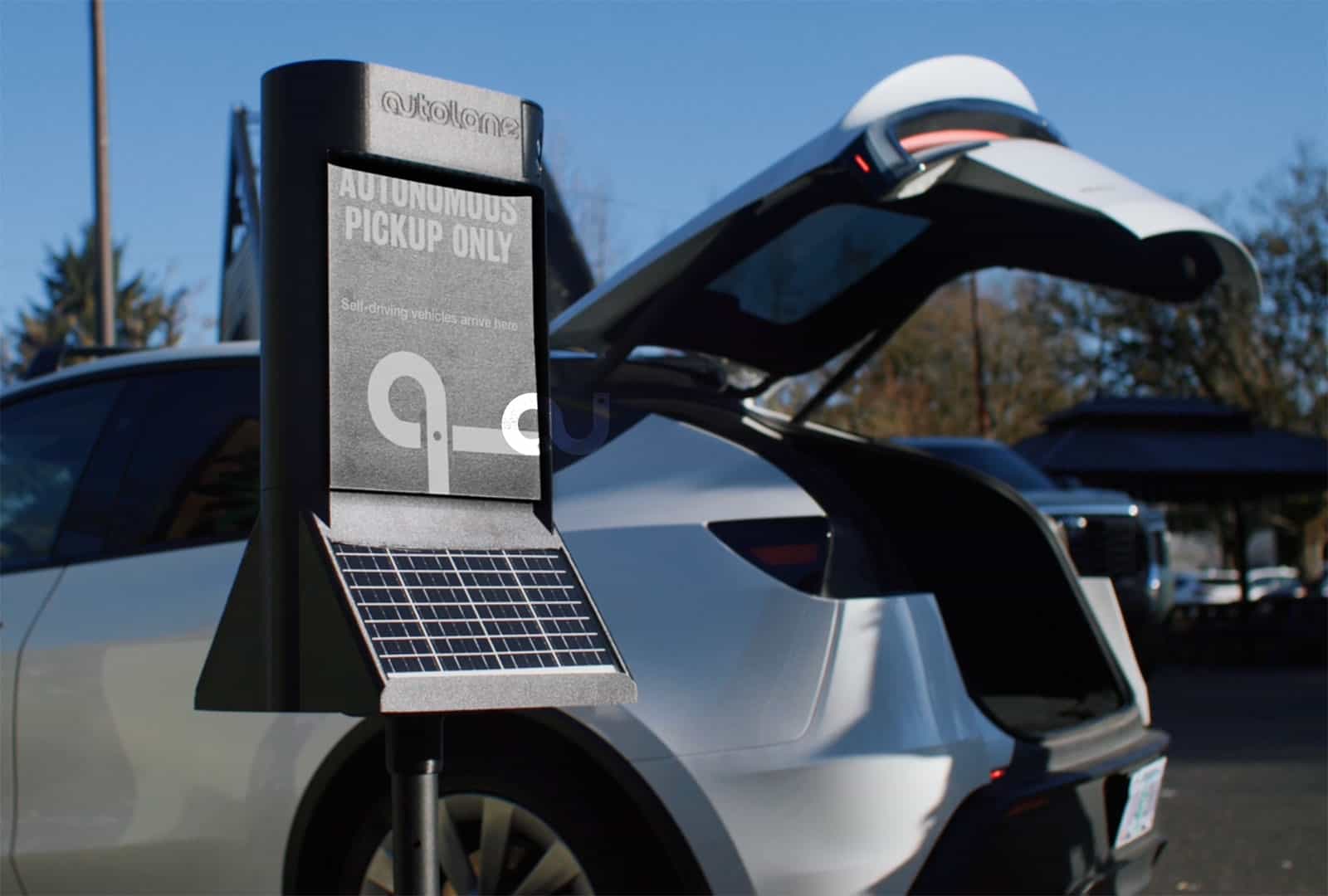
Before Autolane, property owners had no control over where autonomous vehicles stopped on their land and no data on how many were arriving. Autolane designates GPS-mapped Autolane zones, gets autonomous vehicle companies to update their pickup and drop-off points, and uses smart curbside signs with computer vision to track arrivals, dwell time, and vehicle mix.
How does Autolane’s autonomous delivery service work for So Chinese Takeout in Austin?
Autolane manages and operates 13 Tesla Model Ys for So Chinese Takeout across four Austin locations. When a customer orders delivery on the restaurant’s website, they can opt into autonomous delivery via Tesla Model Y or choose a human courier, with the order coordinated through Autolane’s platform integrated into the restaurant’s backend.
Why does Ben Seidl compare Autolane’s future to Plaid?
Just as Plaid sits as an independent, pre-authorized technology layer connecting banks with fintech apps, Seidl envisions Autolane as a pre-integrated, OEM-agnostic infrastructure layer that lets any business access autonomous delivery across cars, sidewalk bots, and drones without having to build costly, sensitive direct integrations with each provider.
The Road to Autonomy Topics & Timestamps
[0:00] Inspiration for Autolane
Autolane was born in August 2024 when Ben turned on FSD in his Tesla for the first time and worked backwards from a simple question. What has to exist for a personally owned autonomous vehicle to drive to a store, park in the right stall, pop its trunk, and complete a transaction without a human in the loop?
[4:34] Autolane’s Quest to Remain Independent
Studying the Argo AI and Cruise tie-ups of AV 1.0 convinced Ben that taking capital from an OEM or a retailer limits the market and muddies decision making. Autolane is built as a neutral platform that no OEM, marketplace, or retailer controls.
[11:06] Deploying at Stanford Shopping Center
Autolane’s first deployment went live at Stanford Shopping Center with Simon Property Group in September 2025, giving landlords control over where Waymo and Tesla robotaxis arrive on private property. Federal Realty, Jamestown, and Macerich followed across Atlanta, Austin, and Phoenix.
[13:02] Chapter One: Orchestration
Ride-hail orchestration is the wedge, not the destination. Chapter one gives property owners order at the curb, and chapter two extends the same software layer into autonomous commerce.
[16:46] Autolane Zones
Designated Autolane zones tell autonomous vehicles exactly where to arrive on private property, while a smart curbside sign uses computer vision to count arrivals and track dwell time. The result is the first OEM-agnostic data stream on how autonomy is changing property operations.
[26:41] Fleet Ownership
Autonomous delivery fleets will be owned in multiple ways, from brands running their own vehicles to third-party fleet partners, Autolane’s own vehicles, and eventually consumers contributing their personal autonomous vehicles.
[28:36] Underwriting Autonomous Delivery
Contracted demand from blue-chip retailers and QSRs makes autonomous delivery far easier to underwrite than ride-hailing. A fleet with committed volume from day one carries a fundamentally different risk profile than one chasing consumer demand.
[33:53] Matching Supply and Demand
Fleet size has to track order volume store by store. Autolane’s Austin deployment with So Chinese Takeout runs 13 Tesla Model Ys across four stores, with roughly ten vehicles operating simultaneously and orders batched two to three per trip.
[37:29] French Fry Test
If the french fries arrive cold, the delivery failed. Temperature-controlled smart lockers are the answer, keeping food at the right temperature from the kitchen to the customer’s door.
[39:38] QSR Delivery
Third-party delivery fees are squeezing QSR margins, and autonomous delivery gives brands a path to bring delivery back in house at a fraction of the cost while owning the customer relationship and the branded experience.
[46:59] Sidewalk Bots, Drones, and Humanoids
Because the software layer is largely the same across modalities, Autolane plans to extend the platform to sidewalk robots, drones, and humanoids so a business can turn on Wing, Zipline, or Serve Robotics with a single integration.
[54:35] Plaid for The Autonomy Economy
Ben’s long-term vision is Plaid for The Autonomy Economy, an independent orchestration layer that connects every autonomous vehicle to every business, regardless of who built the vehicle or who owns the fleet.
[57:42] AUTNMY AI
AUTNMY AI is an applied intelligence firm whose mission is to develop a field-tested, ground-truth understanding of how the Autonomy Economy is being built and translate that understanding into the intelligence, foresight, and counsel that help the world’s leading institutional investors navigate the most consequential industrial transition of this century.
Full Episode Transcript
The Inspiration Behind Autolane
Grayson Brulte: Ben, we had the pleasure to meet for the first time at the wonderful KPMG Automotive Insurance Summit. Really great to hear you talk and present Autolane, and I said, “I gotta go meet Ben in person.” Well, here we are. You gave a great talk at the KPMG event, so let’s hear it. What is the inspiration for Autolane? You did a great job there, I wanna hear you repeat it here
Ben Seidl: Hey, thanks, Grayson. Yeah, it was good to meet you the first time there. I’m a longtime listener of the show, first-time caller, so I appreciate the opportunity to tell our story here today. So, so AutoLane was born at a relatively similar time as the Road to Autonomy podcast, I believe. August of 2024, I got my first Tesla, and I had never used FSD before. Turned that thing on, and it broke my brain. You know, I, I thought that the second and third-order ramifications of FSD, but also self-driving technology in general, would be transformative for so many industries, not just mobility, but, you know, real estate, logistics, retail, on down the line. and so I kind of like, I, I think a lot of Tesla owners have had this feeling, but one of your first, I think, native desires after you get comfortable with your car driving you around Is thinking through what else will it be able to do in the future, especially when it can be unsupervised. Wouldn’t it be cool if you could send your own Tesla to the grocery store to pick up your order at the curbside pickup area? What if you could send it to the local pizza shop to pick up an order? You wouldn’t have to pay delivery fees. You could get your order, you know, safer in your own car. You could do all these different things. You could maybe batch your car to go pick up groceries, then a pizza, then drop off a FedEx package and come home, maybe while you’re at work. And so all these new possibilities start to arise when you imagine a world in which we have access to personal autonomy in our own cars. so that, that’s kinda where the idea for Autolane came from. And what Autolane is, is the platform and the technology solution that enables a self-driving car to communicate and interact with a business for delivery. So kind of I’ve worked backwards from, wouldn’t that be awesome someday, to what would it take, given that at some point these cars will be L4 unsupervised. If that happened tomorrow, what would it take to do a very, a seamless transaction like I described? What else would have to be built in order to make that possible? And that’s pretty much what Autolane is. So Autolane enables the car to communicate with a store, to go to a specific part of the parking lot and stall, to open its trunk automatically, and all of that to be seamlessly communicated back and forth between the customer and the business. And ultimately, where we are headed is this is a independent OEM-agnostic platform and technology. So it’s not just solving this for Tesla, which was kinda my first idea, but it’s, it’s across all personal autonomy. We believe very heavily that personal autonomy and autonomy writ large will be spread across all major OEMs over the years to come. It will be more cost-effective and more attainable for the average citizen, and it won’t just be Tesla. It’ll be Toyota and Ford and GM and Nissan and all of them through partnerships with Applied Intuition or Wayve or Nuro, what have you. I think the commoditization and the kind of wide dissemination of this technology is absolutely gonna happen. And so Autolane must be that independent OEM-agnostic platform that enables a self-driving Nissan with Wayve technology to go to the grocery store and my Tesla to go to the grocery store. and so that’s, that’s ultimately what we’ve been building for the last two years, and we’ve got it live in Austin, Texas.
Grayson Brulte: First and foremost, first time, long time, put a smile on my face ’cause it’s WFAN 660 AM New York, and now that Aaron Judge is back, hopefully Yankees are gonna go win the World Series this year. We got great pitching. So I, I, I love that line, so thanks for that. Hugh from KPMG, when he was on, used that line. So see, you and Hugh have something really great in common there. I love the focus on independence because if you say, “Okay, we’re gonna partner with Uber,” or, “We’re gonna partner with Nissan,” or, “We’re gonna partner with Stellantis,” you’re limiting your market of where Autolane can ultimately go. When did it hit you, the aha moment, that you have to remain independent and not take capital or strike partnerships with the vehicle or the platform companies?
Why Autolane Stays OEM-Agnostic and Independent
Ben Seidl: It’s a great question. I, I think first and foremost, I looked at history. So I love to study, you know, what prior startups or companies have done in this industry. Of course, there’s been a, a significant transition from what you all and most people call AV 1.0 to AV 2.0. And so before starting this, I don’t have an automotive background. I don’t have an autonomy background. I had to learn all this from scratch in 2024. And as I did the research, I kind of came to this conclusion that I think I’ve heard both you and Walt did as well around a similar time, which is AV 2.0 is a, is a very different era in this technology, and it is potentially the, the moment, the, you know, the switch that’s been flipped that enables widescale and widely disseminated autonomy to, to, to finally reach us. And so as I kind of came to that belief myself, I thought it’s going to be so critical for the OEMs To, in order to monetize their self-driving cars, but also to offer this feature, because it’s gonna be a very coveted feature. Imagine a world in which you can buy a self-driving Nissan, and Nissan tells you, “You can send it to Target, Home Depot, Walmart,” wherever, and that’s one of the major benefits you get from buying this $40,000 car. I think it’s gonna be a leading marketing initiative at some point, is the network that that self-driving Nissan can tap into. And thus, if you believe that, then you should believe that every OEM is going to have to offer something similar. And so I, I kind of worked backwards from, from that idea and thought, well, the moment that we become kind of like a captive platform, or we answer to a board member who from an OEM, let’s say, that might invest, w-we’re gonna start to make decisions that aren’t optimal for the industry writ large. And, and, and somebody needs to kind of play this independent position, in my belief, so that you can make the right decisions at all times. Because the, the competing interests involved with, you know, an OEM, which w-would be amazing, right? Like, it’d be amazing to get a large check from a l- leading OEM who wants to do a deep dive with us and make sure that, you know, Autolane can, can rise to its fullest potential with that OEM. The minute we do that, the minute the other OEMs are gonna shy away from working with us for fear of, you know, data issues or strategy issues or information rights. And so the, the decision-making becomes muddied very fast. And if you look to my point about history, you look back on AV 1.0, there were a lot of these types of relationships being built for, for good reason, which was the capital was required to build this very expensive technology in the early days, and the capital most likely or, or m- was most easily available through the major OEMs. And so you had a lot of AV technology developers receiving investment from major OEMs and those tie-ups, you know, like look at Cruise and GM you know, look at Argo and, and Ford, right? There’s, there’s a lot of these examples, and I don’t wanna cast stones on something I wasn’t even a part of. But I think those ultimate outcomes showed that it’s, it is quite difficult when two parties on the OEM side and the AV developer side tie their carts directly together. It makes it, makes it really difficult because the optionality for the startup is reduced significantly. The, the exit optionality, the business strategy optionality, even the investment optionality decreases because once you take money from one OEM, the other one’s not gonna want to invest. And so we’ve, from day one made it a point to try as hard as we possibly can to stay independent. You know, and, and, and I hope we can stay that way. It’s not it’s not necessarily something we can fully control, but it is, is the goal of Autolane is to stay independent. And the, the last thing I would say on that point isn’t just the OEMs, but also, you know, you look at the, the businesses who are wishing to offer autonomous delivery to their customer bases through us. Well, you know, if, if Walmart were to work with us or Amazon were to work with us, all of a sudden, if one of those two decides to lean in heavy and maybe want to be on the cap table, it’s gonna dissuade the other from working with us whatsoever, and same with Uber and DoorDash. And so you’ve got all of these very complex competing interests. You know, if McDonald’s wanted to be on the cap table, what would Wendy’s say to that? They probably wouldn’t want to get involved. And the point of all of this is to open up the, the free market when it comes to autonomous delivery demand and revenue so that everybody can get a piece of the pie that they need to grow their businesses, and so this industry can advance. I think without that independent nature, you, you end up in some pretty difficult situations and which we’re hoping to avoid.
Grayson Brulte: Like how you’re using history as your guide. If you look at Argo, you have the complete utter disaster in terms of culture. So you had the Ford culture, you had the VW culture, and then you had the Argo culture, and it didn’t all m- mesh along. VW pulls out, and then Ford pulls out, and bippity boppity boop, billions of dollars went down the tube. And that’s the way the business was structured initially with a 90% investment from Ford, but that was the way it was built. And you bring up another valid point where you’re, you’re talking about it becoming synonymous, because right now one of the key selling points for traditional automotive now is L2++. You’re starting to see a large shift where consumers want the technology. You’re seeing the data in Tesla’s earnings about the growth of FSD. You’re seeing Wayve is now partnering with Stellantis for the L2++ Jeep. Alex, I really wanna get in that, so I’d like to go to Detroit and, and ride in that. But once we get to L4, that becomes the game changer for personal ownership. You’re right, you can ha- send the vehicle to Whole Foods, you could send it to pick the kids up from school. It, it changes the entire game of how this is going, and if you’re not independent, you’re limited on where you can go. And today, AutoLane’s deployed in the Bay Area, and it’s also deployed in Houston. How are those developments and deployments going for you?
Ride-Hail Orchestration at Stanford Shopping Center
Ben Seidl: In Austin. so, so yeah, we we first deployed the, the initial V1 of the technology at Stanford Shopping Center in Palo Alto with Simon Property Group. That was September 2025, so about, about a year ago. and, and the initial kind of use case of our technology was actually ride-hail orchestration. So in places that are receiving significant amounts of Waymos and Tesla robotaxis, and it’s causing congestion issues in the parking lot, those pickup and drop-off scenarios needed to be dealt with and fixed. And what these property owners, like Simon, were finding were– was that it was quite hard to, to get in touch with the, the OEMs or the AV companies directly. They, they. There’s, there’s not a helpline that you can call to say, “Hey, like the Waymo’s showing up into the handicap parking area of this mall or crowding this aspect of the parking lot, which is preventing the valet from functioning. We h- we’ve got to get these Waymos arriving and departing from somewhere else.” It’s, it’s, it’s quite hard to get in touch with these OEMs. and so we, we decided what– given that we need to, as step one for the Autolane platform, is to orchestrate where autonomous vehicles go let’s apply the technology first to solving that problem for some pretty big retail landlords. So we work with Simon Property Group, Federal Realty, Jamestown Macerich. And we’re, with that ride-hail orchestration technology, we’re across Atlanta, Austin Phoenix, soon to be Los Angeles and San Francisco. you know, so that was a really great way for us to get into the market, kind of build the technology and perfect it. And then most recently in Austin, we’ve been able to start chapter two, which was always the idea. S- chapter one, get the orchestration down. Chapter two, apply the orchestration to commerce and autonomous delivery because it, it’s a similar problem set, which is that if you’ve got an issue with autonomous ride-hail vehicles coming into your parking lot in the wrong places and you have no data on how many are coming in, you don’t have any bidirectional communication with them, you don’t even have a direct line to the corporate office about how that’s working you need to do that first. But that problem becomes even more complex and fraught when you enter into a commerce transaction. Which is if you’re dropping off a passenger and it’s not exactly precise or it’s not exactly op-optimal, that’s okay. The passenger can walk a little bit or walk to pick up the car. Even if the car is congesting the parking lot a little bit, it’s not that big of a deal. But what becomes a really massive deal is if you imagine that car coming to pick up an order. So say that car comes to Stanford Shopping Center, and it’s coming to pick up a Sephora order for somebody. Now, that car can’t just generically park at a massive mall because someone is gonna have to run that order out to the car. So the first question you would ask yourself is, “Well, I need to get those cars to go to a specific area,” first and foremost. I need to communicate that arrival to the inline tenant in the middle of the mall, Sephora. Sephora needs to bring the order out. They need to know when they get there exactly where that car is gonna be. They need to open the trunk or unlock the car. And then all of that information and that orchestration needs to be seamless, and it needs to go through the business to the car, to the customer in a safe and secure and fast way. And that is the reason why we’re so focused on this next chapter of our business, meaning delivery and commerce orchestration, because if you do not get precision orchestration correct for delivery, it just isn’t gonna work It still works no matter what for dropping off a passenger. It’s not optimal. It will not work whatsoever if a car comes to pick up an order and it’s, it parks on the other side of the mall or it, you know, you can’t unlock the car or what have you. The, the, the cost of the labor of running that order out to the car and just doing that transaction in general is expensive. And if it’s not down to the, to the minute seamless detail, then it’s just not gonna be possible. And so we’re preventing that from happening before the moment actually arrives, which is kind of an interesting way to build a business. But we’re anticipating those problems, and we’re building the platform now and perfecting the platform now so that when it does become an increasingly complex issue, that we’ve we’re already there on day one when the supervisors are removed, let’s say
Grayson Brulte: I’ve experienced your drop-off zone at the, at the Stanford Mall. I took a Waymo there, and that was when I first came across Autolane, ’cause I noticed the little infrastructure you had there. So let’s, let’s play that scenario out at Stanford. Sephora, for the record LVMH and Mr. Arnault and the team have done an incredible job managing that business, and Sephora is a great business. Let’s look at LVMH’s quarterly reportings. You’ll see what I mean by that. We’ll talk about a, a heck of a job of a business for retail with actually reta- unlike retail margins, more LVMH margins, doing a really good job, Mr. Arnault and the team managing Sephora. And I’ve noticed a little, like, the little infrastructure, the little black thing you have there. Does that notify the individual Sephora, “Okay, let’s just use the Waymo,” ’cause that’s what I took there. Waymo’s here, walk out. Is that the notification? And then if so, how does it know when to open the trunk and close the trunk?
Ben Seidl: Yeah. So, so first I’ll answer the, the, the way it was initially deployed for Waymo orchestration or, or ride-hail orchestration, which was to solve two things. One, before Autolane at Stanford Shopping Center, if you would’ve taken a Waymo, it would’ve dropped you off wherever the Waymo system had arbitrarily decided that was best, with zero input from the property owner. Now, that might work for a s- you know, a small business or what have you, but when it comes to a property like Stanford Shopping Center at the base of Sand Hill Road in the heart of, of Silicon Valley, the amount of Waymos it was receiving w- was causing an issue in the parking lot. And given the fact that Waymo never decided to set up those pickup/drop-off points in the app with Simon’s input, and they were arbitrary, they weren’t the, the optimal places for that to take place. Sometimes it wasn’t in a safe location on the property. Sometimes it wasn’t a convenient part on the property. And so step one is ask the property owner, “Where would you like autonomous vehicles to arrive?” So, okay, cool. You want it to go here and there. Take those GPS coordinates, set up what is akin to an Uber and Lyft rideshare zone in an airport, similar type of idea. Let’s designate a part of your property or parts of your property for this type of activity where you want them to go, and then let’s go talk to the AV companies and ask them to update their pickup/drop-off points from arbitrary points that probably AI chose to points that the property owner would like, but also can enforce. This is private property, and thus you can simply say, “If you’d like your vehicles to come onto our property, they must arrive here.” So that’s how that kind of step one goes, is let’s pick the areas and let’s relay that information to the AV companies. They update their maps. Now, next time you come, you end up at what we call an Autolane zone The, the second part of this, which I think is really interesting, is before Autolane as well, Stanford Shopping Center and Simon didn’t know how many Waymos or Tesla robotaxis were arriving on their private property. They didn’t see the trends. They didn’t know when they started. They didn’t know anything. They don’t know the dwell time. They, they n- th- they had zero data and zero input. And so not only do, do we fix the input side of it and get them going to a specific area on the park- in the parking lot, we also ha- have built what we call a smart curbside sign, and that smart curbside sign uses computer vision to record the arrivals of autonomous vehicles in the Autolane zone. So it counts them, tracks dwell time gives you graphs, how many Waymos, how many Tesla robotaxis, what have you, so that Simon, as the property owner, can sit back and say, “Okay, here’s how autonomy is changing on our property.” And, and why that’s important is that at some point, as the volume of these types of vehicles scale and the breadth of the OEMs who are sending vehicles to their property scale, you’ve got an increasingly complex problem if you’re Simon Property Group in order to understand how to best position your parking lots for the future. They can’t just hand wave this way and be like, “Okay, all we know is that a lot are coming, and before there were little. And all we know is that we heard that, you know, Nissan and Wayve are now coming, but we don’t know what the timeline is.” You, you want to know that information. You wanna see historicals. You want predictions. And then you want to be able to bring that data to your executive team at the moment that you see fit to say, “Listen, this is now so many vehicles. We estimate it’s around 8%,” let’s just say hypothetically, in a couple years, maybe they say it’s, “We think it’s 10% of all traffic at Stanford Shopping Center is now autonomous. Thus, we think it’s time to re-stripe the parking lot, maybe to do dedicated entrances into the mall just for this type of transit.” They’re going to spend money and redevelop their property to fit the age of autonomy at some point. That is every major, whether it’s a stadium, a concert hall, a, a, a, you know, a mall, even a Chick-fil-A parking lot, I would. Any kind of busy, high-volume parking lot where autonomy is going to impact the way in which transportation flows there, they’re gonna wanna make investments and des- design decisions. They’re not gonna do that especially in Simon’s case, unless they have a lot of data to back up the decision. And so that’s what our smart curbside sign provides to them, is the first kind of OEM-agnostic data stream from just their property on how autonomy is impacting their operations. And they’ll take that and, you know, eventually make operational investment decisions from it.
Grayson Brulte: It’s smart, and if you go back to, you mentioned Cruise earlier, if you go back to early autonomy, Cruise had a partnership with Walmart where they had dedicated zones for Walmart grocery. So there’s a precedent for, for this happening, and we’ve talked a lot about this on “The Road to Autonomy,” but infrastructure’s key for, for scale in this. And if you’re Simon, perhaps you can, as you said, repave or re-stripe that, the parking lot, say perhaps that you just take 20 spots and make it dedicated for AVs if it’s over 15%. And perhaps it’s some- then the ones that are dropping passengers off are closer to the curb or on the curb, and the ones for the deliveries are a little bit further away. It really just depends on all that, that foot traffic. But let’s dive into this. In, in Austin, you have a partnership with, with So Chinese Takeout. That’s live today. I’m looking forward to going seeing it in person in a few weeks, so Thank you for that invitation. Walk us through it. What can I expect? How is So Takeout currently using this today?
Live Autonomous Delivery with So Chinese Takeout in Austin
Ben Seidl: Yeah. So, So has been our first autonomous delivery customer, and they’ve been phenomenal. the reason why it’s such a good match is to the, the name that they have. It is just for takeout and delivery. It’s a five-store franchise or, or brand in Austin, Texas, serving up some fantastic crab rangoons and all types of fantastic Chinese food. But they do very well in Austin have been expanding very rapidly. And when they first launched their business, given you can’t dine in at any of their five restaurants, it’s only for takeout and delivery you can’t really optimize takeout quite quite well. It just is what it is. People come in and get their order. That’s it. But for the delivery angle which is the bulk of the business, they first started with their own in-house delivery team, their own vehicles, their own drivers, and that provided them with a very high bar of quality for their delivery. it was it was a, it was a phenomenal way for them to start because the quality of delivery that their customers were getting was much better than, you know, competing offerings. And so delivery became their hallmark. But the cost of running that service ended up being much too high over time, and they couldn’t scale it either. Just the labor markets and, and, and, and the difficulty involved with putting that all together, it– they couldn’t justify continuing the service, even though the ratings and the satisfaction and, and the c- the customer’s preference was for first-party in-house delivery. They couldn’t afford to keep doing it. So they then end up, you know, white label outsourcing it to, to other courier companies and, and the quality dropped. and so they, they’ve always been obsessed with using technology and having the highest level of delivery quality they can because they’re a delivery-first business. So enter Ottoland. They met us at a trade show back in March and, you know, we became fast friends because of course they recognize that autonomy represents the first suitable opportunity To create an in-house delivery service once again, but this time with better economics and more scalable. and so they, they see autonomy as an opportunity to, to, to bring back, you know, the quality that they used to have with even better economics than they currently have today with third party. And so we partnered together and launched an autonomous delivery service with them. On July 7th, we went live, and we have a fleet of 13 brand-new 2026 Model Ys that we manage and operate for them, and that flows through our autonomous delivery system that they’ve integrated into their backend. And so when a customer chooses delivery on their website that order can be paired with Ottoneu. That customer can then opt in to receive their order autonomously through a Tesla Model Y, or they can choose to receive the order normally with a human courier. And so we, we’ve been operating that service with them for more than two months now, and the, the results have been phenomenal. So I– So I was very happy with the results and so are we. And, you know, I think they’ve expressed the desire to move their entire delivery over to us if they could. and so I, I, I think there’s, there’s a lot to be said for working with an early partner who is super aligned kind of with the, the end goal of where this is all heading, wants to take a, a- an early swing and try this stuff out before anybody else and reap the benefits. They’re the only partner we’re offering this to right now in Austin. That’ll change relatively soon, but we yeah, we’re, we’re, we’re servicing four of their five stores. Ten Teslas are usually running simultaneously doing delivery for them. and it’s, it’s been an awesome partnership.
Grayson Brulte: AutoLane manages the fleet, operates the fleet, but then there’s the other key aspect, owns the fleet. Do you own the fleet? Does SoTakeout own the fleet? Who, who owns the actual asset being the Tesla Model Ys?
Fleet Ownership Models and Underwriting Autonomous Vehicles
Ben Seidl: That’s the question of the moment, I think, for this whole industry. if you look at, you know, a lot of what Waymo’s even having to deal with the last couple weeks with their debt issuance and everyone trying to figure out now that it’s kind of quite clear that there is a very strong business model, not just in autonomous mobility, but also in autonomous delivery. We’re past the, the kind of R&D phase, and we’re into the commercial phase. I, I would say absolutely is at this point. And so the exciting part of that is then figuring out, well A, what is the kind of financial waterfall and, and the economic model look like in underwriting these assets, meaning underwriting autonomous vehicles? Who’s gonna own them? Who’s gonna operate them? Is it one and the same company? Is it you know, is it just a decentralized and distributed opportunity that regular individuals can get involved with? How, how is it gonna work? Because there’s a, a very high level of demand for autonomous delivery we’re seeing in Austin, so much so that the question is less about is there demand and more about is there enough supply. And then you ask yourself, “Well, where can the supply come from? how much supply is available? How much money will that cost? How do you underwrite that cost and get the financial investment involved in order to or required in order to, to, to obtain the fleet? And then ultimately, whose balance sheet does that fleet sit on?” And I don’t think there’s a right answer quite yet. we’re in, in, I think, in very early stages, especially on the delivery side of things. But what I can say is that one of the exciting differences between the underwriting process of autonomous mobility versus autonomous delivery is autonomous delivery is backed by, let’s say, very large brands. And those brands have a decade plus now of last mile delivery data and economics that they can pull from to understand what their willingness to pay is, what the customer’s willingness to pay is. And thus, you can absolutely look at pre-contracting for certain levels of autonomous delivery that then can be used as an underwriting source for a financial partner. And that, that is a lot simpler than sitting around and trying to predict what autonomous mobility demand might be for Portland, Oregon. who knows? You know, you can look at adjacencies in similar cities perhaps, and you could make all these types of estimations if you’re, let’s say, a company like Waymo about how many vehicles they might need for Portland, but they won’t know until they actually get live. And then they won’t see the growth rate until it’s actually live. And, and all these things can be estimated, but an estimate is a lot harder to underwrite if you’re a financial partner than an, a signed, sealed, and stamped contract from a blue-chip retailer, QSR, or parcel company, right? So I think on, on the delivery side, it’s gonna be a lot easier to underwrite fleet ownership and economics because of that. And th-the question of kind of who owns these vehicles is exciting because I– My, my short answer is it’s gonna be a smorgasbord of, of opportunities. I think you’ll have some big retail businesses perhaps will have their own fleets. You could imagine, you know, what if let’s take hypothetically McDonald’s. What if McDonald’s had one or two branded wrapped McDonald’s AVs in each one of their parking lots, and they put one or two chargers in each one of their parking lots, and those one or two vehicles can do eighty percent of the autonomous delivery for the store itself, and that store retains those very positive economics and profit? And I think that that’s one model that will take place, and we like to call that direct delivery at Autoline. So the company themselves owns the vehicles, and those vehicles get orchestrated through a platform like Autoline. Then there’s what we call fleet delivery, and that could be anything from a, an individual who wants to own and maintain and manage five to ten cars, let’s say, to put into a network that then McDonald’s could leverage. Or it could be a corporate fleet partnership where, you know, someone like an Element or a MOOVE or a Hertz or whoever wants to say, “Hey, we’re all in on this. If Walmart needs a hundred thousand vehicles, we’ll put in twenty thousand,” and, you know, they can expect that return because it’s underwritten by Walmart. So I– we call that kind of the fleet delivery bucket where that’s third-party sources of vehicles. And then there’s two other interesting buckets as well. One is, you know, we have thirteen vehicles already. We’ll probably continue to increase our own in-house fleet to meet the demand. And then the last one is the most exciting but probably the farthest off, which is you yourself will be able to contribute your AV as kind of a gig opportunity in the future for maybe just a couple hours or a few days when you’re on vacation or what have you. You could say, “Hey, put my car into Autoline for just Home Depot deliveries ’cause I don’t want it to smell weird or anything else. I just want like general merchandise, let’s say, and I just want it to be Saturday and only from six PM to eight PM.” You know, we can plug your, your car for those specific hours into the network. That’s, that’s that’s the most interesting but absolutely the farthest out opportunity as far as acquiring vehicles. So it’ll be kind of one, one big rolling network, I think, of, of AV supply and, and hopefully everybody can kind of participate because that’s the promise in my mind of autonomy is that as it decentralizes more of us, whether we’re individuals, small businesses, big businesses, people can start to, to to, to contribute and operate and make money from what is autonomy. And today that’s not really the case, right? We have– All, all the autonomy efforts are within, you know, six to seven companies that are, that are both footing the bill for it and making any of the revenue from it. and that’s not gonna be the case for much longer. So I’m excited for that opportunity to be widely spread throughout the, the public, and we can all kind of benefit from this upcoming era. That’s quite exciting.
Grayson Brulte: It’s very exciting if you look at the far out picture that you describe for an individual, it takes a rotting asset, it’s, ’cause it’s not a Dino or a Ferrari making money sitting in your driveway, to a revenue generating asset. That is a huge, huge opportunity for millions of Americans across the United States as you, as you scale this. Today, your fleet’s 13 Tesla Model Ys. When does it get to the point from a fleet size, in your perspective, you say, “Wait a second, we’ve got too many vehicles on our balance sheet”? When, when do you hit that tipping point?
Smart Lockers, Batching, and the French Fry Test
Ben Seidl: Yeah, that’s a, that’s a great question. And that, again, going back to the, the underwriting aspect is one benefit that we probably have is that we can kind of directly match contracted demand against supply, and hopefully that, that, that underwriting and, and, and those contracts can uphold and offset that fluctuation of demand. So we’re not having to make an estimate of how much delivery– autonomous delivery demand there might be in Austin next year with X clients, but we can get that signed first, know that even if demand drops for some reason you know, we would still be able to collect against that contract. so I think that’s, that’s what– that’s one answer. But yes, that’s gonna be the challenge. Absolutely. It’s already the challenge for autonomous ride-hailing companies. It’s matching supply and demand. Do you do peak or trough and all that when it comes to utilization. Utilization is the name of the game of course. but for us, you know, we have that kind of, I think, added benefit of being able to underwrite future autonomous delivery demand against a signed contract versus hoping that the general public will like this idea. We don’t have to hope on that. We can hope for that. We can get commitments to that in advance. And then I think the, the, the other thing that’s really interesting about autonomous delivery versus autonomous mobility is that I would assume autonomous ride-hailing companies will eventually ex- re-experiment with some of the things that Uber and Lyft were doing back in the day with Uber Pool and, and Lyft Share, all that thing where you could jump in with a couple other people going on a similar route. I think that will probably come back in order to increase utilization for mobility. But with delivery, it’s a lot easier. And so you know, again, going back to the contracted demand, if you know 150 autonomous deliveries are most likely going out between these hours and these hours at these given locations within these geo-fences, you can start to batch. Now, the interesting thing becomes batching already happens today with some Uber and DoorDash orders, but that’s hard. one, because once you remove that, you don’t have anyone in the car, how, how, how do those orders get packed in the car? ‘Cause an Uber and a DoorDash driver today, they manage that. They know which one to take to which address, and they can pick them up in a certain way. But if there’s no driver, you’re gonna have to figure out a way to make batched autonomous delivery possible. And so we’ve come up with a custom smart locker that we built that fits directly into the back of a Tesla Model Y and that has configurable compartments. But think about an Amazon locker on wheels. That’s basically what it is. So we can pack in two, three orders at a time, and that car can go do two to three orders of worth of deliveries and come back, and the utilization rate and the economics and efficiency of that are, are tremendous. And so I think that’s another added benefit to kind of balancing the supply question, which is to say we can get a lot more efficiency per hour by batching, and that is possible with high volume retailers and QSRs. Not as easy with autonomous ride-hailing.
Grayson Brulte: W- with the packaging, the, the one called the multi-tenant, the, the, the multi-delivery, use McDonald’s for an example. There is one put, put autonomous driving to the side. There is one test that AutoLane is going to have to pass, and it is the most important test, and this goes back to my friend Roger, who grew up in the QSR industry. You must pass the french fry test. When the french fries get delivered, they have to be crispy. What is the plan for AutoLane to figure that out, especially if you’re going to deliver for QSR?
Ben Seidl: You just served me up the the crutch that I needed to, to finish the previous answer, which is those lockers are temperature controlled. So we have one of them is actually you– This is an aftermarket piece, but you might have seen these kind of sub-trunk freezers or, or fridges that you can put into Tesla Model Ys. We have a sub-trunk freezer, so if you order ice cream from a retailer, you will get it frozen. It won’t be melted. If it’s groceries at 40 degrees, we can set the temperature, the temperature in the locker compartment for that to be 40 degrees. And if it’s french fries, the best you can do is keep them as warm as possible and get them to someone as fast as possible. And I truly believe that the, the, the highest quality bar that can be met is going to be autonomous temperature-controlled locker delivery, and that, that’s as best as you’re gonna get. You’re never gonna get as good as the real thing in the, in the store and I know a lot of QSRs obsess over that exact thing. Chick-fil-A as well, the, the french fry test is everything. And that’s why a lot of them don’t even allow you to order certain items for delivery because the quality of that item when it arrives to you is just not up to par with what the brand wants. but I think temperature-controlled compartments in, in a, an autonomous vehicle can give you the best possible experience you could expect. You can’t fry them yet in the car, too. But maybe with an Optimus in the back, you can have him fryin’ some, fryin’ some fries.
Grayson Brulte: That’d be cool. You, you’d run into a bunch of regulatory hurdles ’cause the, the oil’s in there, but that’s for a whole, a whole nother podcast. If you go way back in the day, Ford and Argo was experimenting with Postmates. This is pre-Uber acquisition. It was very similar with that, with the con- with the heated and the cooled. So there is precedent for, for what you’re doing. And staying in the QSR theme, there is– Having a lot of friends in QSR, there’s a common denominator with QSRs are getting squeezed by the rising of minimum wage, and they’re also getting squeezed by the fees that the DoorDashes and UberEats are charging them, where to, to the point where you’ve got rising minimum wage, increasing fees, it’s not profitable to them to operate. So you’re sitting down with a, with a franchisee owner, let’s say they own 30, 40 Wendy’s, for example, and they give you that exact scenario that I just gave you. How do you answer that? What do you do?
How Autonomy Rescues QSR Franchisees from Fee Squeeze
Ben Seidl: So my answer my answer requires a couple beliefs to be true. But if you believe like we do that autonomy is now a commercial business, it is here, self-driving is solved. Let’s say you believe that, then you believe that the volume of vehicles required and the price point at which those are going to be sold is economically viable. If you also believe that, then you should ask the question of, well, what if I were to harness that new technology to do my own in-house delivery? If I were to be able to do that, how would that change my economics when I look at delivery in general? And the problems that you described are largely due to the fact that per my earlier story about So Chinese Takeout and their struggles with being able to do an in-house first party delivery service ’cause it doesn’t pencil out. Autonomy will provide the opportunity for that type of a service to come back, and not just to come back, but to scale and to be profitable. And so if you were to look at the fact that you have to offer delivery, you can’t. I mean, there, there are a few brands out there, magical brands like In-N-Out that have spurned the, the, the, the service from the get-go. But for, for a Wendy’s, let’s say, you, you have to offer delivery. If you were to cut that, that would be a huge problem. So you– you’re kind of in a bind when it comes to that decision today, which is like you don’t really make any profit off of it, but also your customers expect you to do it. How do you break that horrible situation you’ve gotten yourself into? Well, you need to find a way to offer that delivery service in a scalable and lower-cost way in which you have maybe more control over it and less fees. And so my answer to that is wide-scale autonomy. Autonomy, autonomy should equate to a replacement someday of the, the, the, the driver service level or the driver network that these third parties have, and they use those networks as moats to exert pricing power and keep their commissions high. And every– all of the fees and commissions and wages, everything goes up and to the right. None of it is going down and to the right. Hasn’t for 15 years. But what’s interesting about technology is that’s the point of cutting-edge technology when it’s applied to our economy, is that it should be driving costs down. And that is what I believe autonomy will represent and will offer to you know, a, a Wendy’s franchisee would be to say autonomy can actually reverse that, which is that you could leverage autonomy to keep doing delivery ’cause you would need to. And actually now you could probably turn that economic model delivery from you know, no profit to profitable, and the quality could go up also. You know, it could be temperature controlled and all these other things. And so the, the, the, the hope is that this general purpose technology of self-driving will enable these businesses to kind of take back some delivery volume and turn it into first party and do it in-house in a low-cost and high-quality way for their customer base
Grayson Brulte: And when you do that, it builds stickiness, it builds brand awareness. And give you an example, Rogers told me this, depending on the location of a Wendy’s, some of your biggest foot traffic days are Little League games or parades in the town. And so then he would tell me that they have to have extra hamburgers, extra, extra salads, extra Frosty ma- stuff to make the Frosties, because they know that demand. Now, that was then, and now imagine today, all suddenly Rogers Wendy’s is operating a fleet of these. They could put the, the Wendy’s hamburgers a- and chicken nuggets and send them to the Little League field. That’s a home run for the family having to go, “Okay, let’s all get in the van and go here.” No, it’s coming to us. That’s a home run for that local community
Ben Seidl: And if– Exactly. And, and if you imagine you know, the advertising opportunities, you can easily wrap these cars with Wendy’s branding, and you can do, like, kind of trunk moments, let’s say. You can play a song or you can make– like, put a kid’s toy in the back in the locker compartment. So you could have a lot of fun with this if you have full control over the car. You can turn it into a branded experience in a moment. That is pretty special. And I, and I think the, the last thing I would add to that is, like, the next level as we started with in this conversation is that family could also be sitting at the baseball game and send their Model Y to the Wendy’s to pick up a bunch of stuff and come back. And how mu- how, how much fees are they gonna pay for that? Zero, right? It, it’s their own car and they’re not using it ’cause they’re at the baseball game, and it can go pick up that food hot, bring it right back, and they’re gonna get probably delivery just as fast as they would through a courier. But they’re absolute- maybe faster, but they’re absolutely gonna get it for much cheaper. There’s gonna be no price markups on that food. There’s gonna be no taxes and commissions and fees. It’s just, you buy it from Wendy’s, send your car to pick it up, they put it in, comes back to you and boom. So I, I think it’ll be really good for businesses. I think the, the kind of, the golden moment of delivery is coming once this technology is more widely available to, to businesses
Grayson Brulte: It’s beautiful because that’s what personal autonomy unlocks. That’s the beauty of this. And the other, the beauty of the, the, the timing, if you look at all of the economic data, Richmond Fed actually does a survey on this, America has tip fatigue. I’ll say it, they have tip fatigue. Everything’s got a tip, tip, tip, tip, tip, tip. Well, when you send your personal autonomous vehicle to pick it up, you don’t have tip fatigue. That is brilliant timing in how this is all rolling out
Ben Seidl: Yep. And even if Wendy’s sends their own vehicle to you because you don’t have one of these, you’re obviously not paying a tip either for that. So the tip, the tip fatigue is absolutely real, and we’ve seen that in the early data in Austin, is that it’s a, it’s a major benefit even just not to have to mentally consider that. Like, the tip fatigue on the financial side is, is real. But what’s interesting is if you study the phenomenon, it’s also just the question itself that forces you to think about it and then give an answer. That, that process, that feeling has a psychological cost outside of the financial cost of the actual tip. And so you add those two things together, and there’s quite a lot of value accrued to a service that can remove that, that aspect of delivery
Grayson Brulte: 100% correct. So that’s, that’s the ground side. Obviously autonomy is going to sidewalk delivery bots, it’s going to drones. As autonomy scales for delivery, should we expect Autoline to also go where the market’s going?
Expanding to Drones, Sidewalk Bots, and Humanoids
Ben Seidl: Absolutely. Yeah, that was one of the early things we started to envision when we were building it for cars, which is that what is truly the difference between an autonomous Tesla and autonomous Serve sidewalk bot? They’re both autonomous vehicles on four wheels. One travels slow on sidewalks, one travels fast on roads. One’s, you know, 3,000 pounds, one’s 100 pounds. So you’ve. But, but the, but the technological difference between the two is actually very little. If a Tesla wanted to communicate with that Wendy’s to pick something up and pop its trunk, that same process needs to be done for Serve if it wants to go to Wendy’s and pop its compartment. And so that communication, that coordination, and that control that Wendy’s would need in order to interact with both of those types of modalities is largely the same when it comes to the, to the bits part of this business, meaning the, the software. There’s, there, there really isn’t much of a difference. And so we started envisioning, well, if we solve this for self-driving cars, we’re probably 85%, 90% of the way there for solving it for other autonomous modalities sidewalk bots, drones. We actually think someday humanoids. I think you’ll have humanoids coming to businesses on behalf of their owners or behalf of of whoever to transact and to coordinate and to, to do something. And so in order for that to happen, how is, how is the store gonna know that, you know, Grayson’s humanoid is coming to the store to, to return a package? Like it’s, it’s got to know that it’s coming. It’s gotta know it’s yours. That communication must go back to you somehow. And so there’s all these questions that, that start to crop up when you imagine a world in which many types of autonomous systems or modalities are interacting with the same business. This is where it gets interesting. So if you’re Wendy’s, let’s go back to that again. Shout out shout out to your friend. – Wendy’s is already interested in drones, right? Maybe they already have a pilot going on. I haven’t looked into it. But, you know, Wendy’s is definitely interested in drone delivery. Wendy’s is definitely interested in autonomous sidewalk bots. I’m sure they’ve done that with Serve in, in certain cities. They’re probably interested in seeing how they can use Cybercabs or, you know, all these different autonomous passenger cars that are out there. So Wendy’s, like every other major retailer, QSR, grocer, has a distinct interest in each one of these modalities for different reasons. Drones are fantastic for, you know, urban– or sorry, suburban and maybe like rural use cases, time-sensitive use cases, small item use cases. there’s a lot of reasons why drone delivery is going to work and is gonna scale, but it’s not gonna be widespread, in my opinion. Sidewalk bots, same thing, really great for downtown Los Angeles, downtown Miami. Makes a lot of sense. It’s good for the environment. It’s good for all types of things. It’s, it’s cheaper, it’s more affordable. It’s, it’s, it’s great. But that sidewalk bot can’t go out to, you know, Coral Gables, it, from downtown Miami, but a self-driving car can. And so what you really want if you’re that Wendy’s is you want all those options to be available to you and to your customer base so that the right autonomy modality is chosen at the right time for the right order. And the only way that can take place is there needs to be some type of independent platform that has already pre-integrated, pre-registered and is, is working with each one of those modalities and each company in each one of those modalities, so that if you’re Wendy’s and you say, “I wanna try d-drone delivery. I’d like to try both Wing and Zipline Great. Say the word, and we can pass that through the system, and both of them can start delivering for you. Or you just want to try one, or you don’t want to try any of those, you only want to try Sidewalk Bots. Turn on Serve. Awesome. Here you go. So the reason that’s important for these autonomous partners and modalities is that they need access to delivery demand in order for their businesses to grow. And it’s important that they get access to as many sources of delivery demand as they possibly can, whether that’s directly from Wendy’s through us or whether that’s through marketplaces like DoorDash, Uber Eats, or what have you. But these autonomous businesses, which we should all be here to support and to root for it– we are not in a dogfight. We are in an ecosystem where we need to be supporting each other, need to be rooting for each other, investing each other, helping each other out however we can. And if that means bringing revenue streams and delivery demand sources you know, across the ecosystem, that is you know, not going to be advantage to one company or another and isn’t going to be you know, the best delivery demand from Wendy’s is going to this one because we invested into XYZ drone company, and they should, they should be preferred. We can sit here and, and literally just connect the demand to the suppliers. I think there’s a really exciting world in which a lot of these modalities can get highly profitable demand delivery or delivery demand through us. And, and then that’s our, that’s our contribution, I think, to the ecosystem is to, is to open that up so that it’s more accessible and that, and that the kind of bidding, let’s call it the bidding system is more accessible. So let’s say you’re a small drone company, and you know that Wendy’s does five hundred drone deliveries a week at this Dallas location, and you want to try to see if you can compete with Zipline or Wing or whoever, and you’re just a nobody, but you got a great drone, and you’re verified by the state of Texas and Dallas to fly it, and you need to make some money. Well, hopefully, you can tie into our system, and then Wendy’s can start– If you’re, if you’re the best in the market, you’ll win. You’ll get some, you’ll get some demand. And that’s a– that’s the way that capitalism, I think shines, right? Is when everyone’s got equal access to business opportunities and that no one is advantaged over someone else because of certain backroom situations. But, like, everyone can come up with a way in which they want to build an autonomous solution and that they can get access to the revenue that’s required to build that business. so very, very exciting to kind of think about that multimodality world and not just solve, you know, some of these problems for the, the car companies but, but look much larger than that and say, “How can we help the industry of autonomy?”
Grayson Brulte: You look at this, Autoline can do that, the multimodal approach, because as you said early on in this podcast, it’s the neutrality of the platform for, for Autoline. You’re not gonna take the investment from Uber or DoorDash. You’re gonna stay neutral, which allows you to explore all the multimodal, which I think is absolutely brilliant. And Ben, putting this entire conversation together into context, what is the future of Autoline?
The Vision: Plaid for the Autonomy Economy
Ben Seidl: Wow. good note to end on, huh? the, the future of Autolane, I think it’s maybe easiest to think through like a present day analogy. Oftentimes I, I need to do that when I’m explaining my vision of the business to an investor or to a journalist or whoever. And if, if we were to look at If we were to look at a product, not a business model, not a business, but an, but a product that Autolane, I think, will reflect in the future, it’s something like Plaid for autonomy. And if you’re familiar with Plaid in the fintech space, Plaid serves a very important role in the world of financial services by being that independent, agnostic technology layer that is connecting banks with fintech apps so that a fintech app could be thought of tonight, coded with agents overnight, and launched tomorrow that connects into Wells Fargo and Bank of America and whoever else without that fintech startup having to then go contact Bank of America. Those connections are already pre-registered, they’re already pre-authorized, and so you can come up with the application and the business model and the idea for how to leverage those financial services, but you don’t have to make those connections because those connections, A, are very costly to make. They’re very sensitive, especially with the banks. and, and, and so you’ve got an expert like Plaid sitting in the middle that is orchestrating those connections. And I do think when you look forward in the future, we probably resemble something like that for autonomy, where we sit there in the middle and same type of analogies hold, which is that the connections and the integrations that we’ve made deeply with, let’s say, a Tesla or a Serve, these are, you know, hypothetical, but let’s say we’re building very deep connections with OEMs. These are safety integrations. Like, you’re talking about a three-thousand-pound car going seventy-five miles an hour, like, interacting with people and businesses and parking lots. You better have the ultimate level of cybersecurity and, and all types of liability and you know data privacy aspects worked out and in fine detail with each one of these companies because it’s gonna be required. The minute that some of these things start to falter because the integration was done poorly or it wasn’t secure or all these things start happening, is the moment that we’re gonna take a step backwards. And so I, I really hope that, you know, fast-forward in a few years, Autolane is looked at similar to a Plaid for autonomy, and we can serve a very important role, which is enable Joe’s Pizza Shop in Tampa, who wants to leverage autonomous delivery because it’s good for his business. He doesn’t have to rebuild all these things and contact all these companies, and they’re not even gonna talk to him because it’s one pizza shop. But he should have the ability to leverage this fantastic technology to further his business, and hopefully, you know, we can be that Plaid-esque autonomy solution for him where he ties in and all of a sudden now he’s got this world of, of optionality that he can take advantage of and doesn’t have to worry about the, the, the details.
Grayson Brulte: That’s an incredible analogy to close on, and I’ll summarize the conversation this way: Ben and the team at Autoline are building plaid for the autonomy economy. The future is bright, the future is autonomous, the future is Autoline. Ben, thanks so much for coming on the Road to Autonomy today, and I can’t wait to see Autoline in person in a few weeks in Austin
Ben Seidl: Love it, Grayson. Thanks so much for the opportunity
AUTNMY AI: Billions and soon trillions in value will be created in the autonomy economy. By the time a trend becomes consensus, the alpha is already gone. The gap between uncovering signals and reading headlines is widening fast. When it’s a headline, it’s no longer a signal. Enter AUTNMY AI. We decode signals before they move markets, giving you conviction in the autonomy economy. AUTNMY AI, your models, our intelligence. Visit AUTNMY.ai.
Discalmer: Opinions here are as of the recording date, may change without notice, and do not necessarily reflect the views of AUTNMY AI Incorporated, its affiliates, or any speaker’s employer. Content, including the road to autonomy indices, is for informational and educational purposes only. AUTNMY AI is not a registered investment advisor or broker-dealer and does not give investment, legal, accounting, or tax advice. Nothing in our public or gated content is investment advice, a recommendation, an offer, or a solicitation to buy or sell any security or financial product and should not be relied on to evaluate any transaction. This program may contain forward-looking statements. Investments involve risk, including loss of principal. Past performance is not indicative of future results. Hosts, guests, and affiliated entities may hold long or short positions in securities mentioned. Content is provided as is without warranty. We disclaim liability for reliance on this information. Consult your own investment, legal, and tax advisors before making any financial decision.
The future is bright. The future is autonomous. The future is The Road to Autonomy.
Subscribe to This Week in The Autonomy Economy™
Join institutional investors and industry leaders who read This Week in The Autonomy Economy every Sunday. Each edition delivers exclusive insight and commentary on the autonomy economy, helping you stay ahead of what's next.